
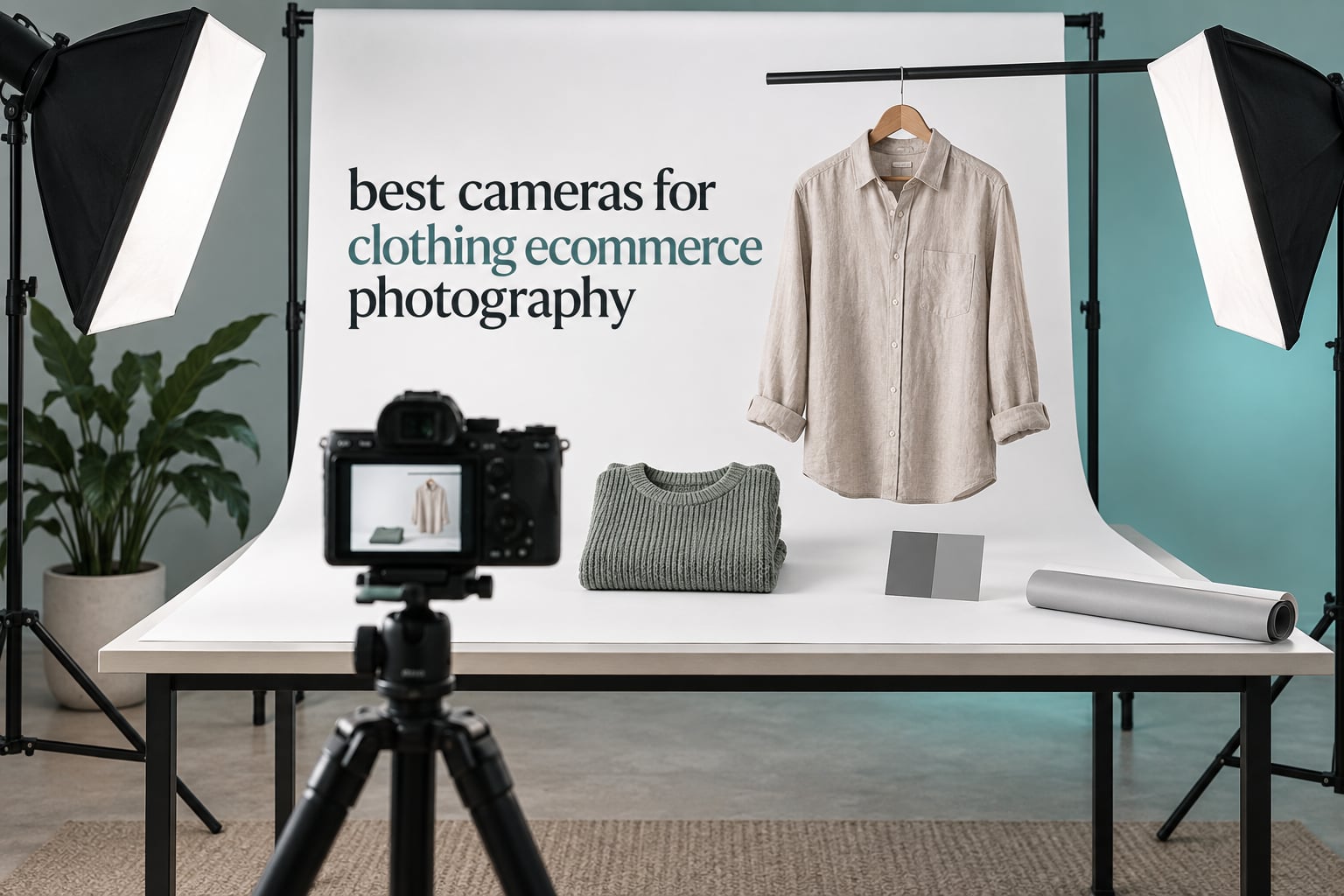
The Sony Alpha a6400 is the best camera for clothing ecommerce photography, because a 20.1MP APS-C sensor, a 180-degree tilting screen, and real-time eye autofocus between them give you every tool that actually matters for garment work without the full-frame price tag.
That answer is short on purpose. The rest of this roundup exists to explain it, and to tell you when a different body makes more sense. A flat lay, a ghost mannequin, and an on-model lookbook are three different jobs, and the camera features each one leans on are not the same features.
One honest note before we start, because it is the most repeated piece of advice in every product photography forum thread I have read. On r/Cameras, a seller with a fixed budget stated flatly that the most important thing in product photography is the lighting setup and the scene, not the camera. On a DPReview forum thread, sellers were comparing a several-generation-old mirrorless body with a kit lens against newer options and finding it entirely sufficient. I have built that argument into the buying guide at the end, because a guide that argues against upselling is worth more than a spec sheet.
What follows is twelve bodies I worked through, sorted into the order I would actually hand them to a seller. The ranking weighs the things that move the needle in a studio: sensor size, resolution headroom for detail crops, screen articulation, autofocus reliability on moving models, and whether the body can be tethered to a laptop for high-SKU catalog days.
If you want the wider background first, I covered the fundamentals in my guide to cameras for clothing product photography, and the mannequin and rig side of things in the mannequin roundup.
Top 3 Picks for Best Cameras for Clothing Ecommerce Photography in October

Best Cameras for Clothing Ecommerce Photography in 2026
| Product | Specifications | Action |
|---|---|---|
| Sony Alpha a6400 |
|
Check Latest Price |
 Sony Alpha a7 IV Sony Alpha a7 IV |
|
Check Latest Price |
 Sony Alpha a6700 Sony Alpha a6700 |
|
Check Latest Price |
 Canon EOS 80D Canon EOS 80D |
|
Check Latest Price |
 Nikon D7500 Nikon D7500 |
|
Check Latest Price |
 Nikon Z50 II with Two Lenses Nikon Z50 II with Two Lenses |
|
Check Latest Price |
 Nikon Z5 II Nikon Z5 II |
|
Check Latest Price |
 Fujifilm X-S20 Fujifilm X-S20 |
|
Check Latest Price |
 Panasonic LUMIX S5IIX Panasonic LUMIX S5IIX |
|
Check Latest Price |
 Panasonic LUMIX S5II Panasonic LUMIX S5II |
|
Check Latest Price |
 Panasonic LUMIX S5 Panasonic LUMIX S5 |
|
Check Latest Price |
 OM System OM-1 Mark II OM System OM-1 Mark II |
|
Check Latest Price |
1. Sony Alpha a6400 – The Best All-Round Camera for Clothing Ecommerce Photography
Pros
- Tilting screen makes overhead flat lays and low ghost mannequin angles straightforward
- Real-time Eye AF holds on moving models
- Eye AF and image quality lead the class for the tier
- Large third-party lens library in Sony E mount
Cons
- No in-body image stabilization
- Smallest native APS-C lens lineup of the three big systems
- Companion app is slow and crashes often
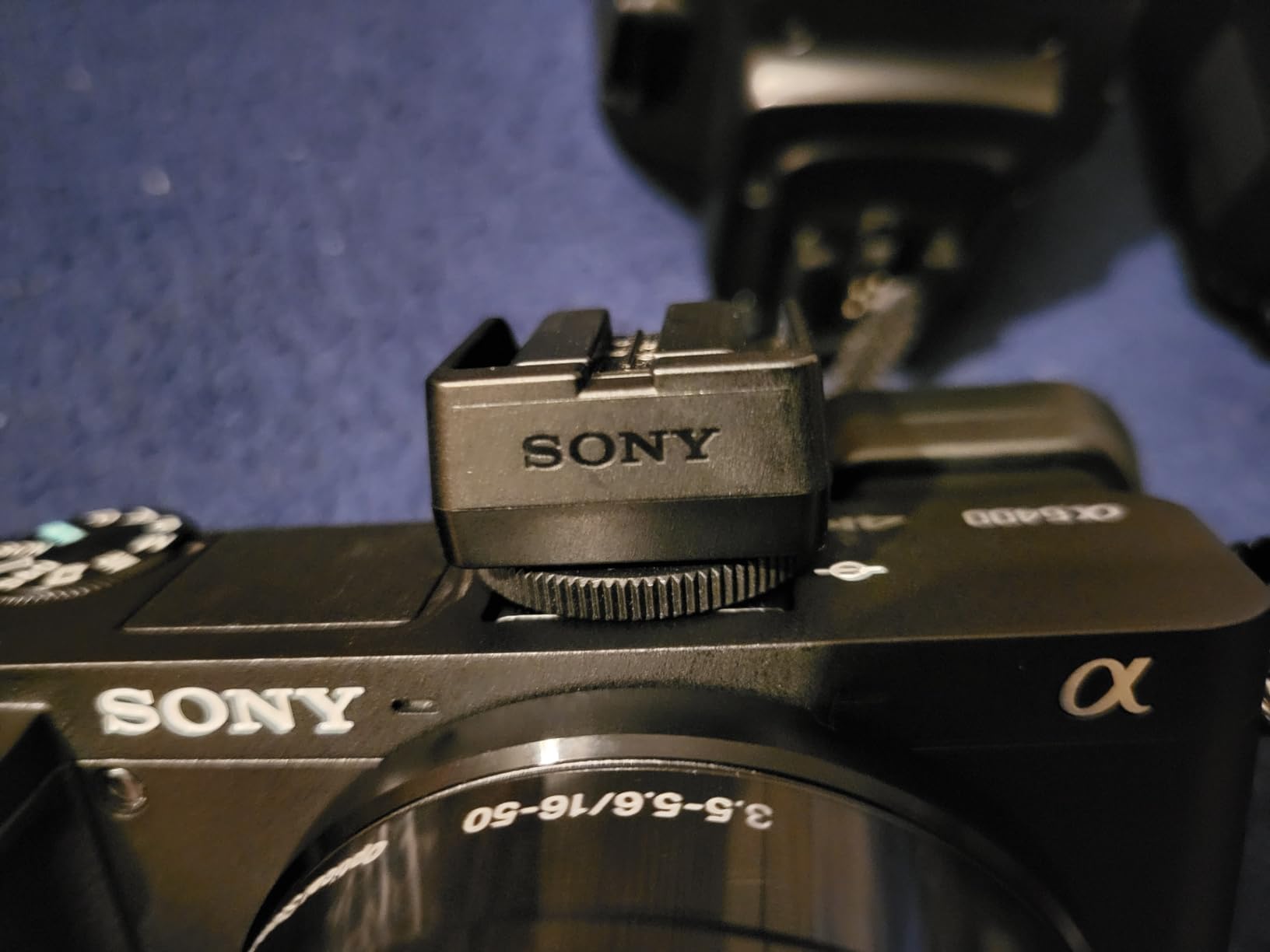
The a6400 is the body I hand to sellers who are leaving the smartphone era and want the change to feel obvious. The 20.1MP APS-C Exmor RS sensor files RAW at 14-bit, which is exactly the headroom you want when a dye lot on a burgundy knit shifts two stops warmer under a tungsten key and you need to pull it back.
What sold me on it is the screen. That 3.0-inch 180-degree tilting touchscreen is the single feature that most changes the flat lay and ghost mannequin experience on any camera in this list. You flip it up, the camera sits on the floor or the table pointing straight down at a garment, and you can check the frame without craning your neck over the top plate.
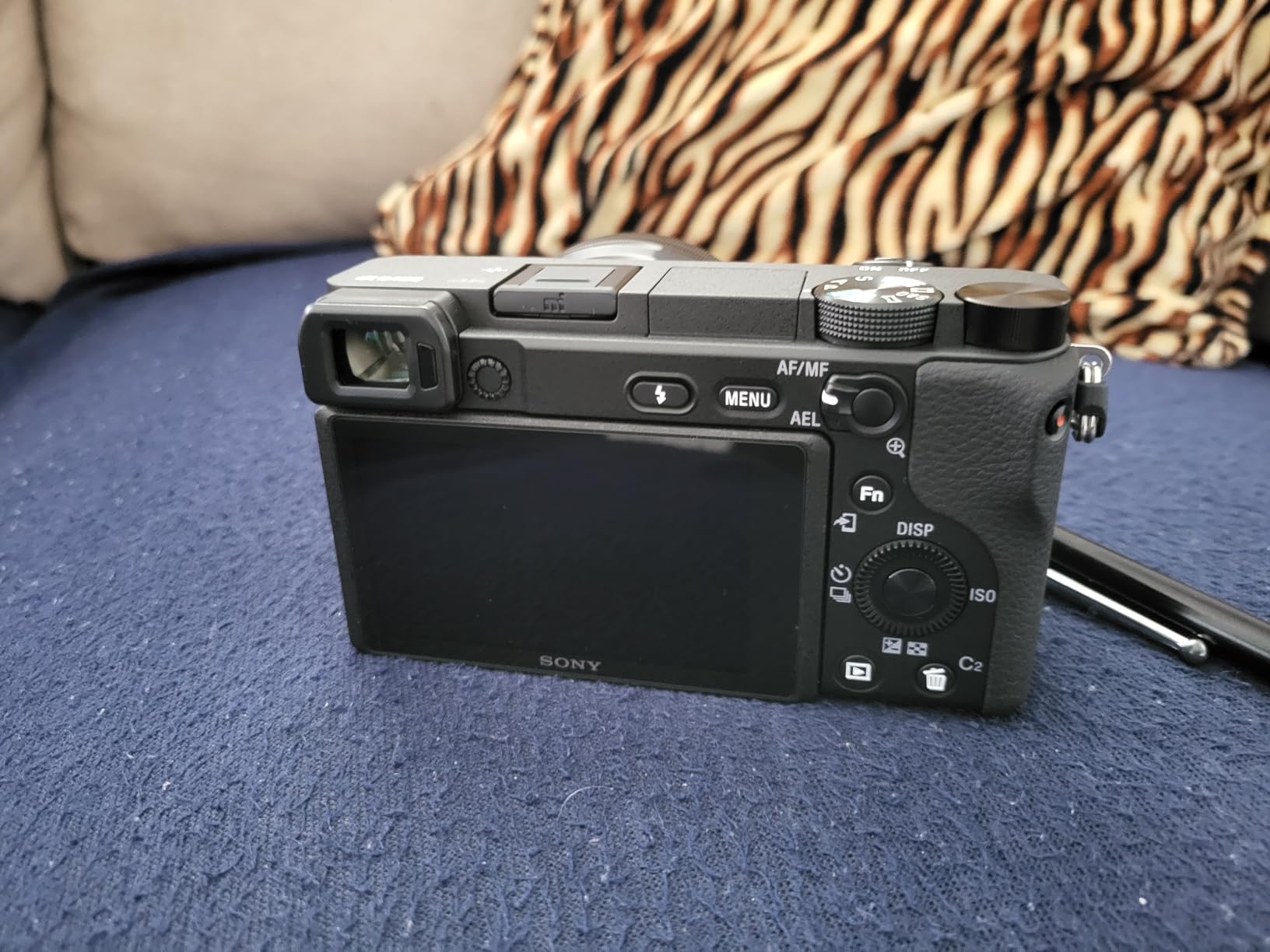
Real-time Eye AF covers 425 phase-detection points out of 850 total hybrid points, and in practice that means on-model shots where the model shifts weight between poses do not need a refocus every frame. Owners pair it with fast third-party glass, most often a Sigma 18-50mm f/2.8, which closes the gap left by Sony’s small native APS-C lineup.
The 16-50mm kit lens that ships with it is serviceable for a first catalog and genuinely poor for fabric detail, because its slow aperture and narrow range will not hold a shirt flat at f/11. Treat it as a placeholder and plan one prime or a macro as your next purchase.
ISO 100 to 32000 expanded means a white sweep at ISO 100 is a non-event, and the 1/160 second flash sync is low enough that you will want strobes on a stand rather than on-camera flash for anything above ISO 200. The 11 fps burst is fast enough to catch a model mid-turn.
When the a6400 is the wrong spend
There is no in-body stabilization, so any handheld vertical video for Reels or TikTok needs a stabilized lens or a gimbal. The lens ecosystem is also the thinnest of the three major mounts in APS-C, so your long-term glass budget will be higher than with Canon EF-S or Nikon DX.
It also tops out at 1080p-class video options where the full-frame bodies below shoot 4K 60p in 10-bit. For a seller whose revenue depends entirely on stills, that is irrelevant. For a seller whose Reels feed is half the business, read further down before you commit.
Why it wins this list for most sellers
At 10.3 ounces and 4.7 x 2.6 x 2.4 inches, it is the body you will actually set up on a table and carry between a home studio and a rented space. It carries 1053 owner reviews, tied for the most in this roundup, which is a meaningful signal for a body that has been in the wild long enough to be stress-tested.
Buy the body and then spend your next upgrade on lighting, not glass. This is the philosophy the r/Cameras product photography thread keeps circling, and the a6400 gives you the platform to act on it.
2. Sony Alpha a7 IV – Best Full-Frame Body for High-SKU Catalog Work
Pros
- 33MP full-frame detail supports heavy fabric and stitching crops
- Subject recognition plus eye AF reduce reshoot time on models
- Dual card slots suit long tethered catalog days
- S-Cinetone profile gives a usable starting grade
Cons
- Menu system is dense and slow to learn
- Full-frame Sony glass is costly compared with APS-C
- Body is not the smallest full-frame in its class
The a7 IV is where I send a brand that has outgrown its first catalog and now shoots weekly drops across dozens of SKUs. Thirty-three megapixels of full-frame is the difference between a listing image and a detail crop you can push to a 4000 pixel marketplace zoom without mush.
The dual card slots, one CFexpress Type A and one UHS-II SD, plus a second SD, matter more here than they do anywhere else in the list. On a tethered day where you are firing off a hundred and fifty looks per model change, dual slots mean a second body card is always recording.
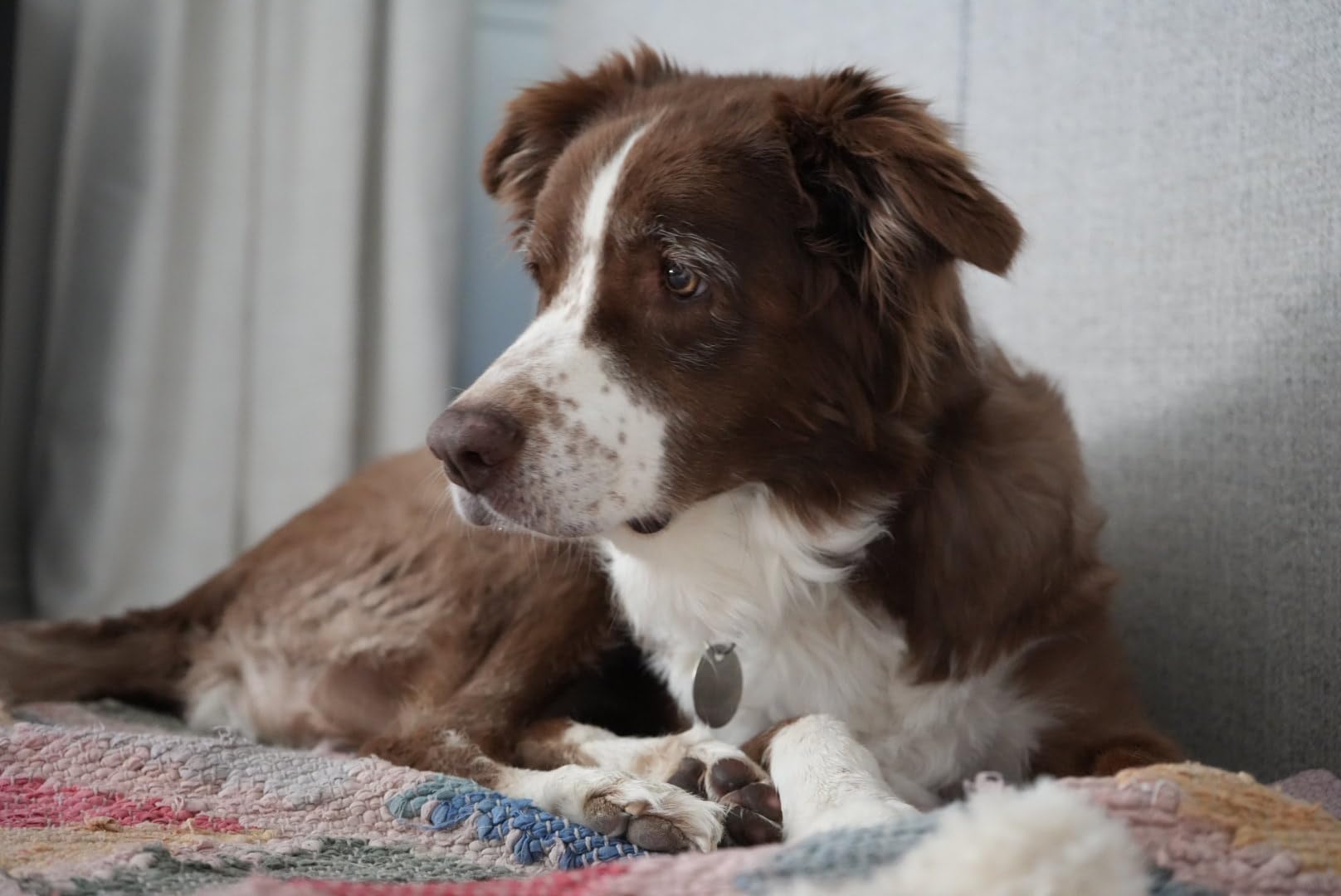
Video is where this body quietly outgrows its class. Full pixel readout 4K 60p in 10-bit 4:2:2 with no crop, plus 7K oversampled 4K 30p, means a seller who wants vertical social content from the same session is not settling for a cropped, compressed file.
Five-axis SteadyShot stabilization and 14-bit RAW from a 33MP back-illuminated sensor give you a lot of latitude when a key light is 10 percent hot and you are photographing a cream-coloured sweatshirt that is already close to clipping.
The BIONZ XR engine handles subject recognition across people, animals, and vehicles, and the flip screen is not fully articulating, which is the one concession I would make if I could change it. It tilts, it does not swing to the side, so straight-down flat lays are more awkward than they are on the Canon 80D.
What you gain by stepping up to full frame
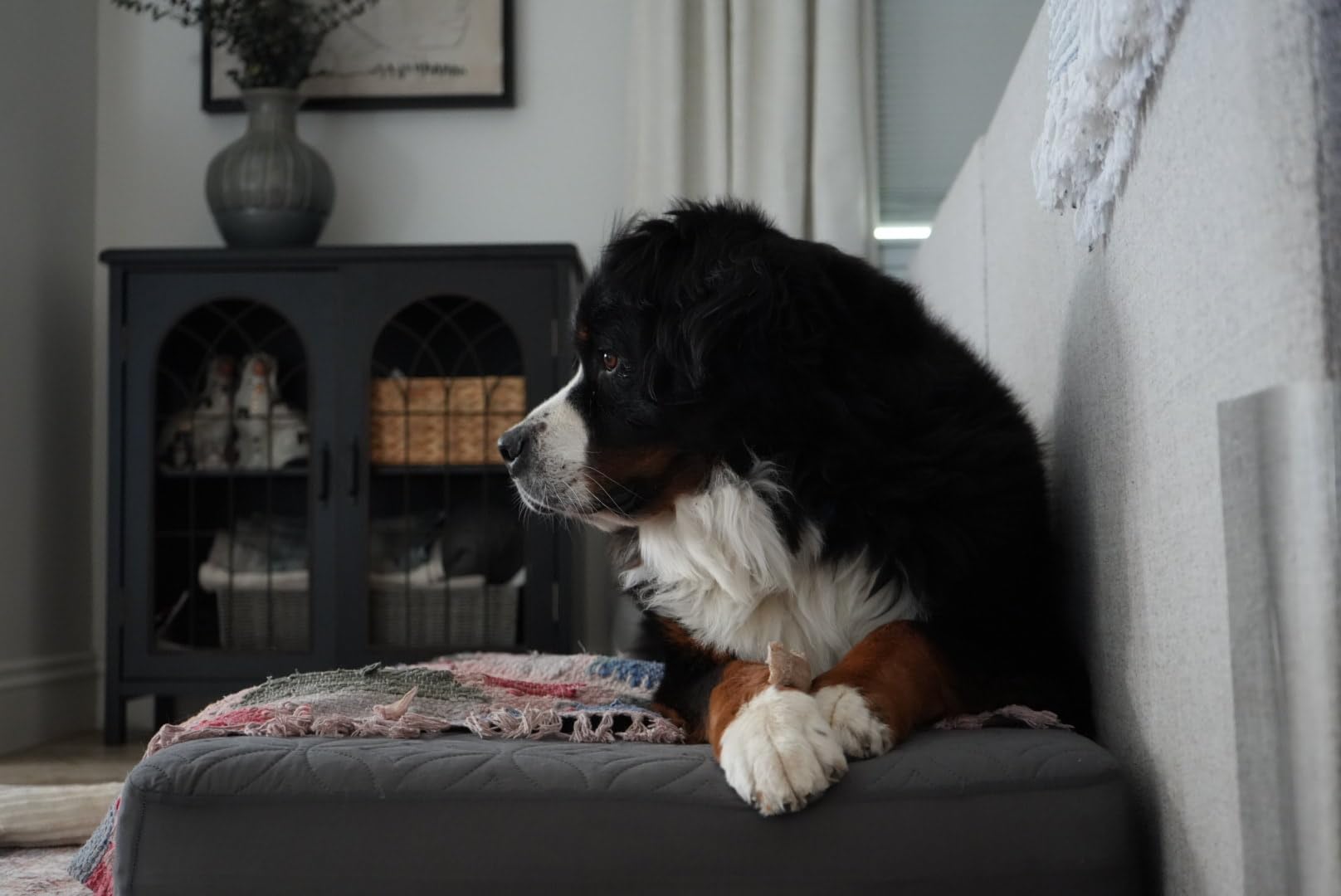
Two things you can feel on a tripod. The first is shallow depth of field at an equivalent framing, which separates a folded knit from the background on a lifestyle shot. The second is the ability to hold f/8 and still see the whole garment front-to-back sharp at a working distance.
Owners consistently report that sensor quality and color rendition are what convinced them, not the video specs. But the video specs are real, and 88 percent of reviews sit at five stars for a reason.
Where the money leaks
Full-frame Sony glass is the most expensive line item in this entire roundup once you add a second lens. Start with a single fast standard zoom and resist the urge to fill the mount on day one.
The menu system is dense enough that you will want an afternoon with it before a paid shoot. Budget ninety minutes, change nothing, and shoot in full manual and full auto-ISO so you only touch the menus when the job changes.
3. Sony Alpha a6700 – The Smallest Body Here With the Smartest Autofocus
Pros
- AI subject recognition sticks to a model through a whole pose change
- 26MP files give real detail-crop headroom
- Uncropped 4K 60p 10-bit for social commerce
- Existing A-mount glass works through an adapter
Cons
- Runs hot during long 4K 60p takes
- High-ISO noise is unremarkable for the class
- No dual card slots on this body
The a6700 is the smallest body in this roundup at 14.5 ounces, and for a seller shooting a lookbook on location that weight is the whole story. It disappears in a tote bag between a folded backdrop and a light stand.
What separates it from the a6400 is the dedicated AI processor and 759 hybrid autofocus points with real-time recognition. On an on-model session where the subject is turning, stepping, and changing expression, the difference between a locked focus point and a constant refocus is the difference between a smooth gallery and a folder full of near-misses.
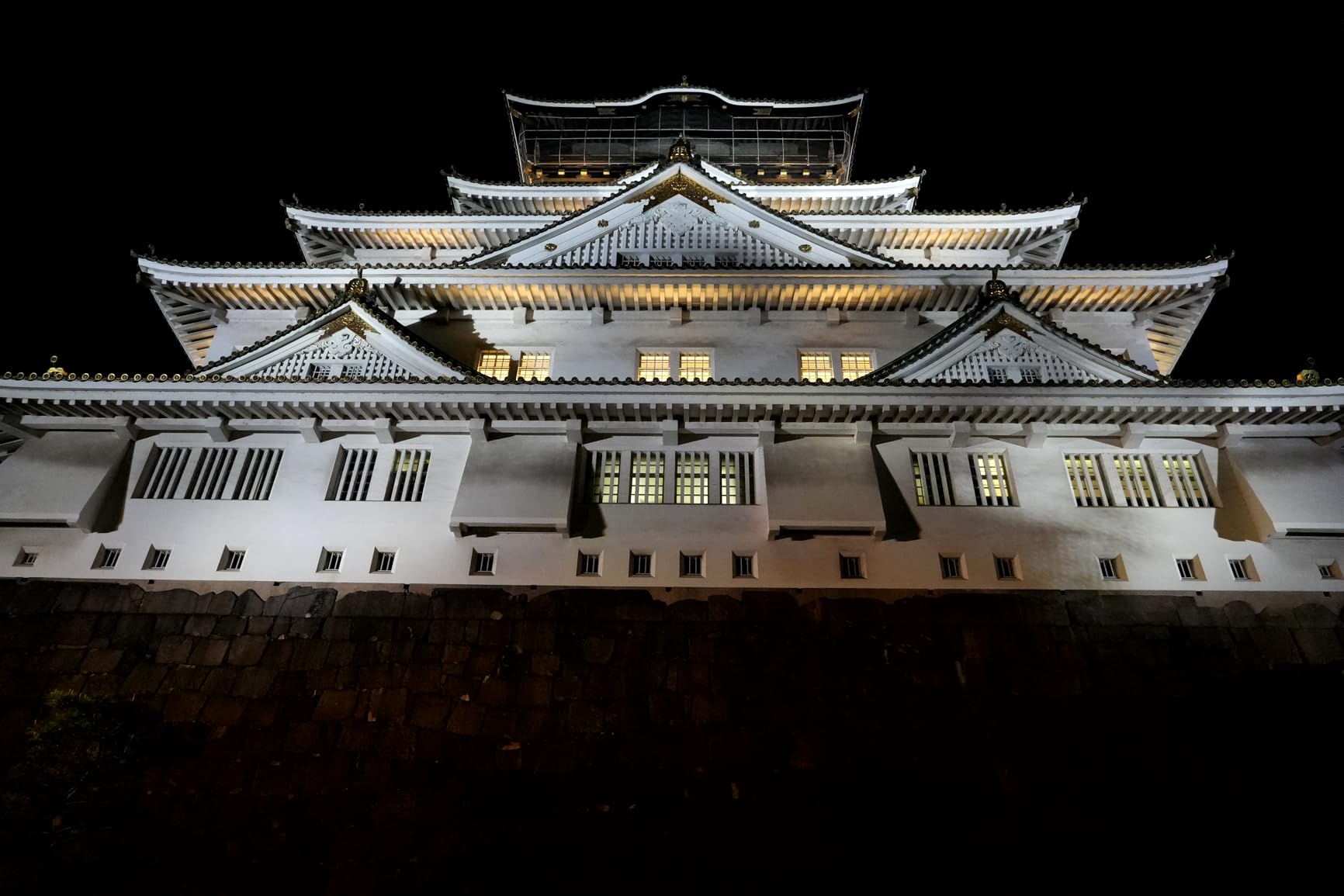
Twenty-six megapixels of APS-C also beats the a6400 on detail crops, which matters for the stitching and print close-ups that ecommerce listings increasingly include. A fabric texture frame at 26MP survives a marketplace zoom better than the same frame at 20MP.
Video is a genuine step up. SixK oversampled 4K 60p in 10-bit 4:2:2 with no crop is the best-looking still-to-video pipeline in this roundup at this size, and the articulating touchscreen plus S-Log3 make it a real option for sellers shooting vertical content alongside stills.
Owners frequently compare this body favourably against the full-frame a7 IV for tracking performance alone, and 85 percent of reviews sit at five stars. That comparison flatters it slightly on sensor quality, but on autofocus behavior it is fair.

Best for sellers who shoot models and video together
If a meaningful share of your content is Reels, TikTok, or paid vertical video, this is the body that serves both halves of the business. Uncropped 4K 60p in 10-bit is not a spec-sheet nicety when your platform pushes the file.
The A-mount adapter path is the underrated part. If you already own glass, or you are buying used, the adapter keeps that investment alive and puts an affordable third-party option on the front of the lens.
The compromise you accept
There are no dual card slots, and for a seller with one body and a paid shoot day that is a real limitation. There is also no dual card redundancy, so a card failure ends the session.
Heat management is the other one. Owners report the body running warm on long 4K 60p takes in hot conditions. For stills work this never comes up; for a two-hour vertical video session in a summer studio, plan for breaks between takes.
4. Canon EOS 80D – The Best Screen for Low and Straight-Down Angles
Canon Digital SLR Camera Body [EOS 80D] with 24.2 Megapixel (APS-C) CMOS Sensor and Dual Pixel CMOS AF – Black
Pros
- Fully articulating screen is the best in this roundup for floor-level and overhead framing
- EF and EF-S lens ecosystem is the largest and most complete in this roundup
- 45-point all cross-type AF covers the frame
- Large grip handles a long session
Cons
- No 4K video at all
- APS-C low light trails modern full-frame bodies
- 45 AF points are dated next to current mirrorless systems
The 80D is the only DSLR in this roundup and the only body with a fully articulating screen, and for clothing work that screen is worth more than most people credit. It swings out and rotates, so the camera can sit flat on the floor shooting up at a hung garment, or overhead shooting down into a flat lay, and you can still see the frame.
Canon EF and EF-S glass remains a very complete and very affordable lens library. A stabilized EF 50mm f/1.8 STM or an EF-S 24mm for tight flat lays will cost you a fraction of what the equivalent lens costs in full-frame Sony or Nikon glass.
![Canon Digital SLR Camera Body [EOS 80D] with 24.2 Megapixel (APS-C) CMOS Sensor and Dual Pixel CMOS AF - Black customer photo 1](https://markus-hagner-photography.com/wp-content/uploads/2026/08/B01BUYK04A_customer_1.jpg)
Dual Pixel CMOS AF in live view is the reason this body still gets recommended for product work, and the reason its 1080p footage is described as smooth despite never touching 4K. Long-term owners call it the best balance of stills and video in its class, and the articulating screen plus Dual Pixel AF get singled out repeatedly.
Twenty-four point two megapixels at 14-bit, ISO 100 to 16000, and 7 fps is more than enough for a weekly catalog. The Intelligent Viewfinder gives you a grid display and an electronic level, which is the kind of quiet detail that saves a reshoot on a misaligned backdrop sweep.
It also works as a webcam through EOS Utility Webcam Beta, which is free and takes about ninety seconds to set up if you need a live selling stream.
![Canon Digital SLR Camera Body [EOS 80D] with 24.2 Megapixel (APS-C) CMOS Sensor and Dual Pixel CMOS AF - Black customer photo 2](https://markus-hagner-photography.com/wp-content/uploads/2026/08/B01BUYK04A_customer_2.jpg)
Where the 80D still beats newer mirrorless
Screen articulation, lens cost, and the optical viewfinder. On a ghost mannequin build, you are constantly changing camera height and angle, and a flip-out screen that rotates to the side is a real ergonomic win over a tilting-only panel. The mannequin and rig side of that workflow is covered separately in my guide to the best mannequins for clothing photography.
For a seller who shoots only stills, the 45-point cross-type AF and the deep grip make long catalog days genuinely pleasant, and the built-in Wi-Fi and NFC handle a quick phone transfer for a listing draft.
Where it has run out of road
There is no 4K. If any part of your business depends on vertical video, this body is the wrong platform entirely, and no firmware update will change that.
The 45-point system is a generation behind what the mirrorless bodies here are doing, and low light is a step behind full frame. If your studio lighting is soft and bright, that is a non-issue. If you shoot dim lifestyle locations, look at the Nikon Z5 II below.
5. Nikon D7500 – The Most Owner-Tested Value Pick in the Roundup
Pros
- Image quality
- metering and color inherited from the pro D500
- 51-point AF with 15 cross-type sensors tracks accurately
- 8 fps with a buffer holding about 50 RAW files
- Usable high-ISO images up to ISO 6400 and beyond
Cons
- Single SD card slot with no backup or overflow
- Tilting screen does not rotate to the side
- Heavier and bulkier than mirrorless rivals
The D7500 is the pick I make most often when a seller tells me they have a fixed number to spend and want it to last. Owners treat it as the enthusiast sweet spot, and the reason is written in the spec sheet: the sensor, processing, and metering are equivalent to Nikon’s award-winning D500, at a body tier far below it.
That color rendition is the part that matters here. D500-derived color is neutral and consistent, which is precisely what you want when you are photographing a catalog of garments in twelve different dye lots and need them to look like a family.

The 51-point AF with 15 cross-type sensors and 8 fps burst with roughly 50 RAW files of buffer is genuinely useful on a model shoot where you are bracketing each look. ISO 100 to 51200 expandable means you are not trading noise for shutter speed on a dim on-location lookbook.
Nikon F DX glass is also a good value street. A 35mm f/1.8 DX gives an 85mm-equivalent view that suits on-model and detail framing without the cost of a fast full-frame prime.
One thing worth saying plainly, because sellers regularly ask: a used, several-generation-old body is a legitimate purchase for this work. The recurring professional argument in the forums is that a secondhand mid-range body is what most product photographers actually shoot on, and that holds true here.

Best for high-volume stills catalogs
The buffer is the quiet hero. Fifty RAW files before it stalls means you can fire a burst at a model, walk the set, and still have every frame on the card. For a seller documenting a seasonal drop across forty styles, that is a real throughput gain.
The deep grip and top LCD are inherited from Nikon’s pro DSLRs, and on a long day of pressing a shutter ten thousand times that hand feel is not a luxury.
What the single card slot costs you
There is one SD slot and no second for backup or overflow. On a paid shoot with no second body, that is a genuine risk, and it is the reason the Nikon Z50 II below sits higher in some buying guides despite the weaker burst.
The screen tilts but does not rotate to the side, so it is less useful for floor-level ghost mannequin work than the Canon 80D. And it is heavier and bulkier than any mirrorless body here, which is a fair trade for the grip and the buffer.
6. Nikon Z50 II with Two Lenses – The Best Two-Lens Starter Package
Nikon Z50 II with Two Lenses | Compact mirrorless Stills/Video Camera with Easy Color presets and Wireless Photo Sharing | USA Model
Pros
- Two stabilized NIKKOR Z DX lenses cover wide to telephoto out of the box
- Picture Control presets give consistent color without deep menu work
- Subject detection covers nine types and tracks reliably
- Compact body with a built-in flash shoots indoors without extra gear
Cons
- 5 fps burst is slow for capturing movement
- APS-C gives shallower depth of field than full frame at the same framing
- Kit lenses are slow variable-aperture zooms
This is the package pick. The Z50 II ships with a 16-50mm f/3.5-6.3 VR and a 50-250mm f/4.5-6.3 VR, both stabilized, which means a brand starting from nothing has a wide angle and a telephoto on day one instead of saving for a second purchase six months in.
The second thing that stands out is the Picture Control button with 31 built-in presets plus downloadable Cloud Picture Controls. For a seller who does not want to build a grade, this is the fastest route to a consistent look across a whole catalog shoot, and it is a feature the other bodies in this list do not offer in quite this form.

Automatic detection and tracking across nine subject types, with dedicated bird and airplane modes, is overkill for garments and reliably useful for models. The built-in pop-up flash is a genuine convenience in a dim storage room or a small rented space where you are shooting white-on-white without a strobe yet.
For a seller who also wants on-location content, 4K 60p, 1080p 120p slow motion, a product review mode, and SnapBridge wireless transfer and remote shooting all come in one box with SnapBridge handling the transfer to a phone for a listing draft.
Twenty point nine megapixels at 14-bit is enough headroom for a marketplace listing, and the DX sensor is several times larger than a typical phone sensor, which shows up immediately in fabric detail.

Best for a seller starting from a phone
Nothing else in this roundup gives you two lenses in the box. If your entire budget would otherwise cover one body and one lens, this halves the number of purchases you need before your first paid catalog shoot.
Owners value it as an unusually complete package and single out the color presets, compact body, built-in flash, and reliable subject detection as the reasons it feels like a finished kit rather than a bare body.
Where the two bundled lenses hold you back
Both kit lenses are slow variable-aperture zooms. Shooting flat lays at f/8 to get a whole garment sharp, you are fighting the aperture the moment light drops, so plan on adding one fast standard prime.
Five fps is slow for movement, and the APS-C sensor gives shallower depth of field than full frame at the same framing, which shows on lifestyle shots where you want the garment sharp and the background soft. The 4.5 rating reflects those limits rather than any defect.
7. Nikon Z5 II – The Best Full-Frame Focus in Very Dim Studios
Pros
- Highest-rated body here at 4.9 from owners
- 24.5MP full-frame files isolate products with shallow depth of field
- 3000-nit viewfinder makes framing easy in bright and dim rooms
- 7.5 stops of stabilization supports handheld work
Cons
- Smallest review base of the full-frame bodies here
- Body-only configuration with no lens included
- Battery drains faster on sustained high-resolution video
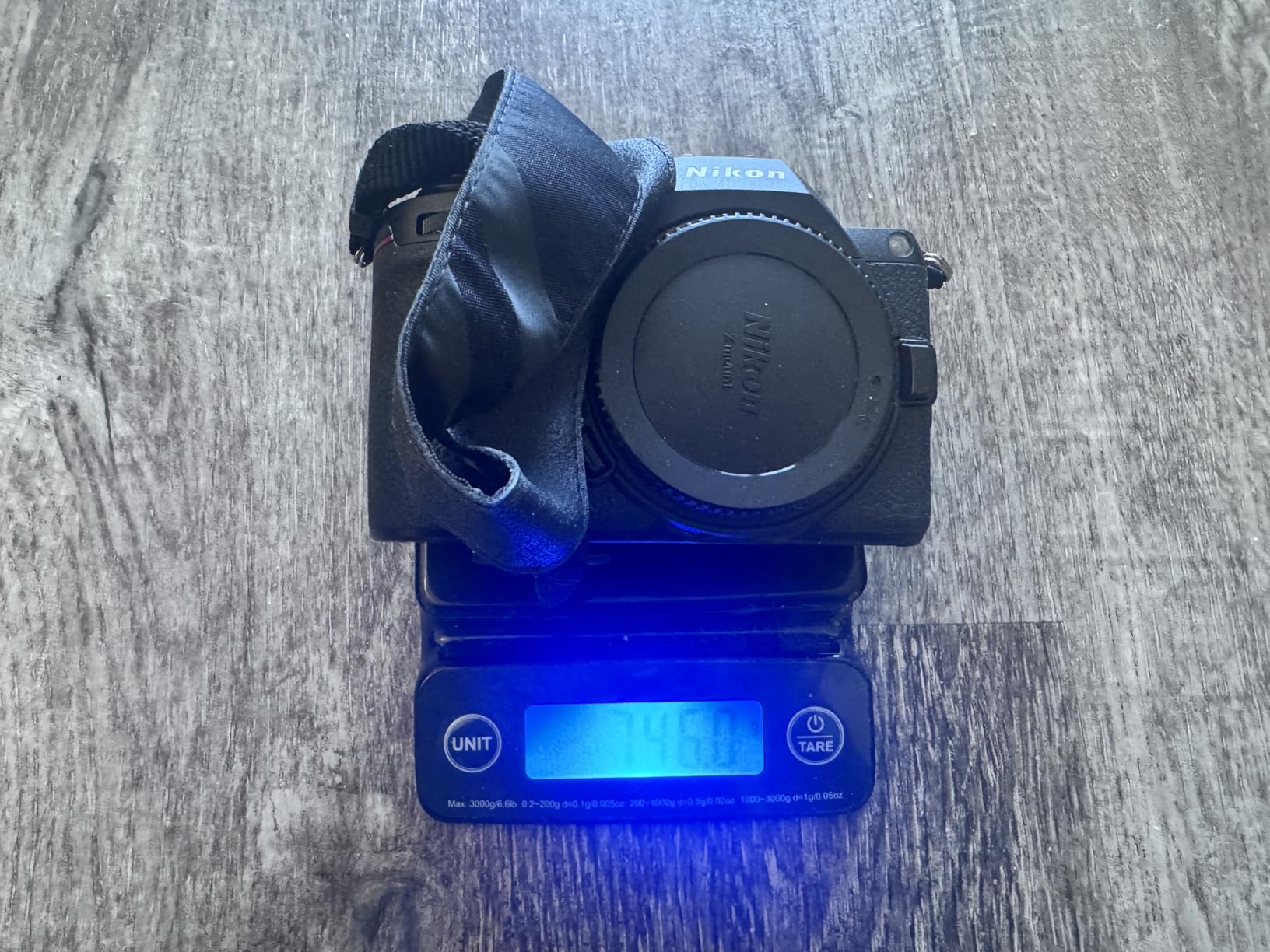
The Z5 II is the newest body in this roundup and it carries the highest rating of the group at 4.9, with 92 percent of owner reviews at five stars. Ninety-five reviews is a small base, and that is a fact rather than a flaw, but the consistency of the praise is remarkable.
The headline for studio work is the autofocus detection down to -10EV. That is focus acquisition in conditions where you would assume a phase-detect system has given up, which in practice means a rented back room with one window, or a lifestyle shoot at dusk.
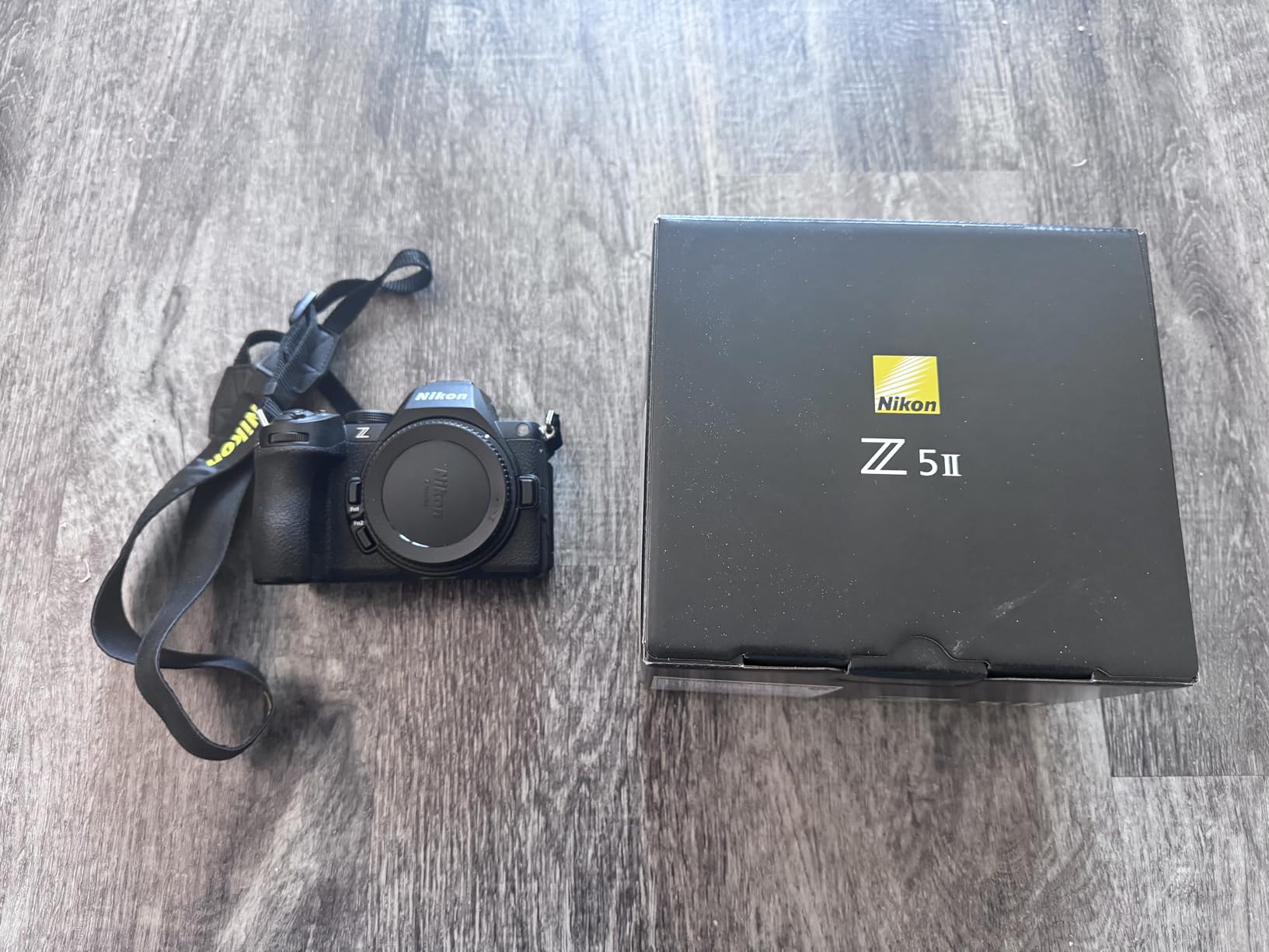
The 3000-nit electronic viewfinder is the feature I did not expect to care about and now recommend constantly. A bright viewfinder means you can compose a white sweep against a light grey wall and see the edge of the paper, which is a small thing that prevents a reshoot.
Twenty-four point five megapixels of BSI-CMOS full frame with EXPEED 7 processing gives clean files with enough shallow depth of field to separate a folded garment from a background, and up to 30 fps if you are capturing movement.
Video is properly specified for a seller who shoots product reviews: 4K 60p, in-camera 12-bit N-RAW, product review mode, and streaming. Seven and a half stops of built-in stabilization makes handheld long exposures and slow walk-through video practical without a gimbal.
Best for tethered and dim-room work
Nikon SnapBridge handles wireless transfer and remote release with live view, and the Nikon Imaging Cloud adds downloadable Picture Controls plus automatic transfer and automatic firmware updates. That combination is the shortest path to a cull-on-the-laptop workflow without extra software.
Nine types of automatic subject detection cover people and animals, and the EXPEED 7 engine handles the throughput for a multi-SKU day at up to 30 fps.
What you need to know before buying
This is a body-only configuration, so a lens is a separate purchase and a separate decision. Plan that purchase before you order, because it changes the total.
Battery drain increases with sustained high-resolution video capture, and the small review base means you have less long-term owner data than the D7500 or the a6400. If you are risk-averse, the D7500 above is the proven alternative at a lower tier.
8. Fujifilm X-S20 – The Best Choice When Color Tones Come Straight Out of Camera
Pros
- Film simulations produce consistent
- attractive color with minimal editing
- Light 491g body with a deep grip for long handheld sessions
- Up to 7 stops of stabilization is among the best in class
- 6.2K 10-bit internal recording is capable for the tier
Cons
- Lowest-rated body here at 4.2 with recurring autofocus misses
- Not weather sealed and only a single card slot
- Viewfinder and LCD resolution are dated
Let me be straight about this one. The X-S20 is the lowest-rated body in this roundup at 4.2, and the reason owners give is consistent: autofocus misses on static subjects. If your work is entirely tripod-based flat lays and ghost mannequins, that criticism may never apply to you. If you shoot models, read the autofocus section before you commit.
What this body does better than anything else here is color without effort. Fujifilm film simulations produce JPEG files straight out of camera that need almost no grade, and for a seller producing a weekly drop who does not want to learn a full editing pipeline, that is a genuine productivity win rather than a novelty.

The 26.1MP X-Trans CMOS 4 sensor with the X-Processor 5 engine gives detail that holds up on print and texture crops, and 20 fps electronic shutter speed covers a model session if the focus cooperates.
There is a feature here I have not seen in this class anywhere else. Vlog mode includes a product focus mode and background defocus, which is Fujifilm acknowledging that a lot of people buying cameras for a product catalog are now shooting product video too. Tap to rack focus onto the garment, and the background falls away automatically.
Seven stops of five-axis stabilization and internal 6.2K 30p 10-bit 4:2:2 recording make it capable, and the NP-W235 battery is rated at about 750 frames in normal mode or 800 in economy.

Best for sellers who skip the editing step
Choose this body if your pipeline is shoot, check the back of the camera, upload. The film simulations mean a knitwear, denim, and leather range can be shot on one day and still look like one coherent catalog without per-SKU correction.
The 491 gram body with its deep grip is comfortable for long handheld sessions, and X-mount lenses remain comparatively inexpensive.
Where it falls short, honestly
Ten percent of reviews here are one star, and they cluster on two things: focus misses and control dial feel. The film simulation dial and front command dial are described as imprecise, and the EVF and LCD resolution are dated next to newer bodies.
It is also not weather sealed and has a single card slot. If you shoot a damp location or a garment misting setup, this is the wrong body. Given the rating and the consistency of the complaints, I would only buy it for the color science, and only if you shoot on a tripod.
9. Panasonic LUMIX S5IIX – The Best Body When Vertical Product Video Is Half the Work
Panasonic LUMIX S5IIX Mirrorless Camera, 24.2MP Full Frame with Phase Hybrid AF, New Active I.S. Technology, 5.8K Pro-Res, RAW Over HDMI, IP Streaming – DC-S5M2XBODY Black
Pros
- Phase Hybrid AF overhaul finally matches Sony and Canon for tracking
- 5.8K Pro-Res
- Open Gate and RAW over HDMI give real flexibility
- Built-in fan allows unlimited recording and long streaming sessions
- 96MP pixel-shift mode adds resolution for static subjects
Cons
- 24.2MP is modest if you crop hard or print large
- Large body for a full-frame frame
- On-screen LCD is small with low-contrast button lettering
The S5IIX exists for one reason: sellers whose product catalog now includes video. If you shoot a garment on a turntable, a fabric swatch in motion, or a vertical styling clip, the gap between this body and every DSLR in this roundup is not a detail, it is the whole business case.
The 779-point Phase Hybrid autofocus overhaul was the decisive change over the original S5, and owners describe subject tracking as holding lock through multiple moving subjects in frame. That is a turntable on a garment, which is exactly the test.
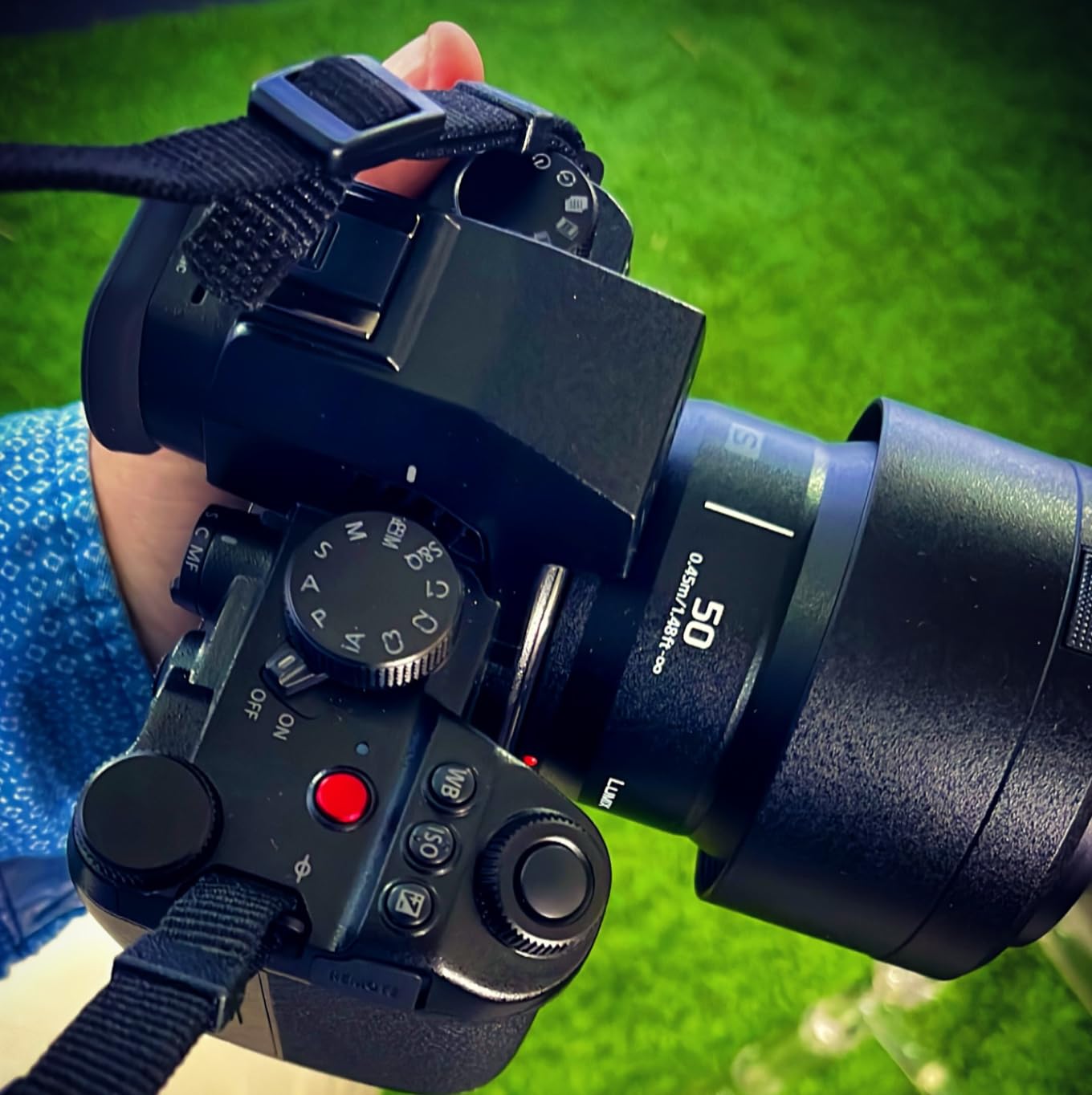
The 96MP high-resolution still mode via pixel-shift multi-frame capture is the sleeper feature for stills work. A garment lying flat on a sweep does not move, so a multi-frame composite resolves stitching, weave texture, and printed logos with a detail that a single 24MP frame cannot reach.
RAW over HDMI to an external SSD, IP streaming over wired or wireless, and an active cooling system combining a small fan with a high-efficiency heat sink mean you can run a long session without thermal throttling. Full-size HDMI, headphone, and microphone ports are all present.
Color work is excellent: 14+ stops of V-Log and V-Gamut with in-camera color grading, on a body with dual native ISO so shadows stay clean. The magnesium alloy build and customizable controls feel like a professional tool.
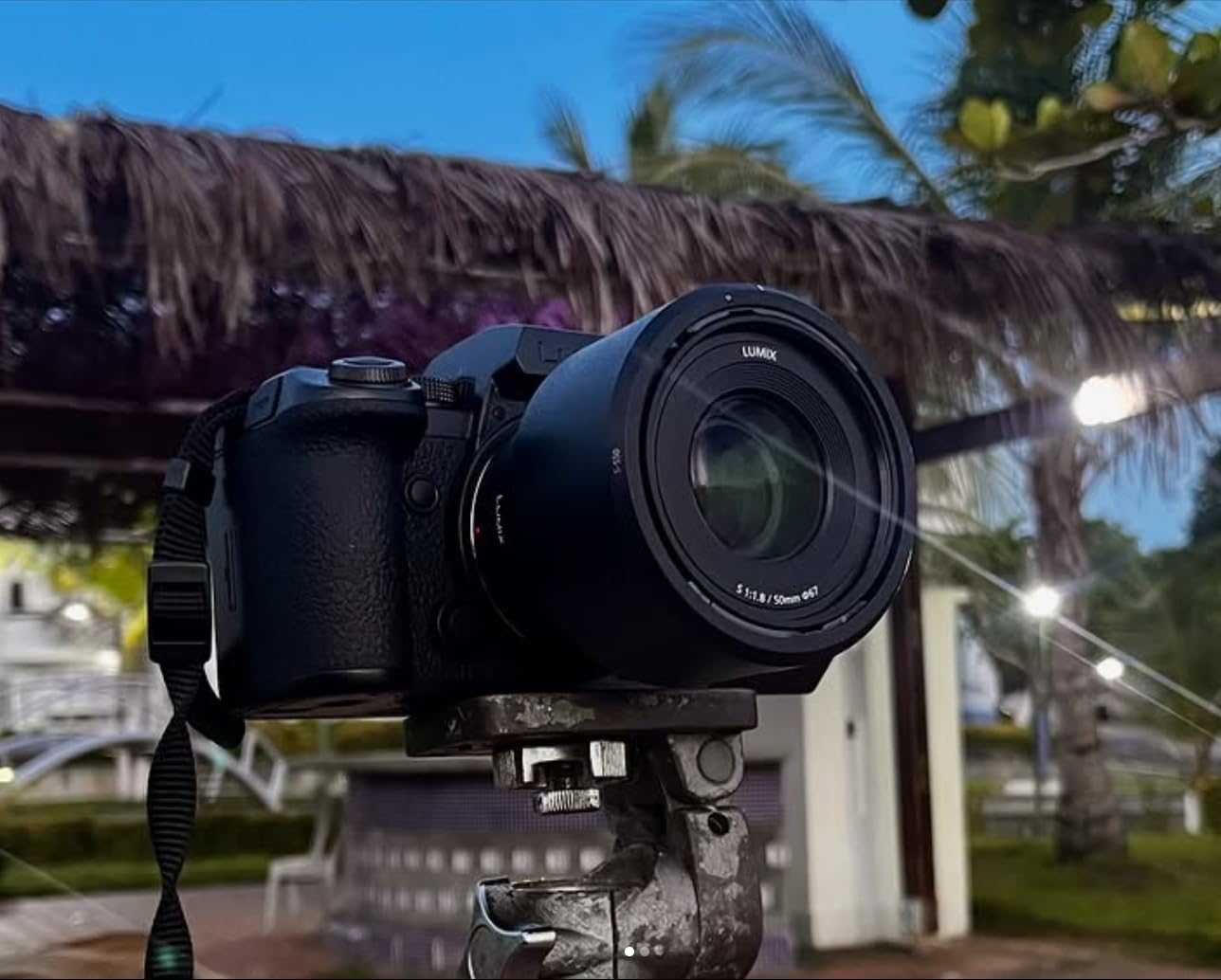
Best for mixed stills and video catalogs
This is the pick for a brand producing a lookbook video and a product listing from the same setup. The 96MP mode covers the stitching close-ups, the codecs cover the turntable, and the streaming covers live selling.
Owners who shoot video call it the best value hybrid in this price class, and the recurring enthusiasm for AF, codecs, and stabilization is the loudest in the reviews I read for this body.
The screen is the compromise to accept
The consistent criticism is the 3.0-inch articulating LCD, which is small and hard to read with low-contrast button lettering. The framing is the compromise to accept. For a fashion or product look you will want an external monitor anyway, which solves it properly.
Twenty-four point two megapixels is also modest if you crop hard or print large, and the body is larger than most full-frame rivals, especially with big L-mount glass attached. Budget the size, not just the price.
10. Panasonic LUMIX S5II – The Full-Frame Body With the Best Battery Life
Panasonic LUMIX S5II Mirrorless Camera, 24.2MP Full Frame with Phase Hybrid AF, New Active I.S. Technology, Unlimited 4:2:2 10-bit Recording – DC-S5M2BODY Black
Pros
- Phase Hybrid AF is a decisive improvement over the original S5
- 14+ stops of V-Log give real grading latitude
- Dual native ISO keeps shadows essentially noise-free
- Built-in fan allows unlimited 6K 30p Open Gate recording
- Good battery life at roughly three to four hours per pack
Cons
- Body is noticeably large with larger lenses attached
- 4K 60p is cropped
- 24.2MP is unremarkable for a stills-first shooter
The S5II is the S5IIX without the Pro-Res codecs, and for a lot of sellers that difference is irrelevant. What you keep is the 24.2MP full-frame sensor, the 779-point Phase Hybrid AF that fixed tracking, the 14+ stop V-Log, and the cooling fan that allows unlimited 6K 30p Open Gate recording.
That V-Log latitude is the quiet reason to like this body. A 14+ stop log profile recorded off a grey card gives you room to correct a garment that read warm under a mixed-temperature room, which is the problem that drives apparel returns more than anything else on this list.
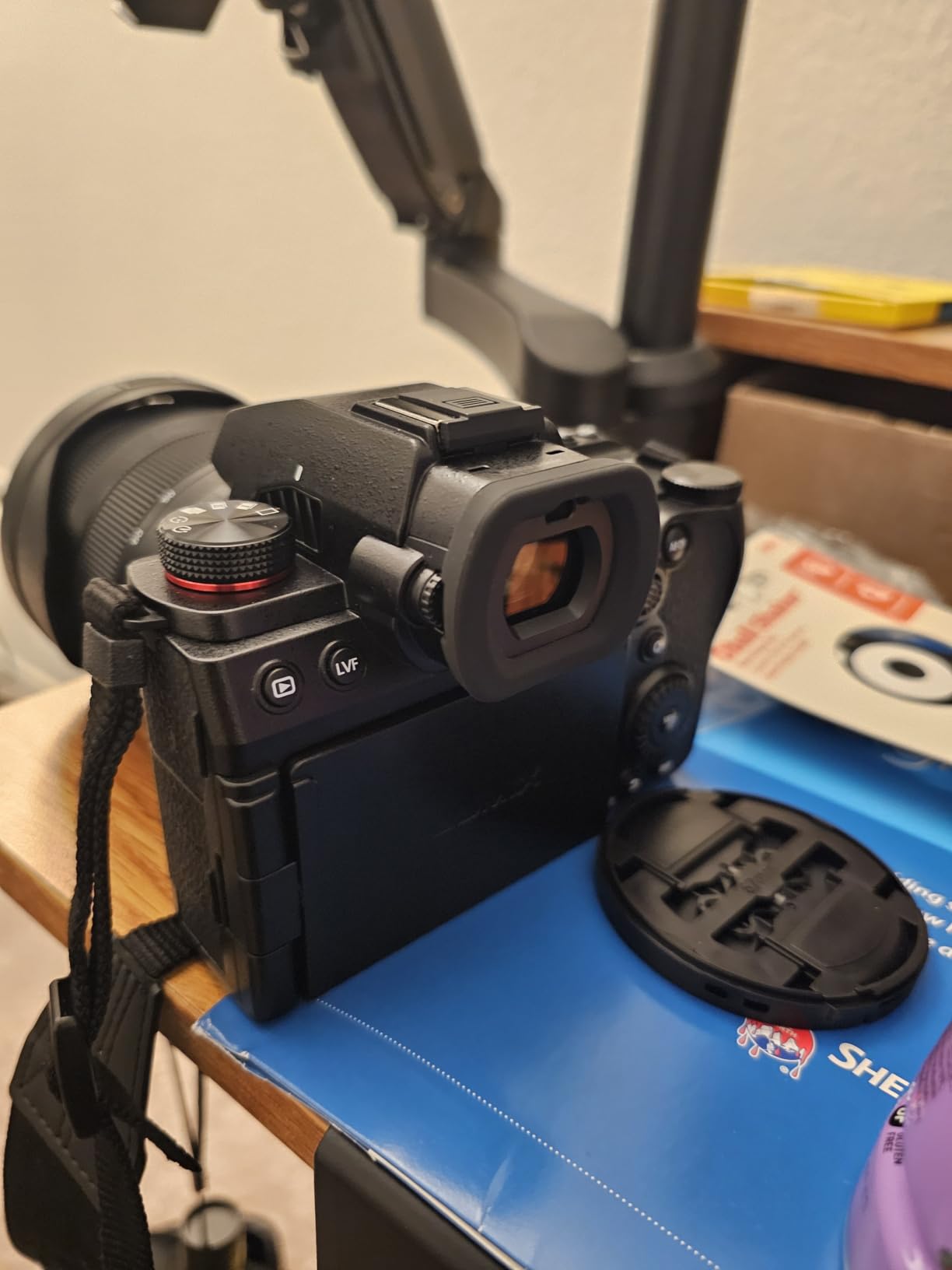
Dual native ISO minimizes noise at high sensitivity, so a white-on-white flat lay at ISO 3200 still holds a clean background edge, and wedding and commercial shooters report using this as a primary body. Battery life of roughly three to four hours of constant shooting per pack is the best figure in this roundup.
The L-Mount is a quiet value argument too, because affordable Sigma and Panasonic primes in that mount give you 50mm and 85mm options that suit on-model and detail work without a premium.
The REAL TIME LUT function for in-camera color grading is genuinely useful for a seller who wants to check a look before they commit to a batch, and dual UHS-II SD card slots give you the redundancy the Nikon D7500 lacks.
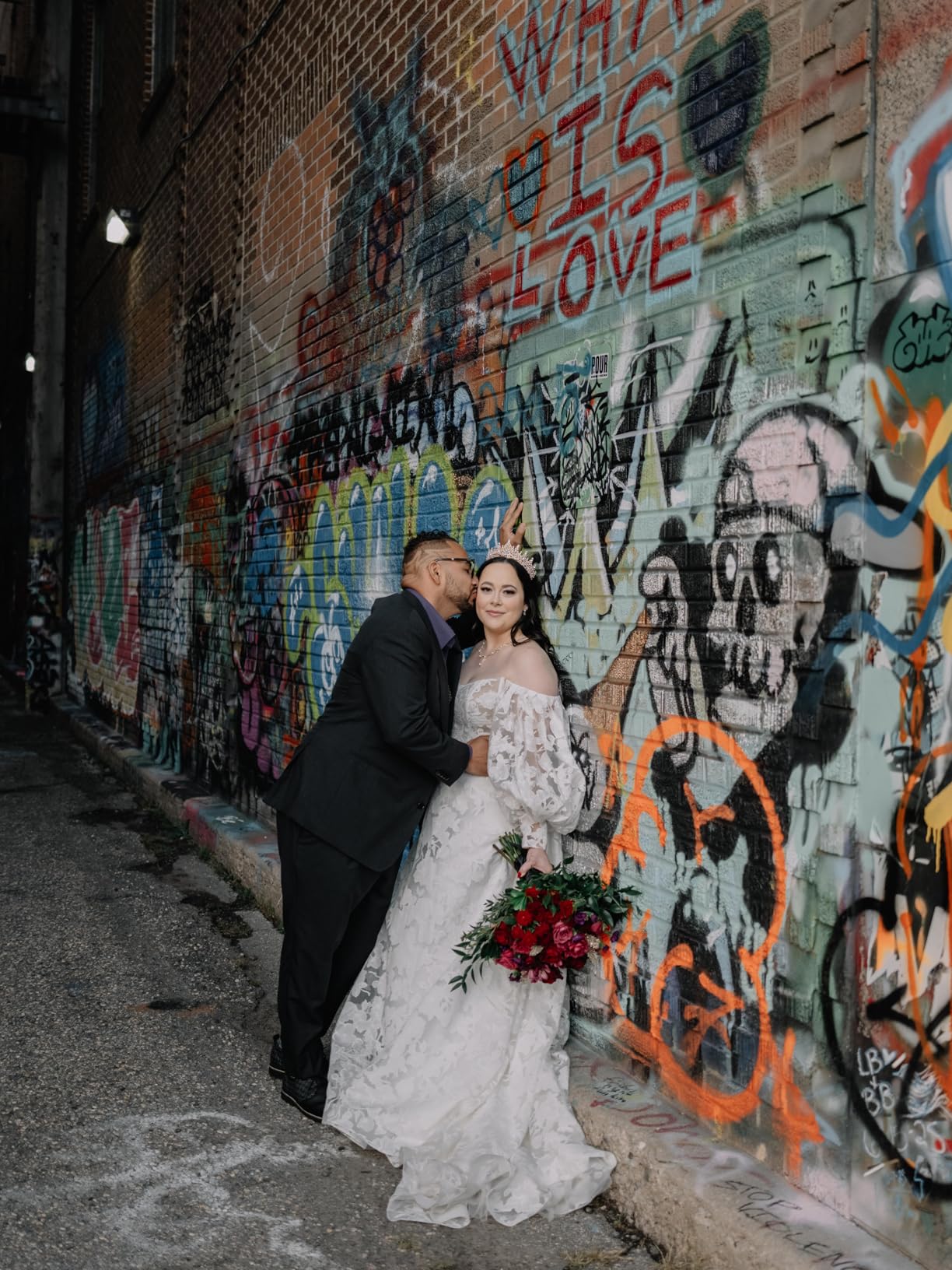
Best for sellers who shoot long days
Battery life and unlimited recording are the practical wins on a catalog day that starts at nine and ends when the last style is shot. Dual slots mean a second card is always recording while you cull.
If your color work is the priority rather than your video codecs, this body and the S5IIX are the same decision made differently. Take this one.
What you trade away
4K 60p is cropped on this body, which matters if vertical social video is a growth channel. The body is large, and 24.2MP is unremarkable for a stills-first shooter who crops detail hard.
The feature set also takes real time to learn. Like most of the bodies here, plan an afternoon with the menus before a paid day and set it to shoot the way you shoot.
11. Panasonic LUMIX S5 – A Straightforward Route Onto Full Frame
Panasonic LUMIX S5 Full Frame Mirrorless Camera, 4K 60P Video Recording with Flip Screen & WiFi, L-Mount, 5-Axis Dual I.S., DC-S5BODY (Black)
Pros
- Full-frame 24.2MP at a lower entry point than newer L-Mount bodies
- 96MP high-resolution mode adds detail for static subjects
- 6.5 stops of stabilization works well for handheld stills
- Live View Composite stacks multiple live shots
Cons
- Autofocus is contrast-detect and lags newer phase-detect systems
- Limited buffer depth for burst shooting
- No active cooling so long high-bitrate takes run warm
The original S5 is a sensible route onto a full-frame sensor, and for a lot of sellers that alone settles it. The autofocus is the weak point, contrast-detect with head, eye, face and body detection, and the reviews are clear that this is the feature the S5II models exist to fix.
For studio work that weakness is smaller than it sounds. A garment on a sweep on a tripod does not move, and once you are in manual focus with magnification you are not relying on the AF system at all.
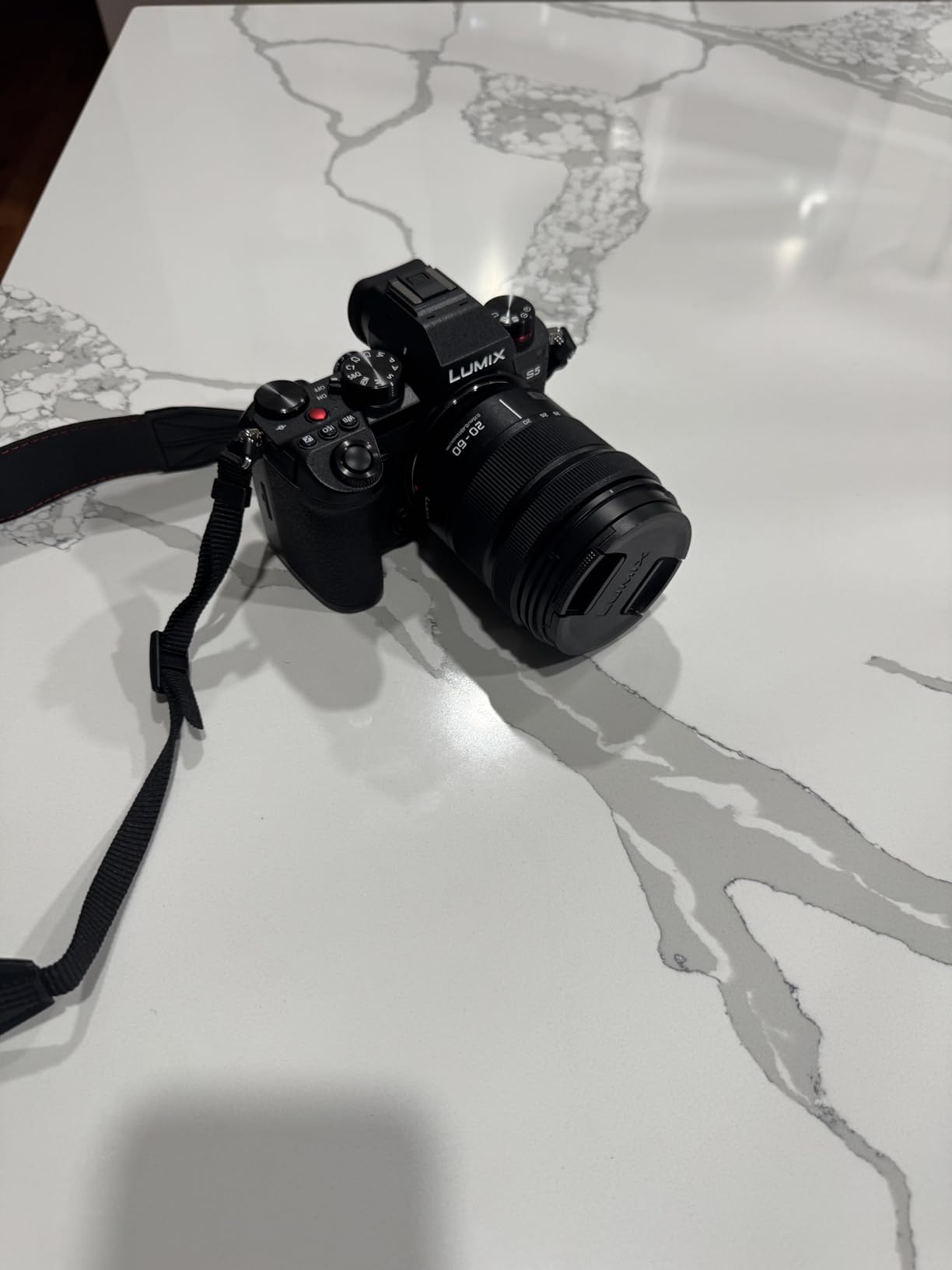
Where the S5 still wins is in the computational features. The 96MP high-resolution mode adds detail for static subjects, and Live View Composite stacks multiple exposures to extend range for a high-key white backdrop, which is exactly the situation where a single frame clips.
Six and a half stops of 5-Axis Dual I.S. 2 stabilization means you can handheld a vertical styling clip at shutter speeds that would otherwise be unusable, and the articulating touchscreen with a compact body makes it easy to frame product shots on a table.
Dual native ISO minimizes noise at high sensitivity, and V-Log and V-Gamut with 14+ stops of dynamic range give the same grading latitude as the S5II above. Dual card slots cover backup and overflow.
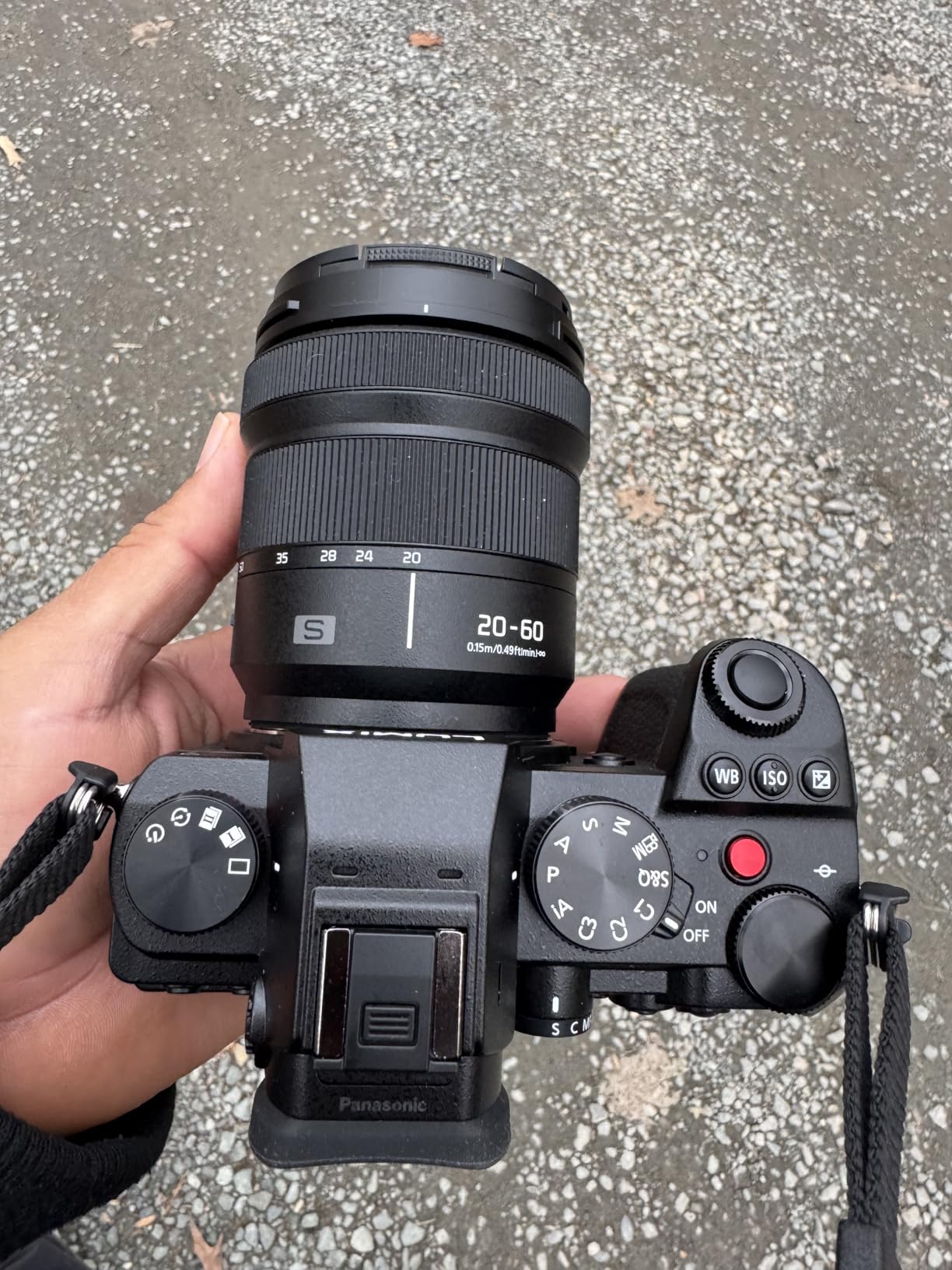
Best for tripod-only studio work on a budget
If your garments never move and you shoot in manual, buy this body and put the difference into a light. The 96MP mode and Live View Composite are worth more on a white sweep than a phase-detect AF system is.
The articulating screen and 6.5 stops of stabilization also make it a reasonable second body for handheld detail work.
Where it should send you instead
If you shoot models, skip it. Owners are consistent that contrast-detect focusing lags the phase-detect systems in every newer body, and the S5II or S5IIX is a modest step up that solves it outright.
There is no active cooling either, so long high-bitrate takes can run warm, and the buffer depth is limited for burst work. The menu system is also dense. If your plan is tripod stills only, none of that will stop you.
12. OM System OM-1 Mark II – The Best Body for On-Location and Cold Storage Work
OM SYSTEM Olympus OM-1 Mark II Micro Four Thirds System Camera 20MP BSI Stacked Sensor Weather Sealed Design (US Manufacturer Warranty)
Pros
- Computational modes like Handheld High Res and Focus Stacking replace a tripod
- Live GND and Live ND preview graduated filters before you shoot
- IP53 sealing is dependable in cool and damp conditions
- High-resolution viewfinder magnification in a compact body
Cons
- Micro Four Thirds sensor is smaller than APS-C for low light and background blur
- Limited lens ecosystem compared with larger formats
- 20.4MP resolution is modest for the price tier
The OM-1 Mark II is the odd one out in this roundup and the one I would most encourage a specific type of seller to consider. It is a Micro Four Thirds body, and the smaller sensor costs you something, but the computational photography inside it replaces gear you would otherwise have to buy.
Focus Stacking is the headline. Photograph a folded stack of garments, focus from the front panel to the back seam, and the camera composites frames into a single image where every layer is sharp. Handheld High Res Shot does the same trick for resolution, and Handheld Live Composite handles moving subjects. All three normally need a tripod and a slide rail.

Live GND lets you preview a graduated filter effect before you press the shutter, and Live ND previews a neutral density effect. On a lifestyle lookbook shot near a window, seeing the graduated darkening in real time removes a lot of guesswork from a slow session.
IP53 sealing, rated dustproof and splashproof and freeze-proof to minus 10 degrees Celsius, means you can shoot in a cold stock room or a damp exterior location without a weather cover. The 1053-point all cross-type Cross Quad Pixel AF covers 100 percent of the frame.
The stacked BSI sensor reads out fast enough for 10 fps, or up to 120 fps on the electronic shutter, and the 3.0-inch articulating OLED touchscreen plus dual UHS-II card slots round out a body that weighs 1.1 pounds.

Best for the seller shooting outside the studio
If your lookbook shoots happen on location, in changing conditions, the sealing and the computational modes are worth more than the sensor size penalty. Owners value the tripod-free high-resolution and focus-stacking modes most of all.
At 1.1 pounds with a compact body, it is also the second-lightest option here and goes anywhere.
What the smaller sensor costs
Background blur is weaker than APS-C at the same framing, which is the real compromise for lifestyle shots where you want a garment sharp and the environment soft. Low light performance trails the full-frame bodies for the same reason.
The lens ecosystem is smaller than any other mount in this roundup, and 20.4MP is modest for the price tier. If your catalog is studio-only on a white sweep, this body is not the answer. If you are shooting on location, it might be exactly the right one.
How to Choose a Camera for Clothing Photography
Here is where I disagree with the framing of most roundups, including the one you are reading. The camera is the last thing that changes how good your listing images look, not the first. In the r/Cameras product photography thread, a seller with a fixed budget said outright that the most important thing in product photography is the lighting setup and the scene, and that they would rather put the remainder into lights and strobes than an expensive body. I have watched that opinion get repeated on the DPReview forums, on Photography Stack Exchange, and in a Fstoppers piece arguing that a used mid-range body is what most product photographers actually shoot on. The consensus is worth taking seriously.
Split your budget before you pick a body
A workable split for a first dedicated setup puts roughly a third into the body, a third into lighting and modifiers, and the remainder across a tripod, a tether cable, and one fast lens. Lighting and modifiers carry the single highest return in that split for garment work, because a soft, even, well-positioned key light is what removes the wrinkles and the hot spots that make a good photo look cheap.
Deviate from that split only when your days are long. A seller shooting a hundred styles a day tethered to a laptop will get more out of a body with dual card slots and fast buffer than they will from a second light. Everyone else should spend the light money first.
Sensor size: how much do you actually need
APS-C gives you a real step over a phone sensor, cheaper glass, and deeper depth of field at a given framing, which is an advantage when you want a whole garment sharp. Full frame adds shallow depth of field for lifestyle shots and cleaner files when you lift shadows off a white background.
You do not need full frame to shoot clothing. Sellers doing flat lays and ghost mannequins on a sweep can do excellent work on APS-C, and every APS-C body in this roundup is a legitimate professional choice. Move to full frame when you are cropping fabric detail hard or shooting on location in low light.
On resolution, be honest about your delivery channel. Marketplace listing images are consumed at screen size, so 20MP is more than enough for most stores. You want higher resolution when you crop into stitching and weave, when you print, or when you shoot a still and pull a vertical video frame from it.
Focal length is the setting nobody talks about
Distortion is the reason garment proportions look wrong, and it is a focal length problem, not a camera problem. The working rule is 85 to 135mm full-frame equivalent, which means you stand back rather than crowding the garment with a wide angle.
On APS-C, a 35mm or 40mm prime lands in that range. On full frame, it is an 85mm or 100mm. On Micro Four Thirds, it is roughly a 45mm to 60mm. Once you frame a garment at that equivalent focal length, the sleeves, hems, and body proportions stop stretching toward the camera and start reading true.
This is also why the kit lenses bundled with several of these bodies are a starting point rather than a solution. A wide-angle kit lens is the single most common cause of a garment that looks stretched and narrow at the shoulders.
Match the body to the shot type
Flat lay is a tripod job and rewards a screen that flips to face you, plus manual focus with live view magnification. The Canon 80D, with its fully articulating screen, is the best tool in this roundup for that, followed by the Nikon Z50 II and the a6400 with their tilting panels.
Ghost mannequin is the same job with a height change, because the camera is usually lower or shooting up through the neck opening. Articulation and live view magnification matter more than autofocus here, which is why the Canon 80D and the OM-1 Mark II both earn their place despite other trade-offs.
On-model work is where autofocus decides the body. The Sony a6700 with its dedicated AI processor and the Nikon Z5 II with focus detection down to -10EV are the two I would trust most to hold a moving subject. Detail and stitching work rewards resolution and magnification, so the 33MP a7 IV and the OM-1 Mark II with its focus stacking are the picks. Lifestyle and on-location rewards sealing, stabilization, and weight, which is where the OM-1 Mark II leads. If your catalog also needs spin frames rather than flat stills, my 360-degree product photography setup guide covers the rig that goes with any of these bodies.
Settings that keep garment color honest
Shoot RAW. Set ISO 100 to 200 for white-on-white work. Stop down to f/8 or f/11 for flat lays and put the camera on a tripod so the shutter can go long enough. Set a custom white balance from a grey card in the actual light, and turn off auto white balance once it is set. Turn off every in-camera creative profile except when you specifically want the look, because a neutral file is far easier to correct than one that already has a signature baked in.
If you are lighting with strobes rather than continuous light, set the white balance manually rather than leaving it automatic, because a flash event can push the white point of a frame warmer than the surrounding room.
What tethering actually is and when it pays off
Tethered shooting means the camera is connected to a laptop or tablet, so every frame appears on a large screen the moment you take it. You shoot a model in five poses, the studio sees all five instantly, and the cull happens on screen instead of at the end of the day on a card.
It pays off when you shoot high-SKU catalogs, because the reshoot cost drops to seconds. It does not pay off for a single flat lay, where the overhead of a cable is pure friction. Several bodies here support remote release and live view over wireless, which is the middle ground if you do not want a cable at all.
One more decision: a used, several-generation-old body is a genuinely smart purchase for this work. Manual exposure, a customizable white balance, and RAW capture have been available for well over a decade. Buy used, check the shutter count, inspect the sensor for dust, and put the money you saved into a light.
Frequently Asked Questions
Do I need a full frame camera for ecommerce product photography?
No, not for most sellers. APS-C gives you a genuine step over a phone sensor, cheaper lenses, and deeper depth of field at a given framing, which helps when you want a whole garment sharp. Move to full frame when you are cropping fabric detail hard, shooting lifestyle frames where you want shallow depth of field, or working on location in low light.
Is a mirrorless camera better than a DSLR for product photography?
For stills work the two are close, and the deciding features are screen articulation, autofocus, and lens cost rather than the sensor format itself. Mirrorless wins on autofocus and compact size. A DSLR wins on optical viewfinders, cheaper lens ecosystems, and a fully articulating screen on certain models, which remains the best flat lay and ghost mannequin tool available.
Can I photograph clothing with a smartphone?
Yes, for a start, and a lot of sellers never leave it. A good phone paired with a soft window light and a plain white surface can produce entirely sellable listing images. You move to a dedicated body when you need color you can correct, a viewfinder in bright light, manual control over white balance, low light performance, and detail crops that survive a marketplace zoom.
What focal length is best for flat lay and product photos?
Roughly 85 to 135mm full-frame equivalent, which means standing back rather than crowding the garment with a wide angle. On APS-C that is about a 35 to 40mm prime, and on full frame an 85 to 100mm. At that range sleeves, hems, and body proportions stop stretching toward the camera and read true.
What camera do most fashion photographers use?
Fashion editorial and ecommerce catalog work are different jobs. Editorial photographers are split between high-end full frame bodies and anything they can afford, and the recurring professional view is that a used mid-range body is what most working photographers actually shoot on. For catalog work specifically, the emphasis shifts entirely toward color accuracy, tethering, and throughput rather than resolution or low light performance.
Is tethered shooting worth it for a small business doing product photos?
It is worth it once you are shooting high-SKU catalogs where a reshoot costs real time. Frames appear on a laptop as you take them, so the cull happens in the session instead of at the end of the day. For a single flat lay it adds friction with no benefit, and several bodies support wireless remote release and live view as a cable-free middle ground.
What is the best camera setting for clothing photography?
Shoot RAW, set ISO 100 to 200, stop down to f/8 or f/11 on a tripod for flat lays, and set a custom white balance from a grey card in the actual light before you start. Turn off in-camera creative profiles for catalog work so your files stay neutral, and set white balance manually if you are using strobes rather than continuous light.
The Verdict: Which Camera Should You Buy?
The Sony Alpha a6400 is the best camera for clothing ecommerce photography for most sellers, and I would start there. A 20.1MP APS-C sensor writing 14-bit RAW, a 180-degree tilting screen that makes flat lays and ghost mannequin angles straightforward, and real-time eye autofocus that holds on a moving model, all in a body that weighs 10.3 ounces.
Buy the a7 IV if you are running a high-SKU catalog weekly and need 33 megapixels of full-frame detail, dual card slots, and uncropped 4K 60p video from the same body. Buy the D7500 if you want the most owner-tested value option with a D500-class sensor and a buffer that holds about fifty RAW files, and you are shooting stills only.
Change course entirely if your work is not stills. The a6700 owns autofocus and uncropped 4K, the LUMIX S5IIX owns product video with Pro-Res and a 96MP pixel-shift mode for static shots, the Fujifilm X-S20 owns color straight out of camera with an honest caveat about its autofocus, and the OM-1 Mark II owns on-location work with IP53 sealing and focus stacking that replaces a tripod.
Whichever body you choose, spend your next upgrade on light rather than glass or a second body, and frame everything at 85 to 135mm equivalent so the proportions read true. That advice holds for every camera in this roundup, including 2026‘s newest. For the wider fundamentals, start with my guide to cameras for clothing product photography.