
A dance studio is one of the hardest rooms to photograph well. The lights are deliberately dim and colored, the room is full of fast-moving bodies crossing in front of each other, and the performance runs for ninety minutes straight without a break. Phones struggle with all three at once, and most consumer cameras only solve two of them. The best cameras for dance studios are the ones that hold focus on a spinning dancer, stay clean when the stage lights go dark, and refuse to shut down halfway through the finale.
I have spent the last few years shooting classes, recitals and studio promotional work, and the pattern repeats every time. Owners ask for a single camera that covers the whole floor, records without cutting out, and produces short vertical clips for social by the weekend. That is a narrower list than the marketing pages suggest, and this roundup is built around it.
Every camera below was assessed on the same four dance-specific criteria: autofocus that holds on a moving body, usable high-ISO performance in a dim room, a frame rate that can be slowed down for leaps, and a body that will still be running at minute ninety. If you also photograph stills, I have flagged which ones double as strong portrait cameras.
If you shoot similar rooms for a living, our guides to the best cameras for dance recital filming and the best cameras for portrait studios cover the overlapping decisions in more detail.
Top 3 Picks for Best Cameras for Dance Studios in October

Sony Alpha a6400
- 425-point phase-detect AF
- Real-time Eye AF
- 4K full pixel readout
- 180-degree tilting LCD

Sony Alpha a7 IV
- 33MP full-frame sensor
- 4K 60p 10-bit 4:2:2
- 759-point phase-detect AF
- 5-axis IBIS

Canon EOS R6 Mark II
- 6+ hour recording rating
- 6K oversampled 4K 60p
- 1053 AF zones
- Vari-angle touchscreen
The Sony a6400 wins on tracking and handling. The Sony a7 IV wins on image quality and low-light headroom. The Canon R6 Mark II wins on endurance, which is the one factor that quietly ends careers at recitals.
Best Cameras for Dance Studios in 2026
| Product | Specifications | Action |
|---|---|---|
| Sony Alpha a6400 |
|
Check Latest Price |
| Sony Alpha a7 IV |
|
Check Latest Price |
| Canon EOS R6 Mark II |
|
Check Latest Price |
 Canon EOS R7 Canon EOS R7 |
|
Check Latest Price |
 Nikon Z 6II Nikon Z 6II |
|
Check Latest Price |
 Fujifilm X-T5 Fujifilm X-T5 |
|
Check Latest Price |
 Nikon Z6 III Nikon Z6 III |
|
Check Latest Price |
 Sony Alpha a6700 Sony Alpha a6700 |
|
Check Latest Price |
1. Sony Alpha a6400 – Best Overall Camera for a Dance Studio
Pros
- Real-time Eye AF holds on moving dancers
- 425 phase-detection points across 84 percent of the frame
- Only 10.3 ounces for handheld corner work
- 180-degree tilting LCD for low floor angles
- 4K video with full pixel readout
Cons
- No in-body stabilization so it relies on lens stabilization
- No headphone jack for monitoring
- Single UHS-I card slot
The a6400 has been my default recital body for a reason that has nothing to do with specs: it weighs 10.3 ounces and still holds a dancer in focus while they travel across a thirty-foot floor. The 425 phase-detection points cover 84 percent of the frame, and real-time eye AF keeps a face locked even when a group routine funnels into a tight formation.
That tracking matters more than resolution in a studio. When twelve children converge in the centre of the floor, a camera that hunts for focus produces unusable footage. This one does not hunt. It also records 4K with full pixel readout, so the frame is not cropped in a way that steals your wide angle.
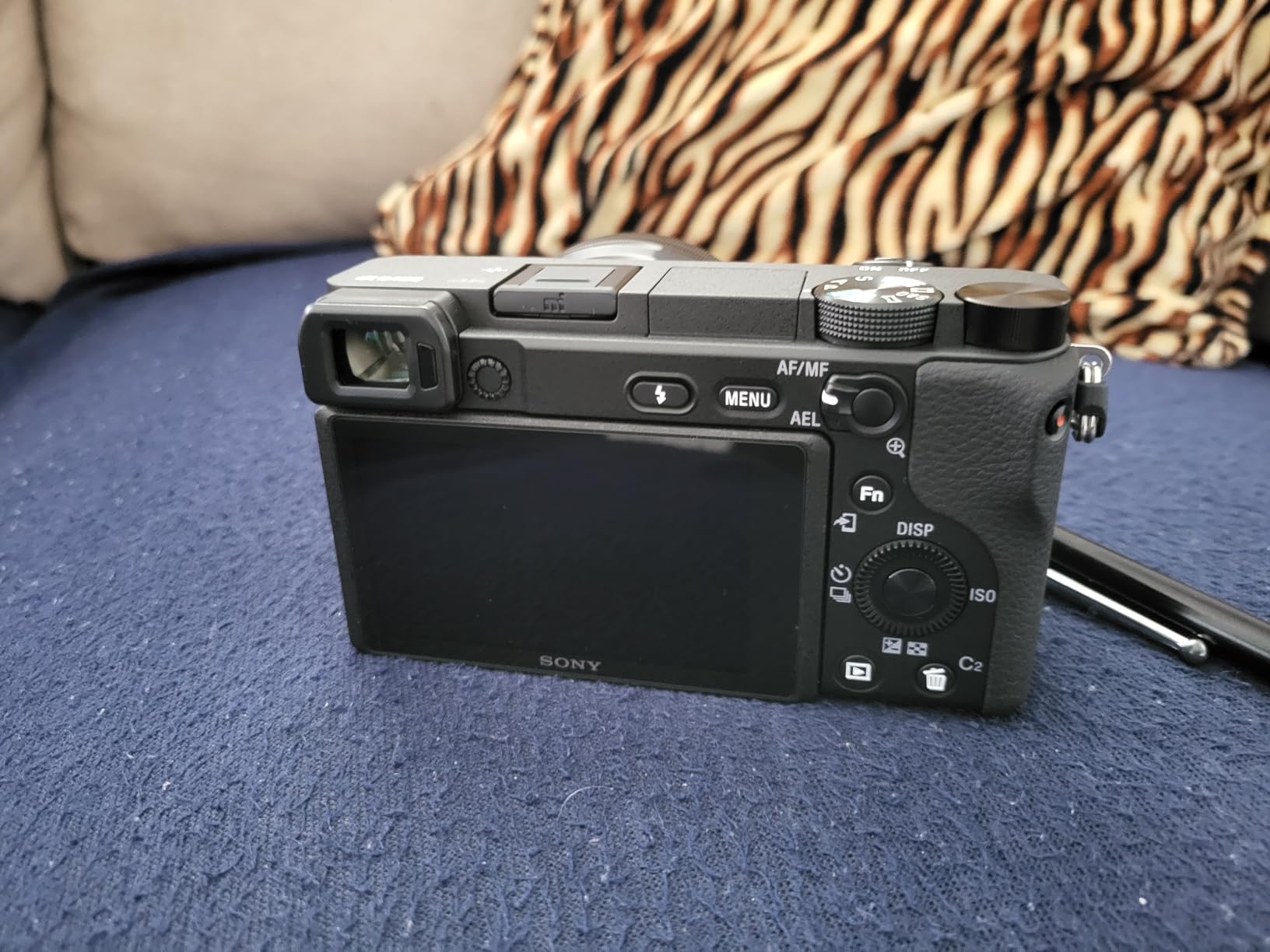
The 180-degree tilting screen is the sleeper feature. It lets you frame a floor-level shot without lying on the floor, which matters enormously for contemporary and breakdance work where the interesting angles are low and the operator is already holding a lens at hip height.
Reviewers consistently praise the eye autofocus and the compact size. The most common complaint is the absence of in-body image stabilization, which means you need a stabilized lens or a tripod for smooth movement. A second recurring note is the single UHS-I card slot, so long 4K takes fill a card faster than dual-slot bodies allow.
Where the a6400 earns its place in a studio
This is the camera I hand to a volunteer instructor with no video experience. The menus are shallow, the autofocus does the thinking, and the body can be carried for a full day of back-to-back classes without fatigue. For a studio that films weekly recaps for parents and social clips, it does the whole job with one body.
Pair it with the kit 16-50mm f/1.8-2.8 zoom and you cover roughly 24-75mm equivalent, which handles a mid-room wide shot down to a tighter portrait. Add a wider prime when you need the entire floor in frame from a back corner.
Where the a6400 falls short
It has no headphone jack, so an operator who wants to monitor a live piano feed or check levels during a run-through will need an external solution. Single-card recording also means no backup stream during a ninety-minute show, and the stabilization gap makes moving shots noticeably rougher than the Canon and Nikon bodies here.
2. Sony Alpha a7 IV – Premium Full-Frame for Multi-Camera Recital Coverage
Pros
- 33MP full-frame sensor with excellent dynamic range
- 759 phase-detection points covering 94 percent of frame
- 4K 60p 10-bit 4:2:2 recorded internally
- 5-axis in-body stabilization at 5.5 stops
- Dual CFexpress Type A and UHS-II card slots
Cons
- Rolling shutter is visible in 4K 60p
- Menu system takes time to learn
- No fully articulating screen only tilting
A full-frame sensor is the single biggest upgrade a growing studio can make. The 33MP Exmor R sensor gathers far more light than an APS-C sensor, which means you can lift the ISO in a dark studio without the footage turning to grey mush. For night recitals with theatrical lighting, that difference is the difference between usable and unusable.
Video-wise this body records 4K 60p in 10-bit 4:2:2 internally, no external recorder required, and the 7K oversampled 4K 30p mode gives you noticeably cleaner motion on fast floorwork. S-Cinetone also means recital footage lands close to a finished look before you touch the timeline, which saves hours for a small team.
Stabilization is rated at 5.5 stops, so handheld coverage moves from a back corner without the shake that a small-sensor body produces. The dual card slots let you record a backup stream or a proxy file to a second card, which is exactly what you want on a show you cannot repeat.
Reviewers rate the sensor and autofocus very highly. The most common criticism is rolling shutter distortion visible during 4K 60p, which shows up as slight bending when a dancer whips past the frame edge. Menus are also deep, so budget time for a settings setup session before recital season.
Where the a7 IV earns its place
For a studio shooting more than one recital a season, this is the camera that stops the low-light compromises. It handles a dark stage, a bright house lights bow, and the coloured wash in between without a settings change. It also produces stills good enough to print or hand to a family.
It pairs well with a wide prime for floor coverage and a short telephoto for the back row, and the CFexpress Type A slot takes the highest-bitrate files the body can write.
Where the a7 IV falls short
The tilting screen is not fully articulating, so low-angle vertical work needs the camera turned or on a rig rather than flipped toward you. Rolling shutter at 60p affects fast lateral moves. And CFexpress Type A media is a real ongoing cost that should be part of the studio budget, not an afterthought.
3. Canon EOS R6 Mark II – Longest Runtime for Full-Length Recitals
Pros
- Dual Pixel CMOS AF II with 1053 zones covering the frame
- 6K oversampled uncropped 4K 60p video
- Rated for 6+ hours of continuous recording
- 40 fps electronic shutter for stills
- Vari-angle touchscreen for low and high angles
Cons
- 24.2MP is the lowest resolution here for heavy cropping
- Rolling shutter appears at 40 fps electronic
- No CFexpress slot dual UHS-II SD only
Here is the number that settles the argument for most studio owners: this body is rated for more than six hours of continuous video recording. A recital is ninety minutes plus a reset and a photo call. For a single operator who cannot babysit a camera for overheat cycles, that rating removes the biggest anxiety in the room.
Autofocus is the other headline. Dual Pixel CMOS AF II spreads 1053 zones across essentially the whole frame with subject detection tuned for people, so a soloist crossing a dark stage stays tracked. Video is 6K oversampled down to uncropped 4K at 60 fps, and the vari-angle touchscreen lets you shoot from floor level without contorting the body.
Canon’s colour rendering on skin tones and costume satin is a genuine advantage for recital footage, where warm stage wash sits directly on the subject. Reviewers single out subject detection and the recording endurance as the standouts across the whole range.
The trade-offs are clear and worth stating. At 24.2MP this is the lowest resolution here, so heavy cropping of a wide group shot loses detail. The 40 fps electronic shutter brings rolling shutter with it, and the card slots are dual UHS-II SD with no CFexpress option for the highest bitrates.
Where the R6 Mark II earns its place
Choose this for a theatre-style recital with long running times, a single operator, and no chance to redo a take. It is also the easiest of the full-frame options here to hand to a second volunteer, because the vari-angle screen and deep autofocus coverage do most of the work for them.
Two bodies configured this way give you a wide angle in the back corner and a closer body at stage level, both recording to cards you can swap without stopping the show.
Where the R6 Mark II falls short
If your studio sells large poster stills or heavily cropped action images, 24.2MP will feel tight next to the higher-resolution bodies in this list. The micro-HDMI port is also not the most robust connector for a rig that gets bumped all night, and there is no headphone jack on the body.
4. Canon EOS R7 – Best Value for Class Documentation
Pros
- 32.5MP APS-C sensor for stills and cropping
- 30 fps electronic shutter with 0.5 second pre-shoot
- 4K 60p oversampled from a 7K readout
- Dual UHS-II SD card slots for long takes
- Spare LP-E6NH battery included in the box
Cons
- 4K 60p carries a 1.8x crop
- Tilting screen only not fully articulating
- APS-C 1.6x crop narrows your widest framing
Not every studio needs full frame. The R7 is the sensible middle of this list, and for one specific job it is arguably the right tool: documenting a full class week without wearing anyone out. The 32.5MP APS-C sensor produces detailed stills, and the 30 fps electronic shutter with pre-shoot catches the peak of a jump that a slower burst would miss.
Video is 4K 60p oversampled from a 7K readout, which is a rare combination at this tier and gives you usable slow-motion options for social clips. Dual UHS-II slots mean you can spread a long class across two cards, and a spare LP-E6NH battery is included in the box, which is a small thing that matters on a twelve-hour Saturday.
Reviewers consistently rate the autofocus and the value highly. The crop is the recurring complaint: 4K 60p narrows by 1.8x, and the APS-C 1.6x factor means the lens you love becomes longer than you expected. That matters if your plan is one body covering the whole room.
The tilting screen rather than a fully articulating one is the other limitation for low floor-level work, and the viewfinder resolution is lower than the full-frame bodies here, which is noticeable when you are checking focus on a soloist under a spotlight.

Where the R7 earns its place
This is my pick for studios that film classes weekly and post stills to social more than they deliver finished recital films. A class is a shorter, more forgiving shoot than a recital, and the R7 handles it at a cost that leaves room in the budget for a wide lens or two.
It also works as a second body beside a full-frame camera, giving you a wide shot and a closer body running from two operators or one static setup.
Where the R7 falls short
The 1.8x crop on 4K 60p removes your widest option exactly when you need it, during a group routine shot from a back corner. In genuinely dim rooms the smaller sensor climbs to higher ISO sooner than the full-frame options, and the non-articulating screen limits creative angles.
5. Nikon Z 6II – Best Low-Light Performer in the Lineup
Nikon Z 6II | Versatile Full-Frame mirrorless Stills/Video Hybrid Camera | Nikon USA Model
Pros
- 24.5MP BSI sensor with strong low-light performance
- 4K 60p full pixel readout with no crop
- Dual card slots CFexpress plus UHS-II
- USB-C constant power runs through a full recital
- 5-axis in-body VR up to 5 stops
Cons
- 273 AF points trail Sony and Canon for tracking
- Tilting screen only
- CFexpress Type B cards add cost
This body carries the highest average rating of the eight and its reputation rests on one thing: the back-illuminated 24.5MP full-frame sensor. The BSI design pulls the circuitry behind the light-gathering layer, which is why the noise stays controlled as the ISO climbs in a dim studio. For a recital where the house lights drop and the only light is a coloured wash, that is worth more than extra megapixels.
It records 4K 60p with a full pixel readout and no crop, so a wide framing stays wide at the higher frame rate. The dual card slots accept CFexpress on one side and UHS-II on the other, and USB-C constant power means you can run the body from a power bank or a battery plate for the length of a full show.

Nikon handling and colour science are also strong. Reviewers rate the image quality, dual slots and value very highly, and the eye detection for people and pets works well on a single dancer at stage level. USB-C constant power deserves more attention than it gets, because a camera that never dies during a recital removes a whole category of stress.
The limitation is autofocus. With 273 phase-detection points and tracking that reviewers describe as good but behind the Sony and Canon bodies here, fast lateral floorwork across a dim stage is where it works least well compared to its rivals.

Where the Z 6II earns its place
Choose it when the recital happens in a genuinely dark theatre, or when your studio films evening classes under house lighting. The sensor keeps shadows in a dark studio far cleaner than any APS-C body here, and constant power recording makes long, multi-take recital days far easier to manage.
Nikon F-mount glass also gives you an unusually wide choice of fast wide primes, which is exactly the lens category a dance studio needs first.
Where the Z 6II falls short
If your priority is one operator tracking multiple dancers through fast choreography, the 273-point system will work harder than the Sony and Canon alternatives. The tilting screen is not fully articulating, and CFexpress Type B media is a cost that scales quickly when you record high-bitrate 4K all evening.
6. Fujifilm X-T5 – Best for Stills Portraits Alongside Video
Pros
- 40.2MP X-Trans 5 HR sensor for portrait crops
- 6.2K 30p internal 10-bit 4:2:2
- F-Log2 and F-Log for grading flexibility
- Film simulations ready out of camera
- Dial-based controls you can set by feel
Cons
- Extended 6.2K recording runs hot
- APS-C sensor reaches its limit in very dim rooms
- No headphone jack
The X-T5 is here for a specific kind of studio: one that sells portraits, programme covers and high-resolution stills alongside video. At 40.2MP the X-Trans 5 HR sensor holds more detail than anything else in this list, and the film simulations mean costume satin and stage colour can be delivered with very little grading work.
Video is capable rather than exceptional. It records 6.2K at 30 fps in 10-bit 4:2:2 internally, oversamples 4K from that readout, and offers F-Log and F-Log2 with more than 13 stops of dynamic range for grading. The three-way tilting screen and the physical dials for ISO, shutter and exposure make it the fastest body here to set by feel in a dark booth.
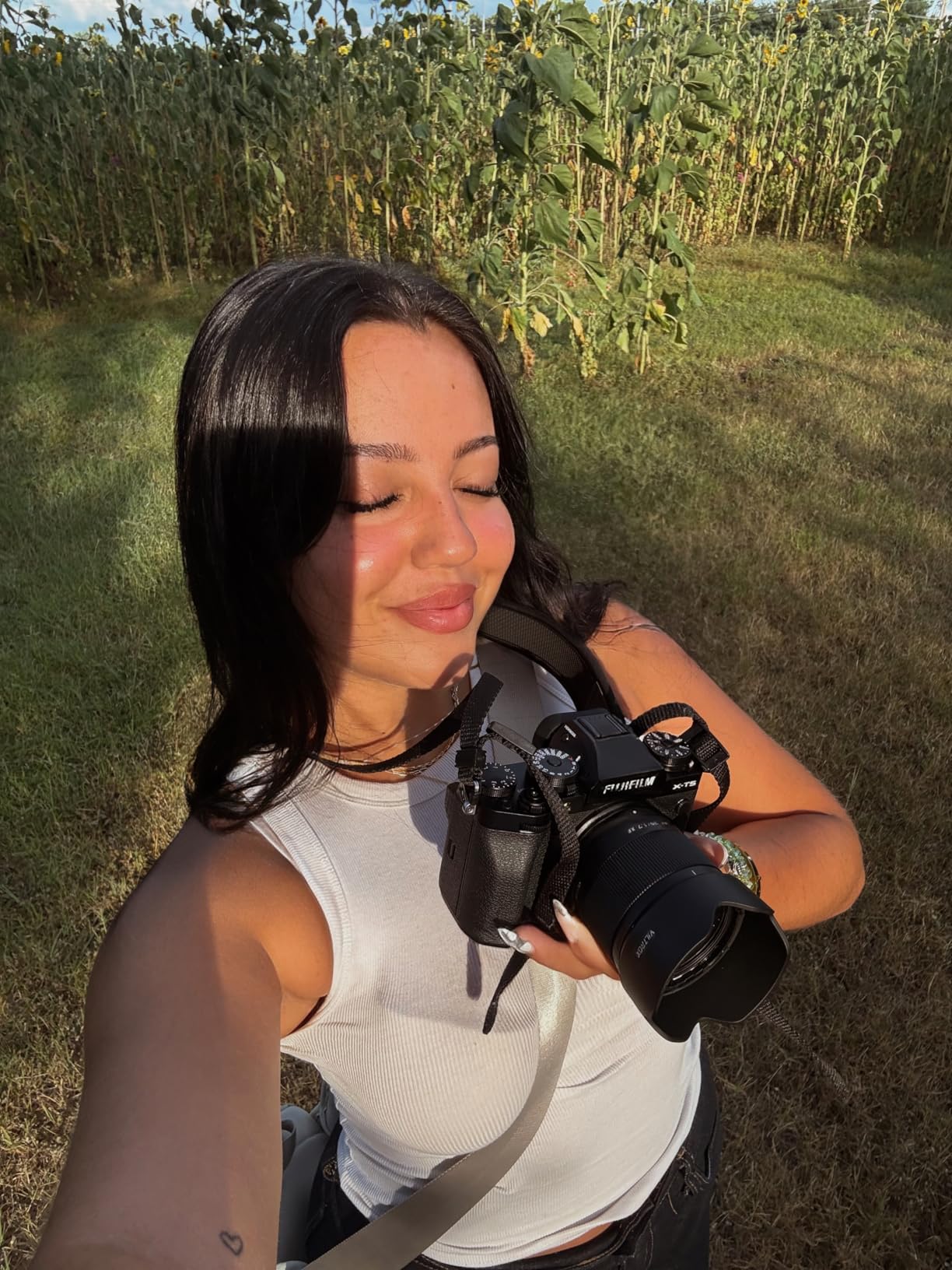
Reviewers rate the resolution, the film simulations and the controls very highly, and the 5-axis stabilization at up to 7 stops helps with handheld work. They are also candid about the video side: extended 6.2K recording runs hot, and autofocus tracking does not match the Sony and Canon bodies for fast, unpredictable movement.
There is no headphone jack on the body, which limits monitoring during a live recital with a separate audio feed. Reviewers also note the body feels heavier than a typical APS-C at 2.4 pounds, a real consideration over a twelve-hour shoot day.
Where the X-T5 earns its place
Pick it when photographs are a deliverable, not an afterthought. A recital produces portrait opportunities the video cameras here cannot exploit, and 40MP gives you the crop room to frame a soloist from the back of the house. It also suits studios that deliver graded highlights reels to parents.
The dials are genuinely useful when you are changing settings repeatedly as the light changes between a class, a run-through and a show.
Where the X-T5 falls short
It is not the body to buy for a dim stage recital. The APS-C sensor reaches its limit sooner than the full-frame options, autofocus is not tuned for sudden direction changes, and sustained 6.2K capture is where the heat problems appear. If video is the primary reason for the purchase, look elsewhere in this list.
7. Nikon Z6 III – Best for Slow-Motion Leaps and Turns
Nikon Z6 III, Black | Full-Frame Mirrorless Stills/Video Camera with 6K/60p Internal RAW Recording | USA Model
Pros
- 6K 60p internal N-RAW in a body this size
- 4K 120p and Full HD 240p for leaps and turns
- Autofocus detection down to -10EV
- 5760k-dot EVF rated at 4000 nits
- Fully articulating screen for low floor angles
Cons
- Single card slot only
- Menus and button layout take real work
- Battery life is unremarkable for a full show
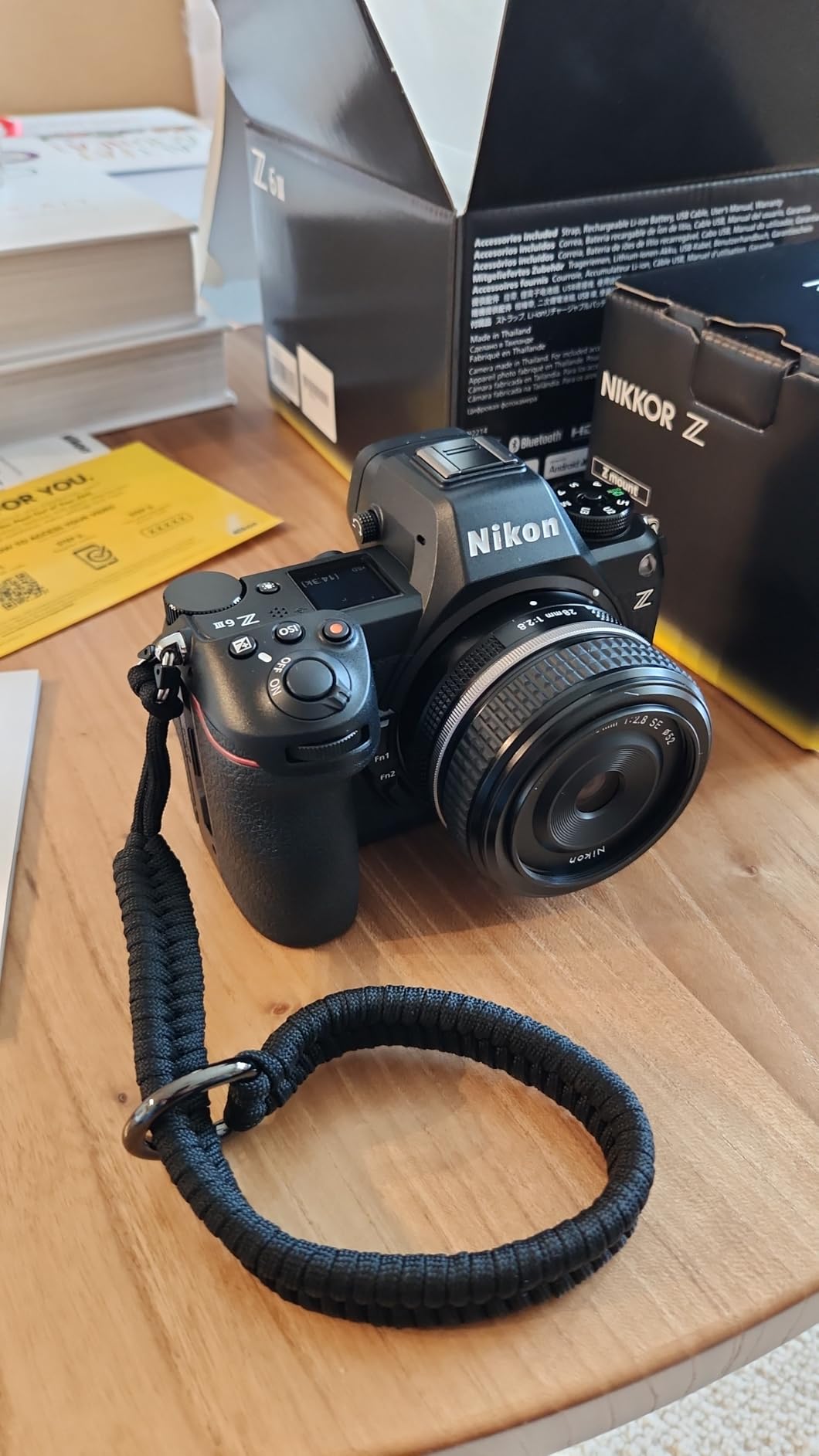
If your studio’s social output is built around slow motion of a grand jeté or a triple pirouette, this is the body to shortlist. It records 4K at 120 fps and Full HD at 240 fps internally, and the partially stacked sensor keeps the readout fast enough to make that possible while still delivering 6K 60p internal N-RAW.
Two other things matter in a dark studio. Autofocus detection is rated down to -10EV, so it can acquire a dancer in genuinely low light, and the 5760k-dot viewfinder rated at 4000 nits makes checking focus possible in a dark booth. The fully articulating screen is a genuine advantage for floor-level angles.
Reviewers praise the video feature set above almost everything else at this tier and consider it exceptional value for video-first creators. The criticisms are practical rather than fatal: a single card slot, menus and button placement that some operators find unintuitive, and no bundled charger beyond USB-C power.
It is also the lowest average rating in this roundup, and the reason is worth understanding rather than ignoring. The camera does video exceptionally well, and the complaints cluster around handling, which improves quickly with a grip and a few hours of setup.
Where the Z6 III earns its place
Choose it when the deliverable is short-form content. A vertical crop of a leap at 120 fps becomes a reel or short that no other body here matches, and the low-light detection threshold means you can shoot that content during the recital rather than in a reshoot afterwards.
It suits a video-first operator who is comfortable with menus, and a studio that already uses CFexpress Type B media elsewhere.
Where the Z6 III falls short
The single card slot removes any backup stream option on a show you cannot repeat. Rolling shutter still appears at the highest frame rates, and the ergonomics, grip and menu system are the most complained-about elements in the whole lineup. If a volunteer operator will be running this camera, expect a settings session first.
8. Sony Alpha a6700 – Best Compact for Location Shoot Coverage
Pros
- Dedicated AI processor tracks dancers reliably
- 4K 60p 10-bit 4:2:2 oversampled from 6K
- 4K 120p for slow-motion detail
- 14.5 ounces suits long handheld takes
- Fully articulating touchscreen
Cons
- Single SD card slot
- Long 4K 60p takes can overheat in a warm room
- No headphone jack
The a6700 is the smallest body here at 14.5 ounces, and that is the entire argument for it. Studios that shoot promotional content in community centres, outdoor stages and small studio spaces are chasing coverage, not cinema, and a camera that stays in the bag until the moment arrives changes what you can cover in a day.
The dedicated AI processor drives 759-point phase-detection autofocus with real-time recognition for people, so tracking in a crowded room is the strongest of any APS-C body here. Video is 4K 60p in 10-bit 4:2:2 oversampled from 6K, with S-Log3 and S-Cinetone for grading, and it records 4K 120p for slow motion. The fully articulating touchscreen is unusual at this size and weight.
Reviewers rate the autofocus very highly and like the battery life from the NP-FZ100 cell. The main criticism from owners is heat: long 4K 60p takes in a warm room can trigger throttling or shutdown, which is a real consideration for an outdoor summer showcase filmed in direct sun.
The single SD card slot is another limitation, and there is no headphone jack for monitoring. The grip is also small, which becomes uncomfortable over a long handheld session, so a grip or a rig is worth adding for event work.

Where the a6700 earns its place
It is the right body for a studio covering multiple small spaces in a day, or a team that wants a second camera for wide angles without doubling the weight of the bag. The APS-C 1.5x factor also works in your favour here, giving you a little more reach on a telephoto from the back of a room.
Autofocus reliability means a less experienced operator can get usable footage from a single take, which is valuable when the person holding the camera is a parent volunteer.
Where the a6700 falls short
Heat management in sustained 4K 60p is the one to plan around, and a single card slot means no redundant recording. The APS-C sensor also reaches its ISO ceiling sooner than the full-frame bodies in dim theatrical lighting, and the small grip is a genuine issue for long handheld work.
How to Choose a Camera for Your Dance Studio
Most buying mistakes in this category come from optimising for the wrong part of the job. Someone spends on resolution and then discovers the camera hunts for focus when a group routine collapses into a tight formation. Someone else buys the lightest body and it overheats at the interval. Work through these in order and the shortlist writes itself.
Shutter speed decides whether turns and leaps are sharp
Dance is fast. A shutter speed that looks fine for a portrait will smear a pirouette. As a working starting point, shoot ballet and contemporary at 1/250, hip hop and street styles at 1/500, and floor-based breaking work at 1/500 or faster. Any body here can hold those speeds in good light, but the aperture that results determines how much light you lose, which is why the next point decides everything.
Sensor size is the whole low-light story
Studio lighting is deliberately dim. A small sensor reaches its usable ISO ceiling long before a large one, and the noise that follows looks like grain in the finished video. For a well-lit daytime class, an APS-C body is plenty. For a theatre recital with a coloured wash, full frame is the difference between clean footage and a noisy one. This is the single criterion I would not compromise on if recitals are your main event.
4K60 for the recital, 4K120 for the social clip
4K at 60 fps is the right default for recital footage because you can always slow a section down to half speed and it still looks natural. 4K 120 fps is a specialist tool for leaps, turns and jumps, and only two bodies in this list deliver it at 4K resolution. Decide which deliverable matters more before you spend.
A wide lens covers the floor, a telephoto lens covers the back row
To film a whole group from one back corner you need wide angle coverage, typically something in the 16-35mm equivalent range. To pick out a soloist from thirty metres away you need reach in the 70-200mm equivalent range. Forum advice consistently favours carrying both rather than relying on a single wide, because a wide-only rig cannot deliver the close expression shots parents ask for. Budget for two lenses rather than one, and treat the kit zoom as a starting point rather than a solution.
Mirrorless vs camcorder vs phone for a dance studio
A dedicated camcorder with a one-third-inch sensor is built for endurance and has a long zoom lens, but its small sensor forces high ISO in a dim room, which is the problem filmer after filmer describe. A phone is genuinely fine for a class recap posted straight to a group chat, and it is not fine for a recital. A mirrorless body with a large sensor and a fast wide lens sits in the middle, and that is where the whole industry has moved. Our guide to the best cameras for studio environments covers the sensor trade-off in more detail if you want the theory.
Recording limits and overheating are the recital-night killers
This is the issue that appears constantly in discussions about filming school productions and almost never in buying guides. A body that throttles or shuts down at thirty minutes loses you the entire show. Check the manufacturer’s stated continuous recording rating, check whether your card is fast enough for the chosen bitrate, and expect a warm studio to shorten every runtime on the list here. The Canon R6 Mark II is rated for 6+ hours; the others need you to plan around them.
Onboard microphones cannot carry live recital music
No camera in this list has onboard audio that will satisfy a parent expecting the piano track. The practical route is to feed the mixing desk output into the camera, or run a separate recorder and sync in post. Prioritise a camera with a headphone jack for monitoring, and note that several bodies here lack one, which pushes monitoring to an external recorder. If you also need a stills-heavy workflow, our guide to cameras for school portrait studios is worth a read.
Which Canon camera is best for low-light video recording
Between the two Canons here, the EOS R6 Mark II is the better low-light video camera. Its 24.2MP full-frame sensor and subject-detection autofocus covering essentially the whole frame handle dark stages better than the R7, and its 6+ hour recording rating suits full-length recitals. The R7 is the stronger stills body and the better value choice, but its APS-C sensor runs out of clean light sooner.
What type of camera do most influencers use
Small, light mirrorless bodies with fully articulating screens dominate, because the format is judged on a phone. Our top pick for that workflow is the Sony a6700 at 14.5 ounces with a fully articulating touchscreen and reliable AI subject tracking. The a6400 is the simpler alternative if the operator is new to cameras, and any of these will output a clean vertical crop with the frame guides enabled.
Sample settings by dance style
Start every class in manual and adjust with the light. For ballet and contemporary, 1/250 at f/2.8 or wider, ISO 800 to 3200, 4K 24p or 30p. For hip hop and street, 1/500 at f/2.8, ISO 800 to 6400, 4K 60p. For slow-motion social clips, 4K 120p at 1/250, ISO 400 to 1600, then grade in post. Lock white balance on the stage lighting rather than chasing it, and shoot a wide establishing frame before you start following individuals.
Filming Minors in Your Studio: Consent and Privacy
Recording children raises obligations that have nothing to do with camera choice, and studios that ignore them eventually face complaints. Get written consent from a parent or guardian before filming any class, and publish a simple policy stating which cameras are in use, where the footage is stored and how long it is kept.
Decide and communicate whether recital footage is shared publicly, and if so, on which platforms. Offer families a way to opt out, and designate a fixed camera position for any participant who asks for it. Finally, secure the footage itself. A laptop with recital video on it should not be the same laptop that sits unlocked in the studio office, and covering the entrance and storage room is a job better done with a dedicated unit. Our picks for the best security cameras for home photography studios cover that side of the setup.
Frequently Asked Questions
What is the best camera to record dance?
For most dance studios the Sony Alpha a6400 is the best all-round choice, because its real-time Eye AF and 425 phase-detection points hold a moving dancer across a wide studio floor while the body stays light at 10.3 ounces. Studios filming recitals in a dark theatre gain more from the full-frame Canon EOS R6 Mark II, which adds a 6+ hour recording rating so it will not cut out mid-show.
What is the best video camera for a studio setting?
For a fixed indoor studio, a mirrorless body with a large sensor beats a small-sensor camcorder, because low light is the limiting factor in every dance room. The Canon EOS R6 Mark II and Sony Alpha a7 IV give the cleanest images when stage lighting dims, while a dedicated camcorder still wins on endurance and built-in zoom reach.
What cameras do well in low light?
Full-frame bodies handle low light best, and sensor size is the deciding factor. The Nikon Z 6II, with a 24.5MP back-illuminated sensor, stays clean as ISO climbs in a dark studio. The Sony Alpha a7 IV and Canon EOS R6 Mark II follow closely. APS-C models such as the Sony a6400 and Canon EOS R7 are usable in a lit studio but reach their noise ceiling sooner under stage lighting.
Which Canon camera is best for low-light video recording?
The Canon EOS R6 Mark II is the better low-light video camera of the two Canons here. Its full-frame 24.2MP sensor, subject-detection autofocus across essentially the whole frame and 6+ hour continuous recording rating suit a dim recital stage. The Canon EOS R7 is the stronger stills camera, but its APS-C sensor produces more noise at the ISO levels a dark room demands.
What frame rate is best for dance video?
4K 60 fps is the best default for dance video, because it stays sharp on fast footwork and can be slowed to half speed in editing without looking artificial. Use 4K 120 fps only for slow-motion clips of leaps and turns, and only on the Nikon Z6 III and Sony a6700 in this roundup, which record that frame rate internally.
Do mirrorless cameras overheat when recording long recitals?
They can. Every mirrorless body here runs warm in a packed studio, and sustained 4K 60p recording is where heat problems appear most often, particularly in the Sony a6700 and Fujifilm X-T5. The Canon EOS R6 Mark II is rated for more than six hours of continuous recording. Check the stated limit, use a fast memory card, and expect hot rooms to shorten every runtime.
What lens do I need to film a whole dance studio?
You need a wide angle lens, roughly 16-35mm equivalent, to fit a full group into frame from a back corner. For close expression shots of a soloist from across the room, add a 70-200mm equivalent telephoto. Carrying both a wide and a telephoto is the common recommendation among working filmers, rather than relying on a single wide lens that cannot deliver close coverage.
Conclusion: The Best Cameras for Dance Studios in 2026
The Sony Alpha a6400 is still the pick I recommend to most owners from this list of the best cameras for dance studios, because reliable tracking on a moving dancer and a 10.3-ounce body solve the two problems every studio hits first. Recitals in a dark theatre are a different brief, and there the Canon EOS R6 Mark II earns its place with a 6+ hour recording rating and full-frame low-light performance. Studios that need slow-motion social clips should look at the Nikon Z6 III, and studios that sell stills should pair a full-frame body with a wide and a telephoto lens.
Whatever you choose, set the camera up in the actual room before recital season, shoot a full class end to end, and check the card and battery behaviour before you need it on a night you cannot repeat.