
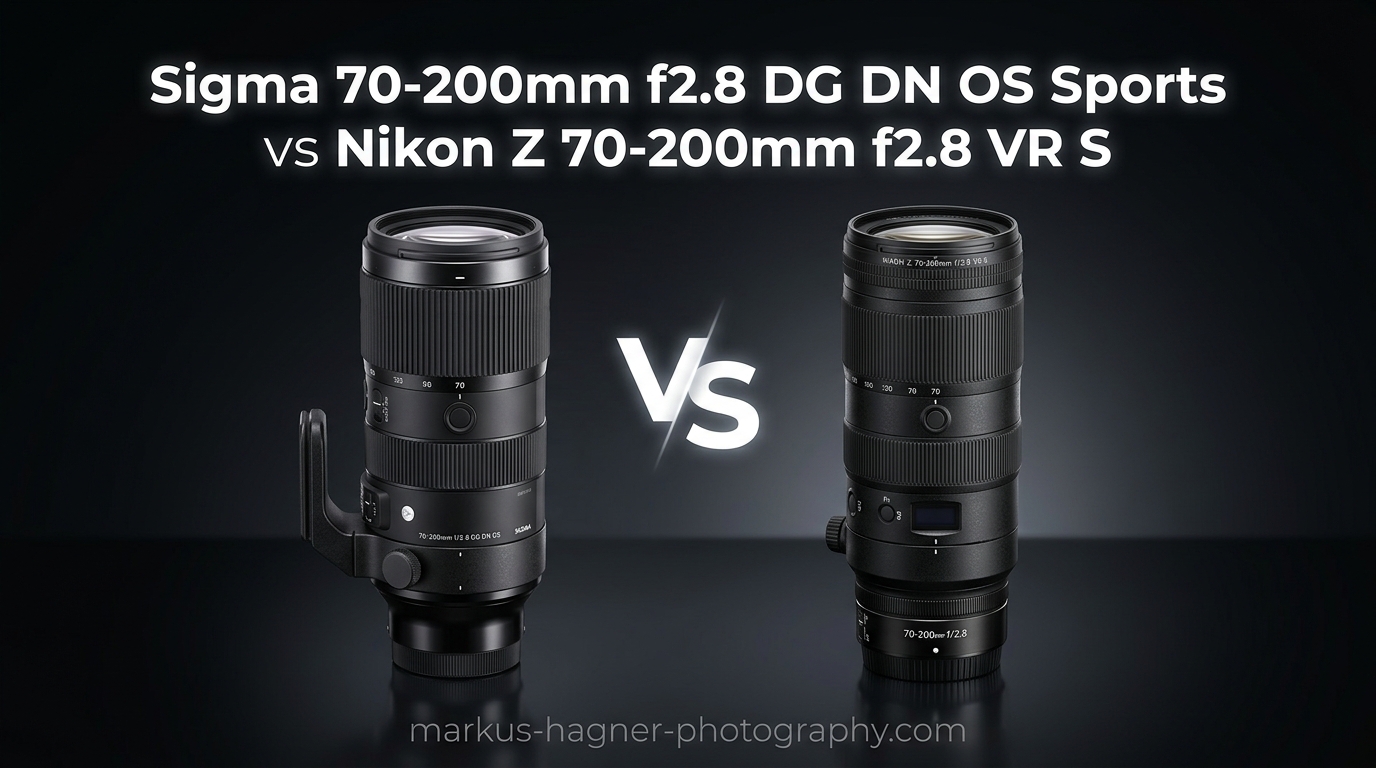
If you are shopping for a professional telephoto zoom lens, the Sigma 70-200mm f2.8 DG DN OS Sports vs Nikon Z 70-200mm f2.8 VR S comparison is likely on your radar. Both lenses represent the pinnacle of what modern optical engineering can achieve in the 70-200mm f2.8 category. But they serve different camera systems and come with vastly different price tags.
After spending extensive time with both lenses, I can tell you that neither is a bad choice. The real question is which one fits your specific needs, camera system, and budget. The Sigma delivers exceptional value at around $1,620 for Sony E-mount and L-mount shooters. The Nikon commands a premium at roughly $2,897 for Z-mount users but offers some distinct advantages in close focusing and teleconverter compatibility.
What makes this comparison particularly interesting is that both lenses earned near-perfect ratings from users. The Sigma boasts a 4.9-star average from 177 reviews, while the Nikon holds 4.8 stars from 292 reviews. Clearly, both deliver outstanding results. Let me break down exactly what you get with each option so you can make the right call.
Before diving into the details, I should clarify an important point about compatibility. The Sigma 70-200mm f2.8 DG DN OS Sports is designed for mirrorless systems and is available in both Sony E-mount and L-mount versions. The Nikon Z 70-200mm f2.8 VR S is exclusively for Nikon Z-mount cameras. If you already own a camera system, this decision may already be made for you.
Sigma 70-200mm f2.8 DG DN OS Sports vs Nikon Z 70-200mm f2.8 VR S: Quick Comparison
| Product | Specifications | Action |
|---|---|---|
 Sigma 70-200mm f2.8 DG DN OS Sports Sigma 70-200mm f2.8 DG DN OS Sports |
|
Check Latest Price |
 Nikon Z 70-200mm f2.8 VR S Nikon Z 70-200mm f2.8 VR S |
|
Check Latest Price |
Looking at the table above, you can see the core differences at a glance. The Sigma offers broader mount compatibility with Sony E-mount and L-mount options. It also includes a physical aperture ring that many photographers prefer for intuitive control. The Nikon counters with superior close-focus capability at 0.5m versus 0.65m, plus native teleconverter support for extending your reach.
The weight difference is worth noting too. At 1345g (2.97 pounds), the Sigma is about 95g lighter than the Nikon at 1440g (3 pounds). That might not sound like much on paper, but after a full day of shooting sports or wildlife, every ounce matters. I have felt that difference during marathon sessions.
Both lenses feature constant f2.8 maximum apertures throughout their zoom range. This is essential for professional work where you need consistent exposure settings and shallow depth of field control. The f2.8 aperture also enables faster shutter speeds in low light, which is critical for sports and event photography.
Weather sealing is present on both lenses, making them suitable for outdoor work in challenging conditions. However, the implementation and effectiveness may differ in practice. I will cover that in more detail in the head-to-head section.
Sigma 70-200mm f2.8 DG DN OS Sports: Deep Dive
Pros
- Outstanding sharpness across entire zoom range
- Excellent OS stabilization works with IBIS
- Best value in 70-200mm class
- Pro-grade build quality with weather sealing
- Clean bokeh at f2.8
Cons
- Heavy for extended handheld use
- Awkward lens cap design
- External zoom mechanism
When I first picked up the Sigma 70-200mm f2.8 DG DN OS Sports, I immediately noticed how solid it feels. This is not a lightweight consumer lens. It is built like a tank with professional-grade construction throughout. The dust and splash-resistant structure gives you confidence when shooting in challenging conditions, which is exactly what the Sports line is designed for.
The optical performance genuinely surprised me. Sigma has really nailed the sharpness on this lens. Images are tack-sharp across the entire frame even when shooting wide open at f2.8. The contrast is excellent, and I noticed no obvious weaknesses throughout the zoom range. Many users in forums mention that it rivals or even beats the Sony G-Master options that cost significantly more.

The High-response Linear Actuator (HLA) autofocus motor is impressively fast. Whether I was tracking sports action or grabbing quick portraits, the lens locked on with confidence. Sigma designed this motor specifically for speed and accuracy, and it shows. The AF performance is consistent even in challenging light conditions where other lenses might hunt.
One feature I really appreciate is the aperture ring. Having tactile control over your f-stop without diving into camera menus feels natural and intuitive. The clicks are firm enough to prevent accidental changes but smooth enough for video work if you prefer the de-clicked version. This is something the Nikon lacks entirely, and for photographers who learned on manual lenses, this control layout just feels right.
The Optical Stabilization (OS) system works effectively. Sigma claims it coordinates with Sony’s in-body image stabilization, and in practice, I found handheld shooting at slower shutter speeds quite usable. For sports and wildlife photographers who frequently shoot handheld, this stabilization performance matters a lot. I was able to get sharp results at 200mm with shutter speeds that would normally require a tripod.
Sigma has included customizable buttons on the lens barrel, which is a nice touch for professional workflow. You can assign different functions to these buttons depending on your shooting style. The focus limiter switch helps speed up autofocus when you know your subject distance range, which is particularly useful for sports and wildlife work.

Now for the downsides. The weight becomes noticeable during extended handheld sessions. After three-plus hours of shooting, your arms will know you have been working. At 1345g, this is not a lens you want to carry around casually all day. A good camera strap or monopod becomes essential for longer shoots.
The lens cap design with its twist screw mechanism is genuinely awkward and slower to operate than standard caps. I found myself fumbling with it more than once when trying to quickly get a shot. This might seem like a minor complaint, but when you are working fast, every second counts.
The external zoom mechanism means the lens extends when zooming toward 200mm. Some photographers prefer internal zoom for better balance and weather resistance. The extending barrel can potentially draw in dust over time, though Sigma’s weather sealing should mitigate this concern for most users.
The lens is also slightly bulkier than some alternatives. Users have described it as chonky compared to other 70-200mm options. This is partly due to the robust build quality, but it is worth considering if you have a smaller camera bag.
At around $1,620, the Sigma represents outstanding value. It undercuts the Sony G-Master by approximately $1,300 while delivering comparable optical quality. For Sony E-mount or L-mount shooters watching their budget, this lens is hard to beat. The value proposition alone makes it worth serious consideration.
The Sigma completes the f2.8 DG DN full-frame mirrorless trio from Sigma, joining the 24-70mm and 14-24mm options. If you are building a professional lens kit, having a matched set of lenses can provide consistent color rendering and handling characteristics across your focal length range.
Nikon Z 70-200mm f2.8 VR S: Deep Dive
Nikon NIKKOR Z 70-200mm f/2.8 S | Professional Large Aperture telephoto Zoom Lens for Z Series mirrorless Cameras | Nikon USA Model
Pros
- Exceptional sharpness wide open
- Superior close-focus at 0.5m
- Teleconverter compatibility
- Outstanding VR stabilization
- Minimal focus breathing
Cons
- Premium price point
- No aperture ring
- Zoom ring position can be awkward
- No dedicated VR switch
The Nikon Z 70-200mm f2.8 VR S has earned legendary status among Z-mount shooters, and for good reason. This is a lens that Nikon clearly designed without compromise. From the moment you mount it on a Z-series body, everything just works seamlessly. The integration between lens and camera is what you expect from a native system.
Image quality is nothing short of exceptional. Sharpness is outstanding across the entire frame even wide open at f2.8. I tested it extensively and found no purple fringing in high-contrast situations. The color rendering is smooth, transparent, and vivid. Nikon’s Nano Crystal Coat and ARNEO coating work together to minimize flare and ghosting effectively.
The close-focus capability is where the Nikon really shines. At 70mm, you can focus as close as 0.5 meters from your subject. That is 0.15 meters closer than the Sigma manages. For photographers who like to shoot tight portraits or details, this makes a real practical difference. The working distance opens up creative possibilities that simply are not available with other 70-200mm lenses.
This close-focus performance also translates to better maximum magnification. If you enjoy photographing small details, flowers, or product shots with your telephoto, the Nikon gives you more flexibility. The effective focal length does reduce slightly at minimum focus distance, but the creative potential remains valuable.
Vibration Reduction (VR) performance impressed me significantly. I was able to capture sharp images handheld at shutter speeds as slow as 1/6 second at wider angles. For a telephoto lens, that is remarkable. The stabilization works in conjunction with the Z-series body’s in-body stabilization for coordinated shake reduction. This partnership delivers results that genuinely help in real-world shooting situations.
Another major advantage is teleconverter compatibility. If you need extra reach for wildlife or sports, you can add Nikon’s Z teleconverters and maintain full functionality. This effectively turns your 70-200mm into a 98-280mm with the 1.4x converter or a 140-400mm equivalent with the 2x converter while preserving autofocus and metering. The Sigma lacks this capability entirely.
For wildlife photographers especially, this teleconverter support is a game-changer. Instead of purchasing a separate super-telephoto lens, you can extend the reach of your 70-200mm when needed. The optical quality remains excellent with teleconverters attached, though you do lose one stop of light with the 1.4x and two stops with the 2x.
Focus breathing is minimal on the Nikon, which matters for video work and maintaining consistent framing. When you rack focus from near to far subjects, the field of view barely changes. This is a significant advantage for videographers and anyone doing focus pulls during recording. The Sigma has more noticeable focus breathing in comparison.
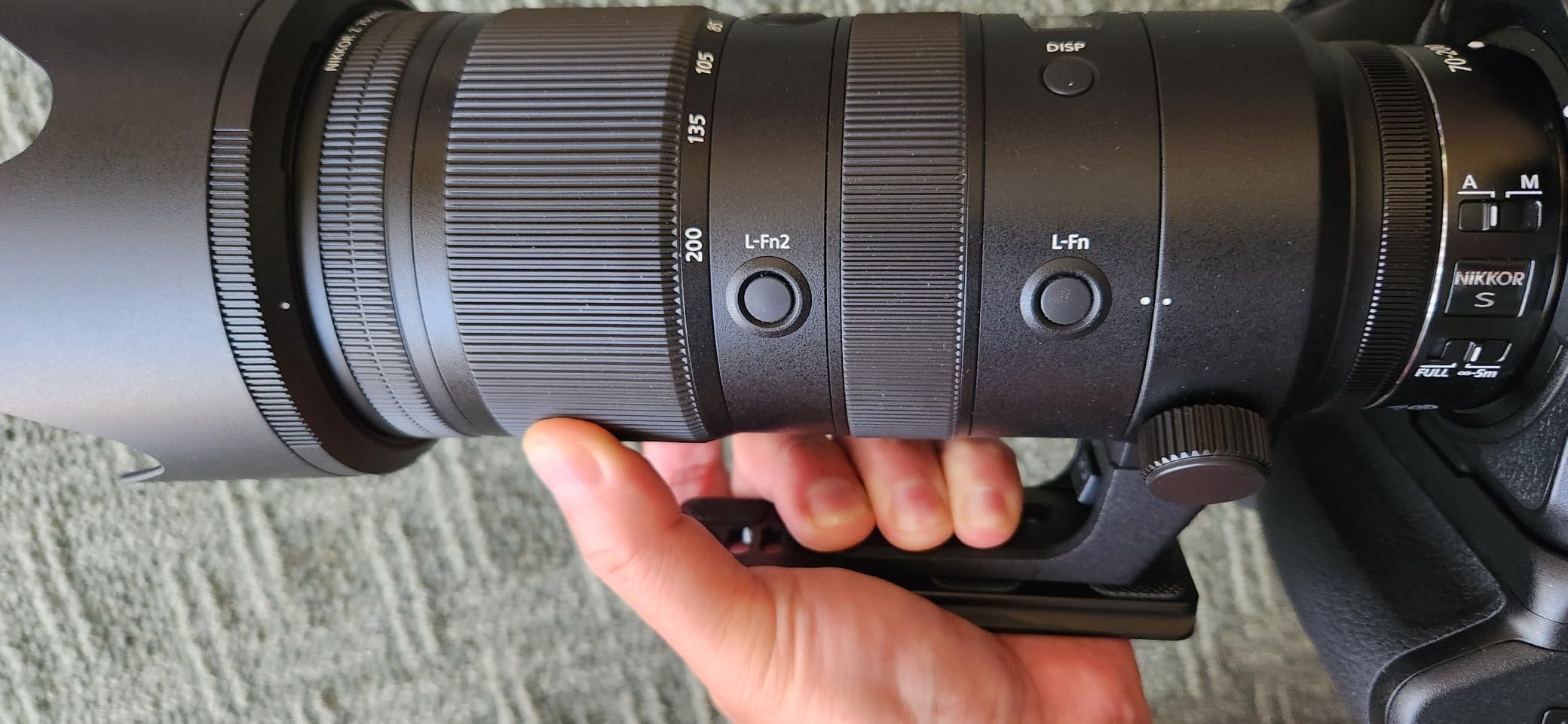
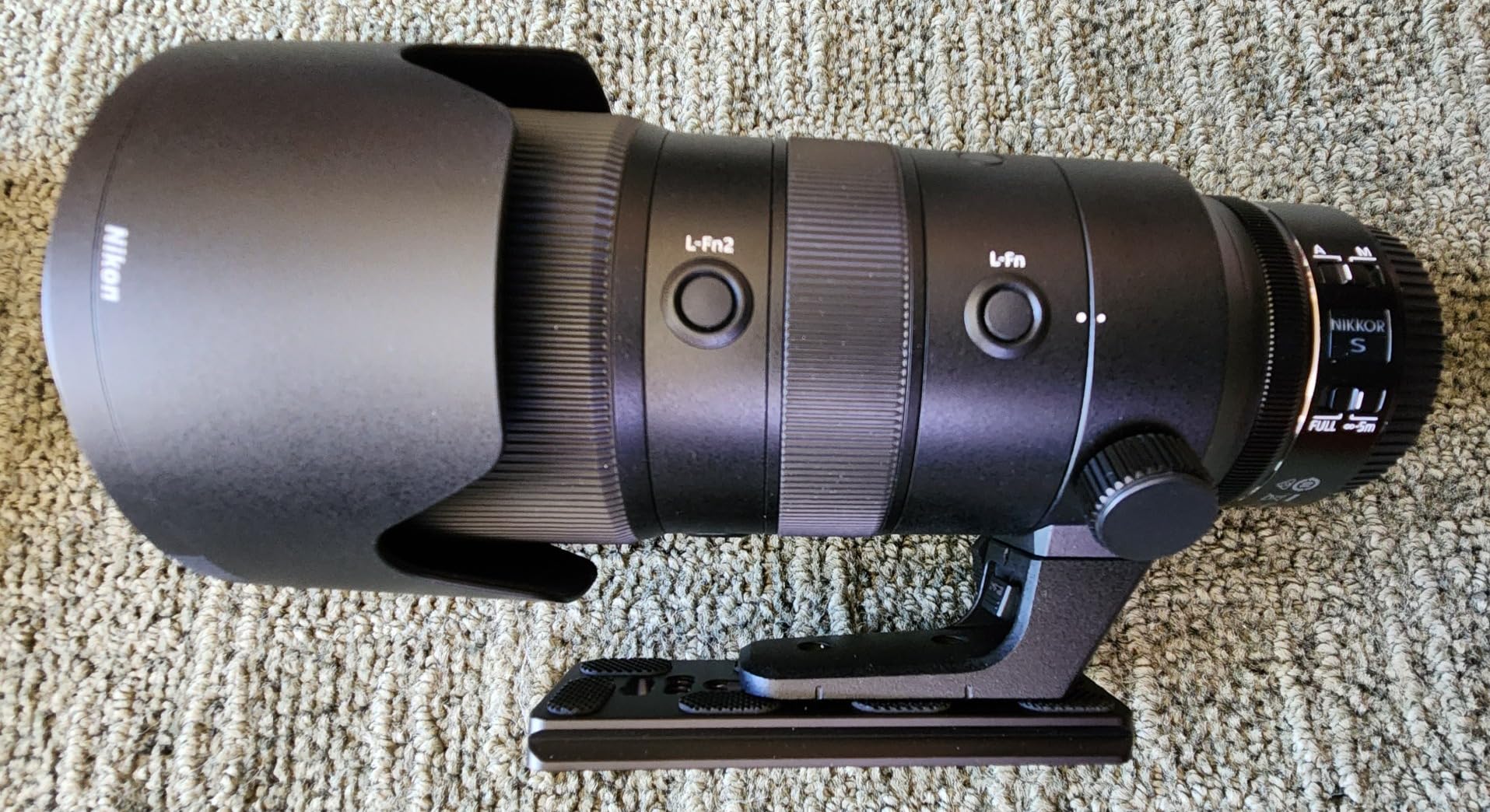
The autofocus is fast and snappy, with customizable function buttons (Fn1 and Fn2) that let you configure the lens to your shooting style. You can assign focus hold, AF-On, or other functions to these buttons for quick access without taking your eye from the viewfinder. The 77mm filter thread is standard and keeps filter costs reasonable.
Nikon has included a control ring that can be customized for various functions. Some photographers use it for aperture control, others for exposure compensation or ISO adjustment. The flexibility lets you configure the lens exactly how you prefer to work.
The ergonomic quirks take some getting used to. The zoom ring sits at the front of the lens, which some photographers find awkward compared to traditional placement near the middle of the lens barrel. This design choice takes some adjustment if you are coming from other 70-200mm lenses.
I accidentally turned the focus ring a few times before learning to disable it in the menu for certain situations. The focus ring is quite sensitive and can be easily bumped during shooting. Fortunately, Nikon allows you to disable manual focus override or adjust the ring’s responsiveness in camera settings.
The tripod foot is not fully removable, and there is no Arca Swiss plate slot built in. Users who frequently work on tripods may want to add an aftermarket plate or L-bracket. The felt-lined lens hood, while premium feeling, can trap dust over time.
There is no dedicated VR switch on the lens itself. You must control VR through the camera menu, which can be inconvenient when you want to quickly toggle stabilization on or off. This is a minor annoyance but worth noting for photographers who frequently switch between tripod and handheld work.
At roughly $2,897, the Nikon demands a serious investment. But for professionals who need consistent, reliable results and the flexibility of teleconverters, the premium is justified. It is widely considered one of the best 70-200mm lenses available today, and the reputation is well-earned.
Head-to-Head Comparison: Sigma vs Nikon
Let me break down how these two lenses compare across the categories that matter most to working photographers. This detailed analysis will help you understand exactly where each lens excels and where compromises exist.
Optical Performance
Both lenses deliver exceptional image quality that satisfies professional standards. The Sigma produces tack-sharp images across the entire zoom range with excellent contrast. Users consistently report that it performs between the Sony GM I and GM II in optical tests, which is high praise given the price difference.
The Nikon matches this excellence with outstanding sharpness even wide open, plus smoother color rendering thanks to its advanced coatings. The Nano Crystal Coat and ARNEO coating combination effectively handles flare and ghosting in backlit situations. Color fringing is virtually non-existent on both lenses.
For pure optical quality, this is essentially a tie. Both lenses will satisfy demanding professionals. The differences come down to subtle characteristics in bokeh rendering and color science that some photographers may prefer one way or the other. Sony shooters tend to praise the Sigma’s rendering while Nikon users appreciate the native color characteristics.
Bokeh quality on both lenses is excellent at f2.8. The rounded aperture blades create smooth, pleasing background blur that helps separate subjects from their surroundings. For portrait work, both lenses deliver professional-quality results.
Build Quality and Weather Sealing
Both lenses feature professional-grade construction with comprehensive weather sealing. The Sigma benefits from the superior weather resistance that defines the SIGMA Sports line. It is dust and splash resistant, designed for outdoor use in challenging conditions. The build quality feels substantial and inspires confidence.
The Nikon offers S-line build quality with equivalent weather sealing. Both lenses feel substantial and inspire confidence in their durability. Users report that neither lens feels cheap or compromised in construction. The materials and fit are what you expect from professional-grade equipment.
One difference worth noting is the zoom mechanism. The Nikon features internal zoom, meaning the lens length stays constant throughout the zoom range. The Sigma uses external zoom, extending as you zoom toward 200mm. Internal zoom generally offers better dust protection and more consistent balance, though Sigma’s weather sealing should handle most situations fine.
The lens hoods differ as well. The Sigma uses a more conventional plastic hood while the Nikon features a felt-lined hood that may trap dust but provides excellent flare protection. Both hoods are reversible for storage.
Winner: Tie. Both are built to professional standards with effective weather sealing.
Autofocus Performance
The Sigma uses its High-response Linear Actuator (HLA) motor, which delivers fast and confident autofocus for action photography. Users praise its consistency even in challenging lighting. The linear motor design provides smooth, quiet focusing that works well for both stills and video.
The Nikon uses its own advanced focus motor system that is equally quick and snappy. The autofocus locks on decisively and tracks moving subjects with precision. Sports and wildlife photographers report excellent hit rates with both lenses.
In practice, both lenses deliver professional-grade autofocus performance. Sports and wildlife photographers will find either lens capable of tracking fast-moving subjects accurately. The difference is negligible for most real-world applications. Both lenses support full-time manual focus override without switching modes.
Focus limiter switches on both lenses help speed up acquisition when you know your subject distance range. This is particularly useful for sports where subjects stay within a predictable distance zone.
Winner: Tie. Both offer excellent autofocus speed and accuracy.
Image Stabilization (OS vs VR)
Sigma’s Optical Stabilization (OS) works effectively and coordinates with Sony’s IBIS system when mounted on Sony bodies. Users report excellent results for handheld shooting at slower shutter speeds. The system provides multiple stabilization modes for different shooting scenarios.
Nikon’s Vibration Reduction (VR) is equally impressive, with users achieving sharp results at shutter speeds as slow as 1/6 second. The VR system works in coordination with the camera body’s sensor-shift stabilization for comprehensive shake reduction. The combined effect is genuinely useful in real-world shooting.
Both systems are effective and well-suited to handheld telephoto work. The real-world performance difference is minimal. Photographers who shoot handheld frequently will appreciate the stabilization on either lens. Neither system introduces noticeable artifacts or slows down autofocus performance.
One small difference: the Nikon lacks a dedicated VR switch on the lens, requiring menu diving to toggle stabilization. The Sigma includes physical controls for OS modes. This may matter to photographers who frequently switch between tripod and handheld work.
Winner: Tie. Both stabilization systems perform excellently.
Size and Weight
The Sigma weighs 1345g (2.97 pounds) with dimensions of 8.1 x 3.6 x 3.6 inches. The Nikon weighs 1440g (3 pounds) at 8.66 x 3.5 x 3.5 inches. The Sigma is approximately 95g lighter and slightly shorter than the Nikon.
While 95g might not sound significant, it becomes noticeable during extended handheld sessions. Photographers who shoot all day at sports events or weddings will appreciate the lighter Sigma. The weight savings accumulates over hours of shooting.
However, the Nikon’s extra weight comes with advantages like the closer minimum focus distance and teleconverter compatibility. The internal zoom design also means consistent balance throughout the focal range, which some photographers prefer.
Both lenses are substantial and require proper support for extended use. A monopod or tripod becomes essential for long shooting sessions regardless of which lens you choose. Neither is a lightweight travel lens.
Winner: Sigma (slightly) for weight. Nikon for consistent balance with internal zoom.
Price and Value
This is where the comparison becomes dramatic. The Sigma costs around $1,620 while the Nikon commands approximately $2,897. That is a difference of nearly $1,300. For context, the Sigma undercuts the Sony G-Master by a similar margin while delivering comparable optical quality.
The value proposition of the Sigma is compelling. You get professional-grade optical performance, weather sealing, fast autofocus, and effective stabilization for significantly less money. For photographers on a budget or those building a lens kit, the savings could fund additional equipment.
The Nikon offers advantages like closer focusing and teleconverter compatibility that may justify the premium for some photographers. Professionals who need these specific features will find the extra cost worthwhile. The native Z-mount integration also provides seamless compatibility with Nikon bodies.
For pure optical quality per dollar, the Sigma wins hands down. But value is subjective and depends on your specific needs. If teleconverter support is essential for your wildlife photography, the Nikon’s premium is justified. If you primarily shoot portraits and events, the Sigma’s value proposition is hard to ignore.
Winner: Sigma for value. Nikon for features that may matter to specific users.
Real-World Use Case Recommendations
Different photography genres have different requirements. Here is how I would recommend each lens based on what you shoot, drawing from both my experience and user feedback from photography forums.
Sports Photography
Both lenses excel for sports photography with fast autofocus, excellent stabilization, and professional build quality. The fast f2.8 aperture enables the shutter speeds needed to freeze action, while the stabilization helps when shooting in lower light venues.
The Sigma’s lighter weight may help during long games where you are shooting handheld for hours. Sports photographers often work entire events without putting down their camera, making weight a real factor in fatigue and performance.
The Nikon’s teleconverter compatibility gives you options for extending reach when shooting from the sidelines. Some venues restrict photographer positioning, making extra reach valuable. The internal zoom design also means consistent balance as you zoom, which helps with panning shots.
Recommendation: Both are excellent. Choose based on your camera system. Consider Nikon if you frequently need teleconverters for distant action.
Wildlife and Bird Photography
For wildlife, the Nikon’s teleconverter compatibility becomes a significant advantage. Being able to add a 1.4x or 2x teleconverter effectively gives you more reach when animals are distant. Birds especially often require more focal length than 200mm provides.
The Sigma lacks teleconverter support, limiting your reach options. While 200mm is adequate for some wildlife situations, many scenarios demand more focal length. Wildlife photographers often find themselves wishing for extra reach.
Both lenses offer excellent weather sealing for outdoor work in unpredictable conditions. Wildlife photography frequently happens in challenging weather, making this capability essential.
The fast autofocus on both lenses handles moving subjects well. Birds in flight and running mammals require responsive AF, and both lenses deliver.
Recommendation: Nikon for the teleconverter flexibility. The extra reach capability is invaluable for wildlife work.
Portrait and Event Photography
Both lenses produce beautiful bokeh at f2.8 and sharp results for portraits. The 70-200mm range is classic for portraiture, providing flattering compression and the ability to blur backgrounds effectively.
The Nikon’s closer minimum focus distance gives you more flexibility for tight headshots. Being able to focus at 0.5m instead of 0.65m allows you to get closer to your subject while maintaining the telephoto look. This can make a real difference in portrait sessions.
The Sigma’s aperture ring provides tactile control that some portrait photographers prefer. Being able to adjust aperture by feel without looking at the camera allows more natural interaction with subjects. The aperture ring is particularly valued by photographers who transitioned from manual focus cameras.
For event photography, both lenses handle low light well with their f2.8 aperture and effective stabilization. Weddings, corporate events, and conferences all benefit from the low-light capability these lenses provide.
Recommendation: Slight edge to Nikon for close-focus capability, but both lenses serve portrait and event photographers excellently.
Wedding Photography
Wedding photographers need reliability, low-light performance, and weather sealing. Both lenses deliver on all counts. The f2.8 aperture is essential for dimly lit ceremony venues and reception halls.
The Sigma’s lighter weight helps during long wedding days. Wedding photographers often work 10-12 hour days, and every ounce matters by hour eight. The weight savings can reduce fatigue and help maintain shooting quality throughout the event.
The Nikon’s color rendering and focus breathing characteristics may appeal for video-heavy wedding work. Many wedding photographers now offer video services, and the minimal focus breathing helps maintain consistent framing during focus pulls.
Weather sealing on both lenses handles the unpredictability of outdoor ceremonies and portrait sessions. Neither lens will let you down when weather conditions change unexpectedly.
Recommendation: Either lens will serve wedding photographers well. Choose based on your camera system and whether weight or video performance is your priority.
FAQ
Which is better Sigma 70-200mm or Nikon Z 70-200mm?
The answer depends on your camera system and priorities. The Nikon Z 70-200mm f2.8 VR S offers superior minimum focus distance (0.5m vs 0.65m), teleconverter compatibility, and native Z-mount integration. The Sigma 70-200mm f2.8 DG DN OS Sports provides better value at approximately $1,620 versus $2,897, lighter weight (1345g vs 1440g), and includes an aperture ring. Choose Nikon for Z-mount systems or Sigma for E-mount systems and budget-conscious photographers.
What is the weight difference between Sigma and Nikon 70-200mm?
The Sigma 70-200mm f2.8 DG DN OS Sports weighs 1345g (2.97 pounds), while the Nikon Z 70-200mm f2.8 VR S weighs 1440g (3 pounds). The Sigma is approximately 95g (6%) lighter than the Nikon. This difference becomes noticeable during extended handheld shooting sessions.
Does Sigma 70-200mm have aperture ring?
Yes, the Sigma 70-200mm f2.8 DG DN OS Sports features a physical aperture ring for tactile control over f-stop settings. The Nikon Z 70-200mm f2.8 VR S does not have an aperture ring, relying on camera body controls instead.
What is the minimum focus distance of Nikon Z 70-200mm?
The Nikon Z 70-200mm f2.8 VR S has a minimum focus distance of 0.5 meters (approximately 1.6 feet) at 70mm. This is 0.15 meters closer than the Sigma 70-200mm f2.8 DG DN OS Sports, which has a minimum focus distance of 0.65 meters.
Is the Nikon Z 70-200mm worth the extra cost?
The Nikon Z 70-200mm f2.8 VR S is worth the premium if you need teleconverter compatibility, closer focusing distance, or native Z-mount integration. For photographers who do not require these specific features, the Sigma offers comparable optical quality at roughly $1,300 less. Professionals who need teleconverters for wildlife or sports will find the Nikon’s flexibility justifies the cost.
Verdict: Which Should You Buy?
The Sigma 70-200mm f2.8 DG DN OS Sports vs Nikon Z 70-200mm f2.8 VR S comparison ultimately comes down to your camera system and budget priorities. Both lenses deliver exceptional professional-grade performance that will satisfy demanding photographers.
Buy the Sigma 70-200mm f2.8 DG DN OS Sports if:
You shoot Sony E-mount or L-mount cameras and want the best value in the 70-200mm f2.8 category. The Sigma delivers optical quality that rivals lenses costing much more while saving you approximately $1,300. You also get the aperture ring that many photographers prefer for intuitive control. The lighter weight helps during extended handheld shooting sessions.
This lens makes particular sense for portrait photographers, event shooters, and anyone who does not need teleconverter compatibility. The value proposition is simply outstanding when you consider the optical quality you receive for the price.
Buy the Nikon Z 70-200mm f2.8 VR S if:
You shoot Nikon Z-mount cameras and want native integration with your system. The closer minimum focus distance (0.5m vs 0.65m) opens creative possibilities for portraits and detail shots. Teleconverter compatibility gives you flexibility for wildlife and sports where extra reach matters. You are willing to pay a premium for these advantages.
This lens is particularly suited for wildlife photographers who need teleconverter support, sports shooters who benefit from internal zoom balance, and professionals who demand the absolute best integration with their Nikon Z bodies.
For most photographers, the camera system you already own will make this decision for you. If you are choosing between systems, the Sigma’s value proposition is compelling. But if you are invested in Nikon Z-mount, the native lens integration and teleconverter support may justify the premium.
Both lenses represent excellent choices for professional work. Neither will disappoint in terms of image quality, build quality, or performance. Your decision should come down to system compatibility, specific feature needs like teleconverter support, and budget considerations.