
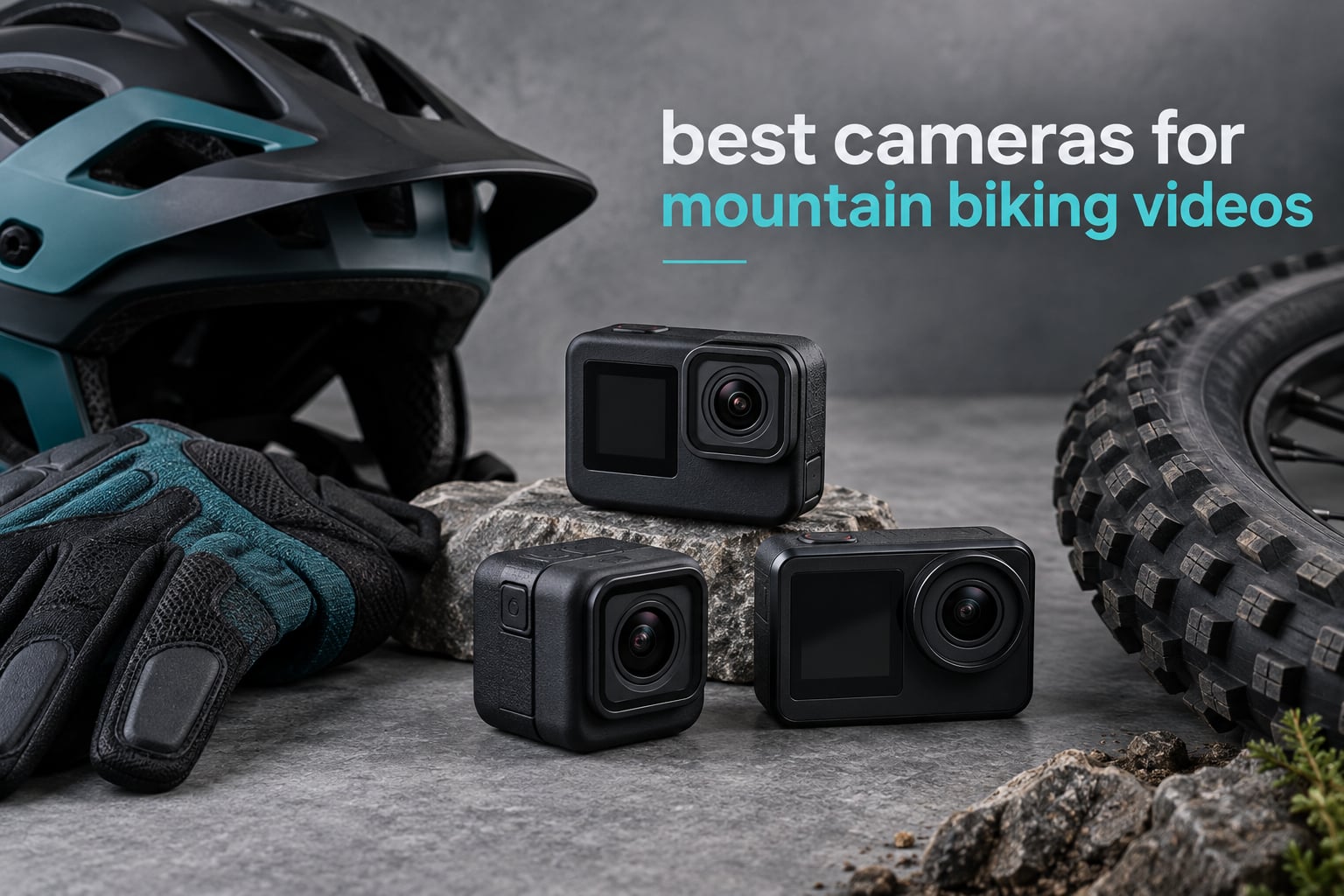
Mountain biking is one of the most demanding things you can ask of a camera. Every root, rock garden section and brake bump sends high-frequency shock through the bars and into your helmet, and the lens is taking that beating at 60 frames per second for the whole ride. Most cameras that survive a beach holiday fall apart on a descent.
That is why picking the best cameras for mountain biking videos is not the same decision as picking the best action camera for a beach holiday. Stabilization, mount compatibility and cold-weather battery behaviour matter more here than headline resolution. I have put together ten bodies across four form factors, from tiny entry-level cams to 8K 360 models, and explained what each one is actually good for on singletrack.
We also spend a lot of time on the thing riders argue about most in trail forums: the Jello Effect, the vibration artefact no stabilizer can remove, and how your mount choice changes your footage more than the camera body does. If you want a broader sweep of gear first, my general action camera roundup for mountain biking covers the all-purpose picks, and the cycling and mountain biking edition goes deeper on multi-day bikepacking rigs.
A quick note before we start: the links below are affiliate links, and we may earn a commission from qualifying purchases at no extra cost to you. We do not take payment for placement, and every product below has a limitation we call out honestly.
Top 3 Picks for Best Cameras for Mountain Biking Videos in 2026

Insta360 X3 360 Action Camera
- 5.7K 360 Active HDR
- FlowState stabilization with Horizon Lock
- 2.29 inch touchscreen
- Waterproof to 10m

DJI Osmo Action 5 Pro
- 1/1.3 inch sensor
- 360 degree HorizonSteady
- 4 hours per battery
- IP68 to 20m

Insta360 X5 8K 360 Camera
- 8K30 360 video
- Replaceable lenses
- Built-in Wind Guard
- 3 hour battery
All 10 Best Cameras for Mountain Biking Compared in October
| Product | Specifications | Action |
|---|---|---|
| Insta360 X3 |
|
Check Latest Price |
| DJI Osmo Action 5 Pro |
|
Check Latest Price |
| Insta360 X5 |
|
Check Latest Price |
 DJI Osmo Action 6 DJI Osmo Action 6 |
|
Check Latest Price |
 Insta360 Ace Pro 2 Insta360 Ace Pro 2 |
|
Check Latest Price |
 GoPro Hero12 Black GoPro Hero12 Black |
|
Check Latest Price |
 GoPro HERO13 Black Bundle GoPro HERO13 Black Bundle |
|
Check Latest Price |
 AKASO Brave 4 Pro AKASO Brave 4 Pro |
|
Check Latest Price |
 AKASO Brave 4 AKASO Brave 4 |
|
Check Latest Price |
 AKASO EK7000 AKASO EK7000 |
|
Check Latest Price |
1. Insta360 X3 – Best Overall for Trail and Reframe-Later Edits
Pros
- Reframe footage after the ride so no line is missed
- FlowState described as gimbal-like while riding
- Large touchscreen for changing settings on the move
- Single-lens 4K mode works as a normal action cam
Cons
- 360 clips must be rendered through the desktop app
- Effective 360 detail is lower than 5.7K once unwrapped
The X3 is the camera I recommend most often, and the reason is the reframe-later workflow rather than the raw specification. On a technical descent you cannot reliably keep a camera pointed at the interesting part of the line. Shoot everything, pick the angle on the timeline.
FlowState stabilization plus Horizon Lock is what makes that work. The horizon stays flat through a full lean into a berm, and riders consistently describe the output as gimbal-like while riding.
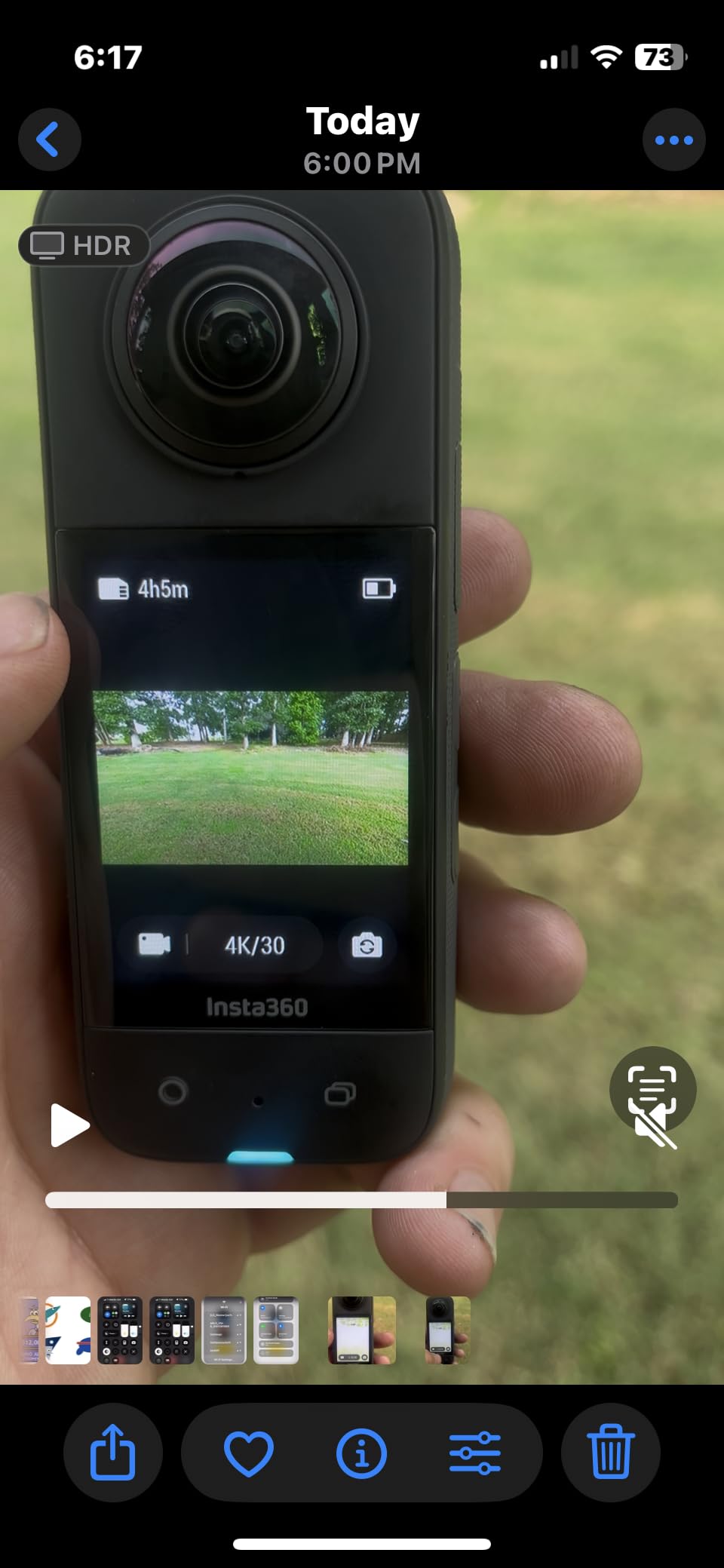
The 2.29-inch touchscreen is bigger than most competitors and genuinely useful when you want to switch from 360 to single-lens 4K at a trailhead without fumbling buttons in gloves. Wind noise handling on the three-mic array is decent for a camera in this class.
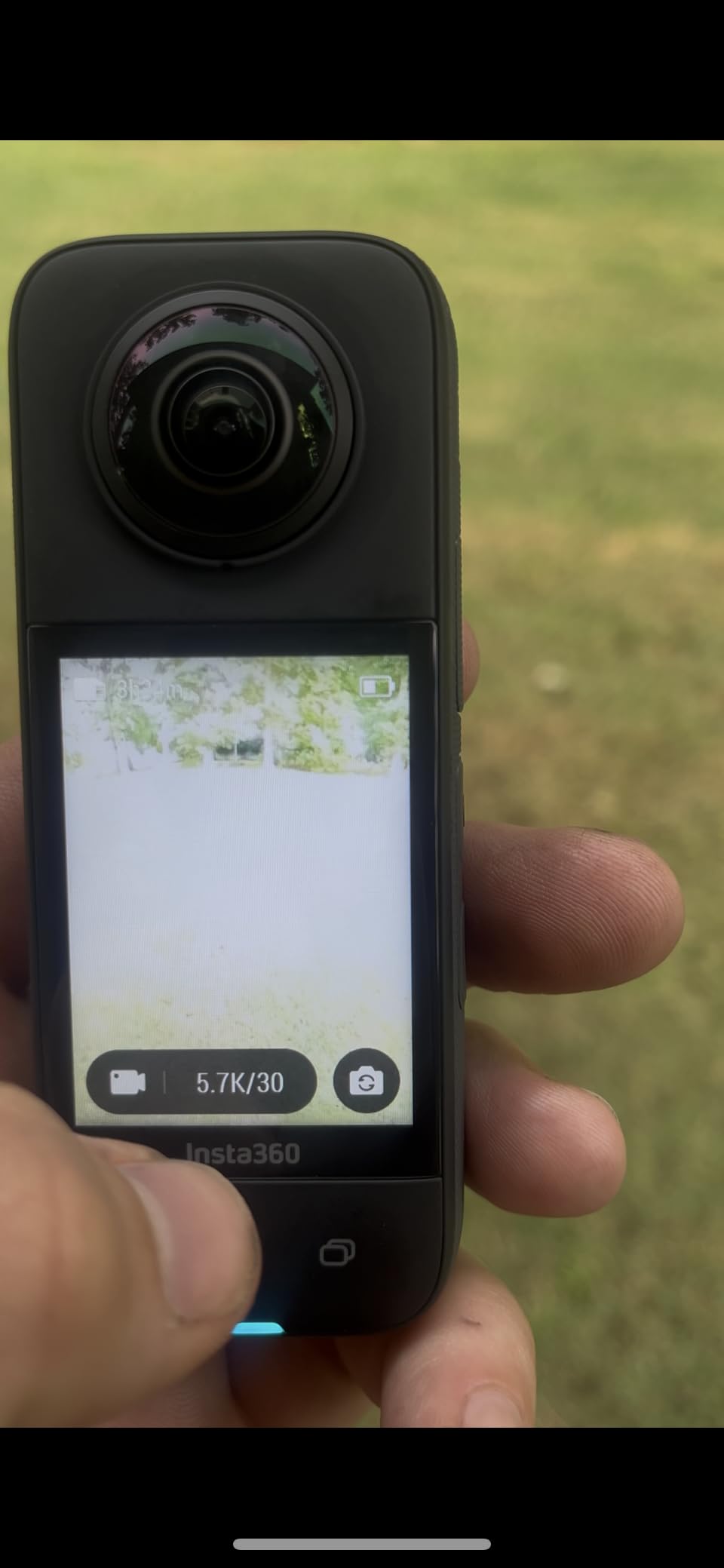
Two real caveats. First, 360 clips must be rendered and exported through the desktop software before upload, which adds a step to every video. Second, unwrapping the 5.7K sphere costs real detail, so the advertised resolution flatters the finished flat output.
Why this one wins for singletrack riders
If your riding involves lines you did not plan, the ability to recover a missed angle is worth more than any resolution upgrade. Missed corner in a flat recording is gone forever; missed corner in 360 footage is a two-minute fix.
The single-lens 4K30 mode also means you can still shoot conventional footage when you want a simple, fast editing workflow, or when you are covering a long ride and storage matters.
Where it falls short
Editing 360 takes longer than flat editing, and the render step is not optional. If you publish daily and want files on the card straight to your timeline, that friction adds up quickly.
Some owners also report the body running hot in direct unshaded sun during long recordings, so on a sunny alpine day keep an eye on it through long climbs.
2. DJI Osmo Action 5 Pro – Best for Long Rides and Multi-Hour Days
Pros
- Very smooth horizon level stabilization
- Bright dual OLED screens for sun
- Long battery covers a full day of clips
- Works with existing GoPro style mounts
Cons
- Field of view is narrower than GoPro rivals
- Stabilization crop removes a chunk of the frame
If your riding is a full day rather than a two-hour loop, battery endurance decides which camera you end up happy with. The Osmo Action 5 Pro runs up to four hours per 1950mAh battery, and the Adventure Combo in this bundle carries three batteries plus a multifunctional case.
The 1/1.3-inch sensor with 2.4um pixels and 13.5 stops of dynamic range is what makes shaded forest singletrack look good rather than muddy. HorizonSteady holds the horizon flat through full rotation, and the two OLED screens are bright enough to frame shots in direct sun.
It also works with existing GoPro-style mounts and frames, so if you are moving up from an older GoPro you do not need to rebuild your mount collection from scratch. The magnetic quick-release makes swapping between bar, chest and helmet in a car park genuinely fast.
The two trade-offs are worth naming. The field of view is narrower than GoPro’s, so chest and helmet shots feel tighter than you may expect. And stabilization modes crop roughly 15 to 20% of the frame, so frame wider than you think you need.
Battery maths for a full trail day
With four hours per battery, a long day means two batteries and a way to keep the spares warm. Cold derating is real: capacity drops below freezing, so on a winter ride keep spare cells in an inside pocket rather than in the pack.
The color temperature sensor is an underrated feature here. Automatic white balance without flicker under trees saves a lot of grading time compared with cameras that hunt for white balance every time you pass a gap in the canopy.
What to watch out for
Long recordings split into multiple files that have to be joined in editing, which matters if you are cutting a five-hour ride into a two-minute edit. The phone app also requests broad permissions and can be awkward to connect in the field.
Bundles sometimes ship with non-original batteries, so check what is actually in the box before planning a full-day shoot around three cells.
3. Insta360 X5 – Best 360 Camera for Serious Trail Editing
Pros
- 8K30 360 capture with better clarity and dynamic range
- AI processing genuinely improves dusk riding footage
- Replaceable lenses remove impact anxiety
- Wind Guard keeps voice audio usable
Cons
- 360 clips still need desktop rendering
- Needs fast high-capacity microSD cards
The X5 is the step up from the X3, and the two improvements matter specifically for mountain biking. Dual 1/1.28-inch sensors shoot 8K30 360 video, and a triple AI chip design handles noise reduction and low-light processing where the previous generation struggled.
Replaceable scratch-resistant lenses are the feature trail riders care most about. Rock strikes and branch whips are a matter of when, not whether, and being able to swap a scuffed lens in seconds changes how you pack for a rough day.
The built-in Wind Guard on the four-mic array favours voices over wind, which is a genuine upgrade for descent audio where the alternative is unusable roaring.
Nothing removes the core trade-off of 360 capture: the editing workflow. Rendering through desktop software before upload is still required, and high bitrate 8K files demand V30 or better cards and serious storage planning.
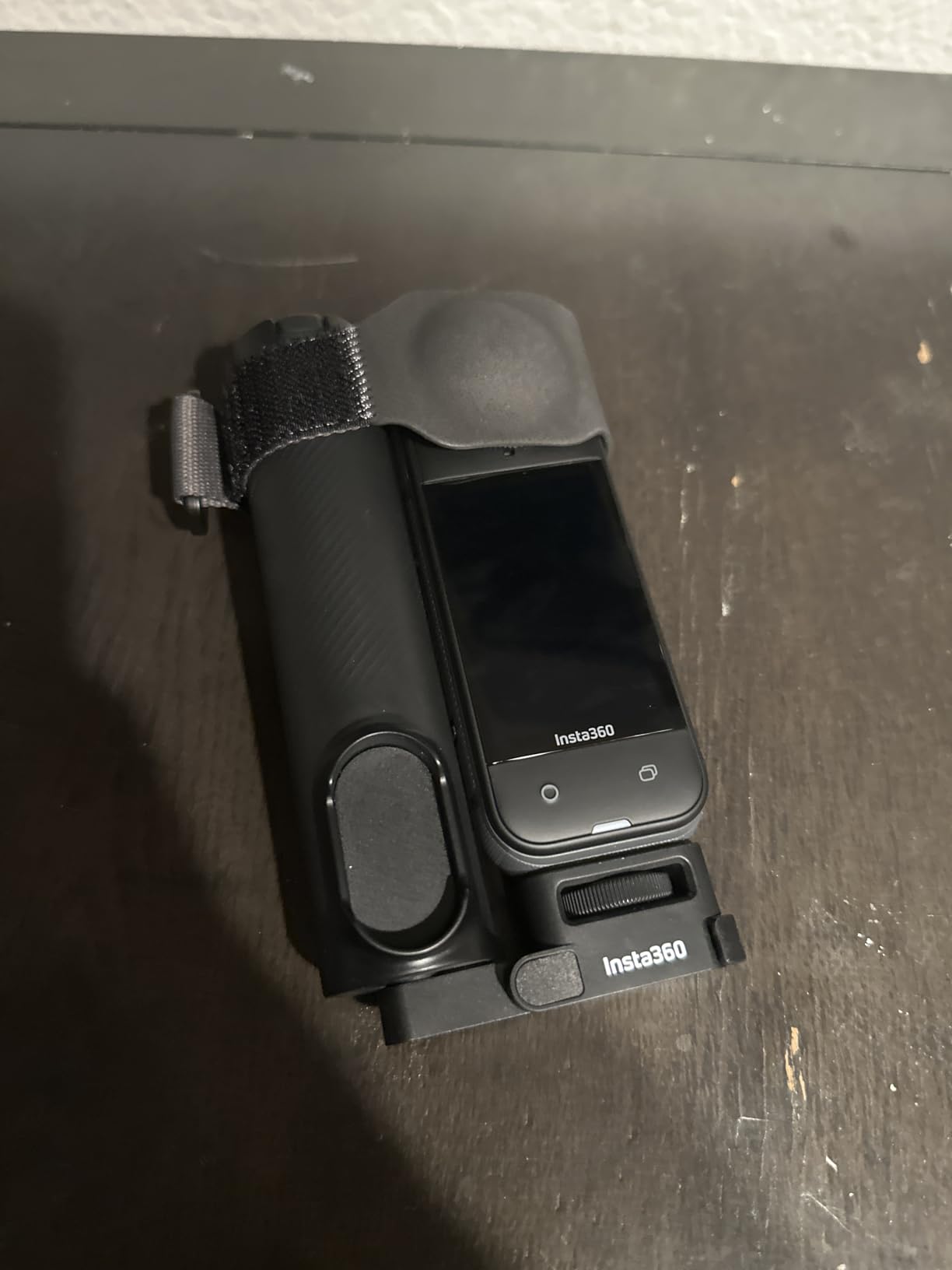
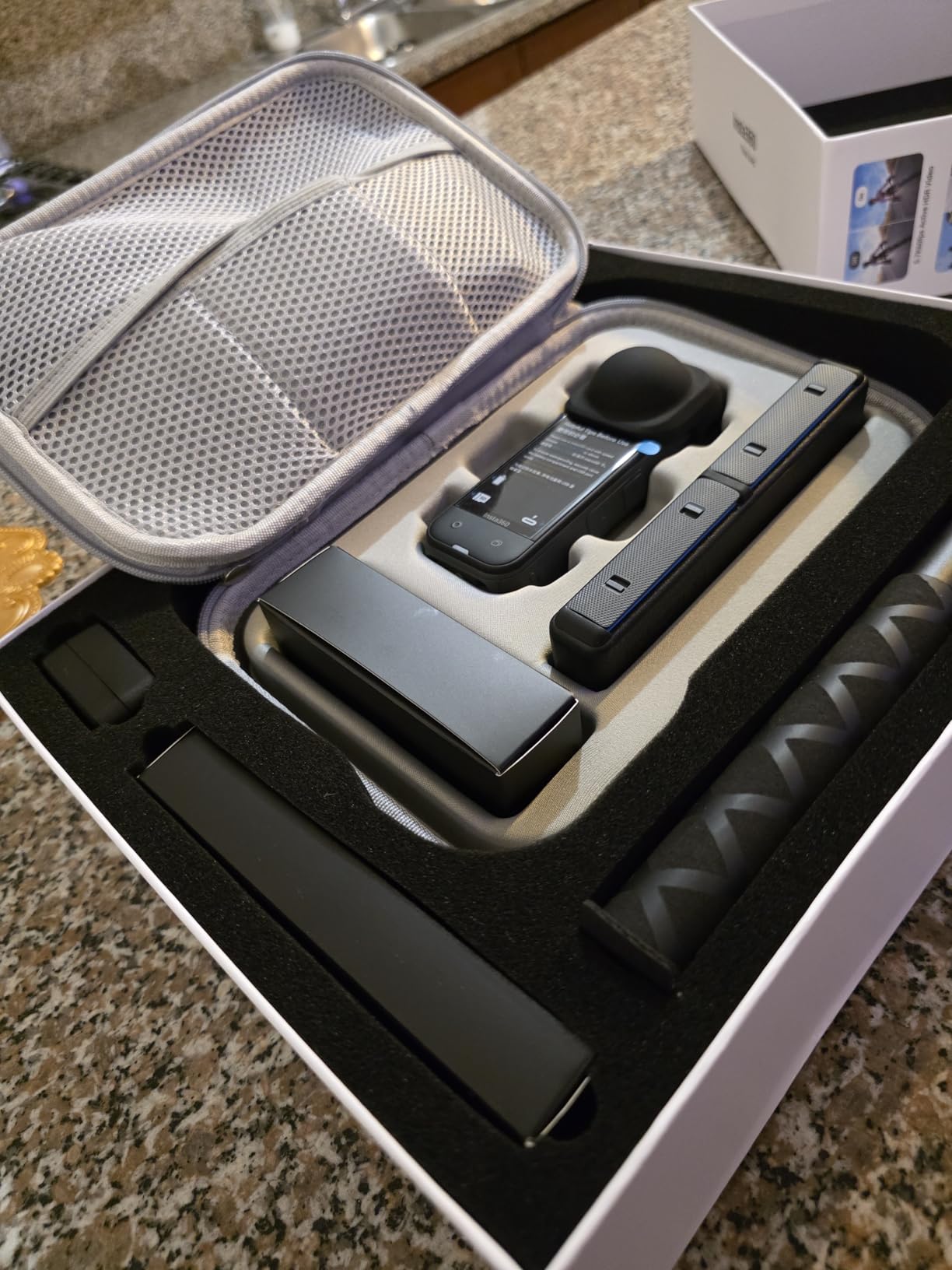
The invisible selfie stick effect and InstaFrame auto-framing mode are the reason solo riders gravitate here. A pole-mounted shot renders with the pole removed and reframed automatically, so you get a third-person angle of yourself on a technical line without a second rider holding a camera.
Battery life is around three hours, so for a long day you still want a spare cell. The protective pouch, lens cloth and USB-C cable are included in the box.
When the X5 beats a flat action cam
Choose the X5 when your edit needs angles you cannot get in the moment: a front-facing view of a drop you nearly didn’t make, a shot from behind showing your body position through a corner, or a slow-motion look at a lip you cleared.
For straightforward line-following footage where you know the trail and want fast editing, a flat camera is simpler and the X5’s extra capability is dead weight.
The honest downside
This is a premium price bracket, and it narrows the field for casual riders who film one or two rides a year. If you are not going to edit the 360 footage properly, you are paying for a resolution advantage your timeline will never use.
Storage is the practical limit. Plan your card capacity before a big ride or you will fill a card in the first descent and lose the footage you came for.
4. DJI Osmo Action 6 – Best for Low Light and Vertical Social Clips
Pros
- 8K detail with a variable aperture for low light
- RockSteady 3.0 smooths rough trail without killing the sense of speed
- 4K Custom Mode reframes for social in one take
- 50GB internal storage saves a card on short rides
Cons
- Onboard microphone is weak for serious audio
- Aggressive default wide view needs straightening
- High bitrate means very large files
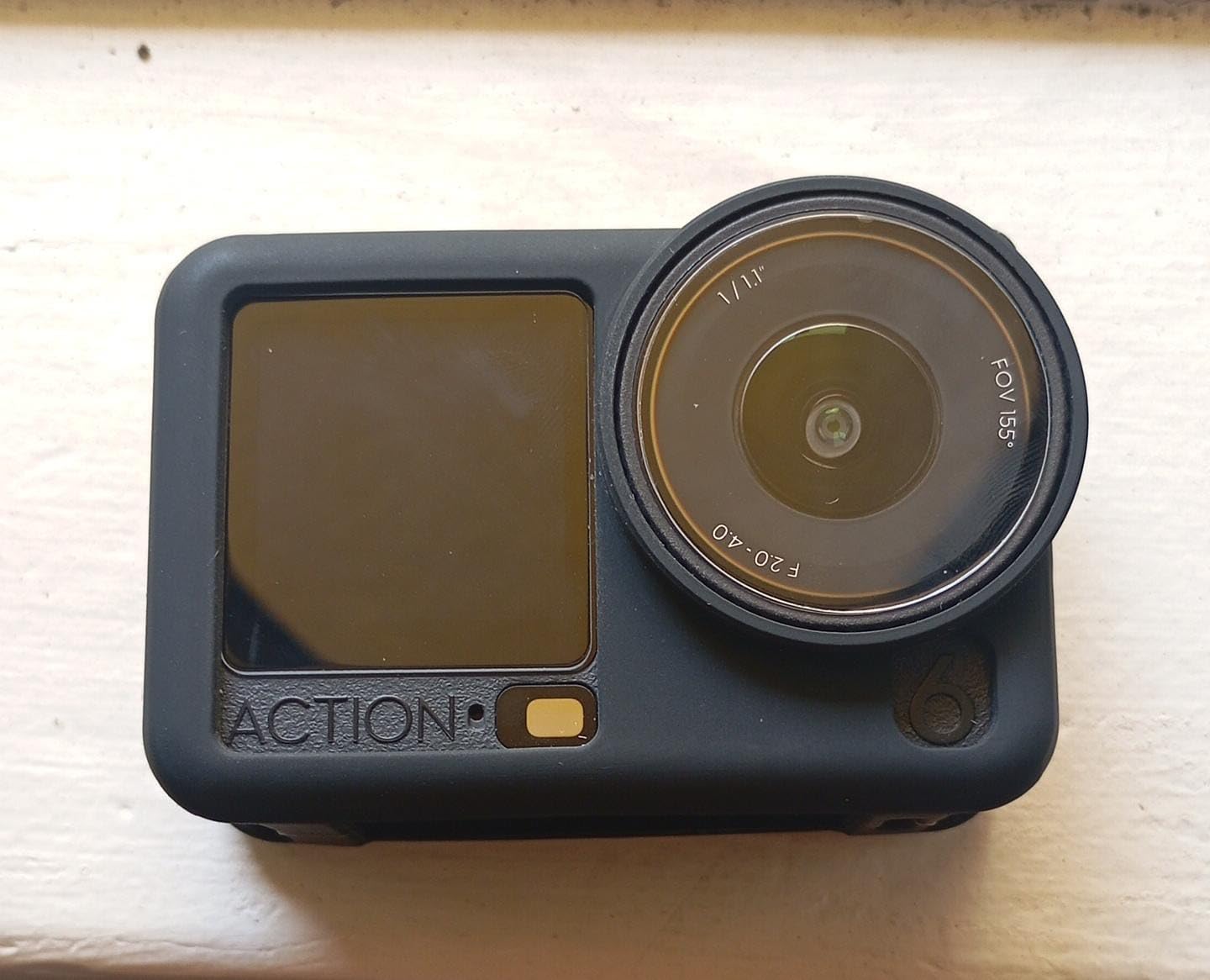
The Osmo Action 6 has the largest sensor in this roundup at 1/1.1 inch, and its variable aperture from f/2.0 to f/4.0 is a genuinely useful control on a shaded forest trail. Wide open for dusk riding, stopped down for bright midday rock gardens.
RockSteady 3.0 is tuned to preserve the feeling of first-person motion rather than smoothing the speed out of it. That matters on MTB, where a gimbal-flat look can feel wrong because it removes the physicality of the terrain.
4K Custom Mode is the sleeper feature for social-first riders. You record once and reframe into vertical, square or standard aspect ratios later, instead of running separate vertical takes and halving your battery in the process.
Owners switching from older GoPros point to battery endurance, 8K detail and GoPro accessory compatibility as the decisive wins. The recurring reservation is audio: the onboard microphone is usable but weak, and an external mic is recommended if sound matters.
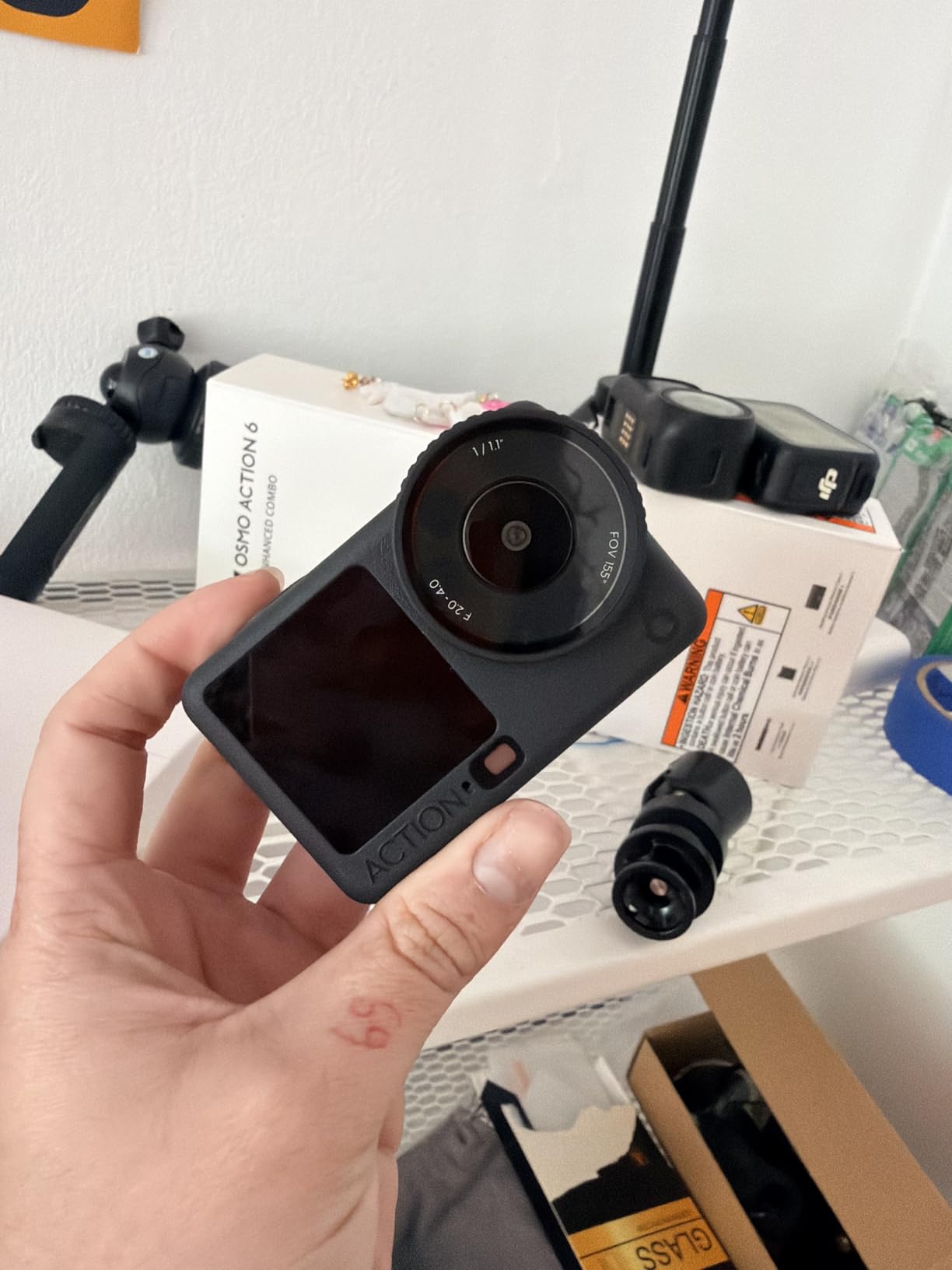
Fifty gigabytes of built-in storage is quietly useful. On a short ride you can record without a card at all, and if the card fails after a season of trail use you have not lost the day.
The Enhanced Combo includes a 1.5m extension rod, two batteries, a multifunctional battery case and dual quick-release adapters, so the pole-shot angle is covered out of the box.
Why low light changes your camera choice
Shaded singletrack under a closed canopy is effectively low light, and it is where sensor size shows up. Frames shot there are where riders notice a difference between a 1/1.3-inch body and an older smaller sensor, especially at dusk and on winter days when the light goes early.
Variable aperture gives you direct control rather than an automatic guess, which matters when the light changes every thirty seconds as you drop into a gully and climb back out.
Where it frustrates riders
The default wide-angle view is aggressive, so you will often want to straighten or narrow it. Combined with a heavy stabilization crop, framing takes practice to get right in the field.
High bitrate output means very large files, so bring more cards than you think you need. There is also a small learning curve in the menu system that first-time users will feel on the first ride.
5. Insta360 Ace Pro 2 – Best for Compact Handling and Forest Trails
Insta360 Ace Pro 2 Dual Battery Bundle – 8K Waterproof Action Camera Co-Engineered with Leica, 1/1.3″ Sensor, Dual AI Chip, Leading Low Light, Superior Audio
Pros
- 8K30 and 4K60 Active HDR with Leica tuned color
- PureVideo is a real step up on shaded trails
- FlowState keeps rough trail footage smooth
- Flip touchscreen is bright and durable
Cons
- Smaller base of owner feedback than rivals
- Needs a V90 card for the highest bitrates
- Leica color profiles need grading familiarity
The Ace Pro 2 is the conventional action camera in this group, and that is exactly why some riders prefer it. No 360 workflow, no render step, files that land on the card ready to edit.
It is the only body here with a dual AI chip design, combining a dedicated Pro Imaging Chip with a 5nm AI Chip for more than double the compute of the previous generation. PureVideo mode, now up to 4K60fps, is where you see the benefit on a dim evening descent.
The 2.5-inch flip touchscreen has 70% higher pixel density than the outgoing model and is bright enough to frame in sunlight, plus a claimed 100% improvement in flip durability. On rough terrain that flip screen is the part most likely to take an impact.
FlowState stabilization with a 157-degree MegaView field of view keeps the picture smooth without the fisheye distortion that makes some 170-degree lenses look soft in the corners.
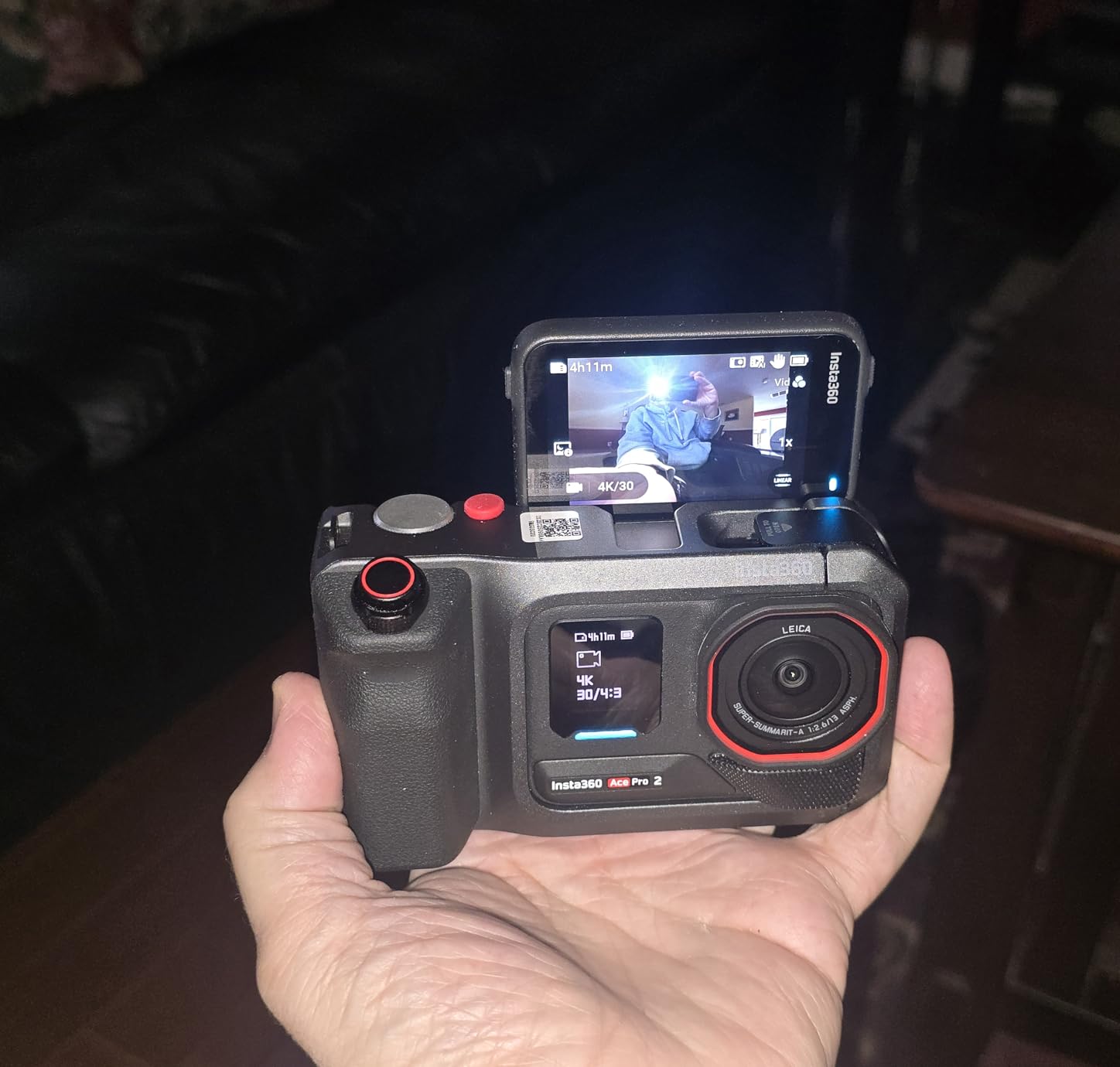
Hardware Wind Guard plus refreshed audio algorithms help keep voices audible over wind, and the body is rated to minus 20C, which makes it a sensible winter option.
This Dual Battery Bundle includes the camera, Wind Guard, standard mount, mic cap, USB-C cable and two batteries, so it is ready to mount on the first ride out of the box.
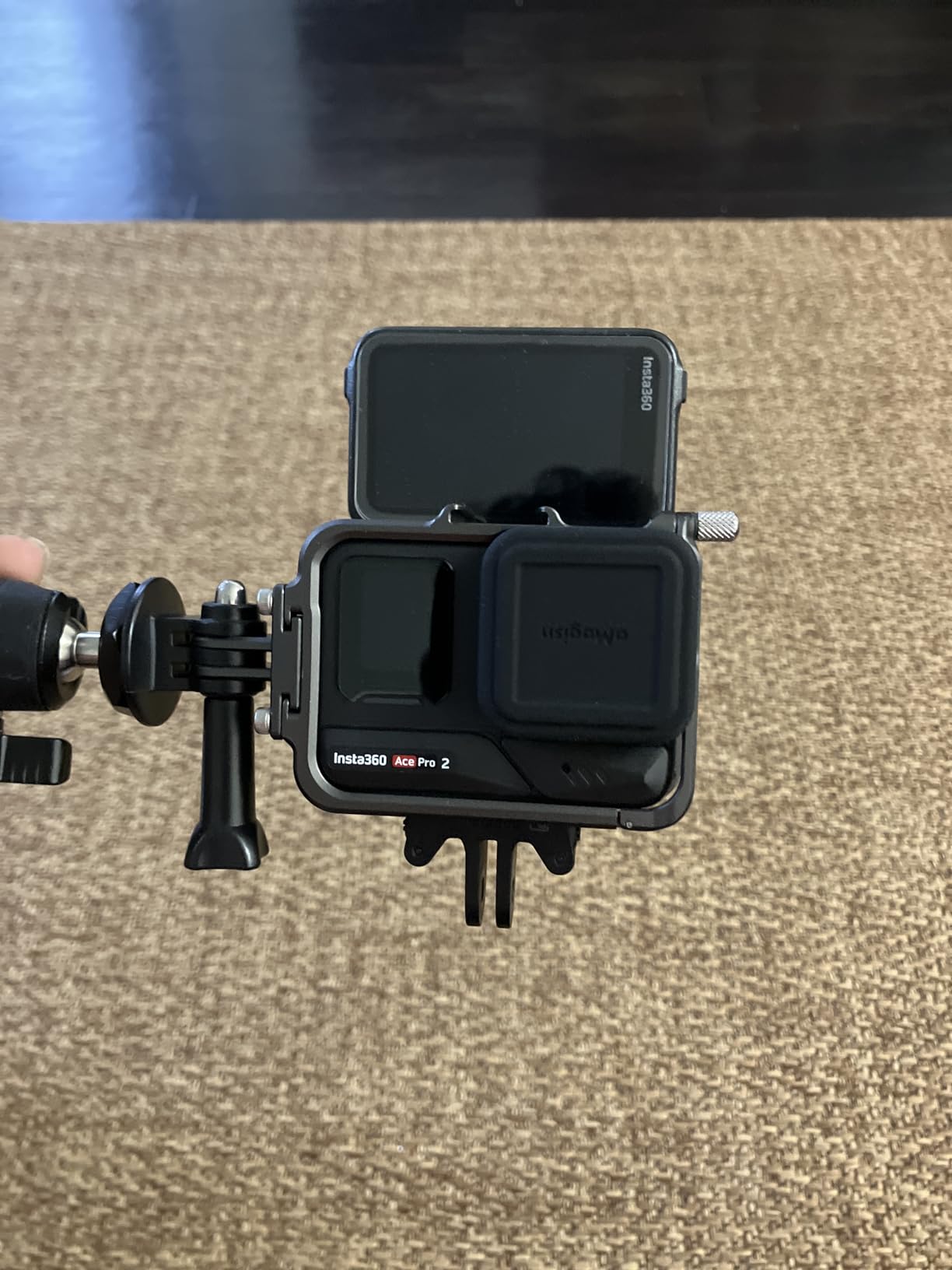
What makes it a strong forest-trail camera
Waterproof to 12m bare, rated to minus 20C, and light enough that the flip screen does not fatigue your wrist on a long climb. The 1/1.3-inch Leica Summarit lens with 13.5 stops of dynamic range handles the light changes of dense woodland better than most.
For riders who want the image quality of a flagship without the 360 editing overhead, this is the most straightforward choice on the list.
What to know before you buy
It is a newer listing with a smaller base of owner feedback than the GoPro and DJI bodies here, so long-term durability consensus is thinner. Treat early reviews as promising rather than settled.
Getting the most out of it means a V90 microSD card and some familiarity with grading, since the Leica color profiles reward an editor who knows how to push them.
6. GoPro Hero12 Black – Best for the Widest Helmet and Chest POV
Pros
- HyperSmooth 6.0 keeps bike footage smooth and professional
- Widest field of view on any HERO camera
- Waterproof to 10m with no housing
- Dual screens make solo riding framing easy
Cons
- Short battery life of roughly 30 to 45 minutes at 4K and above
- Runs hot and can shut itself down
- Batteries take three hours or more to charge
The Hero12’s defining advantage for mountain biking is field of view. The 1/1.9-inch sensor delivers the widest view of any HERO camera, which on a chest or helmet mount is the difference between a tight claustrophobic frame and one that shows the trail ahead and the fork below.
HyperSmooth 6.0 plus 360-degree Horizon Lock is still the benchmark most riders compare against, and it holds the horizon flat through a full rotation. Shooting 5.3K60 leaves you room to crop in post without losing detail.
The e-commerce package includes the camera, Enduro battery, USB-C cable, curved adhesive mount, buckle and thumb screw, so a first ride is straightforward.
Where it struggles is endurance. The 1720mAh Enduro battery gives up to 70 minutes at 5.3K60, and owners commonly report 30 to 45 minutes at 4K and higher. On a full trail day you are swapping batteries constantly.

It also runs hot while filming and will power down to protect itself, which is most likely on a long sunny climb at maximum resolution. Batteries taking three-plus hours to recharge means overnight charging between ride days.
Bluetooth audio connectivity lets you pair external microphones, earbuds and voice commands, and frame grabs plus timecode sync genuinely help with multi-camera edits.

When the widest view actually helps
Chest mounts suffer most from a narrow lens because the handlebars and your arms eat the frame edges. The Hero12’s extra field of view keeps the trail line visible and reduces how much you need to straighten later.
It is also the easiest option here to point at yourself for a solo ride, since the dual screens make framing straightforward on a bar or helmet mount.
What to plan around
GoPro Quik subscription prompts are persistent, and the native editing experience is mediocre compared with a desktop workflow. Budget your editing time accordingly.
There is no interactive zoom on the camera body, and heat shutdowns plus slow charging are the two practical constraints that decide whether it suits a full-day rider.
7. GoPro HERO13 Black Bundle – Best for Getting a Complete Kit on the First Ride
GoPro HERO13 (Hero 13) Black – Waterproof Action Camera with 5.3K HDR Video, 27MP Photos, 1/1.9″ Image Sensor, Live Streaming, Webcam, Stabilization + 64GB Card & 50 Piece Accessory Kit – Bundle
Pros
- Durable body that handles trail and water conditions
- Simple enough for new users with plenty of modes
- Front monitor for helmet and chest framing
- 64GB card included so you can ride immediately
Cons
- Battery life of roughly 1.5 hours is short for a full day
- Bundled accessories are often low quality
- Tripod in the kit struggles to hold the camera
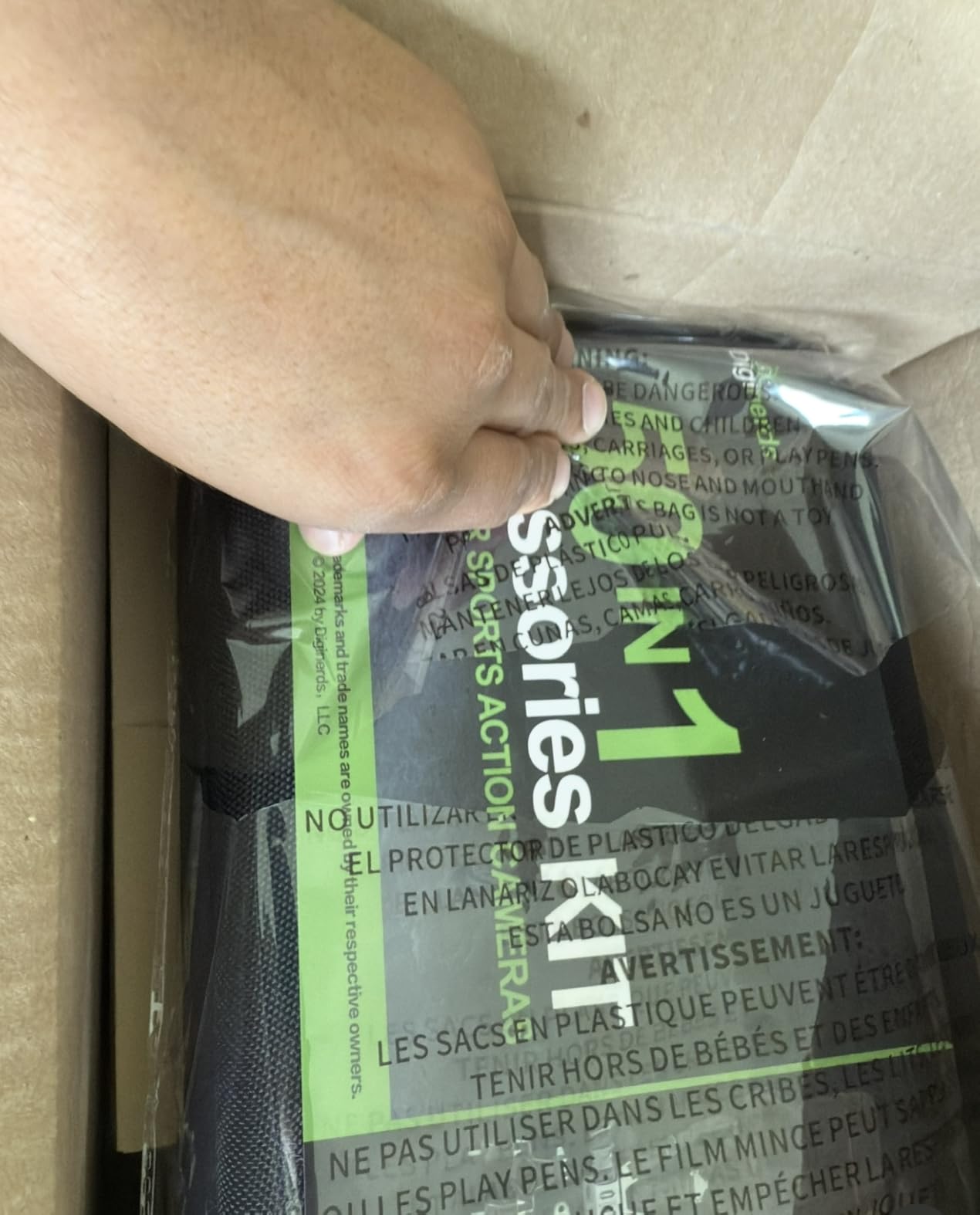
The HERO13 Black bundle is the fastest route from no camera to riding with one. It includes the camera, a 50-piece accessory kit, a 64GB Extreme Pro microSDXC card and a microfibre cloth, so nothing is missing on day one.
The camera itself is well liked for durability and ease of use, with a front-facing monitor that makes helmet and chest framing possible and Wi-Fi 6 transfers that speed up getting footage off the device. Timecode sync is a genuine help for multicam edits.
HyperSmooth 6.0 with AutoBoost and 360-degree Horizon Lock handles rough terrain, and GP-Log color depth gives you a flat profile to grade from. Widescreen, vertical and full-frame capture modes cover both landscape trail edits and vertical social clips.
Almost all the criticism here is aimed at the bundle rather than the camera. The 50-piece kit is padded with duplicates and filler, and several accessories are described as cheap, particularly the tripod.
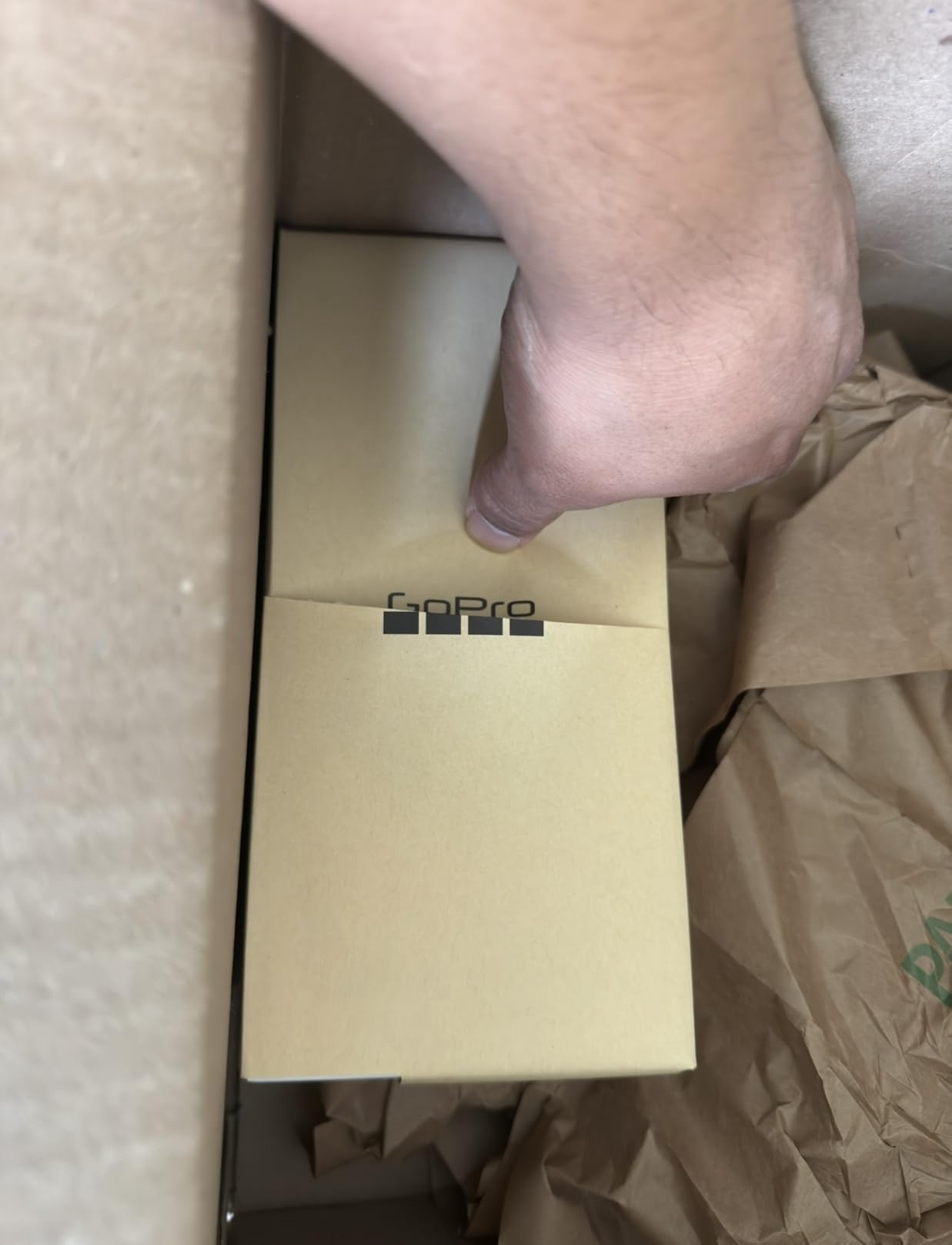
Buy this one for the camera and the card. Treat the accessory kit as a source of a couple of useful straps and buckles, and plan to replace the tripod with something that actually holds position on rough ground.
The 1900mAh Enduro battery gives up to 1.5 hours of 5.3K recording, which is a modest improvement over the previous generation and still short for a full trail day. That is the main reason to keep a spare cell in the pack.
Who benefits from buying the bundle
First-time riders who do not already own GoPro-style mounts, straps or a spare card. Everything needed to mount on a helmet and start recording arrives in the box, and the included 64GB card is fast enough for the top-tier modes.
It is also a reasonable second angle for multi-camera edits, since timecode sync is supported and the body shares the GoPro mount ecosystem with the Hero12.
Where it will disappoint
If you already have mounts and cards, the bundle adds cost rather than value. And with roughly 1.5 hours of 5.3K runtime, it still needs a battery plan for a full day in the hills.
Long recording sessions at high resolution are worth testing before you rely on the camera for a multi-hour ride.
8. AKASO Brave 4 Pro – Best Starter Kit for a First Recording Year
Pros
- Clear sharp 4K video at a low price point
- Light and compact enough to carry with a small tripod
- Remote is used constantly for helmet mount control
- Two batteries plus dual charger give about 90 minutes each
Cons
- Helmet footage is shakier than higher-end stabilizers
- Does not record continuously in video mode
The Brave 4 Pro is the kit I recommend for someone in their first season of recording rides. Owners consistently call it excellent value, and several report it performs better for them than a far more expensive GoPro they tried first.
Light weight, fast setup and two 1350mAh batteries with a USB dual charger make it a genuinely complete package. The 170-degree field of view suits wide trail shots, and mounts fit GoPro-style fittings.
For most riders the wireless remote wristband becomes the controller of choice. Starting and stopping recording from your wrist on a helmet mount, without touching the camera mid-descent, is the feature you will use most.
There are two real functional complaints. Helmet-mounted footage comes out shakier than higher-end stabilizers manage, because EIS 2.0 with a 6-axis gyroscope is a simpler system. And it does not record continuously in video mode, so clips stop at intervals and long rides get chopped up.
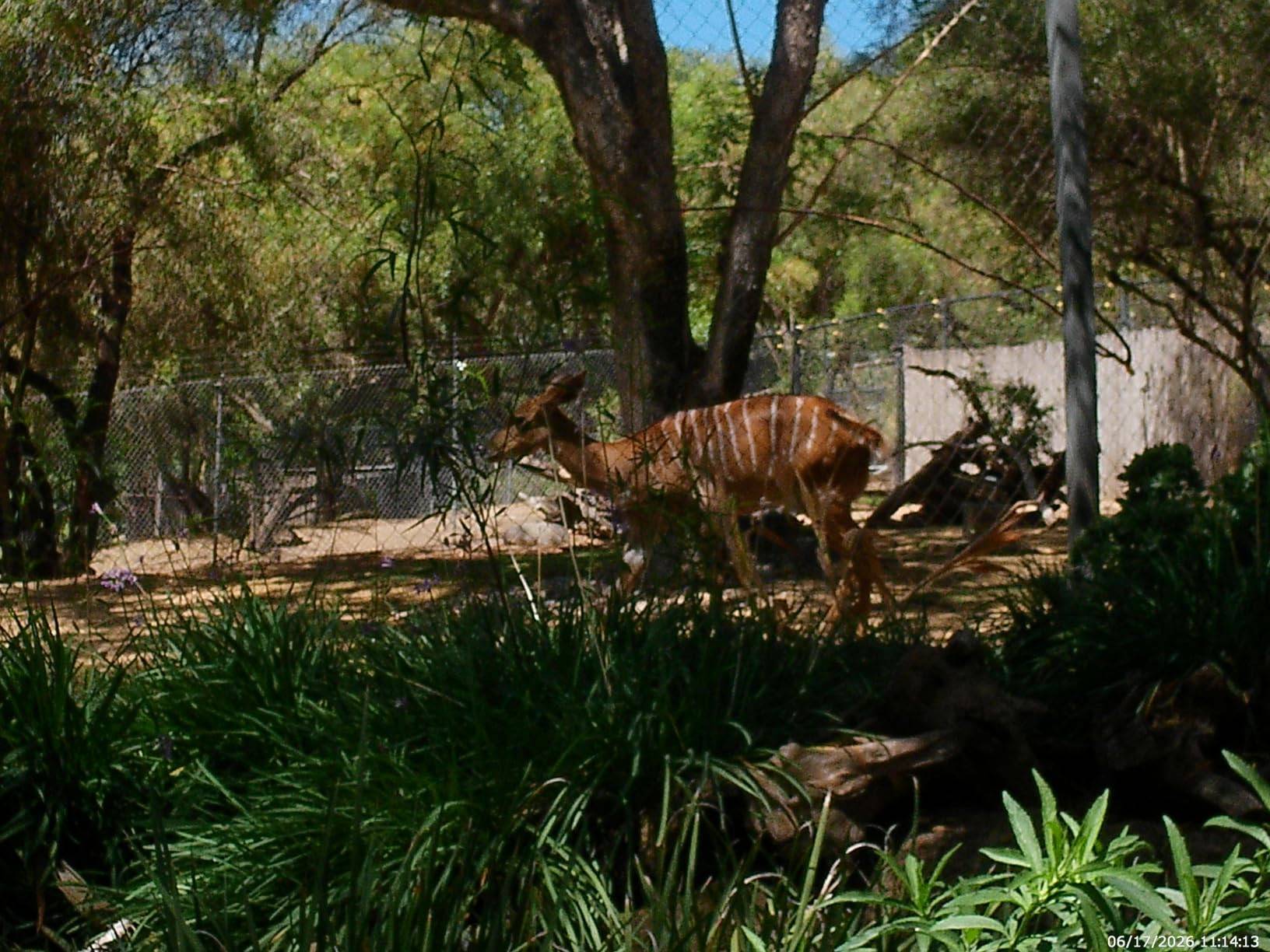
Smaller issues: the screen is hard to read through the housing, the housing blocks the zoom controls, and the printed mount instructions are sparse. Removing the battery also resets the date and time, which is mildly annoying for multi-camera edits.
An external microphone is not included, so plan on relying on ambient sound or buying one separately if audio matters to your edit.
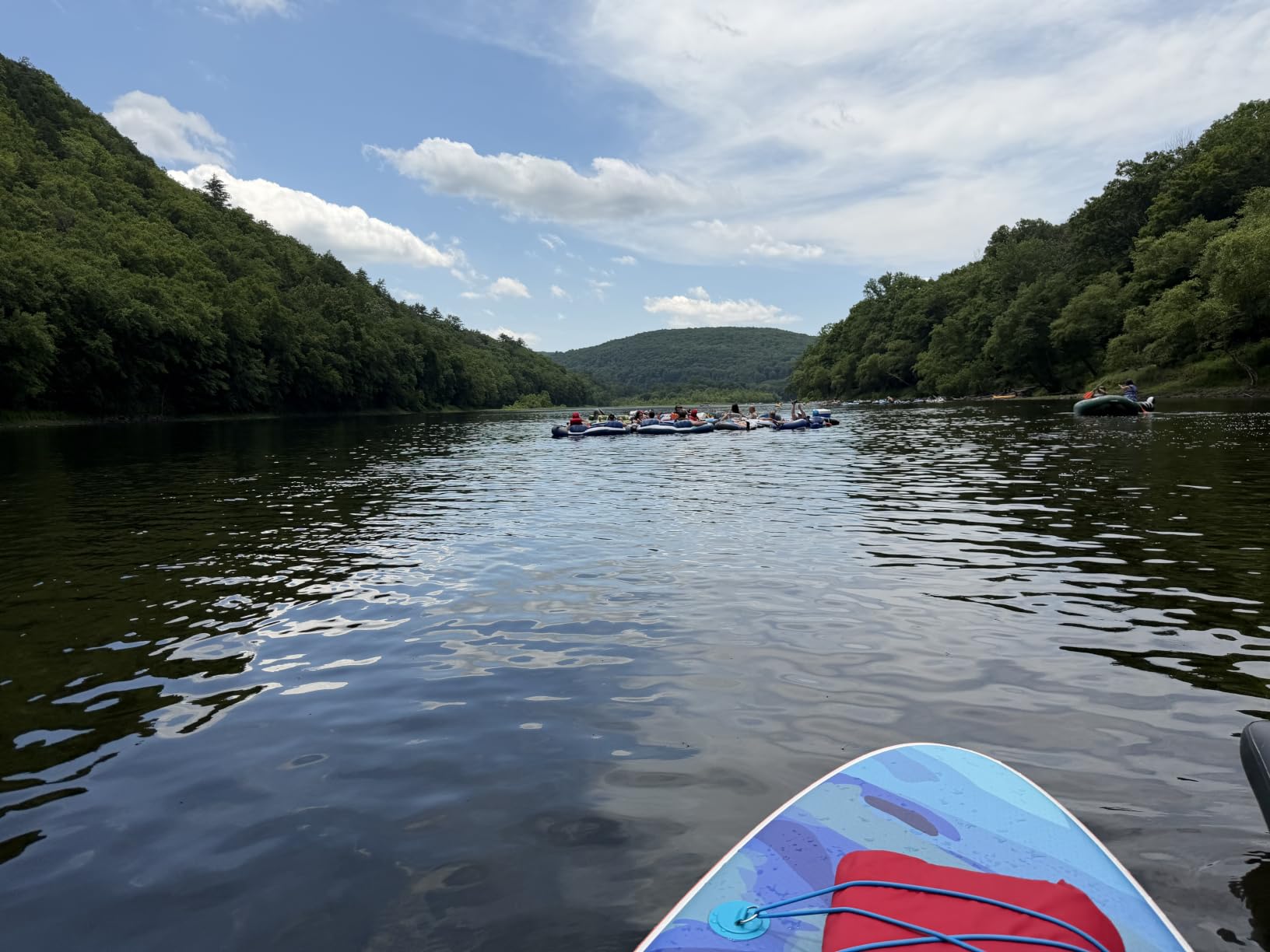
Why a first-year rider will get on with it
You are learning framing, mounting and editing at the same time. A simple camera that reliably produces clear 4K lets you focus on riding lines instead of menus, and the included mount kit means no extra purchases before your first ride.
Two batteries with a dual charger also mean a spare is always charged, which is a meaningful advantage over a single-body flagship.
When to move up
If you find yourself chasing smoother helmet footage, or you want a single continuous file from a long ride rather than a stack of clips, that is the point to step up to a body with stronger stabilization and more storage headroom.
The non-continuous recording behaviour is the single biggest reason owners move on, so test a full ride before you commit.
9. AKASO Brave 4 – Best Value for Riders Who Already Have Mounts
Pros
- Excellent video quality especially at 1080p60
- Very stable footage on bikes and chest mounts
- Dual screens make solo riding framing easy
- Large accessory kit with dual battery charger
Cons
- Menu navigation and Wi-Fi pairing are awkward
- Photo quality is grainy compared with video
The Brave 4 is the most established pick here, with a very large body of owner feedback behind it. Owners treat it as the value option in the AKASO line, citing smooth stabilized riding footage and crisp 1080p60 video.
The adjustable field of view is a genuinely useful trail feature. Choosing between 140, 110 and 70 degrees lets you frame tighter on technical sections instead of shooting everything ultra-wide, which is a common fix for distorted-looking fast riding.
Dual screens, a 2-inch rear display and a 0.96-inch front screen, make solo riding framing straightforward. The kit includes a USB dual charger and two rechargeable 1050mAh batteries giving up to 90 minutes each.
The friction points are software rather than hardware. Menu navigation is button-driven and awkward, and Wi-Fi pairing is poorly documented, so budget time to set it up at home rather than in a car park.

The battery door is unhinged and easy to lose, which matters more than it sounds if you open it on a muddy ride to swap cells. Photo quality is grainy next to the video quality, so treat it as a video-first camera.
Zoom is digital only and adds little over cropping the frame in editing. The screen is also hard to read through the housing underwater, which matters if you ride in the shallows.

Where adjustable field of view earns its keep
Ultra-wide lenses distort fast, close trail features. Being able to drop to 110 or 70 degrees for a rooty section or a technical drop keeps the geometry honest, and the same setting helps when you are filming yourself from a pole on a fast descent.
Gyro-based stabilization is what makes this body usable on bars and chest mounts, and owners consistently report stable footage in those positions.
Who should skip it
If you shoot mostly at dusk or in heavy canopy, the sensor here is not the strongest in this roundup, and you will notice more noise than the DJI or Insta360 bodies. If audio is central to your edit, the onboard microphones are not the place to start.
Anyone who wants modern app-based editing should look elsewhere; this is a menu-and-cable camera.
10. AKASO EK7000 – BUDGET PICK for Occasional Trail Days
Pros
- Affordable entry-level 4K with strong video quality
- Large accessory bundle usable on bikes and helmets
- Two batteries plus dual charger extend recording time
- Simple controls that work without the manual
Cons
- Wind-heavy muffled onboard audio
- Weak Wi-Fi app control with unexpected stoppages
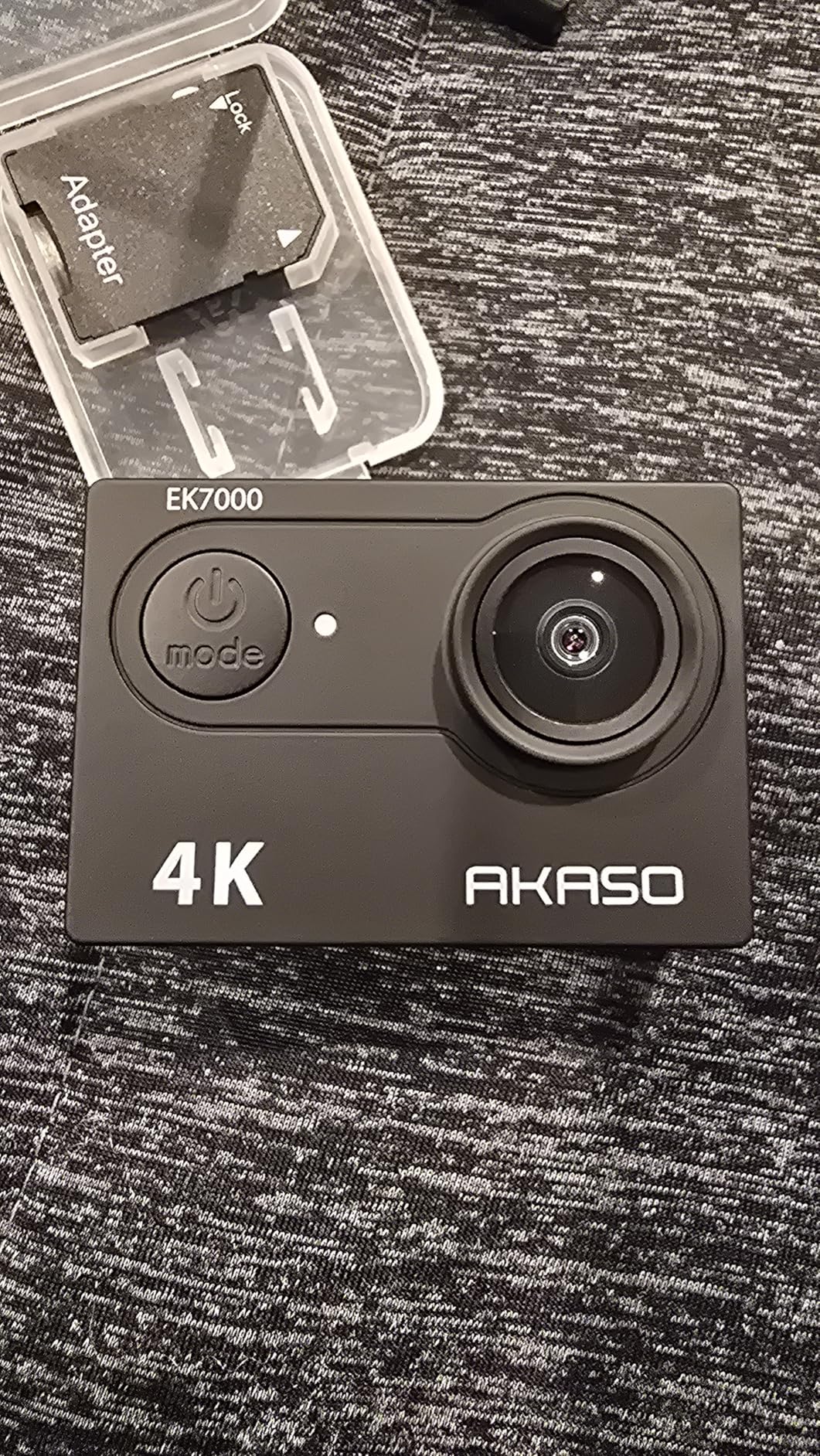
The EK7000 is the cheapest way to start filming trail rides, and it remains the most reviewed camera in this roundup by a wide margin. That volume of owner feedback is itself useful: whatever its faults, they are well documented.
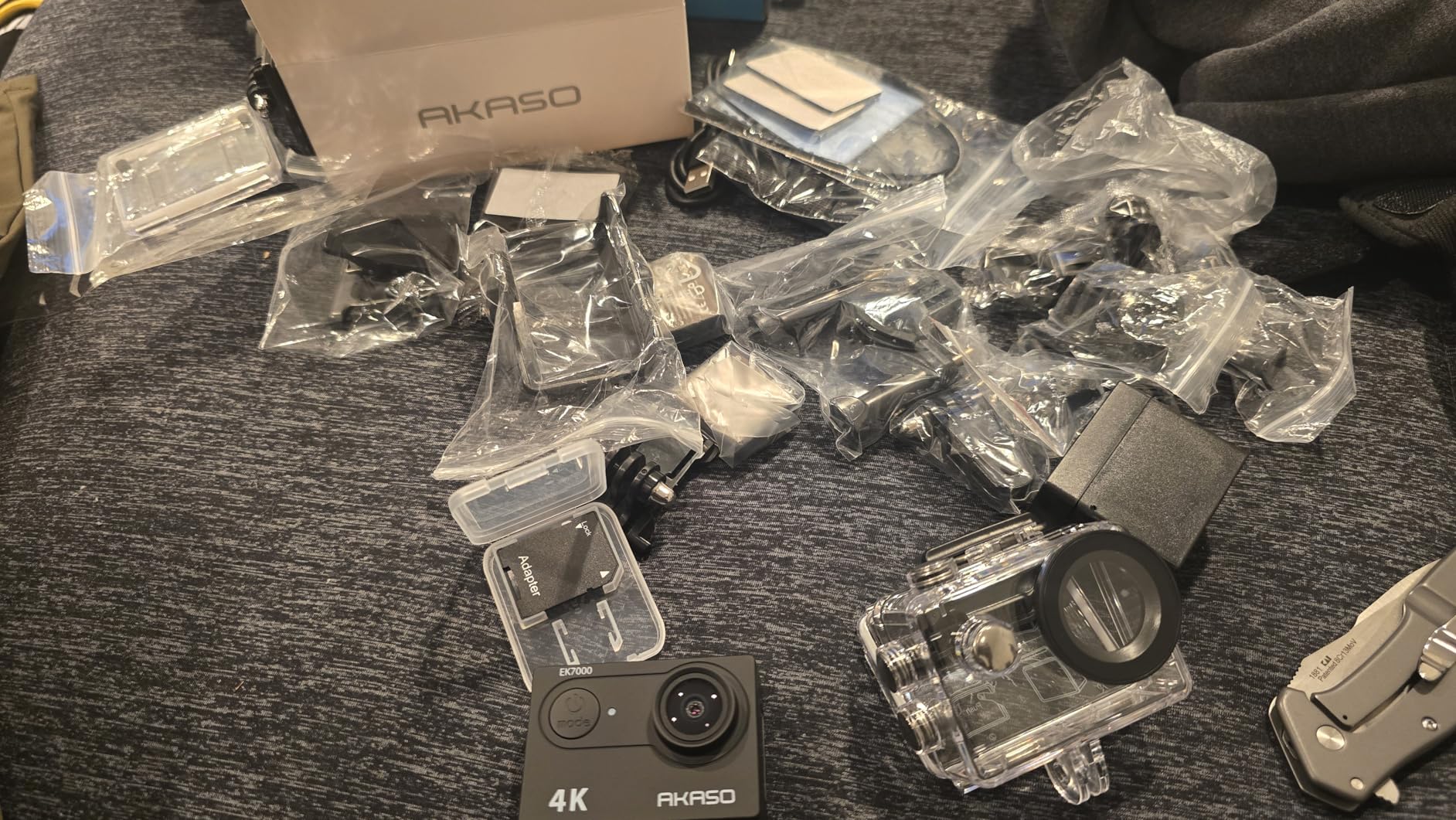
You get 4K30 video, 20MP photos, built-in electronic image stabilization and a 131ft waterproof housing with a large accessory kit. Two included batteries with a dual charger give around 90 minutes of recording each, which is enough for most weekend rides.
The controls are genuinely simple enough to configure without the manual, and the 20mm fisheye lens with 4x digital zoom gives you a wide view of the trail ahead. A wireless wrist remote is included, though it is not waterproof.
The audio is the weak point. Riders report muffled, wind-affected onboard sound and heavy wind noise on descents, which is a real limitation for anyone cutting sound-led edits.
Wi-Fi app control is weak, with recordings started from the app stopping unexpectedly. Do the settings at home and use the physical controls on the bike. The microSD card is not included and needs to be U3 or V60 class for 4K.
Frame rate drops and the image softens in low light, the battery door is fragile once worn in, and field of view can vary between batches, which matters if you plan to run two cameras together.
When this is the right call
If you ride a couple of times a month, mostly on well-known trails, and you want usable 4K footage to learn editing on, the EK7000 does the job. Built-in EIS visibly smooths handlebar and helmet footage, and the accessory kit means you can mount it straight away.
It is also a low-risk second camera: a cheap unit on the bars while your main camera rides on the helmet, or a backup that is less painful to lose on a rocky ride.
Where it will frustrate you
Low light and audio are the two areas where the savings show. If your riding happens at dusk, in thick forest or on long winter descents, put the money toward one of the larger sensors instead.
Fragile battery doors and inconsistent field of view between batches make it a poor choice for a permanent helmet mount on a rough bike.
The Jello Effect and Why Your Mount Matters More Than Your Camera
The Jello Effect is the wobbly, gelatinous distortion that appears on straps, helmet edges and anything soft or thin in the frame during high-frequency vibration. It is the most complained-about artefact in mountain biking communities, and it is worth understanding because it changes what you should buy.
Electronic image stabilization crops and reframes the recorded image frame by frame using gyroscope and accelerometer data. It is very good at removing large, slow movements, and it is largely powerless against the fine, rapid chatter that comes from a rough trail. No stabilization setting, at any price, fixes that.
So the fix is physical. The mount has to isolate the camera from the highest-frequency energy before the camera records it. A rigid adhesive mount bolted to a trail bike transmits every chatter straight into the sensor. A strap mount with some give absorbs a surprising amount of it.
The second half of the problem is positioning. Every rider we have seen get smooth footage has the same instinct: mount the camera low, close to where your body meets the bike, and as far from the fork crown and any point where the frame is flexing.
Battery, Memory and Audio Math for a Full-Day Ride
Long days are where most camera regrets happen, so here is the practical arithmetic before you commit.
Batteries. A body rated at four hours realistically gives you less once stabilization, high resolution and a cold start are factored in. For a full day on one camera, plan for two batteries minimum and three if the ride takes place below freezing. Cold derating is routine, and keeping spare cells in an inside pocket rather than a pack makes a measurable difference.
Memory. 4K60 files are the baseline most riders settle on, and high-bitrate 8K bodies produce files several times larger. A single 4-hour ride at high bitrate can generate well over 100GB. Check your card class: U3 and V30 is the practical minimum for 4K, and several bodies here need V90 for their top tiers. Bring more cards than the arithmetic suggests, because the failure mode is a full card on the descent you came for.
Audio. Wind noise is the reason descent audio usually gets muted in the edit. Every descent is a low-frequency roar that saturates any small onboard microphone. Bodies with a physical Wind Guard or an effective wind-noise cancellation system, such as the Insta360 X5 and Ace Pro 2, give you usable voice audio. If sound matters, use one of those or plan on a wireless external microphone and accept the extra wind protection needed.
One more number: bare-body waterproofing and housing depth are not the same figure. Several bodies here are rated to 20m or 33 feet without a case, while others only reach that depth inside a housing that adds bulk and vibration to the mount. Check which applies to the depth you need.
How to Choose a Camera for Mountain Biking Videos
Seven criteria decide this purchase, and they are not equally important. If you only have time to read two, read the first two.
1. Stabilization and horizon control. Gyroscope-based EIS is non-negotiable on real singletrack. Horizon lock or horizon leveling, which holds the horizon flat through full roll, is the feature that makes a bar-mounted shot usable through a berm. Every camera in this roundup has both in some form, but the strength of the system varies a lot.
2. Mount compatibility and form factor. Check that the mount ecosystem matches what you already own. GoPro-style two-prong fittings remain the common currency, and DJI and Insta360 magnetic quick-release mounts are fast to swap between bar, chest and helmet. Weight on your helmet also matters for long days.
3. Battery life and cold behaviour. Match the body to the length of your rides. A four-hour-rated body covers most trail days; a 70-minute body needs a charging plan and two spare batteries in the cold.
4. Field of view and resolution. A wider lens suits chest and helmet POV where your arms would otherwise crowd the frame, but it distorts fast close features. An adjustable field of view, as on the AKASO Brave 4, is a real advantage. Stabilization modes also crop the frame, so frame wider than you think you need.
5. Low-light performance. Shaded forest singletrack and winter dusk are harder than any beach shoot. Sensor size is the lever here: 1/1.1-inch and 1/1.3-inch bodies hold up far better than smaller sensors, and a variable aperture adds useful control.
6. 360 or flat. A flat camera is simpler, files are smaller, and editing is faster. A 360 camera captures every angle so you can choose the shot afterwards, which suits unpredictable trail lines, but requires desktop rendering, more storage and more editing time.
7. Value tier. Decide what you are actually doing with the footage. Weekend learning, long multi-hour trail days, and published edits with a proper soundtrack are three different budgets, and the budget cameras in this list are genuinely fine for the first of those.
That brings us to the question riders ask most directly: GoPro, DJI or Insta360?
GoPro wins on field of view, mount ecosystem and the deepest accessory network, and its HyperSmooth stabilization is still the reference point. DJI wins on battery endurance, bright screens and low-light sensor size, and its horizon stabilization is the smoothest through rotation. Insta360 wins the same equation outright if you want reframe-later capability, with the X3 and X5 covering 360 from the mid tier upward. If you only record the ride and never edit the angles, GoPro or DJI. If your riding is unpredictable, Insta360.
There is also a different answer entirely. If you are making cinematic MTB edits with a follow-cam, a second rider, or a stabilized rig, a conventional camera with a proper mount and a gimbal can out-perform any action camera, and the lenses available for those bodies are much wider. Action cameras are built for durability first, and that limits image quality deliberately.
For a related angle on mounting and multi-camera rigs, our guide to cameras for skateboarding videos covers the same vibration and mount problems in a different sport, and our YouTube video camera guide is the right reference if you are filming yourself as well as the trail.
Frequently Asked Questions
What is the best camera for mountain biking videos?
The Insta360 X3 is our best overall pick because FlowState stabilization keeps the horizon level on technical terrain and the reframe-later workflow means a missed corner is recoverable in editing. For flat-camera simplicity, the DJI Osmo Action 5 Pro wins on battery endurance and low light.
Which GoPro is best for mountain biking?
The GoPro Hero12 Black is the stronger choice for mountain biking because its 1/1.9-inch sensor delivers the widest field of view of any HERO camera, which matters on chest and helmet mounts where your arms would otherwise crowd the frame. Both it and the HERO13 Black share the same wide-view advantage.
Is GoPro or DJI Osmo Action better?
DJI Osmo Action wins for long rides and low light, with up to 4 hours per battery and a 1/1.3-inch or 1/1.1-inch sensor. GoPro wins on field of view, mount ecosystem and slow-motion options. Riders filming full trail days in shade usually prefer DJI, while solo POV filers usually prefer GoPro.
Which camera is better, GoPro or DJI or Insta360?
GoPro leads on field of view and accessories, DJI on battery life and low light, and Insta360 on 360 reframe-later capability. If your trail lines are unpredictable and you edit your footage, Insta360 recovers angles the others cannot. If you want simple files and fast editing, pick between GoPro and DJI on field of view versus battery life.
What is the best action camera for MTB in 2026?
In 2026 the DJI Osmo Action 5 Pro and the Insta360 X3 are the strongest all-round choices. The Action 5 Pro suits riders who need all-day battery and clean low-light footage, while the X3 suits riders who want to reframe 360 footage after the ride. Both handle the vibration and stabilization demands of trail riding better than budget alternatives.
How do I stop my action camera mount working loose on rough terrain?
Check the mount before every ride, use the thumb screw rather than relying on friction alone, and prefer a strap mount with some give over a rigid adhesive mount to reduce Jello Effect distortion. Adding a small dab of thread-licker tape to the screw threads and carrying a spare thumb screw solves most failures.
Final Verdict: Which Camera for Your Riding
The Insta360 X3 is our pick for the best cameras for mountain biking videos overall, because FlowState stabilization holds the horizon level and the reframe-later workflow means a line you did not anticipate is still recoverable. The DJI Osmo Action 5 Pro is the choice for long days, with battery endurance that covers a full trail day and a larger sensor for shaded singletrack.
Match the pick to the riding. Riders on unpredictable technical terrain who edit their footage want the X3 or the X5 for 360 recovery. Riders filming full days in varied light want the Action 5 Pro or Action 6. Solo POV filers who want the widest view and the deepest mount ecosystem want the Hero12 Black.
Whatever you choose in 2026, the mount matters as much as the body. Pick a damped strap mount, position it low and tight, and spend a few minutes on a familiar trail before you point it at the descent you actually care about. That preparation does more for your footage than any specification on this list.