
Every flight you cannot repeat is a camera decision made once. On a sub-250g freestyle quad a 150g action camera changes how the aircraft behaves, and on a 5-inch cinematic build the mount, tilt angle and vibration isolation decide whether the footage is usable at all. We spent weeks comparing ten bodies across the three classes that actually matter in 2026 — action cameras, FPV cameras that record, and analog feeds that let you race — and the answer for most pilots comes down to a single number: grams.
Our best cameras for drone pilots shortlist starts with the DJI Osmo Action 5 Pro, which pairs a 1/1.3 inch sensor with 360 degree HorizonSteady and a 1950mAh battery rated for up to four hours of recording. It is the body we would bolt to a cinematic 5-inch build tomorrow. Below it sit a GoPro HERO13 bundle for pilots who want the widest lens ecosystem, an Insta360 X3 when you want to reframe the shot after landing, and a cluster of purpose-built FPV cameras for micro and racing builds.
This guide is not a spec sheet dump. It is written around the three questions pilots actually argue about on the forums: action camera or FPV camera, is a GoPro too heavy for my frame, and what fails first. If you are new to the airframe side of things, start with our FPV goggles guide so the video link makes sense before you pick a camera. If you shoot for clients rather than for practice laps, our real estate drone camera picks cover the stills and gentle gimbal-work side of the job.
Top 3 Picks for Best Cameras for Drone Pilots in 2026

DJI Osmo Action 5 Pro
- 1/1.3 inch sensor
- 360 HorizonSteady
- 1950mAh up to 4 hours
- IP68 to 20m

GoPro HERO13 Black
- 5.3K60 video
- 24.7MP stills
- HyperSmooth 6.0
- Waterproof to 33ft
- HB lens system

Insta360 X3
- 5.7K 360 Active HDR
- 4K single-lens mode
- FlowState with Horizon Lock
- 2.29 inch touchscreen
Every Camera We Reviewed at a Glance (October)
Ten bodies, five classes, and only three real constraints: mass, stabilisation and how you view the picture while flying. The table below is the fastest way to self-select before you read the individual verdicts.
| Product | Specifications | Action |
|---|---|---|
| DJI Osmo Action 5 Pro |
|
Check Latest Price |
| GoPro HERO13 Black Extended Power Bundle |
|
Check Latest Price |
| Insta360 X3 |
|
Check Latest Price |
 DJI Osmo Action 4 DJI Osmo Action 4 |
|
Check Latest Price |
 Insta360 GO 3S Insta360 GO 3S |
|
Check Latest Price |
 RunCam 5 4K FPV RunCam 5 4K FPV |
|
Check Latest Price |
 RunCam Phoenix 2 SPV3 RunCam Phoenix 2 SPV3 |
|
Check Latest Price |
 AKASO EK7000 AKASO EK7000 |
|
Check Latest Price |
 RunCam Spotter V2 RunCam Spotter V2 |
|
Check Latest Price |
 Wolfwhoop WT03 AIO Wolfwhoop WT03 AIO |
|
Check Latest Price |
1. DJI Osmo Action 5 Pro – Best Overall Camera for Drone Pilots
Pros
- 1/1.3 inch sensor with 2.4um pixels and 13.5-stop dynamic range
- 360 degree HorizonSteady removes roll-axis shake
- Subject tracking centres fast-moving subjects
- 1950mAh battery rated up to four hours
- Direct wireless link to DJI Mic 2 and Mic mini
Cons
- Fixed focus rather than autofocus
- Essential Combo omits the curved adhesive base
- Heavier than micro FPV cameras at 146g
The Osmo Action 5 Pro is the camera we would put on a cinematic build first, and the reason is the sensor rather than the marketing. A 1/1.3 inch CMOS with 2.4um pixels and 13.5-stop dynamic range holds highlight and shadow detail through the aggressive pull-ups and sudden descents that ruin cheaper action camera footage on an FPV quad.
Where the older generation of action cameras wobbles on hard rolls, the 360 degree HorizonSteady mode locks the horizon through maneuvers that would normally put a canted horizon across a third of the frame. Combined with subject tracking, the frame stays composed when you are chasing a moving subject rather than a static point. That pairing is what makes it feel like a gimbal without the mass of one.
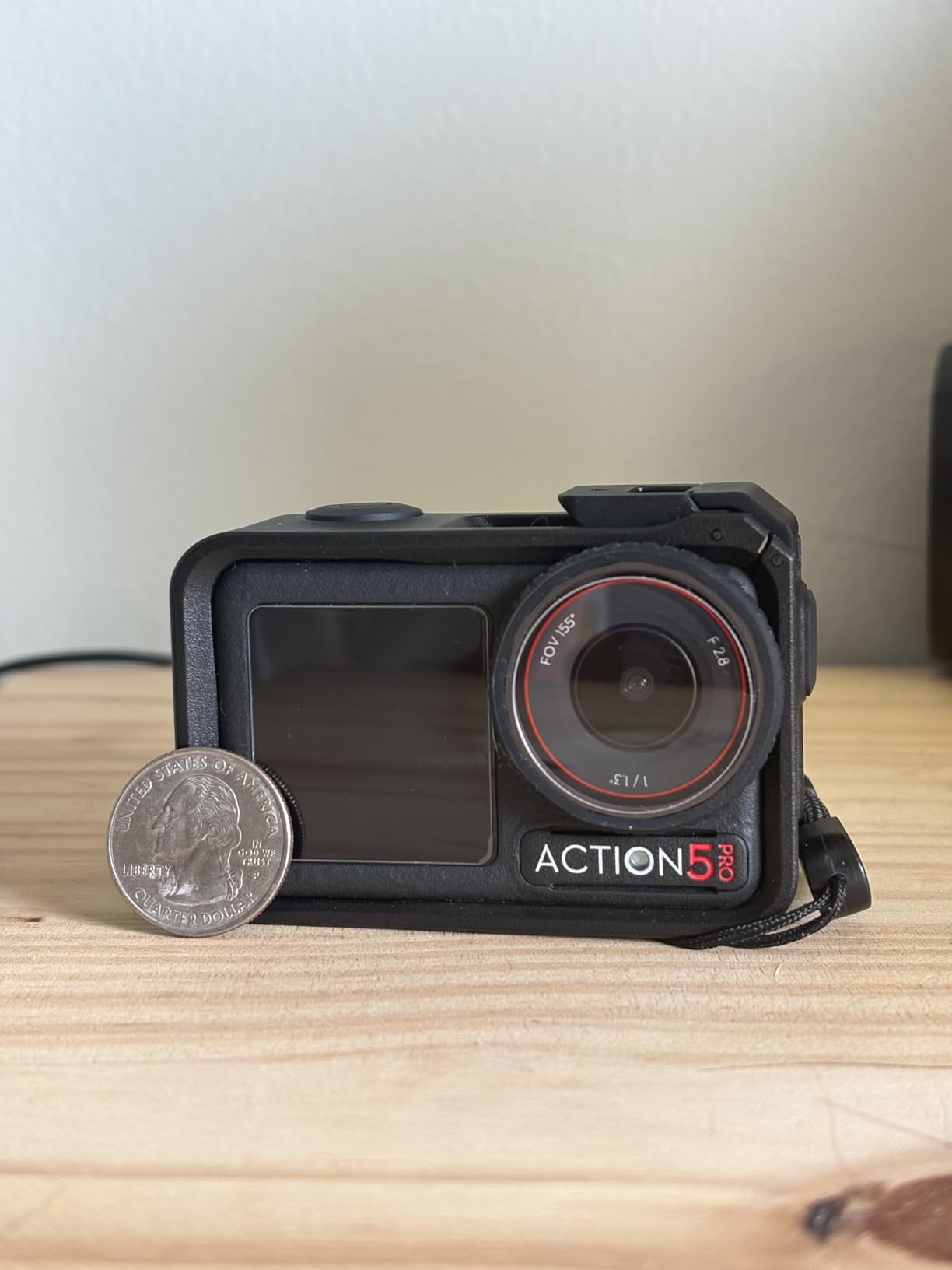
Battery life is the quiet hero here. The 1950mAh Extreme Battery Plus is rated for up to four hours of recording and still works at -20C, so a full session of packs and crashes does not mean a dead camera between flights. The IP68 rating to 20m also means you do not need a housing, and housings are where vibration and lens softness get introduced.
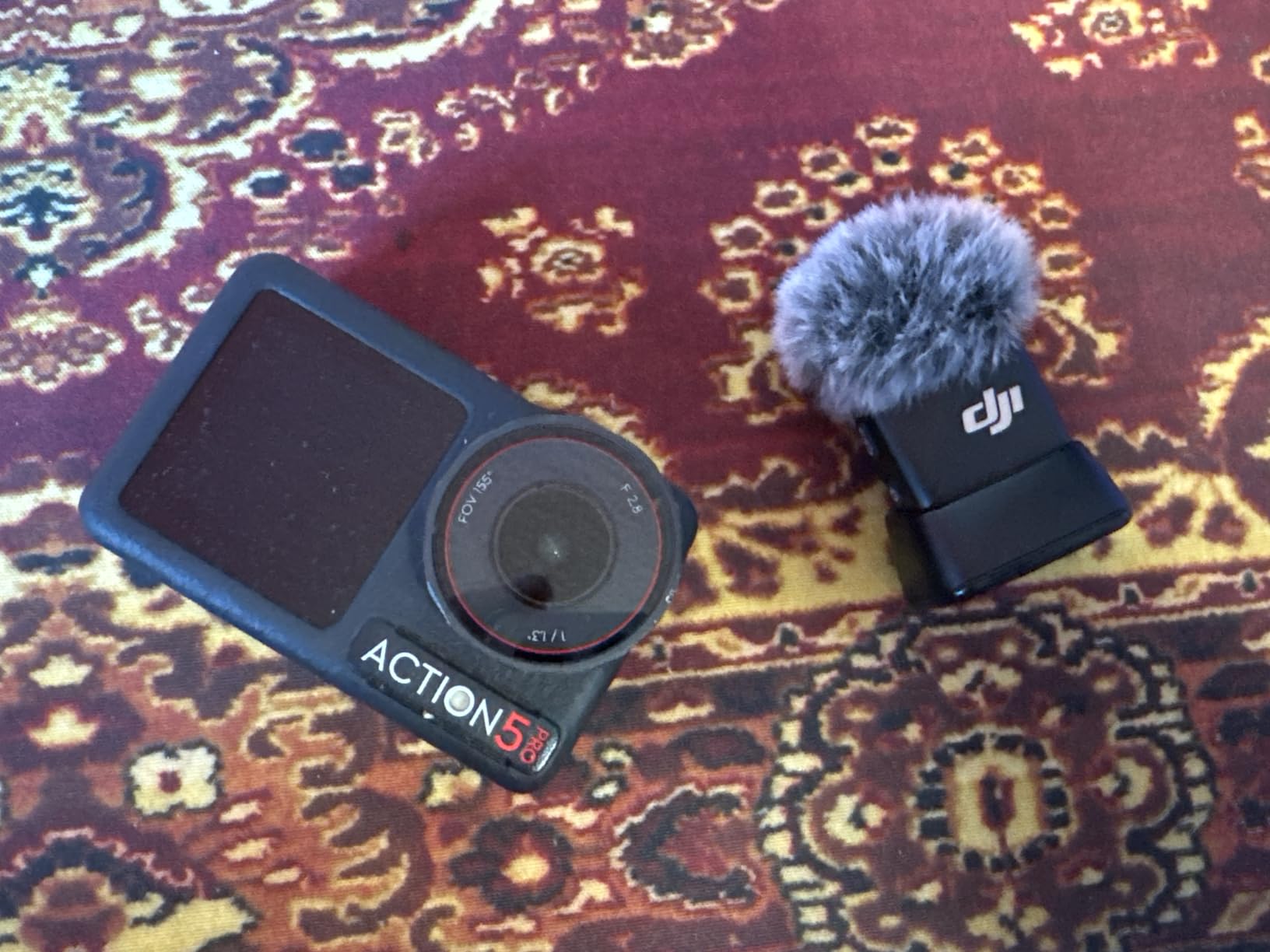
Direct wireless connection to DJI Mic 2 and Mic mini transmitters is a genuine workflow win for a two-person crew: the camera operator can hand audio to the pilot without a receiver stack, and the four-microphone array picks a clean source with wind-noise cancellation. Two OLED screens let you frame a solo flight without pulling the camera.
How It Performs on a 5-Inch and 7-Inch Build
At 146g it is a mid-build camera, not a micro one. On a 5-inch quad that is a sensible addition in the nose, and on a 7-inch long-range frame you should treat the mount as a thrust calculation rather than a bolt-on. If you can hold the total build under a comfortable all-up weight, the HorizonSteady output is the best-looking flight footage in this roundup without a mechanical gimbal.
The low-light behaviour is the reason long-range and twilight pilots gravitate here. 13.5 stops of dynamic range means a dusk ascent over a valley does not blow the sky to white or crush the ground to black, and that is exactly the shot most action cameras get wrong.
Where It Falls Short for FPV
Fixed focus is the main limitation. If your flying involves a lot of near-field action, the Action 4 and the GoPro give you a little more flexibility, though neither adds autofocus. The Essential Combo also leaves out the curved adhesive base, so plan to source a proper TPU or nylon cage rather than relying on a stick-on pad.
It will never be a racing or freestyle camera. There is no feed to fly, the mass is high for a 3-inch build, and the price sits well above the micro FPV options. Buy it to record, not to fly.
2. GoPro HERO13 Black Extended Power Bundle – Best Value Cinematic Body
Pros
- 5.3K60 video and 24.7MP stills with strong detail
- HyperSmooth 6.0 stabilization for smooth flight footage
- Waterproof to 33ft with a water-repelling lens cover
- HB-Series lens auto-detection and a broad lens ecosystem
- Bundle includes three Enduro batteries plus dual charger and a SanDisk card
Cons
- GoPro mobile and desktop software is reported as glitchy
- Cloud storage needs a paid subscription after the first year
- Quik desktop app is being deprecated
The HERO13 remains the safest pick for a pilot who wants the widest lens ecosystem on the market, and this bundle is the configuration we would actually buy because it solves the two things that annoy FPV pilots most: spare batteries and a card. Three Enduro batteries, a dual charger and a 64GB SanDisk microSD ship in the box, so a full flight day needs no accessory purchases.
5.3K60 video is 91 percent more resolution than 4K, which matters when you are cropping into a wide aerial shot for a client. 24.7MP stills are the highest still resolution in this group, which matters if you split photography and video duties. HyperSmooth 6.0 handles roll and vibration well, though the horizon is not as aggressively locked as the DJI HorizonSteady modes.
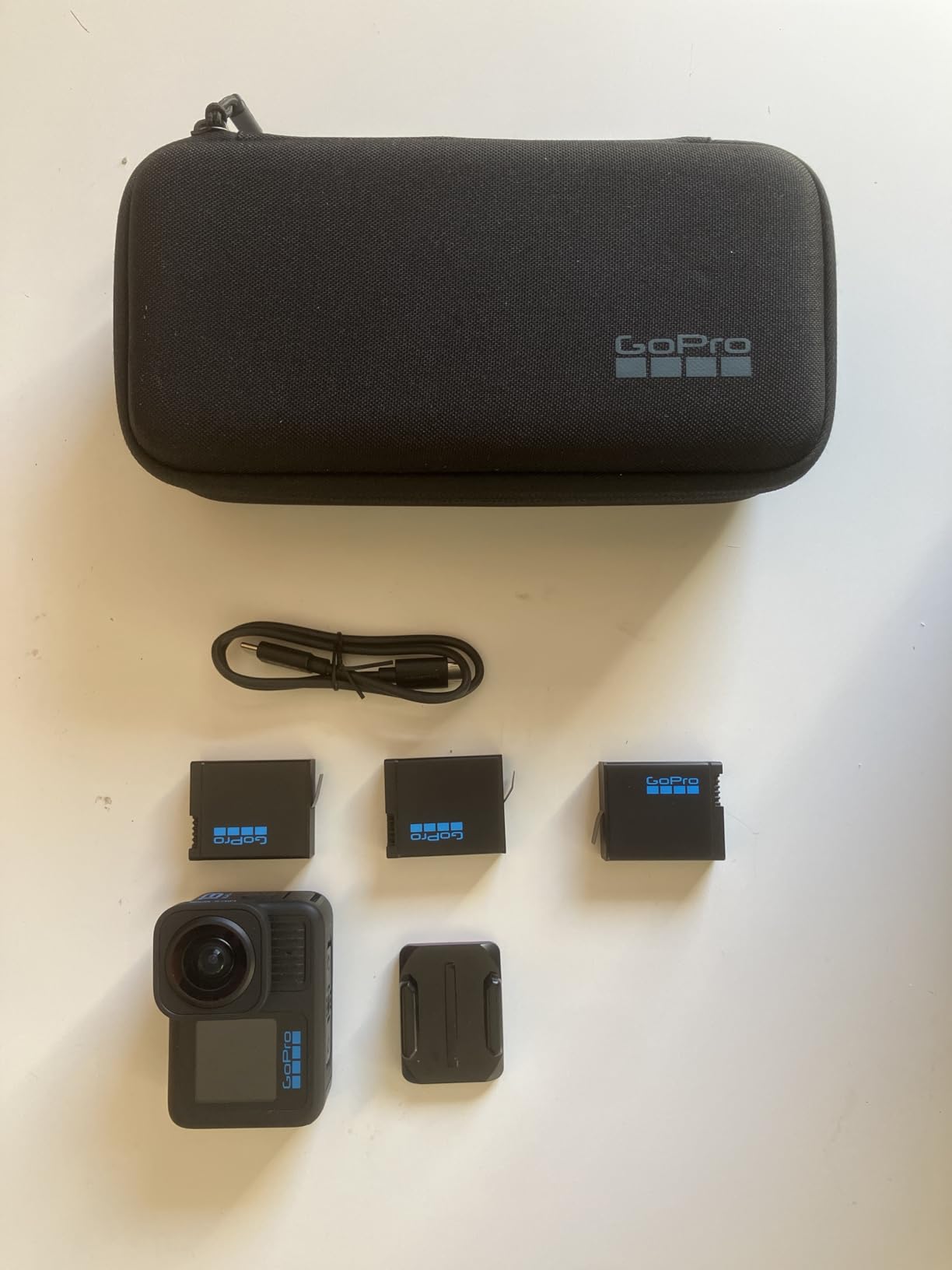
The waterproof rating to 33ft and the water-repelling lens cover are underrated for aerial work. A misty ridge line or a coastal shoot will not require a housing, and skipping the housing keeps the lens sharp and removes a vibration interface.
Where the HERO13 frustrates people is software. The recurring theme across owner reviews is glitchy mobile and desktop apps, failed updates, and a cloud service that requires a paid subscription after the first year. The Quik desktop app is being deprecated, so if your grading workflow depends on a desktop handoff you will need to plan for that.
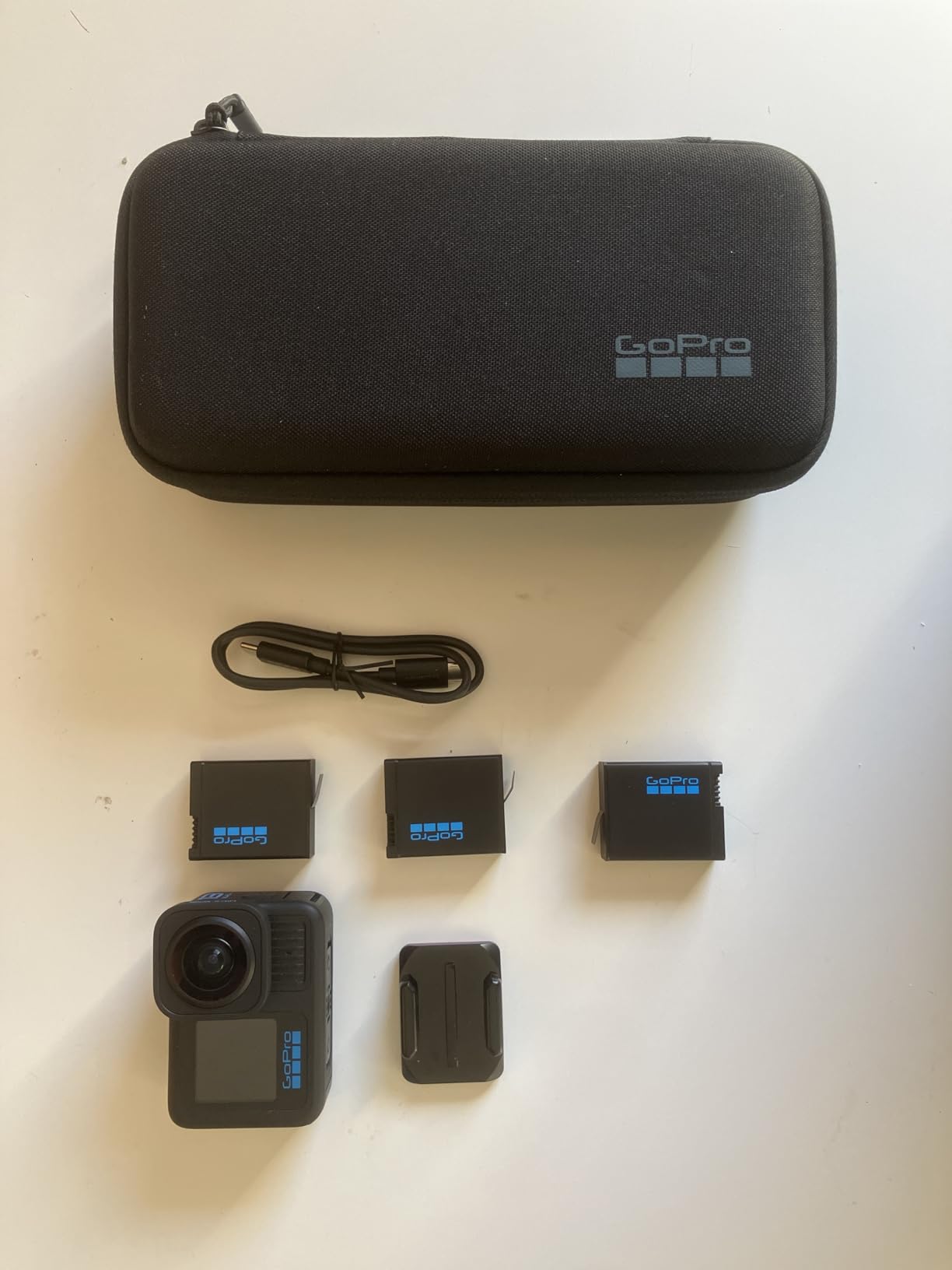
What to Check Before the First Flight
Format the card in the camera, confirm your aspect ratio and field of view choice, and set the maximum bitrate before you are airborne. The 5.3K modes write hard, and a card that is marginal at 4K can still fail at 5.3K60. Test a full-length recording before the job, not on the day.
Clip-based recording produces a set of files that have to be joined in a third-party editor. That is fine for cinematic work where you are cutting anyway, but it adds friction for anyone logging straight to a timeline.
Where the GoPro Loses to the DJI
Low light and horizon control. The 1/1.3 inch sensor and HorizonSteady combination in the Action 5 Pro holds up better on dusk flights and hard rolls, and that is the difference between usable twilight footage and a noisy mess. If your flying is mostly daylight and you want the lens ecosystem, the HERO13 bundle is still the value pick.
3. Insta360 X3 – Best Camera for Reframing After the Flight
Pros
- 5.7K 360 Active HDR reframed in post
- 4K single-lens mode with 170 degree MaxView
- FlowState stabilization plus Horizon Lock
- Large 2.29 inch touchscreen with haptic feedback
- Four-microphone array with wind-noise cancellation
- Waterproof to 10m
Cons
- 360 files need desktop rendering before viewing or upload
- Effective per-direction resolution drops once the sphere is unwrapped
- Can overheat in direct unshaded sun
The X3 is the only body here that lets you change your mind about the shot after you land. Both lenses capture 5.7K 360 Active HDR video, and the reframing tools in the app let you pick the horizon, the direction and the crop long after the battery is spent. For a pilot whose clients keep asking for a different angle, that is worth more than another few percent of dynamic range.
It also works as a conventional 4K single-lens action camera, including a 170 degree MaxView mode at 2.7K60 for aggressive FPV-style framing. FlowState stabilization plus Horizon Lock deliver gimbal-like smoothness, and the 2.29 inch touchscreen with haptic feedback is the most pleasant control surface in this group.
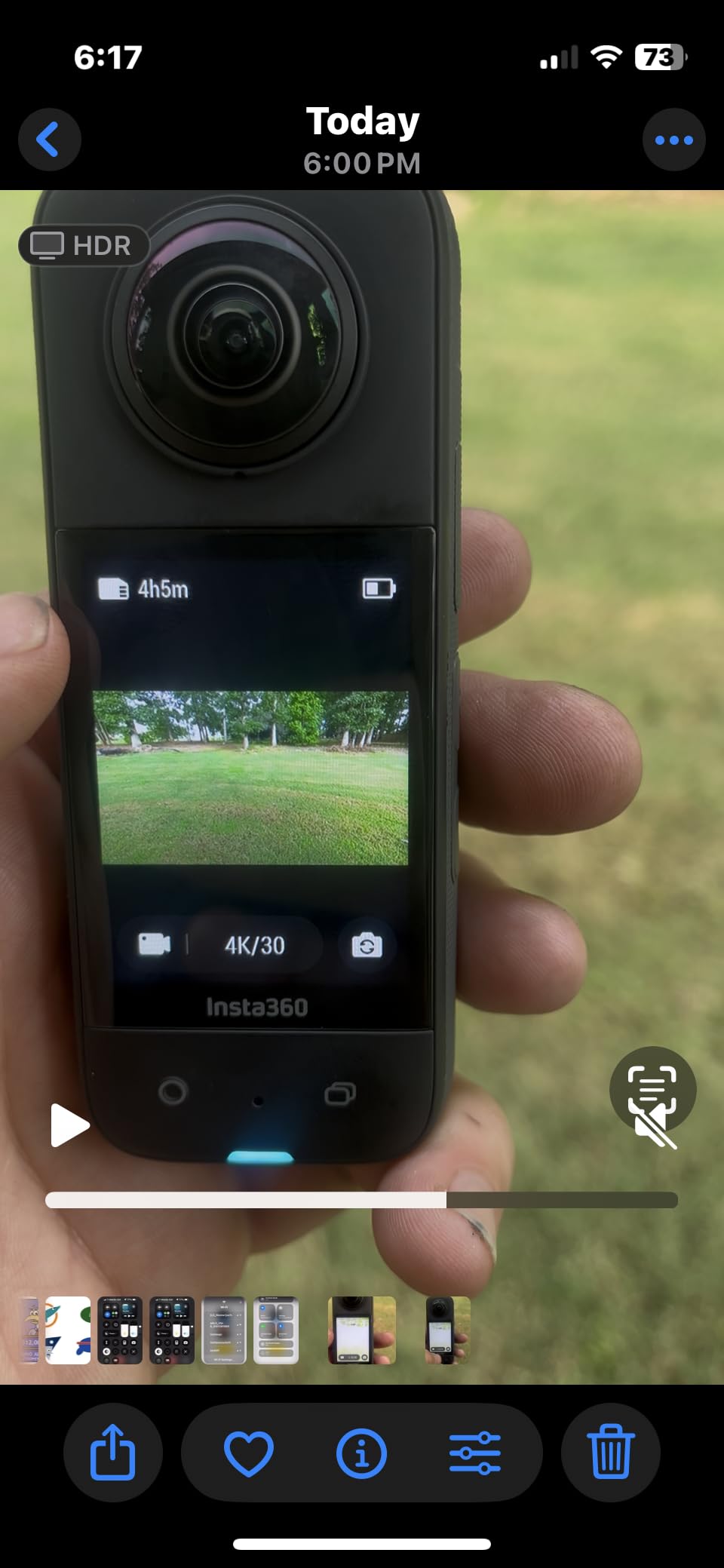
Audio is better handled than on most rivals. A four-microphone array with wind-noise cancellation selects the cleanest source, which matters more than expected on a quad where prop noise dominates. Waterproof to 10m without a housing keeps the lens clean and avoids a housing-induced softness.
The trade-off is workflow weight. 360 files must be rendered through the desktop app before 360 viewing or upload, and once the sphere is unwrapped the effective resolution per direction is well below the advertised 5.7K, particularly at distance. Heat is a real concern in direct unshaded sun during long recordings, and some users report waterproofing less robust than the rating implies.
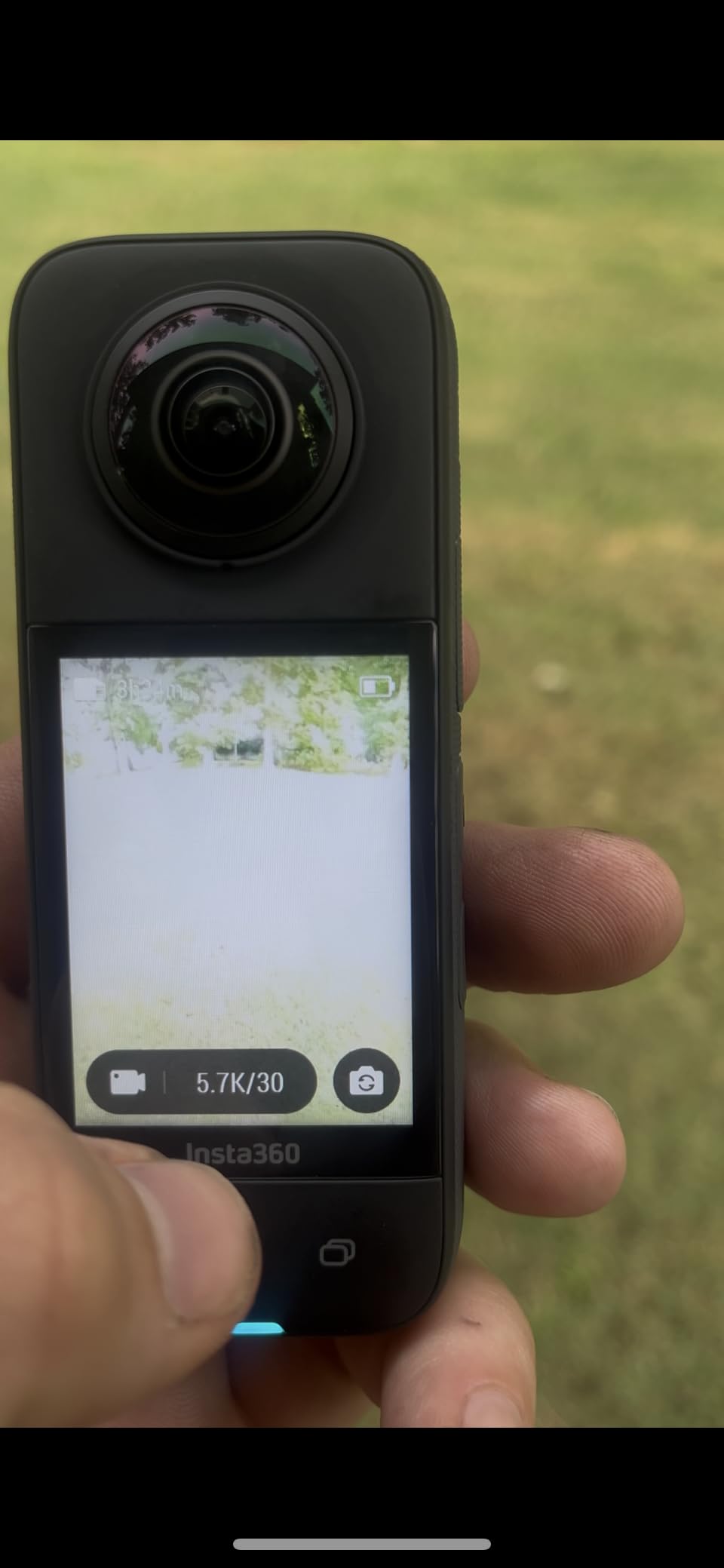
Best Used for Slow and Vertical Deliverables
This is the tool for a social-media workflow. A single 360 capture can be cut into a 9:16 vertical clip with the subject centred and the horizon level, without flying again. For real estate and marketing work where one flight has to feed several deliverables, the time saved in post is the argument.
For a single 16:9 cinematic reel, a flat-lens camera gives you more usable pixels per dollar. Buy the X3 for flexibility, not for maximum sharpness in one direction.
Where It Struggles
Fast top-speed freestyle on a 7-inch quad, where the mass and the rendering step fight your edit timeline. Also low on battery flexibility: expect to manage power carefully on long flights, and shade the body in direct sun. If your work is paid cinematic FPV rather than multi-format social content, the DJI pair is the sharper tool.
4. DJI Osmo Action 4 – Best for 4K120 Cinematic Flights
Pros
- 1/1.3 inch sensor with 2.4um pixels and auto white balance
- 10-bit colour depth and D-Log M retain highlight and shadow detail
- 4K120 at 155 degree ultra-wide suits fast motion
- 1770mAh battery up to 150 minutes and usable to -20C
- Waterproof to 18m without a case
- Pre-Rec buffers 5 to 60 seconds before the button press
Cons
- 10 MP still resolution is low for a 4K class camera
- Fixed focus rather than autofocus
- Heavier than micro FPV cameras at 145g
The Action 4 is the most overlooked body in this roundup, and for a specific reason: 4K120 at a 155 degree ultra-wide field of view with minimal cropping. That combination is the closest thing to a true high-frame-rate FPV recording you can get from a body you already own, and it is the reason this camera keeps appearing in cinematic drone kits.
For paid work the 10-bit colour depth and D-Log M profile are the headline. Ten-bit keeps gradients in skies and sunsets from banding, and D-Log M gives you a flat curve with room to recover both ends in the grade. If you deliver colour-managed files to a client, that is a bigger deal than another frame of resolution.

The battery is a 1770mAh unit rated for up to 150 minutes and operable down to -20C, and the camera is waterproof to 18m without a case. The magnetic self-locking quick-release mount is genuinely faster than a screw for swapping tilt angles between a forward-facing and an upward-facing position, which is how you get prop clearance and a clean horizon.
Pre-Rec is the feature that saves clips. It buffers 5, 10, 15, 30 or 60 seconds before you press record, so a launch you forgot to arm still exists. On a quad that is the difference between a usable take and a lost one.

What Matters for a Two-Pilot Crew
Direct connection to DJI Mic 2 and Mic Mini transmitters means the camera operator can hand off audio to the pilot with no receiver stack. If you are flying with a separate operator, that removes a cable run and a failure point from the build.
RockSteady, RockSteady+ and HorizonBalancing give you three distinct stabilization behaviours, so you can pick horizon lock for banking shots and standard RockSteady for straighter passes where you want a little natural energy.
Why You Might Skip It
Stills are the weak point. An effective 10 MP is low for a 4K-class action camera, so if your work splits between aerial photography and video, this is not the body. And the Action 5 Pro carries a larger sensor in a similar footprint, so this is a value decision rather than a capability one.
5. Insta360 GO 3S – Best for Ultra-Light Builds
Insta360 GO 3S – 128 GB Black 4K Tiny Portable Vlogging Camera, Hands-Free POVs, Mount Anywhere, Stabilization, 140 Min Battery Life, 10m Waterproof, Pet POV
Pros
- At 39g it mounts on frames where nothing else fits
- Action Pod adds a 2.29 inch flip screen plus remote control and 140 minutes
- FlowState stabilization and Horizon Lock
- Strong magnetic mount system with pendant
- clip and pivot stand
- 4K capture with a new wide-angle lens
- QuickCapture plus gesture and voice control
Cons
- Internal non-swappable battery and storage limit shoot time
- Action Pod is only splash-resistant
- Camera runs hot during recording
- No external microphone support and prominent wind noise
At 39g the GO 3S is the only body in this roundup light enough to ignore on a micro or sub-250g build. That is not a small advantage. On a light frame the camera is effectively weightless, so the craft flies exactly as it does with no camera fitted and your thrust margin stays intact through aggressive freestyle sequences.
For POV-style aerial work the 4K capture with a new wide-angle lens and MegaView field of view is genuinely useful. A pilot can mount it facing forward for a chase-cam look, or hang it under the frame for a landing-gear perspective that no other class of body gives you at this weight.
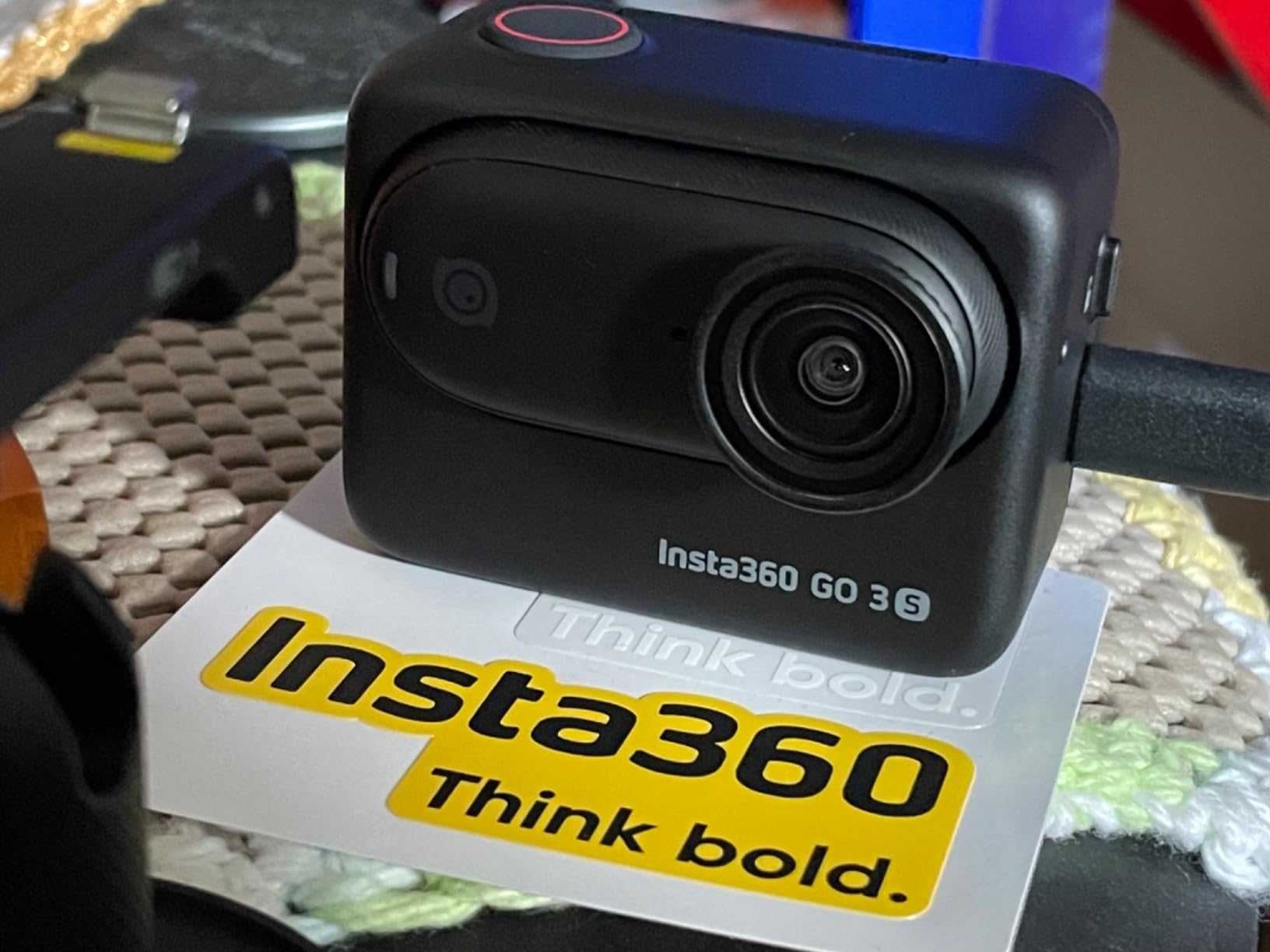
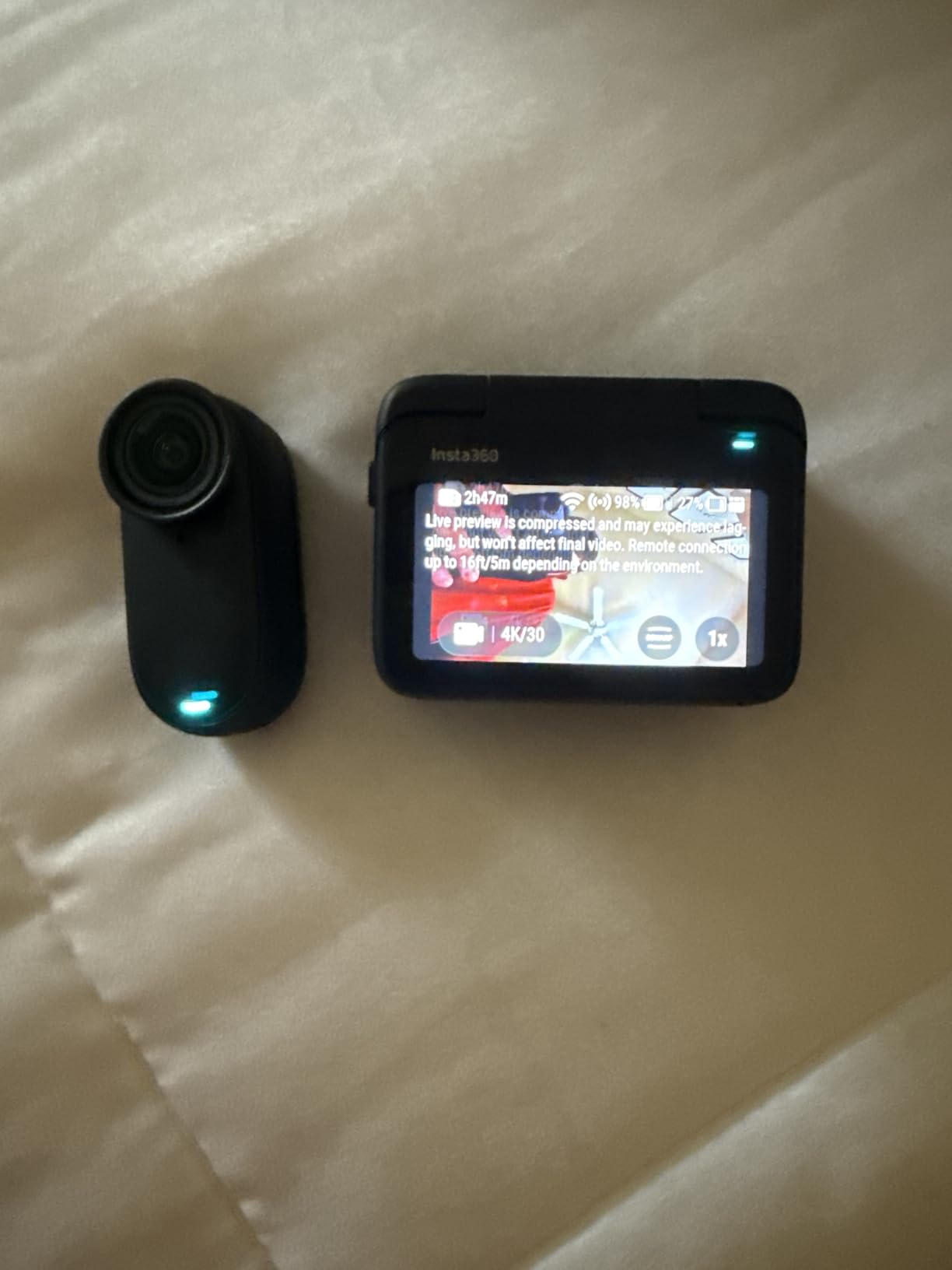
The magnetic accessory system is the practical strength. A magnet pendant, easy clip and pivot stand let you place the body on curved surfaces or a bare frame without designing a mount, and the Action Pod gives you a 2.2 inch flip screen, remote control, live preview and a battery rated for 140 minutes. FlowState stabilization and Horizon Lock keep the POV footage level.
Thermal and audio are the two honest weaknesses. The camera runs hot during recording, which on a long flight in sun is worth watching, and there is no external microphone input, so wind noise is prominent. Low-light performance is also weaker than larger-sensor action cameras, which rules it out for twilight paid work.
Will It Survive a Crash?
Some owners report durability complaints about the magnet pendant and accessories, so on a crash-prone freestyle build we would use a mechanical tether or a hard-printed cage rather than relying on the magnet alone. The body itself is IPX8 to 10m on its own, and 60m with the dive case.
The internal, non-swappable battery and storage are the real limits. You cannot extend a session with a spare cell, so plan flights around the pod and keep the charging kit in the field bag.
Who Should Not Buy It
Anyone whose client work happens after sunset, and anyone who needs a proper microphone. Both of those needs push you to a larger sensor and an external mic input, which is the opposite of what makes this camera good.
6. RunCam 5 4K FPV – Best Purpose-Built Recording Camera
RunCam 5 4K FPV Camera 1080P HD Micro Action Camera EIS Supported 145 Degree FOV for FPV Racing Drone and Sport Video Recording, Orange
Pros
- Light at 56g in a 38mm cube so it barely changes the airframe
- Sony IMX377 12MP sensor with a dedicated EIS chip
- 145 degree field of view suits FPV flying
- 4K30 plus 2.7K60 and 1080p120 capture options
- Low-power CPU allows up to 105 minutes of 4K
- Fits Hero Session 5 style mounts for quick swapping
Cons
- Not water resistant
- Fixed focus and a small sensor limit low light
- No built-in screen or removable battery
- Fixed wide lens can distort at frame edges
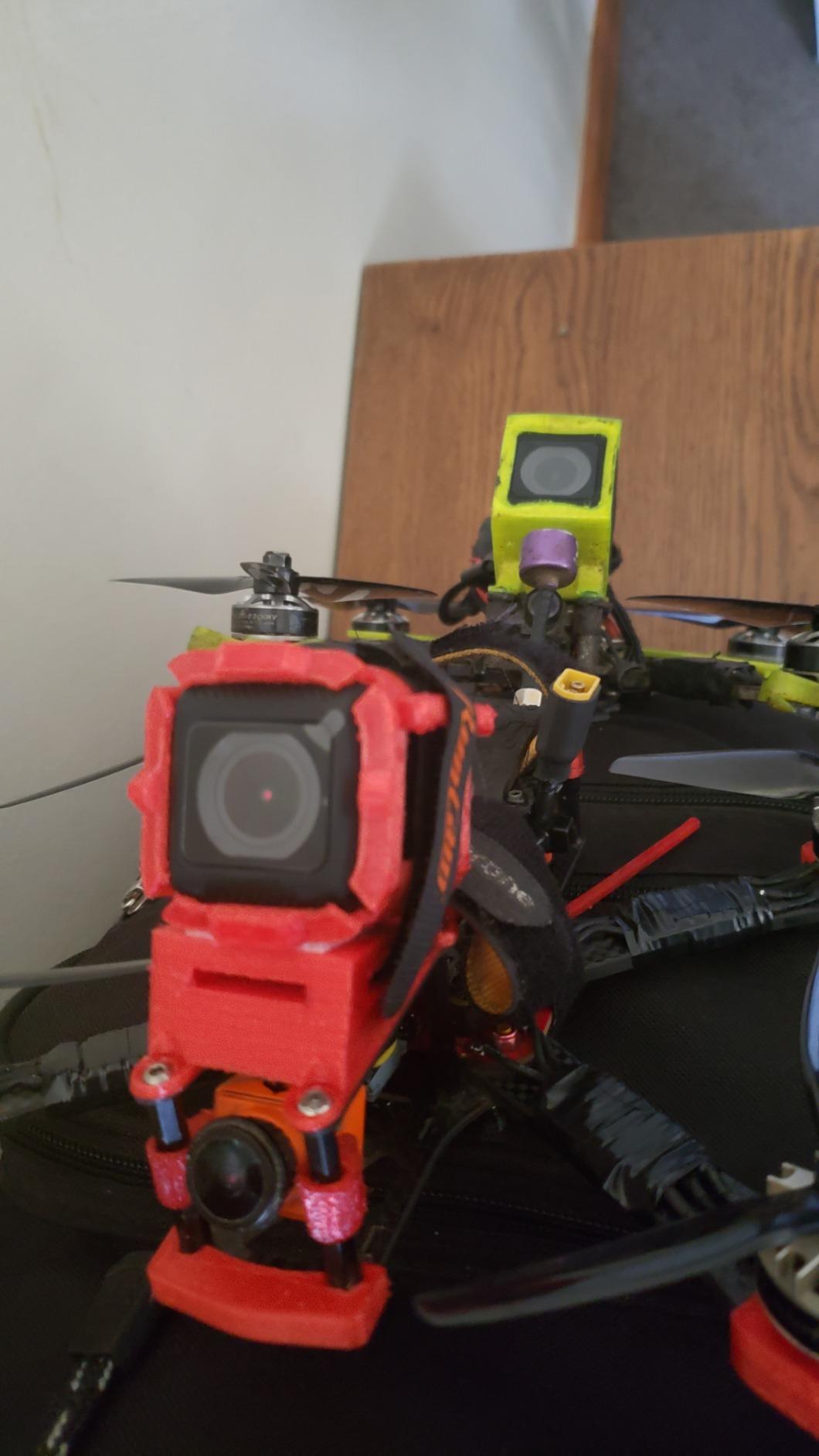
The RunCam 5 is what an FPV camera is supposed to be: small, light, vibration-tolerant and built around the recording rather than the image quality. At 56g in a 38mm cube it mounts on micro and light 3-inch frames without eating the thrust margin, and it fits Hero Session 5 style mounts so you can swap bodies in seconds.
The Sony IMX377 12MP sensor with a dedicated EIS chip is a purposeful choice. 145 degree field of view is wide enough to see your prop clearance and your line of exit, and the EIS chip smooths the roll that a bare frame would deliver. Reviewers also report good wide dynamic range when flying into bright sun, which is the situation that exposes cheap sensors fastest.
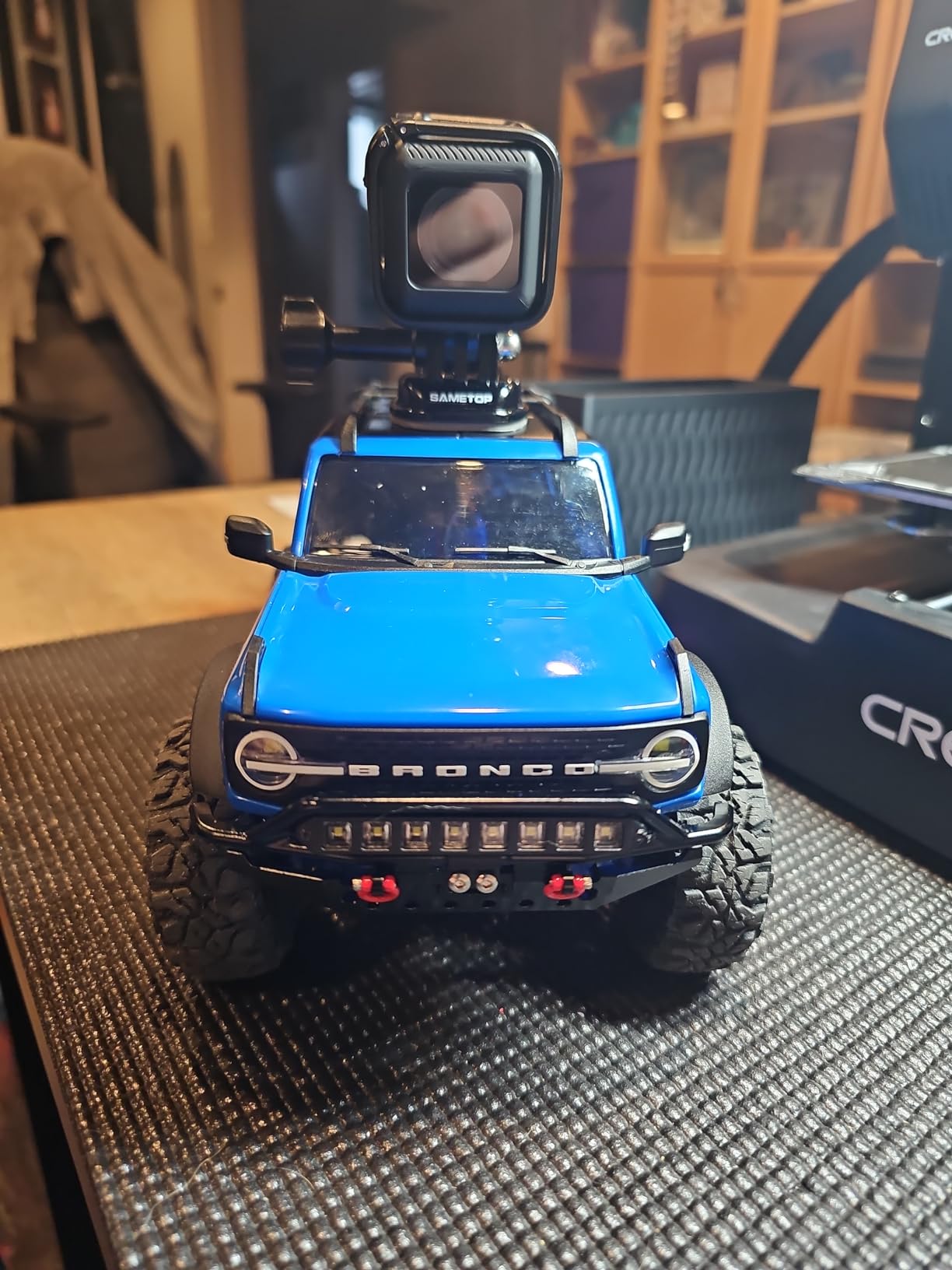
Recording options are broad for a body this small: 4K at 30fps for up to 105 minutes on the low-power CPU, 2.7K at 50 to 60fps, and 1080p at 120fps for a proper slow-motion freestyle edit. A dedicated recording camera on the same frame as your flight feed is the classic two-camera FPV setup, and this body is a popular pairing.
The compromises are all understandable in context. It is not water resistant, so wet conditions and rain are out. Fixed focus and a small 1/2.3-class sensor mean weak low light. There is no built-in screen and no removable battery, so your session length is set by the card and an external power bank.
Recording or Flying First
This camera does not give you a feed to fly, so it sits alongside a flight camera rather than replacing one. If you already have a VTX or a digital system on the frame, this is the cheapest way to add a clean onboard recording of the same flight.
If you are still choosing a flight feed, a dedicated analog or digital system is the correct buy and this camera becomes a second step. Our racing camera guide covers that side in detail.
What to Watch Before a Long Session
Carry a V60 or faster card and format it in a computer first. High bitrate 4K written repeatedly to a marginal card is the classic cause of a lost recording, and the failure only becomes visible after you land. Also note that the fixed wide lens can produce edge distortion on small builds, so frame with that in mind rather than blaming the camera later.
7. RunCam Phoenix 2 SPV3 – Best for Analog Racing Builds
FPV Camera RunCam Phoenix 2 SPV3 – Special Edition Micro Drone Camera with Lens Hood 5.8ghz FOV160°Global WDR 8.6g for RC FPV Car Plane Racing Drone
Pros
- Genuine 1000TVL analog image from a 1/2 inch CMOS sensor
- 160 degree field of view gives an immersive picture
- Global WDR and day/night auto switch handle changing light
- Fully covered back cover is dust-proof and short-circuit proof
- Replaceable anti-glare lens hood
- 8.6g micro size fits most FPV drones
Cons
- Analog video is lower fidelity and more interference-prone than digital
- Needs a separate receiver
- goggles or monitor
- No recording capability on the camera
- Settings change only via an OSD board or the transmitter
Analog is not a nostalgic choice any more, it is a latency choice. Competitive racing still rewards the near-instant response of an analog feed, and the Phoenix 2 SPV3 is a clean, cheap way to get one. The genuine 1000TVL resolution on a 1/2 inch CMOS sensor is a real upgrade over the 600TVL generations most beginners are still flying.
At 8.6g in a 19 x 19mm footprint it fits almost anything, including RC cars, planes and micro quads. The 160 degree field of view is immersive, and Global WDR plus a day/night auto switch keep the image usable when you move from shade into direct sun mid-flight.
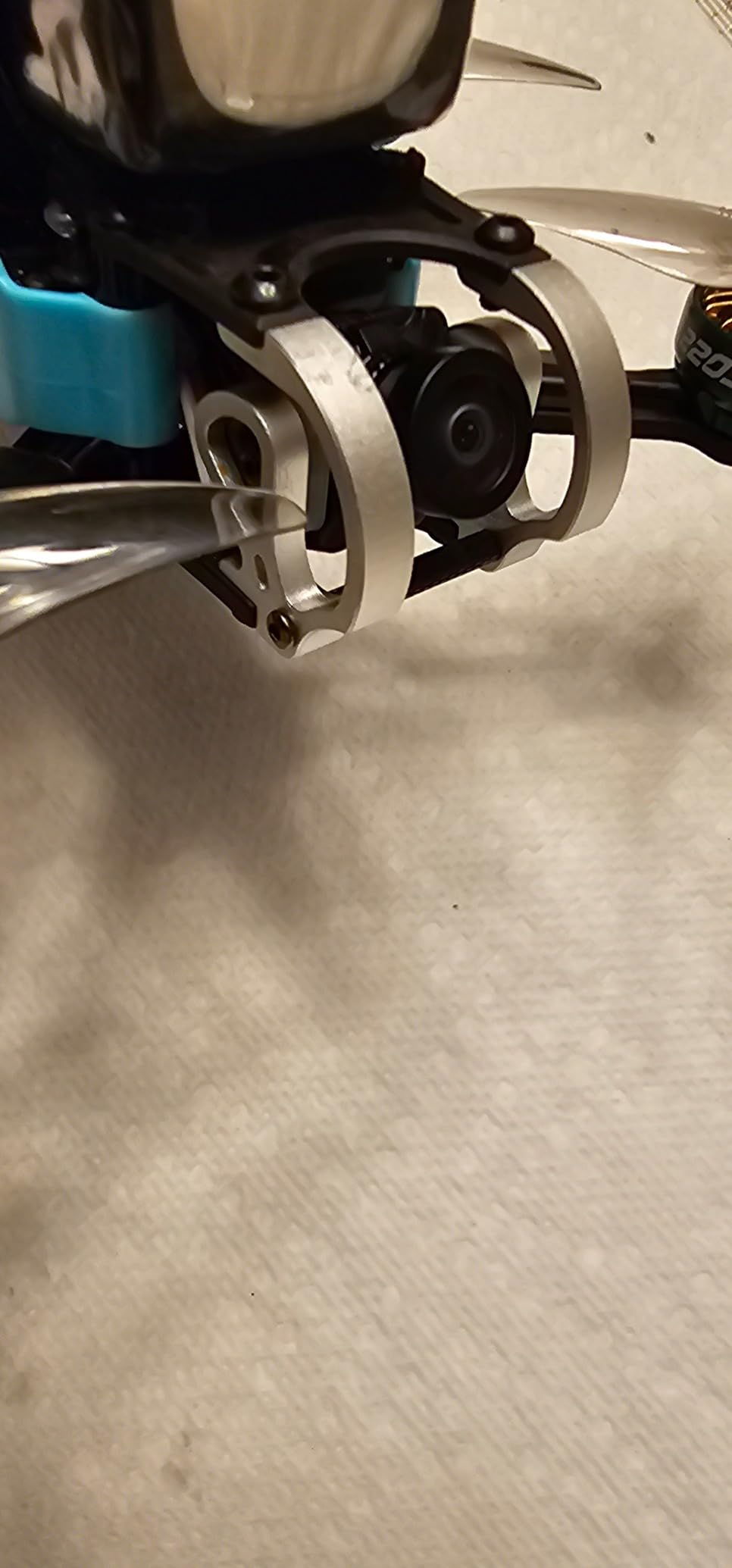
Crash survivability is built in. The sandwich fully covered back cover is dust-proof and short-circuit proof, which matters enormously on a racing frame where every impact ends a run, and the replaceable anti-glare lens hood protects the front element and cuts glare.
There is no recording on the camera itself. If you want saved footage from an analog build you need a separate DVR or a video transmitter link, which is the price of the low-latency feed. Settings are also changed through an OSD board or the transmitter rather than on the camera, and the included 6-pin connector is what makes that possible.
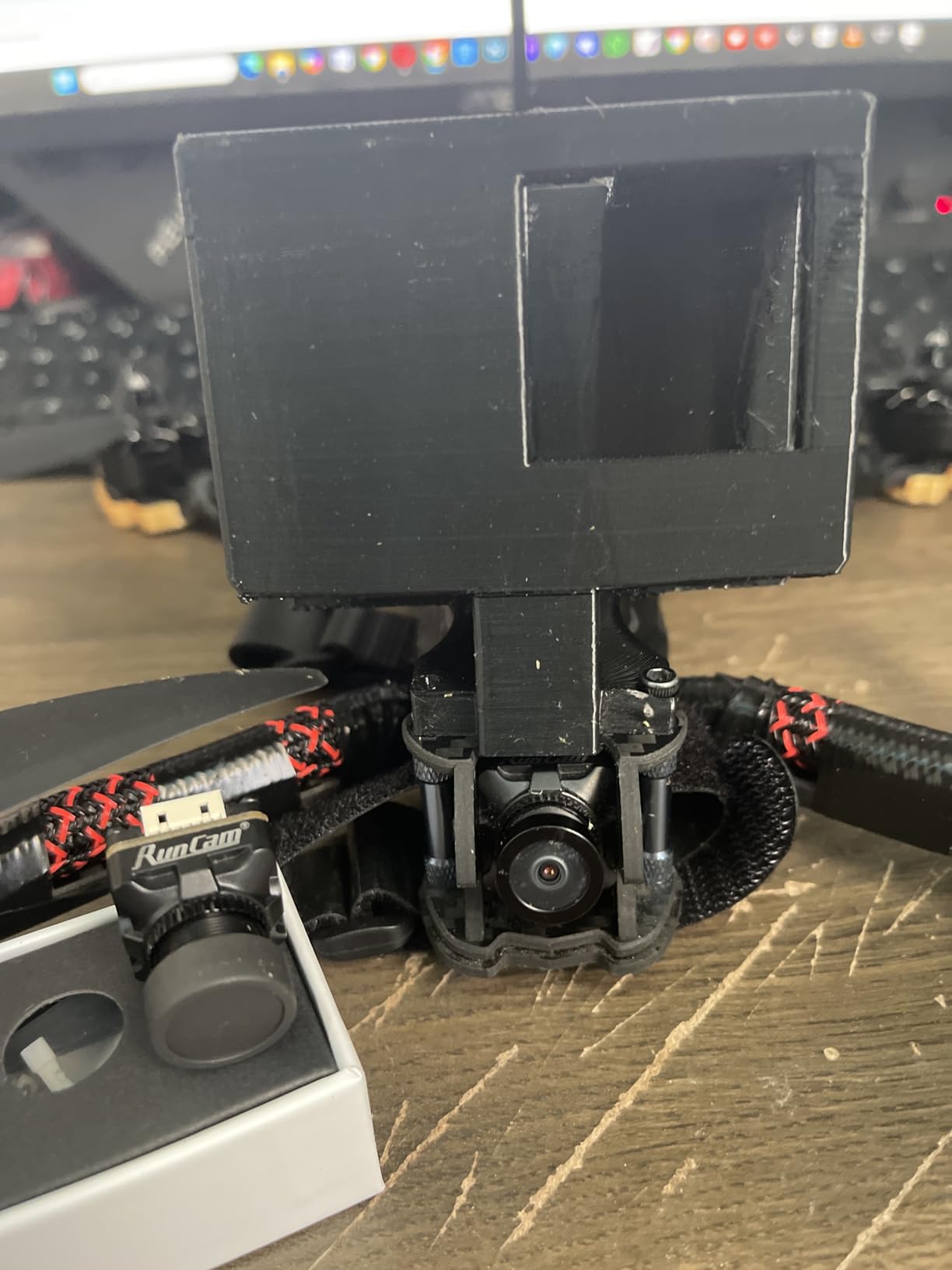
Why Analog Still Wins for Racing
Response time. When a quad is three metres from a gate and closing fast, a fraction of a frame of lag is the difference between a clean lap and a broken prop. Analog delivers that responsiveness, and for pure racing it remains the standard even as digital systems mature.
Aspect ratio and region are switchable too, with 4:3 and 16:9 selectable in the menu and an NTSC/PAL switch, so one body works across regions and frame shapes.
Where It Is the Wrong Choice
Any cinematic or commercial work. 1000TVL analog will not survive a client grade, there is no onboard recording, and interference from other pilots at a busy field shows up as static that no post can fully remove. If your goal is footage rather than lap times, pick a digital system instead.
8. AKASO EK7000 – Best Budget Camera for Student Pilots
AKASO EK7000 4K30FPS 20MP WiFi Action Camera with EIS Ultra HD 131FT Waterproof Underwater Camera Remote Control 4X Zoom Support External Microphone Black
Pros
- 4K30 and 2.7K30 video with 20MP stills
- Built-in EIS smooths footage on vibrating mounts
- Waterproof housing rated to 131ft
- Includes two batteries
- a dual charger and a wide mount kit
- 2.4G wrist remote starts a mounted recording
- Built-in Wi-Fi with the AKASO GO app
- External microphone input and 4x digital zoom
Cons
- Muffled wind-affected audio from the built-in mic
- App-based start and stop control is unreliable
- Video quality drops in low light
- No microSD card included
When a student pilot is crashing two to three times per lesson, the camera is expendable and the footage is a formality. That is exactly the case the EK7000 was built for, and it is why flight schools and training programmes keep recommending this class of body. Daylight 4K30 with 20MP stills and built-in EIS is genuinely more than a training flight needs.
The accessory package is remarkable for a camera at this end of the market. Two batteries, a dual charger, a waterproof housing rated to 131ft, a 2.4G wrist remote and a wide range of mounts are all included. The wrist remote matters more than it sounds: you can start a recording on a mounted camera without touching the aircraft.
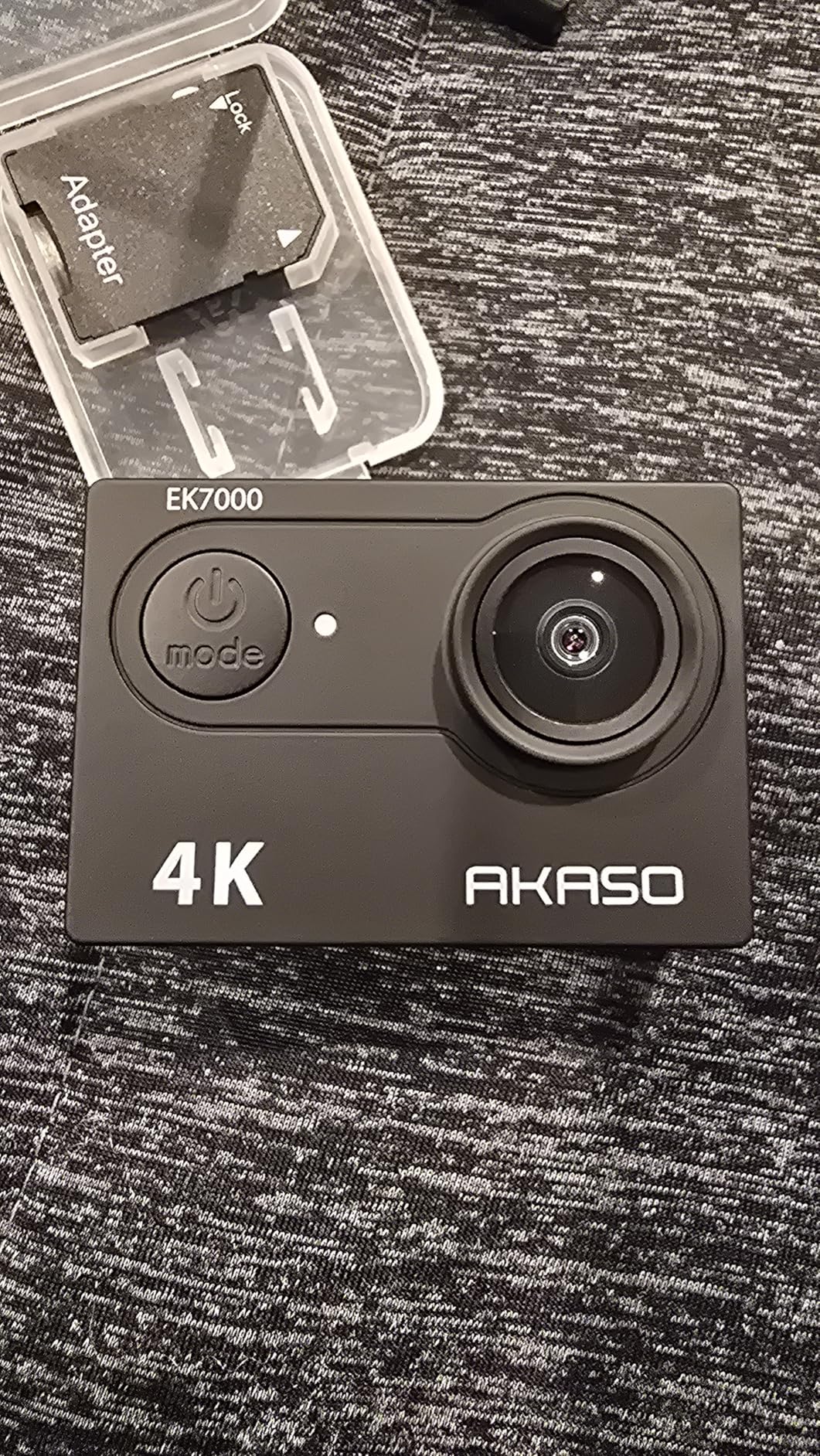
Audio is the weak point. The built-in microphone sits under the housing, so recordings come back muffled and wind-affected. If your lesson recordings are being reviewed for coaching, plan to fly with a separate audio source or accept the noise.
Two reliability issues deserve attention. App-based start and stop control is reported as unreliable and can stop a recording early, so use the physical record button or the wrist remote instead. And the battery drains quickly relative to competitors while the battery door is difficult to open, so carry both batteries and check the latch before every launch.
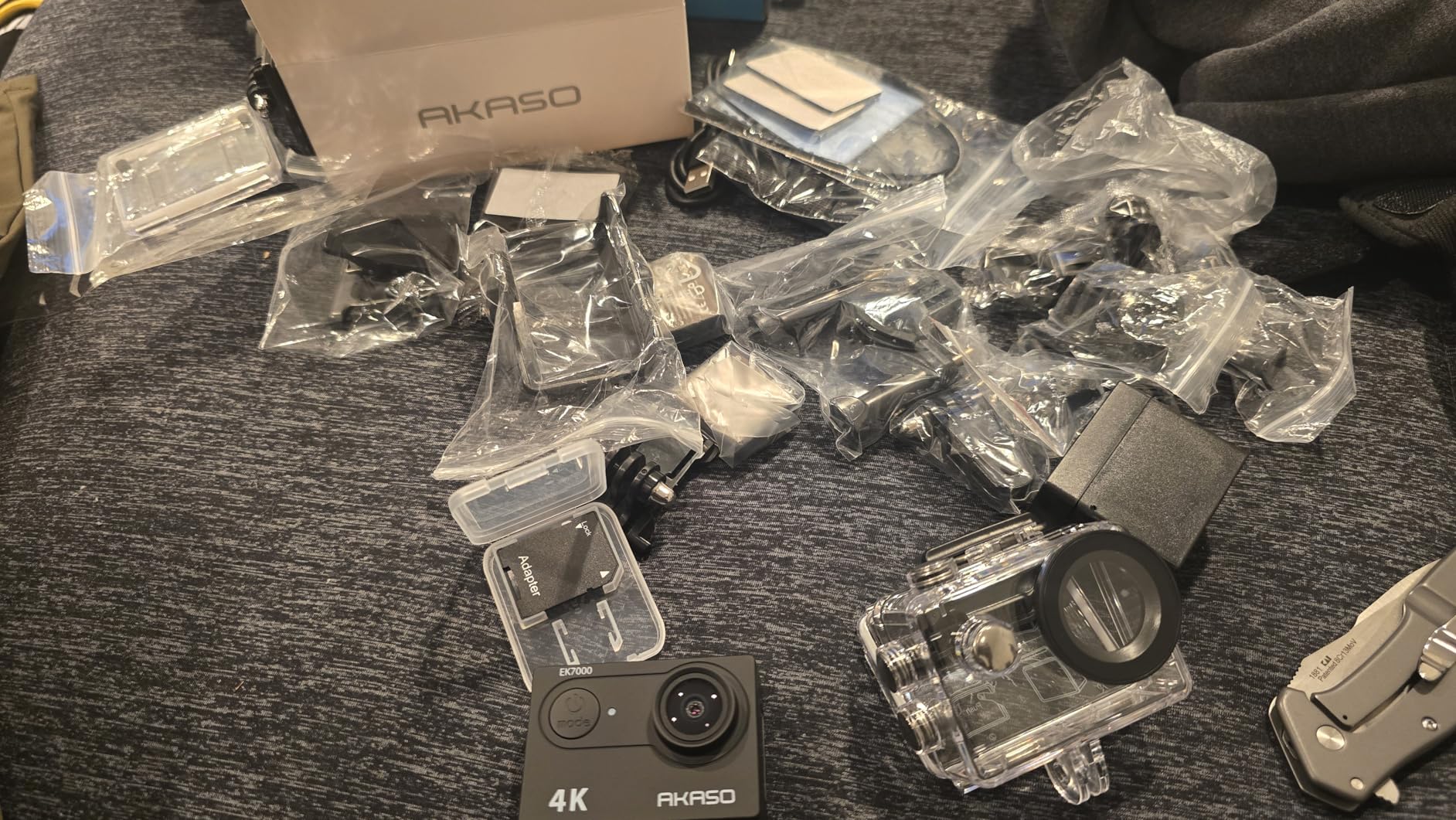
Best Used for Training Footage
Put it on a cheap frame with a cheap mount and let the crashes happen. Built-in EIS keeps the picture steady enough to analyse your lines, and 20MP stills let you pull frames out of a video for post-flight review. The 4x digital zoom is useful for checking a landing from the ground.
One genuine warning from owners: frame timing varies between bodies of this model, so recordings from two cameras will not stay in sync. If you plan to run two at once, sync them in post or avoid dual-body setups at this tier.
When to Spend More
Once you are flying paid work, low light and dynamic range stop being optional. Video quality drops in low light and the frame rate falls in darker conditions, and there is no microSD card in the box, so the first thing you buy will be storage. At that point a 1/1.3 inch body like the Action 4 is the correct upgrade.
9. RunCam Spotter V2 – Best for RC Cars, Boats and Tight Interiors
RunCam Spotter V2 FPV Camera and Transmitter Kit, 5.8G Micro AIO Cam, OSD, Integrated Mic, FOV170 Degree 700TVL, 40CH, 20MW-200MW Adjustable
Pros
- Camera
- transmitter and antenna combined in one compact unit
- 170 degree field of view gives an immersive cockpit-style view
- On-screen display shows real-time flight data
- Cooling heat sink included and easy to mount in tight interiors
- Very durable through rollovers
- braking and water exposure
- Bends-resistant antenna springs back after impacts
Cons
- Runs hot without airflow
- warm colour cast and limited fine detail
- Sparse documentation for power and channel setup
- Antennas are soldered on
- Integrated microphone does not work reliably
The Spotter V2 is an all-in-one package: a 700TVL analog camera, a 5.8GHz 40-channel transmitter and an antenna in a single 10g unit. For RC cars, boats and plane interiors where there is no room for a separate VTX, that integration is the entire selling point. Nothing else on this list installs this quickly.
The 170 degree field of view is genuinely immersive and works well for cockpit-style framing. The on-screen display puts real-time flight data on the feed, which is useful when you are driving rather than flying and need speed or distance at a glance. Reported image clarity holds up to around 150 yards in testing.
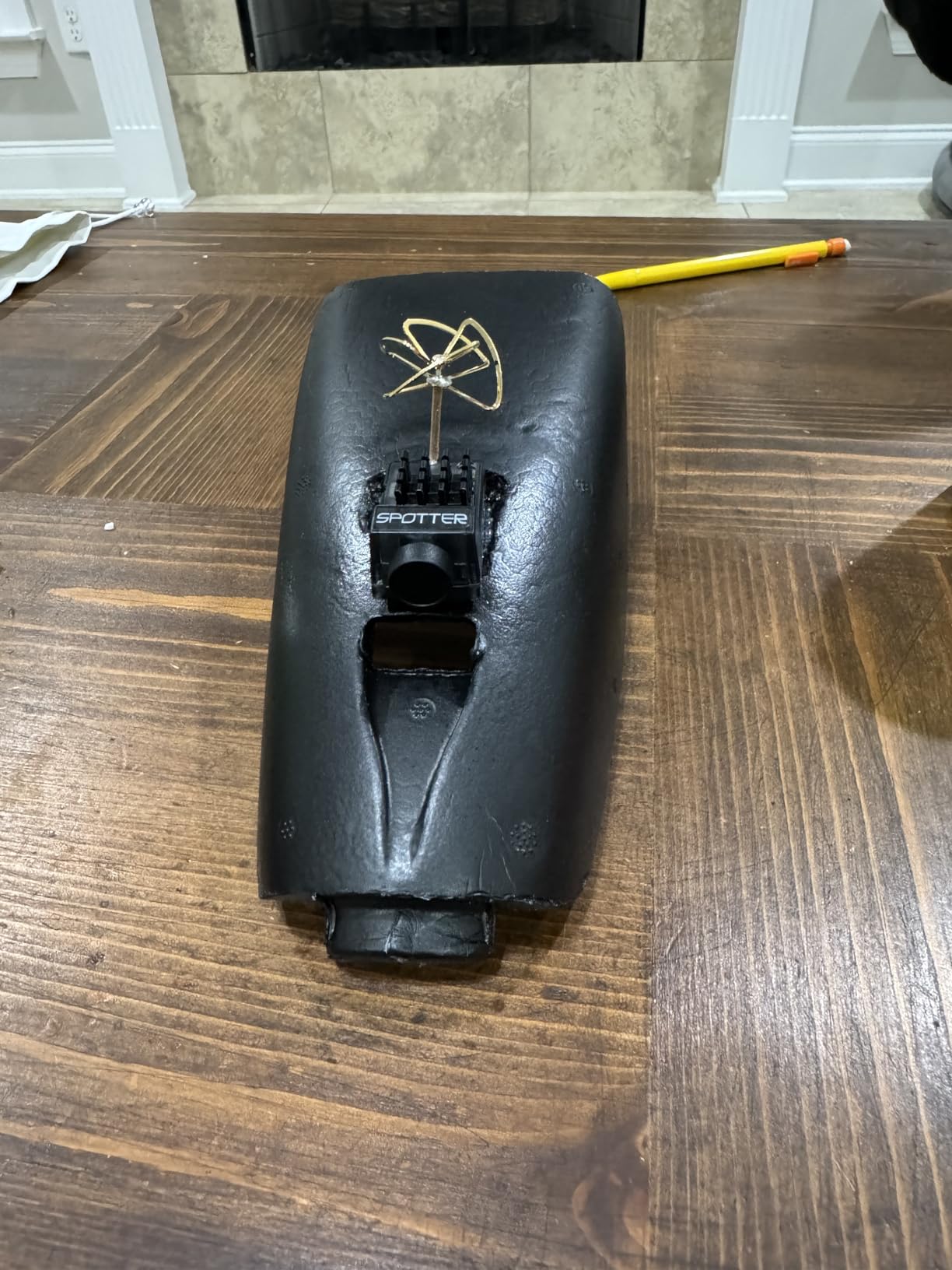
Durability is a genuine strength. Owners report the package surviving rollovers, hard braking and water exposure, and the included cooling heat sink helps with the one complaint that recurs most. The antenna is bends-resistant and springs back after an impact rather than folding permanently.
Heat is the recurring complaint, and it is worth taking seriously: the unit runs hot enough to soften hot glue when mounted without airflow. The image also carries a warm colour cast with limited fine detail, the documentation for transmit power and channels is sparse, and the antennas are soldered on so a spare cannot be swapped easily.
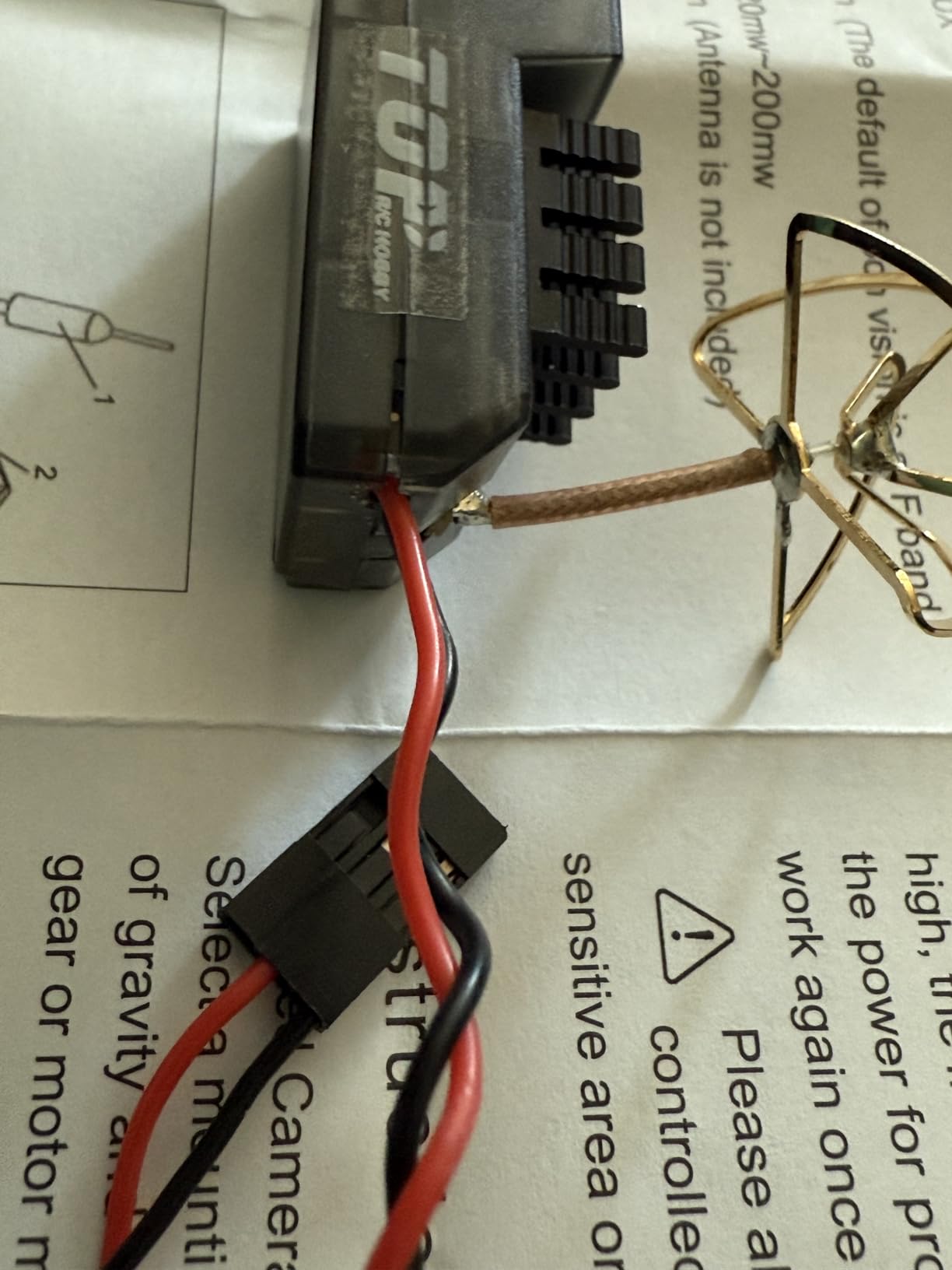
Mounting and Airflow
This is where most Spotter V2 problems originate. Give the heat sink real airflow rather than burying it inside a body shell, and if you use hot glue as a backup fix, expect it to let go. Mount it where you can reach it and where air moves over it during use.
Adjustable 20mW to 200mW transmit power is the control that matters most in practice. Drop to 20mW indoors to cut heat and battery draw, and raise it outdoors where you need range.
Not a Camera for Aerial Work
The warm colour cast, limited fine detail and non-functional integrated microphone all rule this out for delivered footage. It is a flying and driving camera first. If your project is an aerial video deliverable, put one of the action cameras on the airframe and keep this one for the ground vehicle.
10. Wolfwhoop WT03 AIO – Best Entry Point for First-Time Builders
Wolfwhoop WT03 Micro FPV AIO 600TVL Camera 5.8G 25/50/200mW Adjustable Transmitter with Cloverleaf Antenna for Mini Aircraft
Pros
- Camera
- transmitter and cloverleaf antenna in one tiny plug-and-play unit
- Reported clean feed out to around 700 meters in open air
- Very little perceptible latency
- Adjustable 25
- 50 and 200mW trades range for lower heat
- Selectable channels reduce conflicts at busy fields
- Very affordable entry point into FPV flying
Cons
- Runs very hot at 200mW and has shut off from overheating
- Antenna bends easily and is not detachable
- Heavy fisheye distortion makes distance judgement harder
- No low-battery warning before the feed cuts out
- Confusing documentation for the Molex connector
The WT03 is where most FPV pilots start, and for a specific reason: the camera, the 5.8GHz video transmitter and the cloverleaf antenna are one unit with a plug-and-play connector. There is no VTX selection, no antenna matching and no settings to chase before your first pack. You mount it and fly.
Range regularly surprises people at this tier. Owners report a clean feed out to around 700 metres in open air, and very little perceptible latency between goggles and video. The adjustable 25mW, 50mW and 200mW power plus selectable frequency bands let you tune for an indoor garage or a busy outdoor field.
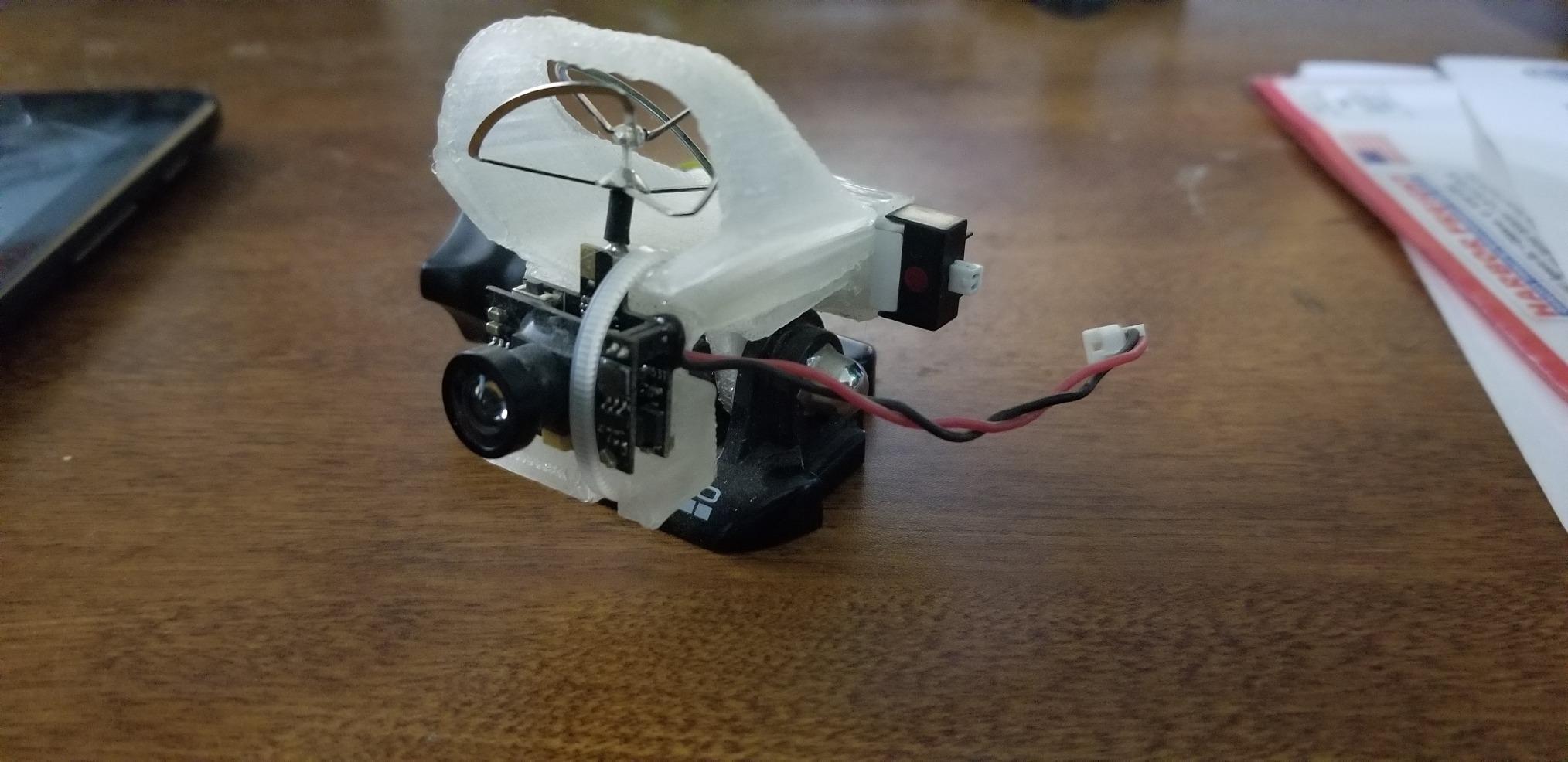
Heat is the failure mode to manage. At 200mW it runs very hot, and several have shut off from overheating. Start at 25mW indoors and 50mW outside, and reserve 200mW for short, clear line-of-sight runs. Leaving the cloverleaf antenna in the airflow rather than flush-mounted makes a noticeable difference.
There is also no voltage or low-battery indicator, so the feed simply cuts out when the battery dies. Build a battery discipline around that from the first session rather than discovering it mid-flight. The Molex connector documentation is confusing enough that it is worth checking the pinout before your first build.
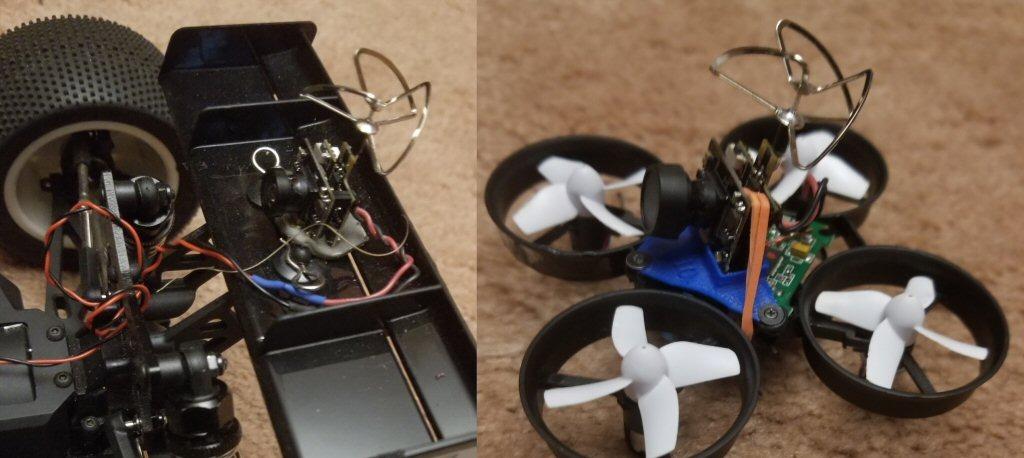
When to Move On
Move to a 1000TVL camera or a digital system when you want recorded footage, cleaner daylight image, or enough control to shoot a client deliverable. The 600TVL feed is fine for learning line and throttle feel, and inadequate the moment the video has to be graded.
The heavy fisheye distortion and the fixed, easily bent antenna also argue for an upgrade once you are past the first twenty packs. Treat the WT03 as a trainer that teaches you the link budget, not as a camera you grow with.
Who This Is Not For
It is not for paid work, and it is not for anyone who wants to re-watch a flight. There is no recording capability, so the only record of your session is the memory and the goggles. If you are starting out and want clips to study, the RunCam 5 is the better second purchase.
How to Choose a Camera for Your Drone
Work through these five questions in order and the model almost picks itself. Most buying mistakes we see come from starting at the spec sheet rather than the aircraft.
1. Are You Recording or Flying?
Decide which job the camera does. Recording means high bitrate, large sensor, strong horizon handling and good low light. Flying means low latency, a field of view wide enough to see your exits, and a body light enough to fly. Trying to do both with one camera is the single most common mistake new pilots make.
2. Set Your Weight Budget Before the Model
Weight in grams is the most-cited practical number in every camera-on-drone conversation. On a sub-250g craft, anything above roughly 60g changes how the aircraft handles. On a 5-inch freestyle or cinematic quad, a 145g body is workable but needs a plan for the mass. On a 7-inch long-range frame, treat every extra gram as thrust you no longer have for a punch-out over terrain.
The rule of thumb we use: keep the camera plus mount under 20 percent of the all-up weight on a long-range build, and never exceed the frame’s rated payload. Mass concentrated high and forward also shifts the centre of gravity, which changes hover characteristics before it changes flight time.
3. Match the Transmission Class to Your Flying
Analog gives the lowest latency and the lowest cost, but you need separate goggles or a receiver, it cannot record, and it is vulnerable to interference from other pilots. Digital systems give a full HD feed with a recording path and far better image quality, at higher cost and slightly more latency. The FPV community’s broad view is that digital has matured enough that analog is only still needed for competitive racing.
For long range, the deciding factors are transmit power, antenna placement and diversity rather than the camera alone. A good feed also needs good reception, so pair your camera choice with a proper headset — our FPV goggles guide covers that half of the link.
4. Choose Stabilisation for the Shot You Need
Electronic image stabilisation and horizon lock are not the same thing. EIS smooths overall motion by cropping and re-orienting frames. Horizon lock holds the horizon level through roll while allowing the rest of the frame to move naturally, which reads as far more cinematic on a banking shot.
A mechanical 3-axis gimbal is the third option and the heaviest by a wide margin. On a 5-inch or 7-inch quad it is rarely worth the mass and the complexity, which is why electronic horizon modes have taken over cinematic FPV. Judge it on how the horizon behaves in a hard roll, not on the mode name.
5. Match Storage and Filters to the Shoot
Match the card to the bitrate. High bitrate 4K and 4K120 modes need V60 or faster, and a marginal card is the number one cause of a recording that is only discovered as corrupt after landing. Format in the camera, carry a spare, and test a full-length file before a paid job.
For exposure control, an ND filter is the tool that keeps 1/500s shutter speeds in bright daylight, which is exactly what you need to kill the jello effect on fast props. A polariser helps with glare off water and glass, and both are cheap compared with a reshoot. If you are still building out your lens and filter kit, start with the beginner drone camera picks and add filters as you learn.
Glossary for the Terms You Will Meet
FPV — first-person view, flying by the live camera feed in your goggles. VTX — the video transmitter that sends that feed. Latency — the delay between a real-world movement and the image in your goggles. Bitrate — how much image data per second reaches the card. FOV — field of view, how much of the scene the lens captures. Tilt angle — how far the camera is rotated up from vertical, which is what keeps propellers out of frame. 10-bit — colour depth, which determines how smoothly skies and gradients grade. D-Log M — a flat log profile that preserves highlight and shadow detail. H.265 — an efficient codec that keeps 10-bit files manageable.
Regulatory Notes Worth Knowing
Camera choice interacts with rules more often than pilots expect. In the United States, sub-249g aircraft are largely exempt from registration, but any aircraft above that weight needs registration, and Remote ID requirements apply to most registered operations. Flights for compensation or hire require a Part 107 certificate, and the TRUST certificate is the knowledge test that goes with recreational flying. Check the current FAA guidance and your local rules before committing to a build, and note that DJI aircraft may need to be registered in your country for the same reasons.
If you are still early in the hobby, our drone pilot gift guide covers the supporting kit that pilots actually need alongside a camera.
What We Would Skip and Why
We are not recommending everything, and a few common choices do not survive contact with real flying. Oversized action cameras on 3-inch and 4-inch frames: the mass eats the thrust margin and no amount of stabilisation fixes a quad that will not punch out. Cameras with no recording path on paid work: analog bodies at 600TVL and 700TVL are superb for learning and useless in a grade.
We would also skip any body whose storage cannot be verified before the job, and any mount made from a single stick-on pad rather than a moulded or printed cage. Vibration isolation is the number-one cause of ruined drone footage and it costs very little to get right. A body that cannot be serviced in the field is another one we avoid: fixed internal memory and a non-swappable battery end your session when you decide it ends, not when the light does.
Frequently Asked Questions
What is the best professional camera for drones?
The DJI Osmo Action 5 Pro is the best professional camera for drones because its 1/1.3 inch sensor holds 13.5 stops of dynamic range, its 360 degree HorizonSteady keeps the level through hard rolls, and the 1950mAh battery is rated for up to four hours of recording. For 10-bit colour work the DJI Osmo Action 4 is the alternative, and for 360 reframe flexibility the Insta360 X3.
What is the best camera to use with a drone?
It depends on whether you are recording or flying. For cinematic, real estate, inspection and commercial work, a high-bitrate action camera such as the DJI Osmo Action 5 Pro or GoPro HERO13 is the right answer. For racing and freestyle, you need a dedicated FPV camera or all-in-one analog unit such as the RunCam Phoenix 2 SPV3, because you fly by that feed.
Is the DJI or GoPro better?
The DJI wins on low light, dynamic range and horizon control: the Action 5 Pro pairs a 1/1.3 inch sensor with 360 degree HorizonSteady and up to four hours of recording. The GoPro HERO13 wins on resolution and lens ecosystem, offering 5.3K60 video, 24.7MP stills and HB-Series lenses with auto-detection. GoPro software is the more common complaint in owner reviews.
What is the best FPV camera for drones?
For a low-latency racing feed at low mass, the RunCam Phoenix 2 SPV3 delivers genuine 1000TVL analog at 8.6g. For onboard recording alongside a flight feed, the RunCam 5 gives you 4K30, 2.7K60 and 1080p120 recording at 56g. For an all-in-one unit that needs no separate transmitter, the RunCam Spotter V2 combines a 700TVL camera and 5.8GHz VTX in 10g.
Is analog FPV still worth it?
Analog is worth it for competitive racing, where the near-instant response still decides lap times, and for cheap first builds where reliability and low latency matter more than image quality. It is not worth it for cinematic or paid work: there is no onboard recording, the image will not survive a grade, and interference from other pilots shows up as static. Digital systems have matured enough to cover almost every other use case.
Is DJI drone illegal in the USA?
No, DJI aircraft are not illegal in the United States. What applies is weight and use: sub-249g aircraft are largely exempt from registration, heavier aircraft must be registered, most registered operations require Remote ID, and flying for compensation or hire requires a Part 107 certificate. Rules and remote identification requirements have changed repeatedly, so check the current FAA guidance before you buy or fly.
Do I need a gimbal for FPV flying?
Usually not. On a 5-inch or 7-inch quad a mechanical 3-axis gimbal adds too much mass to be worth it, which is why electronic stabilisation with horizon lock has taken over cinematic FPV. Look for a camera with an aggressive horizon mode such as 360 degree HorizonSteady or HorizonBalancing, and budget for a proper vibration-isolating mount rather than a gimbal.
The Verdict: Best Cameras for Drone Pilots in 2026
Ten bodies, one clear winner. The DJI Osmo Action 5 Pro is the camera we would put on a drone first, because the 1/1.3 inch sensor, 360 degree HorizonSteady and four-hour battery cover the widest range of real flying — cinematic passes, twilight ascents, real estate work and inspection jobs — without a gimbal adding mass your frame has to carry.
Behind it, the GoPro HERO13 Extended Power Bundle is the value pick for pilots who want maximum resolution and the widest lens ecosystem, the Insta360 X3 wins when you need to reframe a shot after landing, and the DJI Osmo Action 4 remains the best value for 4K120 and 10-bit D-Log M grading. Below that line the field splits cleanly: the Insta360 GO 3S at 39g for ultra-light builds, the RunCam 5 for onboard recording, the RunCam Phoenix 2 SPV3 and RunCam Spotter V2 for analog flying, and the Wolfwhoop WT03 as the plug-and-play trainer.
Whichever you pick, decide whether the camera records or whether it flies, set your weight budget before you shop, and test the mount on real airframe vibration before you rely on the footage. If you are still assembling the rest of the kit, start with the gifts for drone pilots guide and our FPV goggles picks so the whole link works together.