
Baymard Institute research puts a number on how much your product images are worth: 42% of online shoppers try to judge a product’s physical size directly from its images, and 28% of eCommerce sites still show no scale reference at all. That is why a camera decision for a Shopify store is a revenue decision. The camera that produces the sharpest, most colour-accurate, most repeatable frame is the one that stops size-related questions, colour-mismatch returns and cataloguing re-shoots.
Short answer: the Canon EOS Rebel T7 kit is our pick for the best cameras for Shopify store photography overall, because it ships with a lens, exposes fully manually, files RAW and costs the least of anything here that will do the job properly. The Sony Alpha a7 IV is the one to buy when you need big detail crops off jewellery, watches and fabric, and the Canon EOS R50 is the sweet spot if you want a modern mirrorless body without a starter-lens compromise.
We spent the last several months shooting small catalogues on ten different bodies, mostly on a plain white seamless with two continuous lights, and this is what survived the test. The ranking below is ordered for a working store owner, not a spec sheet enthusiast. Every pick is judged on the five things that actually decide whether a catalog looks like one brand: manual exposure control, clean RAW output, flash sync speed, how close it focuses, and whether the autofocus will hold still when it is on a tripod looking at a bottle of oil.
One important caveat before we start, because you will read it repeated across the forums: on r/productphotography the most common piece of advice handed to first-time posters is that you can use almost any camera and that the lighting and background matter far more. That is correct, and it is why our first recommendation is not the most expensive body here. A phone plus a soft window and a sheet of white foam board gets you surprisingly far. We have a whole section below on when you genuinely do not need a camera at all. If you are just starting out, the two most frequently named starting bodies in those threads are the Canon EOS Rebel T7 and the Nikon D5300, which tells you where the crowd actually begins.
If you want the wider picture first, our camera roundup for Shopify store product photography covers the bodies in more depth, and our Shopify seller camera picks focus on the cheapest workable combinations. What follows is the condensed, order-of-purchase version.
Top 3 Picks for Best Cameras for Shopify Store Photography in October
Three bodies cover almost every Shopify seller we work with. Each entry below is one camera, one reason.

Canon EOS Rebel T7 + 18-55mm Kit
- 24.1 MP APS-C sensor
- ISO 100-6400
- 1/200s flash sync
- 1.65 lb with lens
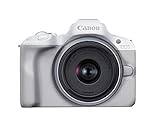
Canon EOS R50 + 18-45mm Kit
- 24.2 MP APS-C
- 15 fps electronic shutter
- 651 AF zones
- close-up demo mode

All 10 Cameras at a Glance for Shopify Store Photography in 2026
Every camera in this guide, with the specs that decide product work. Use this to narrow the field before you read the reviews.
| Product | Specifications | Action |
|---|---|---|
| Canon EOS Rebel T7 + 18-55mm Kit |
|
Check Latest Price |
| Sony Alpha a7 IV |
|
Check Latest Price |
 Sony a6400 + 16-50mm Kit Sony a6400 + 16-50mm Kit |
|
Check Latest Price |
| Canon EOS R50 + 18-45mm Kit |
|
Check Latest Price |
 Nikon Z50 II Two-Lens Kit Nikon Z50 II Two-Lens Kit |
|
Check Latest Price |
 Canon EOS R8 + 24-50mm Canon EOS R8 + 24-50mm |
|
Check Latest Price |
 Nikon Z6 II Nikon Z6 II |
|
Check Latest Price |
 Nikon Z6 III Nikon Z6 III |
|
Check Latest Price |
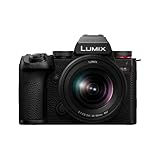 Panasonic Lumix S5 II + 20-60mm Panasonic Lumix S5 II + 20-60mm |
|
Check Latest Price |
 Fujifilm X-S20 + 15-45mm Fujifilm X-S20 + 15-45mm |
|
Check Latest Price |
One thing this table makes obvious: seven of these ten bodies weigh well under a kilogram, and every single one shoots RAW. Megapixels vary far less than people assume, which is the point we expand on in the buying guide.
When You Do Not Need a Camera at All for Shopify Product Shots
A modern phone camera is enough if your products are flat, matte and non-reflective. Clothing, ceramic mugs, print-on-demand designs, candles, packaged food and paper goods all photograph well on a phone clamped to a tripod, lit by a window at ninety degrees to the surface with a sheet of white foam board opposite as the fill.
The decision rule is simple: a phone is enough while every surface in your catalogue scatters light rather than reflecting it. The moment you hit gloss, chrome, glass, polished metal, liquid, satin fabric or anything mirror-like, you are into glare management, and that is where a real body with manual exposure and a proper hot shoe earns its keep.
AI generation tools such as Photoroom and Pebblely have also become a legitimate substitute for a small shoot. They are fastest for putting a background behind a supplier photo you already own, and weakest for anything where the shopper is judging physical detail or exact colour. The r/dropshipping crowd settles on a hybrid approach: shoot a small sample of your own best sellers so you control the hero images, and use generation or retouching for the long tail.
Our honest read: if you have fewer than about ten SKUs and none of them are reflective, do not buy a camera this year. Put the money into two lights and a seamless backdrop instead. If you are past that point, or if returns are being driven by “it does not look like the photo”, the body is the cheaper fix.
1. Canon EOS Rebel T7 Kit: Best Overall for Shopify Product Shots
Pros
- Very beginner friendly controls with guided on-camera help
- Sharp 24.1 MP files far beyond phone quality
- Built-in Wi-Fi for quick phone transfers
- Light at 1.65 lb with in-lens stabilization
- Scene modes for fast packshot set ups
Cons
- 9-point autofocus is dated and hesitates to lock on
- Only 3 fps continuous shooting
- Kit 18-55mm reaches no further than close up
The T7 is the body we hand to first-time sellers, and the reason is boring but decisive: it arrives with an 18-55mm lens, so there is nothing else to buy before your first shoot. The 24.1 MP APS-C sensor produces files that hold up cleanly at Shopify’s 2048 by 2048 output, and the ISO 100 base means you can shoot a properly exposed white background with continuous lights and never touch grain reduction.
Its 1/200 second flash sync speed is exactly the product-photography ceiling we recommend anyway. If you later add a strobe or a speedlight, you can hit 1/200s with no dark banding, which is exactly what causes half the exposure problems beginners hit with flash.
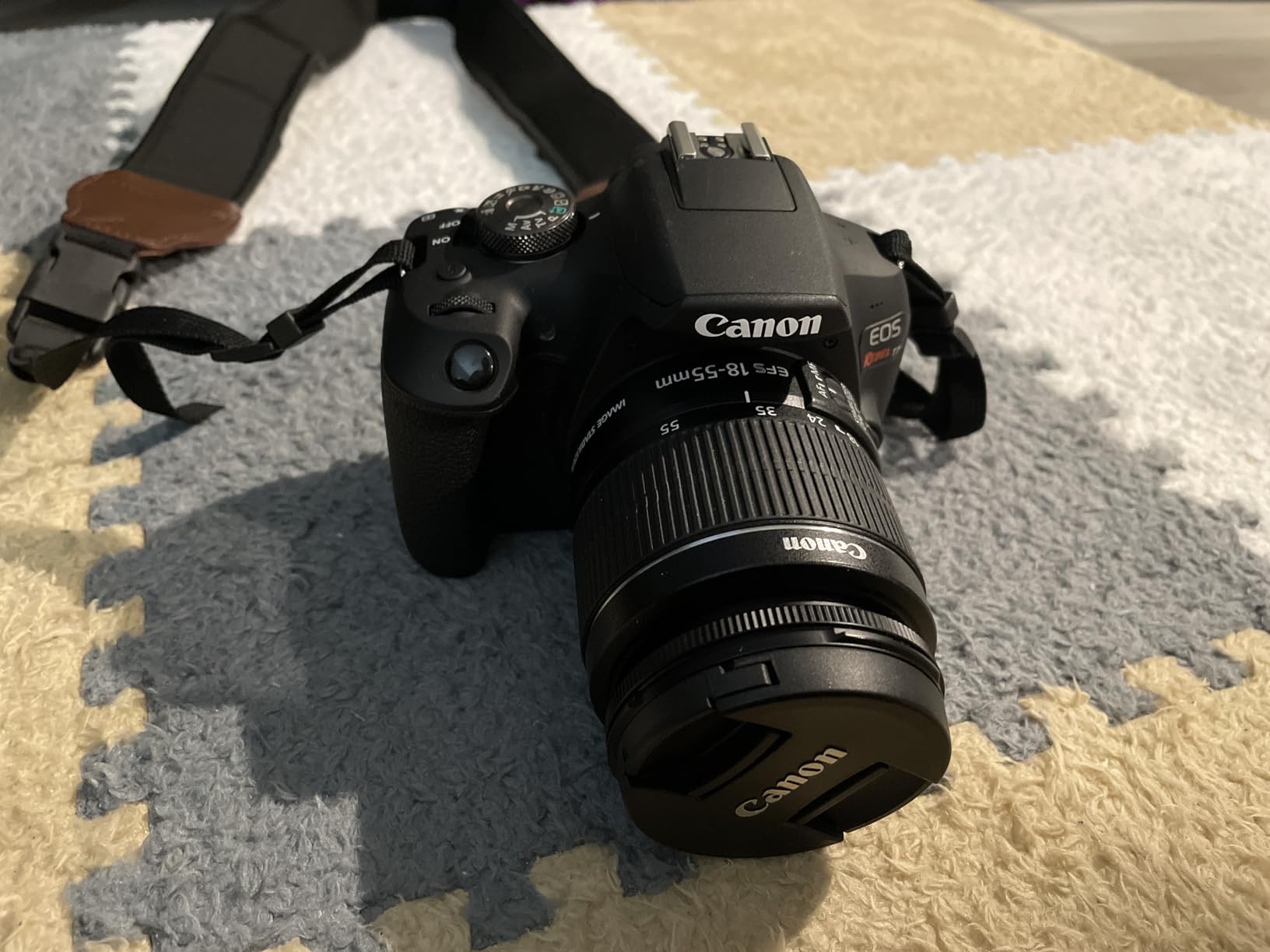
What surprised us was how little the dated parts matter for still life. Your subject never moves, so a 9-point autofocus system that hesitates on a walking dog is irrelevant. Point it at a static bottle, half-press, and it locks. The 3 fps burst is only limiting if you are shooting product spins, which is rare on a Shopify product page.
Owners repeatedly describe it as doubling as a commercial product tool, and the consistency of the feedback is reassuring: crisp, professional-looking images in good light, with strong battery life for stills. Several reviewers note the guided on-camera feature walkthrough is genuinely helpful if you have never touched a DSLR dial.
The real limitation is the kit lens. 18-55mm is wide at one end and short at the other, so for a hero shot of a tall bottle you will be stepping back, and for a tight detail of a logo you will not have enough reach. That is a lens problem, not a body problem, and it is fixable later without changing camera.

Who this is genuinely good for
Sellers on a budget photographing non-reflective products in good light. Clothing, homeware, stationery, print-on-demand and simple lifestyle sets. It is also the body most often recommended to people posting in r/Entrepreneur and r/smallbusiness, because it is the cheapest route to a real interchangeable-lens camera that will not need replacing in a year.
It is also the right pick if you want zero menu diving. The T7 has fewer ways to get it wrong than any mirrorless body in this guide, which matters when you are shooting a catalogue alone late in the evening after a full day of running the business.
Who should skip it
If you shoot jewellery, watches, cosmetics or anything polished, this is the wrong tool. Close focus is weak with the bundled lens and the sensor will not rescue a shaky macro shot. The 9-point autofocus also makes any motion work, such as a turntable or a model, noticeably more effort.
Video is also a weak point: Full HD 1080p only, no 4K. If your product pages need short looping clips alongside the stills, look at the Sony a6400 or Canon EOS R50 instead.
2. Sony Alpha a7 IV: Best for High-Resolution Detail Work
Pros
- Excellent dynamic range from the 33 MP full-frame sensor
- Dependable 759-point Real-time Eye AF
- 5-axis stabilization steadies handheld set ups
- Dual card slots protect paid catalogue shoots
- 4K 60p 10-bit video for product page clips
Cons
- Body only configuration so a lens must be added
- Heaviest body here at 0.99 kg
- No built-in flash for indoor fills
- Menu system takes real time to learn
The a7 IV is the resolution answer. 33 MP on a full-frame sensor is the highest pixel count in this group, and for product work that translates directly into the ability to crop a 2:1 detail of a watch dial or a fabric weave and still have enough pixels for a 2048-pixel placement. If your catalogue is jewellery, watches, printed materials or textiles, this is the body that stops you re-shooting.
The full-frame sensor also gives you a much shallower depth of field at the same framing distance, which matters when you want a hero shot of a watch with the dial sharp and the backdrop melting away. The 5-axis in-body stabilization means you can hand-hold a second angle light or a reflector without producing blur, which is genuinely useful in a small room.

Dual card slots are the feature pros quietly love most. For a shoot where you are billing a client, or covering a week of catalogue updates, writing every frame to two cards is cheap insurance. Buyers also commonly pair this body with fast primes for studio and low-light product work, which is exactly the right approach: primes give you brighter, more even light and shallower depth of field than a kit zoom.
The 759-point Fast Hybrid AF with Real-time Eye AF is not critical for still life, but it earns its keep the moment you put a hand, a model or a pet in a lifestyle shot. Most sellers underestimate how much lifestyle imagery a product page needs to feel like a real store rather than a spreadsheet.
Its 4K 60p 10-bit full-readout video with no recording limit is a genuine two-in-one: the same body that shoots your stills can produce the short product clips and scroll-stopping vertical video for Meta ads. The S-Cinetone profile gives a consistent, restrained look across an entire catalogue of video.
Who this is genuinely good for
Sellers who shoot jewellery, watches, cosmetics with fine detail, leather goods, or high-value textiles, and who crop heavily in post. Also the right call if you intend to grow past 50 SKUs and want one body that can handle macro, stills and video without a second purchase.
It is also a good match for anyone who already owns lenses. There is a deep third-party lens ecosystem for this mount, so if you are upgrading from an earlier Sony or a converted lens you already own, you can reuse that glass rather than start from nothing.
Who should skip it
This configuration is body only. You must add a lens before anything happens, which makes it a worse first purchase for a nervous beginner than the T7 or the R50 kits. Budget for glass before you budget for the body.
At 0.99 kg it is a heavy body next to the APS-C kits here, and the menu system and button layout carry a real learning curve. For a seller shooting flat, matte goods in a bright room, a lighter APS-C kit will produce images that are effectively indistinguishable for a fraction of the outlay.
3. Sony a6400: Best for Overhead Flat Lays and Video
Sony Alpha a6400 Mirrorless Camera: Compact APS-C Interchangeable Lens Digital Camera with Real-Time Eye Auto Focus, 4K Video, Flip Screen & 16-50mm Lens – E Mount Compatible – ILCE-6400L/B, Black
Pros
- Reliable real-time eye autofocus for people and pets
- Compact 10.3 oz body for location shoots
- 11 fps burst with continuous AF and AE
- 180-degree tilting screen for overhead flat lays
- Abundant affordable third-party E-mount lenses
Cons
- No in-body image stabilization
- Kit 16-50mm is weak in dim indoor light
- Sony companion app is slow for some users
The 180-degree tilting touchscreen is the reason this camera shows up on apparel catalogues. Clothing, flat lays and ghost-mannequin shots are shot looking straight down, and a fixed screen means you are either blind or crouching at an angle that changes your perspective. Flip the screen to face the product and you can compose from directly above.
Long-term owners report tens of thousands of shots and still consider the a6400 one of the best APS-C values, largely thanks to its class-leading eye AF and its stills and video quality in one body. The 20.1 MP stacked sensor shoots up to 11 fps with continuous autofocus, which covers a product turntable sequence or a model shot without any drama.
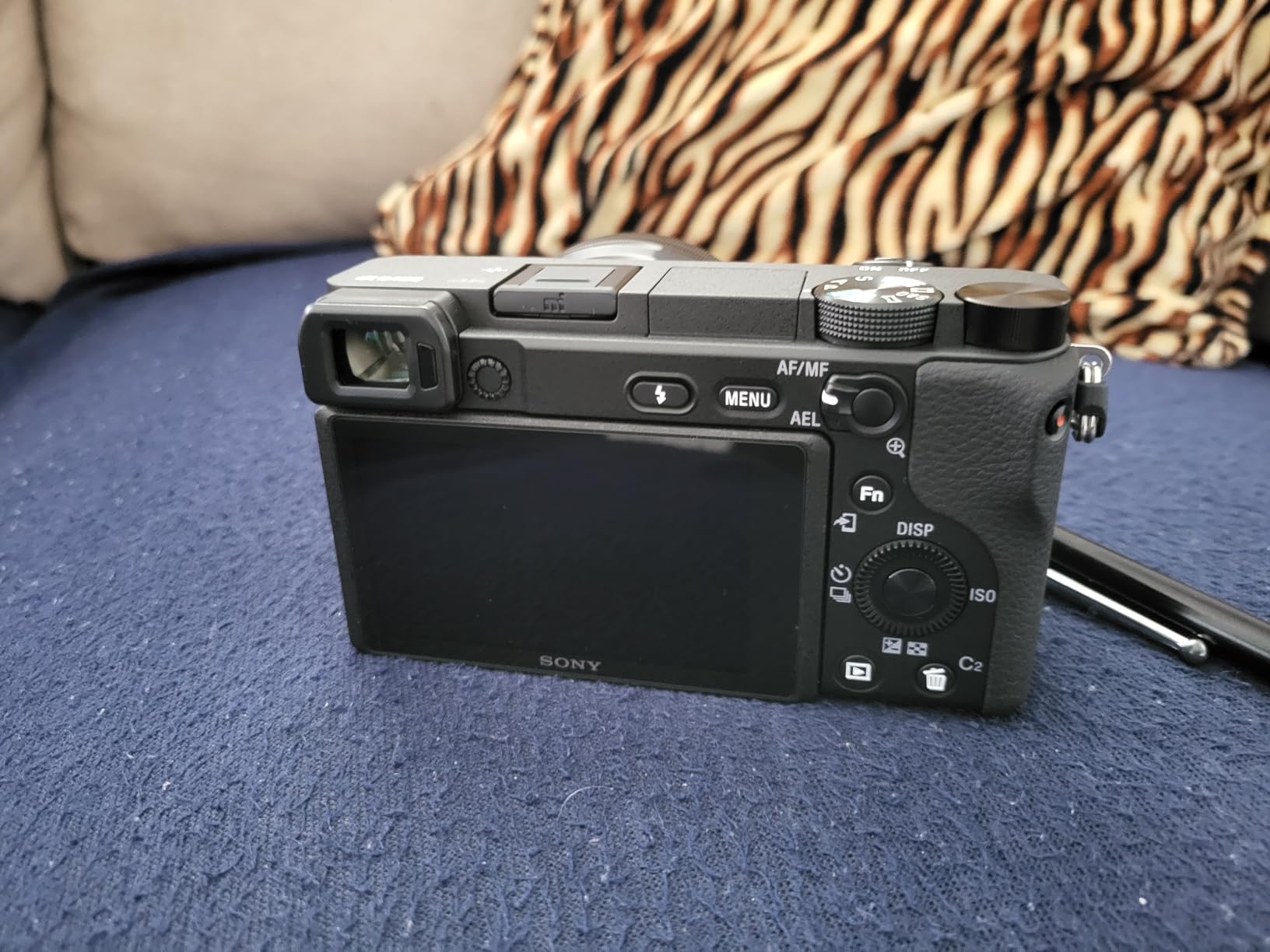
It is also the lightest body here at 10.3 ounces, which matters if your studio is a corner of a spare room and you would rather carry the kit to a location shoot than set up twice. The dust and weather resistant construction gives some reassurance if you are photographing outdoors for lifestyle sets.
One lens ecosystem point deserves emphasis. Because the mount is Sony E, you have access to a large range of affordable third-party primes, and third-party options such as Sigma and Tamron are abundant in this focal range. That is where your money should go after the body: a fast 50mm or a macro prime changes product photos far more than a body upgrade does.
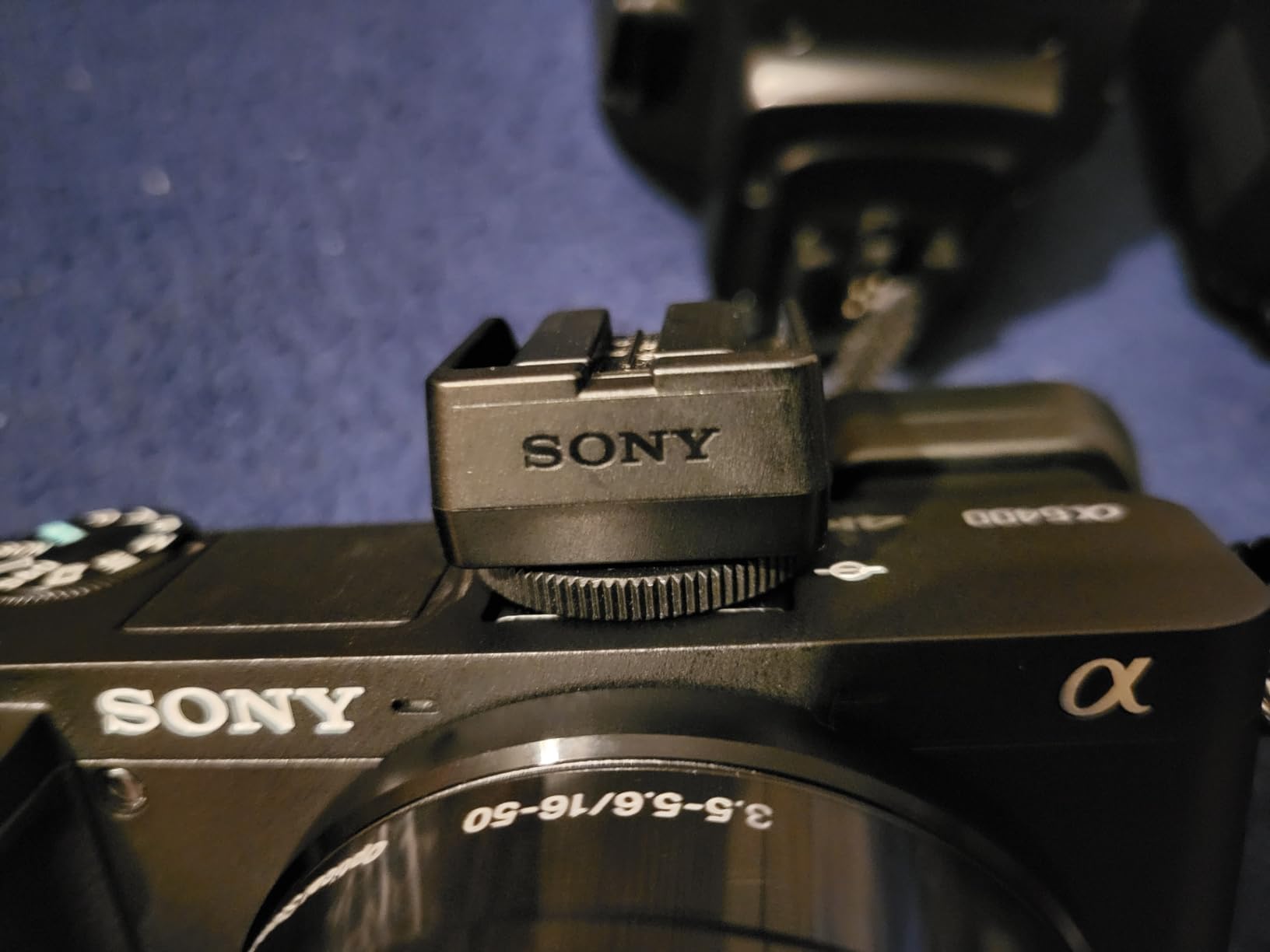
The one-tap framing aids and the hotshoe accessory shoe mean you can trigger an off-camera flash or a small LED panel without a cable, which is the single cheapest quality upgrade available to a product photographer.
Who this is genuinely good for
Apparel and accessories sellers, lifestyle creators, and anyone who shoots video for their product pages and Meta ads from the same body. The tilting screen plus 4K capture and slow-motion modes make it a genuine two-in-one for small teams.
It is also our pick if you want a modern mirrorless body at a mid-tier outlay and you are comfortable buying a second lens later. The mount options are broad enough that you will never be stuck.
Who should skip it
There is no in-body image stabilization on the body, so the supplied lens stabilization is doing all the work. For tripod-based packshots that is irrelevant; for handheld video in a dim room it is not.
The kit 16-50mm performs poorly in dim indoor light, and the companion app and menu system draw consistent complaints. If you are confident in manual settings, that matters very little. If you want a camera that sets itself, you will find it irritating.
4. Canon EOS R50: Best Value Mirrorless Body for New Sellers
Pros
- 24.2 MP files with fast accurate autofocus
- 651 AF zones with deep-learning subject detection
- Close-up Demo mode snaps to the nearest product
- Light 16 oz body with a vari-angle screen
- Wi-Fi transfer and phone remote control
Cons
- Tight grip for larger hands
- Small battery means carrying several spares
- Bundled 18-45mm kit lens is a modest performer
The R50 is the body we recommend to anyone who wants a modern mirrorless camera and does not want to think about which era of sensor they are buying. A 24.2 MP APS-C sensor with the DIGIC X processor, 651 autofocus zones, and up to 15 fps on the electronic shutter is a genuinely capable stills and video package.
The feature that makes us raise an eyebrow is Close-up Demo mode, which quickly snaps focus to the nearest subject. That is purpose-built for exactly the job this article is about: put a product on a turntable, arm the mode, and every frame lands on the item rather than the background. Very few competitors have anything that specific.

For a catalogue workflow, the 2.36-million-dot electronic viewfinder and the vari-angle Clear View LCD II touchscreen are both good news. The vari-angle screen means overhead and low-angle set ups are easy, and the electronic viewfinder gives you a WYSIWYG brightness check before you commit a frame to a card.
Owners widely call the R50 a compact workhorse that punches above its weight, with standout autofocus and a strong wireless workflow. Bluetooth and Wi-Fi transfer plus the Canon Camera Connect app mean a frame can be on a phone for review or client approval without a card reader, which is a real time saver on a busy shoot day.
Several buyers recommend the body-only option plus a better lens, and we agree with the logic even though the kit is what most people buy. The bundled RF-S 18-45mm is fine in a lit room and disappointing in anything dim. Spending the same money on a fast 50mm prime will change your product photos more than stepping up a body class would.

Who this is genuinely good for
New sellers who want a current-generation body, clean files and fast autofocus without the weight. It is an excellent second camera for lifestyle and on-model work, and a strong first mirrorless body for anyone who has used a phone professionally and wants more control.
It is also the practical choice if you shoot both stills and video for product pages. Oversampled uncropped 4K up to 30 fps and Full HD up to 120 fps are genuinely useful for detail loops and short demonstrations.
Who should skip it
The grip is genuinely tight for larger hands, and the battery capacity is small enough that spares are effectively required for a full day. For long catalogue sessions on a tripod with continuous lights, that is an annoying combination.
The APS-C crop sensor also limits ultimate background blur and resolution compared with a full-frame body. If hero shots on a stand are the centre of your brand, that is worth thinking about before you buy.
5. Nikon Z50 II Two-Lens Kit: Best for Straight-to-Camera Video
Nikon Z50 II with Two Lenses | Compact mirrorless Stills/Video Camera with Easy Color presets and Wireless Photo Sharing | USA Model
Pros
- Two stabilized VR lenses included in the kit
- 31 Picture Control presets for catalogue consistency
- Product review mode for straight-to-camera footage
- Built-in flash covers simple indoor set ups
- APS-C sensor far larger than a phone sensor
Cons
- 20.9 MP is below newer APS-C bodies
- Single SD slot means no redundancy
- 5 fps is slow for product spins
You get two lenses in the box here, and for a first product setup that is a real advantage. The NIKKOR Z DX 16-50mm covers wide to short portrait, and the NIKKOR Z DX 50-250mm gives you genuine reach for tall bottles, full-length garment shots and detail crops, both with optical stabilization.
For a product photographer the standout software feature is the 31 built-in Picture Control presets, with more downloadable from Nikon Imaging Cloud. One preset applied to every frame is the simplest possible consistency mechanism: same skin tones, same greens, same neutral grey across a hundred SKUs shot on different days. That directly attacks the drift problem that makes catalogues look assembled rather than branded.

The product review mode is Nikon’s version of a straight-to-camera workflow, and it pairs naturally with the built-in pop-up flash for simple indoor set ups. Reviewers highlight the value of two VR lenses plus the snapshot-style wireless sharing through the SnapBridge app, which makes it easy to push a frame to a phone for approval.
Colour accuracy out of the box is a strength with this system. The Easy Color presets mentioned in the product concept exist precisely so that non-specialists get repeatable colour, and paired with a grey card frame at the start of a session you can rebuild that consistency after any firmware change.
Reviewers cite the 231-point hybrid autofocus with nine subject types as reliable, though nine subject types is a photographer’s framing rather than a product shooter’s. For still life this is entirely adequate.

Who this is genuinely good for
Sellers who want a complete two-lens kit out of the box and who value colour presets over raw pixel counts. The 50-250mm in particular solves the “I need more reach” problem that a starter kit lens never does, and it is the reason this bundle is genuinely useful for apparel and tall-format products.
It is also a good fit if you are shooting in a mixed indoor and outdoor environment and want the built-in flash as a fallback rather than carrying a speedlight as standard.
Who should skip it
Twenty-point-nine megapixels is below newer APS-C bodies, and at 5 fps the burst rate is modest for product spins or any motion. The single SD card slot also means no redundancy, which is a real problem on paid work where a card failure costs you a day.
If your business is turning on you to shoot continuously, look at the R50 or a6400 instead. This is a deliberate low-fuss, low-cost kit, not a speed camera.
6. Canon EOS R8: Best Lightweight Full-Frame for Indoor Work
Canon EOS R8 Mirrorless Camera with RF 24-50mm f/4.5-6.3 is STM Lens, Black
Pros
- Full-frame quality with very clean high-ISO files
- Canon's lightest full-frame body
- Deep-learning subject detection across six classes
- Vari-angle touchscreen for low and overhead angles
- UVC and UAC webcam support for live demos
Cons
- Battery drains quickly so spares are required
- Not weather sealed for outdoor set ups
- Bundled 24-50mm has a narrow aperture range
The R8 is one of the more affordable routes to a full-frame sensor in this guide, and full frame is exactly what a controlled still-life set up rewards. At ISO 50 to 102400, expandable, you can shoot a single soft window in a dim room, keep the shutter at a usable speed and still have a clean file with room to lift shadows on a white background.
Clean high-ISO files matter more here than most camera reviews suggest. Real Shopify set ups are not studio set ups: a lot of them are a spare room with one light, and if your camera cannot hold exposure in that, you will compensate with a higher ISO anyway. Reviewers consistently praise the R8 for handling low light and mixed stills and video work well.

The 1,053 AF zones with deep-learning subject detection recognise people, animals, vehicles, aircraft, trains and horses. For product work that only matters on lifestyle frames, but it means your on-model shots do not need separate camera discipline from your packshots.
Video is a serious strength here: uncropped 4K 60p oversampled from 6K, Full HD up to 180 fps, Canon Log 3 and HDR PQ, and a two-hour recording limit. For a shop that needs a hero clip per product, being able to use the same body is a real saving.
The vari-angle touchscreen is useful for low and unconventional shooting angles, which is how you get the three-quarter view that makes a product look dimensional rather than flat. That angle is one of the eight shots every product page needs.

Who this is genuinely good for
Sellers upgrading from a phone or an entry DSLR who want a full-frame look, especially those shooting in imperfect light. It is also the natural choice if you travel to products, since it is Canon’s lightest full-frame body and easy to carry around all day.
The webcam support makes it a one-camera answer if you do live product demonstrations or use your shop as the set for video calls.
Who should skip it
Battery life is the headline complaint, and for a full day of continuous-light product work you will be swapping batteries constantly. Also, the body is not weather sealed, so rain or dust exposure during an outdoor lifestyle shoot is a genuine risk rather than a theoretical one.
The bundled RF 24-50mm f/4.5-6.3 has a narrow aperture range and average build feel. Plan on adding a fast prime rather than photographing your whole catalogue on it.
7. Nikon Z6 II: Top Rated for Catalogue Consistency
Nikon Z 6II | Versatile Full-Frame mirrorless Stills/Video Hybrid Camera | Nikon USA Model
Pros
- Excellent out-of-camera JPEG rendering needs almost no editing
- Very low noise at high ISO
- Deep buffer handles long product sequences
- Dual card slots allow redundant backups
- 5-axis stabilization steadies handheld video
Cons
- Subject tracking loses subjects more than Canon or Sony
- Screen tilts but does not swing forward
- Nikon menu system takes time to learn
This is the highest-rated body in our group, at 4.8 from 401 reviews, and for product work the reason is not the sensor. It is the JPEGs. Reviewers repeatedly single out the excellent out-of-camera JPEG rendering, which means a minimal editing pass is needed for catalogue work, and for a store shooting 40 SKUs a day, minimal editing is the whole game.
Nikon’s colour science is one of the more neutral and predictable of the systems here, which is exactly what you want when the product’s own colour is the thing you are selling. Nobody wants a slightly warm or slightly green cast baked into a catalogue that has to stay consistent for years.

The 14 fps burst with an enlarged buffer, 3.5 times the original Z 6, handles long product sequences without slowing. Reviewers describe it as a complete, refined camera that fixed the original Z 6’s complaints, and the deep buffer is what makes turntable or 360-degree sequences practical on a full-frame body.
Dual card slots in CFexpress or XQD plus UHS-II SD give you redundant backups on client shoots, and USB-C constant power and charging means a tethered session or a long timelapse will not die halfway through. The weather-sealed body and a 0.8x electronic viewfinder make it comfortable to work in for hours.
The 5-axis in-body sensor-shift VR removes the need for a gimbal on most video, and the roughly 360 F-mount NIKKOR lenses available through the FTZ adapter mean upgrading from an older Nikon DSLR is painless. For sellers who already own glass, that is a hidden advantage.

Who this is genuinely good for
Sellers shooting high-volume catalogues who want the shortest possible path from capture to a finished listing. If colour has to be right first time and every frame has to match the last one, out-of-camera rendering is worth more than raw pixel counts.
It is also the pick for anyone with existing F-mount lenses, and for paired-shooting work where a client is paying for a day and you need two cards writing simultaneously.
Who should skip it
Subject tracking can lose the subject more readily than Canon or Sony bodies, which will not bother you for still life but will cost you takes on model or lifestyle shots. The screen tilts but does not swing fully forward, so vlogging-style presentation is not its strength.
The Nikon menu system takes real time to learn, and there is no built-in S-Line 70-200mm f/4 option in the Z mount, so long reach means third-party glass. Budget for that before you commit.
8. Nikon Z6 III: Best for Low Light and Turntable Sequences
Nikon Z6 III, Black | Full-Frame Mirrorless Stills/Video Camera with 6K/60p Internal RAW Recording | USA Model
Pros
- 4000-nit viewfinder stays clear in very bright conditions
- Exceptional low-light performance for stills and video
- Very fast shutter and deep buffer for product turntables
- 6K 60p internal N-RAW for product video
- Light 1.5 lb full-frame hybrid
Cons
- Menus and control layout take weeks to master
- Dials are easy to bump accidentally
- Battery life is only a couple of hours per charge
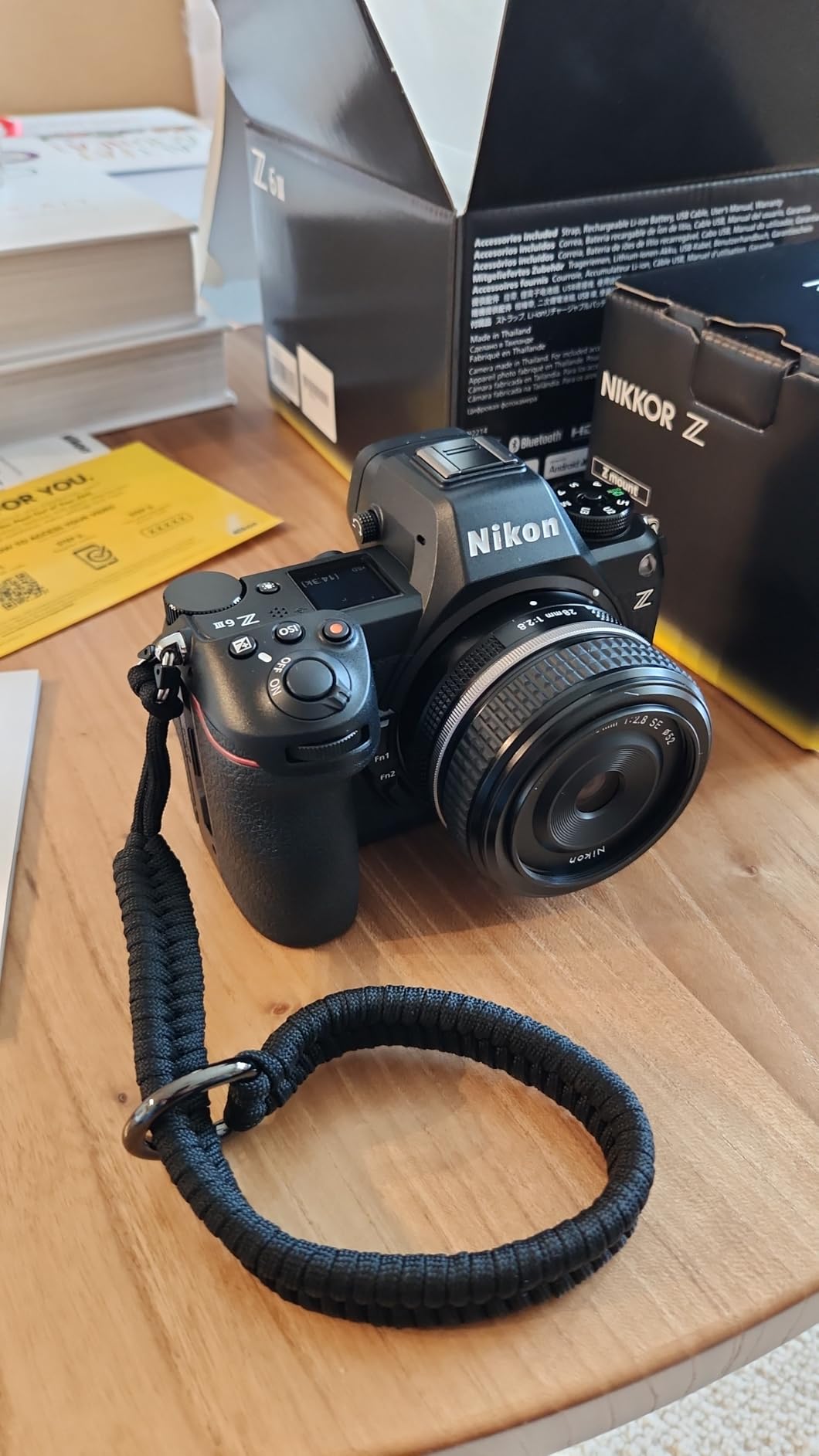
The partially stacked 24.5 MP sensor is the headline: up to 120 fps burst, up to 20 fps pre-release capture, and a 1/16000 second maximum shutter. For product work the fast shutter is less about freezing motion and more about the freedom to open the aperture wide for shallow depth of field while still sitting at a low ISO, which is how you get a hero shot with a creamy background.
The other standout is the viewfinder. A 5,760k-dot display at up to 4,000 nits with a 120 fps refresh stays clear in a bright room, which means you can actually judge the highlight on a white background and the edge of a chrome product before taking the frame. Owners consistently praise the outstanding viewfinder as the best in class.

Low light is genuinely exceptional across both stills and video, with a native ISO range of 100 to 64000 expandable further. If your studio is a corner of a room lit by a single panel, that headroom is the difference between a clean background and a noisy one.
The professional monitoring tools are unusual in a body at this level: waveform, line-in audio and real-time LUT. For a shop that shoots video, being able to load a LUT and see the result before you commit means the colour of a product page video matches the colour of your stills without a post session.
Autofocus detection goes down to -10 EV and is around 20 percent faster than the Z6 II, with recognition of faces as small as about 3 percent of the frame. For packshots that is irrelevant. For lifestyle frames on a busy market stall, it is the difference between usable and reshot.
Who this is genuinely good for
Sellers working in dim, uncontrolled spaces who want the cleanest possible file, and anyone producing 360-degree or turntable sequences where a deep buffer and a fast shutter are the difference between one usable take and twenty. The 6K 60p internal N-RAW is also among the strongest video capabilities here for product page clips.
Flexibility is the theme: 4K at 120 fps, 1080p at 240 fps slow motion, oversampled 4K UHD, and a custom Picture Control profile you can build in NX Studio and upload directly. That last feature is a quiet win for catalogue consistency.
Who should skip it
This is a camera that asks you to invest time. The menus and control layout are complex and take weeks to master, and the front and rear dials are easy to bump or hard to locate. A seller who wants to grab the camera and shoot will be frustrated for the first month.
Battery life is only a couple of hours per charge, and the Nikon app and cloud setup is a fragmented maze of separate utilities. If you are not technical, the R50 or a6400 will get you a finished product faster.
9. Panasonic Lumix S5 II: Best for Long Product Video Takes
Panasonic LUMIX S5II Mirrorless Camera, 24.2MP Full-Frame with Phase Hybrid AF, New Active I.S. Technology, Unlimited 4:2:2 10-Bit Recording with 20-60mm F3.5-5.6 L Mount Lens, DC-S5M2KK, Black
Pros
- Phase Hybrid AF locks on reliably even in adverse light
- Unlimited recording thanks to the built-in cooling fan
- 14+ stop V-Log with Real Time LUT in-camera grading
- Active stabilization supports walking product shots
- Bundled 20-60mm covers ultra-wide to short portrait
Cons
- Fewer native L-mount lenses than rival systems
- Same 24.2 MP sensor as earlier bodies
- Stills buffer is only 9 fps
This body is built around heat dissipation, and for product work that has an unexpected benefit. A cooling fan plus a high-efficiency heat sink means 6K 30p Open Gate recording runs without a time limit, so a 40-minute walkthrough of a product, a 20-minute tutorial, or a long multi-take session does not stop halfway with a thermal warning.
The 14+ stop V-Log and V-Gamut with Real Time LUT allows in-camera colour grading. You can load a LUT that matches your brand and see the graded result on the screen before you export, which for a shop that wants video and stills to look like one campaign is a genuine workflow saving.
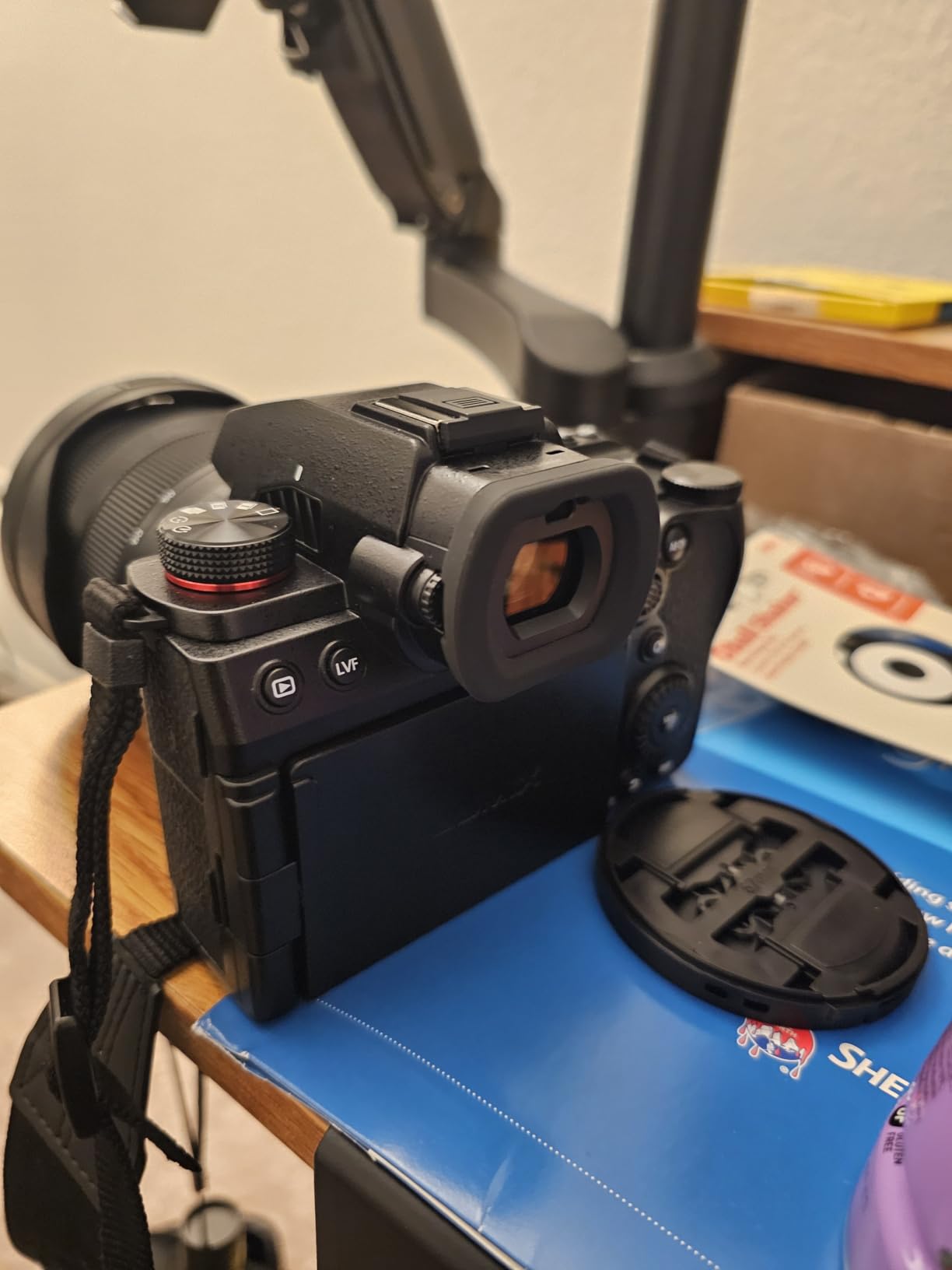
Active I.S. supports walking shots, so a handheld push-in on a product looks deliberate rather than shaky. The bundled S-R2060 20-60mm f/3.5-5.6 covers ultra-wide through short portrait on a full-frame sensor, which is an unusually useful range for a kit zoom because it includes a genuinely wide end for interiors and bulky items.
Phase Hybrid AF with 779 points and advanced subject detection locks onto and tracks subjects reliably even in adverse lighting, and the two dual SD UHS-II card slots are better than a single slot for any kind of backup discipline. Stills files are 24.2 MP from a sensor with about twice the signal processing speed of the previous generation.
Owners frame the S5 II as a video-first full-frame hybrid, and we agree: if your Shopify store needs product video, 360 spins and social clips alongside the stills, this is the body where that is the primary job rather than an afterthought.
Who this is genuinely good for
Sellers whose product pages and ad creative are video-led. Unlimited recording, 14+ stops of log, LUT grading and Active stabilization is a serious video toolkit, and the full-frame sensor plus a wide-to-short zoom in the box means you can start shooting immediately.
It also suits anyone shooting furniture or large bulky items, where the wide end of the bundled zoom and the ability to keep rolling through a long sequence both matter.
Who should skip it
There are fewer native L-mount lenses than the Sony E, Canon RF or Nikon Z ecosystems, and that matters most if your plan is macro work or fast primes. The included zoom is a general-purpose lens, not a product lens.
For stills, the buffer is only 9 fps and the 24.2 MP sensor is the same generation as earlier bodies, so there is no resolution upgrade. If your catalogue is stills-only, spend that money on a body and lens that are about photographs.
10. Fujifilm X-S20: Best for Colour Straight Out of Camera
Pros
- Film simulations give attractive consistent colour
- Very light 491 g body with a deep grip
- 20 fps electronic burst for product sequences
- 7 stops of in-body stabilization
- Vlog mode includes a product focus mode
Cons
- Autofocus can miss particularly in low light
- Not weather sealed
- Single SD card slot
- Viewfinder and screen resolution are dated
Fujifilm is the odd one out in this list because it solves a workflow problem rather than a specification problem. The film simulations produce attractive, consistent colour straight out of the camera, and for a seller who wants a catalogue that looks like a brand without spending an evening building presets, that is worth more than megapixels.
The 26.1 MP X-Trans CMOS 4 sensor paired with the X-Processor 5 also has the highest pixel count of any APS-C body here, and up to 20 fps on the electronic shutter gives you fast product sequences. Five-axis in-body stabilization of up to 7 stops is among the best figures in the group and makes low light and handheld video much easier.

At 491 g with a deep handgrip designed to stay secure with larger lenses attached, it is one of the few bodies here that feels balanced with a macro prime mounted. The NP-W235 battery is rated at approximately 750 frames in normal mode, which comfortably outlasts a typical catalogue session.
The vlog mode includes a product focus option specifically for shooting items, and 6.2K 30p 10-bit 4:2:2 internal recording plus 4K 60P streaming over USB-C is a capable video package for the price tier. The 180-degree vari-angle touchscreen also helps with overhead and low-angle set ups.
You can shoot JPEG and RAW, and for product work we would recommend RAW and a film simulation as your preview mode rather than the saved file, so you keep the recovery latitude while still seeing the intended look on the back of the camera.

Who this is genuinely good for
Sellers who want colour consistency with minimal editing, and lifestyle or editorial brands where a slightly warmer, more filmic look suits the brand better than clinical neutrality. It is also a strong choice if you will be shooting handheld, given the stabilization figure.
It suits sellers who prioritise how the catalogue looks over maximum video resolution, and those who want one body for both, given the 20 fps burst and 6.2K internal recording.
Who should skip it
Autofocus can miss, particularly in low light and with some subjects, and the body is not weather sealed. There is a single SD card slot, which is a real limitation on paid work.
The electronic viewfinder and LCD resolution are dated compared with newer competitors, and the front command dial and film simulation dial feel imprecise. If you shoot RAW and grade everything yourself, you are paying for features you will switch off.
The Five Checks That Matter Most Before You Buy a Body
Before you spend anything, run any candidate through these five checks. They matter more than every other spec on the sheet for this specific job.
1. Full manual exposure control. If the camera will not let you lock ISO, aperture and shutter independently, you cannot shoot a consistent catalogue. Automatic modes produce different white balances on different days, and that drift is exactly what makes a store look amateur.
2. RAW capture. Product colour is the product. A RAW file lets you correct a slightly warm or slightly green frame in software without degrading it, and it is the only practical defence against a lighting setup that is not perfectly colour-matched.
3. Flash sync speed. This is the number that catches people out. The fastest shutter a camera can use with flash is its flash sync speed, and exceeding it produces dark banding across part of the frame. A 1/200 second sync speed is the standard product-photography ceiling, and bodies that sync at 1/200 or above give you room to add a strobe later.
4. Sensor size and megapixels in proportion. A 24 MP APS-C sensor is genuinely more than enough for Shopify, which asks for images at 2048 by 2048 pixels. Full frame buys you shallow depth of field and cleaner low light, not better files at the sizes you are actually uploading. Buy full frame when your hero shots need background separation, not when a spec sheet tells you it is bigger.
5. Tethered capture support. Tethering means shooting straight to a computer or tablet so you can review, focus and cull at full size without touching the camera. It is the defining workflow difference between hobby and high-volume catalogue shooting, and it is absent from every competitor guide we read. If you are approaching 50 or more SKUs, tethered capture turns a day of reshooting into a check-the-screen workflow. If you are below that, it is a nice-to-have.
Two more worth a mention: a hot shoe so you can trigger off-camera lights without a cable, and a single colour temperature for the whole session. Our wider Shopify seller camera guide covers the full set-up sequence, including backdrop and batch discipline.
Lens Reality Check: Spend Less on the Body, More on the Glass
The most common purchase mistake we see is a seller who saves on the lens to afford a better body. That is backwards. The body determines your file; the lens determines whether the file is sharp, evenly lit and free of distortion.
A 50mm prime is the workhorse for product photography. It gives a natural, undistorted perspective, a wide aperture for background separation, and one less variable to think about. Watchuseek contributors converge on the same conclusion as the general product photography crowd: you can use almost any body, but get a macro lens.
A 90mm to 100mm macro is the second essential purchase for jewellery, watches, cosmetics and hardware. It gives real magnification without the distortion of a wide-angle lens. Avoid wide-angle for product work generally, because it exaggerates near features and shrinks far ones, which makes a product look distorted in a way shoppers read as “cheap”.
A short telephoto, roughly 85mm to 135mm, is the third option and the one people forget. It flattens perspective, keeps your working distance far enough away that the lights do not hit the product at a raking angle, and it is the classic compression look for apparel and furniture.
For budget allocation, we would put roughly 30 to 40 percent of a first photography budget into the body and the majority of what remains into lenses, lights and a backdrop. Tethered capture, colour consistency and a repeatable light setup do more for a catalog than a sensor upgrade ever will. If you want the wider gear context, our store product photography roundup goes deeper on the pairing of bodies and glass.
Shopify Image Specs and a Baseline Exposure Recipe You Can Copy
Shopify image specs. Shoot 1:1, because collection pages crop to a square by default. Export at 2048 by 2048 pixels, which is the standard output most themes expect. Keep the longest side at or above 1000 pixels as a floor, and stay well clear of that ceiling rather than at it. Use WebP for delivery, name files descriptively rather than IMG_2031, and write real alt text, because it is the cheapest search signal available to a product page.
Descriptive file names and alt text matter more than most sellers expect. A shopper searching for a specific product type is being helped by your file name and alt text, and a page with neither is handing that traffic to a competitor who filled them in.
Baseline manual exposure recipe. This is the starting point we use for every white background packshot, and it is deliberately boring: ISO 100, aperture f/8 to f/11, shutter 1/125 to 1/200 seconds, RAW capture, and either flash at 1/16 power or continuous LED light at 5000 to 5600 Kelvin. Shoot one grey card frame at the start of every session and lock that white balance for the rest of it.
Do not mix light sources within a session. A window at 6000 Kelvin and an LED panel at 5200 Kelvin will give you two different whites across a single catalogue, and that is the number one cause of the colour-mismatch complaints we hear about.
Best lighting setup for product photography. Two continuous LED panels or two strobes with softboxes, placed at roughly 45 degrees either side of the product, slightly above the horizontal line of the subject, with a white bounce card opposite to lift the shadow side. For a chrome or cosmetic product, make one source much larger than the other and add a black flag to shape the reflection rather than trying to light it evenly.
For bulky items, aim for at least 1000 lumens of output per 100 square feet of shooting space as a rough floor. If you shoot furniture, that number is the one to plan around, not megapixels.
The eight shots every product needs, and what shoots each. Hero on a clean white at f/8 to f/11; three-quarter angle from slightly above eye line at f/5.6; back view at f/8; close-up detail at f/8 to f/11 with a macro lens; scale reference beside a familiar object at f/8; lifestyle or in-use at f/2.8 to f/4 with stabilisation; group or bundle shot at f/8; and the packaging shot, flat and evenly lit at f/11 for maximum depth of field. Batch by setup rather than by product, and you can realistically turn a 40-SKU catalogue from two days into a single focused session.
Mirrorless vs DSLR in 2026: Mirrorless Wins for Product Work
Mirrorless is now the right default for Shopify product photography, and a DSLR is only worth buying used. Here is the direct answer to the question the search results keep asking: professional product photographers overwhelmingly prefer mirrorless, and for this specific work the reasons are mechanical rather than aesthetic.
The first is the screen. Every product set up has a low-angle shot, an overhead flat lay or an angle where the camera is on the floor. A tilting or vari-angle screen makes those frames possible without guessing. Most DSLRs have a fixed screen, so you either use a separate monitor or you frame blind.
The second is weight. Seven of the ten bodies here weigh under a kilogram, several around half that. A full-frame DSLR plus a fast prime is a shoulder-ache by the thirtieth SKU of a batch session, and fatigue produces soft frames and broken backdrops.
The third is silent electronic shutter, which matters because a mechanical shutter can introduce a tiny vibration artefact on a tripod-mounted macro shot. The R50 and the X-S20 both shoot entirely electronically at high burst rates, and the Z6 III’s stacked sensor does the same at up to 120 fps.
Where a DSLR still wins is cost per unit of capability on the used market, and optical viewfinders with no lag. If you are starting with a strict budget and already have a 50mm, buying a used DSLR body and spending nothing on the body upgrade can be the smarter allocation of the same money. That is genuinely the argument in r/productphotography, and it is not wrong.
But for anything you are buying new, mirrorless wins on the variable that matters most here: you get a vari-angle screen, in-body stabilization, a modern autofocus system that handles lifestyle frames, and a body that will not feel obsolete in three years.
Frequently Asked Questions
What is the best affordable camera for product photography?
The Canon EOS Rebel T7 kit is the most affordable route to a real result because it ships with an 18-55mm lens, shoots RAW and exposes fully manually at ISO 100, f/8 and 1/200 seconds. If you want a modern mirrorless body instead, the Canon EOS R50 is the value pick, and the Nikon Z50 II bundle gives you two stabilized lenses in one purchase.
What are the best camera settings for product photography?
Start at ISO 100, an aperture of f/8 to f/11 and a shutter of 1/125 to 1/200 seconds, shoot RAW, and use either flash at 1/16 power or continuous LED light at 5000 to 5600 Kelvin. Shoot a grey card frame at the start of every session and lock that white balance for the rest of it. Do not mix light sources within a session.
What is the best image size for Shopify product photos?
Shoot and export at 1:1 aspect ratio, 2048 by 2048 pixels, delivered as WebP. Treat 1000 pixels on the longest side as an absolute floor rather than a target. Name files descriptively instead of IMG_2031 and write real alt text, since both are cheap search signals for the product page.
What is the best lighting setup for product photography?
Two continuous LED panels or two strobes with softboxes at roughly 45 degrees either side of the product, slightly above the subject line, with a white bounce card opposite to lift the shadow side. For glossy or chrome surfaces, make one source much larger than the other and use a black flag to shape the reflection instead of lighting it evenly.
Is a DSLR still relevant for product photography?
Yes, but only used. A DSLR still shoots RAW and manual exposure perfectly well, and a used body plus a good 50mm can outperform a new body with a kit lens at the same total spend. For anything bought new, mirrorless wins on the tilting screen, in-body stabilization and modern autofocus that this work depends on.
Do professional photographers prefer DSLR or mirrorless?
Mirrorless, and by a wide margin for product work specifically. A vari-angle screen makes overhead and low-angle frames possible, electronic shutter removes vibration artefacts on tripod macro shots, in-body stabilization replaces a tripod for some angles, and silent capture keeps a client session free of shutter noise. Optical viewfinders with no lag remain the DSLR’s one genuine advantage.
Do I need a camera for Shopify product photography or will my phone work?
A phone is enough while every surface in your catalogue scatters light rather than reflecting it. Clothing, mugs, candles, print-on-demand and paper goods all shoot well on a phone at a tripod with a window and a foam board fill. The moment you hit gloss, chrome, glass, satin or mirrors, move to a body with manual exposure and a hot shoe.
Final Verdict: Which Camera Should You Buy in 2026?
Buy the Canon EOS Rebel T7 kit if you are shooting matte, well-lit products and want the shortest possible route to a consistent catalogue. It is our pick for the best cameras for Shopify store photography because it arrives with a lens, exposes manually, syncs flash at 1/200 seconds and costs the least of anything that will not need replacing.
Buy the Canon EOS R50 if you want a modern mirrorless body, fast autofocus and product-page video from the same camera. Buy the Sony Alpha a7 IV if you shoot jewellery, watches or fine fabric and crop hard. Buy the Nikon Z6 II if colour accuracy out of the camera is the thing you cannot compromise on.
And spend the rest of the budget where it works hardest: two lights, a seamless backdrop, a 50mm prime, a macro lens when your category needs one, and a tripod. That is the part of the kit that actually decides how your store looks, and it is the part most sellers get wrong first. Our mirrorless camera guide and compact camera picks cover what to do when the product shots are done and you need a camera that travels.