
The Canon EOS R7 is the best camera for rodeo photography for most shooters because its 32.5 MP APS-C sensor gives you the reach of roughly a 450mm lens out of a 300mm, it fires 30 frames per second on the electronic shutter, and the RAW Burst Mode with half a second of pre-shooting records the ride before your finger lands. For a floodlit night arena where you need clean detail at high ISO, choose the Canon EOS R6 Mark II instead — a 24.2 MP full-frame sensor with subject detection that explicitly recognises horses.
I have shot rodeos from the stands, from the rail and from a media pit, and the pattern never changes. You stand in one fixed spot, you pre-focus a zone where the action is going to happen, and you track a rider through that zone in continuous autofocus while firing short bursts at 1/1000 second. The gate opens once. A bronc rider is bucking for eight seconds, and a barrel racer makes exactly one pass through the pattern. There is no replay.
That single fact drives every recommendation below. This is a roundup of the best cameras for rodeo photography I would put behind a barrier, with an honest limitation for each one. I did not just read spec sheets: I weighed burst rate against real dirt, checked which bodies actually recognise a horse, and worked out which pairing gives you a usable frame from the cheapest seat in the arena.
One warning before we start. A fast body with a slow kit zoom is the most common and most expensive mistake in this niche. A 55-210mm or a 75-300mm bundled with a starter kit will not get you a sharp barrel racing frame in a dim indoor arena, no matter what camera is bolted to it. The lens decides whether the shot exists; the body decides whether you miss the moment. If you want the wider context first, my mirrorless camera roundup and general stills camera guide cover the basics.
Key Takeaways
The Canon EOS R7 is the best all-round rodeo body: 1.5x crop reach, 30 fps electronic, and 0.5 seconds of pre-shooting that captures the ride before the shutter fires.
The Canon EOS R6 Mark II is the best body for a night arena — 24.2 MP full frame, and it detects horses as a subject type on its own.
The Nikon D7500 is the most affordable way into long-reach action: 8 fps, 51-point AF with 3D tracking, and a 1.5x crop for reach you can afford on a telephoto.
Crop sensors are not a compromise here. A 300mm lens frames like roughly 450mm on a 1.5x body and 480mm on Canon’s 1.6x, and that is a field-of-view effect rather than optical magnification.
Put the majority of your budget into the telephoto lens rather than the body. Reach and aperture are what produce the frame.
Autofocus fails in rodeo for one specific reason: a tanned rider in brown on a brown horse against brown dirt gives contrast detection nothing to lock onto. White hats and pale faces are your most reliable targets.
Top 3 Picks for Best Cameras for Rodeo Photography in September

Canon EOS R7
- 32.5 MP APS-C sensor
- 1.5x crop reach
- 30 fps electronic shutter
- 0.5s pre-shooting RAW Burst

Canon EOS R6 Mark II
- 24.2 MP full frame
- Horse subject detection
- 40 fps at 20MP
- 120 fps viewfinder
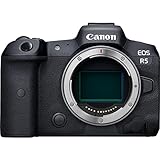
Canon EOS R5
- 45 MP stacked sensor
- 1053 AF points
- 12 fps mechanical
- CFexpress Type B dual slots
These three cover the realistic range of a weekend shooter. The R7 gives you the most frames for the money you put into reach. The R6 Mark II is the one to buy if your rodeos run after dark. The R5 is the body to buy if you already own EF glass and want the reach without buying new lenses.
Best Cameras for Rodeo Photography at a Glance in 2026
| Product | Specifications | Action |
|---|---|---|
| Canon EOS R7 |
|
Check Latest Price |
 Nikon D7500 Nikon D7500 |
|
Check Latest Price |
| Canon EOS R6 Mark II |
|
Check Latest Price |
 Fujifilm X-T5 Fujifilm X-T5 |
|
Check Latest Price |
 Sony Alpha 7 IV Sony Alpha 7 IV |
|
Check Latest Price |
 Nikon Z 8 Nikon Z 8 |
|
Check Latest Price |
| Canon EOS R5 |
|
Check Latest Price |
 Sony Alpha a6700 Sony Alpha a6700 |
|
Check Latest Price |
 Panasonic LUMIX G9 II Panasonic LUMIX G9 II |
|
Check Latest Price |
Specs were read from manufacturer listings and owner reviews as of 2026. Prices move constantly, so use the buttons above rather than any figure you may see quoted elsewhere.
1. Canon EOS R7 – Best Overall for Reach and Burst
Pros
- 30 fps electronic and 15 fps mechanical burst
- 0.5s pre-shooting captures moments before the press
- 651-zone AF covering nearly 100% of the frame
- Compact and light enough for a full event day
- 5-axis IBIS steadies low-light frames
Cons
- 32.5 MP gives less cropping latitude than 45 MP full-frame
- APS-C has less high-ISO latitude than full frame
- Battery capacity is modest so spares are essential
The R7 is the body I keep coming back to for daytime outdoor arenas, and the reason is the crop factor rather than the megapixel count. That 32.5 MP APS-C sensor records a narrower field of view than full frame, so a 300mm lens frames like roughly 450mm. You get the working distance you need without carrying a 500mm, which is the difference between shooting from a comfortable seat and hauling glass through a crowded grandstand.
Frame rate is the second reason. Fifteen frames per second on the mechanical shutter, thirty on the electronic, and a RAW Burst Mode that records half a second before the press. In a sport where the bull leaves the chute in under a second and you cannot predict exactly when, pre-shooting converts missed moments into keepers.
Autofocus is where the Dual Pixel CMOS AF II system earns its keep, with up to 651 zones covering approximately 100 percent of the frame width and height and detection down to EV -5.0. Subject detection covers people, animals and vehicles, and the eye and head detection holds on a rider bobbing vertically under a hat brim. A forum veteran describing his own rodeo kit put it plainly — the body matters far less than the glass, and the R7 is the cheapest body that keeps up with good glass.
The honest limitation is resolution. At 32.5 MP you have less cropping latitude than the 45 MP full-frame bodies, and if you are delivering big prints for a paying client rather than posting to a gallery, that ceiling shows. A second limitation is battery capacity, which reviewers consistently flag as modest. Bring three spare LP-E6NH batteries for a full afternoon.
What a 1.5x crop actually gives you at a rodeo
Crop sensors do not optically magnify anything. A 300mm lens on an APS-C body records a narrower field of view, and the result looks identical to a 450mm lens on full frame. That is the whole trick. A 200mm behaves like roughly 300mm, and a 100-400mm behaves like a 150-600mm, which is exactly the reach range that covers a barrel racing pattern from the stands.
It also means depth of field works in your favour. Because the field of view is narrower, a wide-open aperture renders a thinner slice of the scene in focus, so you can shoot at f/2.8 and still have the rider and the horse both sharp while the arena blurs out.
When to skip the R7
Skip it if your rodeo runs after dark and you cannot bring a fast lens. APS-C simply has less high-ISO latitude than full frame, and arena floodlights at ISO 3200 will show you the difference. If your income depends on delivering large prints, the resolution ceiling is worth a look at the full-frame options further down.
2. Nikon D7500 – Best Budget Route Into Long-Reach Action
Pros
- Image quality and high-ISO performance near D500 class
- 51-point AF with 3D tracking and group-area modes
- Deep weather-resistant grip for long event days
- 3.2-inch 922k dot tilting touchscreen for low angles
Cons
- Single card slot so no RAW and JPEG split across cards
- Optical viewfinder with no live exposure preview
- Tilting screen does not fully articulate sideways
There is a reason experienced rodeo shooters on the dpreview forums kept shooting a D7100 with a 70-200mm f/2.8 for a decade. It works. The D7500 is the current version of that argument: image quality, ISO range and metering equivalent to the D500, 51-point autofocus with 15 cross-type sensors, and up to 8 fps continuous. On a used market it is the most affordable way I know to hold a 300mm-equivalent field of view on a moving subject.
Colour-based 3D tracking is the underrated feature here. The system reads colour and contrast across the frame to decide what to follow, which is a very different philosophy from eye detection, and it is a good match for a sport where the reliable tracking targets are a white hat and a pale face rather than a visible eye.

The 3.2-inch 922k dot tilting touchscreen is genuinely useful in the field, particularly for low-angle shots from the rail where you cannot put your eye to the viewfinder. SnapBridge handles Wi-Fi and Bluetooth transfer, and the deep grip plus weather-resistant build feel far more serious in the hand than the specification list suggests.
Two compromises are worth stating plainly. There is a single card slot, so you cannot split RAW to one card and JPEG to another as a live backup on paid assignments. And the viewfinder is optical, which means no live exposure preview and no blackout-free shooting — you compose, focus and fire blind in a sense that modern mirrorless users will miss.

Why a crop body is the right budget call, not a compromise
A forum pro made the argument better than I can: choose the body from whatever budget remains after your lenses. Every unit of budget that goes into a body instead of a telephoto is one not spent on reach and aperture, and those are the two things that determine whether the frame exists. The 1.5x crop gives you 50 percent more reach for free, which is the closest thing to a free upgrade in photography.
The trade is depth of field and high-ISO cleanliness. You get a thinner plane of focus and more noise in dim arenas, so a fast prime in the bag matters more here than with a full-frame kit.
Who should buy something else
If you need dual card slots for a paid assignment, or you shoot video alongside stills, look at the full-frame bodies below. If your rodeos are all daylight outdoor events and you shoot maybe one a season, this is more camera than you need.
3. Canon EOS R6 Mark II – Best Full-Frame Body for Night Arenas
Pros
- 24.2 MP full frame holds clean detail in low indoor light
- Horse and animal subject detection is directly useful
- 20 fps full-resolution RAW plus 40 fps at 20MP
- Head
- face
- eye and body tracking holds riders through dust
- 120 fps electronic viewfinder with no blackout
Cons
- 24.2 MP limits heavy cropping versus 45 MP bodies
- 40 fps mode drops to 20MP
- No built-in flash
This is the body I would hand someone whose rodeos run after sunset in a floodlit indoor arena. A 24.2 MP full-frame sensor holds clean detail in low indoor and night light, and the subject detection system is the standout: alongside people, small animals, cars and motorcycles, it also detects horses, trains and aircraft, with the option to let the camera pick the subject type automatically. In a sport where the subject is a horse, that is not a gimmick.
Burst options give you a genuine choice. Forty frames per second on the electronic shutter at 20 megapixels for the fastest sequences, or 20 fps at full 24.2 megapixel resolution when you want the crops. The 3.69 million dot electronic viewfinder refreshes at 120 fps and gives you a bright 100 percent view with no blackout, so you are not guessing at the exposure in a dim arena.
Head, face and eye detection plus whole-body tracking is what keeps a rider framed through a cloud of dust. Reviewers single out the horse detection as unusually useful for equestrian work, and the wide latitude of the full-frame sensor means you can push ISO in a poorly lit building without the file falling apart.
The trade-off is resolution. At 24.2 MP you have less crop latitude than 45 MP bodies, and the 40 fps mode drops to 20 MP, so the fastest frames are not full resolution. There is also no built-in flash, which matters if you plan to use off-camera light indoors.
Why horse detection matters more than the megapixel count
Subject recognition in these cameras is trained on categories of animal, and a horse is one of them. That means the camera will hold a horse-and-rider pair through a barrel racing pattern without you constantly re-acquiring, and it will do the same for the bucking bronc in the chute area. In a sport where you get one pass and no replay, not re-acquiring is worth more than extra pixels.
It also changes how you set up. Instead of hunting for focus in the moment, you can pre-position, set detection to automatic subject type and let the camera decide what it is looking at.
Where it falls short of a pro body
Resolution and buffer endurance. If you are cropping hard on distant action for print delivery, or firing sustained 40 fps bursts for three seconds, a 45 MP stacked body on the list below gives you more to work with. For most riders posting a gallery, 24.2 MP is plenty.
4. Fujifilm X-T5 – Best Detail and File Character for Crops
Pros
- 40.2 MP X-Trans files are exceptionally detailed with distinctive colour
- 15 and 20 fps burst with a 180000s electronic shutter
- Seven stops of IBIS steadies handheld low-light frames
- AI detection covers humans and a wide range of animals
- Dials let you set ISO and shutter with the camera off
Cons
- APS-C has less high-ISO latitude than full frame
- X-mount offers fewer telephoto options than RF or NIKKOR Z
- 6.2K video ceiling is modest against 8K rivals
The X-T5 pulls the highest average rating of any body on this list, and the reason is the sensor. Forty point two megapixels on an X-Trans array produces files with detail and colour that hold up long after you have cropped a barrel racer out of a busy arena background. Where a 24 MP full-frame body leaves you at the limit, this has room.
The mechanical shutter runs to 15 fps and the electronic to 20 fps, with a maximum electronic shutter speed of 1/180,000 second and a lag time of just 35 milliseconds. That lag figure matters more than the headline frame rate for a sport with short, unpredictable bursts.
Stabilization is the sleeper feature for rodeo work. Five-axis in-body stabilization provides up to seven stops of compensation, which is enough to handhold a long lens at shutter speeds you could not otherwise manage in dim arena light. Note carefully what that means and does not mean: IBIS steadies the camera, it does not freeze the bull. Subject motion is handled by shutter speed, always.
The honest limitations are ecosystem and light. APS-C gives less high-ISO latitude than full frame, which matters at night, and the X-mount telephoto range is narrower than the big three mounts, so you have fewer third-party options for a 200-600mm class zoom.
What 40 megapixels on APS-C does for a distant rider
It gives you pixels on subject after a crop. When you are shooting a 300mm-equivalent field of view from the top row of the grandstand, the rider occupies a small part of the frame, and a heavy crop to isolate the moment is routine. Extra resolution is the difference between a soft social post and a frame you can print.
It also helps with the ambient light problem. At the same framing and the same ISO, more pixels means each one collects a little less light, so you should treat the 40 MP mode as a daylight and open-light option and drop file resolution when the arena goes dark.
Who should pass on it
Night-only shooters, and anyone who needs a very long supertele zoom on a budget. The X-T5’s strengths are daylight detail and file character. If your calendar is floodlit indoor events, the full-frame picks further down serve you better.
5. Sony Alpha 7 IV – Best for Dual-Card Backup on Paid Work
Pros
- 33 MP gives room to crop distant action
- Real-time Eye AF locks and stays locked in tricky light
- Dual slots including CFexpress Type A with simultaneous write
- 5-axis SteadyShot makes handheld low light practical
- Weather-sealed build with a comfortable grip
Cons
- 4K 60p applies a crop
- Heat build-up during very long continuous 10-bit 422 recording
- Menu system is a steep learning curve from Canon or Nikon
The Alpha 7 IV is the body I recommend to someone shooting a rodeo circuit for money. The reason is not the sensor, though the 33 MP back-illuminated full-frame Exmor R is excellent for cropping. The reason is the dual card slots, one CFexpress Type A and one SD UHS-II, with the ability to write to two cards at once. On a paid assignment, a dual write is insurance that no single-slot body can give you.
Autofocus is the 759-point Fast Hybrid AF system with Real-time Eye AF, and reviewers consistently describe it as locking on and staying locked in difficult lighting. Ten frames per second is modest next to the 30 fps bodies here, but with a tracking system this consistent, the frames that land are the frames you keep.
Five-axis SteadyShot stabilisation makes handheld work at slower shutter speeds practical, which in a dim arena means you can drop ISO and get cleaner files. The fully articulating touchscreen helps with low rail-side angles, and the weather-sealed build has a track record in bad weather and dust.
The complaints are consistent across reviews. Recording 4K at 60p applies a crop rather than using the full sensor, heat build-up can occur during very long continuous 10-bit 4:2:2 recording in hot conditions, and the menu system is a genuine learning curve if you are arriving from a Canon or Nikon DSLR.
Why dual card slots matter for a working rodeo photographer
A rodeo is eight hours of dust, backlight and a hard deadline for delivery. If a card corrupts at hour six, the client gets nothing. Writing identical files to a CFexpress Type A card and an SD card at the same time removes that failure mode entirely, and it is why this body appears in my paid-work tier rather than the hobby tier.
The card choice also affects your burst. A fast card matters most when you are firing long electronic bursts at a bull in the arena, and a slow card is the classic reason a body that advertises 30 frames per second feels like it shoots at eight.
The trade-offs you are accepting
Ten frames per second is the lowest burst rate among the full-frame bodies here, and the 4K 60p crop plus heat behaviour under long recording are real if you shoot hybrid video. If you are stills-only, these barely register. If you are filming the same trip, read the cons before you commit.
6. Nikon Z 8 – Best for Deep-Learning Tracking in Tough Light
Pros
- 20 fps RAW at full 45.7 MP with no buffering issues
- Deep-learning AF detects to -9 EV and holds lock
- 45 MP stacked sensor gives large detailed crops
- Shutterless design lets you change lenses with the shield closed
- Reuses existing D850 and Z-series batteries
Cons
- Battery drain is high so spares are needed
- Smaller body handles heat less well than the Z 9
- Only one CFexpress Type B slot with the second being SD UHS-II
- Focus point lock needs menu navigation
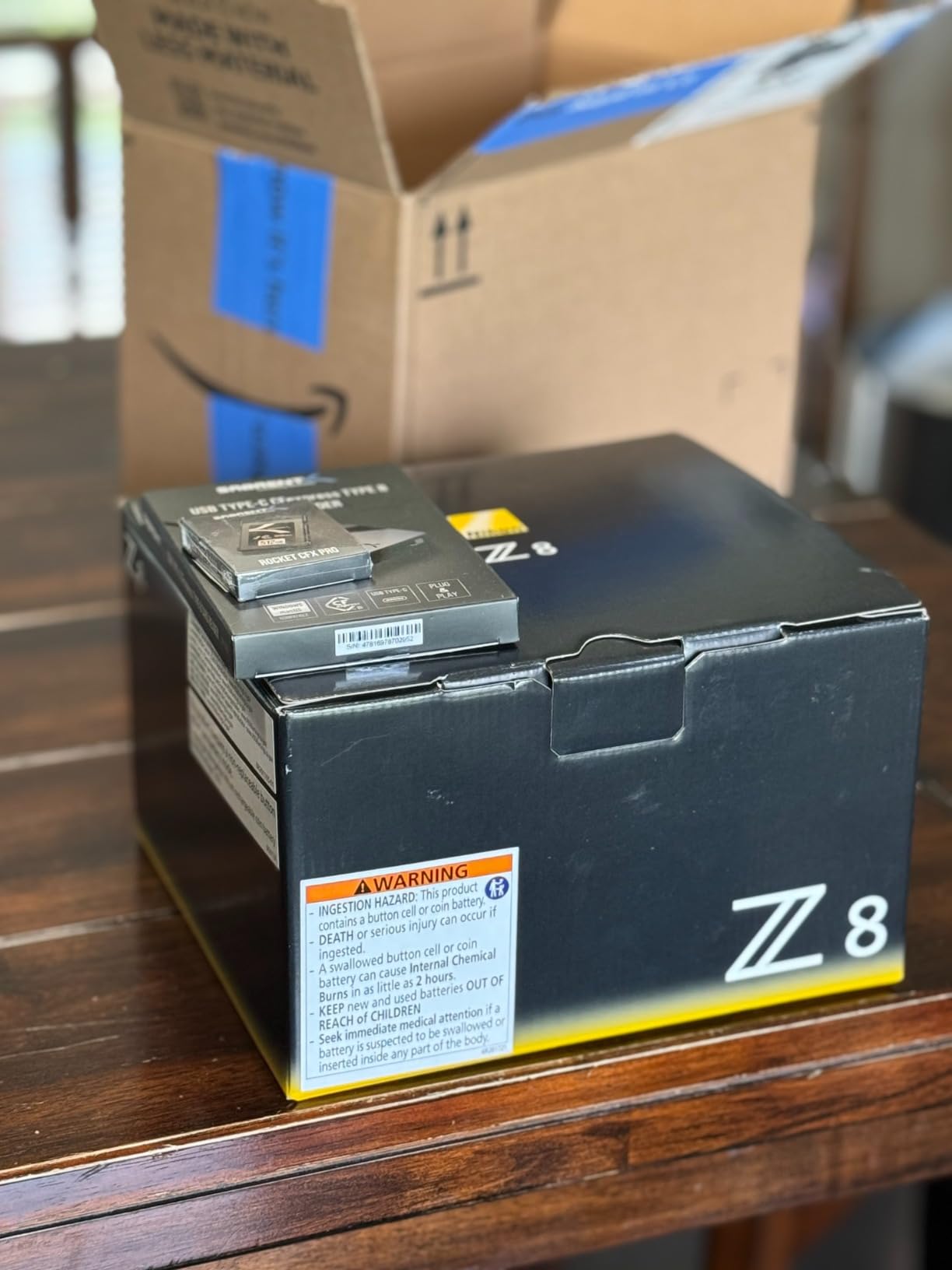
The headline number on the Z 8 is that the autofocus system detects focus as low as EV -9. That figure is what separates it in a dim indoor arena, where the light falls far below what a daylight rodeo gives you. Combined with subject detection and 3D tracking, trained with deep learning on people, animals and vehicles, it is the strongest tracking rig in this roundup for low-light work.
The stacked 45.7 MP sensor is the other headline. Twenty fps RAW at full resolution, plus 30, 60 and 120 fps options when you want them, and no buffering issues reported at full resolution by owners who came from Nikon DSLRs.
The shutterless design matters more than it sounds. There is no mechanical shutter to wear out, the body shoots silently, and a sensor shield on a switch lets you change lenses in the field with the sensor protected — which in a dusty arena is a genuine advantage over a body with an exposed shutter.
Limitations are real. Battery drain is high, so a full day means multiple batteries. The smaller body handles heat less well than the flagship Z 9, which shortens continuous record times. And only one slot is CFexpress Type B, the second being SD UHS-II, so you cannot mirror RAW across two equally fast cards.
What -9 EV detection means for a night arena
Low-light detection figures describe the dimmest scene the autofocus system can still acquire a subject in. At -9 EV you are working with roughly one four-hundred-and-sixtieth of the light you would be comfortable at, which is roughly the gap between an outdoor afternoon rodeo and a floodlit building with the house lights down. Practically, it means the camera finds a rider before you can see them clearly in the viewfinder.
That is worth more in a night arena than extra frame rate, because the frames you miss are the ones where focus never acquired at all.
Who it is overkill for
Anyone shooting one local rodeo a season. This is a body for someone who is out every weekend or being paid for the coverage. For occasional shooters, the tracking of the R7 or R6 Mark II delivers the same practical result at a lower outlay, and the money saved goes into a telephoto lens.
7. Canon EOS R5 – Best If You Already Own EF Glass
Canon EOS R5 Mirrorless Camera (Body Only), Full-Frame Hybrid Camera, 8K Video, 45 Megapixel CMOS Sensor, DIGIC X Image Processor, Up to 12 FPS, RF Mount, Black
Pros
- 45 MP stacked sensor with strong high-ISO performance
- Eye detection AF finds and tracks through brush and busy backgrounds
- 12 fps mechanical and 20 fps silent electronic
- Adapted EF lenses perform with no loss of AF speed
- Wide dynamic range recovers shadow detail
Cons
- Battery life is noticeably shorter than the DSLRs it replaces
- Buffer fills fast in electronic shutter mode
- Electronic shutter fills a card quickly with no frame count warning
- Rear control wheel is smaller than the 5D Mark IV
If you already own EF telephotos, the R5 is the shortest path to modern tracking performance, because adapted EF glass performs with no loss of image quality or autofocus speed. A used 70-200mm f/2.8L becomes a very capable rodeo lens, and that is money you do not have to spend twice.
The sensor is a stacked, back-side illuminated 45 megapixel full-frame CMOS with a native ISO range of 100-51200. Twelve frames per second on the mechanical shutter and up to 20 on the silent electronic. Dual Pixel CMOS AF with 1053 points covering approximately 100 percent of the frame, and deep-learning subject tracking for people, animals and vehicles.
Eye Control AF is the feature people remember after an event. You look at the subject through the viewfinder and the focus point goes where your eye is pointing, which in a chaotic arena is a genuine speed advantage over dragging a joystick around the frame while a bull is mid-buck.
Reviewers repeatedly flag battery life as the dominant complaint, with heat and buffer depth as secondary concerns that most say firmware updates largely resolved. In practice, plan on two or three spare batteries for a long day, and expect the buffer to fill quickly in electronic shutter mode on long sequences.
Why the mechanical shutter rate is the number to watch
Advertised burst rates are not comparable across brands, because they measure different things — frames per second of RAW, of JPEG, or of focus acquisition. Twelve frames per second on a mechanical shutter is the most honest number on this list because it is a real, sustained rate with the shutter fully cycling, and a bull mid-buck does not stay in one pose for long.
That is also why I would not fire the R5’s electronic shutter at a lateral-moving horse. Rolling shutter distortion bends fast lateral movement, and a galloping horse across the frame is the classic case.
What to watch before the gate opens
Battery count and card capacity. The electronic shutter can fill a card very quickly with no visible indication of frame count, and in the past the buffer filled faster than the cards could clear. Test the full burst on the actual cards you intend to shoot before an event, not on the ones that came with the camera.
8. Sony Alpha a6700 – Best Lightweight APS-C for a Long Event Day
Pros
- AI processing unit and Real-time Recognition stick with subjects through fast movement
- Compact 14.5 oz body fits an everyday bag
- 6K oversampled 4K 60p with no crop
- Sharp 26 MP sensor with good dynamic range for the class
- Existing A-mount lenses work via adapter
Cons
- High ISO performance is weaker than full frame
- No dual card slots
- Can overheat during long 4K 60p recording in hot conditions
- Modest in-body stabilization
At 14.5 ounces the a6700 is the body I hand to shooters who do not want a neck ache at the end of a ten-hour rodeo weekend. It is a genuinely small camera, and the dedicated AI processor with Real-time Recognition is what makes it more than a lightweight convenience body: owners consistently credit the subject recognition with producing far more keepers on moving subjects.
Eleven frames per second with a 759-point AF system, eye and face detection, and a 26.0 MP back-illuminated APS-C Exmor R sensor with a 1.07x viewfinder magnification that gives a noticeably roomy view of the action. The 1.5x crop means a 200mm behaves like roughly 300mm.
Owners posting their first rodeo frames from this body shoot it on a 70-350mm, and that pairing is well matched: the reach arrives without the weight, and the compact body is easier to hold on a long lens for a whole event.
The clear weak point is high ISO. In a dim indoor arena the smaller sensor shows noise earlier than full frame, and there are no dual card slots, which some paid shooters treat as essential. The body can also overheat and shut down during long 4K 60p recording in hot conditions, and in-body stabilization is modest for video.
Whether a lightweight body actually changes your shooting
It does, and not in the way people expect. A body you can hold comfortably for ten hours gets raised more often. Shooters report simply picking up the camera more, which produces more frames overall, and a light body pairs better with a long lens than a heavy one does.
The cost is that heavy glass plus a compact body can feel unbalanced at the front. A monopod or shoulder brace, where event rules allow, fixes that more cheaply than buying a bigger body.
Where the smaller sensor bites
Night arenas, without much ambiguity. The a6700 is a daylight and open-air body first. If most of your events are after dark, put the money into a full-frame body with a larger sensor, and save weight elsewhere by choosing a lighter telephoto zoom rather than a smaller body.
9. Panasonic LUMIX G9 II – Best Reach on a Modest Budget
Pros
- 60 fps blackout-free burst with continuous AF plus pre-burst capture
- 8.0 stops of stabilization described as action-camera level
- 2x crop turns a 300mm into an effective 600mm
- Micro Four Thirds glass is compact and affordable
- Phase detection AF is a clear step up from earlier G bodies
Cons
- Small sensor has less low-light latitude and smaller files
- Bulkier than a typical Micro Four Thirds body
- Fewer third-party lenses as support thins
- Smallest review pool of any body here
The G9 II exists to answer one question: how do I get reach without paying for it? The 2x crop factor turns a 300mm lens into an effective 600mm, and Micro Four Thirds telephotos are dramatically cheaper and smaller than full-frame glass. For a shooter who wants 600mm of reach out of a first serious lens, the maths is hard to argue with.
Phase detection autofocus is a first for the LUMIX G series, with 779 points, and it makes a large difference over earlier bodies. The burst story is the standout: 60 fps with continuous autofocus and a blackout-free viewfinder, plus a pre-burst function that looks back in time and gives you frames from before the press.

Stabilization is class-leading at 8.0 stops in-body, with a 7.5-stop 5-axis Dual I.S. 2 system on top. That is enough to handhold a very long lens at shutter speeds you would not otherwise attempt, which matters when the alternative is a blurry frame of a stationary moment between runs.
Be honest about the compromises. The small sensor has less low-light latitude and smaller files than full frame. The body is bulkier than a typical Micro Four Thirds camera. And it has the thinnest review evidence of anything here, at a 4.4 average from a small pool, so you are buying on specification more than on owner consensus.
When 2x crop and cheap glass beats a full-frame body
When you are shooting from the far end of a large outdoor arena and you care most about pixels on subject. A 600mm-equivalent view of a barrel racing pattern costs a fraction of a 600mm lens, and with enough light you do not need full-frame pixels to make the frame.
It also wins on endurance. Smaller lenses, a smaller body and 60 fps with pre-burst capture mean you are carrying less and shooting more, which for a long circuit weekend is worth a real amount.
When it is the wrong call
Night arenas. A small sensor at ISO 6400 and above in a dim building produces files that need more work than a full-frame body at the same setting, and the 25.2 MP resolution does not recover the noise. For night rodeos, use the full-frame picks on this list.
Which Telephoto Lens for Rodeo Photography
No body on this list solves a reach problem. Decide your shooting position first, then pick the range that covers it, and only then choose which body carries it. Most rodeo mistakes come from doing this backwards.
Media pit, close access, night: a 70-200mm f/2.8 is the working range. Wide enough for the whole arena, long enough for portraits, and the f/2.8 aperture is what lets you shoot indoors.
Stands, daylight outdoor arena, long lens: a 150-600mm or 180-600mm class zoom covers the pattern without tripod. A 200-800mm extends further for distant action at the cost of one stop of light.
100-400mm class: the middle ground for a single lens covering both distance and portraits on an APS-C body, where the 1.5x crop turns it into 150-600mm of reach.
Portraits, paddocks, environmental shots: a 24-105mm or 70-200mm at the warm-up pens, where the light is good and the pace is slow.
If you only shoot one or two events a year, rent the long fast lens for the weekend instead of buying it. That is standard practice among working photographers and it is how most forum users justified a 600mm they could not otherwise fund. I also recommend a second, cheaper focal range you actually carry, because a two-lens kit you bring beats a supertele you leave at home.
One forum answer to a related question is worth repeating: a kit zoom does nothing but distract from the shot. The consumer 18-55, 24-240 and 55-300 ranges are simply too short and too slow for arena action. A single good 70-200mm or 100-400mm will improve your rodeo photography more than any body upgrade.
What Camera Settings Freeze Rodeo Action
Start here and adjust with the light. Every number below is a starting point, not a rule, and the change condition matters more than the value.
Shutter speed 1/1000 to 1/2000 second. Bull riding and broncs need the top of that range. Change up if a rider is blurred against a static background.
Aperture f/2.8 to f/5.6. The wide end for night arenas and the stopped-down end for daylight when you need depth of field on the whole pattern.
Continuous autofocus with subject detection set to automatic subject type where available, or eye and face detection for human subjects.
Drive mode: short bursts. Three to five frames, then release. Long bursts just fill the buffer with frames of a different moment.
Auto ISO with a ceiling set to the highest ISO you are willing to process, usually 3200 or 6400 for full frame.
RAW, 14-bit where available, so you can recover shadow detail from a backlit arena.
On shutter type: use the electronic shutter for fast lateral movement only if the sensor is stacked, because rolling shutter bends horns, ropes, legs, barrel poles and fence lines when the sensor reads top to bottom too slowly. A stacked sensor reads fast enough that the effect largely disappears. Otherwise, use the mechanical shutter or electronic first curtain, and accept the frame rate you get. In-body stabilization does not freeze subject motion at all — it steadies the camera, nothing else, and no shutter speed compensates for that misunderstanding.
Full Frame, APS-C or Micro Four Thirds for Rodeo
Full frame gives you the cleanest files in dim arenas and the thinnest depth of field, which makes a wide aperture usable. The cost is price per body and price per lens. Choose full frame if your events are mostly at night, or if you deliver large prints.
APS-C is the value pick for daylight action. The 1.5x or 1.6x crop gives you 50 to 60 percent more reach for the money, the bodies are smaller, and most of the stacked-sensor benefits are available at lower tiers. The cost is high-ISO latitude and total resolution compared with full frame.
Micro Four Thirds gives you a 2x crop and the cheapest, smallest telephotos available. Choose it when reach per dollar is the deciding factor and you mostly shoot in good light. The cost is low-light performance and, increasingly, third-party lens support.
If you want a different read on format choice, my budget portrait camera guide covers the same trade-offs for people and horses, and the night photography guide goes deeper on high-ISO behaviour in dark venues.
Autofocus Traps That Only Happen at Rodeos
Rodeo breaks autofocus in ways a football game does not. Four failure modes account for most of it.
Brown on brown on brown. A tanned rider in brown clothing on a brown horse against brown arena dirt gives contrast detection and colour-based tracking nothing to lock onto. This is the single most common cause of soft rodeo frames. Watch the white hat and pale skin instead; they are the reliable targets.
The hat brim. The trackable subject is the rider’s head, and it bobs vertically while a cowboy hat brim regularly cuts across the face and throws it into shadow. Set face and eye detection to track the head rather than locking to a single point.
Dust. Bull riding and bucking broncs throw dirt straight into the lens and across the sensor. Do not change lenses near the arena unless you have the body closed, and on bodies with a sensor shield, use it.
Gates and fence lines. A vertical fence post or gate edge that the subject passes behind will send a contrast-based system hunting. Reduce tracking sensitivity for obstacle crossings, then raise responsiveness as the subject reappears.
Set up before the event: test detection on a real subject in the same light, pre-focus the zone where the action will happen, and use zone or group-area AF for the predictable arc of a barrel racing pattern rather than a single point. Back-button focus is worth configuring, but only if you are comfortable with it before the first run.
Used and Refurbished Bodies Worth Considering
No roundup on this topic covers the used market, which is where most rodeo shooters actually buy. A forum regular shooting a nearby circuit still lists a D7500 with a 70-200mm f/2.8 as a perfectly viable rodeo weapon several years after release, and forum pros routinely recommend a used crop body plus a fast telephoto plus a monopod and shoulder brace as the budget build.
Older pro DSLRs from the D300 and D7500 era still work for daylight, with the honest caveat that noise above ISO 1600 becomes visible and the buffers are small enough to push you toward JPEG. Refurbished crop bodies with a companion 70-300mm have been used to shoot full rodeos from the stands, but the same people caution that consumer 70-300 and 55-300 ranges are too slow for indoor or night barrel racing.
My rule: buy the body used, buy the lens new if you can afford it. The lens is where the optical and autofocus quality lives, and a refurb body with a good shutter count is a low-risk purchase compared with a tired telephoto with fungus or haze.
Field Kit, Dust and Venue Access
Arena dust is abrasive and it gets into every seam. Carry a blower and a lens cloth, keep the body closed when you change lenses, and expect to clean the front element between events rather than at the end of the day. If your body has weather sealing, it helps with dust and drizzle but it is not waterproof — do not confuse the two.
Learn the venue rules before you travel. Monopod and tripod restrictions vary by arena, flash bans are common in covered buildings, and photography credentials for a media pit are arranged in advance rather than on the day. The dpreview forum advice for indoor arena work also includes the off-camera speedlight workaround — several manual flashes on a radio trigger aimed at the barrels — which is a cheap way to add light without buying fast glass.
Pack more batteries than you think, and one card more than you need. If you are shooting a paid assignment, carry a second body as redundancy; the Z 8’s field-changeable lenses and dual slots are one reason pros like it, but redundancy itself is the point. For a light bag, a superzoom bridge camera is a legitimate backup that reaches far without a second body.
Frequently Asked Questions
What is the best camera for rodeo photography?
The Canon EOS R7 is the best camera for rodeo photography for most shooters. Its 32.5 MP APS-C sensor gives roughly 1.5x reach, so a 300mm lens frames like a 450mm, and it shoots 30 fps on the electronic shutter with RAW Burst Mode offering 0.5 seconds of pre-shooting. For night arenas, the full-frame Canon EOS R6 Mark II is the better choice because of its low-light latitude and horse subject detection.
What is the best camera lens for taking rodeo photos?
A 70-200mm f/2.8 for a media pit or night arena, a 150-600mm or 180-600mm for daylight action from the stands, and a 100-400mm as the one-lens compromise. On an APS-C body the 1.5x crop turns a 100-400mm into 150-600mm of effective reach. Avoid consumer kit telephotos such as 55-300mm, which are too slow and too short for arena action.
What camera settings should I use for rodeo photography?
Start at 1/1000 to 1/2000 second, f/2.8 to f/5.6, continuous autofocus with eye, face or animal subject detection, short bursts of three to five frames, Auto ISO with a ceiling you are willing to process, and RAW capture. Raise the shutter speed if riders blur against a static background, and widen the aperture or raise the ISO ceiling if the arena is dark.
What is the best camera for taking equine photos?
For portraits and environmental shots in the warm-up pens, a normal-to-short telephoto beats a supertele. A 24-105mm or 70-200mm at f/2.8 gives flattering compression and enough light for open shade. The Canon EOS R6 Mark II stands out for equine work because its subject detection explicitly recognises horses and can select the subject type automatically.
What is the best camera for taking livestock photos?
Cattle work at a rodeo is a paddock and chutes job rather than a high-speed action job. A 70-200mm at f/2.8 or a 24-105mm is ideal, and your priorities shift toward resolution, weather sealing and control rather than burst rate. A 45 MP body such as the Canon EOS R5 or Nikon Z 8 gives you the detail for close detail shots of eyes, brands and texture.
Is a 600mm lens too long for rodeo photography?
No. From the stands at most outdoor arenas, a 600mm is the right tool, because it lets you fill the frame with a distant rider from a comfortable seat instead of cropping hard. The trade is aperture and weight. A 600mm zoom typically needs a fast lens, a monopod or shoulder brace where event rules allow, and you should expect to raise ISO in a night arena.
The Bottom Line
For most people reading this, the best cameras for rodeo photography answer to one name. Buy the Canon EOS R7, pair it with a 100-400mm or a 70-200mm f/2.8, and put your remaining budget into a second focal range. The 1.5x crop gives you the reach, the 30 fps electronic burst and pre-shooting give you the moment, and the 651-zone autofocus keeps a rider framed through dust and hat brims.
If your events run after dark, change the body, not the plan. The Canon EOS R6 Mark II is the pick for floodlit arenas. If you shoot weekends rather than circuits, the Nikon D7500 is the most straightforward entry into the genre. If you already own EF glass, the Canon EOS R5 gives you modern tracking without replacing your lenses.
Whatever you choose, learn the sport. A forum veteran put it best: taking photos of an event like this is not as easy as it may appear, and practice helps more than any equipment. Position yourself, pre-focus your zone, and the rest is a matter of pressing at the right time. For more camera guidance, see my point and shoot camera roundup and the 2026 mirrorless camera guide.