
The best cameras for BMX and skate videos are the rugged, weatherproof action cams that survive repeated impacts and can be mounted to a helmet, chest, handlebars or handheld grip in seconds. Our top three are the Insta360 X3 for reframable POV coverage, the DJI Osmo Action 4 for low-light and stabilisation quality, and the GoPro HERO12 Black for the deepest accessory support.
Skate and BMX filming punishes cameras in ways normal photography does not. Every take ends with a landing, a whip, or a spin, and the camera is usually attached to something that vibrates badly. A weak electronic stabilisation, a small sensor, or a battery that dies halfway through a run-in will ruin footage no matter how good the trick was.
There is also a difference between the two sports that people miss. BMX dirt jumps and transfers throw the camera into hard landings, dust, and very fast whip-to-tab rotations, so frame rate and rolling-shutter control matter more than anything else. Skate sessions spend more time on smooth concrete, indoor light, and long follow-cam pushes, so battery life, low-light sensor size and a comfortable handheld grip matter more.
I have spent years filming park sessions, street spots and dirt lines, and the honest truth is that the trick matters more than the camera. That said, a body with a wide field of view and a fast shutter will still save a clip you would otherwise have lost. Everything below is written with that balance in mind.
Before you read further, if you are also building a broader video kit, our guides to the best cameras for making videos and the best cameras for skateboarding videos cover the general-purpose side of the same question.
Top 3 Best Cameras for BMX and Skate Videos in September
These three handle the widest range of skate and BMX situations, from solo sessions to paid brand runs. The X3 wins on versatility, the Osmo Action 4 wins on image quality in shade and dusk, and the HERO12 wins on mount compatibility and frame grabs.

Insta360 X3 360 Action Camera
- 5.7K 360 Active HDR
- FlowState Stabilization
- 2.29 inch touchscreen


All 10 Cameras Compared Side by Side in 2026
Here is the short version. Every row is one of the cameras we cover below, with the specification that matters most for riding footage.
| Product | Specifications | Action |
|---|---|---|
| Insta360 X3 360 Action Camera |
|
Check Latest Price |
| DJI Osmo Action 4 |
|
Check Latest Price |
 Insta360 X4 360 Action Camera Insta360 X4 360 Action Camera |
|
Check Latest Price |
 DJI Osmo Action 6 DJI Osmo Action 6 |
|
Check Latest Price |
| GoPro HERO12 Black |
|
Check Latest Price |
 GoPro HERO11 Black GoPro HERO11 Black |
|
Check Latest Price |
 DJI Osmo Nano DJI Osmo Nano |
|
Check Latest Price |
 Insta360 GO 3S Insta360 GO 3S |
|
Check Latest Price |
 AKASO Brave 4 AKASO Brave 4 |
|
Check Latest Price |
 AKASO EK7000 AKASO EK7000 |
|
Check Latest Price |
1. Insta360 X3 360 Action Camera for Reframable POV Coverage
Pros
- Reframing means you never miss a trick while riding
- Gimbal-smooth FlowState stabilisation on rough ground
- Responsive touchscreen you can adjust mid-run
- Sturdy waterproof build
- Powerful desktop and mobile editing apps
Cons
- 360 detail drops once you reframe
- 360 editing adds real time in post
- Battery drains faster on 5.7K
- Waterproofing criticised in some user reports
I started using the X3 for solo sessions and it completely changed how I work. The camera records the whole sphere and you pull the frame you want later, which means a whip you thought you missed is still in the file. For BMX that matters constantly, because a dirt jump line often has three good seconds inside a ten-second run.
FlowState stabilisation is the real headline here. It holds up on chunky concrete and on a bike that is being sent over a jump, and the Horizon Lock keeps the ground level when the rider rotates. The 2.29 inch touchscreen is large enough to change settings while walking, which saves a lot of fumbling at the skatepark.
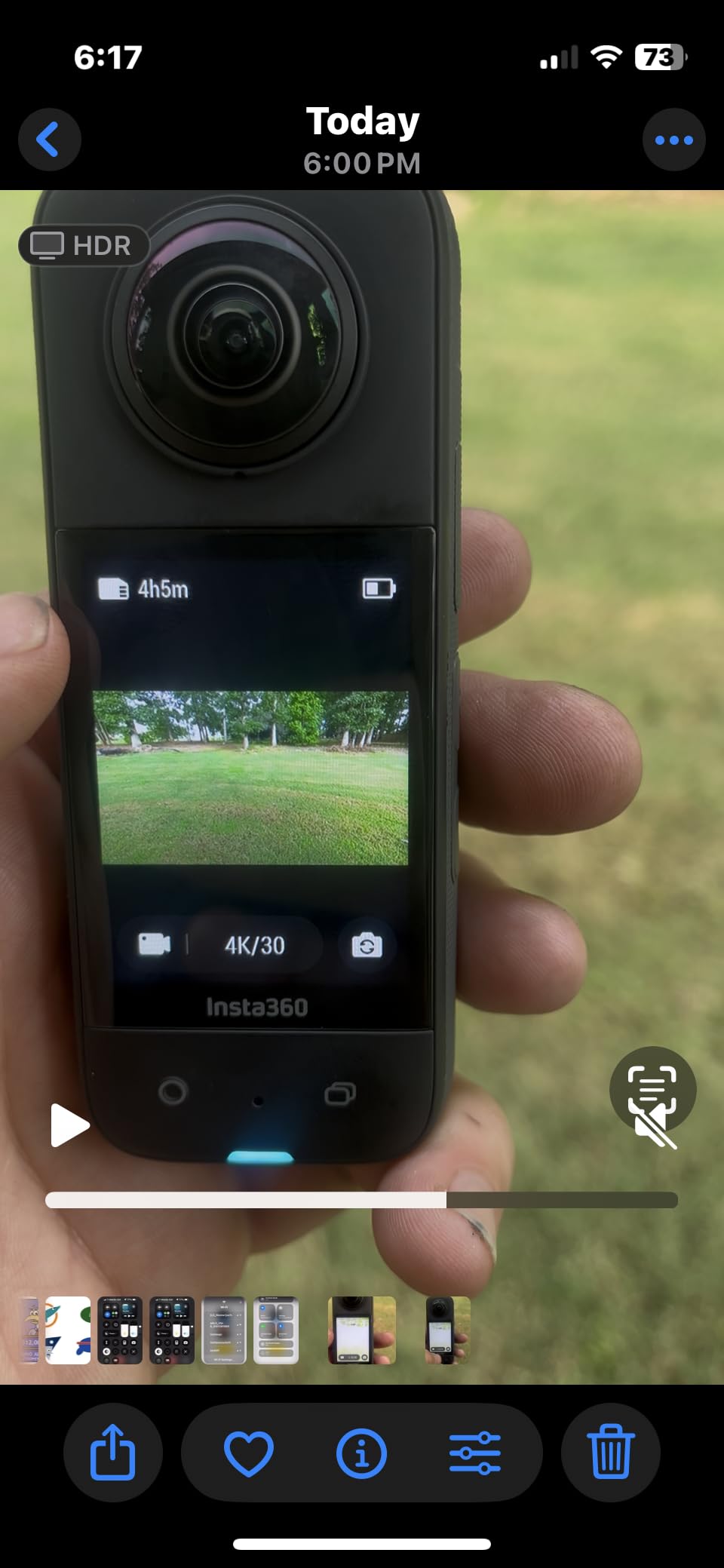
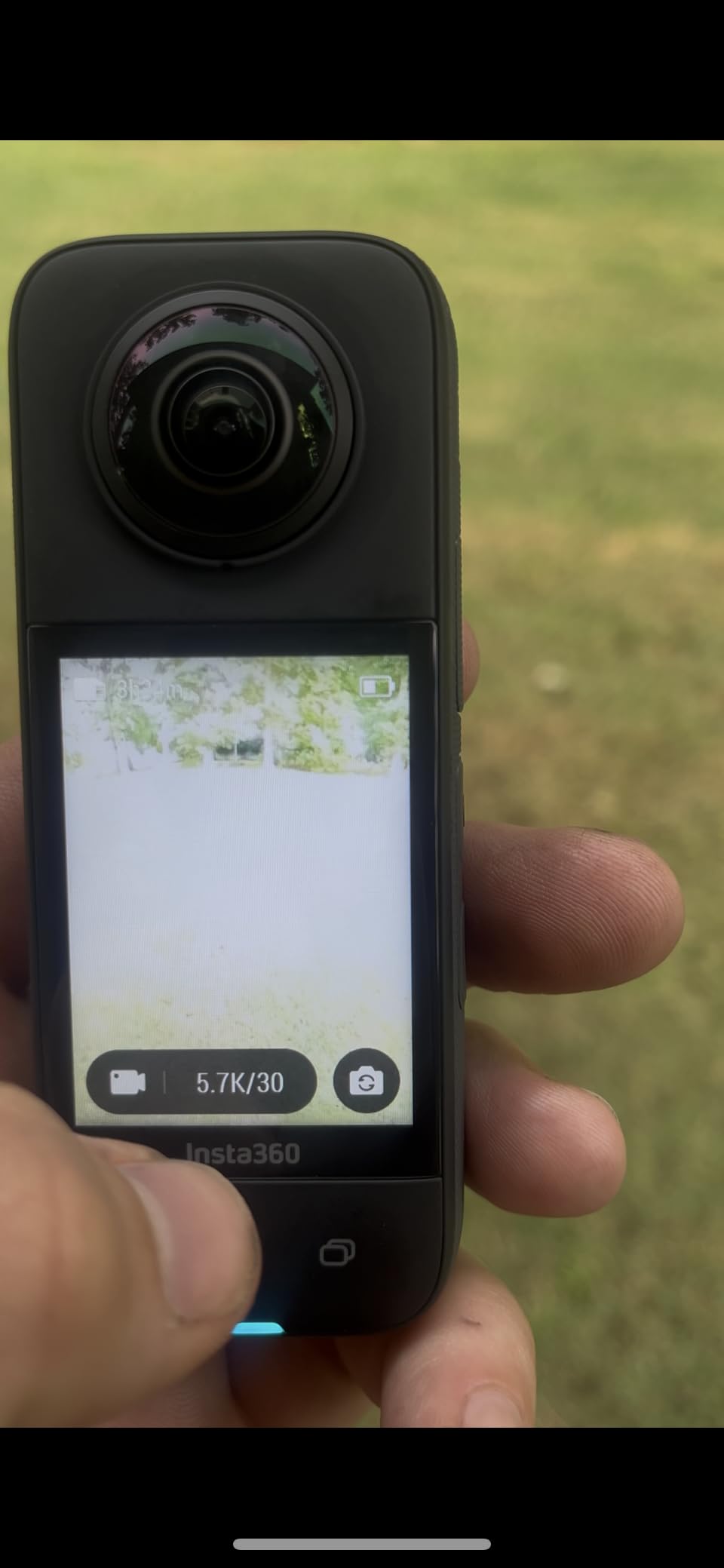
There is a real cost to 360 capture and you should know it before you buy. The 5.7K figure is split across two lenses, so once you reframe a shot into a standard flat view, the effective detail is closer to 2.7K. That is still more than enough for social cuts, but it is not the same as a flat 5.3K file.
Battery life is modest when you leave it shooting 5.7K continuously, so I carry spares for any session longer than an hour. Editing 360 clips demands the desktop app and adds meaningful time to a production, which is why many filmers shoot flat 4K on this camera and only switch to 360 for the tricks they know will be hard to frame.
Is the 360 workflow worth the extra editing time?
If you film alone, yes, and the answer is simple. Nobody is there to chase you with a handheld grip, and a camera on a stick or a helmet mount cannot pan to where the trick is going. Reframing solves that.
If you have a filmer following you, a flat camera with a tighter field of view is usually faster and looks cleaner in the final edit. Save the 360 for the run-ins where a second angle is not practical.
Where it struggles in real sessions
Night spots with mixed street lighting are the weak point. The sensor is small, so bright signs blow out while the rest of the frame sits dark, and no amount of reframing fixes that. The X3 also needs the desktop software for the full feature set, since the mobile app is a cut-down version.
For wet weather and winter sessions, check the seals before you rely on the 10m rating. Some users report water getting in where the housing was not fully closed, which is a fair warning for anyone filming in the rain.
2. DJI Osmo Action 4 for Best Low-Light and Stabilisation
Pros
- Large sensor holds detail at dusk and in shade
- RockSteady and HorizonBalancing keep handheld footage level
- Magnetic quick-release makes angle changes fast
- Long cold-rated battery covers a full day
- Pre-Rec buffers footage before you press record
Cons
- Touchscreen menus are fiddly with gloves or rain
- 10-bit D-Log M files need grading to look their best
- Sealed battery door needs care
For me the Osmo Action 4 is the safest all-round choice in this list. The 1/1.3 inch sensor with 2.4 micron pixels is a real step up from older small-sensor bodies, and it shows up the moment you move from a sunlit skatepark into a covered one or shoot a dusk session at a street spot.
4K at 120fps with a 155 degree field of view gives you the frame rate you need for whip tricks and fast spins, and the 155 degree view is wide enough to hold both the rider and the obstacle. The magnetic quick-release mount is a small thing that saves real time, because you can move between bars, chin and grip mounts in seconds rather than re-threading a screw.

Pre-Rec is the feature I did not expect to use and now rely on. It buffers a few seconds continuously and saves the clip when you press record, which means you capture the roll-in and the first attempt of a trick that you were not ready for. On a BMX jump line that has saved more good clips than any other setting.
10-bit D-Log M is a genuine advantage if you grade, because the flat profile gives you room to recover a bright sky or a shaded concrete without crushing detail. If you just upload to Instagram, the files are larger than you need and you will spend time converting them. Shoot standard if you are not grading.

Does it handle night sessions and indoor parks?
Noticeably better than most cameras this size, yes. The 1/1.3 inch sensor keeps ISO usable in a poorly lit indoor park, and 155 degree plus RockSteady gives a stable image in a space where you cannot back up far enough to get a clean angle.
It is not a low-light champion in absolute terms, so a dark warehouse session will still need careful exposure. Set the shutter to keep tricks crisp, then let the stabilisation handle the shake rather than over-brightening the frame.
Where it will annoy you
The touchscreen is genuinely fiddly with wet hands or gloves on, which is exactly when you are trying to change something. The sealed housing and battery door also need to be closed properly every time, and I have had frames refuse to record because a seal was not clicked home.
File size is the other friction. 10-bit and D-Log M at 4K produce large files that need a fast, high-capacity card, and the workflow takes a little planning before a long session.
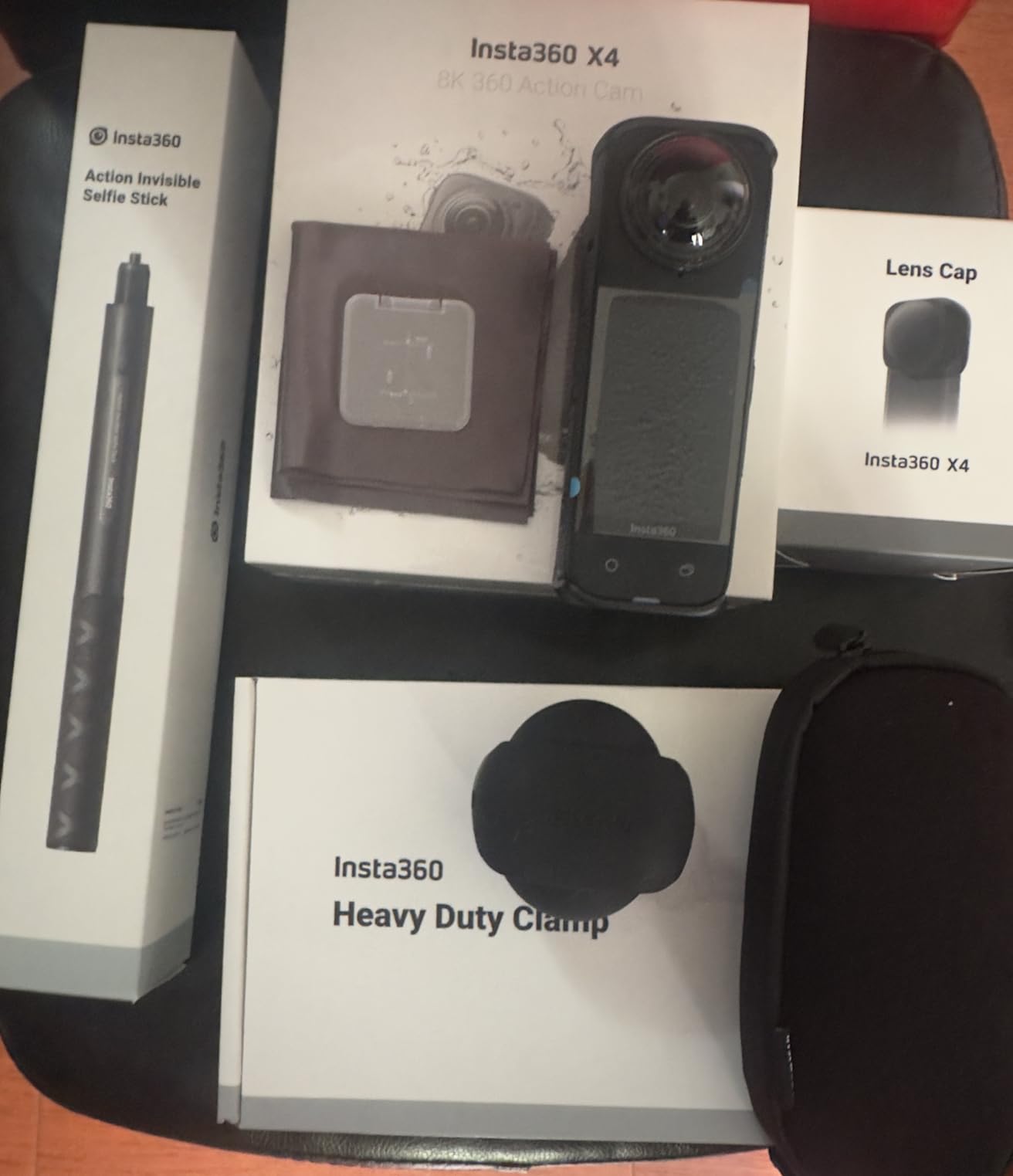
3. Insta360 X4 360 Action Camera for Sharper Solo Filming
Insta360 X4 Standard Bundle – Waterproof 8K 360 Action Camera, 4K Wide-Angle Video, Invisible Selfie Stick Effect, Removable Lens Guards, 135 Min Battery Life, AI Editing, Stabilization
Pros
- 8K 360 plus flat 4K60 in one body
- FlowState and 360 Horizon Lock hold level on rough terrain
- Screw-in lens guards genuinely protect the optics
- Noticeably cleaner image than the X3
- 135 minute battery and 2.5 inch Gorilla Glass screen
Cons
- Desktop-dependent 360 editing
- Mobile app lacks features such as direction lock
- Reframed output drops to roughly 2.7K
- Large file sizes and extra battery bulk
The X4 is the X3 with the problems addressed, and if you are buying a 360 camera now rather than hunting for a used one, this is the body to buy. Image quality is cleaner, the battery lasts longer, and the removable screw-in lens guards finally make sense for a camera that lives on a helmet or a set of bars.
8K 360 capture plus a flat 4K60 wide-angle mode means you can shoot a whole BMX run in 360 and then switch to a locked flat view for the parts where a filmer is following you. That flexibility is the reason to spend more here rather than pairing two separate cameras.
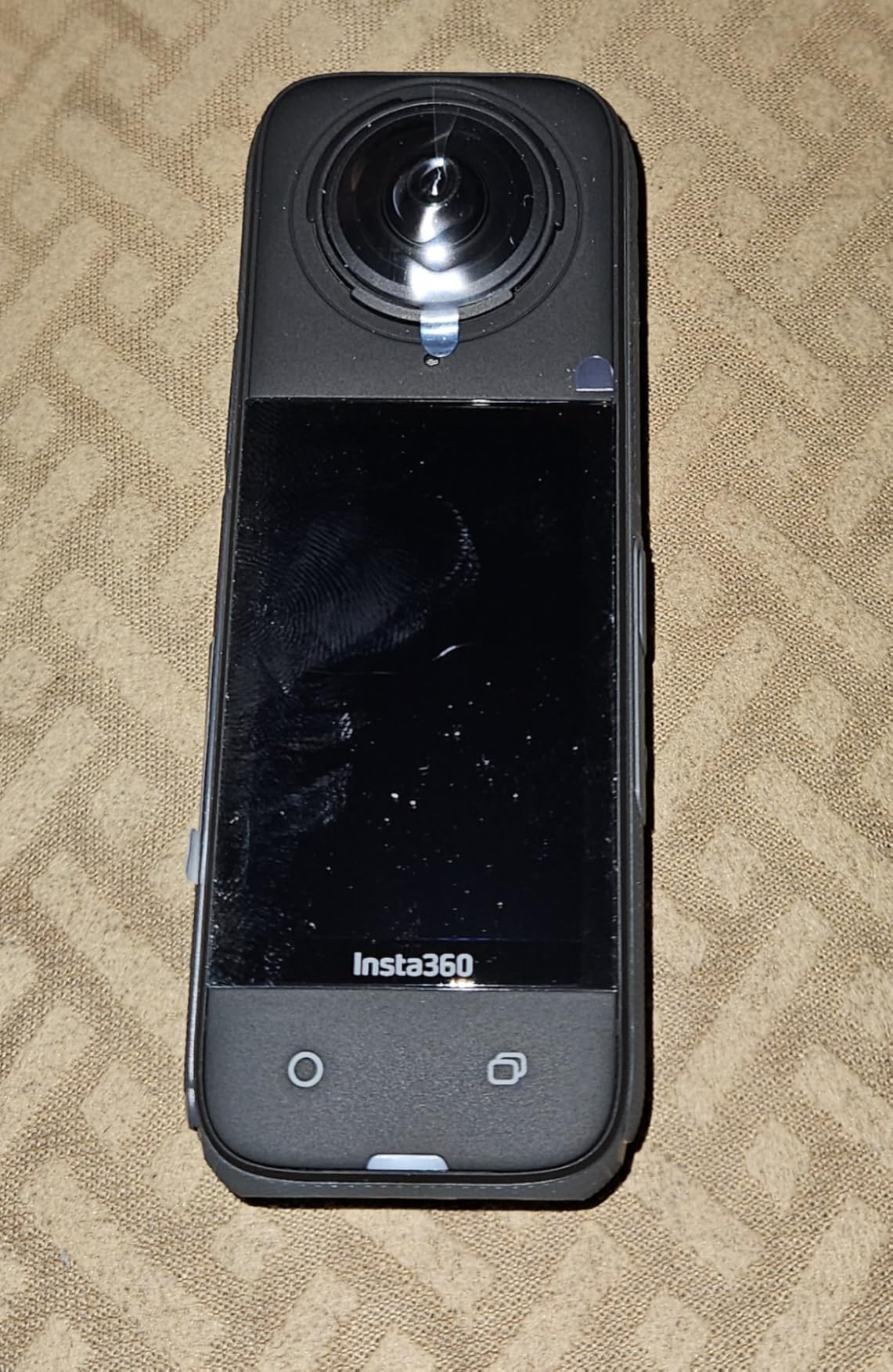
It is rated waterproof to 10m without a case and cold resistant to minus 20 degrees, so winter street sessions are not a problem. The 2.5 inch Gorilla Glass touchscreen is a step up for reviewing framing on a stick mount, where you cannot reach the camera.
Battery life is up to 135 minutes on the 2290mAh cell, which comfortably covers a park session. Sky highlights can still blow out in hard daylight, and reframed 360 output lands around 2.7K, so treat 8K as a source of detail for cropping rather than as final resolution.
Is 8K 360 real detail or a spec number?
It is real detail, but it is spread across two lenses. The practical benefit is that you can crop and reframe heavily and still have usable pixels, which flat 4K cannot always give you. For solo filming where the framing is unknown until later, that headroom is genuinely useful.
For a mounted follow-cam angle where a filmer is tracking the rider, 4K60 is cleaner and much faster to work with. Match the mode to the shot rather than defaulting to the highest number.
Where the workflow gets in the way
The desktop app is where the 360 tools live, and the mobile app is missing features such as direction lock. If you plan to edit on a laptop at a skatepark rather than at home, that gap matters and you should factor in the time.
The other consideration is bulk. With the battery and lens guards this is a noticeably larger package to carry, and it sits at the top of the 360 range. It earns that step if you shoot 360 regularly.
4. DJI Osmo Action 6 for Night Sessions and Long Run Times
Pros
- Sharp vibrant 8K with good low-light behaviour
- Variable aperture adapts between sun and shade
- HorizonSteady keeps level through aggressive riding
- Very long battery reduces downtime
- Dual DJI mic transmitter connection
Cons
- Onboard mic audio is usable but weak
- High bitrate files need fast high-capacity cards
- 8K still has small-sensor low-light limits
- Menus are limited inside a waterproof case
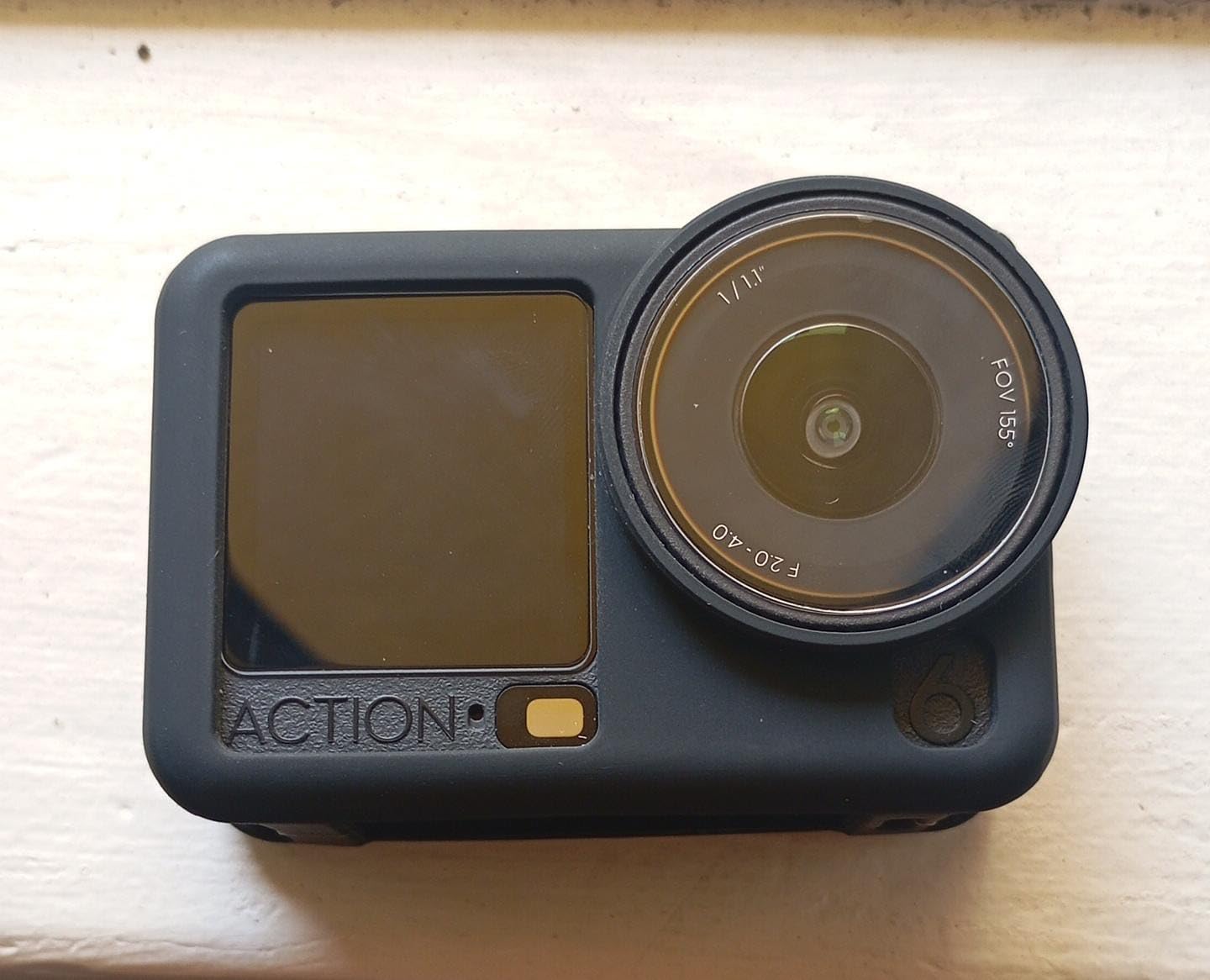
The Osmo Action 6 is the most capable flat action camera in this group for night and dusk work. The 1/1.1 inch square sensor is larger than anything else here, and 8K video means you can crop a dark frame without losing so much that it falls apart.
The variable aperture from f/2.0 to f/4.0 is the feature I did not expect to care about. Moving from a bright concrete park into a shaded underpass takes one tap instead of a menu dive, which matters when the rider is already rolling.
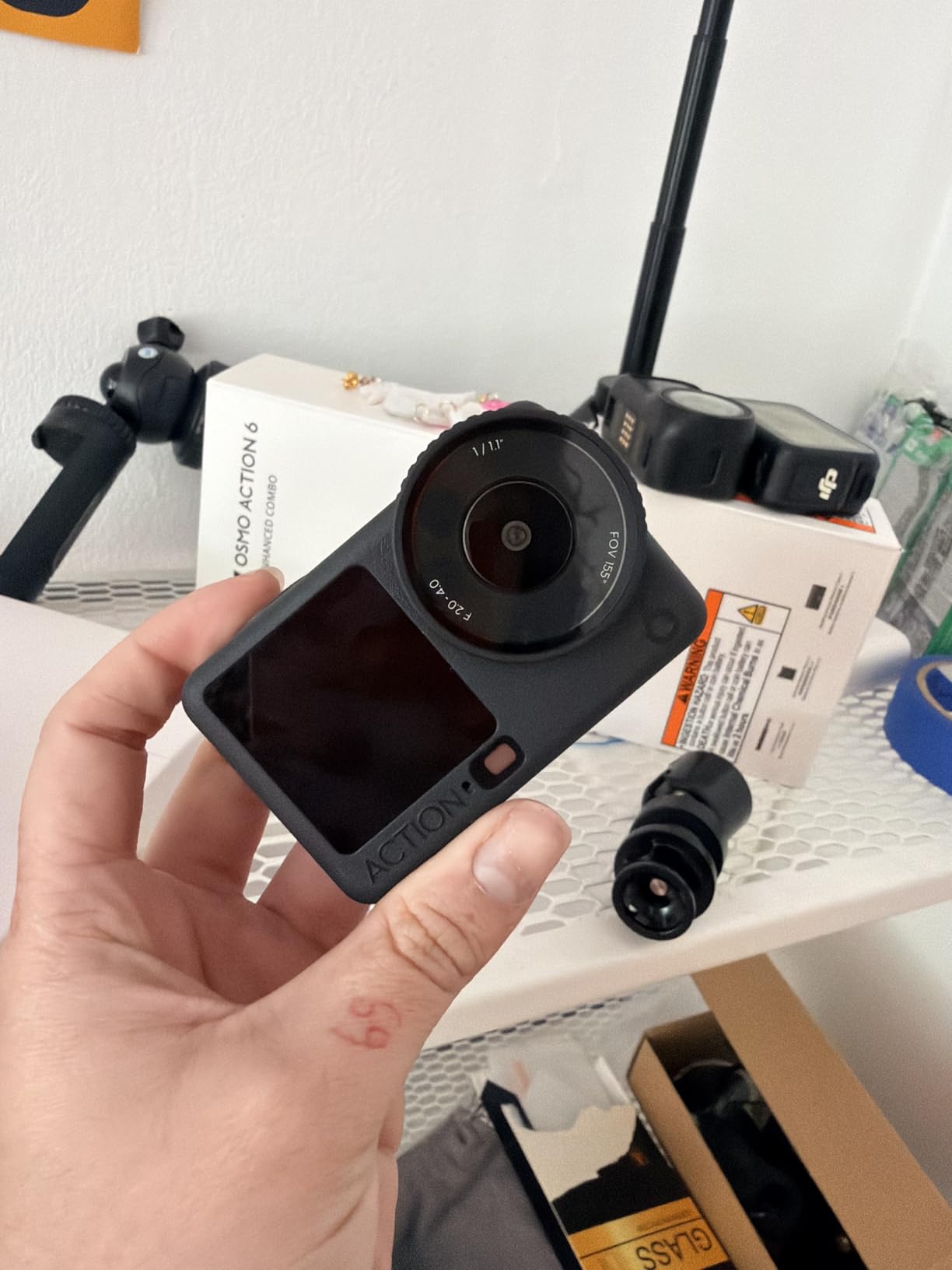
Recording time of up to 4 hours on a cold-resistant design is a genuine advantage for street sessions. The 50GB of built-in storage plus microSD expansion means you can start recording without hunting for a card, and 50GB covers a fair number of takes before it fills.
It connects directly to two DJI microphone transmitters, so audio is fixable. That matters more than it sounds, because wind noise on a moving board is the single most common complaint in skate footage, and the onboard mics will not solve it.
Is it worth the jump from the Osmo Action 4?
If you film at night, in shade, or indoors and already own an Action 4, then yes. The bigger sensor, variable aperture, 8K and multi-hour battery all show up in exactly the conditions where older small-sensor bodies struggle.
If your sessions are daylight street and park footage, the improvement is smaller and the Osmo Action 4 remains a very capable body. Choose on the conditions you actually ride in.
Where it falls short
Onboard microphone quality is the most common complaint among owners, and it is the first thing to address with an external transmitter. High bitrates also mean large files and a real need for fast, high-capacity cards, which adds cost and preparation to every session.
Touchscreen menus are limited once the camera is sealed inside a waterproof case, so plan your settings before you get in the water or the rain. And 8K still carries the usual low-light limits of small action sensors, so it is not a substitute for a bigger sensor at very low light.
5. GoPro HERO12 Black for Still Grabs and Mount Compatibility
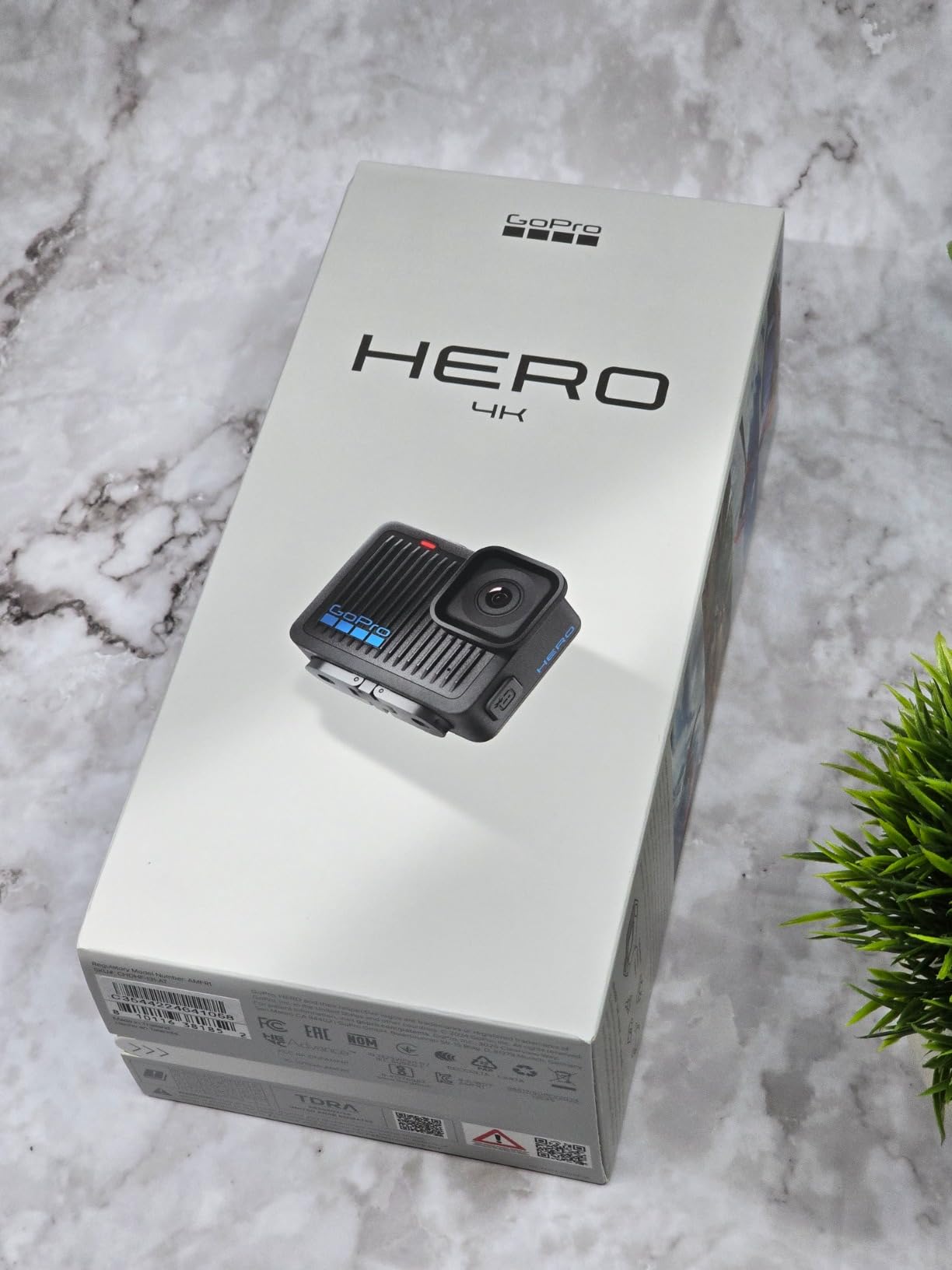
GoPro HERO12 Black – Waterproof Action Camera with 5.3K60 Ultra HD Video, 27MP Photos, HDR, 1/1.9″ Image Sensor, Live Streaming, Webcam, Stabilization
Pros
- HyperSmooth 6.0 with AutoBoost smooths chase footage
- HDR holds shadow detail in mixed light
- 5.3K60 gives clean slow-motion options
- Rugged body with folding mount fingers
- Mature accessory ecosystem and Quik app
Cons
- Short battery life for this class
- Runs warm during long 5.3K recordings
- MicroSD card not included
- Bundled mount kit is thin
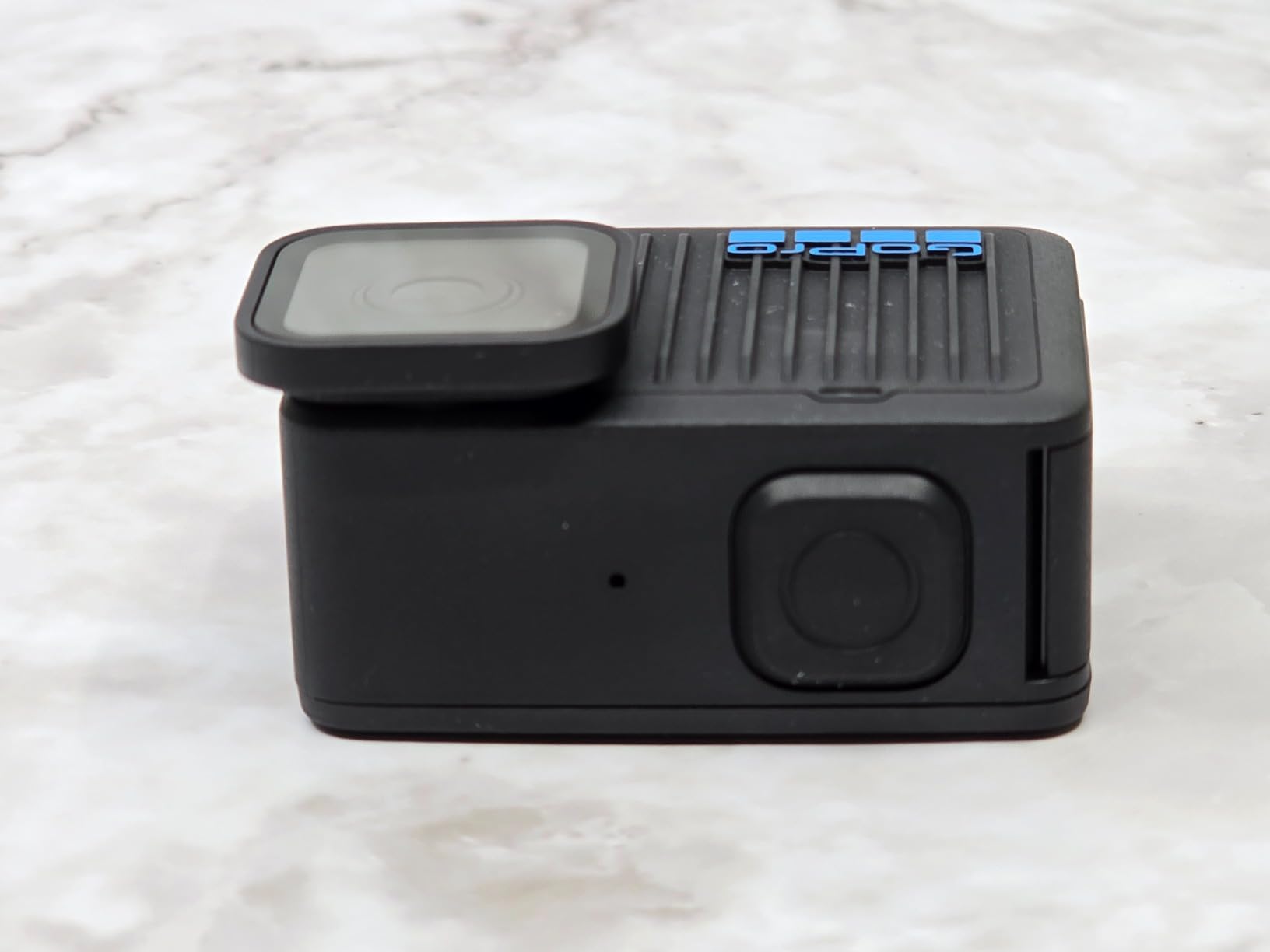
The HERO12 is the safe buy if you want one camera to do video and stills for Instagram from the same session. The 27MP photos are good, and the 24.7MP frame grabs pulled from video through the GoPro Quik app let you cover a shot you missed without unpacking a second body.
HyperSmooth 6.0 with AutoBoost is the reason it is still in this list. It handles the shake from a follow-cam run and the vibration from a bike session, and 5.3K60 gives you headroom to slow a trick down in the edit without the image falling apart.
HDR on both video and photos is genuinely useful at a skatepark, where the sun is bright and the ground is in shadow. You keep detail in both instead of losing one or the other, and the water-repelling lens cover helps when you are shooting through spray or mist.
The accessory ecosystem is the quiet superpower. Folding mount fingers mean you can move between a chin mount, a bar mount and a handheld grip without adapters, and if you already own GoPro mounts from an older camera they still fit.
Should you buy the HERO12 or a newer body?
If you already own GoPro mounts, the HERO12 is a smart entry into the ecosystem and the 5.3K60 sensor is still very capable. It also gives you the 27MP stills and frame grabs that a lot of riders want for social.
If your budget stretches, a current-generation body gives you a larger sensor and better low-light behaviour, which matters for night spots. The HERO12 still wins on ecosystem depth and for grabbing stills from video.
Where it struggles
Battery life is the most cited weakness. For a full day of runs, budget for spare batteries rather than assuming one charge covers a session, and the camera runs warm during sustained 5.3K recording which shortens that further.
High bitrates demand fast U3 cards and no microSD is included, so that is an extra purchase before your first ride. The bundled mount kit is also thinner than what competitors include, so budget for a chin mount and a proper grip.
6. GoPro HERO11 Black for Slow-Motion Trick Replays
GoPro HERO11 Black – E-Commerce Packaging – Waterproof Action Camera with 5.3K60 Ultra HD Video, 27MP Photos, 1/1.9″ Image Sensor, Live Streaming, Webcam, Stabilization
Pros
- HyperSmooth 5.0 with Horizon Lock and AutoBoost
- Extra-wide sensor captures more sky and horizon
- 2.7K240 gives real slow-motion replays
- Full compatibility with the GoPro accessory ecosystem
- Dual front and rear screens
Cons
- Shorter battery life than newer models
- Runs warm during extended recording
- Minimal mount kit in this package
- Aging chip limits low-light performance
The HERO11 is still a very good skate and BMX camera, and 2.7K240 is the specification that keeps it relevant. At 240 frames per second you can slow a whip or a spin down far enough to actually study the trick, which is the kind of footage a skate part is built from.
The 1/1.9 inch sensor has the widest field of view of the HERO line out of the box, so you can mount it on a chin or a helmet and still get the rider and the obstacle in frame. That extra width also gives you room to crop in a 5.3K60 file later.

HyperSmooth 5.0 with Horizon Lock and AutoBoost handles the same follow-cam and bars-mounted work as the newer body, and the dual screens make solo framing on a stick mount straightforward. The water-repelling lens cover reduces flare on a sunny run.
Live streaming and webcam support are minor features for skate work but useful if you are reviewing footage with a client on the spot. I have used the rear screen far more than expected to check framing before committing to a run.

Is 240 frames per second better than 4K slow motion?
For tricks, yes. A whip, a spin or a bail reads completely differently at 240 frames per second than at 120, and 2.7K240 is one of the few places a resolution drop is a good trade.
For establishing shots, lines and anything where you want to crop, stay at 5.3K60. Use 240 for the moment the trick connects, not for the whole session.
Where it falls behind current models
Battery life is shorter than newer bodies in the same line, and the camera runs warm during extended high-resolution recording. Neither is a dealbreaker with spare batteries, but both shorten a long day.
The aging chip limits low-light performance against newer rivals, so night sessions are where the HERO11 is weakest. This e-commerce package also includes only a minimal mount kit, so plan on buying a chin mount and a grip separately.
7. DJI Osmo Nano for Hands-Free POV and a Big Sensor
Pros
- Large sensor for its size
- 143 degree 4K at 60fps covers the full line
- 200 minute battery and 128GB onboard storage
- Magnetic body with hat clip for instant POV
- Direct connection for two microphones
- 10-bit D-Log M grading headroom
Cons
- Compact body generates heat on long takes
- Vision Dock is only splash resistant
- Mimo app pulled from Google Play
- Small dock screen for menus
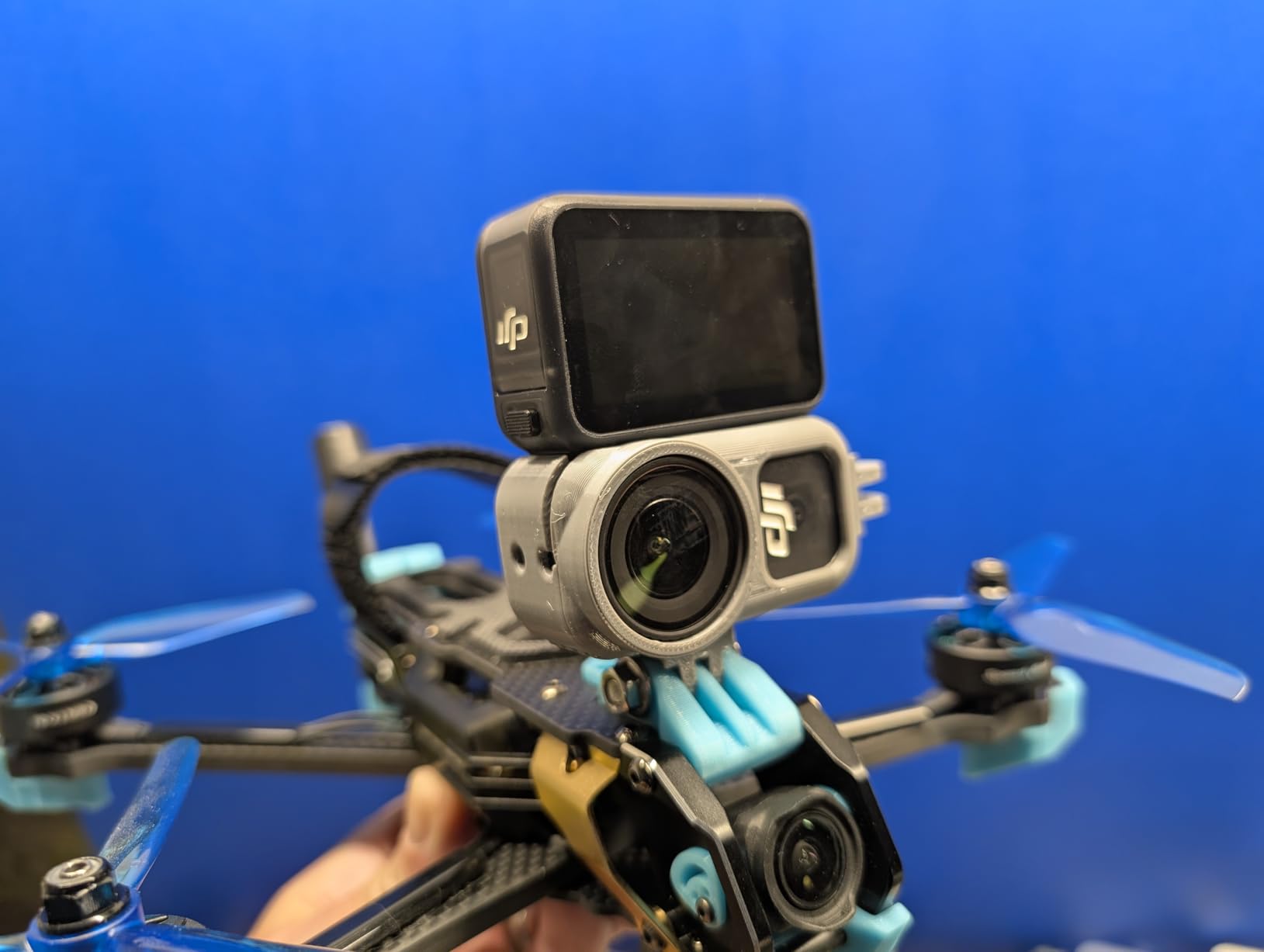
The Osmo Nano is a strange but clever body. It is a camera you wear rather than a camera you mount, and the magnetic attach plus hat clip means a POV angle that a full-size action cam physically cannot reach. I have used a hat-clip mount for bar-only tricks and low grind shots where a helmet camera would have missed the contact.
Underneath that unusual form factor is a 1/1.3 inch sensor, which is larger than most cameras this size carry. 4K at 60fps with a 143 degree ultra-wide field of view covers a whole line without the heavy distortion a wider lens would add.
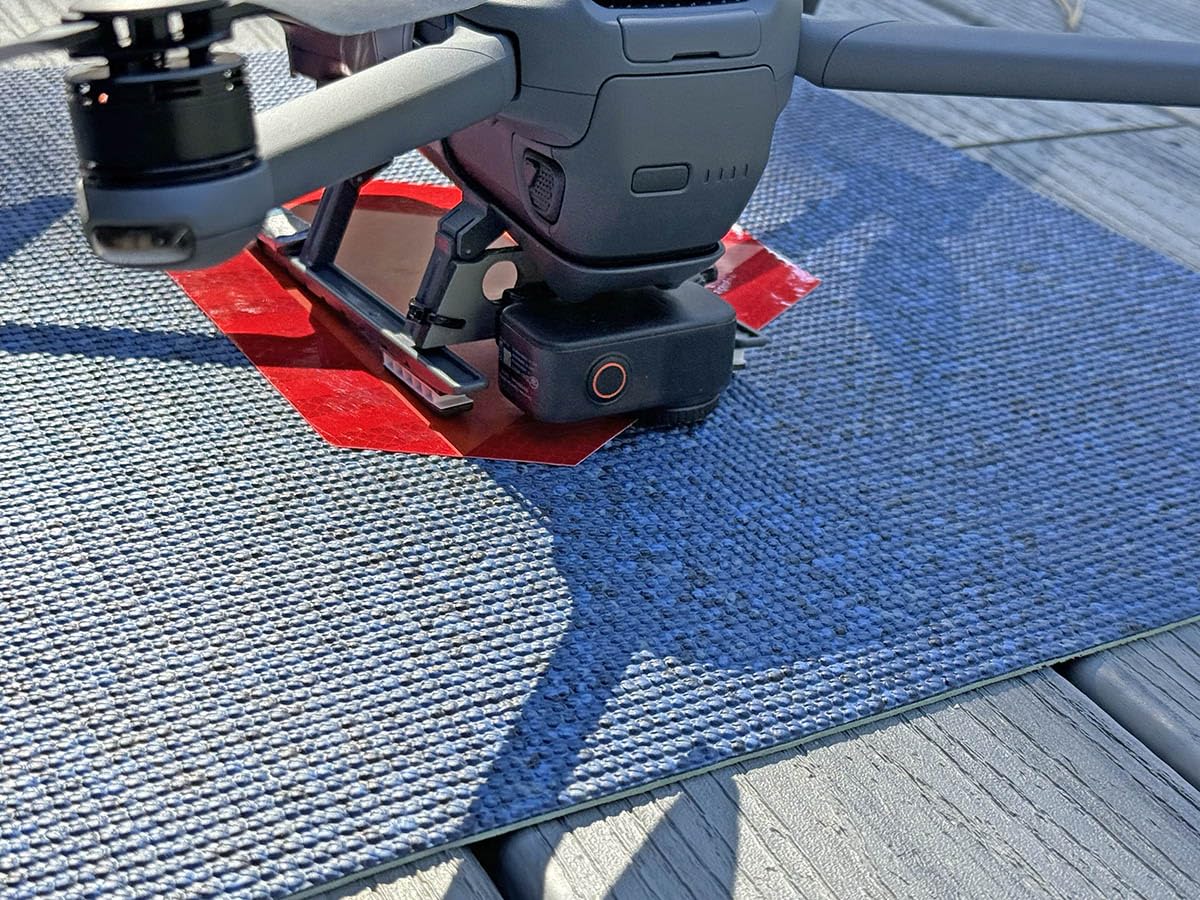
Up to 200 minutes of battery life and 128GB of built-in storage mean a session rarely stops for technical reasons. That is a meaningful advantage over small wearables with internal batteries, and it means you are not carrying a pouch of spare cells.
The direct connection for two microphones is the part I would use most on a real production. Wind noise ruins riding footage, and a wireless lav on the rider solves it far better than any onboard mic. 10-bit D-Log M also leaves room to grade a flat, overcast session.
Is a wearable camera better than a helmet mount?
For certain angles, clearly. Anything low to the ground, anything where the rider is bent over, and any bar-only trick benefits from a camera that sits low and close. The hat clip gets you angles a chin mount simply cannot produce.
For big airs and spins, a helmet or chin mount stays more stable and keeps the horizon predictable. Use the wearable as a second or accent angle rather than as your only camera.
Where it holds you back
The compact body generates heat during extended high-resolution recording and will stop to protect itself, which is awkward mid-line. The Vision Dock is only splash resistant, so underwater work needs the bare camera in a proper housing.
Two smaller frictions: the DJI Mimo app was pulled from Google Play and has to be downloaded from DJI’s site, and the 1.96 inch dock screen makes menu navigation slower than a full touchscreen. Neither is serious, both are annoying.
8. Insta360 GO 3S for Tiny Mounts and Impossible Angles
Insta360 GO 3S – 128 GB Black 4K Tiny Portable Vlogging Camera, Hands-Free POVs, Mount Anywhere, Stabilization, 140 Min Battery Life, 10m Waterproof, Pet POV
Pros
- 39g body fits mounts nothing else does
- FlowState stays smooth on rough ground
- Flip-up pod screen makes solo framing easy
- Strong magnetic mounts with pendant and clip
- QuickCapture and voice control cut fumbling
Cons
- Internal battery and memory are not user-replaceable
- Tiny camera runs hot on long 4K takes
- Built-in mics pick up heavy wind noise
- Weak low-light performance
- Action Pod is not waterproof
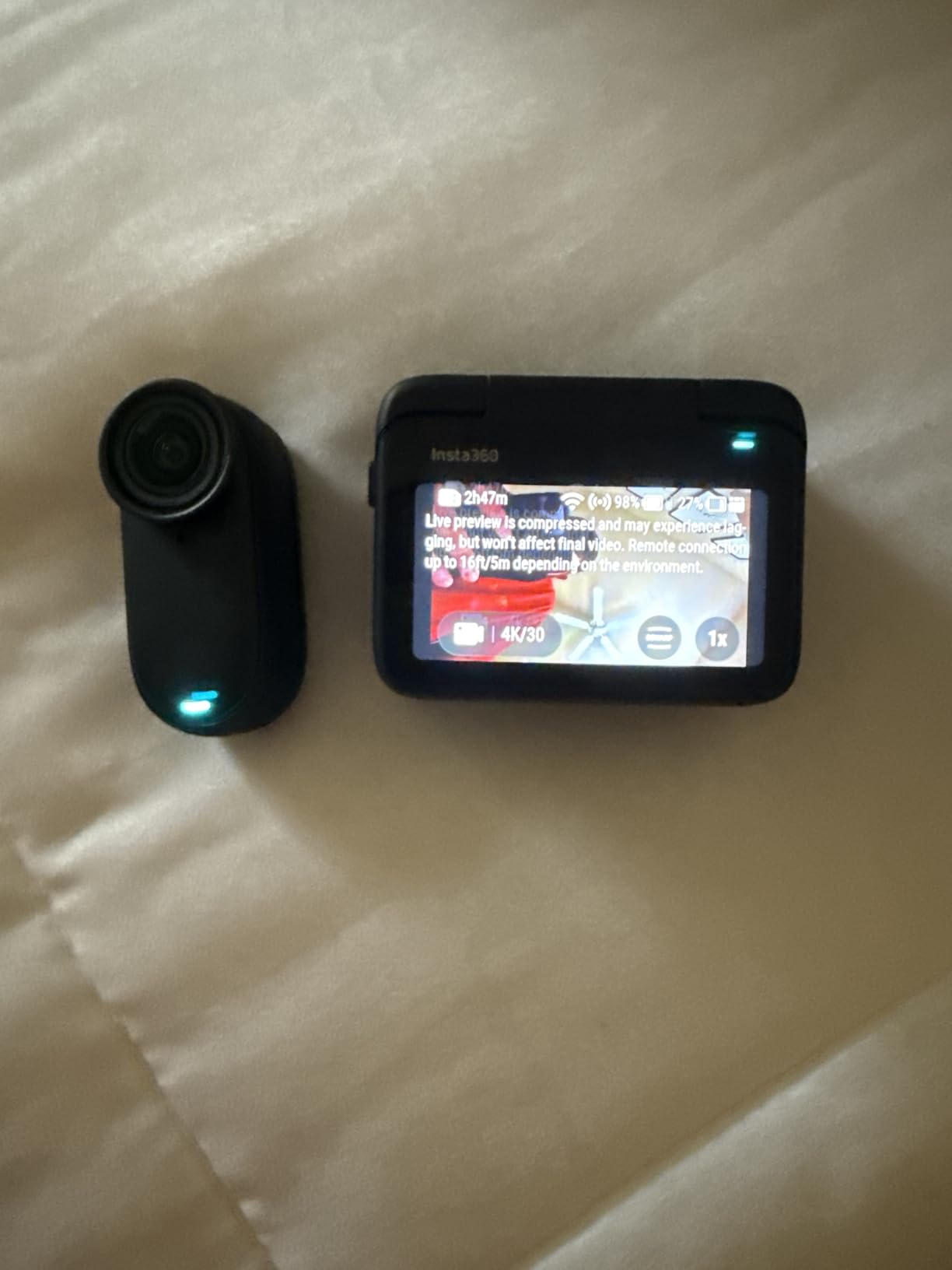
No other camera in this list does what the GO 3S does. At 39 grams it can sit inside a shoe, under a bracket, on a seat post or on a bike stem, and the FlowState stabilisation still delivers a surprisingly smooth image on rough ground. Those angles are the reason to own one.
The Action Pod with its 2.2 inch flip-up screen is what makes it practical alone. You frame the shot, start recording remotely, and see the result without touching the camera, which removes the fumble of a tiny body with no screen of its own.
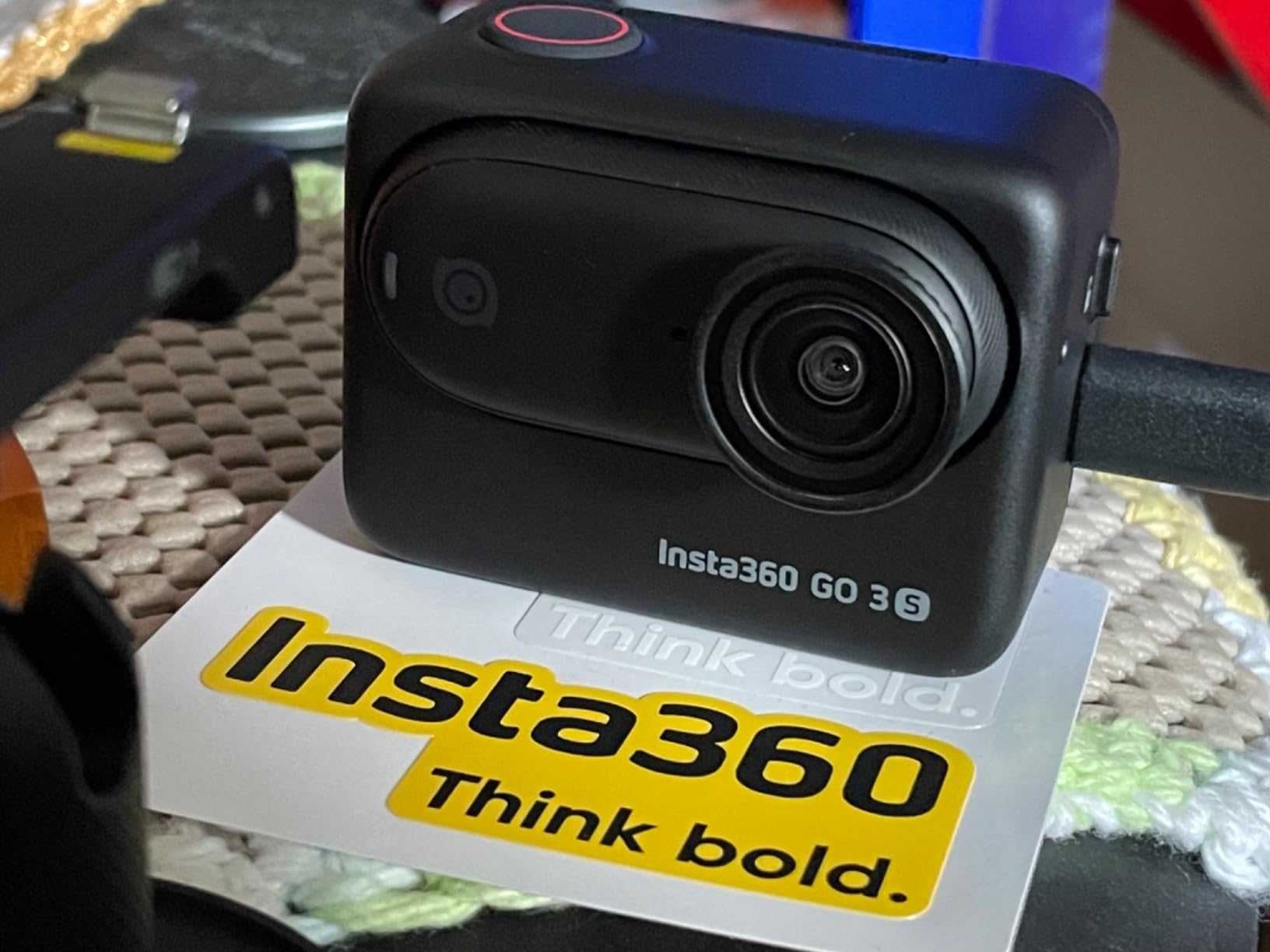
Battery life of up to 140 minutes on the pod, with the camera able to charge while shooting, covers a long session, and the magnetic mount system with pendant, clip and pivot stand makes swapping positions quick.
QuickCapture, gesture control and voice control genuinely cut down the mid-run fumbling that spoils small cameras. You can start a clip without touching anything, which matters when your hands are on the bars.
Is it a replacement for a main action camera?
No, and it is better framed as an add-on. Low-light performance is the weakest of the ten here, and the tiny sensor cannot compete with a 1/1.3 inch body once the sun goes down.
Use it for the angles a bigger camera cannot reach, and keep a larger body for the main angles and for anything you want in 4K with grading headroom.
Where the compromises bite
The internal battery and internal memory are not user-replaceable, which caps how long you can shoot in a day if you work it hard. The camera also runs hot during extended 4K recording and will stop to protect itself.
Built-in mics pick up heavy wind noise outdoors, which is the same audio problem every tiny camera has. The Action Pod is only splash resistant, so underwater work needs the separate case.
9. AKASO Brave 4 for the Best Value Package
Pros
- Front screen makes bike and board framing easy
- Unusually complete mount bundle
- 170/140/110/70 degree field of view options
- Dual battery kit with dual charger
- Does not overheat in hot conditions
Cons
- Clumsy button-driven menus and thin documentation
- Battery door is unhinged and easily lost
- Digital 5x zoom adds little
- Grainy photos at higher ISO
The Brave 4 is the pick for a filmer who needs a working kit today without spending serious money. The mount bundle is unusually complete for the money, which removes the most annoying part of starting out, where you spend a session figuring out which adapter fits which mount.
The adjustable 170, 140, 110 and 70 degree field of view is more useful than it sounds. A 170 degree view is right for a chin mount, and 110 or 70 degrees gives you a less distorted look for a handheld follow cam on a street spot. Gyro-based stabilisation smooths the vibration from bars and boards.

Two 1050mAh batteries with a dual USB charger mean you can shoot a full session without pausing, and the 131ft waterproof case rated to 40m covers wet weather and a splash in a puddle. It also does not overheat in hot conditions, which is a real relief in summer.
The dual screens are useful on a bike, where a front-facing screen lets you frame a shot without taking the camera off the mount to check. Realistic colour out of the box also saves time compared with cameras that need a profile change.

Is a budget camera good enough for a real skate part?
For Instagram cuts, YouTube sections and practice edits, yes. 4K30 with stabilised footage and a wide field of view will carry a clip that gets good light, and the reviewers consistently call the 4K clarity a step above the tier.
For night sessions, grading-heavy colour work, or 120fps slow-motion replays, a current-generation body is a better investment. Know which one you need before you buy.
Where it frustrates owners
The button-driven control flow and thin documentation are the most common complaints, and both slow you down at a skatepark. Plan your settings once in advance rather than fumbling between runs.
The unhinged battery door is easily lost, the digital 5x zoom adds nothing beyond cropping, and photo quality is grainy at higher ISO, so treat the 20MP stills as a bonus rather than a reason to buy.
10. AKASO EK7000 as the Budget Pick for First Sessions
Pros
- Very low entry cost for 4K30
- 4K clarity that punches above the tier
- EIS smooths vibration on bike and board mounts
- Large accessory kit with handlebar mounts
- Two batteries plus a dual charger
- Simple menus anyone can operate
Cons
- Muffled wind-affected onboard audio
- Short per-charge battery life
- Unhinged battery door is easy to lose
- Wi-Fi app can stop recording
- 64GB microSD limit
The EK7000 is where almost everyone starts, and for a first session it does something important: it survives. At two ounces with a 131ft waterproof case, you can throw it on a board or a set of bars without thinking about the camera, which is exactly how a lot of riders learn to film.
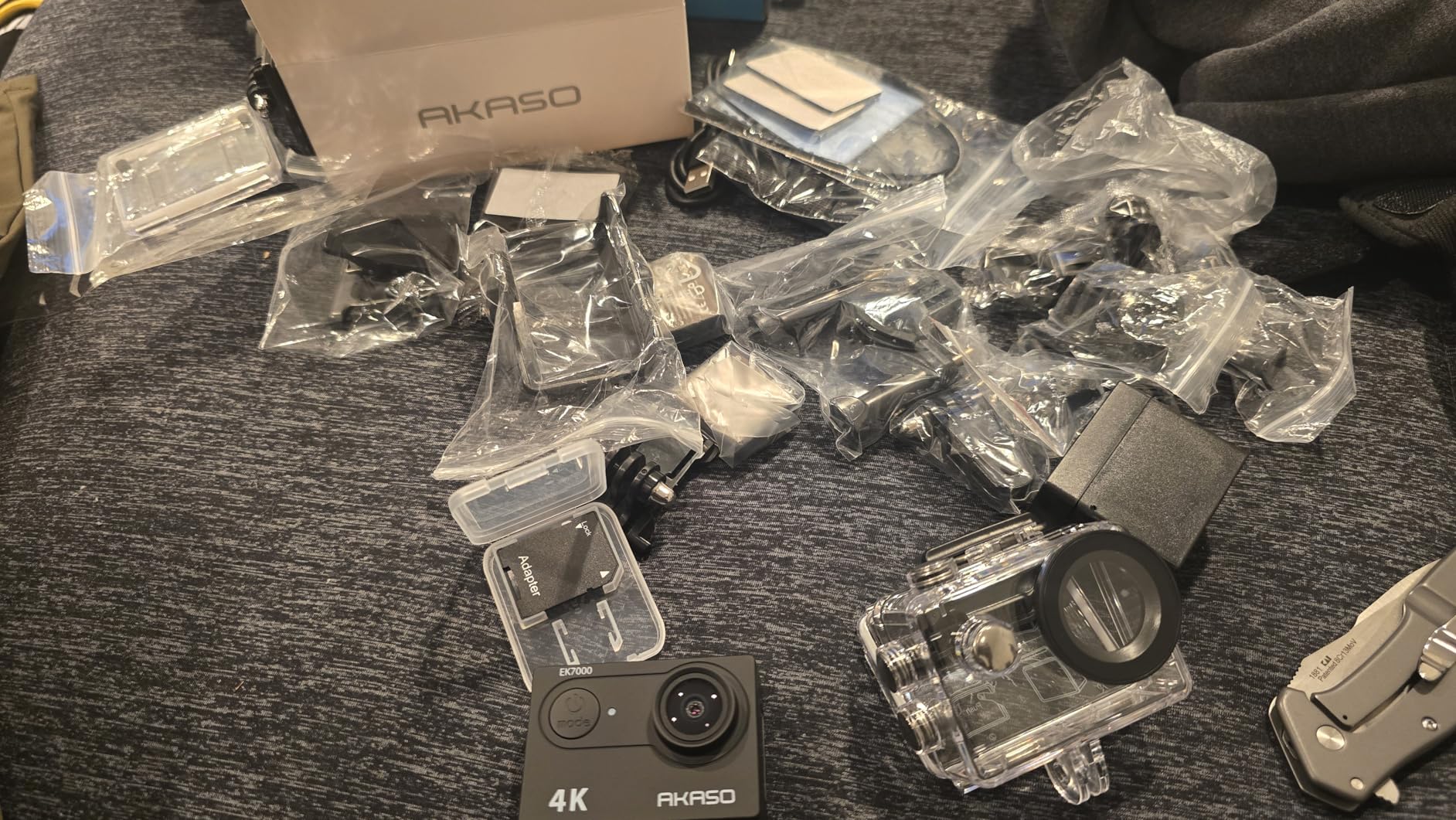
Electronic Image Stabilisation smooths out the vibration that comes through a bike frame or a board, and 4K30 with 20MP stills gives you clips that hold up on a phone screen. The accessory kit includes handlebar mounts and the waterproof housing, so nothing extra is needed for a first run.
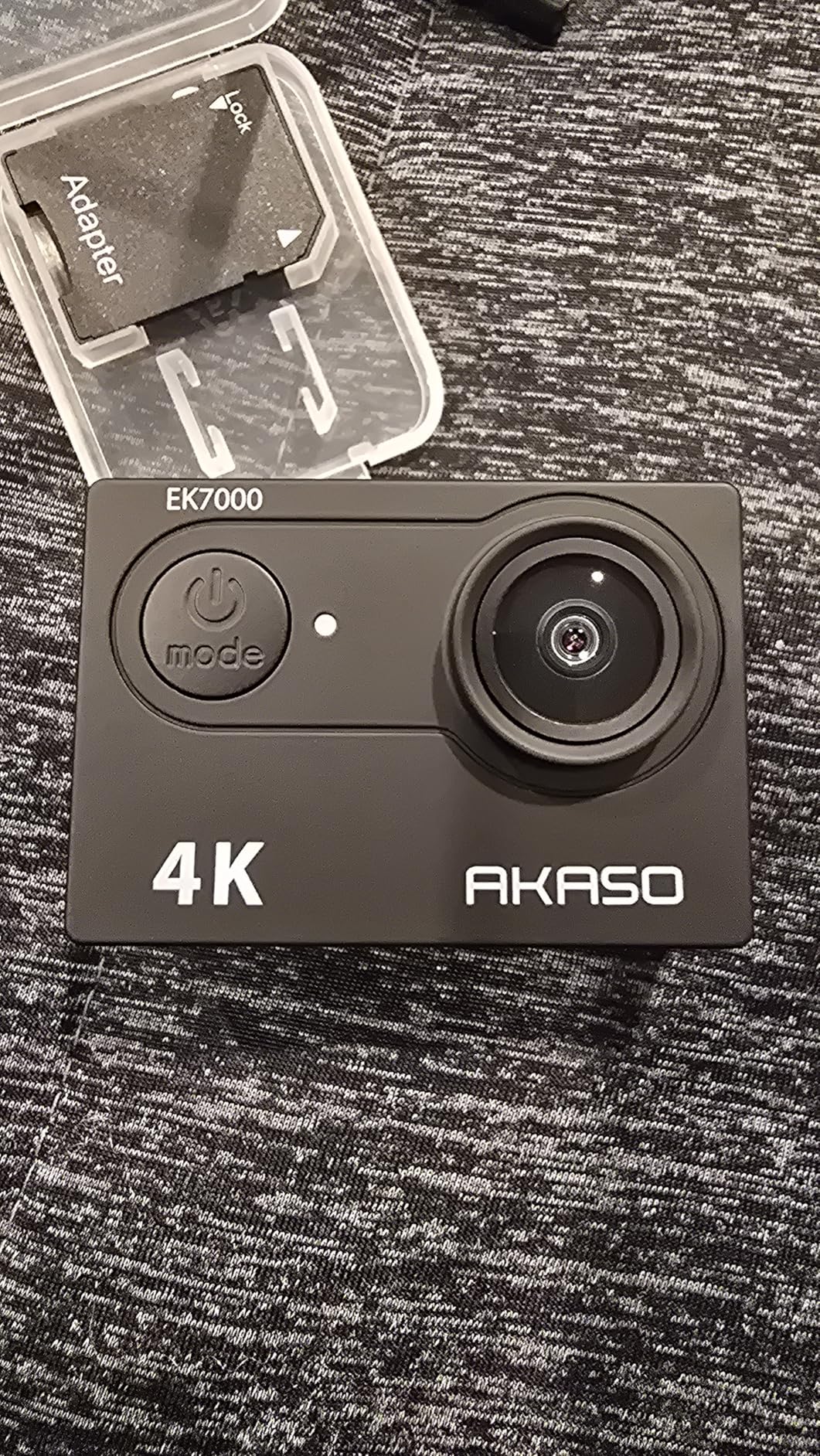
Two rechargeable batteries and a dual charger are included, which is unusual at this level and means you can film a full session without waiting. The menus are simple enough that a non-technical rider can operate them, and the 2 inch rear screen is usable for framing.
Reviewers are also candid that unit-to-unit consistency varies a little, and frame-sync issues show up if you shoot with two of these together. Plan to cut between angles rather than trying to match frames.
Is this good enough to learn on?
Yes, and this is its job. It is the simplest way to find out what angle you like, whether you prefer POV or follow-cam, and how much footage a session actually produces before you invest in a body you will use for years.
Once you know your style, move up. The jump to a current-generation body is mostly about low light, frame rate and audio, all of which you will only notice once you are shooting at dusk or in slow motion.
Where it falls short
Onboard audio is muffled and wind-affected, so treat the sound as a reference track and add audio in the edit. Battery life per charge is short, roughly an hour at 1080p60, which is where the second included battery earns its place.
The unhinged battery door is easy to lose, Wi-Fi app controls can stop recording unexpectedly, and there is a 64GB microSD limit. The card is not included, so budget for one before your first session.
How to Choose a Camera for BMX and Skate Videos
Here is what actually decides whether a clip looks professional, ordered by how much it matters on a rolling day.
Stabilisation mode. Electronic stabilisation smooths vibration from landings and rough ground, but it works by cropping into the frame and blending. On a chin mount you want maximum stabilisation; on a handheld follow cam a standard or wide mode keeps more of the scene and gives you more to crop in the edit.
Frame rate and shutter speed. 4K at 60fps is the sensible baseline for skate and BMX. Move to 4K at 120fps or 2.7K240 when you want slow-motion replays of whips, spins and bails. Set your shutter speed to match the frame rate as closely as the camera allows, and go faster for fast rotations, because a long shutter adds motion smear on top of the frame.
Rolling shutter. This is the effect that turns a whip or a fast spin into a bent, rubbery mess, and it is the single most important technical detail for BMX. A faster shutter and a sensor with a faster readout reduce it. This is why some riders in the micro four-thirds camp argued on dpreview forums that the format’s faster readout suited skate-style footage better, and it is worth testing on your own footage before committing.
Field of view. A wide view around 155 degrees holds the rider and the obstacle on a POV mount, but it stretches the edges. A narrower view looks cleaner for follow shots and street footage. If you can adjust the field of view, use that instead of a different lens.
Low light. Indoor parks and night spots are where sensor size earns its money. The 1/1.3 inch bodies in this list hold usable detail at dusk, and the larger 1/1.1 inch sensor goes further. Budget bodies will always be the first to fall apart in the dark.
Audio. Wind noise on a moving board or bike is the most common problem in skate footage and no onboard mic solves it. If a camera has a direct wireless microphone connection, use it, and put a small wireless lav on the rider or a shotgun on the filmer’s rig. This is also why our guides to the best cameras for music videos for beginners touch on the same audio problem from a different angle.
Mounting. A chin mount gives the most natural POV, a chest mount works when the rider wants both hands free, bars and stem mounts suit BMX, and a handheld grip is what the filmer carries. If you are comparing setups rather than bodies, our best cameras for unboxing videos guide covers the gear that pairs with a compact body.
Editing profile. 10-bit D-Log M and flat profiles give you room to recover a bright sky or a shaded section, but only if you grade. If you upload straight to social, shoot standard and save the conversion time. For YouTube-first work with a filmer, our best cameras for YouTube videos guide covers the workflow side in more detail.
One last point that gets skipped: carry a second body. A spare camera on a different angle turns a missed trick into a usable clip, and no single feature on any of these ten replaces that.
Frequently Asked Questions
What is the best camera for filming skate videos?
The DJI Osmo Action 4 is the safest all-round choice because its 1/1.3 inch sensor holds detail at dusk and in shade, it records 4K at 120fps at a 155 degree field of view, and RockSteady with HorizonBalancing keeps handheld follow-cam footage level. The Insta360 X3 is the best choice for solo filming because you can reframe 360 footage after the trick.
What camera should I buy for BMX filming?
For BMX, prioritise a camera with a fast sensor readout and a fast shutter speed, because whip tricks, spins and dirt jump landings show rolling-shutter warping otherwise. The DJI Osmo Action 6 and the Osmo Action 4 both pair a large sensor with strong stabilisation, and 4K at 120fps gives you the frame rate for slow-motion replays.
Which GoPro is best for shooting skateboarding footage?
The GoPro HERO12 Black is the strongest all-round GoPro for skateboarding, with 5.3K60 HDR video, a 1/1.9 inch sensor, HyperSmooth 6.0 stabilisation and 27MP stills plus 24.7MP frame grabs from video. The HERO11 Black remains worth considering if you prioritise 2.7K240 slow motion.
How do I record skate videos with less shake?
Mount the camera as low and as rigidly as possible, use the highest electronic stabilisation mode for POV shots, shoot at 60fps or above, and set your shutter speed close to the frame rate. Walking alongside a rider on handheld footage, a wider stabilisation mode preserves more of the scene for cropping.
Do people still film skate videos with camcorders?
Yes. Long-lens camcorder footage is still a reference point in skate video because the compressed perspective from a telephoto lens is the look many classic parts were shot on. Rigs using a Panasonic HC-X1000 with a Lumix G70 as a second angle are still discussed on dvxuser, where riders debate whether dropping to 1080p gives a better result than high-bitrate 4K.
What camera is best for filming motocross or other dusty action sports?
A waterproof action camera with a large sensor and strong stabilisation handles the dust, vibration and helmet-chatter of motocross-style riding. The Osmo Action 4 and Osmo Action 6 are waterproof without a case, record at 4K60 or faster, and the magnetic quick-release mount makes switching between helmet, chin and bar positions quick.
What I Would Buy for BMX and Skate Videos in 2026
Buy the Insta360 X3 if you film alone, because reframing after the fact solves angles you cannot chase on a bike. Buy the DJI Osmo Action 4 if you ride at dusk or indoors, because the 1/1.3 inch sensor and 4K120 give you the most usable footage per session. Buy the GoPro HERO12 Black if you need stills from the same session and already use GoPro mounts.
For night work, step up to the DJI Osmo Action 6 for its larger sensor, variable aperture and multi-hour battery. Start on the AKASO Brave 4 if you want a complete kit without a big outlay, or the AKASO EK7000 if you just want to find out whether you enjoy filming your own riding.
Whichever you pick, spend your next bit of budget on mounts and a spare battery rather than a more expensive body. The trick matters more than the camera, but a camera that stays mounted and stays charged is the one that captures the trick.