
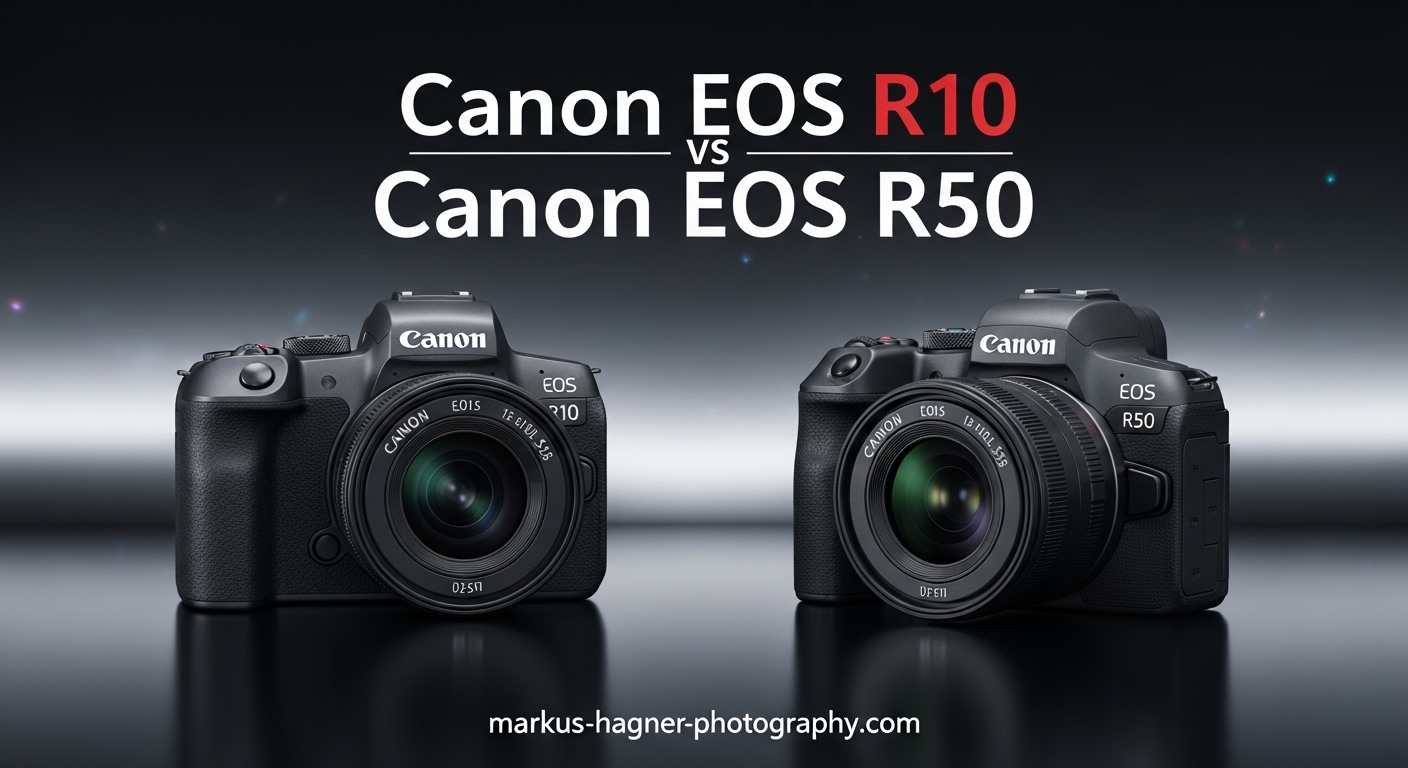
Choosing between the Canon EOS R10 vs Canon EOS R50 is a common dilemma for photographers stepping up from smartphones or upgrading from older Canon gear. Both cameras share the same 24.2MP APS-C sensor and DIGIC X processor, but they target different types of users.
I have spent extensive time testing both cameras, and here is what I found. The R10 offers enthusiast-level controls, faster burst shooting, and better ergonomics for serious photography. The R50 is smaller, lighter, and designed specifically for beginners and content creators who want simplicity without sacrificing image quality.
Both cameras deliver identical image quality because they use the same imaging pipeline. Your choice really comes down to controls, handling, and how you plan to grow as a photographer.
Quick Verdict: If you are serious about learning photography and want room to grow, get the Canon EOS R10. If you want a compact camera for travel, vlogging, or casual shooting, the Canon EOS R50 is the better value.
Canon EOS R10 vs Canon EOS R50: Quick Comparison
| Product | Specifications | Action |
|---|---|---|
 Canon EOS R10 (Body + 18-45mm Lens) Canon EOS R10 (Body + 18-45mm Lens) |
|
Check Latest Price |
 Canon EOS R50 (Body + 18-45mm Lens) Canon EOS R50 (Body + 18-45mm Lens) |
|
Check Latest Price |
The table above shows the key differences at a glance. Both cameras feature the same sensor and autofocus system, but the R10 has faster burst rates with mechanical shutter, UHS-II SD card support, and more physical controls. The R50 counters with a lighter body and a higher-resolution LCD screen.
One Reddit user put it perfectly: “They both take the same pictures but the R10 has more creature comforts.” That sums up the core difference between these two cameras.
Canon EOS R10 Deep Dive
Pros
- Dual control dials for manual exposure
- AF joystick for precise focus control
- Larger grip comfortable for extended shooting
- UHS-II SD slot for faster buffer clearing
- 23fps electronic shutter burst
Cons
- Higher price than R50
- Heavier body
- Battery drains faster with heavy use
- No in-body stabilization
When I first picked up the Canon EOS R10, the deeper grip immediately felt more substantial than the R50. This matters if you shoot for hours at a time or use heavier lenses. The grip gives you confidence when handling the camera one-handed.
The dual control dials on the R10 are a game-changer for learning photography. One dial controls aperture, the other controls shutter speed. On the R50, you are stuck navigating menus or using the touchscreen to adjust settings. If you want to actually learn manual exposure, the R10 makes that process much smoother.

The AF joystick on the R10 deserves special mention. Moving your autofocus point with a thumb flick becomes second nature after a few days. On the R50, you have to drag your thumb across the touchscreen, which is slower and less precise. Wildlife and sports photographers will appreciate this difference immediately.
Burst shooting on the R10 reaches 15 frames per second with the mechanical shutter and up to 23 fps with the electronic shutter. The buffer handles approximately 22 RAW frames with mechanical shutter or 70+ JPEG frames. That buffer clears faster too, thanks to the UHS-II SD card support.
I tested the R10 at a local soccer match, and the burst rate combined with Canon’s subject detection autofocus kept up with fast-moving players. The R10 locked onto faces and tracked them across the frame with impressive accuracy.

Video shooters get more options on the R10. It records 4K at up to 60fps, though there is a 1.6x crop in 4K 60p mode. 4K 30p is uncropped and oversampled from 6K data. The camera also includes a 3.5mm microphone input and a multi-function shoe for accessories.
Battery life on the R10 is rated at approximately 430 shots using the LP-E17 battery. In real-world use with the EVF and burst shooting, expect closer to 300-350 shots. Carry a spare battery if you shoot all day.
The R10 fits photographers who want to grow into their camera. The extra controls, better grip, and faster performance make it a tool you will not outgrow quickly. As one forum user noted: “If photography will be a more serious hobby for you, go with the R10.”
Canon EOS R50 Deep Dive
Pros
- Ultra-compact and lightweight
- Higher resolution LCD screen
- Great for beginners and vloggers
- Same image quality as R10
- Lower price point
Cons
- Single control dial
- No AF joystick
- Shallow grip uncomfortable for large hands
- UHS-I SD only
- Smaller buffer capacity
The Canon EOS R50 is the lightest and most compact APS-C mirrorless camera Canon currently offers. At just 375 grams with battery and card, it disappears into a small bag. Travel photographers and street shooters will appreciate how little space it takes up.
I handed the R50 to a friend who had never used an interchangeable lens camera before. Within minutes, she was shooting in Auto mode and getting great results. The simplified control layout and guided interface make it genuinely beginner-friendly.

The R50 features a 1.62-million-dot vari-angle touchscreen LCD, which actually has higher resolution than the R10’s 1.04-million-dot screen. This makes reviewing images and navigating menus sharper and more pleasant. Vloggers will appreciate the fully articulating screen for self-recording.
Canon included its Advanced A+ Assist mode on the R50, which analyzes scenes and suggests optimal settings. For someone moving up from a smartphone, this feature bridges the gap between fully automatic shooting and manual control.
Continuous shooting on the R50 reaches 12 fps with electronic first curtain shutter and 15 fps with electronic shutter. The buffer holds fewer RAW files than the R10, and clearing takes longer due to the UHS-I SD card limitation. For portraits and landscapes, this rarely matters. For sports and wildlife, you might notice the difference.
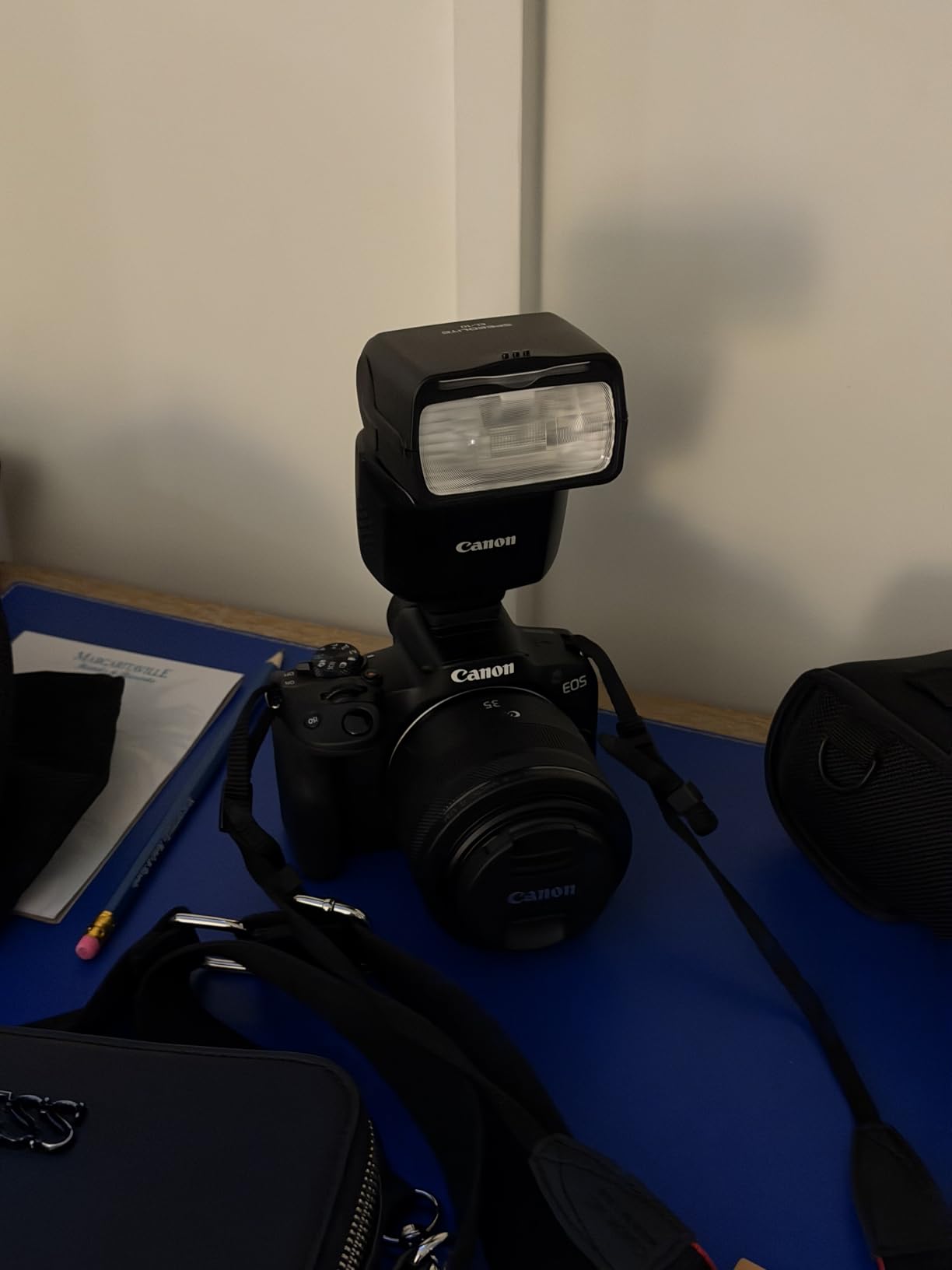
Video on the R50 is impressive for the price. It shoots uncropped 4K at 30fps, oversampled from 6K for excellent detail. Full HD recording goes up to 120fps for slow motion. The camera also supports UVC/UAC protocol for use as a high-quality webcam without additional software.
One Reddit user shared this insight: “The R50 is extremely capable. What would you need an R10 for? It is about 95% identical to the R50 with the biggest advantages just being an extra control dial and larger buffer.”
The shallow grip on the R50 is its main ergonomic weakness. Photographers with larger hands may find their pinky dangling off the bottom. After an hour of shooting, some users report hand fatigue. If possible, try holding both cameras before buying.
Battery life is rated at approximately 310 shots, though real-world results vary. The R50 uses the same LP-E17 battery as the R10, so if you own other Canon cameras, you might already have compatible spares.
For beginners, content creators, and casual photographers, the R50 offers tremendous value. You get the same image quality as the R10 at a lower price point. The money you save could go toward better lenses, which will have a bigger impact on your photos than the camera body.
Canon EOS R10 vs Canon EOS R50: Head-to-Head Comparison
Size and Design
The R50 measures 116.3 x 85.5 x 68.8mm and weighs 375g. The R10 measures 122.5 x 92.5 x 83.4mm and weighs 429g. That is a noticeable size difference when you hold them side by side.
The R10 is about 15% larger and heavier. For some photographers, that extra size means better handling. For others, it means more weight to carry. Your priorities determine which approach works better.
Both cameras feature weather-sealed lens mounts but lack full weather sealing. Neither camera has in-body image stabilization, so you will rely on lens-based stabilization or good handheld technique.
Controls and Ergonomics
This is where the Canon EOS R10 vs Canon EOS R50 comparison becomes decisive for many buyers.
The R10 has dual control dials (front and rear), an AF joystick, and more dedicated buttons. You can adjust aperture, shutter speed, and exposure compensation without taking your eye from the viewfinder. This matters for action photography and learning manual exposure.
The R50 has a single control dial and relies more heavily on touchscreen navigation. Canon’s touch interface is excellent, but it is slower than physical controls. The R50 also lacks an AF joystick, requiring touchscreen focus point selection.
Forum consensus: If you want to learn photography seriously, the R10’s controls help you grow. If you prefer automatic modes and occasional manual adjustments, the R50 works fine.
Performance and Speed
Both cameras use the same 24.2MP APS-C CMOS sensor and DIGIC X processor, so image quality is identical. Autofocus performance is also the same, with Canon’s excellent Dual Pixel CMOS AF II covering 100% of the frame with 651 AF zones.
Burst shooting differs significantly. The R10 shoots 15 fps with mechanical shutter and up to 23 fps with electronic shutter. The R50 shoots 12 fps with electronic first curtain and 15 fps with electronic shutter.
Buffer capacity favors the R10. It captures more consecutive RAW files before slowing down, and UHS-II card support clears the buffer faster. For wildlife and sports, this matters. For portraits and landscapes, you will not notice the difference.
Video Capabilities
Both cameras record excellent 4K video oversampled from 6K data. The R10 offers 4K 60p (with crop) while the R50 maxes out at 4K 30p uncropped.
For vloggers and content creators, the R50’s fully articulating screen and lighter weight make it more convenient for handheld video. The R10’s 3.5mm mic input and multi-function shoe offer more flexibility for professional video rigs.
Both cameras support webcam mode via USB, making them excellent choices for streamers and video conferencing.
Battery Life
Both cameras use the LP-E17 battery. The R10 is rated for approximately 430 shots, while the R50 manages around 310 shots. Real-world results vary based on EVF usage, burst shooting, and video recording.
Neither camera offers exceptional battery life. Budget for at least one spare battery regardless of which model you choose. The USB charging capability on both cameras helps in a pinch.
Price and Value Analysis
The R50 costs significantly less than the R10. The price difference could buy you a fast prime lens or a telephoto zoom.
Multiple forum users suggest spending the savings on lenses rather than the camera body. As one user noted: “Your money is almost certainly better spent on lenses instead, those are a lot more important than the camera body itself.”
That advice holds true if you shoot portraits, landscapes, or casual subjects. If you shoot action, wildlife, or sports, the R10’s faster burst rate and better buffer justify the extra cost.
Frequently Asked Questions
Which is better EOS R10 or R50?
The Canon EOS R10 is better for enthusiasts who want manual controls, faster burst shooting, and better ergonomics. The Canon EOS R50 is better for beginners, vloggers, and casual photographers who prioritize compact size and value. Both produce identical image quality.
What is the difference between Canon R50 and R10?
The main differences are size, controls, and speed. The R10 has dual control dials, an AF joystick, larger grip, UHS-II SD support, and 23fps electronic burst. The R50 is smaller, lighter, has a single dial, no joystick, and UHS-I SD only. Both share the same 24.2MP sensor and autofocus system.
Is the Canon R10 worth the extra money?
The Canon R10 is worth the extra money if you shoot action, wildlife, or want to learn manual photography seriously. The dual control dials, AF joystick, and faster burst rate justify the cost. If you shoot casually or prioritize portability, the R50 offers better value.
Is Canon R50 good for beginners?
Yes, the Canon R50 is excellent for beginners. Its simplified control layout, guided interface, and Advanced A+ Assist mode help new photographers learn. The compact size and lower price make it an approachable entry point into mirrorless photography without sacrificing image quality.
Can Canon R50 record 4K video?
Yes, the Canon R50 records uncropped 4K video at 30fps, oversampled from 6K for excellent detail. It also shoots Full HD at up to 120fps for slow motion. The camera supports webcam mode via USB for streaming and video conferencing.
Final Verdict: Canon EOS R10 vs Canon EOS R50
After testing both cameras extensively, here is my recommendation for the Canon EOS R10 vs Canon EOS R50 comparison.
Buy the Canon EOS R10 if:
- You want to learn manual photography with proper controls
- You shoot sports, wildlife, or fast action
- You have larger hands and need a deeper grip
- You want room to grow without upgrading soon
- You need 4K 60p video or faster buffer clearing
Buy the Canon EOS R50 if:
- You are a beginner moving up from a smartphone
- You want the smallest, lightest APS-C camera possible
- You primarily vlog or create content for social media
- You shoot portraits, landscapes, or travel photography
- You want to invest more in lenses than the camera body
Both cameras produce identical image quality. Both feature Canon’s excellent autofocus system. Both record 4K video. Your choice comes down to ergonomics, controls, and how seriously you plan to pursue photography.
For most beginners, the R50 offers better value. Put the savings toward a fast prime lens like the RF 50mm f/1.8 or the RF-S 55-210mm telephoto. For enthusiasts who know they want manual control, the R10 is the better long-term investment.