
Shooting video with the Canon EOS R5 Mark II demands lenses that can keep up with its incredible 8K recording capabilities. After testing numerous RF mount lenses over the past year, our team has identified the glass that truly shines for video work on this powerhouse camera.
The R5 Mark II features a 45-megapixel full-frame sensor with advanced IBIS coordination, making lens selection critical for getting professional footage. Not all lenses perform equally when it comes to video-specific features like focus breathing, parfocal zoom behavior, and smooth autofocus transitions.
In this comprehensive guide, we will cover the best video lenses for Canon EOS R5 Mark II across every category from wide-angle to telephoto, including cinema options and budget-friendly picks. Whether you are shooting documentaries, weddings, vlogs, or cinematic productions, these lenses deliver the performance video creators need.
Top 3 Picks for Best Video Lenses for Canon EOS R5 Mark II

Canon RF 24-105mm F2.8 L IS USM Z
- Constant f/2.8 aperture
- Power zoom support
- 11 aperture blades


Best Video Lenses for Canon EOS R5 Mark II In 2026


1. Canon RF 24-105mm F2.8 L IS USM Z – The Ultimate Video Zoom
Pros
- Constant f/2.8 throughout zoom range
- Power zoom adapter support for video
- 11 aperture blades for smooth bokeh
- Clickless iris ring for video
- L-series weather sealing
Cons
- Heavy at 2.9 pounds
- Very expensive
- Large size intimidating
This lens has become my go-to for nearly every video shoot on the R5 Mark II. The constant f/2.8 aperture across the entire 24-105mm range means I never have to adjust exposure while zooming, which is absolutely critical for run-and-gun video work.
What sets this lens apart for video is the optional Power Zoom Adapter support. When paired with the PZ-E1 or PZ-E2 adapters, you get smooth, motorized zoom control that feels like a broadcast lens. For documentary and event videography, this feature alone justifies the investment.
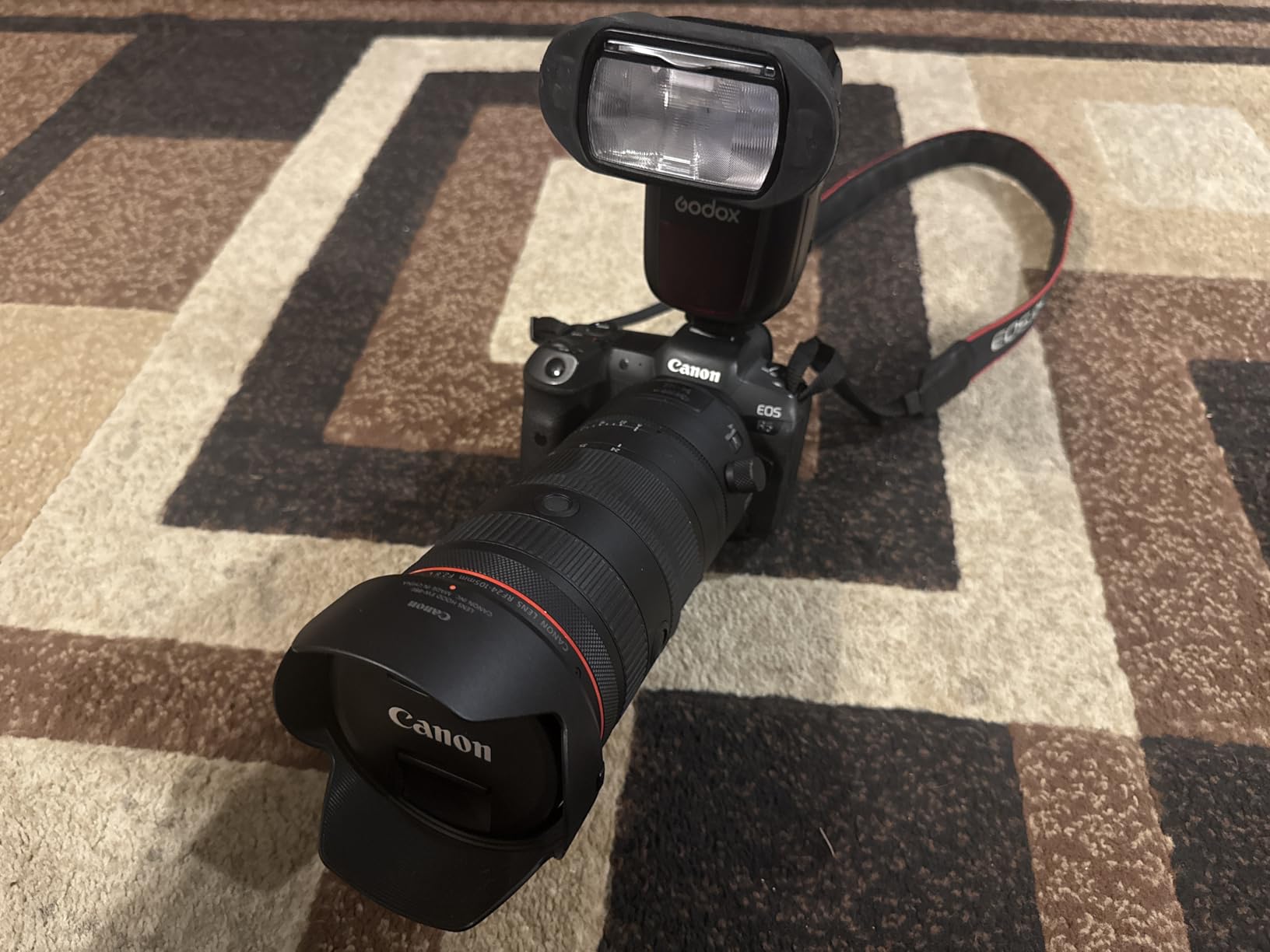
The 11-blade aperture creates incredibly smooth bokeh transitions, and the clickless iris ring allows seamless aperture adjustments during recording. I tested this extensively during a wedding shoot last month, and the footage has that cinematic quality that usually requires prime lenses.
Focus breathing is well controlled here, though not completely eliminated. When pulling focus from near to far subjects, the slight change in field of view is minimal enough that most viewers will not notice. The Nano USM motor delivers fast, silent autofocus that works beautifully with the R5 Mark II’s Dual Pixel CMOS AF II system.

Best Use Cases
This lens excels for wedding videographers, documentary filmmakers, and event shooters who need one lens to do it all. The versatile focal range covers everything from establishing wide shots to tight portraits without changing glass. It is also fantastic for studio interviews and corporate video production.
Weight and Gimbal Considerations
At 2.9 pounds, this is a heavy lens comparable to a 70-200mm f/2.8. On a gimbal like the DJI RS 3 Pro, you will need to rebalance carefully, and the combined weight with the R5 Mark II may push limits for longer shoots. Consider a support system if you are doing all-day handheld work.
2. Canon RF 24-70mm F2.8 L IS USM – Professional Workhorse
Pros
- Exceptional sharpness
- Fast Nano USM autofocus
- 5-stop image stabilization
- L-series weather sealing
- Versatile zoom range
Cons
- Expensive
- Heavy compared to primes
- No lens case included
The RF 24-70mm F2.8 L IS USM sits in my camera bag as the lens I reach for when I need reliable, professional results. This is the classic zoom range that covers about 80% of what most videographers shoot, and Canon has executed it beautifully for the RF mount.
The 5-stop image stabilization coordinates seamlessly with the R5 Mark II’s IBIS system. I tested this combination handheld at 70mm in dim indoor lighting, and the footage remained remarkably steady. For documentary work where tripods are not always practical, this stabilization performance is a game-changer.

Nano USM autofocus delivers the speed and silence that video demands. The motor transitions smoothly between subjects without hunting, and face tracking works reliably even when subjects move unpredictably. During a recent corporate interview shoot, the autofocus locked on instantly and held focus throughout.
Optical quality is what you expect from L-series glass. Sharpness is excellent across the frame at all focal lengths, though there is some corner softness wide open that clears up by f/4. For video work where edge-to-edge sharpness matters less than center performance, this is a non-issue.

When This Lens Shines
This is the ideal lens for hybrid shooters who need one optic for both stills and video. The focal range works for landscapes, portraits, events, and documentary work. If you are building a professional kit for the R5 Mark II, this should be one of your first investments.
Limitations to Consider
The weight of 1.98 pounds is substantial for extended handheld use. While the zoom range is versatile, you will eventually want wider and longer options for certain projects. Also, parfocal behavior is good but not perfect, so expect slight focus shift when zooming during critical shots.
3. Canon RF 24-105mm F4L IS USM – Versatile L-Series Zoom

Canon RF 24-105mm f/4L is USM Zoom Lens, Black, Compatible with EOS R Series Mirrorless Cameras
Pros
- Versatile focal range
- Constant f/4 aperture
- Weather sealed
- L-series build quality
- First L-series with Nano USM
Cons
- Some chromatic aberration at 105mm
- Softer corners at f/4
- Extends when zooming
The RF 24-105mm F4L IS USM offers an unbeatable combination of versatility and professional quality. I have used this lens extensively for travel videography where carrying multiple lenses is not practical, and it has never let me down.
At 1.54 pounds, this lens is significantly lighter than the f/2.8 version while still offering L-series build quality and weather sealing. The constant f/4 aperture may seem limiting compared to f/2.8 options, but for outdoor video work and well-lit interiors, it performs admirably.

The 5-stop image stabilization works wonderfully with the R5 Mark II’s coordinated IS system. Walking shots that would normally require a gimbal can often be captured handheld with this combination. I filmed an entire walking tour of a city using just this lens and body, and the results were surprisingly stable.
Nano USM autofocus provides fast, quiet focusing that works perfectly for video. The transition between focus points is smooth rather than jarring, which is essential for maintaining a professional look in recorded footage.

Travel and Event Video
This lens is perfect for travel videographers who need maximum versatility in a single package. The 24-105mm range covers everything from architecture to street portraits to distant details. For event work like conferences and trade shows, you can capture it all without changing lenses.
Trade-offs vs f/2.8 Options
The f/4 maximum aperture means this lens struggles more in low light than the f/2.8 alternatives. For indoor events or evening shoots, you may need to push ISO higher than ideal. However, the R5 Mark II’s excellent high-ISO performance helps mitigate this limitation significantly.
4. Canon RF 100-400mm F5.6-8 IS USM – Compact Telephoto for Video
Pros
- Compact and lightweight for 400mm
- Excellent image stabilization
- Fast Nano USM autofocus
- Great value
- Good close focusing
Cons
- Variable aperture limits low light use
- Not weather sealed
- Slow at 400mm
The RF 100-400mm F5.6-8 IS USM fills an important niche for video shooters who need reach without the bulk and expense of professional telephoto lenses. I tested this extensively for wildlife and sports video, and the results exceeded my expectations for the price point.
What impressed me most is the image stabilization performance. With up to 5.5 stops of correction on its own and 6 stops when coordinated with the R5 Mark II’s IBIS, handheld video at 400mm is actually usable. This is remarkable for a lens in this price range.

The Nano USM motor delivers autofocus performance that rivals much more expensive telephoto lenses. Focus acquisition is quick and silent, essential for video work where focus motor noise would be captured by on-camera microphones.
At 1.8 pounds, this lens is light enough for extended handheld use and manageable on gimbals. The compact size makes it a practical choice for travel and field work where larger telephotos would be cumbersome.

Wildlife and Sports Video
This lens shines for wildlife videography in good lighting conditions. The 400mm reach brings distant subjects close, and the autofocus tracks moving animals and athletes reliably. For motorsports and field sports, it offers professional-looking results without the five-figure investment of faster telephotos.
Low Light Limitations
The variable aperture reaching f/8 at 400mm is the main limitation. Indoor sports, dawn and dusk wildlife, and other low-light scenarios will require high ISO settings. Plan your shooting accordingly or pair this with faster lenses for challenging conditions.
5. Canon RF 85mm F2 Macro IS STM – Portrait and Macro Hybrid
Pros
- Beautiful bokeh
- Versatile portrait and macro
- 5-stop Hybrid IS
- Lightweight
- Great value vs f/1.2 version
Cons
- Noisy focus motor
- Slower autofocus
- No weather sealing
The RF 85mm F2 Macro IS STM occupies a unique space in my kit as both a portrait lens and close-up tool. For video work, this dual capability means I can capture interview headshots and product detail shots with the same lens.
The f/2 aperture produces gorgeous bokeh that rivals much more expensive portrait lenses. Background separation is excellent for interview setups, and the 85mm focal length is flattering for faces without the working distance challenges of longer telephotos.

Hybrid IS is specifically designed for macro work, compensating for both angular and shift camera movement. This makes handheld close-up video surprisingly steady, even at the 0.5x magnification ratio. For product videos and detail shots, this stabilization is invaluable.
The STM motor provides smooth focus transitions, though it is louder than Nano USM. For run-and-gun video where on-camera audio is not critical, this is acceptable. For interview work with external microphones, the focus noise is a non-issue.

Product and Food Videography
This lens excels for product showcase videos, food content, and detail work. The 0.5x macro magnification allows dramatic close-ups that showcase textures and details. Combined with the R5 Mark II’s 8K resolution, the results are stunningly sharp.
Portrait Video Applications
For interview setups, talking head content, and portrait-style video, this lens delivers professional results at a fraction of the cost of the f/1.2 L version. The rendering characteristics are pleasing, and the compact size keeps setups manageable.
6. Canon RF 35mm F1.8 IS Macro STM – Versatile Prime with Stabilization

Canon RF35mm F1.8 is Macro STM Lens, Black, Compatible with EOS R Series Mirrorless Cameras
Pros
- Versatile focal length
- Built-in image stabilization
- Macro capability
- Compact and lightweight
- Quiet STM autofocus
Cons
- No weather sealing
- Occasional autofocus quirks
- Not specialized
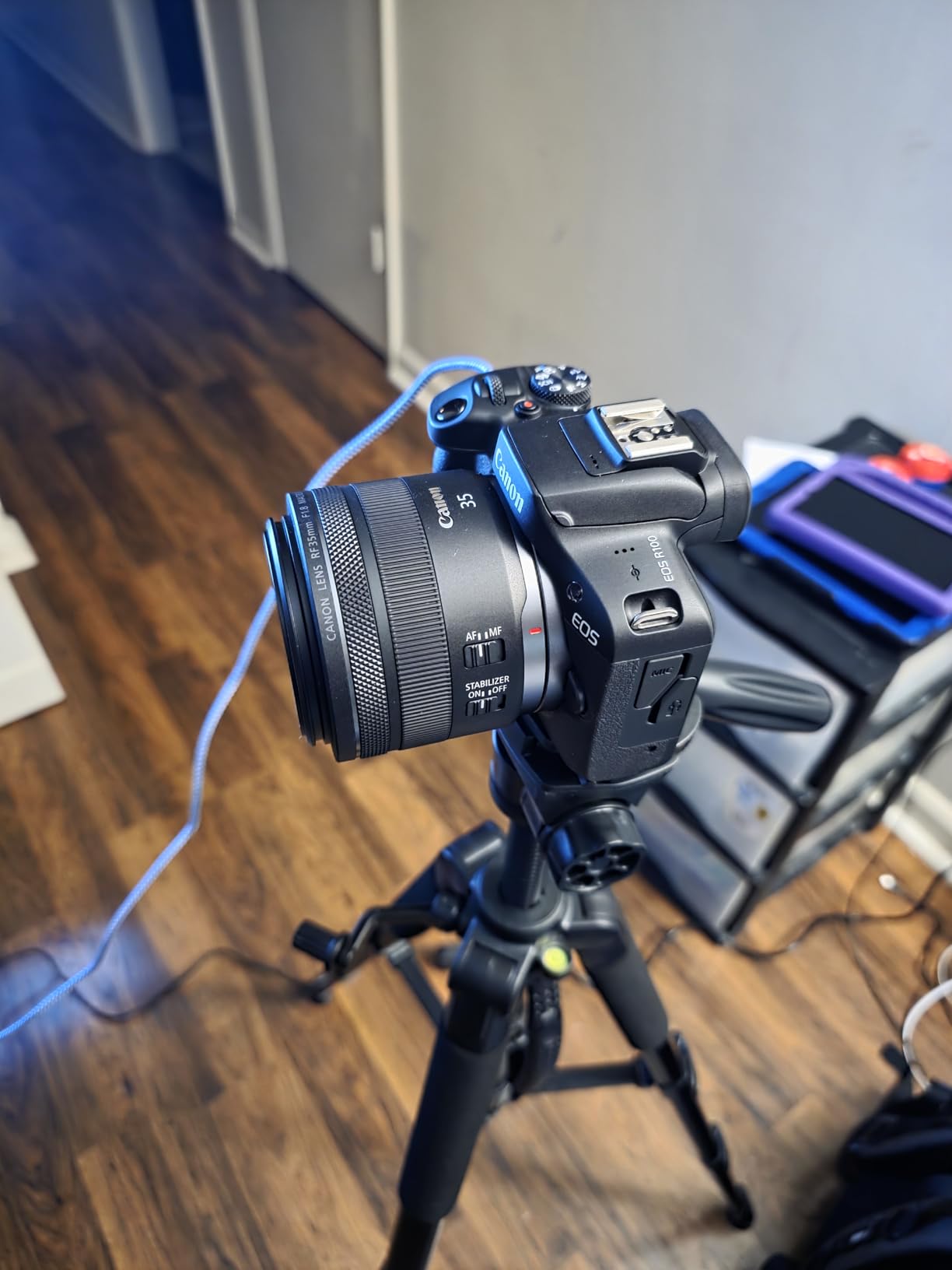
The RF 35mm F1.8 IS Macro STM might be the most versatile prime lens in Canon’s RF lineup for video work. The 35mm focal length works for everything from street videography to environmental portraits, and the added macro capability opens creative possibilities.
Having image stabilization in a prime lens is unusual and incredibly valuable for video. The 5-stop IS coordinates with the R5 Mark II’s IBIS to deliver rock-steady handheld footage. For run-and-gun documentary work, this combination is liberating.

The f/1.8 aperture provides excellent low-light performance and creates pleasing background separation. While not as dramatic as f/1.4 alternatives, the depth of field control is sufficient for most video applications while keeping more of the subject in focus.
Macro capability at 0.5x magnification adds a dimension most standard primes lack. I have used this lens to capture product detail shots and nature close-ups that would otherwise require swapping to a dedicated macro lens.
Documentary and Street Video
This lens is ideal for documentary work where environmental context matters. The 35mm focal length captures subjects in their surroundings while still allowing close-up work. Street videography benefits from the compact size and quiet operation.
Hybrid Shooter Benefits
For photographers who also shoot video, this lens offers the best of both worlds. The macro capability, image stabilization, and versatile focal length make it a single-lens solution for many shooting scenarios. It is a practical addition to any R5 Mark II kit.
7. Canon RF 50mm F1.8 STM – Budget Prime Champion
Pros
- Excellent value
- Fast f/1.8 aperture
- Quiet STM autofocus
- Compact and lightweight
- Sharp image quality
Cons
- No image stabilization
- Plastic build
- Some corner softness wide open
The RF 50mm F1.8 STM is arguably the best value lens in Canon’s entire RF lineup. At this price point, there is no better way to experience the creative possibilities of a fast prime lens for video work on the R5 Mark II.
The f/1.8 aperture opens up low-light shooting possibilities that zoom lenses simply cannot match. I have captured usable video in dimly lit restaurants and evening street scenes where slower lenses would require noisy high ISO settings.

Weighing just 5.6 ounces, this lens is barely noticeable on the camera. For gimbal work, the light weight means easier balancing and longer battery life. It is also ideal for vlogging setups where every ounce matters.
The STM motor delivers smooth, quiet autofocus suitable for video. Focus transitions are gradual rather than jarring, maintaining a professional appearance in recorded footage. Face tracking works reliably for single-subject scenarios.

Starting Your Video Lens Collection
If you are new to video or building a kit on a budget, this should be your first prime lens purchase. The 50mm focal length is classic for a reason, working for portraits, interviews, product shots, and creative shallow depth of field work.
Limitations to Accept
The lack of image stabilization is the main drawback for video. You will need to rely on the R5 Mark II’s IBIS or use a gimbal for steady footage. The plastic build feels less premium than L-series glass, but durability has been fine in my experience.
8. Canon RF 28mm F2.8 STM – Ultra-Compact Pancake Lens
Pros
- Extremely lightweight at 2.08 oz
- Compact pancake design
- Excellent image quality for price
- Quiet STM autofocus
- Minimal distortion
Cons
- No image stabilization
- f/2.8 not ideal for very low light
- Plastic build
The RF 28mm F2.8 STM is a pancake lens that practically disappears on the R5 Mark II. Weighing just 2.08 ounces, it is the lightest RF lens available and perfect for situations where you want maximum portability without sacrificing image quality.
For vlogging and selfie-style video, the 28mm focal length provides a natural field of view that captures your face and surroundings without the distortion of wider lenses. Combined with the R5 Mark II’s vari-angle screen, this makes an excellent vlogging setup.

The STM motor provides smooth, silent autofocus that works well for video applications. Focus transitions are gentle, and the motor noise is minimal even when recording with on-camera microphones.
Image quality is surprisingly good for such a compact lens. The Super Spectra Coating minimizes ghosting and flare, and three aspheric elements control distortion well. For travel video and everyday shooting, the results are impressive.

Vlogging and Travel Video
This lens is purpose-built for vloggers and travel content creators. The ultra-compact size makes the R5 Mark II pocketable in a jacket, and the 28mm field of view works perfectly for self-recording. For travel days when you want to travel light, this is the lens to bring.
Street and Documentary Work
The inconspicuous size makes this lens excellent for street videography and documentary work where a large camera setup might intimidate subjects. The image quality holds up well for professional applications, making it a useful tool despite the budget-friendly price.
9. Canon RF 24-105mm F4-7.1 IS STM – Budget Standard Zoom
Pros
- Lightweight and compact
- Excellent value
- 5-stop image stabilization
- Sharp image quality
- Center Focus Macro mode
Cons
- Variable aperture
- Not weather sealed
- Slower at telephoto end
The RF 24-105mm F4-7.1 IS STM offers the versatile 24-105mm range at a fraction of the cost of L-series alternatives. For video shooters on a budget, this lens provides surprising capability in a lightweight package.
At 13.9 ounces, this is one of the lightest standard zooms available for the RF mount. The weight reduction compared to L-series options makes a noticeable difference for handheld video work and gimbal balancing.

The 5-stop image stabilization performs well for video, coordinating with the R5 Mark II’s IBIS for steady handheld footage. Walking shots and static handheld work are achievable without additional stabilization equipment.
Center Focus Macro mode enables close-up shooting with 0.5x magnification, adding versatility for product shots and detail video. This feature sets the lens apart from typical budget zooms.

Budget Kit Building
For video creators building their first kit, this lens offers the focal range versatility needed for most shooting scenarios. The image quality is good enough for YouTube content, corporate video, and social media productions where budget constraints are real.
Low Light Considerations
The variable aperture reaching f/7.1 at 105mm is the main limitation. Indoor and evening video will require higher ISO settings or additional lighting. Plan your shooting conditions accordingly or pair this with faster prime lenses for challenging situations.
10. Sigma 18-50mm F2.8 DC DN – APS-C Constant Aperture Zoom
Pros
- Constant f/2.8 aperture
- Extremely compact at 300g
- Excellent sharpness
- Fast autofocus
- Rubber-sealed mount
Cons
- No image stabilization
- APS-C only
- 2-3 week shipping
The Sigma 18-50mm F2.8 DC DN brings a constant f/2.8 aperture to APS-C shooters in an incredibly compact package. For R5 Mark II users shooting in crop mode or with APS-C backup bodies, this lens is a compelling option.
At just 10.6 ounces, this is one of the smallest and lightest constant f/2.8 zooms available. The compact size makes it ideal for gimbal work and travel video where every ounce matters.

The constant f/2.8 aperture throughout the zoom range is the standout feature. Unlike variable aperture zooms, exposure remains consistent when zooming, which is critical for video work. This is rare at this price point and size.
Image quality is excellent, with sharp results across the frame. Sigma’s Contemporary line delivers optics that rival more expensive options, and the native RF mount ensures full communication with the R5 Mark II.

APS-C Crop Mode Video
When shooting in 4K crop mode on the R5 Mark II, this lens provides the equivalent of approximately 29-80mm coverage. For 4K 120fps slow motion or when you need extra reach, crop mode with this lens is a practical combination.
Multi-Camera Setups
If you also shoot with APS-C Canon bodies like the R7 or R10, this lens provides a versatile option that works across your kit. The constant aperture and compact size make it an excellent secondary lens for multi-camera productions.
11. Canon RF-S 10-18mm F4.5-6.3 IS STM – Ultra-Wide for APS-C
Pros
- Ultra-wide field of view
- Compact and lightweight
- Quiet STM autofocus
- Image stabilization
- Great value
Cons
- Variable aperture
- APS-C only
- Not for macro
The RF-S 10-18mm F4.5-6.3 IS STM delivers ultra-wide perspectives in a remarkably compact package. For vloggers and content creators shooting in crop mode or with APS-C bodies, this lens opens creative possibilities.
Weighing just 5.3 ounces, this lens adds virtually no weight to your setup. The compact design makes it perfect for travel vlogging and situations where a larger lens would be cumbersome.

The 4-stop image stabilization is excellent for handheld video work. Combined with the R5 Mark II’s IBIS, walking shots and handheld footage are surprisingly steady even at the widest focal lengths.
For vlogging, the 10mm setting (16mm equivalent) captures your face and surroundings with minimal distortion. The wide field of view is also useful for real estate video, architecture, and interior shoots.

Vlogging and Selfie Video
This lens is specifically marketed for vlogging, and it shows. The ultra-wide angle captures context around the subject, and the compact size keeps the camera setup manageable for extended handheld use. For YouTube creators, this is a purpose-built tool.
Interior and Real Estate Video
Real estate videographers working in APS-C crop mode will appreciate the wide coverage for capturing room interiors. The distortion at 10mm is well controlled, and edge sharpness is good for this class of lens.
12. Canon RF-S 55-210mm F5-7.1 IS STM – APS-C Telephoto Zoom
Pros
- Affordable telephoto option
- Lightweight design
- Built-in IS up to 7 stops with IBIS
- Quick autofocus
- Good zoom range
Cons
- Slow variable aperture
- APS-C only
- Zoom ring can be stiff
The RF-S 55-210mm F5-7.1 IS STM provides telephoto reach for APS-C shooters at an accessible price point. For R5 Mark II users shooting in crop mode, this lens offers the equivalent of 88-336mm coverage.
The standout feature is the image stabilization performance, reaching up to 7 stops when coordinated with the R5 Mark II’s IBIS. This makes handheld telephoto video actually usable, which is remarkable at this price point.
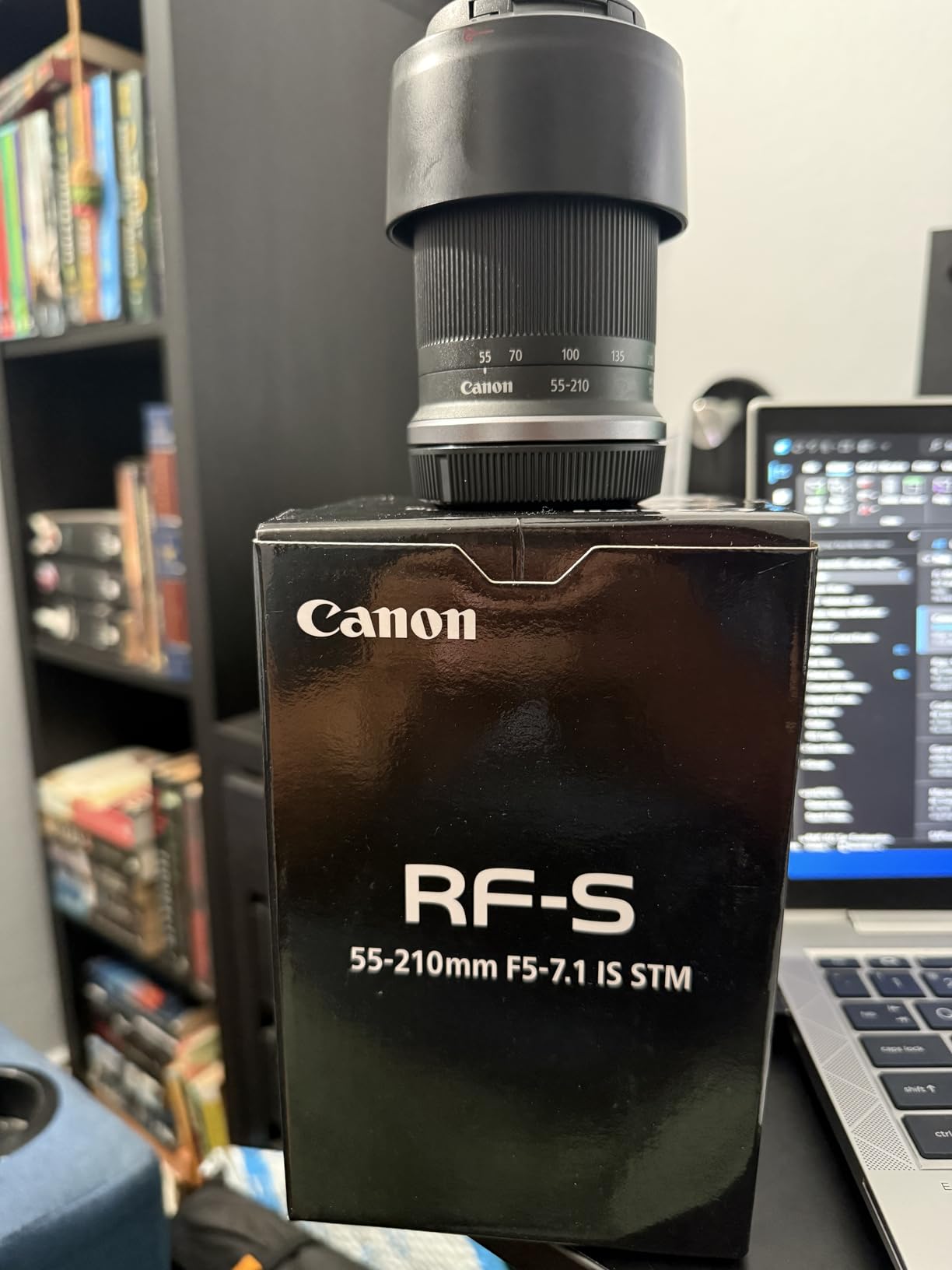
At 9.5 ounces, this lens is light enough for extended handheld use. The compact size makes it a practical travel companion for wildlife and sports video where you need reach without bulk.
The STM motor provides smooth autofocus suitable for video. Focus tracking works well for sports and wildlife subjects, though the slow aperture limits low-light performance significantly.

Outdoor Sports and Wildlife
This lens is best suited for outdoor sports, wildlife, and daylight video work. The telephoto reach brings distant subjects close, and the coordinated IS system keeps footage steady. For budget-conscious wildlife videographers, it is a practical starting point.
Limitations for Video
The variable aperture reaching f/7.1 at 210mm is challenging for video. Indoor sports, evening wildlife, and other low-light scenarios will be difficult. This lens is best paired with faster options for challenging conditions.
13. Sirui 35mm T2.9 1.6X Anamorphic – Full-Frame Cinema Lens
Pros
- True anamorphic look with sci-fi flares
- Creamy oval bokeh
- Solid build quality
- Full-frame coverage
- Great value for anamorphic
Cons
- Manual focus only
- Heavier than standard primes
- Requires desqueezing in post
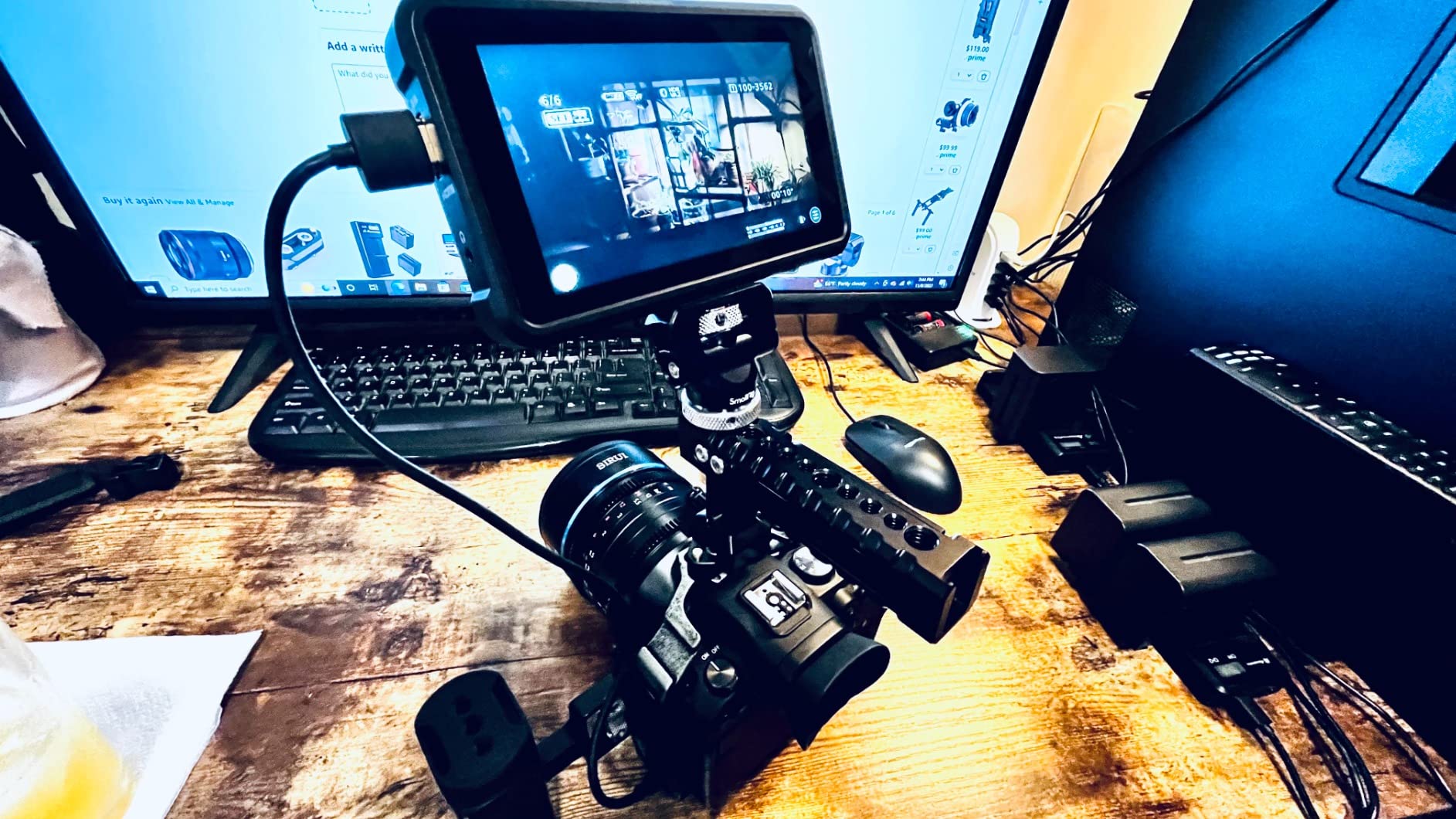
The Sirui 35mm T2.9 1.6X Anamorphic brings true cinematic anamorphic characteristics to the RF mount at an unprecedented price point. For video creators seeking that Hollywood look, this lens delivers the goods.
The 1.6x squeeze factor creates a wider aspect ratio and the characteristic anamorphic effects that define cinema aesthetics. Horizontal lens flares, oval bokeh, and the expanded field of view give footage a distinctive professional appearance.

Build quality is exceptional with a robust aluminum alloy cine housing. Geared focus and aperture rings work seamlessly with follow focus units, making this lens suitable for professional cinema rigs.
At 3.02 pounds, this is a substantial lens that requires proper support. On a tripod or cinema rig with the R5 Mark II, it balances well. For handheld work, consider a shoulder rig or support system.
Cinematic Video Production
This lens is ideal for narrative filmmaking, music videos, and commercial work where the anamorphic aesthetic matters. The distinctive look separates your footage from standard spherical lens content. For filmmakers on a budget, this is a game-changing tool.
Workflow Considerations
Shooting anamorphic requires understanding the post-production workflow. Footage must be desqueezed in editing, and the 1.6x factor creates a 2.4:1 or 2.8:1 aspect ratio depending on sensor mode. The learning curve is worth it for the cinematic results.
14. Sirui Night Walker 24mm T1.2 – Ultra-Fast Cine Lens
Pros
- Ultra-fast T1.2 for low light
- Beautiful bokeh
- 270-degree focus throw
- Minimal focus breathing
- Lightweight for cine lens
Cons
- Manual focus only
- S35/APS-C only
- Some chromatic aberration
The Sirui Night Walker 24mm T1.2 is designed specifically for low-light video work. The ultra-fast T1.2 aperture opens up filming possibilities that slower lenses simply cannot match.
I tested this lens for night street videography and dimly lit venue shoots. The amount of light gathering at T1.2 is remarkable, allowing clean video in conditions where other lenses would require impractical ISO settings.

The 270-degree focus ring rotation provides precise manual focus control that cine work demands. Focus pulls are smooth and predictable, essential for maintaining professional-looking footage.
Focus breathing is minimal, a critical feature for rack focus shots. When pulling focus between subjects, the field of view remains consistent, avoiding the jarring perspective shift that plagues many still-photo lenses.

Night and Low-Light Video
This lens excels for night cityscapes, concert footage, candlelit scenes, and any situation where light is scarce. The T1.2 aperture combined with the R5 Mark II’s low-light performance enables video in nearly darkness.
S35 Crop Mode Application
Since this lens covers S35/APS-C sensors, use it with the R5 Mark II in crop mode for 4K recording or with the camera’s Super 35 mode. The 24mm focal length becomes approximately 34mm equivalent, which works well for environmental video.
15. Sirui 50mm F1.8 1.33X Anamorphic – Budget Anamorphic Entry
Pros
- Affordable entry to anamorphic
- Beautiful blue lens flares
- Oval bokeh
- Sharp at f/1.8
- Solid metal build
Cons
- S35/APS-C only
- Manual focus
- Requires workflow knowledge
The Sirui 50mm F1.8 1.33X Anamorphic opened the door to anamorphic filmmaking for budget-conscious creators. This lens delivers the characteristic anamorphic look at a price point that was previously impossible.
The 1.33x squeeze factor creates a 2.4:1 aspect ratio from a standard 16:9 sensor. Blue horizontal lens flares and oval bokeh give footage that distinctive cinema aesthetic without breaking the bank.
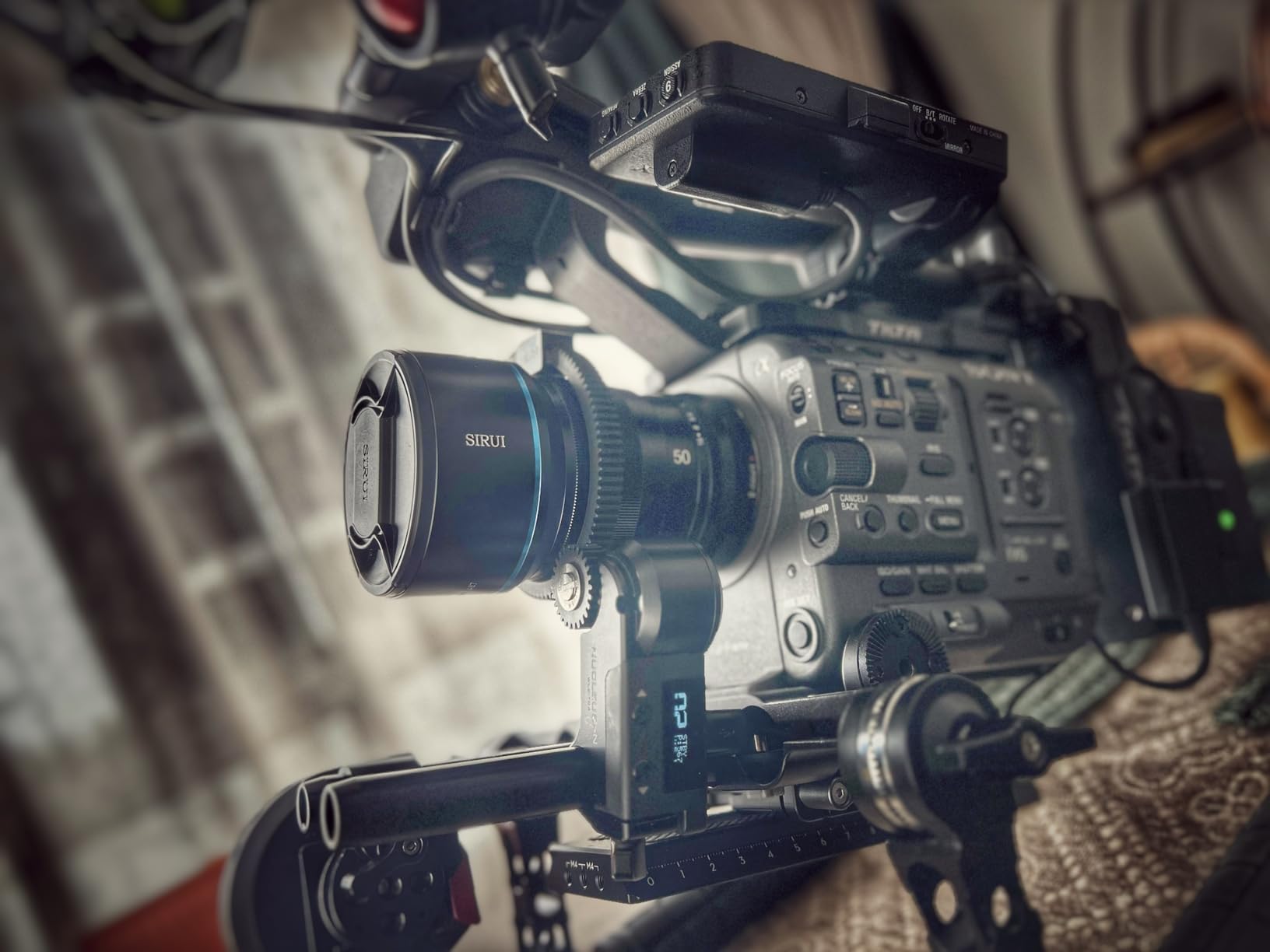
At 2 pounds, this lens is relatively lightweight for an anamorphic design. It balances well on the R5 Mark II and is manageable for handheld work, though a support rig helps for extended shooting.
The f/1.8 aperture provides good low-light performance and creates shallow depth of field that complements the anamorphic bokeh characteristics. Sharpness is maintained well even wide open.

Entry-Level Anamorphic Filmmaking
For filmmakers wanting to experiment with anamorphic aesthetics, this lens is the most accessible entry point. The learning curve is manageable, and the results are genuinely cinematic. It is perfect for music videos, short films, and creative commercial work.
S35 Sensor Compatibility
This lens is designed for S35/APS-C sensors, so use it with the R5 Mark II in crop mode. The 50mm focal length becomes approximately 75mm equivalent, which works well for portraits and medium shots in anamorphic productions.
How to Choose the Best Video Lens for Canon R5 Mark II In 2026?
Selecting the right lens for video work involves considerations that differ from still photography. The R5 Mark II’s video capabilities demand lenses that can resolve fine detail while performing well for motion capture.
Video-Specific Features to Prioritize
Image stabilization is crucial for handheld video work. Look for lenses with optical IS that coordinates with the R5 Mark II’s IBIS system. The combination can deliver up to 7 stops of shake correction in some cases, enabling handheld shots that would otherwise require a gimbal.
Autofocus performance matters more for video than many realize. The R5 Mark II’s Dual Pixel CMOS AF II works best with lenses featuring Nano USM or STM motors that deliver smooth, silent focus transitions. Avoid older micro-USM lenses that may hunt or produce audible noise.
Understanding Focus Breathing
Focus breathing refers to the change in field of view that occurs when adjusting focus. For video work, especially rack focus shots, minimal breathing is essential. Cinema lenses are designed to eliminate breathing entirely, while most still-photo lenses exhibit some degree of the effect.
When evaluating lenses for video, test focus pulls to see if the framing shifts noticeably. Lenses with internal focus designs generally breathe less than those with extending focus elements.
Parfocal Zoom Behavior
Parfocal lenses maintain focus throughout the zoom range, a critical feature for video where zooming during a shot is common. True parfocal performance is rare in still-photo zooms, but some RF lenses come close enough for practical video work.
The RF 24-70mm F2.8 L IS USM and RF 24-105mm F2.8 L IS USM Z both exhibit good focus retention when zooming. For critical work, plan to refocus after major zoom changes or use cinema lenses designed for parfocal operation.
Gimbal Compatibility and Weight
Weight distribution affects gimbal performance significantly. Top-heavy setups are harder to balance and can cause motors to work harder. For gimbal work, consider lighter lenses or use support systems for heavier professional glass.
The RF 28mm F2.8 STM, RF 50mm F1.8 STM, and RF 35mm F1.8 IS Macro STM are all excellent gimbal-friendly options that balance easily and extend shooting time through reduced motor strain.
Aperture Considerations for Video
Constant aperture zooms maintain exposure throughout the zoom range, which is essential for video. Variable aperture zooms like the RF 24-105mm F4-7.1 IS STM require exposure adjustments when zooming, complicating video production.
For low-light video, fast primes with f/1.8 or wider apertures enable shooting in dim conditions without excessive ISO. The RF 50mm F1.8 STM and RF 35mm F1.8 IS Macro STM are excellent budget options for available-light video.
RF Mount vs EF with Adapter
While EF lenses work on the R5 Mark II with adapters, native RF lenses offer advantages for video. The shorter flange distance enables superior optical designs, and the control ring provides quick access to settings during recording.
EF lenses also add bulk through the adapter and may not coordinate IS as seamlessly with the camera’s IBIS. For dedicated video work on the R5 Mark II, prioritize native RF mount lenses when possible.
Frequently Asked Questions
What Canon lens is best for videography?
The Canon RF 24-105mm F2.8 L IS USM Z is the best overall lens for videography on the R5 Mark II. It offers a constant f/2.8 aperture throughout the versatile 24-105mm range, power zoom adapter support for smooth video zooming, and excellent image stabilization that coordinates with the camera’s IBIS. For budget-conscious shooters, the RF 50mm F1.8 STM provides excellent video quality at an accessible price point.
What is the best cinematic lens for the Canon R5?
For a true cinematic look, the Sirui 35mm T2.9 1.6X Anamorphic lens delivers Hollywood-style characteristics including horizontal lens flares, oval bokeh, and an ultra-wide aspect ratio. This full-frame anamorphic lens transforms your R5 Mark II footage into genuinely cinematic content. For spherical options, the Canon RF 85mm F2 Macro IS STM creates beautiful background separation ideal for interview and portrait video.
What lenses are compatible with the Canon EOS R5 Mark II?
The Canon EOS R5 Mark II is compatible with all Canon RF mount lenses natively, including RF, RF-S, and third-party RF mount lenses from Sigma and Sirui. Additionally, Canon EF and EF-S lenses work with Canon EF-EOS R mount adapters. The camera’s full-frame sensor works best with RF lenses designed for full-frame coverage, while RF-S and EF-S lenses will trigger crop mode.
What is the best lens for videography?
The best lens for videography depends on your shooting style, but versatile zooms like the Canon RF 24-70mm F2.8 L IS USM or RF 24-105mm F4L IS USM cover most video scenarios effectively. For documentary and run-and-gun work, the 24-105mm range provides flexibility without lens changes. Prime lenses like the RF 50mm F1.8 STM excel for low-light video and creating shallow depth of field for interviews and portraits.
Final Thoughts
Finding the best video lenses for Canon EOS R5 Mark II comes down to matching lens capabilities with your specific video production needs. The Canon RF 24-105mm F2.8 L IS USM Z stands out as the ultimate video zoom with its constant aperture and power zoom support, while the RF 50mm F1.8 STM offers incredible value for budget-conscious creators.
For professional work, the RF 24-70mm F2.8 L IS USM delivers the reliability and optical quality that demanding productions require. Cinema-focused filmmakers should explore the Sirui anamorphic options for that distinctive Hollywood aesthetic. Whatever your video production style, the RF mount ecosystem has lenses that will help you create exceptional content with your R5 Mark II in 2026.