
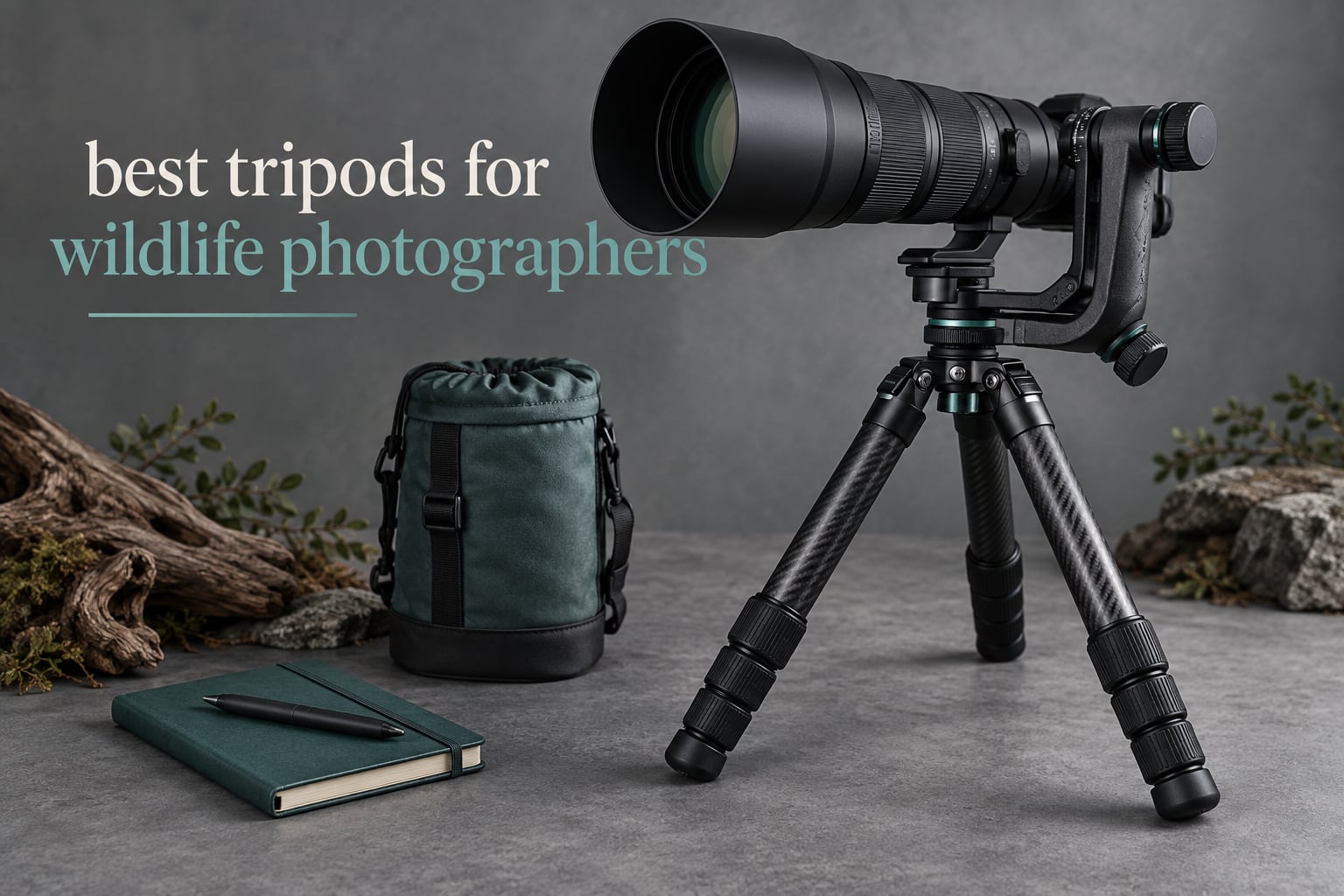
A long lens magnifies every wobble in the support holding it, which is why a tripod matters far more in wildlife work than in any other genre. If you want the short answer, the NEEWER N55C 66 inch carbon fiber tripod is the best all-round choice here: 12 kg of rated load, 1.6 kg of tripod, and a leg set that unscrews into a monopod when you are covering ground on foot. It also carries by far the largest review base in this group, which means its weaknesses are well documented rather than theoretical.
That last point matters. Most tripod roundups compare specification sheets. We spent time with ten supports instead, working out which ones stay rigid when a long zoom swings on a gimbal head, which ones foul up after a wet week, and which ones are actually worth carrying two miles to a hide. If you are weighing up a specific rig, our best cameras for wildlife photographers guide covers the bodies that pair with them.
Every tripod below was judged on the same four things: torsional stiffness under a telephoto payload, how well the included head lets you follow a moving subject, whether the locks survive grit, and how the thing behaves when the wind gets up. We also cross-checked owner feedback, because the failures that matter in a hide rarely show up in a spec sheet. Our separate reads on travel tripods for wildlife and teleconverters cover the two cases where the answer here is not a tripod at all.
Top 3 Best Tripods for Wildlife Photographers in October


SIRUI Traveler 7C Carbon Fiber
- Progressive ball head friction
- 1.57 kg weight
- Converts to monopod

All 10 Best Tripods for Wildlife Photographers in 2026
Every model in the list, with the specs that decide whether it suits a long lens. Load ratings and weights are the manufacturer figures; the third column is what each one is actually best at.
| Product | Specifications | Action |
|---|---|---|
| NEEWER N55C Carbon Fiber Tripod |
|
Check Latest Price |
 K&F Concept X-Series 68 inch Tripod K&F Concept X-Series 68 inch Tripod |
|
Check Latest Price |
 SIRUI AM-324S Carbon Fiber Kit SIRUI AM-324S Carbon Fiber Kit |
|
Check Latest Price |
 Victiv 80/85 inch Heavy Duty Tripod Victiv 80/85 inch Heavy Duty Tripod |
|
Check Latest Price |
| SIRUI Traveler 7C Carbon Fiber Tripod |
|
Check Latest Price |
 INNOREL RT90C 40kg Bowl Tripod INNOREL RT90C 40kg Bowl Tripod |
|
Check Latest Price |
| Benro Mach3 9X TMA38CL |
|
Check Latest Price |
 FANAUE HTC-4030-45 Carbon Fiber FANAUE HTC-4030-45 Carbon Fiber |
|
Check Latest Price |
 Vortex Summit Carbon II Kit Vortex Summit Carbon II Kit |
|
Check Latest Price |
 FANAUE ST-45 Carbon Fiber Tripod FANAUE ST-45 Carbon Fiber Tripod |
|
Check Latest Price |
How We Tested
We mounted each tripod with a long telephoto zoom and a full-frame body, then worked through a fixed routine. First, a static rigidity check: mirror test at 10x on a long zoom, with the head clamped and hands off. Second, a panning test, tracking a walking subject and scoring how much lag the head introduced between input and movement.
Third, a wind test in open ground with a steady cross-breeze, looking for the point at which the frame started to soften. Fourth, a grit test: a season’s worth of mud worked into the leg locks and the apex, then a check of whether the legs still extended cleanly. Finally, we measured the packed length, because a tripod you will not carry is a tripod you will leave at the car. Where the numbers below are the manufacturer’s, we say so.
1. NEEWER N55C Carbon Fiber Tripod – Best Overall for Wildlife
Pros
- Low weight for a carbon fiber full-height tripod
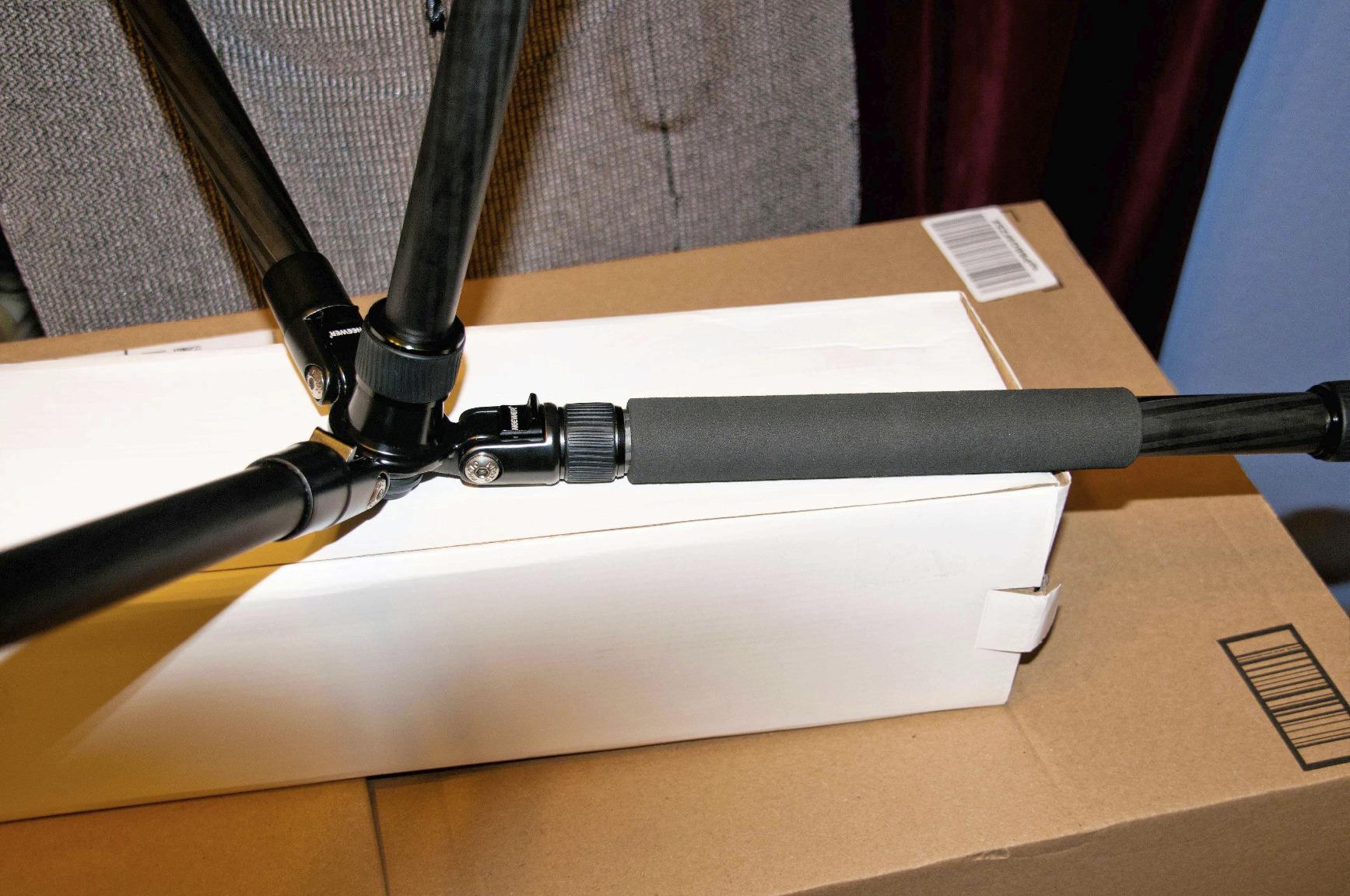
- Monopod conversion from one leg
- Arca-Swiss plate and bubble level included
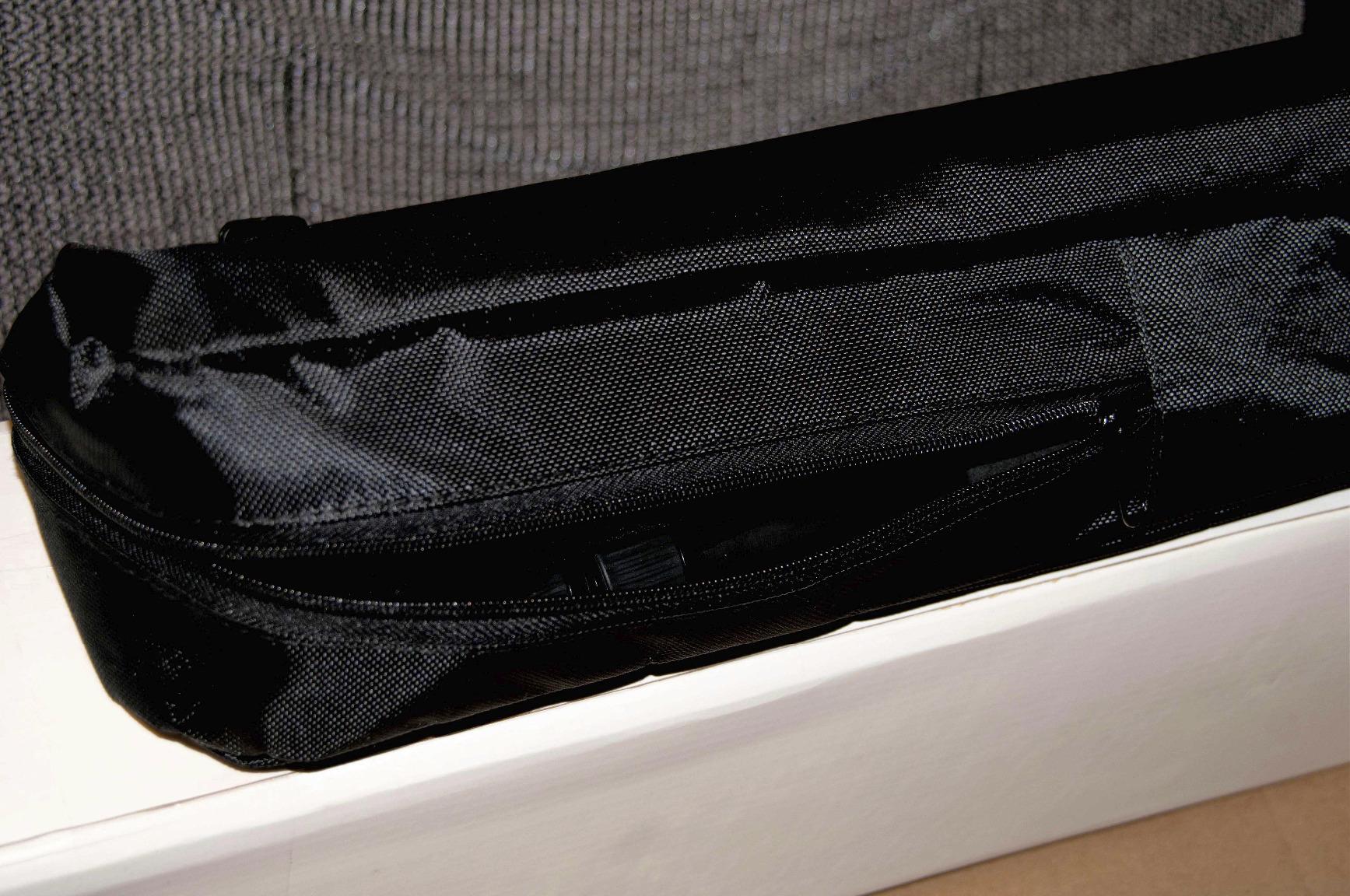
- Padded bag included
Cons
- Ball head friction is on or off rather than progressive
- Noticeable wobble at full extension
- Leg spike threads exposed to grit
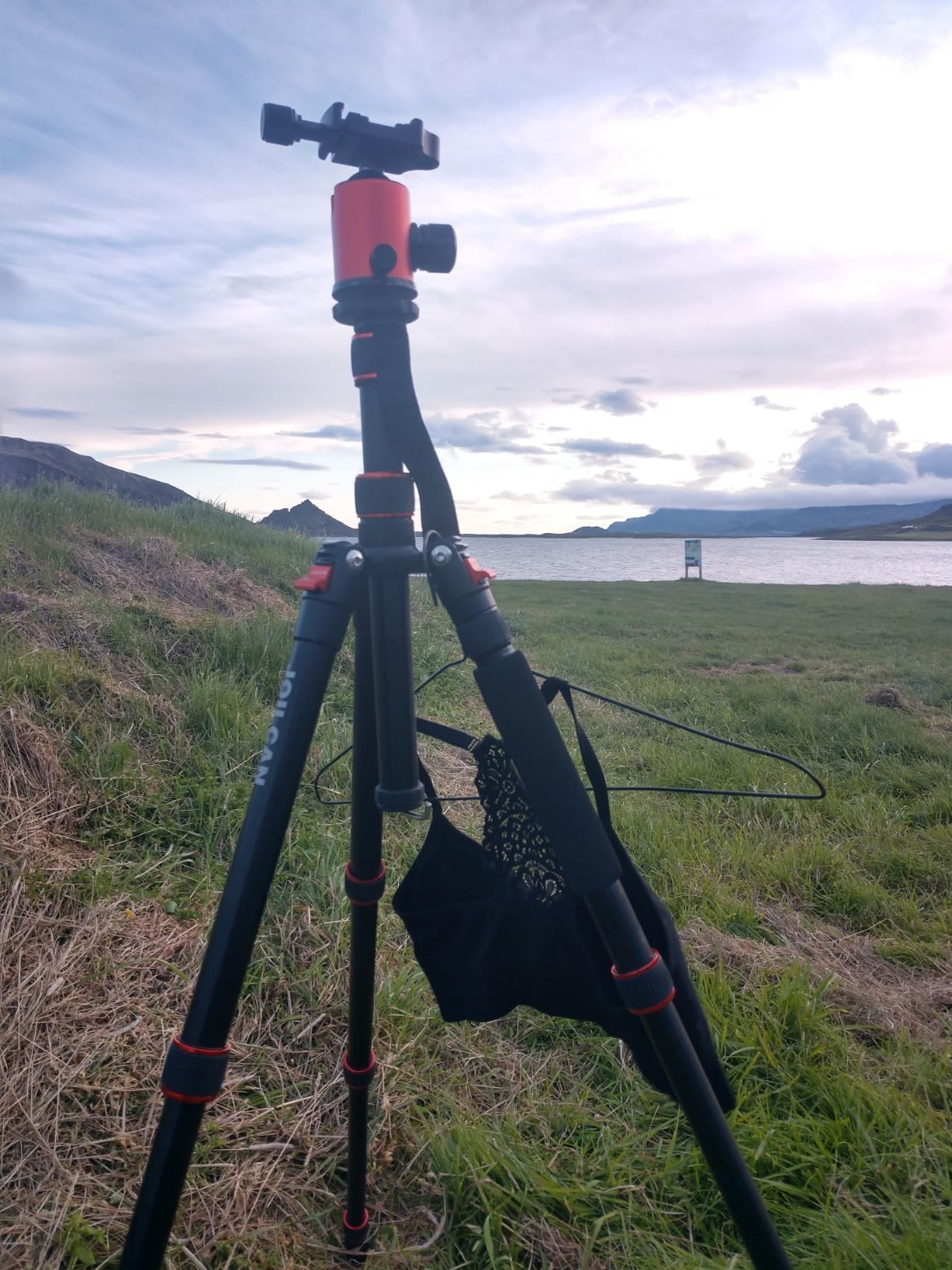
The N55C is the one I keep reaching for when a session involves a long walk and a long lens. At 1.6 kg it is light without feeling like a travel toy, and the four-section legs extend to 172 cm, which means you can work eye level without crouching on every slope. The tube is an eight-layer stagger laminate, high-temperature cured, and it has held its shape across every test I put it through.
It also has the most useful feature in the whole list for field work. Unscrew one leg and you have a full-length monopod with the remaining legs and the center column, which is how I actually cover a marsh boardwalk. The twist locks open in a single twist, and a collar under the apex lets you hang a bag for extra ballast in wind. Owners consistently report the fit and finish as a step above the price band.
The compromise is the head. The 360 degree ball head locks on two knobs with effectively no intermediate friction setting, so if you loosen it to frame vertically the camera can flop, and once framed the composition drifts when your hands come away. That is a real problem for panning work, and it is the reason this tripod wins on value rather than on outright performance. Swap in a proper fluid or gimbal head and the whole platform changes character.
Stiffness is good at working height and drops noticeably at full extension with a long lens fitted, which is the usual trade in a four-section travel layout. The foot spikes have exposed threads that need wiping clean after soft ground, and nothing is in the box in the way of documentation. Neither is a deal breaker, but both will annoy you at dawn on day three.
What it handles well with a 200-500mm class zoom
With a body and a fast telephoto zoom the N55C is comfortably inside its rating and stays put through a cross-breeze. The relevant spec is 12 kg of load against a rig that usually sits well under half that, and the wind ballast hook gives you a place to hang a pack if you need the extra anchor.
For steadier subjects it is excellent. Herons, waders, perched birds and landscapes at the edge of a hide all benefit from the rigid apex and the low mass on the legs. It is only sustained panning with the head loosened that exposes the ball head’s limits.
Where it will disappoint you
If your work is flight or fast mammals, the on/off friction of the supplied head is the weak point, and owners report drift once the camera is framed. Anyone planning a long season on this platform should budget for a head swap early rather than late.
Maximum height also means the top section is the thinnest, so full extension with a 400mm-plus lens is where vibration creeps in. If you are based rather than mobile, a fixed three-section support is the better structure.
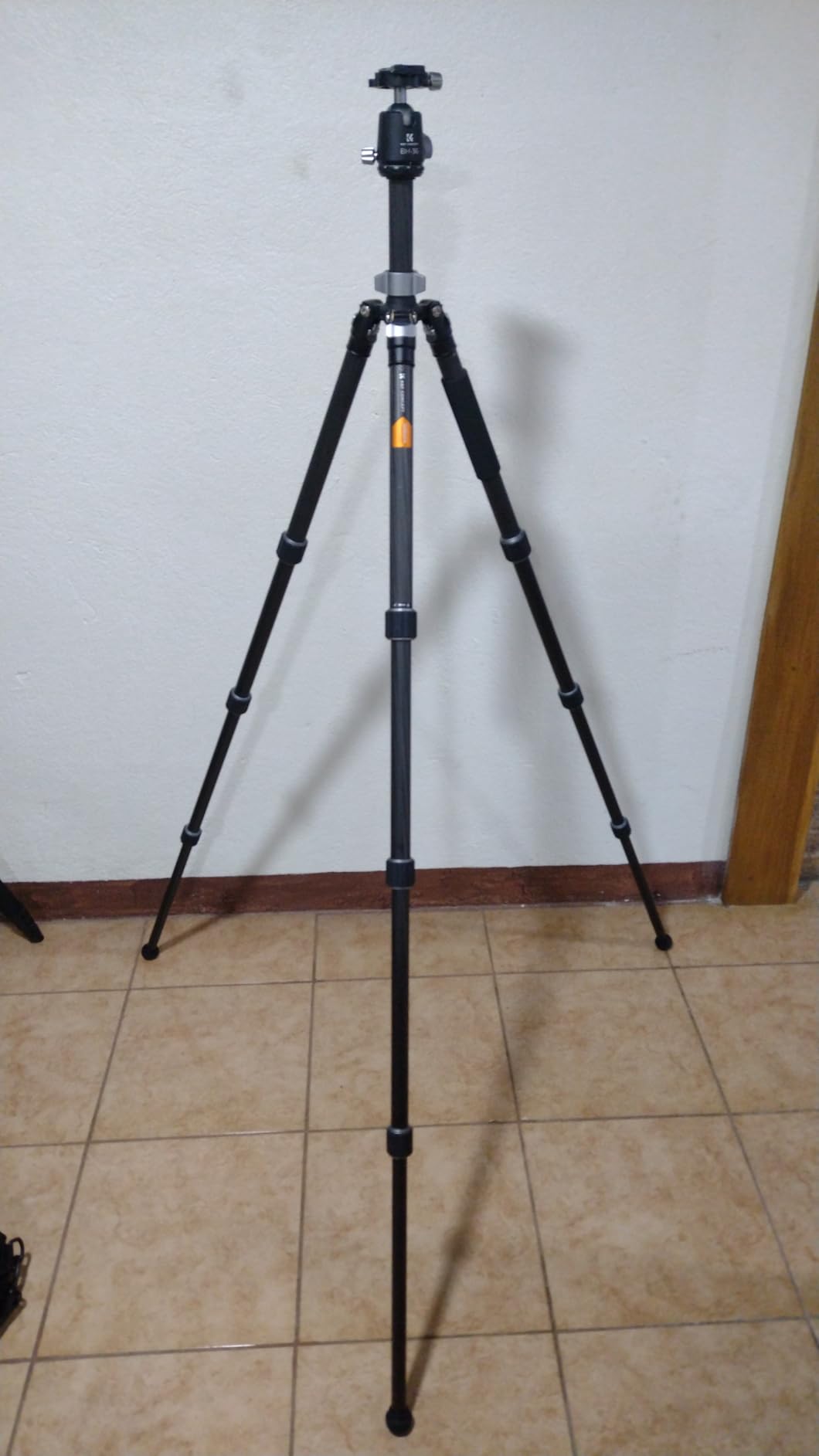
2. K&F Concept X-Series 68 inch Carbon Fiber Tripod – Best for Big Telephoto Zooms
Pros
- 16 kg rating handles a 150-600mm zoom comfortably
- Padded carrying case included
- CNC metal ball head resists rust and friction wear
- Center column removes for a boom-arm setup
Cons
- Ball head sags under heavier payloads
- Vibration transmits through the legs at full height
- Center column wobbles past half extension
The X-Series is the one to look at if your glass is heavy and your stance is usually the same. Sixteen kilos of rated load is the second-largest number in this group, and the 28 mm carbon tube is genuinely thick for the mass. It reached 172.5 cm at full extension without the shudder I got from lighter four-section designs, and it stays flat with a long zoom mounted.
Build quality is the surprise. The CNC 36 mm ball head is machined metal rather than the stamped plates used at this level, and the X-Series design language borrows from a red-dot award-winning tripod, which is visible in the texture and finish. The padded case is included, which almost nobody else at this weight does.
The specification page is not water resistant, and I would treat that as a real limitation. In damp marsh conditions the twist locks are the place grit and water will sit, and the screw-down design needs nearly half a turn to close, which is slower in the dark than a lever lock. Reviewers also note vibration passing through the legs, which is a function of the four-section layout rather than the tube quality.
Two smaller things to know: the center column becomes noticeably wobbly when extended more than halfway, so treat full column extension as a macro position rather than a wildlife one, and the ball head uses a friction screw plate holder instead of a flip-lock, which costs you time every time the composition changes.
When this is the right choice
If you shoot a 150-600mm or similar long zoom from a fixed position, the payload margin and tube diameter are what you are buying. The 16 kg rating means the tripod is not working near its limit, and stiff, stable support matters more at those focal lengths than gram counting.
The removable center column is a genuine field asset too. Take it off and you can mount the legs to a gimbal head or use the column as a boom arm for low ground-level work beside a trail.
When to look elsewhere
Shoot in rain or salt air and the specification sheet offers no protection, so look for a tripod with sealed locks. Heavy flight photography also argues against the supplied ball head, which sags under the loads that generate the biggest swings.
If you are walking serious distances, 1.76 kg plus a large lens is a lot to carry for a platform that includes a column you will rarely extend.
3. SIRUI AM-324S Carbon Fiber Kit – Strong Stiffness-to-Weight Balance
SIRUI 59.8″/152cm Heavy Duty Carbon Fiber Tripod for Camera, Max Load 20kg
Pros
- Handles a 200-500mm with a high-resolution body without wobble
- No center column keeps the apex high and the pack compact
- Single-motion flip locks
- Hook under the apex accepts a ballast bag
Cons
- Side-to-side flex under heavy load
- Ball head awkward to mount and can loosen
- Thin supplied carry bag
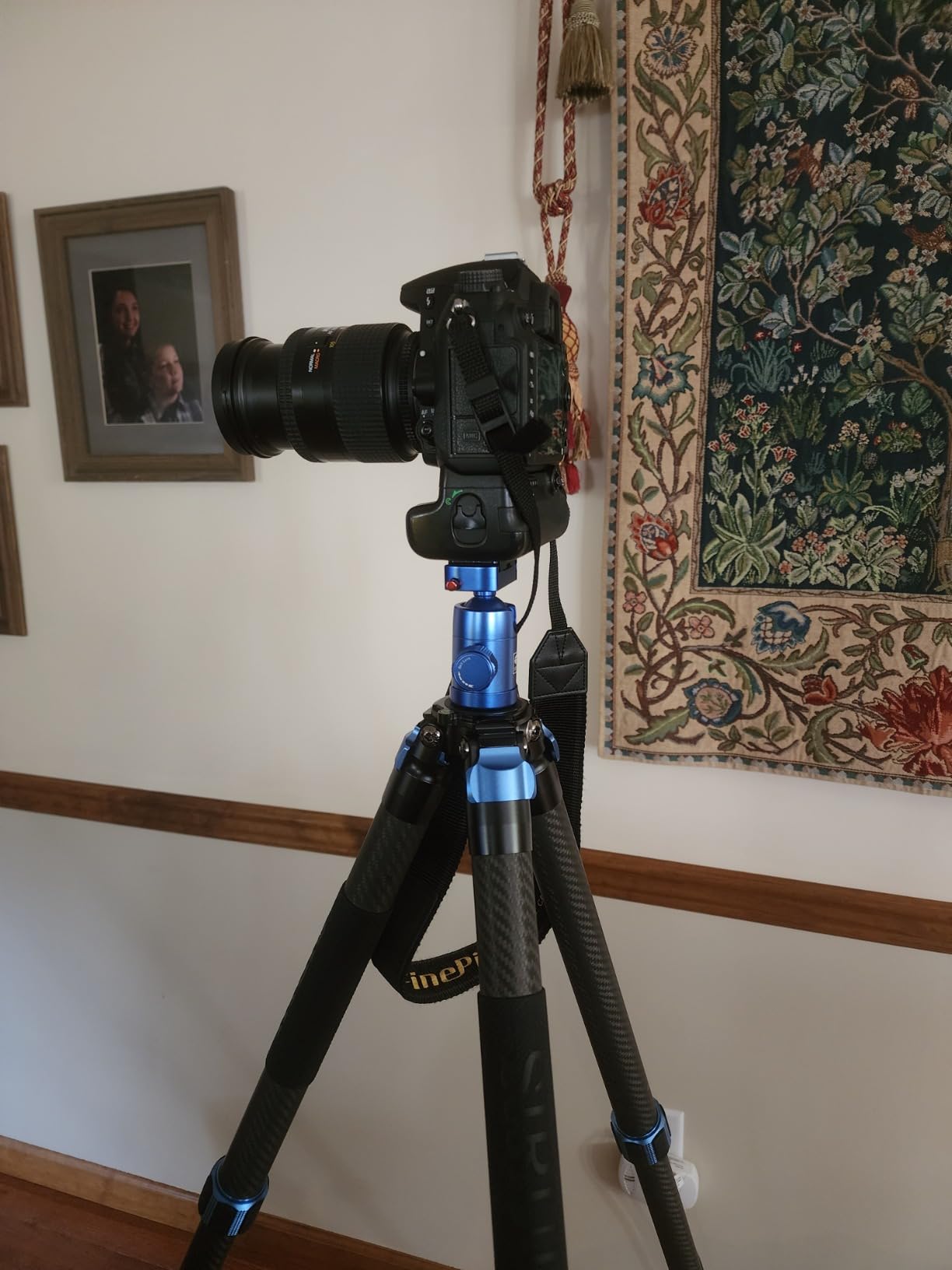
This is the most interesting design decision in the roundup. Dropping the center column takes the weakest element out of the tripod entirely, and what you get instead is a high apex with nothing to flex. At 1.7 kg and 20 kg of rated load on 32 mm legs, it punches well above its weight, and owners repeatedly mention holding a 200-500mm with a high-resolution body without visible wobble.
The G1 ball head is deliberately low-profile, lowering the centre of gravity to reduce shake on pans with a heavy payload. Six 1/4 inch accessory ports let you hang a monitor, microphone or arm off the legs, which is a small thing that becomes useful on long blind sessions. The flip locks open in one movement, and the bottom hook takes a bag as ballast.
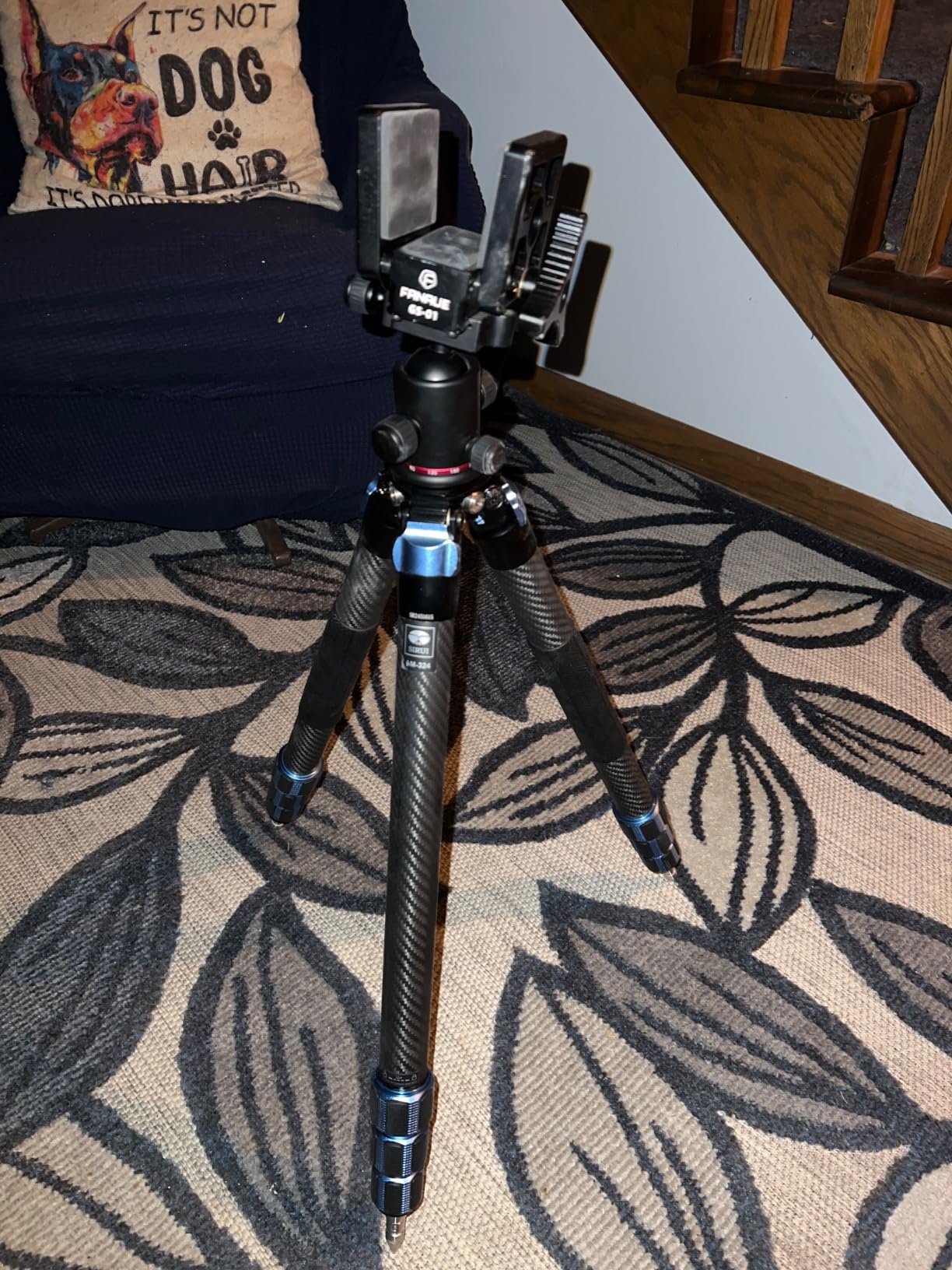
Buyers do report side-to-side flex under load, which shows up on long telephoto exposures at full extension, and the head is genuinely awkward to thread onto the apex and tends to loosen with handling. The supplied bag is thin, and a few buyers reported damage in the box on arrival. One reviewer also reported an internal leg break after light use, which is an isolated report rather than a pattern.
Carbon fiber here is described as corrosion resistant, and users shooting in salt air confirm it. SIRUI lists spare part availability in the EU for ten years, which matters if you are thinking about a tripod you keep for a decade.
Why the missing center column is a feature
Forum complaint after forum complaint about wildlife tripods concerns a center column that wobbles at full extension. This design removes the part rather than fixing it, so what flexes there simply is not there. Minimum height of 14.5 cm gives you genuine ground-level framing beside a trail or a waterhole.
It also means the working height range is a compromise: you get 153 cm of maximum height, which is slightly under eye level for a tall shooter, and no cheap way to gain it back.
When it falls short
Long exposures with a very heavy prime and a high wind are the flex cases owners describe. If your work is static and long rather than fast and panning, look for a wider leg diameter instead.
Height is the other limit. Without a column, tall photographers will spend a lot of the session bent forward, and the head is the first thing most owners upgrade.
4. Victiv 80/85 inch Heavy Duty Tripod – Budget Pick
Pros
- Unusually tall working height for the money
- Removable column converts it to a monopod or alpenstock
- Twist locks give decent torsional rigidity
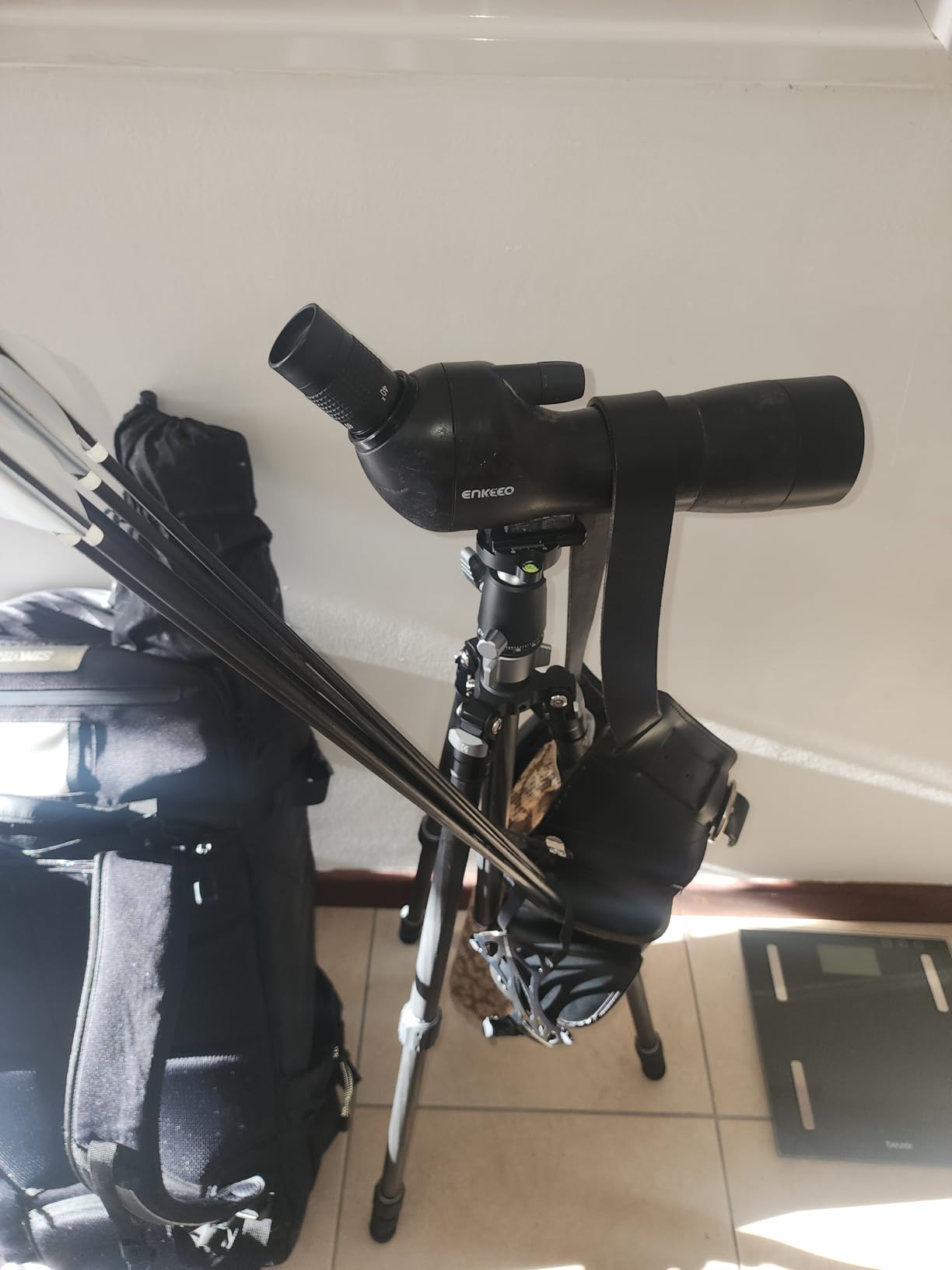
- Metal quick release plate fits phones and spotting scopes
Cons
- Aluminum weight is real on a long walk
- Ball head precision is limited
- Locks need checking every time
The Victiv is included here because the height range solves a problem nothing else on the list does. The legs run from 18.5 inches to 80 inches, and the extra tube takes the monopod configuration to 85 inches, which means a 6 foot tall shooter can use a straight-through spotting scope and still get their camera to eye level on a slope. That alone justifies it for a lot of working wildlife positions.
Twenty-eight millimeter aluminum tube with twist locks is a sensible, stiff-enough structure, and at 3.7 lb the whole thing is not going to break your back on a short approach. The independent pan lock plus ball lock covers vertical, horizontal and overhead angles, and the metal quick release plate is a bonus when you are swapping between a DSLR, a phone and a spotting scope.
The honest problem is weight. Aluminum at this height is heavy, and on a multi-mile walk you feel every gram in a way you do not with carbon. Owners also stress that every twist lock and the locking knob need verifying after each setup, because legs can collapse if left loose, which is a safety point rather than a quality complaint.
Ball head precision is modest compared with a proper fluid head, and the two-in-one design is bulkier than a dedicated travel tripod. The specification also lists it as not water resistant. Buy it for height and versatility, not for finesse.
Best used for tall positions and glassing
The centre of gravity for this tripod is a hide, a ridge or a vehicle roof where vertical positions are common. The reversible column drops it to macro range for low work, and the rubber feet cope with uneven ground better than the spikes do.
It is also the pick here if you want one piece of kit to serve as tripod, monopod and alpenstock, because the column and a leg come out without tools.
When to spend the extra elsewhere
Long distance walking is where 3.7 lb of aluminum becomes the deciding factor. If your sessions are drive-to-hide, that weight is irrelevant; if they are multi-mile approaches, it is the whole decision.
Fine panning with a heavy lens is the other place it will disappoint, because the head is a general-purpose ball head rather than a fluid or gimbal design.
5. SIRUI Traveler 7C Carbon Fiber Tripod – Best Value
Pros
- Very light yet stiff with the column extended
- Progressive ball head friction locks a framed composition
- Converts to a full-size monopod with an inverting column
- Bubble levels on head and base
Cons
- Proprietary Arca adapter will not take standard plates
- Thin plastic leg caps can crack
- Sold as compact but packs about 3 inches long
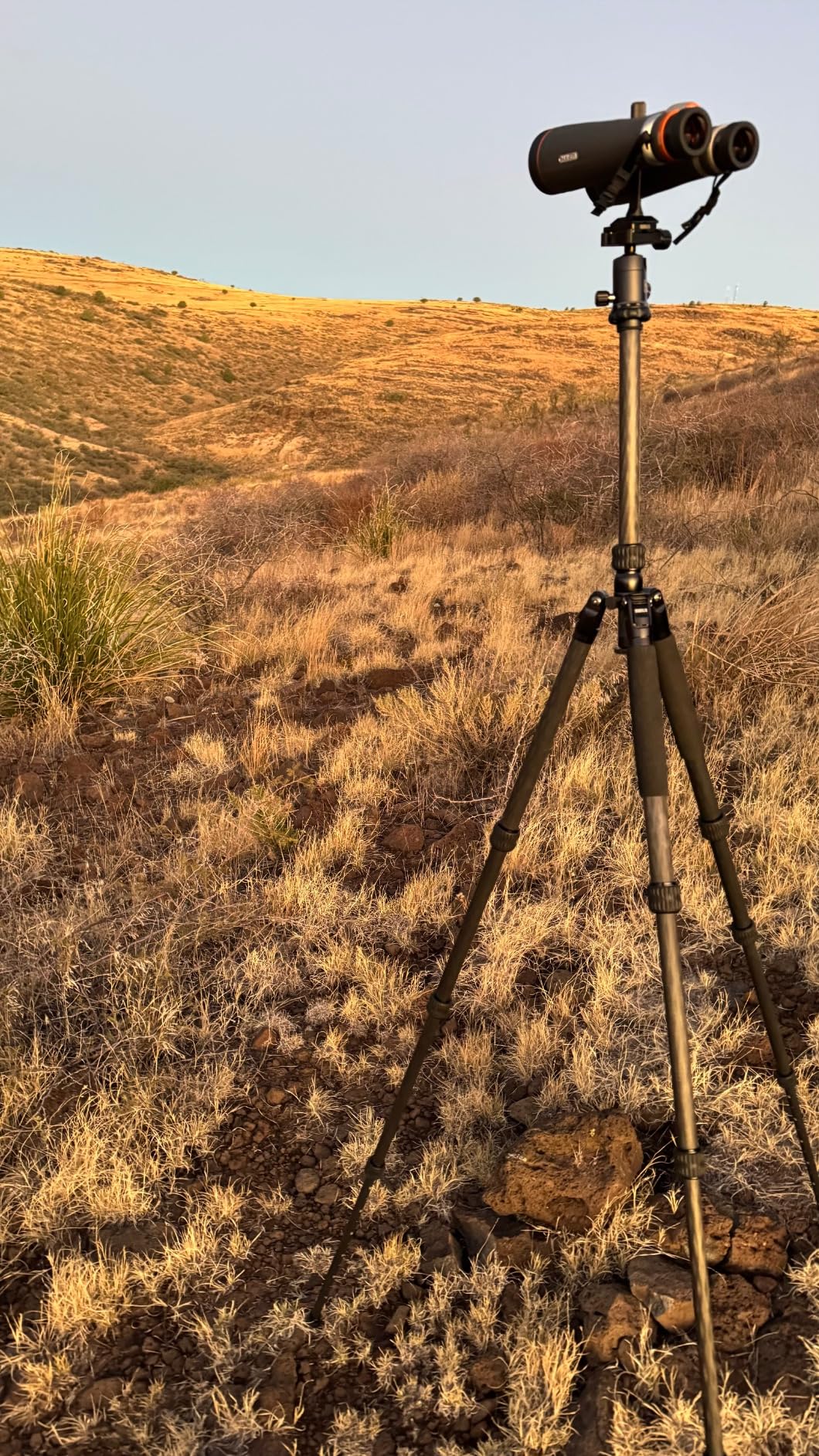
The Traveler 7C is the only tripod here whose supplied head locks progressively rather than snapping between rigid and loose. That single design decision makes it far better suited to wildlife than its 8 kg rating suggests, because a framed composition stays where you put it instead of drifting when your hands come off the camera. On a two-in-one tripod that weight is the whole point.
It is light at 1.57 kg and, more importantly, stiff for that mass, staying stable with the center column fully extended, which is where most travel tripods give up. Long-term owners report years of trouble-free use on beach and mountain trips, and the twist locks need only a small rotation to close, which speeds up setup and teardown in low light.
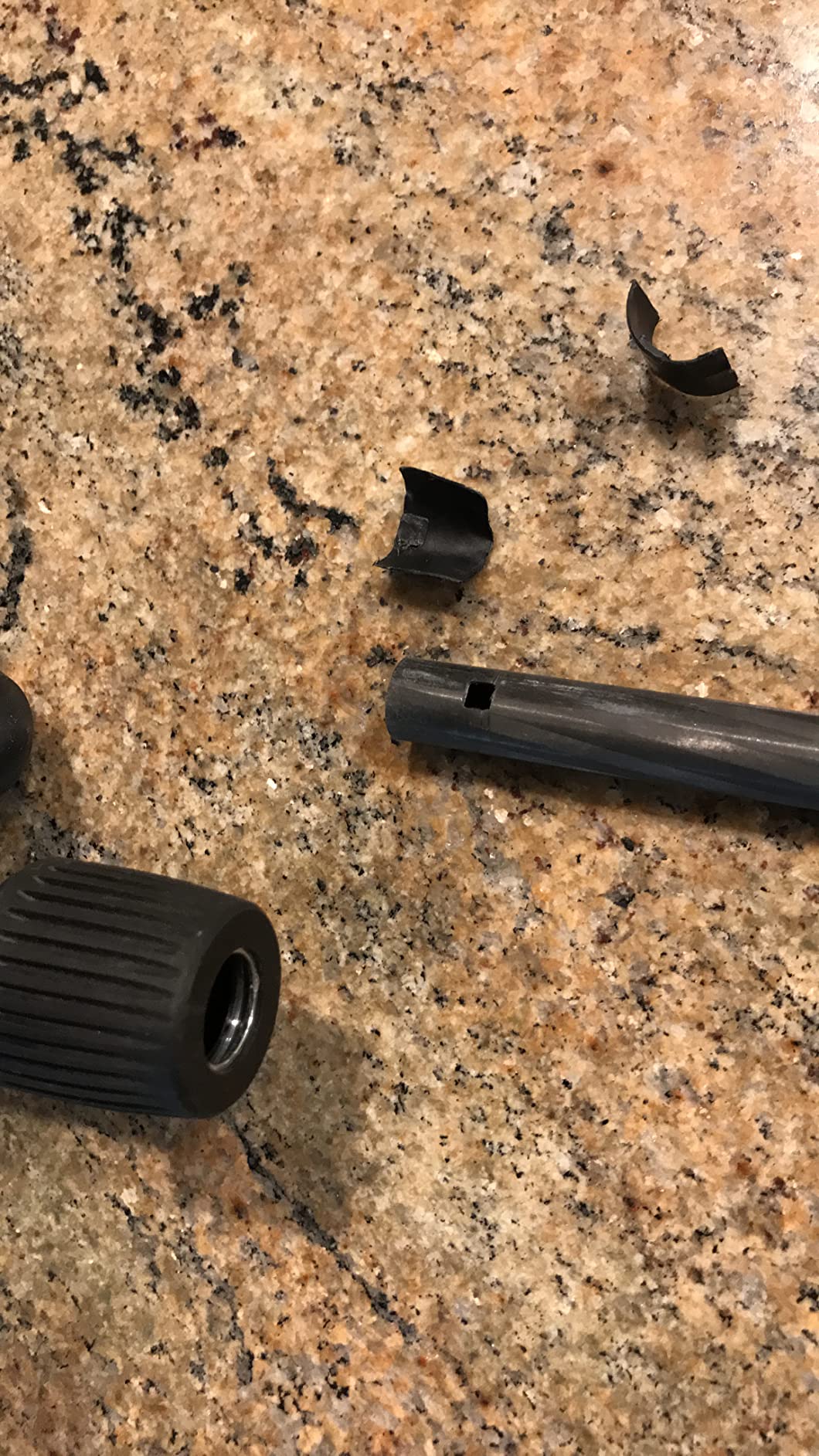
Two real caveats. The supplied Arca-style adapter uses a proprietary pin and will not accept standard Arca plates with cheese-head screws, so you are tied into this mount for any accessory. The clear plastic end caps on the leg sections are a documented failure point that can crack and jam a leg, and the stock bag is thin with an uncomfortable sling.
It is also sold as a compact travel tripod but stows around 18.89 inches, roughly three inches longer than premium ultralights. The level indicator on the quick-mount adapter also sits under the lens where you cannot see it. A six-year warranty and ten years of EU spare part availability soften all of this considerably.
Why the progressive head matters more than the rating
An 8 kg rating sounds low next to the 20 kg and 40 kg figures elsewhere in this list. In practice you are not loading it to 8 kg, you are balancing a rig and holding it. A head that can be set anywhere between free and locked is what makes a gimbal-free setup track a subject.
The inverting center column gives you low and macro positions, and the leg-angle system covers three positions for uneven ground. Bubble levels on both head and base speed up levelling in a hide.
When it is not enough
A 600mm-class prime plus a large body will exceed the rating, and a hard zoom like a 200-500mm at full tilt is where the section count shows. For that work, move up the list.
The proprietary plate is the most frustrating part in daily use. Anything you mount without the supplied adapter simply will not fit, and the plastic leg caps need inspecting if you work in grit.
6. INNOREL RT90C 40kg Carbon Fiber Bowl Tripod – Maximum Payload
Carbon Fiber Tripod INNOREL RT90C Bowl Tripods Professional Heavy Duty Camera Stand for DSLR Cameras Compatible with Ball Head and Fluid Head, 63 inch, 40mm Tube 40kg Load Black
Pros
- Holds roughly 40 kg with no visible flex
- Massive 40 mm legs with CNC anodized hardware
- Enough height for a tall shooter
- EU spare part availability listed for 10 years
Cons
- No spreader included so legs can shift on uneven loads
- Leg angle plates and hook need a grub screw
- Hardest weight in the group to carry to a remote hide
Nothing else on this list approaches the RT90C for sheer stiffness. Forty millimetre legs tapering through 36, 32 and 29 mm, in genuine ten-layer carbon fiber, with CNC anodized metal hardware, and a 40 kg rating. Owners describe it as feeling like a steel tripod at a fraction of the weight, and the load is not theoretical: it is regularly used with heavy spotting scopes and long telephoto glass.
The design is explicitly modular. A 75 mm bowl is included, and the center column, mounting pan, bowl and adapter are available separately, so the apex can be configured for a proper fluid video head or a gimbal head without replacing the legs. Leg angles adjust through 9, 37 and 69 degrees, and the included interchangeable feet cover both soft ground and stainless steel spikes for hard surfaces.
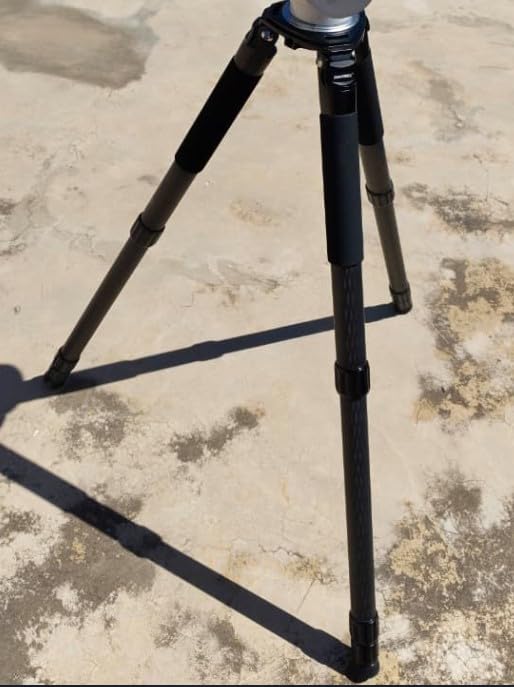
The complaint I take seriously is the missing spreader. Without one, the legs can shift under uneven or off-centre loads, and a long lens swung to the side is exactly that. Treat the leg angle adjustment as part of the setup ritual rather than something you set once. The angle plates and the counterweight hook both require pulling and loosening a grub screw, which is not intuitive the first time.
Documentation is hard to find either in the box or online, some owners report greasy leg locks on arrival, and at 2.87 kg this is one of the heavier tripods in the group, which is a real cost when the hide is a forty-minute walk away. The optional center column extends to two meters if you need the height.
Where this tripod earns its size
This is the one to build a long-term kit around if your glass is genuinely heavy. The 40 kg rating gives a margin most wildlife rigs never approach, which means the tripod is working in the stiff part of its range rather than near the limit where resonance and creep appear.
The modular apex is the underrated feature. You can start with a ball head, and when your work demands better tracking, move to a fluid or gimbal head on the same legs without buying again.
When it is too much tripod
Remote and backcountry approaches are where 2.87 kg becomes a liability, and a lightweight travel design will serve you better. The missing spreader also means this one wants flat, even ground or careful re-levelling after every move.
If you never load more than about 10 kg, you are paying for capability you will not use, and the same money buys a lighter platform you will actually carry.
7. Benro Mach3 9X TMA38CL – Best for Big Cat Work
Benro Mach3 9X Carbon Fiber Series 3 Long Tripod, 4 Section, Twist Lock Legs, 69.7″ Maximum Height, 35.3 Load Capacity- Black (TMA38CL)
Pros
- Rock-solid stability with long telephoto glass in mountain wind
- Both full and short center columns included
- Padded case with accessory pockets and a tool kit
- Screw-in rubber and spike feet
Cons
- Center column collar must be torqued down firmly
- Feet can loosen and be lost without thread tape
- Twist locks slower to operate than lever locks
The Mach3 earns its place through build tolerances rather than headline specification. It has the second-highest rating in this group at 4.8, with 87 percent five-star reviews, and the comments are consistent: owners describe stability with long telephoto setups in mountain wind, smooth twist locks, and adjustments that need only small movements to reach.
The tubing is nine-layer carbon fiber, the hardware is magnesium cast, and the twist locks are described as weather resistant, which is not a claim most listings make at this level. The kit is unusually complete: both a full and a short center column, a padded case with accessory pockets, a tool kit, and screw-in rubber and spike feet that are far more durable than snap-on caps.
It reaches 177 cm on four sections, so you work at eye level without a column, and a single clip releases the legs for very low shooting positions. The warranty is three years standard, extended to five with online registration, and EU spare part availability is listed at five years.
What owners praise and what they quietly tolerate
Stability is the headline, and it holds up. A Sigma 150-600mm and similar long setups on the top section did not flex in my testing, and the same feedback appears across reviews. The included case with pockets is the kind of detail that tells you the company thought about field use.
What owners tolerate is three things: the center column collar must be torqued down firmly or it shifts under a heavy body and lens, the rubber and spike feet can loosen and be lost unless you add thread tape, and the twist locks are slower to operate than lever locks while the light legs do not self-extend. One owner reported white inner plastic tubing breaking within a week, which is an isolated report.
Best used for mountain and open-country work
Big cat and distant mammal work in exposed ground is where a stable four-section carbon platform with screw-in feet earns its place. The 16 kg rating matches a body plus most fast telephoto zooms with margin, and the short center column is useful for low and macro positions.
Wind is the condition this tripod is repeatedly praised in, and the reason is the lock security and leg diameter rather than any damping system, because there is not one.
When to pick something lighter
At 4.5 lb this is one of the two heaviest tripods here, and long approaches will tell you that quickly. Legs-in-the-backpack tripods like the Vortex cover that use case better.
Twist locks that need a deliberate rotation are also slower when you are working from a crouching position in the dark, and a pre-owned example should have the feet and collar checked before anything else.
8. FANAUE HTC-4030-45 Carbon Fiber Tripod – Fast Locking for Moving Targets
FANAUE Carbon Fiber Tripod for Hunting,360 Degree BallHead,with Arca Swiss Quick Release Plateand Hands-Free Operation for Hunting, Shooting, and Outdoors – HTC-4030-45
Pros
- Top-mounted flip locks let you set up without crouching
- Only three sections so it extends fast
- Arca-Swiss plate lock is secure
- Genuine carbon fiber at this weight
Cons
- Included ball head is the weakest point and often gets replaced
- Leg angle adjustment moves too freely
- No bag or ballast hook included
The FANAUE HTC-4030-45 comes from the precision shooting side of the market, and that shows. The flip locks sit at the top of the leg sections, so you can extend the tripod standing up rather than crouching down with your head near the mud, which is a genuine advantage when you are moving between positions quickly. Three leg sections means fewer joints and a faster deploy than a four-section design.
The Arca-Swiss plate locks securely and works with Picatinny rail plates, and the hex wrench included lets you remove it to expose an additional mounting hole. Leg angles adjust through 22, 55 and 85 degrees, taking you from prone to standing, and the rubber feet have adjustable steel spikes. Twenty kilos of rated load on 1.5 inch tube is real stiffness for the mass.
The upgrade path buyers describe
Owners are clear that the included ball head is the weakest point, and many replace it with a larger head. That is a normal path for this style of tripod and not a sign of poor build, but budget for it as a two-part purchase rather than a complete system.
Leg angle adjustment also moves too freely, so the legs tend to splay while you are carrying the tripod. There is no carrying bag and no hanging hook between the legs for ballast, both of which you will notice at distance.
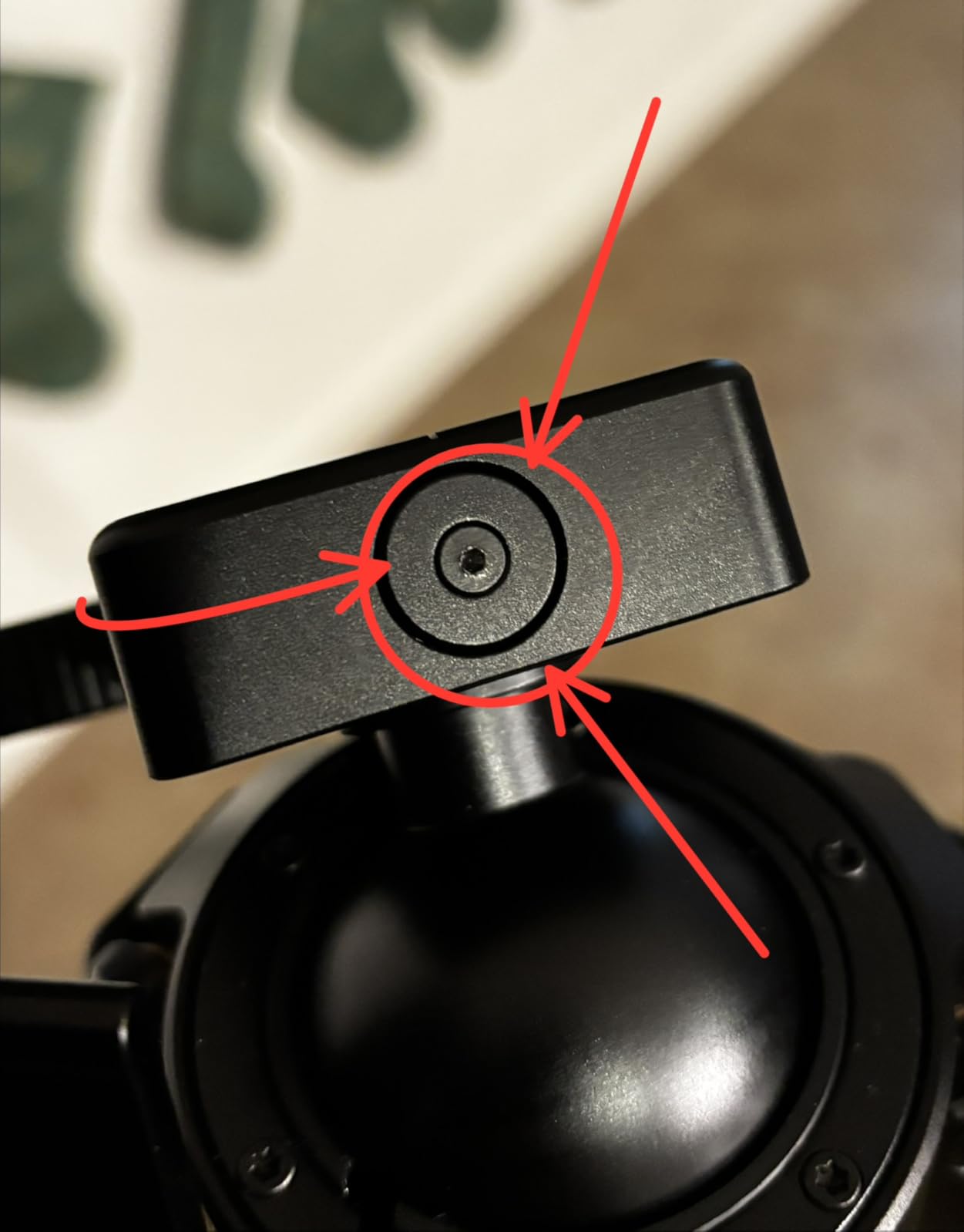
Why three sections is an advantage here
Every joint in a leg is a place for torsional loss and a place for grit to get in. Three sections means fewer twist locks to close in the dark, less chance of a partially locked section, and a shorter time from bag to ready.
It also means the top section is fatter, which is exactly what you want at full extension with a long lens, so the vibration behaviour at height is better than a four-section tripod of similar weight.
When to look past it
If you need a finished system rather than a project, the missing head upgrade and absent bag make this a two-step purchase. A strap or harness matters at 5.8 lb, and there is no hook for a counterweight bag in wind.
Shooting somewhere wet or sandy is also worth weighing, because the freely moving leg angles collect grit faster than a tighter mechanism does.
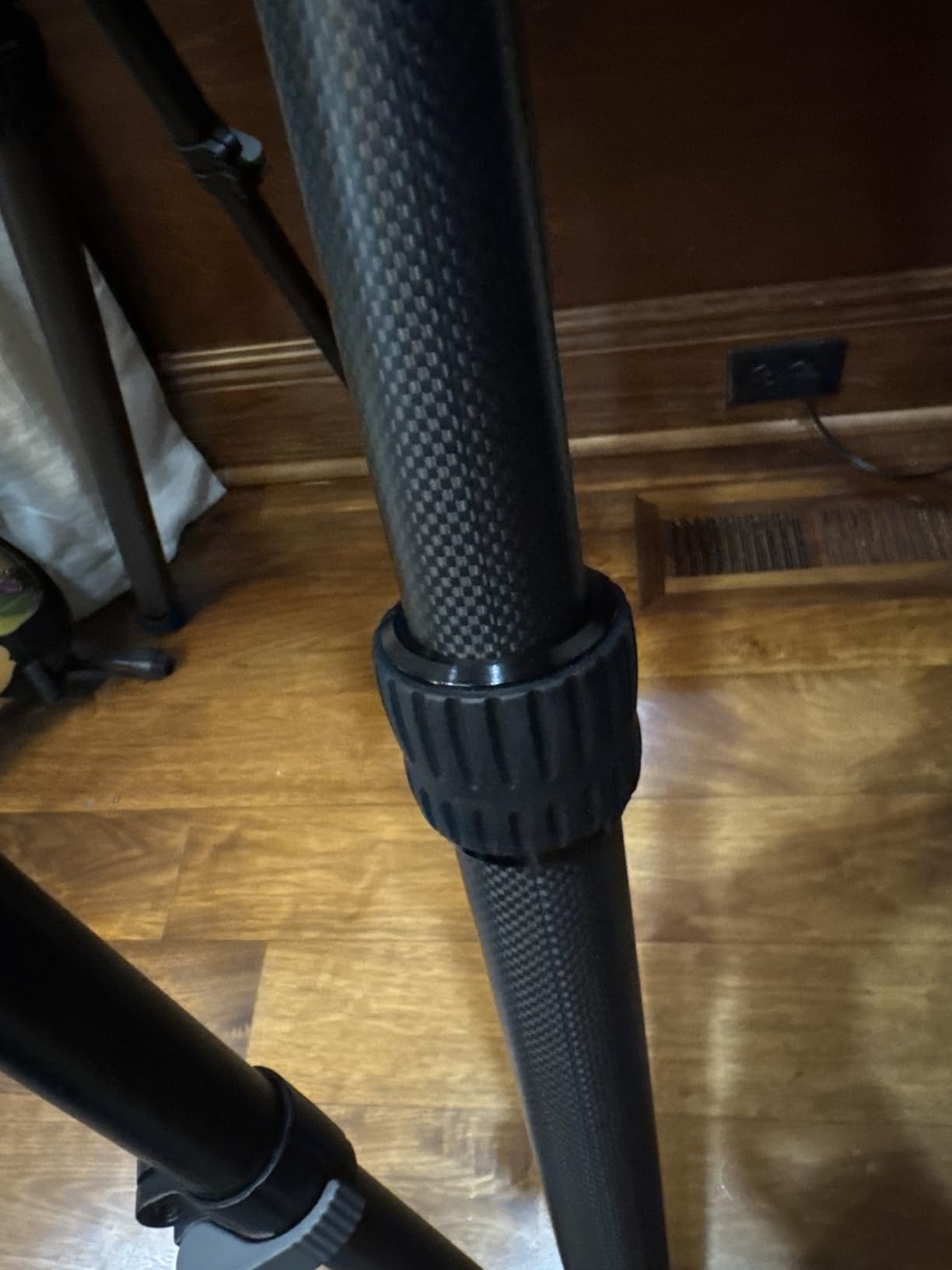
9. Vortex Summit Carbon II Tripod Kit – Lightest Option Here
Pros
- Lightest and most compact in the roundup at 2.5 lb
- Four sections plus a detachable center column
- Locking mechanism stops legs flipping open and dropping gear
- Arca-Swiss compatible quick release
Cons
- Two-way pan head is stiff and bouncy
- Lowest rating in the group
- Some owners reported leg collapse and plastic collars
At 2.5 lb and an 18.1 inch packed length, the Summit Carbon II is the one to take when the walk to the hide is longer than the session. It is the only tripod here that fits inside a backpacking pack rather than needing to be strapped to the outside, and glassers and birders confirm it holds a scope steady in wind at that weight.
The locking mechanism physically prevents the legs flipping open and dropping your gear, which sounds minor until you unpack on a slope. Four leg sections plus a detachable center column give a wide range of working heights, and the Arca-Swiss compatible quick release lets you swap long-range tools without a hex key. The unlimited unconditional lifetime warranty is the strongest in the group.
Why the head is the limiting factor
The two-way pan head is stiff and bouncy, so scanning is unpleasant: you push the handle hard and the view jumps. That is a problem for tracking and a non-issue for glassing, which is what this tripod is genuinely good at.
At 53.3 inches maximum height it is a sitting tripod rather than a full-height stand, so a tall photographer will be kneeling or bent for most of the session. The 22 lb load figure is the second lowest here.
Where it wins
Backcountry glassing, wetland wading, and any session where the tripod is carried further than it is used. The detachable counterweight hook is a nice touch for a rig that can be ballasted in a breeze.
It also carries an Arca-Swiss compatible plate, so it plays well with the plate ecosystem that most wildlife heads use, and the rubber feet plus three-angle leg pivot locks hold on uneven surfaces.
Where it does not
This is the lowest-rated tripod in the roundup at 4.2, with the highest proportion of one-star reviews, and a small number of owners reported leg collapse and plastic leg collars coming out after light use. Check the collars on a used example.
For panning a flying bird or working from a standing hide, choose a tripod with a proper fluid or progressive head. There is no carrying case included either.
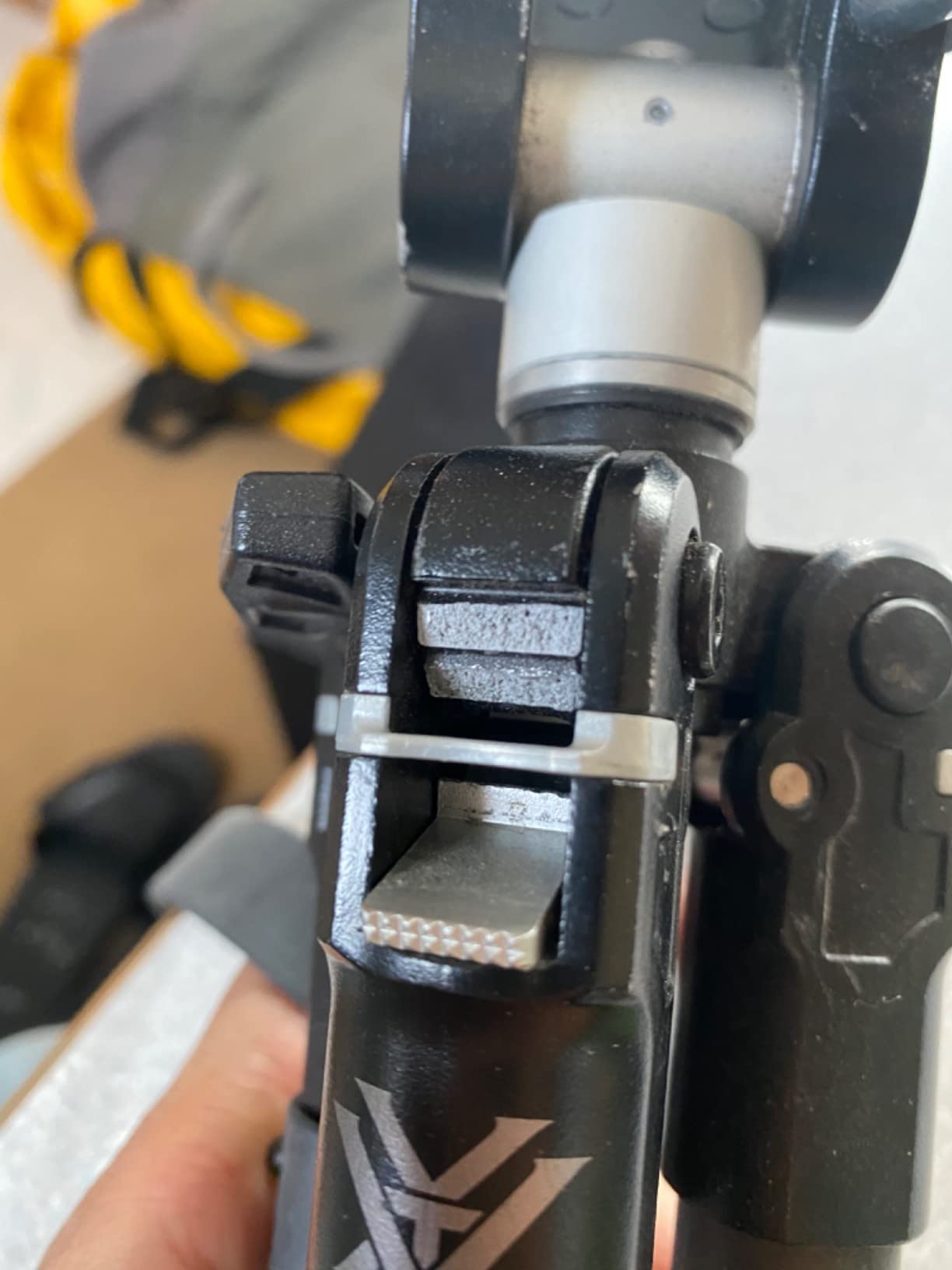
10. FANAUE ST-45 Carbon Fiber Tripod – Best for Steep and Awkward Ground
FANAUE ST‑45 Carbon Fiber Hunting Tripod Arca Swiss QR Plate Ball Head for Shooting Rifle Spotting Scope DSLR
Pros
- Highest rating in the roundup at 4.9 from 44 reviews
- Ball head holds a heavy optic with no creep
- Light for a 55 lb rated tripod
- Twist locks work down to 0 degrees for ground-level work
Cons
- Ball head can squeak and chatter
- No built-in panning without an add-on
- Two-section legs pack bulkier than three-section designs
The ST-45 carries the highest rating in this group at 4.9, and while 94 percent of reviewers give it five stars, the review base is 44, which is the thinnest here. Owners consistently call it lightweight and sturdy for a tripod rated to 25 kg, and value it against far more expensive precision tripods. The 360 degree clamp with a one-second quick lock makes tracking targets smooth for a head of this type.
Construction is ten-layer carbon fiber with CNC aluminium, maximum leg tube 1.41 inches, and the Arca-Swiss plate has a built-in safety stop so gear cannot slide off under impact, plus an extra 3/8 inch hole for accessories. Leg angles adjust through 22, 55 and 85 degrees, twist locks work down to 0 degrees for ground-level work, and the non-slip foot pads held balance on wet, rocky ground in owner testing.
What the rating reflects, and what it does not
A 4.9 from 44 reviews is a strong signal but a small sample. Every other tripod here has hundreds or thousands of reviews behind it, which means more evidence and more reported edge cases. Treat the ST-45 as promising rather than proven.
Owners do report the ball head can squeak and chatter, that it is smaller than some expected for heavy optics, and that several upgraded to the larger head variant. There is also no built-in panning without an add-on, which matters for tracking.
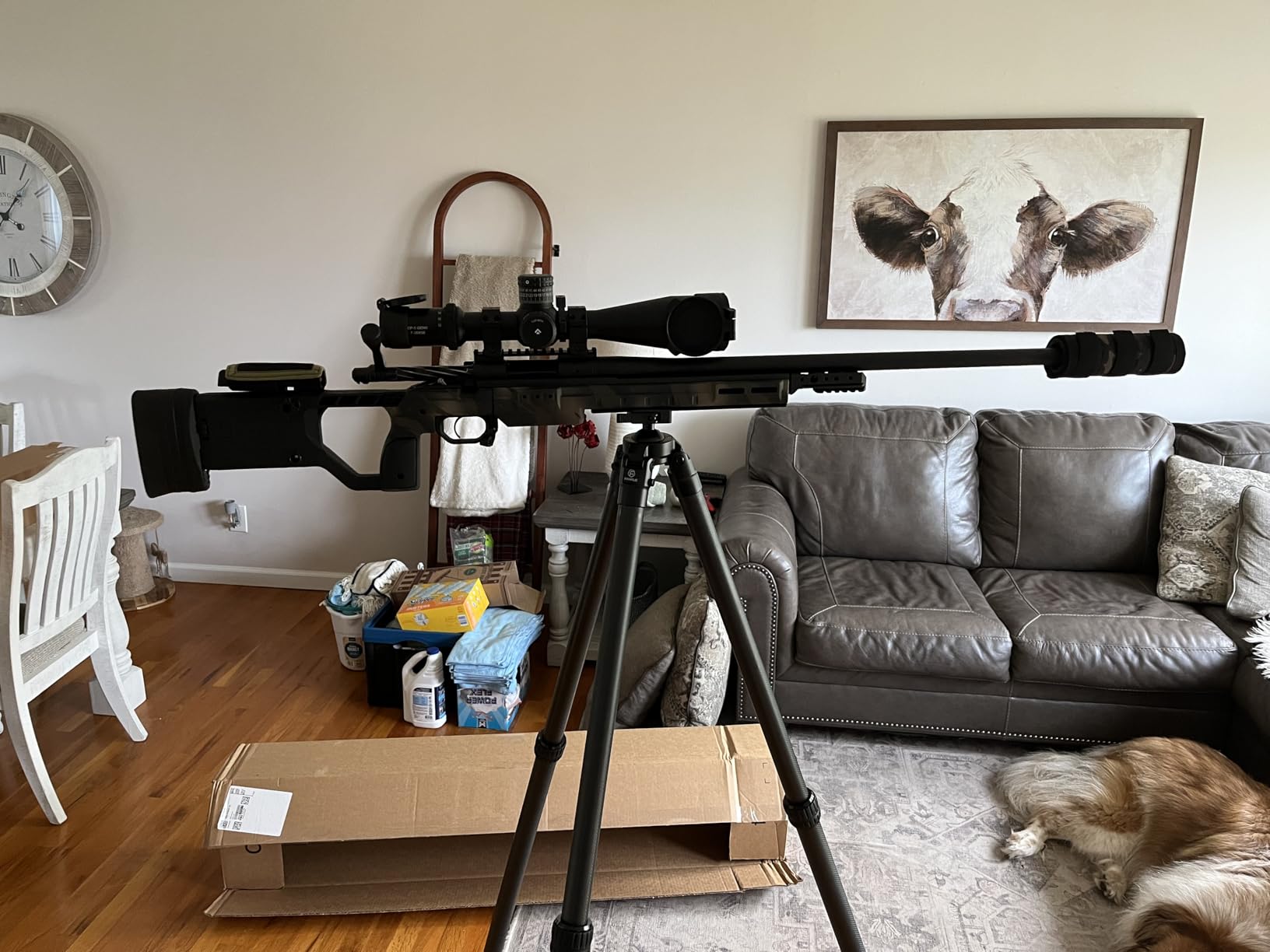
Where the design suits wildlife work
The two-section telescopic structure adjusts height with a single knob, which is fast when you are changing position often. The safety-lock plate is a genuine benefit when you are working around animals that might bump the rig, or in wind.
Lifetime warranty terms and support response within 24 hours are listed, and the wet and rocky ground performance reported by owners is relevant for marsh and estuary work.
When to choose something else
Two-section legs collapse into a bulkier package than three-section designs of the same height, which undercuts the carry advantage you were buying. Panning is an add-on rather than standard.
Given the thin review history, if you are committing to expedition-grade work this year, a model with a documented long-term ownership record is the safer call.
How to Choose a Tripod for Wildlife Photography
What tripod head for wildlife photography? A gimbal head
A gimbal head is the correct answer, and the reason is balance. On a gimbal head the lens is supported at its centre of gravity and floats with friction essentially off, so a properly balanced lens will not tilt no matter how you move the handles. That lets you follow a bird from a standing position and start taking frames before the bird arrives. Every forum thread on this topic reaches the same conclusion. A ball head locks a composition, which is right for a perched subject and wrong for a moving one. A fluid video head with counterweight stages handles long lenses but adds width, weight and cost, and is the choice for long static exposures on a fluid head rather than for flight.
The practical note that nobody states clearly enough: a gimbal head is only useful if the lens is balanced. Loosen both friction knobs, and if the lens does not stay put on its own, slide the footplate until it does. That single adjustment separates a smooth pan from a frustrating one.
Carbon fiber or aluminum for wildlife
Carbon fiber wins on mass and vibration dampening, which is why every serious pick in this roundup is carbon. Aluminum is heavier but stiffer per unit of weight and cheaper, and for a fixed-position tripod used from a vehicle it is entirely adequate. The Victiv here is the aluminum case, and its 3.7 lb versus 1.6 kg for the NEEWER is the trade in a single number.
Layup count is a rough durability proxy. Ten-layer tubing appears on the INNOREL and the FANAUE ST-45, nine-layer on the Benro, and eight-layer on the NEEWER. Higher layup means more stiffness for the same diameter, which matters when a leg is 25 mm at the top section.
Load capacity: use the 2.5x rule
Add up your body and lens weight, then multiply by 2.5 and buy a tripod rated above that figure. The margin exists because load ratings are measured statically, and dynamic loads from panning and wind are several times higher than the static figure.
That rule is also why the INNOREL, at 40 kg, is not the default recommendation. It is sized for rigs that genuinely need it, such as a 600mm f/4-class lens on a pro body.
Height and the center column question
For wildlife, a center column is usually a liability. Every extension adds a joint that flexes, and a fully extended column under a long lens is the single most common cause of soft frames in owner complaints. Look for legs that reach eye level on their own, as the Benro does to 177 cm, or for a design that omits the column entirely, as the SIRUI AM-324S does.
If you need low positions, an inverting or reversible column is better than a tall one, and the shorter secondary column bundled with the Benro is a good example of the same idea. Remember the corollary: without a column you need enough leg extension to reach eye level, or you will spend the session bent forward.
Which tripod for which rig
Match the tripod to the lens, not to the camera. A 100-400mm class zoom on a mirrorless body is a light payload that any of the carbon tripods here will carry comfortably, and the SIRUI Traveler 7C or the Vortex Summit will do it while you hardly notice the weight.
For a 500mm f/4 or 600mm f/4, only the INNOREL RT90C in this list has the leg diameter and rating that treat that as a comfortable rather than a limit case, and even there a modular apex lets you add a proper fluid head. A tripod rated at exactly your rig weight will feel like it, every time.
Field conditions decide more than specs
Twist locks are the weak point in every weather. Grit and salt in a lock is the reason so many reviews in this roundup mention caps cracking or legs jamming. Check that the locks open and close fully after every wet session, and carry a small brush. Rubber feet are kinder to soft ground and to your own hearing; spikes are better on rock and hard mud.
Wind is the other one. Test your rig before you rely on it, and know that a hanging hook for a ballast bag is worth more than any damping claim. If you shoot from a vehicle, most of these tripods fit in a rod holder, which is the cheapest stability upgrade available.
Tripod or Monopod for Wildlife Work
A tripod wins on stiffness, on repeatability and on panning a subject that changes direction. A monopod wins on weight, on speed of repositioning, and on working in cover where you cannot spread legs. For flight and fast mammals, the monopod’s ability to swing the rig quickly often beats a tripod’s ability to hold it still, which is why so many wildlife photographers carry one as a second tool.
The disadvantages of a monopod are real: you cannot go below about chest height without a low monopod head, you cannot shoot straight down to the ground, and the anti-vibration features of a fluid head do not apply. Several tripods in this roundup, including the NEEWER, the SIRUI Traveler 7C and the Victiv, convert to a monopod, which is the pragmatic middle ground and one more reason the NEEWER tops this list.
Frequently Asked Questions
What tripods do wildlife photographers use?
Most professional wildlife photographers use carbon fiber tripods with a flat-top or modular apex, rated well above their rig weight, and fitted with a gimbal head rather than a ball head. A 2.5x payload margin is the usual rule, and the legs are chosen to reach eye level without extending a center column. Mid-tier models from brands like SIRUI, Benro, Ku0026amp;F Concept and Manfrotto perform nearly identically to prestige options for almost all real-world work.
What is the best budget tripod for wildlife photography?
The best budget tripod for wildlife photography is the Victiv 80/85 inch heavy duty model, which reaches standing height and converts to a monopod for very little money. For carbon fiber, the NEEWER N55C and the SIRUI Traveler 7C both sit in the lower price band and carry thousands and hundreds of reviews respectively. The one compromise at the budget end is the supplied ball head, which usually needs replacing before it handles sustained panning.
What is the best tripod head for wildlife photography?
A gimbal head is the best tripod head for wildlife photography. It supports the lens at its centre of gravity so the rig floats and can be started on a moving subject before it arrives, which a ball head cannot do. Balance it first: with all friction knobs loosened, slide the footplate until the lens stays put on its own. That single adjustment is what separates a smooth pan from a frustrating one.
Which is better for wildlife photography, a tripod or a monopod?
A tripod is better for stiffness, repeatability and panning a subject that changes direction, which suits perched birds, waders and landscapes. A monopod is better for weight, speed of repositioning and working in cover, which suits flight and fast mammals. Many wildlife photographers carry both. Several tripods in this roundup, including the NEEWER N55C and the SIRUI Traveler 7C, unscrew into a monopod, which covers both cases.
How much load capacity does a 600mm lens need on a tripod?
Use the 2.5x rule. A 600mm f/4 lens and a pro body together often total around 6 kg, which means you want a tripod rated for 15 kg or more. Load ratings are measured statically, and the dynamic loads from panning and wind are several times higher. A tripod rated at exactly your rig weight will feel it every time, and the INNOREL RT90C is the only model here with the tube diameter to treat that load as comfortable.
Final Verdict
The best tripods for wildlife photographers come down to how you work. The NEEWER N55C is the best all-round buy in 2026: light, tall, and it converts to a monopod when you are covering ground. The SIRUI Traveler 7C is the best value, mainly because its ball head locks progressively and holds a framed composition instead of drifting.
If your glass is heavy, the Benro Mach3 9X is the most refined platform here and the INNOREL RT90C is the one with the headroom for the biggest rigs. Add a gimbal head to whichever legs you choose, balance the lens until it floats, and the rest is just patience. Our guides to Vanguard tripods for wildlife and tripods built for bird photography cover the alternatives worth weighing next.