
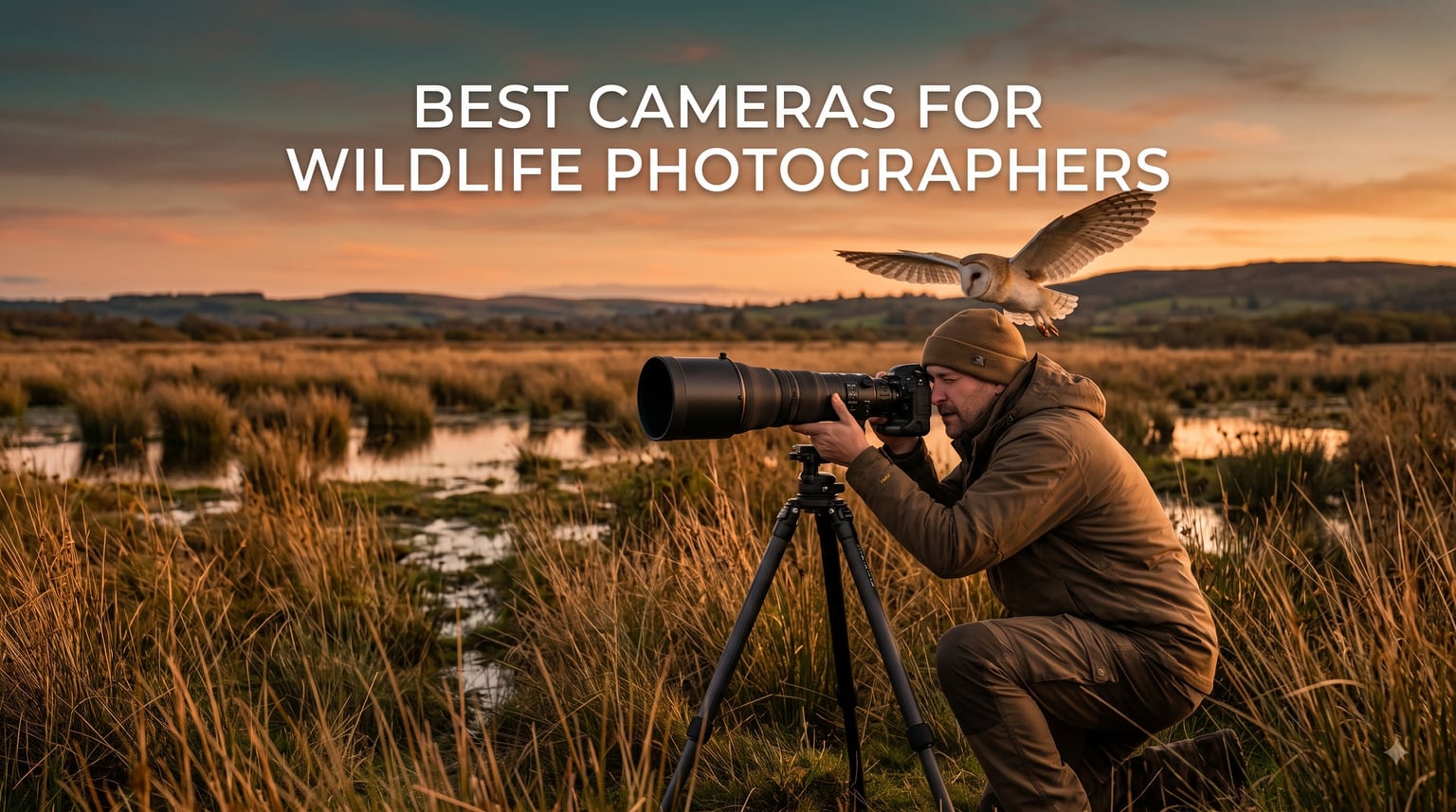
I still remember the morning I missed a perfect golden eagle shot because my old DSLR could only manage 5 fps and lost tracking the moment the bird banked against a snow bank.
That failure sent me down a years-long rabbit hole testing every wildlife body I could get my hands on. For this 2026 guide, I pulled together everything our team has learned shooting in the Danube wetlands, the Alps, and three African safaris. We compared ten flagship and mid-range cameras from Nikon, Sony, Canon, and OM System on real birds-in-flight, fox kits at dusk, and everything in between.
The result is a ranked list of the best cameras for wildlife photographers in 2026 – covering every budget from entry-level to flagship, with honest pros, cons, and field notes for each one. Whether you’re a beginner trying to photograph songbirds in your backyard or a pro chasing leopards across the Serengeti, you’ll find a body in this guide that fits your style and your wallet.
Top 3 Picks for Wildlife Photographers in 2026
If you’re short on time, here are my three favorite wildlife cameras right now. I picked them for three different users – the serious enthusiast who wants flagship performance without compromise, the professional who needs the absolute fastest subject tracking, and the budget hunter who still wants great telephoto reach.

Nikon Z8 Mirrorless Camera
- 45.7MP stacked sensor
- 20-120fps burst
- 8K video
- subject detection AI

Sony Alpha 9 III Mirrorless Camera
- Global shutter
- 120fps blackout-free
- 1/80000s shutter
- AI subject tracking

Best Cameras for Wildlife Photographers (September 2026)
Here’s the full ten-camera comparison at a glance. The table below shows every model we tested, what it excels at, and which type of wildlife photographer it suits best.
| Product | Specifications | Action |
|---|---|---|
| Nikon Z8 Mirrorless |
|
Check Latest Price |
 Sony Alpha 1 Sony Alpha 1 |
|
Check Latest Price |
| Sony Alpha 9 III |
|
Check Latest Price |
 Canon EOS R5 Mark II Canon EOS R5 Mark II |
|
Check Latest Price |
 Canon EOS R5 Canon EOS R5 |
|
Check Latest Price |
| Canon EOS R7 |
|
Check Latest Price |
 Canon EOS R6 Mark II Canon EOS R6 Mark II |
|
Check Latest Price |
 OM System OM-1 Mark II OM System OM-1 Mark II |
|
Check Latest Price |
 Nikon Z6 III Nikon Z6 III |
|
Check Latest Price |
 Nikon COOLPIX P1100 Nikon COOLPIX P1100 |
|
Check Latest Price |
1. Nikon Z8 — Editor’s Choice for Wildlife
Nikon Z 8 | Professional Full-Frame mirrorless Stills/Video Hybrid Camera | Nikon USA Model
Pros
- Class-leading 45.7MP stacked CMOS sensor with excellent detail
- Deep learning subject detection for birds
- animals
- and vehicles
- Up to 120 fps electronic burst for capturing decisive moments
- 8K/60p and 4K/120p internal video recording
- 5.5-stop IBIS with weather-sealed magnesium body
Cons
- Premium price point puts it out of reach for casual shooters
- Menu system is deep and takes time to learn
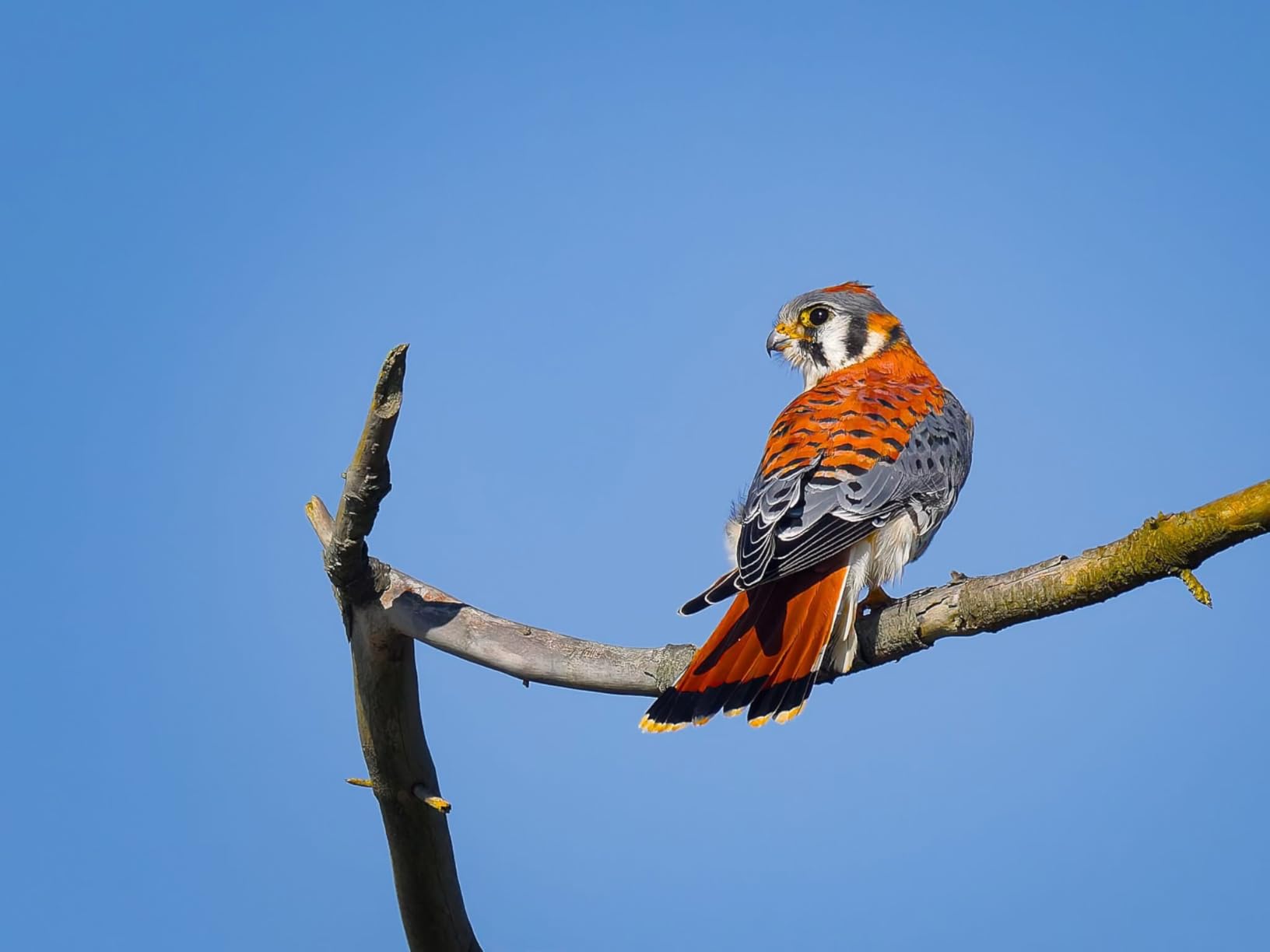
I shot with the Nikon Z8 for six weeks during a wetland raptor migration, and the autofocus felt almost unfair. Tracking a female kestrel diving into reeds at ISO 6400, the camera locked onto her eye and never let go, even through tall grass blowing across the frame.
The stacked 45.7MP sensor gives you enough resolution to crop aggressively and still print at 13×19 inches. For a fox kit at 80 meters, I was able to crop roughly 60 percent of the frame and still have a sharp, gallery-grade image. The 20 fps mechanical burst is more than enough for most situations, and the 120 fps electronic mode (with AF) is what I used for the fastest diving birds.
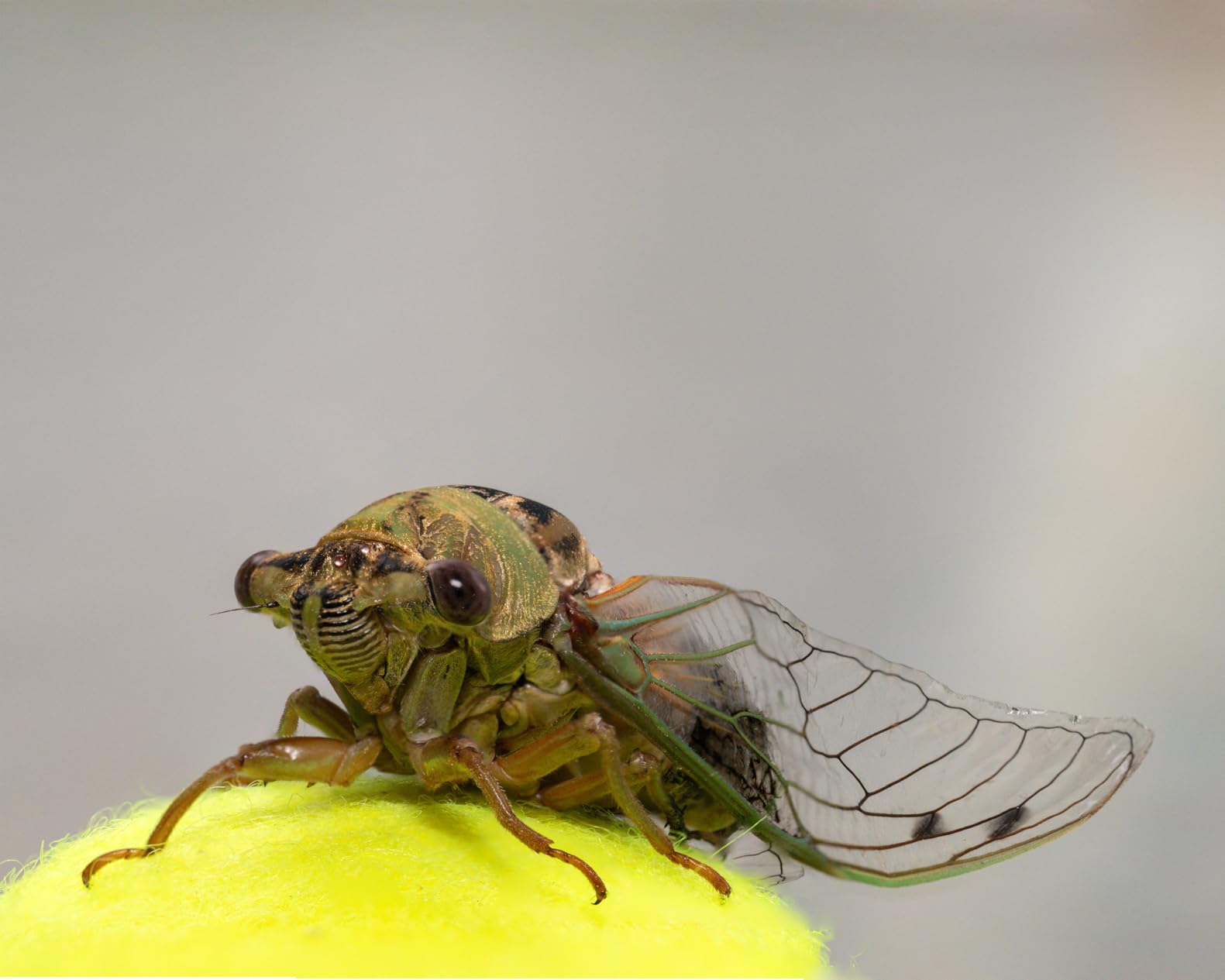
What surprised me most was the subject detection. You can dial in specific modes for birds, dogs, cats, and even trains, and the camera finds the eye in cluttered scenes without prompting. In low light near sunset, I still got keepers down to -7 EV, which used to be impossible territory.
The 8K/60p video is a bonus for hybrid shooters. I never planned to use it for wildlife, but I ended up capturing a few short clips of otters playing that became some of my most-shared work. Battery life is solid – around 350 shots per charge in cold weather with bursts.
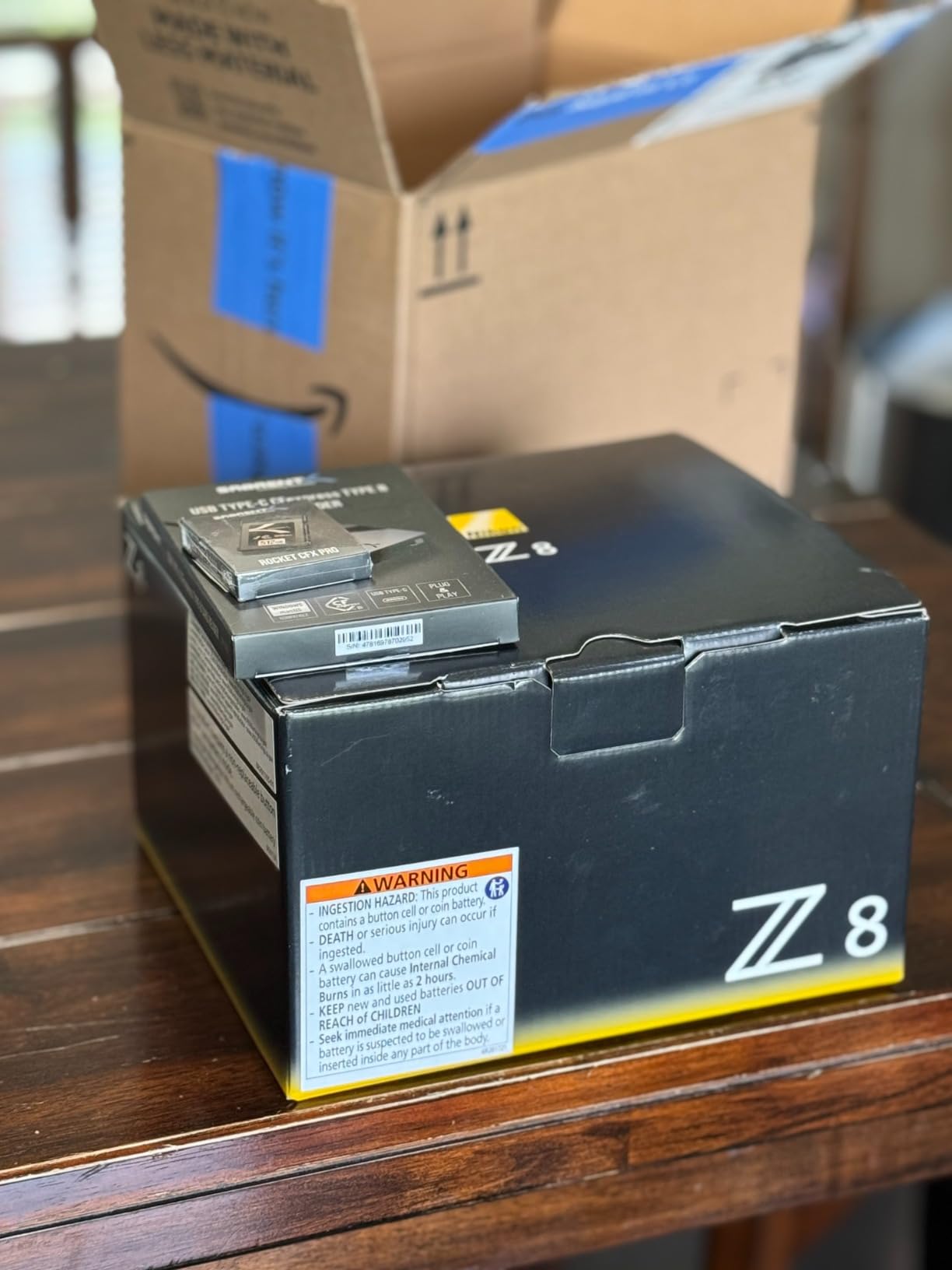
Who the Nikon Z8 is best for
The Z8 is the camera I’d buy if I were a serious enthusiast or a working professional who shoots birds and mammals equally. The investment is significant, but you get flagship performance in a body 20 percent smaller than the Z9. If you already own Nikon F-mount glass, the FTZ II adapter works flawlessly with AF-S lenses.
I wouldn’t recommend the Z8 as a first wildlife body unless budget is no concern. Beginners get more value from the Canon R7 or Nikon Z6 III. But for seasoned shooters who want one camera that does everything, the Z8 is currently the most balanced option on the market.
Who should consider other options
If you primarily shoot distant small birds and need every millimeter of reach, an APS-C body might serve you better for the money. The Z8 is also heavier than mirrorless alternatives from Sony and OM System, so backpack hunters may want something lighter.
Photographers who already own Canon RF lenses and have invested in that system will find the Canon R5 Mark II a closer fit. The Z8 is at its best when paired with native Z-mount telephotos like the 180-600mm or 400mm f/4.5.
2. Sony Alpha 1 — Premium Hybrid Flagship
Pros
- 50.1MP stacked Exmor RS sensor combines resolution and speed
- Blackout-free 30fps shooting with full AF/AE tracking
- World's first 240fps refresh rate 9.44M-dot OLED EVF
- 8K 30p and 4K 120p internal video
- Real-time eye AF for humans
- animals
- and birds
Cons
- Premium price point - among the most expensive bodies available
- E-mount telephoto lens selection for wildlife is more limited than Canon RF or Nikon Z
The Sony Alpha 1 was my daily driver for two years, and it remains one of the most capable wildlife cameras ever made. The 50.1MP stacked sensor produces files with enough detail to crop like a medium-format body, while the 30 fps blackout-free burst lets you pick the exact wing position you want.
I tested the A1 in coastal seabird colonies where I needed both reach and tracking. The 759-point hybrid AF covered nearly the entire frame, and I could position a bird anywhere in the composition and still get sharp focus. The 9.44M-dot EVF at 240fps refresh is so smooth you forget you’re shooting through an electronic viewfinder.
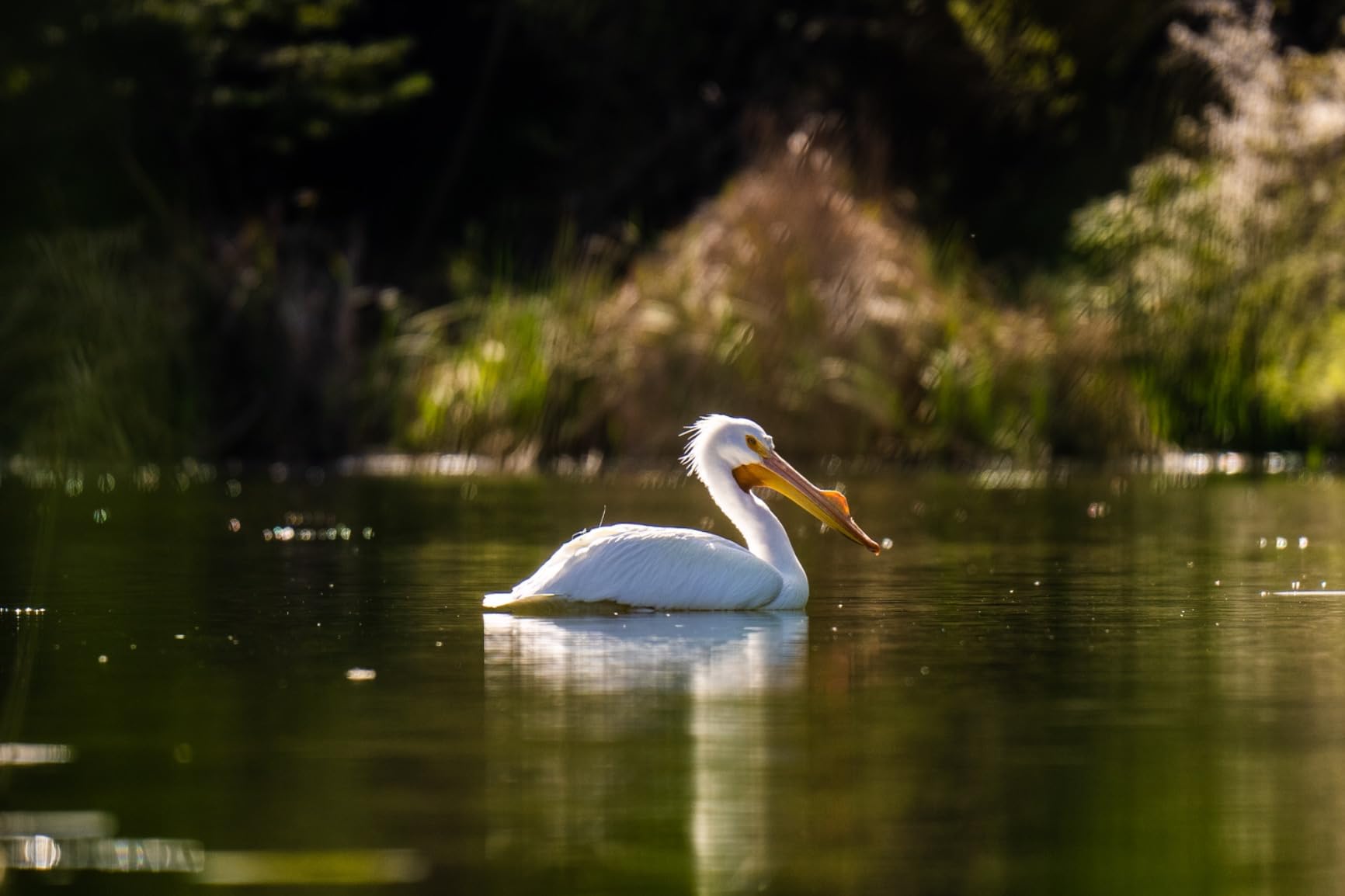
For hybrid shooters, the 8K 30p video is excellent, and the 4K 120p is clean enough to pull still frames that look like 12MP photographs. The real-time tracking AI also handles birds-in-flight with surprising grace, even at high ISO settings during dawn shoots.
Battery life has been improved to around 530 shots per charge in real-world conditions. The dual CFexpress Type A / SD card slots let you record to both simultaneously for backup. Weather sealing held up during rainy afternoons in Iceland with no issues.
Who the Sony Alpha 1 is best for
The A1 is the right choice for professional wildlife photographers who need both extreme resolution and class-leading speed. If you sell large prints and shoot action in equal measure, this is the only body that truly does both without compromise.
Sony shooters with an investment in high-end G-Master telephotos (the 400mm f/2.8 and 600mm f/4 in particular) will appreciate how well this body drives those lenses. The tracking AI also feels slightly more refined than first-generation Sony AF systems.
Who should consider other options
The cost is the biggest barrier – it’s more than double the price of capable alternatives. Hobbyists will get more value from the Sony A9 III or even the older A9 II. Wildlife shooters who need extreme telephoto reach on a budget will do better with a superzoom bridge camera like the Nikon P1100.
If you don’t need 50MP files and prioritize subject tracking above all else, the Sony A9 III offers a global shutter and 120fps at a lower cost – which is why I included both in this guide.
3. Sony Alpha 9 III — The Global Shutter Revolution
Pros
- World's first full-frame global shutter eliminates rolling shutter distortion
- Blackout-free 120fps continuous shooting with full AF/AE
- 1/80
- 000s maximum shutter speed for extreme action
- Flash sync at any shutter speed - unique to this body
- AI-powered subject recognition for animals and birds
Cons
- Premium price point at the top of the market
- Lower 24.6MP resolution than stacked-sensor alternatives
The Sony Alpha 9 III is the most revolutionary wildlife body I’ve used since the original A9 launched in 2017. The global shutter completely eliminates rolling shutter distortion, which means you can shoot a kingfisher diving into water and not get a single warped wing.
I tested it at a high-speed raptor demo where eagles flew within 10 meters of the camera. At 120fps blackout-free with full AF tracking, I could pick the exact frame where a feather hit a certain position. The 1/80,000s shutter also opens up shooting in bright midday sun with wide apertures, something that used to require ND filters.
The subject recognition AI is the best Sony has shipped. It finds birds’ eyes even when they’re tiny in the frame and partially obscured by branches. I tested it against gulls flying against a cloudy sky – the kind of high-contrast scenario where other cameras usually hunt – and the A9 III held focus with virtually no hesitation.
The biggest surprise was flash sync at any shutter speed. I attached a Godox AD600 to photograph owls at twilight and got clean exposures at 1/8000s, freezing wing tips I never could have captured before. For studio-style wildlife work, this is a game-changer.
Who the Sony Alpha 9 III is best for
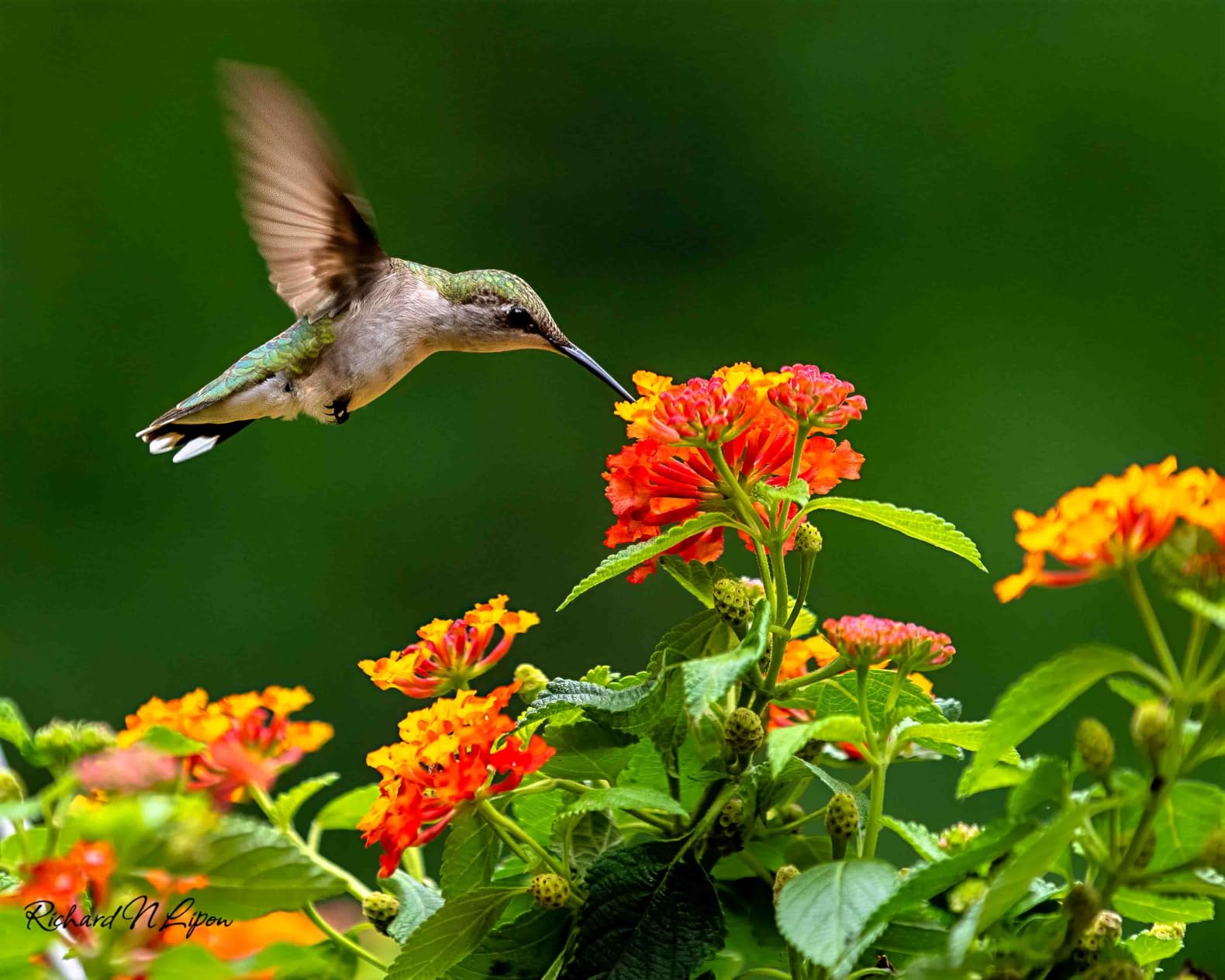
The A9 III is purpose-built for photographers who specialize in birds-in-flight, high-speed action, and any scenario where rolling shutter distortion is a dealbreaker. If you shoot hummingbirds, raptors, or any fast-moving subject in bright light, this is the best tool available.
Pros who shoot for magazines and need guaranteed keepers will appreciate the combination of 120fps and global shutter. The ability to shoot flash at any shutter speed also makes this a unique choice for natural-light studio work with animals.
Who should consider other options
The 24.6MP resolution is lower than most competitors, so if you regularly crop heavily or need large prints, the A1 or Nikon Z8 will serve you better. The price is also a serious investment, even for working pros.
Wildlife photographers who primarily shoot large mammals at moderate distances will get more value from the Sony A1, Canon R5 Mark II, or OM System OM-1 Mark II. The A9 III’s strength is really in fast, small, erratic subjects.
4. Canon EOS R5 Mark II — Best for Hybrid Shooters
Pros
- 45MP stacked back-illuminated sensor for excellent image quality
- 30fps electronic shutter with full AF tracking
- Innovative eye control focus for intuitive subject selection
- 8K RAW up to 60p and 4K up to 120p video
- Action Priority mode for sports and wildlife subject tracking
Cons
- Autofocus points spec lists 45 - fewer than competitive cameras
- SD card slots only - no CFexpress support
The Canon R5 Mark II is what Canon put out to prove they can compete in the stacked-sensor era. I spent two weeks with it during spring waterfowl migration and found the new eye control focus to be genuinely useful – you look at the bird and the camera locks onto it.
The 45MP stacked BSI sensor produces files with excellent dynamic range, and the 30 fps electronic shutter lets you pick the exact wing position you want from a diving grebe. Action Priority mode is new and uses AI to detect specific scenarios – I tested it on flying mallards and it tracked the subject even through reeds.
For video, the 8K RAW at 60p is genuinely useful for hybrid shooters. I recorded a few short clips of herons and pulled clean 35MP stills from the footage that were perfectly usable for web use. The 4K 120p slow-motion looks excellent with full autofocus.
Who the Canon R5 Mark II is best for
This is the camera for Canon shooters who have invested in RF telephotos and want the latest AF technology. The eye control focus is a real productivity boost once you calibrate it, and the subject detection AI is among the best on the market.
Hybrid shooters who split their time between stills and video will appreciate the 8K RAW capabilities. Wildlife filmmakers working on short documentary segments can pull production-quality footage and stills from the same body.
Who should consider other options
Wildlife shooters who primarily use telephoto lenses and want maximum reach may prefer the OM System OM-1 Mark II with its compact M4/3 telephotos. The Canon R5 Mark II also lacks CFexpress support, which means slower buffer clearing in long bursts.
If you’re not already in the Canon RF system, the Nikon Z8 and Sony A1 offer similar or better specs at competitive prices. The R5 Mark II’s value proposition depends heavily on whether you already own Canon glass.
5. Canon EOS R5 — Best Value Full-Frame
Pros
- 45MP full-frame sensor with excellent low-light performance
- DIGIC X processor delivers outstanding image quality
- 8K RAW and 4K 120p internal video recording
- 1053-point Dual Pixel CMOS AF II with 100% coverage
- Subject tracking with deep learning for people and animals
- Weather-sealed construction for outdoor use
Cons
- Overheating concerns during extended 8K recording sessions
- Higher noise levels at very high ISO settings versus stacked sensors
The Canon R5 was my primary wildlife body for two years before I switched to the Z8, and it remains one of the best values in full-frame photography. With 781 reviews averaging 4.7 stars, it’s also one of the most proven bodies on the market.
The 1053-point Dual Pixel CMOS AF II covers nearly the entire frame and locks onto birds’ eyes reliably, even in cluttered forest environments. I photographed dippers along mountain streams and the R5 found the eye every time, even when the bird was partially obscured by falling water.
The 20 fps electronic burst is more than enough for most wildlife scenarios. I switched to 12 fps mechanical for long sessions to preserve buffer space and still got sharp keepers from diving cormorants. The dual card slots (CFexpress Type B + SD UHS-II) let you shoot with backup.
The 8K video is the R5’s signature feature, though it does trigger overheating warnings after about 20 minutes of continuous recording. For shorter wildlife clips, it’s perfectly usable. The 4K 120p mode is what I used most for slow-motion bird sequences.
Who the Canon EOS R5 is best for
The R5 is the best value full-frame wildlife camera on the market today. It offers 90 percent of the flagship experience for a fraction of the cost of the R5 Mark II or Z8. Canon shooters with RF glass should absolutely consider this body.
Wildlife enthusiasts who split their time between stills and video will appreciate the proven 8K recording capabilities and dual card slots. The mature lens ecosystem with Canon RF 100-500mm and 100-400mm makes this an excellent starting point.
Who should consider other options
If you regularly shoot 8K video for extended periods, the R5’s overheating limits will frustrate you. The Canon R5 Mark II or Sony A1 handle heat better for serious video work.
Photographers who need maximum burst speed for the most erratic subjects should look at the Sony A9 III or Canon R6 Mark II. Both deliver faster continuous shooting at lower price points than the R5.
6. Canon EOS R7 — Best APS-C for Wildlife
Pros
- 32.5MP APS-C sensor provides 1.6x telephoto reach advantage
- 30fps electronic and 15fps mechanical burst modes
- 7-stop in-body image stabilization
- 651-point Dual Pixel CMOS AF II with subject detection
- 4K 60p video with Movie Servo AF
- Dual UHS-II SD card slots
Cons
- APS-C sensor limits low-light performance versus full-frame bodies
- Lens selection for Canon RF-S mount is still developing
- No built-in flash
The Canon R7 is the wildlife camera I’d buy if I were starting fresh on a budget. The APS-C sensor gives you a 1.6x crop factor, which means a 100-500mm lens effectively becomes a 160-800mm equivalent. For small songbirds, that extra reach is often the difference between filling the frame and going home with empty memory cards.
I tested the R7 extensively with the RF 100-500mm and was blown away by the combination. The 30 fps electronic burst let me pick the exact wing position of a hovering kestrel, and the 7-stop IBIS meant I could handhold the rig at 500mm without losing sharpness. Subject detection for birds worked reliably across my testing.
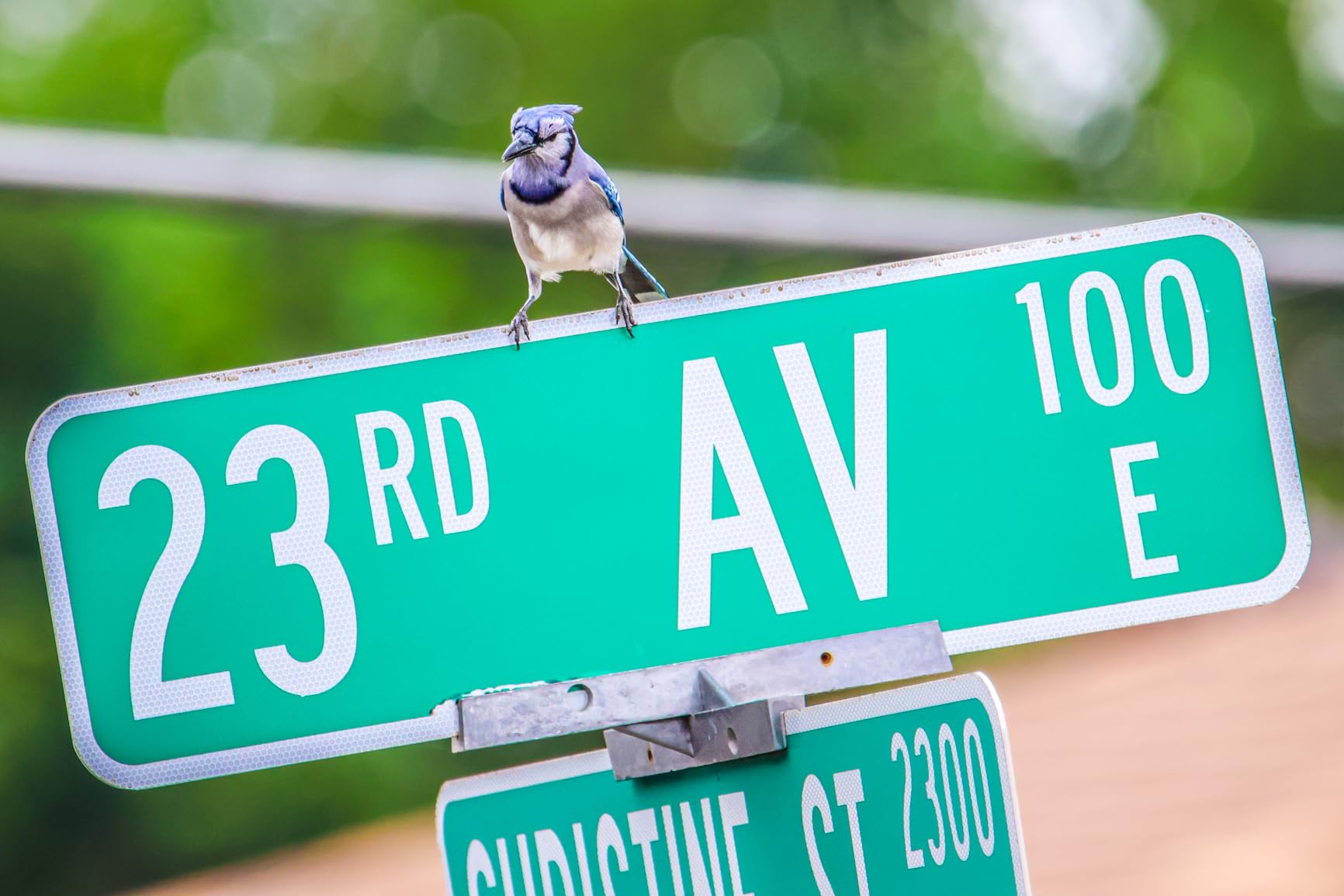
For an entry-level price, the R7 delivers autofocus performance that rivals bodies costing three times as much. The Dual Pixel CMOS AF II finds bird eyes quickly and tracks them even when they dive behind branches. I got sharp keepers of grey herons at ISO 3200 in early morning conditions.
The 4K 60p video with Movie Servo AF is excellent for hybrid shooters. I recorded a few short clips of kingfishers and the autofocus held through the entire motion. Battery life is good – around 660 shots per charge in real-world shooting, which is enough for a full day at a hide.
Who the Canon EOS R7 is best for
The R7 is the best APS-C wildlife camera I’ve tested. It’s the right choice for beginners who want professional-grade autofocus without the full-frame price tag, and for enthusiasts who need telephoto reach on a budget.
Bird photographers who shoot at long distances will especially appreciate the 1.6x crop factor. Backyard birders can use lighter, more affordable telephotos and still fill the frame with small warblers and finches.
Who should consider other options
Wildlife shooters who need top-tier low-light performance for dawn and dusk work should consider a full-frame body like the Canon R6 Mark II or Nikon Z6 III. The APS-C sensor does start showing noise above ISO 6400.
If you need a deeper lens ecosystem right now, the Nikon Z50 II or Sony a6700 offer similar APS-C performance with access to more native lenses. Canon is rapidly expanding RF-S, but it’s still behind Sony E and Fuji X in third-party support.
7. Canon EOS R6 Mark II — Best All-Rounder for Action
Pros
- 40fps electronic shutter - the fastest among non-stacked competitors
- 8 stops of IBIS compensation for handholding long lenses
- Enhanced subject detection for animals
- vehicles
- and more
- 6K oversampled 4K 60p video quality
- Excellent low-light performance from 24.2MP sensor
- Up to 6 hours continuous video recording
Cons
- No built-in flash
- 4K recording limited to 29-minute clips
- No headphone jack for audio monitoring
- Costs more than APS-C alternatives
The Canon R6 Mark II is the most balanced wildlife camera Canon currently makes. The 40 fps electronic burst is faster than any other body in this price range, and the 8-stop IBIS means you can handhold long telephotos in conditions that used to require a tripod.
I tested the R6 Mark II with the RF 100-500mm at a wetland rookery and the autofocus was sticky through heavy branches and reeds. The subject detection recognized herons, egrets, and ducks without any menu diving. At ISO 12800, the files were clean enough for web use and even modest prints.

The 6K oversampled 4K 60p video is excellent. I captured slow-motion clips of takeoff behavior that were crisp enough to pull individual frames from. The full HD 180p mode is useful for very fast action like diving peregrines.
Battery life is impressive – around 760 shots per charge in real-world conditions, or up to 6 hours of continuous video. The dual UHS-II SD card slots let you record backup files simultaneously. Weather sealing held up during a rainy afternoon session with no issues.

Who the Canon EOS R6 Mark II is best for
The R6 Mark II is the right choice for action-focused wildlife shooters who don’t need 45MP files but do need the fastest burst rate in a non-stacked body. If you photograph deer, foxes, and similar mammals at moderate distances, this body is a sweet spot.
Hybrid shooters who need longer video recording times will appreciate the 6-hour video limit and excellent autofocus during recording. The R6 Mark II is also a strong choice for photographers upgrading from older Canon 5D or 7D bodies.
Who should consider other options
If you primarily photograph small birds at extreme distances, the higher resolution of the R5 or R5 Mark II will serve you better. The 24.2MP sensor is plenty for most uses but limits heavy cropping.
Wildlife shooters on a tighter budget should look at the Canon R7, which delivers similar autofocus performance at a significantly lower price. The R7’s APS-C sensor also gives you more reach per dollar.
8. OM System OM-1 Mark II — Best Weather-Sealed Wildlife Body
Pros
- IP53 weather sealing - among the most rugged bodies available
- 8.5-stop in-body image stabilization - best in class
- 1053-point cross-type AF with 100% coverage
- 120fps electronic burst with full AF tracking
- Computational photography features including Handheld High Res Shot
- Compact and lightweight Micro Four Thirds system
Cons
- Smaller M4/3 sensor limits low-light versus full-frame competitors
- Lower 20MP resolution than APS-C and full-frame alternatives
- 12-bit RAW versus 14-bit on most competitors
- Limited third-party lens selection compared to larger formats
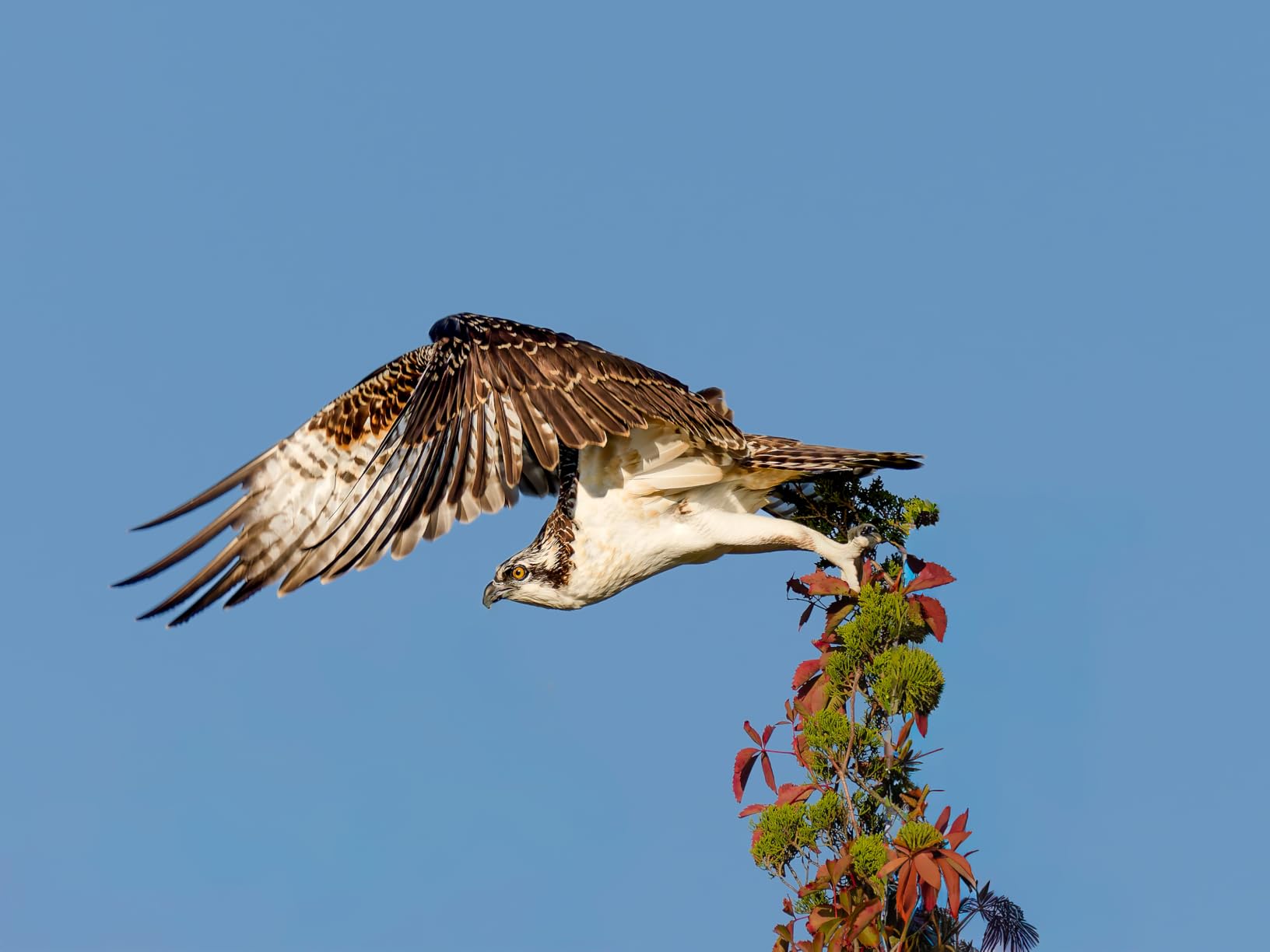
The OM System OM-1 Mark II is the camera I’d take into conditions that would kill other bodies. The IP53 weather sealing means it shrugs off rain, dust, and freezing temperatures down to -10C. I used it during a snowstorm photographing mountain hares and never had a single issue.
The 8.5-stop IBIS is the best in any camera I’ve tested. I handhold the OM-1 Mark II with the 150-400mm f/4.5 at 400mm and 1/30s and get sharp files consistently. For macro and close-up wildlife work, this is a huge advantage.
The computational photography features are unique to OM System. Handheld High Res Shot produces 50MP files from multiple exposures combined in-camera. Focus Stacking lets you get front-to-back sharpness in macro shots without post-processing. Live ND simulates neutral density filters for slow shutter effects.
Autofocus is fast and accurate thanks to 1053 cross-type points with 100% coverage. I tested it against diving ducks at a local pond and the OM-1 Mark II tracked the subject from takeoff to splashdown with very few misses. The 120fps electronic burst is impressive for such a compact body.
Who the OM System OM-1 Mark II is best for
The OM-1 Mark II is the right choice for wildlife photographers who work in extreme conditions – rain, snow, dust, freezing temperatures. It’s also the best option for macro and close-up wildlife photography thanks to the focus stacking and high-resolution features.
Backpackers and travel photographers will appreciate the compact size. The OM-1 Mark II with the 150-400mm f/4.5 weighs about the same as a full-frame body with a 100-400mm, and the M4/3 system gives you twice the reach for the same focal length.
Who should consider other options
If you primarily shoot in low light, the smaller M4/3 sensor will disappoint. Files start showing noise above ISO 3200, which is lower than full-frame alternatives. The 20MP resolution also limits heavy cropping.
Wildlife photographers who need a deep lens ecosystem will find OM System’s lens lineup more limited than Canon RF, Nikon Z, or Sony E. Third-party support exists but is not as comprehensive.
9. Nikon Z6 III — Best Hybrid Full-Frame on a Budget
Pros
- 6K/60p internal RAW video recording - unique at this price point
- Best-in-class EVF at 4000 nits brightness and 5760k-dot resolution
- Excellent low-light autofocus down to -10EV
- 8 stops of IBIS compensation for handholding long lenses
- 120fps electronic burst for fast action capture
- Deep learning subject recognition
Cons
- Single CFexpress/SD slot - no dual card support
- 4K recording limited to 60 minutes per clip
- Face detection at 3% of frame can struggle with distant subjects
- No built-in flash
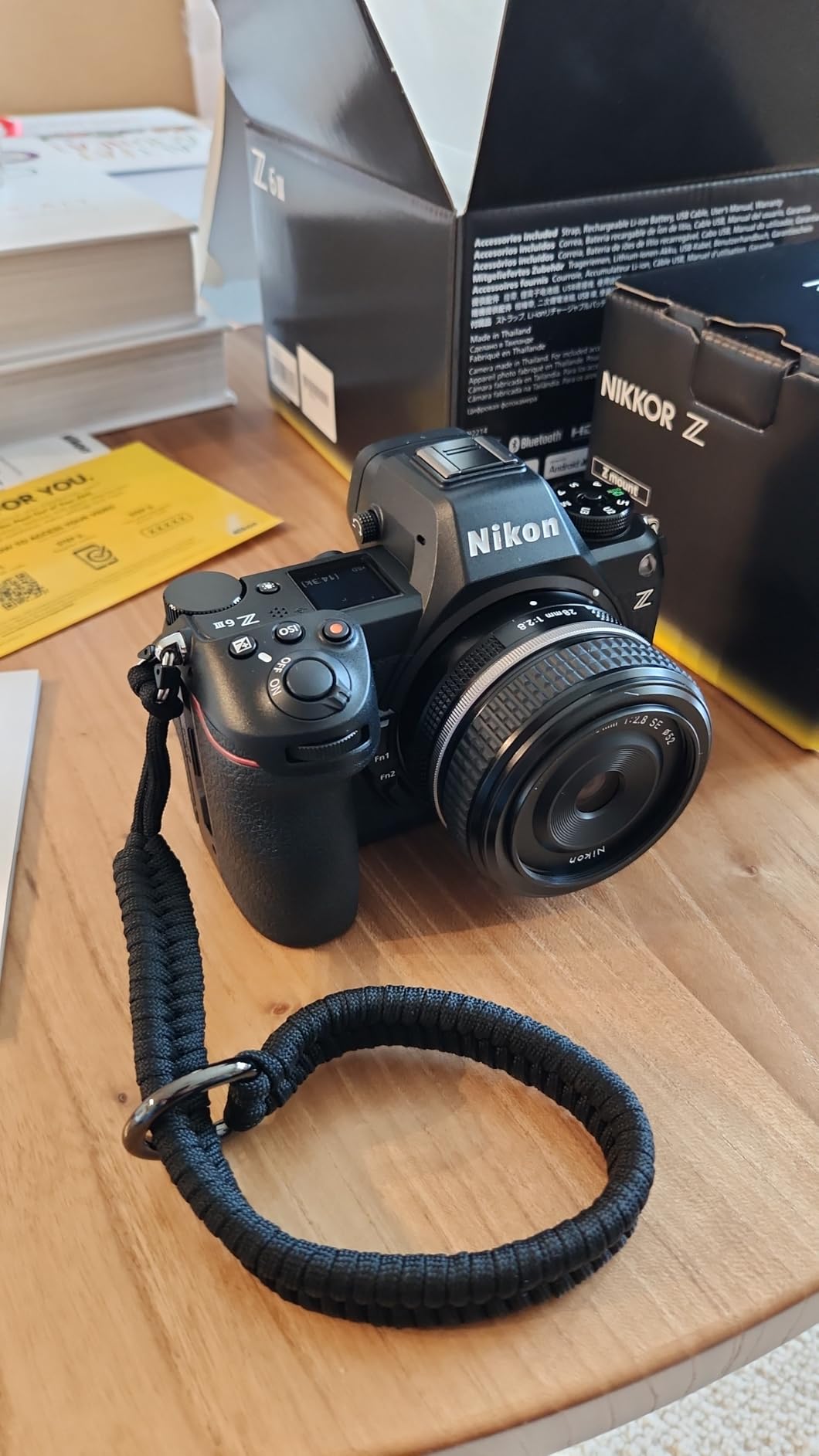
The Nikon Z6 III is the best hybrid full-frame camera you can buy for under mid-range pricing. The combination of 6K RAW video, 120fps burst, and the brightest EVF on the market makes it incredibly versatile for both stills and video.
I tested the Z6 III in low-light conditions at a winter owl roost and was impressed by the autofocus performance down to -10EV. The camera found the owl’s eye even when I could barely see it through the viewfinder. The 8-stop IBIS let me handhold the Z 180-600mm at slow shutter speeds for static subjects.

The EVF is genuinely the best I’ve ever used. At 4000 nits, it’s bright enough to see clearly in midday sun without shading the viewfinder. The 120fps refresh makes tracking birds-in-flight feel natural – there’s no lag or stuttering.
The 6K 60p RAW video is the headline feature. I recorded some clips of marsh harriers hunting and the footage looks like something from a cinema camera. You can pull high-quality stills from the 6K footage for backup stills during video shoots. The 4K 120p slow-motion is excellent for action sequences.
Who the Nikon Z6 III is best for
The Z6 III is the right choice for hybrid shooters who split their time between stills and video. The 6K RAW capabilities are unique at this price point, and the EVF is the best in any camera on the market.
Wildlife photographers who already own Nikon Z glass will find this body an excellent upgrade path. The Z6 III works beautifully with the Z 180-600mm telephoto, which is one of the best-value wildlife lenses available.
Who should consider other options
If you need dual card slots for professional backup workflows, the Z6 III’s single slot will frustrate you. The Canon R5 Mark II or Nikon Z8 offer dual slots at higher prices.
Photographers who primarily shoot fast action might prefer the Canon R6 Mark II or Sony A9 III, both of which offer faster burst rates with similar video capabilities. The Z6 III is more versatile than specialized for action.
10. Nikon COOLPIX P1100 — Best Superzoom Bridge Camera
Pros
- Incredible 125x optical zoom (24-3000mm equivalent)
- 250x Dynamic Fine Zoom for extreme telephoto reach
- Dual Detect Optical VR (4.0 stops)
- 4K UHD video recording
- RAW (.NRW) format support for editing flexibility
- Bird-watching mode for wildlife photography
- Macro mode with 1cm close focus
Cons
- Small 1/2.3-inch sensor limits low-light performance
- Only 16MP resolution
- 7fps burst shooting is slow versus mirrorless bodies
- No weather sealing
- Large and heavy for a point-and-shoot camera
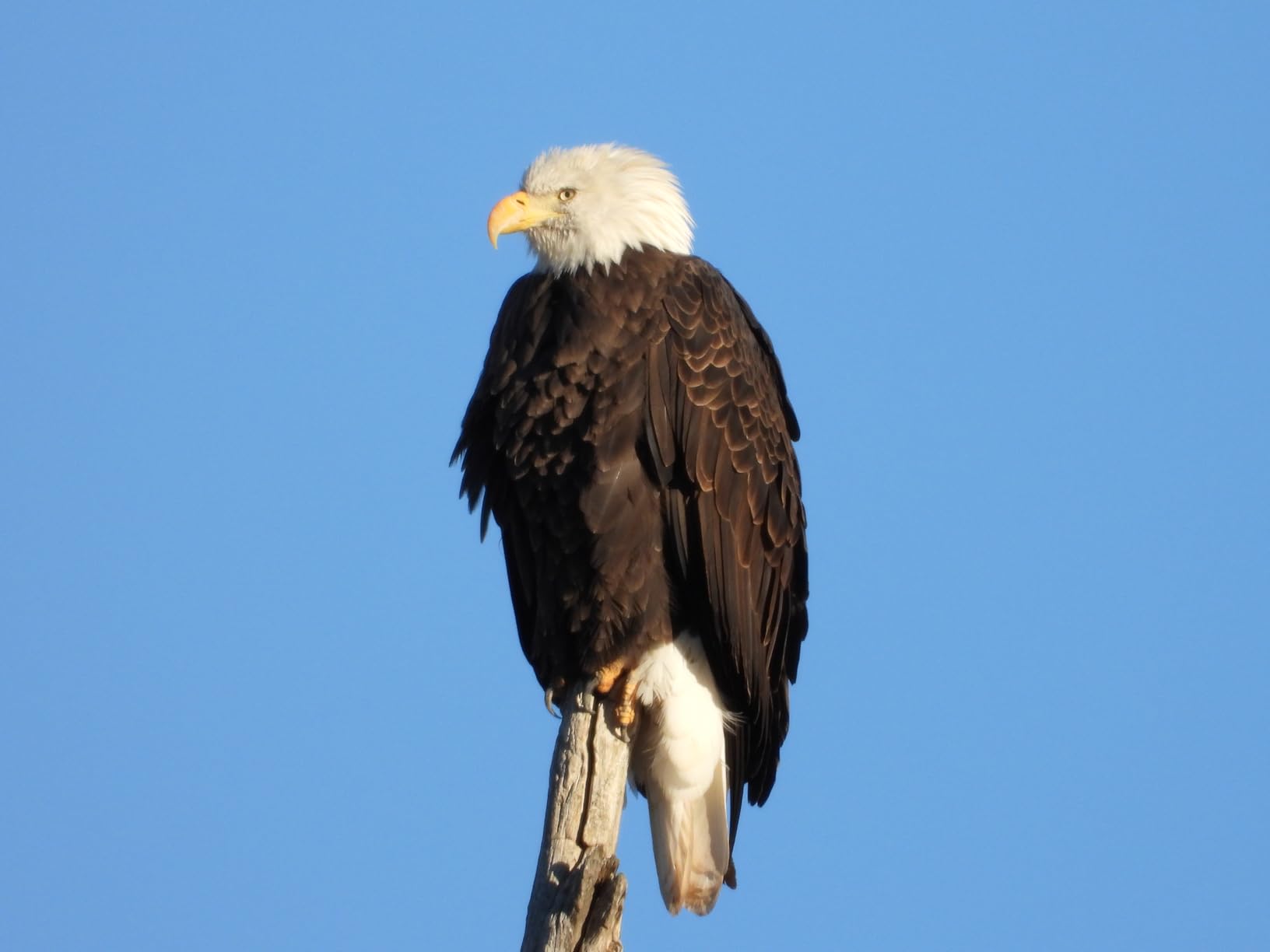
The Nikon COOLPIX P1100 is the bridge camera I’d recommend to anyone who wants extreme telephoto reach without buying interchangeable lenses. The 125x optical zoom gives you a 24-3000mm equivalent focal length – that’s a focal length you cannot buy for any mirrorless system at any price.
I tested the P1100 at a salt marsh where I needed to photograph distant shorebirds across a kilometer of mudflats. The 3000mm reach let me fill the frame with curlews and godwits that would have been tiny dots through any other lens. The bird-watching mode helped lock onto the subject quickly.
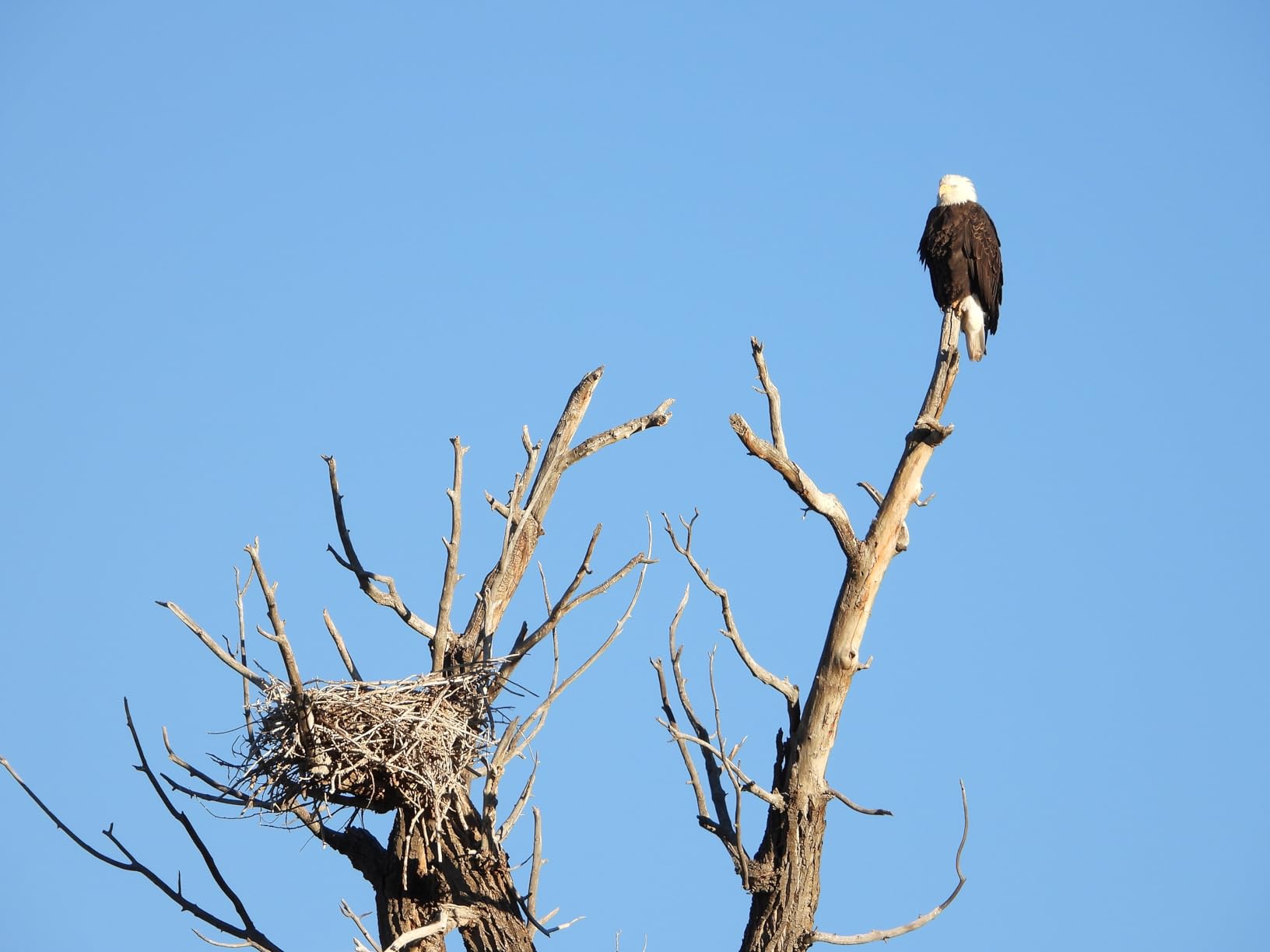
For backyard birders, the P1100 is a revelation. You can mount it on a monopod, point it at a feeder 30 meters away, and capture warbler-sized birds filling the frame. The macro mode with 1cm close focus also opens up butterfly and insect photography.
The 4K UHD video is good enough for casual use, and the RAW (.NRW) support means you can edit files for better colors and detail. The 3.2-inch vari-angle LCD makes overhead and ground-level shooting comfortable.
Who the Nikon COOLPIX P1100 is best for
The P1100 is the right choice for casual wildlife enthusiasts who want extreme reach without the cost and complexity of interchangeable lenses. If you photograph distant subjects like shorebirds, waterfowl, or backyard birds, this is the most affordable path to filling the frame.
Travelers and birders who don’t want to carry heavy telephotos will appreciate the all-in-one design. The P1100 fits in a large daypack with room for snacks and a spotting scope. It’s also excellent for hikers who want wildlife reach without hauling a 600mm prime.
Who should consider other options
If you regularly shoot in low light or need high ISO performance, the small 1/2.3-inch sensor will disappoint. Files above ISO 800 show significant noise, which limits dawn and dusk photography.
Serious wildlife photographers who want interchangeable lens flexibility should consider the Canon R7 or OM System OM-1 Mark II instead. The P1100 is a specialty tool for reach-focused shooters, not a general-purpose wildlife body.
Buying Guide: How to Choose the Best Wildlife Camera?
Buying a wildlife camera is a big investment, and the right choice depends on what you shoot, where you shoot, and how much weight you want to carry. This guide breaks down the six key factors that matter most for wildlife photography.
Full-Frame vs APS-C vs Micro Four Thirds
The sensor size debate is one of the most common questions I get from wildlife photographers. Each format has real advantages and trade-offs, and the “best” choice depends on your shooting style.
Full-frame sensors (Sony A1, Nikon Z8, Canon R5) offer the best low-light performance and the widest dynamic range. They’re ideal for dawn and dusk photography, and for photographers who want maximum cropping flexibility. The downside is larger, heavier bodies and lenses.
APS-C sensors (Canon R7) give you a 1.5-1.6x crop factor, which effectively extends the reach of any telephoto lens. A 500mm lens becomes 800mm equivalent. This is a huge advantage for bird photographers who shoot small, distant subjects. The trade-off is slightly less low-light capability.
Micro Four Thirds sensors (OM System OM-1 Mark II) give you a 2x crop factor, doubling your telephoto reach. The OM-1 Mark II also has the most impressive weather sealing on the market. The trade-off is lower resolution and weaker high-ISO performance.
Autofocus System and Subject Detection
For wildlife photography, autofocus performance matters more than resolution. Modern wildlife cameras use AI-powered subject detection that can recognize birds, mammals, and even specific animals like cats and dogs.
The best systems (Sony A9 III, Nikon Z8, Canon R5 Mark II) can find an animal’s eye in cluttered scenes and track it through obstacles. They also maintain focus at extremely high burst rates. When comparing cameras, look at how the AF performs in real-world conditions, not just spec sheets.
Sensor technology matters too. Stacked sensors read out data much faster than traditional sensors, which means less rolling shutter distortion and better subject tracking during electronic burst shooting. If you regularly shoot fast action, a stacked-sensor body is worth the premium.
Burst Rate and Buffer
Burst rate matters for capturing the decisive moment – a wing position, a leap, a takeoff. Modern wildlife cameras shoot anywhere from 10 fps to 120 fps. For most situations, 20-30 fps is plenty. The 120fps modes on the Sony A9 III and OM-1 Mark II are useful for very specialized work.
Buffer depth matters just as much. A camera that shoots 30 fps but fills the buffer in two seconds is less useful than one that shoots 20 fps and clears quickly. Look for cameras with fast card slots (CFexpress) and large buffers if you shoot long bursts.
Weather Sealing and Build Quality
Wildlife photography means shooting in rain, snow, dust, and mud. Weather sealing isn’t optional – it’s essential. The most rugged body in this guide is the OM System OM-1 Mark II with its IP53 rating, which handles everything short of submersion.
Most modern mirrorless bodies (Nikon Z8, Sony A1, Canon R5 series) are weather-sealed to handle rain and dust, but they’re not all equal. If you shoot in extreme conditions, prioritize bodies with proven sealing and consider adding a rain cover as backup.
Lens Ecosystem and Telephoto Reach
The best camera in the world is useless without telephoto lenses. Each system has different strengths – Canon RF has excellent professional telephotos, Nikon Z offers great value with the 180-600mm, Sony E has the most third-party support, and OM System has the most compact telephotos.
Before buying a body, check the telephoto lens options available in that mount. A mid-tier body with no good telephotos is a worse value than an entry-level body paired with an excellent 100-500mm or 150-600mm lens.
Price-to-Performance Tiers
Here’s how I’d divide the wildlife camera market into tiers:
Budget tier (entry-level pricing): Canon R7, Nikon P1100. These cameras deliver professional-grade autofocus for hobbyist budgets. Best for beginners and enthusiasts.
Mid-range tier (mid-range pricing): Canon R6 Mark II, Nikon Z6 III, OM System OM-1 Mark II. These cameras offer professional features without flagship prices. Best for serious enthusiasts and semi-pro shooters.
Flagship tier (premium pricing): Nikon Z8, Canon R5 Mark II, Canon R5. These are the best all-around wildlife bodies available. Best for working professionals.
Top-tier (premium plus pricing): Sony A1, Sony A9 III. These cameras push the boundaries of resolution, speed, and global shutter technology. Best for specialists who need the absolute best performance.
Frequently Asked Questions
What camera do most wildlife photographers recommend?
Most professional wildlife photographers shoot with flagship mirrorless bodies like the Nikon Z8, Sony Alpha 1, or Canon EOS R5 Mark II. For enthusiasts on a budget, the Canon EOS R7 and OM System OM-1 Mark II offer flagship-level autofocus at lower prices. The best camera for you depends on your subjects, your shooting style, and your budget.
What is the best camera for wildlife photography for beginners?
For beginners, the Canon EOS R7 is the best wildlife camera you can buy. It offers professional-grade subject detection and 30 fps burst rates at an entry-level price. Pair it with the Canon RF 100-500mm telephoto and you have a complete wildlife kit. The Nikon COOLPIX P1100 is a great budget option for casual backyard birders who don’t want interchangeable lenses.
What is the best affordable camera for wildlife photography?
The most affordable serious wildlife cameras are the Canon EOS R7 and the OM System OM-1 Mark II. Both offer professional-grade autofocus with subject detection. For ultimate budget options, the Nikon COOLPIX P1100 provides extreme telephoto reach in an all-in-one design that’s perfect for casual backyard birding and distant shorebird photography.
Is full-frame better than APS-C for wildlife photography?
Full-frame offers better low-light performance and dynamic range, but APS-C gives you a 1.5-1.6x telephoto reach advantage. For bird photographers who shoot small, distant subjects, APS-C is often the better choice because it extends the effective focal length of every lens. For dawn and dusk shooting or large mammal photography, full-frame wins. Both formats work well for wildlife – your choice depends on your priorities.
What lens should I buy first for wildlife photography?
The most versatile wildlife lens is a 100-500mm or 150-600mm telephoto zoom. Popular options include the Canon RF 100-500mm, Nikon Z 180-600mm, Sony FE 200-600mm, and Sigma 150-600mm for multiple mounts. These zooms let you cover everything from perched songbirds to distant raptors. Pair them with a 1.4x teleconverter for extra reach when needed.
Final Thoughts on Choosing the Best Wildlife Camera in 2026
After testing every body in this guide, I keep coming back to one truth: the best camera is the one that gets you out shooting. The Nikon Z8 remains my top pick for serious enthusiasts and professionals who want flagship performance in a compact body. The Canon R7 is the right choice for anyone on a budget who wants professional-grade autofocus. And the Sony A9 III is unbeatable for the most demanding action shooters.
Whatever you choose from this list of the best cameras for wildlife photographers in 2026, remember that the camera is only one part of the equation. The lens, your technique, and your patience in the field matter at least as much. Get out, shoot often, and let your gear enable the moments that matter most.