
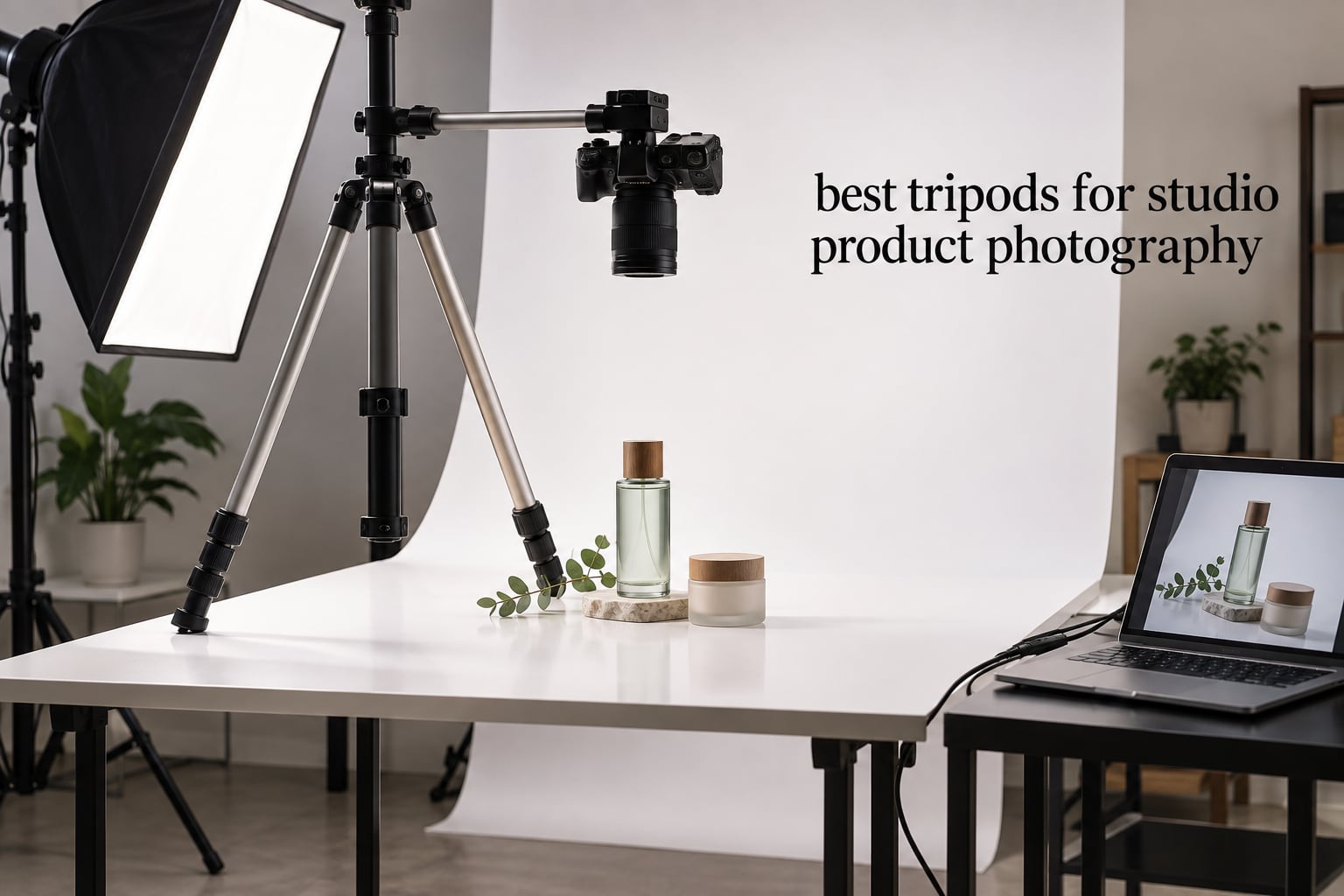
The best tripods for studio product photography are not the ones built for hiking mountains. They are the ones that hold a camera perfectly still, repeat the same height and angle frame after frame, and let you swing the camera overhead or drop it near the surface of the table without the whole rig wobbling. Studio work lives and dies on repeatability: you shoot a batch of forty near-identical catalogue frames, and if the camera shifts two millimetres between exposures, you are fixing it in software instead of on the table.
I have spent years shooting tethered on a sweep, and the single biggest upgrade I made was not a camera body. It was getting the camera off my hands and onto something rigid, level, and repeatable. That changes the whole workflow. You stop re-framing, you start moving the product instead of the camera, and your lighting adjustments take seconds rather than minutes.
This roundup covers twelve supports that earn their place in a studio, from tall overhead-boom tripods to a steel flat-lay rig and a proper three-way head for macro work. Every pick here has published load ratings, folded lengths and working heights, so you can check the numbers against the gear you already own. I also link to our tabletop tripod guide and studio setup guide if your workspace is small.
Top 3 Picks for Best Tripods for Studio Product Photography in 2026

Cayer BV30L Video Tripod
- Fluid head for locked-off stills
- 13.2 lb load rating
- 72.5 in max height

NEEWER TP-M200 Heavy Duty
- 200 cm reach for high angles
- Levelling bowl base
- 17.6 lb load rating

K&F Concept 76 in Overhead
- Removable boom arm for top-down
- 3.63 lb weight
- Folds to 15.3 in
Best Tripods for Studio Product Photography in October
| Product | Specifications | Action |
|---|---|---|
| Cayer BV30L Video Tripod |
|
Check Latest Price |
 K&F CONCEPT 90 in Overhead Tripod K&F CONCEPT 90 in Overhead Tripod |
|
Check Latest Price |
| NEEWER TP-M200 Heavy Duty Tripod |
|
Check Latest Price |
 SmallRig AD-01 Fluid Head Tripod SmallRig AD-01 Fluid Head Tripod |
|
Check Latest Price |
| K&F Concept 76 in Overhead Tripod |
|
Check Latest Price |
 NEEWER TP63 Overhead Monopod Tripod NEEWER TP63 Overhead Monopod Tripod |
|
Check Latest Price |
 NEEWER ST100 Overhead Mount Rig NEEWER ST100 Overhead Mount Rig |
|
Check Latest Price |
 SmallRig CT200 Overhead Tripod SmallRig CT200 Overhead Tripod |
|
Check Latest Price |
 CAMBOFOTO TM265 Overhead Tripod CAMBOFOTO TM265 Overhead Tripod |
|
Check Latest Price |
 COMAN FF16LS Heavy Duty Tripod COMAN FF16LS Heavy Duty Tripod |
|
Check Latest Price |
 SIRUI AM-25S Fluid Head Tripod SIRUI AM-25S Fluid Head Tripod |
|
Check Latest Price |
 Manfrotto 055 PRO Tripod Kit Manfrotto 055 PRO Tripod Kit |
|
Check Latest Price |
1. Cayer BV30L Video Tripod: Best Overall for a Locked-Off Studio Rig
Pros
- Rock solid once set with no drift
- Long 72.5 in reach clears most tables and stands
- Standard quick release plates swap across brands
- Carrying bag and spare plate included
- Ball base makes levelling quick
Cons
- Pan action is stiffer than the tilt
- Plastic knobs limit heavy daily professional use
- Bulky to reposition mid-shoot
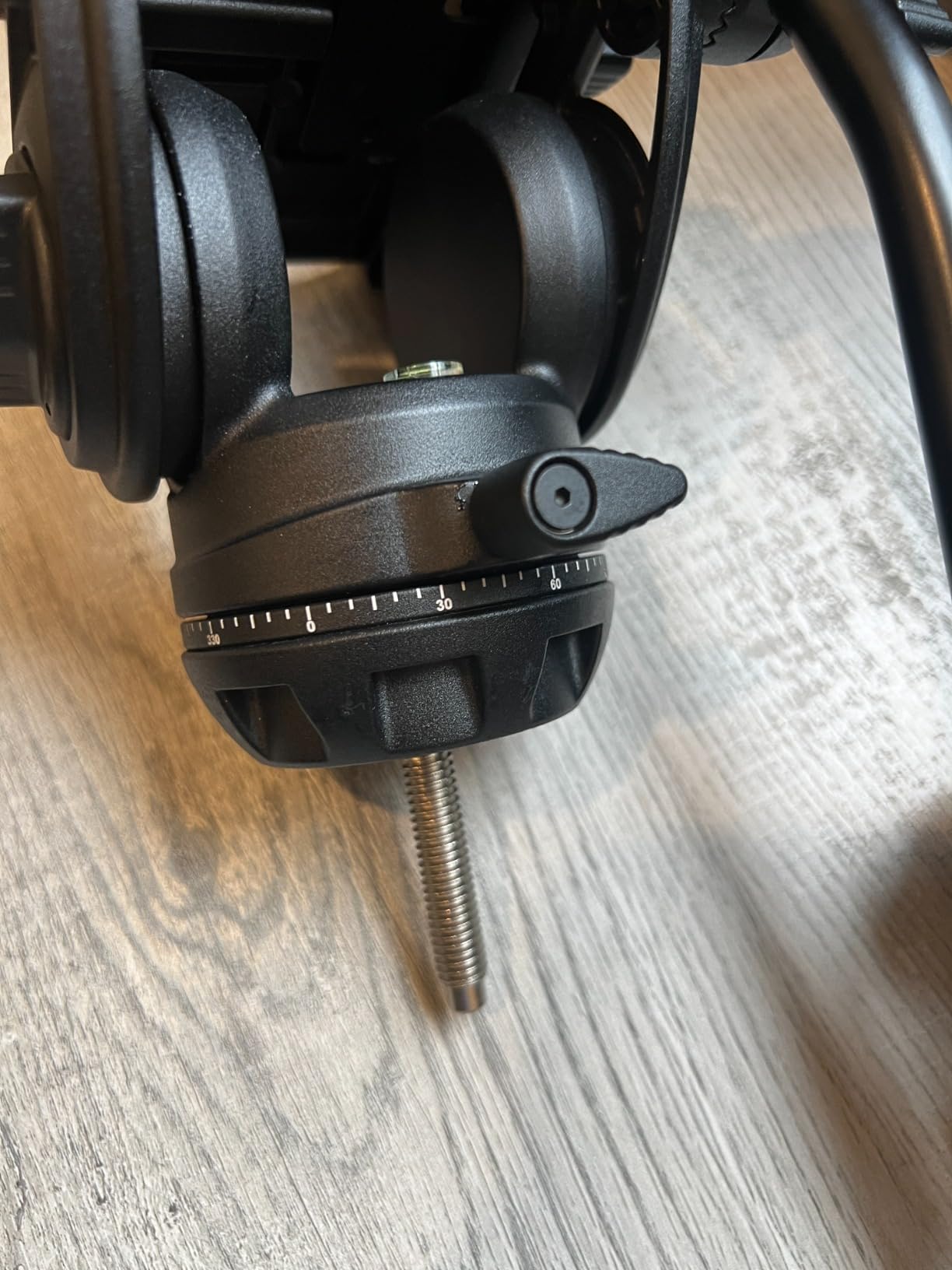
The Cayer BV30L is the tripod I leave set up behind the sweep. It is a twin-tube aluminum video tripod with a 75mm flat-base fluid head, a mid-level spreader and a height range from 33.4 inches to 72.5 inches, folding to 35 inches. Once the legs are locked it does not budge, which is exactly what a long-exposure product frame needs.
Two quick release plates come in the box, each with 1/4-20 and 3/8-16 screws, so you can move a body between this tripod and a geared video head without tools. Reviewers consistently treat it as a dependable fixed-position support rather than a moving-video tool, and with 1772 ratings averaging 4.7 it is the most proven tripod in this group by a wide margin.

The fluid head tilts from -70 to +90 degrees with a long pan handle, and the base is a ball, so levelling takes a second instead of a fuss with bubble levels. It also carries a 3/8-16 threaded hole on the head base, which means it accepts a slider if you ever move into product video.
Where it falls short is the pan. Tilt is smooth and progressive, but the pan axis is noticeably stiffer, so it suits static frames and short repositioning moves rather than continuous follow moves. Several owners also note that screws on the central stabilizer braces loosen with use and want a periodic check.
Why it works for still-life work
A fluid head gives you something a plain ball head does not: fine tilt control at the end of its travel. When you are matching a hero frame to a catalogue frame, that last few degrees of adjustment is the difference between a clean match and a reshoot.
Reviewers also report that it holds a DSLR rig without added weighting, which matters when your total camera-plus-lens weight approaches the 13.2 lb rating. Keep your real rig weight comfortably below the published limit rather than sitting on it.
Where it will frustrate you
The 33.4 inch minimum height is the real constraint. Nothing about this tripod lets you get the lens down near the surface of the table, so it is the wrong tool for macro detail work at shallow angles. For that job, look at the Manfrotto 055 later in this list.
At 8.8 lb it is heavy to carry between setups, and the plastic knobs are not built for a rig that gets folded and rebuilt fifty times a week. If your studio is one room and the tripod stays put, that does not matter at all.
2. K&F CONCEPT 90 in Overhead Tripod: Best for High Overhead Angles
Pros
- Tallest reach in this group at 90 inches
- Hidden horizontal boom swings out for top-down work
- Sturdy at full extension with no wobble
- Detachable monopod adds flexibility
- 28mm ball head with degree markings
Cons
- Horizontal arm has play so fine adjustments can bind
- Many levers and collars make the scheme complex
- Factory lubricant can transfer to camera gear
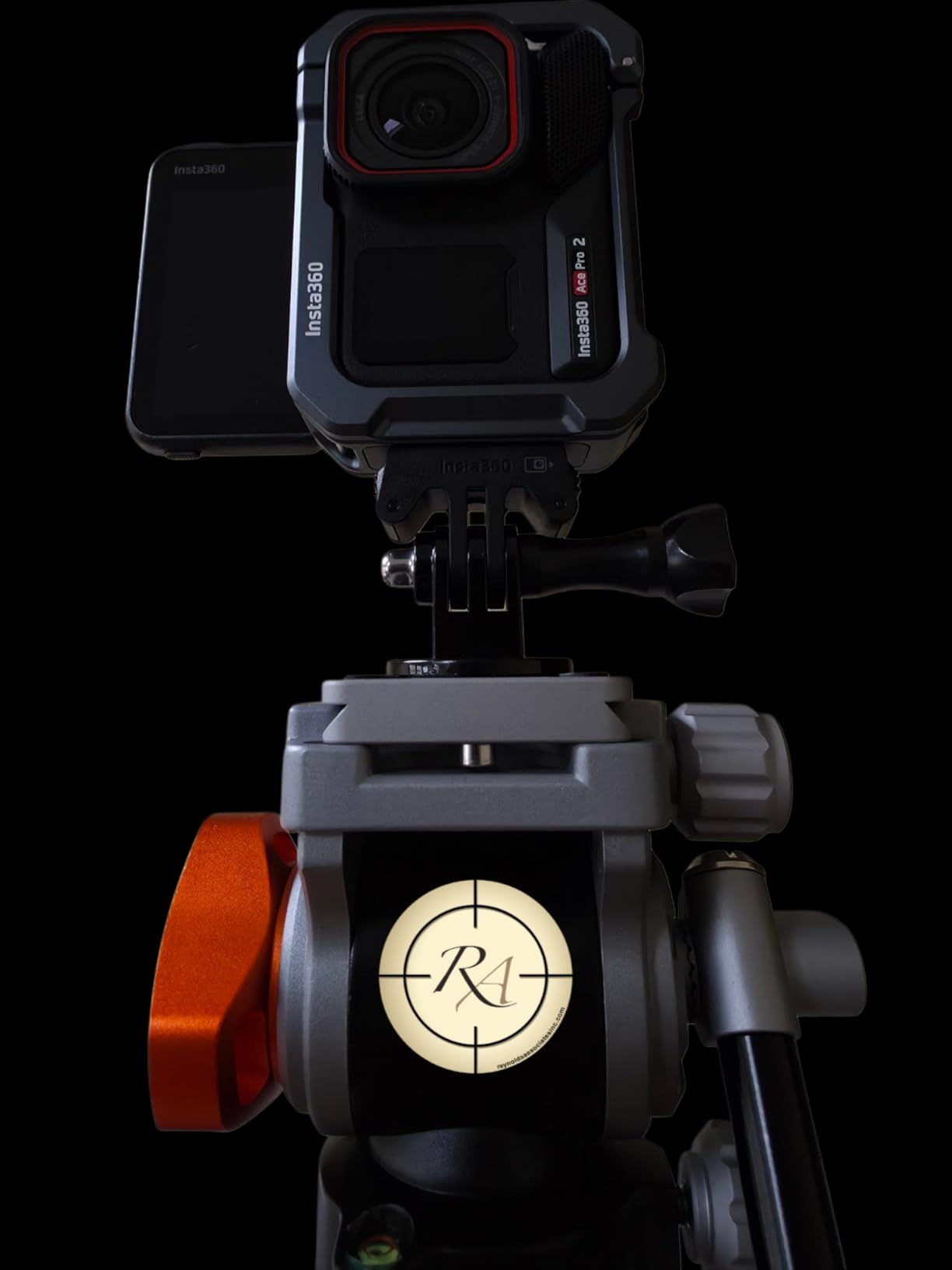
This is the tallest support we tested and the one that solves a specific studio problem: shooting down over a tall stack of products, a shelving unit, or a table where a normal tripod simply cannot get high enough. It reaches 90 inches with four-section legs, folds to 21 inches, and weighs 4.4 lb, which is remarkable for something that size.
The legs tilt through 0 to 180 degrees, and the column swings horizontal so the camera can sit out over the subject rather than directly above the centre. That horizontal position is what makes true top-down frames possible without the legs appearing in shot.
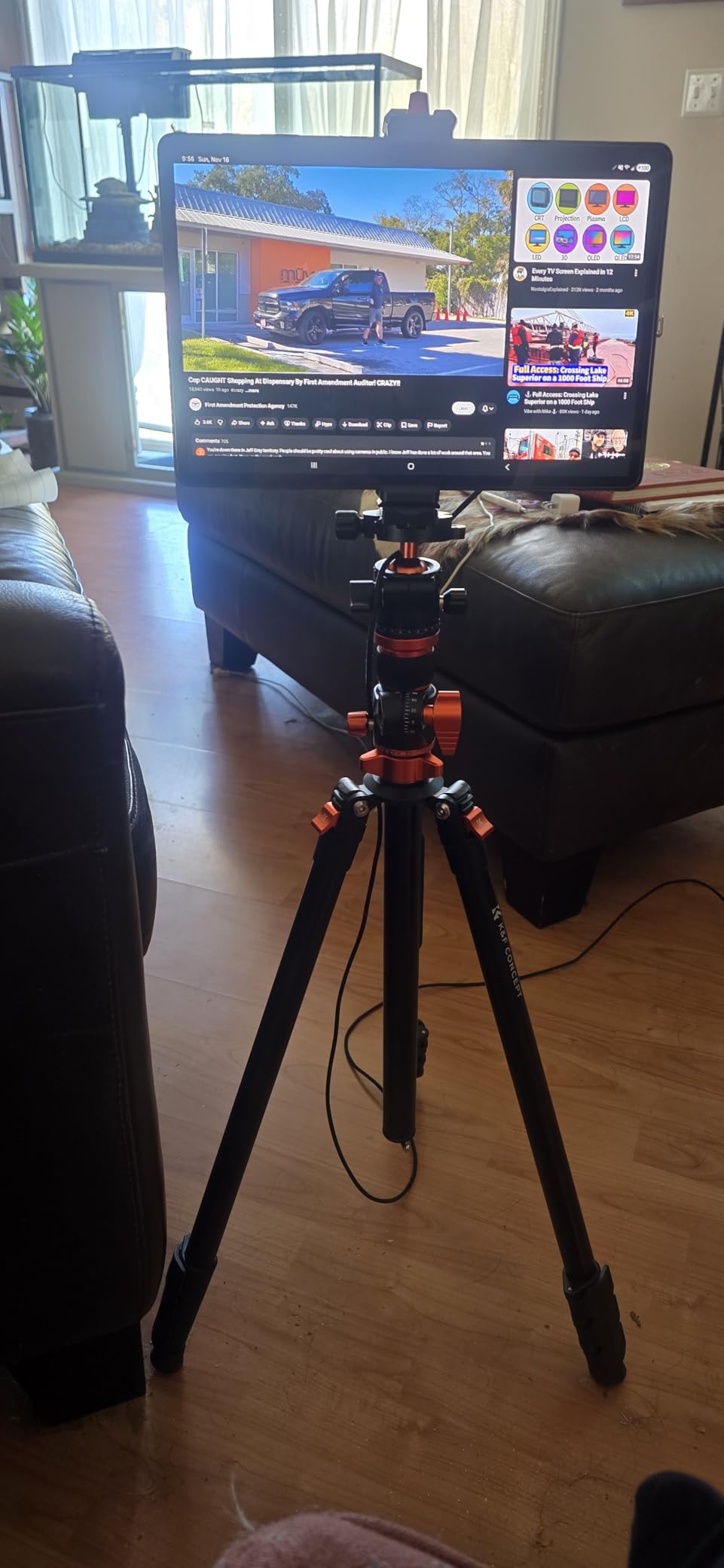
The 28mm diameter centre column is the reason it feels solid at full extension, and the 28mm ball head carries a 22 lb load with oil-free damping and a 360-degree scale on the base. A detachable monopod section is included, which comes in handy in tight studio corners where three legs will not fit.
Owners report frequent use for food, product, real-estate and event work, with 984 ratings averaging 4.6 and 82 percent five-star. The recurring criticism is play in the swing arm, which means fine adjustments can bind until you re-seat the arm rather than a genuine structural flex.
Why it works for overhead product work
Shooting flat-lay style frames without the tripod legs in shot means putting the camera out over the subject. The horizontal boom on this model does that in one move, and the wide 0 to 180 degree leg tilt means you can also drop one leg low for a three-quarter view while keeping the camera high.
At 90 inches, the working height clears most studio furniture. That matters more than it sounds: a tripod that tops out at 60 inches leaves you crouching for the hero frame.
Where it will frustrate you
The number of levers and collars is genuinely fiddly. Every adjustment point is another place for play to develop, and if you are repositioning constantly you will feel that complexity daily.
One practical warning from owners: wipe the factory lubricant off the swing arm before a session, because it can transfer onto your camera body or lens barrel. The arm also sits far out from the column, so wind or a bumped table can swing the camera more than you expect. Keep the rated 22 lb load in mind when you hang a long lens out there.
3. NEEWER TP-M200 Heavy Duty Tripod: Best for Tall Tethered Setups
Pros
- Levelling bowl base handles uneven floors
- 200 cm reach suits overhead and high angle work
- Large quick release plate fits most DSLR plates
- Flip locks make height changes fast
- Folds to 91 cm with a carry bag
Cons
- Fluid damping is entry level rather than progressive
- Heaviest option in this group
- Some plastic hardware in the locks and head
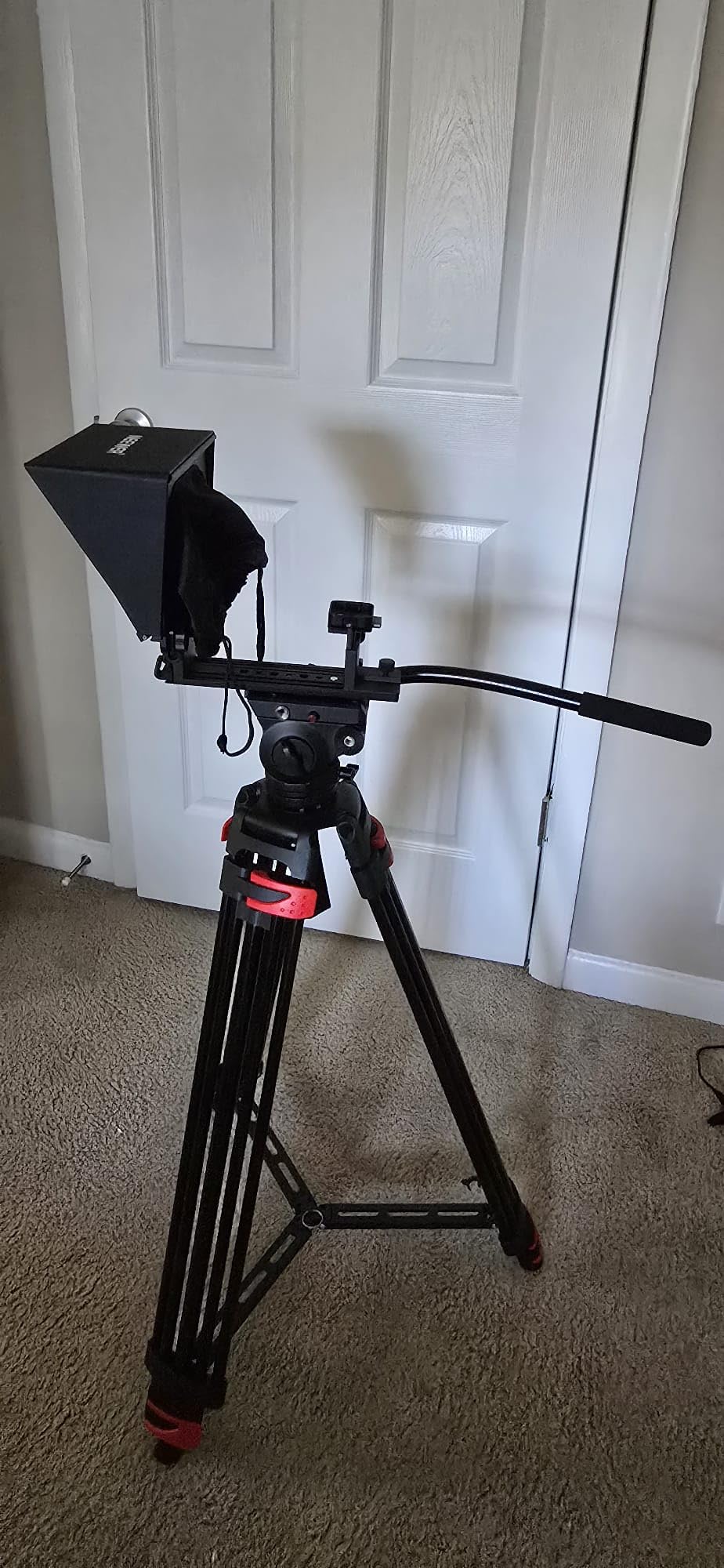
The NEEWER TP-M200 is the tall, heavy-duty option here, reaching 200 cm with a working range from 88 cm to 200 cm. Double-tube aluminum alloy legs with flip locks, a 70mm bowl base and a fluid drag head make it a natural fit for a tall tethered station where you want the camera well above the tabletop.
With 1224 ratings averaging 4.6, most owners are using it for video and overhead work rather than tabletop still life. The bowl base is the sleeper feature: it levels the head on a studio floor that is not perfectly flat, which saves you constantly nudging a tripod that refuses to sit level.
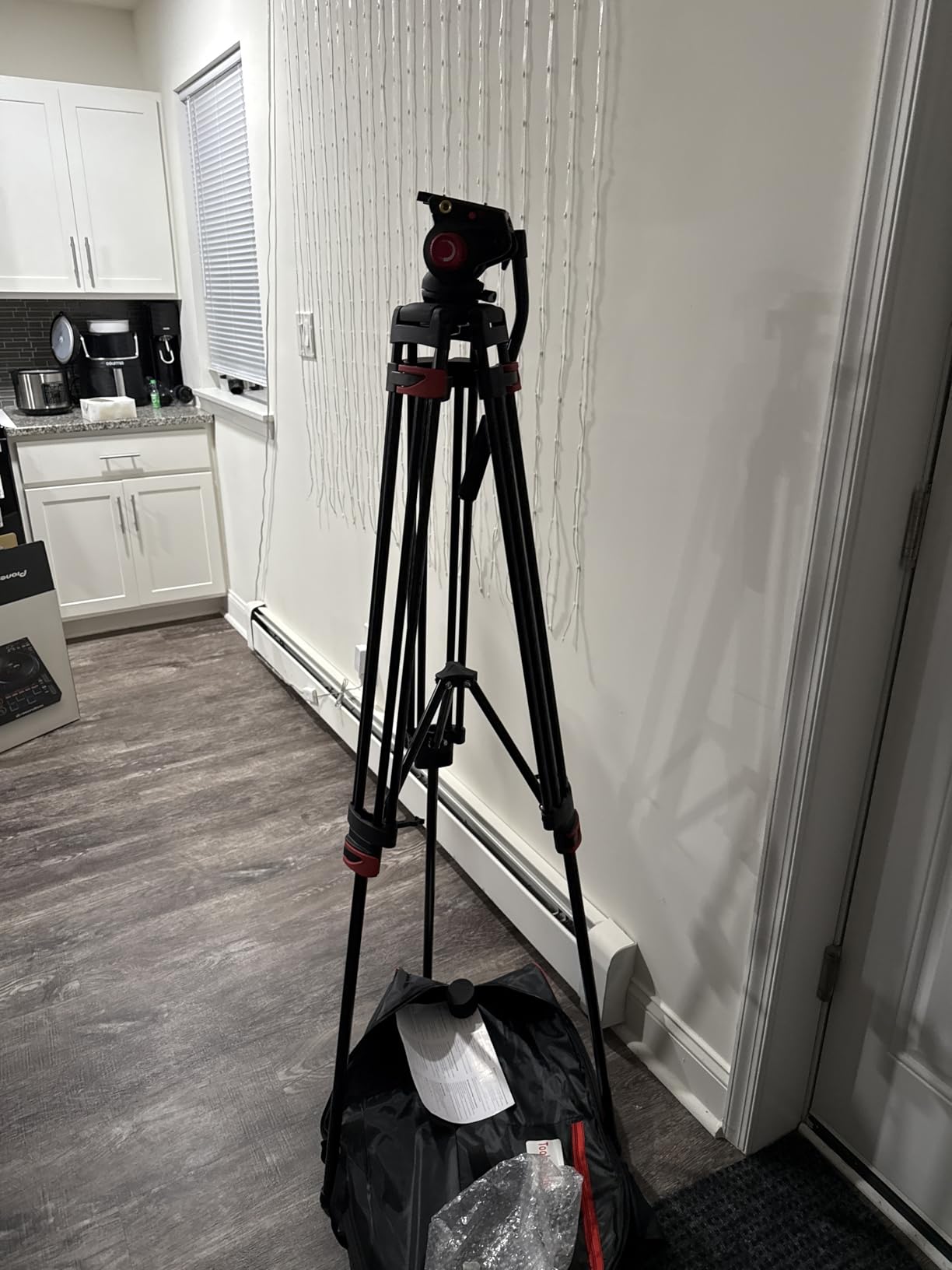
Standard 1/4 and 3/8 screws on the large quick release plate mean it accepts plates from Canon, Nikon and Sony bodies, plus camcorders. Built-in bubble levels and non-slip rubber feet round out a spec sheet that is more considered than the price band suggests.
The honest criticism is the damping. It is fluid by name rather than by feel, so video moves are workable but not cinematic. It is also the heaviest tripod in this roundup at 12.3 lb, which means it lives in one corner of the studio rather than moving around.
Why it works for a tethered station
Height is the whole point of this tripod. A 200 cm reach gets the camera above tall bottle groups and large softboxes without a riser, and the flip locks let you change that height between setups in a few seconds rather than minutes.
The levelling bowl and the rubber feet both solve a studio-specific problem: a smooth floor that is not quite flat. That matters more in product work than it does outdoors because you want the camera dead level relative to a backdrop.
Where it will frustrate you
At 12.3 lb you will not be carrying this up stairs or onto a set. It also has a minimum working height of 88 cm, so it is not a tool for low-angle or macro work. For shallow angles, pick a tripod with an invertible or horizontal column.
Owners point to some plastic hardware in the locks and the head, which is fine for a support that stays assembled but less ideal if you rig and derig daily.
4. SmallRig AD-01 Heavy Duty Video Tripod: Best for Product Video
Pros
- Stays locked and does not drift once set
- Tilt friction feels controlled and precise
- Quick lever locks speed up height changes
- Dual mode plate also works with DJI gimbals
- Clear bubble level makes levelling easy
Cons
- Pan is either locked or free with no middle setting
- Brittle plastic in knobs and leg hooks
- Cannot drop below waist height
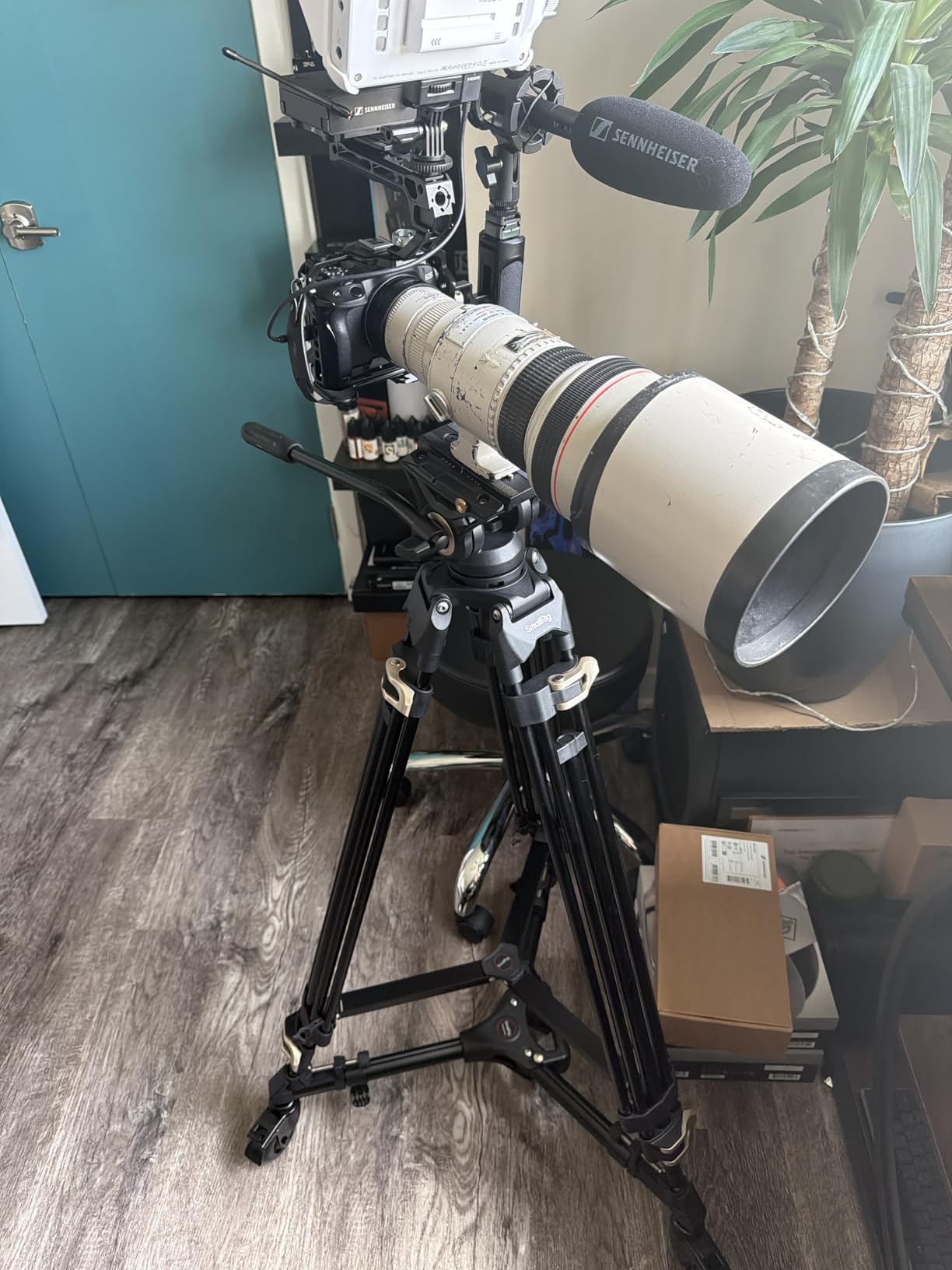
SmallRig built the AD-01 for people who shoot both. It is an aluminum double-tube tripod with a 75mm bowl, a built-in bubble level and a fluid head rated to 17.6 lb, working from 85 to 186 cm. Several owners pair it with a SmallRig dolly for product video work, which tells you what kind of user it was designed for.
The dual-mode quick release plate is the standout: it accepts standard plates as well as DJI RS 2, RS3 and RS3 Pro mounts, so the same tripod can carry a camera for stills and a gimbal for motion. The plate also has a built-in wrench, which is the sort of detail that saves you mid-shoot.

With 744 ratings averaging 4.6, reviewers describe it as light for its class, quick to adjust and stable once set. The side-press quick release makes camera swaps fast, which matters when you are cycling through a catalogue of products.
Where it disappoints is the pan control. It is either locked or free with no intermediate friction setting, so you cannot feather a move the way you can on a proper fluid head. Reviewers are also candid that the plastic in the knobs and leg hooks is not meant to survive heavy daily rigging.
Why it works when stills and video mix
Most small studios eventually need both, and owning two tripods means two tripods to store, move and level. The AD-01 covers a height range that suits a standing camera position for video and a raised tabletop angle for stills.
The quick lever locks are fast enough that you will actually use them. On a set where you are changing angles constantly, a lever beats a twist lock every time.
Where it will frustrate you
The minimum height of 85 cm rules it out for low-angle and macro work. If your products need to be shot from near the surface, you need an invertible column instead.
The lack of variable pan friction is the biggest limitation for video. If your product video involves slow continuous moves rather than locked-off frames, budget for a dedicated fluid head later. Our heavy-duty tripod guide covers options for heavier rigs.
5. K&F Concept 76 in Overhead Tripod: Best Budget Overhead Pick
Pros
- One of the lightest overhead capable tripods at 3.63 lb
- Extension boom arm swings out for top-down shooting
- 360 degree ball head with panning dial
- Folds to 15.3 in
- One hand flip locks
Cons
- Lower load rating than heavier studio tripods
- Shorter reach than the 90 inch models
- Ball head suits stills more than moving video
The K&F Concept 76 in tripod does something unusual: it carries a removable extension boom arm and still weighs 3.63 lb. It runs from 17.3 inches to 76.7 inches and folds to 15.3 inches, so it fits in a backpack and still reaches overhead. That combination makes it the most portable overhead rig in this roundup.
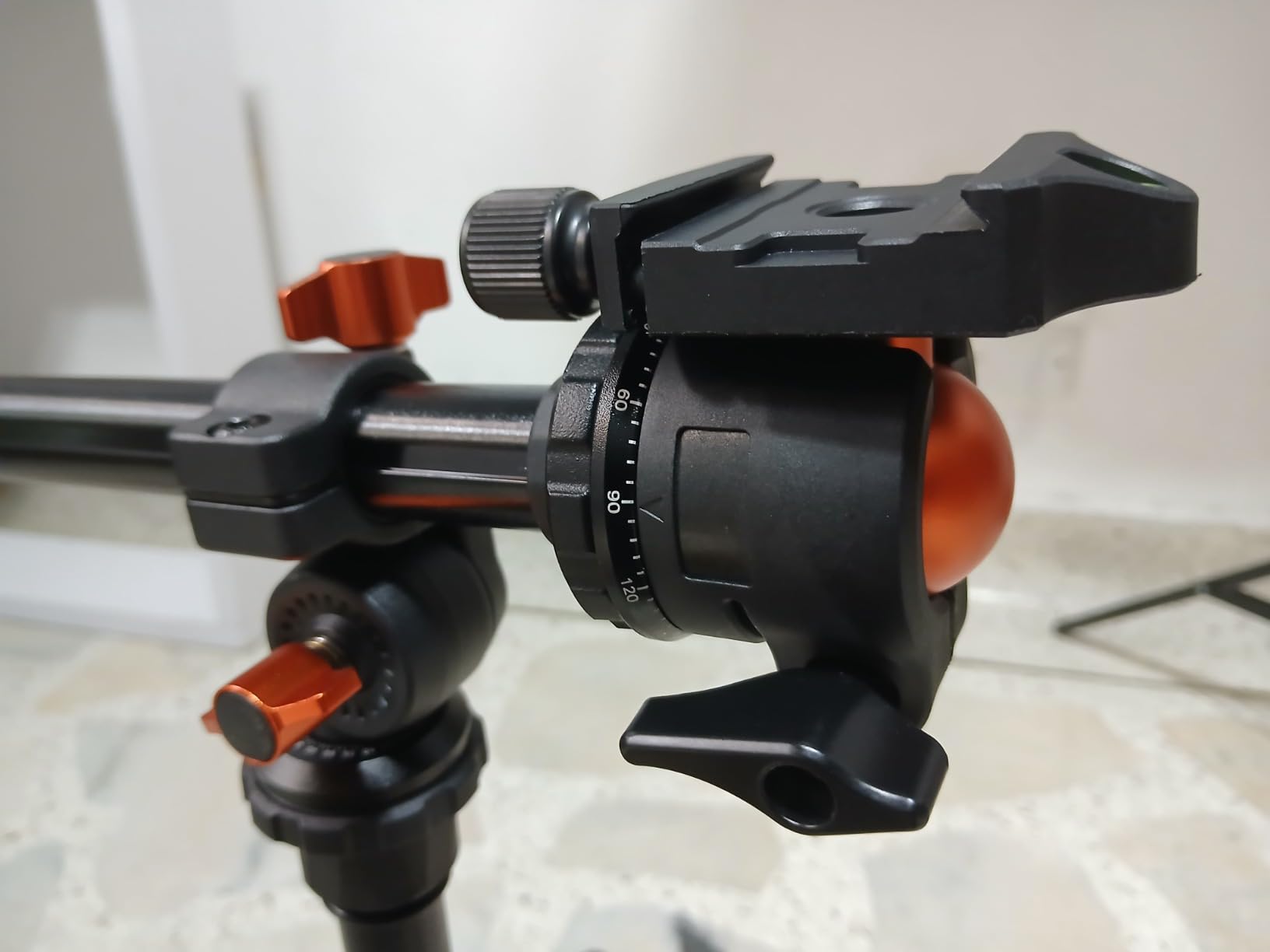
The boom arm moves through 0 to 180 degrees and rotates 360 degrees horizontally, mounted to a 28mm metal ball head with a panning dial. For flat-lay and top-down frames where you cannot get the camera directly over the subject, that arm is the whole reason to buy it.
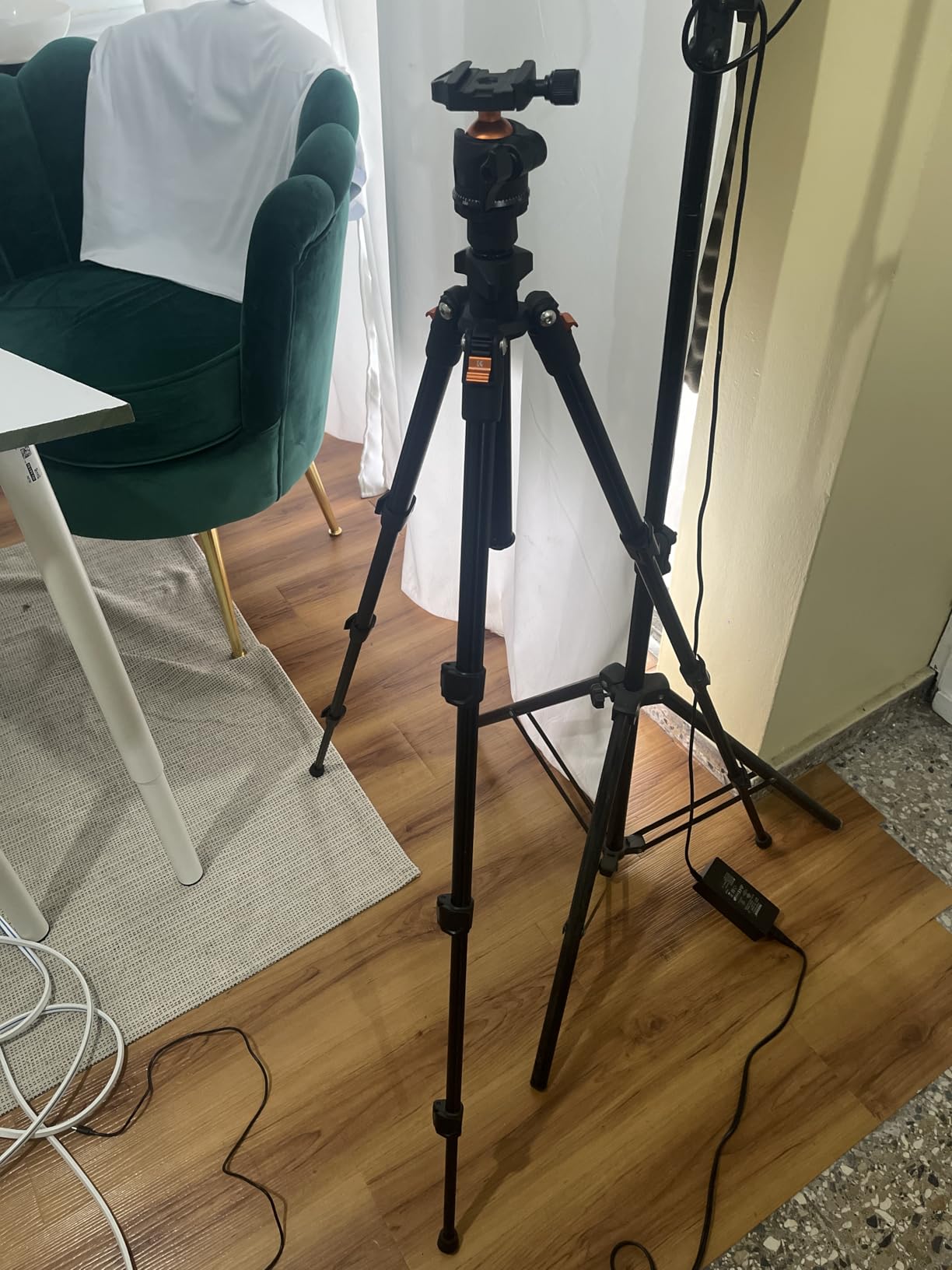
The standard 1/4 inch thread fits most Arca-Swiss quick release plates, plus a smartphone clip is included. With 823 ratings averaging 4.5, owners highlight the combination of low weight, a compact fold and a functional overhead arm, and use it for travel and lighter product work.
The trade-offs are honest ones. The load rating is lower than the heavier studio tripods here, the reach is shorter than the 90 inch models, and a ball head is the right tool for stills but the wrong one for smooth moving video.
Why it works for small studios
Reach and portability together are rare. If your studio doubles as a storage room, or you shoot product both at the table and on location, a tripod that folds to 15.3 inches changes how often you bother to bring it.
The boom arm also solves a common tabletop problem: when the camera hangs out over the subject, your tether cable has somewhere to go without dragging across the table.
Where it will frustrate you
Stay well inside the 17.6 lb rating. A long telephoto lens hanging out on the boom arm puts a lot of weight on the head, and this is not the tripod for a heavy body plus a big zoom.
At 76.7 inches the maximum height is below the 90 inch models, so for very tall stacks you will still need a dedicated overhead rig. If your work is almost entirely flat-lay, our tabletop setup guide is worth reading alongside this pick.
6. NEEWER TP63 Overhead Tripod: Best One-Rig Solution for Overhead and Handheld
Pros
- Horizontal arm holds the camera without sagging for overhead work
- Converts to a monopod for low and confined positions
- Reversing legs and 21 inch folded length
- Handles a heavy DSLR with a large lens
- Arca type quick release plate included
Cons
- Quick release plate screw has loose tolerances and can wobble
- Knobs and joints feel less solid than higher end tripods
- Included bag will not hold the tripod assembled
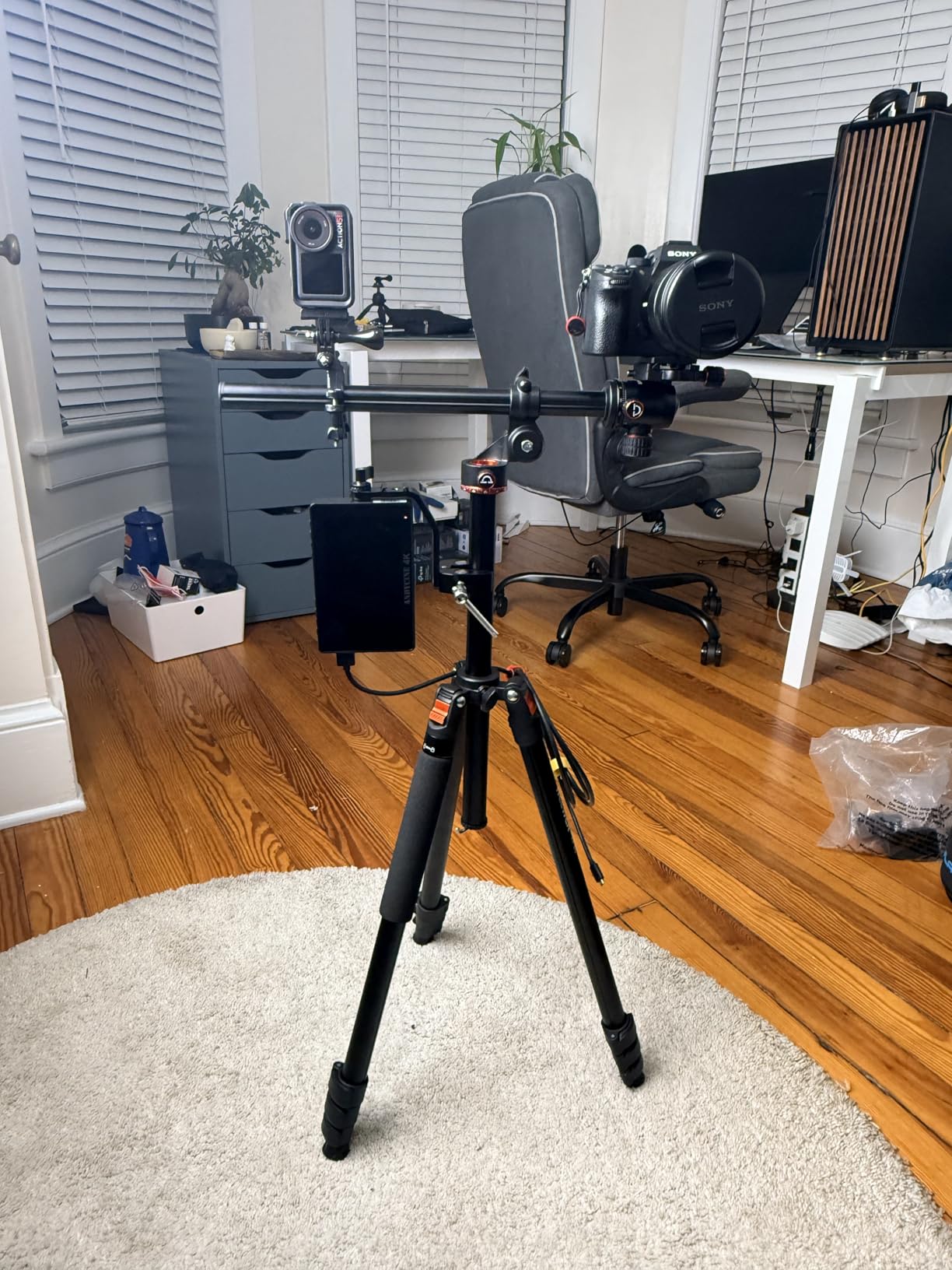
The TP63 reaches 230 cm, the tallest working height in this roundup, and it gets there with four-section legs plus a liftable centre column. The column handles horizontal positioning, 360 degree rotation and 120 degrees of vertical tilt, which is a wide range of movement from one centre piece.
The most useful feature for a small studio is the monopod conversion. Detach one leg tube, attach it to the head and you have a monopod running from 56.5 cm to 240 cm with a foam grip. When you are shooting inside a small sweep and three legs will not fit, that is the difference between working and not working.
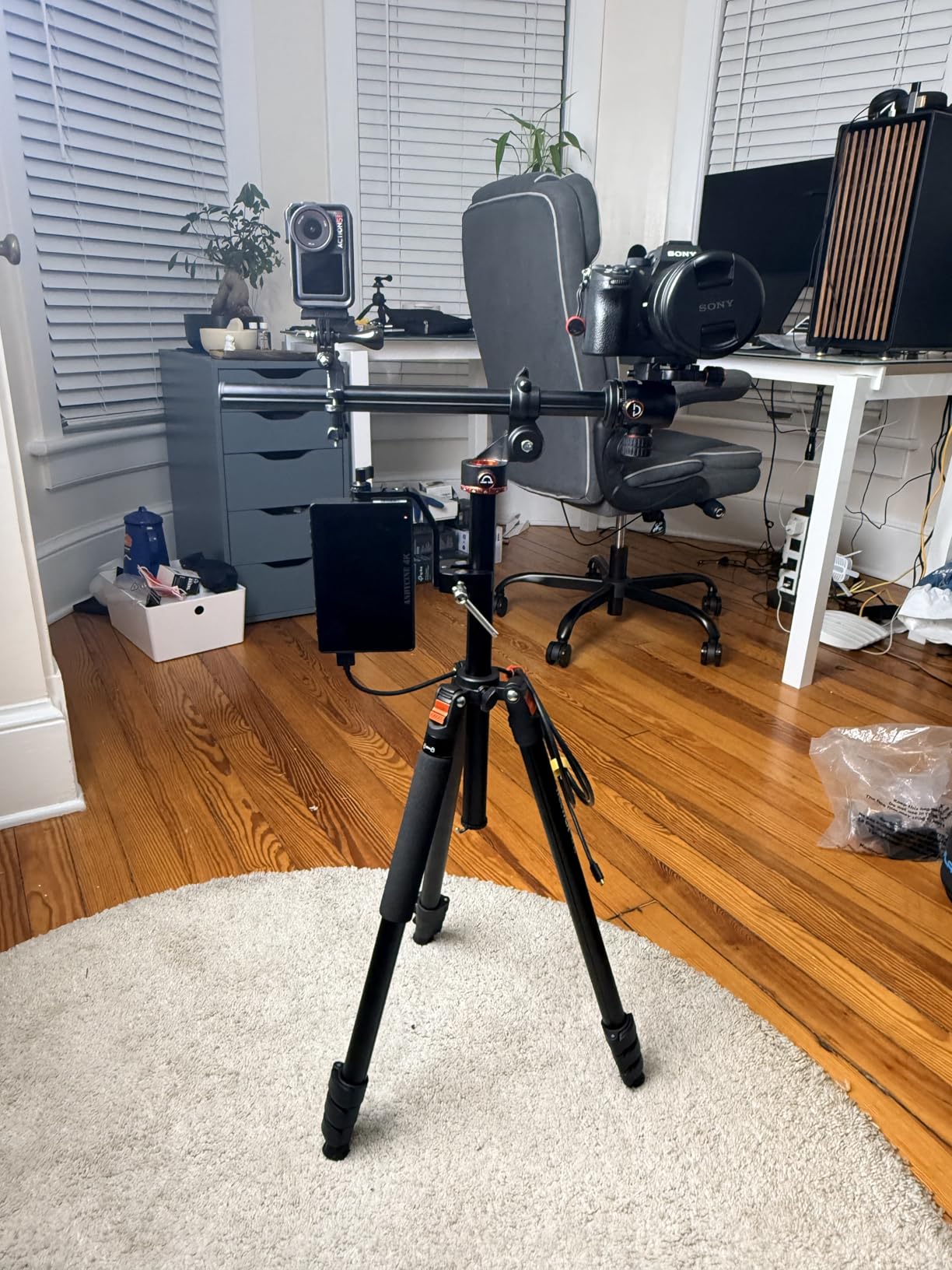
Legs reverse-fold to 21 inches, so it genuinely packs. The 360 degree ball head offers plus 90 to minus 90 degrees of tilt and comes with an Arca-type plate that fits mirrorless, DSLR, camcorders and sliders. There is also a hook for hanging a sandbag, though the bag is not supplied.
With 327 ratings averaging 4.5, users typically deploy the TP63 for overhead content creation, desk tutorials and product shots. The recurring criticism is the quick release plate screw, whose loose tolerances can wobble, particularly with lighter phone mounting.
Why it works in a cramped shooting space
Studio work happens in corners. A sweep table pushed against a wall leaves you about 90 cm of spread, and a full-size tripod simply will not open there. The monopod mode solves it without a second piece of kit.
The 22 lb load rating gives you reasonable headroom for a heavy body with a large lens, and the metal alloy build holds up better than the plastic-heavy budget options.
Where it will frustrate you
The plate screw wobble is real and it is the first thing to check when a frame shifts between exposures. Owners with heavier bodies feel it more, and several report tightening it before each session rather than once.
Some buyers also note that the included bag will not hold the tripod when it is assembled, which is a minor irritation if you plan to carry it between locations. Our aluminum tripod guide covers similar builds in more detail.
7. NEEWER ST100 Overhead Camera Mount Rig: Best for Flat-Lay Studios
Pros
- Steel construction holds mirrorless bodies with long telephoto zooms
- 14 height positions per column on spring loaded pins
- Assembles and disassembles quickly
- 12 crossbar mounting points for lights and monitors
- Backdrop brackets included
Cons
- No centre hole on the top rail for a centred camera
- Height changes are jerky and unstable when done solo
- Large footprint takes up a lot of table
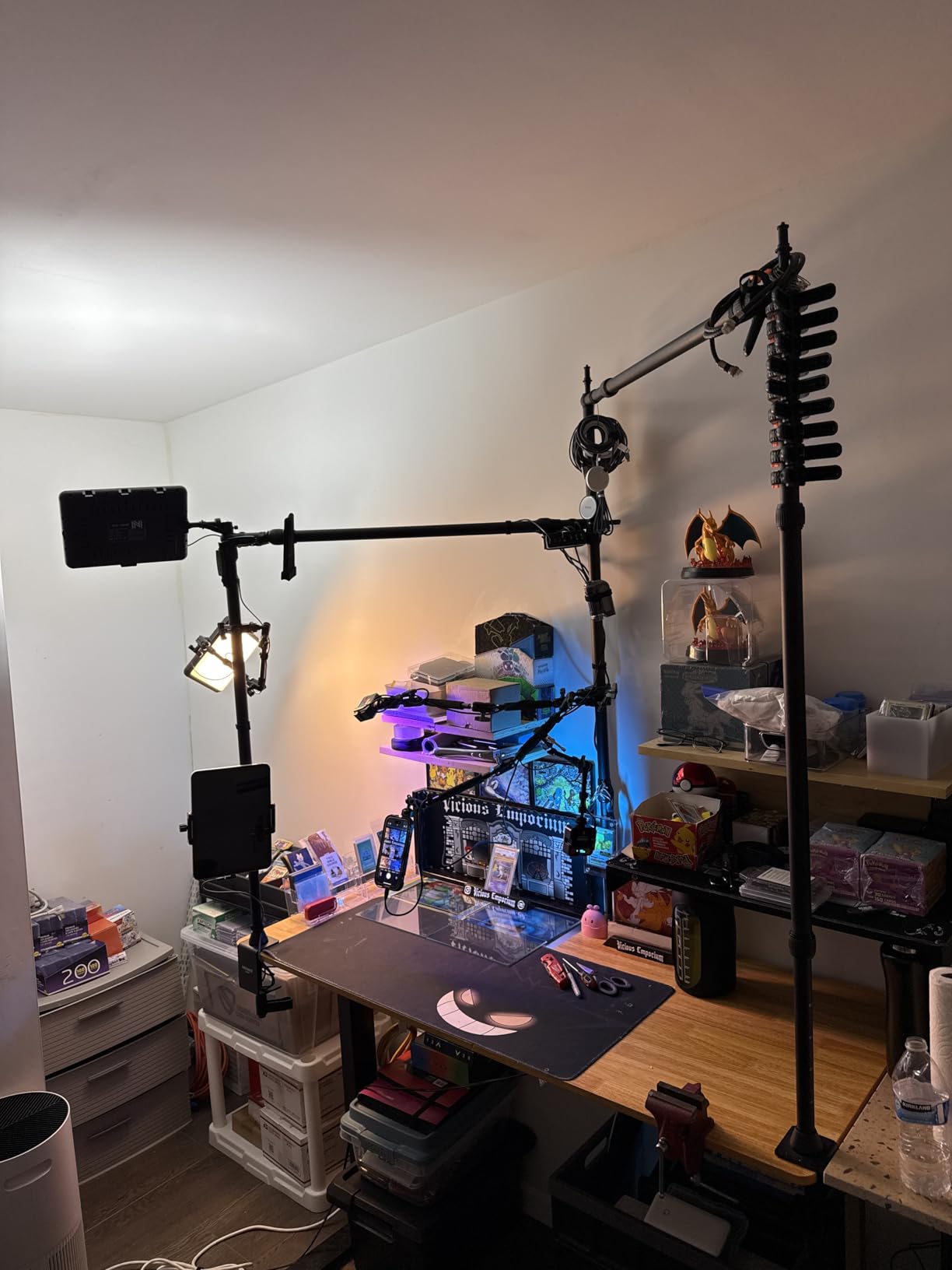
The ST100 is not a tripod, it is a tabletop overhead rig, and that distinction matters. It is welded steel with a T-base that balances the crossbar over the centre of gravity, plus two spring-loaded columns that each offer 14 height positions from 24 to 39 inches. It is built to sit over a working table permanently.
Reviewers describe it as faster than a scanner for bulk flat-lay work and as a permanent studio fixture for tutorials, cooking and painting video. With 229 ratings averaging 4.5, the praise centres on weld quality and how quickly a rig this size comes apart when you need the table back.
The camera mounts face down on a 1/4 screw with a lift head for fine height adjustment, which is exactly how a flat-lay is shot. Two L-shaped brackets and clips hold a backdrop, and 12 crossbar mounting points let you attach lights, arms or monitors without a separate stand.
The design complaint that recurs is the missing centre hole on the top rail, so the camera cannot sit exactly in the middle of the frame. Several owners work around it with a clamp. Height changes are also jerky and slightly unstable when you try to do them one-handed.
Why it works for flat-lay volume
If you shoot dozens of flat-lay frames a day, you are assembling and dismantling a rig constantly. The spring-loaded pins make that fast, and the T-base keeps the crossbar stable while you work underneath it.
It fits desks 39.4 inches wide or larger, so check your table before you commit. Owners running mirrorless bodies with long telephoto zooms report no buckling, which is more than many aluminum tripods at this size can claim.
Where it will frustrate you
It takes up roughly half of an eight-foot table, and once it is assembled that table is no longer a table. In a shared studio that is a real negotiation.
The 10 lb load rating is the tightest constraint here, and the camera hanger uses a foam pad that lets heavier bodies tilt slightly. Keep it well inside the rating and add rear weight if you are using a long lens.
8. SmallRig CT200 Overhead Tripod: Best for Repeatable Top-Down Angles
Pros
- Lateral center column gives clean overhead framing
- Handles long telephoto zooms without wobble
- Lever leg locks are faster than twist locks
- Counterweight bag adds meaningful stability
- Angle plate lock switches between 23 55 and 80 degrees
Cons
- Quick release plate screw can loosen under heavier bodies
- Some buyers replaced the supplied ball head
- Carrying bag lacks a proper closure
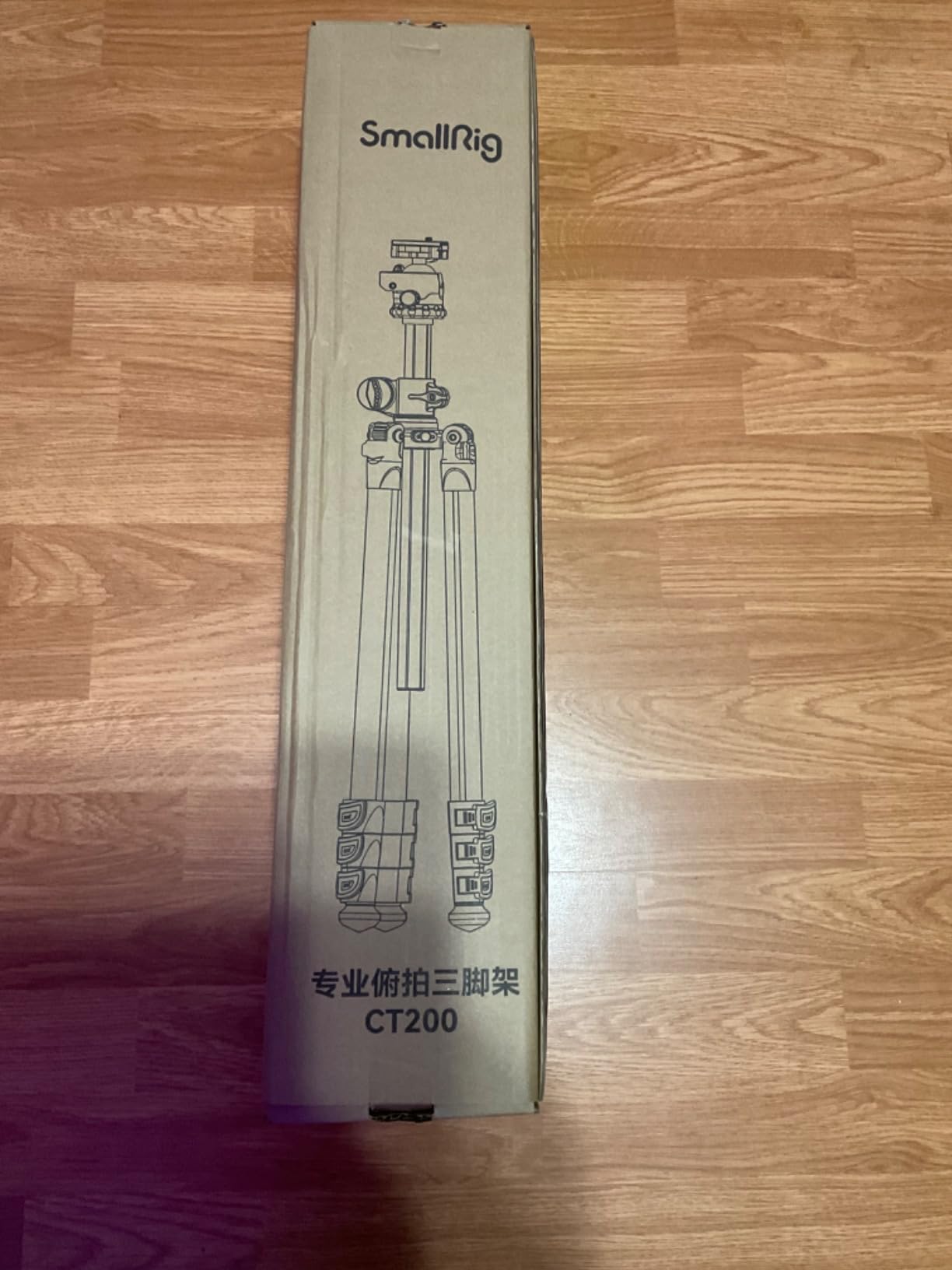
The CT200 is built around a lateral centre column. Rather than swinging the column out to one side like an overhead boom, it rotates the camera around a horizontal axis, so a top-down frame is a single locked position rather than a precarious reach. That repeatability is what makes it a favourite for matched catalogue sets.
The column handles 180 degrees of tilt and 360 degrees of horizontal rotation, and it reverses for low-angle macro work. Working height runs from 26 cm to 185 cm, and it converts to a monopod reaching 140 cm if you need to get into a tight corner.
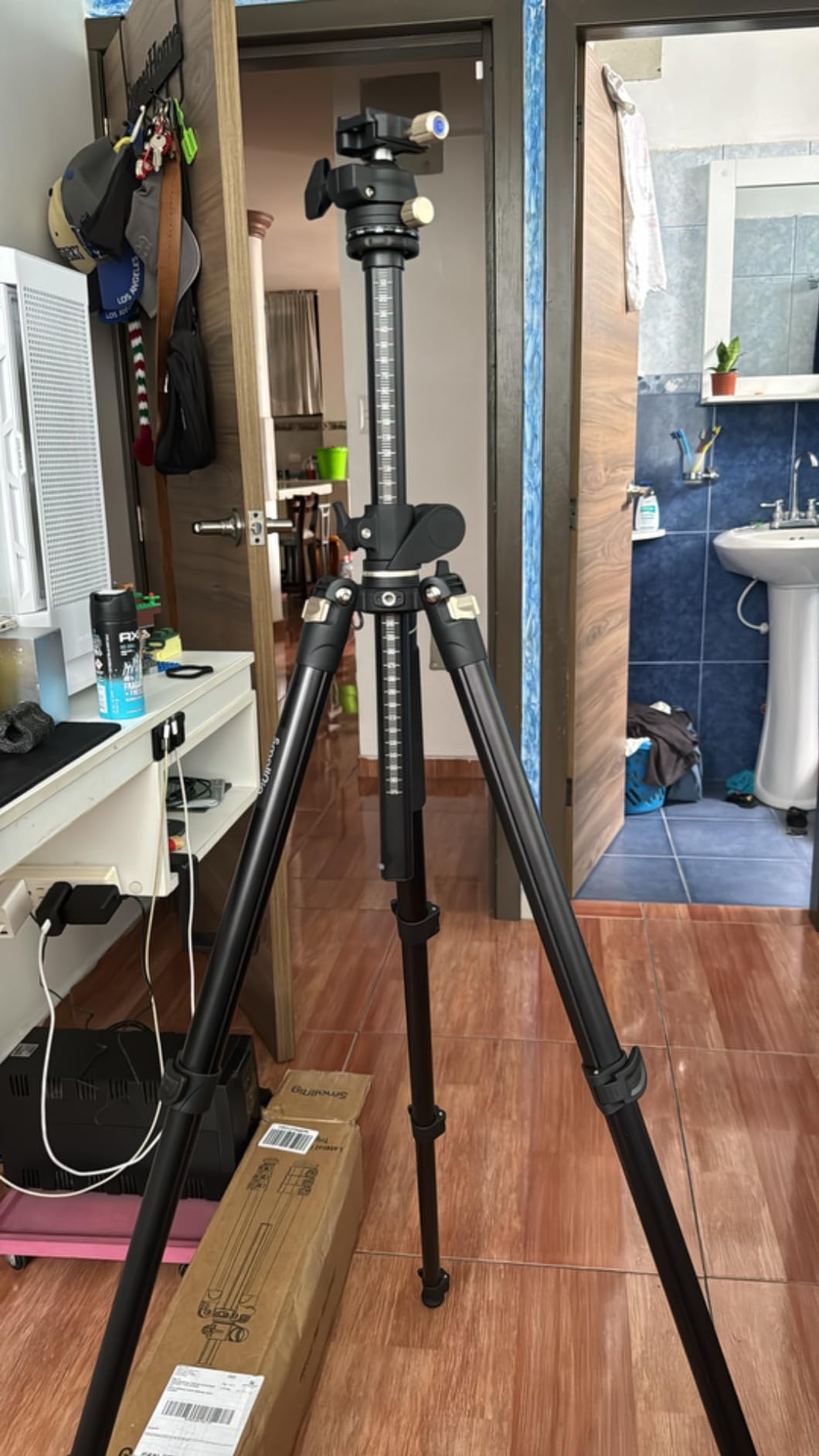
The 29mm aluminum tubes carry a 33 lb tripod rating and 22 lb at the head, and the whole thing weighs 4.4 lb. Owners running telephoto zooms with a 105mm filter thread report no wobble, and a counterweight bag is included for exactly that scenario.
With 103 ratings averaging 4.5, the review base is smaller than most here, but sentiment is consistently positive at 77 percent five-star. The main complaints are the plate screw loosening under heavier bodies and the bundled weight bag being bulky in the carry bag.
Why it works for consistent framing
A lateral column locks the camera in a defined position relative to the base. Once you find the right height and rotation, every frame you take afterward matches, which is the entire point of shooting a catalogue.
The quick angle adjustment plate lock offers 23, 55 and 80 degree positions, so you can hit a repeatable three-quarter angle without dialling it in by eye each time. 1/4-20 threaded holes on the legs accept mics, monitors and image transmission boxes.
Where it will frustrate you
Several buyers replaced the supplied ball head, which tells you the head is the weakest part of an otherwise capable rig. Check the plate screw before a long session, especially with a heavier body.
It is too long and heavy to be a travel tripod, and the carrying bag lacks a proper closure, so gear inside it is not protected. Budget for a proper bag if you move between locations.
9. CAMBOFOTO TM265 Overhead Tripod: Best Lightweight Entry Rig
CAMBOFOTO 68″ Camera Tripod, Overhead Tripod Horizontal, Detachable Monopod
Pros
- Light at 3.77 lb and folds to 22 inches
- Multi angle center column for overhead and low macro
- Four bubble levels for levelling from any orientation
- Detaches into a 53 inch monopod with steel ground spikes
- Dual anti slip screws on the quick release plate
Cons
- Shortest maximum height here at 68 inches
- Lowest average rating in the group
- Some plastic in the material mix
The TM265 is the entry point. It extends to 68 inches, folds to 22 inches and weighs 3.77 lb, and it carries a published 33 lb load rating. For a photographer building a first product setup on a limited budget, that spec sheet is more than adequate.
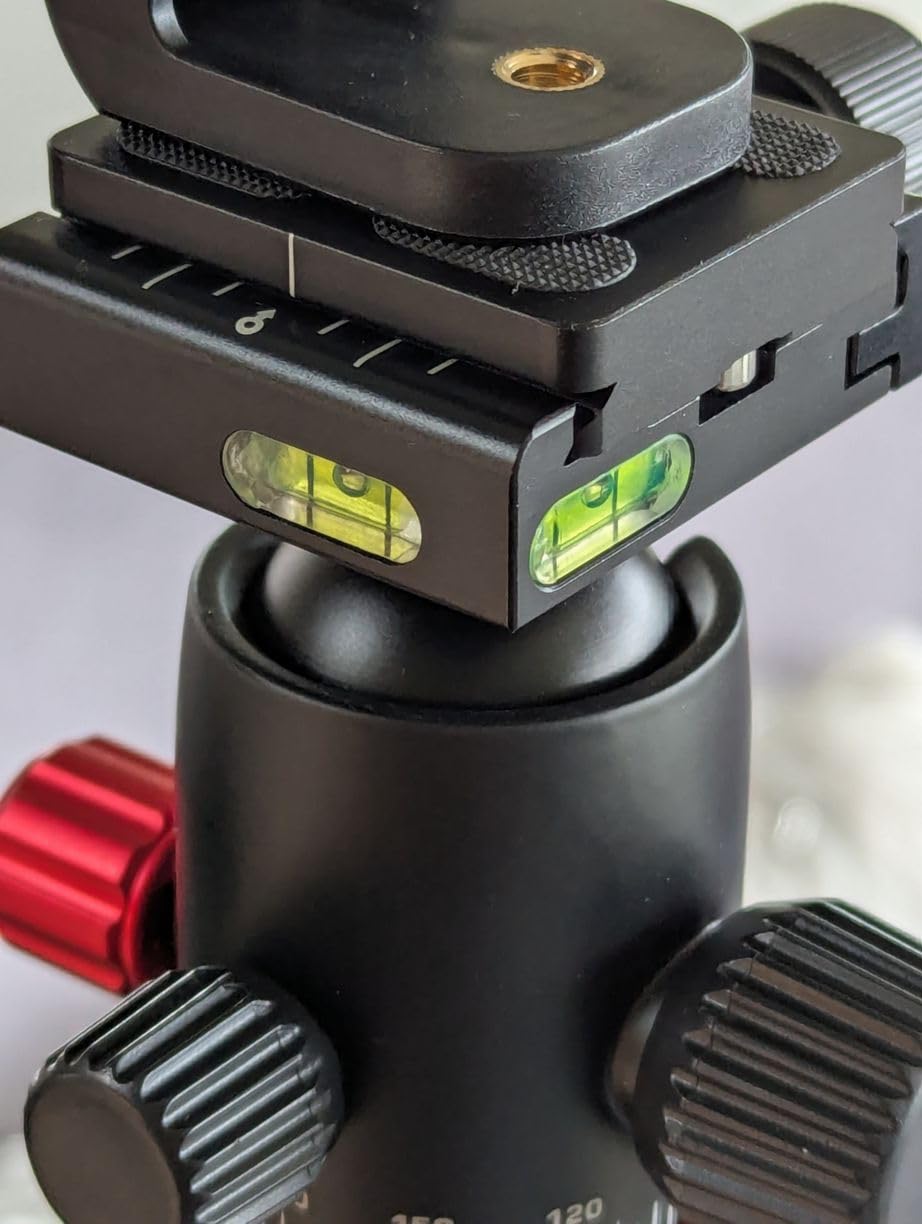
What surprised me was the level of detailing. There are four bubble levels, one on the base and three on the head, so you can level the camera from almost any orientation. That is genuinely useful when you are shooting a low-angle or overhead frame and cannot see the base.
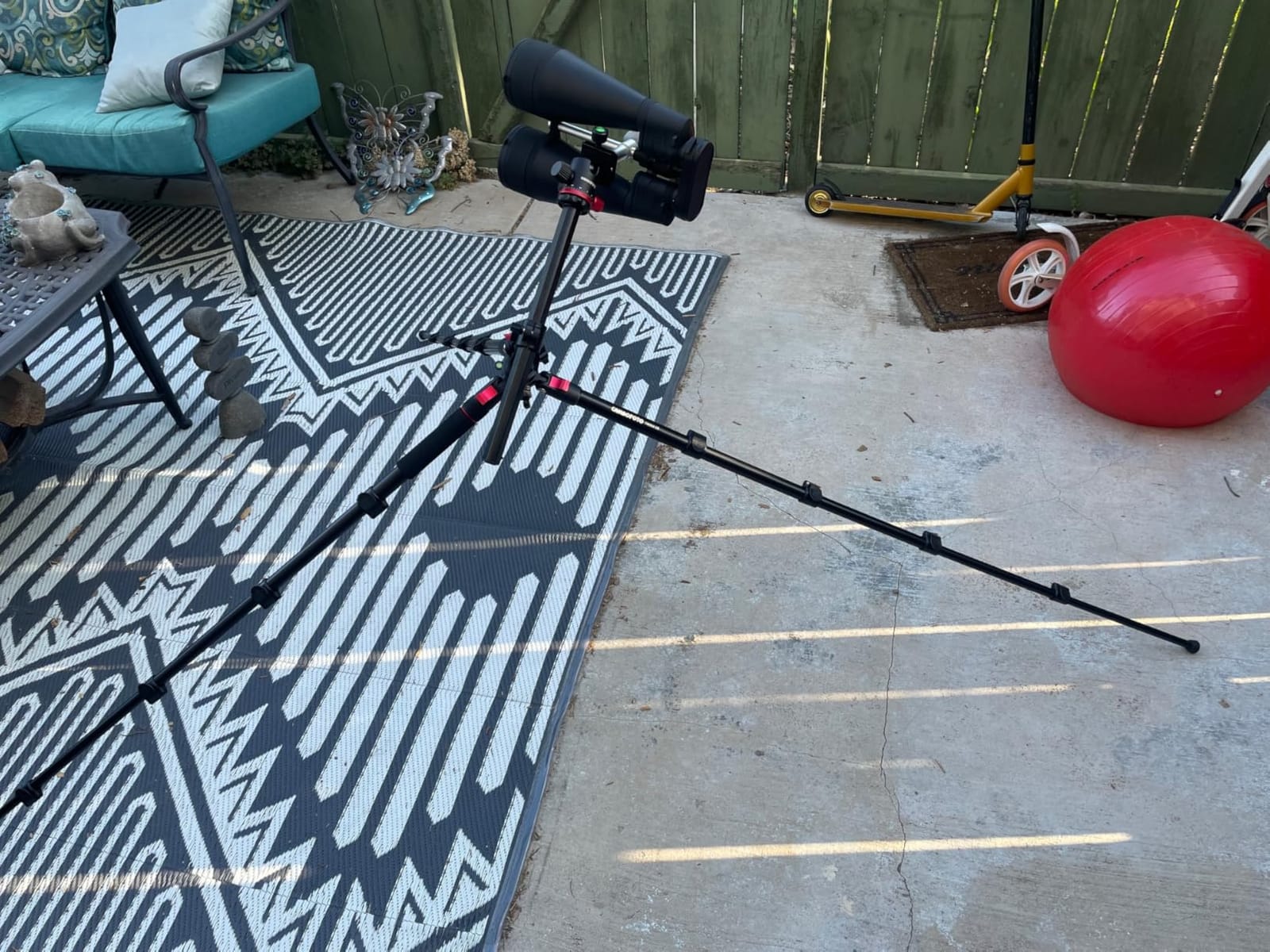
The multi-angle centre column holds horizontal with plus 90 to minus 90 degrees of tilt and 360 degrees of rotation, plus a counterweight hook to help with tipping. It also inverts for ultra-low-angle macro, which no other budget option here offers.
It detaches into a 53 inch monopod and works as a trekking pole with three included steel ground spikes. With 124 ratings averaging 4.4, it carries the lowest average rating in this group and an 8 percent one-star share, which usually means build inconsistency rather than a design flaw.
Why it works as a starting rig
The column geometry is the reason this is worth considering at all. Most budget tripods give you a fixed vertical column, and you are limited to whatever angles the legs allow. Here you can go overhead, side-on and inverted, which covers most product angles.
Four bubble levels and dual anti-slip screws on the plate are the kind of small features that show the designer actually used it on a table rather than a mountain.
Where it will frustrate you
Sixty-eight inches is the shortest reach here, so if your tallest product stack needs a high angle you will be looking at a different tripod. The material mix includes plastic, and the 4.4 rating reflects some build inconsistency between examples.
There is a 2-year guarantee, which is longer than most in this group, and that partly offsets the variability. Check the locks and hinges before a session rather than during one.
10. COMAN FF16LS Heavy Duty Tripod: Best Value Fluid Head
Pros
- Rock solid once locked and handles heavy rigs
- Fluid head gives smooth micro adjustment
- Flip lock tubes set up very quickly
- Quick release accepts Manfrotto and DJI plates
- Carry bag has a tools compartment
Cons
- Minimum working height near 3 feet
- Heavy over distance
- Hardware loosens with use and needs tightening
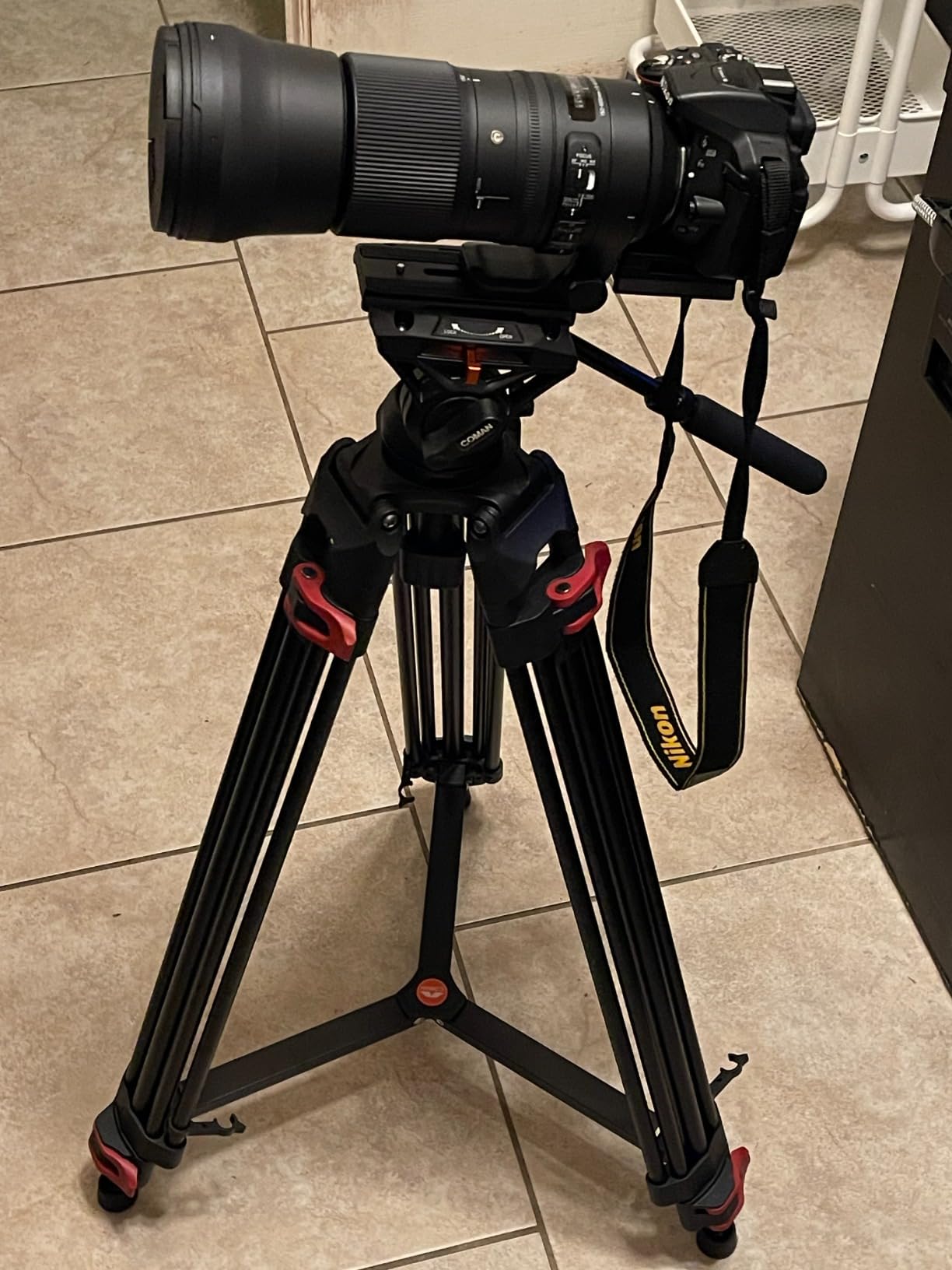
The FF16LS is the one I recommend when a client asks for a tripod that will not move and will not cost what a professional video support does. Dual-tube aluminum legs, a 60mm bowl base, mid-level spreaders and a 22 lb load rating give it real headroom for a bigger body.
The Q6 fluid head offers 360 degree pan, -75 to +90 degrees of tilt with damping and dynamic balancing. Owners with long-term use describe it as smooth enough for spotting scopes and tele-lens work, which is the same requirement as framing a macro detail without creeping.
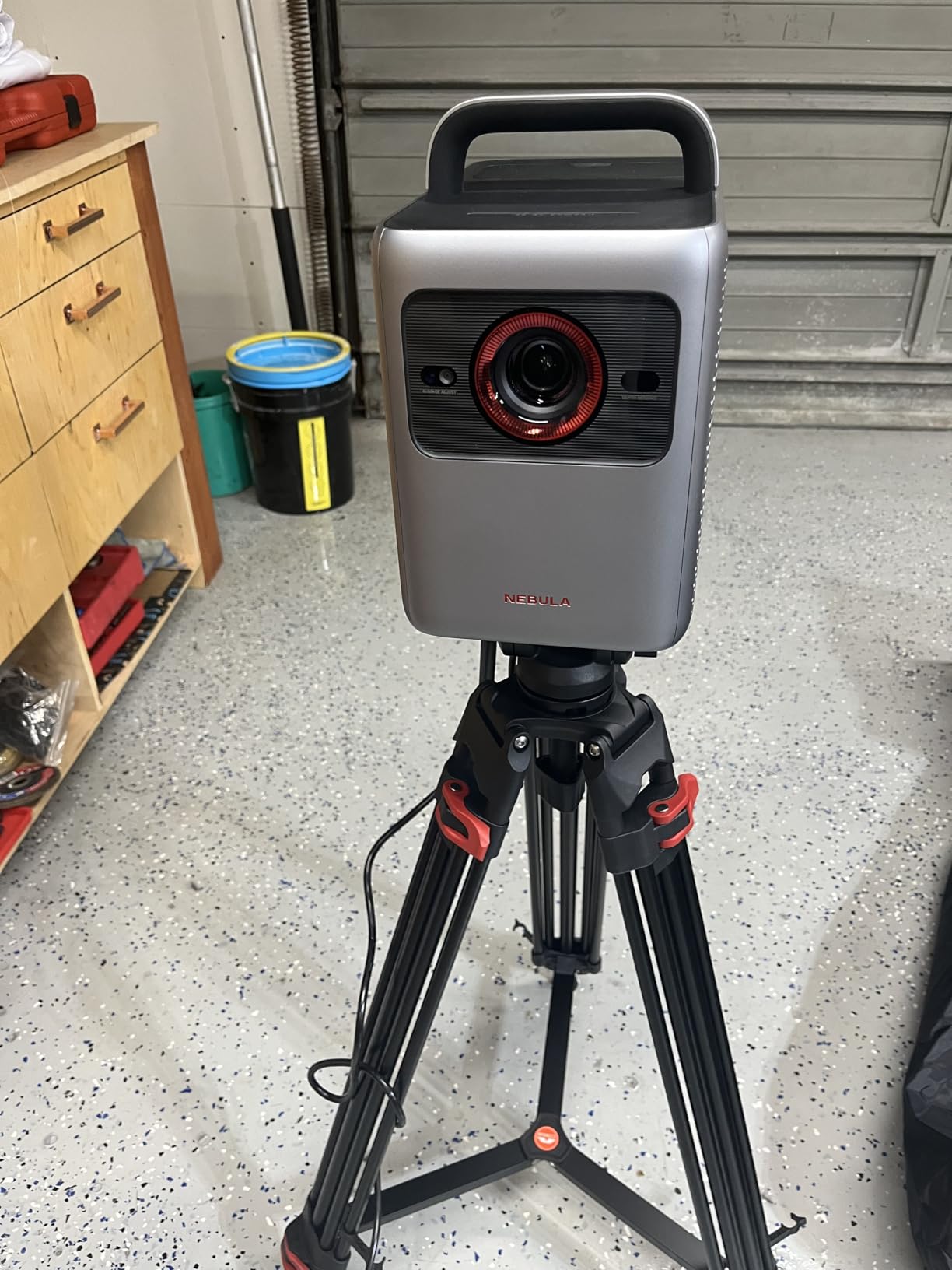
The quick release plate carries both 1/4 and 3/8 screws and accepts Manfrotto and DJI plates, so it pairs with the rest of a video kit. A foldable L-bracket is included, and the carry bag has an internal zipped compartment for tools and allen wrenches.
With 1459 ratings averaging 4.5, this is the second most proven tripod here. Recurring caveats are the weight, the minimum working height near three feet, and screws that loosen with use. Customer service has been praised for replacing a defective locking bolt.
Why it works for heavier studio kits
A 22 lb rating is headroom. If you are running a body with a decent macro or telephoto lens, a 13 lb rating leaves you constantly checking the numbers, while 22 lb lets you forget about it.
Dynamic balancing on the head means a heavy lens does not pull the front of the camera down. For product work that is a small thing that has an outsized effect on whether your angles stay put.
Where it will frustrate you
The 32.7 inch minimum height rules out macro and very low angles entirely. If half your shots are detail work near the table surface, this is the wrong category and you want an invertible column instead.
At 9 lb it is heavy to carry, and the shoulder strap is short for larger users. Budget for periodic tightening of the hardware, and treat the screws as a pre-session check rather than a once-a-year service.
11. SIRUI AM-25S Video Tripod: Best for Smooth Tilt and Macro Scoping
Pros
- Smooth quiet and predictable head movement
- Silent tilt operation unlike many consumer tripods
- Handles a 9 lb rig and a teleprompter without complaint
- Oversized leg locks make height changes fast
- Handle mounts on either side
Cons
- Big and heavy with no travel use
- Tilt is slightly tighter than pan
- One buyer reported a leg quality control issue
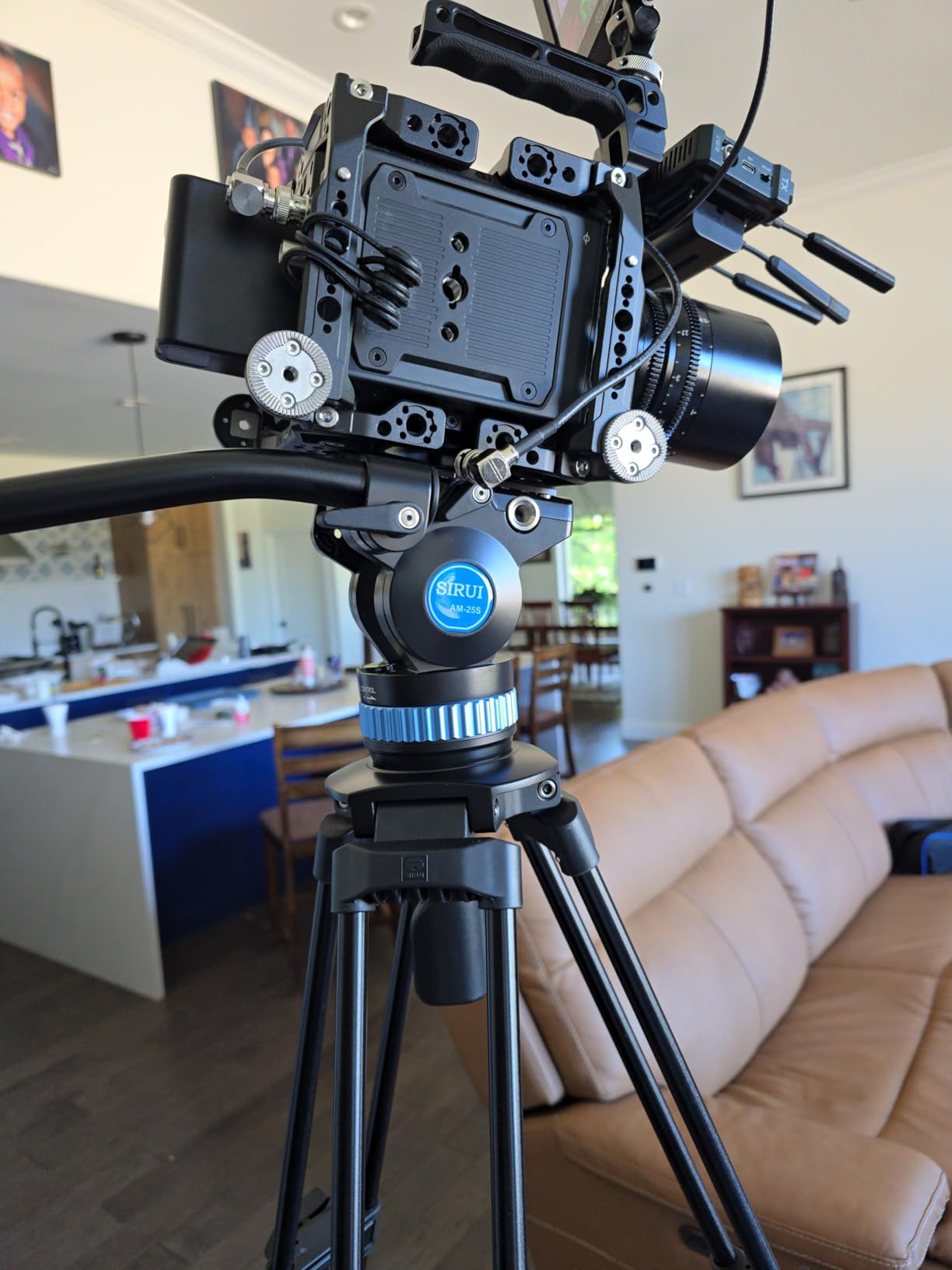
Sirui’s AM-25S earns its place on one specific point: the head is smooth, quiet and predictable. Reviewers single out the tilt repeatedly, and silent operation during tilt is a detail you only notice when you are running long macro focus-stacking sequences and the rig noise becomes obvious.
Three-section telescopic legs run from 36 inches to 74.8 inches with oversized locking knobs and buckles, and the load rating is 22 lb on a 75mm bowl base. With 426 ratings averaging 4.6 and 83 percent five-star, it has the highest five-star share of anything in this roundup.
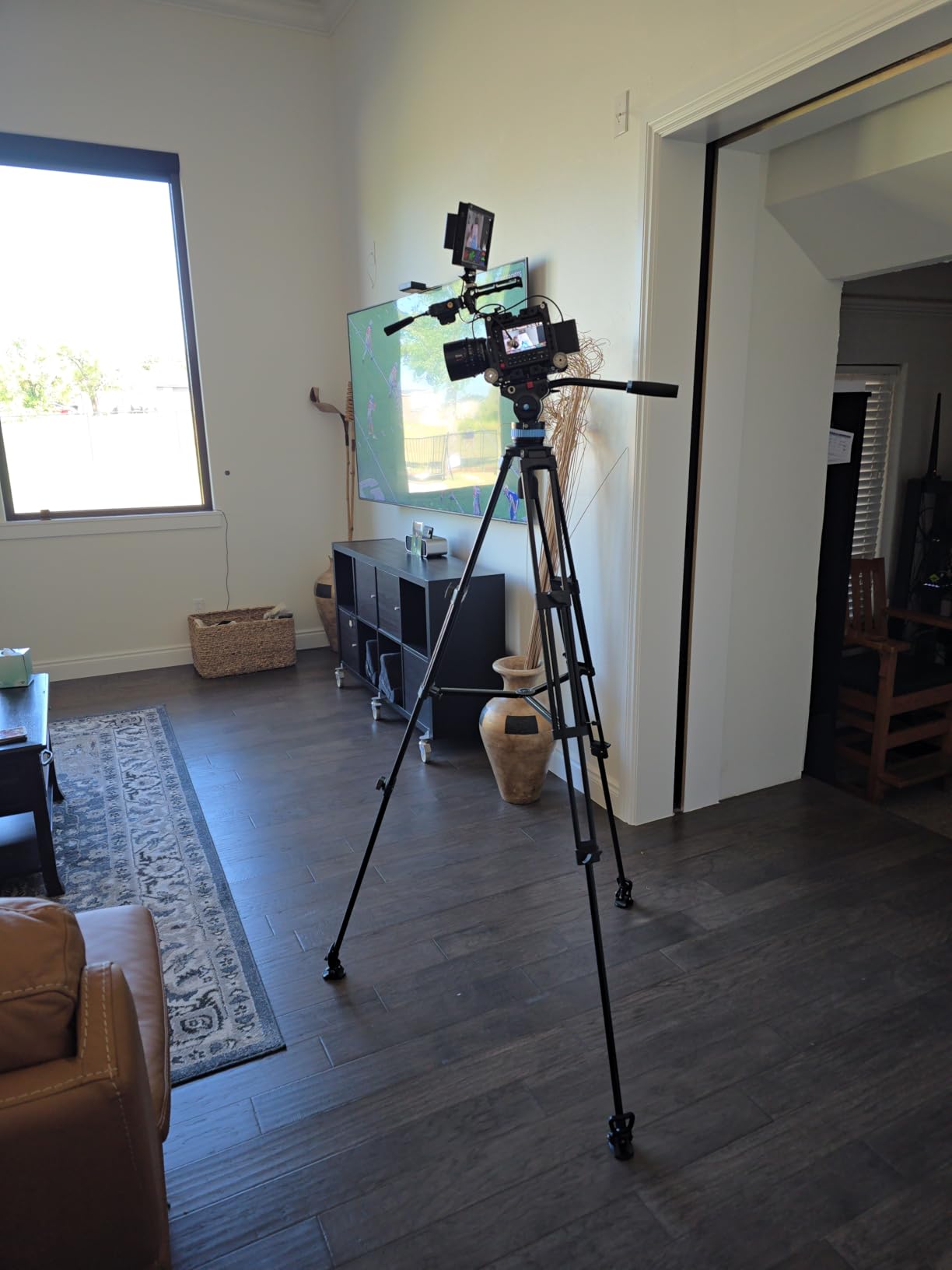
The fluid head offers stepless 360 degree pan with a bottom ring that adjusts pan tension, plus -75 to +90 degrees of tilt. The handle switches sides for either hand, and the quick release plate carries standard 1/4 and 3/8 screws with a 3/8 thread on the head itself.
Retractable metal spike feet let you switch to rubber feet for a studio floor, which is a small feature that matters on a sweep backdrop. Almost every review notes the bulk and weight as the trade-off, and the main defect report is a single leg quality-control issue.
Why it works for precise tilt control
Tilt smoothness is what lets you creep the camera down in small increments until the composition lines up with the product edges. On cheaper fluid heads that adjustment arrives in visible steps, and you end up nudging the tripod body instead.
Dynamic balancing means a heavier lens does not drag the front down, and the 22 lb rating gives plenty of margin. Owners report using it for studio, broadcast and astronomy work, all of which reward a head that behaves.
Where it will frustrate you
It is a big, heavy tripod with a 96 cm folded length. That is fine for a permanent studio corner and wrong for anything you carry regularly.
Tilt is slightly tighter than the pan, and the 36 inch minimum height again rules out macro work at the surface. Inspect the legs on arrival if you are buying a fresh one, since that is the one quality-control issue reported.
12. Manfrotto 055 PRO Tripod Kit: Best for Low-Angle Macro and Long Exposures
Manfrotto 055 Aluminum 3-Section Tripod Kit with Horizontal Column and 3-Way Head (MK055XPRO3-3W)
Pros
- Rock solid with heavy bodies and telephoto zooms
- Quick release head locks tight
- 90 degree center column is genuinely useful for macro
- Three way head gives separate pan tilt and lateral control
- Rotating bubble level reads on uneven ground
Cons
- Heavy at about 7 lbs for its class
- Bubble levels are small and hard to see
- Legs can spring open if not released gently
The Manfrotto 055 PRO is the only tripod here with a minimum working height of 9 cm and a genuine three-way pan and tilt head. That combination makes it the right choice for macro detail work, where you need to slide the camera to eye level with a product surface and tilt the frame precisely.
The Q90 centre column swings horizontal for overhead and macro work, and the legs can be spread wide to drop the camera near the ground without a low-angle head. The three-way head gives independent controls for lateral shift, fore-aft tilt and pan, which is far more useful on a table than it is outdoors.
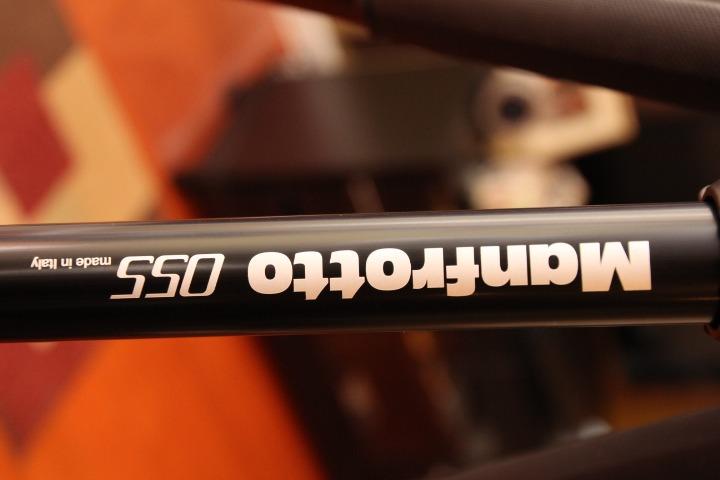
Load rating is 8 kg, and the build takes heavy DSLR bodies, telephoto zooms and long-exposure work without complaint. With 746 ratings averaging 4.5, owners frame it as the point where serious hobbyists stop buying disposable gear, which matches my experience.
The warranty is the strongest detail in this roundup: a standard limited warranty that extends to 10 years with registration. Spare parts and service documentation matter when a tripod has to survive years of studio use, and that is worth more than any spec line.
Why it works for macro and low angles
Two features do the work here. The horizontal column lets you get the camera over or beside a low product without a separate arm, and the three-way head lets you shift the framing laterally while keeping the camera level, which is far easier than tilting off-axis.
The rotating bubble level on the upper disk can be read from several planes, so you can level the camera while looking at the subject rather than crouching at the base. For long exposures and focus stacking that precision is the point.
Where it will frustrate you
At roughly 7 lb it is not a travel tripod, and it does not ship with a carry bag. You will want to source one, along with a proper hex key, because the included screwdriver is thin plastic.
The bubble levels are small and hard to see, and some owners report legs springing open if released too quickly. Handle it gently when folding. A 7 percent one-star share is the highest here, so treat it as a considered purchase rather than an impulse one.
What to Look For: Head First, Then Legs
If you only take one principle from this roundup, take this one: the head matters more than the legs for still-life work. It is the most repeated consensus in the photography forums we read, and it holds up in practice. You can shoot a product on cheap legs with a good head, but you cannot shoot on good legs with a sticky head, because the head is what defines your angle and whether it repeats.
Start with the angle you need most. A ball or three-way head gives fast repositioning for catalogue work. A geared or fluid head gives millimetre-accurate tilt adjustment, which is what you want for macro detail and matching frames. A lateral or horizontal centre column is what unlocks true top-down shots. A copy stand is more precise still, but it locks you to a fixed overhead position.
Then check the working height against your tallest stack and your lowest shot. Most tripods here top out between 68 and 90 inches and bottom out between 9 inches and nearly 3 feet. If your lowest shot is a bottle base on a sweep, you need an invertible column, not a taller tripod.
Load capacity deserves more respect than most buyers give it. Treat the published rating as a ceiling, not a target, and stay comfortably below it. A camera plus a long lens sitting on a ball head at full extension puts real strain on the head even when the weight is within the number.
Two practical rules came up again and again from working photographers and from staff answering questions on retailer listings. First, put one leg directly in front of the lens when the rig is front-heavy, because that leg resists the tipping force instead of working against it. Second, adding rear weight, even a small bag, settles a marginal setup more reliably than upgrading legs.
Finally, think about vibration and drift before a long exposure or a focus stack. Lock every collar, check the legs are fully seated, and give the rig a moment to settle after a height change. If you are stacking frames, remember that electronic shutter modes and mirror movement can introduce their own vibration, which no tripod can fix. Our tabletop setup guide covers that workflow in more depth.
Frequently Asked Questions
What is the best tripod for product photography?
The best tripod for product photography is one with a rigid head and a repeatable height and angle, not the most expensive model available. For a standard studio setup, a three-section tripod with a three-way head or a 28mm ball head, a load rating of at least 20 lb, and a horizontal or invertible centre column covers almost every still-life angle.
Do professional photographers use tripods for product work?
Almost all of them do. Product photography is shot on long exposures, tethered, and often focus-stacked or composited, so any movement between frames ruins consistency across a batch. A tripod also frees both hands for lighting, props and turntable spins while the camera stays exactly where you placed it.
Do you need a tripod for product photography?
You need one for anything shot in batches, on long exposures, tethered, or stacked. Handheld works for a single casual frame, but studio lighting usually means low light levels, and any shift in framing between exposures means retouching rather than shooting. A tripod turns a frustrating session into a repeatable one.
What tripod head is best for studio work?
A three-way pan and tilt head is the most versatile for still life because pan, tilt and lateral shift are controlled separately. A fluid or geared head wins when you need millimetre-accurate tilt adjustment for macro detail work. A ball head is fastest to reposition but least precise at fine angles. Heads matter more than legs for still-life framing.
How high should a tripod be for product photography?
Enough to shoot over your tallest product stack without crouching, and low enough to reach your lowest shot. Most studio tripods here reach between 68 and 90 inches and bottom out between 9 inches and nearly 3 feet. If your lowest shot is near the surface of the sweep, prioritise a minimum working height under 12 inches over maximum reach.
How do I stop a tripod from vibrating during long exposures?
Extend the legs fully, seat every collar and lock, and give the rig a few seconds to settle after any height change. Lower the centre column rather than stretching the upper legs, keep the centre of gravity over the footprint, and put one leg directly in front of the lens to resist front-heavy tipping. Lock the head last, then release the shutter with a timer or remote.
Which tripod is good for content creation and product video?
A tripod with a fluid head that pans 360 degrees and tilts through a wide range, with quick lever locks for fast height changes, suits content creation best. A ball head is wrong for moving video because it cannot feather a pan. The SmallRig AD-01 in this roundup is the pick that handles both stills and gimbal-mounted video.
Final Verdict: Which Tripod to Buy
If you buy only one tripod for studio product photography, take the Cayer BV30L. It holds a rig dead still, its fluid tilt is genuinely precise, and with 1772 ratings averaging 4.7 it is the most proven support in this roundup. Shoot overhead flat-lays on the K&F Concept 76 in, work your way down to macro detail on the Manfrotto 055 PRO, and run bulk flat-lay volume on the NEEWER ST100.
Whichever you choose, check the load rating against your real rig, put a leg in front of the lens when the setup is front-heavy, and lock the head last. That is the best tripods for studio product photography advice I can give you: the right support only matters once it is set up properly.