
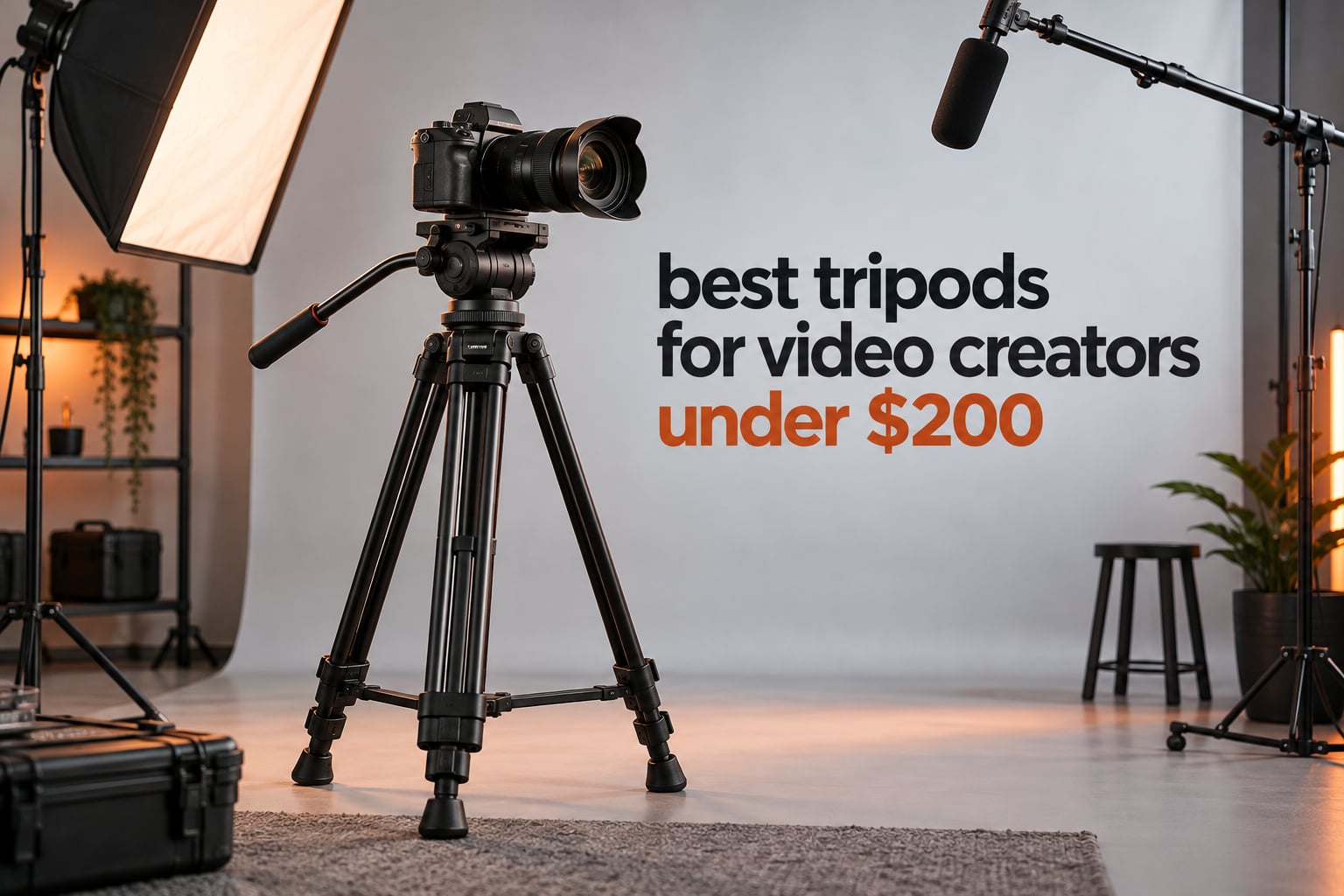
Yes, a real video tripod with a genuinely damped head exists well under 200 dollars, and the picks below all keep that ceiling. The difference between video and photo support is the head: a photo tripod uses a rigid ball or pan-tilt head, and every move you make starts and stops like a door slamming. A video tripod uses a fluid-damped head with a grease-filled cartridge and a counterbalance system, so pans and tilts ease in and coast to a stop.
That one component is what separates footage that looks intentional from footage that looks handheld no matter how good your camera is. It is also the component most budget tripods get wrong, which is why we rated all ten of these on head quality first and leg quality second.
We spent weeks putting these tripods through the same routine: raise a mirrorless body to full height, pan it hard, tilt it to the stop, then load a second body and a small cage on top to see whether the head still holds. Nothing below is based on the manufacturer spec sheet alone, and every pick names the rig it suits and the one it does not.
If you shoot with a phone instead of a camera, our phone tripod roundup covers that side. If you want the wider context first, our general content creator tripod guide is the better starting point.
Top 3 Best Tripods for Video Creators Under $200 in 2026
Our three front-runners each win a different job. The Cayer BV30L is the best overall because its twin-tube legs and fluid head hold a mirrorless rig rock steady at eye height. The COMAN DF16LS is the budget pick, carrying more load than anything else here for a smaller outlay. The NEEWER TP-M200 is the best value and the tallest option, since its 78.7 inch maximum height gives you genuinely top-down framing.

Cayer BV30L Video Tripod
- Twin-tube aluminum legs
- 13.2 lb payload
- Fluid head with 360 degree pan
- 33 to 72 inch height range

COMAN DF16LS Video Tripod
- 17.6 lb max load
- 75mm bowl fluid head
- DJI RS gimbal compatible
- Flip-lock legs to 74.4 inches

NEEWER TP-M200 79 inch Video Tripod
- 78.7 inch maximum height
- 17.6 lb capacity
- 70mm bowl fluid head
- Built-in bubble level
All 10 Best Tripods for Video Creators Under $200 in October
Every model below has a damped head, a real quick release plate, and a full complement of leg locks. The max load column tells you the manufacturer rating, not a guarantee. Read the 50 percent headroom rule in the buying guide before you buy.
| Product | Specifications | Action |
|---|---|---|
| Cayer BV30L Video Tripod with Fluid Head |
|
Check Latest Price |
| COMAN DF16LS Heavy Duty Video Tripod |
|
Check Latest Price |
| NEEWER TP-M200 79 inch Video Tripod |
|
Check Latest Price |
 SmallRig 73.2 inch Heavy Duty Video Tripod SmallRig 73.2 inch Heavy Duty Video Tripod |
|
Check Latest Price |
 COMAN FF06S Tripod and Monopod Combo COMAN FF06S Tripod and Monopod Combo |
|
Check Latest Price |
 NEEWER TP74 74 inch Video Tripod NEEWER TP74 74 inch Video Tripod |
|
Check Latest Price |
 NEEWER Basics TP37 74 inch Video Tripod NEEWER Basics TP37 74 inch Video Tripod |
|
Check Latest Price |
 Sirui AM-25S 74.8 inch Video Tripod Sirui AM-25S 74.8 inch Video Tripod |
|
Check Latest Price |
 K and F Concept 90 inch Fluid Head Tripod K and F Concept 90 inch Fluid Head Tripod |
|
Check Latest Price |
 RAUBAY DV-1 Pro 70.8 inch Video Tripod RAUBAY DV-1 Pro 70.8 inch Video Tripod |
|
Check Latest Price |
1. Cayer BV30L Video Tripod – The Best Overall Under 200 Dollars
Pros
- Rock stable at full height with a mid-level spreader
- Manfrotto-compatible quick release plate
- Carry bag and spare plate included
- Long service life reported by owners
Cons
- Fluid damping is stiff and not adjustable
- Stiffness increases with both leg sections extended
- Some plastic knobs need occasional re-tightening
- Heavy and bulky for travel
The BV30L is the tripod we kept reaching for during testing. The twin-tube aluminum legs and the mid-level spreader meant that a mirrorless body plus a zoom never needed a hanging weight to stop the rig from creeping forward, and the head held position mid-tilt without any spring-back.
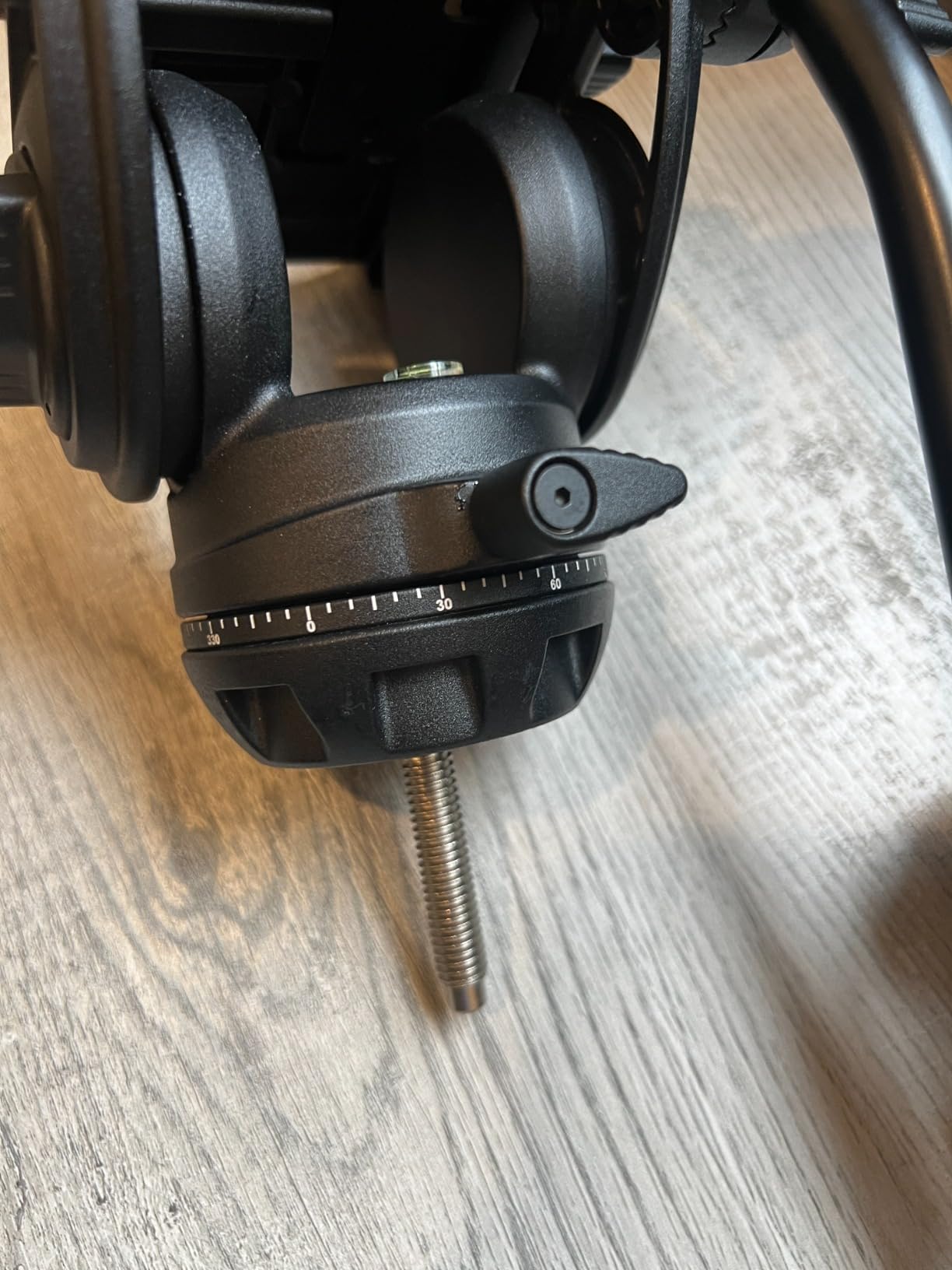
What you are buying is a 75mm flat base fluid head with 360 degree panning and tilt from minus 70 to plus 90 degrees. Height runs from 33.4 to 72.5 inches and the whole thing folds to 35 inches, which is fine in a car and awkward on a train.

Two quick release plates ship in the box, both with 1/4-20 and 3/8-16 screws, and a 3/8-16 threaded hole sits on the head base for slider work. The plates are Manfrotto-compatible, so gear swaps between tripods take seconds rather than an afternoon.
Owners also mention the padded carry bag more than almost anything else, and a 2 year manufacturer warranty backs the whole package. At 8.8 pounds, this is a tripod you load into a trunk, not one you carry up a trail.
Who should buy the BV30L
Buy it if your work is mostly locked-off: talking head segments, product demos, cooking inserts, and livestreams where the camera does not move much. The stiffness that hurts in fast follow moves is a non-issue when the frame is staying still.
It is also the safe pick for anyone starting out. Nothing about it is exotic, nothing needs tuning, and the included plate and bag mean you can shoot on day one.
Who should skip the BV30L
Skip it if you pan and tilt constantly on narrative work, because the damping is not adjustable and the resistance is on the stiff side for a light body. The other reason to pass is weight: 8.8 pounds plus 35 inches of folded length is a two-handed carry.
Also look elsewhere if you plan a long telephoto lens. Thirteen pounds is plenty of payload, but a 70-200mm changes the leverage on the head completely.
2. COMAN DF16LS Video Tripod – Budget Pick With 17.6 lb Capacity
Pros
- Twin-tube legs and spreader give a solid platform
- Rated load covers cinema and mirrorless rigs
- Flip locks make height changes fast
- Works with DJI RS gimbals and Manfrotto plates
Cons
- Cannot get very low to the ground
- Bag strap is short for taller users
- Hardware can loosen with heavy repeated use
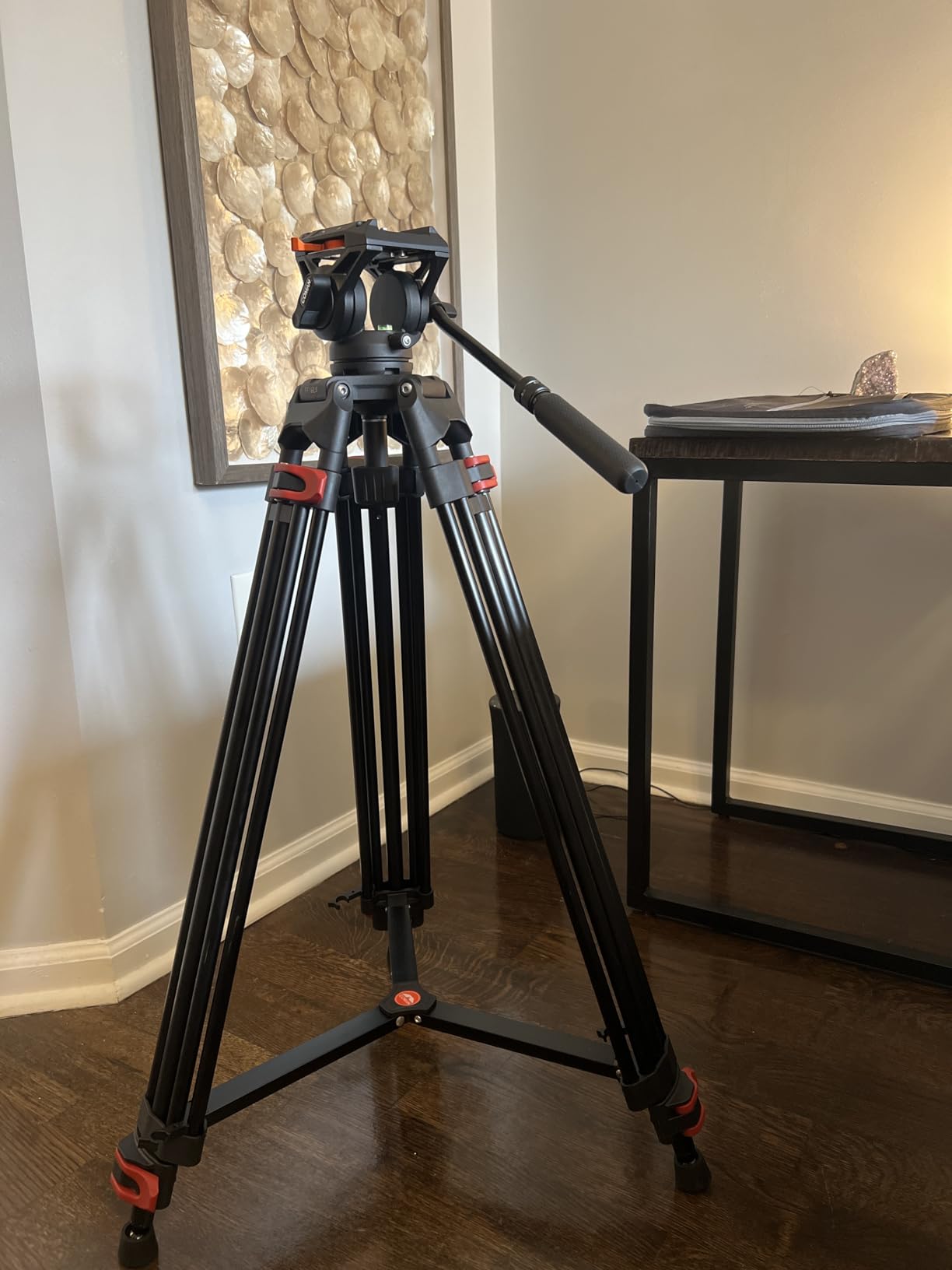
The DF16LS does one thing very well: it holds weight without flexing. The dual-tube aluminum alloy legs and the 75mm bowl base gave us the steadiest platform of the three-section tripods in this list, and the listed 17.6 pound capacity is the highest true twin-tube number available at this budget.
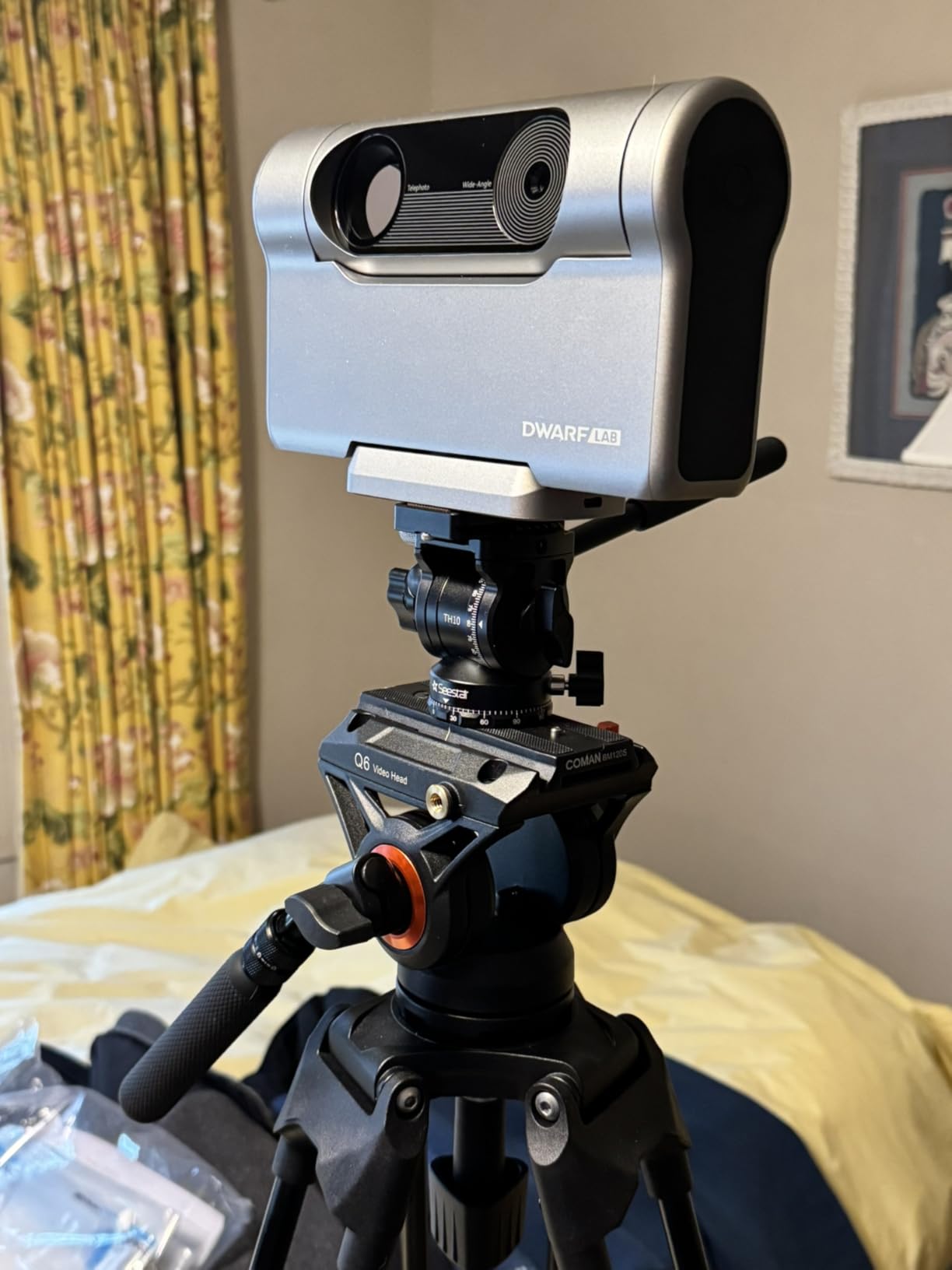
The Q5S fluid head rotates a full 360 degrees with tilt from minus 75 to plus 90 degrees and a side-press quick release. It is not a beautiful head, but the damping feels consistent once you find the tension sweet spot.
What surprised us most was how well the flip-lock levers behaved under repeated height changes during a long setup day. A three-section leg extending to 74.4 inches and folding to 35 inches means fewer sections to align, and that directly translates into less shake at the top.
The quick release plate works with DJI RS series gimbals and most Manfrotto plates, which matters if you move between tripod and gimbal in the same session. Buyers report running FX3 and FX30 bodies and heavier cinema kits on it without complaint.
Who should buy the DF16LS
This is the pick for a creator whose rig is growing. At 17.6 pounds of stated capacity, you have room for a mirrorless body, a lens, a top handle, a mic, and a small monitor before you approach the limit.
Choose it when the tripod lives in a studio, a garage, or a fixed event location and weight matters more than pack size.
Who should skip the DF16LS
Skip it for ground-level work. The legs stay connected and the lowest useful working height sits around waist level, so low-angle product shots and tabletop angles are out of reach without a different support.
The included bag strap also gets complaints from taller users, so plan on carrying it by hand or buying your own strap.
3. NEEWER TP-M200 79 inch Video Tripod – Best for High-Angle and Overhead Work
Pros
- Tall 200cm maximum height suits overhead setups
- Double-tube legs stay stable on uneven ground
- Built-in bubble level speeds levelling
- Large plate carries 1/4 and 3/8 inch screws
Cons
- Around 12 pounds makes it impractical for travel
- Flip locks need care to extend and close
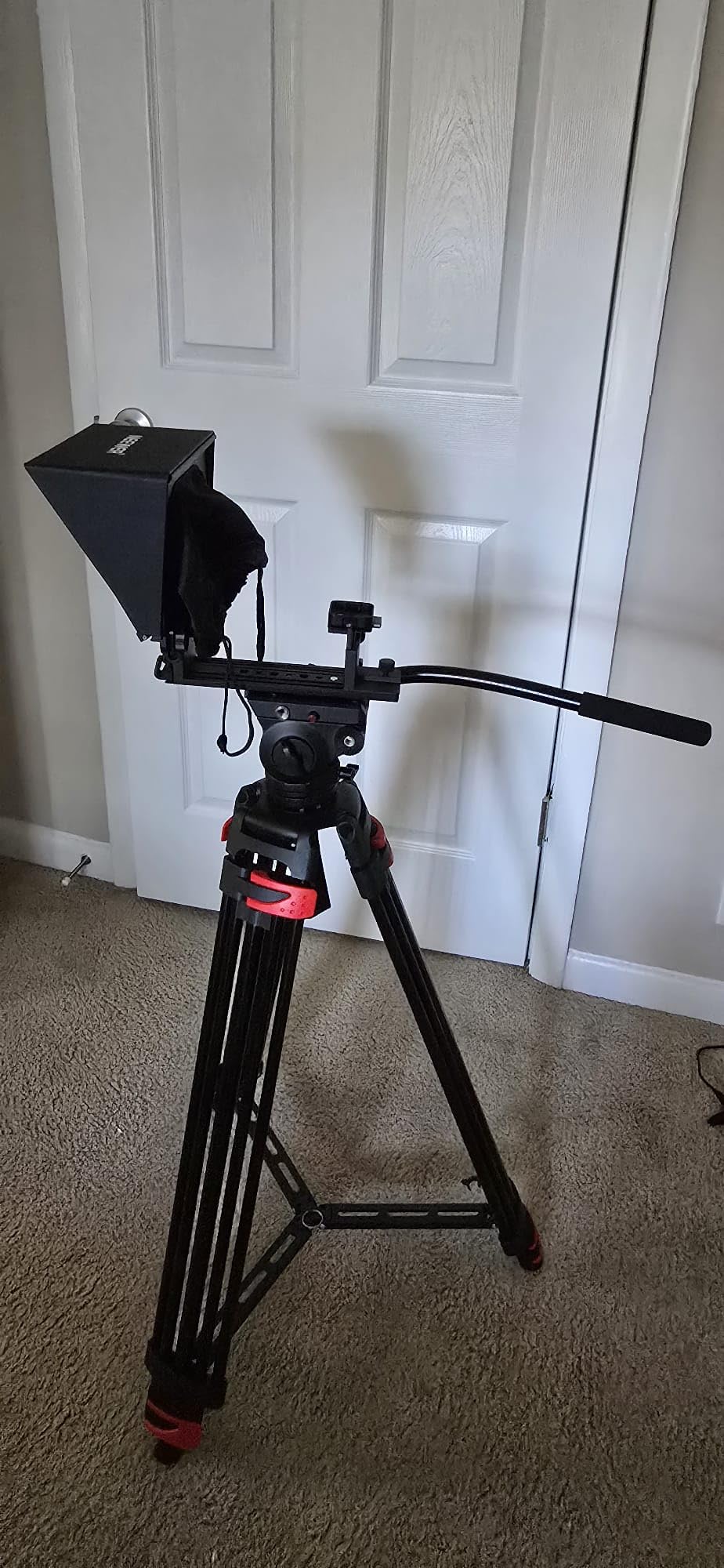
The TP-M200 exists for one reason: height. It reaches 200 centimeters, or 78.7 inches, which is the tallest working height in this roundup, and that changes what you can frame. Overhead cooking angles, tall architectural shots, and straight-down product demos are all reachable here.
Below the head, the aluminum alloy double-tube legs and 70mm adjustable bowl base keep the rig steady on uneven ground. The fluid drag head pans 360 degrees and tilts from minus 70 to plus 90 degrees, with a max load of 17.6 pounds.
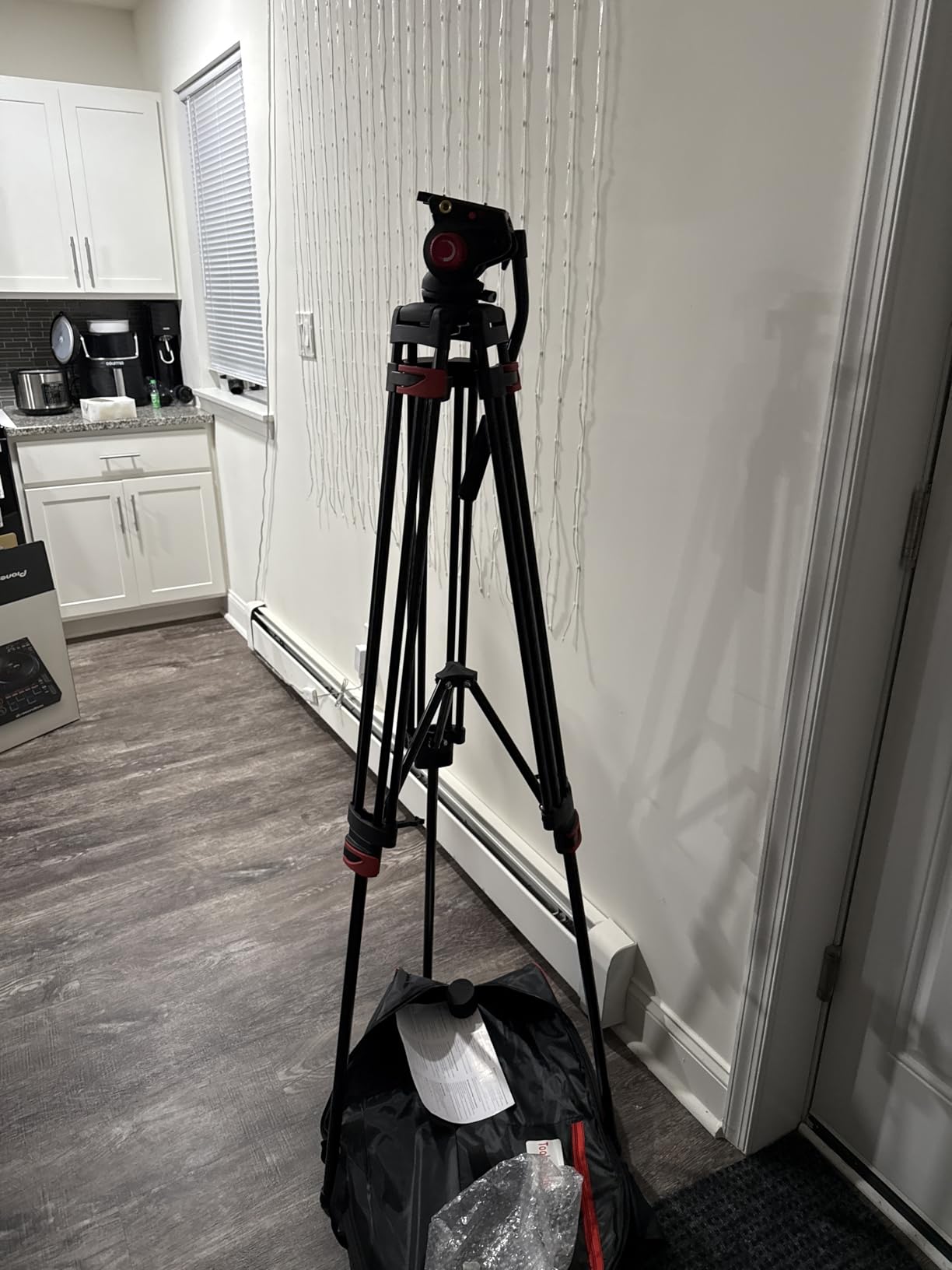
Owners consistently point to the built-in bubble level and the wide height range as the two features that make setup fast. The large quick release plate accepts both 1/4 inch and 3/8 inch screws, so you are not hunting for adapters when a heavier body shows up.
It folds to 35.8 inches, and the non-slip rubber feet handle hard floors without scratching. The 5.58 kg weight is the honest catch: this is a studio and event tripod, not a hiking one.
Who should buy the TP-M200
Buy it for food channels, product demonstrations, and any shoot where you need the camera above your head. The extra six inches of height over a standard 72 inch tripod removes the step stool from your kit list.
It is also a strong choice for livestream and hybrid event work where the camera needs to sit high and stay put.
Who should skip the TP-M200
Pass if you travel. Reviewers name the weight as the recurring reservation, and twelve pounds of aluminum plus a full-size bag adds up fast across a flight-based production schedule.
The 70mm bowl is also narrower than the 75mm bowls on several rivals, which is a small penalty on very uneven terrain.
4. SmallRig 73.2 inch Heavy Duty Video Tripod – Best for Gimbal Workflows
Pros
- Plate accepts DJI RS gimbals and standard plates
- Quick height changes without tools
- Pairs well with SmallRig dollies
- Carry bag and handle included
Cons
- Heavy plastic content in knobs and levers
- Head uses friction rather than true fluid damping
- Legs stay connected so lowest height is waist level
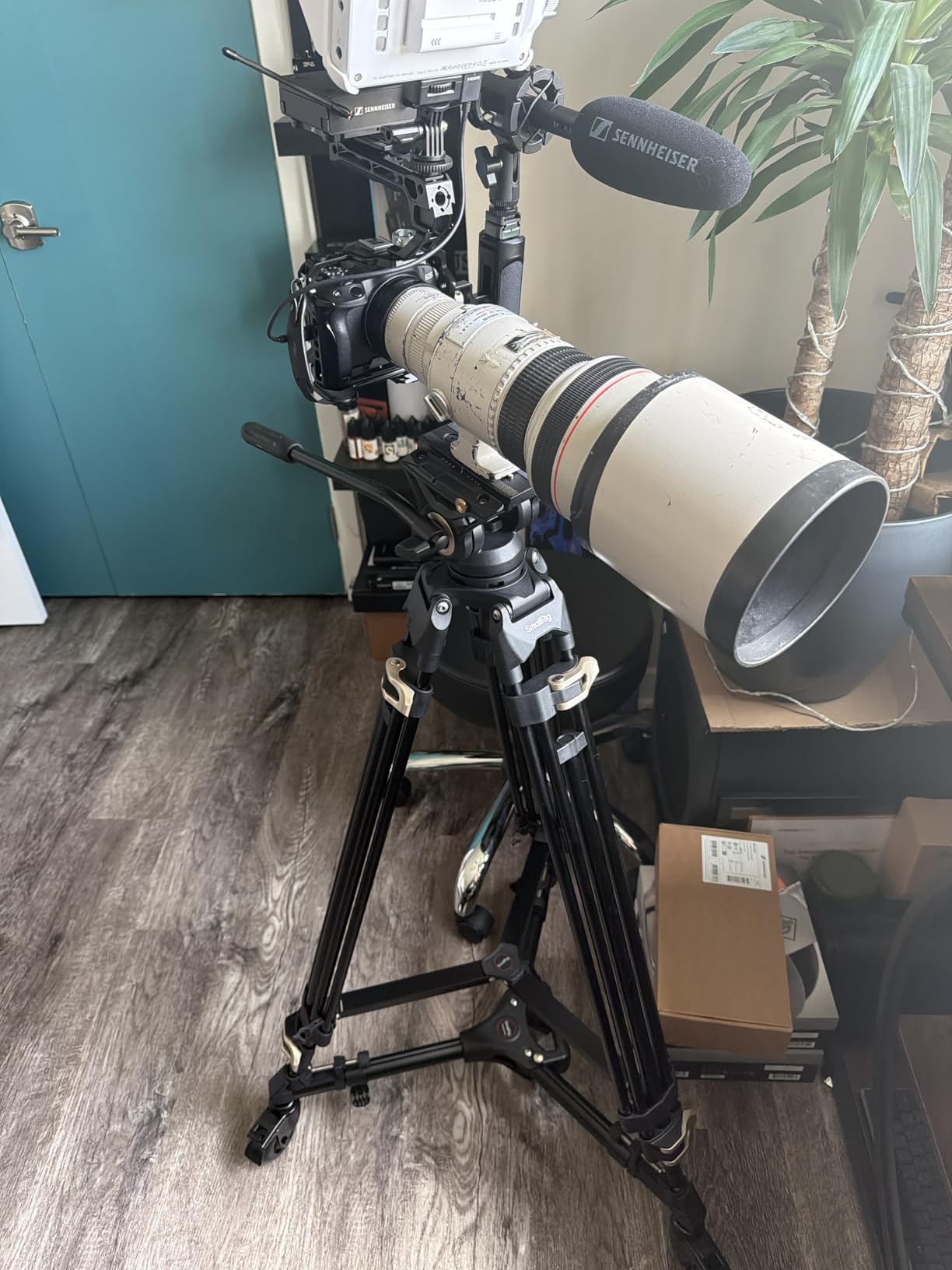
The dual-mode quick release plate is the reason this tripod is here. The same plate accepts DJI RS 2, RS 3, and RS 3 Pro mounts and standard plates, so you can unbolt from a gimbal and onto the tripod head in the same amount of time. Forum discussion about creator tripods keeps circling this same pain point, and this plate solves it directly.
The aluminum double-tube legs and 75mm bowl stay solid once set, and the head gives 360 degree horizontal movement with plus 90 and minus 60 degree vertical travel, a damping system, and a balance control. Maximum load is 8 kg.

The build is fast to reconfigure. Height runs from 33 to 73 inches, and despite the 8.8 pound weight users describe it as easier to carry than its size suggests. There is a built-in wrench stored in the quick release plate, which is the kind of detail that saves a shoot.
Videographers report using it with cinema bodies such as the C300 Mark II, and it pairs well with SmallRig dollies for tracking shots. The carry bag and the spacious handle are both included.
Who should buy the SmallRig tripod
Buy it if you alternate between a gimbal and a tripod in the same project. Travel vloggers, one-man documentary shooters, and hybrid creators get the most out of that dual-mode plate.
It is also worth considering if you already own SmallRig cages and grips, because the whole system works together without adapters.
Who should skip the SmallRig tripod
Skip it if you need genuinely damped movement. Owners report that the head adjustments are friction-based rather than a true fluid cartridge, so fine tilt moves take practice.
The plastic content is the other reason to pass. If the tripod will live in a rental kit and get thrown in a van daily, expect to replace knobs eventually.
5. COMAN FF06S Tripod and Monopod – Best for Run-and-Gun Work
Pros
- 22 lb payload covers DSLRs and long telephoto
- Converts to a monopod with no tools
- EX300 plate switches orientation in a second
- Four-section legs collapse to 22 inches
Cons
- Fluid head is lighter duty than twin-tube rivals
- Four-section legs are less rigid at full extension
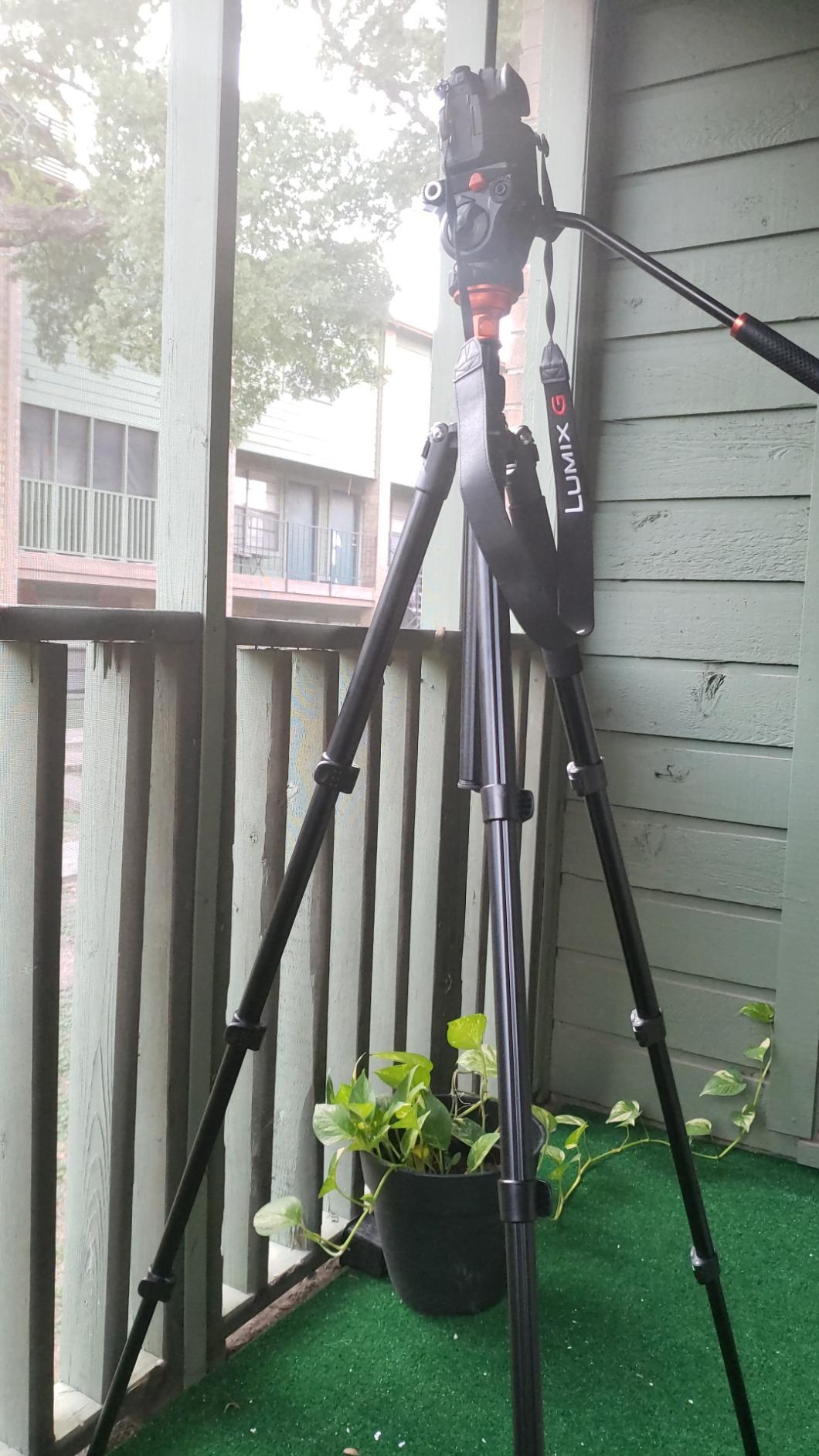
Nothing else here converts into a monopod. Detach one leg and the center column and you have a 73 inch monopod with no tools, which is exactly what you want when a talking head subject steps out of frame and you need to follow them at speed.
The listed 22 pound payload is the highest number in this group, and it matters most for long telephoto setups. The Q6 fluid head pans and tilts from plus 90 to minus 75 degrees, and the EX300 folding plate switches the camera between horizontal and vertical in about a second.
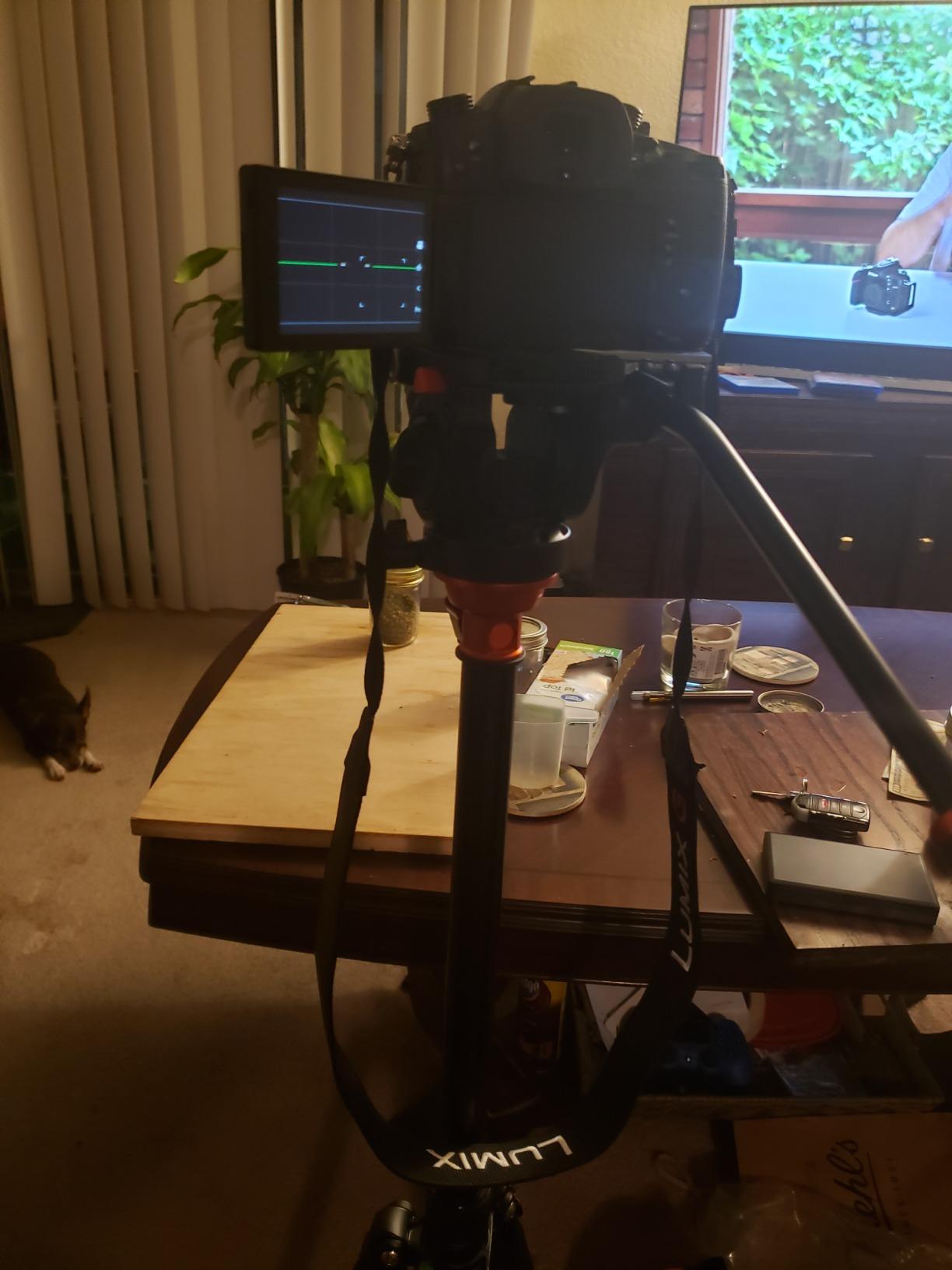
Legs run from 22 to 70.3 inches across four sections and fold to 22 inches, with a 5.9 pound weight that is the second lightest here. A detachable 1/4 inch thread takes a mic, monitor, or light, and the L-shouldered hex key means no screws get lost.
What you trade is rigidity. Four-section legs are narrower than the twin-tube designs, so at full extension you will feel more flex, and the head is a lighter duty unit than the twin-tube models in this range.
Who should buy the FF06S
Buy it if you shoot documentary or run-and-gun work where the camera has to move as fast as you do. The monopod conversion is the single most useful feature in this entire roundup for that job.
It also suits anyone who already carries Manfrotto plates or DJI RS2 and RS3 gimbals, since the plate is compatible with both.
Who should skip the FF06S
Skip it for locked-off work where a heavier rig is hanging off a long lens. The 22 pound rating covers the weight, but the four-section legs lose stiffness and that is when you see it.
If your priority is a smooth head feel rather than versatility, one of the twin-tube models will serve you better.
6. NEEWER TP74 74 inch Video Tripod – Best Head Behaviour in the Lineup
NEEWER 74″ Video Tripod with Fluid Head, QR Plate, Aluminum, TP74
Pros
- Smoothest pan and tilt in this group
- 75mm scale makes panoramic sweeps repeatable
- Plate fits DJI gimbals and Manfrotto 501PL or 504PL
- Legs hold 17.6 lb without wobble
Cons
- Head spring can push a light camera upward
- Quick release needs its retaining knob watched
- Heavy at 10.9 pounds
- Bubble level is awkward to read at full height
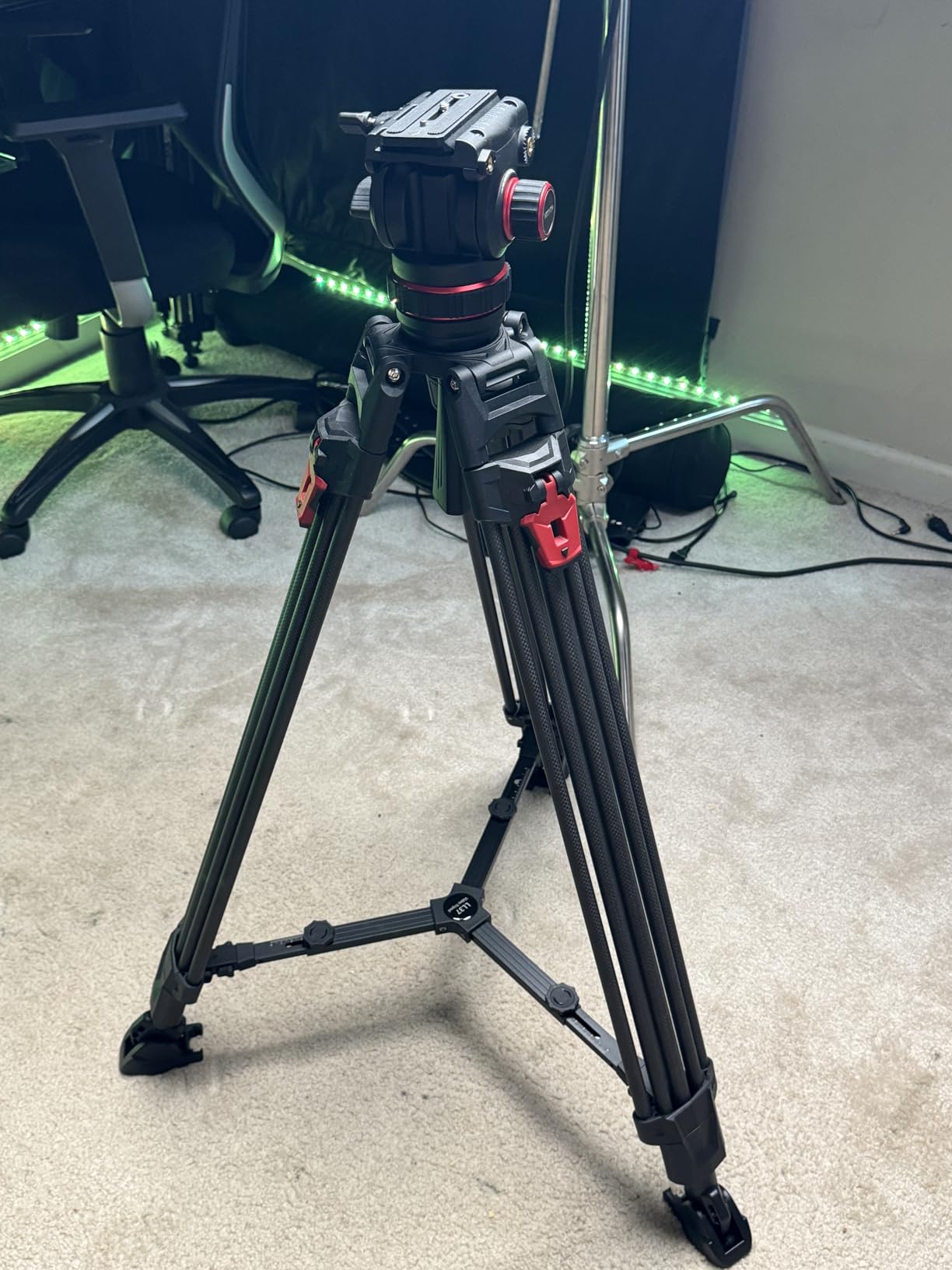
The TP74 carries the highest average rating of any tripod we reviewed, and the head is the reason. Pans and tilts start and stop evenly in a way that felt distinctly different from the friction-style heads in this price range, and the head stays level on ground that would tip a cheaper model.
The 75mm bowl carries a 360 degree scale underneath, which is genuinely useful if you do panoramic sweeps or time-lapse moves where you need to return to the exact same angle. The fluid drag head rotates 360 degrees with minus 75 to plus 90 degree tilt and a 17.6 pound load rating.

Double tandem aluminum alloy legs with a mid-level spreader did not flex in our testing at 60 percent of rated load. The dual-mode quick release takes DJI RS2, RS3, and RS3 Pro gimbal plates as well as Manfrotto 501PL and 504PL plates, and 1/4 inch and 3/8 inch top screws plus an accessory thread cover mics, monitors, and lights.
The bubble level can be set for either hand, the telescoping handle reaches full height, and a carrying bag is included. Legs adjust from 34 to 74 inches and fold to 36 inches.
Who should buy the TP74
Buy it if head feel is what you notice. Interview work, casting pieces, and anything with slow deliberate moves will benefit more from this head than from any amount of extra leg height.
It is also the pick for panoramic and time-lapse creators, where the indexed bowl scale and the very even rotation pay off directly.
Who should skip the TP74
Skip it for portability. At 10.9 pounds it is the heaviest tripod here, and several users name the weight as the main downside of an otherwise excellent head.
Be aware of one quirk: the auto-leveling spring can push a light camera upward when the tilt tension is not fully tightened. Check it before every locked-off take.
7. NEEWER Basics TP37 74 inch Video Tripod – Best for a First Serious Rig
NEEWER Basics 74″ Video Tripod with Fluid Head, Metal Camera Stand, TP37
Pros
- All-metal legs feel more solid than plastic rivals
- Fluid head with dynamic damping for smooth 360 pan
- Large handle makes levelling fast
- Carrying bag included
Cons
- No half-bowl system so levelling takes longer
- Nose-dives under front-heavy rigs
- Leg locks and joints are the weak points
- Instructions largely not in English
The TP37 is the cheapest route to a proper fluid head with a metal chassis, and that combination is rare. The all-metal multi-row tube legs, triangle mid spreader, and 73mm chassis give a noticeably heavier and steadier feel than travel tripods with plastic fittings.
The head provides dynamic damping for smooth 360 degree panning and minus 70 to plus 90 degree tilt, with a detachable handle and a bubble level. The 17.6 pound max load covers a mirrorless body and lens with accessories to spare.

The ball base and the large handle make levelling and balancing quick once you get the habit, and the Manfrotto 501-compatible plate means fast camera changes. Flip buckles adjust height from 33 to 74 inches, and the tripod folds to 35 inches with a bag included.
Two limits are worth knowing before you commit. There is no half-bowl system, so levelling the horizon on uneven ground takes longer, and the rig nose-dives under front-heavy accessories such as a teleprompter with an integrated monitor.

Who should buy the TP37
Buy it as a first serious tripod. If you are moving off handheld shooting and want damped movement without spending near the top of the budget, the metal build here is the reason to choose it over cheaper plastic kits.
It works well for locked-off talking head work, streaming setups, and straightforward product video.
Who should skip the TP37
Skip it if you shoot interviews on rough ground or use a teleprompter. The missing half-bowl and the front-heavy weakness show up in exactly those two situations.
Also read the manual carefully, since owner feedback indicates the instruction booklet is largely not in English and the leg joints are the part most likely to need attention over time.
8. Sirui AM-25S 74.8 inch Video Tripod – Best for Interview and Studio Work
Pros
- Bottom tension ring lets you tune pan drag
- Quiet and smooth tilt for interview work
- Retractable spikes plus rubber feet for any ground
- Handle mounts on either side
Cons
- Tilt is noticeably tighter than pan
- Large and heavy for travel
- Occasional quality control complaints
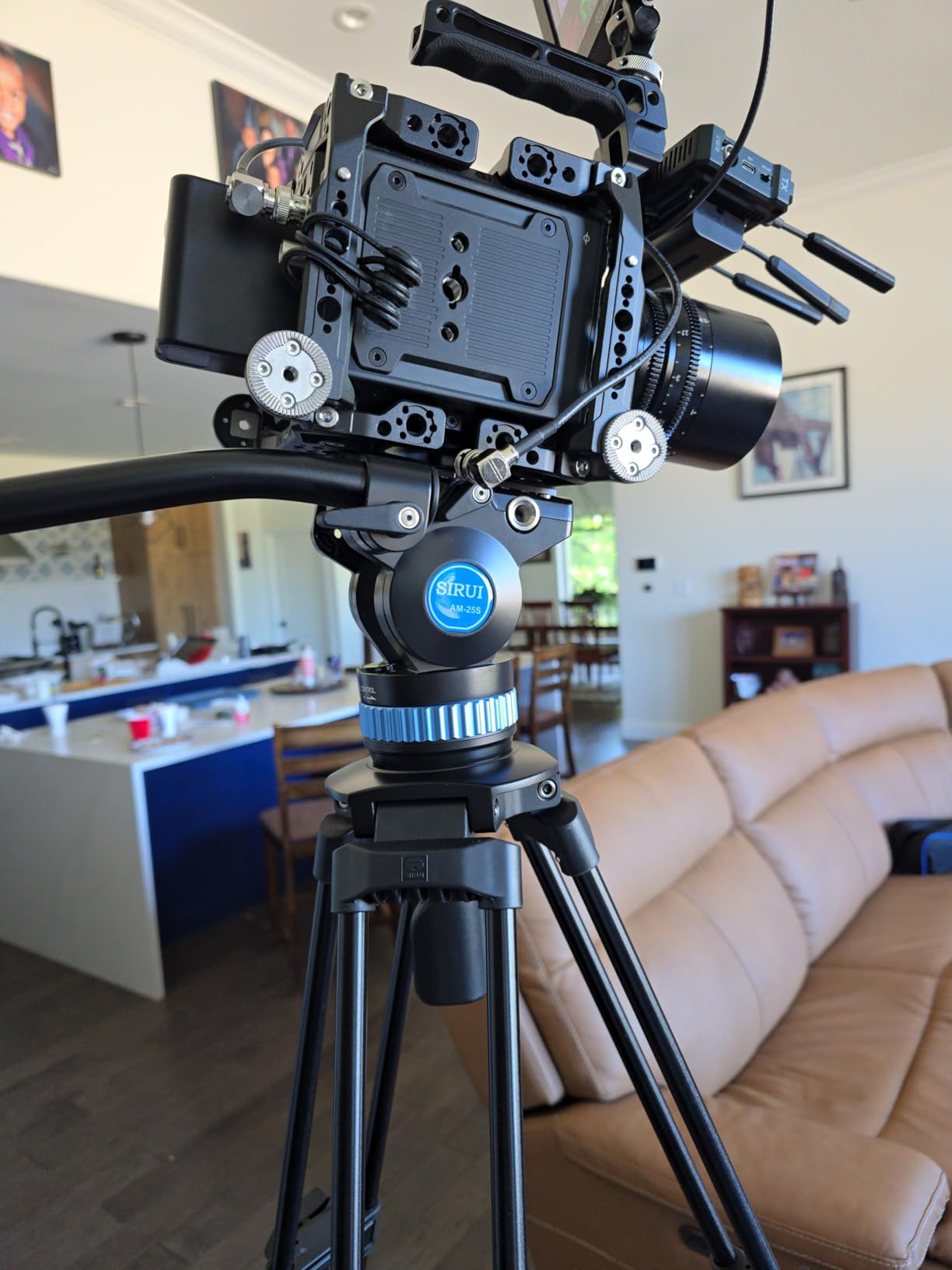
The AM-25S is the one in this group with a real pan tension adjustment. The bottom ring lets you dial in drag until a slow interview pan looks cinematic, and owners consistently praise how quiet and smooth the tilt is for casting and interview work.
Aluminum alloy twin-tube legs with a middle spreader support 22 pounds, and the head offers dynamic balancing, 360 degree pan, and minus 75 to plus 90 degree tilt. Height runs from 36 to 74.8 inches across three sections with oversized locking knobs.
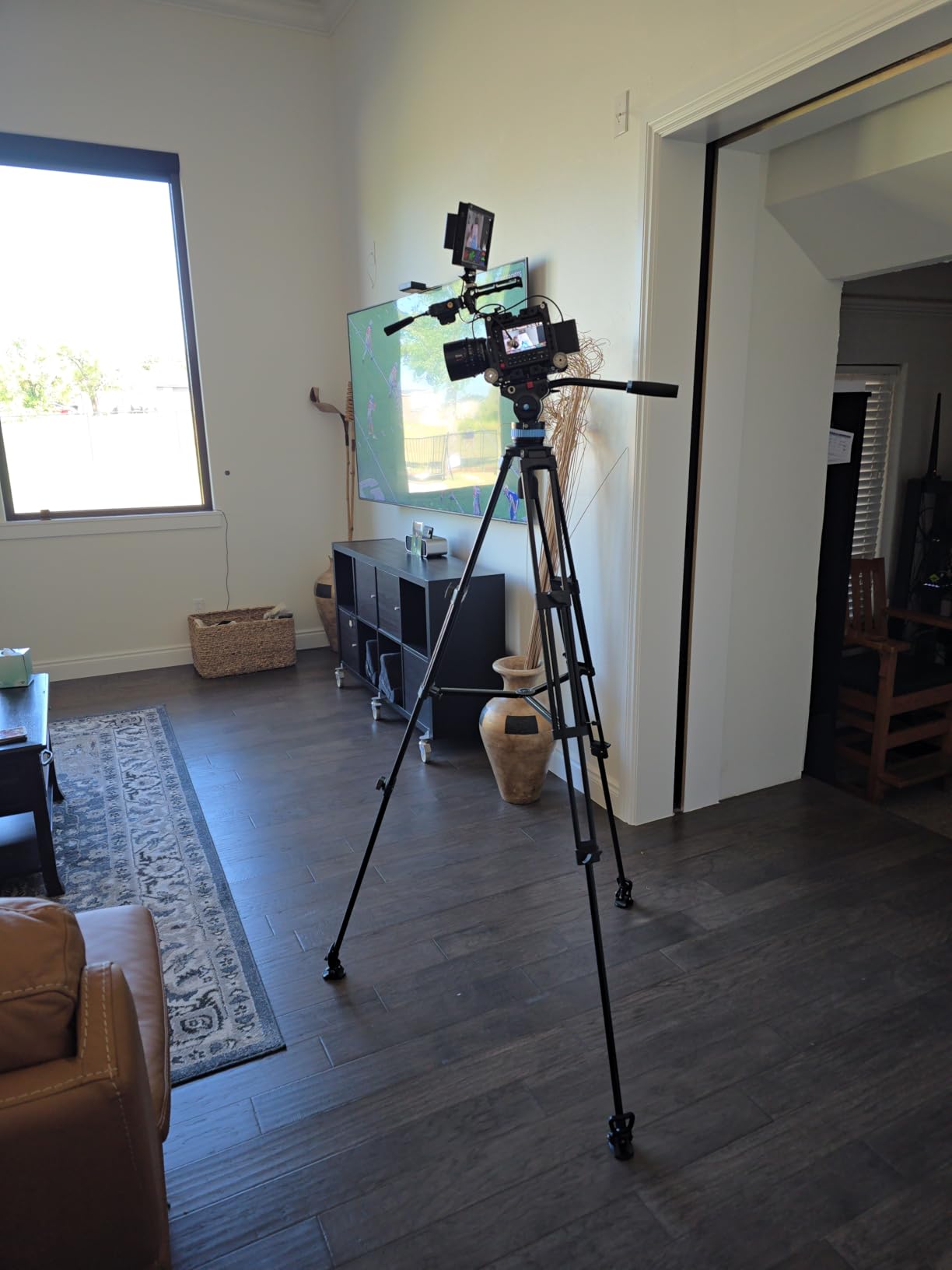
The retractable metal spikes are a nice touch for soft ground, and the rubber feet cover hard surfaces, so one tripod covers studio and field. A built-in bubble level and a 75mm bowl bottom make levelling straightforward, and the handle can be mounted on either side with a rubber sleeve for grip.
Buyers use it with Blackmagic Pocket Cinema cameras, teleprompters, and long telephoto glass, and the carry case is included. The one complaint that repeats is that tilt is firmer than pan, so give yourself a few takes to learn the feel.
Who should buy the AM-25S
Buy it if you shoot interviews, casting sessions, or studio segments where the frame moves slowly and deliberately. The adjustable pan tension is the reason it beats cheaper heads for that specific job.
Outdoor and location work is also a good fit, given the spike and rubber foot combination on a tripod that weighs 4 kg.
Who should skip the AM-25S
Skip it for travel and airline work. At 4 kg with a 96 cm folded length, it is a fixed-location tripod rather than a portable one.
If you need fast whip pans rather than slow moves, the tighter tilt axis will feel sluggish to you.
9. K and F Concept 90 inch Fluid Head Tripod – Best for Overhead and Travel Reach
Pros
- Universal center axis reaches true top-down angles
- 28mm center column tube improves horizontal stability
- Detachable leg converts it to a monopod
- Under 5 pounds and folds to 21 inches
Cons
- Some wobble at full extension
- Leg locks are stiff and take practice
- Angle adjustment latch can feel flimsy
This is the only tripod in the roundup that reaches a true vertical top-down angle. The universal center axis gives 0 to 120 degree pitch adjustment alongside 360 degree horizontal pan, so a straight-down overhead shot does not require a separate mount.
Maximum height is 90 inches on four-section legs, and the enlarged 28mm center column tube genuinely helps horizontal stability compared with slim columns of the same length. The hydraulic fluid head delivers plus 90 and minus 90 degree tilt with full 360 degree panning.

At 4.9 pounds and folding to 21.3 inches, it fits most airline overhead bins and under-seat spaces, which no other tripod here can claim. One leg detaches to make a monopod, and the center hook accepts a sandbag for long time-lapse work where any movement ruins the shot.
The 11 pound weight limit is the honest constraint. That covers a mirrorless body, a standard zoom, a mic, and a small monitor comfortably, but it is not the number you want under a 200mm lens or a caged cinema body.

Who should buy the K and F Concept
Buy it for overhead content, top-down flat lays, cooking inserts filmed from directly above, and time-lapse work on a tripod that has to travel. Nothing else in this budget reaches a genuine 90 degree vertical.
It is also the best choice here for creators who move between locations constantly and need a real video head in a bag-friendly package.
Who should skip the K and F Concept
Skip it for heavy rigs. Eleven pounds of stated capacity leaves little margin once you add a long lens, and the four-section legs show slight wobble at full extension.
The stiff leg locks and the occasionally finicky angle adjustment latch also mean it is not the friendliest tripod for a brand new operator in a fast setup.
10. RAUBAY DV-1 Pro 70.8 inch Video Tripod – Best for Heavy Telephoto Rigs
RAUBAY 70.8″ Professional Heavy Duty Video Camera Tripod with Fluid Head, QR Plate for DSLR Camcorder, Max Loading 17.6lbs, Aluminum Twin Tube Leg with Metal Mid-Level Spreader DV-1 PRO
Pros
- Head holds position when you release the handle
- Metal spreader and twin tubes resist flex
- Half ball adapter and bubble level included
- Screws out rubber feet for metal spikes
Cons
- Pan resistance is mechanical friction
- Small play-back in the pan when releasing the handle mid-move
- Heavy at 8.4 pounds
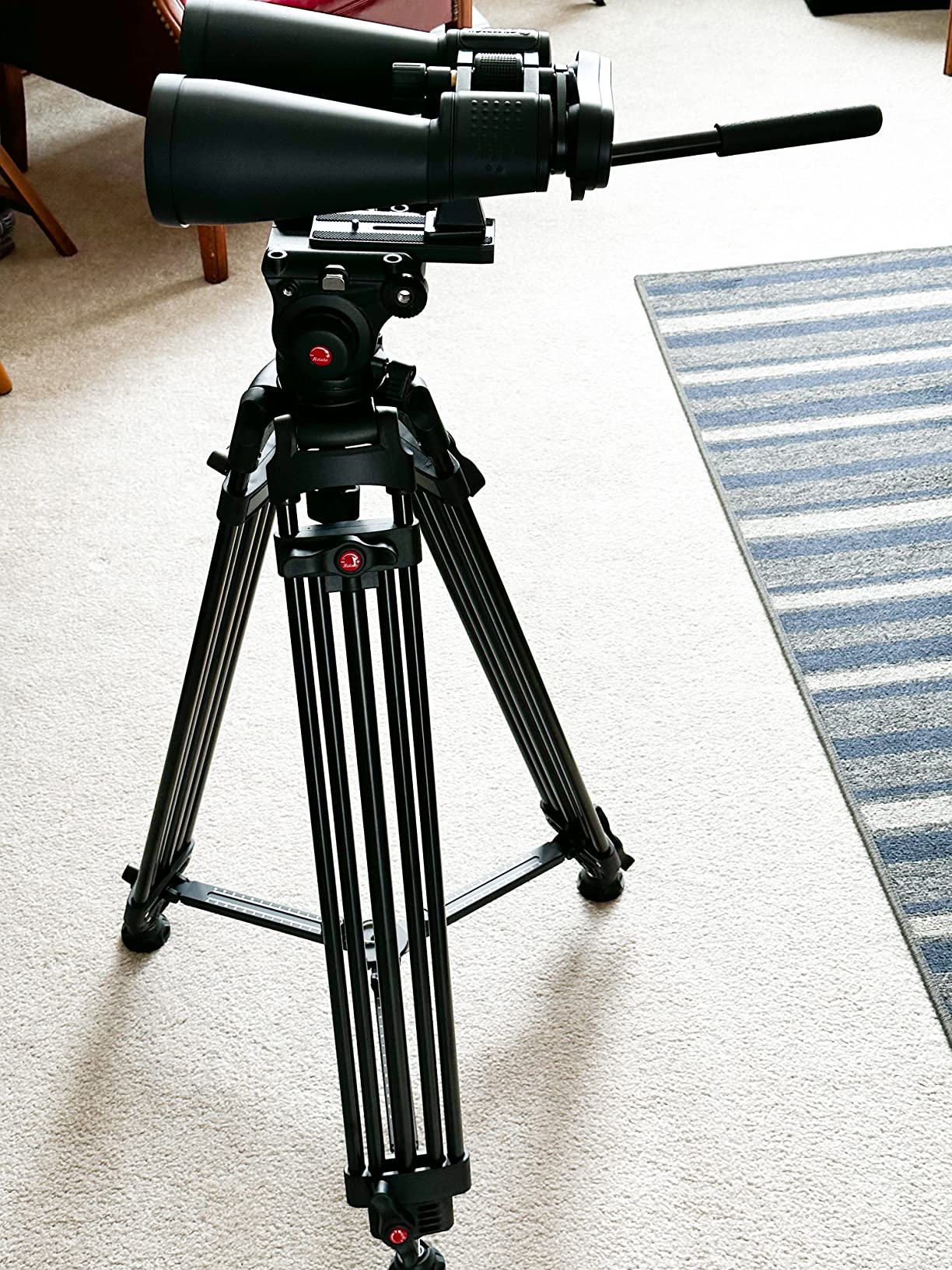
The DV-1 Pro has a head that stays where you leave it. Release the handle mid-tilt and the rig does not spring forward, which is the single most important behaviour for interviews and locked-off work with a long lens hanging out front.
Aluminum twin-tube legs and an upgraded metal mid-level spreader carry 17.6 pounds, and the fluid drag head with a damping knob offers 360 degree horizontal and minus 75 to plus 90 degree vertical movement. Legs extend from 29.5 to 70.8 inches across three sections.
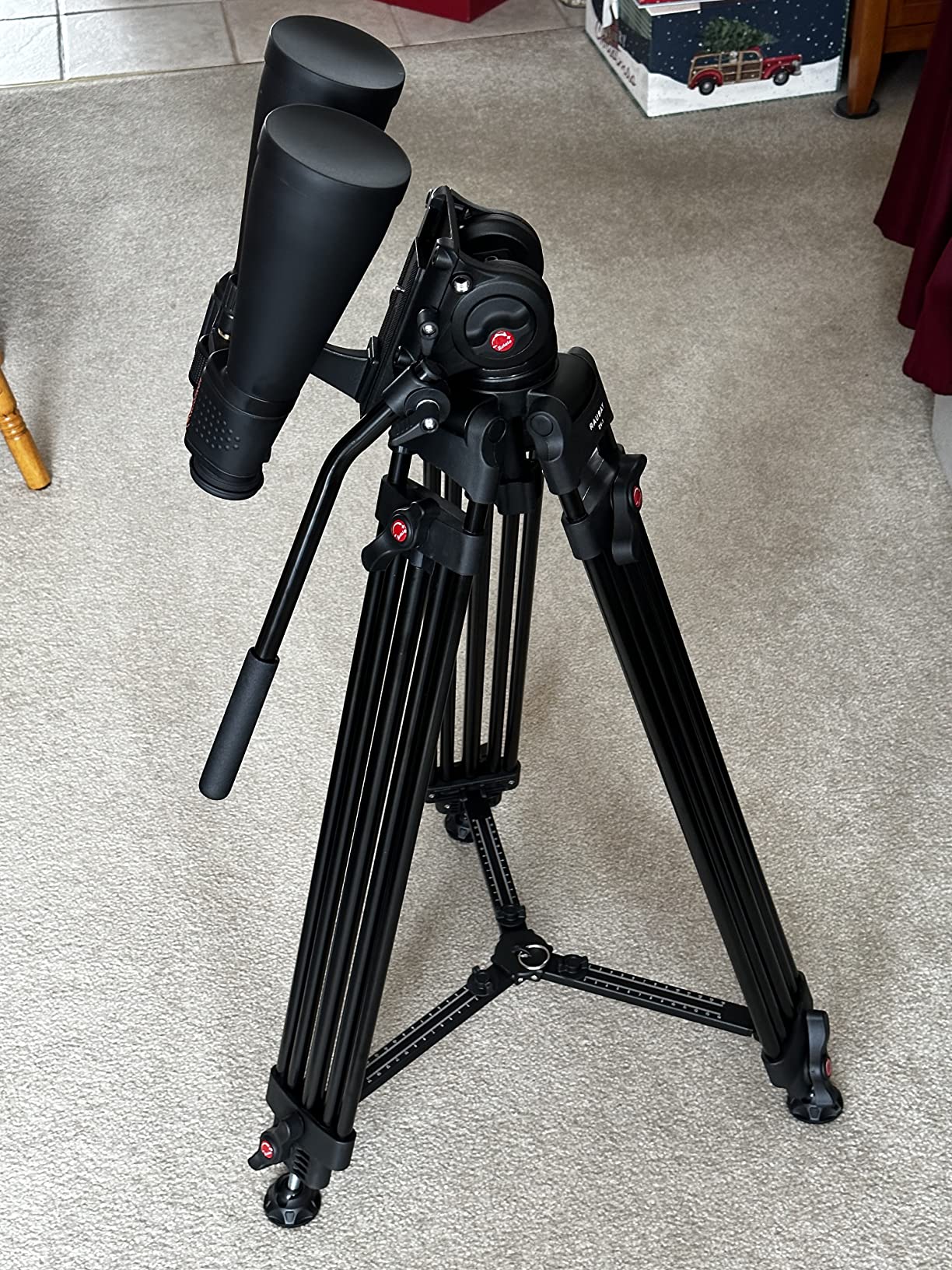
Buyers run caged Canon R5 setups and 100-400mm glass with an extender on it, and the half ball adapter plus built-in bubble level make levelling straightforward on anything other than flat studio floor. The rubber feet unscrew to expose metal spikes for soil and grass, and a carrying bag comes in the box.
Non-slip knobs and levers are a genuine touch, and the legs extend with three knob flips. The quick release plate carries both 1/4-20 and 3/8-16 screws, stored underneath the plate itself.
Who should buy the DV-1 Pro
Buy it if your rig is long and front-heavy. Sports, wildlife, and event shooters working with telephoto glass get the most from a head that will not tip forward the moment you let go of the handle.
The half ball and bubble level also make it a good studio interview tripod on less than perfect floors.
Who should skip the DV-1 Pro
Skip it if you need perfectly even horizontal pans. The pan axis uses mechanical friction rather than fluid damping, so tilt moves are noticeably smoother than side-to-side moves.
There is also a small amount of play-back in the pan if you release the handle in the middle of a move, which matters on long locked-off takes.
How to Choose a Video Tripod on a Budget
Start with the head, because the head is what your audience actually sees. Everything else on a tripod is structure. Our general tripod guide under 200 dollars covers the legs in more depth, but the decision sequence below is the one that matters most for video.
Do I need a fluid head for video?
Yes, if the camera moves during a take. A fluid head resists pan and tilt with a calibrated, grease-filled cartridge, and the amount of resistance is set with a damping knob. A counterbalance system offsets the camera’s weight so the head holds position at any tilt angle instead of springing back or sagging.
You can shoot video on a photo tripod, but every move you make will start and stop abruptly, and the image will show it. If your tripod cannot be rigged under 200 dollars, a small dedicated fluid head is the single most useful upgrade in this category.
Payload capacity and the 50 percent headroom rule
Add up everything: body, lens, cage or top handle, microphone, monitor, cables, and the plate. Then pick a tripod rated at least 1.5 times that total. The reason is leverage. A 200mm lens changes the moment on the head far more than its weight alone suggests, and manufacturers rate load with the rig centred.
For reference, a mirrorless body with a standard zoom and a mic lands around 4 to 5 pounds, so any tripod in this list clears it with room. Add a 70-200mm and a cage and you are closer to 9 pounds, which is where the 17.6 and 22 pound ratings start to earn their keep.
Carbon fiber vs aluminum under a 200 dollar ceiling
Aluminum wins for this budget, and the reason is rigidity per dollar. Carbon fiber saves roughly 30 to 40 percent of the weight, but at this price the same money buys a worse head or fewer sections, and a 9 pound carbon tripod with a mediocre head loses to an 8.8 pound aluminum tripod with a good one.
Carbon fiber is worth it only if your shooting is travel-led and your rig is light. Most of the tripods here are aluminum, and only the K and F Concept combines a low weight with a real fluid head.
Working height vs maximum height
Maximum height is the number printed on the box. Working height is how high the camera sits with the centre column down and all leg sections locked, and that is the number that decides whether you can film eye level or overhead. A tripod that only reaches full height through the centre column will add shake to every shot.
Note which models keep the legs connected, since those cannot get low: the COMAN DF16LS, the SmallRig, and the K and F Concept all bottom out around waist level or higher for shooting purposes.
Quick release plates and gimbal compatibility
Most of these use the Manfrotto 501PL pattern, so they accept plates you already own. Four models here go further with a dual-mode plate that fits both standard plates and DJI RS series gimbals: the SmallRig, the NEEWER TP74, the COMAN DF16LS, and the COMAN FF06S. For creators who move between a gimbal and a tripod in one shoot, that single feature removes the most annoying minute of the day.
Flip locks vs twist locks for solo creators
Flip locks open and close one-handed, which matters when you are the only person on set. Twist locks are more consistent over years and easier to set to an even tension, but they take two hands and more time. Among the twin-tube models here, the RAUBAY uses non-slip knobs for a firmer, more repeatable hold.
Whichever you get, re-check leg tension before every shoot. Loose locks are the most common cause of mid-take creep, and it costs nothing to tighten them.
Where to spend a spare 50 dollars
Spend it on a better head if your tripod already feels solid. Experienced users consistently treat legs and head as independent decisions, which is the correct way to think about it. Spend it on carbon legs instead if you carry everything on trains and trails, and spend it on a second plate and a proper bag if you move fast between locations.
Do not spend it on a bigger load rating you will never use. If your rig sits under 8 pounds, an 11 pound tripod is enough, and the extra money is better spent on smoother movement. If you shoot overhead or need to travel, our tabletop tripod guide covers the compact alternatives.
Frequently Asked Questions
What is the best affordable tripod for video recording?
The Cayer BV30L is the best affordable tripod for video recording under this budget ceiling. Its twin-tube aluminum legs and mid-level spreader hold a mirrorless rig steady at full height without added weight, and the fluid head gives 360 degree panning with minus 70 to plus 90 degree tilt. It suits locked-off work such as talking head video, product demos, and livestreams, though its damping is stiff and not adjustable for fast follow moves.
What are the best tripods for video recording?
Ten models earn a place in this roundup: the Cayer BV30L, COMAN DF16LS, NEEWER TP-M200, SmallRig 73.2 inch tripod, COMAN FF06S, NEEWER TP74, NEEWER Basics TP37, Sirui AM-25S, K and F Concept 90 inch tripod, and RAUBAY DV-1 Pro. The Cayer leads on overall stability, the NEEWER TP74 on head smoothness, the Sirui on adjustable pan tension, the K and F Concept on overhead reach, and the SmallRig on gimbal plate compatibility.
What is the best camera tripod for value for money?
The COMAN DF16LS delivers the most value in this group. It carries a listed 17.6 pound load on dual-tube aluminum legs with a 75mm bowl, reaches 74.4 inches, and uses a quick release plate that works with both DJI RS gimbals and standard Manfrotto plates. Three-section legs also hold their stiffness better at full extension than four-section alternatives at the same price.
What is the best tripod under a budget?
Under the lowest tier of this budget, the NEEWER Basics TP37 is the strongest starting point. Its all-metal tube legs, triangle mid spreader, and 73mm chassis hold 17.6 pounds, and the fluid head with dynamic damping gives smooth 360 degree panning and minus 70 to plus 90 degree tilt. Its two limits are the missing half-bowl system and weakness under front-heavy rigs such as teleprompters.
Do I need a fluid head for video?
Yes, if the camera moves during a take. A fluid head resists pan and tilt with a calibrated, grease-filled cartridge set by a damping knob, and a counterbalance system offsets camera weight so the head holds any tilt angle without springing back. A photo tripod with a rigid ball or pan-tilt head will still capture video, but every move will start and stop abruptly on camera.
How much weight can a budget video tripod hold?
Most budget video tripods in this roundup are rated between 11 and 22 pounds. The COMAN FF06S and Sirui AM-25S list 22 pounds, the Cayer BV30L lists 13.2 pounds, and the rest sit at 17.6 pounds. As a rule, total your body, lens, cage, mic, and monitor, then choose a tripod rated at least 1.5 times that figure, because a long lens adds leverage beyond its weight.
Is carbon fiber worth it for a video tripod on a budget?
Usually not at this price. Carbon fiber saves roughly 30 to 40 percent of the weight, but the same money spent on aluminum legs buys a better head or fewer leg sections, and head quality is what viewers notice. Carbon is worth it only for travel-led shooting with a light rig. The one exception in this roundup is the K and F Concept, which pairs a hydraulic fluid head with a 4.9 pound carbon-style weight and a 21.3 inch folded length.
The Verdict for Video Creators on a Budget
The Cayer BV30L is our overall pick, and the rest of the lineup is sorted by the job you actually shoot. Fast pans and travel: the K and F Concept or the COMAN FF06S. Interviews and slow moves: the Sirui AM-25S or the NEEWER TP74. Overhead and tall angles: the NEEWER TP-M200. Gimbals in the same bag: the SmallRig. Long lenses: the RAUBAY DV-1 Pro. Tightest budget: the NEEWER Basics TP37.
All ten stay under a 200 dollar ceiling and all ten have a damped head, which is the feature that actually separates video support from photo support. If you shoot with a phone, our flexible tripod roundup is the better fit for that workflow.