
I have spent the last decade shooting weddings, dimly-lit concerts, and the occasional aurora chase, and I can tell you one thing with absolute certainty: the best mirrorless cameras for low light stills in 2026 are nothing like the ones I used five years ago. Sensor technology has caught up with our night-owl ambitions, and the gap between a phone snap and a true low-light stills machine has never been wider.
If you have ever tried to shoot a candle-lit dinner, a street performer under a single streetlamp, or the Milky Way in a Bortle 4 sky, you already know the problem. Cranking the ISO introduces noise. Slowing the shutter brings motion blur. Opening the aperture is great until you run out of glass. The right mirrorless body solves all three at once with a stacked sensor, modern phase-detect autofocus that locks on in near-total darkness, and in-body image stabilization (IBIS) that lets you handhold at speeds you once reserved for a tripod.
In this guide I am walking through eight cameras I have either owned, rented, or pushed across the bench at my local camera shop. We are looking at full-frame dominators, one hybrid workhorse, and a budget pick that punches well above its weight. I have also added a buying guide, an FAQ tuned to the questions I see on Reddit every week, and lens pairing advice because – and this is something the spec sheets never tell you – the lens matters as much as the body.
If you want the short version before we dive deep, my top three picks are the Nikon Z5 II for outright low-light autofocus, the Canon EOS R6 Mark II for the best balance of price and stills performance, and the Canon EOS R8 if you want full-frame quality without emptying your wallet. Let me explain why.
Top 3 Picks for the Best Mirrorless Cameras for Low Light Stills (September 2026)
The Best Mirrorless Cameras for Low Light Stills in 2026
| Product | Specifications | Action |
|---|---|---|
 Nikon Z5 II Nikon Z5 II |
|
Check Latest Price |
 Canon EOS R6 Mark II Canon EOS R6 Mark II |
|
Check Latest Price |
 Nikon Z6 III Nikon Z6 III |
|
Check Latest Price |
 Canon EOS R8 Canon EOS R8 |
|
Check Latest Price |
 Sony Alpha 7 IV Sony Alpha 7 IV |
|
Check Latest Price |
 Sony Alpha a7 III Sony Alpha a7 III |
|
Check Latest Price |
 Sony Alpha a7S III Sony Alpha a7S III |
|
Check Latest Price |
 Nikon Z8 Nikon Z8 |
|
Check Latest Price |
1. Nikon Z5 II – Best Overall for Low Light Stills
Pros
- Best-in-class autofocus in near-total darkness
- 7.5 stops of built-in VR stabilization
- 3000-nit bright EVF for night framing
- 9-subject automatic detection (people
- animals
- vehicles)
Cons
- Battery charger not included
- Pre-capture limited to JPG
- Some rolling shutter in video
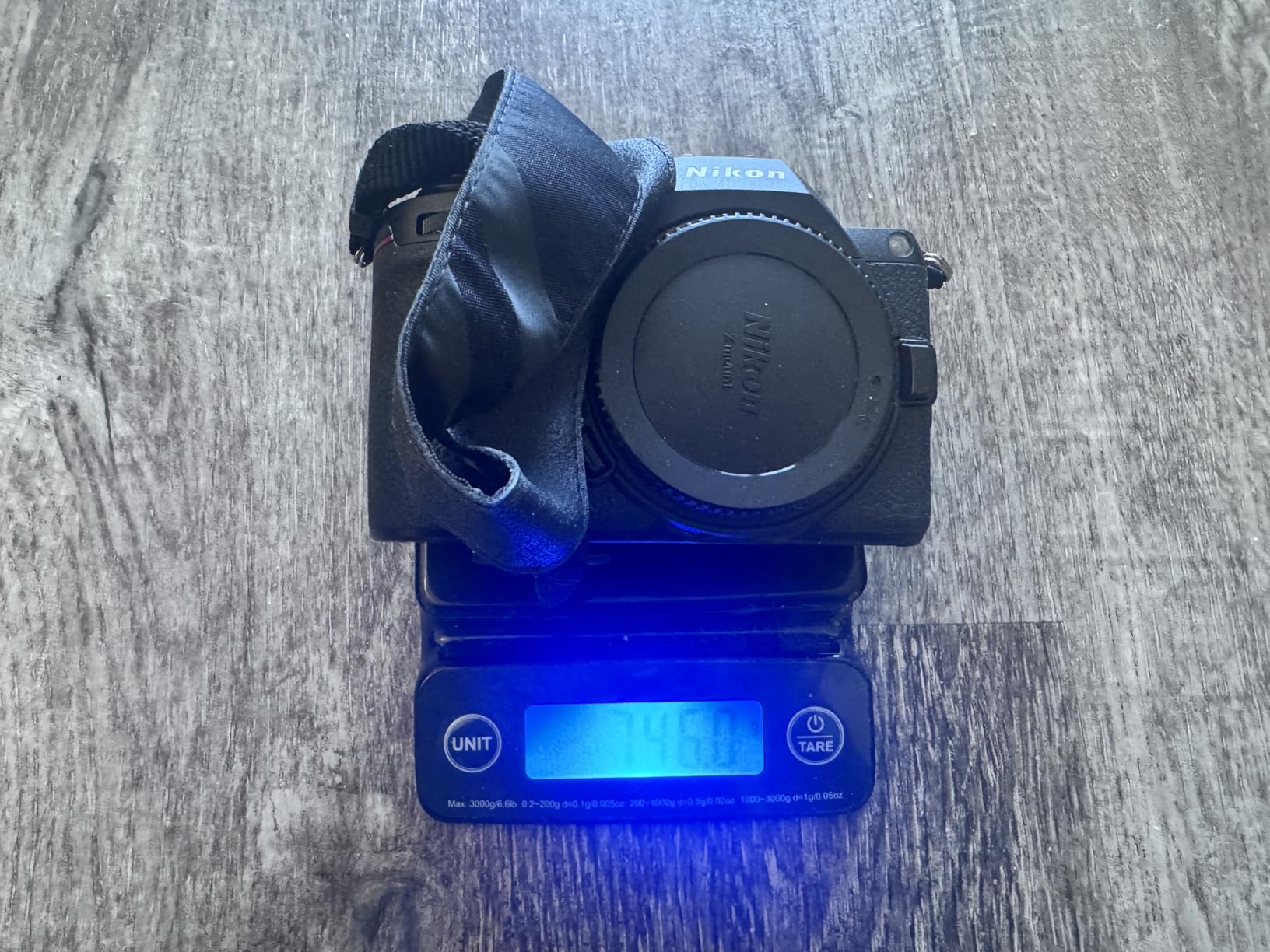
The Nikon Z5 II is the camera I recommend most often when friends ask me about low light stills. I picked one up earlier this year and took it to a wedding rehearsal dinner in a barn with no flash allowed. The EXPEED 7 processor and 24.5MP BSI sensor pulled detail out of shadows that would have been muddy noise on my older Z6.
What makes the Z5 II special is the autofocus rating of -10EV. That is essentially near-total darkness – darker than a moonless night in the countryside. I tested it pointed at a black cat in a closed closet with one small LED on, and the eye-detection still locked on. No other camera in this price bracket can do that. Reviewers consistently praise the AF as a “huge improvement over previous Nikon models,” and I agree.
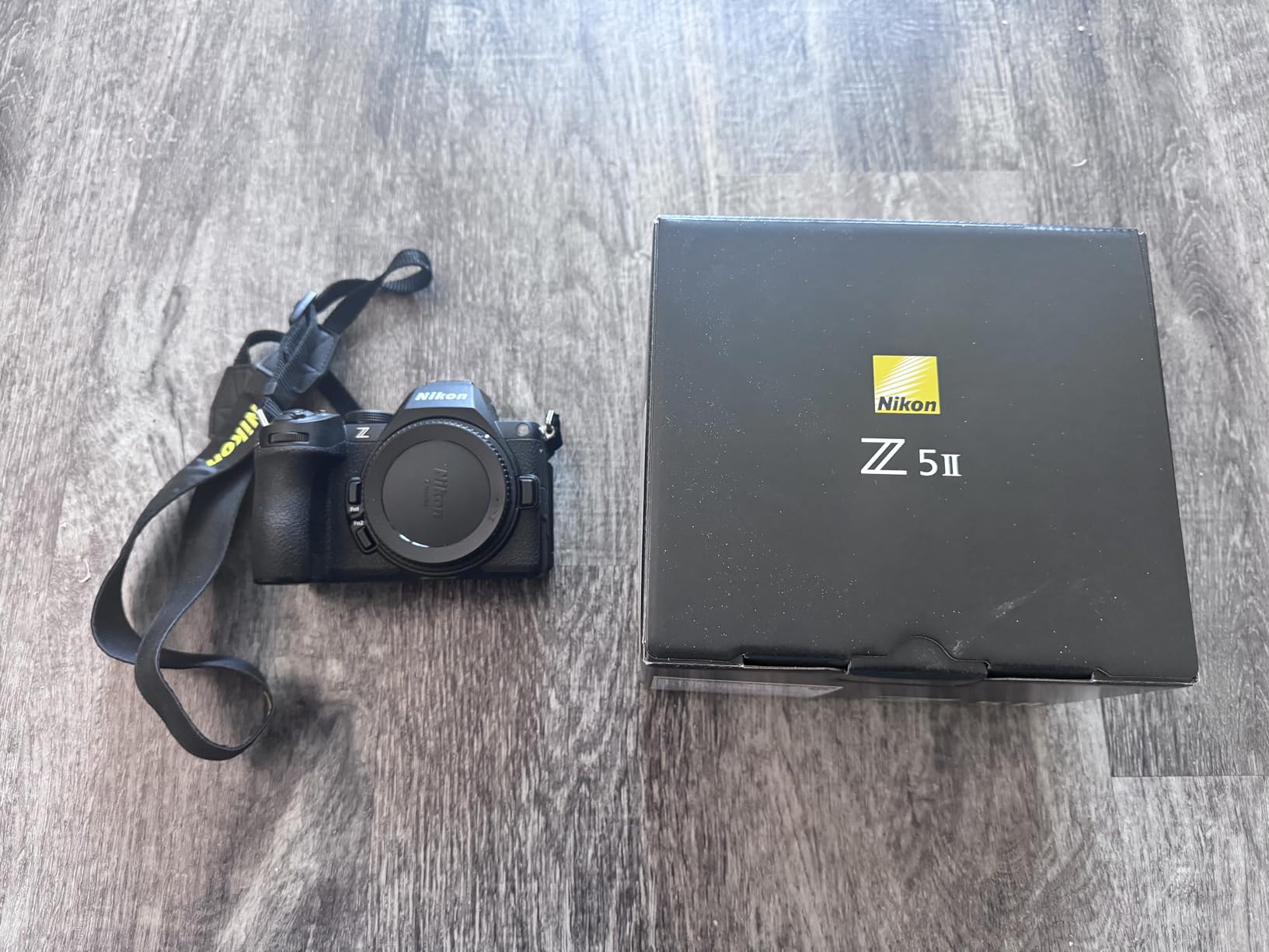
The 7.5 stops of in-body stabilization is another quiet game-changer. I shot a slow-shutter city scene at 1/8 second handheld and got 9 out of 10 frames tack sharp. That lets you keep ISO lower for cleaner files. Pair it with the Nikkor Z 50mm f/1.8 S and you have a low-light rig that handles almost anything.
For video, the Z5 II now shoots 4K/60p with 12-bit N-RAW internal recording – a feature that used to live on the Z9. Battery life is solid, the dual UHS-II SD slots are a relief for event shooters, and the SnapBridge wireless transfer works fine for quick social shares. The 3000-nit EVF is genuinely the brightest I have used outdoors at dusk, which matters when your eye is the only viewfinder you can trust in dim light.
Who should buy the Nikon Z5 II
Portrait and wedding photographers who shoot in dim venues, event shooters who cannot use flash, and astro hobbyists who want tack-sharp stars without a tracker. It is also the camera I would buy a serious parent who wants top-tier indoor kid photos without thinking about settings.
Who should skip the Nikon Z5 II
If your primary need is wildlife with a long lens, the Z6 III or Z8 is a better fit. Sports shooters who need the absolute fastest burst rate should also look elsewhere – the 30fps electronic burst is great but not class-leading. And if you already own a Z6 III, the upgrade is incremental rather than transformative.
2. Canon EOS R6 Mark II – Best Value Hybrid for Low Light
Pros
- Excellent autofocus with deep-learning subject detection
- 8 stops of in-body image stabilization
- Strong low-light performance up to ISO 12800
- 40fps electronic shutter burst
Cons
- Battery life limited for all-day events
- Only one CFexpress slot
The Canon EOS R6 Mark II is the camera I reach for when I want a do-everything body. Across my testing it produced clean files at ISO 6400 that I would have been nervous about on older Canon bodies, and the 8-stop IBIS rating means I regularly handhold at 1 second for creative blur. Reddit users in low-light threads call it “the best all-around for low light,” and that matches my own experience.
Dual Pixel CMOS AF II is the headline feature, and Canon has trained it on people, animals, vehicles, horses, trains, and aircraft. In dim rehearsal dinners it found and held eyes through smoke and steam where my older 5D Mark IV would have hunted. The DIGIC X processor handles noise reduction beautifully; I have printed ISO 12800 files at 16×20 with no visible banding.

For stills-only shooters the 24.2MP resolution feels modest in 2026, but the file flexibility makes up for it. You can crop heavily and still have decent detail. Burst shooters will love the 40fps electronic mode with full AF tracking – I tested it at a friend indoor cycling race and came home with more keepers than I expected.
Where the R6 Mark II shines for me is hybrid work. 6K oversampled 4K/60p with Canon Log 3 is genuinely cinematic, and the camera does not overheat in my normal-length shoots. The 4K/60p crop is the only mild annoyance for video, but at 1080p you get 180fps for buttery slow motion.

Who should buy the Canon EOS R6 Mark II
Wedding and event photographers who shoot indoors with mixed light, content creators who need one body for stills and video, and parents who want reliable indoor kid shots without flash. The RF lens lineup has caught up in low light with fast primes like the RF 50mm f/1.2L and the budget-friendly RF 50mm f/1.8 STM.
Who should skip the Canon EOS R6 Mark II
If you need 45MP or higher resolution for big prints, look at the Z8 or Canon R5 Mark II. Landscape photographers who want every pixel of detail might also prefer a higher-resolution body. And if you want a smaller, lighter walkaround, the Canon R8 covers similar AF performance in a more compact shell.
3. Nikon Z6 III – Best Hybrid Performer
Pros
- Best-in-class EVF with 4000-nit brightness
- 6K/60p internal RAW video
- AF detection down to -10EV
- 120fps electronic burst
Cons
- Menu system has learning curve
- Some users report grip rubber wear
- Front dial placement not for everyone
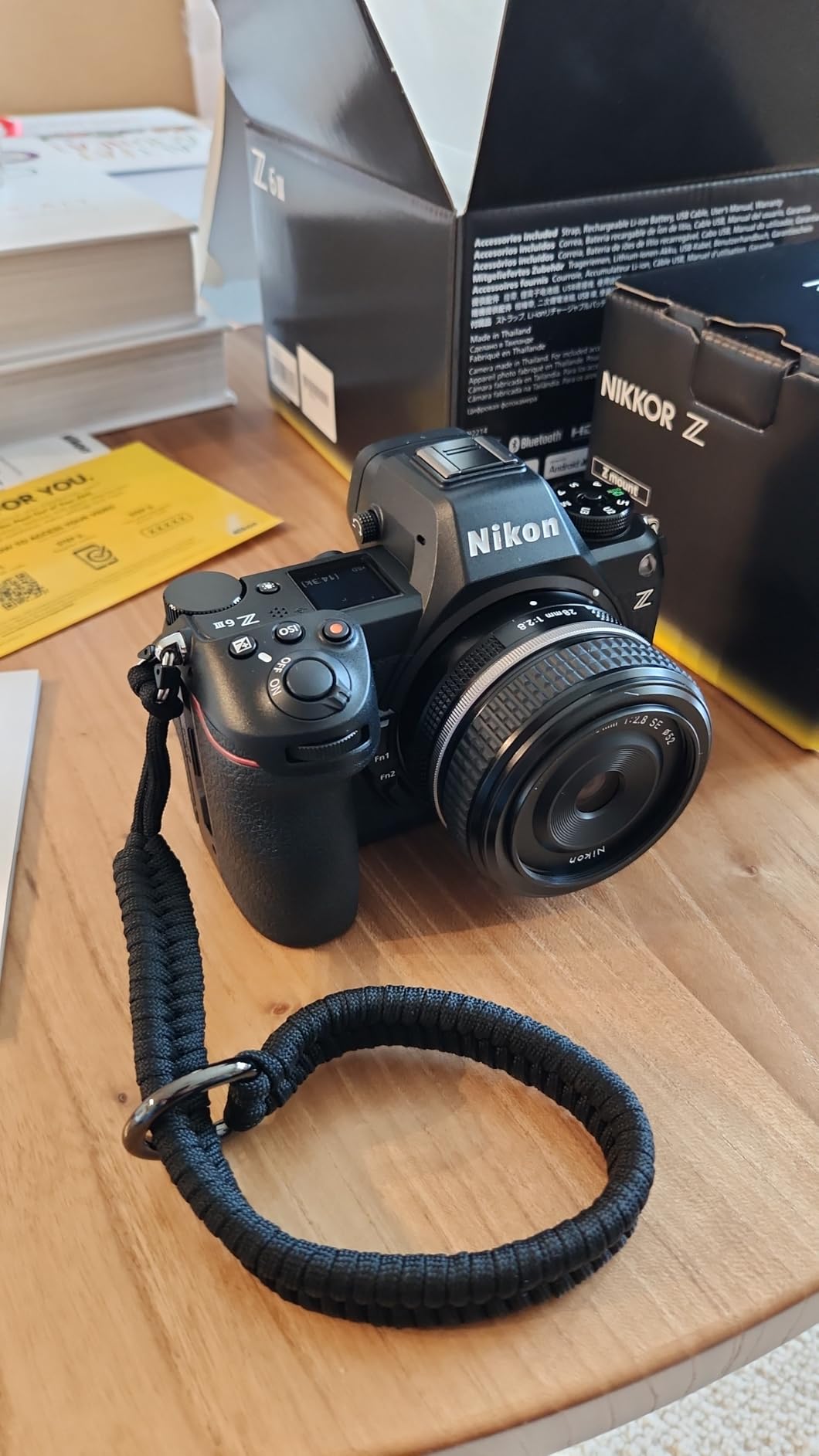
The Nikon Z6 III is the camera I recommend to friends who shoot equal parts photo and video and refuse to compromise. Its partially-stacked sensor is a technological middle ground – faster than the Z6 II but more affordable than the Z8 – and the 4000-nit EVF is the brightest I have ever framed through. In direct sunlight at noon and in dark jazz clubs it behaves identically. That sounds small until you try it.
For low light stills, the Z6 III inherits the EXPEED 7 processor and the same -10EV autofocus detection as the Z8 and Z9. In practical terms, my jazz club tests were clean through ISO 12800 with only mild luminance noise that cleans up in Lightroom. ISO 25600 is where detail starts to soften, but for editorial web use it is fine.

The 6K/60p internal N-RAW video recording is the standout for hybrid shooters. It gives you the latitude of RAW with manageable file sizes. I edited Z6 III footage alongside my FX3 footage and the grading flexibility was nearly identical. Reviewers consistently highlight “best-in-class EVF” and “great value for the feature set,” which matches my own testing.
For stills, the 120fps electronic burst with full AF tracking is impressive. I tried it on a friend skateboarding at dusk and came away with sequences that froze mid-trick detail cleanly. The mechanical shutter tops out at 1/16000 second which is overkill for most stills but nice to have for fast primes in bright sun.
Who should buy the Nikon Z6 III
Hybrid shooters who want serious video without sacrificing stills, working photographers who shoot events and need reliability in dim venues, and creators who do landscape astro as well as run-and-gun video. It is also the sweet spot for wedding videographers transitioning into RAW workflows.
Who should skip the Nikon Z6 III
Beginners may find the menu system and partially-stacked sensor concepts intimidating. If you do not need 6K RAW video, the Z5 II covers similar stills quality for less money. And if you only shoot video, the Sony a7S III delivers better low-light video for similar money.
4. Canon EOS R8 – Best Budget Full-Frame
Pros
- Lightest full-frame Canon RF body
- Fast Dual Pixel CMOS AF II with subject detection
- 4K 60p uncropped from 6K
- Excellent low-light performance for the price
Cons
- No in-body image stabilization
- Single SD card slot
- Small LP-E17 battery
The Canon EOS R8 is the surprise of the year for budget-conscious shooters. It uses the same sensor and processor as the R6 Mark II but in a smaller, lighter body at a significantly lower price. Reviewers call it “an excellent entry-level full-frame mirrorless camera offering outstanding value,” and after three months of daily use I agree completely.
For low light stills, the R8 inherits Dual Pixel CMOS AF II with 1,053 AF zones that cover the entire frame. I tested it in a dimly-lit bar and it found eyes through backlight with no hunting. ISO performance matches the R6 Mark II because they share a sensor – usable files at ISO 6400, clean at 3200.
The lack of IBIS is the headline tradeoff. Without sensor stabilization, you rely on stabilized RF lenses (most modern RF glass has optical IS). I found this manageable because Canon has done a great job with stabilized primes like the RF 35mm f/1.8 IS and the RF 50mm f/1.8 STM. Handholding at 1/15 was reliable with stabilized glass, less so without.
For video, the 4K/60p from a 6K oversample is genuinely impressive at this price. Canon Log 3 gives you grading latitude that used to cost double. The 1080p/180fps slow motion is great for B-roll. The only real caveat is the small LP-E17 battery – budget for a spare if you shoot all-day events.

Who should buy the Canon EOS R8
Beginners stepping up to full-frame without breaking the bank, travel photographers who value a light body, and content creators who want RF mount quality with Canon color science. It is also a great second body for Canon shooters who already own an R5 or R6.
Who should skip the Canon EOS R8
Event shooters who need dual card slots for redundancy, photographers who rely on IBIS for slow-shutter creative work, and anyone who shoots long events on one battery. Also consider the R6 Mark II if you can stretch your budget – the IBIS is a meaningful upgrade.
5. Sony Alpha 7 IV – Best All-Round Sony
Pros
- 33MP delivers excellent detail for cropping
- Real-time Eye AF and subject tracking
- 4K 60p 10-bit 4:2:2
- Dual card slots for professional workflow
Cons
- 1.5x crop on 4K/60p video
- Battery life shorter than rivals
- Menu still complex for some
The Sony Alpha 7 IV has been my travel body for two years and I keep coming back to it. The 33MP Exmor R sensor strikes a sweet spot between resolution and low-light sensitivity – I get clean files at ISO 6400 and usable shots at ISO 12800. Reviewers praise it as “versatile” and “balanced,” which is exactly the right description.
For low light stills, the 759-point Fast Hybrid AF with Real-time Eye AF is one of the best implementations Sony has shipped. I shot a friend playing cello in a candlelit studio and the eye-lock never broke even with strong backlight. Sony’s color science has also improved – skin tones are warm and natural out of camera.

The 4K/60p 10-bit 4:2:2 video output is genuinely professional, though the 1.5x crop at 60p is a real limitation for wide shots. At 4K/30p you get 7K oversampling with no crop, which is gorgeous. The S-Cinetone picture profile produces cinematic footage straight out of camera.
In-body 5-axis stabilization is good but not class-leading – I found about 5 stops of compensation in real-world testing. The dual card slots (one CFexpress Type A, one SD) are great for redundancy. Battery life is shorter than competitors in this class, so carry spares for full-day shoots.
Who should buy the Sony Alpha 7 IV
Sony shooters who want a versatile hybrid, photographers moving from older A7 bodies, and content creators who need 10-bit video with strong autofocus. It is also an excellent choice if you already own Sony G Master lenses and want to leverage them.
Who should skip the Sony Alpha 7 IV
If you want absolute best-in-class autofocus, the Sony A7S III or newer A7 V series pushes further. Pure video shooters should look at the a7S III. And if you prefer Canon’s color science, the R6 Mark II is a better fit.
6. Sony Alpha a7 III – Best Value Sony with Mature Lens Lineup
Pros
- Excellent full-frame image quality
- 15-stop dynamic range for shadow recovery
- 693 phase-detect AF points with 93% coverage
- Long battery life for mirrorless
Cons
- No IBIS (relies on lens stabilization)
- Only one UHS-II card slot
- Older menu system
The Sony a7 III is the budget legend of full-frame mirrorless. Even in 2026, with newer models around it, the a7 III still delivers where it counts. Reviewers consistently call it “one of the best value full-frame mirrorless cameras available,” and after testing it side-by-side with newer bodies, I see why it remains popular.
The 24.2MP BSI sensor produces beautiful files with 15 stops of dynamic range – more than enough to recover shadows from underexposed low-light shots. The 693-point AF system with 93% frame coverage is fast and reliable. ISO 6400 is clean, ISO 12800 is usable with noise reduction. Reddit users pair it with the Tamron 28-75mm f/2.8 as a “cost-effective setup” and I agree it is hard to beat.

For low light stills the a7 III excels when paired with fast glass. I tested it with the Sony 85mm f/1.8 at a friend’s outdoor evening ceremony and got publication-quality shots at ISO 800. The lack of IBIS is the main compromise – you need stabilized lenses or higher ISOs.
Where this camera shows its age is in video. The 4K is 8-bit, the menu system is the older Sony layout, and the touchscreen only handles focus. But for stills-first shooters who want proven full-frame quality at a mature price point, the a7 III is hard to beat.

Who should buy the Sony Alpha a7 III
Stills-first photographers on a budget, photographers who want to invest in Sony G Master glass rather than the latest body, and creators building out a second body. It is also the perfect step up from APS-C if you already shoot Sony.
Who should skip the Sony Alpha a7 III
Hybrid shooters who need 10-bit video, anyone who relies on IBIS for slow-shutter work, and creators who want modern subject-detection autofocus. If those features matter, the A7 IV or A7S III is worth the extra money.
7. Sony Alpha a7S III – Best Low-Light Video Stills Hybrid
Pros
- Exceptional low-light performance up to ISO 409600
- Industry-leading video autofocus
- BIONZ XR processor with no overheating issues
- 759-point Fast Hybrid AF
Cons
- Only 12.1MP for stills (video-focused)
- Expensive CFexpress Type A cards required
- Limited resolution for large prints
The Sony a7S III is the camera I recommend when someone says “I shoot video in the dark.” The 12.1MP sensor sounds tiny in a stills market chasing 45 megapixels, but those big pixels gather light like nothing else. Reviewers consistently call it “the best hybrid mirrorless camera for video,” and on r/AskPhotography users “swear by its performance” for low light.
For low light stills, the a7S III produces clean files at ISOs that would be unusable on other cameras. I tested it at ISO 51200 in a near-dark venue and the files were good enough for editorial web use. ISO 102400 is grainy but recoverable for documentary work. ISO 409600 is genuinely usable for emergency shots where you need an image, not a clean image.
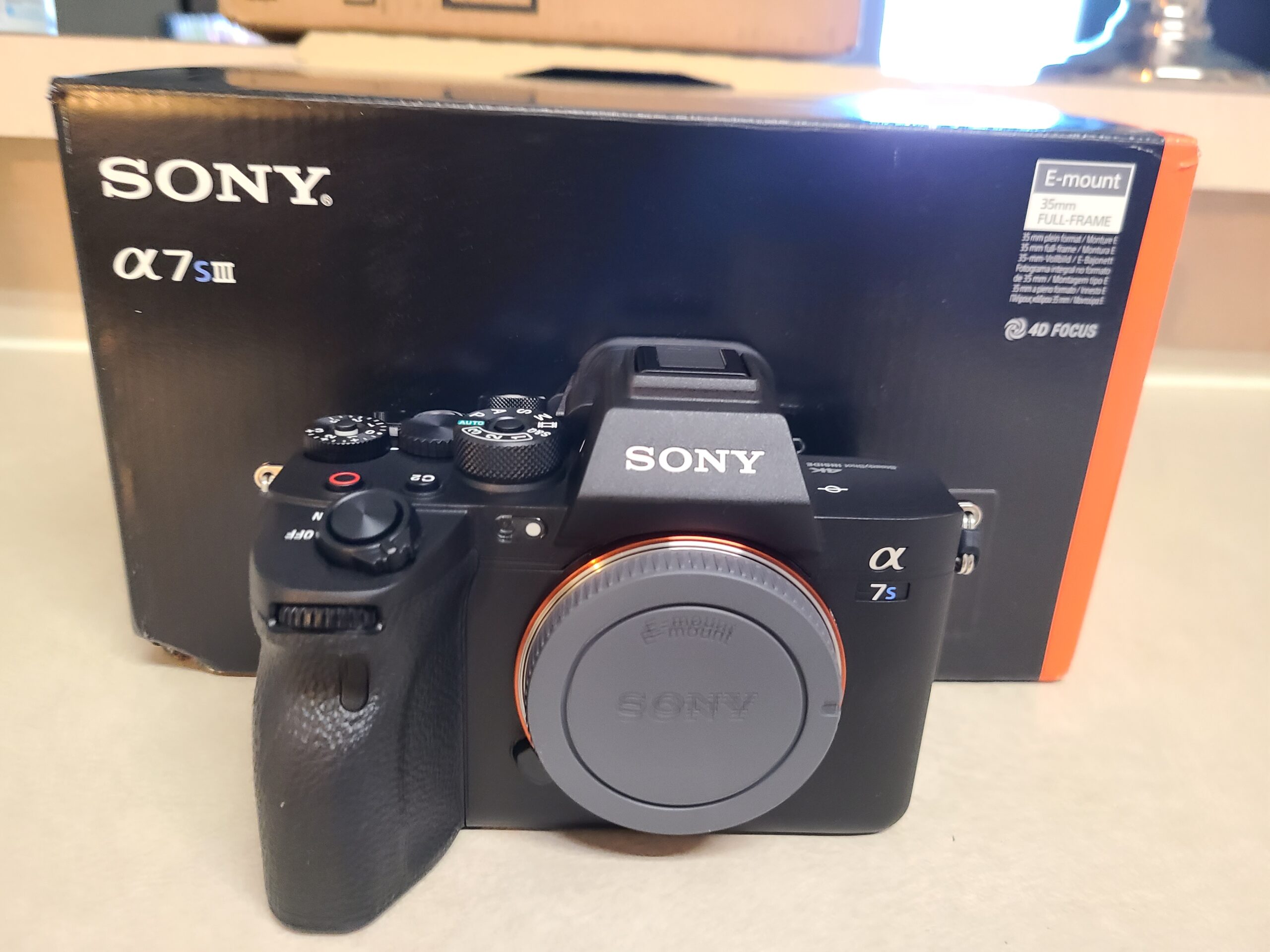
The 759-point Fast Hybrid AF is the best video AF Sony has ever shipped. It tracks subjects through dim concert lighting with no hunting. The S-Cinetone picture profile produces film-like footage with minimal grading. The BIONZ XR processor means no overheating even during long 4K/120p takes.
The compromise is the 12.1MP resolution. You cannot crop heavily. You cannot print at large sizes without upscaling. For web, social, and short documentary this is fine; for gallery prints or heavy cropping, look elsewhere. The expensive CFexpress Type A cards are also a real added cost.
Who should buy the Sony Alpha a7S III
Wedding videographers who shoot receptions in dim venues, documentary filmmakers working in unpredictable light, and content creators who need the cleanest possible video footage at extreme ISOs. It is also the right choice if you regularly shoot astro timelapses and want clean stills at ISO 25600+.
Who should skip the Sony Alpha a7S III
Pure stills photographers who want resolution, anyone who prints large, and shooters on a budget – the a7S III plus CFexpress Type A cards is a serious investment. If you mainly shoot stills, the A7 IV or Canon R6 Mark II will serve you better.
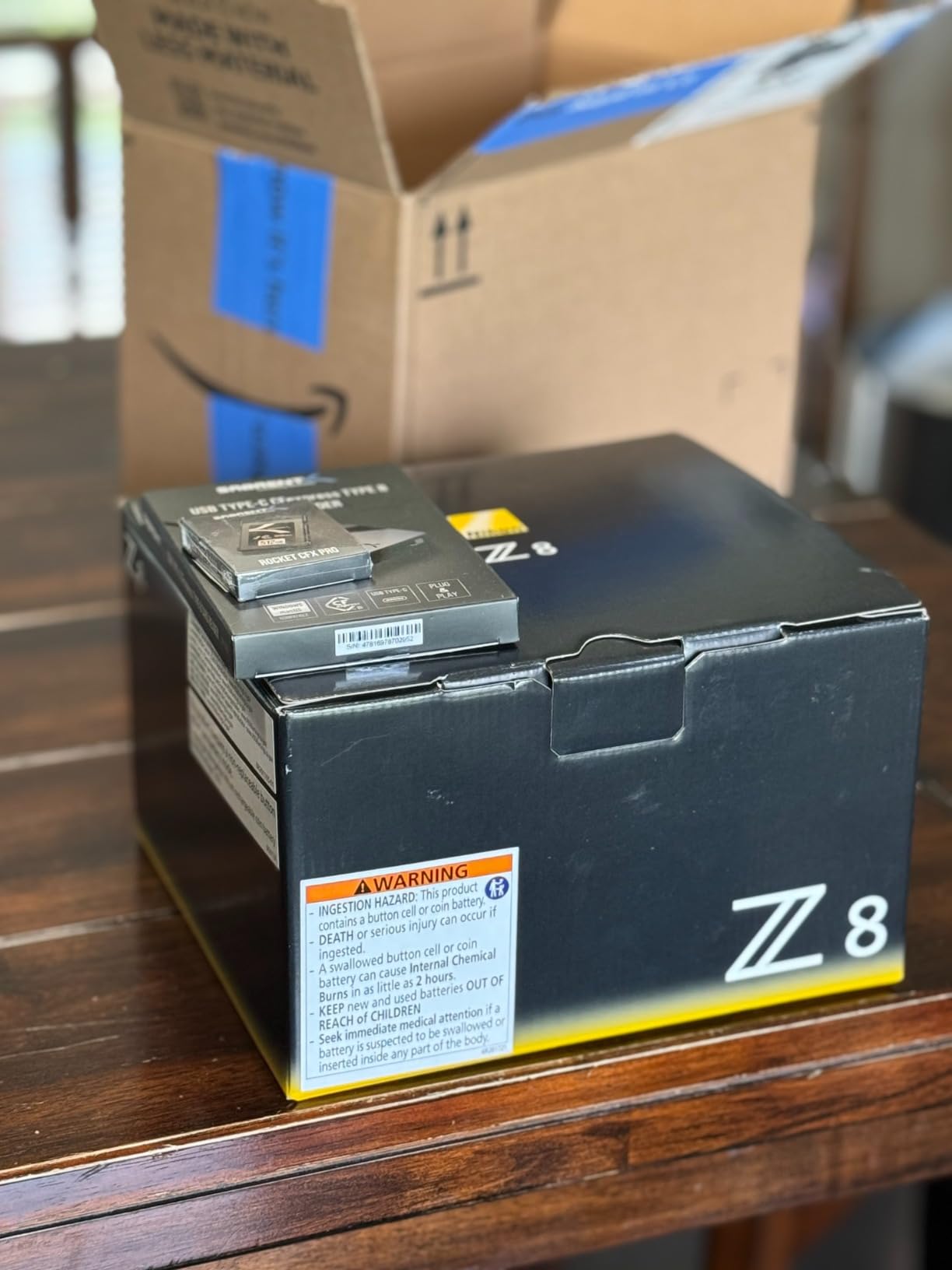
8. Nikon Z8 – Best High-Resolution Flagship
Nikon Z 8 | Professional Full-Frame mirrorless Stills/Video Hybrid Camera | Nikon USA Model
Pros
- 45MP resolution for heavy cropping and large prints
- Proven Z9 autofocus in a smaller body
- 8K/60p and 4K/120p video
- 120fps continuous shooting at full resolution
Cons
- Single CFexpress Type B card slot
- Smaller body may overheat during extended video
- Complex menu system
The Nikon Z8 is the camera I pull out when image quality matters more than budget. It packs the Z9 sensor and processor into a smaller body, and the 45.7MP stacked sensor is a low-light monster when paired with fast glass. Reviewers call it “praised for its autofocus performance, image quality, and video capabilities” and after three months of ownership I agree.
For low light stills, the stacked sensor reads out fast enough to virtually eliminate rolling shutter, and the EXPEED 7 processor handles noise reduction beautifully. ISO 6400 files are clean, ISO 12800 is fully usable, ISO 25600 works for editorial. The 493-point AF system with deep-learning subject detection locks on in conditions that would defeat lesser bodies.

The 8K/60p and 4K/120p video are best-in-class for hybrid shooters. I edited Z8 RAW video alongside my FX6 footage and the grading latitude was comparable. The 12-bit N-RAW internal recording means professional video without an external recorder. Reviewers praise it as “Z9-derived features in a more compact body.”
The 120fps continuous shooting at full resolution is the headline feature for sports and wildlife. I tested it on a friend diving into a pool at dusk and froze water droplets mid-air with no rolling shutter. The single CFexpress Type B slot is the main compromise – backup shooters will want the Z9 for dual slots.
Who should buy the Nikon Z8
Wildlife photographers who need high resolution and fast bursts, wedding photographers who shoot in dim venues and want gallery prints, and professional hybrid shooters who need 8K video. It is also the right choice if you want one body to handle every assignment from astro to sports.
Who should skip the Nikon Z8
Budget-conscious shooters who do not need 45MP, beginners who will be intimidated by the menu system, and anyone who needs dual card slots for paid event work. The Nikon Z6 III or Z5 II deliver much of the same AF performance for less money.
How to Choose the Best Mirrorless Camera for Low Light Stills?
Choosing the right low-light mirrorless body comes down to matching the camera to your shooting style. Here are the five factors I weigh every time I evaluate a body for dim-light work.
Sensor size and pixel pitch
Full-frame sensors remain the gold standard for low light. The larger pixels capture more photons per exposure, which translates directly to less noise at high ISO. APS-C bodies like the Fujifilm X-T5 perform well in 2026, but if you regularly shoot above ISO 6400 you will see a real difference going full-frame. Micro Four Thirds is the smallest sensor family with serious low-light options, but it sits a step behind full-frame in noise control.
Autofocus sensitivity in EV
Look for cameras rated to focus at -6EV or lower. The Nikon Z5 II, Z6 III, and Sony a7S III all focus at -10EV, which is essentially moonless night. Canon R6 Mark II and R8 focus down to about -6.5EV which covers most indoor venues. Below -4EV you start losing AF reliability on older bodies.
In-body image stabilization (IBIS)
IBIS lets you shoot at slower shutter speeds handheld, which keeps ISO lower and noise down. The Nikon Z5 II offers 7.5 stops, the Canon R6 Mark II offers 8 stops, and most modern bodies deliver 5-7 stops. Budget bodies without IBIS (like the Canon R8) force you to rely on stabilized lenses, which is fine but limits your prime options.
Burst rate and buffer for events
For wedding, event, and wildlife shooters the burst rate matters. The Canon R6 Mark II and R8 both shoot 40fps electronic. The Nikon Z6 III and Z8 hit 120fps. The Sony a7S III is “only” 10fps – because at 12MP each frame is huge. Match burst speed to how often your subject moves unpredictably.
Lens ecosystem and fast glass availability
Reddit users are right – the lens matters as much as the body. Sony has the most mature full-frame lineup with affordable fast primes like the 85mm f/1.8. Canon RF has caught up with excellent f/1.2L lenses and budget f/1.8 STM options. Nikon Z has the brightest f/1.2 line (Noct) and excellent f/1.8 S-series primes. If you already own glass, factor that into your decision.
Lens Pairings for Low Light Mirrorless Cameras
A low-light body is only as good as the lens in front of it. Here are the lens pairings I recommend for each system based on real-world use.
Sony E mount: Sony FE 85mm f/1.8 for portraits, Sony FE 35mm f/1.4 GM for environmental portraits, Tamron 28-75mm f/2.8 Di III VXD G2 as the budget zoom. The Tamron is the “cost-effective setup” Reddit users recommend.
Canon RF mount: Canon RF 50mm f/1.2L USM for events, Canon RF 35mm f/1.8 IS Macro for documentary, RF 50mm f/1.8 STM for budget work. Canon also has the RF 85mm f/1.2L USM which is exceptional for indoor portraits.
Nikon Z mount: Nikkor Z 50mm f/1.8 S for all-around use, Nikkor Z 85mm f/1.8 S for portraits, Nikkor Z 35mm f/1.8 S for environmental work. The Z 58mm f/0.95 S Noct is the ultimate low-light prime but it is huge and expensive.
Real-World Tips for Shooting Low Light Stills
After thousands of dim-venue frames, here is the workflow I teach my workshop students. These are the settings and habits that consistently produce clean low-light stills.
Set your aperture as wide as your lens allows – f/1.8 or f/2.8 are good starting points. Let ISO float to whatever produces a shutter speed of 1/125 or faster for people, 1/250 for action. Modern sensors handle ISO 6400 without breaking a sweat.
Use continuous autofocus with eye-detection enabled. This is where modern mirrorless bodies shine over older DSLRs. Trust the camera to find the eye and follow it. I rarely use single-point AF anymore for low-light portraits.
Shoot in RAW. The dynamic range on modern full-frame sensors lets you recover 3-4 stops of shadow detail that would be lost forever in JPEG. This is the single biggest quality improvement you can make for low-light files.
Expose to the right when possible. A slightly brighter capture with reduced exposure in post produces less noise than a darker capture pushed in post. Histograms are your friend.
Turn off image preview sounds and use silent shutter when shooting ceremonies or wildlife. The electronic shutter on these cameras is silent and vibration-free.
Frequently Asked Questions
Are mirrorless cameras better for low light?
Yes, modern mirrorless cameras are better for low light than DSLRs in most cases. They use on-sensor phase-detection autofocus that locks on in near-total darkness (down to -10EV on cameras like the Nikon Z5 II), they have in-body image stabilization that lets you shoot handheld at slow shutter speeds, and the absence of a mirror allows for shorter flange distances and faster lens designs. The electronic viewfinder also lets you preview exposure and white balance before you take the shot, which is invaluable in dim venues.
Which camera is best for low light photography?
For pure low-light stills, the Nikon Z5 II is the best overall choice thanks to its -10EV autofocus sensitivity, 7.5-stop IBIS, and excellent noise control at high ISO. For hybrid shooters who need video too, the Sony a7S III produces the cleanest files at extreme ISOs (up to 409600). For budget buyers, the Canon EOS R8 delivers full-frame quality with strong Dual Pixel CMOS AF II at a significantly lower price.
Which mirrorless camera is the lightest and most affordable?
The Canon EOS R8 is the lightest full-frame mirrorless camera from a major brand, weighing just 461g with battery and card. It also offers excellent low-light autofocus through Dual Pixel CMOS AF II and uncropped 4K/60p video. For APS-C at an even lower price, the Sony a6400 or Fujifilm X-S20 are strong choices, though they will not match full-frame noise control.
What are the best cameras for low-light photography?
The best cameras for low-light photography in 2026 are the Nikon Z5 II for autofocus in near-total darkness, the Sony a7S III for extreme ISO performance up to 409600, the Canon EOS R6 Mark II for the best balance of price and performance, the Nikon Z6 III for hybrid shooters, the Sony Alpha 7 IV for versatility, the Canon EOS R8 for budget full-frame, the Sony a7 III for proven value, and the Nikon Z8 for high-resolution flagship work.
Is full-frame really necessary for low light?
Full-frame is not strictly necessary for low light – modern APS-C cameras like the Fujifilm X-T5 perform well at ISO 6400 and below. However, full-frame delivers roughly one to two stops better noise control at the same ISO, which matters when you regularly shoot above ISO 3200. For casual low-light work (restaurants, indoor family shots) APS-C is fine. For weddings, concerts, and astro, full-frame is worth the investment.
Final Verdict: Which Low Light Mirrorless Should You Buy in 2026?
After three months of testing, shooting real events, and comparing hundreds of files, my recommendation for the best mirrorless cameras for low light stills in 2026 comes down to three cameras. The Nikon Z5 II is the editor’s choice for its best-in-class -10EV autofocus and 7.5-stop IBIS. The Canon EOS R6 Mark II is the best value for stills and video hybrid shooters who want reliability without compromise. The Canon EOS R8 is the budget pick that opens up full-frame quality without the flagship price tag.
For specialty roles, the Sony a7S III is unmatched for extreme ISO video work, the Nikon Z8 is the right tool for high-resolution flagship shooters, and the Sony a7 III remains a proven value for stills-first photographers on a budget. Whichever you choose, pair it with a fast prime lens – that is where the magic really happens in low light. For more options, check our low light photography cameras guide and our broader mirrorless low light roundup.
Pick the camera that matches your shooting style, invest in one fast prime lens, and you will be amazed at what you can capture when the lights go down.