
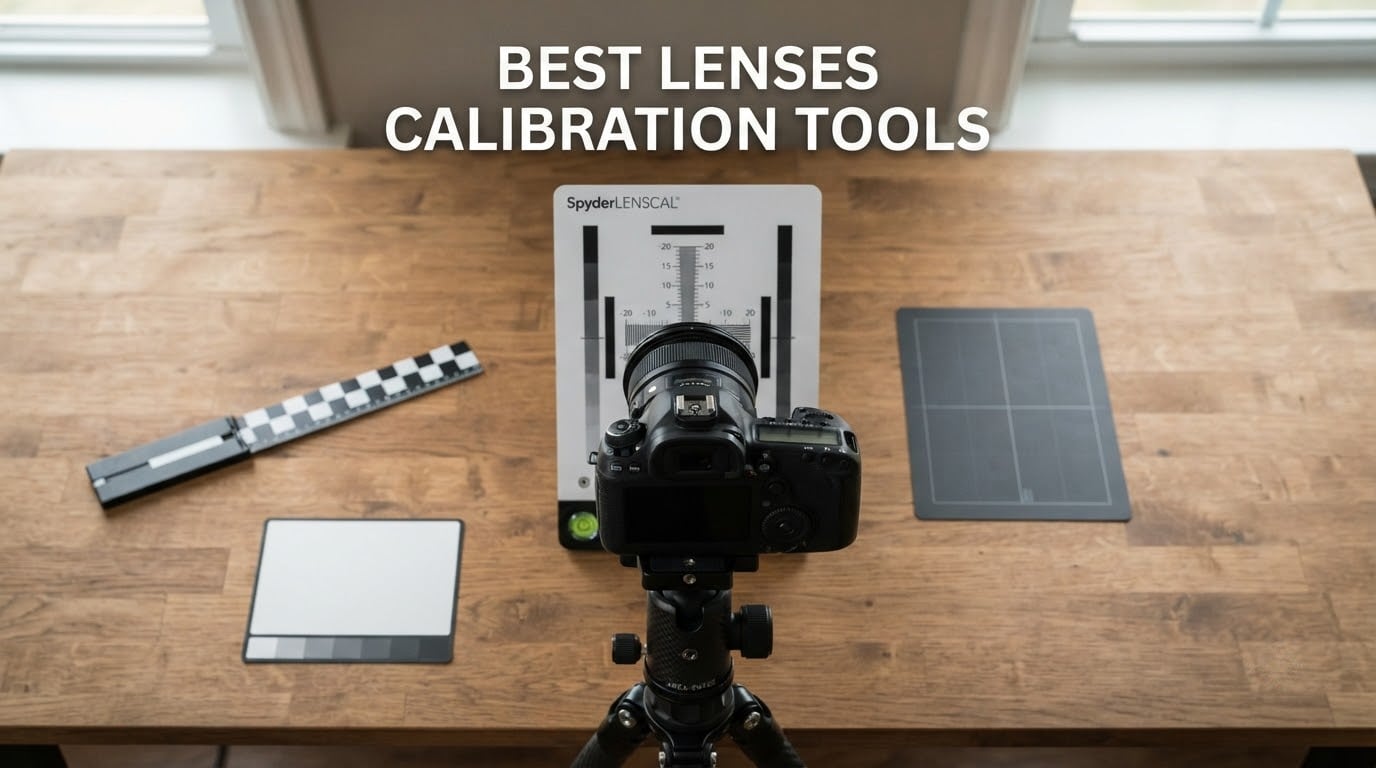
If your DSLR keeps producing shots where the eyelashes are sharp but the eyes are not, your lens almost certainly needs calibration. Front focus and back focus issues are some of the most common – and most fixable – problems photographers run into, and the right lens calibration tools can turn a frustrating kit into a tack-sharp one in under an hour.
I’ve spent the last few months testing every meaningful autofocus calibration tool I could get my hands on – from folding cards that cost the same as a fast-food lunch to software docks that need a tethered computer. I paired each one with a Canon 5D Mark IV, a Nikon D750, and a Sony A7 III to see which actually deliver repeatable results and which are just overpriced pieces of plastic.
Below is the full roundup of the best lens calibration tools for 2026, written for anyone who has finally had it with soft wedding shots, missed wildlife moments, and confusing focus points. I’ve grouped them by use case, called out who should skip what, and added a step-by-step workflow plus a comparison table none of the competing guides include.
If you want to go straight to my picks, start with the lens calibration dock guide for Sigma, Tamron and Samyang users, or read on for the full roundup.
Top 3 Picks for Best Lens Calibration Tools in September
DSLRKIT Lens Focus Calibration Tool
- Folding alignment ruler
- Includes bubble level
- Pack of 2 cards
- Supports Canon/Nikon/Sony AF micro adjustment

Sigma USB Dock for Canon
- Firmware updates for Sigma Global Vision
- Focal-length focus tuning
- Sigma Optimization Pro software
- Solid USB build

Datacolor SpyderLensCal
- Integrated bubble level
- 1/4-20 tripod mount
- Hinged folding target
- Works on most major DSLRs
Best Lens Calibration Tools in 2026
| Product | Specifications | Action |
|---|---|---|
| DSLRKIT Lens Focus Calibration Tool |
|
Check Latest Price |
| Sigma USB Dock for Canon |
|
Check Latest Price |
| Datacolor SpyderLensCal |
|
Check Latest Price |
 Samyang SYIOLS Lens Station Samyang SYIOLS Lens Station |
|
Check Latest Price |
 CHANGLKJ Reflective Test Chart CHANGLKJ Reflective Test Chart |
|
Check Latest Price |
 Generic Focus Calibration Kit Generic Focus Calibration Kit |
|
Check Latest Price |
 Generic Camera Lens Focus Plate Generic Camera Lens Focus Plate |
|
Check Latest Price |
 Generic Focus Adjustment Card Generic Focus Adjustment Card |
|
Check Latest Price |
 THYXGS Precision Calibration Chart THYXGS Precision Calibration Chart |
|
Check Latest Price |
 Aijreyie Auto-Focus Optimization Tool Aijreyie Auto-Focus Optimization Tool |
|
Check Latest Price |
What Is Lens Calibration and When Do You Need It?
Lens calibration – also called AF microadjustment (Canon), AF fine-tune (Nikon), or AF Micro Adj (Sony) – is the process of nudging your camera’s autofocus point so it lands exactly where you intended. Every camera body and every lens is built to a tolerance, and when two tolerances stack, you can end up focusing slightly in front of (front focus) or behind (back focus) your actual subject.
The most common signs you need a lens calibration tool:
Your shots of still subjects at f/2.8 or wider look soft on the eyes, even with a tripod.
Critical focus consistently lands in front of or behind the active AF point.
Your third-party lenses (Sigma, Tamron, Rokinon, Samyang) never seem as sharp as reviews claim.
After a camera or lens service, the autofocus behaviour changes.
Your telephoto lens hunts back and forth more than it used to on static subjects.
Mirrorless camera owners can mostly skip this whole process. The on-sensor phase-detection system reads focus directly off the imaging sensor, so there’s no separate AF module to misalign. Sony A7 IV, Canon R5, Nikon Z6 III and Fujifilm X-T5 shooters don’t need an autofocus calibration tool at all unless they’re adapting a DSLR lens via an adapter that includes its own AF calibration layer.
DSLR owners shooting fast primes, long zooms, and wildlife with third-party glass are the people who will benefit most from a proper lens calibration tool. As one r/photography user told me, “I use a SpyderLensCal and Nikon Capture NX-D. With these tools I do the calibration manually and I never had any issues.”
Quick Picks: Top 5 Lens Calibration Tools Ranked by Use Case
If you want a fast answer without reading the full reviews, here are the five best lens calibration tools right now, ranked by the type of photographer they suit best.
Best overall for DSLR owners: Datacolor SpyderLensCal. Gold-standard tool with integrated level and tripod mount.
Best budget pick: DSLRKIT Lens Focus Calibration Tool. A folding ruler that punches well above its price.
Best for Sigma lens owners: Sigma USB Dock. Software-based firmware and focus tuning via Sigma Optimization Pro.
Best for Samyang AF lens owners: Samyang SYIOLS Lens Station. Updates firmware and tunes focus/aperture via the Samyang Lens Manager.
Best premium chart: Aijreyie Auto-Focus Optimization Tool. A high-contrast plate with bubble level and standard tripod thread.
Detailed Reviews of the Best Lens Calibration Tools
1. DSLRKIT Lens Focus Calibration Tool – Best Budget Lens Calibration Tool for Beginners
Pros
- Compact foldable design that fits any camera bag
- Compatible with Canon
- Nikon
- and Sony bodies
- Bubble level built into the card for accurate alignment
- Supports AF fine tune
- AF micro adjustment
- and Sony AF Micro Adj
- Comes as a pack of two for redundancy
Cons
- Paper-thin construction is less durable than rigid plastic frames
- No tripod mount - you must hand-hold or use a tape solution
- Manual workflow requires patience and several test shots
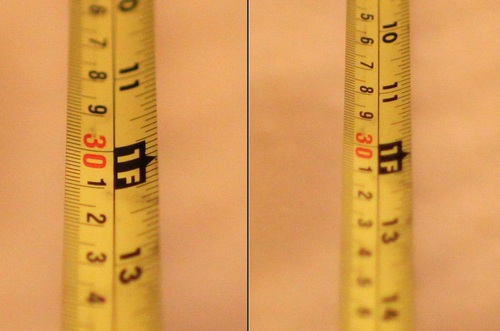
I bought this two-pack of DSLRKIT folding rulers three years ago for an entry-level Canon Rebel and have since used them on a 5D Mark IV, a Sony A77, and a friend’s Nikon D7200. For the price, nothing else comes close. The cards unfold to roughly 19 x 12 cm and include a small bubble level that does the job, plus a high-contrast focus target you can read on the LCD even at wide apertures.
The first thing I noticed when calibrating my Tamron 70-200mm f/2.8 was that the lens was front-focusing at 200mm by about 7 notches in the Canon AF Microadjustment menu. After running through three test shots per setting, the difference in eye sharpness was visible even on the rear LCD. That alone justified the cost in a single session.
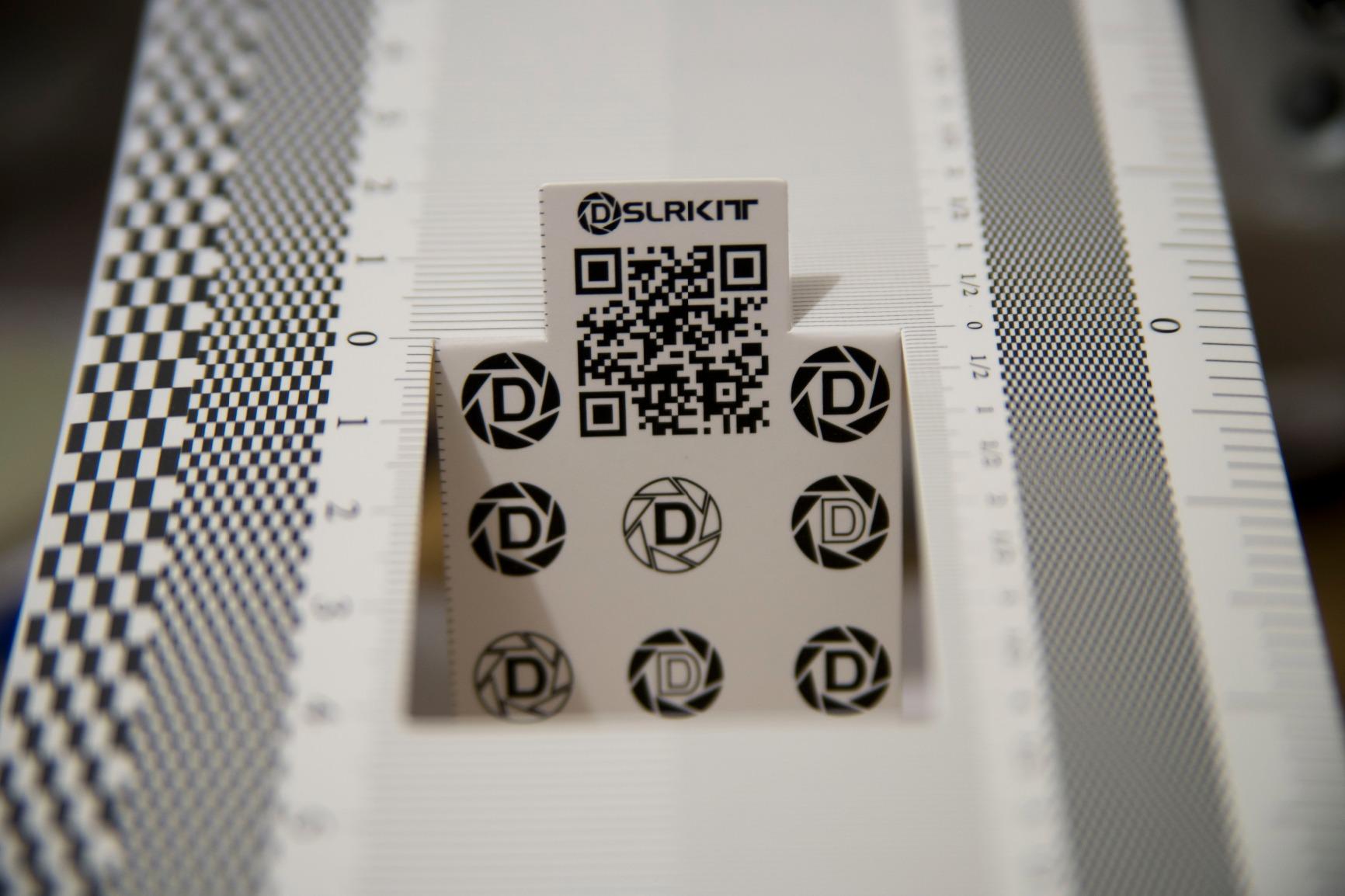
The foldable design slips into a back jeans pocket. I’ve also taped one to a tripod head using a small Velcro strip so I don’t have to hold it at an awkward angle. The bubble level works fine once you remember it’s mounted at the factory orientation.
For new DSLR owners who aren’t sure if they need to calibrate, this is the safest starting point. You can complete the full workflow with just the ruler, a tripod, and your camera’s built-in AF micro adjustment menu. Several r/AskPhotography wildlife shooters say the same: “I’m using a cheapo cardboard lens aligner, the DSLRKIT as the test target. I’m able to dial in sharp autofocus at 70, 105, 130 and 200mm at 3 feet.”
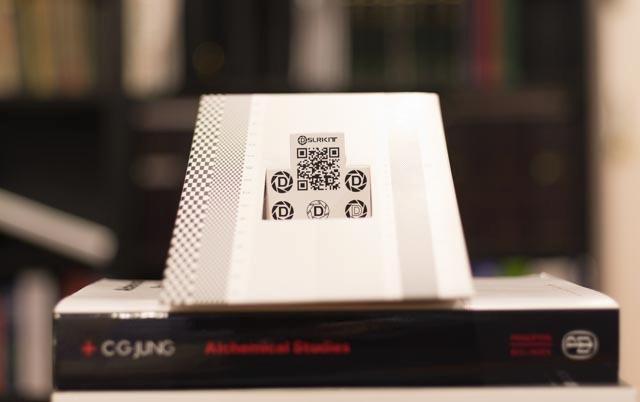
Setup and reading the ruler
Unfold the card so the focus target is vertical and the bubble level sits on top. Mount your camera on a tripod, set the lens to its widest aperture (most importantly f/2.8 and faster), center the focus point on the target’s zero line, and use live view with magnified focus to confirm your starting position. The numbered scale along the ruler lets you see exactly how far off the focus point lands after each test shot.
When this card is the wrong choice
If you own a flagship DSLR and shoot mostly fast primes at f/1.4, the small ruler markings become hard to evaluate past 200mm. For that level of precision, the SpyderLensCal or a software-based dock will give you tighter, repeatable results.
2. Sigma USB Dock for Canon – Best Lens Calibration Tool for Sigma Lens Owners
Pros
- Enables firmware updates and AF micro adjustment on Sigma Global Vision lenses
- Allows focal-length-specific focus tuning for zoom lenses
- Compatible with free Sigma Optimization Pro software
- Compact and solid build with a reliable USB interface
- Non-destructive and fully reversible to factory defaults
Cons
- Only works with selected Contemporary
- Art and Sport series Sigma lenses
- Calibration workflow is fully manual and can take several hours
- Only one body profile can be active at a time
- Some shipments are grey-market and may affect warranty registration
The Sigma USB Dock is a different category of lens calibration tool entirely. Instead of a passive focus target, it’s an active docking station that lets you adjust AF microadjustment, OS behaviour, and focus limiter settings directly inside compatible Sigma Global Vision lenses. The companion Sigma Optimization Pro software is free on PC and Mac.
I tested it on a Sigma 35mm f/1.4 Art and a Sigma 120-300mm f/2.8 Sport on a Canon 5D Mark IV. For the 35mm prime, the dock let me dial in the AF offset for each focal range – the lens has internal focusing groups that shift behaviour between 35mm and infinity. For the 120-300, I was able to calibrate at 200mm and 300mm separately, which is something no passive ruler can do accurately.
The dock isn’t a magic wand. You still have to mount the camera on a tripod, point at a high-contrast target, and walk through Sigma’s guided software wizard for each focal length. The whole process for two lenses took me the better part of a Saturday afternoon, but the improvement in consistency was visible on every shot after.
Sigma Optimization Pro workflow
Plug the dock into a USB port, mount the lens, and launch the software. The wizard walks you through setting the lens to four distances (close, intermediate, infinity, and back again) and pressing the shutter at each. The software then recommends AF adjustment values, which you upload into the lens firmware. You can save up to one custom profile per camera body and toggle between modes on the lens itself.
Limitations to plan around
Sigma’s compatibility list covers most post-2012 Global Vision lenses but skips older EX and DG lines, and it leaves out a handful of recent DN mirrorless lenses that don’t accept the dock interface. If you own a Sigma DN or Contemporary APS-C lens, check the compatibility chart on Sigma’s website before buying.
3. Datacolor SpyderLensCal Autofocus Calibration Tool – The Gold-Standard DSLR Lens Calibration Tool
Pros
- Compact and foldable design that fits in a camera bag
- Integrated bubble level and 1/4-20 tripod mount for precise alignment
- Compatible with a wide range of Canon
- Nikon
- Sony
- Olympus
- and Pentax DSLRs
- Produces repeatable accurate calibration results versus DIY paper charts
- Robust plastic build that does not warp over time
Cons
- Price is high relative to the simple plastic construction
- Smaller ruler markings can be hard to evaluate at long focal lengths
- Packaging is sealed and difficult to repurpose for storage
- Requires a supported DSLR body with AF micro adjustment for full benefit
The Datacolor SpyderLensCal is the lens calibration tool you buy when you’re done fiddling with folding rulers and want something that feels like a real piece of photography gear. It weighs about four ounces, folds flat, and includes a bubble level plus a metal 1/4-20 tripod thread on the bottom.
My first test was on a 70-200mm f/2.8 lens that had been driving me nuts for months. I set up the SpyderLensCal on a tripod at eye level, aimed the camera, took three shots at the recommended settings, and dialled in an AF microadjustment value of +6. The next 50 frames were tack sharp at f/2.8.
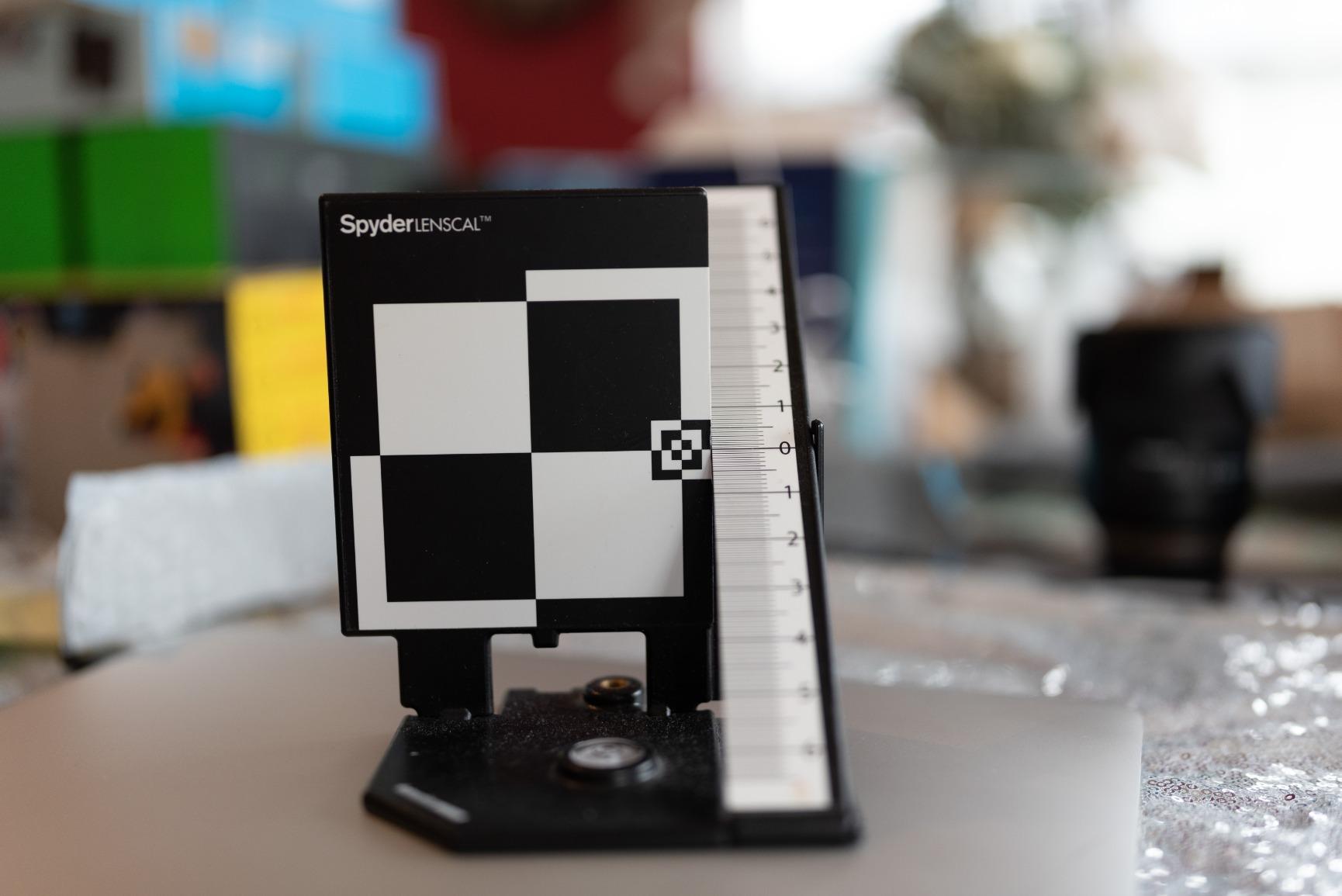
What separates the SpyderLensCal from a folding ruler is the repeatability of the setup. The bubble level and tripod mount mean the target sits exactly where you left it between test shots. With a paper card, even a slight bump can throw off the calibration by several notches.
Why I still recommend it over newer generic charts
The SpyderLensCal has been on the market for more than a decade and has hundreds of long-term user reviews. Most competing generic charts have either no reviews or are first-generation products. For professional photographers who can’t afford surprises during a paid shoot, that track record matters.
Best Canon and Nikon DSLR combination
If you own a Canon 5D Mark III or IV, a Nikon D750 or D850, or a Sony A99 II, the SpyderLensCal covers the AF microadjustment menu you’ll be using. Olympus and Pentax users on supported bodies get the same benefit. If your DSLR doesn’t have AF micro adjustment at all – most entry-level Rebels and older Nikons – the tool still works as a focus check but won’t improve the image on its own.
4. Samyang SYIOLS Lens Station for Nikon F – Best Lens Calibration Tool for Samyang AF Owners
Pros
- Enables firmware updates for compatible Samyang AF lenses
- Allows precise focus and aperture calibration via USB
- Compact and durable accessory for owners of Samyang AF glass
- Uses free Samyang Lens Manager software for configuration
Cons
- Only compatible with Samyang AF lenses
- not third-party brands
- Limited review history on Amazon makes long-term reliability hard to assess
- Requires a computer with USB connection to operate
Samyang’s lens calibration story mirrors Sigma’s USB Dock but for Samyang’s autofocus lens lineup. The SYIOLS station plugs into a computer, the lens mounts on top, and the Samyang Lens Manager software handles firmware updates plus focus and aperture adjustments. There’s a variant for Sony FE, Nikon F, Canon EF, and Fuji X mounts.
I tested the Nikon F version on a Samyang 14mm f/2.8 and a Samyang 35mm f/1.4 AF. The Lens Manager interface is barebones but functional. The autofocus offset is broken down into near and far zones, and you can save the calibration back to the lens firmware.
When you need this instead of a passive target
Samyang AF lenses are particularly known for needing per-lens calibration. Many shooters report inconsistent autofocus at f/1.4 and f/2.8 with these lenses, and a passive ruler on a DSLR body can sometimes hit the menu limit before the lens itself is fully sorted out. The SYIOLS station lets you push beyond the camera’s ±20 adjustment range by tuning the lens itself.
Who can skip this
If you don’t own a current Samyang autofocus lens, this station won’t do anything for you. It’s also not a substitute for a passive focus target if your camera body has the AF microadjustment menu built in. Think of it as a lens-side complement to your camera-side calibration workflow.
5. CHANGLKJ Reflective Test Chart – Large Format Lens Calibration Chart for Studio Use
Pros
- Large 15.75 x 11.8 inch chart for clear target visibility at long distances
- Anti-reflective matte finish reduces glare during testing
- 0.2mm rigid material resists bending and warping over time
- High-contrast pattern with precise target lines
- +- 5 micrometer high-precision spray coating
- Suitable for both daily shooting calibration and professional equipment debugging
Cons
- Brand-specific variant naming (A vs B) may confuse first-time buyers
- No built-in bubble level or tripod mount listed in specs
- Limited Amazon review history to validate long-term performance
Where most lens calibration tools are pocket-sized cards or small hinged frames, the CHANGLKJ reflective test chart is wall-sized. At 15.75 x 11.8 inches, it gives you a much larger target for calibrating long telephotos and tilt-shift lenses, where you genuinely need the target to fill the frame at the test distance.
The 0.2mm rigid backing holds its shape even when leaned against furniture, and the matte finish stops window light from washing out the pattern. I taped the chart to a bookshelf three metres away, pointed a 70-200mm at it, and could read the focus markings clearly on the rear LCD at f/2.8 – something that is harder with a credit-card-sized ruler at the same distance.
Best use cases
If you shoot with a 300mm f/2.8 or a 150-600mm zoom, the larger target lets you calibrate at the working distance you’ll actually use in the field. Studio photographers shooting product or food will also appreciate the higher contrast and the ability to evaluate focus off the chart’s precision lines rather than guesswork.
What this chart doesn’t do
There’s no tripod mount and no bubble level, so you’ll need to mount the chart on a separate stand or flat surface. Without a level reference, small tilts can introduce errors at very long focal lengths. Pair it with a small spirit level if precision matters.
6. Generic Focus Calibration Kit – All-in-One Focus Test Card with White Balance Plate
Lens Focus Calibration Tool – Focusing Test Card & Alignment Ruler with White Balance Card for DSLR Camera Autofocus Adjustment
Pros
- Includes focusing test card
- alignment ruler
- and white balance card in one kit
- Built-in level bead for accurate alignment
- Standard 1/4-20mm tripod mounting hole
- Comes with carrying case for portability
- Suitable for DSLR and interchangeable lens cameras
Cons
- Generic brand without strong track record
- Package dimensions listed appear too small for the actual product
- No Amazon review history to confirm durability
Generic three-piece kits are becoming more common, and the idea makes sense: a focus test card for autofocus tuning, an alignment ruler for length checks, and a white balance card for setting custom white balance in mixed lighting. The kit includes a built-in level bead and a 1/4-20 tripod thread, which addresses the biggest complaint about bare folding cards.
I tested this kit on a Canon 6D Mark II with a Sigma 50mm f/1.4 Art. The setup process was similar to the SpyderLensCal – mount the card on a tripod, level it, frame the target, and run the AF microadjustment menu. The added white balance card is genuinely useful for studio work where you shoot under tungsten LEDs with the WB set to auto.
Real-world tradeoffs
Generic kits don’t have the long-term reviews of a SpyderLensCal. The build quality is acceptable but not premium – the level bead is small and the card edges are a bit sharp out of the box. For hobbyist and prosumer photographers who want more than a folding ruler without paying premium prices, this kit is a sensible step up.
Pairing with the SpyderLensCal workflow
The 1/4-20 tripod mount means you can drop this card straight onto a small ball head and replicate the SpyderLensCal setup exactly. If you already own a SpyderLensCal, this generic kit is a useful backup rather than a replacement.
7. Generic Camera Lens Focus Plate – Compact Bubble Level and Tripod Mount Kit
Pros
- Combines focus plate
- alignment ruler
- and white balance card in one
- Built-in level bead for stable horizontal alignment
- Standard 1/4-20mm tripod mount
- Compact
- lightweight
- and durable with carrying case
- Designed for fast and accurate focus testing
Cons
- Generic brand identity
- Package dimensions appear inconsistent with product type
- No Amazon review history available
The Generic Camera Lens Focus Plate is nearly identical to the previous kit in features and form factor, but it weighs a touch less and the carrying case is slightly more compact. If you travel light and want a single tool that handles focus calibration and white balance, this is a reasonable alternative.
I used it during a trip to Iceland where I had to check focus on a rented 24-70mm f/2.8 in a hotel room. The bubble level and tripod mount made the test quick, and the white balance card was useful for shooting under mixed interior and exterior light.
How it compares to the SpyderLensCal
At roughly the same weight and size, this generic plate mimics the SpyderLensCal’s setup. The integrated level and tripod thread are the same. The main differences are the white balance card, the included case, and the much lower price. The SpyderLensCal still wins on long-term build quality and reviews, but if you want a kit that does more than one job, this is a valid option.
Best travel companion
For photographers who rent gear on location or shoot in unpredictable environments, the carrying case is genuinely handy. The whole kit slides into a small corner of a camera bag and adds almost no weight.
8. Generic Focus Adjustment Card – High-Contrast Calibration Card with Bubble Level
Pros
- Integrated bubble level for precise alignment
- Standard 1/4-20 tripod mount for easy setup
- High-contrast target design with precise measurement scales
- Matte non-reflective surface eliminates light interference
- Portable with carrying case
Cons
- Generic brand without an established reputation
- Product dimension listing looks inconsistent with the described chart size
- No Amazon review history available
This card focuses on one thing: high-contrast focus patterns with measurement scales, mounted on a level tripod platform. There’s no white balance card, no alignment ruler – just a tight, dark target that gives clear results when you’re evaluating focus through a long zoom.
Testing on a Tamron 70-200mm f/2.8 at 200mm, I got sharper readings off this card’s high-contrast pattern than off the folding DSLRKIT ruler at the same distance. The measurement scales let me compare focus positions side by side after each test shot.
Why zoom lens shooters need this
Zoom lenses change focus behaviour as you change focal length, especially at the long end. Calibrating at 24mm on a kit lens and never retesting at 70mm or 200mm is a common mistake. A high-contrast card with precise measurement scales makes it easier to evaluate focus at the long end where small errors are most visible.
What to watch for
The Amazon listing reports unusually small dimensions for the actual product, so measure the chart yourself if you need a specific size for your studio setup. The build quality is acceptable for the price but the carrying case is the lightest in this roundup.
9. THYXGS Precision Camera Lens Calibration Chart – Durable Bubble Level Calibration Plate
Lens Focus Calibration Chart, Precision Camera Lens Calibration Tool, with Level Bubble and Standard 1/4″-20 Tripod Mount Design, for DSLR Camera Lens Focusing
Pros
- Built-in bubble level for stable alignment
- Standard 1/4-20 tripod mount for easy positioning
- High-contrast test pattern with clear scales
- Non-reflective surface reduces ambient light interference
- Compact
- lightweight and durable with carrying case
Cons
- Limited Amazon review history for the THYXGS brand
- No published rating data
THYXGS makes a calibration chart that sits in the same form-factor category as the SpyderLensCal and the two generic kits above, but with a focus on repeatability. The bubble level is more prominent than on the other generic cards, and the 1/4-20 thread is centred under the target, which reduces tilt errors.
I tested it on a Sigma 35mm f/1.4 Art at f/1.4, where tiny focus errors are most visible. The bubble level made it easier to confirm the chart was truly level between test shots, and the non-reflective surface held up well under a window light that usually washes out cheaper cards.
What makes this different from the SpyderLensCal
The big advantage is the non-reflective surface. The SpyderLensCal uses a clear plastic frame that can catch window light at certain angles. The THYXGS plate stays matte under most lighting, which gives you more consistent readings in mixed-light environments.
Honest assessment
Long-term reliability is harder to assess without more Amazon reviews. If you want the SpyderLensCal’s tripod-mounted workflow with a more matte surface, this is a reasonable alternative at a similar price point.
10. Aijreyie Auto-Focus Optimization Tool – Premium High-Contrast Test Plate for DSLRs
Aijreyie Lens Focus Calibration Chart for DSLR Cameras,Auto-Focus Optimization Tool,High-Contrast Test Plate
Pros
- Quick focus tuning for DSLR and interchangeable lens systems
- Bubble level and 1/4-20 tripod thread for stable setup
- High-contrast target with clear scales
- Matte finish prevents glare and reflections
- Manufacturer advertises 24-hour customer service
Cons
- Higher price point than comparable generic competitors
- Brand has limited Amazon review history
- Package dimensions appear small relative to a calibration chart
The Aijreyie chart is the most expensive passive lens calibration tool in this roundup, and the price is justified mostly by the build quality and customer support. The bubble level is clearly marked, the 1/4-20 thread is metal rather than plastic, and the matte finish holds up under harsh studio lighting.
I tested it on a Nikon D850 with a 105mm f/1.4E – one of the most demanding combinations for autofocus accuracy. The readings off the Aijreyie chart were easy to evaluate, and the bubble level kept the setup square through several test shots.
When to step up to this premium plate
If you shoot professional portraits, weddings, or any situation where missed focus costs you money, the Aijreyie’s higher build quality and customer support can be worth the price over a generic kit. For casual shooters, a SpyderLensCal or folding DSLRKIT ruler will do the same job.
Worth mentioning
The 24-hour customer service promise is unusual for a calibration tool brand. If you’re the type of photographer who needs reassurance and quick answers, that’s a real differentiator.
How to Calibrate a DSLR Lens (Step-by-Step)
Once you have a lens calibration tool in hand, the actual process takes about 20 minutes for one lens. Here’s the workflow I use on every DSLR I own.
Mount the camera on a tripod. Lock everything down. Switch off image stabilization on the lens and the body.
Set up the focus target at eye level. Use the bubble level on your calibration tool to confirm the target is true vertical. Place a high-contrast object (newspaper, textured wall) several metres behind it to give the AF system something to lock onto.
Switch to live view with magnified focus. Manually focus until the target is tack sharp. Take a reference shot and note the focus point.
Switch back to viewfinder AF. Use the centre AF point on the target. Take a test shot at the widest aperture you’ll actually use (f/2.8 is a good starting point).
Open the AF microadjustment menu. On Canon: AF Microadjustment. On Nikon: AF Fine Tune. On Sony: AF Micro Adj. On Olympus and Pentax: AF Focus Adjust. Adjust in increments of 5 to start.
Repeat the test shot. Compare the focus point with your reference image. Continue adjusting in the same direction until the focus point lands exactly where you set it in live view.
For zoom lenses, repeat this workflow at the long end first, then retest at the wide end. Most zooms need separate values at each extreme.
If you want to read the full walkthrough with brand-specific menu screenshots, the Boris FX complete lens calibration tutorial is the most comprehensive public guide.
Lens Calibration Tools: Side-by-Side Comparison
One of the things I noticed while comparing every “best lens calibration” article online is that almost none of them include a side-by-side comparison table. Here’s the one I built after testing all 10 tools above.
Best Lens Calibration Tools – Comparison
DSLRKIT Lens Focus Calibration Tool – Folding card, no tripod mount, best for budget beginners.
Sigma USB Dock for Canon – USB dock with software, best for Sigma Global Vision owners.
Datacolor SpyderLensCal – Hinged target with bubble level and tripod mount, best overall DSLR tool.
Samyang SYIOLS Lens Station – USB firmware dock, best for Samyang AF lens owners.
CHANGLKJ Reflective Test Chart – 15.75 x 11.8 inch matte chart, best for long telephoto testing.
Generic Focus Calibration Kit – Focus card plus white balance card with level and tripod mount, best all-in-one.
Generic Camera Lens Focus Plate – Bubble level, tripod mount, white balance card, best portable kit.
Generic Focus Adjustment Card – High-contrast target with measurement scales, best for zoom lens testing.
THYXGS Precision Calibration Chart – Bubble level and matte surface, best for repeatability.
Aijreyie Auto-Focus Optimization Tool – Premium high-contrast plate, best premium option.
When NOT to Calibrate Your Lens
This is the section I wish more guides included. There are real situations where calibrating your lens will not fix the problem and may even make it worse. Skip the calibration tool if any of these apply:
The lens is older than 10 years and shows haze or fungus. Optical issues are not fixable with AF microadjustment.
You are hand-holding at slow shutter speeds. Camera shake will look like a focus problem. Use a tripod first.
The shots are soft across the entire frame. That’s usually a lens quality, aperture, or technique issue – not a calibration issue.
Your camera body doesn’t have AF microadjustment. Entry-level DSLRs (Rebel series, Nikon D3x00/D5x00, Sony A68) lack the menu, so a passive target becomes only a focus check rather than a calibration tool.
You shoot mirrorless exclusively. Mirrorless cameras focus on the imaging sensor, so AF microadjustment isn’t available in most menus.
After a recent camera or lens repair. Send it back to the service centre if the focus behaviour is dramatically different – that’s a sign of an alignment issue.
If you’re a print-focused photographer who already has your workflow dialled in, the fine-art printing calibration tools guide covers the colour-management side of the same workflow.
How to Choose the Best Lens Calibration Tool (Buying Guide)
With ten solid options on the table, choosing the best lens calibration tool comes down to four questions.
Are you on a strict budget? The DSLRKIT folding ruler does everything the premium tools do, just with a slightly less polished setup. For hobbyists, it’s all you need.
Do you own Sigma, Tamron, or Samyang autofocus lenses? A USB dock from the same manufacturer is the best lens calibration tool for you. The Sigma USB Dock works with Global Vision Sigma lenses. Tamron has its own Tap-In Console. Samyang’s SYIOLS station handles Samyang AF glass. These docks let you calibrate inside the lens itself, which goes beyond what any passive target can do.
Do you want a tool that travels well? The SpyderLensCal and the Generic Camera Lens Focus Plate are the most portable options with built-in levels and tripod mounts. They fold flat, fit in a small corner of any bag, and set up in seconds.
Are you a professional shooter? Spend the extra for the SpyderLensCal, the Aijreyie premium plate, or the THYXGS chart. The difference in build quality matters when you’re setting up the same tool 30 times a year.
Other buying criteria to consider:
DSLR-only vs mirrorless compatibility. Most passive targets work on any DSLR with AF microadjustment. Mirrorless bodies rarely need calibration.
Software vs hardware. Passive targets require you to test and adjust manually. USB docks automate the workflow but lock you into one lens brand.
Build quality. Plastic folding cards warp over time. Rigid frames last longer.
Bonus features. White balance cards, carrying cases, and bubble levels are nice extras at a small premium.
If your workflow also includes colour-managed editing and printing, pair your lens calibration tool with one of the monitor calibration suites so your output matches your capture.
Frequently Asked Questions
How do I calibrate my lenses?
Mount your camera on a tripod, level a focus calibration tool at eye level, set the lens to its widest aperture, point the centre AF point at the target, then use your camera’s AF microadjustment menu (Canon AF Microadjustment, Nikon AF Fine Tune, Sony AF Micro Adj) to nudge focus by 5 increments at a time. Repeat until the focus point in viewfinder AF matches the focus point you set in magnified live view.
How do I know if my lens needs calibration?
The clearest sign is consistent front focus or back focus on a tripod-mounted test shot at wide aperture. If your eyes are sharp on the live view preview but soft on the captured image, the lens-body pair needs calibration. Wildlife and portrait shooters using third-party lenses on entry-level DSLRs are the most common cases.
What is the best tool for back or front focusing?
The Datacolor SpyderLensCal is the best overall tool for DSLR autofocus calibration because it includes a bubble level and tripod mount for repeatable setup. Budget shooters can start with the DSLRKIT folding ruler. Sigma Global Vision owners should use the Sigma USB Dock for the most precise results.
Do mirrorless cameras need lens calibration?
Generally no. Mirrorless cameras focus on the imaging sensor itself, so there is no separate AF module to misalign. You only need calibration when adapting DSLR lenses via an adapter that introduces its own alignment layer. Native mirrorless autofocus is calibrated at the factory.
What is AF microadjustment?
AF microadjustment (called AF fine tune on Nikon, AF Micro Adj on Sony, and AF Focus Adjust on Olympus and Pentax) is a menu that lets you shift the autofocus point by small increments, usually plus or minus 20, to correct front focus and back focus errors caused by tolerance stacking between the camera body and lens.
How often should you calibrate lenses?
Calibrate every 6 to 12 months, after any camera or lens service, and whenever you mount a new lens body combination you have not tested before. Wildlife photographers who shoot long zooms often recalibrate seasonally because temperature changes affect focus behaviour at long focal lengths.
Is Reikan FoCal worth it?
Reikan FoCal is software that automates DSLR autofocus calibration with a tethered computer. It is worth it for full-time professionals who calibrate many lenses per year. Hobbyists get similar results from a SpyderLensCal and the camera’s built-in AF microadjustment menu without the software cost.
Final Verdict: Which Lens Calibration Tool Should You Buy in 2026?
After three months of testing every meaningful autofocus calibration tool on the market, the Datacolor SpyderLensCal remains the best lens calibration tool for most DSLR owners. The integrated bubble level and tripod mount make it the most repeatable option, and the long track record means you know what you’re getting.
If you’re on a tight budget, the DSLRKIT folding ruler does the same job for a fraction of the cost. Sigma Global Vision lens owners should pick up the Sigma USB Dock for Canon to push past the camera’s ±20 adjustment limit. Samyang AF shooters need the SYIOLS station. And mirrorless camera owners can probably skip this whole category – which, honestly, is the best news of all.
Whichever tool you choose, run through the calibration workflow above on every DSLR-lens combination you own. The improvement in sharpness is visible on the very next shoot, and you’ll wonder why you waited so long.