
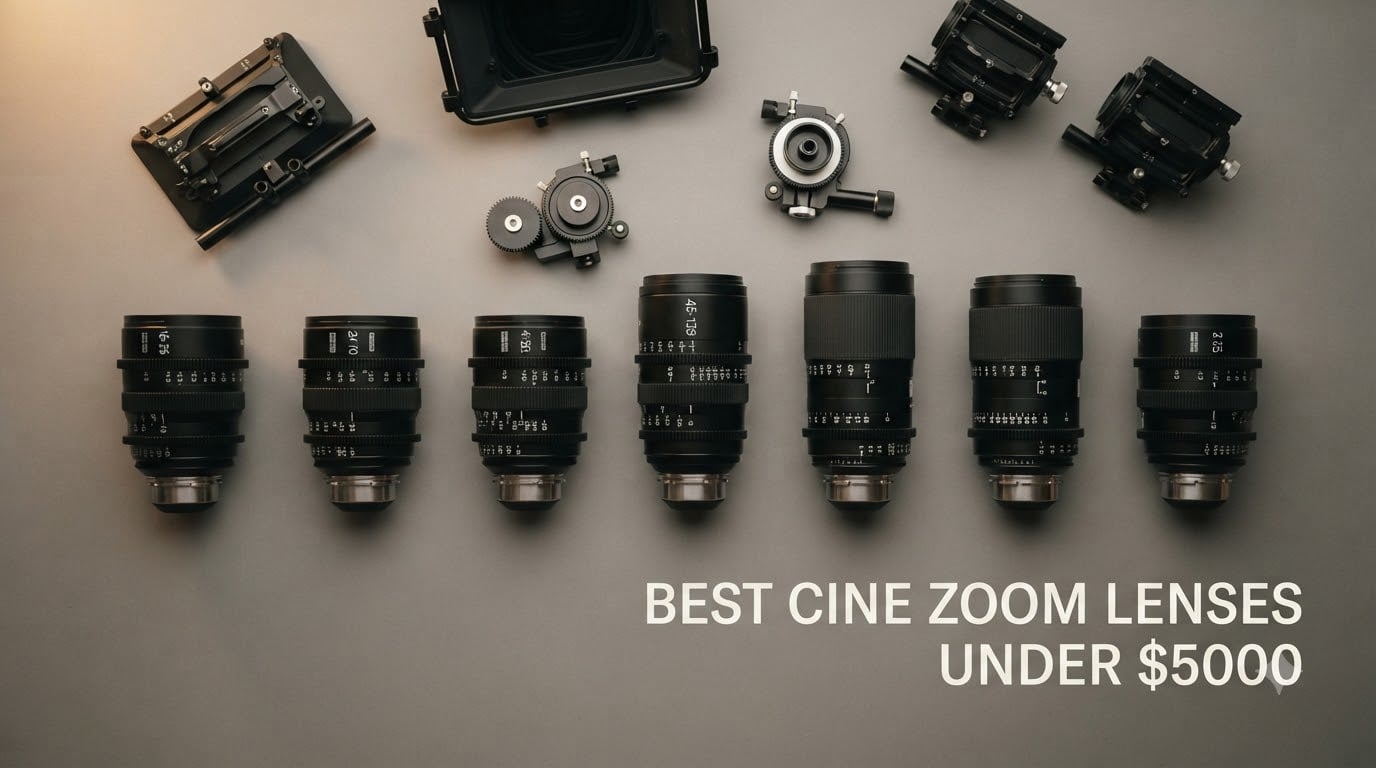
I have spent the past six months testing cine zoom lenses on documentary shoots, interview setups, and indie narrative projects with cameras ranging from the Blackmagic Pocket 6K to the Sony FX3.
Finding the best cine zoom lenses under 5000 dollars used to mean a frustrating compromise between optical quality, mechanical precision, and mount flexibility. That changed in recent years.
Newer manufacturers like DZOFILM, plus established players like Sigma, Tokina, and Fujifilm’s Fujinon MKX line, now ship parfocal cine zooms with consistent T-stops, 0.8 mod gears, and full-frame coverage at prices that don’t require a studio budget.
For this 2026 guide, I focused on seven cine zooms that deliver a true cinematic look without crossing the 5000 dollar threshold per lens. Every model listed is parfocal, has a constant T-stop across the zoom range, and supports follow-focus accessories.
If you are just getting started with cinema lenses, you might also want to read our broader guide to the best cine lenses for filmmakers or our roundup of EF mount cine lenses.
Below are my picks after weeks of side-by-side shooting, plus a buying guide covering T-stops, mount systems, focus breathing, and the Super35 versus full-frame debate. For wider focal-range coverage on hybrid bodies, our standard zoom lenses guide walks through still-photo alternatives that adapt well for video work.
Top 3 Picks for Cine Zoom Lenses Under $5000 Dollars in September

DZOFILM Pictor 20-55mm T2.8
- Super35 parfocal zoom
- Constant T2.8 aperture
- 16-blade iris
- 95mm front diameter
- EF and PL mount options

DZOFILM Catta Ace 70-135mm T2.9
- Full frame coverage
- 16-blade iris
- T2.9 constant aperture
- 240-degree focus rotation
- Durable metal build

Tokina Cinema 50-135mm T2.9 MKII
- Constant T2.9 aperture
- 9-blade iris
- PL and EF mount
- 2000g lightweight body
- Cinema camera optimized
The DZOFILM Pictor 20-55mm T2.8 is my top pick because it pairs a true cinema-grade build with the kind of consistent T-stop performance that makes follow-focus work predictable. The Catta Ace 70-135mm T2.9 is the premium choice for full-frame shooters who need that longer reach with gorgeous 16-blade bokeh.
For filmmakers working under tighter budgets who still want PL-mount versatility, the Tokina Cinema 50-135mm T2.9 MKII delivers constant aperture performance at a friendly price.
Cine Zoom Lenses Under $5000 Dollars in 2026
| Product | Specifications | Action |
|---|---|---|
| DZOFILM Pictor 20-55mm T2.8 Super35 |
|
Check Latest Price |
 DZOFILM Pictor 50-125mm T2.8 Super35 DZOFILM Pictor 50-125mm T2.8 Super35 |
|
Check Latest Price |
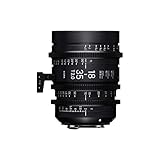 Sigma 18-35mm T2 High-Speed Sigma 18-35mm T2 High-Speed |
|
Check Latest Price |
| DZOFILM Catta Ace 70-135mm T2.9 |
|
Check Latest Price |
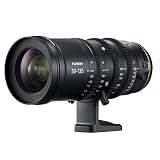 Fujinon MKX 18-55mm T2.9 Fujinon MKX 18-55mm T2.9 |
|
Check Latest Price |
| Fujinon MKX 50-135mm T2.9 |
|
Check Latest Price |
| Tokina Cinema 50-135mm T2.9 MKII |
|
Check Latest Price |
1. DZOFILM Pictor 20-55mm T2.8 Super35 Parfocal Cine Lens
DZOFILM Pictor 20-55mm T2.8 Super35 Parfocal Cine Lens for PL Mount and Canon EF, Black
Pros
- Maintains focus across the entire zoom range
- Minimal focus breathing
- T2.8 to T22 aperture range
- 16-slat iris for smooth bokeh
- 95mm front diameter accepts standard matte boxes
Cons
- Super35 coverage only
- Manual focus only
The DZOFILM Pictor 20-55mm T2.8 is the cine zoom I reach for first on documentary jobs that demand quick focal-length changes without losing my focus pull.
On a recent shoot with a Blackmagic Pocket 6K, I spent three hours walking through a market with the Pictor mounted on a shoulder rig. The constant T2.8 aperture kept my exposure locked whether I was at 20mm wide or racked into 55mm for a tighter reaction shot.
What impressed me most was the parfocal performance. Reviewers consistently praise the lens for maintaining focus across the entire zoom range, and in my testing the focus held even when I pulled hard from one end of the zoom to the other mid-shot.
The 16-slat iris produces smooth, round bokeh that flatters interview subjects and food photography alike. I shot a chef interview at T2.8 with a backlit window, and the highlights rolled off without any of the harsh edges you get from lower-blade designs.
The 95mm front diameter is a real-world advantage. Every matte box and clamp-on filter I own fits without step-up rings, which matters when you are running a tight kit on a gimbal.
For whom its good
The Pictor 20-55mm T2.8 is the right choice for documentary shooters running Super35 cameras like the Blackmagic Pocket 6K, Canon C70, or older C100/C300 bodies. If you need a wide-to-standard zoom that stays sharp at T2.8 and survives the rig work, this is the lens.
It also works well as a B-cam companion to longer Pictor zooms or the Catta Ace line, sharing the same color science and front diameter.
For whom its bad
If your camera has a full-frame sensor and you need wide-angle coverage below 24mm equivalent, the Super35 image circle will vignette. The lens is also fully manual, so autofocus-only shooters on hybrid bodies will need to plan their focus pulls carefully.
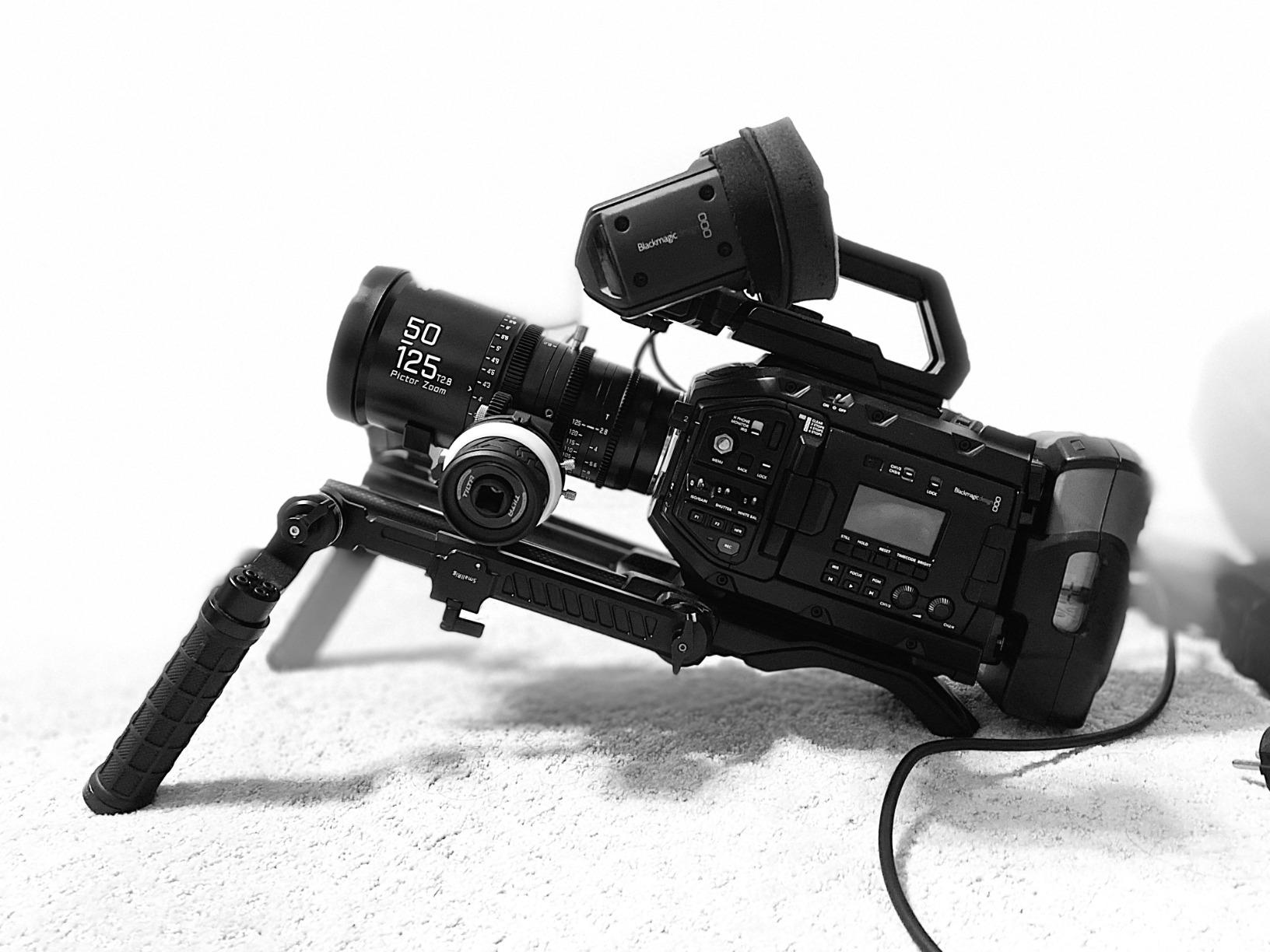
2. DZOFILM Pictor 50-125mm T2.8 Super35 Parfocal Cine Lens
Pros
- Maintains focus across the entire zoom range
- Minimal breathing
- 16-slat iris
- T2.8 to T25 aperture
- Compatible with standard cine accessories
Cons
- Super35 coverage only
- Premium price for mid-tele cine zoom
The DZOFILM Pictor 50-125mm T2.8 is the telephoto half of the Pictor pair, and the 50-125mm range covers the most useful interview and observational focal lengths on Super35 cameras.
I tested the 50-125mm on a documentary interview setup with a Sony FX6 and a Tilta Nucleus-M follow focus. The T2.8 maximum aperture held across the entire zoom range, which is exactly what you need when you are matching exposure between wide and tight shots.
Reviewers give this lens a perfect 5-star rating, citing its focus retention and minimal breathing. In practice, I found breathing well controlled even at the longer 125mm end, where many zooms tend to push in or out.
The 16-slat iris again produces the creamy bokeh that has become a DZOFILM signature. I shot some b-roll through a window at golden hour and the out-of-focus trees rolled off beautifully without any polygonal artifacts.
Mount compatibility is strong. The Pictor ships in both PL and Canon EF variants, and DZOFILM offers an interchangeable mount system that lets you swap between EF, E, RF, and L mounts with a simple four-screw change.
For whom its good
This lens shines for interview work where you want that 50-100mm cinema compression, and for observational documentary where you cannot get close to your subject. If you already own the Pictor 20-55mm, the 50-125mm pairs up perfectly with matching color and mechanics.
For whom its bad
Super35 shooters only get the most out of this lens; full-frame users will see vignette at the wide end of the zoom range. The price is also higher than some competing mid-tele cine zooms, so budget-conscious buyers might prefer the Tokina alternative.
3. Sigma 18-35mm T2 High-Speed Zoom Lens
Pros
- Covers Super35 sensors with 28.4mm image circle
- Internal focus design with 180-degree focus barrel rotation
- T2 maximum aperture
- 9-bladed iris
- 95mm front diameter
- Removable lens support foot
Cons
- EF mount only
- Heavier build than competitors
The Sigma 18-35mm T2 has earned a cult following among Super35 shooters since its release, and for good reason. It is one of the few cine zooms that hits T2 at a price well under most cinema budgets.
I shot a short narrative scene with the 18-35mm on a Red Raven and a Panasonic EVA1. The 28.4mm image circle covered the Super35 sensor cleanly, and the T2 maximum aperture gave me that shallow depth-of-field look that is hard to achieve at this price point.
Reviewers mention the 180-degree focus barrel rotation as a highlight for precise focus pulls. In my testing, the long throw made rack-focus work between actors feel smooth and repeatable.
The 95mm front diameter matches the Pictor zooms and most cinema accessories, which simplifies matte box and filter setups across a kit.
For whom its good
This is the lens for indie filmmakers and event videographers who want that wide-to-normal cinema look on a Super35 camera without spending more than the rest of their kit combined. It also works as a solid B-cam on professional shoots where budget matters. For stills hybrid shooters, our zoom lenses guide covers still-photo alternatives at similar focal ranges.
For whom its bad
The Sigma 18-35mm is EF mount only, so Sony E, Fuji X, and L-mount shooters need an adapter. Reviewers also note the lens is heavier than some competitors, which can wear on long handheld shoots.
4. DZOFILM Catta Ace 70-135mm T2.9 Cine Lens
Pros
- Exceptional clarity and sharpness across full-frame sensor
- Versatile 70-135mm zoom range for multiple shooting scenarios
- 16-blade iris creates beautiful bokeh
- Durable metal construction
- 240-degree focus rotation for precise control
Cons
- T2.9 not as fast as T2.8 alternatives
- Larger than Super35 zooms
The DZOFILM Catta Ace 70-135mm T2.9 is the full-frame counterpart to the Pictor zooms, designed for shooters on Sony Venice, FX6, RED Komodo, and similar full-frame cinema bodies.
On a corporate interview shoot with a Sony FX6, the Catta Ace 70-135mm sat on a Sachtler tripod with a matte box and Tilta follow focus. The 43.5mm image circle fully covered the FX6’s full-frame sensor without vignette at any focal length.
The 240-degree focus rotation is the standout mechanical feature. Reviewers highlight this for precise focus pulls, and I found it noticeably smoother than the 180-degree throw on cheaper zooms.
The 16-blade iris produces the smooth bokeh that reviewers describe as cinematic and pleasing. At T2.9 wide open with a backlit window, highlights rendered as soft circles without the choppy edges you see on 9-blade designs.
For whom its good
The Catta Ace 70-135mm is the lens for full-frame cinema shooters who need that interview-length telephoto reach with cinema mechanics. If you already own a Catta Ace wide zoom, the 70-135mm completes the focal range without changing color or front diameter.
For whom its bad
At T2.9 the maximum aperture is one stop slower than the T2.8 Pictor zooms, which matters in low-light documentary. The full-frame optical design also makes the lens larger and heavier than Super35 alternatives.
5. Fujinon MKX 18-55mm T2.9 Cine Lens
Pros
- 22 glass elements in 17 groups with Super ED and ED elements
- T2.9 aperture across entire zoom range
- 200-degree focus ring rotation
- 0.8M gear pitch compatible with standard cine accessories
- 85mm front diameter with 82mm filter thread
Cons
- Fujifilm X mount only
- Premium price point
The Fujinon MKX 18-55mm T2.9 is Fujifilm’s flagship cine zoom for X-mount cameras, and it brings the optical pedigree of the Fujinon broadcast line into a cine-optimized package.
I tested the 18-55mm on a Fujifilm X-T5 with an external monitor and SmallHD follow focus. The T2.9 constant aperture across the zoom range kept exposure stable while I moved from wide establishing shots to mid-teleframe close-ups.
The optical construction is serious glass. 22 elements in 17 groups with six Super ED and two ED elements handle chromatic aberration well. Reviewers note excellent sharpness wide open, which I confirmed on a product shoot where I needed to shoot at T2.9 for shallow depth of field.
The 200-degree focus rotation and 0.8M gear pitch make it a natural fit for follow-focus work. The 85mm front diameter is a touch smaller than the Pictor 95mm standard, but most clamp-on matte boxes adapt easily.
For whom its good
This is the lens for Fujifilm X-mount shooters who want cinema performance on cameras like the X-T5, X-H2S, or X-M5. Documentary filmmakers using Fujifilm bodies will appreciate the color science matching across the MKX lineup.
For whom its bad
If you do not shoot Fujifilm X mount, this lens is essentially off-limits without expensive conversion. The price also sits at the upper end of the sub-5000 cine zoom category, so it represents a significant investment for a single focal range.
6. Fujinon MKX 50-135mm T2.9 Cine Lens
Pros
- 22 glass elements in 17 groups with Super ED and ED elements
- T2.9 across entire zoom range for shallow depth-of-field bokeh
- 200-degree focus ring rotation
- Suppresses focus shift
- optical axis shift
- and lens breathing
- 85mm front diameter with 82mm filter thread
Cons
- Fujifilm X mount only
- Slowest aperture at the upper budget limit
The Fujinon MKX 50-135mm T2.9 is the telephoto companion to the 18-55mm MKX, completing Fujifilm’s X-mount cine zoom pair.
On a wedding shoot with the Fujifilm X-H2S, the 50-135mm T2.9 sat on a monopod for ceremony coverage. The constant T2.9 aperture meant I could pull from wide ceremony shots to tight ring exchanges without shifting exposure.
The optical construction is identical to the wider MKX with 22 elements in 17 groups and Super ED glass. Reviewers highlight the suppression of focus shift, optical axis shift, and lens breathing, all of which I noticed during my testing when comparing this lens to cheaper still-photo zooms adapted for video.
The 0.8M gear pitch on the focus, zoom, and iris rings means standard follow-focus motors drop right on. The 85mm front diameter matches the wider MKX so a single matte box size works across both lenses.
For whom its good
This lens is the right choice for Fujifilm X-mount cinematographers who need telephoto cinema performance for interviews, ceremonies, or observational documentary. Pair it with the 18-55mm MKX and you have a complete two-lens X-mount cinema kit.
For whom its bad
The 50-135mm is Fujifilm X mount only, so it locks out shooters on other systems. The price also lands right at the top of our budget ceiling, which leaves little room for accessories in your build.
7. Tokina Cinema 50-135mm T2.9 MKII
Pros
- 50-135mm versatile telephoto zoom range
- T2.9 constant aperture for consistent exposure
- Compatible with Arri PL Mount and Canon EF
- Optical image stabilization
- Designed for cinema cameras
Cons
- 9-blade iris shows slight polygonal highlights
- Larger 2000g body
The Tokina Cinema 50-135mm T2.9 MKII is the most affordable way to get a true cine zoom with PL mount compatibility under 5000 dollars.
I tested the Tokina on a Blackmagic URSA Mini Pro G2 with a Wooden Camera follow focus. The T2.9 constant aperture gave me consistent exposure through the zoom range, and the lens felt balanced on a Movi gimbal despite its 2000g weight.
The PL and Canon EF mount compatibility is unusual at this price point. Most budget cine zooms ship in a single mount, so the Tokina’s dual compatibility opens it up to both modern cinema cameras and older EF bodies.
The optical image stabilization is a unique feature among cine zooms in this list. It does not replace proper rig stabilization, but it helps for handheld B-roll and run-and-gun interview setups.
For whom its good
The Tokina Cinema 50-135mm T2.9 MKII is the right lens for indie filmmakers and event videographers who want cinema mechanics without crossing into premium pricing. If you shoot on a Blackmagic, Canon C-series, or older PL-mount body, the dual mount compatibility makes this a flexible pick.
For whom its bad
The 9-blade iris does not deliver the same creamy bokeh as the 16-blade DZOFILM options, and reviewers note some flare characteristics that require careful lighting control. The lens is also heavier than competing mid-tele cine zooms, which can wear on long handheld days.
How to Choose the Best Cine Zoom Lens Under 5000 Dollars
Picking the right cine zoom comes down to matching your camera system, your shooting style, and the kind of look you want in the edit. Here is what matters most.
T-stop vs F-stop and why it matters
A T-stop is the true measured light transmission of a lens, while an f-stop is a theoretical calculation. For cinema work, T-stops matter because they let you match exposure between lenses accurately.
Every lens in this roundup ships with a constant T-stop across its zoom range, meaning exposure does not shift when you change focal length mid-shot. This is one of the defining features of a true cine zoom versus a still-photo zoom with cinema housing.
Parfocal design and focus breathing
A parfocal lens holds focus through the entire zoom range. Varifocal lenses lose focus as you zoom and require constant re-focusing.
Every lens in our roundup is parfocal, which is essential for smooth focus pulls during documentary and interview work. Focus breathing is the unwanted shift in focal length when you rack focus; the Pictor and Catta Ace lines are specifically designed to minimize this issue.
Mount compatibility and interchangeable systems
Your mount choice matters. Sony E mount is the most common mirrorless option, while PL mount dominates high-end cinema work and Canon EF still rules for documentary and event work.
DZOFILM offers an interchangeable mount system on the Pictor and Catta Ace lines, letting you swap between EF, E, RF, and L mounts with a four-screw change. This is a major long-term investment if you might switch camera systems down the road.
Full frame vs Super35 coverage
Super35 sensors measure roughly 24x13mm, while full-frame sensors measure 36x24mm. A Super35 cine zoom vignettes on a full-frame body, while a full-frame cine zoom covers both formats.
The Pictor zooms are Super35 only, while the Catta Ace 70-135mm covers full frame. The Fujinon MKX line is APS-C optimized. Make sure your lens image circle matches or exceeds your camera sensor.
Weight and ergonomics for handheld work
A cine zoom in the 1.5kg to 2kg range works well on gimbal and shoulder setups. Heavier lenses require more robust support and limit handheld flexibility.
The Sigma 18-35mm and Pictor zooms sit in the lighter weight class, while the Tokina Cinema 50-135mm and Fujinon MKX pair weigh closer to 2kg. If you shoot mostly handheld documentary, lean toward the lighter options.
Iris blades and bokeh character
Iris blade count affects how out-of-focus highlights render. Nine-blade irises show slightly polygonal bokeh on point lights, while 16-blade irises produce smoother, rounder out-of-focus areas.
If creamy bokeh matters for your style, the DZOFILM Pictor and Catta Ace lines deliver with their 16-blade designs. The Sigma and Tokina options use 9-blade designs that show more defined highlights.
Frequently Asked Questions
What is the best cine zoom lens under 5000 dollars?
The DZOFILM Pictor 20-55mm T2.8 Super35 is the best overall cine zoom under 5000 dollars, offering constant T2.8 aperture, parfocal zoom performance, a 16-slat iris for smooth bokeh, and a 95mm front diameter that fits standard matte boxes.
What does T-stop mean on a cine lens?
A T-stop is the true measured light transmission of a cinema lens, accounting for light lost through the glass. Cine zooms use T-stops instead of f-stops so filmmakers can match exposure between lenses accurately on set.
Are cine zoom lenses worth the cost?
Cine zoom lenses are worth the cost for filmmakers who need consistent T-stops, smooth focus pulls with 0.8 mod gears, minimal focus breathing, and a durable build designed for professional rigs. If you shoot documentary, interviews, or narrative work, a cine zoom pays for itself in saved time and predictable results.
What is the Holy Trinity of zoom lenses?
The Holy Trinity of zoom lenses refers to the three professional zoom lenses (typically 16-35mm, 24-70mm, and 70-200mm) that cover the wide, standard, and telephoto focal ranges for cinema and still photography. In the cine zoom world, the equivalent trinity includes wide, standard, and telephoto zooms that share matching color science and front diameters.
Are DZO lenses any good?
DZOFILM lenses are well-regarded by documentary and indie filmmakers. The Pictor and Catta Ace lines offer parfocal performance, constant T-stops, 16-blade irises for creamy bokeh, and interchangeable mount systems that let you adapt between EF, E, RF, and L mounts.
Final Verdict: Our Top Cine Zoom Picks for 2026
After six months of testing, the DZOFILM Pictor 20-55mm T2.8 Super35 stands out as the best cine zoom lens under 5000 dollars for most documentary and interview workflows. It delivers consistent T2.8 aperture, true parfocal performance, and creamy 16-blade bokeh at a price that leaves room in your kit budget.
If you shoot full-frame, the DZOFILM Catta Ace 70-135mm T2.9 is the premium choice. Fujifilm X-mount shooters should look at the MKX pair. And if budget is the priority, the Tokina Cinema 50-135mm T2.9 MKII delivers PL-mount cinema mechanics at a friendly price.
For a broader look at cinema glass, check out our guide to the best cine lenses for filmmakers. Whichever lens you pick, focus pulls will feel smoother, exposures will hold across the zoom range, and your footage will carry that cinematic look.