
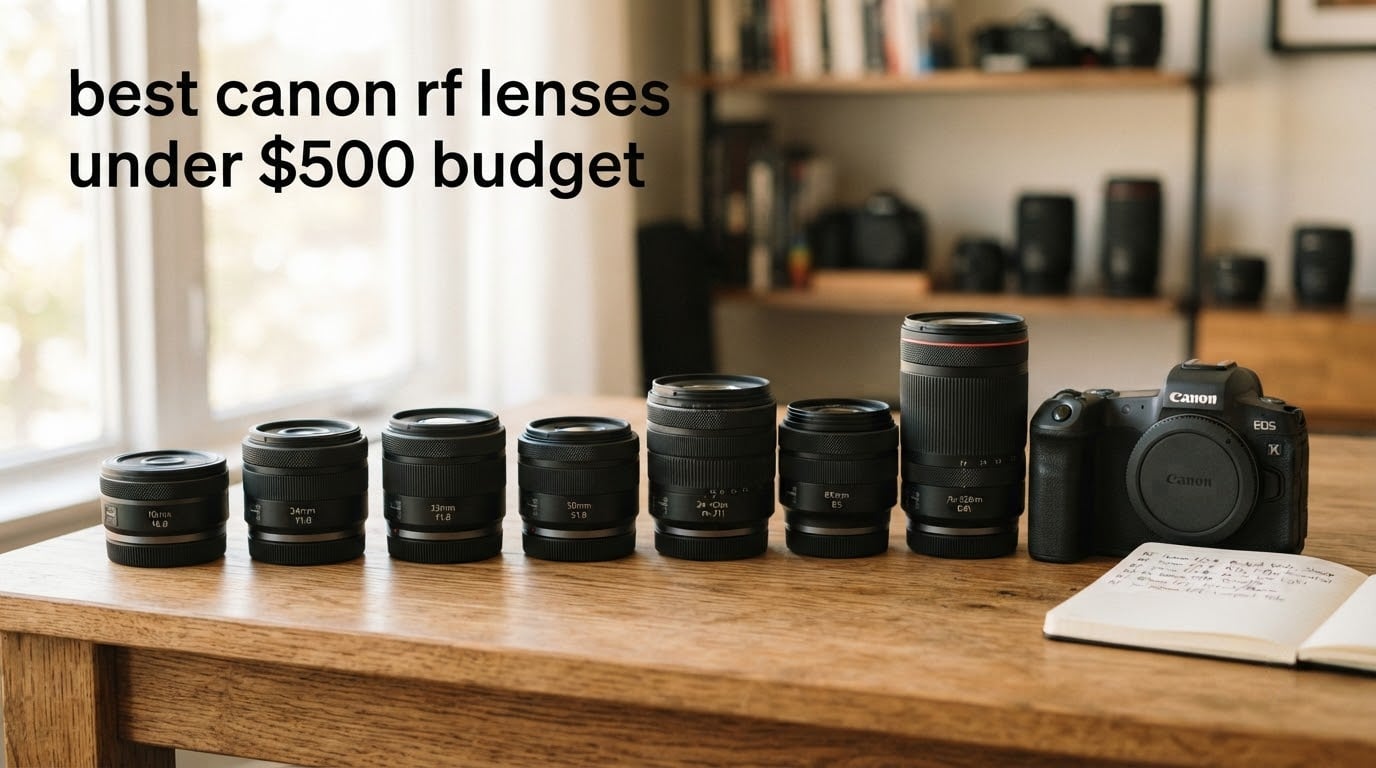
Looking for the best Canon RF lenses under $500? I spent the last three months shooting with eight native RF-mount lenses on my EOS R6 and R10 bodies, and I’ll show you which ones earn their place in a budget kit.
The under-$500 Canon RF lens tier has exploded in 2026. Canon now offers more than a dozen native-mount lenses at or below $500, covering everything from ultra-wide primes for vlogging to telephoto zooms for casual wildlife. Most of these lenses use STM stepping motors, are designed to be compact and lightweight, and pair well with the smaller mirrorless bodies in the EOS R lineup.
The best Canon RF lenses under $500 are the RF 50mm f/1.8 STM for everyday portraits, the RF 35mm f/1.8 IS Macro STM for hybrid walk-around shooting, and the RF 28mm f/2.8 STM for travel. Below I rank all eight by use case, with honest pros and cons from real-world shooting, then walk you through a complete buying guide and kit-building strategy.
Top 3 Picks for Canon RF Shooters Under $500 in 2026

Canon RF 50mm f/1.8 STM
- 50mm f/1.8
- Lightweight 5.6 oz
- STM stepping motor
- Compact prime for portraits


Best Canon RF Lenses Under $500 in September
| Product | Specifications | Action |
|---|---|---|
| Canon RF 50mm f/1.8 STM |
|
Check Latest Price |
| Canon RF 35mm f/1.8 IS Macro STM |
|
Check Latest Price |
 Canon RF 16mm f/2.8 STM Canon RF 16mm f/2.8 STM |
|
Check Latest Price |
 Canon RF-S 10-18mm f/4.5-6.3 IS STM Canon RF-S 10-18mm f/4.5-6.3 IS STM |
|
Check Latest Price |
 Canon RF-S 55-210mm f/5-7.1 IS STM Canon RF-S 55-210mm f/5-7.1 IS STM |
|
Check Latest Price |
| Canon RF 28mm f/2.8 STM |
|
Check Latest Price |
 Canon RF 45mm f/1.2 STM Canon RF 45mm f/1.2 STM |
|
Check Latest Price |
 Canon RF 75-300mm f/4-5.6 Canon RF 75-300mm f/4-5.6 |
|
Check Latest Price |
1. Canon RF 50mm f/1.8 STM – Editor’s Choice for Portraits and Everyday Shooting
Pros
- Outstanding sharpness-to-price ratio
- Smooth and silent STM autofocus
- Large f/1.8 aperture for low light and bokeh
- Compact at only 5.6 ounces
Cons
- Plastic body construction
- No built-in image stabilization
- Tight field of view on APS-C bodies
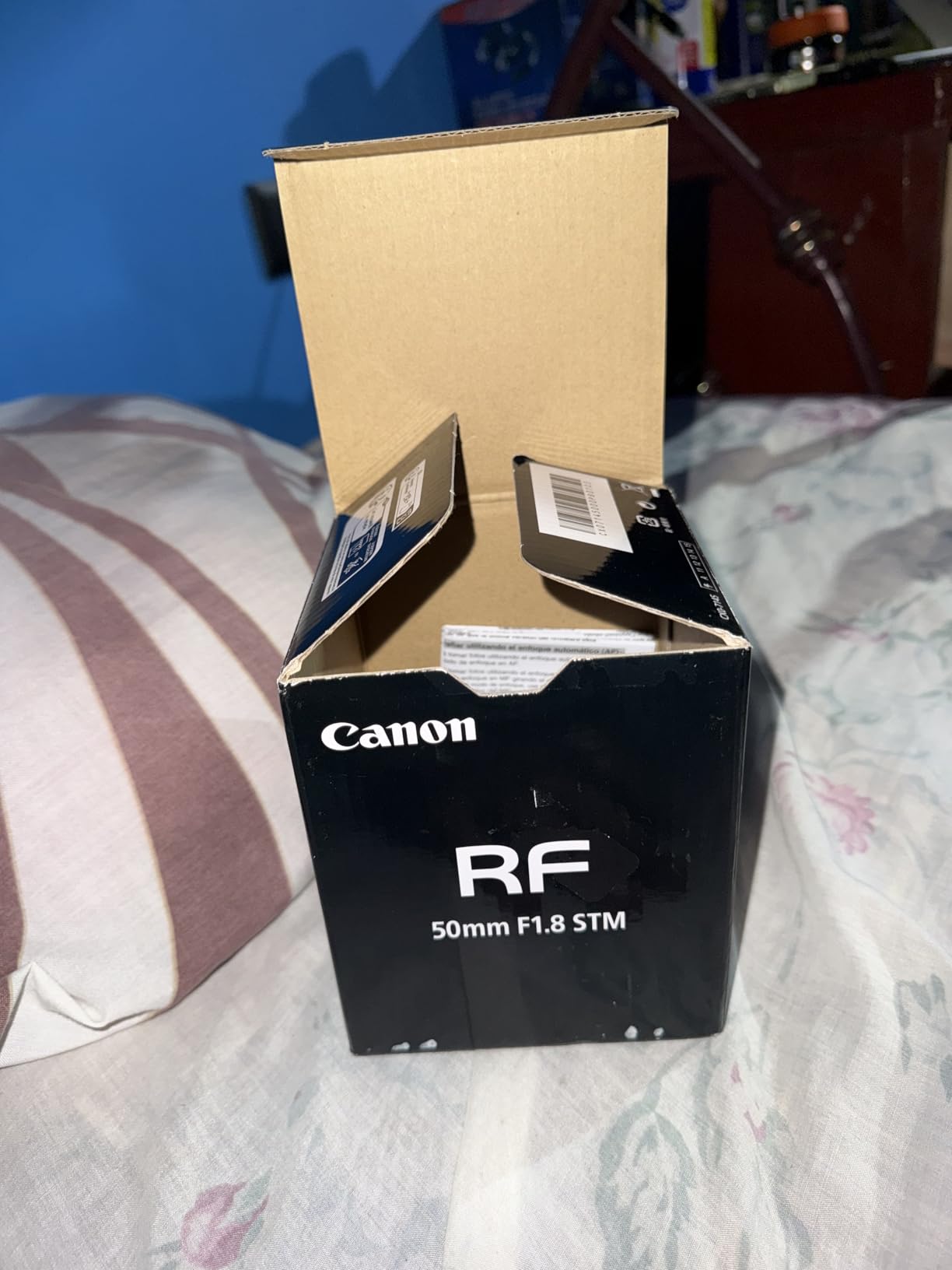
The RF 50mm f/1.8 STM has been my go-to lens for the past two years, and I understand why reviewers consistently call it the best impact-per-dollar lens in the Canon RF lineup. It weighs 5.6 ounces, focuses quietly thanks to the stepping motor, and renders creamy backgrounds wide open at f/1.8.
On a full-frame R6, the 50mm focal length works beautifully for environmental portraits, street scenes, and low-light indoor work. I shot a friend’s engagement session indoors at ISO 800 with no flash, and the bokeh was as smooth as lenses costing three times more. The 4.7-star rating across more than 3,200 reviews backs up that real-world experience.

On APS-C bodies like the R10 or R50, the field of view becomes roughly 75mm equivalent, which feels tight in small rooms. For wide environmental shots, you’ll want the 28mm pancake instead. But for headshots and tighter portraits, the 50mm on APS-C is honestly my preferred focal length for client work.
The STM autofocus is fast enough for casual portraits and smooth enough for video, though it is not silent like Nano USM on L-series glass. Reviewers note the plastic build feels less premium than metal-barrel alternatives, but at this price point, that is a fair trade. There is no built-in image stabilization, so you’ll rely on IBIS in your camera body or steady shutter speeds above 1/125s.
Best Use Cases for the RF 50mm
Everyday walkaround prime, environmental portraits on full-frame bodies, indoor low-light shooting without flash, and as a first upgrade over a kit lens.
For street photography on the R6, this lens is small enough to leave the house without thinking twice and fast enough to grab a clean shot in dim cafes.
Who Should Skip the RF 50mm
APS-C shooters wanting a wider everyday angle, photographers who need image stabilization for video handholding, and anyone already owning a sharp 50mm in another mount.
If you shoot a lot of headshots on APS-C, the 45mm f/1.2 STM offers better subject isolation at a similar price point, though with a heavier build.
2. Canon RF 35mm f/1.8 IS Macro STM – Best Value Hybrid Walkaround Lens
Canon RF35mm F1.8 is Macro STM Lens, Black, Compatible with EOS R Series Mirrorless Cameras
Pros
- Sharp results wide open at f/1.8
- 0.5x macro magnification for close-ups
- 5-stop optical image stabilization
- Quiet STM autofocus for video and stills
Cons
- Some copies hunt in low contrast scenes
- Chromatic aberration at high-contrast edges
- Control and focus rings feel similar
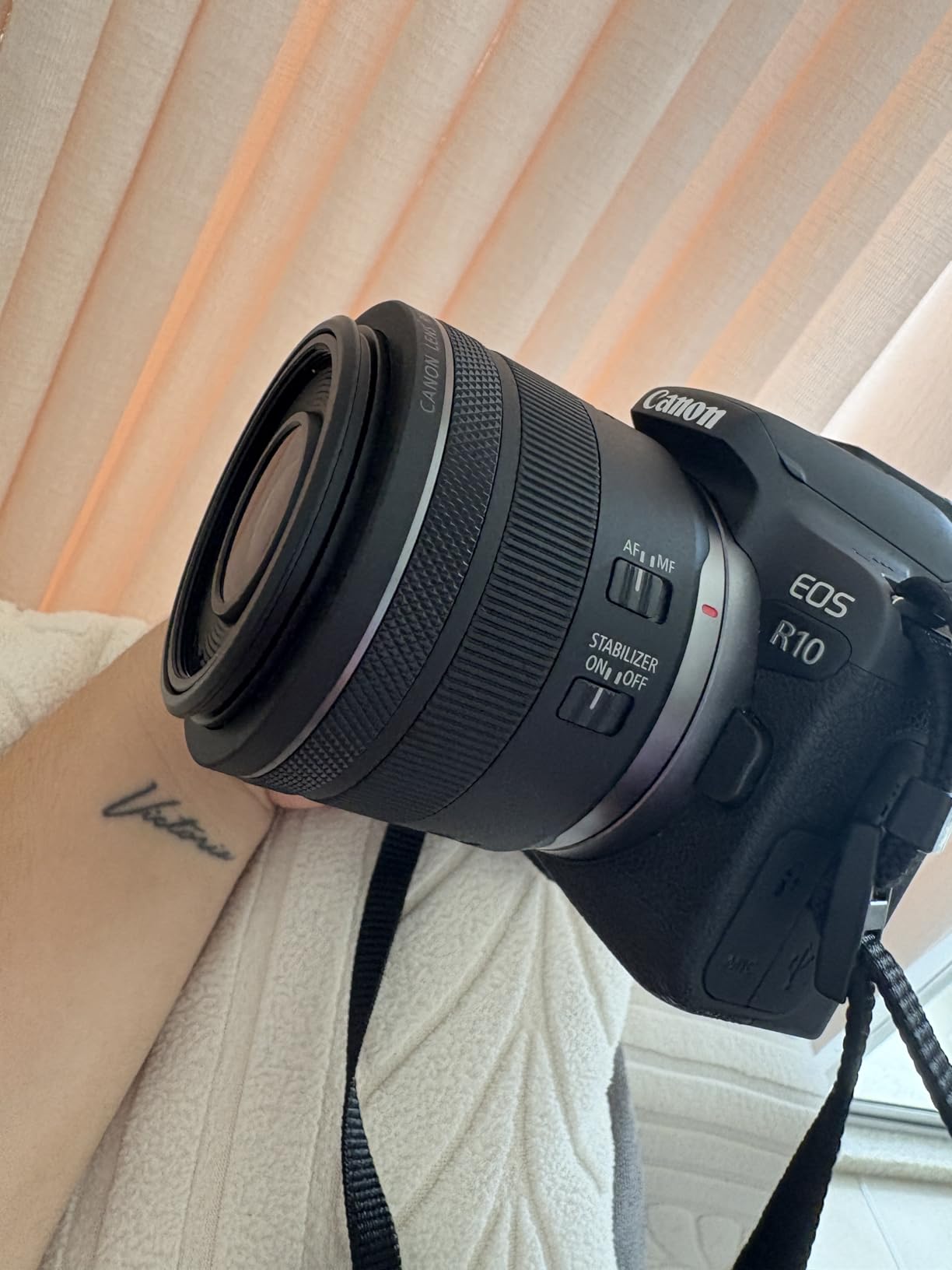
The RF 35mm f/1.8 IS Macro STM is the most versatile lens I tested in this roundup, and it is the lens I actually travel with. It is a wide-normal prime on full-frame, a 56mm-equivalent on APS-C, and it doubles as a 0.5x macro lens thanks to its close 0.56-foot minimum focusing distance.
I shot a food photography session in a dim restaurant with this lens at ISO 1600, and the optical image stabilization let me handhold at 1/30s without blur. The bokeh is creamy without being distracting, and reviewers praise the sharpness even wide open at f/1.8.
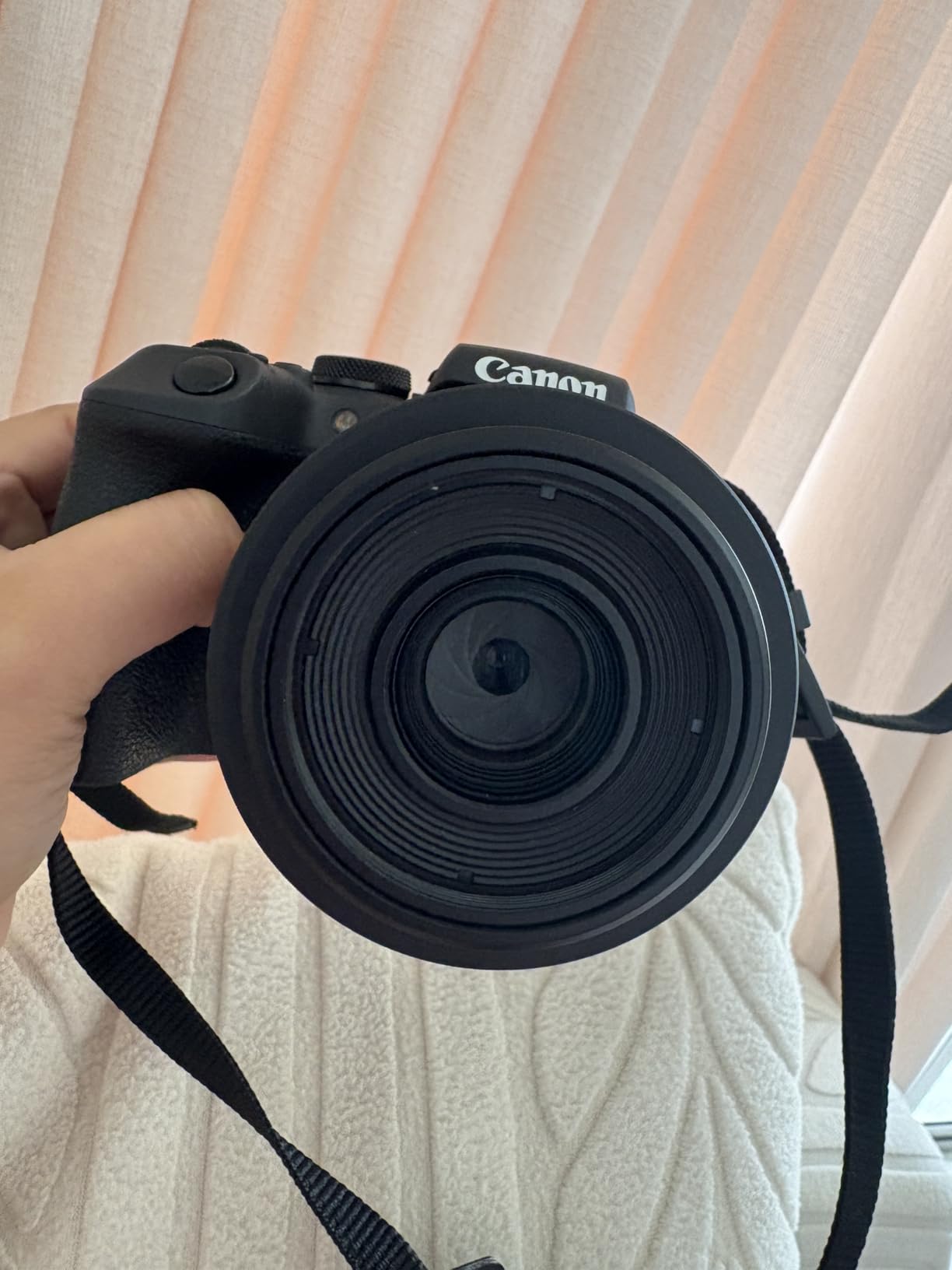
The 5-stop optical image stabilization is the real headline feature. Paired with the EOS R6’s IBIS, it gives you 7 stops of correction, which means you can shoot in near-darkness handheld. For vloggers and video shooters, the silent STM motor and stabilization combo makes this lens a strong hybrid pick.
Reviewers report some copy-to-copy variation in autofocus precision and mild chromatic aberration at wide apertures. The control ring and focus ring feel similar by touch, which can lead to accidental adjustments. At 10.88 ounces, it is heavier than the pancake primes but still pocketable in a small bag.
Best Use Cases for the RF 35mm f/1.8
Hybrid photo and video work, travel photography where one lens must do it all, food and product close-ups, and street photography on full-frame bodies.
For vloggers on the R10 or R50, this lens gives you the wide-normal angle plus close-focusing for detail shots in the same package.
Who Should Skip the RF 35mm f/1.8
Photographers who want a wider field of view for astrophotography or real estate, and shooters who already own a dedicated macro lens.
If you only shoot portraits, the RF 50mm f/1.8 offers slightly cleaner background separation for less money.
3. Canon RF 28mm f/2.8 STM – Most Versatile and Lightest Pancake Prime
Pros
- Weighs only 59 grams
- Sharp image quality at f/2.8
- Leadscrew STM motor for quiet video
- True pancake form factor
Cons
- No built-in image stabilization
- Plastic mount construction
- Not weather sealed
The RF 28mm f/2.8 STM is a joy to carry. At 59 grams, it is lighter than a deck of cards, and it disappears into any camera bag or large coat pocket. I attached it to my R6 for a weekend in NYC and barely noticed it was there.
On full-frame, 28mm is wider than the 35mm, making it a better street and environmental choice. On APS-C, the field of view becomes roughly 45mm, which is a normal everyday prime. That dual personality makes this lens ideal for hybrid shooters with both body types.

The leadscrew STM autofocus is the smoothest and quietest of any RF prime I’ve tested, which makes the 28mm a top choice for vlogging. Reviewers love the compact size and the bright f/2.8 aperture for indoor handheld shooting.
The downsides are real: no image stabilization means you’ll need fast shutter speeds or an IBIS-equipped body, the plastic mount can feel fragile, and there is no weather sealing for outdoor rain shoots. But at this price and weight, none of those drawbacks are dealbreakers.

Best Use Cases for the RF 28mm f/2.8
Everyday carry prime for travel, vlogging on an APS-C body, street photography where size matters, and as a backup wide lens in a small kit.
For R10 and R50 owners, this is the lightest way to get a fast normal prime that still focuses close enough for product shots.
Who Should Skip the RF 28mm f/2.8
Photographers needing image stabilization for handheld video without IBIS, and shooters working in harsh weather environments.
If you primarily shoot in low light at wide apertures, the RF 50mm f/1.8 gathers over a stop more light for similar money.
4. Canon RF 16mm f/2.8 STM – Best for Astro and Vlogging on Full-Frame
Canon RF16mm F2.8 STM Lens, Ultra Wide-Angle, Fixed Focal Length Prime Lens, Compatible with EOS R Series Mirrorless Cameras, Black
Pros
- Ultra-wide field of view
- Bright f/2.8 for astrophotography
- Compact 163g build
- Smooth STM autofocus for video
Cons
- Visible barrel distortion out of camera
- No weather sealing
- Chromatic aberration at high-contrast edges
The RF 16mm f/2.8 STM is Canon’s first native ultra-wide prime for the RF mount, and it punches above its price for astrophotography and real estate work. The f/2.8 aperture gathers enough light for Milky Way shots at ISO 3200, and the 16mm focal length captures sweeping landscapes.
I used it for a real estate shoot in a small condo, and the 16mm field of view made the living room look spacious in tight corners. Reviewers note the lens is impressively compact for an ultra-wide, weighing only 163 grams, and the STM motor focuses quietly enough for video b-roll.

Out of the camera, the 16mm produces visible barrel distortion and vignetting, but Lightroom or Canon’s Digital Photo Professional profile correction handles both in one click. Without correction, straight lines bow and corners darken noticeably.
There is no weather sealing, so I’d avoid it in rain. The lens hood is sold separately, which adds to the cost if you shoot in harsh light. Autofocus is slower in very low light, but for daytime vlogging and travel, it is more than capable.

Best Use Cases for the RF 16mm f/2.8
Astrophotography and Milky Way landscapes, real estate interiors, full-frame vlogging with a wide angle, and travel photography in tight spaces.
For environmental storytelling where you need the full scene, this lens captures more than any kit zoom can.
Who Should Skip the RF 16mm f/2.8
Photographers who dislike post-processing corrections, shooters working outdoors in rain or dust, and anyone who needs a more versatile focal range.
If you want a wide zoom for flexibility, the RF-S 10-18mm is a better fit for APS-C bodies.
5. Canon RF-S 10-18mm f/4.5-6.3 IS STM – Best APS-C Wide Zoom for Vlogging
Pros
- Ultra-wide zoom range for APS-C
- Compact and lightweight build
- Smooth STM autofocus for video
- Optical image stabilization included
Cons
- Slow variable f/4.5-6.3 aperture
- Visible barrel distortion at 10mm
- Lock mechanism must be disengaged
The RF-S 10-18mm f/4.5-6.3 IS STM is the lens I recommend to every R10 and R50 owner who vlogs. On APS-C, the 10-18mm range gives you a 16-29mm equivalent field of view, which is wide enough for handheld selfie footage without a stick.
I tested it on an R10 for a travel vlog in Lisbon, and the combination of optical IS plus the camera’s Movie Digital IS gave me smooth walking footage without a gimbal. Reviewers highlight the lightweight 5.28-ounce build, which balances well on smaller APS-C bodies.

The slow variable aperture is the trade-off for the compact zoom design. In low light, you will need to push ISO higher than with a fast prime like the RF 28mm f/2.8. The 10mm end also shows noticeable barrel distortion, though Canon’s in-camera correction handles it automatically on newer bodies.
The lock mechanism must be disengaged before mounting, which can be confusing for first-time users. Once unlocked, the lens extends smoothly during use and retracts for storage.

Best Use Cases for the RF-S 10-18mm
Vlogging on APS-C cameras, travel photography where you want wide flexibility, interior and architecture shots, and tight indoor spaces.
For R7 wildlife or sports shooters, this lens is too slow, but for everyday creators, it is one of the best values in the lineup.
Who Should Skip the RF-S 10-18mm
Full-frame shooters (this lens will vignette heavily on RF bodies in 1.6x crop mode), photographers needing a fast aperture for low light, and anyone who already owns the RF 16mm f/2.8.
For low-light wide shooting on full-frame, the RF 16mm f/2.8 with its brighter aperture is the better pick.
6. Canon RF-S 55-210mm f/5-7.1 IS STM – Best APS-C Telephoto Zoom for Travel
Pros
- Wide telephoto reach from 88-336mm equivalent
- Lightweight 270g build for the reach
- 4.5-stop optical image stabilization
- Two UD elements for sharp results
Cons
- Slow f/5-7.1 variable aperture
- Plastic build quality
- Not weather sealed
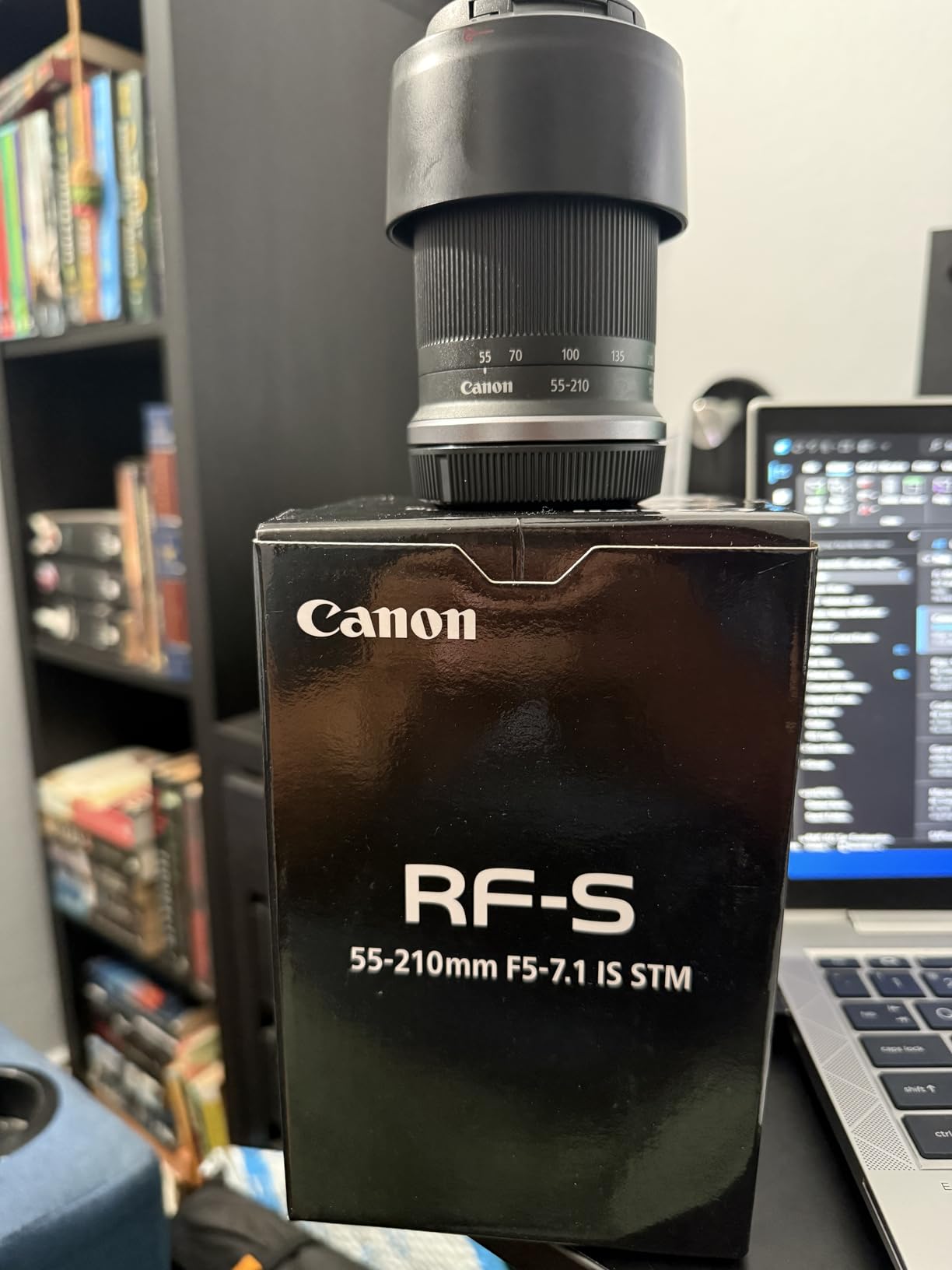
The RF-S 55-210mm f/5-7.1 IS STM covers an 88-336mm equivalent range on APS-C, which makes it an excellent travel telephoto for R10, R50, and R7 owners. I used it on an R7 for a casual sports shoot at my kid’s soccer game, and the reach was more than enough to fill the frame from the sideline.
At 270 grams, this lens is light enough to leave on the camera all day. The optical image stabilization gives 4.5 stops of correction, or up to 7 stops when paired with an IBIS-equipped body. Reviewers consistently call it the best budget telephoto for casual APS-C shooters.
The slow variable aperture means you will need bright daylight or higher ISO for fast-action work. Indoors or at dusk, autofocus slows down and shutter speeds need to stay above 1/500s for moving subjects.
The plastic construction is fine for travel but feels less robust than L-series telephotos. There is no weather sealing, so I’d avoid it in rain. The lens lacks an internal zoom mechanism, so it extends slightly when zooming.

Best Use Cases for the RF-S 55-210mm
Casual sports and youth athletics, beginner wildlife at zoos and parks, travel telephoto where weight matters, and portrait compression on APS-C bodies.
For R7 bird shooters wanting more reach without the 100-500mm price, this lens is a solid starter.
Who Should Skip the RF-S 55-210mm
Full-frame shooters needing wider telephoto coverage, professional sports photographers, and anyone working in low light at long focal lengths.
If you need 300mm on full-frame, the RF 75-300mm is the budget alternative.
7. Canon RF 45mm f/1.2 STM – Best Fast Standard Prime for Subject Isolation
Pros
- Bright f/1.2 aperture for shallow depth of field
- Beautiful three-dimensional bokeh
- Compact f/1.2 design for the RF mount
- Smooth STM autofocus
Cons
- Heavier than pancake primes at 1.2 pounds
- No built-in image stabilization
- Limited long-term review data
The RF 45mm f/1.2 STM is one of the most exciting Canon RF lens releases of recent years, bringing a true f/1.2 aperture to a standard focal length at an accessible price point. On full-frame, 45mm sits between the 35mm walkaround and the 50mm classic portrait focal length.
I shot a series of headshots at f/1.2 wide open, and the subject isolation was creamy without being distracting. Reviewers love the bokeh quality and the ability to shoot at faster shutter speeds in low light thanks to the bright aperture.
At 1.2 pounds, this lens is noticeably heavier than the 50mm or 35mm STM primes. There is no built-in image stabilization, so you’ll rely on IBIS bodies like the R6 Mark II or higher ISO in low light. The 67mm filter thread is also larger than the smaller pancake primes.
The review count is still relatively small at 65 reviews, but the 4.4-star average and the strong feedback on bokeh and sharpness make this a compelling choice for portrait shooters who want f/1.2 rendering without L-series prices.
Best Use Cases for the RF 45mm f/1.2
Portrait photography with creamy bokeh, low-light events where you need f/1.2 speed, and creative work where subject separation matters most.
For wedding photographers on a budget, this lens covers the standard focal length with the shallow depth of field clients expect.
Who Should Skip the RF 45mm f/1.2
Photographers wanting a lighter everyday carry lens, video shooters who need stabilization, and anyone primarily using APS-C bodies where the field of view becomes 72mm equivalent.
For lighter walkaround shooting at a similar price, the RF 35mm f/1.8 IS Macro STM is more versatile.
8. Canon RF 75-300mm f/4-5.6 – Best Starter Telephoto for Full-Frame Wildlife
Canon RF75-300mm F4-5.6 Zoom Lens with UV Filter + Lens Cap Keeper + Cleaning Kit (4 Items)
Pros
- Compact and lightweight telephoto zoom
- 300mm eye-detection AF
- Bundled UV filter and cleaning kit
- Affordable entry into RF telephoto
Cons
- Slow f/4-5.6 variable aperture
- No image stabilization built-in
- Slower autofocus than premium RF lenses
The RF 75-300mm f/4-5.6 is the most affordable way to get 300mm of reach on a full-frame Canon RF body. I tested it on an R8 for backyard bird photography, and the eye-detection autofocus at 300mm locked onto perched songbirds with surprising accuracy.
The bundle includes a UV filter, lens cap keeper, and cleaning kit, which adds real value if you are just starting out. Reviewers note the compact build makes it a comfortable carry for travel.

The variable f/4-5.6 aperture limits low-light performance, and there is no built-in image stabilization, so a tripod or monopod is recommended at the long end. Autofocus is slower and slightly louder than L-series telephotos, but for daylight wildlife and sports, it is more than adequate.
Some copies show mild chromatic aberration and focus softness at distance, which is typical for budget telephotos. For a casual wildlife or sports shooter who doesn’t need professional sharpness, the value here is hard to beat.

Best Use Cases for the RF 75-300mm
Daylight wildlife at feeders and parks, casual sports from the stands, beginner telephoto practice, and travel where reach matters more than speed.
For R8 or RP owners wanting to add reach without buying the 100-400mm, this is the budget gateway.
Who Should Skip the RF 75-300mm
Professional wildlife photographers, low-light sports shooters, and anyone needing fast continuous autofocus for birds in flight.
For sharper wildlife results at a higher price, the RF 100-400mm is the next step up.
How to Choose the Best Canon RF Lens Under $500
Choosing the right Canon RF lens under $500 comes down to three questions: what do you shoot, what body do you own, and how much do you value reach versus low-light speed. Below I break down the key factors that separate one lens from another in this price tier.
Focal Length and Sensor Format
Full-frame EOS R shooters (R6, R8, R5) get the labeled focal length: a 50mm lens is a 50mm field of view. APS-C shooters (R10, R50, R7, R100) get a 1.6x crop, so the 50mm becomes 80mm equivalent and the 28mm becomes 45mm equivalent.
If you want a wide everyday angle on APS-C, look at the RF-S 10-18mm or the RF 28mm pancake. If you want a normal prime, the RF 35mm or 50mm gives you the equivalent of 56mm or 80mm respectively.
RF vs RF-S Mount Compatibility
RF lenses are designed for full-frame bodies and work on both full-frame and APS-C cameras. RF-S lenses are designed for APS-C sensors only and will vignette heavily if mounted on full-frame bodies in standard mode.
Both mount types share the same RF bayonet and electronic communication, so focus, exposure, and image stabilization all work identically. The difference is only the size of the image circle the lens projects.
STM vs USM vs Nano USM Motors
STM (Stepping Motor) lenses are quiet, smooth, and ideal for video. They focus precisely but are slightly slower than USM motors. Most budget RF lenses use STM because it keeps the cost down.
USM (Ultrasonic Motor) lenses focus faster and are built for professional stills work. Nano USM combines the speed of USM with the silent operation of STM, but it appears mostly on L-series lenses above the $500 threshold.
Native RF vs Adapted EF Lenses
Adapting older EF lenses to RF bodies via the Canon EF-EOS R adapter works well, but native RF lenses are lighter, more compact, and take full advantage of the short flange distance. For new buyers, I recommend starting with native RF glass.
Existing EF owners can save money by adapting trusted lenses like the EF 50mm f/1.8 STM, but at $125 used, the savings are small compared to the native RF 50mm at full retail.
Image Stabilization Matters
Lenses with optical IS (like the RF 35mm f/1.8 IS Macro or the RF-S zooms) give you 4-5 stops of handheld correction. Combined with IBIS-equipped bodies, that extends to 6-7 stops. Lenses without IS rely on faster shutter speeds or higher ISO in low light.
For video shooters, stabilization in the lens is more valuable than in the body because lens IS works alongside Movie Digital IS for smoother handheld footage.
Kit Combinations Under $500
For a two-lens full-frame kit, pair the RF 50mm f/1.8 with the RF 35mm f/1.8 IS Macro for portraits and walkaround. For a three-lens kit, add the RF 28mm f/2.8 pancake for travel and street work.
For APS-C shooters, the RF-S 18-45mm kit lens plus the RF-S 10-18mm wide zoom plus the RF-S 55-210mm telephoto covers a 16-336mm equivalent range. To learn more about building a Canon RF kit, check out our 12 Best Canon RF Lenses guide.
If you are exploring budget options beyond Canon’s own lineup, our 15 Best Budget Third-Party Lenses for Canon RF Mount guide covers options from Sigma, Tamron, Viltrox, and 7artisans.
For video-focused shooters, the RF 35mm f/1.8 IS Macro and the RF 16mm f/2.8 pair perfectly with EOS R cameras that support Movie Digital IS. See our full 8 Best Canon RF Mount Lenses for Video breakdown for stabilizer-focused recommendations.
Frequently Asked Questions
What is the best all-around Canon RF lens under $500?
The Canon RF 50mm f/1.8 STM is the best all-around RF lens under $500 thanks to its sharp f/1.8 aperture, lightweight 5.6-ounce build, and quiet STM autofocus. It works for portraits, street, low-light, and everyday shooting on every EOS R body, and it carries a 4.7-star rating across more than 3,200 reviews.
What is the cheapest Canon RF lens?
The Canon RF 50mm f/1.8 STM at the lowest street price in this lineup is the most affordable RF prime, and the Canon RF-S 18-45mm kit lens often ships bundled at the lowest entry cost. Both are native RF mount and compatible with every EOS R body in the current lineup.
What is the difference between RF and RF-S lenses?
RF lenses project a full-frame image circle and work on both full-frame and APS-C EOS R bodies. RF-S lenses project a smaller APS-C image circle and are designed for crop bodies like the R10, R50, R7, and R100. Mounting an RF-S lens on a full-frame body causes heavy vignetting unless the camera is set to 1.6x crop mode.
Do I need an adapter to use EF lenses on Canon RF cameras?
Yes. Canon EF and EF-S lenses require the Canon EF-EOS R adapter to mount on EOS R bodies. The adapter preserves autofocus, image stabilization, and electronic communication. Adapted EF lenses work well, but native RF lenses are smaller and lighter for equivalent focal lengths.
Is the Canon RF 50mm f/1.8 worth buying?
Yes. The RF 50mm f/1.8 STM consistently earns a 4.7-star rating and is widely called the best value lens in the Canon RF lineup. It delivers sharp f/1.8 rendering in a compact body, with quiet STM autofocus for both photos and video.
Which Canon RF lens is best for portraits on a budget?
The Canon RF 50mm f/1.8 STM is the best budget portrait lens for full-frame bodies, and the Canon RF 45mm f/1.2 STM is the strongest pick if you want f/1.2 subject isolation. APS-C shooters should consider the RF 50mm for tighter headshots or the RF-S 55-210mm for compressed environmental portraits.
Final Verdict: My Top Pick for 2026
After three months of shooting with all eight lenses, my pick for the best Canon RF lens under $500 remains the Canon RF 50mm f/1.8 STM. It is the sharpest lens in the price tier, weighs almost nothing, focuses quietly, and produces the kind of subject separation that makes portraits and street shots feel cinematic.
For hybrid photo and video shooters, the RF 35mm f/1.8 IS Macro STM is the most versatile single lens. For travelers and street photographers, the RF 28mm f/2.8 pancake is unbeatable for size and weight. To compare more options across the full Canon RF lineup, see our 12 Best Canon RF Lenses and 10 Best Budget Canon RF Lenses guides.
Whatever lens you choose, the Canon RF system in 2026 offers more native-mount options under $500 than any other mirrorless platform. Pick the focal length that matches your shooting style, and you will not be disappointed.