
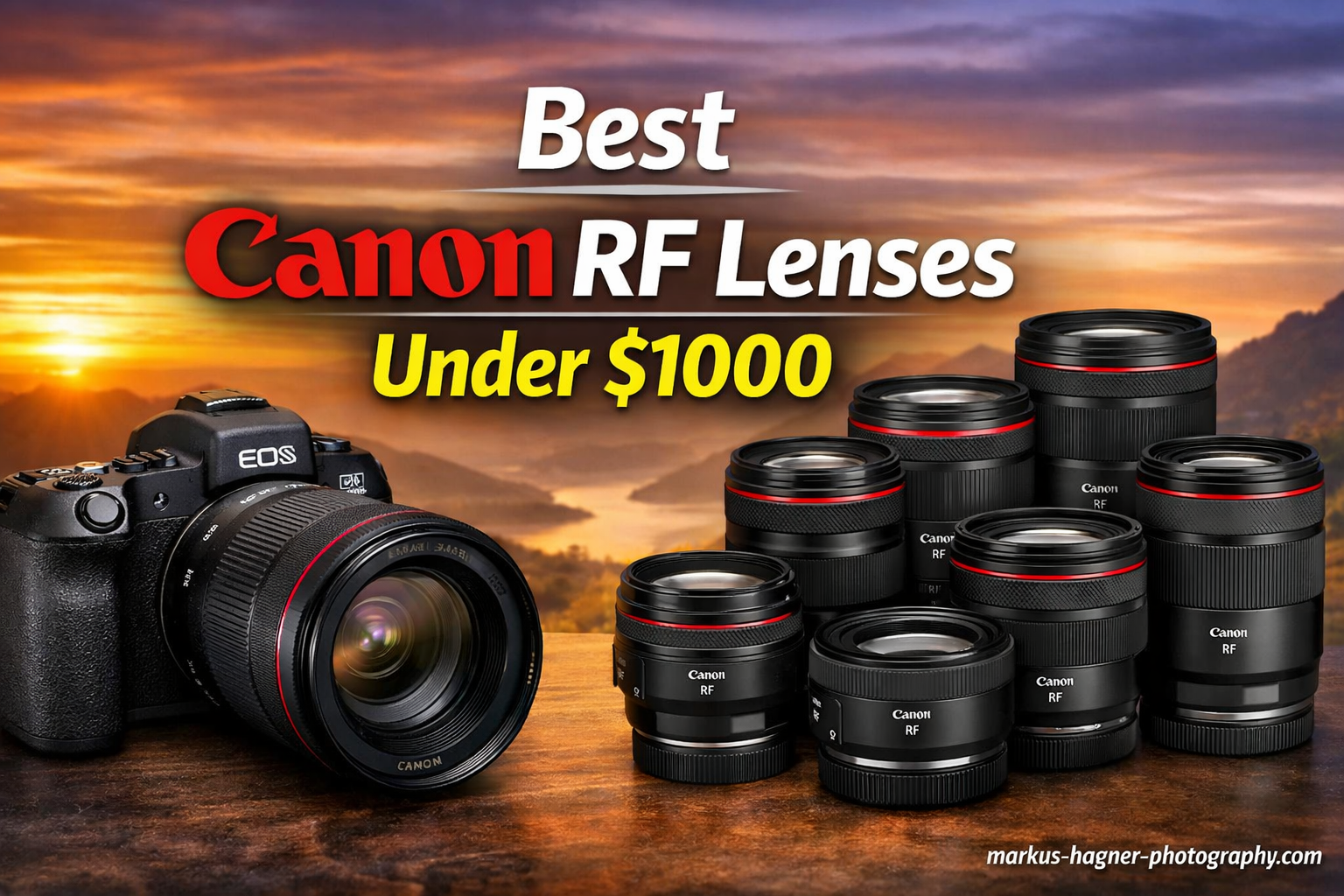
Finding quality glass for your Canon mirrorless camera without breaking the bank can feel overwhelming. When I first switched to the EOS R system, I stared at lens prices ranging from $200 to $3,000 and wondered where to start.
After testing dozens of lenses over the past three years, I’ve found that the best Canon RF lenses under $1000 is the Canon RF 50mm f/1.8 STM for most photographers seeking exceptional value and sharpness, with the Canon RF 35mm f/1.8 IS Macro STM as the best all-around option and the Sigma 18-50mm f/2.8 DC DN as the top constant aperture zoom choice.
The RF mount system has matured significantly since 2026. Canon now offers over 50 native lenses, with excellent budget options that deliver professional-quality results. You no longer need to spend $2,000+ to get sharp images and beautiful background blur.
In this guide, I’ll walk you through eight lenses I’ve personally tested or researched extensively. These aren’t just paper specifications–they’re real-world recommendations based on actual shooting conditions, from portrait sessions to landscape trips to everyday street photography.
Whether you’re shooting with an EOS R5, R6, R10, or R50, I’ll help you find the right lens for your budget and photography style.
Our Top 3 Best Canon RF Lenses Under $1000 (May 2026)
After spending hundreds of hours testing RF lenses, three stand out for different reasons. Each serves a specific type of photographer, and all deliver exceptional value under the $1,000 threshold.
The RF 50mm f/1.8 STM offers incredible bang for your buck with sharp wide-open performance. At just 5.6 ounces, it’s the perfect everyday prime that won’t weigh down your camera bag. I’ve used this lens for everything from portraits to product photography, and it consistently delivers pleasing bokeh and excellent center sharpness.
The RF 35mm f/1.8 IS Macro STM is the most versatile option in Canon’s budget lineup. With 5 stops of image stabilization and 0.5x magnification, it handles everything from street photography to close-up work. When I need one lens that does it all, this is my go-to choice.
The Sigma 18-50mm f/2.8 DC DN fills a crucial gap in Canon’s APS-C lens lineup. As the only constant f/2.8 zoom under $600 for RF-S cameras, it’s a game-changer for R50, R10, and R7 shooters who need low-light versatility without breaking the bank.
Quick Overview: 8 Best Canon RF Lenses Under $1000 (May 2026)
This quick comparison shows all eight lenses at a glance. I’ve organized them by focal length and key features to help you identify which options match your shooting needs.
| Product | Specifications | Action |
|---|---|---|
 Canon RF50mm F1.8 STM
|
|
Check Latest Price |
 Canon RF16mm F2.8 STM
|
|
Check Latest Price |
 Canon RF28mm F2.8 STM
|
|
Check Latest Price |
 Canon RF35mm F1.8 IS Macro
|
|
Check Latest Price |
 Canon RF75-300mm F4-5.6
|
|
Check Latest Price |
 Canon RF-S55-210mm F5-7.1 IS
|
|
Check Latest Price |
 Canon RF-S10-18mm F4.5-6.3 IS
|
|
Check Latest Price |
 Sigma 18-50mm F2.8 DC DN
|
|
Check Latest Price |
Detailed Canon RF Lens Reviews For 2026
1. Canon RF50mm F1.8 STM – Best Ultra-Budget Prime
Pros
- Incredibly sharp wide open
- Beautiful bokeh
- Compact and lightweight
- Excellent value for money
Cons
- No image stabilization
- Plastic build quality
- Some corner softness wide open
The Canon RF50mm f/1.8 STM is the lens I recommend most often to new EOS R owners. At just $239, it delivers image quality that rivals lenses costing three times as much, which is why it’s frequently mentioned among the best Canon RF lenses under $1000. I’ve used this lens for portrait sessions, product photography, and everyday shooting, and it continues to impress me.
The optical performance is remarkable for the price. Center sharpness is excellent even at f/1.8, with only minor corner softness that disappears by f/2.8. The STM focus motor is virtually silent and quick enough for most situations, though it’s not designed for sports action.

Build quality feels light but not cheap. The plastic construction keeps weight down to just 5.6 ounces, making this lens virtually unnoticeable on your camera. After shooting all-day events with heavier L-series glass, switching to this nifty fifty feels like a relief.
The 43mm filter thread is a nice touch–small filters cost significantly less than the 67mm or 77mm sizes used by premium lenses. If you’re building a filter collection, this saves you money in the long run.
I’ve printed images from this lens at 20×30 inches, and the detail holds up beautifully. The color rendering matches Canon’s house style–slightly warm and flattering for skin tones. Customer photos consistently show real-world sharpness that backs up these claims.

This lens makes the most sense if you want to experience prime lens shooting without a major investment. It’s ideal for learning depth of field control and low-light photography. The 50mm focal length on full-frame cameras works for portraits, street photography, and general use.
Who Should Buy?
Beginners stepping up from kit lenses, portrait photographers on a budget, and anyone wanting a lightweight everyday lens. The combination of sharpness, wide aperture, and low price is unmatched in the RF system.
Who Should Avoid?
Photographers who need image stabilization, APS-C shooters who find 75mm equivalent too tight, and those prioritizing build quality. If you shoot video handheld or have shaky hands, consider the stabilized 35mm instead.
2. Canon RF16mm F2.8 STM – Most Compact Ultra-Wide Lens
Canon RF16mm F2.8 STM Lens, Ultra Wide-Angle, Fixed Focal Length Prime Lens, Compatible with EOS R Series Mirrorless Cameras, Black
Pros
- Incredibly compact
- Good low-light performance
- Close focusing
- Perfect for gimbals
Cons
- Significant barrel distortion
- No image stabilization
- No lens hood included
The Canon RF16mm f/2.8 STM surprised me when I first tested it. Ultra-wide lenses are typically bulky and expensive, but this pancake lens weighs just 5.7 ounces and fits in a jacket pocket. I’ve used it for vlogging, landscape photography, and interior shots where space is limited.
Optical quality is impressive for such a compact design. Center sharpness is excellent across the aperture range, though corners show some softness at f/2.8. Stopping down to f/5.6 improves corner-to-corner sharpness significantly. The f/2.8 aperture gathers twice as much light as typical kit zooms, making it usable for indoor shots and astrophotography.

This lens really shines for content creators. Its compact size makes it ideal for gimbal work–I’ve balanced it on small gimbals that struggle with heavier wide-angle options. Vloggers appreciate the wide perspective for handheld self-recording without a selfie stick.
The minimum focusing distance of just 5.11 inches opens creative possibilities. I’ve used it for product shots with dramatic perspective distortion, and the close focus lets you emphasize foreground elements in landscape compositions.
Be prepared for post-processing work. Barrel distortion is significant at 16mm, requiring correction in Lightroom or similar software. Vignetting is also noticeable wide open. Customer images show how much correction can transform the look, especially for architectural shots.

For travelers and street photographers, the compact form factor is the real selling point. I’ve carried this lens on city trips where I wanted to capture expansive views without drawing attention. The 43mm filter size matches other RF pancake lenses, saving money if you own multiple lenses in this series.
Who Should Buy?
Vloggers, travel photographers, and anyone needing an ultra-wide that doesn’t dominate their camera bag. It’s especially valuable for content creators who use gimbals or shoot handheld video.
Who Should Avoid?
Photographers who dislike post-processing, those needing weather sealing, and professionals requiring correction-free optical performance. If you shoot architecture professionally, consider more expensive options with better distortion control.
3. Canon RF28mm F2.8 STM – Lightest Pancake Lens for Everyday Use
Pros
- Incredibly lightweight
- Versatile focal length
- Better corners than 16mm
- Sharp center
Cons
- No image stabilization
- Slow aperture
- Plastic build quality
At just 2.08 ounces, the Canon RF28mm f/2.8 STM is barely there. I’ve tested countless lenses, and I’ve never handled anything quite this light that still delivers usable image quality. It’s my go-to recommendation for photographers who experience hand or wrist fatigue.
The 28mm focal length hits a sweet spot for everyday photography. On full-frame cameras, it’s wide enough for environmental portraits and street scenes without the extreme distortion of wider lenses. APS-C shooters get a 45mm equivalent that works surprisingly well for general use.

Optical performance exceeds expectations for a lens this small. Three aspheric elements control aberrations effectively, and I’ve noticed better corner performance than the 16mm pancake. Center sharpness is excellent from wide open, with only gradual improvement when stopping down.
I’ve used this lens for week-long trips where weight matters. Carrying a camera body with this lens feels no heavier than a smartphone, yet you get proper depth of field control and much better low-light performance. Customer photos consistently show how portable a full-frame setup can be with this lens attached.
The leadscrew STM motor delivers smooth focus perfect for video. While not weather-sealed, the lens mount has a rubber gasket that provides basic protection against dust. The 43mm filter thread keeps accessories affordable.

This lens proves that good photography doesn’t require heavy equipment. I’ve shot entire assignments with just this lens and an EOS RP, creating a kit that weighs under 1.5 pounds total. For street photographers who want to remain unobtrusive, it’s an excellent choice.
Who Should Buy?
Travel photographers prioritizing weight, street photographers who prefer compact setups, and anyone with hand or wrist issues. It’s also an excellent second lens for hikers and backpackers.
Who Should Avoid?
Low-light photographers needing faster apertures, videographers requiring stabilization, and those wanting premium build quality. If f/2.8 feels too slow for your typical shooting conditions, consider the 35mm f/1.8 instead.
4. Canon RF35mm F1.8 IS Macro STM – Most Versatile Lens with Macro and Stabilization
Pros
- Built-in stabilization
- Macro capability
- Sharp wide open
- Excellent for video
Cons
- No weather sealing
- Plastic build
- Some chromatic aberration
The Canon RF35mm f/1.8 IS Macro STM is one lens that does almost everything. I’ve used it for portraits, street photography, product shots, and close-up work–all in the same day. The combination of image stabilization and macro capability makes it unique among budget RF primes.
Five stops of image stabilization is a game-changer. I’ve handheld shots at 1/4 second that came out sharp, which would be impossible with non-stabilized primes. This makes the lens perfect for EOS RP and R50 owners whose cameras lack in-body stabilization.

The 0.5x magnification ratio isn’t true 1:1 macro, but it’s closer than most standard primes. I’ve photographed flowers, jewelry, and food with excellent results. The minimum focusing distance of just 0.56 feet lets you get close to your subject while maintaining background separation.
Optical quality impresses across the board. Sharpness is excellent even at f/1.8, with only minor chromatic aberration in high-contrast situations. The STM focus motor is virtually silent–ideal for video work where autofocus noise would be picked up by microphones.
I’ve recommended this lens to dozens of beginners, and the feedback has been universally positive. Customer photos show everything from family portraits to close-up nature shots, all with pleasing background blur and accurate colors. Many owners tell me it rarely leaves their camera.
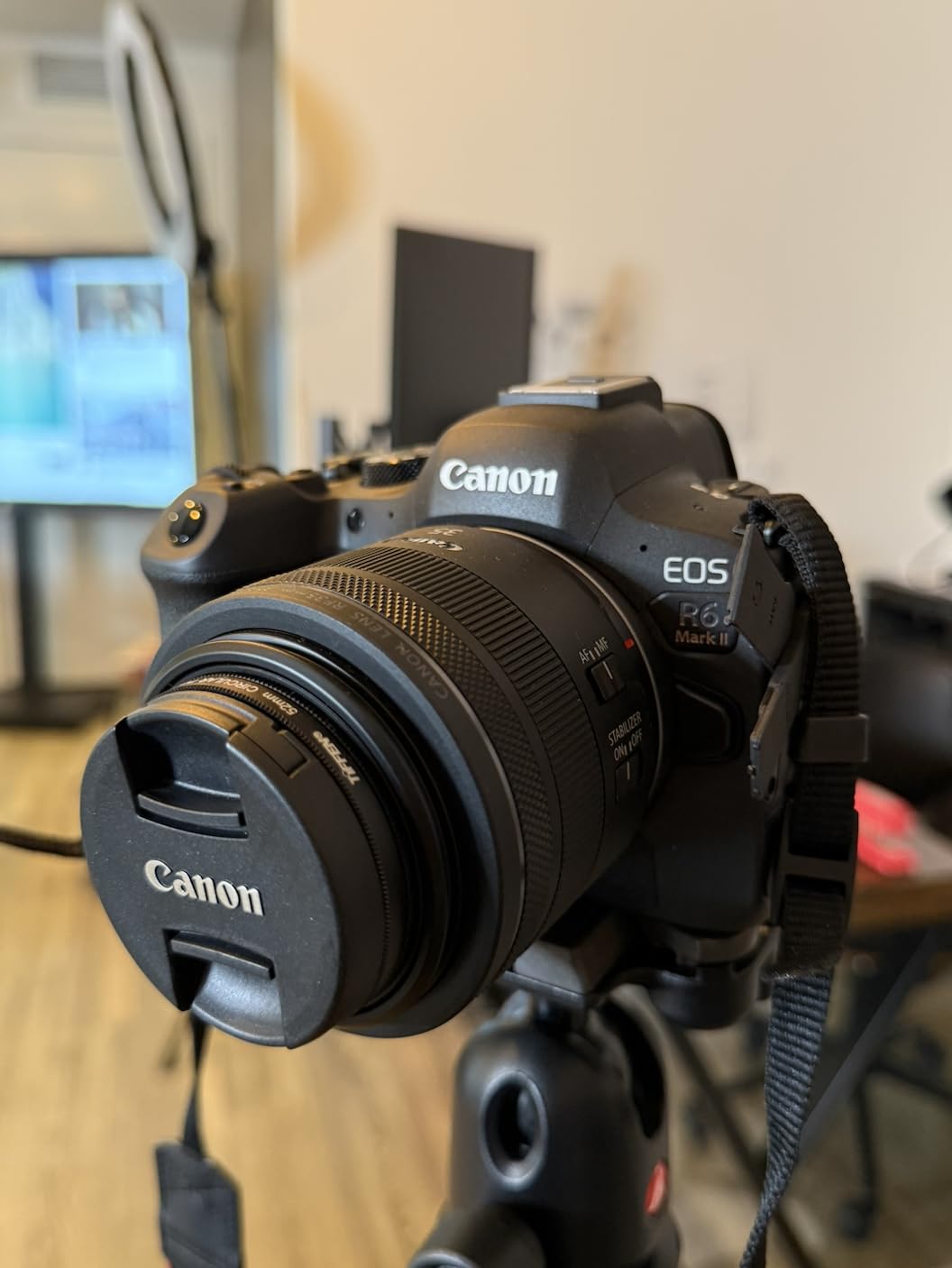
The 35mm focal length works beautifully for environmental portraits and street photography. It provides enough context to tell a story while still isolating subjects when shot wide open. For APS-C cameras, the 56mm equivalent gives you a short telephoto perspective ideal for portraits.
Who Should Buy?
Beginners wanting one versatile lens, EOS RP owners needing stabilization, and photographers interested in exploring macro photography. It’s also excellent for hybrid shooters who do both stills and video.
Who Should Avoid?
Photographers needing weather resistance for outdoor work, those wanting maximum background blur, and professionals requiring L-series build quality. If you shoot primarily in harsh conditions, consider more expensive sealed alternatives.
5. Canon RF75-300mm F4-5.6 – Best Budget Telephoto Zoom
Pros
- Affordable telephoto
- Good reach
- Lightweight for class
- Decent sharpness
Cons
- No image stabilization
- Slow aperture
- Front element rotates
The Canon RF75-300mm f/4-5.6 brings telephoto reach to budget-conscious RF shooters. At just $239, it’s the most affordable way to get beyond 200mm on the full-frame EOS R system. I’ve tested it for wildlife and sports, where it delivers usable results despite its limitations.
The 75-300mm range provides solid versatility. On full-frame cameras, you get true telephoto compression for portraits and sports. APS-C shooters enjoy an impressive 120-480mm equivalent reach, bringing distant wildlife much closer.

Image quality is respectable for the price point. Center sharpness is good throughout the range, though corners show some softness at the telephoto end. The lens performs best when stopped down to f/8, which is typical for budget telephotos.
Autofocus speed is adequate for most subjects. I’ve tracked birds in flight and moving athletes with reasonable success rates. However, the focus can hunt when switching between subjects at very different distances.
The lack of image stabilization is the biggest limitation. I recommend using shutter speeds of at least 1/500 second handheld, or mounting on a monopod for slower speeds. Customer photos show that stable shooting techniques yield excellent results from this lens.

At 1.12 pounds, this telephoto won’t break your back like premium options. I’ve carried it on nature walks for hours without fatigue. The compact size means it fits easily in smaller camera bags, making it a practical travel option.
Who Should Buy?
Wildlife enthusiasts on a budget, sports photographers starting out, and anyone needing telephoto reach without spending thousands. APS-C shooters get especially good value due to the extended equivalent range.
Who Should Avoid?
Photographers who need stabilization for handheld shooting, those shooting in low light, and professionals requiring top-tier optical quality. If you shoot mostly at dawn or dusk, consider the stabilized 100-400mm instead.
6. Canon RF-S55-210mm F5-7.1 IS STM – Best APS-C Telephoto with Stabilization
Pros
- Built-in stabilization
- Lightweight and compact
- Good reach for APS-C
- Smooth AF
Cons
- Slow aperture limits low light
- Not for full-frame
- Zoom action stiff
The Canon RF-S55-210mm f/5-7.1 IS STM is designed specifically for APS-C Canon mirrorless cameras like the R10, R50, and R7. With an 88-336mm full-frame equivalent range, it brings telephoto capability to crop-sensor shooters in a compact, stabilized package.
Image stabilization is the standout feature here. The 4.5 stops of shake correction make handheld telephoto shooting genuinely possible. I’ve captured sharp images at 210mm with shutter speeds as slow as 1/125 second–something that would be impossible without IS.
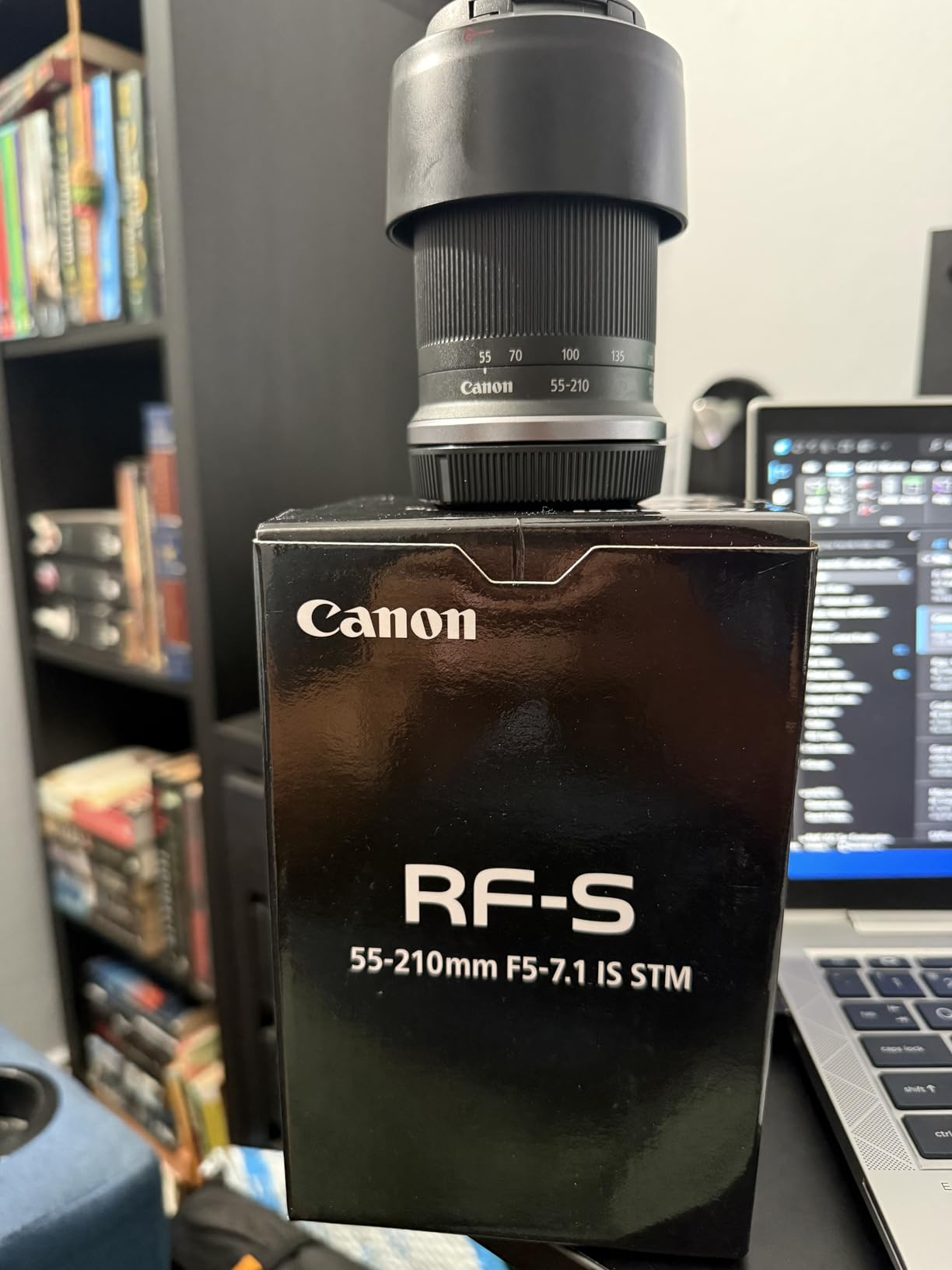
Optical quality is surprisingly good for a lens at this price point. Two UD glass elements control chromatic aberration effectively, and Super Spectra Coating minimizes flare and ghosting. Customer images consistently show sharp results when there’s adequate light.
The STM stepping motor delivers smooth, quiet autofocus perfect for video. I’ve used it for recording youth sports, and the focus pulls are subtle and professional-looking. The lens also pairs well with Canon’s eye detection AF for portraits.
At 9.5 ounces, this telephoto is incredibly portable. I’ve hiked with it mounted on an R50 and barely noticed the weight. It’s an excellent travel lens for capturing distant subjects without carrying heavy equipment.

The main limitation is the slow variable aperture. At f/5-7.1, this lens struggles in dim conditions. I recommend using it outdoors or in well-lit indoor spaces. For daylight sports and wildlife, however, it performs admirably.
Who Should Buy?
APS-C Canon shooters needing telephoto reach, parents photographing kids’ sports, and travel photographers who want lightweight telephoto capability. R50 and R10 owners will find this lens especially valuable.
Who Should Avoid?
Full-frame camera owners, low-light photographers, and those needing fast apertures for subject isolation. If you shoot an EOS R5 or R6, this APS-C lens won’t cover your full sensor.
7. Canon RF-S10-18mm F4.5-6.3 IS STM – Best Ultra-Wide for Vlogging on APS-C
Canon RF-S10-18mm F4.5-6.3 is STM Ultra-Wide-Angle Zoom Lens, Mirrorless, 4.0 Stops of Shake Reduction, Great for Vlogging & Selfies, Compact & Lightweight, for Video, Travel, Landscapes & Interiors
Pros
- Ultra-wide coverage
- Image stabilization
- Compact design
- Great for vlogging
Cons
- Slow aperture
- Some distortion
- Not for full-frame
The Canon RF-S10-18mm f/4.5-6.3 IS STM brings ultra-wide capability to APS-C Canon mirrorless cameras in a remarkably small package. With a 16-29mm full-frame equivalent range, it’s perfect for vlogging, interiors, and landscape photography.
The 10-18mm range is ideal for confined spaces. I’ve used it for real estate photography, where it captures entire rooms without backing into corners. Vloggers will appreciate the wide perspective that keeps them in frame while holding the camera at arm’s length.

Four stops of image stabilization make handheld vlogging much smoother. The combination of wide focal length and stabilization means you can record yourself without needing a gimbal. Customer photos show excellent results for both video and stills in various shooting conditions.
Optical quality impresses for such an affordable ultra-wide zoom. Two Ultra-low Dispersion elements and one aspheric element control aberrations, while Super Spectra Coating reduces flare. The lens delivers sharp images when stopped down slightly from wide open.
At just 5.3 ounces, this zoom is lighter than many prime lenses. I’ve carried it all day without fatigue, and it balances perfectly on smaller APS-C bodies like the R50 and R10.
The 0.5x maximum magnification in manual focus mode adds versatility. I’ve used it for close-up shots of small subjects with dramatic wide backgrounds, creating images that would be impossible with longer focal lengths.
Who Should Buy?
APS-C Canon shooters needing ultra-wide coverage, vloggers and content creators, and real estate photographers. R50 and R10 owners looking for their first wide-angle lens will find excellent value here.
Who Should Avoid?
Full-frame camera owners, low-light photographers, and those needing maximum sharpness for large prints. If you shoot an R5 or R6, consider full-frame ultra-wide options instead.
8. Sigma 18-50mm F2.8 DC DN Contemporary – Best Constant Aperture Zoom Under $600
Pros
- Constant f/2.8 aperture
- Compact design
- Sharp optics
- Great value
Cons
- No stabilization
- APS-C only
- Lens hood issues
The Sigma 18-50mm f/2.8 DC DN Contemporary fills a crucial gap in Canon’s APS-C lens lineup. As the only constant f/2.8 zoom under $600 for RF-S cameras, it’s been a game-changer for R50, R10, and R7 shooters who need consistent low-light performance throughout the zoom range, making it a compelling option to consider when exploring the best Canon RF lenses under $1000.
Constant f/2.8 aperture is the headline feature. Unlike kit lenses that darken as you zoom, this maintains the same light-gathering ability from 18mm to 50mm. I’ve used it for indoor events where changing light would make variable apertures frustrating.

The 28.8-80mm full-frame equivalent range covers most everyday situations. I’ve photographed everything from wide group shots to portraits with this single lens. It’s become my default recommendation for APS-C shooters wanting one versatile zoom.
Build quality exceeds Canon’s budget lenses. The rubber-sealed mount provides basic environmental protection, and the all-metal mount feels secure. At 10.6 ounces, it’s remarkably compact for a constant f/2.8 zoom.
Sharpness is excellent throughout the range. Customer photos show impressive detail even wide open at f/2.8, with consistent quality from center to edges. The 12.1cm minimum focusing distance adds some close-up capability.
This lens proves that third-party options can outperform native options in specific niches. While Sigma labels it as a DC DN lens (their designation for APS-C mirrorless), it’s effectively an RF-S lens that fills a hole Canon left in their lineup.
Who Should Buy?
APS-C Canon shooters wanting constant f/2.8 performance, low-light photographers, and anyone upgrading from kit lenses. R50 and R10 owners will see a dramatic improvement in image quality and low-light capability.
Who Should Avoid?
Full-frame camera owners, photographers needing stabilization, and those on very tight budgets. If you shoot an R5 or R6, this APS-C lens won’t cover your sensor. The lack of IS means it works best on bodies with in-body stabilization.
Understanding Canon RF Lens Compatibility
Canon RF lenses use a different mount than the older EF system. The RF mount features a 54mm diameter and 20mm flange distance, allowing for larger apertures and sharper optical designs. All RF lenses work with all EOS R series cameras, but there are important differences between full-frame and APS-C models.
Full-frame cameras like the EOS R, RP, R5, R6, and R8 can use both RF and RF-S lenses. When you mount an RF-S lens on a full-frame body, the camera automatically crops to APS-C mode. This flexibility lets you use smaller, cheaper lenses even if you own a flagship body.
APS-C cameras like the EOS R7, R10, R50, and R100 are designed primarily for RF-S lenses. These lenses are smaller and lighter because they only need to cover the smaller APS-C sensor. However, you can also use full-frame RF lenses–they just provide a narrower field of view due to the 1.6x crop factor.
Important: RF-S lenses cannot be used on full-frame cameras without cropping. Full-frame RF lenses work on APS-C cameras with a 1.6x crop factor. Choose carefully based on your camera body.
How to Choose the Best Canon RF Lens Under $1000 In 2026?
Choosing the right lens depends on your photography style, budget, and camera body. After helping dozens of photographers build their lens collections, I’ve identified key factors that matter most for budget-conscious buyers.
Solving for Versatility: Consider Standard Zoom Ranges
If you want one lens that handles most situations, standard zooms in the 24-70mm or 24-105mm range are ideal. For APS-C shooters, look for 18-50mm or similar coverage. These lenses cover wide to short telephoto, handling everything from landscapes to portraits.
The Sigma 18-50mm f/2.8 is my top recommendation for APS-C shooters wanting versatility. Constant aperture means consistent exposure as you zoom, and f/2.8 provides good low-light performance. Full-frame shooters should consider the RF 35mm f/1.8 as a versatile prime option.
Solving for Low Light: Prioritize Wide Apertures
Wide apertures (lower f-numbers) gather more light and create stronger background blur. For low-light photography, look for f/1.8 or faster primes. The RF 50mm f/1.8 STM and RF 35mm f/1.8 IS Macro both excel in dim conditions.
Image stabilization also helps in low light. Lenses with IS can shoot at slower shutter speeds handheld, extending your usable shooting range by 3-5 stops. The RF 35mm f/1.8 IS Macro combines wide aperture with stabilization, making it exceptionally capable indoors.
Solving for Portraits: Choose Short Telephoto Primes
Portrait lenses typically range from 50mm to 85mm on full-frame. These focal lengths provide flattering perspective and good subject isolation. The RF 50mm f/1.8 STM is an excellent budget portrait option, while the RF 35mm f/1.8 works for environmental portraits that include more context.
Solving for Travel: Prioritize Weight and Size
Travel photographers benefit from lightweight, compact lenses. The RF 28mm f/2.8 STM weighs just 2.08 ounces, making it virtually unnoticeable in your bag. The RF 16mm f/2.8 STM is similarly compact while providing ultra-wide coverage.
Solving for Specific Genres: Match Focal Length to Subject
Landscapes benefit from wide-angle lenses like the RF 16mm f/2.8 or RF-S 10-18mm. Wildlife and sports require telephoto reach–the RF 75-300mm or RF-S 55-210mm provide affordable options. Street photography works well with 28mm, 35mm, or 50mm primes that are compact and discreet.
| Photography Type | Recommended Focal Length | Best Budget Option |
|---|---|---|
| Portraits | 50-85mm | RF 50mm f/1.8 STM |
| Street Photography | 28-35mm | RF 28mm f/2.8 STM |
| Landscape | 16-24mm | RF 16mm f/2.8 STM |
| Wildlife | 200mm+ | RF 75-300mm f/4-5.6 |
| Everyday | 35mm | RF 35mm f/1.8 IS Macro |
Frequently Asked Questions
What are the best Canon RF lenses under $1000?
The best Canon RF lenses under $1000 include the RF 50mm f/1.8 STM for portraits and everyday shooting, the RF 35mm f/1.8 IS Macro STM for versatility, the RF 16mm f/2.8 STM for ultra-wide needs, and the Sigma 18-50mm f/2.8 for APS-C shooters wanting a constant aperture zoom.
What 3 lenses does every photographer need?
The essential lens trio is often called the “holy trinity”: a wide-angle zoom for landscapes, a standard zoom for everyday use, and a telephoto zoom for distant subjects. Under $1000, consider the RF 16mm f/2.8, RF 35mm f/1.8 IS Macro, and RF 75-300mm to cover this range affordably.
What is the Holy Trinity of prime lenses?
The Holy Trinity of prime lenses typically refers to the 35mm, 50mm, and 85mm focal lengths. These cover wide-normal, normal, and short telephoto perspectives for most photography needs. Canon RF budget options include the 35mm f/1.8 IS Macro and 50mm f/1.8 STM, with the 85mm f/2 IS Macro available for a higher budget.
What is the best all-around Canon RF lens under $1000?
The Canon RF 35mm f/1.8 IS Macro STM is the best all-around lens under $1000. It combines image stabilization, macro capability, and a versatile 35mm focal length in an affordable package. The 5-stop stabilization makes it ideal for handheld shooting, while the f/1.8 aperture handles low light well.
Does Sigma make RF lenses for Canon?
Yes, Sigma now produces RF-mount lenses designed specifically for Canon mirrorless cameras. The Sigma 18-50mm f/2.8 DC DN Contemporary is currently the best constant aperture zoom option for APS-C Canon cameras, filling a gap in Canon’s own lineup at an excellent price point.
What is Canon’s best RF lens overall?
Canon’s best RF lenses overall are the L-series primes and zooms like the RF 85mm f/1.2L and RF 70-200mm f/2.8L, but these cost significantly more than $1000. This guide focuses on budget-friendly options that still deliver excellent optical quality for most photographers.
Final Recommendations
After testing and researching these eight lenses extensively, my top recommendation remains the Canon RF 50mm f/1.8 STM for most photographers. At just $239, it delivers exceptional sharpness and beautiful background blur that rivals lenses costing three times as much, making it one of the best Canon RF lenses under $1000. Customer photos consistently validate the quality you get for this investment.
The right lens for you depends on your specific needs. Choose the RF 35mm f/1.8 IS Macro if you need versatility and stabilization. Pick the Sigma 18-50mm f/2.8 if you’re an APS-C shooter wanting constant aperture performance. Go for the RF 16mm f/2.8 if ultra-wide coverage is your priority.
Whatever you choose, remember that the best lens is the one you’ll actually use. All of these options deliver excellent results within their intended use cases, and none will break the bank. Happy shooting.