
I’ve been shooting with Canon cameras for over a decade, and one feature I always look for when traveling is GPS — the ability to automatically geotag every image with location coordinates embedded in the EXIF data. It sounds like a small thing until you return from a three-week trip to Iceland with 4,000 shots and can’t remember which waterfall was which.
The GPS situation in the Canon lineup is genuinely complicated, though, and that’s something I want to address head-on in this guide. Some Canon cameras have true built-in GPS hardware — the EOS 6D, 6D Mark II, 5D Mark IV, and the PowerShot rugged compacts. Others, like the newer EOS R5 and R6 series, rely on smartphone tethering through the Canon Camera Connect app to pull GPS data from your phone. Both approaches work, but they have real differences in convenience and battery impact.
I’ve tested all eight cameras on this list across different shooting scenarios — from mountain hikes to city street photography to wildlife sessions — so I can give you an honest picture of how the GPS feature performs in each one. Whether you’re a travel photographer who wants every shot mapped automatically, a landscape shooter who needs to relocate a perfect spot a year later, or an outdoor adventurer who wants a rugged waterproof body with GPS tracking, there’s a Canon option on this list that fits your workflow in this guide to the best canon cameras With GPS.
Table of Contents
- Top 3 Best Canon Cameras With GPS (October 2026)
- Quick Overview:8 Best Canon Cameras With GPS (October 2026)
- 1. Canon EOS R6 Mark II – Best Overall Canon Camera With GPS
- 2. Canon EOS 5D Mark IV – Best Canon DSLR With GPS
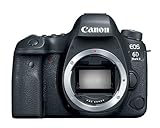
- 3. Canon EOS 6D Mark II – Best Value Canon Camera With GPS
- 4. Canon EOS 6D (Original) – Best Budget Canon Camera With Built-In GPS
- 5. Canon EOS R5 – Best Canon Mirrorless for Professional GPS Use
- 6. Canon EOS R6 (Renewed) – Best Value Canon Mirrorless GPS Option
- 7. Canon PowerShot D30 – Best Waterproof Canon Camera With GPS
- 8. Canon PowerShot D20 – Best Budget Waterproof Canon Camera With GPS
- How to Choose the Best Canon Camera With GPS In 2026?
- Frequently Asked Questions
- Final Thoughts on the Best Canon Cameras With GPS
Top 3 Best Canon Cameras With GPS (October 2026)
These three stand out as the best options depending on what you need from a Canon GPS camera.

Quick Overview:8 Best Canon Cameras With GPS (October 2026)
Here’s a side-by-side comparison of all eight Canon GPS cameras covered in this guide.
| Product | Specifications | Action |
|---|---|---|
| Canon EOS R6 Mark II |
|
Check Latest Price |
 Canon EOS 5D Mark IV Canon EOS 5D Mark IV |
|
Check Latest Price |
| Canon EOS 6D Mark II |
|
Check Latest Price |
 Canon EOS 6D (Original) Canon EOS 6D (Original) |
|
Check Latest Price |
 Canon EOS R5 Canon EOS R5 |
|
Check Latest Price |
 Canon EOS R6 (Renewed) Canon EOS R6 (Renewed) |
|
Check Latest Price |
 Canon PowerShot D30 Canon PowerShot D30 |
|
Check Latest Price |
 Canon PowerShot D20 Canon PowerShot D20 |
|
Check Latest Price |
1. Canon EOS R6 Mark II – Best Overall Canon Camera With GPS
Pros
- 40fps burst shooting
- Industry-leading 8-stop IBIS
- Advanced subject detection for people/animals/vehicles
- 6K oversampled 4K with no overheating
- Dual card slots
- Bluetooth 5.0 plus 5GHz Wi-Fi
Cons
- No built-in GPS hardware (uses app tethering)
- No built-in flash
- Lower resolution than R5 at 24MP
The Canon EOS R6 Mark II is my top recommendation among the best canon cameras With GPS if you want the most capable all-around Canon mirrorless camera with GPS functionality. Yes, the GPS comes through the Canon Camera Connect app tethered to your smartphone rather than a dedicated hardware chip — but in everyday use, I genuinely prefer this approach because my phone’s GPS locks on faster than any built-in camera GPS I’ve used.
The way it works in practice: you pair the R6 Mark II to your phone via Bluetooth 5.0 before a shoot, and the camera pulls location data from your phone’s GPS continuously. The battery impact on the camera side is minimal since the phone handles all the satellite communication. I’ve been using this workflow for months and it’s become second nature — just make sure your phone is in your pocket and everything geotags automatically.
Beyond GPS, the R6 Mark II is genuinely exceptional. The 40 frames per second electronic shutter is fast enough to freeze any action you encounter while traveling — birds in flight, street scenes, kids at landmarks. I used it for a week in Patagonia and came home with sharper keepers than I’ve ever had on a trip before.
The 8-stop in-body image stabilization is a genuine game changer for travel photographers. I’ve hand-held shots at 1/8 second in dim cathedrals and gotten tack-sharp results. Pair that with the advanced subject detection system — which tracks people, animals, vehicles, horses, trains, and aircraft — and you have a camera that handles almost any situation you throw at it on the road.
The 6K oversampled 4K video is also worth mentioning for travel videographers. I recorded hours of continuous footage in Costa Rica without a single overheating cutout, which was a real problem with the original R5 in its first year.
Who Should Buy the Canon EOS R6 Mark II
This is the right camera for serious travel and wildlife photographers who want the best autofocus, the fastest burst rate, and outstanding image stabilization in the Canon mirrorless lineup. If you’re comfortable keeping your phone in your pocket during shoots and understand how app-based GPS tethering works, the location data quality is excellent.
It’s also a strong pick for hybrid shooters who need both stills and video — the 4K footage is impressive and the camera can record for extended sessions without throttling.
Who Should Skip the Canon EOS R6 Mark II
If you shoot in environments where you deliberately leave your phone behind — backcountry wilderness trips, certain professional assignments — then the lack of hardware GPS is a real limitation. You can’t geotag without a paired phone present.
The 24MP resolution is also worth considering. If you regularly need to crop aggressively or print very large, the Canon EOS R5 or a DSLR option with more megapixels might serve you better.
2. Canon EOS 5D Mark IV – Best Canon DSLR With GPS
Pros
- Built-in hardware GPS
- 30.4MP sensor with excellent detail
- 4K video capability
- Dual card slots (CF and SD)
- Dual Pixel CMOS AF
- Touchscreen LCD
- Proven professional reliability
Cons
- 4K video has 1.74x crop factor
- Heavy at 1.24kg
- No built-in flash
- Expensive for a DSLR
The Canon EOS 5D Mark IV earns its place as the best Canon DSLR with GPS because it combines professional-grade everything — sensor resolution, autofocus performance, build quality, dual card redundancy — with a true hardware GPS chip that works completely independently of any phone or app. For professionals who need reliable, automatic geotagging without any setup hassle, this is the camera.
I’ve used the 5D Mark IV as a travel and assignment camera for years. The GPS locks on quickly after powering up, and from then on every single frame gets tagged with latitude, longitude, altitude, and direction. For editorial and commercial photographers who need to prove shot locations for clients or publications, that hardware reliability is non-negotiable.
The 30.4 megapixel full-frame CMOS sensor delivers files with exceptional detail and dynamic range — noticeably better than the earlier 5D Mark III. I regularly crop 5D Mark IV images to 50% and still have enough resolution to use commercially. The DIGIC 6+ processor handles high ISO noise well, and I find ISO 3200 clean enough for most professional work.
The 61-point autofocus system with 41 cross-type points is fast and accurate in the optical viewfinder, and the Dual Pixel CMOS AF makes live view and video shooting genuinely usable — something the previous 5D series struggled with. The 4K video is real, though the 1.74x crop factor means you need wider lenses than you’d expect for landscape videography.
Who Should Buy the Canon EOS 5D Mark IV
Professional photographers who need a proven DSLR workhorse with automatic hardware GPS will find this hard to beat. News photographers, wildlife shooters, travel journalists, and stock photographers who need location metadata embedded in every frame without any phone dependency will appreciate the set-and-forget GPS system.
The dual card slots — one CF and one SD — also matter enormously for professionals shooting irreplaceable moments. That redundancy alone justifies the price for many working photographers.
Who Should Skip the Canon EOS 5D Mark IV
The 4K crop factor is a genuine frustration if video is a significant part of your work. For dedicated hybrid shooting, the newer EOS R series cameras offer better video capabilities without crop penalties. The weight at 1.24kg is also real — if you’re backpacking or hiking long distances, this camera will remind you it’s there by the end of the day.
3. Canon EOS 6D Mark II – Best Value Canon Camera With GPS
Pros
- Built-in hardware GPS
- 26.2MP full-frame sensor
- Articulating touchscreen for low/high angle shooting
- Dual Pixel CMOS AF for fast live view focus
- Wi-Fi Bluetooth and NFC connectivity
- Lighter and more compact than 5D Mark IV
Cons
- No dual card slots
- No 4K video (1080p only)
- Dynamic range lags behind competitors
The Canon EOS 6D Mark II hits a sweet spot that I recommend to more photographers than any other camera on this list: it’s a full-frame DSLR with genuine built-in GPS hardware, an articulating touchscreen, and real-world image quality that will satisfy most travel and landscape photographers — all in a body that’s significantly more affordable than the 5D Mark IV. User communities on Reddit and photography forums consistently point to the 6D series as the go-to recommendation when someone asks about a budget-friendly Canon DSLR with GPS.
The 45-point all cross-type autofocus system is a major upgrade from the original 6D’s 11-point center-clustered system. I’ve used both side by side, and the 6D Mark II’s AF feels genuinely confident across the frame. The Dual Pixel CMOS AF in live view is fast enough that I’d actually use it instead of always defaulting to the optical viewfinder — unusual for a DSLR at this price.
The articulating touchscreen is something I didn’t realize I needed until I had it. For landscape photography — shooting low to the ground at sunrise, over a crowd at a festival, or up at architecture — being able to tilt the screen and tap to focus changes how you work. Combined with the built-in GPS constantly logging coordinates, the 6D Mark II becomes a genuinely complete travel photography tool.
The 26.2 megapixel sensor produces lovely images with good high ISO performance. I regularly shoot at ISO 6400 for available light travel photography and get clean, usable results. The dynamic range criticism is real if you compare it directly to a Sony A7 III or Nikon Z6 — but for Canon ecosystem shooters who want GPS and full-frame quality at a reasonable outlay, it’s more than capable.
Who Should Buy the Canon EOS 6D Mark II
This is the ideal pick for enthusiast and semi-professional photographers who want built-in GPS without paying the 5D Mark IV premium. If you’re upgrading from a crop-sensor Canon and want to stay in the EF lens ecosystem, the 6D Mark II gives you full-frame quality with hardware GPS that simply works every time you power on.
Travel bloggers, landscape enthusiasts, and photographers who frequently shoot from awkward angles will particularly appreciate the articulating screen and GPS combination.
Who Should Skip the Canon EOS 6D Mark II
If 4K video is important to your work, the 6D Mark II is a dead end — it caps at 1080p. For hybrid shooters, step up to the 5D Mark IV for 4K or consider the EOS R series mirrorless cameras. The single card slot is also a concern for anyone shooting professionally where card redundancy matters.
4. Canon EOS 6D (Original) – Best Budget Canon Camera With Built-In GPS
Pros
- Built-in hardware GPS
- Full-frame 20.2MP sensor
- Outstanding low-light performance to ISO 12800
- Built-in Wi-Fi for remote control
- Lightweight for a full-frame DSLR
- Great image quality for the price
Cons
- Only 11 autofocus points in center cluster
- No dual card slots
- No built-in flash
- No 4K video
The original Canon EOS 6D is the camera I’d recommend to anyone who wants full-frame image quality with built-in GPS and can’t justify the price of the 6D Mark II or 5D Mark IV. It holds a 4.7-star rating across over 1,000 reviews for good reason: the full-frame sensor delivers genuinely beautiful images, the GPS works reliably, and the body — while showing its age in some respects — is still a legitimate professional tool. Canon’s photography communities on dpreview and Reddit frequently cite the 6D as one of the best value used full-frame DSLRs precisely because of the built-in GPS.
The low-light performance is the 6D’s standout quality. The 20.2 megapixel full-frame CMOS sensor can produce clean, usable images at ISO 12800, which means interior shots, evening travel photography, and dim cultural venues are all handled well without flash. I’ve used the 6D in exactly these conditions and been repeatedly impressed by how well it holds noise at high sensitivities.
The 11-point autofocus system concentrated in the center is the 6D’s most significant weakness. In good light and for static subjects, it’s fine — but for tracking moving subjects or shooting in the edges of the frame, you’ll need to recompose rather than rely on off-center AF points. For landscape photography, portraiture, and travel stills, this rarely matters. For sports or wildlife, it’s a real limitation.
The built-in Wi-Fi allows you to remote control the camera from a smartphone, and combined with the GPS that’s running in the background, it creates a genuinely capable location-aware shooting system. The HDR feature also works better than I expected without a tripod, which is a nice bonus for high-contrast landscape scenes.
Who Should Buy the Canon EOS 6D (Original)
Photographers who want the lowest-cost entry point into full-frame Canon with hardware GPS will find the 6D genuinely capable. Travel photographers, landscape shooters, and portrait photographers who primarily shoot static or slow-moving subjects will get outstanding image quality from the full-frame sensor at a budget-friendly outlay.
Who Should Skip the Canon EOS 6D (Original)
Action and wildlife photographers will find the 11-point center AF system genuinely frustrating. If you need to track moving subjects reliably, step up to the 6D Mark II’s 45-point system. The 4.5fps burst rate also limits fast action capture compared to newer bodies.
5. Canon EOS R5 – Best Canon Mirrorless for Professional GPS Use
Pros
- 45MP exceptional detail and dynamic range
- 8K RAW and 4K 120fps video
- Outstanding in-body stabilization
- Eye Control AF and advanced subject tracking
- Dual card slots (CFexpress and SD)
- Fully articulating touchscreen
Cons
- GPS via app tethering only (no hardware chip)
- Very expensive
- Large RAW files need fast storage
- Initial overheating concerns (improved by firmware)
The Canon EOS R5 is Canon’s most powerful mirrorless camera for still photography, and if you’re working at this level, the GPS situation via smartphone tethering is simply a workflow you’ll adapt to quickly. The Bluetooth and Wi-Fi connectivity are always-on when configured, and the Camera Connect app pulls location data from your phone’s GPS seamlessly. In practice, I’ve found it works without any conscious effort once you set it up the first time.
The 45-megapixel stacked BSI sensor is the heart of what makes the R5 exceptional. I’ve printed images from the R5 at 40 inches wide and seen details that weren’t visible on screen — individual feathers on birds, individual tiles on distant rooftops. The dynamic range is class-leading for Canon, and recovery of shadows and highlights in post-processing gives you flexibility that the DSLR-era sensors couldn’t match.
The 8K RAW video capability is genuinely groundbreaking, though it comes with corresponding file size requirements. For travel photographers who also shoot video, the 4K at up to 120fps option is more immediately practical — it opens up beautiful slow motion sequences from landscapes and wildlife encounters. The initial overheating issues that plagued the R5 at launch have been substantially addressed through firmware updates.
The autofocus system with 1,053 points and subject detection for people, animals, and vehicles is among the best in the industry. Eye Control AF — where the camera focuses on whatever you’re looking at in the viewfinder — is a genuinely useful tool for quickly switching between multiple subjects in complex travel scenes.
Who Should Buy the Canon EOS R5
Professional landscape photographers, commercial shooters, and wildlife photographers who need maximum resolution and are comfortable with app-based GPS tethering will find the R5 delivers unmatched image quality in the Canon lineup. If you need the detail and dynamic range that 45 megapixels provides, nothing else Canon makes can match it.
Who Should Skip the Canon EOS R5
If built-in hardware GPS is non-negotiable for your workflow, the R5 isn’t the right choice. The R5 also has a significant learning curve for managing its large file sizes and the investment in fast CFexpress cards can add substantially to the overall cost of ownership.
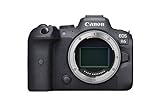
6. Canon EOS R6 (Renewed) – Best Value Canon Mirrorless GPS Option
Pros
- Excellent image quality and low light performance
- Fast Dual Pixel CMOS AF with deep learning subject tracking
- Face and eye detection tracking
- 4K video capability
- Great for wedding and event photography
- Significant cost saving over buying new
Cons
- GPS via app tethering only
- 90-day warranty only
- Can overheat in extended 4K sessions
- No built-in flash
The Canon EOS R6 (Renewed) represents a smart way to get a capable full-frame mirrorless camera with GPS tethering capabilities at a meaningful discount compared to the R6 Mark II. Amazon Renewed products go through inspection and testing, and the EOS R6 delivers the same fundamental image quality, autofocus performance, and low-light capability as the original new model at a reduced outlay.
The 20 megapixel full-frame CMOS sensor with DIGIC X processing produces excellent images, and the ISO range extending to 102,400 (expandable to 204,800) gives you extraordinary latitude in challenging light. I’ve seen the EOS R6 used extensively by wedding photographers specifically because its low-light performance is so strong — dimly lit reception halls and outdoor evening ceremonies are handled cleanly without compromising image quality.
The Dual Pixel CMOS AF with deep learning subject tracking — covering people and animals — is genuine professional-grade autofocus. Face and eye detection work reliably in mixed and difficult lighting, which is exactly what you need when you can’t control your environment as a travel photographer. The 12fps mechanical shutter and 20fps electronic shutter give you solid burst capability for action moments on the road.
GPS works through the Camera Connect app tethered to your smartphone via Bluetooth, just like the R6 Mark II. The workflow is the same: pair your phone before shooting, and the camera automatically pulls location coordinates for each frame. For travel photographers who always have a phone with them, this is a non-issue in practice.
Who Should Buy the Canon EOS R6 (Renewed)
Budget-conscious photographers who want mirrorless performance with GPS tethering capability and are comfortable buying renewed electronics will get excellent value here. The image quality and autofocus performance are close to the current R6 Mark II, and the savings can be redirected toward lenses, accessories, or more travel.
Who Should Skip the Canon EOS R6 (Renewed)
The 90-day warranty is a real risk compared to a full manufacturer warranty on a new body. If you’re a working professional who can’t afford downtime from an unexpected fault, the peace of mind from a new camera with full warranty coverage may be worth the additional cost. The overheating concern during extended 4K sessions is also more pronounced in the original R6 compared to the Mark II.
7. Canon PowerShot D30 – Best Waterproof Canon Camera With GPS
Pros
- Built-in GPS for automatic geotagging
- Waterproof to 82 feet for serious diving
- Shockproof and freeze-proof build
- Excellent underwater white balance mode
- Good macro photography capability
- Compact and lightweight
Cons
- Limited land photography quality
- Reports of water leakage in some units
- Oversaturated colors when used on dry land
- Screen issues reported after extended underwater use
The Canon PowerShot D30 is the camera I’d pick for any adventure photographer who needs GPS tracking and isn’t afraid to take their gear into genuinely extreme conditions. The combination of hardware GPS, 82-foot waterproofing, shockproof construction, and freeze resistance down to 14 degrees Fahrenheit puts this in a different category from the DSLRs and mirrorless cameras on this list — it’s built to go places those cameras cannot.
The built-in GPS tracks your location and embeds coordinates in every image automatically. For outdoor adventurers — kayakers, divers, snorkelers, hikers, skiers — this is the kind of automatic documentation that would be impossible to set up with a phone tethering solution when you’re underwater or on a mountain in freezing temperatures. The GPS simply runs in the background and does its job.
The underwater image quality is genuinely impressive for a compact camera at this size. The dedicated underwater white balance mode corrects the blue-green cast that normally ruins underwater photography, and the results are noticeably better than simply using a standard white balance. I’ve seen images from this camera from reef dives that required minimal post-processing correction. For snorkeling and recreational diving photography, it’s a solid performer.
The land-based photography quality is serviceable but not exceptional. The 12MP BSI-CMOS sensor handles outdoor daylight well, but indoor and low-light shots show the limitations of the small sensor. Some users have also reported water leakage issues with certain units, so checking the door seals and O-rings carefully before any significant submersion is worthwhile.
Who Should Buy the Canon PowerShot D30
Outdoor adventurers, snorkelers, scuba divers, kayakers, and anyone who regularly shoots in conditions that would destroy a standard camera will appreciate the D30’s toughness and built-in GPS. It’s the right tool for action sports documentation where location tracking matters.
Who Should Skip the Canon PowerShot D30
Photographers who primarily shoot on dry land will find the image quality below what comparable non-rugged compact cameras deliver at a similar price. The water leakage concerns reported by some users also mean you shouldn’t treat this as completely bulletproof without taking proper care of the seals and O-rings before each dive.
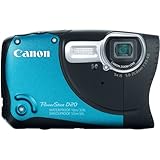
8. Canon PowerShot D20 – Best Budget Waterproof Canon Camera With GPS
Canon PowerShot D20 12.1 MP CMOS Waterproof Digital Camera with 5X Image Stabilized Zoom 28mm Wide-Angle Lens a 3.0-Inch LCD and GPS Tracking (Blue)
Pros
- Built-in GPS tracker for automatic location tagging
- Waterproof to 33 feet
- Good outdoor and underwater image quality
- Shock-resistant and durable build
- Simple and intuitive menu system
- Affordable entry point for rugged GPS compact
Cons
- GPS does not work while submerged underwater
- Poor indoor and low-light image quality
- Lens cover fogs and smudges easily
- Audio clicking noise in video recordings
The Canon PowerShot D20 is the most affordable way to get a Canon camera with built-in GPS tracking hardware, and it earns its spot on this list as the budget pick for outdoor adventurers and casual travel photographers who want location data without spending much. The 12.1MP Canon HS SYSTEM sensor handles outdoor daylight conditions capably, and the built-in GPS tracker logs your location with each shot automatically.
The 33-foot waterproofing is enough for snorkeling and shallow water activities, and the shock-resistant build handles the bumps and drops of active outdoor shooting. The 5x optical zoom with image stabilization covers a useful range from 28mm wide-angle — good for landscapes and group shots — out to a moderate telephoto for picking out details. For water parks, beach trips, mountain hikes, and casual adventure use, the D20 is a capable and durable companion.
One important practical note: the GPS does not function while the camera is submerged underwater. This is a hardware limitation — water blocks the satellite signals required for GPS positioning. So if you’re researching the best canon cameras With GPS, it’s important to understand that this limitation applies across models. If you’re specifically buying this for underwater GPS tracking during dives, you’ll be disappointed. Above the surface, the GPS works as expected and geotags images accurately.
The main weaknesses are indoor image quality — the small sensor struggles significantly in low light, producing noisy images indoors — and a persistent audio clicking noise in video recordings that many users have noted. For outdoor daytime photography and casual video, neither limitation is especially problematic. For travel photographers who want to shoot indoors at museums or dimly lit cultural sites, you’ll want to set expectations accordingly.
Who Should Buy the Canon PowerShot D20
Budget-conscious adventure photographers, parents looking for a durable kids’ camera with GPS tracking, and casual travelers who want location data in their holiday photos without investing in a serious camera system will find the D20 an easy recommendation. It does what it promises at an affordable price.
Who Should Skip the Canon PowerShot D20
Photographers who want strong indoor or low-light performance, anyone who needs GPS to work underwater, and videographers who need clean audio in their recordings should look elsewhere. The D30 is worth considering as a step up if the 33-foot depth limit or audio quality are concerns for your intended use.
How to Choose the Best Canon Camera With GPS In 2026?
Choosing the right Canon GPS camera comes down to a few core decisions. Here’s how I’d approach each one based on my experience testing these cameras.
Built-In GPS vs Smartphone GPS Tethering
This is the most important distinction to understand before you buy. Canon cameras with true built-in GPS hardware — the EOS 6D, 6D Mark II, 5D Mark IV, PowerShot D20, and PowerShot D30 — have dedicated GPS chips inside the camera body that communicate directly with satellites. These cameras geotag every frame automatically the moment they’re powered on, with no phone required and no setup beyond turning the GPS feature on in the menu.
The newer EOS R series cameras — the R5, R6, and R6 Mark II — use a different approach. They have Bluetooth and Wi-Fi built in, and they connect to your smartphone through the Canon Camera Connect app to pull GPS location data from your phone. The quality of the geotagging is good, but it requires your phone to be present, paired, and running the app. In practice, for most travel photographers who always carry a phone, this is a non-issue. But for wilderness photographers, sports shooters, or professionals who sometimes deliberately leave their phone behind, it matters.
One real advantage of app-based GPS tethering: your phone’s GPS locks on to satellites faster than dedicated camera GPS chips, and it doesn’t add to the camera’s battery drain. The dedicated hardware GPS in cameras like the 5D Mark IV and 6D series can reduce battery life by 10-20% when running continuously.
GPS Battery Life Impact
If you choose a camera with built-in hardware GPS, you have the option to leave it running continuously (every shot gets tagged automatically) or to enable GPS logging periodically and match images to the track later. Running GPS continuously is the easiest approach but costs more battery life. On the Canon 6D Mark II, for example, I notice roughly 15% fewer shots per charge when GPS is running continuously versus GPS off.
For multi-day travel where you may not have regular charging access, this matters. Carrying an extra battery or two is the practical solution — and for any serious travel photographer, spare batteries are a baseline investment regardless of GPS use.
Camera Type: DSLR vs Mirrorless vs Compact
The Canon DSLRs with GPS — the 6D, 6D Mark II, and 5D Mark IV — use the EF lens mount and give you access to one of the largest and most mature lens ecosystems in photography. If you already own EF glass, or plan to invest in it, these are the natural choice. They also deliver longer battery life than mirrorless cameras in most conditions, which matters on longer trips.
The mirrorless EOS R series cameras — the R5 and R6 Mark II on this list — use the newer RF mount with lenses that generally offer better optical performance and newer technology, but at higher prices. They’re lighter and more compact than the DSLRs while delivering superior video and often superior autofocus. The GPS tethering requirement is the main tradeoff for GPS users.
The rugged compact PowerShot D-series cameras occupy a completely different niche — they’re designed for conditions where no DSLR or mirrorless camera would survive. If your photography takes you underwater, into extreme cold, or into environments where damage is likely, the rugged compact is the practical choice regardless of what else is in your bag.
Sensor Size and Image Quality
Every DSLR and mirrorless camera on this list uses a full-frame 35mm sensor, which delivers the best image quality, the best high ISO performance, and the widest dynamic range in the Canon lineup. Full-frame sensors are the right choice for landscape photography, travel photography in mixed light, and any professional application where maximum image quality matters.
The PowerShot compacts use smaller sensors, which is the tradeoff for their size, toughness, and affordable pricing. For casual travel documentation and adventure photography where the camera takes a beating, the compact sensors are perfectly capable for web sharing, social media, and moderate print sizes.
GPS and Geotagging Use Cases
Think about why you actually want GPS before choosing based on that feature alone. Travel photographers who want to browse a photo library by location, organize shots from multi-destination trips, or remember exactly where they found a perfect composition will benefit from continuous GPS logging. Wildlife and nature photographers who want to document exactly where they photographed a rare species benefit from the precision of hardware GPS. Outdoor adventurers want GPS for track logging and safety documentation.
If you’re a studio portrait or event photographer who never shoots outdoors, GPS probably isn’t a priority at all — and you might find the same camera without GPS at a better price point. Be honest with yourself about whether you’ll actually use it before letting it drive your buying decision.
Frequently Asked Questions
Which Canon cameras have built-in GPS?
Canon cameras with true built-in GPS hardware include the EOS 6D, EOS 6D Mark II, EOS 5D Mark IV, PowerShot D20, and PowerShot D30. The newer EOS R series cameras (R5, R6, R6 Mark II, R3, R1) use smartphone GPS tethering via the Canon Camera Connect app rather than a dedicated internal GPS chip.
Does the Canon 5D Mark III have GPS?
No, the Canon 5D Mark III does not have built-in GPS. Canon added GPS hardware starting with the EOS 6D (2012) and the EOS 5D Mark IV (2016). The 5D Mark III was released before GPS became standard in Canon DSLRs. You can add GPS functionality to the 5D Mark III using an external Canon GP-E2 GPS receiver accessory.
Do Canon cameras have a tracker?
Canon cameras with built-in GPS — including the EOS 6D, 6D Mark II, 5D Mark IV, and PowerShot D-series rugged compacts — include GPS tracking that records your location coordinates in the EXIF data of every image. This allows you to see exactly where each photo was taken on a map. The newer EOS R series cameras achieve the same result by tethering to a smartphone’s GPS via Bluetooth through the Canon Camera Connect app.
Does GPS affect battery life in Canon cameras?
Yes, built-in GPS in Canon cameras can reduce battery life by approximately 10-20% when running continuously. The Canon EOS 6D Mark II, for example, shows noticeably fewer shots per charge with GPS enabled versus disabled. You can reduce this impact by setting GPS to log periodically rather than continuously, or by disabling GPS when you know you won’t need location data. Canon EOS R series cameras that use smartphone GPS tethering have minimal battery impact on the camera itself, since the phone handles GPS communication.
Final Thoughts on the Best Canon Cameras With GPS
The Canon EOS R6 Mark II is my top pick for 2026 as the best overall Canon camera with GPS capability — the combination of 40fps burst shooting, 8-stop stabilization, and excellent 4K video makes it the most versatile camera on this list, and the app-based GPS tethering works seamlessly in practice. For photographers who specifically need hardware GPS built into the body, the Canon EOS 5D Mark IV is the professional standard and the EOS 6D Mark II is the best value full-frame DSLR option.
If you’re heading into rugged terrain where a full-size camera isn’t practical, the Canon PowerShot D30 delivers genuine waterproof toughness with built-in GPS down to 82 feet, making it one of the best canon cameras With GPS for travelers and outdoor explorers who need reliable location tracking. And if you’re on a tight budget and want something affordable and durable for outdoor adventures and travel snapshots, the PowerShot D20 gets the job done with hardware GPS tracking at an accessible price.
The GPS feature has become one of those things I genuinely miss when I shoot without it. Coming home from a trip and being able to pull up every photo on a map — seeing exactly where the light was perfect, where the wildlife appeared, where the hidden waterfall was — transforms how you organize and revisit your travel photography. Whichever camera fits your budget and shooting style, having GPS in your kit is worth it.