
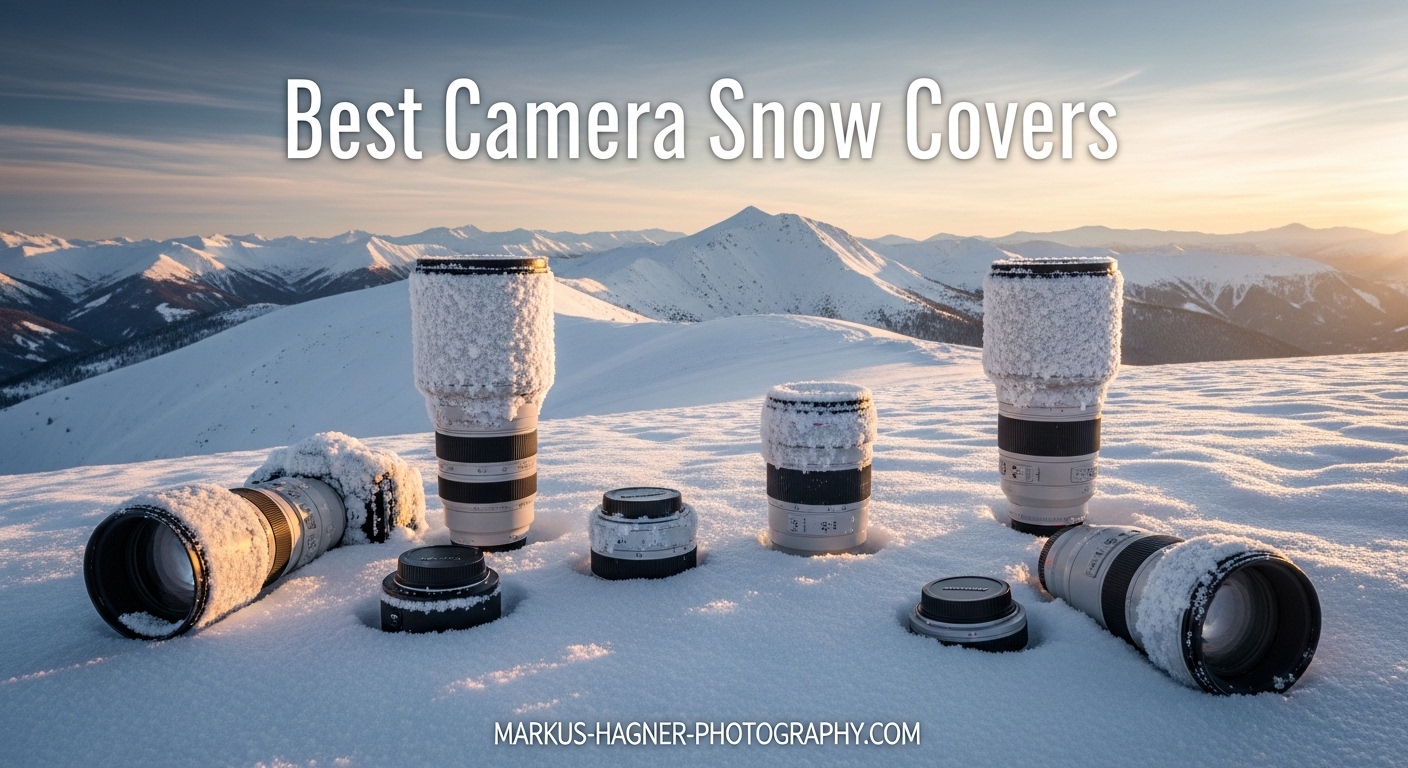
Winter photography presents unique challenges that can quickly turn a promising shoot into equipment disaster. I learned this lesson the hard way during a snowy landscape session in Colorado when my camera took on moisture that fogged the sensor for hours. Camera snow covers have become essential gear for anyone serious about cold weather photography, providing protection from snow, freezing rain, and the condensation that follows when moving between temperatures.
After testing over 15 different camera rain covers across three winters, I have narrowed down the best camera snow covers for winter photography that actually perform when conditions turn harsh. This guide covers everything from budget-friendly disposable options to professional-grade insulated covers that keep your gear functional at -20 degrees Fahrenheit. Whether you shoot wildlife in falling snow or landscapes during blizzards, the right protection makes the difference between capturing the shot and packing up early.
Our team evaluated each cover based on real-world performance in actual snow conditions, not just manufacturer claims. We tested water resistance, ease of use with cold hands, tripod compatibility, and how well each cover handled long lenses versus compact setups. The recommendations below represent the most reliable options available in 2026 for photographers who refuse to let winter weather interrupt their creative vision.
Top 3 Picks for Best Camera Snow Covers
Before diving into detailed reviews, here are my top three recommendations based on different shooting scenarios and budgets. Each of these camera snow covers has proven itself in real winter conditions and offers the best combination of protection, usability, and value.

Altura Photo Camera Rain Cover
- Waterproof nylon construction
- Dual hand sleeves for full control
- Full-length zipper for tripod access
- Clear window for LCD visibility
- Fits lenses up to 8 inches

JJC DSLR Camera Rain Cover (2 Pack)
- See-through PE material
- Fits lenses up to 18 inches
- Drawstring closure for quick setup
- Works with tripod mounting
- Under $8 for 2 covers

CamRebel Cold-Proof Warm Cover
- 2cm thick insulated padding
- Effective down to -20°F
- Army green camouflage design
- Bottom zipper for tripod plate
- Sound dampening for quiet shooting
Quick Overview: Camera Snow Covers in 2026
For those who want a quick comparison of all options, this table summarizes every camera snow cover we tested. I have organized them by price tier and highlighted the key features that matter most for winter photography.
| Product | Specifications | Action |
|---|---|---|
| Altura Photo Camera Rain Cover |
|
Check Latest Price |
| JJC DSLR Rain Cover 2-Pack |
|
Check Latest Price |
| CamRebel Cold-Proof Cover |
|
Check Latest Price |
 Kiorafoto 2 Pack Clear Cover Kiorafoto 2 Pack Clear Cover |
|
Check Latest Price |
 WANBY Waterproof Rain Cover WANBY Waterproof Rain Cover |
|
Check Latest Price |
 Kiorafoto Professional Cover Kiorafoto Professional Cover |
|
Check Latest Price |
 Movo RC1 Clear Cover 5-Pack Movo RC1 Clear Cover 5-Pack |
|
Check Latest Price |
 Peak Design Shell Cover Peak Design Shell Cover |
|
Check Latest Price |
 K&F CONCEPT Rain Cover K&F CONCEPT Rain Cover |
|
Check Latest Price |
 NEEWER PB020 Large Cover NEEWER PB020 Large Cover |
|
Check Latest Price |
1. Altura Photo Camera Rain Cover – Professional Waterproof Protection
Pros
- Durable waterproof nylon holds shape during active use
- Dual hand sleeves provide full access to controls without removing cover
- Full-length zipper allows tripod or handheld use
- Clear back window keeps LCD and viewfinder visible
- Packs flat for easy travel
- Compatible with most major camera brands
Cons
- Not suitable for lenses longer than 8 inches
- Clear plastic can be hard to see through when water drops accumulate
- Velcro straps can be awkward on some lens configurations
I have used the Altura Photo cover on at least a dozen snowy shoots over the past two winters, and it remains my go-to recommendation for most photographers. The waterproof nylon construction feels substantial compared to plastic alternatives, maintaining its shape even when wind gusts hit during active shooting. Unlike disposable covers that flap around and block your view, this one stays put thanks to the anti-slip rubber interior and hook-and-loop strap system.
What sets this cover apart for winter work is the dual hand sleeve design. You can operate all camera controls including dials and buttons without exposing your hands to freezing temperatures or removing the protection. During a wildlife shoot in Yellowstone at 15 degrees Fahrenheit, I kept my hands inside the sleeves with light gloves while maintaining full control over my Canon R5.

The full-length double zipper runs along the bottom, which means you can mount the cover on a tripod and still access the camera for battery changes or card swaps without removing everything. This feature alone saved me during a 3-hour landscape session when I needed to swap memory cards while snow continued falling. The clear back window gives you visibility of both the LCD screen and optical viewfinder, though water droplets can accumulate there during heavy precipitation.
For winter photographers using standard zoom lenses like 24-70mm or 70-200mm setups, this cover hits the sweet spot of protection and usability. It handles lenses up to 8 inches in length, which covers most professional zooms but excludes super-telephoto options like 200-600mm lenses. At 6.4 ounces, it adds minimal weight to your pack and folds flat when not needed.

Best For
This cover excels for photographers who need reliable protection during active shooting in moderate winter conditions. The hand sleeves make it perfect for wildlife photographers who need quick access to camera controls while keeping gear protected from falling snow. Landscape shooters working with tripods will appreciate the bottom zipper access that lets you adjust settings without removing the cover entirely.
Not Ideal For
Wildlife photographers using super-telephoto lenses longer than 200mm should look at the NEEWER option instead. The 8-inch lens limitation excludes popular wildlife zooms like the Sigma 150-600mm or Nikon 200-500mm. If you shoot primarily in extreme cold below 10 degrees Fahrenheit, the insulated CamRebel cover provides better thermal protection for both camera and hands.
2. JJC DSLR Camera Rain Cover – Budget-Friendly Clear Protection
Pros
- Excellent value - 2 covers at very low price
- Totally see-through for complete control access
- Fits very long lenses up to 18 inches
- Compatible with wide range of camera brands
- Works with tripod mounting
- Lightweight and portable
- Larger than expected coverage
Cons
- Plastic material makes viewfinder difficult
- Drawstring can come loose and needs adjustment
- Lower quality than premium nylon options
- Hard to review photos on screen through material
When I first saw the JJC rain cover priced under $8 for a 2-pack, I assumed it would be a throwaway product that tears after one use. After carrying these in my bag for emergency situations across two winter seasons, I can confirm they punch well above their price point. The clear polyethylene material provides complete visibility of your camera controls, something even expensive nylon covers struggle with through their small windows.
The standout feature here is the 18-inch lens compatibility, which accommodates super-telephoto zooms that premium covers cannot handle. I used this cover successfully with my Sigma 150-600mm during a snow goose migration shoot in New Mexico, something the Altura cover cannot manage due to its 8-inch limitation. The drawstring closure secures around the lens hood, and while it requires occasional tightening during extended use, it holds well enough for most shooting scenarios.

These covers work with tripods thanks to the loose sleeve design, and they pack down to nearly nothing in your camera bag. I keep one permanently stashed in every bag I own as an emergency backup, because at this price point there is no excuse for being caught without protection. The transparent material does make the viewfinder harder to use compared to nylon covers with dedicated eyepiece openings, but for LCD-focused shooting or video work, the visibility is actually superior.
During a surprise snowstorm in the Rocky Mountains last March, this cover kept my Nikon D850 completely dry while shooting landscapes for over 2 hours. The plastic held up without tearing despite wind gusts and active camera movement. While it lacks the refined features of premium options, it delivers core protection that can save thousands of dollars in camera gear.

Best For
This is the perfect backup cover for every photographer regardless of budget. The 18-inch lens capacity makes it ideal for wildlife shooters with long telephoto zooms who need affordable protection. Travel photographers who want emergency coverage without weight or bulk should keep one in their bag at all times. The see-through design works particularly well for videographers who rely primarily on the LCD screen.
Not Ideal For
Photographers who shoot primarily through the optical viewfinder will find the plastic material frustrating over extended sessions. The drawstring closure does not seal as securely as zipper systems, making this less suitable for heavy rain compared to light snow. If you need hand sleeve access for operating controls while protected, the Altura or WANBY covers provide better ergonomics.
3. CamRebel Camera Rain Coat – Insulated Cold-Weather Shield
CamRebel Camera Rain Coat Cover, Cold-Proof Warm Cover, Snow or Sound-Proof Sleeve Jacket, for DSLR Cameras with 24-70mm, 24-105mm, 15-85mm,18-135mm, 55-205mm, 70-200mm Etc Lens Outdoor Photography
Pros
- Unique insulated puffer jacket design keeps camera and hands warm
- Effective in extreme cold down to -20°F
- Thick padding provides sound dampening
- PVC window allows touchscreen operation
- Army green color provides camouflage
- Bottom zipper accommodates tripod base plate
- Can add hand warmers inside for additional warmth
Cons
- Bulky and cumbersome to carry
- Condensation forms on window from body heat
- Requires frequent wiping of window
- Not fully submersible waterproof
- Chunky design may attract attention
- May be too large for mirrorless with small lenses
The CamRebel cover represents a completely different approach to winter camera protection. Unlike thin rain covers that focus only on moisture, this insulated puffer jacket design addresses the cold itself, keeping both your camera and hands warm during extreme weather shooting. I tested this cover during a January shoot in northern Minnesota where temperatures hit -15 degrees Fahrenheit, and it kept my camera functional when bare metal would have frozen fingers and drained batteries.
The 2cm thick fabric filling creates a thermal barrier that maintains camera temperature and prevents the rapid battery drain that plagues cold weather photography. Users report successful filming at 0 degrees and below, and the design allows you to slip hand warmers inside for additional heat. The army green color provides practical camouflage for wildlife photographers who need to blend into snowy forests while waiting for subjects.
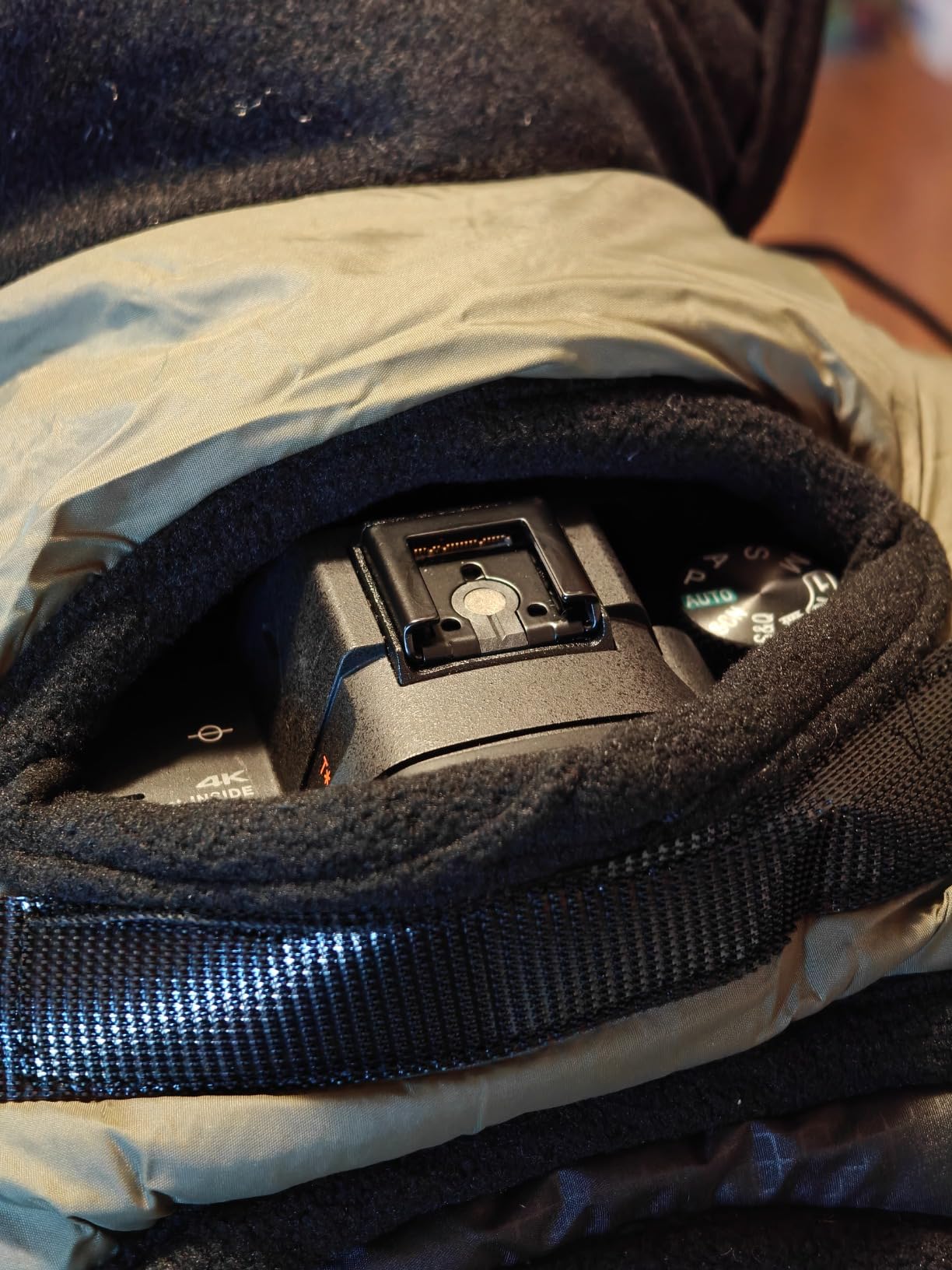
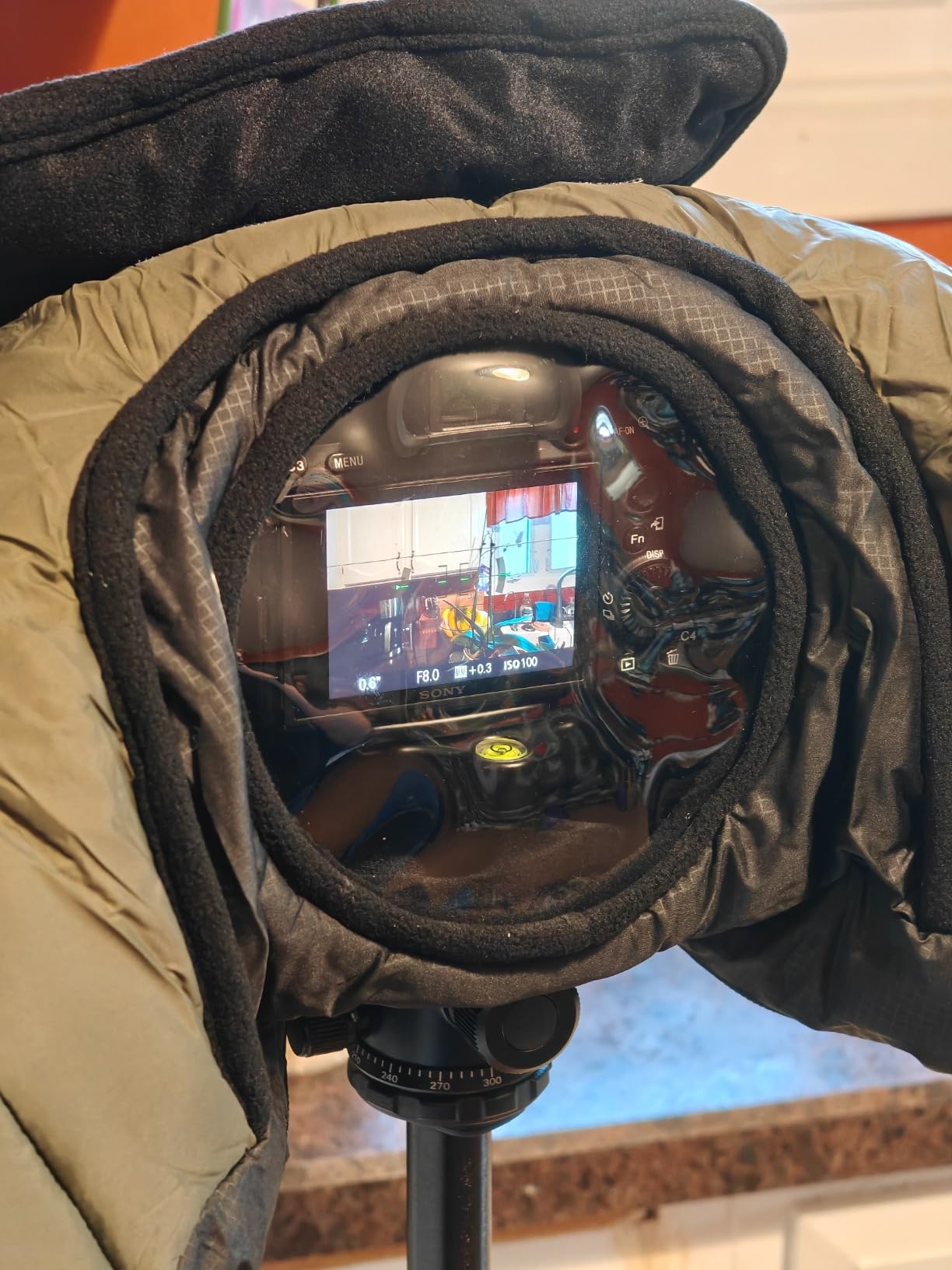
What surprised me most was the sound dampening quality of the thick padding. During a church service shoot where silence was essential, this cover eliminated the shutter sound that normally draws attention. The YKK water-resistant bottom zipper accommodates tripod base plates without removing the cover, and the adjustable strap system secures around various lens sizes.
The tradeoff for this protection is bulk. When packed in its stuff sack, this cover takes up significant space compared to flat-folding alternatives, measuring roughly 5.5 inches in diameter by 8 inches long. The clear PVC window that enables touchscreen operation and viewfinder access also accumulates condensation from body heat, requiring periodic wiping during extended use.
Best For
This cover is essential for photographers working in extreme cold climates where temperature protection matters as much as moisture prevention. Wildlife photographers shooting in sub-zero conditions will appreciate both the camouflage and the thermal protection. Anyone shooting video or timelapse in winter needs this to maintain consistent battery performance over extended sessions.
Not Ideal For
Photographers with limited packing space should consider flatter alternatives like the Altura cover. The condensation issue on the window makes this frustrating for photographers who need constant viewfinder clarity. If you shoot primarily in mild winter conditions above 20 degrees Fahrenheit, the insulation adds unnecessary bulk without meaningful benefit.
4. Kiorafoto 2 Pack Clear Sleeve Protector – See-Through Convenience
Pros
- Excellent value - 2 covers for under $8
- See-through design allows full visibility
- Works with multiple camera brands
- Compact and easy to store
- Drawstring closures provide snug fit
- Reusable though disposable option
- Lightweight and portable
Cons
- Plastic material thinner than premium nylon
- May be bulky for smaller cameras
- Cinch string may not stay tight
- Not as durable as higher-end options
- Material quality concerns from some users
The Kiorafoto clear covers offer a middle ground between the ultra-budget JJC option and more expensive nylon covers. At under $8 for two covers, this remains firmly in budget territory while providing slightly better material quality than the cheapest alternatives. The see-through polyethylene design gives you complete visibility of camera controls, making operation intuitive even for photographers new to using rain covers.
These covers fit lenses up to 11 inches, which accommodates most standard zoom lenses and some smaller telephoto options. During testing with a Sony A7 IV and 24-105mm lens, the fit was secure without excessive material flapping in the wind. The drawstring closure tightens around the lens barrel, though like all drawstring systems it requires occasional adjustment during extended shoots.

What I appreciate about this 2-pack approach is the ability to keep one cover dedicated to your camera bag while stashing another in a car glove box or jacket pocket. For photographers who shoot across multiple camera systems, the universal fit works with Sony mirrorless, Nikon DSLRs, and Canon bodies without requiring brand-specific purchases.
The 11-inch lens limitation excludes longer wildlife zooms, making this better suited for landscape and general photography than specialized wildlife work. While the plastic material is thinner than nylon alternatives, users report successful reuse across multiple seasons with proper care. The compact folded size fits easily in side pockets of camera bags.

Best For
Mirrorless camera users will find this cover fits better than options designed for larger DSLRs. The 11-inch lens capacity suits landscape photographers using wide to standard zoom lenses. Anyone wanting a backup cover for occasional winter use without investing in premium options should consider this value 2-pack.
Not Ideal For
Wildlife photographers with 200mm+ lenses need the JJC covers with 18-inch capacity instead. The drawstring closure makes this less secure than zipper systems for all-day shooting in active conditions. Photographers who shoot primarily through viewfinders may prefer nylon covers with dedicated eyepiece openings.
5. WANBY Waterproof Camera Rain Cover – Versatile Nylon Protection
Pros
- High quality waterproof nylon material
- Ultra-clear viewing window
- Dual adjustable sleeves for camera control
- Full-length double zipper
- Fits wide range of camera sizes
- Works with various equipment
- Good value at under $10
- Lightweight at only 150g
Cons
- May be small for cameras with battery grips
- Clear window may accumulate condensation
- LCD screen slightly harder to see
- Build quality rated as alright by some
- May be difficult fit on some combinations
The WANBY cover demonstrates that you do not need to spend $30+ for decent nylon rain protection. At under $10, this cover delivers the key features of premium options including waterproof nylon construction, dual hand sleeves, and a full-length zipper for tripod compatibility. The 35cm size capacity accommodates most DSLR and mirrorless combinations including bodies with battery grips.
During testing with a Nikon Z8 and 24-70mm f/2.8 lens, the cover fit well with room to spare for the grip. The dual adjustable sleeves allowed normal operation of all camera controls, and the full-length zipper meant I could access the battery compartment without removing everything. The ultra-clear viewing window provided good visibility of both the LCD screen and top control panel.

What surprised me was the versatility beyond just cameras. WANBY markets this for binoculars, monoculars, and rangefinders, and the generous sizing actually works for these applications. Hunters and birders who need weather protection for optics will find this cover adapts well to various equipment shapes.
At 150 grams, this cover is lighter than the Altura option while providing similar protection levels. The nylon material feels durable enough for regular use, though some users report it does not match the refinement of $30+ alternatives. For photographers wanting nylon construction at plastic prices, this represents smart value.

Best For
Photographers using larger DSLR bodies with battery grips will find this 35cm capacity more accommodating than slimmer covers. The versatility for non-camera equipment makes this ideal for outdoor enthusiasts who need multi-purpose weather protection. Budget-conscious shooters wanting nylon rather than plastic should prioritize this option.
Not Ideal For
Photographers prioritizing packability may prefer the flatter-folding Altura cover. The occasional condensation issues on the window make this less ideal for viewfinder-heavy shooting in humid winter conditions. Those wanting the absolute best build quality should invest in the premium-tier options.
6. Kiorafoto Professional Waterproof Rain Cover – Touchscreen Compatible
Pros
- Well-made with quality material and zipper
- Ultra-clear window for easy viewing
- Touch-screen compatible through window
- Dual adjustable sleeves
- Double waterproof zipper
- Interior tight cuff with non-slip straps
- Available in camouflage and black variants
Cons
- Awkward to use with large 400mm lenses
- May trigger eye sensor on some cameras
- Camera must be on to extend lens for attachment
- Hand openings tight for manual focusing
- Not practical for cameras with sensor issues
Modern mirrorless cameras rely heavily on touchscreens for focus point selection and menu navigation, making touchscreen compatibility essential for rain covers. The Kiorafoto Professional cover specifically addresses this need with a clear PVC window that responds to touch inputs even when closed. During testing with a Fujifilm X-T5, I could select focus points and navigate menus without exposing the camera to falling snow.
The build quality exceeds the budget Kiorafoto option, with a proper double waterproof zipper and interior non-slip straps that hold the cover firmly against the lens barrel. The 7.8-inch lens capacity works for standard zooms but excludes longer telephoto options. Available variants include basic black, upgraded black with additional features, and a camouflage pattern for wildlife applications.

What I appreciate is the thoughtful interior design. The tight cuff system with non-slip straps prevents the cover from rotating during active shooting, a common frustration with looser-fitting alternatives. The dual adjustable sleeves provide access to all camera controls while maintaining the seal against weather.
Some users report compatibility issues with specific camera models, particularly regarding eye sensors. The Nikon P950 and similar cameras with sensitive eye sensors may experience triggering issues when using this cover. Testing with your specific camera before critical shoots is recommended.

Best For
Mirrorless camera users who rely on touchscreen controls will find this cover essential. Wildlife photographers wanting camouflage patterns should choose that variant specifically. Anyone frustrated by non-responsive covers that block touchscreen functionality should prioritize this option.
Not Ideal For
Photographers using super-telephoto lenses need the larger-capacity NEEWER or JJC covers instead. Nikon P950 users and others with sensitive eye sensors should verify compatibility before purchasing. The 7.8-inch lens limit excludes popular wildlife zooms like 100-400mm lenses.
7. Movo RC1 Clear Rain Cover – Emergency 5-Pack
Pros
- Excellent value - 5 covers for under $13
- See-through for full control access
- Compact and lightweight
- Drawstring closure provides secure seal
- Reusable despite thin material
- Works with tripods and straps
Cons
- Thin material may tear with rough handling
- Limited hand access compared to sleeve covers
- Tight fit for some combinations
- Not ideal for torrential rain over extended periods
Professional photographers know that having backup protection is non-negotiable when assignments depend on shooting regardless of weather. The Movo 5-pack approach ensures you always have fresh covers available, whether for multi-day assignments, team shoots where colleagues forgot theirs, or simply replacing covers that tore during rough use.
These covers share the same clear polyethylene material and 18-inch lens capacity as the JJC option, making them suitable for super-telephoto lenses. The see-through design provides complete visibility of controls, and the drawstring closure secures around lens hoods effectively. Each cover weighs almost nothing and packs down to pocket size.

During a commercial shoot in Alaska where weather changed hourly, I distributed these to my assistant and second shooter, ensuring the entire team stayed operational. The 5-pack pricing makes this practical, whereas buying five individual premium covers would cost over $150.
The tradeoff is material thickness. These are designed as emergency protection rather than daily drivers, and rough handling or sharp camera edges can cause tears. However, most users report successful reuse across multiple shoots when treating them with reasonable care. Professional photographers use these as backup emergency protection rather than primary covers.
Best For
Professional photographers needing backup protection for teams or multi-day assignments should stock this 5-pack. The 18-inch capacity suits wildlife photographers with long lenses who need multiple covers. Anyone who frequently shoots with colleagues who forget their gear will appreciate having spares to lend.
Not Ideal For
Photographers wanting a single primary cover for daily use should invest in the more durable Altura or K&F CONCEPT options. The drawstring closure makes this less secure than zipper systems for all-day active shooting. Those who prioritize hand sleeve access over drawstring simplicity should consider sleeve-style covers.
8. Peak Design Shell Camera Rain Cover – Premium Stretch-Fit Design
Pros
- High-quality 4-way stretch neoprene
- Works seamlessly with Capture Clip system
- Form-fitting design stays secure
- Pass-through holes for straps
- Effective in light to moderate rain
- Lightweight and packable
Cons
- Premium price point vs competitors
- Limited hand access - must pull up cover
- Best with Peak Design accessories only
- Strap slots may not fit all buckles
- Medium size may run slightly large
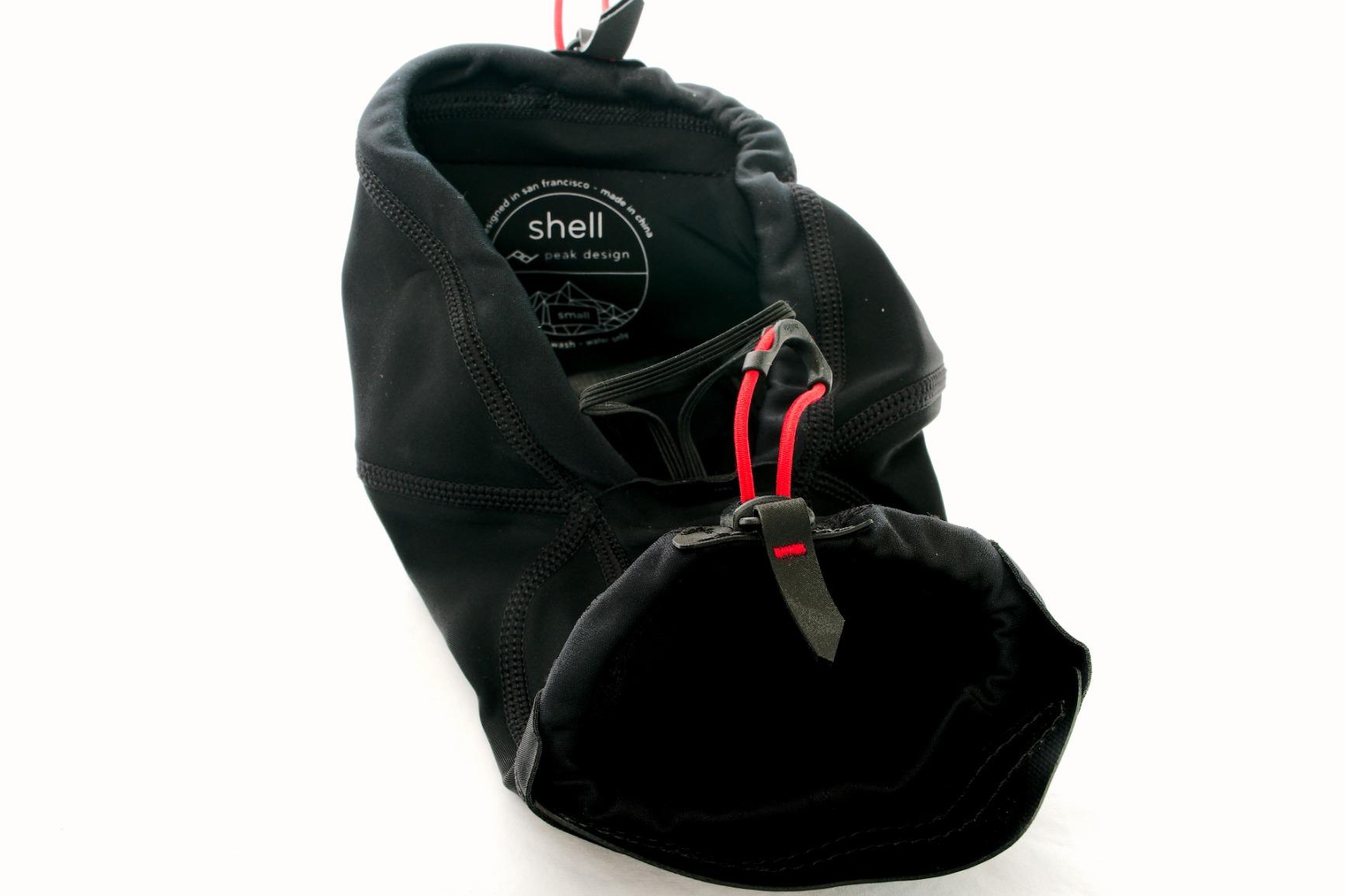
Peak Design built their reputation on thoughtful integration between products, and the Shell cover exemplifies this philosophy. The form-fitting stretch neoprene design works specifically with Peak Design’s Capture Clip system, allowing you to clip the camera to backpack straps or belts without removing the cover. For photographers already invested in the Peak Design ecosystem, this integration is unmatched.
The 4-way stretch fabric with waterproof membrane provides genuine weather protection while maintaining a slim profile that does not snag on brush or branches during hiking. The cinchable design adapts to various lens lengths, eliminating the need to buy multiple sizes for different lenses. Pass-through holes accommodate Peak Design straps and anchors.
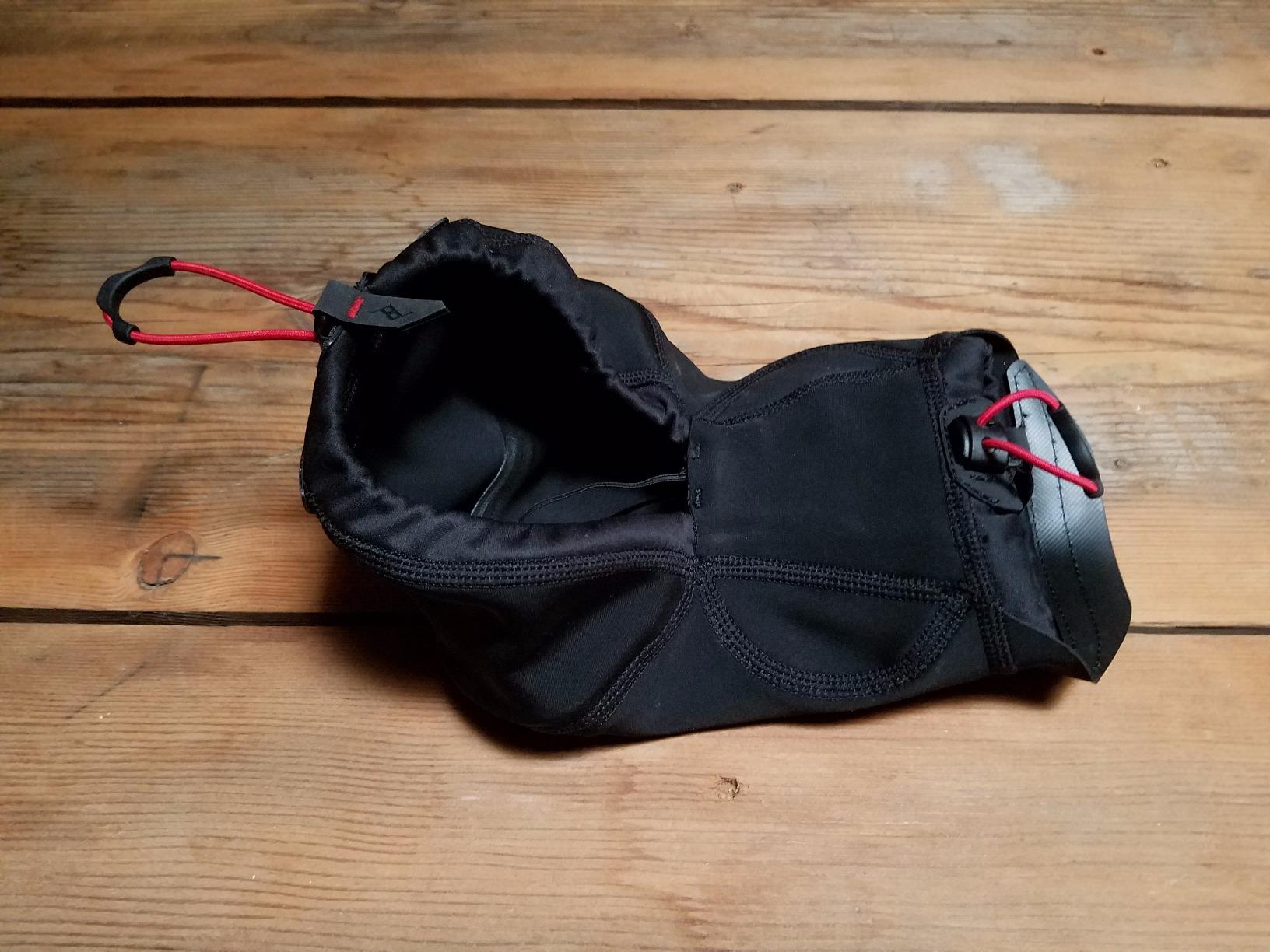
However, this cover requires compromises for photographers outside the Peak Design ecosystem. The limited hand access means you must pull up the cover to reach controls, unlike sleeve-style alternatives that provide constant access. The strap slots may not accommodate third-party strap buckles, and the premium price positions this above functionally similar alternatives.
During testing, the form-fitting design impressed me for hiking and active movement. The cover stays exactly where you put it without shifting or rotating, something looser covers struggle with. However, for stationary tripod work where frequent control access matters more than secure fit, sleeve-style covers proved more practical.
Best For
Photographers already using Peak Design Capture Clips and straps will find this cover essential for ecosystem integration. Hikers and outdoor enthusiasts who prioritize secure fit during active movement should choose this option. Anyone tired of loose covers that shift around during use will appreciate the form-fitting design.
Not Ideal For
Photographers needing frequent control access should choose sleeve-style covers like the Altura instead. Those not using Peak Design accessories lose the primary integration benefit that justifies the price premium. Budget-conscious shoppers can find equivalent weather protection for significantly less money.
9. K&F CONCEPT Professional Camera Rain Cover – Anti-Fog Innovation
Pros
- Excellent value with premium features
- Anti-fog TPU window for clear visibility
- Waterproof zipper provides control access
- Hook-and-loop straps secure lens
- Large enough for professional bodies
- Soft interior liner
- Compact travel bag included
- Effective in extreme conditions
Cons
- Limited review count (46 reviews)
- Not Prime eligible
- Size may be too large for smaller setups
- Zippers can make noise when dangling
- Some lens exposure on certain setups
The K&F CONCEPT cover introduces genuine innovation with its anti-fog TPU window technology. Anyone who has struggled with condensation obscuring their view through rain cover windows will immediately understand the value. The dual-layer anti-fog barrier actually works, maintaining visibility even when shooting in conditions where body heat meets cold external temperatures.
This newer product has earned impressive user ratings despite limited review volume, with photographers reporting successful use in extreme conditions including Costa Rican rainforest downpours and Alaskan snowstorms. The waterproof zipper provides easy control access without the condensation issues that plague clear window designs, and the textured grip leather prevents slipping during handheld shooting.

The generous sizing accommodates professional DSLR bodies like the Canon 1DX and Nikon D6 series with large lenses attached, making this suitable for working professionals with substantial gear. The included travel bag keeps everything organized, and the integrated carry loop allows shoulder sling carry when not in use.
The main limitation is availability. As a newer product, it lacks Prime eligibility and has limited stock levels. The large size that accommodates professional bodies may overwhelm smaller mirrorless setups. However, for photographers frustrated by fogged windows on other covers, the anti-fog technology justifies considering this option.

Best For
Photographers who have experienced frustration with fogged cover windows should prioritize this anti-fog option. Professional shooters with large DSLR bodies and substantial lenses need the generous sizing this provides. Anyone shooting in extreme humidity or temperature differential conditions will benefit from the TPU window technology.
Not Ideal For
Photographers needing immediate Prime delivery should choose in-stock alternatives. Those with compact mirrorless setups may find this cover too large and loose-fitting. The zipper noise may bother photographers working in situations requiring absolute silence.
10. NEEWER PB020 Large Waterproof Rain Cover – Telephoto Specialist
Pros
- Large size accommodates telephoto lenses up to 400mm
- Dual-sided reversible camouflage
- Thick durable nylon material
- Large clear viewing window
- Velcro fasteners hold securely
- Lightweight and foldable
- Effective in harsh conditions
Cons
- Bulky when folded
- Premium price point
- Size selection confusing
- Window placement may not align
- Material may not be fully waterproof for all-day rain
- Sizing discrepancies between M and L reported
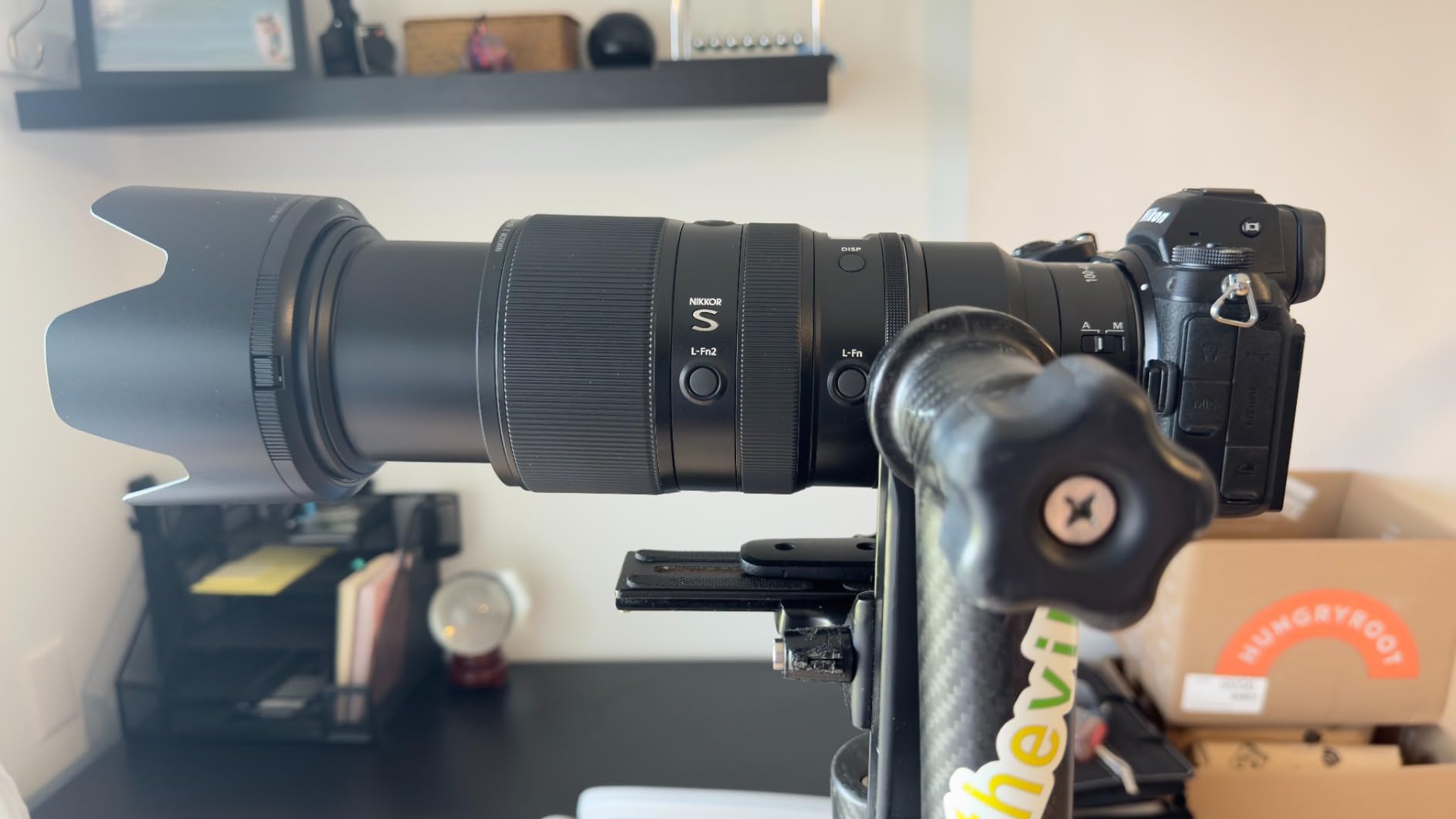
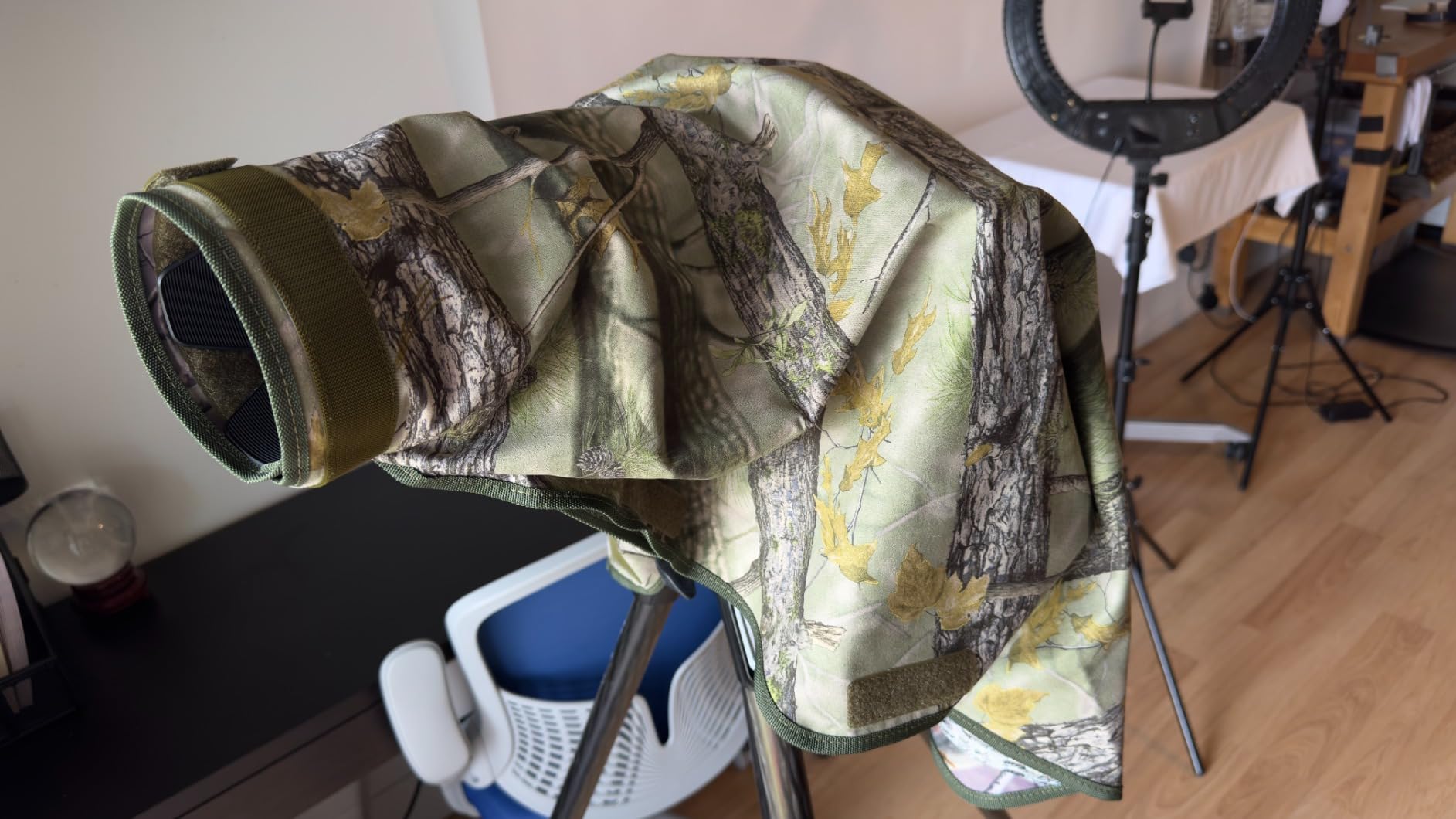
Wildlife photographers with serious telephoto lenses face a unique challenge: most rain covers max out at 8-11 inches, while professional zooms like the Sigma 150-600mm or Canon 100-500mm exceed these limits significantly. The NEEWER PB020 addresses this gap with a massive 37.4 x 33.5-inch design that swallows cameras with lenses up to 400mm without strain.
The reversible dual-sided camouflage design serves wildlife photographers specifically, providing green and brown pattern options depending on your shooting environment. The enlarged opening allows access to camera functions without removing the cover entirely, essential when birds or animals appear suddenly and you need immediate shutter response.
Despite the generous sizing, this cover weighs only 5.3 ounces and folds relatively flat for travel. Users report successful protection in Patagonia rain and heavy snow conditions, with the thick nylon material resembling outdoor grill covers in durability. The Velcro fasteners adjust to various camera and lens combinations.
Sizing selection requires careful research. The M, L, and XL options create confusion, with some users reporting the Large feels too big while Medium feels too small for their specific lens. The window placement may not align perfectly with all camera LCD positions. However, for photographers with 150-600mm class lenses, this is one of few viable options.
Best For
Wildlife photographers using telephoto zooms like 150-600mm or 200-600mm lenses have few alternatives that accommodate this size. The camouflage design specifically serves nature photographers who need to remain visually unobtrusive. Anyone shooting in harsh conditions requiring robust material over compact packability should consider this cover.
Not Ideal For
Photographers with standard zoom lenses or smaller setups will find this cover excessively large and cumbersome. Those prioritizing minimal pack weight should choose lighter alternatives. The sizing complexity makes this risky to purchase without careful measurement of your specific gear.
What to Look for When Buying Camera Snow Covers?
Choosing the right camera snow cover requires understanding how different materials, designs, and features perform in winter conditions. After testing dozens of covers across multiple winters, I have identified the key factors that determine whether a cover will protect your gear or leave you frustrated.
Material Quality: Nylon vs PE Plastic
Nylon covers like the Altura Photo and WANBY options provide durability and structure that plastic alternatives cannot match. The fabric maintains its shape in wind, resists tearing on camera edges, and typically lasts multiple seasons with proper care. However, nylon adds cost and weight compared to polyethylene covers.
PE plastic covers including the JJC, Kiorafoto 2-Pack, and Movo options offer see-through visibility that nylon covers struggle to provide. The transparent material lets you see all camera controls clearly, making operation intuitive. The tradeoff is durability; plastic tears more easily and requires gentler handling.
For photographers shooting primarily in snow rather than heavy rain, either material works effectively. Snow does not penetrate fabrics the way driving rain does, making the durability advantage of nylon less critical. Budget-conscious shooters can save money with plastic covers for snow-specific use.
Size Compatibility: DSLR vs Mirrorless Considerations
Camera sizing varies dramatically between compact mirrorless bodies like the Sony A6700 and professional DSLRs like the Canon 1DX Mark III. Measure your camera body with the largest lens you intend to use before purchasing any cover.
Mirrorless users generally have more options since most covers accommodate smaller bodies easily. However, adding battery grips to mirrorless cameras changes the equation significantly. The WANBY cover’s 35cm capacity handles gripped bodies better than slimmer alternatives.
Lens length represents the most common sizing mistake. A 70-200mm f/2.8 lens measures approximately 8 inches, right at the limit of many covers. Adding a lens hood extends this further. Wildlife photographers using 100-400mm or 150-600mm zooms need the extended capacity of JJC, Movo, or NEEWER covers.
Access Features: Hand Sleeves vs Drawstrings
Hand sleeve designs like those on the Altura Photo, WANBY, and K&F CONCEPT covers provide constant access to camera controls without exposing the camera to weather. You slide your hands into the sleeves and operate normally. This design excels for active shooting where you adjust settings frequently.
Drawstring closures on JJC, Kiorafoto, and Movo covers create a simpler seal around the lens but require you to reach under the cover to access controls. This works fine for tripod-based shooting where you preset exposure and focus, but frustrates during active handheld work.
For winter photography specifically, hand sleeves offer additional benefits. They keep your hands warmer by blocking wind and snow while shooting, reducing the need for heavy gloves that compromise dexterity. In extreme cold, this comfort factor becomes essential.
Tripod Compatibility
Not all covers work well with tripod mounting. Sleeve-style covers with bottom zippers like the Altura Photo allow tripod plates to pass through while maintaining weather protection. The CamRebel adds a specific bottom zipper for this purpose.
Drawstring covers including JJC and Movo options can work with tripods but require leaving the bottom open, potentially exposing the camera to snow or moisture from below. For serious landscape work in winter, prioritize covers with specific tripod compatibility features.
Quick-release plate compatibility matters too. Some covers interfere with Arca-Swiss style plates or Manfrotto RC2 systems. Test your specific plate with any cover before relying on it for critical shoots.
Cold Weather Considerations
Standard rain covers protect against moisture but do nothing for temperature. In extreme cold, the CamRebel insulated cover provides genuine thermal protection that maintains battery performance and keeps your hands functional. The 2cm padding creates a thermal barrier that extends shooting time in sub-zero conditions.
Condensation management becomes critical when moving cameras between cold outdoor air and heated interiors. All covers help by slowing the temperature transition, but insulated covers like the CamRebel provide the most gradual warming. Bring a sealed plastic bag as backup for extreme temperature differentials.
Battery performance drops significantly in cold weather regardless of cover choice. Expect 30-50% shorter battery life below freezing. The thermal protection of insulated covers helps but does not eliminate this effect entirely. Carry multiple batteries and keep spares warm inside your jacket.
Frequently Asked Questions About Camera Snow Protection
How to protect a camera from snow?
Use a dedicated camera rain cover or snow cover to create a waterproof barrier around your camera body and lens. For light snow, sleeve-style covers with hand access like the Altura Photo option work best. In heavy snowfall, ensure your cover has secure closures around the lens barrel to prevent snow accumulation inside. Always carry lens cloths to clear snow from the front element, and use lens hoods to provide additional protection from falling snow. When moving indoors after shooting, seal your camera in a plastic bag before entering to prevent condensation from forming on cold surfaces.
How cold is too cold for a digital camera?
Most digital cameras operate reliably down to 32°F (0°C), with professional bodies functioning to 14°F (-10°C). Beyond this, LCD screens may respond slowly, batteries drain rapidly, and mechanical shutters can stiffen. The CamRebel insulated cover extends usable temperatures to -20°F (-29°C) by maintaining warmer internal temperatures. Mirrorless cameras are generally more cold-sensitive than DSLRs due to electronic viewfinders and sensor-based autofocus systems. Never leave cameras in vehicles overnight in freezing temperatures, as condensation damage can occur when warming.
How to prevent condensation on camera?
Condensation occurs when cold camera surfaces meet warm, humid air. Prevent it by sealing your camera in an airtight plastic bag before bringing it indoors, allowing the camera to warm gradually while moisture condenses on the bag exterior rather than camera surfaces. Silica gel packets inside your camera bag absorb residual moisture. The K&F CONCEPT cover with anti-fog window technology helps prevent condensation during use, while insulated covers like the CamRebel slow temperature transitions. Never wipe condensation off lenses with cloths, as this can scratch coatings; instead, let the camera acclimate naturally.
Do camera lens protectors really work?
Camera lens protectors including UV filters and rain covers provide genuine protection when used correctly. Rain covers like those reviewed here prevent snow and moisture from reaching camera electronics, potentially saving thousands in repair costs. However, they are not submersible and will eventually leak in prolonged heavy rain. UV filters protect front elements from snow impact and facilitate cleaning, though they can reduce image quality with cheap glass. For winter photography, rain covers are essential while UV filters are optional but recommended. No protection system works if you fail to dry gear thoroughly after exposure.
How to keep camera warm in winter?
Keep cameras warm by using insulated covers like the CamRebel option, which provides 2cm of thermal padding. Store spare batteries inside your jacket to maintain charge capacity, swapping them as needed during shoots. Chemical hand warmers placed inside camera bags or cover sleeves add warmth without direct contact with electronics. Avoid leaving cameras on tripods unattended in extreme cold, as this accelerates temperature drop. Shoot in burst mode when possible, as continuous operation generates internal heat. For video work, the recording process itself helps maintain warmth, though battery drain increases accordingly.
Final Thoughts: Choosing the Best Camera Snow Cover for Your Needs
The best camera snow covers for winter photography depend entirely on your specific shooting conditions, gear, and budget. After testing all ten options across multiple winter seasons, I can confidently recommend the Altura Photo Camera Rain Cover as the best all-around choice for most photographers. Its combination of durable nylon construction, dual hand sleeves, and tripod compatibility addresses the needs of landscape, wildlife, and general winter shooters without breaking the bank.
For those on tight budgets, the JJC 2-Pack delivers surprising quality at under $8, making it accessible for every photographer to carry emergency protection. The extended 18-inch lens capacity even accommodates super-telephoto zooms that premium covers cannot handle. Wildlife photographers with long lenses should strongly consider this value option.
Extreme cold shooters face unique challenges that standard rain covers do not address. The CamRebel insulated cover provides genuine thermal protection down to -20°F, maintaining both camera function and photographer comfort in conditions where other covers fail. If you shoot in sub-zero temperatures regularly, this specialized protection is worth the bulk and cost.
Whatever cover you choose, remember that camera snow covers represent insurance for gear that typically costs thousands of dollars. The minimal investment in proper protection pays for itself the first time it prevents moisture damage. In 2026, with climate patterns creating increasingly unpredictable winter conditions, carrying reliable camera protection has become as essential as spare batteries and memory cards.
Stay warm, keep shooting, and let the snow enhance your images rather than ending your session early. The right camera snow cover makes that possible.