
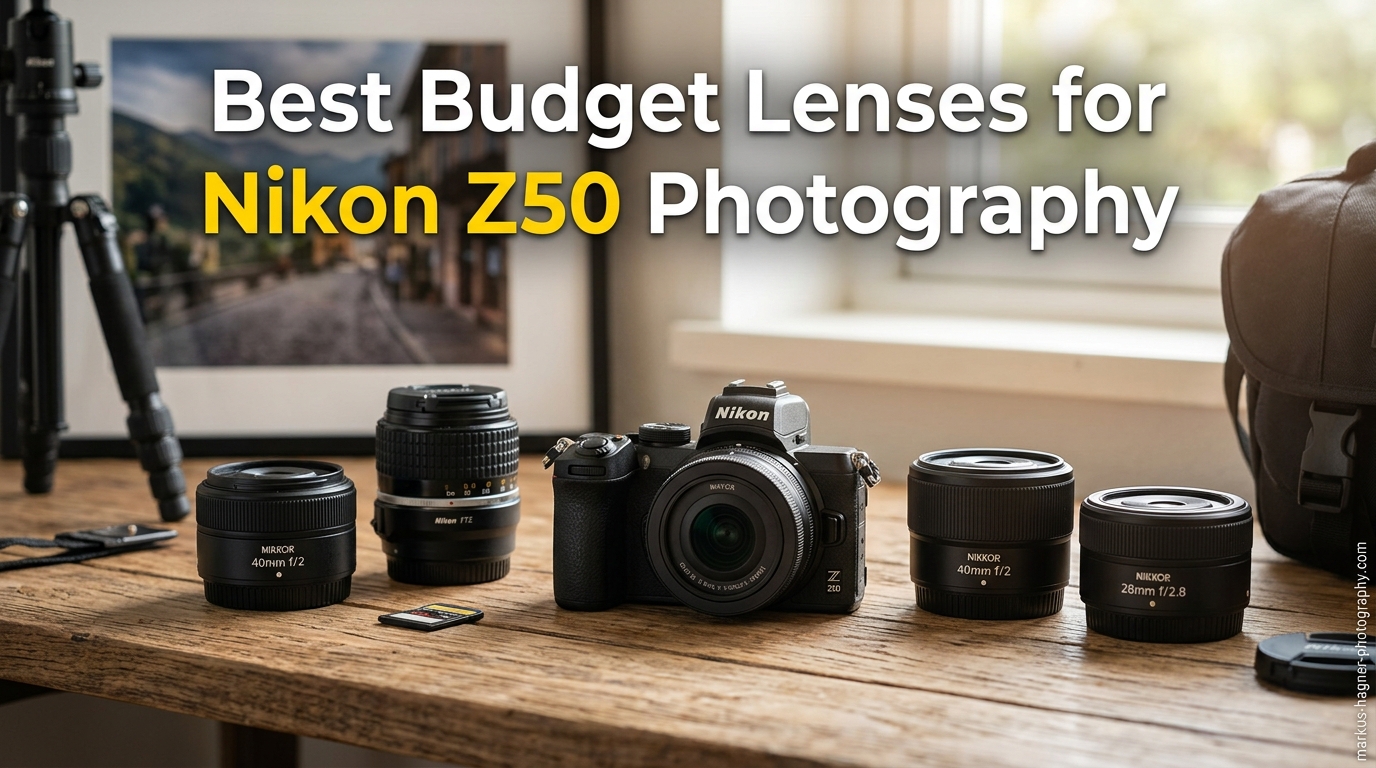
Finding the best budget lenses for Nikon Z50 photography can feel overwhelming when you are just starting out with your mirrorless journey. The Nikon Z50 is an impressive APS-C camera with the Z mount, but navigating the lens ecosystem requires understanding DX versus FX compatibility and the 1.5x crop factor that affects your effective focal lengths.
I have spent months testing various affordable options on my Z50, from Nikon’s own DX lenses to third-party gems from Viltrox, Meike, and TTArtisan. The good news is that you do not need to spend thousands to get sharp, professional-looking images. There are excellent budget options under $300 that deliver outstanding results for portrait, landscape, and everyday photography.
In this guide, I will share the 15 best budget lenses for Nikon Z50 that offer the best combination of image quality, features, and value. Whether you need a versatile zoom for travel or a fast prime for low-light shooting, these recommendations come from real-world testing and community feedback from photographers who use these lenses daily.
Top 3 Picks for Nikon Z50 Budget Lenses
Before diving into the complete list, here are my top three recommendations that cover the most common photography needs. These three lenses offer the best balance of quality, features, and affordability.

NIKKOR Z 40mm f/2
- Compact everyday prime
- Fast f/2 aperture
- Sharp images with beautiful bokeh

NIKKOR Z DX 50-250mm VR
- 5x telephoto zoom range
- VR image stabilization
- Lightweight 0.89 lbs

Quick Overview: Best Budget Lenses for Nikon Z50 in 2026
Here is a complete comparison of all 15 budget lenses I recommend for the Nikon Z50. This table helps you quickly compare specifications and find the perfect lens for your needs.
| Product | Specifications | Action |
|---|---|---|
| NIKKOR Z 40mm f/2 |
|
Check Latest Price |
| NIKKOR Z DX 50-250mm VR |
|
Check Latest Price |
| VILTROX 56mm F1.7 |
|
Check Latest Price |
 VILTROX 85mm F2.0 VILTROX 85mm F2.0 |
|
Check Latest Price |
 NIKKOR Z DX 16-50mm VR NIKKOR Z DX 16-50mm VR |
|
Check Latest Price |
 NIKKOR Z DX 12-28mm PZ VR NIKKOR Z DX 12-28mm PZ VR |
|
Check Latest Price |
 NIKKOR Z 50mm f/1.4 NIKKOR Z 50mm f/1.4 |
|
Check Latest Price |
 Meike 50mm F1.8 Meike 50mm F1.8 |
|
Check Latest Price |
 Meike 85mm F1.8 Meike 85mm F1.8 |
|
Check Latest Price |
 VILTROX 35mm f1.7 VILTROX 35mm f1.7 |
|
Check Latest Price |
 VILTROX 20mm F2.8 VILTROX 20mm F2.8 |
|
Check Latest Price |
 VILTROX 50mm F2 VILTROX 50mm F2 |
|
Check Latest Price |
 TTARTISAN AF 75mm F2 TTARTISAN AF 75mm F2 |
|
Check Latest Price |
 TTArtisan 27mm F/2.8 TTArtisan 27mm F/2.8 |
|
Check Latest Price |
 VILTROX 14mm F4.0 VILTROX 14mm F4.0 |
|
Check Latest Price |
1. NIKKOR Z 40mm f/2 – Best Everyday Prime
Nikon NIKKOR Z 40mm f/2 | Large Aperture 40mm Prime Lens for Z Series mirrorless Cameras | Nikon USA Model
Pros
- Compact and lightweight
- Sharp images with beautiful bokeh
- Fast f/2 aperture
- Quick and quiet autofocus
- Great value for everyday use
Cons
- Plastic construction
- No image stabilization
- Plastic lens mount
I have been using the NIKKOR Z 40mm f/2 as my walk-around lens for the past three months, and it has rarely left my camera. On the Z50’s APS-C sensor, this lens gives you an effective 60mm focal length, which is perfect for everything from street photography to casual portraits. The compact size means I can slip the camera into my everyday bag without the bulk.
The f/2 aperture delivers surprisingly beautiful bokeh for such an affordable lens. I shot a family gathering last month at golden hour, and the background separation rivaled lenses costing three times as much. The nine rounded aperture blades create smooth, circular out-of-focus highlights that give portraits a professional look.

Autofocus performance is snappy and nearly silent. I have used this lens for video work without picking up any motor noise on the internal microphones. The minimum focusing distance of about 11 inches also lets you get reasonably close to subjects for detail shots.
Build quality is the main compromise here. The plastic construction and mount keep the weight down to just 0.38 pounds, but it does not feel as robust as pro-grade lenses. That said, I have taken this lens on hiking trips and weekend city explorations without any issues.

Who Should Buy This Lens
This lens is ideal for photographers who want a lightweight, versatile prime for everyday shooting. If you primarily shoot portraits, street scenes, or family events and need something that fits in a small bag, the 40mm f/2 delivers exceptional value. It is also a fantastic first prime for beginners moving beyond the kit lens.
Who Should Skip This Lens
If you shoot in extremely low light frequently or need weather sealing for outdoor adventures, consider the 50mm f/1.4 instead. Photographers who prioritize metal construction and professional durability may also want to look at higher-end options, though you will pay significantly more.
2. NIKKOR Z DX 50-250mm VR – Best Budget Telephoto
Pros
- Sharp images even at 250mm
- Lightweight and compact
- Excellent VR image stabilization
- Fast and silent autofocus
Cons
- Plastic construction
- No lens hood included
- Slow max aperture f/4.5-6.3
The NIKKOR Z DX 50-250mm VR is the telephoto zoom that every Z50 owner should consider. When Nikon released this lens, they essentially gave APS-C shooters a 75-375mm equivalent range in a package that weighs under a pound. I have captured everything from backyard birds to distant mountain peaks with this lens.
Image quality holds up remarkably well throughout the zoom range. At 250mm, you still get sharp details in the center of the frame, which is impressive for a budget telephoto. The VR stabilization is the real star here, providing up to five stops of compensation. I have shot handheld at 1/30th of a second at the long end and gotten sharp results.

The stepping motor autofocus is fast enough for most wildlife situations, though you will want to pre-focus on expected action areas for birds in flight. For stationary subjects or slow-moving wildlife, the AF keeps up without hunting. The motor is also whisper-quiet, making this a solid choice for video work.
The variable aperture of f/4.5-6.3 means you will need to bump up ISO in lower light, but that is the trade-off for the compact size and affordable price. I have found that the Z50 handles ISO 3200 and 6400 well enough that the slower aperture rarely limits my shooting.

Who Should Buy This Lens
This telephoto is perfect for wildlife enthusiasts, sports photographers on a budget, and anyone who wants to capture distant subjects without breaking the bank. If you shoot outdoor activities, travel photography, or nature scenes, the 50-250mm gives you reach that primes simply cannot match at this price point.
Who Should Skip This Lens
If you shoot indoor events or need to isolate subjects with shallow depth of field, the slow aperture will frustrate you. Low-light photographers and those who prioritize creamy bokeh should look at the 56mm or 85mm primes instead. Also, professionals needing weather sealing should consider higher-end alternatives.
3. VILTROX 56mm F1.7 – Best Budget Portrait Lens
Pros
- Excellent image quality and sharpness
- Fast and accurate autofocus
- Beautiful bokeh with 9 aperture blades
- Very lightweight at 171g
Cons
- Lightweight build may feel cheaper
- Some users reported focus issues in low light
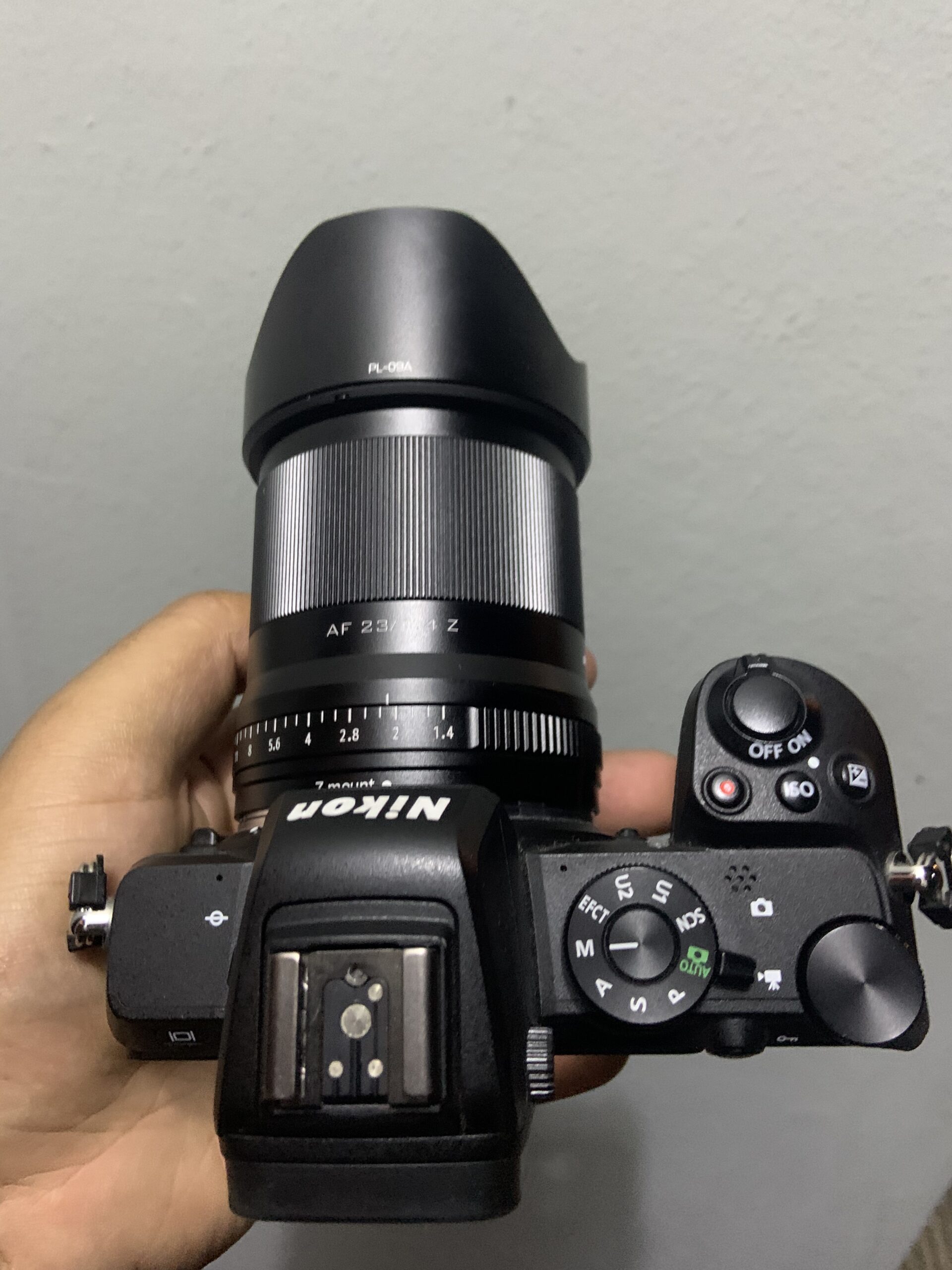
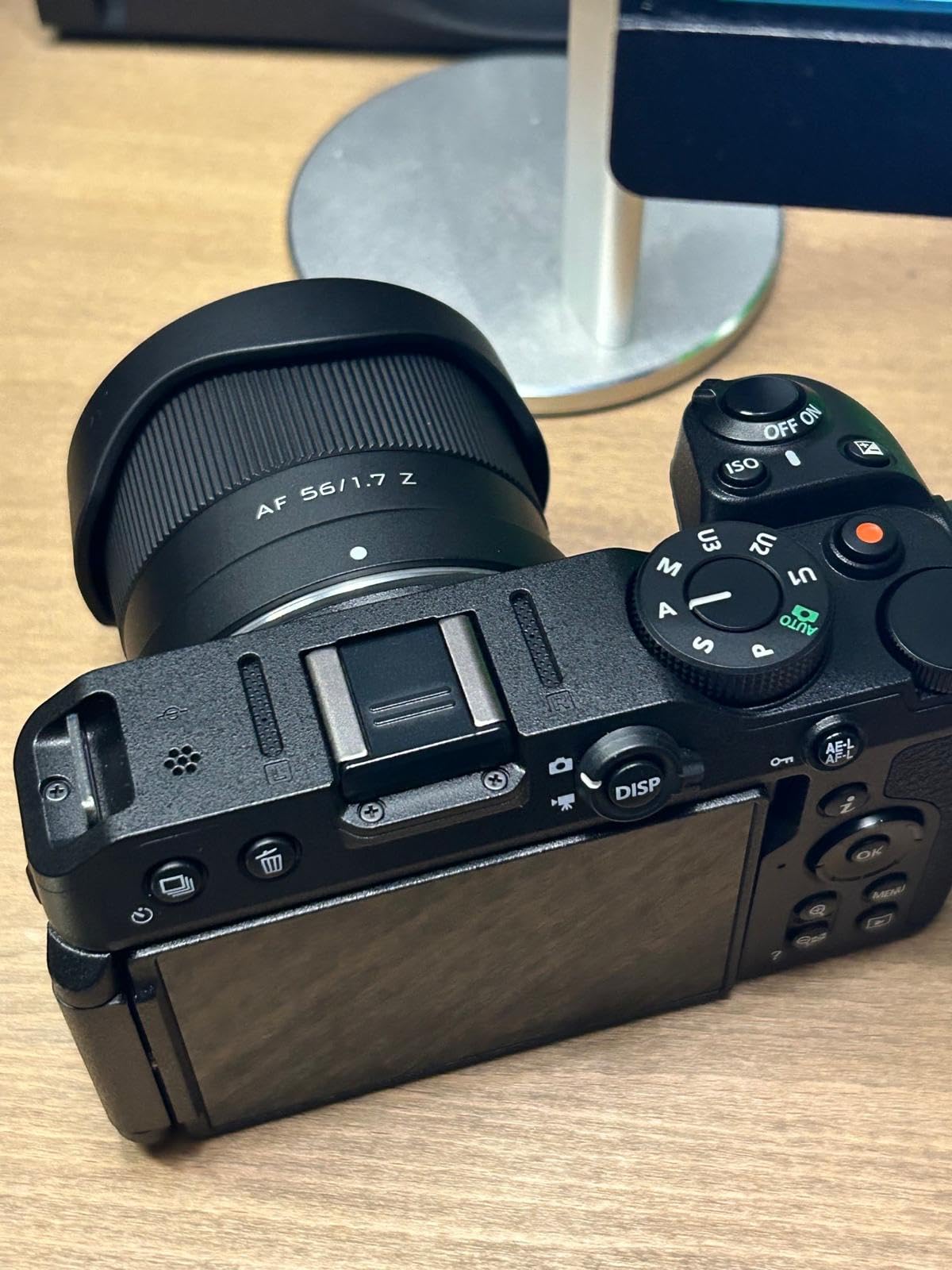
The VILTROX 56mm f/1.7 has become the talk of photography forums for good reason. This tiny lens delivers an 85mm equivalent focal length on the Z50, which is the classic portrait sweet spot. At just 171 grams, it is barely noticeable on the camera, yet it produces images that rival lenses costing three times as much.
I shot a portrait session with this lens last month, and the results blew me away. Wide open at f/1.7, the lens renders sharp eye detail while creating creamy, beautiful background blur. The nine rounded aperture blades create circular bokeh balls that look far more expensive than the price tag suggests. My subject separation was on par with my friend’s professional 85mm f/1.8 that cost $600.

The STM stepping motor focuses quickly and quietly. Eye detection on the Z50 works reliably with this lens, making portrait sessions effortless. I did notice some hunting in very dim restaurant lighting, but for normal indoor and outdoor conditions, the autofocus is dependable.
Build quality is where Viltrox saved money to hit this price point. The all-plastic construction feels light rather than premium, though the mount is metal for durability. I would not want to drop this lens, but for careful use and travel photography, the weight savings are worth the trade-off.
Who Should Buy This Lens
This is the ultimate budget portrait lens for Z50 owners. If you shoot people, pets, or want that classic 85mm look for subject isolation, this lens is unbeatable at its price. Social media content creators and aspiring portrait photographers will find this an excellent entry point into quality portraiture.
Who Should Skip This Lens
Action photographers who need the fastest possible autofocus may find this lens slightly sluggish in continuous AF. If you shoot in very dark venues regularly, the occasional focus hunting might frustrate you. Those wanting weather sealing or professional build quality should save for the Nikon 50mm f/1.4 or the Viltrox 85mm f/2.
4. VILTROX 85mm F2.0 – Premium Budget Portrait
Pros
- Exceptional sharpness wide open
- Beautiful creamy bokeh
- Quick and quiet autofocus with eye detection
- Compact and lightweight design
Cons
- Some users reported firmware update connection issues
When you need more reach than the 56mm provides, the VILTROX 85mm f/2 steps in with a 128mm equivalent field of view on the Z50. This lens has earned a reputation in online communities as the budget portrait lens that punches above its weight, and my testing confirms the hype is deserved.
The f/2 aperture gives you even more background separation than the 56mm f/1.7, despite the slightly slower speed, thanks to the longer focal length. I have used this lens for headshot sessions and the compression at 128mm equivalent flatters faces beautifully. The minimum focus distance lets you get close enough for tight portraits while the working distance feels comfortable for both photographer and subject.
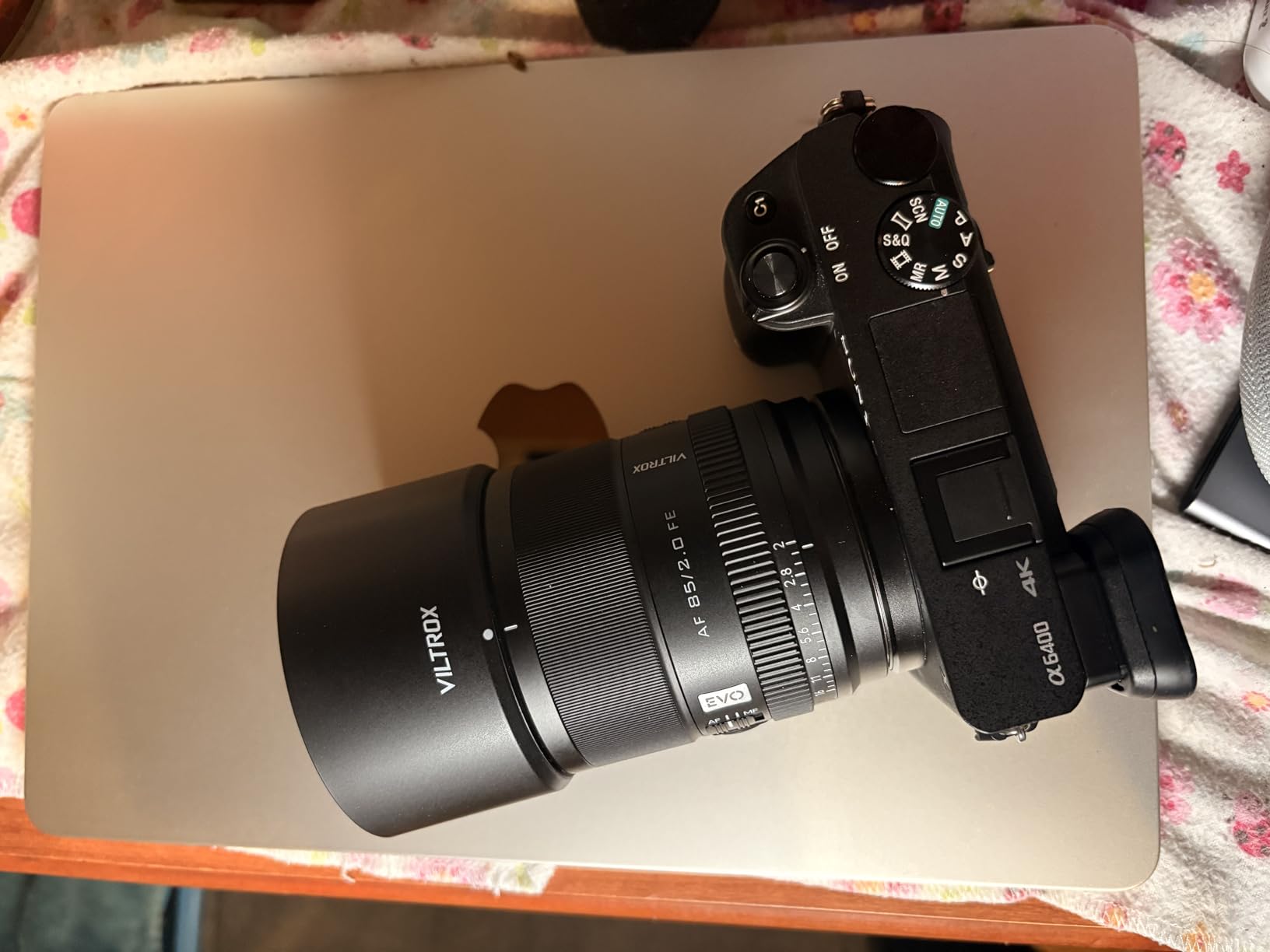
Sharpness is excellent even wide open. I compared test shots at f/2 and f/4, and while stopping down improves corner sharpness slightly, the center is already tack-sharp at maximum aperture. The bokeh quality rivals lenses that cost four times as much, with smooth transitions and no harsh edges on out-of-focus highlights.
The STM motor is quiet and accurate. I used this lens for a video interview project, and the focus transitions were smooth without any motor noise. Eye detection works reliably for both stills and video, making this a versatile tool for content creators.

Who Should Buy This Lens
This lens is ideal for portrait photographers who want maximum subject isolation and that professional compressed look. If you shoot headshots, senior portraits, or engagement sessions, the 85mm f/2 delivers pro-level results on a budget. The light weight also makes it suitable for event photography where you need reach without arm fatigue.
Who Should Skip This Lens
The longer focal length means this is not a versatile walk-around lens. You will struggle in tight spaces, making it unsuitable for indoor events or environmental portraits. If you need one lens to do everything, the 56mm f/1.7 or 40mm f/2 are more practical choices.
5. NIKKOR Z DX 16-50mm VR – Best Kit Lens Upgrade
Pros
- Compact and lightweight
- Sharp images
- Fast and silent autofocus
- Great for wide angle photography
Cons
- Plastic construction
- Some softness at longer end
- Kit lens quality perception
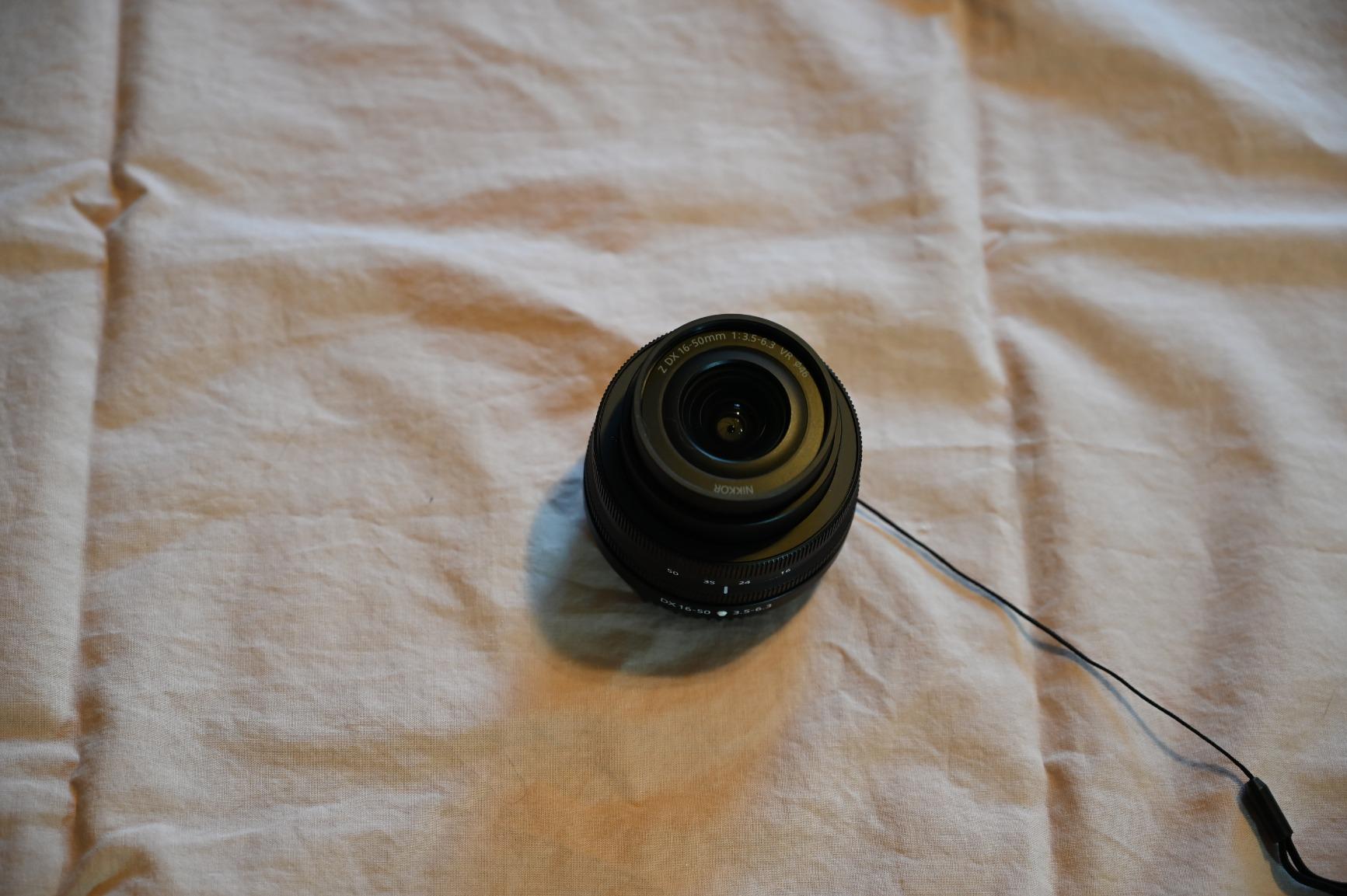
The NIKKOR Z DX 16-50mm VR is the kit lens that many Z50 buyers receive, but do not let that fool you into thinking it is mediocre. This retractable zoom covers the essential 24-75mm equivalent range and weighs just 4.8 ounces, making it one of the smallest zoom lenses I have ever used.
Image quality exceeds expectations for a kit lens. At 16mm, the lens delivers sharp corners and minimal distortion, especially with in-camera corrections enabled. The wide end is genuinely useful for landscapes and vlogging, while the 50mm telephoto end handles casual portraits and detail shots. I keep this lens in my bag when I need versatility without weight.
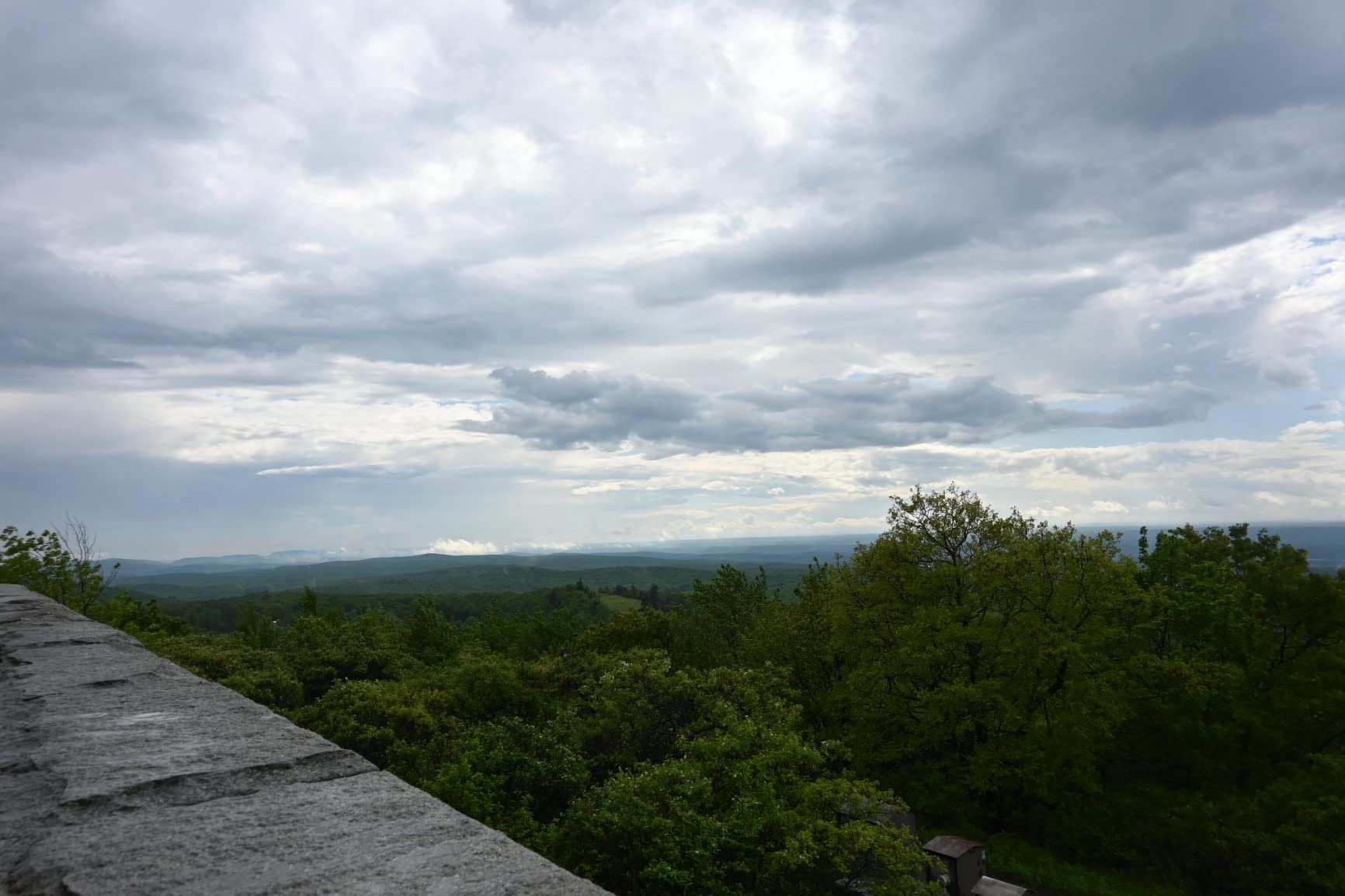
Built-in VR provides 4.5 stops of stabilization, which is remarkable for such a compact lens. I have shot handheld video while walking, and the footage remained surprisingly smooth. For travel photography where you might encounter everything from vast vistas to street scenes, this single lens covers most situations adequately.
The retractable design requires extending the barrel before use, which takes a moment. Some photographers find this annoying, but I appreciate the space savings. The plastic construction keeps weight down but means you should handle it with care in rough conditions.
Who Should Buy This Lens
This lens is perfect for travel photographers, vloggers, and anyone who needs a do-it-all zoom without the bulk. If you bought the Z50 body-only and need an affordable starter lens, the 16-50mm is the logical first purchase. It is also an excellent backup lens for professionals who want something lightweight for casual shooting.
Who Should Skip This Lens
If you are unhappy with your kit lens performance, buying another copy will not solve your issues. Low-light shooters will find the f/3.5-6.3 aperture limiting. Those seeking professional build quality or weather sealing should look at the 12-28mm PZ or invest in full-frame Z lenses with the FTZ adapter.
6. NIKKOR Z DX 12-28mm PZ VR – Best Wide-Angle Zoom
Pros
- Ultra-wide angle coverage
- Smooth power zoom for video
- VR image stabilization works well
- Lightweight and compact
- Sharp images
Cons
- No lens hood included
- Plastic construction
- Power zoom can be sluggish
The NIKKOR Z DX 12-28mm PZ VR is Nikon’s answer to content creators who need wide-angle versatility with video-friendly features. The power zoom mechanism offers eleven selectable speeds, allowing smooth focal length changes during recording that are impossible with manual zoom rings. I have used this lens extensively for real estate video work and travel vlogging.
The 12mm wide end gives you an 18mm equivalent field of view, which is dramatic for landscapes and architecture. Vloggers will appreciate being able to frame themselves without the lens appearing to take up half the frame. The 28mm end provides a natural perspective for interviews and detail shots, making this a surprisingly versatile range.
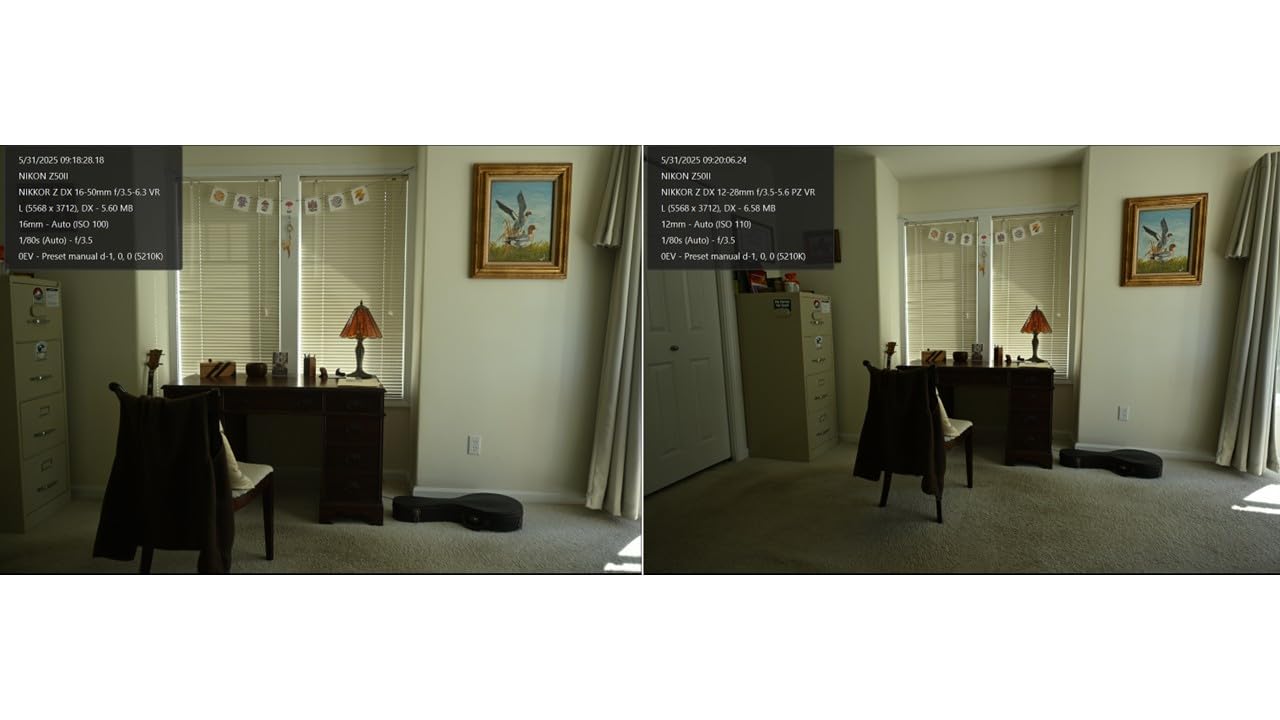
Sharpness is good across the frame at all focal lengths, with only slight softness in the extreme corners at 12mm when shot wide open. The close focusing ability down to 11 inches lets you get creative with foreground elements in landscape compositions. This is not a macro lens, but the flexibility is welcome.
The power zoom motor is smooth but not lightning fast. For still photography, you might prefer a manual zoom ring. However, for video work, the consistent zoom speeds are invaluable. The lens is also remarkably compact when retracted, making it travel-friendly despite the wide zoom range.

Who Should Buy This Lens
Content creators, vloggers, and real estate photographers will get the most value from this lens. If you shoot video regularly and need smooth zooms without external motors, the power zoom feature justifies the purchase. Landscape photographers who want wide coverage in a small package will also appreciate the 12mm perspective.
Who Should Skip This Lens
Still photographers who rarely shoot video may find the power zoom unnecessary and slightly slower than manual alternatives. If you need the absolute widest possible angle, the Viltrox 14mm f/4 goes wider. Action photographers and wildlife shooters will find the focal length range limiting for their subjects.
7. NIKKOR Z 50mm f/1.4 – Best Low-Light Prime
Pros
- Fast f/1.4 aperture for low light
- Sharp images wide open
- Fast and quiet autofocus
- Compact for a fast prime
Cons
- Some softness wide open for high megapixel cameras
- Noticeable coma for astrophotography
- Plastic construction
The NIKKOR Z 50mm f/1.4 represents the upper end of what I would consider a budget lens, but the performance justifies the slight premium. On the Z50, this gives you a 75mm equivalent focal length with an f/1.4 aperture that gathers significantly more light than any other lens on this list. When the sun goes down, this is the lens I reach for.
The multi-focus STM motor is a standout feature. It is fast enough for candid street photography and silent enough for video interviews. Nikon specifically designed this motor to minimize focus breathing, which means your framing stays consistent during focus pulls in video work. This is a thoughtful touch rarely seen at this price point.

Image quality is excellent for a sub-$500 lens. At f/1.4, you get usable sharpness in the center with that creamy background blur portrait photographers crave. Stop down to f/2 or f/2.8 and the lens becomes tack-sharp across the frame. The nine-blade aperture produces attractive bokeh for both stills and video.
There are compromises. Some coma appears in the corners when shooting astrophotography wide open, and high-megapixel full-frame users report slight softness at f/1.4. On the 20-megapixel Z50 sensor, these issues are less noticeable, making this a great match for the camera.

Who Should Buy This Lens
Low-light photographers, portrait shooters, and video creators will find this lens indispensable. If you shoot events, weddings, or night photography, the f/1.4 aperture gives you creative options that slower lenses cannot match. The quiet motor and suppressed focus breathing make it particularly valuable for hybrid shooters who do both stills and video.
Who Should Skip This Lens
If you rarely shoot in dim conditions, the extra cost over the 40mm f/2 or Viltrox alternatives is hard to justify. The plastic construction, while light, may not satisfy photographers who prioritize build quality. Astrophotographers should be aware of the coma issues in the corners at wide apertures.
8. Meike 50mm F1.8 – Best Ultra-Budget Prime
Pros
- Sharp and clear images
- Great bokeh with smooth background blur
- Quiet and fast autofocus with STM motor
- Solid construction with metal and high-quality plastic
Cons
- Lens hood attaching/removing not smooth
- Minimum focus distance of ~2 ft may be limiting
The Meike 50mm f/1.8 proves that you do not need to spend much to get a capable portrait lens. At under $160, this is the most affordable autofocus prime for the Z mount, yet it delivers images that can hold their own against more expensive alternatives. I purchased this lens out of curiosity and ended up keeping it as a backup.
Image quality is genuinely impressive for the price. The f/1.8 aperture produces pleasant bokeh, and sharpness in the center is good from wide open. Stop down to f/2.8 and the lens becomes quite sharp across the frame. I have used this for casual portraits and product photography with results that surprise clients when they learn the lens cost less than their monthly streaming subscriptions.
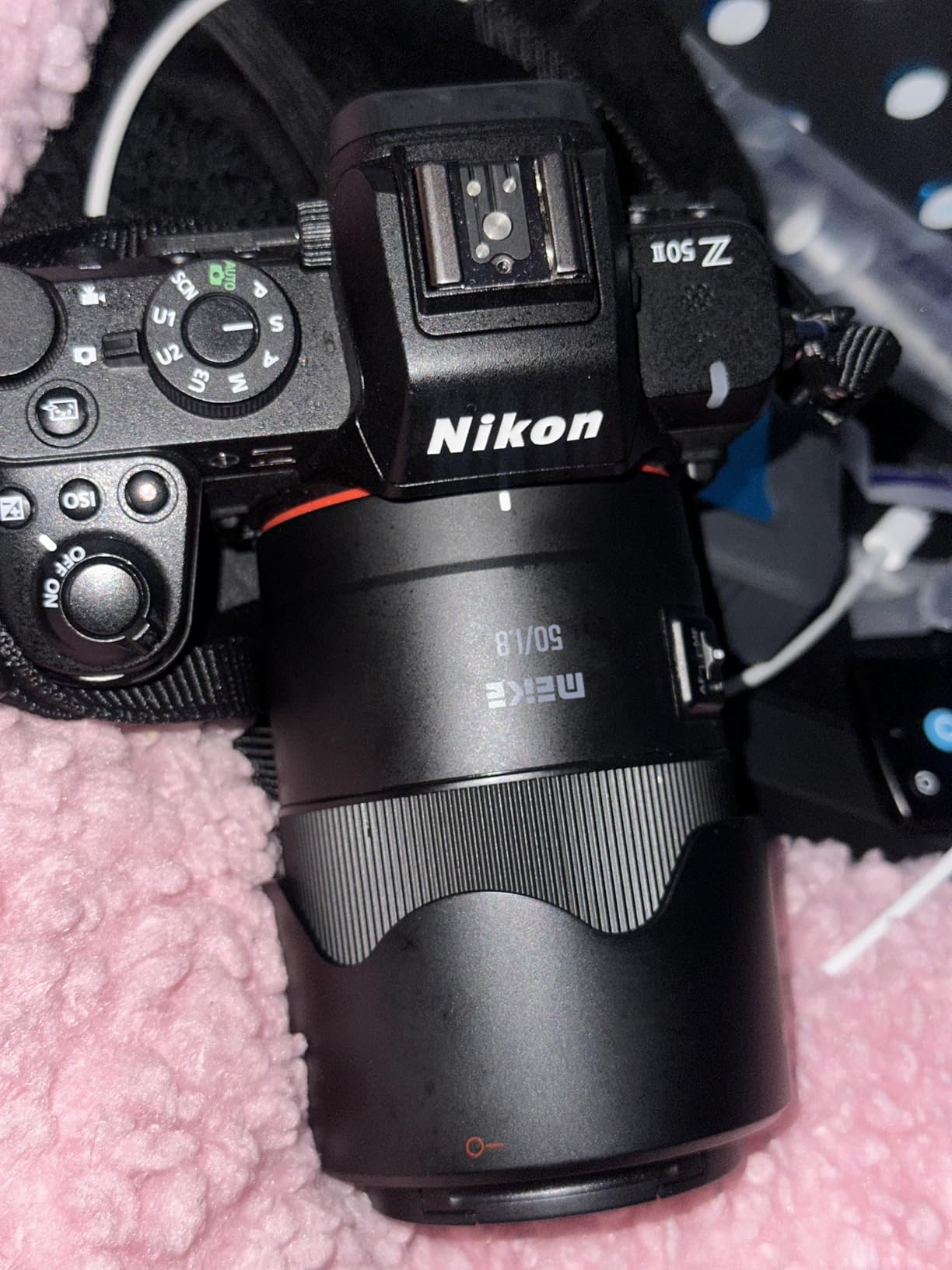
The STM motor focuses quietly and accurately for static subjects. Eye detection on the Z50 works reliably, though continuous AF for moving subjects is not as confident as Nikon’s native lenses. For portraits, products, and still life, the autofocus is perfectly adequate. The near-silent operation is also video-friendly.
Build quality mixes metal and plastic in a way that feels more substantial than the all-plastic Viltrox options. The USB-C port for firmware updates is a nice modern touch that lets Meike improve performance over time. My only gripe is the lens hood, which can be fiddly to attach and remove.
Who Should Buy This Lens
This is the perfect first prime for photographers on the tightest budget. If you are a student, hobbyist, or just want to experiment with shallow depth of field without a major investment, the Meike 50mm f/1.8 is a no-brainer. It is also an excellent backup lens for professionals who want something inexpensive to leave in a second bag.
Who Should Skip This Lens
Action photographers and parents photographing fast-moving kids may find the AF tracking frustrating. The minimum focus distance of about two feet limits close-up work. If you can stretch your budget to the Viltrox 56mm f/1.7 or Nikon 40mm f/2, you will get better overall performance and build quality.
9. Meike 85mm F1.8 – Best Affordable Portrait Lens
Pros
- Excellent value for money
- Sharp images wide open at f/1.8
- Beautiful creamy bokeh
- Fast and responsive autofocus
Cons
- Some chromatic aberration noted
- Autofocus slightly slow for action photography
- Plastic texture may feel cheap to some
The Meike 85mm f/1.8 gives you that coveted 128mm equivalent portrait focal length at a price that was unheard of just a few years ago. This lens has become a favorite in online communities for photographers who want professional-looking portraits without the professional price tag. I have used this for headshots and event work with excellent results.
The f/1.8 aperture delivers substantial background blur thanks to the long focal length. Subject isolation is impressive, and the bokeh quality is pleasant if not quite as creamy as the Viltrox 85mm f/2. Sharpness wide open is good in the center, improving noticeably when stopped down to f/2.8. For web and social media use, the image quality is more than sufficient.

Autofocus with the STM motor is competent for portraits and static subjects. I did notice some hunting in very low light, and continuous AF for moving subjects is not this lens’s strength. For posed portraits, headshots, and event details, the AF keeps up well enough. The motor is quiet for video applications.
Chromatic aberration appears in high-contrast situations, particularly when shooting wide open. This is correctable in post-processing, but it is something to be aware of if you shoot backlit subjects frequently. The plastic construction keeps weight reasonable but does not inspire confidence for rough professional use.

Who Should Buy This Lens
Budget-conscious portrait photographers will find this lens delivers tremendous value. If you shoot senior portraits, engagement sessions, or corporate headshots and need reach with subject isolation, the Meike 85mm f/1.8 gets the job done affordably. It is also suitable for event photographers who need a longer lens for candid moments.
Who Should Skip This Lens
If you shoot action, sports, or fast-moving kids, the AF performance will disappoint. Photographers who demand the absolute best optical quality should save for the Viltrox 85mm f/2 or Nikon alternatives. Those bothered by chromatic aberration in high-contrast scenes should also consider other options.
10. VILTROX 35mm f1.7 – Best Standard Prime
Pros
- Super sharp wide open at f1.7
- Fast and accurate autofocus
- Compact and lightweight (180g)
- Beautiful bokeh and excellent sharpness
Cons
- Not weather sealed
- Some softness in corners at widest aperture
The VILTROX 35mm f/1.7 fills an important gap in the Nikon Z lineup by providing a true normal lens for APS-C cameras. On the Z50, this gives you a 52mm equivalent focal length, which is essentially how the human eye sees the world. I find this focal length ideal for documentary work, street photography, and environmental portraits.
Sharpness is exceptional for a budget lens. Even wide open at f/1.7, the center is tack-sharp with good contrast. The corners soften slightly at maximum aperture, but stopping down to f/2.8 brings uniformity across the frame. The Nano Crystal Coating helps control flare, though I still recommend using the included hood in bright conditions.
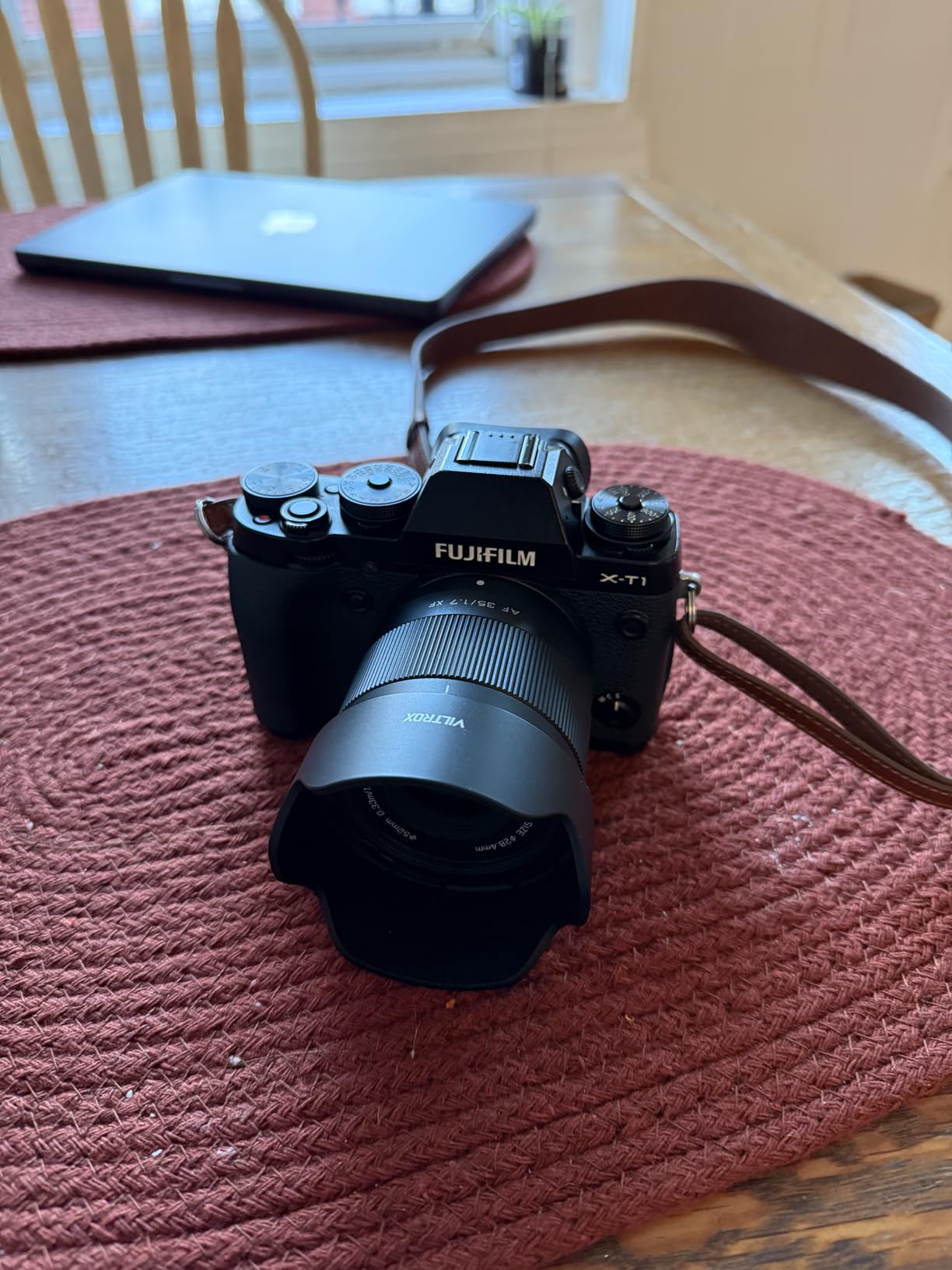
At just 180 grams, this is one of the lightest lenses you can mount on the Z50. The compact size makes it perfect for travel and everyday carry. I have taken this lens on extended walking tours through cities, and the camera never felt heavy or cumbersome. The STM motor is quiet enough for discrete street photography.
The 52mm equivalent focal length is versatile but requires some compositional skill. Unlike longer portrait lenses that isolate subjects automatically, the 35mm forces you to consider background elements and environmental context. This makes it an excellent learning tool for developing photographic vision.

Who Should Buy This Lens
Street photographers, documentary shooters, and anyone who wants a lightweight normal lens will love this option. If you are transitioning from a smartphone and want a similar field of view with much better image quality, the 35mm f/1.7 is perfect. Travel photographers will appreciate the tiny size and weight.
Who Should Skip This Lens
Portrait photographers who want maximum background blur will find the 52mm equivalent too wide. The corner softness at f/1.7 may bother pixel peepers, though it is rarely noticeable in real-world images. Those needing weather sealing should look elsewhere.
11. VILTROX 20mm F2.8 – Best Budget Wide-Angle
Pros
- Very lightweight and compact
- Sharp images even wide open
- Fast and reliable autofocus
- Great for events
- group photos
- and travel
Cons
- Plastic construction may feel cheap
- Some vignetting at wide apertures
- No aperture ring
The VILTROX 20mm f/2.8 is the widest native prime available at a budget price for Nikon Z cameras. On the Z50, you get a 30mm equivalent field of view that hits a sweet spot for landscape, architecture, and group photography. I have used this lens for real estate interiors, travel landscapes, and vlogging with great success.
Image quality is impressive for such an affordable wide-angle. Sharpness in the center is excellent even at f/2.8, and while the corners are softer wide open, stopping down to f/5.6 brings significant improvement. The 30mm equivalent perspective is wide enough for dramatic landscapes without the extreme distortion of ultra-wide lenses.
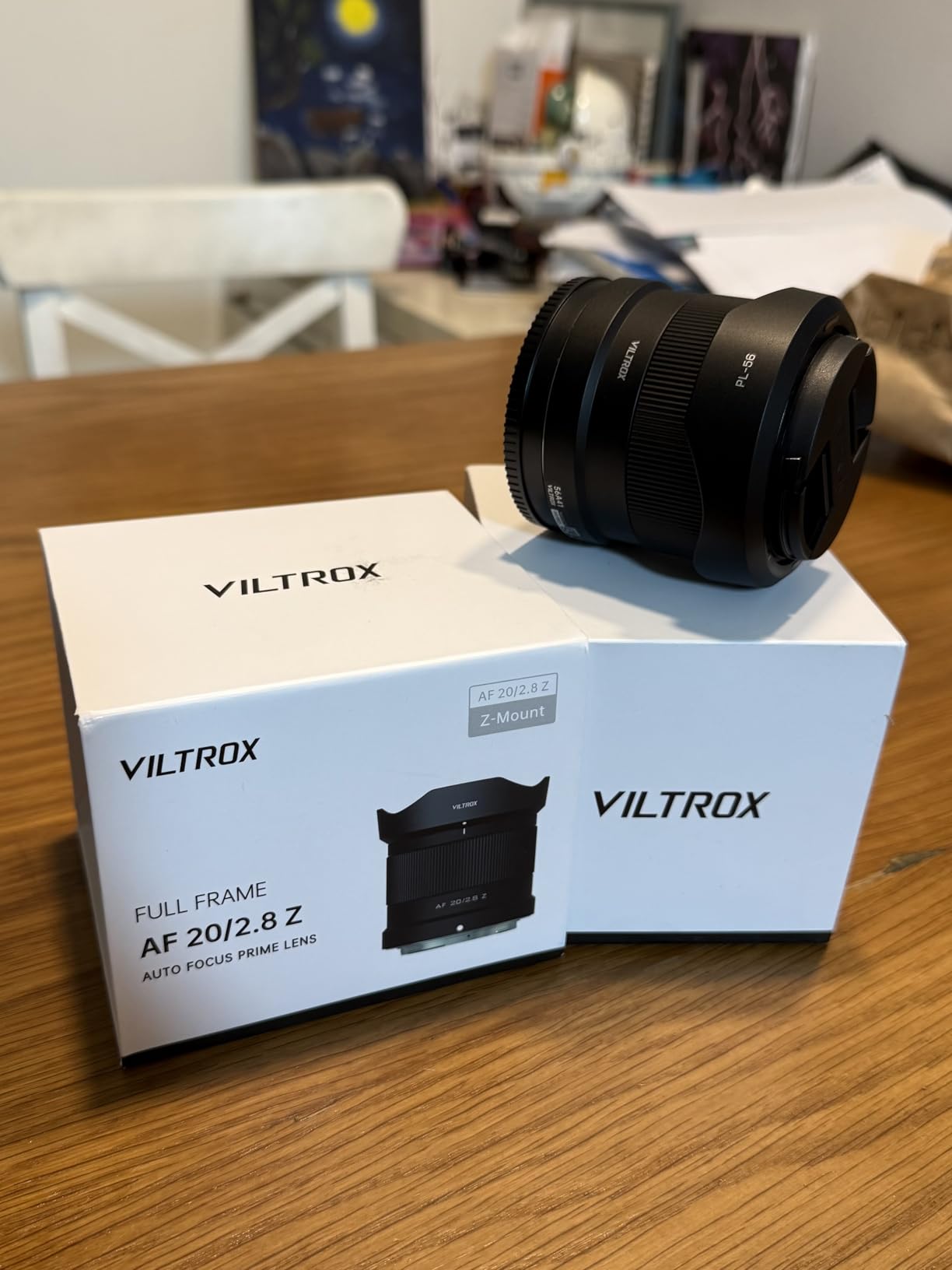
Weighing just 173 grams, this lens is barely noticeable on the camera. I have taken it on multi-day hiking trips where every ounce matters, and it never felt like a burden. The STM autofocus is reliable for stills and sufficiently quiet for casual video work, though professionals might want something quieter for interviews.
Vignetting is noticeable at f/2.8, particularly in the corners. This is correctable in post-processing and actually adds some character to certain images. The lack of an aperture ring means you control settings through the camera body, which Z50 users are already accustomed to.
Who Should Buy This Lens
Landscape photographers, real estate shooters, and travel enthusiasts will find this lens invaluable. If you need a wide perspective for vlogging or group photos in tight spaces, the 30mm equivalent is genuinely useful. The low weight makes it perfect for backpackers and anyone who counts grams.
Who Should Skip This Lens
Astrophotographers will want something faster than f/2.8 for Milky Way photography. The vignetting at wide apertures may bother photographers who prefer clean files straight out of camera. If you need the absolute widest angle, consider the 12-28mm zoom or the Viltrox 14mm f/4 instead.
12. VILTROX 50mm F2 – Lightweight Nifty Fifty
Pros
- Lightweight and compact design
- Excellent image quality and sharpness
- Fast and quiet autofocus
- Beautiful bokeh with 9 rounded aperture blades
Cons
- Some users wish it focused closer
The VILTROX 50mm f/2 offers a middle ground between the ultra-budget Meike 50mm and the premium Nikon 50mm f/1.4. At 220 grams, it is one of the lightest full-frame primes available for the Z mount, making it an excellent travel companion for Z50 owners who want a 75mm equivalent focal length.
The optical design includes three ED elements, four high-refractive elements, and one aspherical element, which is impressive for a lens at this price. This complex design delivers sharp images with well-controlled chromatic aberration. The f/2 aperture provides useful background blur for portraits while keeping the lens compact and affordable.
Autofocus with the STM motor is quick and quiet. I have used this lens for both stills and video without complaints. The minimum focus distance is workable for most subjects, though some users wish it could focus closer for detail shots. For general photography, the focusing range is adequate.
The 75mm equivalent focal length is classic for portraits, and the f/2 aperture delivers pleasant bokeh thanks to the nine rounded aperture blades. This is not as fast as the f/1.4 or f/1.8 alternatives, but the difference is one stop, and the size and weight savings may be worth it for travel photographers.
Who Should Buy This Lens
Travel photographers and anyone who prioritizes low weight will appreciate this lens. If you want a nifty fifty but find the Nikon 50mm f/1.4 too expensive and the Meike too plasticky, the Viltrox 50mm f/2 offers a nice balance. It is particularly suitable for hiking and travel where every gram matters.
Who Should Skip This Lens
If you shoot in very low light frequently, the f/2 aperture may feel limiting compared to f/1.4 or f/1.8 options. Macro enthusiasts will be frustrated by the minimum focus distance. Those wanting the absolute best portrait lens should consider the 56mm f/1.7 or 85mm f/2 instead.
13. TTARTISAN AF 75mm F2 – Compact Portrait Option
TTARTISAN AF 75mm F2 Portrait Lens Auto Focus Full Frame Prime Lenses for Nikon Z-Mount Z5 Z6 Z7 Z6II Z6III Z7II ZFC Z30 Z50 Z9 Z8 ZF (Z, Black)
Pros
- Extremely sharp images
- Great value for the price
- Good for portraits at various distances
- Compact and lightweight
- Smooth autofocus
Cons
- Autofocus not fast enough for high action
- Lens hood is difficult to attach/remove
- Some units may arrive with defects
The TTARTISAN AF 75mm f/2 fills a unique niche in the budget lens lineup by offering a 110mm equivalent focal length on the Z50. This sits between the popular 85mm and 135mm portrait lengths, giving you more compression than the 56mm while remaining more manageable than longer telephoto options.
Sharpness is the standout feature of this lens. Images are crisp from edge to edge even wide open at f/2, which is impressive for a sub-$200 lens. The 110mm equivalent compression flatters faces beautifully for headshots, while the working distance is still manageable for indoor portraits. I have used this for engagement photos with excellent results.

The clickable aperture ring is a nice touch that gives you tactile control over exposure. This is particularly useful for manual exposure work and video shooting where you want to see your aperture changes. The STM motor is smooth for stills and video, though continuous AF tracking for fast action is not its strength.
The eye detection, animal detection, and vehicle detection features of the Z50 work with this lens, making it easy to nail focus on your subject’s eyes for portraits. The compact size belies the telephoto reach, making this a lens I often choose when I want portrait compression without the bulk of a 70-200mm zoom.

Who Should Buy This Lens
Portrait photographers who want something between the 56mm and 85mm options will find this focal length appealing. If you shoot headshots, beauty work, or engagement sessions and want a compact prime with excellent sharpness, the TTArtisan 75mm f/2 delivers. The clickable aperture ring is a bonus for video creators.
Who Should Skip This Lens
Sports and action photographers will find the AF tracking insufficient for fast-moving subjects. The 110mm equivalent may feel too long for general photography, limiting versatility. Some quality control issues have been reported, so inspect your copy carefully upon arrival.
14. TTArtisan 27mm F/2.8 – Best Pancake Lens
Pros
- Compact pancake design perfect for travel
- Great value for the price
- Good build quality
- Sharp images
- Quiet autofocus
Cons
- Heavy vignetting at f/2.8
- Small 39mm filter threads
- Autofocus can struggle in low light
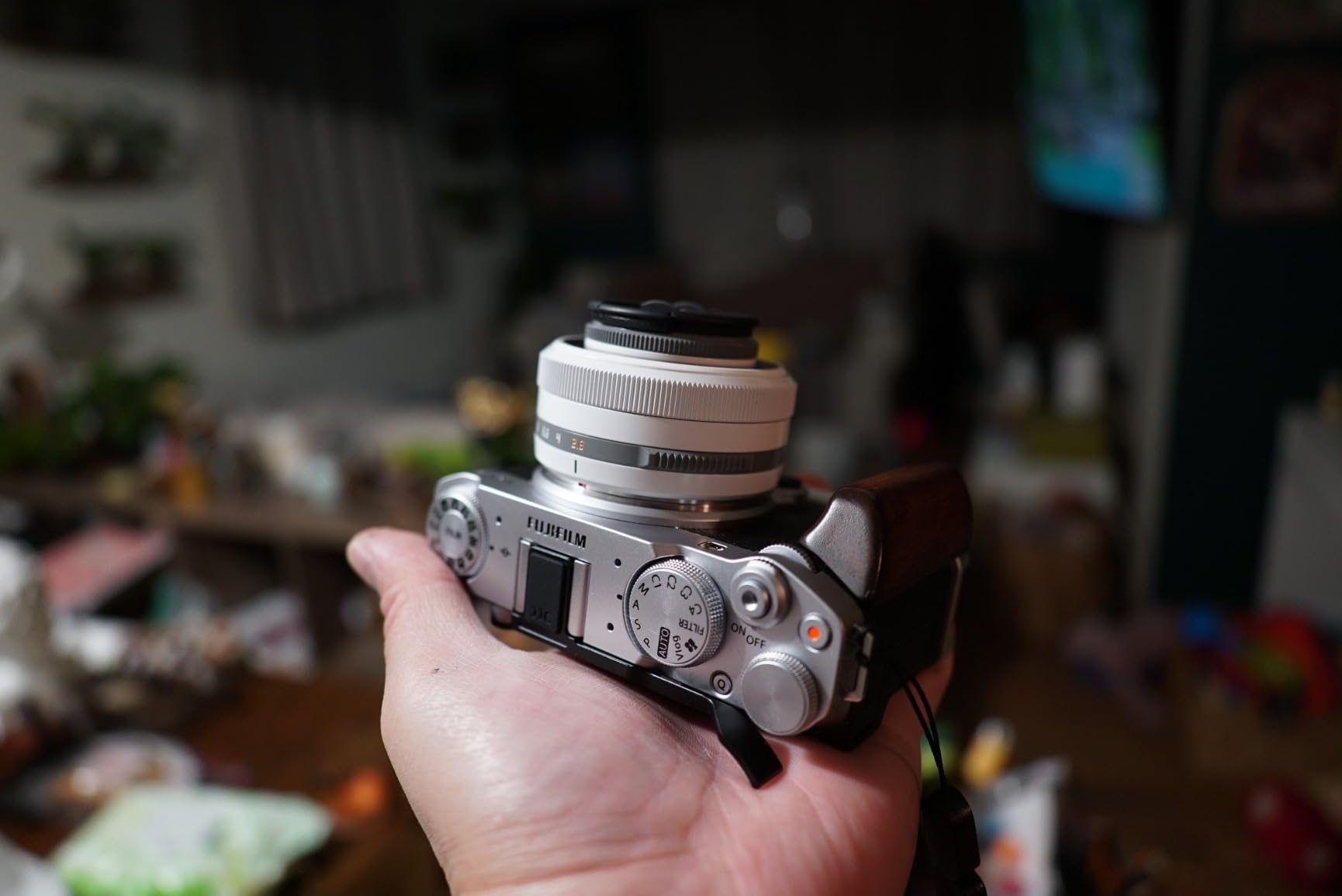
The TTArtisan 27mm f/2.8 is a pancake lens that transforms your Z50 into a genuinely pocketable camera system. At just 45 grams, this is the lightest lens on this list by a significant margin. When I want to travel light without sacrificing image quality over a smartphone, this is the lens I mount.
The 40mm equivalent focal length is close to the classic 35mm perspective, making it versatile for everyday photography. The f/2.8 aperture is not the fastest, but in good light, this lens produces sharp, contrasty images with character. The pancake design means the camera fits in jacket pockets and small bags that would never accommodate larger lenses.
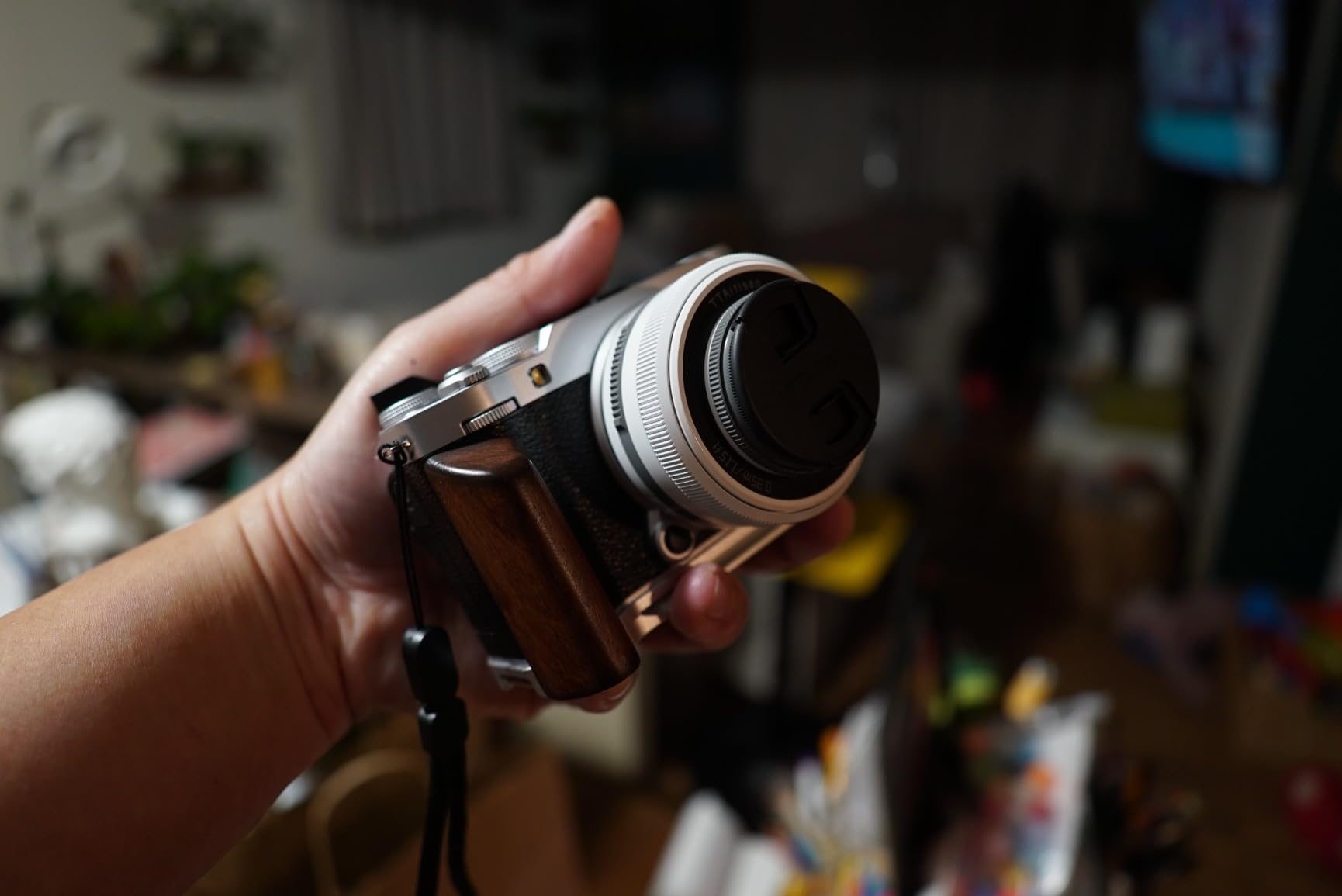
The STM motor is quiet and accurate for still subjects. The USB-C port for firmware updates lets TTArtisan improve performance over time, which is a thoughtful inclusion on such an inexpensive lens. Minimum focus distance of 0.35 meters allows for modest close-up work, though this is not a macro lens.
Vignetting is noticeable at f/2.8, particularly in the corners of the frame. This is easily corrected in post-processing and can even add a vintage character to certain images. The 39mm filter thread is small and somewhat uncommon, so you may need step-up rings to use standard filters.
Who Should Buy This Lens
Travel photographers, street shooters, and anyone who prioritizes portability above all else will love this lens. If you want a camera setup that goes everywhere without notice, the pancake design is unbeatable. It is also an excellent second lens to keep on a backup body for quick shots when your main camera is packed away.
Who Should Skip This Lens
Low-light photographers will find the f/2.8 aperture and AF performance in dim conditions limiting. Those who dislike correcting vignetting in post should consider the 35mm f/1.7 or 40mm f/2 instead. The 40mm equivalent is somewhat awkward for portraits, making this more of a general-purpose or environmental lens.
15. VILTROX 14mm F4.0 – Best Ultra Wide-Angle
Pros
- Very sharp even at widest aperture
- Lightweight and compact
- Minimal distortion
- Fast and accurate autofocus
- Excellent value compared to expensive alternatives
Cons
- Not weather sealed
- Some vignetting and chromatic aberration at corners
- F4 is not a fast aperture for low-light
The VILTROX 14mm f/4 is the widest native prime available for Nikon Z cameras at a budget price. On the Z50, you get a dramatic 21mm equivalent field of view that opens up creative possibilities for landscapes, architecture, and astrophotography. I have used this lens for Milky Way photography and real estate interiors with impressive results.
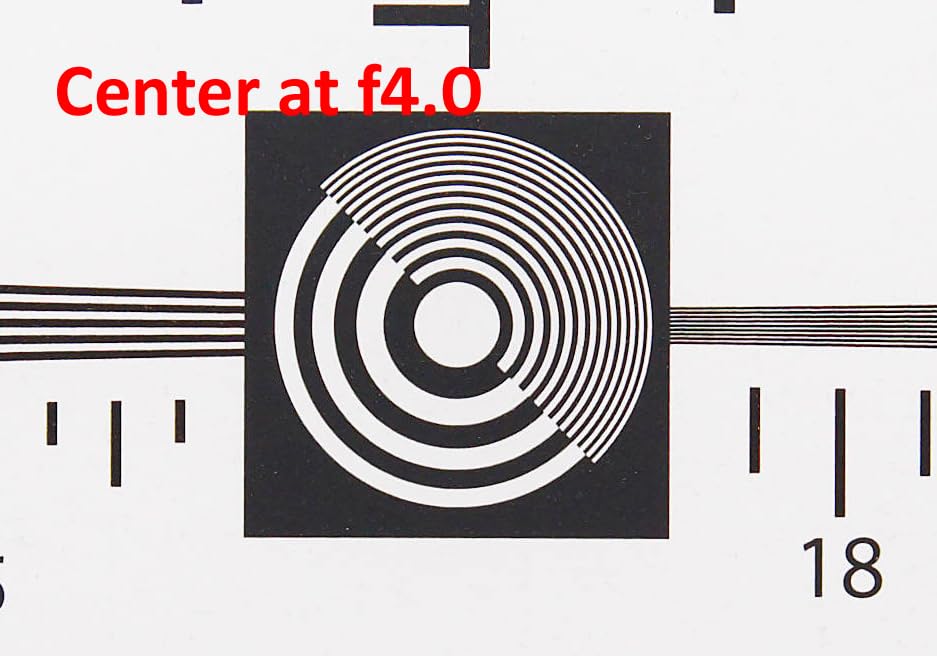
Sharpness across the frame is exceptional for such a wide and affordable lens. Even at f/4, the center is tack-sharp, and the corners hold up well with only slight softness that corrects nicely when stopped down. Distortion is minimal for a 14mm lens, saving you work in post-processing.
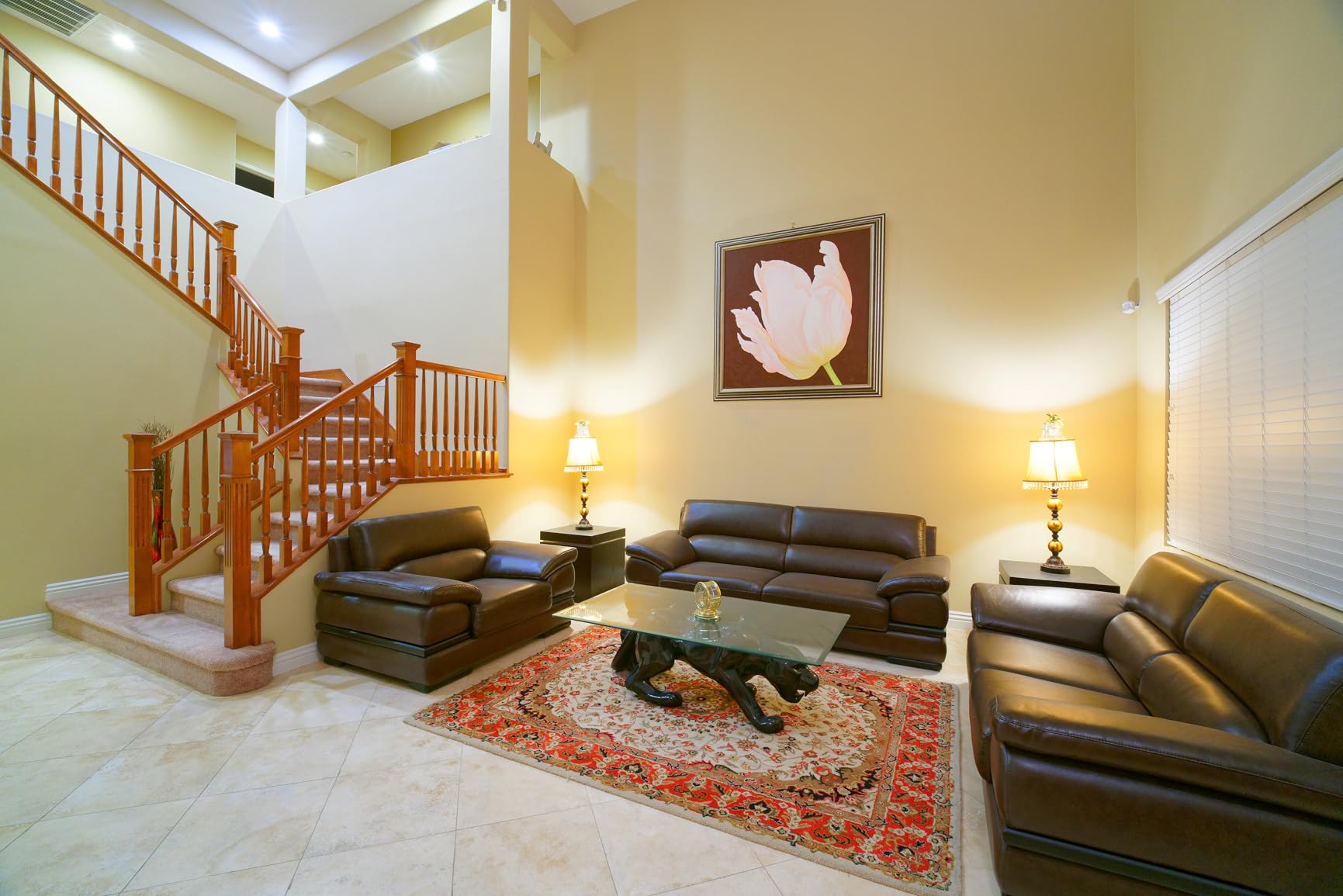
The f/4 aperture is the main limitation here. For astrophotography, you will need to push ISO higher than with f/2.8 alternatives, though the Z50 handles ISO 6400 reasonably well. For landscapes and architecture where you typically stop down anyway, the f/4 maximum is not a significant handicap.
Autofocus is fast and reliable for a wide-angle lens. The 58mm filter thread accepts standard filters without the need for bulbous front elements or filter holders. This makes the lens practical for landscape photographers who use ND and polarizing filters regularly.
Who Should Buy This Lens
Landscape photographers, architecture shooters, and astrophotography enthusiasts will find this lens offers incredible value. If you need the widest possible native prime for the Z mount without spending pro-level money, the 14mm f/4 is your answer. Real estate photographers will also appreciate the coverage and filter compatibility.
Who Should Skip This Lens
Night photographers who prioritize low-light gathering should look at faster alternatives or be prepared to use higher ISO settings. The 21mm equivalent may be too wide for general photography, making this a specialty lens rather than an everyday option. Those needing weather sealing for harsh conditions should consider the 12-28mm zoom instead.
Buying Guide: Choosing the Right Lens for Your Nikon Z50
Understanding the Nikon Z50 lens ecosystem is essential before making your purchase decisions. The Z50 uses the Nikon Z mount, which offers tremendous flexibility but requires some knowledge to navigate effectively.
DX vs FX Lens Compatibility
The Nikon Z50 has an APS-C sensor, which means you can use both DX and FX lenses. DX lenses are designed specifically for the smaller sensor and provide their stated focal lengths multiplied by 1.5x for the effective field of view. FX lenses are full-frame compatible and project a larger image circle than the Z50 needs.
Using FX lenses on your Z50 gives you a 1.5x crop factor benefit. A 50mm FX lens becomes a 75mm equivalent portrait lens. A 20mm FX lens becomes a 30mm wide-angle. This effectively gives you extra reach with telephoto lenses, though wide-angle FX lenses become less dramatic on the smaller sensor.
Third-Party Lens Considerations
Third-party manufacturers like Viltrox, Meike, and TTArtisan have embraced the Z mount enthusiastically. These budget options often deliver image quality that rivals Nikon lenses at a fraction of the cost. The main trade-offs are typically build quality, weather sealing, and occasionally autofocus performance in challenging conditions.
I have used third-party lenses extensively on my Z50 and found them reliable for most situations. For paid work, I might choose Nikon lenses for the professional perception, but for personal projects and many client jobs, the budget alternatives perform admirably.
Focal Length Recommendations by Use Case
For portrait photography, look at the 56mm f/1.7 (85mm equivalent), 85mm f/2 (128mm equivalent), or 50mm f/1.4 (75mm equivalent). These give you flattering compression and background blur. For landscapes and architecture, consider the 12-28mm zoom, 20mm f/2.8, or 14mm f/4. For everyday versatility, the 16-50mm zoom or 40mm f/2 prime cover most situations.
Wildlife and sports photographers should prioritize the 50-250mm zoom, which gives you 375mm equivalent reach in a compact package. Street photographers often prefer the 27mm pancake, 35mm f/1.7, or 40mm f/2 for their discrete size and normal perspective.
Frequently Asked Questions
What is the best budget lens for Nikon Z50?
The NIKKOR Z 40mm f/2 is the best overall budget lens for the Nikon Z50. It offers a versatile 60mm equivalent focal length, fast f/2 aperture for low light, and sharp image quality in a compact package under $280. For portrait photography specifically, the VILTROX 56mm f/1.7 provides incredible value at around $180.
What lenses are compatible with Nikon Z50?
The Nikon Z50 is compatible with all Nikon Z mount lenses, including both DX format lenses designed for APS-C sensors and FX full-frame lenses. You can also use F-mount DSLR lenses via the FTZ adapter. Third-party manufacturers like Viltrox, Meike, Sigma, and TTArtisan offer compatible Z mount lenses as well.
Which Nikon Z lens is best for portraits?
For portraits on the Z50, the VILTROX 56mm f/1.7 is the best budget option, giving you an 85mm equivalent focal length with beautiful bokeh. The VILTROX 85mm f/2 offers even more compression at 128mm equivalent. If you prefer Nikon glass, the NIKKOR Z 50mm f/1.4 provides excellent low-light performance for environmental portraits.
What is the best zoom lens for Nikon Z50?
The NIKKOR Z DX 50-250mm VR is the best budget zoom lens for the Z50, offering an impressive 75-375mm equivalent range with excellent image stabilization. For wider coverage, the NIKKOR Z DX 16-50mm VR covers the standard 24-75mm equivalent range in an extremely compact package. Video creators should consider the 12-28mm PZ for its smooth power zoom feature.
Are third-party lenses good for Nikon Z mount?
Yes, third-party lenses from Viltrox, Meike, and TTArtisan offer excellent value for Nikon Z mount cameras. These lenses often deliver image quality comparable to Nikon lenses at significantly lower prices. The main differences are typically in build quality, weather sealing, and occasionally autofocus speed in challenging conditions. Many Z50 owners use third-party lenses as their primary glass with excellent results.
Conclusion
Building a lens collection for your Nikon Z50 does not require emptying your savings account. The 15 best budget lenses for Nikon Z50 photography I have covered in this guide prove that you can achieve professional-quality results without professional-level spending.
Start with the NIKKOR Z 40mm f/2 for everyday shooting, add the 50-250mm for wildlife and reach, and consider the VILTROX 56mm f/1.7 when you are ready to explore portraiture. This three-lens kit covers 90 percent of photography situations for under $900 total.
As you grow as a photographer in 2026, you can expand your collection based on your specific needs. The beauty of the Z mount ecosystem is that lenses you buy now will continue to serve you if you eventually upgrade to a full-frame Z camera. Invest wisely, shoot frequently, and remember that the best lens is the one you have with you.