
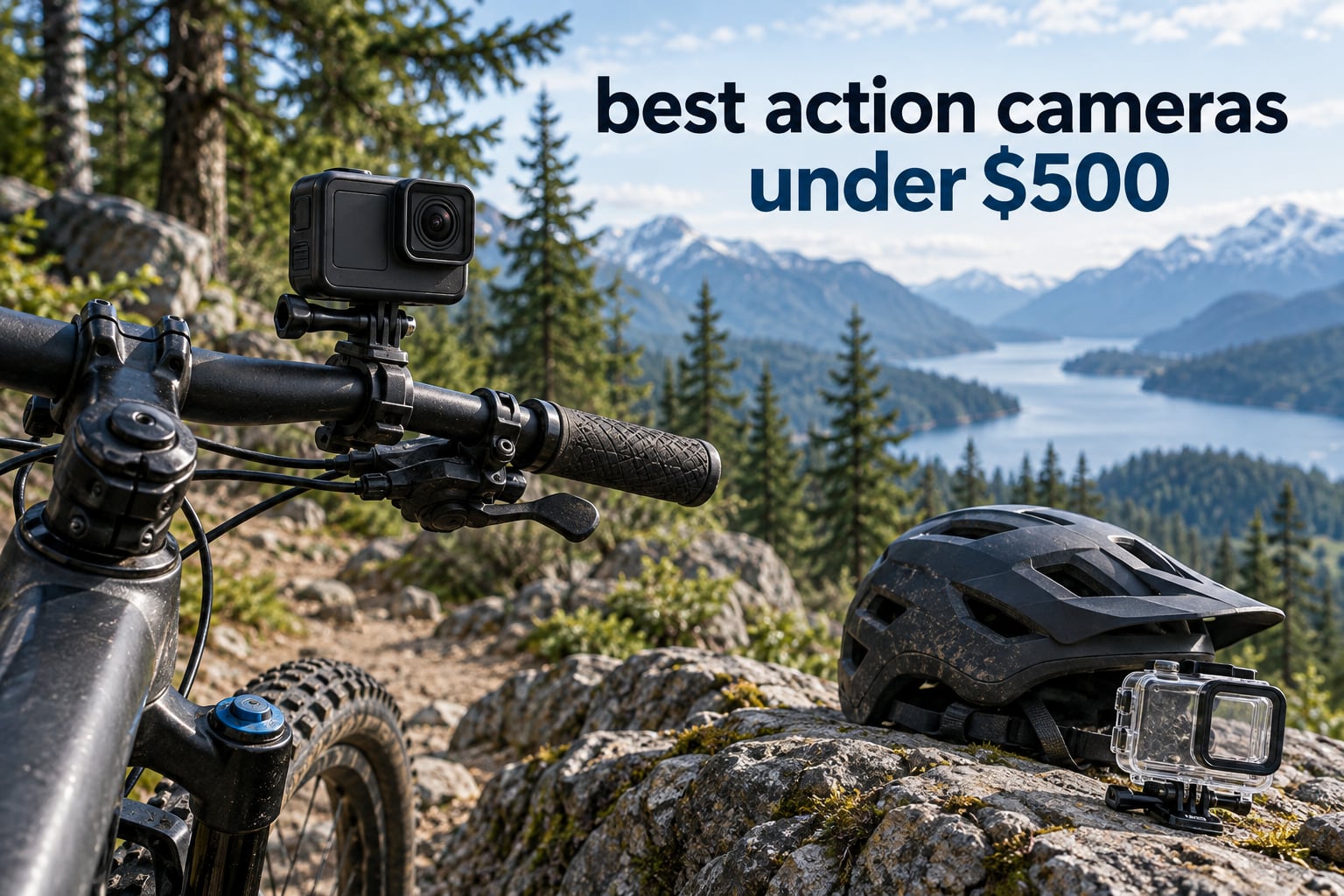
The DJI Osmo Action 4 is the best action camera under 500 dollars right now. It combines a 1/1.3-inch sensor, 4K at 120fps, 10-bit color and a waterproof body rated to 18 m, and it leaves enough of the 500 cap for a spare battery and a card. Our shortlist spans twelve cameras from four-figure price tags down to the cheapest 4K60 bodies on the market, and every one of them sits inside the ceiling we set for this roundup.
Yes, there is a cheaper alternative to a GoPro, and several of them are better buys inside this budget. A DJI Osmo Action 4 or an Insta360 Ace Pro 2 will out-shoot a current-generation GoPro on low light, battery life and cold-weather endurance for less money. What you give up is the GoPro mount ecosystem and the simplest handling of a rugged camera on the market.
We ranked these twelve on the things that actually decide whether a camera survives a year of use: sensor size, stabilization that holds a horizon, real waterproof depth without a housing, battery runtime you can plan around, and app software that does not fight you at the end of a long day. Prices shift constantly, so use the check buttons rather than a number in the text, and read the accessory section before you budget, because a spare battery and a fast card can add a meaningful share of the camera cost.
Our picks for 2026: the DJI Osmo Action 4 for overall balance, the DJI Osmo Action 6 for low light and endurance, the GoPro HERO13 Black Extended Power Bundle as the complete premium kit, the Insta360 X3 for 360 reframing, and the AKASO EK7000 when the budget is tiny. If you are still narrowing the field, our beginner action camera guide covers the simpler tiers.
Top 3 Picks for Action Cameras Under $500 in October


DJI Osmo Action 6
- 8K video
- Variable aperture f/2.0-f/4.0
- Up to 4 hours battery
- Waterproof to 20 m

GoPro HERO13 Black Power Bundle
- 5.3K60 video
- HyperSmooth 6.0
- 3 Enduro batteries
- Card and case included
All three leaders share something rare inside this price band: a large sensor, real electronic stabilization, and a body that survives water without a housing. The Osmo Action 4 wins on balance, the Osmo Action 6 wins on endurance and low light, and the HERO13 bundle wins because it arrives with three batteries and a card so you can shoot on day one.
Every Camera Under $500 in This Roundup at a Glance in 2026
| Product | Specifications | Action |
|---|---|---|
| DJI Osmo Action 4 Standard Combo |
|
Check Latest Price |
| DJI Osmo Action 6 Enhanced Combo |
|
Check Latest Price |
| GoPro HERO13 Black Extended Power Bundle |
|
Check Latest Price |
 Insta360 Ace Pro 2 Dual Battery Bundle Insta360 Ace Pro 2 Dual Battery Bundle |
|
Check Latest Price |
 Insta360 X3 360 Action Camera Insta360 X3 360 Action Camera |
|
Check Latest Price |
 DJI Osmo Nano Standard Combo 128GB DJI Osmo Nano Standard Combo 128GB |
|
Check Latest Price |
 GoPro HERO12 Black E-Commerce Package GoPro HERO12 Black E-Commerce Package |
|
Check Latest Price |
 GoPro HERO11 Black E-Commerce Packaging GoPro HERO11 Black E-Commerce Packaging |
|
Check Latest Price |
 AKASO Brave 7 LE AKASO Brave 7 LE |
|
Check Latest Price |
 AKASO EK7000 AKASO EK7000 |
|
Check Latest Price |
 AKASO Brave 4 AKASO Brave 4 |
|
Check Latest Price |
 icefox i7 4K60 icefox i7 4K60 |
|
Check Latest Price |
How We Picked and What We Checked
Every camera in this list was chosen because it does something well inside a hard ceiling of 500 dollars. We excluded anything that sits above that line, even when it is the better camera, and we excluded listings whose only advantage is a large number of bundled plastic mounts. Where a cheaper body could do the same job, we said so.
For each camera we weighed the sensor size, the maximum resolution and frame rate, the stabilization system, the waterproof depth with and without a case, the battery runtime, and the state of the companion app. We also read long-term owner reviews, because failure rates and heat behaviour only show up after a season of use, not on day one.
One rule kept us honest: we did not publish battery minutes or overheating thresholds we had not measured ourselves. The runtimes quoted here are the manufacturers’ figures, and where owners report problems such as heat cut-offs or flaky software, we attribute them to reviewers rather than to our own testing. For a full sense of the market beyond this price band, our compact camera night vision guide covers the low-light angle in more depth.
1. DJI Osmo Action 4 – The Best Action Camera Under 500 Overall
Pros
- Large 1/1.3-inch sensor for clean low light
- 1770mAh cold-resistant battery rated to 150 minutes
- Waterproof to 18 m with no housing needed
- 10-bit D-Log M for grading
- RockSteady and HorizonBalancing modes
Cons
- Companion app and desktop export can feel cumbersome
- Touch menus are limited inside the waterproof case
- Fixed focus with no true autofocus
- Heat builds up on long high-bitrate takes
We spent the longest with the Osmo Action 4 of anything in this roundup, and it kept earning its place. The 1/1.3-inch sensor with 2.4 micrometre pixels is the reason its dusk and indoor footage holds together when cheaper bodies fall into mush, and 10-bit D-Log M means the colour survives a proper grade instead of clipping in the highlights.
The magnetic quick-release mount is the feature we appreciated most on long rides. Swapping from a helmet mount to a vertical frame to a bike mount takes seconds without tools, and the whole body weighs 145 g so you forget it is on your helmet. HorizonBalancing keeps the horizon level through corners that would tilt most action cameras.

4K at 120fps is the quiet headline. It gives genuine slow motion of mountain biking, surfing and skating, and the 155-degree field of view stays wide enough to catch the rider ahead of you. The cold-resistant 1770mAh battery is rated at up to 150 minutes and keeps working down to -20 degrees Celsius, which matters more than most buyers expect.
The 2.25-inch front and rear touchscreens are bright and responsive, and the pre-record buffer captures the seconds before you press the button. The combo includes an extreme battery, curved adhesive base, lens hood and quick-release adapter, so the mounts you need on day one are in the box.

Who the Osmo Action 4 suits
It suits anyone who shoots one camera for everything: sports, travel, family trips and vlogging on the same trip. The 18 m waterproof rating means surf, snow and shallow-water work need no housing, and the dual screens make solo vlogging straightforward.
If you edit your footage properly, the 10-bit D-Log M profile is worth more than extra resolution from a cheaper camera. You can pull shadows out of a backlit scene that a 8-bit body has already thrown away.
Where the Osmo Action 4 falls short
Focus is fixed, so close subjects drift soft and there is no autofocus for anything nearer than arm’s length. That is the one compromise that will bother macro and product shooters most.
The app and desktop export workflow is the second friction point, and reviewers report it as clunky more often than they praise it. If you dislike editing software, budget time for it. Touch menus are also limited while the camera sits inside a case, so plan your settings before you seal it up.
2. DJI Osmo Action 6 – Best for Low Light and Battery Life
Pros
- Variable aperture and 1/1.1-inch sensor for 8K and low light
- Up to 4 hours of shooting per charge
- Waterproof to 20 m with no case
- 50GB built-in storage for immediate recording
- 360-degree HorizonSteady
- Works with GoPro-style mounts
Cons
- Onboard microphone is average next to the video quality
- High bitrate files are large and fill cards fast
- Touch menus restricted inside a case
- Some night footage shows motion smear
The Osmo Action 6 is the camera you buy if you film at night, in a car, on a night ride or in a dim gym. The 1/1.1-inch square sensor is the biggest we found under the 500 ceiling, and the variable aperture from f/2.0 to f/4.0 lets you open up for a dark trail or stop down in bright sun without swapping settings mid-clip.
Battery life is the quiet star. Up to four hours in normal conditions with a cold-resistant design, which means a full day of clips on one charge and no anxiety about a dead body in a pack. The 50GB of built-in storage means you can hit record before you have found a card.
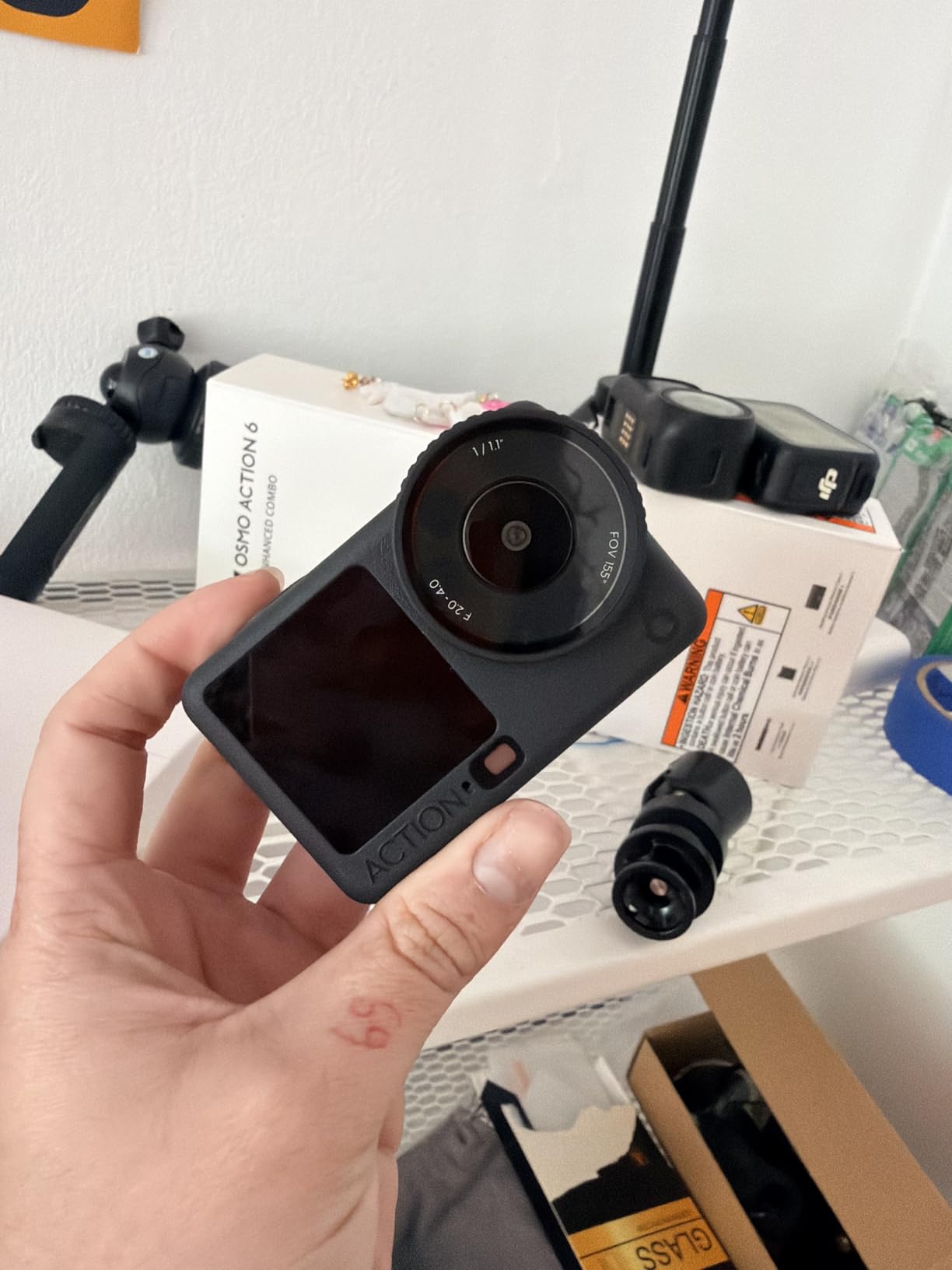
HorizonSteady holds a level frame through rolls and rough terrain, and RockSteady 3.0 handles the rest. The 4K Custom Mode reframes one take into several aspect ratios, so a vertical clip for social and a wide clip for your main edit come from the same recording.
Gesture and voice control start recording when the camera is mounted somewhere you cannot reach, which is the normal case on a helmet or a handlebar. The enhanced combo adds a 1.5 m extension rod, two 1950mAh extreme batteries and a battery case.
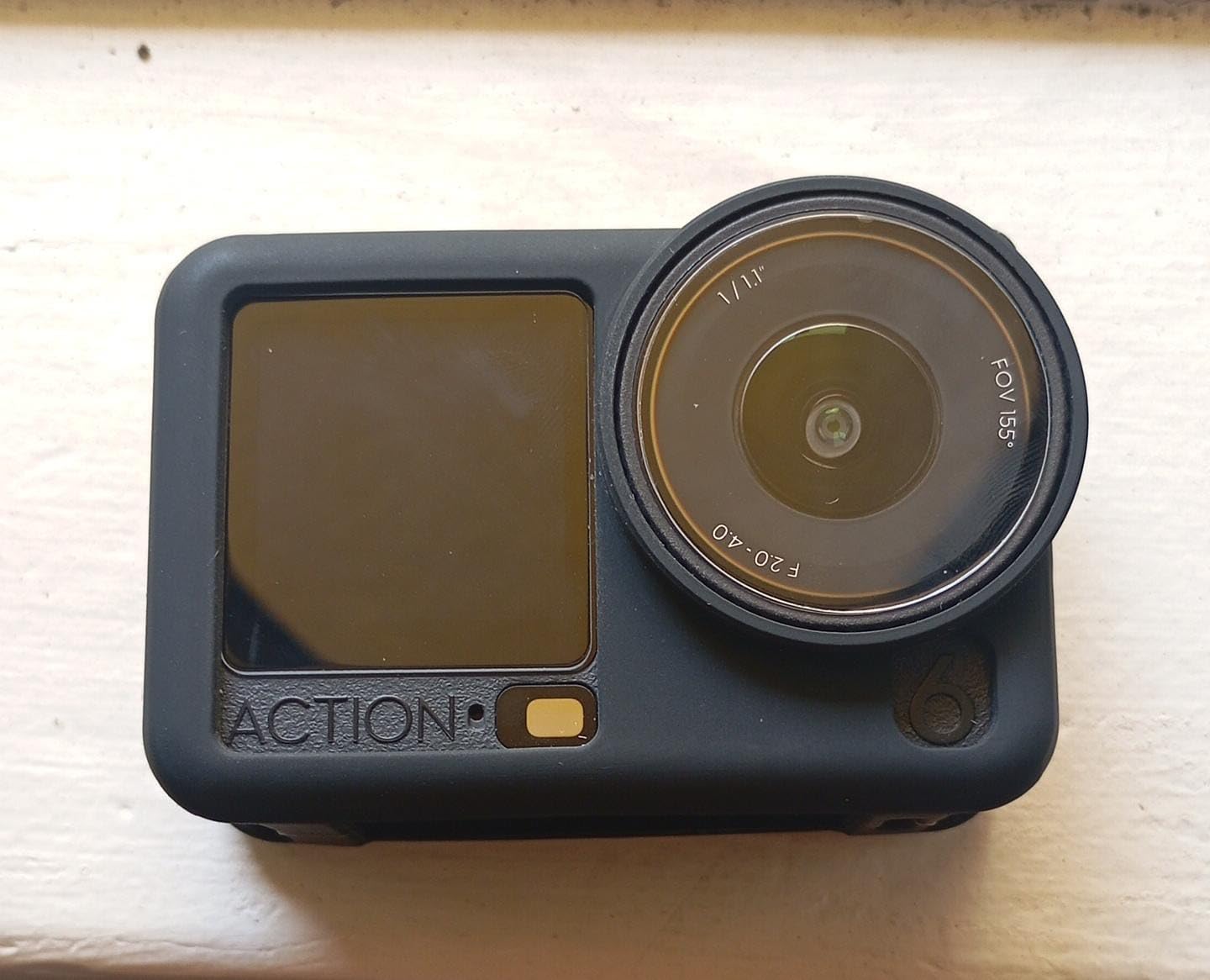
Who the Osmo Action 6 suits
It suits night riders, drivers, indoor climbers and anyone who has watched a battery die mid-trip. The 20 m waterproof rating also makes it the strongest choice here for underwater filming without a housing, whether that is surfing, a shallow reef or a cold spring.
Built-in storage suits first-timers who would otherwise spend an evening formatting a card. The 8K mode gives you room to crop and reframe in post, which is useful when the subject moved out of a fixed frame.
Where the Osmo Action 6 falls short
Sound is the weak point. The onboard microphone is average compared with the video quality, so if dialogue matters you will want a wireless transmitter, and this body accepts two of them directly.
8K and high bitrates produce large files that eat a card quickly, which pushes you toward the accessory budget faster than the other cameras here. Reviewers also report some motion smear in night footage, and the touchscreen is restricted while a case is fitted.
3. GoPro HERO13 Black Extended Power Bundle – Best Complete Kit
Pros
- Excellent 5.3K60 image quality with strong dynamic range
- HyperSmooth 6.0 keeps handheld footage very smooth
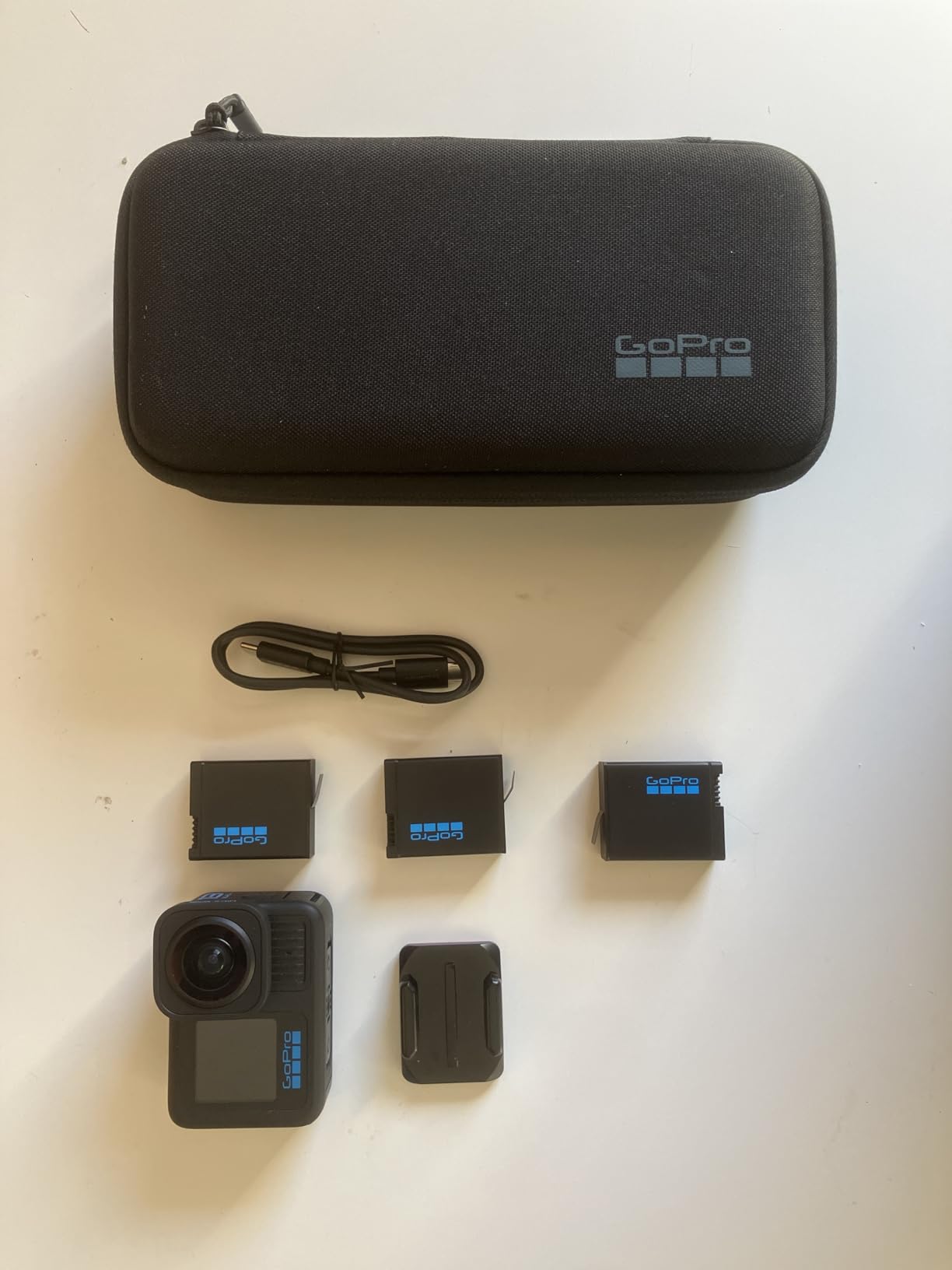
- Three Enduro batteries and a dual charger included
- 64GB SanDisk card and camera case in the box
- Waterproof to 10 m with a water-repelling lens cover
Cons
- GoPro Quik desktop app and updates reported as glitchy
- Subscription prompts add cost and friction
- Clip length is capped so clips need stitching
- No lenses included in the bundle
Everything wrong with the GoPro ecosystem is software, and the HERO13 body itself is hard to fault. HyperSmooth 6.0 stabilisation is the smoothest in-camera system on this list, and 5.3K60 with HDR holds detail in bright skies and dark shade at the same time.
This particular bundle is the reason it earns a place. You get the camera, a dual battery charger, three Enduro batteries, a 64GB SanDisk card, two cables and a case, so the true cost of getting started is the body rather than the body plus a shopping list.
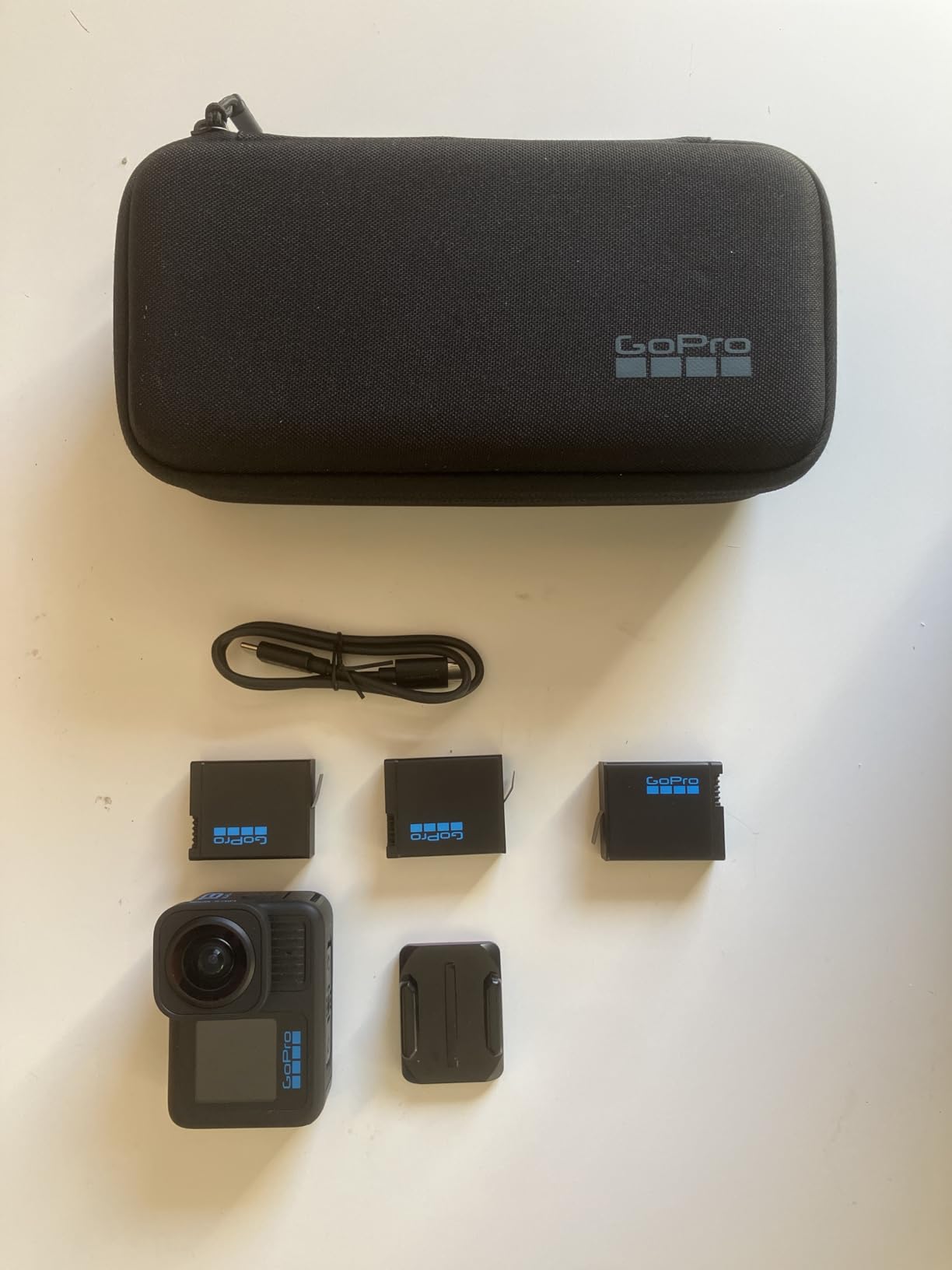
Burst slow motion runs up to 13 times normal speed, and you can pull 24.7MP stills out of your video in the Quik app, which covers the times you want a photograph more than a clip. HB-Series lenses are auto-detected, so modifiers snap on without menus.
Waterproof to 33 feet with a water-repelling lens cover, the HERO13 handles rain, spray and shallow water without a case. It is also the easiest body here to grip one-handed with gloves on, which matters on cold mornings.
Who the HERO13 bundle suits
It suits GoPro loyalists, or anyone who already owns GoPro mounts and wants the newest sensor without hunting for batteries. The mount ecosystem is still the widest in the category for helmets, bikes, chest harnesses and door mounts.
It also suits buyers who want one purchase and no shopping. Three batteries and a card in the box remove the most common complaint about cheaper cameras, which arrive with a single cell and no storage.
Where the HERO13 bundle falls short
The software is the real cost. Owners repeatedly report the Quik desktop app and the update process as glitchy, and subscription prompts for cloud storage and editing add both friction and a running cost if you want the features.
Clips are capped in length, so long recordings have to be stitched in post. No lenses are included in this bundle, they are sold separately, and a few owners find the extra grip hardware adds more weight than they want on a helmet.
4. Insta360 Ace Pro 2 – Best for Vlogging and Low Light at 8K
Insta360 Ace Pro 2 Dual Battery Bundle – 8K Waterproof Action Camera Co-Engineered with Leica, 1/1.3″ Sensor, Dual AI Chip, Leading Low Light, Superior Audio
Pros
- 1/1.3-inch 8K sensor with Leica Summarit optics and 13.5 stops of dynamic range
- PureVideo mode and dual AI chips for low-light clarity
- Leica colour profiles straight out of camera
- Wind Guard cuts wind noise effectively
- 2.5-inch flip touchscreen
- Waterproof to 12 m and rated to -20 degrees Celsius
Cons
- Smaller sensor than the DJI flagship so the low-light ceiling is lower
- 8K recording drains the batteries quickly
- 8K mode is 30fps only
- App-based editing adds a learning curve
The Ace Pro 2 is the one to buy if you talk to camera rather than shout action at it. The 2.5-inch flip touchscreen is bright, dense and more durable than on earlier models, and the Leica Summarit lens gives it a colour signature that looks considered straight out of the camera with no grade applied.
PureVideo mode runs up to 4K60 and leans on the dual AI chips, one dedicated to imaging and one for processing with 100 percent more computing power than the previous generation. In practice the night and indoor clips are the ones reviewers single out as a step ahead of the class.
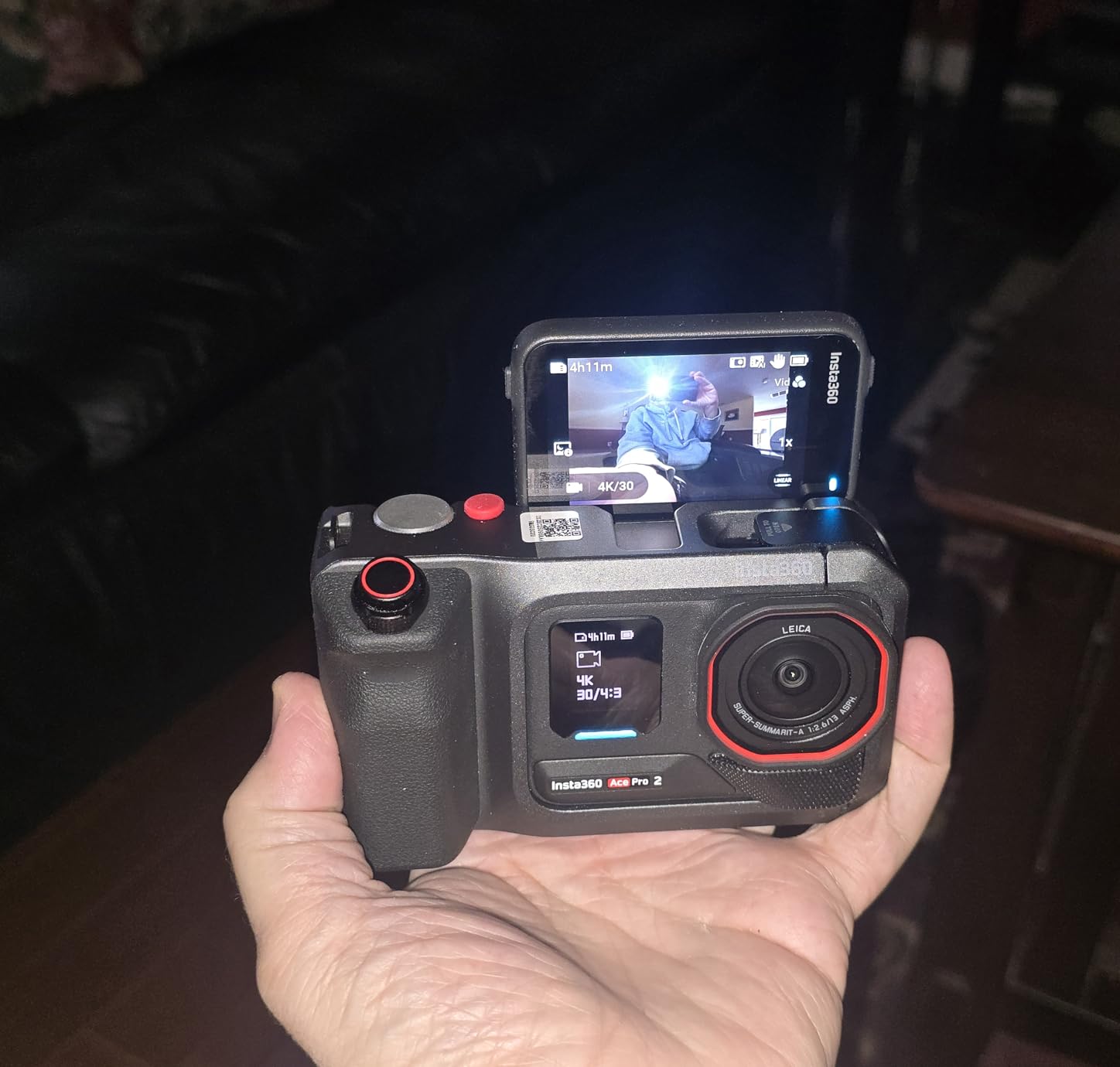
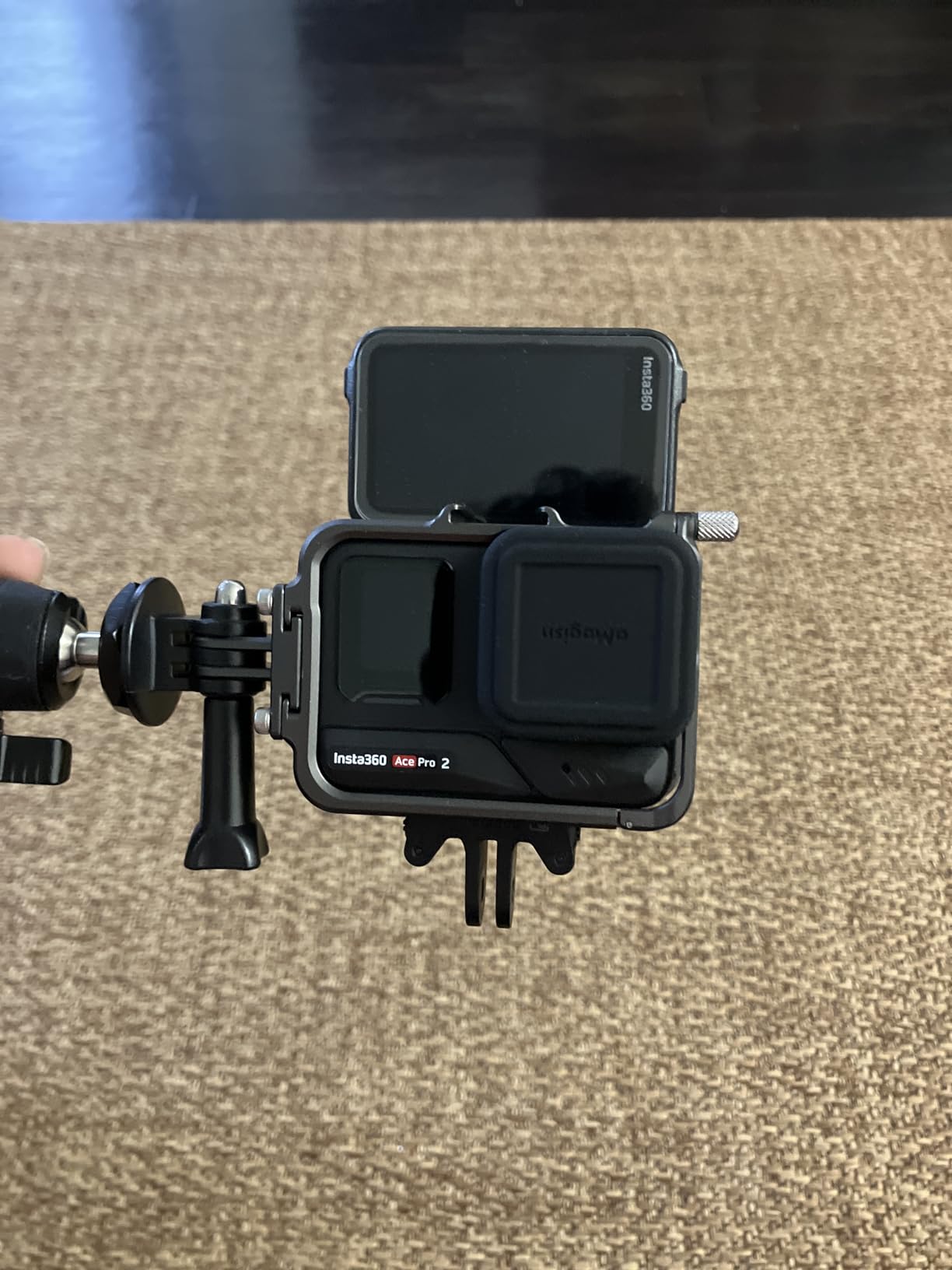
The snap-on Wind Guard is a small piece of hardware with an outsized effect. Owners of noisy action cameras know that wind ruins a clip; a physical guard that sits over the microphone ports fixes more of that than any software setting.
Waterproof to 39 feet and rated to -4 degrees Fahrenheit, so ski season and cold-water swims are both in scope. The dual battery bundle includes two cells, a standard mount, mic cap and USB-C cable.
Who the Ace Pro 2 suits
It suits vloggers, reviewers and anyone recording themselves, because the flip screen makes framing yourself the default rather than a workaround. The Leica colour profiles also appeal to anyone who wants a distinctive look without a colourist.
Winter sports shooters benefit from the 157-degree lens with MegaView field of view and the cold rating. The magnetic mount makes swapping between a hat clip, a chest mount and a bike bracket fast.
Where the Ace Pro 2 falls short
The 1/1.3-inch sensor is smaller than the 1/1.1-inch flagship from DJI, so the absolute low-light ceiling is lower. If darkness is your normal setting, the Osmo Action 6 is the stronger body.
8K is 30fps only, which limits its value for fast action, and 8K drains the removable batteries quickly. App-based editing adds a learning curve compared with simpler competitors, so budget an evening with it before a trip.
5. Insta360 X3 – Best 360 Camera Under 500
Pros
- 5.7K 360 capture with AI reframing turns one take into many framings
- FlowState stabilization and horizon lock
- Large 2.29-inch touchscreen with haptic feedback
- Dual mode: 360 plus 4K30 single-lens
- Four-mic wind cancellation
- Desktop and mobile editing app
Cons
- Effective 360 resolution is well below the advertised 5.7K
- 360 footage must be rendered through the desktop app to view or upload
- Can overheat in direct sun
- Waterproofing less robust than rivals
- Only one battery included
The X3 solves a problem no flat action camera can. Mount it on a pole, capture the full sphere, and then decide the framing afterwards. Riders, skiers and family holidays all benefit because nobody has to aim the camera, and AI reframing plus the invisible selfie stick handle the rest.
When you want conventional footage you switch to 4K30 single-lens, or 2.7K60 MaxView with a 170-degree field of view. That dual mode means one body covers both the grab-and-run moments and the deliberate shots.
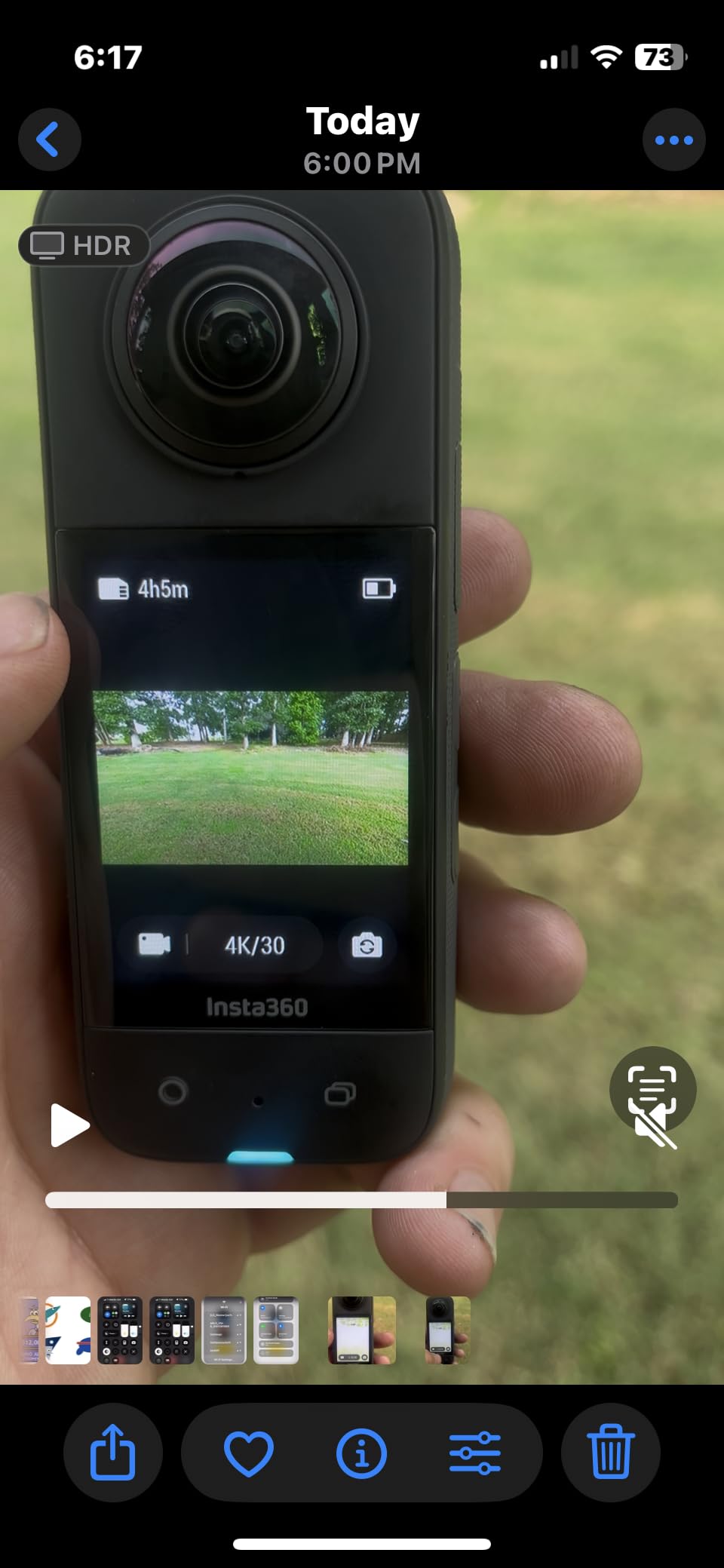
FlowState stabilisation and horizon lock produce level, gimbal-smooth footage without any extra hardware. The 2.29-inch touchscreen is the largest on this list and the physical buttons plus haptic feedback mean you can change settings with gloves on.
Four microphones with wind-noise cancellation keep voice intelligible in windy conditions, which is where most action cameras fail. It also works as a live stream camera and a webcam, and the box includes a charge cable, protective pouch, lens cloth and guide.
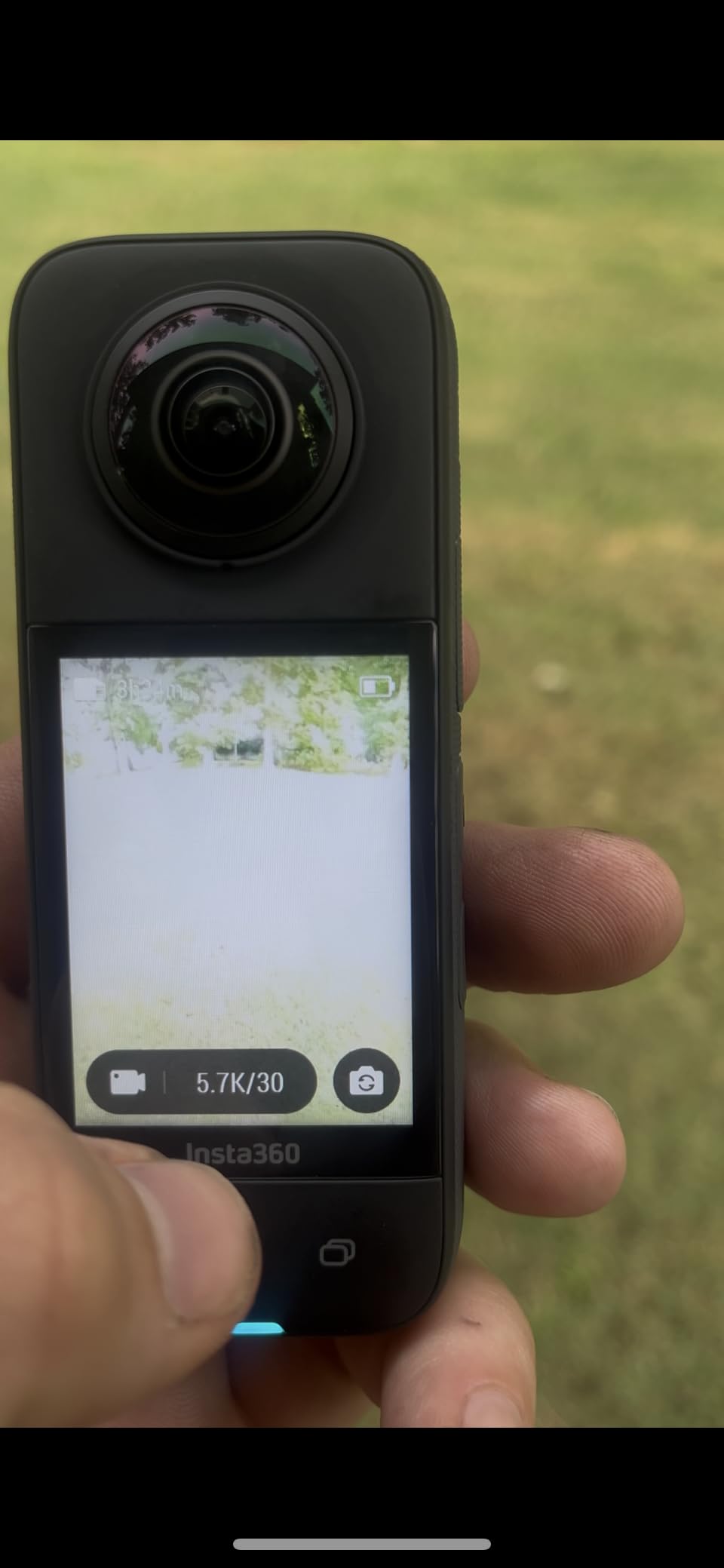
Who the X3 suits
It suits anyone filming group activities where reframing later beats aiming first, and anyone who wants a single take of a whole run rather than a follow-cam. Travel and family footage benefit most.
For vloggers it is a close second to the Ace Pro 2, because the touchscreen is large and the horizon stays level on rough ground. Riders who already shoot 360 will find the accessory ecosystem mature.
Where the X3 falls short
Advertised 5.7K is not what you get once the sphere is split across the frame, and owners are candid about the effective sharpness being lower. 360 files also have to be rendered through the desktop app before they can be viewed or uploaded as 360, which adds a step to every clip.
Waterproofing is less robust than the DJI bodies here, and some users advise against open-water swimming with the bare camera. It can also overheat in direct sun with little airflow, and only one battery is included, so buy a spare before a long day.
6. DJI Osmo Nano – Best Wearable POV Camera
Pros
- 1/1.3-inch sensor with 4K60 in a tiny body
- Only 124 g so it disappears on a hat or lanyard
- Up to 200 minutes of battery life
- 128GB built-in storage
- Waterproof to 10 m
- Connects directly to two DJI microphones
Cons
- Heats during high-resolution recording and has overheat protection that stops recording
- Vision Dock is splash resistant rather than waterproof
- Small 1.96-inch screen for framing and menus
- DJI Mimo app was removed from Google Play
- Smaller sensor than the Osmo Action 6
The Osmo Nano is the smallest serious camera in this roundup at 124 g, and the accessories confirm the intent. A magnetic hat clip, magnetic lanyard and dual-direction ball-joint adapter come in the standard combo, so it is designed to be worn rather than mounted.
A 1/1.3-inch sensor producing 4K at 60fps with a 143-degree ultra-wide view is genuinely good performance for something that weighs less than a packet of biscuits. Colour runs 10-bit with D-Log M, so it grades like a much larger body.
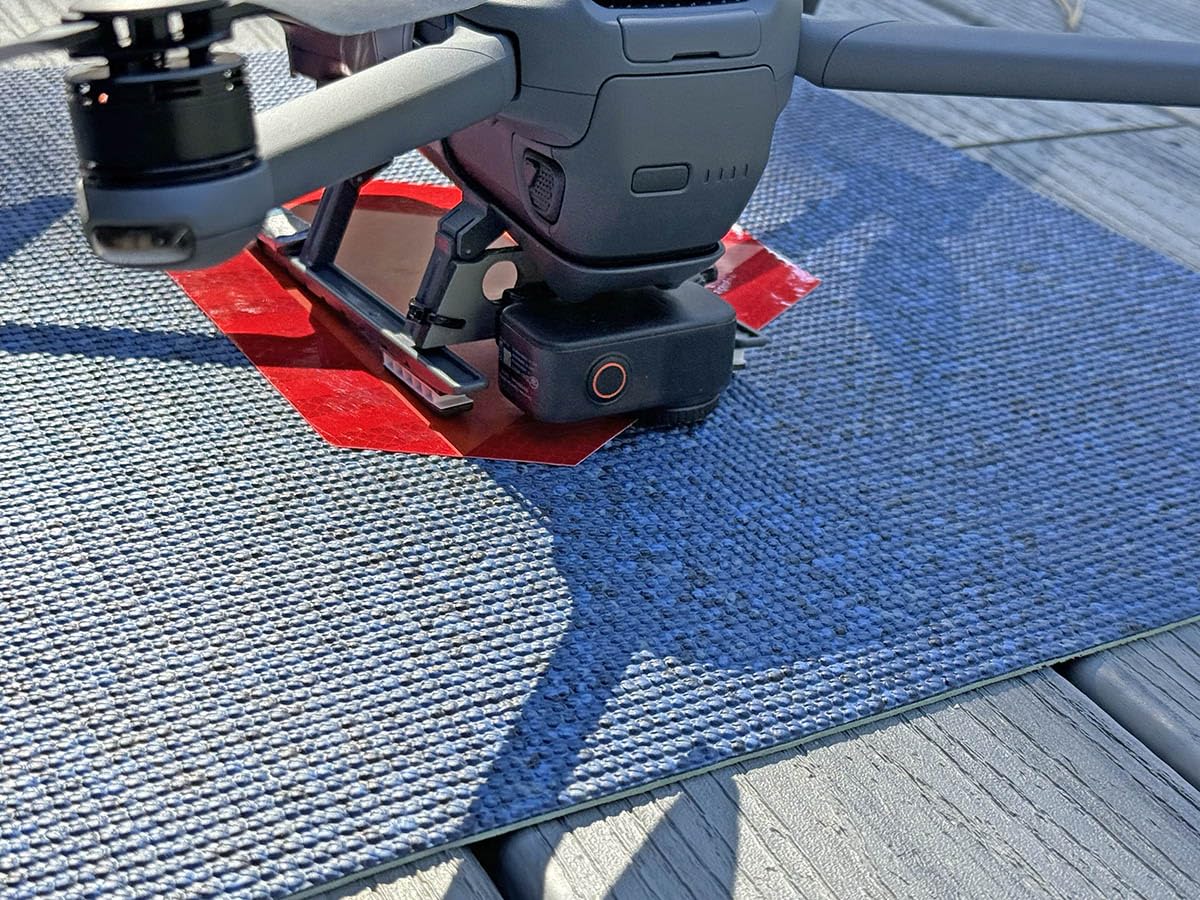
Up to 200 minutes of battery life with fast charging, plus 128GB of built-in storage that you can expand with a microSD card. Owners use it for pet walks, cycling, running and travel, and it connects directly to two DJI microphones for clean audio.
The multifunctional Vision Dock gives you a bigger screen and real controls when you are not wearing it, which solves the small-display problem for setup while keeping the camera itself tiny. Waterproof to 10 m for swimming, surfing and shallow-water filming.
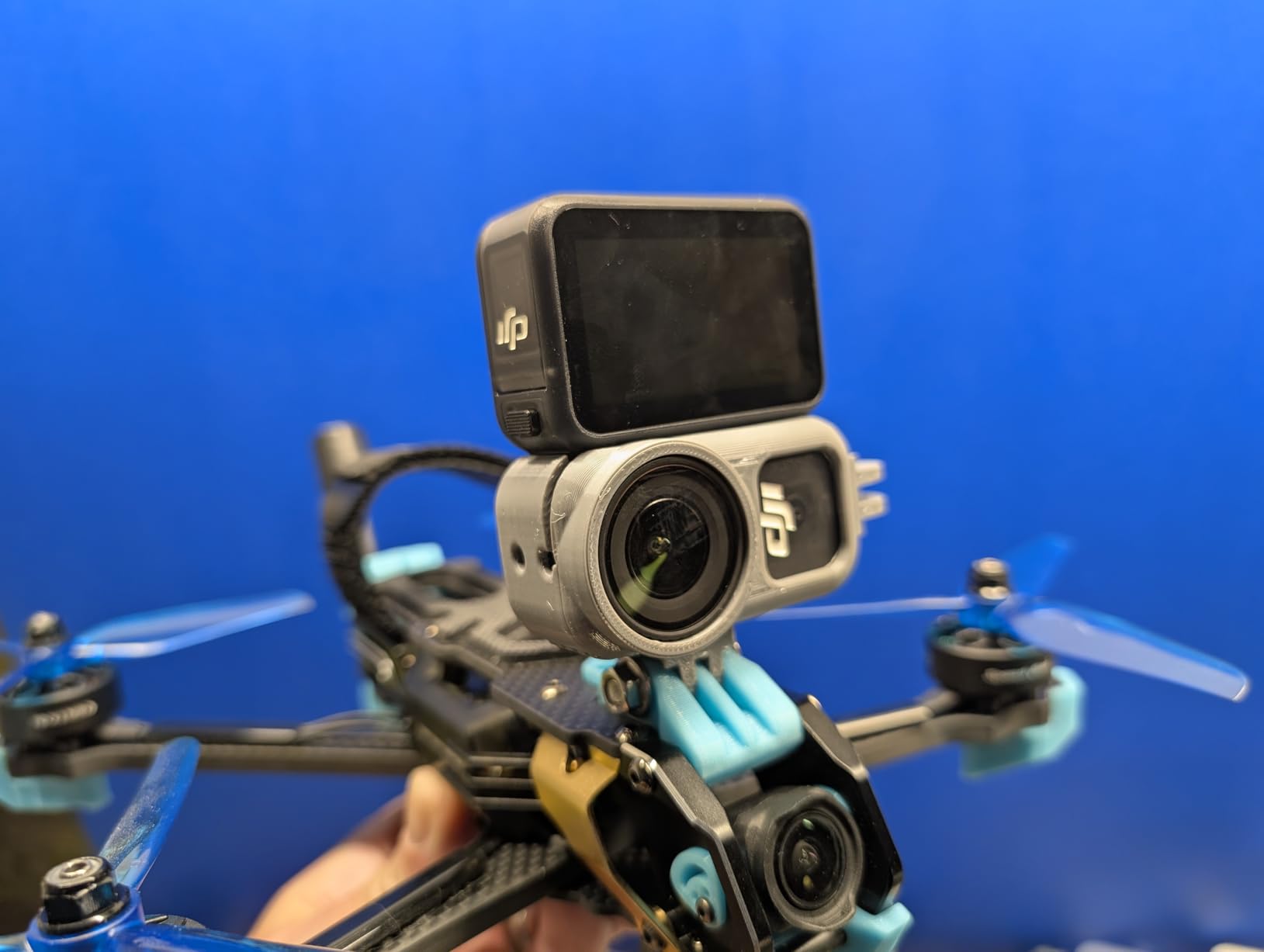
Who the Osmo Nano suits
It suits anyone who wants a camera they will actually wear. A 124 g body on a hat clip is a completely different proposition from a 145 g cube on a helmet, and the difference shows on a long walk or a full day out.
The 128GB of internal storage is a real convenience for casual shooters who never carry a card, and the 200-minute runtime means a weekend trip needs no battery planning.
Where the Osmo Nano falls short
Heat is the headline complaint. DJI states that heating during high-resolution recording is expected and recommends Endurance Mode for longer sessions, but owners do report recordings stopping when the overheat protection kicks in during demanding capture.
The Vision Dock is only splash resistant rather than waterproof, so do not dunk the dock. The 1.96-inch screen is small for framing and menus, and the DJI Mimo app was removed from Google Play, so setup means downloading it from DJI’s own site.
7. GoPro HERO12 Black E-Commerce Package – Best Value GoPro
Pros
- 5.3K60 video and 27MP stills with strong HDR
- HyperSmooth 6.0 with 360-degree Horizon Lock
- Dual responsive screens
- Existing GoPro mounts and accessories carry over
- Webcam and live streaming modes
Cons
- Battery life short at high resolutions
- Unit runs hot during extended filming and can shut down
- Persistent subscription prompts for cloud storage and editing
- Phone app is slow for reviewing and transferring
- No interactive zoom
The HERO12 is the point in the GoPro line where the balance tips. It keeps 5.3K60 video, 27MP photos, HDR, HyperSmooth 6.0 and 360-degree Horizon Lock, which is the feature set most people actually shoot with, and it does it without the top-tier body.
The e-commerce package contains the same core accessories as the retail box, which owners note as the main reason to choose it. You get the camera, an Enduro battery, a USB-C cable, a curved adhesive mount and a mounting buckle.

Still frame extraction works well, and up to 8x slow motion at 2.7K gives you options for water drops, crashes and tricks. Bluetooth audio connectivity lets you attach an external microphone or earbuds, and the 156-degree viewing angle is among the widest here.
Rugged and waterproof to 33 feet without a case, and every GoPro mount you already own fits it. That backwards compatibility is the practical argument for a GoPro at any price.

Who the HERO12 suits
It suits GoPro owners upgrading from an older model who want the current sensor without paying flagship money. Anyone already invested in GoPro mounts, cases and batteries gets the most from it.
It also suits buyers who shoot in mixed light, because the HDR holds detail in bright and shadowed areas of the same frame. The live streaming and webcam modes are useful for a quick broadcast or a desktop meeting.
Where the HERO12 falls short
Battery life is the first limit, and owners frequently find it shorter than the stated 70 minutes at 5.3K60. You will want at least one spare Enduro cell in a long shooting day.
Heat is the second. Units run hot during extended filming and can shut themselves down to protect the hardware, which is the single most common complaint across this entire category. The GoPro subscription prompts and the slow phone app round out the software friction.
8. GoPro HERO11 Black E-Commerce Packaging – Best Starter GoPro
GoPro HERO11 Black – E-Commerce Packaging – Waterproof Action Camera with 5.3K60 Ultra HD Video, 27MP Photos, 1/1.9″ Image Sensor, Live Streaming, Webcam, Stabilization
Pros
- 5.3K60 video and 27MP photos with crisp detail
- HyperSmooth 5.0 with Horizon Lock and AutoBoost
- Front and rear screens for vlogging and POV framing
- Removable Enduro battery for quick swaps
- Works with the entire GoPro mount ecosystem
Cons
- Battery life limited at 5.3K settings
- Camera becomes hot during long recordings
- App and subscription prompts are a frequent frustration
- No lenses cases or extra batteries included
- Software updates through the phone app can be unreliable
The HERO11 remains a genuinely good camera, and the e-commerce packaging is the same core accessory set as the retail box at a lower outlay. If you are buying your first GoPro and want the ecosystem without flagship cost, this is the entry point.
5.3K60 video and 27MP photos with a water-repelling lens cover that reduces flare, plus the most expansive field of view of its generation. HyperSmooth 5.0 with improved Horizon Lock and AutoBoost keeps the frame level and boosts stabilisation when it detects shaky movement.

2.7K240 playback for 8x slow motion is a real advantage for surfers, skaters and anyone shooting water, and both screens are usable for framing on a helmet or bar mount. Bluetooth control and Wi-Fi preview let you check a shot without touching the camera.
The box holds the camera, one Enduro battery, a curved adhesive mount, a mounting buckle with thumb screw and a USB-C cable. That is everything you need, and almost nothing you might want, which is the trade you accept here.

Who the HERO11 suits
It suits a first GoPro, or a second body for a different sport, because the mount ecosystem compatibility means one set of helmets, bikes and grips covers every GoPro you own. Slow-motion shooters get 2.7K240, which is still hard to find elsewhere in this price band.
It also suits anyone who wants GoPro handling without GoPro’s newest features, since the 5.3K60 sensor and HyperSmooth already do the heavy lifting for most footage.
Where the HERO11 falls short
Battery life at 5.3K is short, and the camera gets hot during long recordings, which is the usual GoPro compromise at this end of the range. Bring spare cells and avoid recording at maximum settings in direct sun.
There are no lenses, cases or extra batteries in the box, so your real outlay is higher than the listing suggests. The phone app and subscription prompts frustrate owners regularly, and software updates through the app can be unreliable.
9. AKASO Brave 7 LE – Best Budget Camera With Dual Screens
AKASO Brave 7 LE 4K30FPS 20MP WiFi Action Camera with Touch Screen EIS 2.0 Zoom Remote Control 131 Feet Underwater Camera with 2X 1350mAh Batteries Support External Microphone Vlog Camera
Pros
- 6-axis EIS 2.0 keeps action footage smooth
- Dual screens with a front-facing colour display
- Two 1350mAh batteries plus a charger in the box
- IPX7 body plus a 131 ft waterproof housing
- Mounting kit covers helmets bikes and handlebars
Cons
- 4K limited to 30fps
- Digital zoom crops image quality
- Onboard audio is thin and wind noise dominates
- Companion app less refined than larger brands
The Brave 7 LE is the camera we would hand to a beginner who wants dual screens without spending flagship money. A front-facing colour display for selfies and a 2-inch rear touchscreen mean you can frame yourself and the world without guessing, which is the single biggest usability jump from an entry body.
Two 1350mAh batteries and a charger come in the box, and owners report roughly two hours of runtime per cell. That removes the accessory problem entirely for a weekend, which is where cheaper cameras usually surprise you.

The 6-axis EIS 2.0 is tuned for movement, and reviewers describe the result as gimbal-like on bikes and handlebars. The IPX7 body handles rain, snow and splashing on its own, and the included housing takes it to 131 feet for underwater work.
Time-lapse, burst photo and fast-motion shooting modes cover the gaps between video clips. There is a wrist remote and external microphone support, which is more than most bodies at this level offer.

Who the Brave 7 LE suits
It suits vloggers on a budget, families and anyone filming a trip where the camera will be pointed at people as often as at scenery. Two screens and two batteries remove the two most common frustrations with cheap cameras.
It also suits first-time buyers who want a sealed body and a full mount kit in one box. Snow, rain and shallow water are covered without a separate purchase.
Where the Brave 7 LE falls short
4K is capped at 30fps, so it trails every other camera in this list for slow motion. If you ride or skate fast, that ceiling shows up in the footage.
Zoom is digital rather than optical, so it crops rather than magnifying, and onboard audio is thin with wind noise dominating in motion. The companion app transfers and edits, but it is less refined than the ecosystems from the bigger brands.
10. AKASO EK7000 – Most Versatile
Pros
- Crisp 4K30 and 1080p60 video at a very low outlay
- Large accessory bundle with case mounts dual-battery charger and wrist remote
- Built-in electronic image stabilisation
- Simple on-device buttons and easy phone transfer
- Waterproof case performed well for swimming and snorkeling
Cons
- Muffled onboard audio especially in wind or underwater
- About an hour of runtime per battery
- App-based remote start and stop proved unreliable
- Unhinged battery door is fiddly
- Screen hard to read underwater
Few cameras have as many owners as the EK7000, and the reason is simple: it does the fundamentals well for very little. 4K30 video, 20MP photos, built-in electronic image stabilisation and a 131 foot waterproof case in the box is a rare combination this low down.
The 2-inch rear screen and single-button layout make it genuinely easy to hand to a child or a relative. It ranks first in Sports and Action Video Cameras, which reflects how many people bought one and were satisfied.
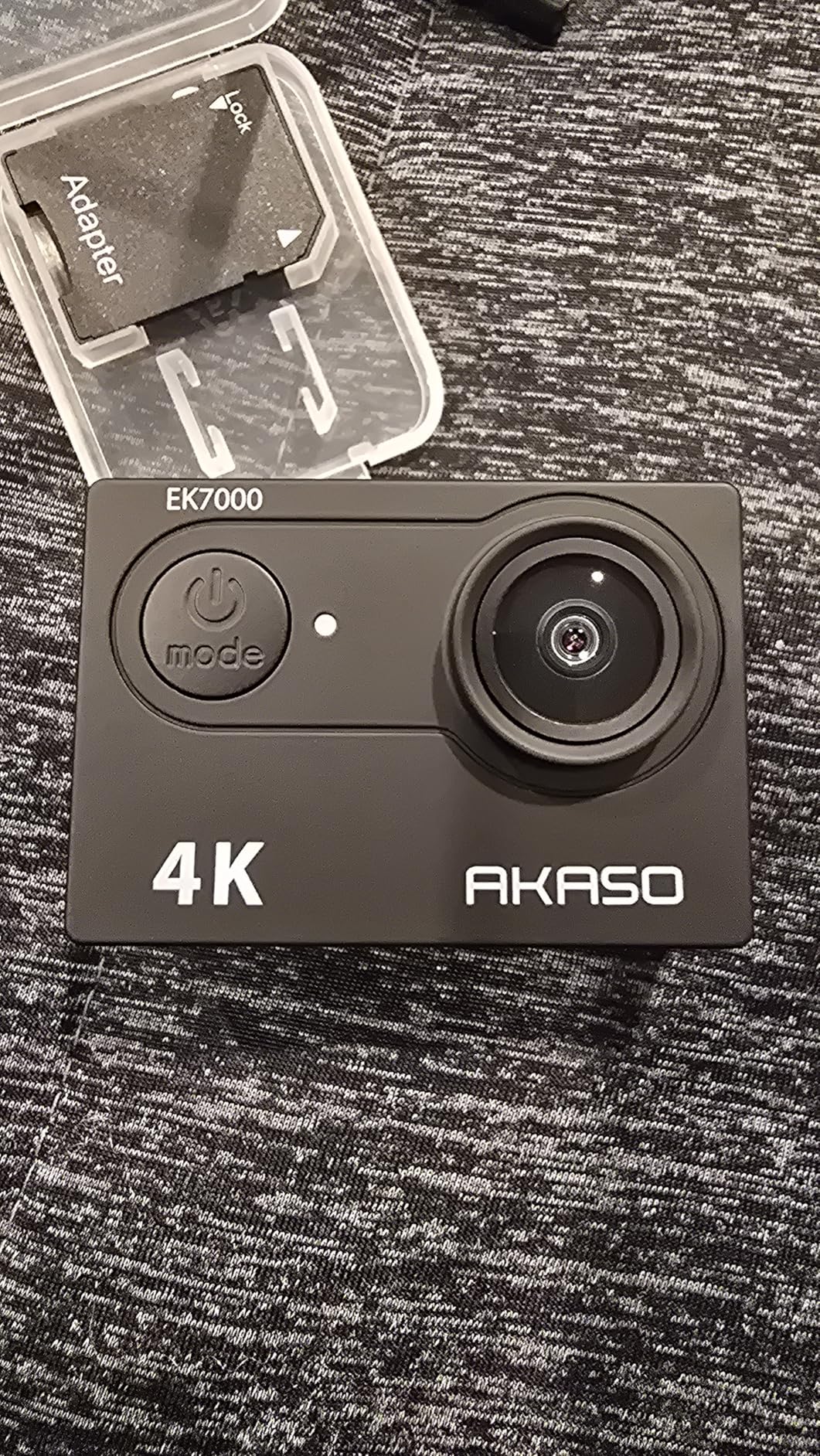
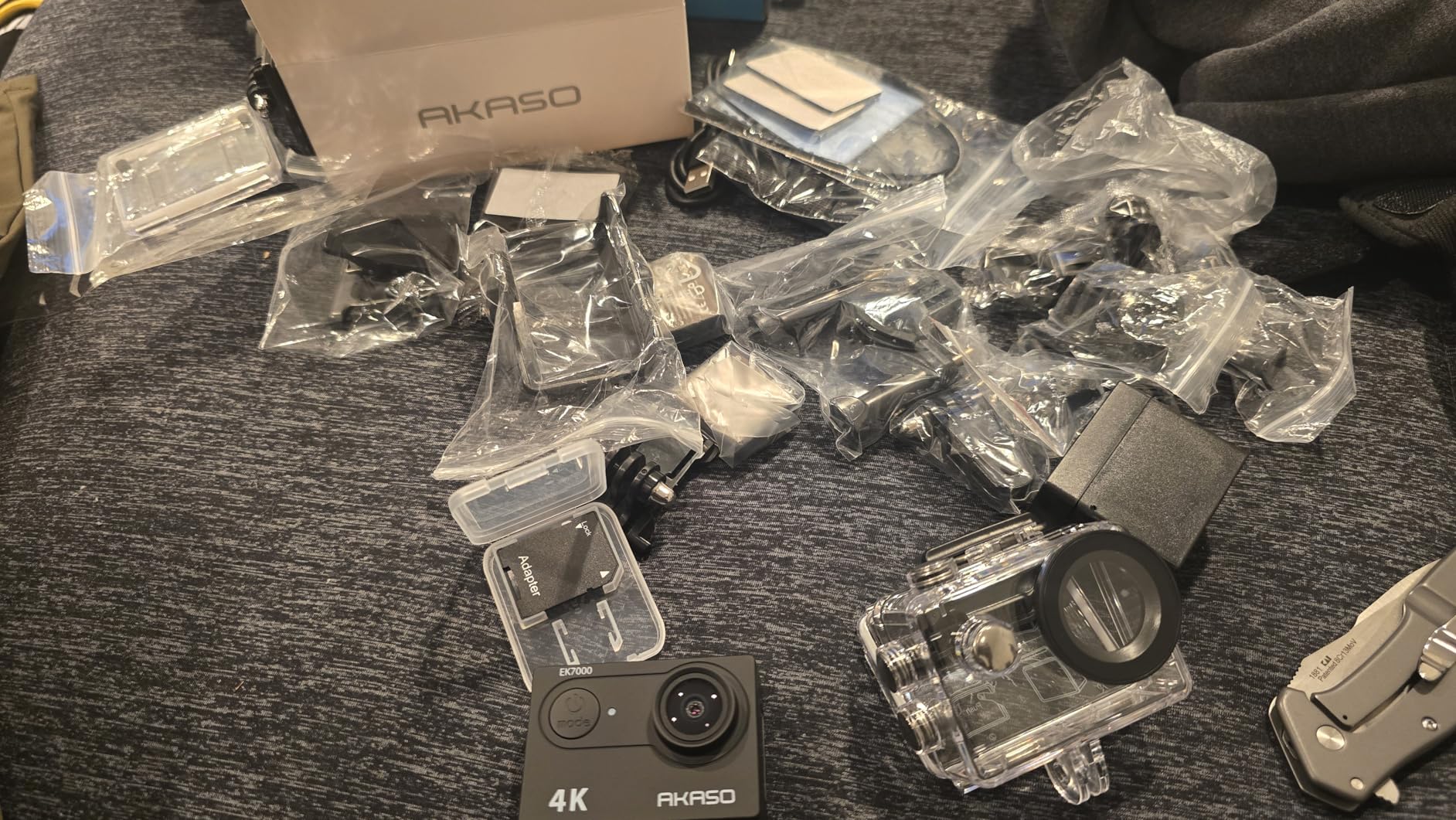
The bundle includes the waterproof case, a set of mounts, a dual-battery charger and a 2.4GHz wrist remote, so a first-time owner has everything except a memory card. Stabilisation smooths footage in fast-moving situations, and there is 4x digital zoom plus a time-lapse mode.
It weighs two ounces, which makes it the lightest body here and easy to forget on a helmet. The trade is audio: reviewers repeatedly describe onboard sound as muffled, especially in wind or underwater.
Who the EK7000 suits
It suits first-time buyers, families and anyone who needs a working waterproof camera for a holiday with a minimal budget. The complete bundle means nothing else needs buying except a card.
It also suits anyone who wants a cheap second or third body for a helmet, a bike and a car at once. At this outlay, two is realistic.
Where the EK7000 falls short
Battery runtime of about an hour per charge is the main constraint, so a full day out means swaps. The app-based remote start and stop is unreliable in owner reports, while the included wrist remote works better.
The battery door is unhinged and fiddly, which matters in wet conditions, and the screen is hard to read underwater. Audio is muffled by design limits rather than by accident, so treat the sound as secondary.
11. AKASO Brave 4 – Best for Underwater Housings and Accessories
Pros
- Sharp 4K30 and 1080p60 video
- Large kit with housing dual charger two batteries and wrist remote
- Dual screens for vlog and selfie framing
- Stabilisation smooths vibration on bikes kayaks and bikes
- Reliable housing that held up on dives and cold water
- Does not overheat in high heat
Cons
- Menu and control navigation is clunky
- 5x zoom is digital only
- Weak close-up focus despite a large depth of field
- Unhinged battery door is easy to lose
- Visible grain in photos at higher ISO values
The Brave 4 is the pick for anyone whose footage happens underwater. Its housing is rated to 131 feet and 40 metres, and owners report it holding up on cold spring-water trips and on trips where a cheaper housing fogged or leaked.
It is also the rare budget camera reviewers praise for not overheating, including in high desert conditions. That alone separates it from most of the field, and it changes the picture completely for anyone recording long sessions in summer.

The adjustable field of view gives you 170, 140, 110 or 70 degrees, which lets you bring a subject closer without digital cropping and is genuinely useful underwater where everything is far away. Dual screens, a 2-inch rear and 0.96-inch front, make solo filming practical.
The box includes a USB dual charger and two 1050mAh batteries rated at up to 90 minutes each, plus the housing, remote and mounting hardware. At 159 g it sits comfortably on a helmet without a wobble.

Who the Brave 4 suits
It suits snorkellers, freedivers on shallow reefs, and anyone shooting in a pool or a lake where the housing does the real work. The 40 metre housing rating gives real headroom over the snap-on cases of other budget bodies.
It also suits summer shooters who need a camera that will not shut down on a hot trail, and buyers who want a big mount kit included rather than assembled one piece at a time.
Where the Brave 4 falls short
The menu system is clunky and needs time in the settings before it feels natural, which is a real cost for anyone who shoots rarely. Owners also mention the loose, unhinged battery door as easy to lose.
The 5x zoom is digital only and barely beats cropping, and close-up focus is weak despite the large depth of field. Photo quality shows visible grain at higher ISO values, so treat it as a video-first camera.
12. icefox i7 – Best Entry-Level 4K60
icefox Action Camera 4K 60FPS 20MP with 2X 2150mAh Batteries, Underwater Camera with 5X Zoom, EIS, Powered by Snappro App,Support Video&Photo Editing,Waterproof, WiFi Remote Control
Pros
- Very low outlay for 4K60 recording and 30MP stills
- Two 2150mAh batteries for unusually long runtime
- IP68 housing rated to 30 m for water sports
- Extensive bundle with mounts remote and charger
- Lightweight at 81 g and easy for beginners to operate
Cons
- Picture quality and stabilization are soft next to established brands
- Audio is muffled cuts in and out and is ruined by wind
- Camera can lock up and lose a clip until the battery is pulled
- Menu system is clunky and only partly in English
- Recording over Wi-Fi causes laggy video
The icefox i7 is the cheapest way to get 4K60 with 30MP stills, and its battery claim is the part that stands out. Two 2150mAh cells are rated for up to five hours of continuous 4K recording, which no other camera in this roundup approaches at this level.
It weighs 81 g and the interface is simple enough for a beginner to pick up unaided. The 147-degree lens covers most of what a wide action camera needs to see, and the housing is IP68-rated to 30 metres.
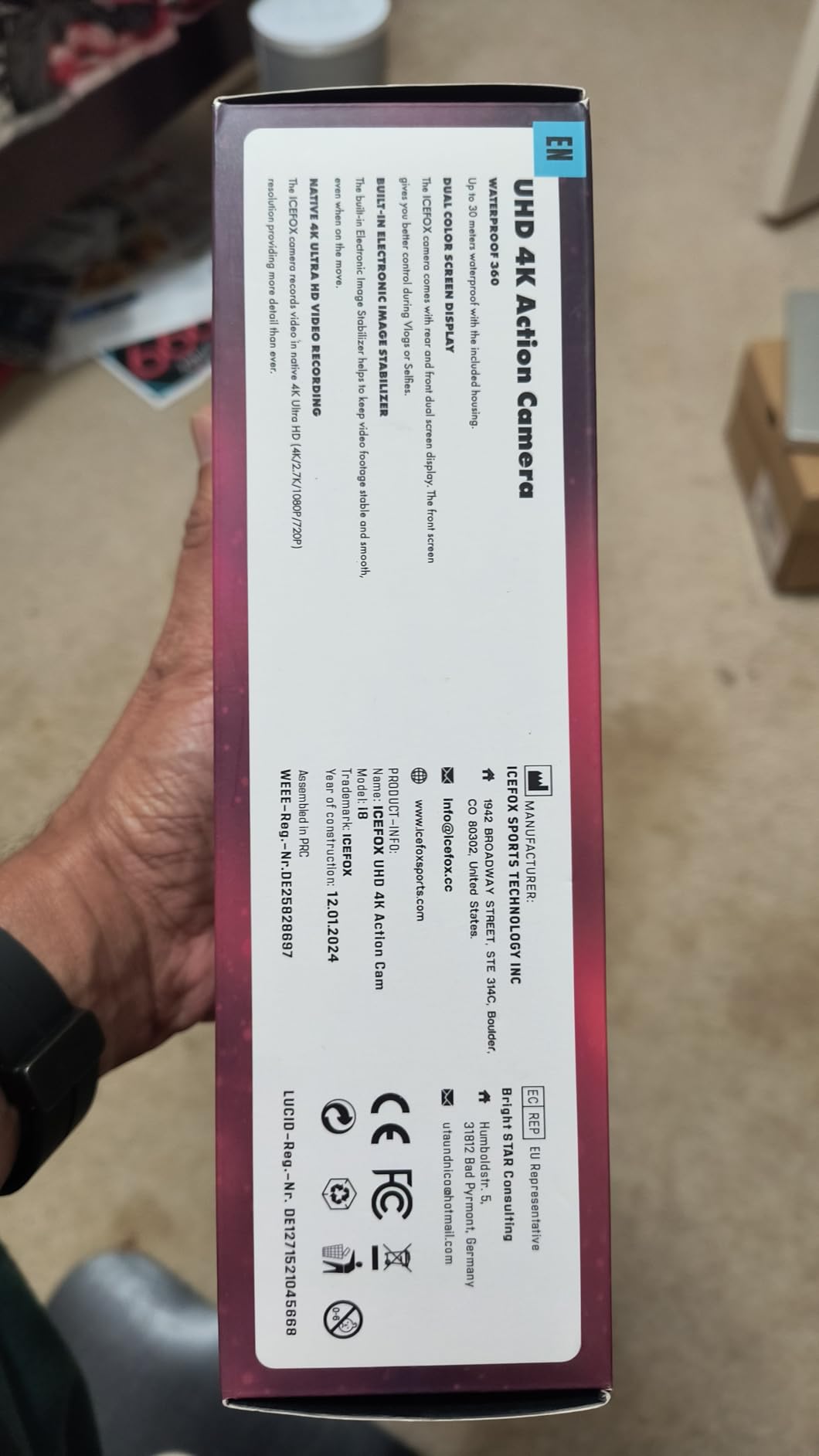
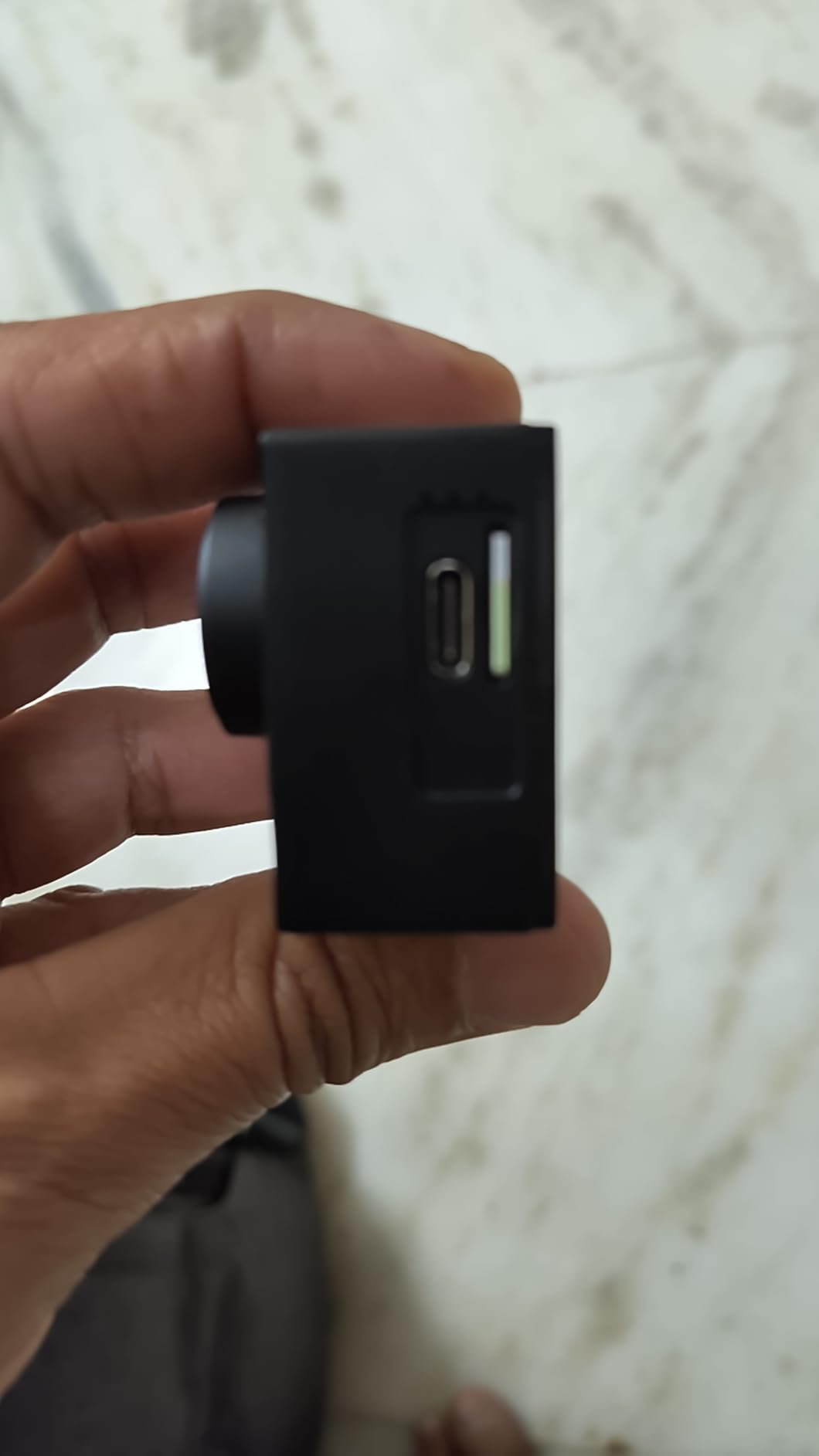
The Snappro app handles Wi-Fi transfers and editing with music, subtitles, filters and backgrounds, which is more editing help than most budget bodies offer. The bundle includes the housing, two batteries, a remote, a USB cable and a range of mounts.
Batteries are rated stable from -10 to 45 degrees Celsius, so cold-weather use is within spec. It is a sensible spare camera to carry as a backup that you do not mind using hard.
Who the icefox i7 suits
It suits beginners, families and anyone who wants 4K60 plus long runtime for the smallest outlay of anything tested here. The battery capacity makes it useful for long events and travel days where charging is awkward.
It also works as a cheap backup body. At this cost, most owners would rather risk the spare than the primary.
Where the icefox i7 falls short
Reliability is the concern. Owners report the camera locking up in recording mode and losing the clip until the battery is pulled, which is exactly the failure that ruins a once-in-a-lifetime shot. Picture quality and stabilisation are also soft next to the established brands.
Audio is muffled, cuts in and out, and falls apart in wind. Recording over Wi-Fi produces laggy, freezing video, the menu system is clunky and only partly in English, and the front display has no clear way to switch it on. Use it with expectations set accordingly.
How to Choose an Action Camera Under 500
Decide on sensor size before resolution. A 1/1.3-inch or 1/1.1-inch sensor gathers far more light than the small sensors used in entry cameras, and that single choice matters more than the headline resolution. An 8K mode on a small sensor usually delivers less usable detail than 4K from a large one, and it eats your card and your battery.
Treat waterproof depth carefully. Depth ratings differ enormously, and the number that matters is the one without a housing. The Osmo Action 4 is rated to 18 m bare, the Osmo Action 6 to 20 m, the Ace Pro 2 to 12 m, and the GoPro bodies and the X3 to 10 m. Budget cameras that need a case are a different proposition, since the housing is a separate failure point and a separate cost.
Understand electronic stabilisation. Every camera here cancels shake in software by reading the sensor and re-cropping the frame. HyperSmooth 6.0 on GoPro, RockSteady and HorizonBalancing on DJI and FlowState on Insta360 all add horizon levelling on top, which is what keeps a rolling mountain bike clip usable.
Buy the battery before anything else. The cheapest bodies here run around an hour per cell, while the Osmo Action 6 is rated at up to four hours and the Osmo Nano at up to 200 minutes. Add a spare cell, a fast card and a case to your budget before the camera, because the accessories can add a meaningful share of the body cost and a camera you cannot keep charged is a camera you do not use.
Check the microSD requirement. High bitrate 4K and 8K fill cards fast, so buy a card with a V30 speed class or better and enough capacity for a full trip. A 256GB card is a reasonable floor for a holiday of 4K60 footage, and a 64GB card will feel full in a weekend.
Weigh the software honestly. Companion apps are the most common source of complaint across this category. Buyers report the GoPro Quik app and subscription prompts as frustrating, the DJI workflow as cumbersome for some, and Insta360 app-based editing as a learning curve. If you dislike editing software, factor in an evening of setup before a trip.
Know when an action camera is the wrong buy. For sports stills with real optical quality, a mirrorless body and a proper lens win outright, because action cameras have fixed focus and small sensors. For handheld long-form video, a phone or a mirrorless camera is more natural. An action camera earns its place when the camera is mounted, moving, wet or cold and you cannot be there to hold it.
Remember overheating. High bitrate modes generate heat, and owners across brands report recording stopping when internal protection kicks in, especially in direct sun. Recording at 4K30 or 4K60 instead of the maximum mode extends runtime and reduces shutdowns, and many experienced users shoot lower settings deliberately for that reason.
Look down a tier if the budget is tighter. If the 500 ceiling leaves you choosing between a mid-range body and a bundle, the lower tiers are covered separately in our guides to the best action cameras under $300, the best action cameras under $150 and the best action cameras under $100, which line up with entries 9 to 12 in this roundup.
Frequently Asked Questions
What’s the best action camera for the money?
The DJI Osmo Action 4 is the best action camera for the money inside a 500 dollar budget. Its 1/1.3-inch sensor, 4K at 120fps, 10-bit D-Log M colour and 18 m waterproof rating cover almost every use case, and the magnetic mount system makes it the easiest to use on a helmet or bike. The DJI Osmo Action 6 goes further for low light and battery life, while the AKASO EK7000 covers the cheapest end of the market.
Is there a cheaper alternative to a GoPro?
Yes. A DJI Osmo Action 4 or an Insta360 Ace Pro 2 costs less than a flagship GoPro and matches or beats it for low light, battery life and waterproof depth without a housing. The GoPro advantage is ecosystem rather than image quality: the mount range is the widest, the body handles gloved hands well, and every older accessory fits. If you do not already own GoPro mounts, the cheaper alternatives usually make more sense.
What is the best value for money action camera?
The DJI Osmo Action 4 offers the best value, and the GoPro HERO12 Black e-commerce package is the alternative if you want the GoPro mount system. Value is not the same as cheapest, though. Add a spare battery, a fast microSD card and a protective case to any budget camera and the total moves closer to a mid-range body, which is why we rank on total cost rather than sticker price alone.
Do I need a housing to use an action camera underwater?
It depends on the camera. The DJI Osmo Action 6 is rated to 20 m without a case, the Osmo Action 4 to 18 m, the Insta360 Ace Pro 2 to 12 m, and the GoPro HERO12 and HERO13 bodies to 10 m, so those four work underwater bare. The AKASO models and the icefox i7 need their supplied housing, which is rated to 40 m for the AKASO Brave 4 and 30 m for the icefox. The Osmo Nano Vision Dock is only splash resistant, so keep the dock out of the water.
Why does my action camera overheat at 4K?
High bitrate recording generates more heat, and every action camera has internal protection that stops recording before permanent damage occurs. Owners report shutdowns most often on 8K and high bitrate modes, in direct sun, and with no airflow around the body. Recording at 4K30 or 4K60 instead of the maximum setting reduces heat and extends runtime, and a genuine housing or a shaded mount helps more than any setting.
Can an action camera replace a mirrorless for sports?
For video, often. For stills, no. Action cameras have fixed focus and small sensors, so a mirrorless body with a real lens produces sharper, more flexible photographs of sport. An action camera makes more sense when the camera must be mounted, wet, cold, moving or hands-free, or when you want slow motion options like 4K120 or 2.7K240. If your priority is photographs, spend the budget on a mirrorless body instead.
The Verdict on the Best Action Cameras Under 500 in 2026
The DJI Osmo Action 4 is our pick for the best action cameras under 500 dollars in 2026. A 1/1.3-inch sensor, 4K at 120fps, 10-bit D-Log M and an 18 m waterproof rating make it the most complete camera you can buy inside this ceiling, and the magnetic mounts are the easiest to live with.
Buy the DJI Osmo Action 6 if you film at night or need all-day endurance, the GoPro HERO13 Black bundle if you want a complete kit with three batteries and a card, the Insta360 X3 if you would rather reframe after the fact, and the AKASO EK7000 if the budget is small. Whatever you choose, add a spare battery and a fast card to the plan before you buy the body.