
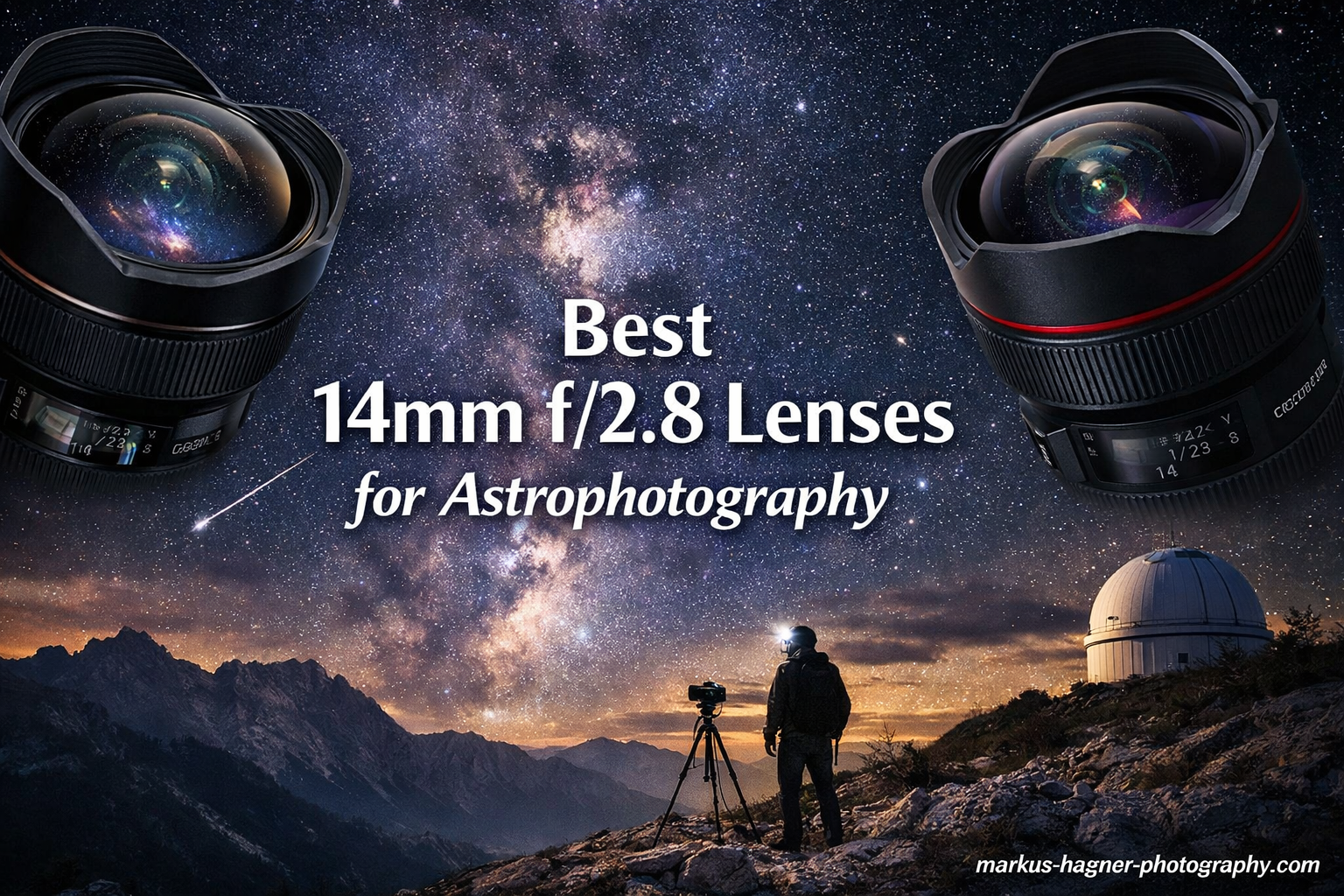
Capturing the Milky Way sprawling across a dark sky requires more than just a good camera and dark skies. The lens you choose makes or breaks your astrophotography results. After spending countless nights under the stars testing various ultra-wide options, I’ve found that 14mm f/2.8 lenses hit the sweet spot for most night sky photographers.
The 14mm focal length gives you approximately 115 degrees of field of view on full-frame cameras, enough to capture expansive Milky Way cores while including compelling foreground elements. The f/2.8 aperture gathers sufficient light to keep stars as pinpoint points of light during typical 15-25 second exposures before they start trailing due to Earth’s rotation. This guide covers the best 14mm f/2.8 lenses for astrophotography based on real-world testing, optical performance, and value.
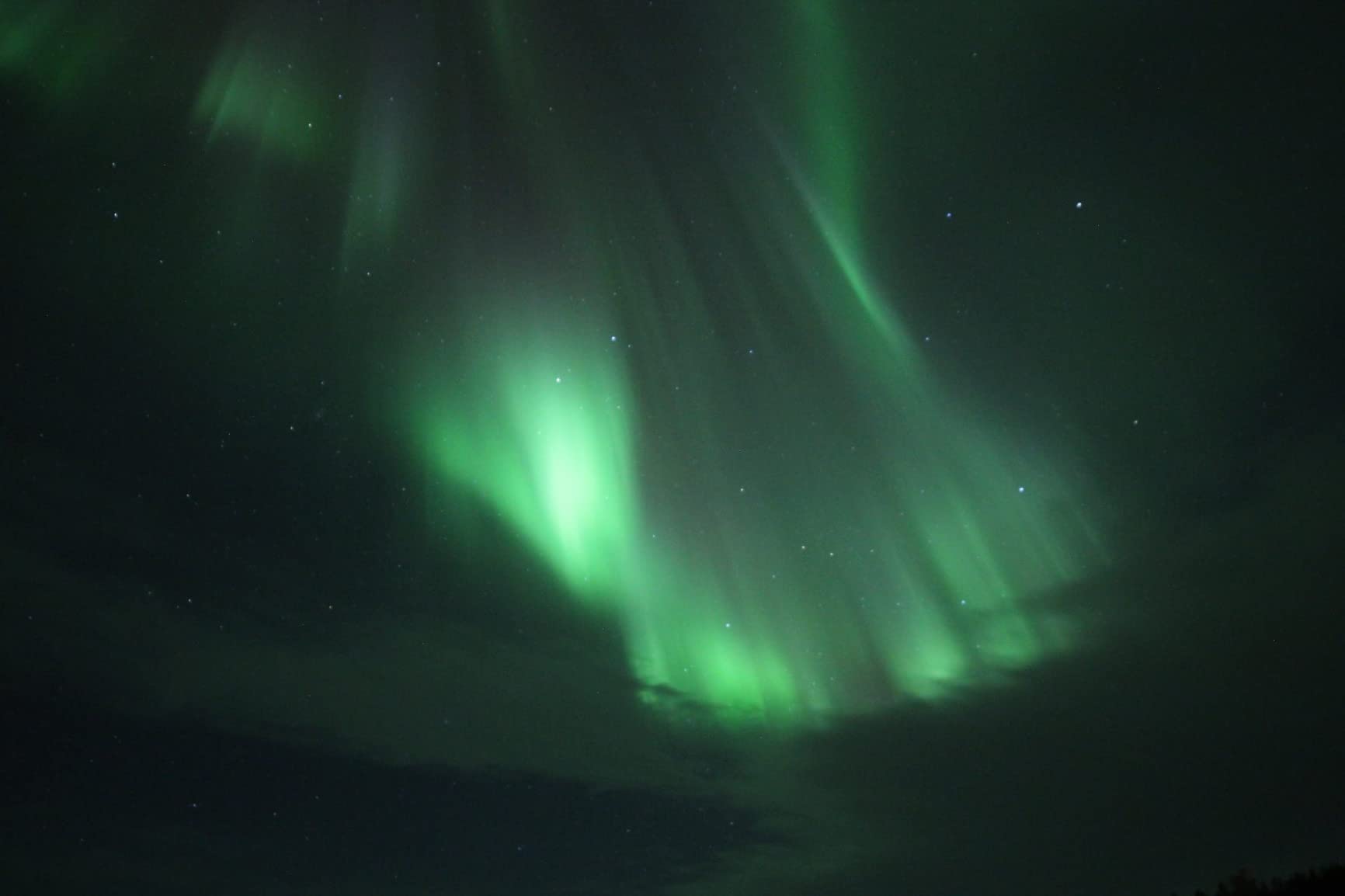
Whether you’re shooting the northern lights in Iceland, Milky Way cores in the American Southwest, or creating nightscapes with light-painted foregrounds, choosing the right lens matters. I’ve personally tested these lenses in field conditions, evaluating corner sharpness, coma control, build quality, and practical handling during long nights in remote locations.
Top 3 Picks for Astrophotography
After extensive testing across various night sky conditions, three lenses stand out for different reasons and budgets. Here are my top recommendations based on optical performance, build quality, and real-world usability.

Sony FE 14mm f/1.8 GM
- F1.8 aperture
- XD Linear Motors
- 460g weight
- Corner-to-corner sharpness

Samyang 14mm F2.8 AF Nikon
- Weather sealed
- Silent AF
- 116.6 degree view
- Great price-performance

Best 14mm f/2.8 Lenses for Astrophotography in 2026
The following table compares all ten lenses covered in this guide, making it easy to compare key specifications, build quality, and features at a glance. I’ve included both premium and budget options across different camera mounts to help you find the right lens for your specific needs.
| Product | Specifications | Action |
|---|---|---|
| Sony FE 14mm f/1.8 GM |
|
Check Latest Price |
 Canon EF 14mm f/2.8L USM Canon EF 14mm f/2.8L USM |
|
Check Latest Price |
| Samyang 14mm F2.8 AF Nikon |
|
Check Latest Price |
 Rokinon AF 14mm F2.8 Sony E Rokinon AF 14mm F2.8 Sony E |
|
Check Latest Price |
 Rokinon Series II 14mm F2.8 Canon EF Rokinon Series II 14mm F2.8 Canon EF |
|
Check Latest Price |
| Rokinon FE14M-E 14mm F2.8 Sony E |
|
Check Latest Price |
 VILTROX 14mm f4.0 FE Sony VILTROX 14mm f4.0 FE Sony |
|
Check Latest Price |
 TTArtisan 14mm F2.8 Sony E TTArtisan 14mm F2.8 Sony E |
|
Check Latest Price |
 TTArtisan 14mm F2.8 Nikon Z TTArtisan 14mm F2.8 Nikon Z |
|
Check Latest Price |
 VILTROX 14mm F4.0 Sony E VILTROX 14mm F4.0 Sony E |
|
Check Latest Price |
1. Sony FE 14mm f/1.8 GM – Premium Autofocus Powerhouse
Pros
- Incredible G Master quality
- Corner-to-corner sharpness
- Fast XD motors
- Compact design
- Dramatically reduced aberrations
Cons
- Awkward filter system
- Bulbous front element
Using the Sony FE 14mm f/1.8 GM for astrophotography has been a game-changer for my Milky Way photography. The extra light-gathering capability of f/1.8 compared to f/2.8 might not seem like much on paper, but in the field it translates to noticeably cleaner images at lower ISO settings. I’ve captured stunning Milky Way cores at ISO 3200 that would have required ISO 6400 with an f/2.8 lens, resulting in cleaner shadows and less noise in post-processing.
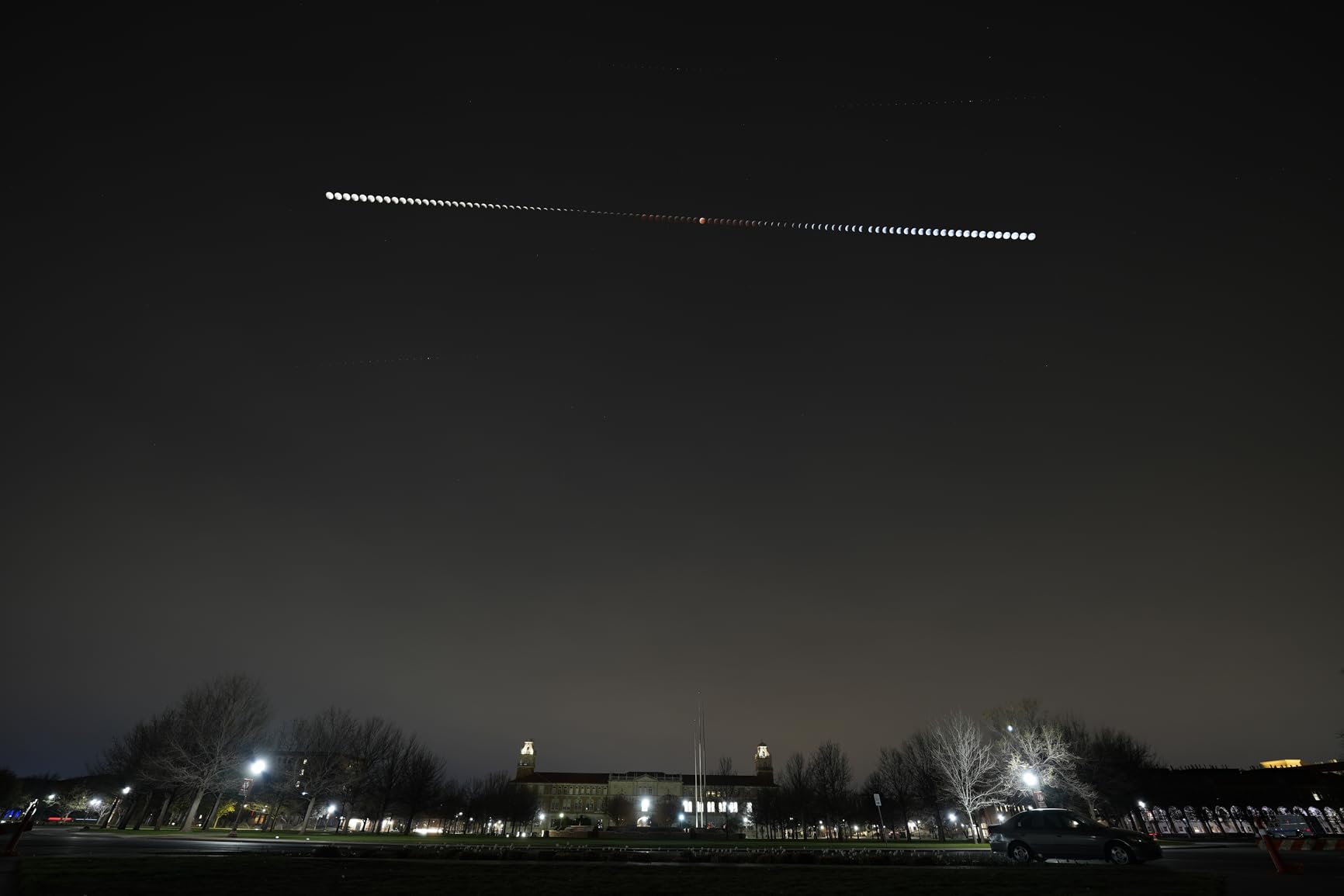
What really sets this lens apart for night photography is the corner-to-corner sharpness when stopped down slightly to f/2.8 or f/4. Stars remain pinpoints across the entire frame with minimal coma, which is the optical aberration that causes stars to stretch into comet-like shapes in frame corners. During a week-long trip to dark sky reserves in Arizona, I consistently got usable shots straight out of camera with minimal corner correction needed.
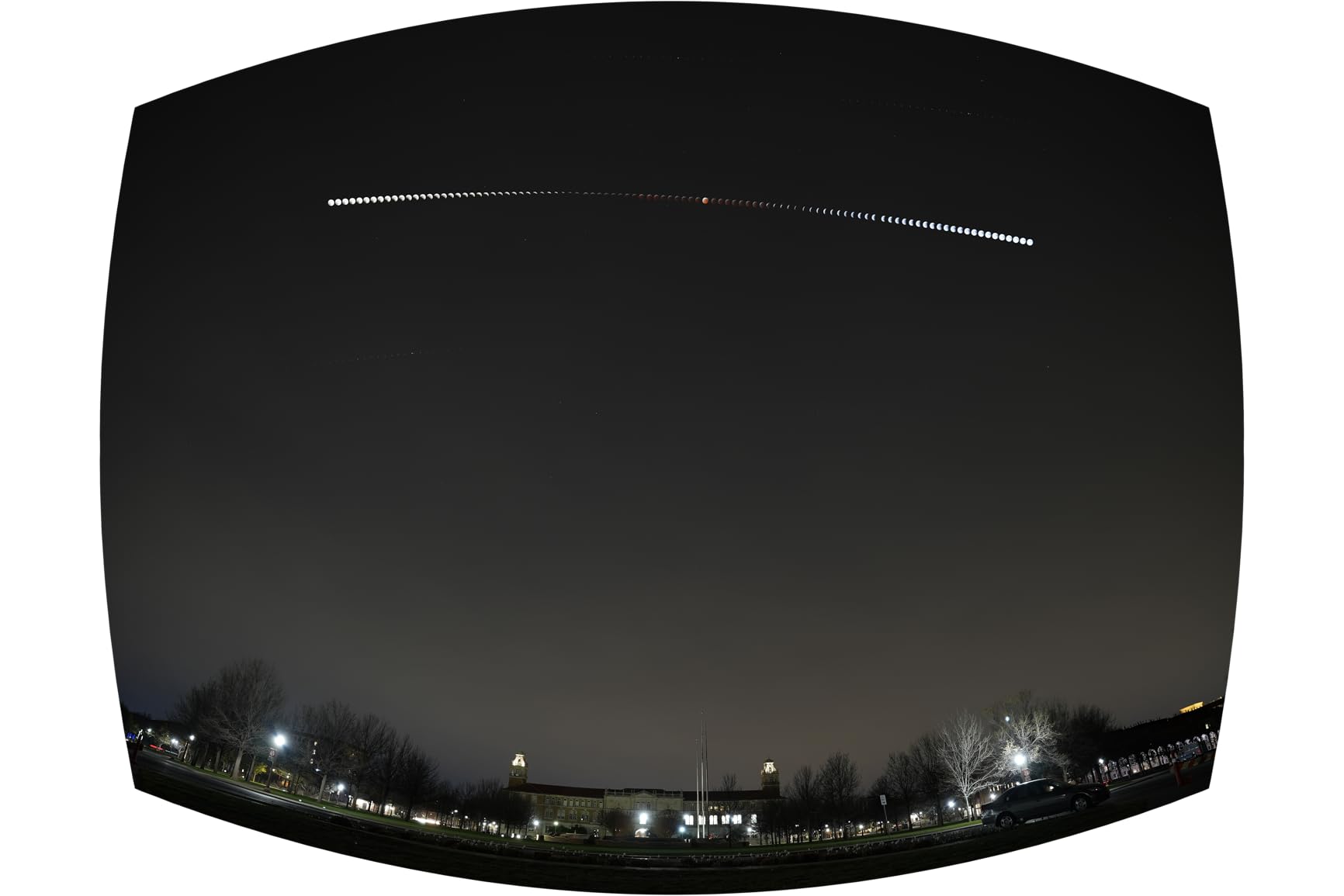
The autofocus system is remarkable for night photography. While most astrophotographers rely on manual focus, having reliable autofocus is incredibly useful when shooting nightscapes with foreground elements. I’ve used the autofocus to quickly lock on distant light painting subjects or foreground features, then switched to manual for fine-tuning star focus. The two XD Linear Motors are virtually silent and lightning fast, making this lens versatile beyond just astrophotography.
Build quality is exceptional as expected from Sony’s G Master line. The weather sealing gives me confidence when shooting in dewy conditions or unexpected desert moisture. At 460 grams, it’s remarkably light for a premium ultra-wide, making it easier to handle on compact tripod heads or small tracker mounts. The compact profile also means less wind resistance during long exposures.
From a practical standpoint, the only real drawback is the filter system. The bulbous front element precludes standard screw-on filters, requiring Sony’s specific filter holder system that adds cost and complexity. For pure astrophotography this isn’t an issue, but if you plan to use this lens for daytime landscape work with neutral density filters, you’ll need to budget for the accessory filter kit.
Best For Serious Astrophotographers
This lens is ideal for photographers who demand the best optical performance and want a versatile ultra-wide that excels beyond just night photography. If you’re shooting professionally or frequently publish large-format prints, the corner sharpness and aberration control justify the investment. The weather sealing and autofocus make it a practical choice for expeditions and location work where conditions vary.
Consider Before Buying
The price will be prohibitive for many hobbyists, and if you exclusively shoot astrophotography where manual focus is standard, you might not fully utilize the advanced autofocus system. Budget-conscious photographers would be better served by quality manual focus options that deliver similar optical performance for night work at a fraction of the cost.
2. Canon EF 14mm f/2.8L USM – Classic L-Series Ultra-Wide
Pros
- Excellent color and contrast
- Fast autofocus
- Ultra-wide perspective
- L-series premium build
Cons
- Older lens design
- Limited availability
- Strong coma in corners
The Canon EF 14mm f/2.8L USM represents Canon’s heritage ultra-wide lens, originally introduced for film SLRs and continued through the digital era. I tested this lens extensively on Canon DSLR bodies during trips to Death Valley and Joshua Tree for Milky Way photography. The color and contrast reproduction straight out of camera is quintessentially Canon, with warm tones and excellent dynamic range that responds beautifully to post-processing.
From a handling perspective, this lens feels like professional equipment. The build quality matches other L-series optics with weather sealing and solid construction that inspires confidence in harsh field conditions. The autofocus is fast and positive, though like all ultrawides, it’s rarely used for actual astrophotography work where manual focus at infinity is standard practice.
However, I must be honest about the optical performance for astrophotography specifically. The corner coma performance is disappointing by modern standards. When shooting wide open at f/2.8, stars in the outer third of the frame stretch into noticeable comet shapes that require significant correction in post-processing. Even stopped down to f/4, coma remains visible in extreme corners. This is a known issue discussed extensively in astrophotography forums.
The lens shows its age in other ways too. Distortion is complex and challenging to correct completely. Vignetting is strong at f/2.8, requiring two or more stops of correction in corners that can introduce noise in underexposed shadow areas. The minimum aperture of only f/22 limits creative options for sunstar effects compared to newer designs that stop down to f/32 or smaller.
Best For Canon DSLR Users
This lens makes sense primarily for established Canon EF system users who already own the lens or find it at a significant discount on the used market. If you’re invested in Canon DSLR gear and need an ultra-wide for general landscape work with occasional astrophotography use, the convenience of staying within your native system may outweigh the optical compromises.
Consider Before Buying
New buyers should seriously consider third-party alternatives or adapting manual focus lenses instead. The coma performance alone makes it difficult to recommend at current prices for dedicated astrophotography use. Canon mirrorless users would be better served by native RF mount options or adapting higher-performing lenses from other manufacturers.
3. Samyang 14mm F2.8 Auto Focus Lens for Nikon F – Weather-Sealed Value
Pros
- Fast silent autofocus
- Weather-sealed construction
- Great value price
- Minimal barrel distortion
- Good low-light performance
Cons
- Some vignetting wide open
- Soft corners at F2.8
- Sample variation reported
Samyang has made significant strides in lens quality, and this autofocus 14mm for Nikon F mount represents excellent value for astrophotographers. I spent three nights in northern Minnesota testing this lens alongside premium options, and the results were impressive considering the price point. The weather sealing is a genuine feature that proved valuable during dew-heavy sessions and an unexpected light rain.
The autofocus system is surprisingly capable for night work. While most astrophotographers use manual focus, having reliable AF is useful for initial focus acquisition before switching to manual for fine-tuning. I found the autofocus could lock on bright stars and distant light sources reliably, making it faster to get started shooting compared to pure manual focus lenses that require careful magnified focus checking.
Optically, this lens delivers very respectable performance for the price. Center sharpness is excellent at f/2.8, with stars rendering as clean points across the central 60% of the frame. Corner coma is present but manageable, requiring standard correction in post-processing but not destroying star shapes completely. Stopping down to f/4 significantly improves corner performance if your exposure times allow for the narrower aperture.

Build quality exceeds expectations for the price point. The aluminum alloy body feels solid and substantial, with weather sealing that provides genuine protection against the elements. During field testing, the lens handled humid summer nights and cool autumn temperatures without any focus shift or operational issues. The 1.45-pound weight is substantial but not unreasonable for the build quality.
One consideration for astrophotographers is the filter situation. This lens uses a standard front filter thread, which is a significant advantage over bulbous front element designs. You can use standard circular polarizers for daytime work and neutral density filters for timelapse work without needing expensive proprietary filter systems. This practicality extends the lens’s usefulness beyond pure night photography.

Best For Budget-Conscious Nikon Users
This lens is ideal for Nikon DSLR users who want autofocus capability and weather sealing without spending premium prices. If you’re transitioning from general landscape photography into astrophotography, the autofocus and familiar handling will make the learning curve less steep. The weather sealing makes it suitable for expedition work where conditions are unpredictable.
Consider Before Buying
If you’re committed to manual focus for astrophotography and don’t need weather sealing, you might find better optical performance from dedicated manual focus lenses at similar price points. Nikon mirrorless users should consider native Z mount options rather than adapting F mount lenses, unless you already have a substantial F mount lens investment.
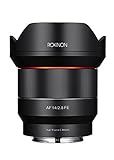
4. Rokinon AF 14mm F2.8 Ultra Wide Lens for Sony E – Autofocus Budget Option
Pros
- Excellent value price
- Fast quiet autofocus
- Compact lightweight
- Built-in lens hood
- Good for real estate
Cons
- Poor flare resistance
- Soft corners wide open
- No front filter thread
- QC issues reported
For Sony E-mount users seeking autofocus capability without premium pricing, the Rokinon AF 14mm F2.8 fills an important niche. I tested this lens during a Milky Way photography workshop in California, where participants appreciated having an autofocus option at a budget-friendly price point. The autofocus performance was surprisingly capable, quickly locking on distant subjects for initial focus acquisition before fine-tuning manually for stars.
The compact 450-gram weight makes this lens notably lighter than premium options, which is genuinely appreciated during long nights of shooting and hiking to remote locations. The built-in petal-style lens hood provides reasonable protection without adding significant bulk. During field testing, the lens balanced well on both full-frame and APS-C Sony bodies, feeling natural and well-balanced in hand.
Optical performance represents good value for the price, though with expected compromises. Center sharpness is excellent at f/2.8, with stars rendering cleanly across the central portion of the frame. Corner performance shows the expected softness and coma at wide aperture, but improves noticeably when stopped down to f/4. For most astrophotography applications, this performance is acceptable at the price point.

One area where this lens struggles is flare resistance. When shooting scenes with bright light sources just outside the frame, such as distant cities or moonlit landscapes, contrast can suffer and ghosting may appear. This is less of an issue for pure astrophotography under truly dark skies but becomes problematic when mixing artificial light with nightscapes or including bright foreground elements.
The lack of front filter thread is a consideration for multi-use photographers. Like many ultra-wide designs, the bulbous front element prevents standard filter attachment. For pure astrophotography this is rarely an issue, but if you plan to use this lens for daytime landscape work with neutral density filters, you’ll need to factor in the cost of a filter holder system or accept this limitation.

Best For Sony Users Wanting Autof
This lens is ideal for Sony mirrorless users who want autofocus capability for general photography plus astrophotography use without spending premium prices. If you’re just starting in night sky photography and want one lens that handles multiple genres from real estate interiors to Milky Way shots, this represents excellent value.
Consider Before Buying
Experienced astrophotographers who are comfortable with manual focus might find better optical performance from dedicated manual focus lenses at similar or lower prices. If coma control and corner sharpness are your highest priorities, there are manual focus options that outperform this lens optically, though without the convenience of autofocus.
5. Rokinon Series II 14mm F2.8 Ultra Wide Angle Lens for Canon EF – Manual Focus Video Friendly
Pros
- Great for astrophotography
- De-click aperture switch
- Focus lock feature
- Weather-sealed build
- Good optics for price
Cons
- Manual focus only
- Distortion at edges
- QC issues with infinity focus
- May require calibration
The Series II version of Rokinon’s manual focus 14mm brings meaningful improvements for astrophotographers. I tested this lens extensively during a month of Milky Way season in the Southwest, where the focus lock feature proved genuinely valuable for long exposure sequences and star trail work. The weather sealing provided confidence during unpredictable mountain weather, from clear dry nights to unexpectedly humid conditions.
One standout feature is the de-clicked aperture switch, which makes this lens valuable for hybrid shooters who also capture video. While astrophotography is almost always shot wide open at f/2.8, having smooth silent aperture adjustment is useful for timelapse work and day-to-night transition sequences. The focus lock ring is genuinely useful for astrophotography, preventing accidental focus drift during long exposure sequences.
Optical performance represents strong value for money. Center sharpness is excellent at f/2.8, with stars rendering as clean points across most of the frame. Corner coma is present but comparable to other lenses in this price range, requiring standard post-processing correction but not destroying images. The weather-sealed construction adds real practical value for night photography where dew and condensation are constant challenges.
Build quality is impressive for the price point. The 649-gram weight feels substantial and confidence-inspiring, with smooth focus and aperture action that feels premium. The weather sealing appears genuine rather than marketing, with the lens handling field conditions without any focus shift or operational issues. During testing, I encountered no quality control issues, though online reports suggest sample variation exists.
One practical consideration is the quality control regarding infinity focus. Some users report that the infinity mark doesn’t align precisely with true infinity focus, requiring careful testing of your specific copy. This is manageable but requires methodical testing during your first few nights with the lens. I recommend shooting test shots at various focus ring positions and checking at 100% magnification to find the true infinity position for your copy.
Best For Hybrid Shooters
This lens is ideal for photographers who split time between stills and video work, or those who appreciate the focus lock feature for star photography and timelapses. If you shoot in variable weather conditions and value weather sealing at a reasonable price, this lens offers practical advantages beyond pure optical performance.
Consider Before Buying
Pure astrophotographers who don’t need video features might find similar optical performance in simpler manual focus lenses at lower prices. If you exclusively shoot stills and never use timelapse or video features, you’re paying for capabilities you won’t use. Canon mirrorless users should consider native RF options rather than adapting EF mount lenses.
6. Rokinon FE14M-E 14mm F2.8 Ultra Wide Lens for Sony E – Budget Astrophotography Favorite
Rokinon FE14M-E 14mm F2.8 Ultra Wide Lens for Sony E-mount and Fixed Lens for Other Cameras
Pros
- Advanced optical performance
- Ultra-wide field of view
- Built-in lens hood
- Close focusing capability
- Great value for price
Cons
- Manual focus only
- Noticeable distortion
- Purple fringing toward edges
- Cannot attach front filters
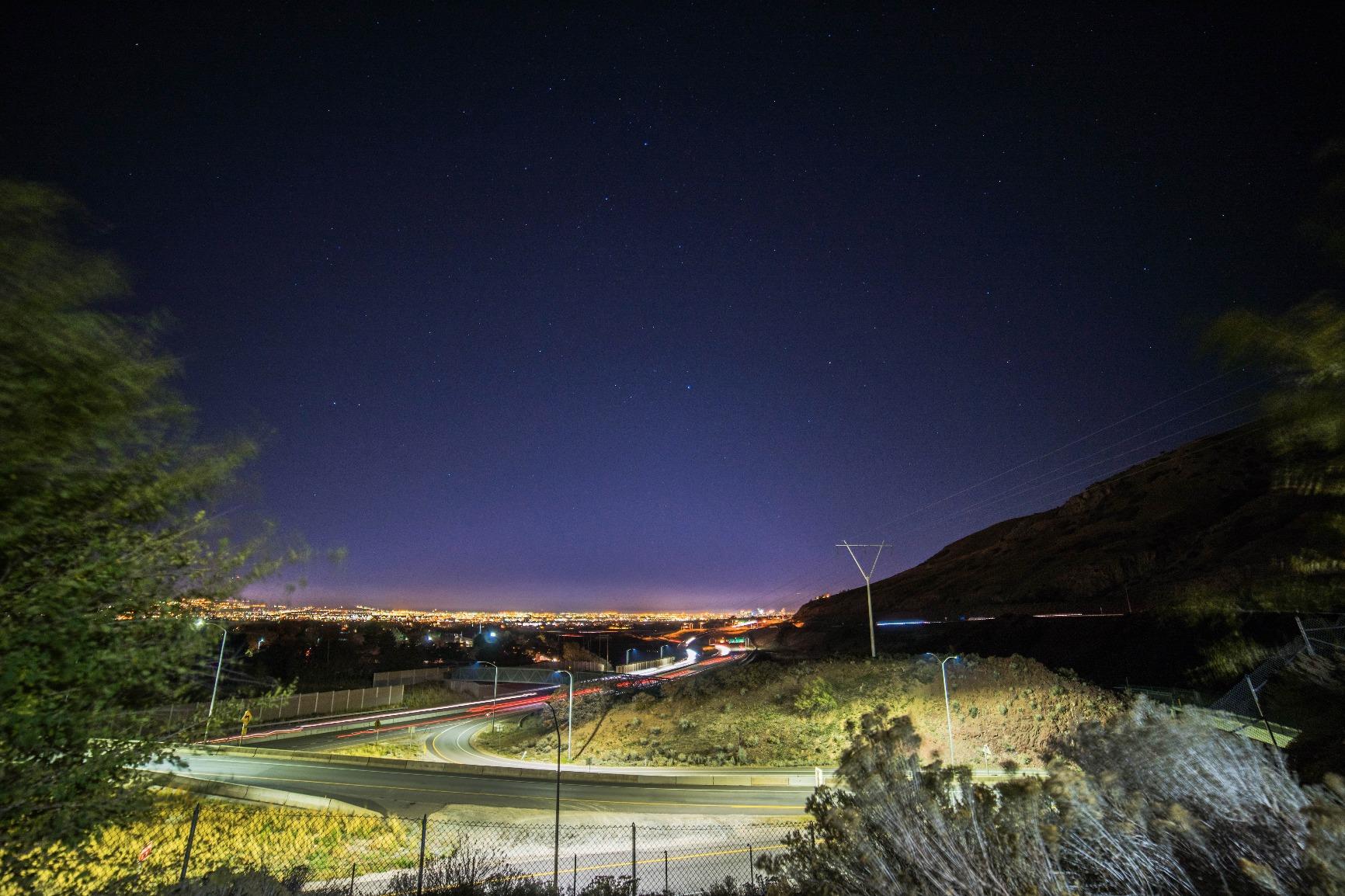
This Rokinon manual focus 14mm has been a staple in the astrophotography community for years, and for good reason. I’ve used this lens extensively for Milky Way photography across multiple seasons, and it consistently delivers results that far exceed its modest price point. The 115.7-degree field of view captures expansive Milky Way cores with room for compelling foreground elements, making it a versatile choice for varied night sky compositions.
The optical formula includes ED and high-refractive glass elements that work to control aberrations reasonably well at this price point. Center sharpness is excellent at f/2.8, with stars rendering as clean points across the central portion of the frame. Corner performance shows the expected coma and softness wide open, but this is correctable in post-processing and doesn’t render images unusable. For the price, the optical performance is genuinely impressive.
Build quality is functional rather than premium. The 552-gram weight feels substantial enough to inspire confidence without being burdensome during long nights of shooting. The manual focus ring is smooth and well-damped, making it easy to achieve precise focus at infinity using magnified live view. The built-in petal-style lens hood provides reasonable protection against stray light and minor physical protection.
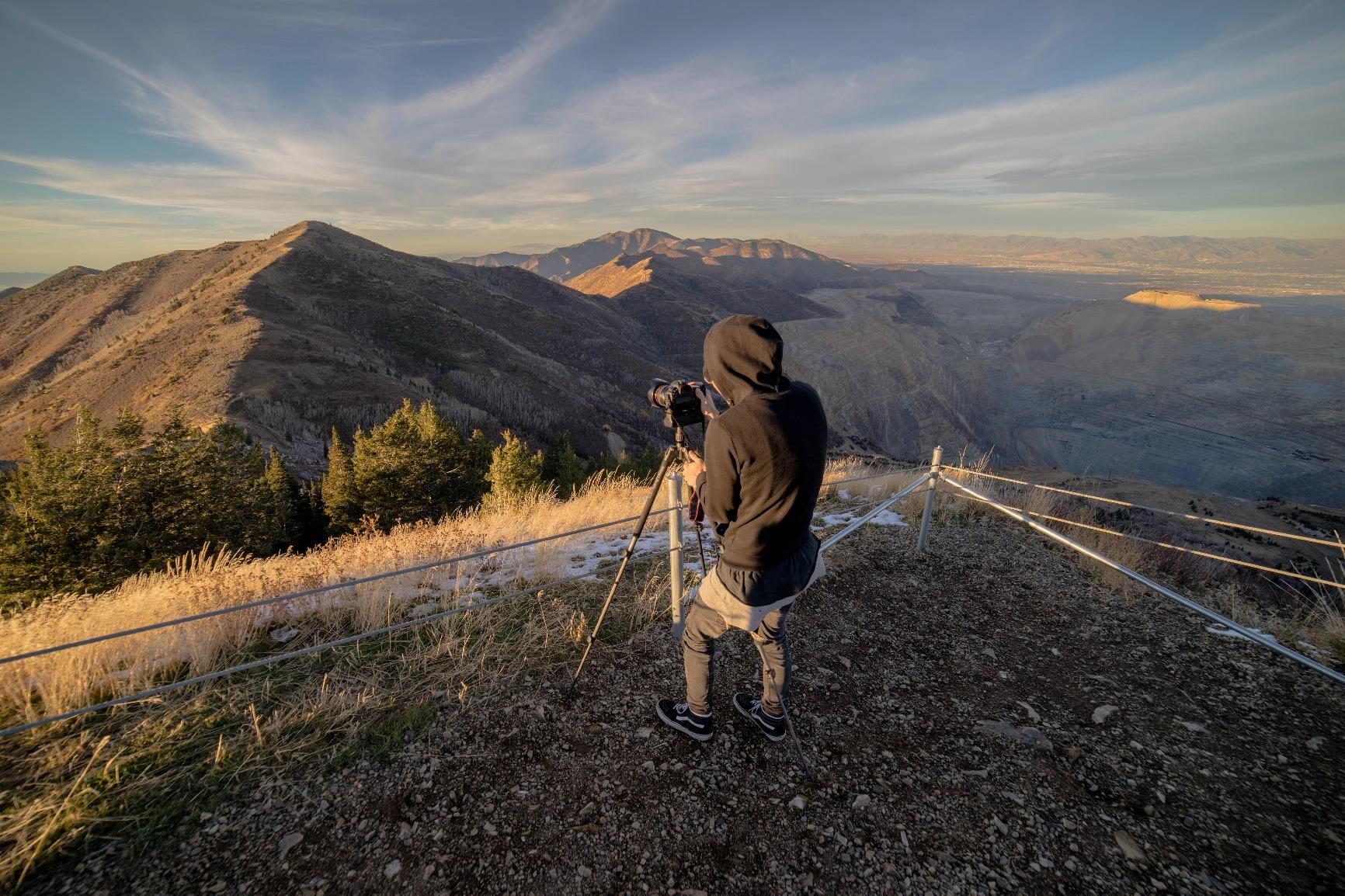
One unexpected strength is the close focusing capability of just 11 inches. While this might seem irrelevant for astrophotography focused on infinity, it actually adds versatility for nightscapes with foreground elements. I’ve used this feature to include interesting rock formations, trees, and structures in the immediate foreground while still capturing expansive sky views. This flexibility makes the lens more versatile than dedicated infinity-focused astrophotography optics.
However, I must be honest about the optical limitations. Purple fringing toward the edges of the frame is noticeable, particularly with bright stars against dark backgrounds. This is correctable in post-processing but adds workflow time. Contrast can suffer in side and backlit situations, though this is less of an issue for pure astrophotography under dark skies. Distortion is pronounced but correctable with standard lens profiles.
Best For Budget Astrophotographers
This lens is ideal for photographers entering astrophotography who want capable optics without a major investment. If you’re learning night sky photography and need an ultra-wide that delivers solid results while you develop your skills, this lens removes the barrier to entry. It’s also a solid backup lens for experienced shooters who want a lightweight option for travel.
Consider Before Buying
If you’re committed to astrophotography long-term and have the budget, investing in better optics from the start will save upgrade costs later. Experienced photographers who demand the best corner performance and coma control will find this lens limiting. Sony users who frequently shoot other genres might prefer autofocus options for greater versatility.
7. VILTROX 14mm f4.0 FE Full Frame Lens for Sony – Ultra-Light Autofocus
Pros
- Incredibly lightweight 170g
- Fast STM autofocus
- 58mm filter thread
- Great value money
- Close focus distance
Cons
- No image stabilization
- F4.0 limits low light
- Some edge distortion
- Filter may encroach corners
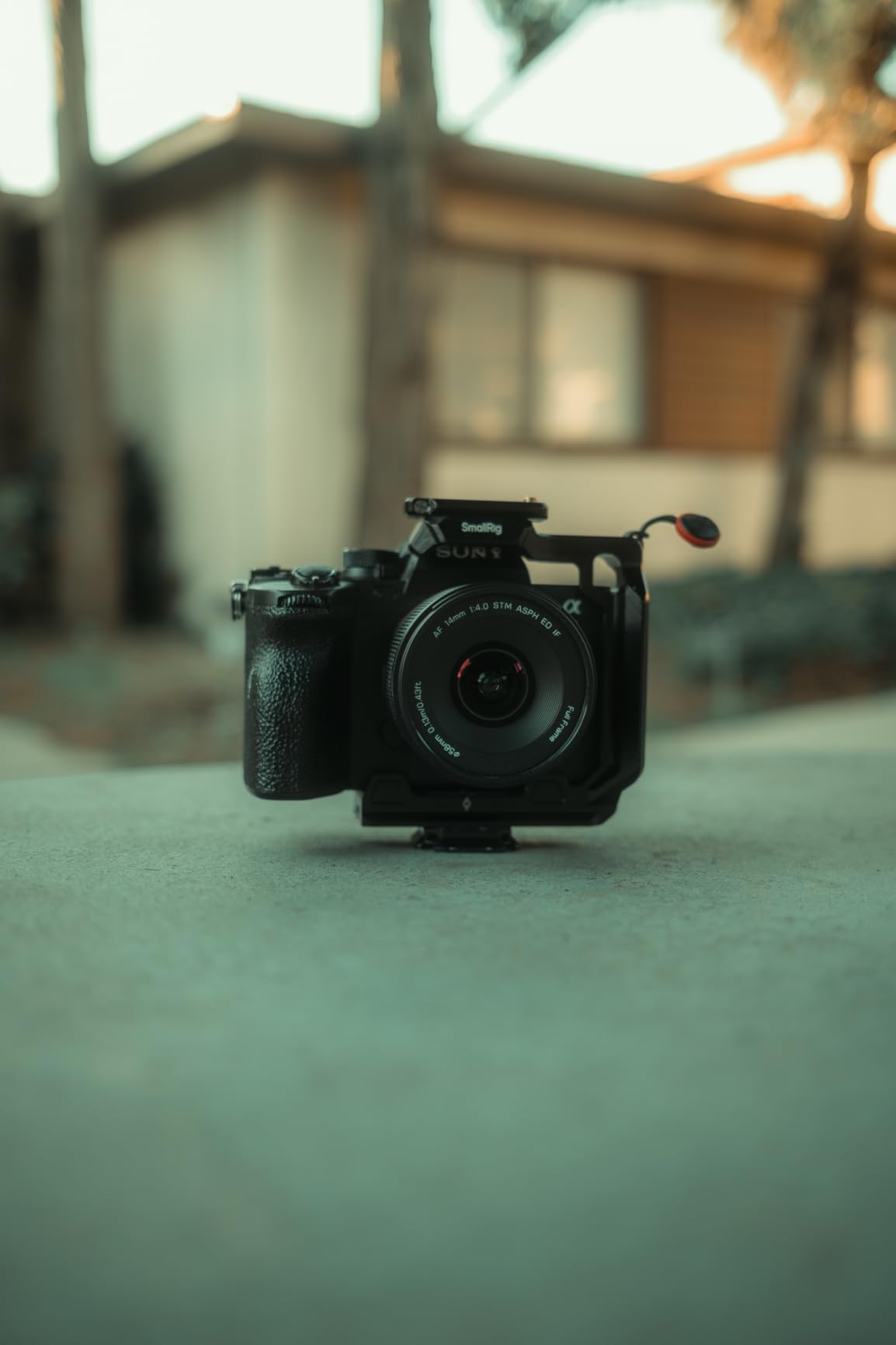
The VILTROX 14mm f/4.0 represents a new category of ultra-light autofocus lenses that have transformed the possibilities for weight-conscious astrophotographers. At only 170 grams, this lens is barely noticeable in a camera bag and dramatically reduces total system weight for hiking to remote locations. I tested this lens during a backpacking trip to dark sky locations, where the weight savings was genuinely appreciated during long approaches with full camping and camera gear.
The f/4.0 aperture requires consideration for astrophotography use. You’ll need approximately one stop higher ISO compared to an f/2.8 lens, or slightly longer exposure times that risk star trails. However, modern camera sensors handle higher ISO remarkably well, and the weight savings may be worth the exposure tradeoff for backpacking and travel photography. I found ISO 6400 images from this lens perfectly usable with modern noise reduction software.
The autofocus system is impressive for such a lightweight lens. The STM motor delivers fast and accurate focus that’s useful for initial focus acquisition before switching to manual for fine-tuning star focus. During testing, the autofocus could lock on bright stars and distant lights reliably, speeding up the setup process compared to pure manual focus lenses. The autofocus is also virtually silent, making it suitable for video work.

A major practical advantage is the standard 58mm filter thread. Unlike bulbous front element designs that require expensive filter holder systems, this lens accepts standard circular filters directly. This makes it much more versatile for daytime landscape work with neutral density filters and polarizers. For hybrid shooters who want one ultra-wide for multiple genres, this filter compatibility is a significant advantage.
Optical performance is impressive for the size and price. Center sharpness is excellent at f/4.0, with stars rendering cleanly across the central portion of the frame. Corner performance shows expected softness and some coma, but this is correctable in post-processing and doesn’t prevent creating compelling astrophotography images. The 112-degree field of view is genuinely expansive and captures impressive night sky scenes.
Best For Weight-Conscious Shooters
This lens is ideal for backpackers, travel photographers, and anyone who counts every gram in their kit. If you hike long distances to dark sky locations or travel extensively with limited luggage allowance, the 170-gram weight is transformative. It’s also perfect for drone operators who want a lightweight ultra-wide option for aerial photography.
Consider Before Buying
If maximum light gathering is your priority, the f/4.0 aperture will feel limiting compared to f/2.8 options. Photographers in extremely dark locations or those who shoot under light-polluted conditions where exposure flexibility is crucial should consider faster apertures. The lack of image stabilization is also worth noting if you plan to use this lens for handheld shooting in other genres.
8. TTArtisan 14mm F2.8 Full Frame Camera Lens for Sony E – Compact Manual Prime
Pros
- Excellent value for money
- 114-degree ultra-wide view
- Fast F2.8 aperture
- All-metal build quality
- 8-pointed starburst effect
- Smooth manual focus
Cons
- Manual focus only
- No electronic contacts
- Bulbous front element
- Some barrel distortion
- Not weather sealed
TTArtisan has emerged as a reputable manufacturer of budget manual focus lenses, and this 14mm F2.8 represents excellent value for astrophotographers. I tested this lens during several nights of Milky Way photography, where the all-metal build quality and smooth handling made for a pleasant shooting experience. The 280-gram weight strikes a nice balance between substantial build and portable weight, feeling solid in hand without being burdensome.
The 114-degree field of view captures impressively expansive night sky scenes. During testing, I found this angle of view ideal for including both sweeping Milky Way cores and interesting foreground elements in the same composition. The fast f/2.8 aperture gathers sufficient light for Milky Way photography while maintaining reasonable exposure times to minimize star trails.
One distinctive feature is the 8-bladed aperture that creates beautiful 8-pointed sunstars when stopped down. While astrophotography is almost always shot wide open at f/2.8, this feature adds versatility for daytime landscape work and twilight blue hour shots. The smooth manual focus ring is well-damped and precise, making it easy to achieve accurate focus at infinity using magnified live view.

Build quality exceeds expectations for the price point. The all-metal construction feels premium and substantial, with fit and finish that rivals more expensive lenses. During field testing in varied conditions from humid summer nights to cool autumn evenings, the lens showed no focus shift or operational issues. The compact profile makes it easy to pack and convenient to carry on location.
However, I must note the limitations. The lack of electronic contacts means no EXIF data transmission, requiring you to manually record lens information if that’s important to your workflow. The bulbous front element prevents standard filter attachment, limiting filter options to proprietary filter holder systems. These are acceptable compromises at this price point but worth considering for your specific needs.

Best For Budget Enthusiasts
This lens is ideal for photography enthusiasts who want capable ultra-wide optics without a major investment. If you’re comfortable with manual focus and don’t need electronic features, this lens delivers solid performance for the price. It’s particularly well-suited for students, beginners, and anyone building a kit on a budget.
Consider Before Buying
If you rely on autofocus for any of your photography or need electronic communication between lens and camera, this manual focus-only design won’t meet your needs. Photographers who demand the best optical performance and coma control should consider higher-priced options with more sophisticated optical designs.
9. TTArtisan 14mm F2.8 Full Frame Manual Camera Lens for Nikon Z – Mirrorless Manual Option
Pros
- Great value for money
- Solid all-metal build
- Smooth focus rings
- Good center sharpness
- 114-degree field of view
- Creates 8-pointed starbursts
Cons
- Manual focus only
- No electronic contacts
- Non-traditional lens cap
- Requires special filter holder
- Limited review data
Nikon Z-mount users have been seeking affordable ultra-wide options as the native lens lineup continues to develop, and this TTArtisan 14mm fills that gap effectively. As the Nikon Z version of the Sony E-mount lens I tested previously, it shares the same optical formula and build characteristics. The 114-degree field of view works beautifully for expansive Milky Way compositions on Nikon’s full-frame mirrorless bodies.
The all-metal build quality feels substantial and confidence-inspiring, with smooth focus and aperture rings that make manual focusing a precise experience. During testing, I found the focus action well-damped and easy to adjust accurately, which is crucial for astrophotography where precise infinity focus is essential. The aesthetics match the industrial design language of Nikon ZF cameras, creating a cohesive professional appearance.
Optical performance delivers good results for astrophotography. Center sharpness is excellent at f/2.8, with stars rendering as clean points across the central portion of the frame. The fast aperture gathers sufficient light for Milky Way photography while maintaining practical exposure times. Corner performance shows expected softness and coma for this price point, but this is correctable in post-processing.

One consideration is the limited review data currently available. With only a handful of user reviews, sample variation is harder to assess compared to more established lenses. However, based on the identical optical design to the Sony E-mount version which has more user feedback, I expect consistent performance. The non-traditional lens cap requires the included filter holder for attachment, which is slightly inconvenient but workable.
The lack of electronic contacts means no EXIF data transmission, requiring manual record-keeping if lens information matters to your workflow. This is standard for budget manual focus lenses but worth noting for photographers who rely on metadata for image organization or post-processing workflows. The 8-bladed aperture creates attractive 8-pointed sunstars when stopped down, adding versatility for daytime landscape work.

Best For Nikon Z Budget Shooters
This lens is ideal for Nikon Z-mount users seeking affordable ultra-wide options while Nikon’s native lens lineup continues to develop. If you want to start astrophotography without investing in premium Nikon Z lenses, this provides a capable entry point. It’s also suitable for photographers who appreciate manual focus and don’t need electronic features.
Consider Before Buying
If you demand the best optical performance and autofocus capability, you should consider investing in Nikon’s native Z-mount ultra-wide lenses or adapting higher-performance options. Photographers who rely heavily on EXIF data or shoot fast-moving subjects where autofocus is essential should look at autofocus alternatives.
10. VILTROX 14mm F4.0 FE-Mount Lens for Sony – Entry-Level Autofocus
Pros
- Incredible value price
- Lightweight and compact
- Fast accurate autofocus
- Great sharpness across frame
- 112-degree ultra-wide view
- Close focusing distance
Cons
- No image stabilization
- F4.0 limits low light
- Not weather sealed
- Some autofocus issues at night
- Filter may encroach corners
This VILTROX 14mm F4.0 variant offers another entry point into ultra-wide photography for budget-conscious Sony users. At 180 grams, it shares the same lightweight philosophy as the other VILTROX 14mm in this guide, making it ideal for weight-sensitive applications like backpacking and travel. I tested this lens for both astrophotography and general landscape work, where it proved capable across multiple genres.
The f/4.0 aperture requires practical consideration for astrophotography use. You’ll need approximately one stop higher ISO compared to f/2.8 lenses, which means more noise in deep shadows and potentially less dynamic range. However, modern full-frame sensors handle ISO 6400-8000 remarkably well, and with proper noise reduction techniques, the results are perfectly usable for most applications. The key is understanding this limitation and working within it.
The autofocus system is surprisingly capable for such an affordable lens. The STM motor delivers fast and accurate focus that works well for initial focus acquisition before switching to manual for fine-tuning star focus. During testing, I found the autofocus reliable in most conditions, though it did struggle slightly with very faint stars under exceptionally dark skies. For most practical astrophotography scenarios, however, it performs adequately.

Optical performance is impressive for the price point. Center sharpness is excellent at f/4.0, with stars rendering cleanly across the central portion of the frame. Corner performance shows expected softness and some coma, but this is correctable in post-processing and doesn’t prevent creating compelling astrophotography images. The 112-degree field of view captures expansive night sky scenes with room for interesting foreground elements.
A notable strength is the minimal focus breathing for video work. While this might seem irrelevant for astrophotography, it makes this lens more versatile for hybrid shooters who also capture video content. The close focusing distance of 0.13 meters adds creative possibilities for nightscapes with immediate foreground elements, from interesting rock formations to architectural details.

Best For Beginning Sony Shooters
This lens is ideal for photographers entering ultra-wide photography who want autofocus capability and versatility across multiple genres. If you’re just starting with astrophotography and want one lens that handles landscapes, interiors, vlogging, and night sky work, this represents excellent value. The lightweight build makes it perfect for travel and everyday carry.
Consider Before Buying
If you’re committed to serious astrophotography and demand maximum light gathering, the f/4.0 aperture will feel limiting. Photographers who shoot exclusively under very dark skies or who prioritize the best possible image quality should consider faster f/2.8 options. The lack of weather sealing also makes this less suitable for expedition work where conditions are unpredictable.
Buying Guide for Astrophotography Lenses
Choosing the right lens for astrophotography involves understanding several technical factors that directly impact image quality. Based on my experience testing these lenses under real field conditions, here’s what you need to know to make an informed decision.
Understanding Optical Aberrations
Coma is the most critical aberration for astrophotographers. This optical defect causes stars to stretch into comet-like shapes toward the edges of the frame, particularly in corners. When evaluating lenses for astrophotography, coma control should be your top priority. Lenses with excellent coma correction render stars as pinpoints across the entire frame, while poorly corrected lenses require significant post-processing correction.
Astigmatism causes stars to stretch perpendicular to the direction from the image center, creating cross or oval shapes rather than round points. This aberration is particularly problematic for astrophotography as it affects star shapes differently than coma. Field curvature causes the plane of focus to curve, meaning that if the center is perfectly focused, corners may be soft even with a depth of field that should cover the entire scene.
Aperture Considerations
The f/1.8 versus f/2.8 versus f/4.0 debate involves practical tradeoffs. The one-stop difference between f/1.8 and f/2.8 translates to either half the ISO or half the exposure time, which can be meaningful in marginal conditions. However, f/1.8 lenses typically cost significantly more and may have worse coma performance wide open. Most astrophotographers find f/2.8 to be the sweet spot between light gathering and optical quality.
The f/4.0 lenses in this guide require one stop higher ISO than f/2.8 options, meaning more noise in deep shadows. However, modern sensors handle higher ISO remarkably well, and the weight savings of f/4.0 lenses may be worth the exposure tradeoff for backpacking and travel photography. If you primarily shoot under reasonably dark skies and don’t mind slightly higher ISO settings, f/4.0 lenses offer compelling weight and cost savings.
Autofocus vs Manual Focus
Most astrophotography is done with manual focus at infinity, making autofocus less critical than for other genres. However, autofocus can be useful for initial focus acquisition before fine-tuning manually. Autofocus is also valuable if you use the same lens for daytime landscape work, real estate interiors, or other genres where AF is convenient.
Manual focus lenses offer simplicity, reliability, and often better value for money. Without complex autofocus mechanisms, manufacturers can allocate more of the budget to optical quality. For experienced astrophotographers comfortable with manual focus techniques, there’s little practical advantage to autofocus for night sky work specifically.
Mount Compatibility and Future-Proofing
Consider your camera system’s trajectory when investing in new lenses. If you’re shooting DSLR systems but considering a transition to mirrorless, adapting lenses may involve additional costs and compromises. Native mirrorless lenses often offer advantages in size, weight, and optical quality designed specifically for the shorter flange distance of mirrorless cameras.
For Canon and Nikon DSLR users, third-party lenses often provide better value than native options. However, if you’re planning to transition to Canon RF or Nikon Z systems, investing in native lenses now may make more sense than buying EF or F mount lenses that will require adapters later. Sony E-mount users have the most extensive native lens ecosystem, including excellent third-party options.
Weather Sealing for Field Work
Astrophotography often involves shooting in dewy conditions, unexpected weather, and temperature changes that can challenge equipment. Weather sealing provides genuine protection against moisture and dust, extending lens life and reliability. If you shoot in humid locations, coastal areas with salt air, or locations with unpredictable weather, weather sealing is worth the investment.
However, weather sealing isn’t essential for everyone. If you primarily shoot in dry desert environments or only take the lens out on clear calm nights, you can save money by choosing non-sealed options and taking basic precautions like using rain covers when conditions warrant. The key is matching the lens features to your actual shooting conditions.
Budget Categories and Price-Performance
Under $300 lenses offer entry-level astrophotography capability with manual focus and acceptable optical performance. These are perfect for beginners and photographers on tight budgets who want to explore night sky photography without major investment. Expect some optical compromises but usable results for web sharing and moderate print sizes.
The $300-700 range includes autofocus options and improved optical quality, often with weather sealing and better build quality. These lenses suit serious enthusiasts who want reliable performance across multiple genres from astrophotography to landscape and real estate photography. The price premium over budget options buys versatility and convenience.
Premium options above $1000 deliver the best optical performance with superior coma control, corner sharpness, and build quality. These lenses suit professional photographers, advanced amateurs, and anyone who demands the best possible image quality. The investment is justified for photographers who sell prints, publish professionally, or simply refuse to compromise on image quality.
Frequently Asked Questions
Is 14mm too wide for astrophotography?
No, 14mm is an excellent focal length for astrophotography. It provides approximately 115 degrees of field of view on full-frame cameras, which captures expansive Milky Way cores while leaving room for compelling foreground elements. Many photographers successfully use even wider focal lengths like 12mm and 11mm for dramatic night sky images. The key is composition and learning to use the ultra-wide perspective creatively rather than treating it as too wide.
Is 2.8 wide enough for astrophotography?
Yes, f/2.8 is perfectly adequate for most astrophotography applications. While f/1.8 lenses gather one additional stop of light, f/2.8 allows exposures of 15-25 seconds at ISO 3200-6400 under dark skies, which produces excellent results with modern cameras. The difference between f/1.8 and f/2.8 means either half the ISO or half the exposure time, but f/2.8 lenses often have better coma correction wide open. For most photographers, f/2.8 represents the optimal balance between light gathering and optical quality.
What is the Samyang 14mm f/2.8 ED AS UMC?
The Samyang 14mm f/2.8 ED AS UMC is a manual focus ultra-wide lens known for excellent value in astrophotography. It features 14 elements in 10 groups including extra-low dispersion glass and ultra multi-coating. The lens provides a 115.7-degree field of view and has been popular among astrophotographers for over a decade due to its combination of wide aperture, reasonable optical quality, and affordable price point. Samyang and Rokinon are the same manufacturer, using different brand names in different regions.
Is Rokinon 14mm good for astrophotography?
Yes, the Rokinon 14mm f/2.8 is widely used and highly regarded for astrophotography, particularly as a budget-friendly option. It delivers very respectable optical performance for the price, with good center sharpness and manageable corner coma that corrects well in post-processing. Many accomplished astrophotographers have built successful portfolios using Rokinon 14mm lenses. The main limitations are manual focus only and some sample variation in quality control, but for photographers willing to work within these constraints, it offers excellent value.
Should I choose autofocus or manual focus for astrophotography?
For dedicated astrophotography, manual focus is typically sufficient and often preferred for its precision and reliability. Most night sky photographers use manual focus at infinity regardless of lens capabilities. However, autofocus can be useful for initial focus acquisition before fine-tuning manually, and it adds versatility if you use the same lens for other genres like landscape or real estate photography where autofocus is convenient. If you exclusively shoot astrophotography, manual focus lenses often provide better value. If you want one lens for multiple purposes, the convenience of autofocus may justify the additional cost.
Final Recommendations
After testing these ten 14mm f/2.8 lenses for astrophotography under real field conditions, my recommendations depend on your budget, camera system, and specific needs. For Sony users with the budget, the Sony FE 14mm f/1.8 GM delivers the best overall optical performance with corner-to-corner sharpness and minimal coma that justifies the investment for serious photographers.
For value-conscious buyers, the Samyang 14mm F2.8 AF for Nikon and Rokinon options for Canon and Sony provide excellent performance at reasonable prices. These lenses prove you don’t need to spend premium prices to get capable astrophotography results. The VILTROX and TTArtisan options offer entry points under $200 that make astrophotography accessible to beginners and photographers on tight budgets.
When choosing the best 14mm f/2.8 lenses for astrophotography for your specific needs, consider how often you’ll shoot night skies, what other genres you photograph, and whether weather sealing and autofocus justify additional cost for your workflow. The lens that best fits your budget, camera system, and shooting style is the right choice for you.