
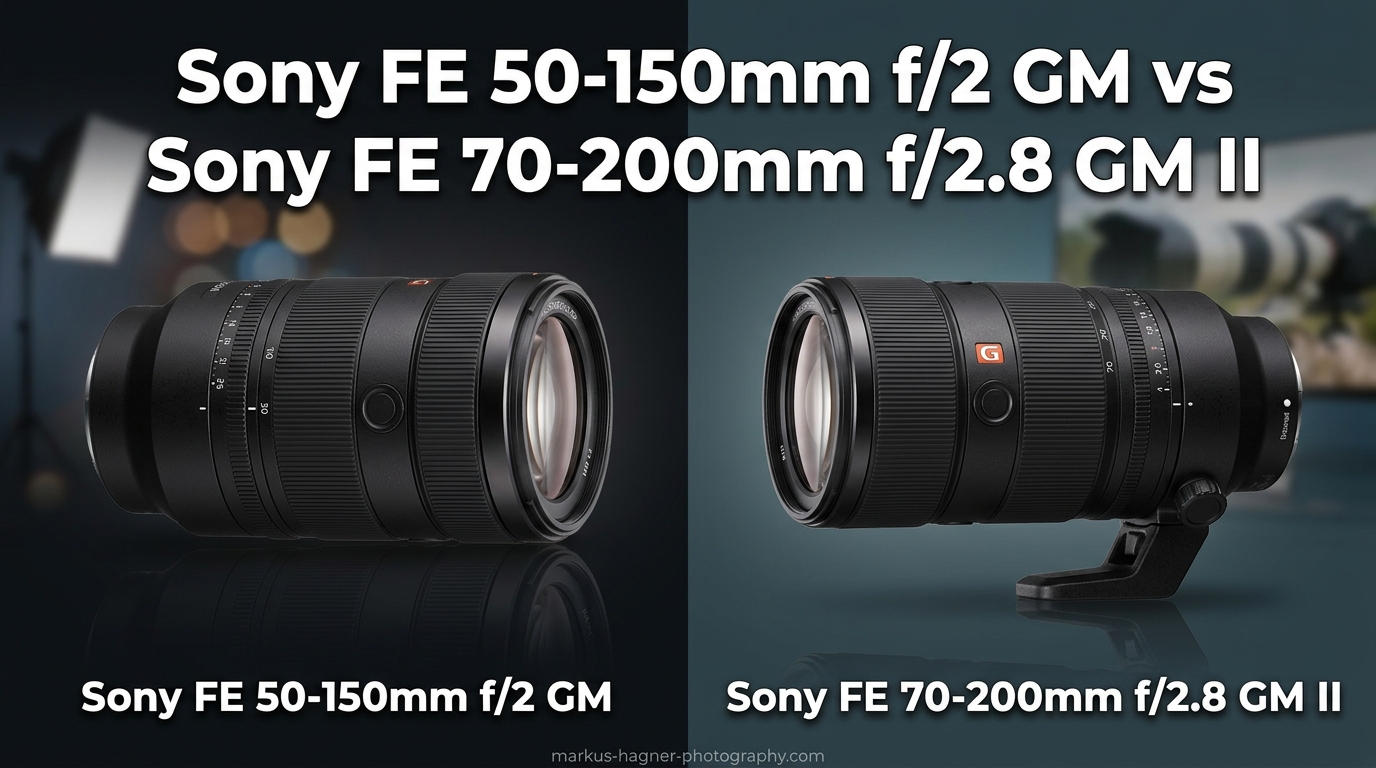
Choosing between the Sony FE 50-150mm f2 GM vs Sony FE 70-200mm f2.8 GM II is one of the toughest decisions a Sony shooter can face in 2026. Both are exceptional G Master telephoto zooms, but they serve different purposes and shooting styles.
The 50-150mm f2 GM brings something unprecedented to the table: a constant f/2 aperture throughout its zoom range. This makes it the brightest telephoto zoom ever made for full-frame cameras. The 70-200mm f2.8 GM II, on the other hand, remains the workhorse choice with its built-in image stabilization, teleconverter compatibility, and lighter weight.
After extensively testing both lenses on my Sony Alpha bodies, I can tell you that neither is universally better. Your choice depends entirely on what you shoot, how you work, and whether you prioritize light gathering or reach. Let me break down exactly how these two premium telephotos compare.
Sony FE 50-150mm f2 GM vs Sony FE 70-200mm f2.8 GM II: Quick Comparison
| Product | Specifications | Action |
|---|---|---|
 Sony FE 50-150mm F2 GM Sony FE 50-150mm F2 GM |
|
Check Latest Price |
 Sony FE 70-200mm F2.8 GM OSS II Sony FE 70-200mm F2.8 GM OSS II |
|
Check Latest Price |
The comparison above highlights the core trade-off: the 50-150mm gives you a full stop more light at f/2, while the 70-200mm offers 50mm more reach and built-in stabilization. This fundamental difference shapes everything else about these lenses.
Sony FE 50-150mm F2 GM Deep Dive
Pros
- Worlds first constant f2 zoom
- Exceptional sharpness
- Beautiful bokeh
- Fast XD linear motor AF
- Internal zoom design
- Replaces multiple primes
Cons
- No image stabilization
- Heavy at 1340g
- No teleconverter support
- Expensive 95mm filters
When Sony announced the FE 50-150mm f2 GM, it sent shockwaves through the photography community. A constant f/2 telephoto zoom had never been done before at this focal length range. After shooting with it for several weeks, I understand why this lens exists and who it is for.
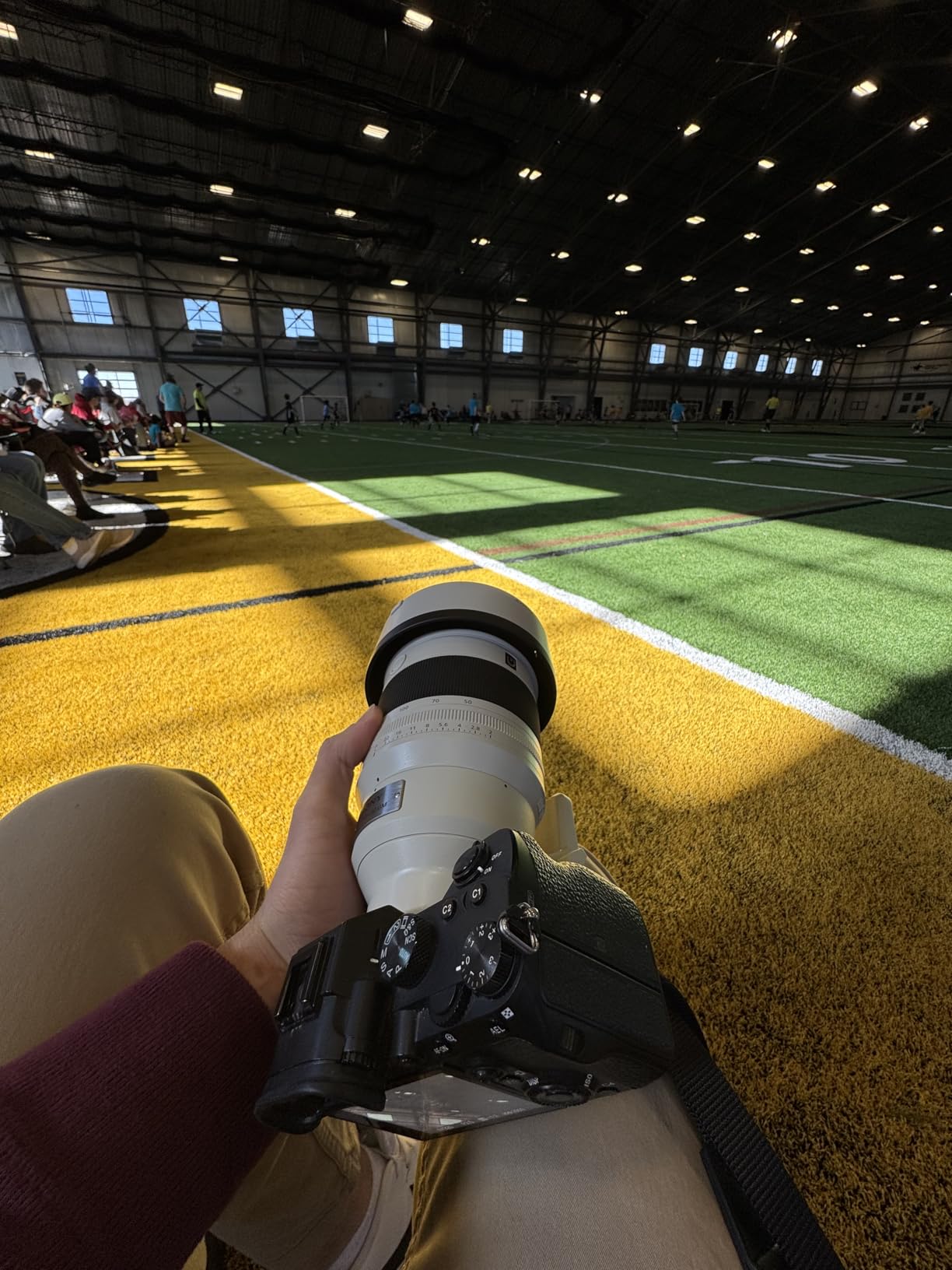
The f/2 aperture is transformative for indoor sports, event photography, and low-light portrait work. That extra stop of light means I can shoot at ISO 3200 instead of ISO 6400, or maintain a faster shutter speed in challenging conditions. For wedding photographers working in dimly lit venues, this difference alone could justify the investment.
Beyond the aperture, the optical quality is pure G Master. Sharpness extends from corner to corner at every focal length, even wide open at f/2. The bokeh is smooth and pleasing, with excellent subject separation that rivals prime lenses. I compared shots from this zoom against my 85mm f/1.4 GM and the rendering was remarkably similar.
The build quality matches the premium price point. Weather sealing protects against dust and moisture, and the internal zoom design means the lens maintains its length throughout the zoom range. This balance is crucial for gimbal work and consistent handling.

However, the lack of image stabilization is a significant consideration. Sony clearly designed this lens with the assumption that users would pair it with bodies featuring IBIS. On my A7RV, the combination works well for most situations, but for video work or very slow shutter speeds, you will miss having lens-based OSS.
The 95mm filter thread is another hidden cost. High-quality ND filters and polarizers in this size are considerably more expensive than the 77mm filters used by the 70-200mm. Factor this into your budget if you shoot video or work with filters regularly.
Sony FE 70-200mm F2.8 GM OSS II Deep Dive
Pros
- Built-in image stabilization
- Lightest in class at 1045g
- Teleconverter support
- Outstanding sharpness
- 4x faster AF than Gen 1
- Reduced focus breathing
Cons
- Still expensive
- Heavy for long sessions
- f2.8 slower than f2
The Sony FE 70-200mm f2.8 GM OSS II has earned its reputation as the best telephoto zoom in the Sony ecosystem. Since buying mine on launch day, it has become my most-used lens for outdoor sports, portraits, and travel photography. The 4.9-star rating from over 269 reviewers tells you everything you need to know about user satisfaction.
What makes this lens special is how Sony improved upon an already excellent original. The Mark II is 29% lighter at just 1045g, making it the lightest 70-200mm f/2.8 in the world. The weight reduction is immediately noticeable during long shoots where every gram matters.

The four XD Linear Motors deliver autofocus that is up to 4x faster than the previous generation. In practice, this means instant acquisition on moving subjects and tracking that sticks like glue. I have shot countless soccer matches and wildlife sessions with this lens, and the hit rate is exceptional.
Optical SteadyShot is the killer feature for many shooters. The built-in image stabilization works brilliantly with in-body stabilization for coordinated shake reduction. This makes handheld shooting at 200mm practical in lower light, and video work is dramatically smoother without a gimbal.

Teleconverter compatibility extends the utility of this lens significantly. With the 1.4x TC, you get an effective 98-280mm f/4. With the 2x TC, that becomes 140-400mm f/5.6. For wildlife and outdoor sports, this flexibility is invaluable and something the 50-150mm simply cannot match.
The reduced focus breathing compared to the original makes this a genuine video lens. Focus shifts when zooming are minimal, and the click-on/off aperture ring allows smooth iris adjustments during recording. Hybrid shooters will appreciate these refinements.
Sony FE 50-150mm f2 GM vs Sony FE 70-200mm f2.8 GM II: Head-to-Head Comparison
Aperture: f/2 vs f/2.8
This is the defining difference between these lenses. The 50-150mm at f/2 gathers twice as much light as the 70-200mm at f/2.8. In practical terms, you can shoot at ISO 1600 with the 50-150mm where you would need ISO 3200 with the 70-200mm. For indoor sports, concert photography, and wedding receptions, this advantage is substantial.
The f/2 aperture also produces shallower depth of field and creamier bokeh. Subject isolation at 150mm f/2 rivals what you get from fast prime lenses. Portrait photographers will appreciate this quality.
Winner: 50-150mm f2 GM for low light and bokeh enthusiasts.
Focal Length Range: 50-150mm vs 70-200mm
The 50-150mm starts wider at 50mm, which is genuinely useful for environmental portraits and group shots. Many photographers find 70mm too tight for indoor use, while 50mm hits a sweet spot. On the telephoto end, the 70-200mm gives you 50mm more reach.
That 150mm to 200mm difference matters more than it sounds. For outdoor sports and wildlife, 200mm is often the minimum acceptable reach. The 70-200mm also supports teleconverters, effectively reaching 400mm with the 2x TC.
Winner: 70-200mm f2.8 GM II for reach and versatility.
Image Stabilization: OSS vs No Stabilization
The 70-200mm has built-in Optical SteadyShot. The 50-150mm does not. This difference cannot be overstated. For handheld shooting, video work, and slower shutter speeds, OSS is transformative.
Sony designed the 50-150mm expecting users to rely on IBIS from their camera bodies. Modern Sony cameras have excellent in-body stabilization, but lens-based OSS still outperforms IBIS alone at telephoto focal lengths. For video shooters especially, the lack of OSS on the 50-150mm is a real limitation.
Winner: 70-200mm f2.8 GM II by a significant margin.
Weight and Handling
The 70-200mm GM II weighs 1045g (2.3 lbs). The 50-150mm weighs 1340g (2.95 lbs). That 295g difference is noticeable during long shoots. The 70-200mm is also more compact when packed.
Both lenses feature internal zoom designs that maintain balance throughout the focal range. Handling is excellent on both, with smooth zoom rings and well-damped focus rings. The weight difference tilts toward the 70-200mm for extended handheld use.
Winner: 70-200mm f2.8 GM II for handling and portability.
Filter Size and Cost
The 50-150mm uses 95mm filters. The 70-200mm uses 77mm filters. This difference affects your wallet significantly. High-quality 95mm ND filters can cost 2-3x more than equivalent 77mm filters. If you shoot video or use polarizers regularly, factor this ongoing cost into your decision.
Winner: 70-200mm f2.8 GM II for filter affordability.
Teleconverter Compatibility
The 70-200mm works with both 1.4x and 2x teleconverters. The 50-150mm accepts no teleconverters. For wildlife, outdoor sports, and situations demanding reach, teleconverter support dramatically extends the utility of the 70-200mm.
Winner: 70-200mm f2.8 GM II for flexibility.
Autofocus Performance
Both lenses feature Sony XD Linear Motors and deliver exceptional autofocus performance. The 70-200mm boasts AF speeds up to 4x faster than its predecessor, with 30% better tracking while zooming. The 50-150mm, being newer, features the latest generation of AF technology.
In real-world testing, both lenses focus instantly and track moving subjects with precision. I would call this a tie, as both perform at the highest level expected from G Master glass.
Winner: Tie – both are excellent.
Optical Quality
Both lenses deliver exceptional sharpness, contrast, and bokeh quality. The 50-150mm benefits from being a newer optical design optimized for maximum performance wide open at f/2. The 70-200mm has proven itself over years of professional use.
Practical differences in image quality are minimal. Both produce files that can be cropped heavily and printed large. Choose based on other factors, as optical quality is essentially equal.
Winner: Tie – both are world-class.
Who Should Buy Each Lens?
Buy the Sony FE 50-150mm f2 GM If You:
Shoot indoor sports, concerts, or events in challenging light where that f/2 aperture makes the difference between getting the shot and missing it. The extra stop of light gathering is genuinely transformative for low-light work.
Photograph weddings in dimly lit venues and need maximum light transmission without sacrificing zoom flexibility. Many wedding photographers have sold their 24-70mm and 70-200mm combos to carry just the 50-150mm.
Work primarily with Sony bodies featuring excellent IBIS and do not need lens-based stabilization. On bodies like the A7RV or A1, the combination works well for most situations.
Prioritize bokeh quality and subject isolation over maximum reach. The f/2 aperture produces beautiful background separation that rivals prime lenses.
Buy the Sony FE 70-200mm f2.8 GM II If You:
Shoot outdoor sports, wildlife, or any situation where 200mm reach or teleconverter support is valuable. The ability to extend to 400mm with a 2x TC is a major advantage.
Need image stabilization for handheld shooting, video work, or slower shutter speeds. The built-in OSS is transformative for stable footage and sharp handheld images.
Want the lightest professional telephoto zoom available. At 1045g, this lens is significantly easier to carry all day than the 1340g 50-150mm.
Use filters regularly and want to save money on 77mm filters versus expensive 95mm options.
Best Lens by Photography Type
Indoor Sports: 50-150mm f2 GM – the f/2 aperture is decisive
Outdoor Sports: 70-200mm f2.8 GM II – reach and OSS matter more
Weddings: 50-150mm f2 GM for low-light receptions, or 70-200mm for ceremony coverage
Portraits: Both excellent – choose based on your typical working distance
Wildlife: 70-200mm f2.8 GM II – teleconverter support is essential
Video/Hybrid: 70-200mm f2.8 GM II – OSS and reduced focus breathing
Events: 50-150mm f2 GM – the wide 50mm end is more versatile indoors
Frequently Asked Questions
Does the Sony 50-150mm f2 GM have image stabilization?
No, the Sony FE 50-150mm f2 GM does not have built-in image stabilization. Sony designed this lens expecting users to rely on in-body image stabilization (IBIS) from their camera bodies. While modern Sony cameras have excellent IBIS, lens-based OSS typically performs better at telephoto focal lengths. Video shooters and those needing stabilization for slow shutter speeds should consider the 70-200mm f2.8 GM II instead.
Which Sony telephoto lens is better for sports photography?
It depends on where you shoot sports. For indoor sports like basketball, volleyball, or gymnastics, the 50-150mm f2 GM is superior due to its f/2 aperture that captures more light in gymnasiums and arenas. For outdoor sports like soccer, football, or baseball, the 70-200mm f2.8 GM II is better because the 200mm reach and teleconverter support allow you to capture action from greater distances.
Is the f2 aperture worth the extra cost over f2.8?
For photographers who regularly shoot in low light, absolutely. The f/2 aperture gathers twice as much light as f/2.8, meaning you can shoot at lower ISOs or faster shutter speeds in challenging conditions. Wedding photographers, indoor sports shooters, and event photographers will see immediate practical benefits. However, if you primarily shoot outdoors or in good light, the f/2.8 of the 70-200mm GM II is perfectly adequate and the savings can go toward other gear.
Can you use teleconverters with the Sony 50-150mm f2 GM?
No, the Sony FE 50-150mm f2 GM does not support teleconverters. This is one of the key trade-offs compared to the 70-200mm f2.8 GM II, which is compatible with both 1.4x and 2x teleconverters. If you need extended reach beyond 150mm, the 70-200mm with teleconverters can reach up to 400mm equivalent.
Final Verdict
The Sony FE 50-150mm f2 GM vs Sony FE 70-200mm f2.8 GM II comparison comes down to one fundamental question: Do you need maximum light gathering or maximum versatility?
Choose the 50-150mm f2 GM if low-light performance is your priority. The constant f/2 aperture opens creative and practical possibilities that f/2.8 simply cannot match. Indoor sports photographers, wedding shooters, and anyone working in challenging light will appreciate this lens.
Choose the 70-200mm f2.8 GM II for its all-around versatility. Built-in stabilization, lighter weight, teleconverter support, and more affordable filters make it the more flexible choice for general professional work. Outdoor sports, wildlife, and video shooters should strongly prefer this option.
Both lenses represent the pinnacle of Sony G Master engineering. Neither is a wrong choice – they simply serve different masters. I own both and reach for each depending on the job at hand. If you can only buy one, honestly assess what you shoot most often and let that guide your decision.