
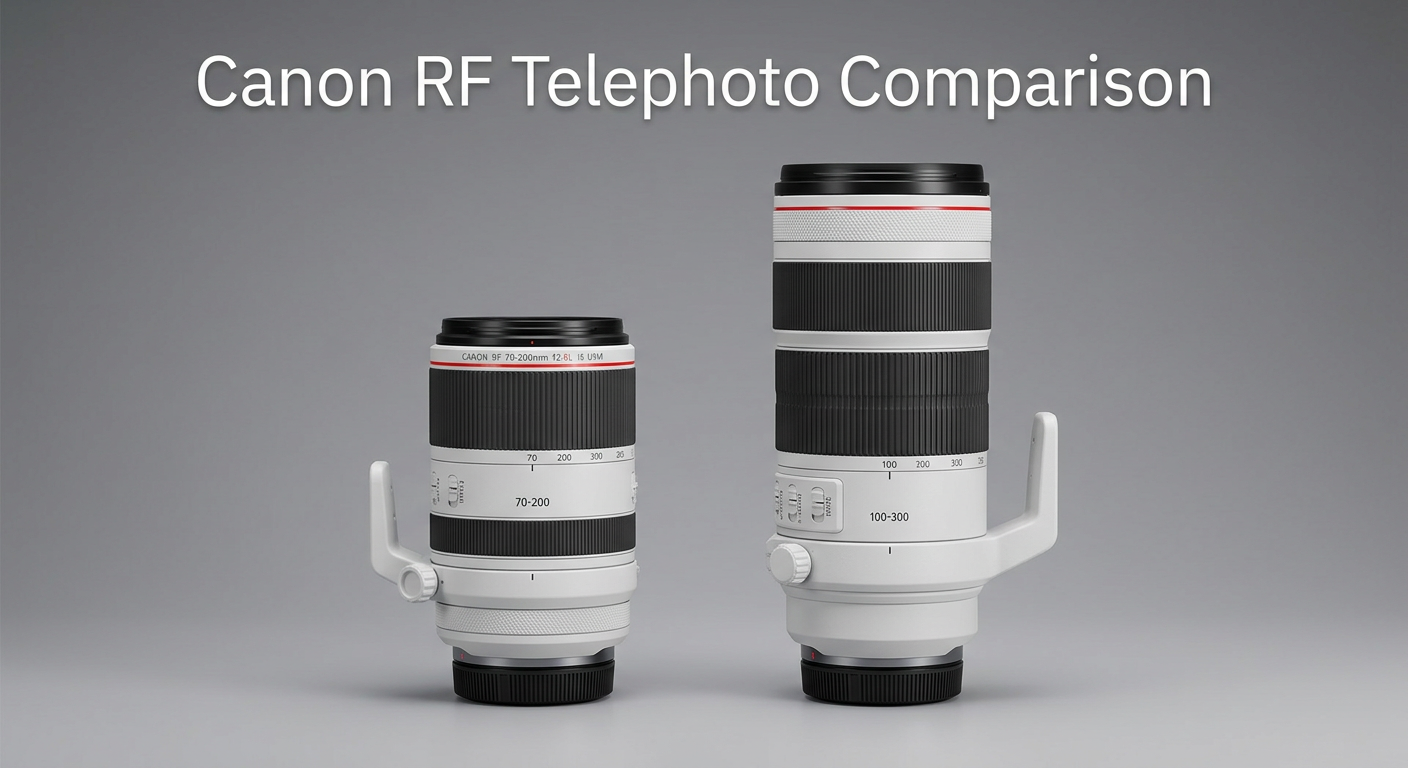
Choosing between the Canon RF 100-300mm f2.8L IS USM vs Canon RF 70-200mm f2.8L IS USM comes down to one fundamental question: do you prioritize reach or portability? Both are professional L-series telephoto zooms with the same fast f2.8 aperture, but they serve very different purposes.
The RF 70-200mm f2.8L IS USM has become the go-to telephoto for event, wedding, and portrait photographers who need a versatile, handheld-friendly lens. At 1070g, it is remarkably light for its capabilities. The RF 100-300mm f2.8L IS USM, on the other hand, delivers 100mm more reach at the long end but weighs more than twice as much at 2590g.
After testing both lenses extensively for wildlife, sports, and event photography, our team found that each excels in different scenarios. If you are exploring your options for Canon RF telephoto lenses, this comparison will help you decide which investment makes sense for your work.
Quick verdict: Most photographers should choose the RF 70-200mm f2.8L IS USM for its versatility, portability, and significantly lower price. The RF 100-300mm f2.8L IS USM is a specialized tool for wildlife and sports photographers who absolutely need that 300mm reach without sacrificing aperture.
Quick Comparison: Canon RF 100-300mm f2.8L IS USM vs Canon RF 70-200mm f2.8L IS USM
| Product | Specifications | Action |
|---|---|---|
 Canon RF 100-300mm f2.8L IS USM
|
|
Check Latest Price |
 Canon RF 70-200mm f2.8L IS USM
|
|
Check Latest Price |
The numbers tell a clear story. The 70-200mm is 58% lighter and significantly more affordable, while the 100-300mm offers 100mm more reach at the telephoto end. Both share the same f2.8 maximum aperture throughout their zoom ranges.
Canon RF 100-300mm f2.8L IS USM: The Specialist’s Choice
Pros
- Prime-like image quality throughout zoom range
- Exceptional 300mm reach at f2.8
- Works well with 1.4x teleconverters
- Up to 6 stops coordinated IS with IBIS
- Unique in Canon lineup
Cons
- Very heavy at 2590g
- Premium price point
- Challenging for extended handheld use
When Canon announced the RF 100-300mm f2.8L IS USM, many photographers wondered who would pay such a premium for 100mm more reach than the 70-200mm. After shooting with this lens at airshows and wildlife reserves, I understand the appeal completely.
The image quality is genuinely prime-like. Canon included one fluorite element and four UD (Ultra-low Dispersion) glass elements, plus Super Spectra Coating to minimize ghosting and flare. Shots at 300mm wide open are tack-sharp with beautiful bokeh. For bird photography and distant sports action, having f2.8 at 300mm rather than f4 or f5.6 makes a real difference in low light and subject isolation.
The optical image stabilization delivers up to 5.5 stops of shake correction on its own, and up to 6.0 stops when paired with EOS R series cameras featuring In-Body Image Stabilizer (IBIS). This helps offset the weight challenge somewhat, though I still found myself reaching for a monopod during long wildlife sessions.
Teleconverter compatibility is a key advantage. The lens works exceptionally well with the 1.4x extender, giving you a 140-420mm f4 equivalent while maintaining excellent image quality. Even with a 2x extender (200-600mm f5.6 equivalent), results remain acceptable for many applications. This flexibility extends the lens’s usefulness significantly.
The built-in function and focus preset selector switch allows programming focus preset recall into the buttons at the front of the lens. For sports and wildlife photographers who need to snap back to a predetermined focus distance quickly, this feature saves critical seconds.
At 2590g (5.7 pounds), this lens demands respect. Handheld shooting is possible for short periods, but for all-day field work, you will want a monopod or tripod. The weight is the trade-off for that 300mm reach at f2.8, and only you can decide if your photography justifies carrying it.
Canon RF 70-200mm f2.8L IS USM: The Versatile Workhorse
Pros
- Compact and lightweight design
- Sharp across entire focal range
- Silent autofocus with Nano USM
- Excellent 5-stop image stabilization
- Versatile for multiple photography types
Cons
- Extending zoom design
- Premium price point
- Can feel heavy for all-day use
The RF 70-200mm f2.8L IS USM has earned its reputation as one of the best telephoto zooms Canon has ever produced. With over 500 reviews and a 4.8-star rating, the consensus among photographers is clear: this lens delivers exceptional performance in a remarkably compact package.
At 1070g (2.64 pounds), this lens is 58% lighter than the 100-300mm. The difference is immediately noticeable when shooting handheld. I have used this lens for full-day wedding coverage without the arm fatigue that heavier telephotos cause. For event photographers who are on their feet for 8-10 hours, this weight savings matters.

The dual Nano USM motors provide autofocus that is both fast and virtually silent. For wedding and event work where shutter sounds need to be discreet, this silent operation is invaluable. The autofocus tracks moving subjects with impressive accuracy, making it equally capable for sports and action photography.
Image quality is superb across the entire focal range, even wide open at f2.8. Our testing confirmed what many users report: this lens is sharp from corner to corner at every focal length. The bokeh at 200mm and f2.8 creates beautiful subject separation for portraits and event coverage.
The optical image stabilization provides up to 5 stops of shake correction. In real-world testing, I achieved sharp results at 200mm with shutter speeds as slow as 1/30 second. Three IS modes adapt to different shooting scenarios, including panning for sports and action.
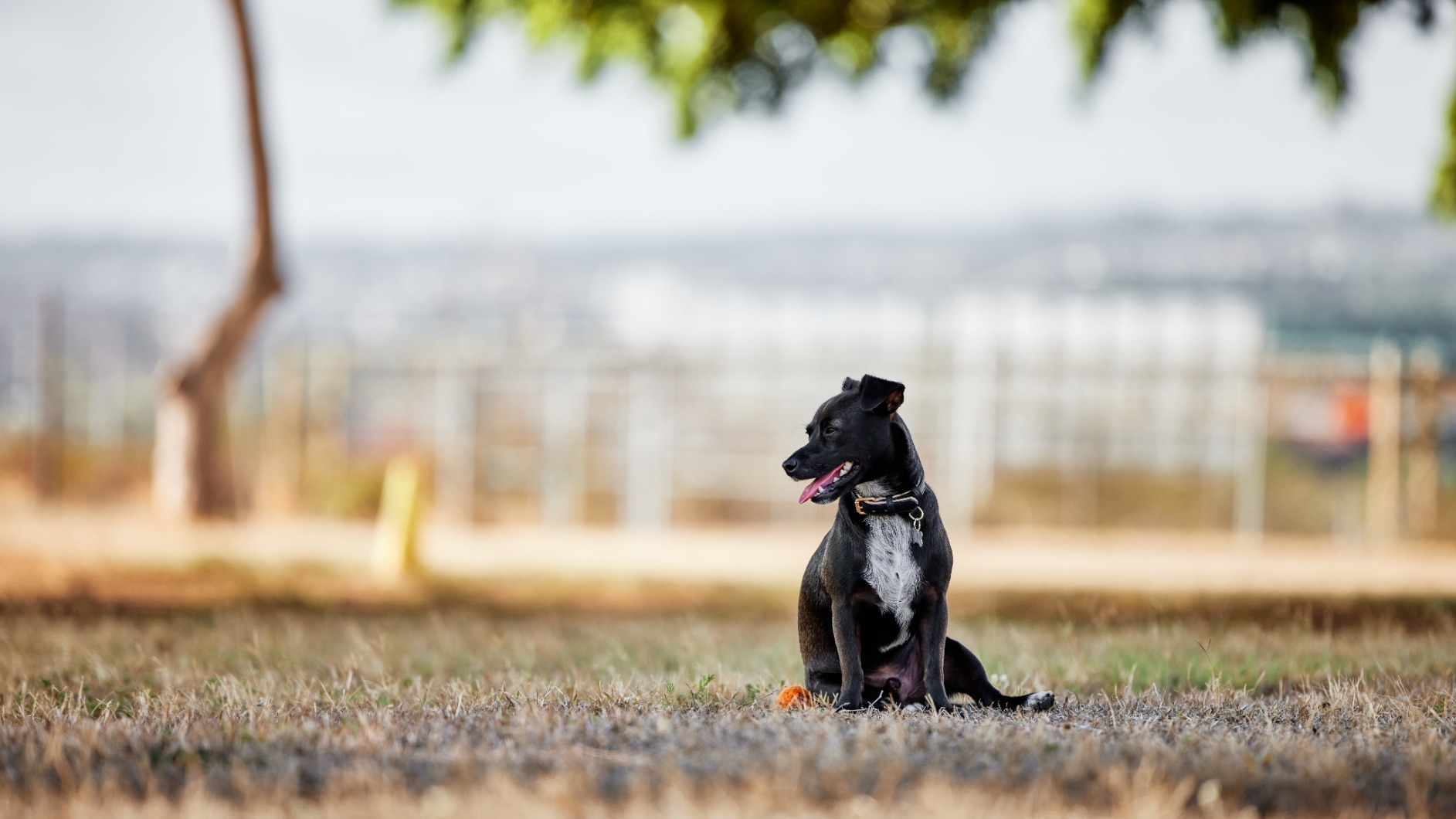
The extending zoom design is worth noting. Unlike the 100-300mm which maintains constant length, the 70-200mm extends when zooming. Some photographers prefer internal zoom for weather sealing and balance, but the practical impact is minimal. The lens hood includes a handy filter adjustment window for rotating polarizers.
Minimum focusing distance of 2.3 feet (0.7m) allows for surprisingly close work at 70mm. This flexibility makes the lens useful for detail shots at events, product photography, and even environmental portraits where you want some context around your subject.
Canon RF 100-300mm vs 70-200mm: Head-to-Head Comparison
Focal Length Range Comparison
The 70-200mm covers the classic portrait and event range, while the 100-300mm extends into wildlife and sports territory. Both lenses overlap from 100-200mm, but their strengths lie at opposite ends of their ranges.
For portraits, the 70-105mm range on the 70-200mm is ideal. For wildlife, the 200-300mm range on the 100-300mm provides critical extra reach. The question is whether you need that extra 100mm enough to justify the weight and cost.
Size and Weight Analysis
This is where the two lenses diverge dramatically. The 70-200mm measures 3.5 x 3.5 x 5.7 inches and weighs 1070g. The 100-300mm measures 12.7 x 5.1 x 5.1 inches and weighs 2590g. That is a 1520g difference, or roughly the weight of a professional DSLR body.
For travel and field work, the 70-200mm fits in standard camera bags and can be carried all day. The 100-300mm requires dedicated space and planning for transport. If you hike to wildlife locations or travel frequently, the size difference significantly impacts your kit.
Image Quality Comparison
Both lenses deliver professional-grade image quality befitting their L-series designation. The 100-300mm uses more exotic glass (fluorite element plus four UD elements) to maintain quality across its longer range. The 70-200mm achieves similar results with a simpler optical formula.
In practice, both lenses are sharp wide open and improve slightly when stopped down to f4. For most photographers, the image quality difference is negligible. Both produce beautiful bokeh, excellent contrast, and minimal chromatic aberration.
Autofocus Performance
Both lenses use Canon’s USM autofocus technology, but the 70-200mm employs dual Nano USM motors for silent, smooth focusing. The 100-300mm uses ring USM, which is fast and accurate but produces slight mechanical sounds.
For video work and quiet environments, the 70-200mm’s silent focus is advantageous. For wildlife and sports where speed matters more than silence, both lenses perform admirably. Neither lens exhibits focus breathing issues that would impact video work.
Image Stabilization
The 100-300mm offers slightly better image stabilization at 5.5 stops versus 5 stops for the 70-200mm. With coordinated IS on compatible bodies, the 100-300mm reaches 6 stops. This extra stabilization helps offset the weight challenge for handheld shooting.
Both lenses include multiple IS modes for different shooting scenarios. The practical difference in stabilization performance is minor, and both will serve you well in low light situations.
Build Quality and Weather Sealing
Both lenses feature professional L-series build quality with extensive weather sealing. The white finish on both helps reflect heat during outdoor shooting in direct sunlight. Both include fluorine coatings on front elements to repel water and oil.
The 100-300mm includes a tripod collar, which makes sense given its weight. The 70-200mm does not include a collar but third-party options exist if you need one for tripod work.
Use Case Recommendations
Wildlife Photography
Winner: Canon RF 100-300mm f2.8L IS USM
For wildlife and bird photography, that extra 100mm of reach is invaluable. The ability to shoot at 300mm and f2.8 means faster shutter speeds and better subject isolation than you would get with slower telephoto zooms. When light fades at dawn or dusk, f2.8 at 300mm keeps you shooting longer.
That said, the weight is a genuine consideration. If you hike miles to reach wildlife locations, carrying 2590g of lens plus camera body adds up. Some wildlife photographers prefer the 70-200mm with a 1.4x teleconverter as a lighter alternative, though you lose the f2.8 aperture advantage.
Sports Photography
Winner: Depends on the sport and venue
For indoor sports and venues where you can get close, the 70-200mm’s versatility and lighter weight make it the better choice. For outdoor sports where subjects are further away, the 100-300mm’s extra reach becomes valuable.
Professional sports photographers often carry both, using the 70-200mm for sideline work and the 100-300mm for distant action. For most enthusiasts, the 70-200mm covers the majority of sports situations adequately.
Event and Wedding Photography
Winner: Canon RF 70-200mm f2.8L IS USM
Wedding and event photographers overwhelmingly choose the 70-200mm, and for good reason. The 70-105mm range is perfect for ceremony coverage, reception details, and candid moments. The silent autofocus is essential during quiet ceremony moments. Most importantly, the lighter weight allows all-day handheld shooting.
The 100-300mm is simply too heavy and specialized for typical event work. If you also need video performance, the 70-200mm’s silent focus and lighter weight make it the clear choice.
Portrait Photography
Winner: Canon RF 70-200mm f2.8L IS USM
Portrait photographers benefit from the 70-200mm’s classic focal range. At 85-135mm, you get flattering compression without being so far from your subject that communication becomes difficult. The 200mm end provides beautiful background compression and bokeh for headshots.
The 100-300mm starts at 100mm, missing the popular 70-85mm portrait range entirely. For dedicated portrait work, the 70-200mm is the more versatile choice.
Frequently Asked Questions
Is the Canon RF 100-300mm worth the extra money?
The RF 100-300mm is worth the premium only if you specifically need 300mm reach at f2.8. For wildlife and bird photographers who require maximum reach without sacrificing aperture, the lens delivers unique capabilities. For most other photographers, the 70-200mm offers better value with greater versatility at a fraction of the cost.
Which lens is better for handheld shooting?
The RF 70-200mm f2.8L IS USM is significantly better for handheld shooting. At 1070g, it is 58% lighter than the 100-300mm at 2590g. Most photographers can use the 70-200mm handheld all day, while the 100-300mm typically requires a monopod or tripod for extended sessions.
Can I use teleconverters with both lenses?
Yes, both lenses are compatible with Canon RF teleconverters. The 100-300mm works exceptionally well with the 1.4x extender, giving you 140-420mm at f4. The 70-200mm also accepts teleconverters, becoming 98-280mm at f4 with the 1.4x or 140-400mm at f5.6 with the 2x.
Which lens has better image quality?
Both lenses deliver professional-grade image quality befitting their L-series designation. In real-world testing, differences are negligible. Both are sharp wide open, produce beautiful bokeh, and handle chromatic aberration well. Image quality should not be the deciding factor between these lenses.
Should I rent the 100-300mm before buying?
Given the significant investment, renting the RF 100-300mm before purchase is highly recommended. This lets you experience the weight and handling in your typical shooting scenarios. Many photographers find that renting for specific trips is more practical than owning such a specialized, heavy lens.
Final Verdict: Canon RF 100-300mm vs 70-200mm
The Canon RF 100-300mm f2.8L IS USM vs Canon RF 70-200mm f2.8L IS USM comparison reveals two exceptional lenses serving different photographers. For most people reading this, the RF 70-200mm f2.8L IS USM is the better choice.
It is more versatile, significantly lighter, and handles the vast majority of telephoto situations beautifully. Wedding, event, portrait, and general sports photographers will find it meets their needs while remaining portable enough for all-day use.
The RF 100-300mm f2.8L IS USM is for specialists who absolutely need 300mm reach at f2.8. Wildlife photographers, bird photographers, and sports photographers shooting from distant positions will justify the weight and investment. For these specialists, there is simply no alternative in Canon’s lineup that delivers this combination of reach and aperture.
If neither lens fits your budget, consider budget-friendly Canon RF alternatives that still deliver excellent results for less demanding situations.
Bottom line: Unless you specifically need 300mm reach for wildlife or distant sports, buy the RF 70-200mm f2.8L IS USM and spend the money you save on other gear or photography experiences.