
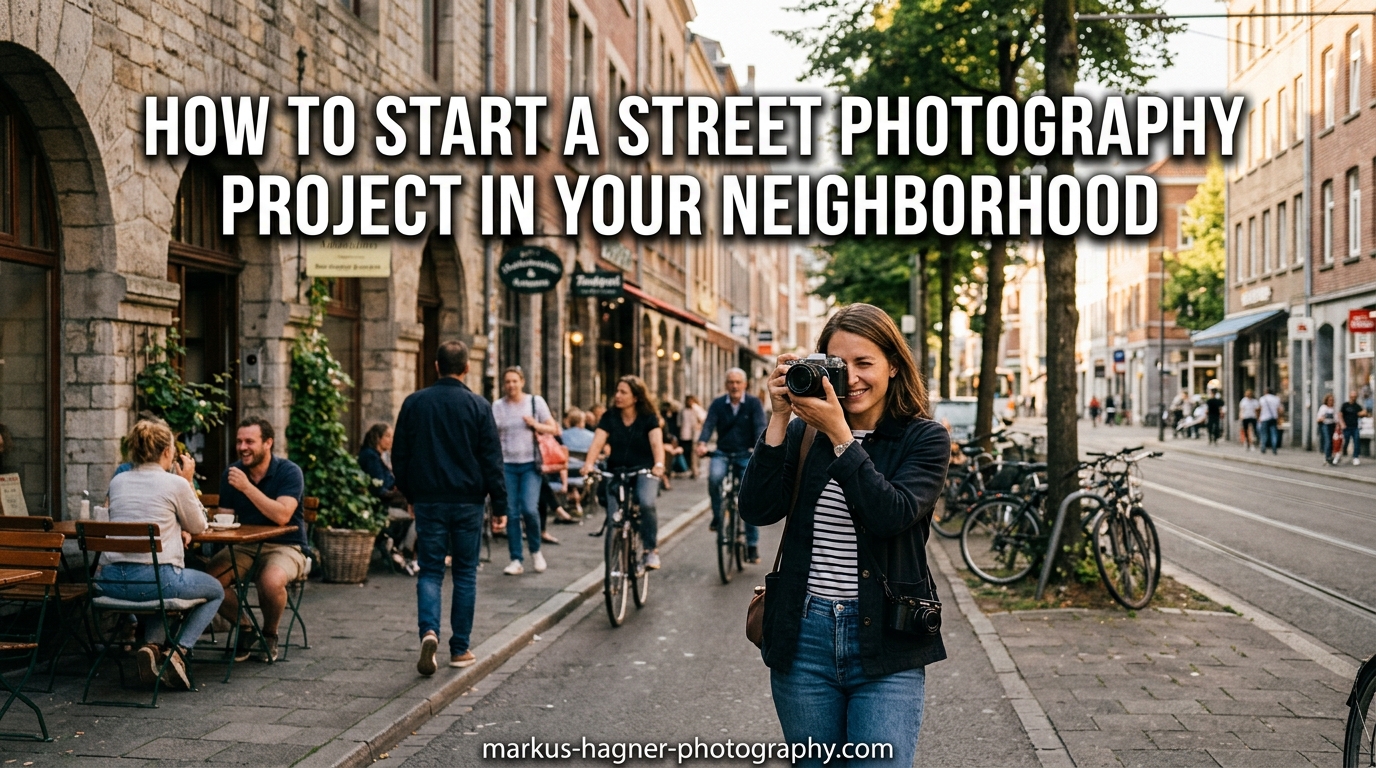
Street photography is one of the most rewarding genres you can explore as a photographer, and you do not need to travel to iconic cities like Paris or New York to create compelling images. In fact, starting a street photography project in your own neighborhood is often the best way to develop your eye, build consistency, and document the unique character of your local community. This guide will walk you through everything you need to know to start your own neighborhood street photography project, from finding inspiration right outside your door to creating a cohesive body of work that tells a meaningful story.
Whether you live in a bustling urban center or a quiet small town, every neighborhood has stories waiting to be told through your lens. The beauty of street photography lies in its accessibility you do not need expensive equipment or exotic locations, just a curious eye and a willingness to observe the world around you. By committing to a structured project with clear objectives, you will develop faster as a photographer while creating a valuable document of your community that you will treasure for years to come.
Why Start a Street Photography Project in Your Neighborhood
The idea of starting a street photography project in your own neighborhood might seem underwhelming at first glance. You might think that your local streets lack the visual drama of famous photographic destinations, but this assumption could not be further from the truth. Your neighborhood offers something that no other location can provide: intimacy, accessibility, and the opportunity for repeated observation over time.
When you shoot in familiar surroundings, you develop what photographers call “the street photography project” mindset a focused approach that transforms casual observation into intentional documentation. Instead of wandering aimlessly hoping to find interesting subjects, you begin to see patterns, routines, and moments that reveal the personality of your community. A corner coffee shop, the morning rush at the bus stop, the way light plays on familiar buildings at different times of day all become potential subjects for your growing body of work.
Starting locally also eliminates many of the barriers that prevent people from pursuing street photography. There is no travel time or expense, you already know which areas are safe and when, and you can shoot regularly without disrupting your daily schedule. This consistency is crucial for developing your skills and building a meaningful collection of images. Many legendary street photographers have created their most powerful work documenting their own neighborhoods, proving that extraordinary photography can emerge from ordinary places.
Finding Inspiration in Your Local Area
The first challenge any street photographer faces is finding inspiration, and this is especially true when working close to home. After seeing images from photographers around the world, it is easy to feel that your own surroundings are too mundane to document. However, the key to finding inspiration lies in changing how you look rather than where you go. Once you commit to a street photography project, you will be surprised how quickly your eyes adjust to see the extraordinary within the ordinary.
Start by exploring your neighborhood at different times of day. The same location can transform dramatically between morning, midday, and evening. The quality of light changes, the types of people present shift, and the atmosphere evolves. Early morning often reveals quiet, contemplative moments as the world wakes up, while evening hours capture the transition from work to home life. Weekend days bring different energy than weekdays, and seasonal changes create entirely new visual landscapes throughout the year.
Pay attention to the recurring elements that define your neighborhood: the local hangouts where people gather, the daily rituals that play out on street corners, the architecture and design choices that make your area unique. Every neighborhood has its own rhythm, and your job as a street photographer is to capture that rhythm in a way that resonates with viewers. Look for interesting light, compelling compositions, and genuine human moments. The “fishing technique” used by experienced street photographers waiting patiently for the right moment to unfold is particularly effective in familiar locations where you can predict how scenes will develop.
Do not underestimate the value of documenting even seemingly boring or unremarkable areas. Minimalist photography can be incredibly powerful, and there is beauty in the everyday. Many photographers have created acclaimed bodies of work simply by finding poetry in ordinary suburban landscapes. The key is to approach your neighborhood with fresh eyes, as if you were seeing it for the first time, and to look for the small details that make your corner of the world unique.
Defining Your Project Objectives and Timeline
One of the most important steps in starting a successful street photography project is defining clear objectives. Without specific goals, it is easy to lose focus and produce a random collection of images rather than a cohesive body of work. Take time to consider what you want to achieve with your project and what story you want to tell about your neighborhood.
Your objectives can focus on various aspects of street photography. You might choose to document the people who make up your community, creating intimate portraits of the individuals you encounter. Alternatively, you could focus on the architecture and urban landscape, exploring how buildings and spaces shape human behavior. Another approach is to capture the passage of time, documenting how your neighborhood changes across seasons or years. Some photographers prefer a thematic approach, focusing on specific subjects like shop windows, street art, transportation, or shadows and light.
Setting a timeline helps maintain momentum and provides a natural deadline for evaluating your progress. Beginners often find that a 30-day challenge works well to build the shooting habit. During this period, commit to shooting in your neighborhood every day, even if just for 30 minutes. This consistent practice will teach you to see opportunities more quickly and help you develop your personal style. For more ambitious projects, consider a quarterly or yearly timeline that allows for deeper exploration and more comprehensive documentation.
Establishing guidelines for your project can also help maintain focus. These might include specific technical constraints like using only a 35mm lens or shooting in black and white, or conceptual guidelines like only photographing interactions between strangers or capturing moments of solitude in crowded spaces. These constraints paradoxically often lead to more creative solutions and a more distinctive final body of work.
Practical Shooting Strategies for Beginners
Now that you have inspiration and clear objectives, it is time to discuss practical strategies for shooting effectively in your neighborhood. Street photography requires both technical skills and interpersonal awareness, and developing both takes practice. Here are some proven approaches that will help you capture compelling images while feeling more confident in various situations.
Camera settings are foundational for street photography. Many experienced street photographers recommend using aperture priority mode with a moderate aperture like f/8, which provides enough depth of field for sharp images while allowing reasonably fast shutter speeds. Setting your ISO to auto with a reasonable maximum prevents blurry images in varying light conditions. The goal is to spend less time fiddling with settings and more time observing and anticipating moments. A compact camera or a small mirrorless setup is ideal for street work because it draws less attention and is easier to carry for extended periods.
When it comes to approaching subjects, beginners often struggle with the awkwardness of photographing strangers. Several techniques can help ease this discomfort. The “smile and nod” approach simply involves acknowledging your subject with a friendly expression before or after taking the shot. If someone notices you, a genuine smile and perhaps a brief explanation like “I am practicing photography” usually diffuses any tension. Another technique is to shoot from the hip, which allows you to capture candid moments without raising your camera to your eye, reducing the chance of confrontation.
Building connections with your neighborhood can significantly improve your street photography. Return to the same locations repeatedly, and you will begin to recognize regulars and establish rapport with local business owners. This familiarity breeds comfort, and people become more accustomed to your presence over time. Some of the best street photography emerges from these established relationships, where subjects are at ease and portraits feel natural rather than staged.
Do not avoid challenging weather conditions or unfavorable lighting. Rain creates beautiful reflections and transforms ordinary streetscapes into compelling compositions. Harsh midday sun can create dramatic shadows and high contrast images. Even overcast days offer soft, even lighting that works beautifully for color photography. The key is to embrace all conditions and learn how each affects the mood of your images.
How to Stay Motivated with Your Street Photography Project?
Maintaining motivation over the course of a street photography project can be challenging, especially when results do not immediately meet expectations. Every street photographer goes through periods of self-doubt and frustration, but the most successful practitioners develop strategies to push through these creative slumps and continue building their body of work.
One of the most effective motivation strategies is to share your work regularly, whether with an online community, friends, or family. Receiving feedback and seeing how others respond to your images provides fresh perspective and encouragement. Joining street photography groups, either in person or through platforms like Flickr and Facebook, connects you with fellow enthusiasts who understand the unique challenges and rewards of this genre. Shooting with others can reignite your passion and introduce new approaches you might not have considered.
Set small, achievable goals to maintain momentum. Instead of focusing solely on the final body of work, celebrate incremental victories like capturing a particular type of shot you have been pursuing or successfully approaching a subject you previously would have avoided. Keep a shooting journal to record what worked, what did not, and ideas for future sessions. This reflection helps you recognize progress even when it feels slow.
Remember that street photography is a skill that improves with practice, and everyone starts as a beginner. Your early images will likely feel imperfect, but this is normal and expected. The photographers whose work you admire have all gone through thousands of frames of practice to reach that level. Embrace the learning process, be patient with yourself, and trust that consistent effort will yield improvement over time. Revisit your early images after a few months, and you will likely see progress that was not visible in the moment.
Frequently Asked Questions
Do you need permission for street photography?
In most public spaces in the United States and many other countries, you do not need explicit permission to photograph people in public places. Street photography is generally legal as long as you are in a public space where there is no reasonable expectation of privacy. However, laws vary by location, and it is important to understand the specific regulations in your area. Some countries and jurisdictions have stricter rules about photographing individuals, particularly for commercial use. When in doubt, a friendly approach and explanation of your project usually resolves any potential issues.
What is the 20-60-20 rule in photography?
The 20-60-20 rule is a composition guideline popular among street photographers that suggests spending approximately 20% of your time observing and 60% actively shooting, while reserving 20% for reviewing and adjusting your approach. This balance helps maintain momentum while ensuring you stay aware of changing conditions and opportunities around you. The exact percentages are less important than finding a rhythm that works for you and balancing productive shooting with thoughtful observation.
What makes a street photography project successful?
A successful street photography project typically combines clear objectives, consistent practice, and a cohesive visual approach. The best projects tell a story or convey a specific theme that viewers can recognize and appreciate. Technical excellence matters less than authenticity and visual coherence. Projects that span extended periods allow for deeper exploration and often produce more meaningful results than short-term efforts.
How do I find subjects in my neighborhood if it seems boring?
Every neighborhood has stories to tell, even those that initially seem unremarkable. Challenge yourself to find the extraordinary in ordinary scenes. Focus on details, patterns, light, and moments of human connection that might otherwise go unnoticed. Consider exploring at different times, visiting local events and gathering spots, or documenting seasonal changes. Some photographers find success with a minimalist approach, finding beauty in simplicity rather than seeking dramatic scenes.
Conclusion
Starting a street photography project in your own neighborhood is one of the most accessible and rewarding ways to develop your photography skills while creating a meaningful document of your community. The key is to approach your familiar surroundings with fresh eyes, define clear objectives, and commit to consistent practice over time. Do not dismiss your neighborhood as too mundane to photograph every community has stories waiting to be captured, and the intimate knowledge you gain from living somewhere provides a unique perspective that outside photographers cannot replicate.
Remember that street photography is a journey, not a destination. Your first images will not match the work of masters, and that is perfectly fine. What matters is that you commit to the process, learn from each session, and continue pushing yourself to see more creatively. Over time, you will develop a distinctive voice as a photographer and create a body of work that you can be proud of. So grab your camera, step outside your door, and start documenting the world around you. Your neighborhood is waiting to be seen.