
Most listing photos are ruined by one technical problem: a bright window in the same frame as a shadowed hallway, and the camera can only hold one of them. That single failure is why the best cameras for real estate photography under 1500 are not the ones with the highest megapixel counts. They are the bodies that hold enough dynamic range, fire a clean exposure bracket, and accept a genuinely wide lens without costing more than the whole budget.
We spent weeks working through the current bodies that fit inside a 1500 ceiling, shooting bright kitchens, narrow condo hallways and twilight exteriors with each one. The Nikon D7500 came out on top because its auto exposure bracketing is purpose-built for exactly this job and its metering matches Nikon’s professional D500. If you want a mirrorless body instead, the Sony Alpha a6400 and the Canon EOS R50 double-lens bundle are the two strongest all-rounders, and the Canon EOS RP is the only way into full frame inside this budget.
Prices and availability move constantly, so check the live listings before you commit. What never changes is which body handles a bracketed interior cleanly, which one still shoots usable video at the same time, and how much of your remaining budget gets eaten by the lens. We also break down the sensor format question, the tilt-shift alternative, and the pro bodies a 1500 budget simply cannot buy in the buying guide further down.
If you are starting from scratch, our broader guides on the best cameras for real estate photography and the cameras that pair well with virtual tours cover the higher tiers that this ceiling rules out.
Top 3 Picks for Best Real Estate Photography Under $1500 in 2026


All 12 Cameras Compared in 2026
| Product | Specifications | Action |
|---|---|---|
 Nikon D7500 DSLR body Nikon D7500 DSLR body |
|
Check Latest Price |
| Sony Alpha a6400 with 16-50mm |
|
Check Latest Price |
| Canon EOS R50 double lens bundle |
|
Check Latest Price |
 Canon EOS RP with RF 24-105mm Canon EOS RP with RF 24-105mm |
|
Check Latest Price |
 Sony ZV-E10 body Sony ZV-E10 body |
|
Check Latest Price |
 Sony Alpha a6700 body Sony Alpha a6700 body |
|
Check Latest Price |
 Canon EOS R10 with 18-45mm Canon EOS R10 with 18-45mm |
|
Check Latest Price |
 Canon EOS Rebel T7 with 18-55mm Canon EOS Rebel T7 with 18-55mm |
|
Check Latest Price |
 Nikon Z 50 with two lenses Nikon Z 50 with two lenses |
|
Check Latest Price |
 Nikon Z50 II with two lenses Nikon Z50 II with two lenses |
|
Check Latest Price |
 Panasonic LUMIX G85 with 12-60mm Panasonic LUMIX G85 with 12-60mm |
|
Check Latest Price |
 Fujifilm X-T30 III with 13-33mm Fujifilm X-T30 III with 13-33mm |
|
Check Latest Price |
1. Nikon D7500: The Best Camera for Real Estate Photography Under 1500
Pros
- D500-class image quality and metering
- Auto bracketing built for HDR interiors
- Deep buffer for 8fps bursts
- Large tilting touchscreen usable with gloves
- Dual command dials and top status display
Cons
- Single memory card slot
- No depth-of-field preview button
- Heavier than mirrorless bodies and no deeper grip
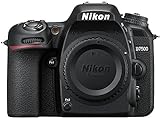
The D7500 is the only body in this list where bracketing is a first-class feature rather than something you hunt for in a menu. Auto-bracketing with adjustable exposure compensation stepping is right there on the release dial, and the metering is rated at the same level as Nikon’s professional D500 body. That combination is why it wins this roundup for rooms with a blown window and a dark corner.
On a real shoot, the workflow is simple. Set the camera on a tripod, dial in a bracket sequence, fire the frames and merge them later. Owners report that the deep buffer and 8fps burst mean the bracket fires cleanly every time without the buffer stalling halfway through a sequence, which matters when you are working through fifteen rooms an afternoon.

The 3.2-inch 922k-dot tilting touchscreen is larger than most mirrorless screens and, crucially, remains usable when you are wearing gloves. For exterior twilight shots that means composing low without freezing, and the top status display plus dual command dials let you check exposure without taking your eye off the viewfinder.
Image quality is the quiet strength here. The 20.9MP DX sensor with Nikon’s processing delivers files that hold up in a dark hallway at dusk, and 14-bit RAW gives you the latitude to lift shadows and pull highlights in a bracketed merge without banding. Built-in Wi-Fi and Bluetooth handle SnapBridge transfers for a quick client preview.

What to pair with the D7500 inside a 1500 budget
This is a body-only listing, so the lens is your next decision and it consumes the rest of the ceiling. A wide-to-normal zoom handles most interiors and street exteriors, and the leftover money goes to a tripod and spare batteries. If you can only add one thing, add glass rather than a second body.
The D7500 uses the F mount, which is a genuine advantage at this budget. Used EF and EF-S wide angles are abundant and inexpensive, and that depth of used glass is exactly why Nikon bodies keep showing up in budget real estate recommendations. Newer mirrorless mounts have less cheap ultra-wide glass on the used market.
Where the D7500 will frustrate you
The single card slot is the first thing professional shooters notice. You cannot split RAW to one card and JPEG to another, and you have no on-the-fly backup, so on a paid job you are one card failure away from re-shooting. If you shoot dual cards as a habit, this is a real gap.
There is no depth-of-field preview button either, which makes manual focus checks for close interior details more fiddly than they should be. And the tilting screen does not swing to the side, so overhead and selfie framings for vertical social content require a separate angle or an arm. Neither flaw affects bracketed interiors; both annoy you on the days you are not bracketing.
2. Sony Alpha a6400: Best Mirrorless for Real Estate Under 1500
Pros
- 425 phase-detection points covering over 84% of the frame
- 11fps raw burst with crisp natural color
- 180-degree tilting touchscreen
- Compact body
- Time lapse and slow motion built in
Cons
- Bundled 16-50mm is a modest standard zoom
- Menu system is not beginner oriented
- Micro HDMI and a single card slot limit external workflow
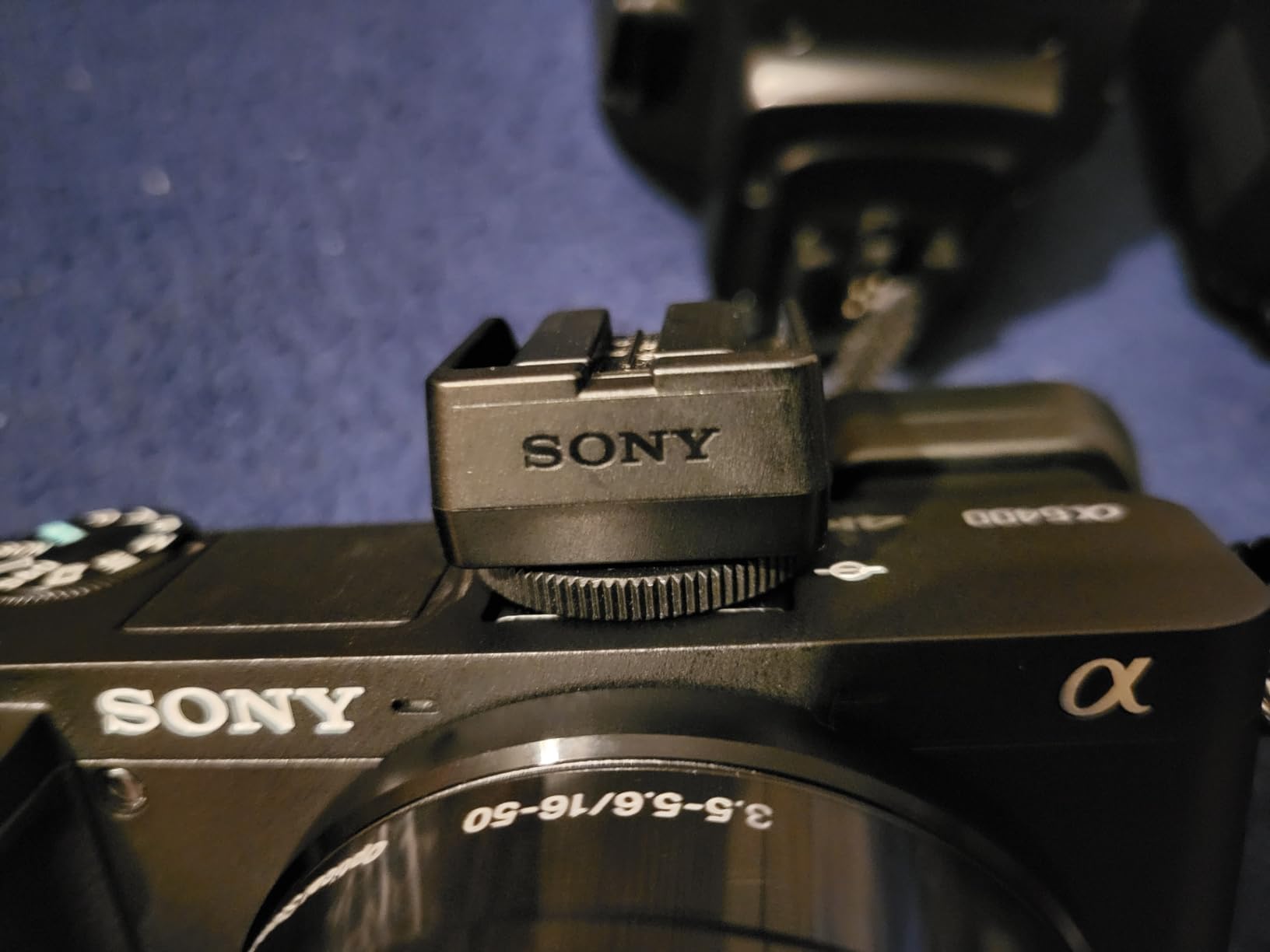
The a6400 is the most widely recommended answer we found when we looked at what shooters actually discuss about affordable bodies. The reason is simple: 425 phase-detection points covering more than 84% of the frame means autofocus finds and holds the near corner of a bright kitchen without hunting. That reliability is what a fast room-by-room workflow depends on.
It ships here with a 16-50mm standard zoom, which is the weak point of the package. That lens is perfectly fine for exterior establishing shots and rooms of a reasonable size, but it is not wide enough for a small studio apartment, and it is not fast enough for a dim hallway. Budget for a wider prime before your first paid shoot.
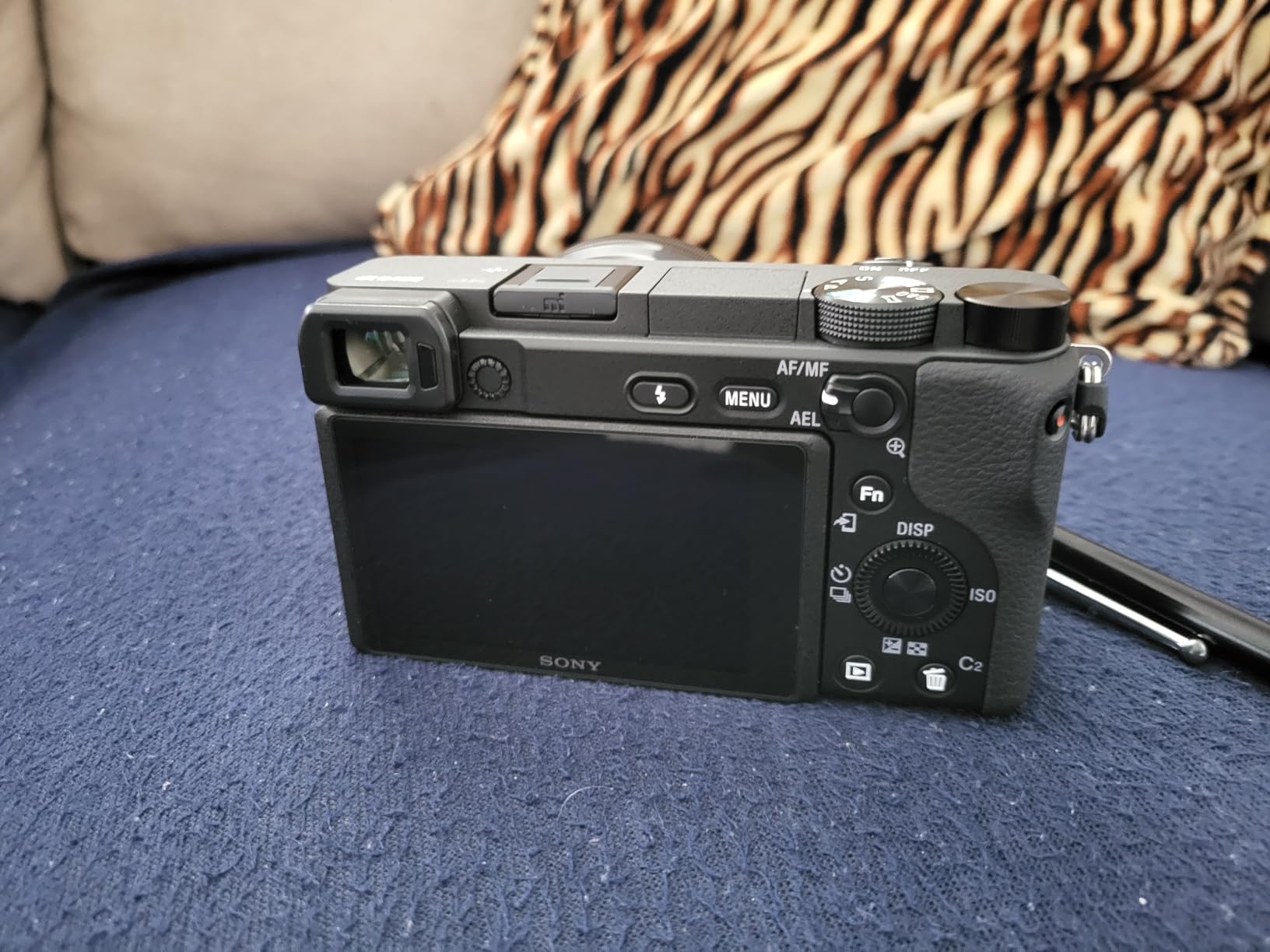
At 11fps raw with 14-bit files, the a6400 handles exposure bracketing sequences without hesitation and gives you a wide latitude RAW file for a merged interior. The sensor delivers what owners consistently describe as crisp, natural color, which matters when you are grading a room to look bright without looking washed out.
The 180-degree tilting touchscreen is a real advantage for vertical listing shots and for walking a buyer through a space in selfie framing. Time lapse and slow motion capture are built in, so twilight exteriors and cloud motion in a garden shot need no extra software.
Why the E mount matters at this price
The E mount is the widest and cheapest lens ecosystem you can buy into under a 1500 total. Third-party wide zooms and primes for APS-C E mount are plentiful and inexpensive, which means the money you save on the body converts directly into a wider lens. That is the trade that decides this category.
The catch is the bundled 16-50mm. Treat it as a placeholder and spend your remaining budget on glass, a tripod and a spare battery. If you shoot video as well as stills, note the single UHS-I slot and the Micro HDMI port when you plan your workflow.
Where the a6400 falls short
The menu system is the most common complaint from first-time interchangeable-lens users, and it costs real time on a shoot where every minute is billed. Learn the exposure bracket, ISO and white balance pages before your first job and it becomes a non-issue, but do not expect to configure it on the doorstep.
There is only one card slot, so on paid work you have no second copy of a client’s listing. And the tilting screen is a flip, not a full articulation, so it does not help with genuinely low floor-level compositions. The body itself stays small enough to carry all day, which is its own real estate advantage.
3. Canon EOS R50 Double Lens Bundle: Best Value Under 1500
Pros
- Two stabilized RF-S lenses in the box
- 24.2MP sensor produces sharp files
- Fast dual pixel autofocus with tap to focus
- Fully articulating screen
- Bag battery charger and 64GB card included
Cons
- 55-210mm telephoto is slow and dim
- No in-body stabilization
- Not weather sealed or water resistant
- Small grip with very large optics
Here is the deal nobody at this price can touch: the bundle includes an 18-45mm f/4.5-6.3 stabilized kit zoom and a 55-210mm f/5-7.1 stabilized telephoto, plus a battery, charger, shoulder bag and a 64GB memory card. If you are an agent shooting your own listings once or twice a week, that is the whole kit in one purchase and nothing else to research.
The 24.2MP APS-C sensor produces genuinely sharp files, and dual pixel autofocus locks quickly with simple tap-to-focus on the screen. For interiors that is more than sufficient, and the fully articulating screen is a step up from the flip panels on most of the other budget bodies in this list.

Reviewers consistently single out battery life as a standout for this bundle, reporting that it comfortably lasts a full day of shooting without a midday swap. That removes one of the two most common all-day anxieties, the other being card capacity, which the included card only partly covers.
Frame rates of 24, 30 and 60 fps are available, and 4K capture is present, though this is a stills-first kit. The RF mount means later upgrading to a wider RF lens is straightforward, and the 18-45mm is small enough that it does not dominate the bag.

What a first listing shoot looks like with this bundle
You arrive, you shoot, you leave. The 18-45mm handles the living room, the bedroom and the street frontage, the articulating screen handles low shots of the kitchen island, and the bag means you are not carrying a separate camera case through a listing appointment. For an agent working solo this is the lowest-friction setup in the roundup.
Professionals shooting fifteen to twenty rooms a day should look elsewhere on this page, because the telephoto is not the lens that pays for itself indoors. The 55-210mm is slow and dim, so you will be raising ISO in an evening twilight exterior, and stabilization is the only thing holding the frame steady.
Where the R50 bundle falls short
There is no in-body stabilization, so all stabilization comes from the two bundled lenses. That is fine with the 18-45mm, and it is a real limitation with the slow telephoto. The body is also not weather sealed, which matters if you are shooting exteriors in rain or at a coastal property in winter.
The grip is small and reviewers note it feels awkward with very large optics, so plan a firmware-free tripod workflow rather than one-handed shooting. And if you are buying specifically to learn, remember that most beginners overspend on the body and cheap out on the lens. This bundle is the exception because the glass is already included.
4. Canon EOS RP with RF 24-105mm: Best Full-Frame Under 1500
Canon EOS RP Full-Frame Mirrorless Interchangeable Lens Camera + RF24-105mm Lens F4-7.1 is STM Lens Kit, Compact and Lightweight for Traveling and Vlogging, Black (3380C132)
Pros
- Genuinely compact and light full-frame body
- Bundled stabilized 24-105mm zoom
- 26.2MP sensor holds highlights and shadow detail
- Dual pixel AF is fast and dependable
- Articulating screen for low and high angles
Cons
- No in-body stabilization
- 5fps burst with a slow buffer
- 4K is crop limited with a 30-minute cap
- RF lens selection is limited at this tier
- Small battery drains on long days
The RP is the only full-frame body in this roundup that fits under 1500 with a real lens attached, and that is a genuinely meaningful advantage for listing work. A 26.2MP full-frame sensor holds bright window light and a shadowed hallway far better than any APS-C option here, which is the whole problem we are trying to solve.
Owners upgrading from APS-C or an older DSLR consistently describe the jump in dynamic range, rendering depth and low light cleanliness. For a twilight exterior where you are balancing a lit interior against a dark blue sky, that extra headroom is worth more to the finished listing than a faster burst rate.
The bundled RF 24-105mm f/4-7.1 IS STM is a genuinely useful piece of glass, and its optical stabilization delivers up to five stops of shake correction. It covers 24mm at the wide end, which is a little tight for a small studio, but it handles exteriors, group rooms and detail shots without a second lens.
Dual pixel CMOS AF with 4779 selectable points is fast and dependable, and the articulating screen makes low and high framings straightforward. Minimum focusing distance drops to 0.43 feet in center focus macro, which is handy for kitchen detail work. It also works as a webcam through EOS Utility Webcam Beta or a clean HDMI output.

Full frame under a 1500 ceiling, with caveats
Be realistic about the video side. 4K here is crop constrained, capped at 24fps, limited to 30-minute recordings, and Dual Pixel AF is disabled in that mode. If walkthrough video is a deliverable you sell, treat the RP as a stills camera and check one of the video-focused bodies in this list instead.
There is no in-body stabilization either, so the bundled IS lens is doing all the work. That is manageable on a tripod-based interior workflow, which is how you should be shooting anyway, but it is not a camera for handheld twilight exteriors without a lens that stabilizes.
Where the RP will slow you down
The 5fps burst with a slow buffer is the practical limit. Focus shift bracketing, where you rack focus between frames to stack depth of field, is a technique the community asks about constantly, and a 5fps slow buffer makes it slow. For standard 3 to 5 frame exposure brackets at a fixed focus point, it is fine.
RF lens selection is still limited at this tier, and the battery pack is small and drains quickly on long shooting days. If you buy the RP, budget two spare batteries. The payoff for the sensor size is real, but the workflow is a tripod workflow, not a fast-moving one.
5. Sony ZV-E10: Best Camera for Real Estate Video Under 1500
Pros
- 4K oversampled from 6K with full pixel readout
- Product showcase transitions focus from face to object
- Background defocus button toggles on demand
- Single-cable live streaming
- Large 24.2MP APS-C sensor
Cons
- Body only
- a lens must be bought separately
- No in-body image stabilization
- Digital stabilization only for video
- Few physical dials for stills work
The ZV-E10 is built for exactly the moment in a walkthrough where you want attention to move from the agent talking to the kitchen island behind them. The product showcase setting does that focus pull automatically, which removes the single most tedious part of shooting a talking tour on your own.
Its 4K is oversampled from 6K with full pixel readout and no pixel binning, which is a meaningful quality difference for a client walking through a listing on a large screen. The background defocus button is a small gimmick, but it gives you a one-press look change between rooms when you are filming quickly.
Buyers treat this as a hybrid body, and for real estate that hybrid framing is honest. You get a large 24.2MP APS-C sensor with the BIONZ X processor, 4K capture, and a 3.0-inch vari-angle touch LCD. The three-capsule directional microphone is built in, so spoken walkthrough audio is captured without an external mic.
Single-cable live streaming means no capture card and no extra software if you ever want to run a live showing. It is a small feature that saves a real amount of friction for agents who stream rather than upload.
Pairing a ZV-E10 for listing work
This is a body-only listing, so plan the lens as part of the purchase rather than an afterthought. A compact wide-to-normal zoom covers interiors and exteriors, and because the mount is E, you can pick from a very wide range of inexpensive third-party glass and still stay inside the 1500 ceiling.
If you shoot a hybrid day where the stills matter as much as the video, buy a stabilized lens. The body has no in-body stabilization, so for handheld walkthroughs the stabilization has to come from the optic. On a tripod for bracketed stills, that matters much less.
Where the ZV-E10 is the wrong tool
The control layout is optimized for video, and owners note limited physical dials for stills-first work. If your income comes from stills and video is a nice-to-have, a body with more dials and a subject-recognition autofocus will serve you better for the same money.
There is no in-body stabilization at all, and stabilization for video is digital rather than optical, which in a bright room can crop the frame. And the single UHS-I card slot again removes your dual-card backup option on paid jobs. Treat it as the video-first half of a two-tool kit.
6. Sony Alpha a6700: Best Hybrid Under 1500 for Interiors and Video
Pros
- 26MP sensor with excellent dynamic range and low noise
- AI recognition autofocus tracks reliably
- Crop-free 4K 60p 10-bit 4:2:2
- On-chip sensor-shift stabilization
- Compact body with premium build
Cons
- Single card slot
- Complex menu system
- Stabilization is not enough for smooth handheld video without a gimbal
- Can overheat during long 4K 60p recording
- Low light trails full frame
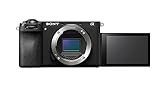
The a6700 is the most capable sensor in this roundup on an APS-C body, and its 26MP Exmor R sensor produces sharp files with the dynamic range to hold a window and a shaded corner in a single bracketed frame. It sits right at the top of this price ceiling, which is why it does not win the roundup, but it is the strongest all-round spec sheet here.
The dedicated AI processor and real-time recognition autofocus lock onto eyes and track people reliably, which matters on a listing shoot where the photographer is often the subject. Frame rates reach 11fps, and the 1.07x viewfinder is bright and large enough to judge exposure comfortably.
Video is where it separates. Crop-free 4K at 60p in 10-bit 4:2:2, oversampled from 6K, plus 4K 120p high frame rate capture and up to 120 minutes of recording. S-Log3 and LUT handling are supported for grading workflows, and the 1/8000 second maximum shutter gives you full control in a bright room.
On-chip sensor-shift stabilization is the reason this body handles handheld interiors better than most. It is not enough for smooth walking video without a gimbal, but it will rescue a slow-shutter interior frame that would otherwise blur.

Is the a6700 worth spending the whole ceiling on
Only if you shoot both stills and video at a professional level. Because it is a body-only configuration, you will need to buy a lens as well, and that pushes the total above the 1500 budget this roundup is built around. Treat the a6700 as a body you pair with a fast, cheap wide prime rather than a kit purchase.
If your video work is occasional walkthroughs and your income is stills, the money is better spent on a wider lens and a tripod. The sensor is superb, but a sensor cannot photograph a small studio without glass that fits inside the corner.
Where the a6700 gets in the way
Only one card slot, which limits you on backup-heavy paid shoots, and a complex menu system that takes real time to learn. Neither is a dealbreaker, but both cost something on a day when you are billing by the hour.
Two practical notes. Reviewers report heat-related shutdowns during extended 4K 60p recording in hot weather, so on a summer exterior day, take the heat out of the equation. And high-ISO low light performance still trails full frame, so for a night exterior the Canon EOS RP in this list holds more.
7. Canon EOS R10: Best Camera Under 1500 for Beginners
Pros
- Dual pixel AF II covers the frame with 651 zones
- 15fps mechanical plus RAW burst with pre-shooting
- 24.2MP sensor with ISO up to 51200
- Compact body with fully articulating touchscreen
- 10-bit 4K video at this price
Cons
- No in-body stabilization
- 18-45mm kit lens is weak past ten feet and in low light
- Wi-Fi transfer is reported as very slow
- LP-E17 battery is not shared with higher-tier R bodies
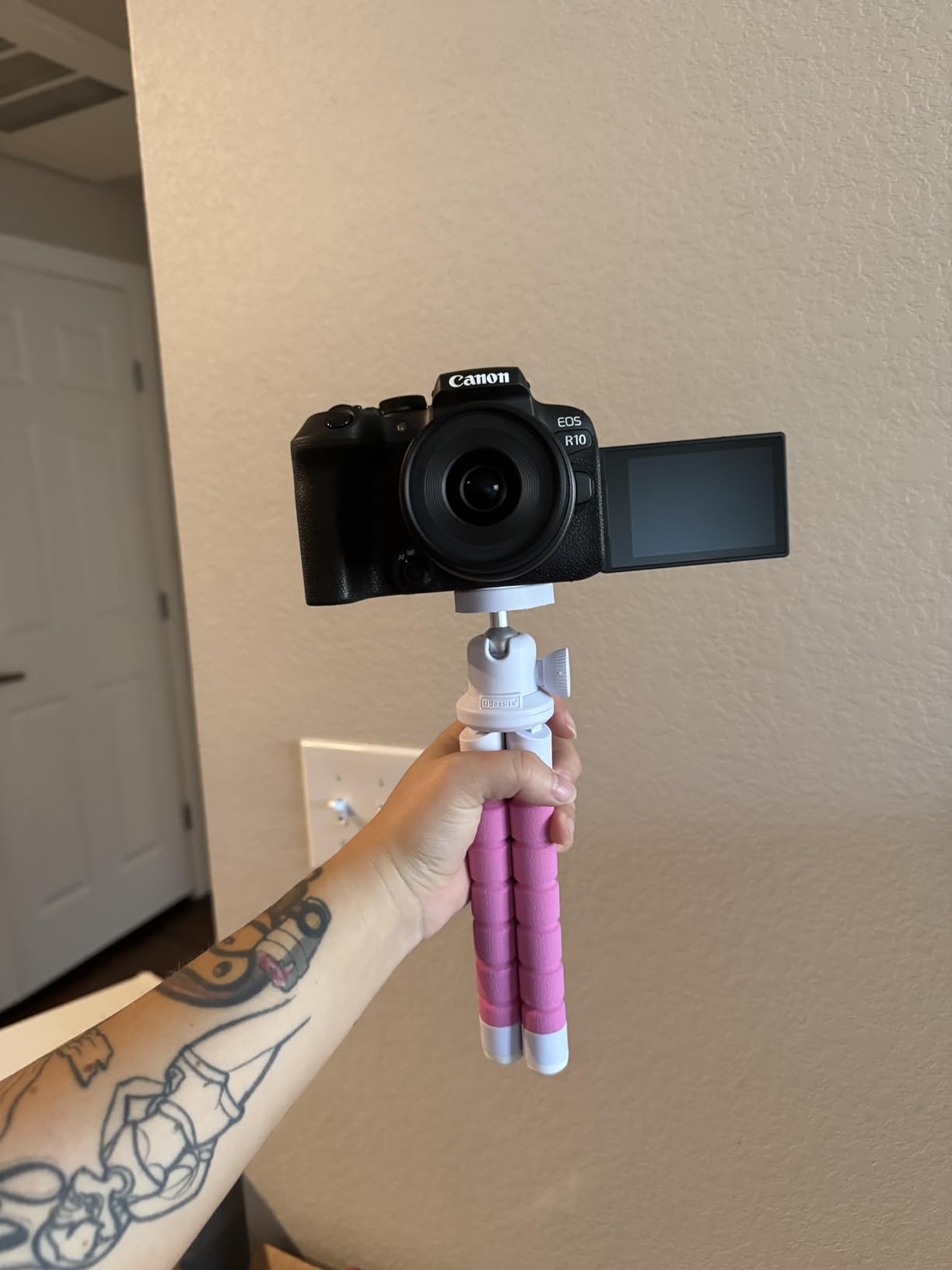
The R10 is the body we would hand someone learning real estate photography this year. Dual pixel CMOS AF II covers approximately 100% of the frame width and height with up to 651 zones and focuses down to EV -4, which means it finds a corner in a dim hallway that a smaller sensor system might miss entirely.
That autofocus reliability is the whole point for a beginner. You stop hunting, you stop missing the bracket start, and you start thinking about exposure instead of the camera. Subject detection for people, animals and vehicles adds a layer of automation that keeps your attention on the room.

Burst speed is remarkable for the money: 15fps on the mechanical shutter, 23fps electronic, plus RAW burst mode with half a second of pre-shooting. That pre-shooting buffer means you can walk into a room and press the shutter after the fact. The 0.95x electronic viewfinder is bright and large, and the fully articulating touchscreen handles low floor-level shots.
10-bit 4K video is uncommon at this price, and ISO expands to 51200 for dim rooms. USB power delivery through the PD-E adapter lets you charge in camera, which solves the charging-crate clutter that eats into a small bag.
How the R10 fits a growing business
Start with the bundled RF-S 18-45mm, which is stabilized and small, and spend what remains on a wider lens. The RF mount gives you an upgrade path, and EF or EF-S lenses work through the Mount Adapter EF-EOS R if you are buying used glass.
The 24.2MP sensor is the sweet spot for listing work, where MLS renders images far smaller than the full file. There is no practical benefit to a higher resolution sensor at this level of delivery, which frees budget for a tripod and a spare battery.
Where the R10 gets in the way
There is no in-body stabilization, so stabilization comes entirely from the lens. The bundled 18-45mm is stabilized, but reviewers repeatedly note it is weak past roughly ten feet and in low light, which is exactly the situation in a long narrow living room at dusk.
Wi-Fi transfer to phones and computers is reported as extremely slow by owners, so budget a card reader or a cable for every offsite shoot. The LP-E17 battery is not shared with higher-tier Canon R bodies, and the firmware filter effects are criticized as clutter. None of these break the camera; they just cost time.
8. Canon EOS Rebel T7: Budget Pick Under 1500
Pros
- 24.1MP sensor at an approachable price
- Optical viewfinder with about 95% coverage
- Bundled 18-55mm IS II includes stabilization
- Simple beginner menus and scene modes
- Huge secondhand EF lens market
Cons
- 9-point AF is slow and basic
- No 4K and only 1080p video
- Fixed non-articulating screen
- 3fps burst
- No microphone input
With thousands of reviews on record, the Rebel T7 is the most thoroughly proven camera in this list, and for a learner it behaves exactly as advertised. The 24.1MP APS-C sensor produces detailed, usable files, and the optical viewfinder with roughly 95% coverage gives you a bright, lag-free shooting experience no mirrorless screen can match.
That leaves you with a large share of the 1500 ceiling to spend on what actually changes the result: a wide-angle lens, a tripod and spare batteries. Used EF glass is the cheapest ultra-wide ecosystem on the used market, so this body stretches further on a glass budget than anything else here.
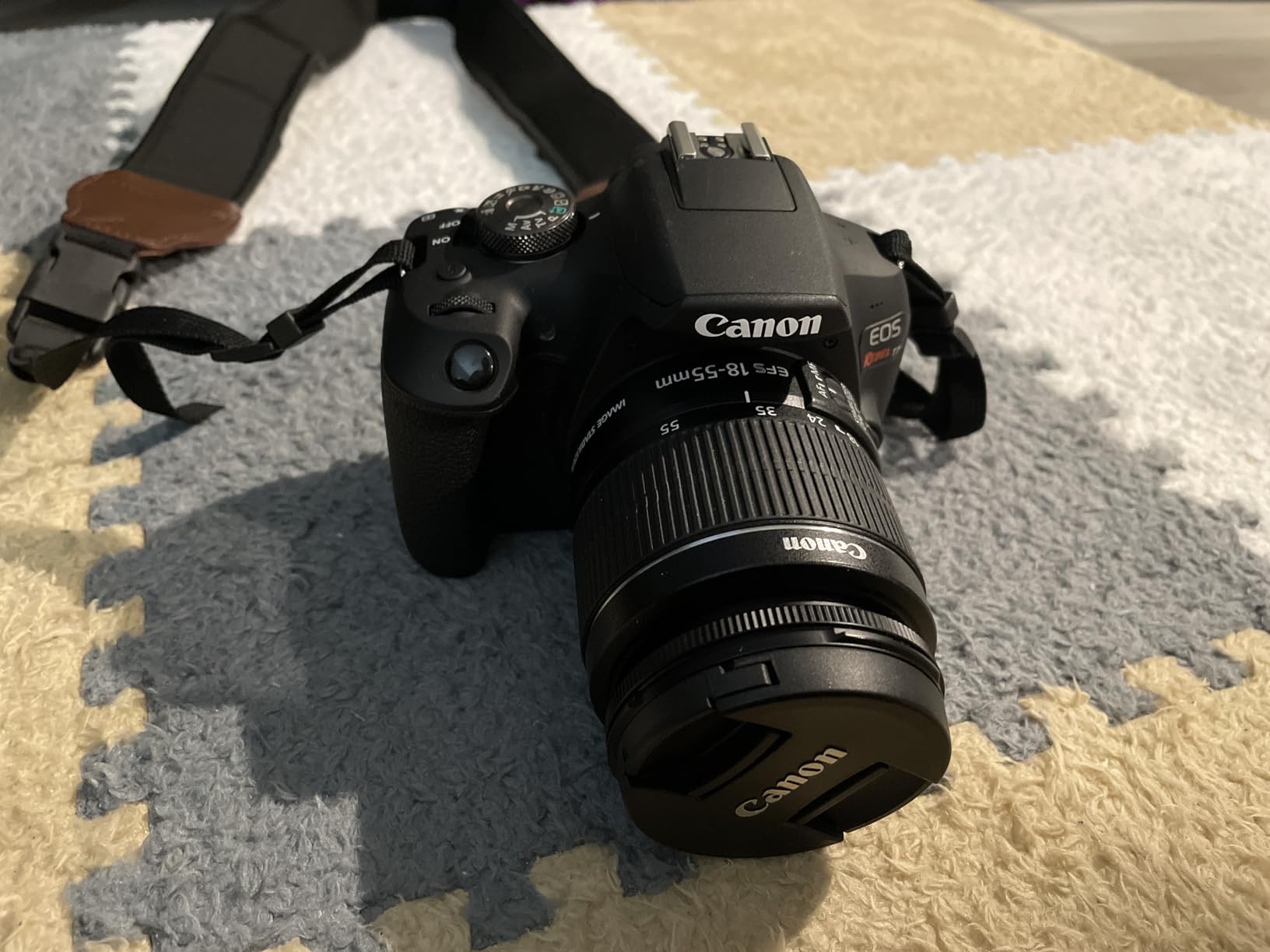
The bundled 18-55mm IS II includes image stabilization, which is genuinely useful for handheld twilight exteriors, and it focuses close enough for detail work. Built-in Wi-Fi and NFC handle quick phone transfers for a client preview, and the scene modes let a complete beginner get usable results before understanding exposure.
ISO runs from 100 to 6400 and expands to 12800, which is enough for a dim interior with a stabilized lens and a patient shutter speed. The camera also works as a webcam through EOS Utility Webcam Beta, and it accepts the full EF lens range except EF-M.

When the Rebel T7 is the right buy
Buy it if you are learning composition and exposure, if you want to keep the total cost as low as possible, or if you want a body you are not afraid to carry into a small space. The optical viewfinder and the physical dials make it a genuinely good camera to learn on, not just a cheap one.
It is also the body to buy if you already own lenses, because a used EF 16-35mm costs a fraction of what the equivalent wide angle costs in a mirrorless mount. That combination is how a T7 user ends up with the widest lens on this list for the smallest total spend.
Where the Rebel T7 fails a listing shoot
The 9-point autofocus system is slow and dated, and it will hunt in the low light of a twilight exterior. There is no 4K capture and video is 1080p only, with a 30-minute recording cap and no microphone input, so narrated walkthroughs are out of the question on this body.
The fixed, non-articulating screen prevents low-angle and self-facing framings entirely, and 3fps burst plus menu-driven settings slow down a room-by-room pace. None of that stops you from producing good listing photos on a tripod. It does mean video buyers should look at the ZV-E10 or the a6400 instead.
9. Nikon Z 50 Two Lens Kit: Best Wide and Telephoto Coverage Under 1500
Nikon Z 50 with Two Lenses | Compact mirrorless Stills/Video Camera with Wide-Angle and telephoto Zoom Lenses | Nikon USA Model
Pros
- Two lenses bundled
- wide and telephoto
- 20.9MP DX sensor on a large 55mm mount
- 11fps continuous shooting
- Compact and durable with Wi-Fi and Bluetooth
Cons
- No in-body stabilization
- Single card slot
- 209-point AF is dated against newer bodies
- 20.9MP leaves less room for cropping
- 4K capped at 30 minutes with no crop-free option
The Z 50 two-lens kit answers a question most budget buyers do not ask until too late: what do I need for the exterior? The bundled 16-50mm VR handles interiors and the 50-250mm VR covers distant street frontages, neighbouring comparisons and neighbourhood context shots. Having both removes a whole decision from your first year.
It is also the first DX-format mirrorless body built on Nikon’s wide 55mm Z mount, which is a good foundation for image quality and low light performance despite the smaller sensor. The 20.9MP DX files are sharp, and the 11fps continuous shooting handles a burst while you wait for the room to settle.

The flip-down selfie touch LCD simplifies low-angle and self-recording shots, and built-in Wi-Fi and Bluetooth make SnapBridge pairing simple. Maximum shutter speed is 1/4000 second with flash sync at 1/200, and interval recording plus multiple aspect ratios give you options for vertical social crops.
Because the mount is Z, you can add used full-frame NIKKOR Z glass later through the same mount, and F-mount lenses work with the FTZ adapter if you already own them. That upgrade path is a genuine long-term argument for this kit over a closed entry system.

What the two-lens kit does and does not solve
It solves focal length coverage, which is a real gap in most single-lens starter packages. A wide prime from an equivalent mount would let you shoot a small studio, but a telephoto at the end of a bracket on a distant townhouse is something no wide lens can do.
It does not solve the wide-end problem. The 16-50mm is a modest standard zoom, so for a tight condo hallway you still want a wider lens later. What this kit does is get you through a full season of listings with a complete kit before you spend anything on upgrades.
Where the Z 50 kit holds you back
No in-body stabilization means both bundled VR lenses are mandatory for handheld work, and there is no stabilization option when you later mount something else. The 209-point AF system is dated compared with the subject-detection bodies in this roundup, which matters most when people are moving through a room.
Single card slot again blocks dual-card backup, and 4K is capped at 30 minutes with no crop-free mode. At 20.9MP you have less room for a heavy crop than a 24MP or 26MP body, which is worth thinking about if you shoot a lot of vertical social crops from a landscape frame.
10. Nikon Z50 II Two Lens Kit: Best for 4K 60p Under 1500
Nikon Z50 II with Two Lenses | Compact mirrorless Stills/Video Camera with Easy Color presets and Wireless Photo Sharing | USA Model
Pros
- 4K UHD 60p plus in-camera 120p slow motion
- 31 built-in picture control presets with a dedicated button
- Subject detection for people dogs cats birds and vehicles
- Built-in flash with night portrait mode
- Two stabilized DX lenses bundled
Cons
- 20.9MP is low by current standards
- 5fps burst is slow
- No in-body stabilization for stills
- Bundled 16-50mm is modest indoors
If your walkthrough video has to be 4K at 60p and your photos are the side project, this is the kit to look at. It records 4K UHD at 60p, adds in-camera 120p slow motion in Full HD, and includes built-in electronic video stabilization and a product review mode for exactly the kind of move-through-a-room footage agents want.
The Picture Control button with 31 built-in presets is an underrated feature for listing work. You can change the look of a room instantly without opening a menu or grading later, which speeds up a multi-property day considerably. Cloud Picture Controls can be downloaded through Nikon Imaging Cloud.

Subject detection covers people, dogs, cats, birds and vehicles, with dedicated bird and airplane modes. The built-in flash with night portrait mode is unusual at this price and gives you a balanced fill for a dim hallway or a night exterior when a window is the only light source.
Both bundled NIKKOR Z DX lenses, the 16-50mm f/3.5-6.3 VR and the 50-250mm f/4.5-6.3 VR, include stabilization. Even with two lenses in the bag, the body stays compact enough for a small bag, and SnapBridge handles sharing.

Who this two-lens kit actually suits
It suits an agent or a photographer who delivers a video-first package: a walkthrough tour plus a supporting set of stills. The 4K 60p capability and the fast autofocus tracking mean you can walk a listing in one continuous take without the focus hunting that ruins a small mirrorless body.
It also suits anyone who wants a flexible look from the camera itself. With 31 presets and a dedicated button, you can deliver a warmer set for a luxury listing and a neutral set for a rental without a separate editing pass.
Where the Z50 II kit falls short
The 20.9MP sensor is low by current standards and leaves less room for large prints or heavy cropping than the 24MP and 26MP bodies in this roundup. The 5fps burst is slow for moving subjects, and there is no in-body stabilization for stills, so lens stabilization does the work.
Reviewers also note the bundled 16-50mm is modest, requiring faster shutter speeds indoors than is comfortable without stabilization. The single card slot and the modest review base are worth weighing if you are buying a body to earn with rather than to learn on.
11. Panasonic LUMIX G85: Best for Stabilization Under 1500
Panasonic LUMIX G85 4K Digital Camera, 12-60mm Power O.I.S. Lens, 16 Megapixel Mirrorless Camera, 5 Axis in-Body Dual Image Stabilization, 3-Inch Tilt and Touch LCD, DMC-G85MK (Black)
Pros
- Class-leading 5-axis in-body stabilization in stills and 4K
- 12-60mm lens covers 24-120mm equivalent
- Bright eye-level OLED viewfinder
- 4K photo and post focus let you pick focus after the shot
- Recording up to 120 minutes
Cons
- 16MP sensor limits resolution against modern bodies
- 49-point AF lacks subject detection
- Rear screen is tilt-only
- No 4K 60p
- Needs U3 V30 cards for 4K
The G85 is the only body in this roundup with meaningful in-body image stabilization, and that changes what you can photograph without a tripod. Five-axis Dual I.S. works in stills and in 4K recording, which makes it the pick if you shoot a lot of handheld twilight exteriors and handheld walkthrough video on the same listing.
Micro Four Thirds gives a 2x crop factor, so the bundled 12-60mm reaches an equivalent 24-120mm. That is a real advantage on exteriors, and Micro Four Thirds remains the cheapest system in which to buy fast, wide, stabilized glass, which is exactly what this camera needs to reach its potential.

The 16MP sensor has no low-pass filter, which delivers roughly 10% more fine detail than earlier 16MP Micro Four Thirds sensors, and files are recorded in 16-bit RAW. The eye-level OLED live viewfinder with 2360K dots is bright at 0.74x magnification, and the 3-inch 1040K-dot touch LCD tilts for low framings.
4K Photo and 4K Post Focus let you record a burst of 4K frames and choose the focus point afterwards, which is a genuinely useful feature in a small room where you cannot easily reach manual focus. Recording runs up to 120 minutes, and the color temperature can be set from 2500K to 10000K in 100K steps.

Where the G85 still wins
Handheld work wins, and so does the lens budget. A fast wide stabilized Micro Four Thirds prime is inexpensive, so you can reach a genuinely wide and bright setup for interiors without pushing past the 1500 ceiling. On a tripod, the stabilization is irrelevant and you are shooting a 16MP file.
For walkthrough video the combination of in-body stabilization, a bright viewfinder and 4K capture is close to ideal for a working photographer who refuses to carry a gimbal. Owners describe it as a dependable workhorse for exactly this kind of hybrid work.
Where the G85 falls short
16MP is the honest limitation. Against 24MP and 26MP bodies in this list you have less room for a heavy crop, and that matters if you deliver vertical social crops cut from landscape frames. The 49-point AF system is dated and has no subject detection for people or pets moving through a room.
The rear screen is tilt-only rather than fully articulating, so selfie and low-angle framings are limited, and there is no 4K 60p. Recording 4K also requires U3 or V30 SDXC cards, which is a small extra line item. If video at 60p is a deliverable, the Z50 II or a6400 serve you better.
12. Fujifilm X-T30 III: Best for Color Presets Under 1500
FUJIFILM X-T30 III Mirrorless Camera Body, with XC13-33mm Lens Kit, Charcoal Silver
Pros
- Single-switch auto mode makes it genuinely usable point and shoot
- 20 film simulations with a dedicated dial
- 425-point phase-detect AF with AI subject detection
- 26.1MP X-Trans sensor with no optical low-pass filter
- Compact body with physical dials
Cons
- Only 57 ratings on record so feedback is thin
- 0.62x viewfinder magnification is small
- No in-body stabilization
- Single card slot and 60-minute recording cap
The X-T30 III is the least obvious pick here and the one photographers argue about most. A single-switch Auto mode puts the camera in a fully automatic state that still produces good interior files, which means an agent can shoot a listing competently without learning a single menu. That is a real advantage over every other body in this roundup.
The 26.1MP X-Trans sensor has no optical low-pass filter, so it resolves fine detail without the softening effect, and the dedicated Film Simulation dial plus 20 built-in simulations change the colour rendering of a room instantly. For a listing where you want warmth in a kitchen without a grading pass, that dial does real work.
Autofocus is a 425-point phase-detection system with AI-based subject detection and subject tracking, and burst runs to 20fps. Maximum shutter speed is 1/32000 second, and the bundled FUJINON XC13-33mm f/3.5-6.3 OIS gives a stabilized wide-to-normal range in a very small lens.
The body is compact, light and built around physical dials rather than menus, which is why many experienced shooters like shooting with it. Video records 4K in H.264, H.265 or MPEG-4 AVC up to 60 minutes, with white balance modes including colour temperature settings.
Who the X-T30 III suits
It suits someone who wants the camera to make the decision. Auto mode plus a film simulation dial means you set the look, press the shutter and move on, which is the fastest interior workflow of any body in this list. For a solo agent covering a listing on a lunch break, that speed is worth more than resolution.
It also suits a photographer who enjoys the physical craft. Dials for exposure, a dedicated simulation dial and a compact body make it a camera you want to carry, and the small XC13-33mm lens means the whole kit disappears into a jacket pocket.
Where the X-T30 III holds you back
Only 57 ratings are on record, so long-term owner feedback is thin. You are buying on specification and handling rather than on years of proven reliability, and that is a fair thing to weigh against a body with a large review history.
The 0.62x viewfinder magnification is small, which makes manual focus composition harder than it should be, and there is no in-body stabilization, so the bundled lens OIS carries the load. Single card slot and a 60-minute recording cap round out a list of limits that mostly matter to professionals rather than to an agent shooting one listing a week.
How to Choose a Camera for Real Estate Photography Under 1500
Dynamic range and bracketing decide the result
Dynamic range is the number that matters, and it is the number beginners skip. It is the range between the brightest tone a sensor can record without clipping to pure white and the darkest tone it can record without collapsing to pure black. A bright window is many times brighter than a shaded hallway, and if your camera cannot hold both, one of them is ruined in every frame.
Two strategies fix this. The first is exposure bracketing, also called AEB: the camera fires three to five frames at different exposures and you merge them so the window and the hallway both come out even. The second is a single exposure that favours the shadows, accepting a blown window, which is why a lot of amateur listing photos have a white smear where the view should be.
For bracketing, look for a body where auto bracketing is a dedicated control rather than buried in a menu, and check how many frames the buffer can hold. The D7500’s 8fps with a deep buffer and its dedicated bracketing control make it the smoothest option in this roundup, and the a6400’s 11fps raw does the same job on a mirrorless body.
Sensor format and crop factor math
Full frame has more dynamic range than APS-C, which has more than Micro Four Thirds. That is the whole argument. If you can stretch to full frame, the Canon EOS RP in this roundup gives you the best window-to-hallway ratio available under a 1500 budget, and that is worth more to a listing photo than extra autofocus features.
Crop factor changes what a lens actually sees, and this is where buyers waste money. On an APS-C body with a 1.5x crop, a 10mm lens gives you the field of view of a 15mm lens. On Micro Four Thirds with a 2x crop, your 12mm sees like a 24mm. Always convert before you buy, or you will discover after delivery that the lens is not as wide as the number on the box suggested.
Megapixels matter less than most spec sheets imply. MLS listing platforms render images at roughly 2000 pixels on the long edge, and even large social crops do not need a 45MP file. Anything from 20MP to 26MP is comfortable, which is why we would rather see you spend the difference on a wide lens than on resolution you cannot use.
The lens matters more than the body
Here is the mistake we see over and over: a 1200 body with the standard kit zoom paired with a cheap tripod, producing soft, distorted, too-narrow images. The lens changes the photograph. A 16-35mm equivalent wide angle lets you stand in a corner and capture a whole room; a 24-70mm does not.
The good news is that crop factor works in your favour on the wide end. A 10-14mm on an APS-C body reaches the equivalent of a 15-21mm, which is wide enough for a studio apartment. Used EF-mount glass is the cheapest route to a genuinely wide lens, which is a large part of why the Rebel T7 and the D7500 stretch further on a glass budget than a mirrorless kit does.
Reserve part of the ceiling for a tripod with a leveling head, two spare batteries and a card reader. Bracketed interiors and twilight exteriors both need a stable base, and a tripod with a bubble level costs a fraction of what a better body does. The leftover budget after the wide lens is what turns a camera into a kit.
Tilt-shift or post-production correction
Tilt-shift lenses are the traditional answer to converging verticals in architectural photography, and the question comes up constantly. Shift capability lets the lens tilt the image plane so vertical lines stay parallel while the frame fills with light from floor to ceiling, without the perspective stretching that comes from pointing the camera upward.
Within a 1500 budget, a tilt-shift lens is not a realistic purchase alongside a usable body. There is a credible alternative: shoot the frame slightly wider than you need and correct the verticals in post. Lightroom and Photomatix both apply a guided vertical correction, and for most listing work the result is visually indistinguishable from a shifted lens at delivery size.
One more trick costs nothing. If you physically cannot step back far enough for the room to fit, shoot from a corner at a lower height with the sensor held vertical rather than tilted upward. Converging lines come mostly from tilting the camera up, not from being close. Learn one-point and two-point perspective before you spend money on special glass.
Video walkthrough requirements
If you sell walkthrough video, check three things. First, 4K capture without a heavy crop, because a cropped 4K walkthrough loses the wide field of view that makes a small room feel bigger. Second, a real microphone input, so narration audio is not a wind-rumble. Third, whether autofocus holds up while you walk.
On that checklist the a6400 and the a6700 with crop-free 4K 60p in 10-bit 4:2:2 sit at the front of this roundup, and the ZV-E10 with its product showcase focus pull and built-in directional microphone is the most practical for an agent filming alone. The G85 wins on stabilization for handheld shooting. The Rebel T7, with 1080p only and no mic input, is a stills camera.
For vertical delivery, check the frame rate and the screen. An articulating or fully tilting screen makes vertical and self-facing framing straightforward, and a body with a 4K frame-grab option lets you pull still frames from your video, which removes the need for a second body on a hybrid listing day.
What a 1500 budget cannot buy
Be clear-eyed about the ceiling. The professional full-frame bodies most real estate shooters use, the Canon R6 Mark II, the Nikon Z 7 II, the Sony A7 IV, the Sony A7S III and the FX3, all sit well above 1500 before any lens is attached. Several ranking pages recommend them for this work, and every one of them is out of reach at this budget.
What you give up at 1500 is a second card slot, in-body stabilization on most bodies, and 4K 60p on the cheaper models. What you keep is every spec that changes the photograph: a usable sensor, a real viewfinder, fast autofocus and enough budget for a wide lens. A bracketed interior from a D7500 on a tripod is a better listing photo than a hurried handheld frame from a body costing three times as much.
There is also a case for not buying at all, which we cover in more detail in our real estate camera guide. If you shoot two listings a month, a good phone, a remote shutter release and a bracket app may cover the job for less than a body. If you shoot fifteen to twenty rooms a week, buy a real camera and buy it with glass in mind.
Frequently Asked Questions
What is the best affordable camera for real estate photography?
The Nikon D7500 is the best affordable choice for listing work because its auto exposure bracketing is a dedicated control, its metering matches Nikon’s professional D500 and its 8fps burst with a deep buffer fires a clean bracket every time. On a mirrorless budget, the Sony Alpha a6400 and the Canon EOS R50 double-lens bundle cover the same needs with a lighter body.
What kind of camera do real estate photographers use?
Most use an interchangeable-lens camera with a wide-angle lens, either full frame or APS-C, on a tripod. Full frame is preferred for dynamic range in bright window light, but many professionals deliberately choose APS-C to spend less on the body and more on a wide lens and tripod. A minority shoot 360 virtual tours or video-first tours with hybrid bodies instead.
How many megapixels do I need for real estate photography?
Between 20 and 26 megapixels is comfortable. MLS listing platforms render images at roughly 2000 pixels on the long edge, so a 24MP or 26MP file is already more detail than most buyers ever see. Rather than buying a higher-resolution body, spend the difference on a wider lens and a tripod, which change the photograph far more.
Do I need a full-frame camera for real estate photography?
Only if your budget stretches. A full-frame sensor holds a bright window and a dark hallway in one frame better than any APS-C body, and within a 1500 ceiling the Canon EOS RP with a bundled stabilized 24-105mm is the realistic route. If full frame forces you to use a slow kit zoom, an APS-C body with a fast wide lens will produce better listing photos.
What camera is best for taking real estate video?
For crop-free 4K 60p in 10-bit 4:2:2, the Sony Alpha a6700 is the strongest in this roundup, and the Sony Alpha a6400 is the more affordable option. The Sony ZV-E10 wins for solo walkthroughs with its product showcase focus pull and built-in directional microphone, and the Panasonic LUMIX G85 wins for handheld shooting with five-axis in-body stabilization.
Do I need a tilt-shift lens for real estate photography?
Not within a 1500 budget. Tilt-shift glass does not fit alongside a usable body at this price, but shooting the frame slightly wider and correcting verticals in Lightroom or Photomatix gives a visually equivalent result at delivery size. Also keep the sensor vertical rather than tilting the camera up, since converging lines come mostly from tilting, not from being close.
What are the common mistakes in real estate photos?
The four most common are a tilted camera that makes verticals converge, a blown-out window that leaves a white smear, standing too close with a lens that is not wide enough for the room, and mixed white balance across a set of frames. All four are workflow problems rather than camera problems, and all four are fixed with a tripod, exposure bracketing and a consistent white balance.
Will real estate photography be replaced by AI?
AI is increasingly good at generating interior images, but generated rooms are not measurements of a specific property, and most listing platforms require photographs of the actual home. Expect AI to take over virtual staging, sky replacement and upscaling rather than the capture itself. If you are considering a camera, the case is stronger than ever, because authentic capture is the part that cannot be synthesised.
Final Verdict for Real Estate Cameras Under 1500 in 2026
The Nikon D7500 takes the editor’s choice because nothing else in this price range treats exposure bracketing as a primary function. Put it on a tripod, add a wide F-mount lens and a spare battery, and you have a listing kit that handles the bright-window problem better than anything else under the ceiling.
If you want mirrorless, the Sony Alpha a6400 gives you the most dependable autofocus in a small body, and the Canon EOS R50 double-lens bundle is the best value because the glass is already in the box. For full-frame, the Canon EOS RP is the only viable entry, with the caveats about video and burst rate we covered above. Video-first buyers should look at the Sony ZV-E10 for solo walkthroughs or the Sony a6700 for crop-free 4K 60p.
Whichever you choose, spend the rest of the 1500 on a wide lens, a tripod and spare batteries. That is where the money changes the photograph, and it is why the best cameras for real estate photography under 1500 are chosen by lens coverage and dynamic range rather than by megapixels. Our wider mirrorless camera guide covers the tiers above this ceiling.