
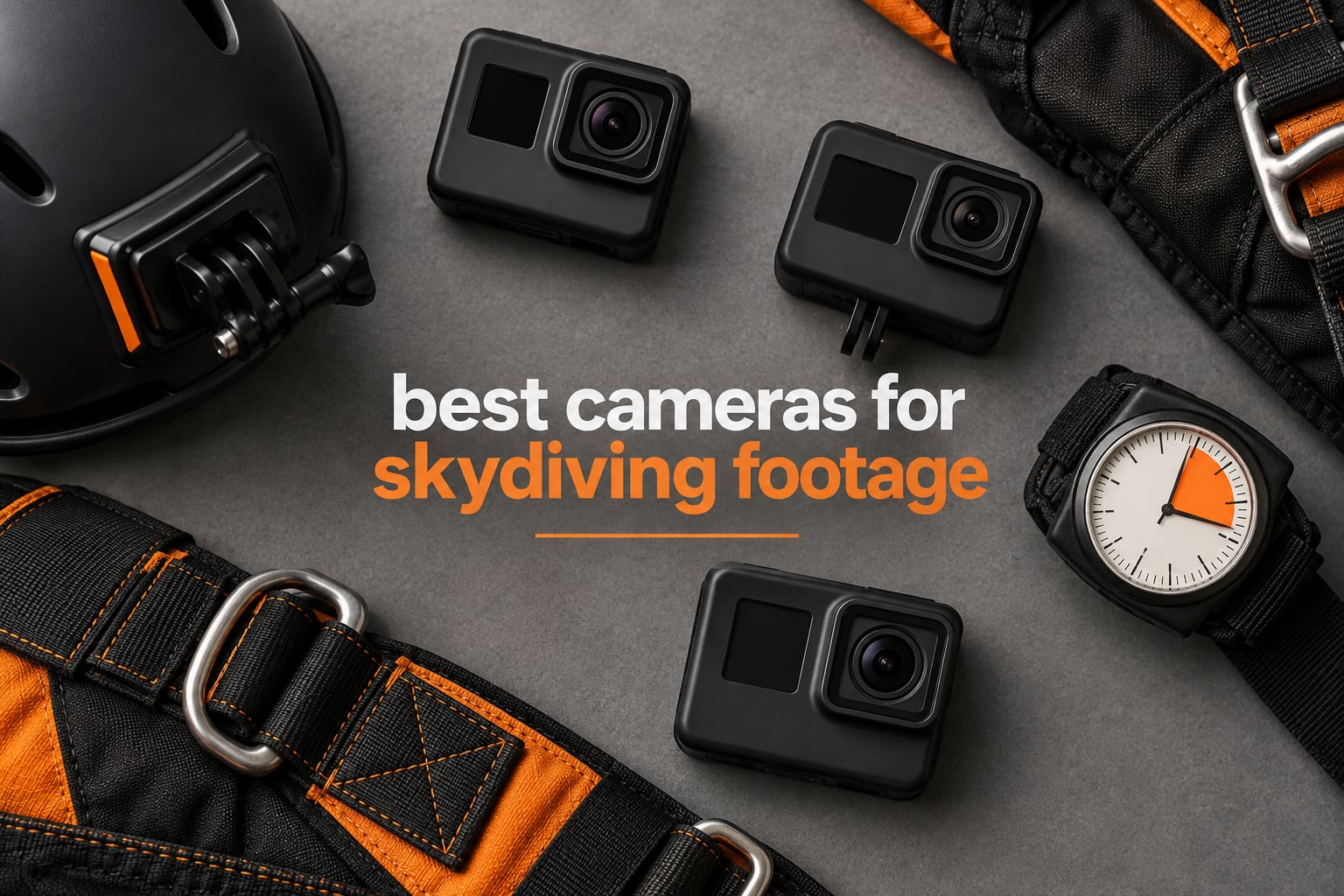
Choosing a camera for skydiving is not the same decision as choosing one for hiking or diving. In freefall your body is being violently rotated, your field of view is constantly changing, and the one second you want — exit, drogue deployment, or the moment the canopy snaps open — lasts less than a second of real time. I have put together the best cameras for skydiving footage after comparing every current action camera on stabilization behaviour in tumbling movement, low-light performance on dusk loads, battery endurance across a full jump day, and how low each body sits on a helmet.
The short version: stabilization and battery life beat sensor size in the air, and mount profile beats everything else for safety. Every camera below records high frame rates for slow-motion deployment, holds a horizon through tracking turns, and survives the drop. If you want the general-purpose version of this guide first, my 10 best action cameras for POV footage covers the non-skydiving cases, and it is worth a read if you also fly wingsuits or wingsuit-proximity lines.
One thing to sort out before you buy anything: frame rate drives everything else. My guide to video bitrate explains why high-resolution modes chew through cards and batteries faster than you expect, which matters when you are running eight jumps before lunch.
What Is the Best Camera for Skydiving?
The best camera for skydiving is a stabilised action camera with a low-profile mount, strong low-light performance and a battery that survives a full day. The Insta360 X3 leads this list for most jumpers because 360 capture guarantees framing you would otherwise miss. DJI Osmo Action 6 wins for dusk loads, and Insta360 X5 is the coaching and debrief camera.
That answer is worth expanding, because “best” changes depending on what you are doing at the dropzone. A tandem instructor filming a nervous first-timer needs a body that starts reliably, records without surprise, and can be handed to a client on a card the same afternoon. A wingsuit flyer at 140 knots needs a low field of view option and a flat colour profile for grading. A coach filming a formation squad needs 360 so a drift does not ruin the shot. There is no single winner, and the right answer for you depends on which of those you are.
Top 3 Best Cameras for Skydiving Footage in 2026

Insta360 X3
- 5.7K 360 capture
- Reframe angles after the jump
- FlowState stabilization
- Waterproof to 10 m

DJI Osmo Action 6
- 1/1.1 inch sensor
- Variable f/2.0 to f/4.0 aperture
- Up to 4 hours recording
- 50 GB built-in storage

Best overall and safest default: Insta360 X3. It records 5.7K in 360, so a formation drift, a spin, or a jump partner who is not where you expected still ends up in the edit. With over 6700 owner reviews behind it, it is also the most battle-tested body in this group.
Best for low light and dusk loads: DJI Osmo Action 6. The 1/1.1 inch square sensor and variable aperture hold shadow detail on a golden-hour exit far better than anything else here, and the 50 GB of built-in storage means you can jump repeatedly without touching a card.
Best for coaching and debrief: Insta360 X5. Eight K 30 footage from two 1/1.28 inch sensors, plus InstaFrame mode that exports a ready-to-share flat video without you opening the desktop app.
Best for tandem video and same-day delivery: GoPro HERO12 Black. The classic wide-angle look clients expect, dual screens for framing, and a workflow most editors already have on their computer.
Best for wingsuit and mountain flying: Insta360 Ace Pro 2. 157 degree MegaView field of view, 4K60 Active HDR, and a hardware wind guard that helps when the only audio is wind.
Best on a tight budget: AKASO Brave 7 LE, and the AKASO Brave 6 Plus if you want voice control and a helmet kit in the box.
Best 360 rig that is not a headache: Insta360 X5 with replaceable lenses, if you can accept the weight and the desktop render step.
Skydiving Camera Comparison Table (October 2026)
All ten bodies below are current-generation action cameras or 360 bodies suitable for helmet and hand mounts. Weights and ratings are taken from the manufacturer data and owner reviews for each model.
| Product | Specifications | Action |
|---|---|---|
| Insta360 X3 |
|
Check Latest Price |
 AKASO Brave 7 LE AKASO Brave 7 LE |
|
Check Latest Price |
| Insta360 X5 |
|
Check Latest Price |
| DJI Osmo Action 6 |
|
Check Latest Price |
 GoPro HERO9 Black GoPro HERO9 Black |
|
Check Latest Price |
 GoPro HERO12 Black GoPro HERO12 Black |
|
Check Latest Price |
 GoPro HERO13 Black GoPro HERO13 Black |
|
Check Latest Price |
 AKASO Brave 6 Plus AKASO Brave 6 Plus |
|
Check Latest Price |
 DJI Osmo Action 5 Pro DJI Osmo Action 5 Pro |
|
Check Latest Price |
 Insta360 Ace Pro 2 Insta360 Ace Pro 2 |
|
Check Latest Price |
Two things stand out. First, the 360 bodies are the heaviest and the only ones that need a computer before you can upload anything, which is the entire reason to choose one. Second, every camera here records at least 4K30, and five of them hit 60 frames per second or higher at their top resolution — that headroom is what makes deployment slow motion look smooth rather than smeared.
1. Insta360 X3: Best Overall Camera for Skydiving Footage
Pros
- Reframe any angle after the jump
- 5.7K 360 plus conventional 4K in one body
- Horizon Lock keeps tumbling footage level
- Large 2.29 inch touchscreen with physical buttons
- Four-mic array with wind noise cancellation
Cons
- 360 resolution is split across the whole sphere
- Desktop app required to render and export
- Sensors smooth in direct unshaded sun
I ran the X3 on a camera helmet for a full weekend of jumps and it is the body I would hand to almost any skydiver. The 360 mode is the reason. On a belly jump with a four-way group, the group drifts, and on a conventional camera you have lost the shot. On the X3 you have the entire sphere and you decide the angle in post. That single feature removes more missed footage than any sensor upgrade.
FlowState stabilization plus 360 degree Horizon Lock is what makes it usable in freefall. In tracking turns the horizon stays level through the roll, which is the exact scenario where a flat action camera usually swings wildly and gives you an unusable clip.
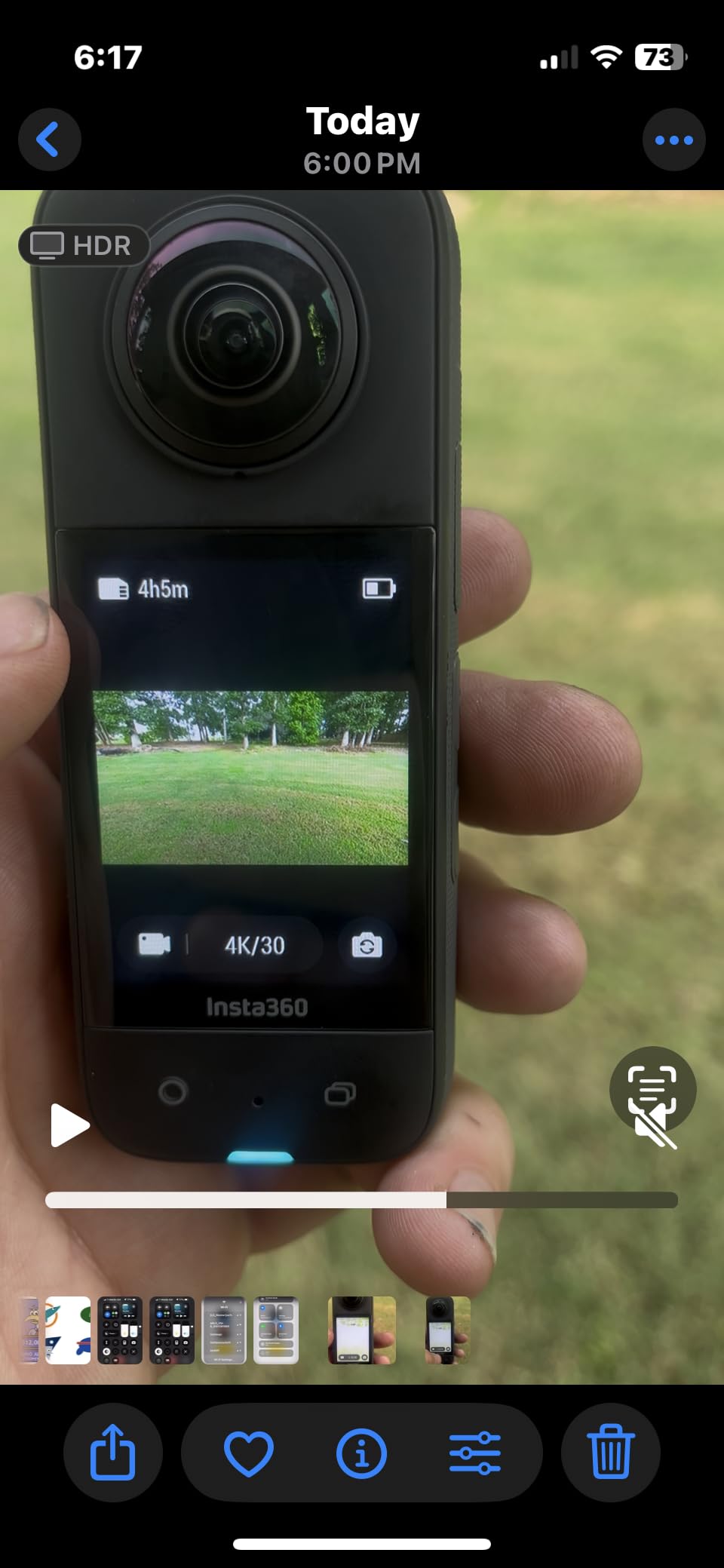
The honest weakness is the render step. 360 files have to be processed in the desktop app before you can watch or upload them, and the mobile app alone is not enough for real work. If you are a tandem instructor promising a client video by the time they land, budget the render time or use the single-lens 4K mode and skip 360 entirely.
Second weakness: per-direction sharpness. When a 5.7K figure is split across a full sphere, the detail in any one direction sits well below what a flat 5.7K camera gives you. For a solo jumper filming a formation it is not noticeable. For a client close-up of a face in a tandem jump, a flat body will look better.
Why the X3 works for tandem and first jumps
A first-timer on a tandem does not know where to look and grips the instructor. With 360 you get hands, face, and horizon in one clip without any of it being out of frame. That is worth more than any stabilization mode when the person behind the camera is as nervous as the person in front of it.
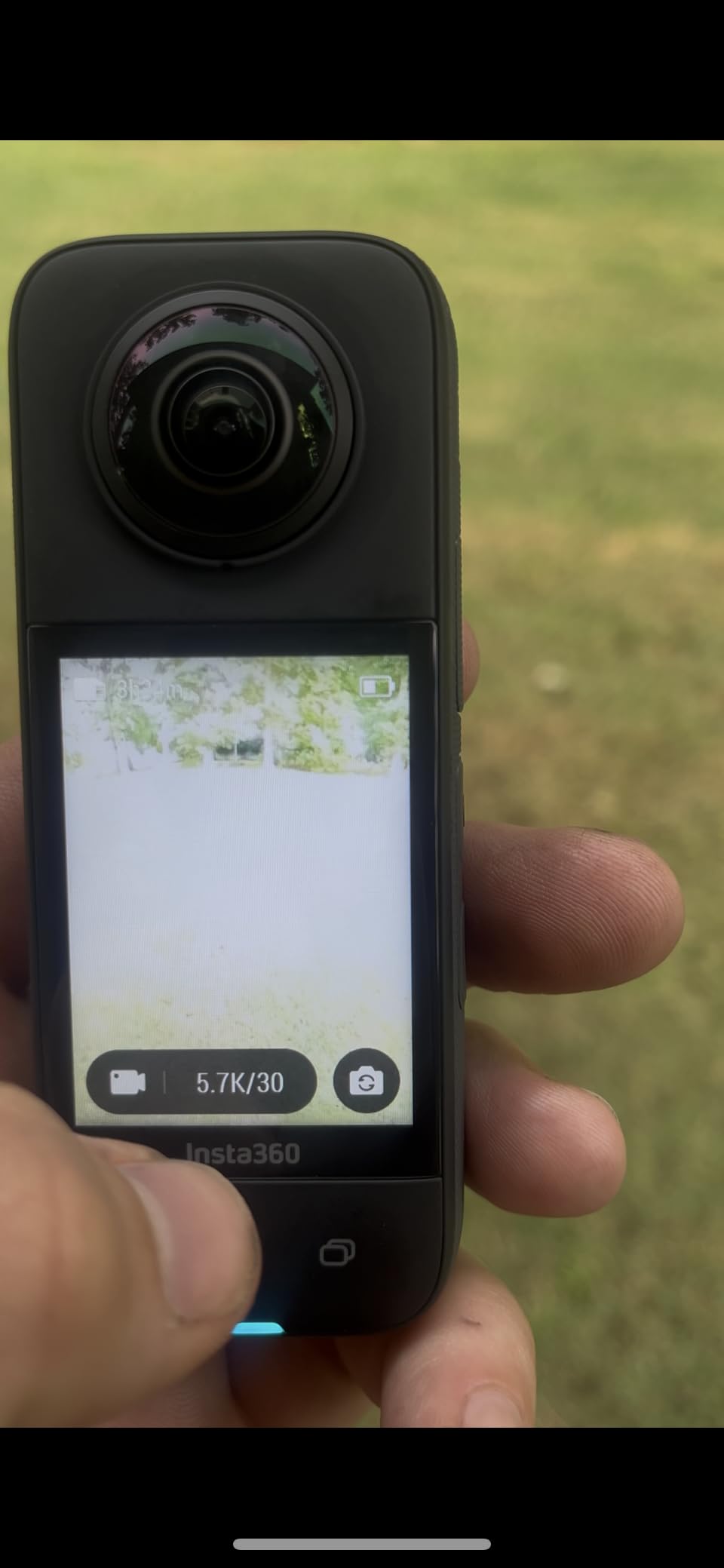
The 2.29 inch touchscreen is large enough to change settings while clipped to a chest mount, and the physical buttons still work with gloves. The Q quick menu means you are not digging through menus while the plane door opens.
Where the X3 falls short
At 200 g it is among the heavier flat-feeling bodies in this list, and on a helmet that weight sits forward. It is also waterproof to 10 m rather than 20 m, which matters if you fly over water on a coastal load. None of that stops a skydiver, but both are reasons to look at the DJI or the X5 if your load plan includes water or long helmet days.
The other limitation is workflow. If you never open a desktop app, this is the wrong camera for you, and the single-lens mode is the reason people fall in love with it anyway.
2. AKASO Brave 7 LE: Best Budget Camera for Skydiving Footage
Pros
- Dual colour screens for front and rear framing
- 4K30 and 20MP at an entry price
- Gimbal-like 6-axis EIS 2.0
- Two 1350 mAh batteries and remote in the box
- Waterproof housing rated to 131 ft
Cons
- Entry-level CMOS sensor is weak at high ISO
- Digital zoom crops detail
- Micro SD card not included
At 107 g this is a light body, and on a helmet that difference is immediately noticeable over a long jump day. If you are new to camera flying and want to know whether you enjoy it before spending real money, this is the honest starting point.
The dual screens are more useful in the air than they sound. On a helmet mount you cannot see the rear screen, so the front display is the only framing reference you get. The EIS 2.0 does a credible job of holding a belly jump steady, though it cannot rescue the sensor at high ISO.

Two 1350 mAh batteries and a remote ship in the box, which is unusual at this level and saves you a buying decision. You will still need to buy cards — the card is not included — and I would buy V30 or faster rather than the cheapest card you can find.
Owners consistently describe it as strong value rather than premium, and that is the fairest description. The colour rendition is flatter than the GoPro and DJI bodies here, and the digital-only zoom degrades as soon as you use it. For a sky-filled frame with a person in the middle third, none of that shows.

When the Brave 7 LE is the right call
It is right when you jump two or three times a month, film social clips, and do not need footage that survives heavy grading. The 4K30 file is more than enough for a reel, and the bundle means you are recording within an hour of opening the box.
It is also the safest body to learn helmet mounting on, because at 107 g a mistake costs less than it would with a 360 rig. Learn your mount procedure on this, then upgrade.
When to skip it
Skip it for a dusk load and for a professional deliverable. The entry-level sensor is where the noise shows, and a tandem client paying for a keepsake video will notice the difference against a 1/1.3 inch body. If you shoot tandems at all, buy up.
The 2 inch touchscreen is also small for changing settings in a moving plane, and the waterproof housing disables the touchscreen entirely. You will be flying with a rugged bare-body mount anyway, so treat the housing as a storage item rather than daily equipment.
3. Insta360 X5: Best 360 Camera for Skydiving Coaching and Debrief
Pros
- Largest 360 sensors in this class
- Triple AI chip cleans up low light markedly
- Invisible Selfie Stick removes the pole
- Replaceable lenses survive a scratched mount
- 4-mic array with built-in wind guard
Cons
- Heaviest body in the group
- 360 files still need a desktop render
- High-resolution 360 drains battery and card space
For coaching, the X5 is the only body here that solves the problem that actually frustrates instructors. A four-way belly group drifts, the formation changes shape, and a flat camera pointed at where the group was is worthless. On a 360 you hand the jumper one clip and they find themselves in it, and they can see the fall-rate change you were describing.
The jump in low-light quality is real rather than incremental. The triple AI chip design handles a dusk load far more cleanly than the X3, and if your dropzone runs evening loads into sunset this is the difference between usable and noisy.
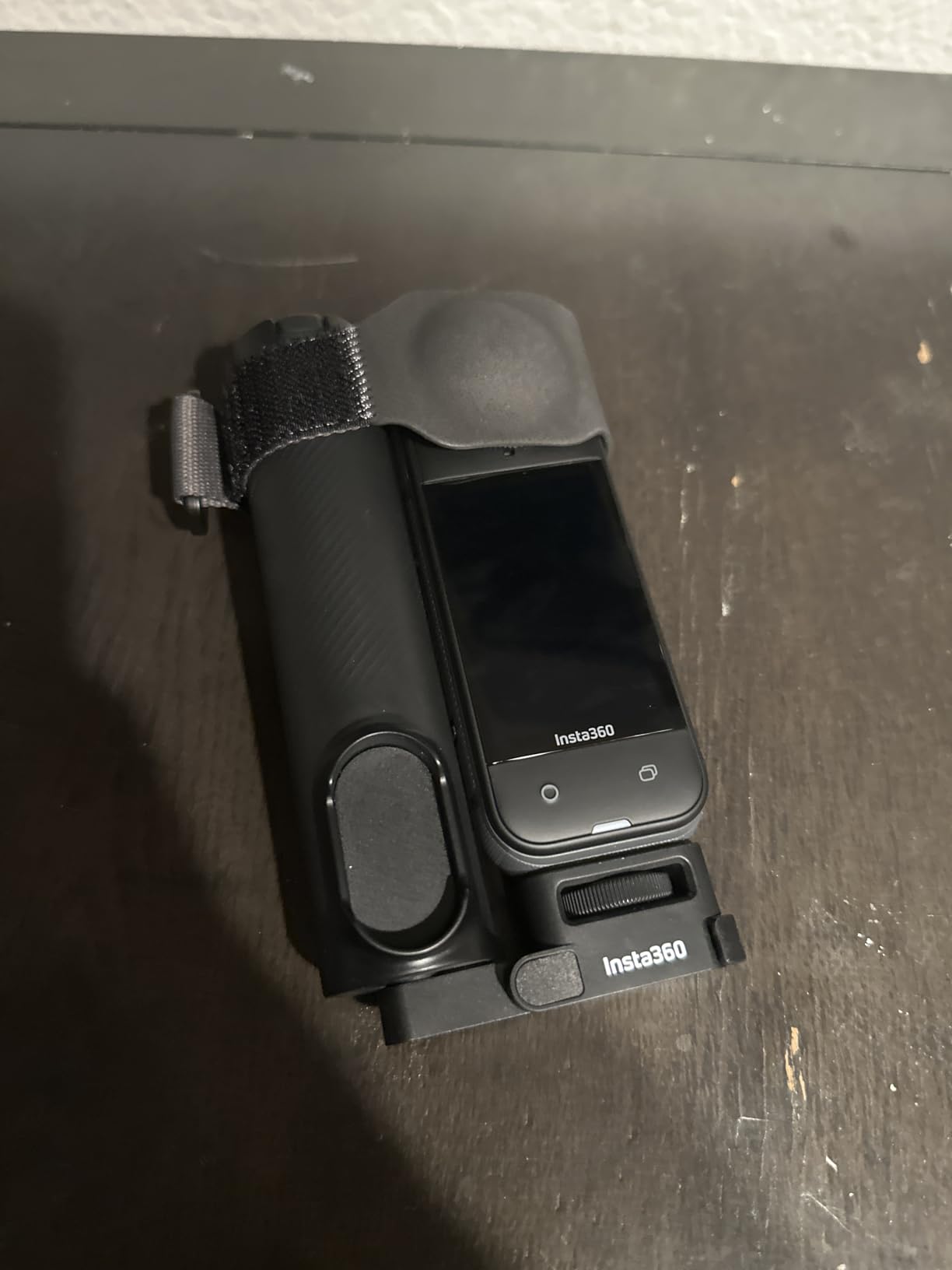
InstaFrame mode is the underrated feature. It produces a ready-to-share flat video immediately, either locked to a fixed angle or auto-framed to track the subject, and you can still go back to the 360 source later to catch moments the auto-framer missed. That is a genuine same-day delivery path, not a compromise.
The replaceable lenses are a bigger deal for camera flying than for sports. A single scratch on a fixed 360 lens ruins every shot on that side of the sphere, and here you can swap the lens in seconds instead of replacing the camera.
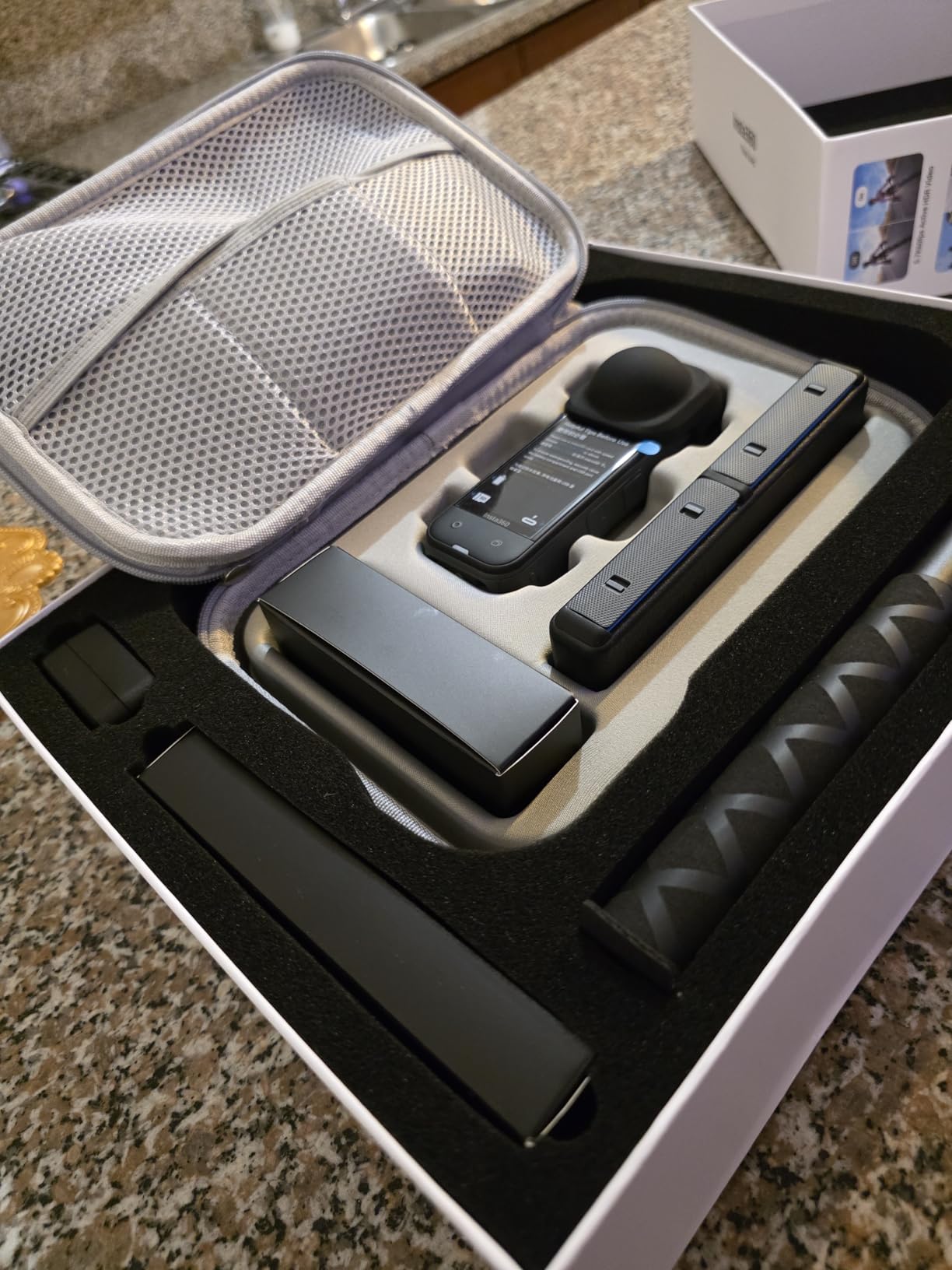
Why coaches and debriefs suit the X5
Debrief footage works when the jumper can see themselves. A 360 clip played on a phone at full screen shows the relative wind, the body position, and the separation from the rest of the formation in one take. No other body here can do that without a second camera.
The wind guard and four-mic array are also relevant on a canopy ride, where relative airflow is lowest and voice is most recoverable. For an exit under full wind, nothing saves you.
Where the X5 gets heavy and slow
It is the heaviest body in this group and the bulkiest thing you can put on a camera helmet, and skydivers consistently tell me weight and bulk are what decide 360 purchases. An 8K 360 file also fills a card fast and pushes the battery harder, which is why the 208 minute rating is not the number you will see on a jump day.
There is also a snag-hazard consideration unique to 360 bodies, which I cover in the safety section below. If you have never flown a camera, this is the rig to be most careful with.
4. DJI Osmo Action 6: Best Camera for Low Light and Dusk Skydiving Footage
Pros
- Widest aperture range of any camera here
- 4 hour cold-resistant battery
- 50 GB on board means no card needed to start
- 360 HorizonSteady plus RockSteady 3.0
- Connects two DJI mic transmitters directly
Cons
- Onboard mic audio is not class-leading
- Default wide field of view needs straightening
- High bitrate files are very large
Freefall is not a bright place to be filming. A sky-filled frame at altitude is effectively backlit, and as you turn, the ground is bright while the sky is not. That is where a big sensor earns its place, and the 1/1.1 inch square sensor here is the largest in a conventional body on this list.
The variable aperture from f/2.0 to f/4.0 is the feature no competitor here offers. Open it up for a dusk load and close down for a bright noon jump, which means you are not relying on heavy noise reduction when the light fails you.
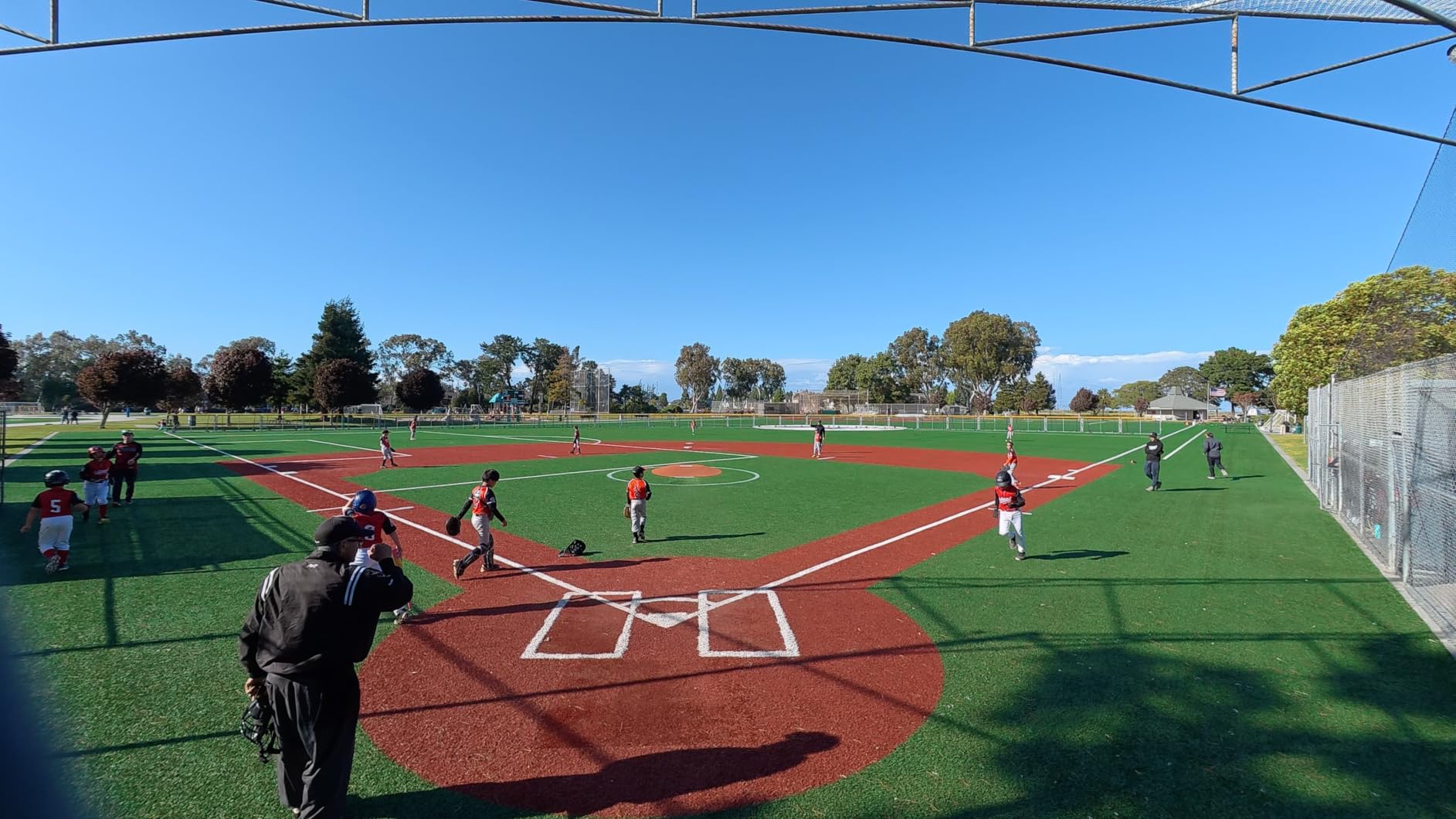
HorizonSteady works up to 4K60 and removes roll-axis shake, so the horizon stays level through tracking turns and head-up freefly. RockSteady 3.0 handles the rest. On a head-up jump this is the difference between footage that looks like a video and footage that looks like a fall.
The 50 GB of internal storage is the quiet hero. You can board with an empty card, fill the internal storage across an entire load, and offload once at the end of the day. For a tandem instructor running back-to-back jumps on rented media, that removes a whole class of failure.
Why dusk loads favour the Osmo Action 6
Owners and working videographers consistently credit DJI with handling ugly and dusky light better than the alternatives. On a golden-hour exit where half the frame is bright ground and half is deep sky, the shadow side of your tandem partner stays readable instead of turning into a black shape.
Four hours of recording per battery, with a cold-resistant design that keeps working as temperatures drop, means a winter jump day is one body with a spare rather than a rotation of four batteries.
Where it is not the answer
The wide default field of view is aggressive and needs straightening in settings before every jump, which is a step easy to forget. The onboard microphone is usable but not good, and wind at terminal velocity will still dominate the audio track — the direct DJI mic pairing helps on a tandem under canopy rather than in freefall.
High bitrate files are large, and 8K on a UHS-I card will fill it. Treat 8K as a short-clip mode and 4K60 as your working default.
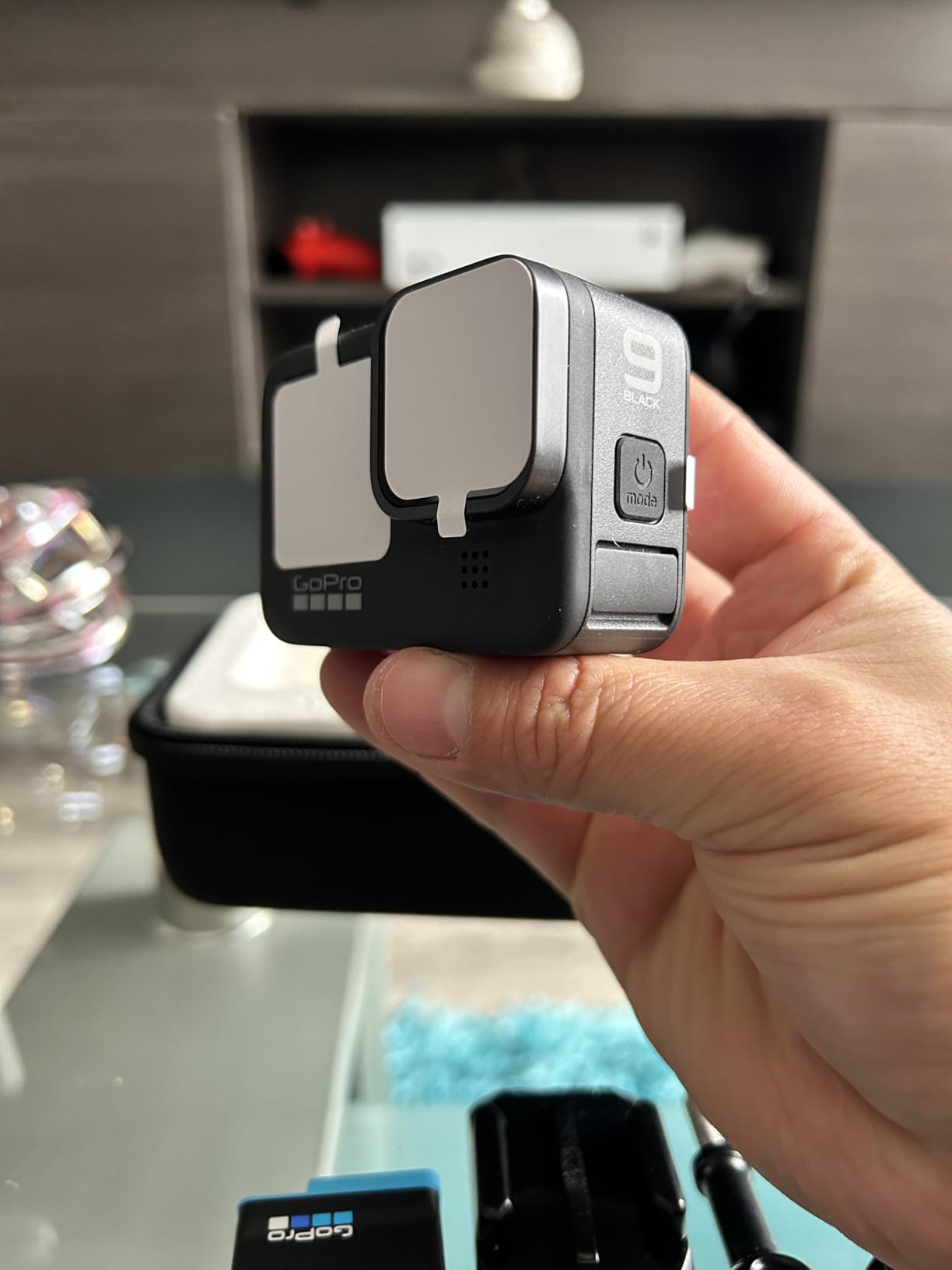
5. GoPro HERO9 Black: Best Proven Helmet Camera as a Backup Body
GoPro HERO9 Black – Waterproof Action Camera with Front LCD and Touch Rear Screens, 5K Ultra HD Video, 20MP Photos, 1080p Live Streaming, Webcam, Stabilization
Pros
- 5K keeps detail when cropped for a client edit
- 20MP stills from the same body
- Waterproof to 33 ft with no housing
- Front display makes solo framing easy
- Live streaming and webcam modes
Cons
- Body-only box
- batteries and mounts sold separately
- Older small sensor is weak at high ISO
- Runs hot on long high-resolution takes
The HERO9 is the camera most working camera flyers still have in a bag, and that is not nostalgia. It is a body everyone in the dropzone has an adapter for, which makes it the perfect second camera when your primary is a 360 rig and you want flat backup footage of the same jump.
HyperSmooth 3.0 is a generation behind the current bodies, but on a belly jump — the easiest framing problem in skydiving — the gap is small. The fisheye lens also gives the classic GoPro look that clients recognise from a decade of tandem videos.
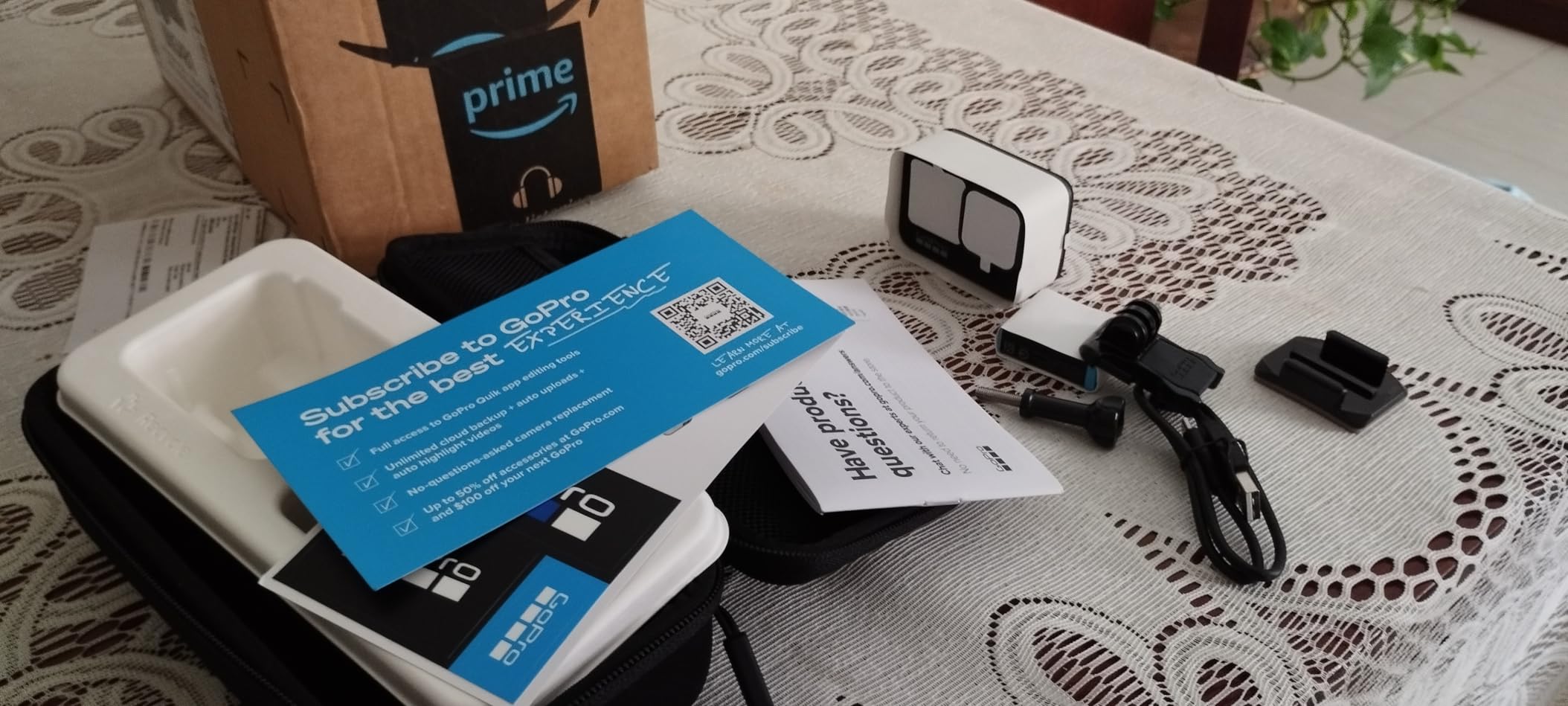
5K is genuinely useful here for a different reason than resolution: it gives you room to crop. If you framed a formation slightly off, a 5K file can be reframed in the timeline without the softness you would get from a 4K file.
Waterproof to 33 ft with no case means no housing to trip the power button, and there is no water-repelling lens cover on this body, so be careful of flare in bright sun.
Why keep a HERO9 in the bag
Two reasons. First, mount compatibility — every finger mount, buckle, and third-party helmet rig made in the last decade fits it, so a failure on your primary does not end your filming day. Second, it is a genuinely good belly-jump camera for the money if you find one used.
The dual screens also make it the easiest body to frame yourself on, which matters for a solo jumper filming content without an instructor holding the camera.
Where age shows
The sensor is the smallest class here, so low light and dynamic range are where it gives ground to the DJI and Insta360 bodies. Battery life is short by current standards and it runs warm on extended high-resolution recording.
Most importantly, the box is body only. Batteries, mounts, and a card are all extra purchases, so the real cost of getting camera-ready is higher than the number on the box.
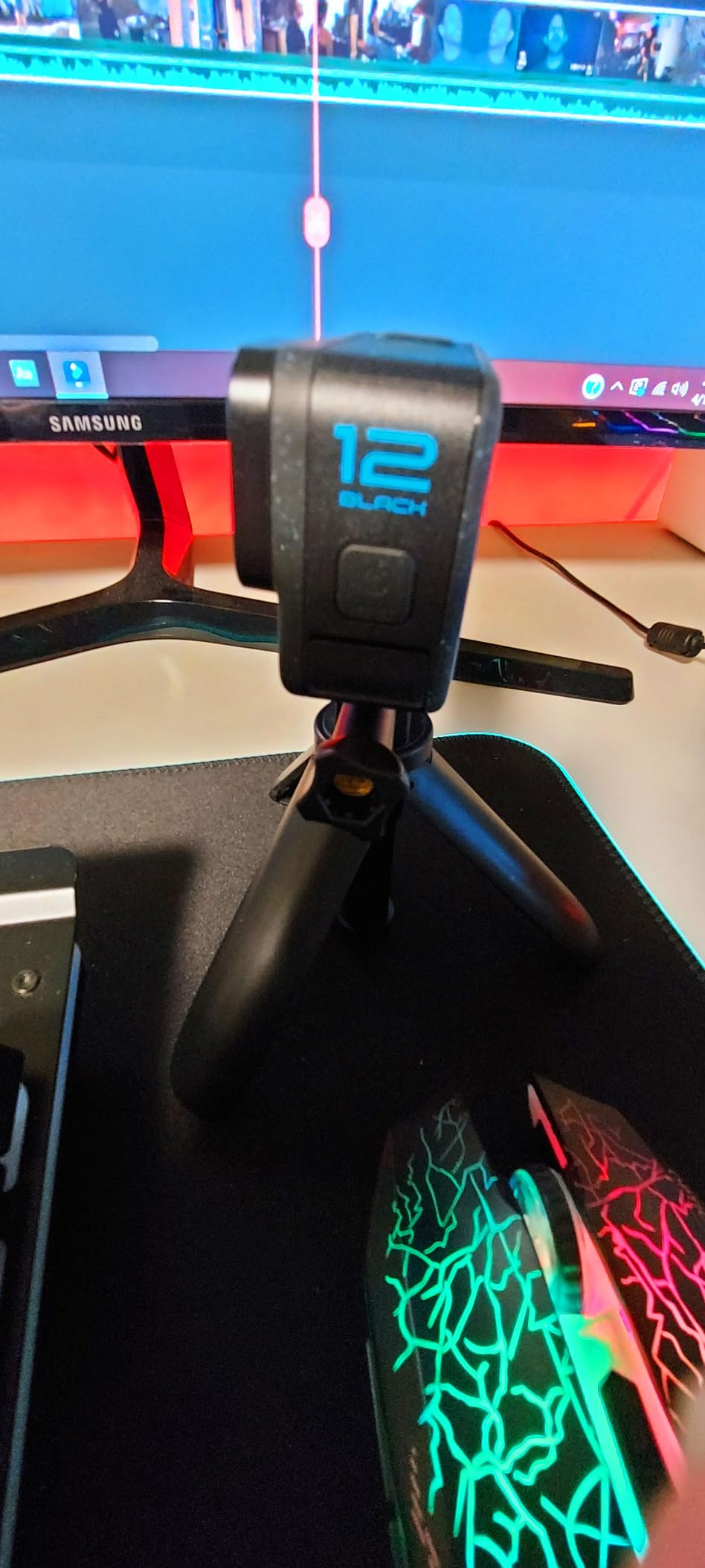
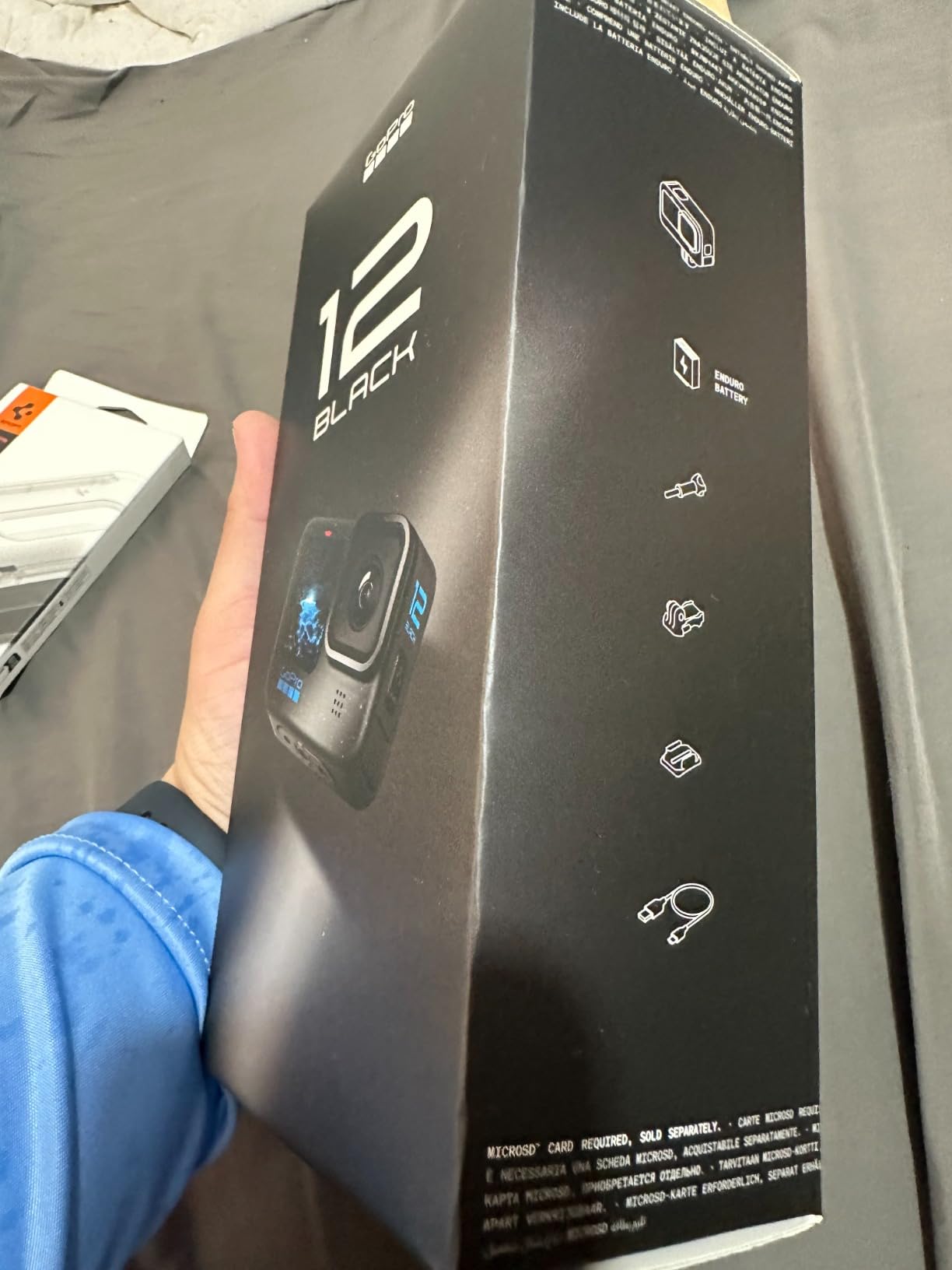
6. GoPro HERO12 Black: Best Camera for Tandem Skydiving Video
GoPro HERO12 Black – Waterproof Action Camera with 5.3K60 Ultra HD Video, 27MP Photos, HDR, 1/1.9″ Image Sensor, Live Streaming, Webcam, Stabilization
Pros
- 5.3K60 holds up when you crop for framing
- HDR keeps shadow detail in backlit freefall
- 27MP stills plus 24.7MP frame grabs
- Waterproof to 33 ft with no housing
- HyperSmooth 6.0 reduces crop versus older modes
Cons
- Short battery life
- especially at 5.3K60
- Runs warm and throttles on long takes
- Barrel distortion needs correcting in post
If your income comes from tandem video, the HERO12 is the body I would put on a chest mount. It is the most familiar footage look on the market, which means your clients’ expectations are already calibrated to it and you spend no time explaining the look.
HDR is the underrated part. A tandem freefall frame is half bright ground, half dark sky, and plain rendering loses one of them. HDR on both 5.3K and 4K keeps the shadow side of your client’s face readable without a heavy grade.
HyperSmooth 6.0 with AutoBoost adds stabilization while reducing the image crop, which matters on a tight mount where you are already cropping to keep both of you in frame. The 27MP stills give you thumbnails for the client gallery without a second camera.
At 5.3K60 you have 91 percent more resolution than 4K, and that headroom is what makes 60 frames per second usable for a deployment replay.
Why tandem instructors keep choosing GoPro
A working tandem instructor described the GoPro as the least dramatic camera — it starts, it records, and it never surprises you after a fast climb-out. That reliability is worth more than any spec line when you have a paying customer under your harness and a promise to deliver.
The Quik app workflow is also the fastest card-to-timeline path of anything here, which directly affects whether you can deliver same day.
Where it strains
Battery life is the weak point, particularly at 5.3K60, and it runs warm on sustained high-resolution capture. Plan a full rotation of Enduro batteries rather than trusting one body through a load.
Fisheye-style barrel distortion is visible on wide shots and needs correcting in post, and at 12.48 ounces this is a chunky body. If you are mounting on a helmet all day, weigh that before you commit.
7. GoPro HERO13 Black: Best Camera for Experimental POV Lens Setups
GoPro HERO13 Black – Waterproof Action Camera with 5.3K60 Video, 27MP Photo + Compatability with HB-Series Lenses
Pros
- HB-Series lens mods transform the field of view
- 13x burst slo-mo catches exit and deployment
- 5.3K footage with 24.7MP frame grabs
- Waterproof to 33 ft with no housing
- Rugged body tolerates mud and hard knocks
Cons
- Lens mods and filters sold separately
- Battery is short at 5.3K60
- Runs hot and throttles on long takes
The HERO13 is the body for someone who has already filmed a hundred jumps and wants a different look each time. The HB-Series lens ecosystem, with auto-detection that adjusts camera settings when a mod is attached, means the Ultra Wide POV, Macro, and Anamorphic options change the shot rather than just cropping it.
The Ultra Wide POV mod is the one that matters most in freefall. It exaggerates the sense of speed in a way the built-in lens cannot, and speed is the entire emotional payload of skydiving footage.

Burst slo-mo up to 13 times normal speed catches exit and canopy opening in a way no other body here can. A drogue deployment lasts a fraction of a second — at 13 times slow you can actually see the slider inflate, which is the frame clients ask about most.
It is also the lightest of the GoPro bodies here at 157 g, which is a real advantage on a helmet.

When lens mods change the story
Anamorphic gives you a wider cinematic aspect ratio and horizontal flare, which turns a standard belly jump into something that looks graded up. Macro is more of a novelty on a helmet, but on a chest mount during canopy rides it produces close detail of harness hardware and ripstop fabric.
Auto-detection is a genuine time saver. Without it you adjust field of view and exposure after every mod change, and in a moving plane that is one more thing to forget.
What it costs you
The lens mods and ND filters are all extra purchases, which moves this body well beyond the flat-camera tier in total spend. Battery life is short at 5.3K60 and it still runs hot on long takes, the same thermal pattern as the HERO12.
If you fly once a month and shoot your own jumps for fun, this is overkill. If you are building a reel that needs variety, the lens system is the reason to choose it.
8. AKASO Brave 6 Plus: Budget Pick Camera for Wingsuit Proximity Work
Pros
- Owners report footage comparable to far costlier bodies
- EIS 2.0 holds 4K30 steady in fast movement
- Voice control works for hands-free start
- Two 1350 mAh batteries and a helmet kit in the box
- Waterproof to 131 ft with the included case
Cons
- Flimsy plastic housing and battery door
- No 1/4 inch thread
- so an adapter is needed
- Case can press the power button
- App is slow with unclear menus
Owners repeatedly report that this camera produces footage they would have expected from a body costing several times more, and in a bright open-sky frame that claim holds up. It is a no-nonsense 4K30 body with nothing to configure before exit.
Voice control matters more here than it does on expensive bodies. You can start recording hands-free, which is genuinely useful when your hands are in a proximity suit with limited movement.
The bundled helmet accessories kit means you can go from box to helmet mount without a second purchase, and the two included batteries mean a jump day does not need a charger between loads. That practical completeness is where the value actually is.
Long-term users report durability through rain, dust, high wind, and underwater shooting, which is reassuring for a body that will be strapped to a helmet in winter conditions.
Why budget bodies suit wingsuit flying
Wingsuit proximity work is about a wide field of view and a body that does not distract you. The three adjustable view angles let you widen the frame without changing mounts, and 4K30 is enough resolution to crop a wingtip out of frame if it is too close.
If a rig fails, a hard landing costs far more than the camera does, and a replacement you know how to mount within minutes keeps the jump day moving.
Build quality is the honest limit
Owners are consistent about the plastic housing and the flimsy battery door, and there is no 1/4 inch thread on the body, so a separate adapter mount is required for most helmet rigs. The waterproof case has also been reported to press the power button on the way in.
It is also not built for high-speed capture, and the stabilization struggles when everything is moving very fast. For wingsuit flying at speed, a body with a better sensor and a flat profile is a better tool.
9. DJI Osmo Action 5 Pro: Best Camera for Cold Weather Jump Days
Pros
- Class-leading low-light and dynamic range for a flat body
- 3.6 hours of recording at minus 20 C
- HorizonSteady eliminates roll-axis shake
- Colour temperature sensor handles white balance automatically
- IP68 rated to 20 m with no case
Cons
- Digital zoom only with fixed focus
- 47 GB built-in storage is modest
- Needs the DJI Mimo app for viewing and editing
This body has the highest owner satisfaction rating in the group, and the reason traces to one number: 13.5 stops of dynamic range on a 1/1.3 inch sensor. On a backlit exit that is the difference between a usable shot and a rescue job in post.
The battery figure is what wins it in winter. Up to four hours of recording, and 3.6 hours at minus 20 C, means a cold-weather jump day runs on two batteries per jumper rather than a full rotation.
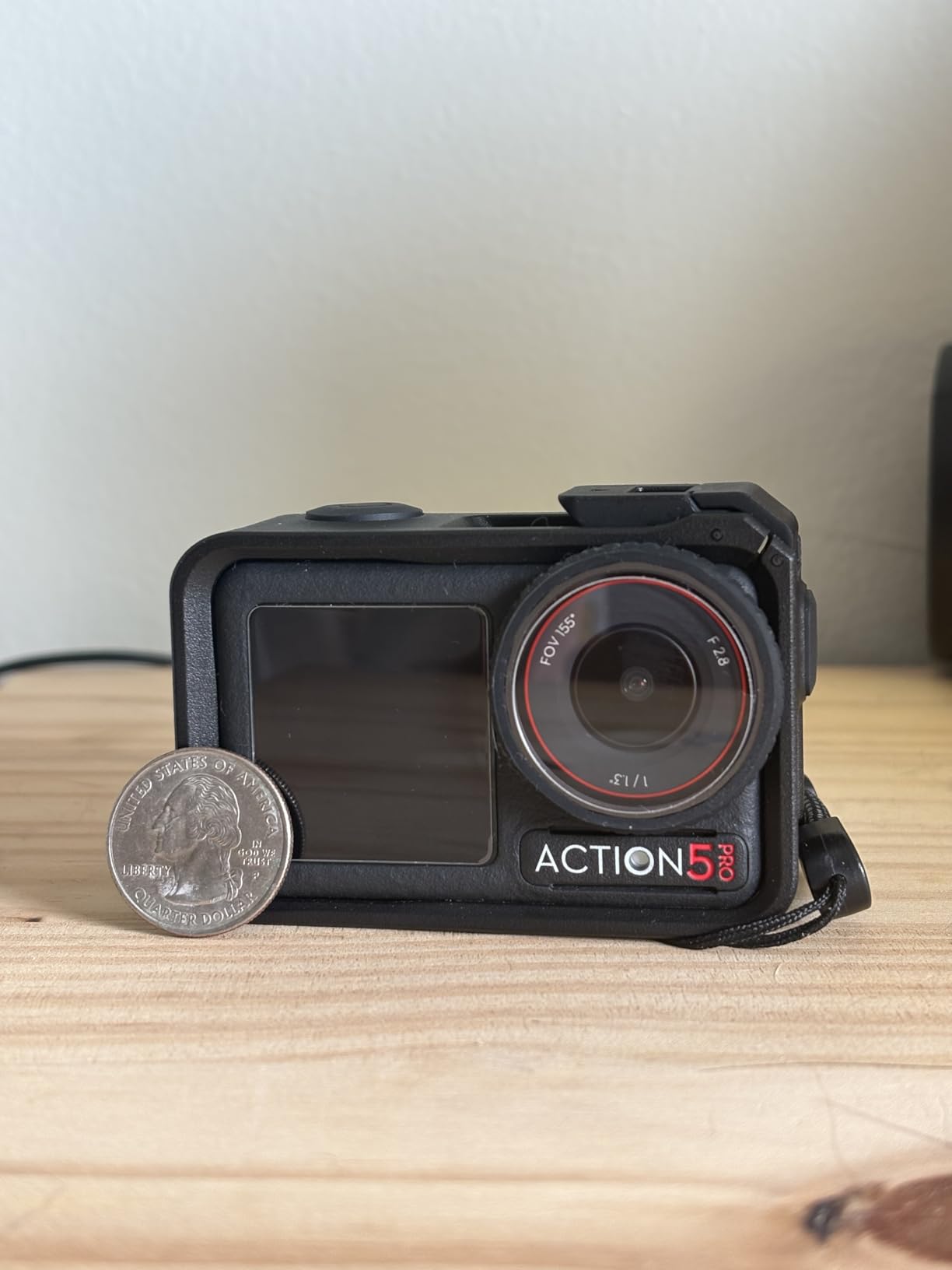
HorizonSteady removes 360 degrees of roll-axis shake, so a head-up freefly clip stays level through a tracking turn. The colour temperature sensor sets white balance automatically, which on a sunset load removes the most tedious part of the grading session.
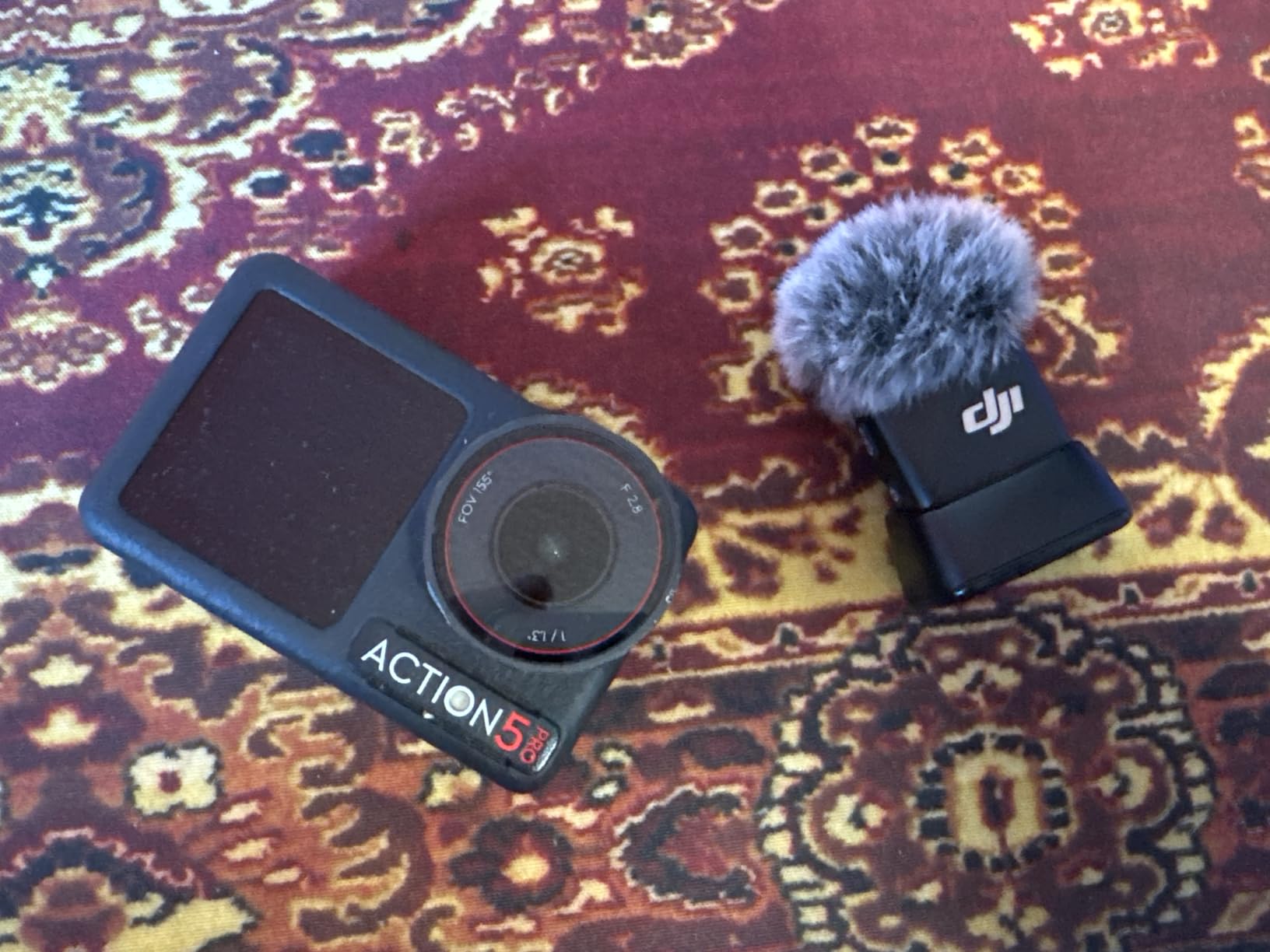
It also connects directly to DJI Mic transmitters with no receiver, which is a genuinely practical tandem setup on canopy where relative airflow is low enough to record a voice.
Why this is the dusk-load camera
Working videographers repeatedly credit DJI with the cleanest handling of ugly light among the flat-body cameras. A 2.4 micron pixel on a 1/1.3 inch sensor gathers more light than any other flat sensor here, and the dynamic range headroom means you can pull detail out of a shadowed subject without the noise penalty.
SuperNight and the low-light shooting modes are tuned for exactly the condition that ruins an evening jump, and 155 degree field of view is wide enough to hold a formation without a lens mod.
Where it falls behind
Fixed focus with digital-only zoom means you cannot isolate a subject, and 47 GB of built-in storage is smaller than the newer DJI body. Deep housing is needed past 20 m, though for skydiving the depth rating is not the deciding factor.
Viewing and editing run through the DJI Mimo app, which adds a step that GoPro owners will find familiar and Insta360 360 owners will not.
10. Insta360 Ace Pro 2: Best Camera for Wingsuit and Mountain Flying
Insta360 Ace Pro 2 Single Battery Bundle – 8K Waterproof Action Camera Co-Engineered with Leica, 1/1.3″ Sensor, Dual AI Chip, Leading Low Light, Superior Audio, Flip Screen & AI Editing for Vlogs
Pros
- Best-in-class low-light performance in a flat body
- 157 degree MegaView captures full wingspan framing
- Removable hardware wind guard plus 2.5 inch flip touchscreen
- Rated to minus 20 C and waterproof to 12 m
- 4K60 Active HDR with Leica colour profiles
Cons
- Must be activated through the Insta360 app before use
- Limited optical zoom
- No internal storage
- needs a micro SD card
The Ace Pro 2 is the body I would put on for wingsuit and mountain flying, and the reason is the 157 degree MegaView lens. A wingsuit flyer needs the wings and the horizon in one frame, and that field of view is what makes it possible without cropping.
PureVideo mode with AI noise reduction on the dual chip design is the strongest low-light flat-body performance in this group. On a dawn load, where you are flying toward a dim ground and a bright sky, it holds detail that the GoPro bodies lose.
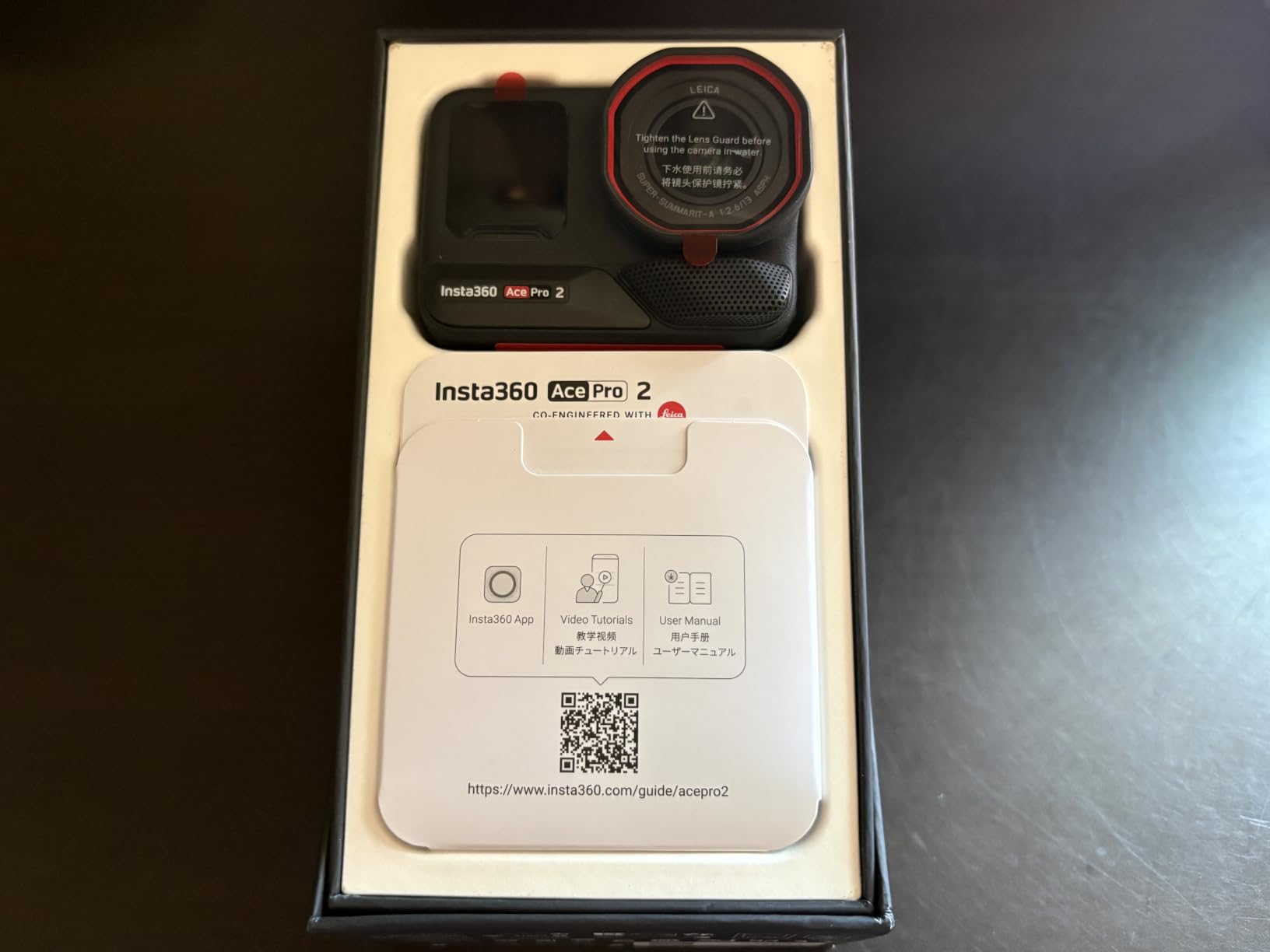
4K60 Active HDR with Leica colour profiles gives you a flatter starting point for grading than the standard output, and 13.5 stops of dynamic range keeps the bright sky from blowing out while the terrain stays readable.
The removable hardware wind guard is a small thing that matters on a long canopy ride. Fly a wingsuit and the only audio for the first thirty seconds is the rush of air; by the time you are under canopy, that guard is the difference between a usable voice track and nothing.
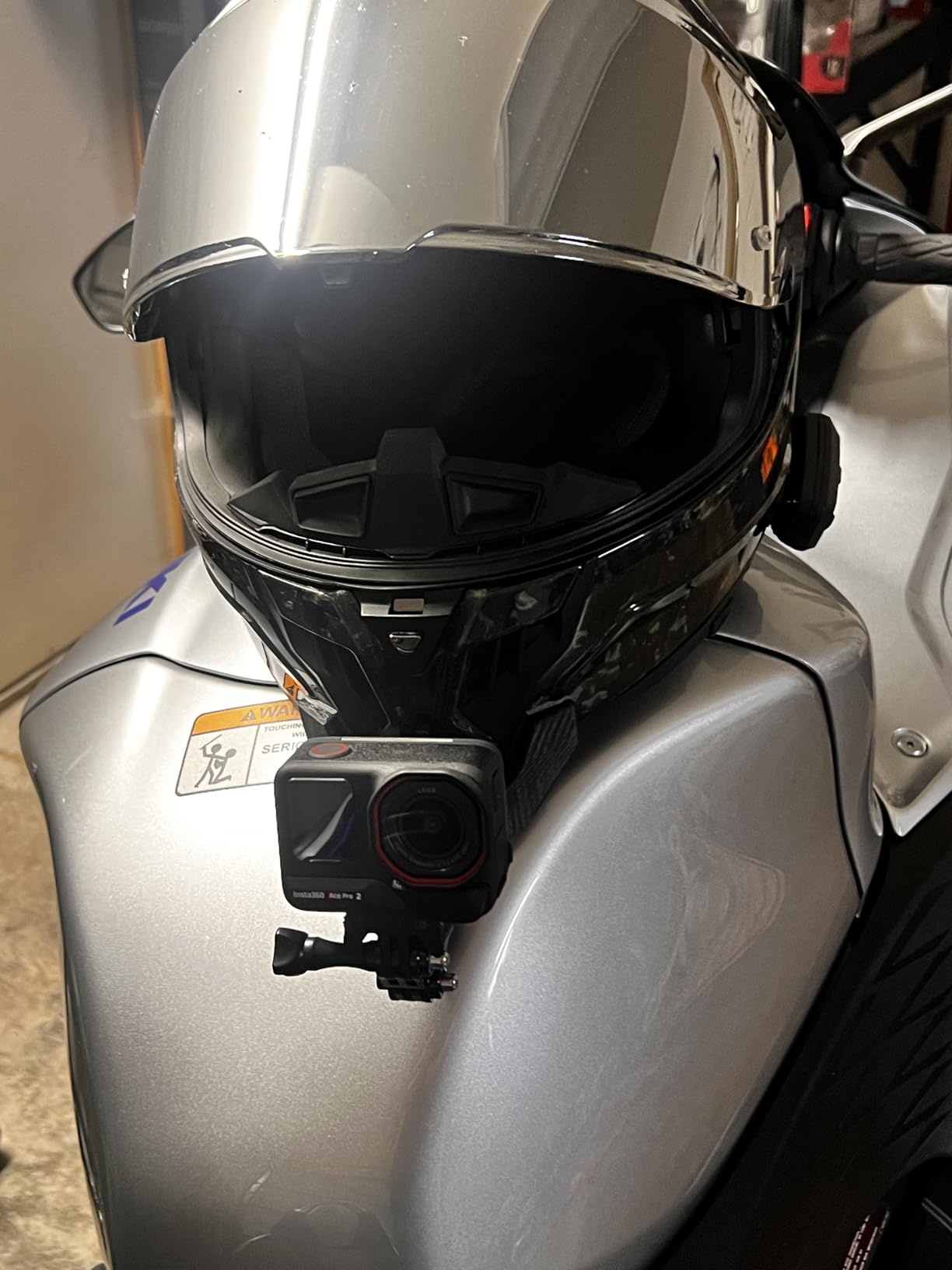
Why it suits fast-moving footage
FlowState stabilization holds 4K steady through the fast, unpredictable movement of a proximity line, and the 2.5 inch flip touchscreen is bright enough to read in direct sun when you need to change a setting on the ground before a launch.
Magnetic mounting means swapping between a helmet, chest, and hand position takes seconds rather than a thumb screw, which matters when you are running multiple angles in one session.
Where it frustrates people
The camera is unusable until it has been activated through the Insta360 app, and registration is a hurdle some buyers never clear. Do that step at home, not in the dropzone car park.
There is also no internal storage, so a card is mandatory, and zoom is limited enough that distant subjects need accessory lenses. It is rated to minus 20 C, but check your spare batteries are rated for the same temperature.
Camera Safety and Snag Hazards When You Jump With a Camera
You can skydive with a camera. The USPA Skydiver’s Information Manual has historically recommended accumulating experience before flying a camera, and plenty of skydivers treat that number as advice rather than a hard line — but your dropzone has its own camera policy, and that policy is the one that governs whether you can jump today.
Ask your instructor or dropzone director before your first camera jump, and get a clear answer on what is permitted on a camera helmet versus a soft-mounted chest or hand mount. Most dropzones are comfortable with a well-fitted low-profile mount and less comfortable with a protruding rig.
A snag hazard is anything on your setup that could catch air and inflate or damage your parachute. On a 360 body the risk is concentrated in the protruding lens barrel and any long extension. The single most repeated complaint in skydiving forums is that OEM 360 mounts on a helmet are a snag hazard in their own right, which is why the mounting section below matters more for 360 than for flat bodies.
My pre-jump checklist, regardless of body:
Check every thumb screw and buckle by hand, with the strap tensioned as it will be in flight.
Run the mount through a full tug test in both directions before boarding.
Keep the camera body tucked against the helmet or chest with nothing protruding forward.
Clear the area around the lens of glove fingers and loose helmet straps before exit.
Tether the camera to your harness or rigging as a backup so a failure does not become a loose object.
Confirm the card is seated and, for 360 bodies, that both lenses are clean and undamaged.
Have a senior camera flyer or your instructor inspect the setup on your first jumps.
Height matters too. A rig that looks fine at 4000 feet has more time to snag and less time to fix it. The most experienced camera flyers I have met all say the same thing: the first twenty jumps are for learning the mount, not for shooting a hero clip.
Mounting Hardware for Skydiving Cameras
All ten cameras here use either a GoPro-style finger mount or an equivalent adapter, which is the single biggest reason this category stays interchangeable. Your existing helmet hardware, buckle, and chest rigs will very likely work with whatever you buy — but the profile on your helmet is what determines whether a senior camera flyer signs off on it.
Helmet mounts. A curved adhesive base with a buckle and thumb screw is the standard. The principle is that the camera sits flat against the shell with the lens pointing forward and slightly down, so there is no proud edge to catch. Keep the adhesive base full cure time before you jump with it — a base that has not fully bonded is a mount that will release at 3000 feet.
Roller mounts on camera helmets. Hard-shell camera helmets, including the Cookie-style designs, use a roller or slider so the camera position can be adjusted for your head shape and eye line. Heavier and thicker newer bodies do not always fit the roller hardware designed for earlier generations, which is a recurring question in skydiving forums. Check your mount’s thickness rating before you commit to a 360 body.
Anti-snag 360 options. If you fly 360, the mounting decision matters more than the camera. Keep the body tight to the shell, angle it so the lens barrel points down rather than forward, and avoid long extension arms. If a DZ will not accept a 360 rig, a flat body on the same helmet is usually the answer.
Chest, hand, and chin mounts. A chest mount gives the most natural footage of a tandem pair and is the least snag-prone option of all. A handcam or chin mount gives a first-person perspective with strong wind noise, and both are worth having as a second angle on the same jump.
Whichever you choose, the mounting hardware is where skydivers spend money they did not plan for. Treat the mount, not the camera, as the part that has to be perfect on the day.
Skydiving Settings Recipe by Jump Type
These are the settings I run, expressed generically so they apply to whichever body you own. Every mode listed is available on the flat cameras in this roundup.
Exit. The exit lasts about one second and everything in it is fast and unpredictable. Use your highest frame rate that still records long enough clips — 4K60 or 5.3K60 — with the widest stabilization setting. You want a wide field of view and enough frames to slow the moment down later. Turn audio off; there is nothing to record at terminal velocity.
Belly freefall. 4K60 with a linear or wide field of view rather than maximum wide, because a tighter field of view keeps both jumpers from distorting at the frame edges. Horizon lock on, standard stabilization rather than maximum, since the body is stable and heavy stabilization only crops your resolution.
Head-up freefly. This is the hard case. Movement is rotational, so 4K60 with maximum roll-axis stabilization or HorizonSteady on. Keep the field of view wide enough to hold a formation as you track. If the horizon is swinging in your clips, the mode is not aggressive enough for the jump you are flying.
Wingsuit. 4K60, widest available field of view, and stabilization on medium. Fast horizontal movement defeats heavy stabilization and you lose resolution to a crop for no benefit. On a GoPro body, this is where the Ultra Wide POV lens mod genuinely earns its price.
Drogue deployment. This is the frame clients remember, and it happens fast. Use your highest slow-motion mode — burst slo-mo on the HERO13 reaches 13 times normal speed — with stabilization off so the mode is not cropping the frame you are trying to keep.
Canopy opening. Slow-motion high frame rate, stabilization off, and turn the microphone on. Under canopy the relative airflow is low enough to capture a spoken reaction, and if you fly tandem that audio is often worth more than the video.
Colour. Shoot a flat profile if you grade, because the standard output clips highlights in a bright sky. A flat profile also makes the dusk loads more forgiving to edit. If you deliver ungraded same-day, leave it off and take the AutoBoost or standard processing.
Freezing and unexpected shutdowns on older generations are the most commonly reported failure in skydiving communities, and the fix is unglamorous: a freshly formatted card, a fully charged battery, and a firmware update before you leave home. Battery drain across a full jump day is reported across every brand, so treat a rotation of spares as mandatory rather than optional.
On lens fogging: a warm camera in cold air and a cold body in warm cabin air both condense. Fogging usually happens on the walk to the plane, not in the air, so keep the camera in your pocket or a sealed bag until you are at altitude and about to jump. A lens cloth in a pocket is the whole fix.
For the same reason I keep my card workflow simple: one card per jumper per session, formatted in the camera, offloaded to a laptop at the dropzone, and a second card as backup. If you want the technical reason behind card speed requirements, my bitrate and card speed guide covers it.
How to Choose the Best Camera for Skydiving
Decide flat or 360 first. This is the decision that determines everything else, and it comes down to whether you need guaranteed framing. A flat camera is lighter, smaller, streams to a phone, and delivers same day. A 360 camera captures everything so you cannot miss a moment, but it is heavier, needs a desktop app, and carries more snag risk. If you coach, film formations, or shoot wingsuit proximity with a second person, 360 wins. If you shoot tandems, flat wins. My POV camera roundup covers the flat-body decision in more detail.
Prioritise stabilization and horizon lock over resolution. In freefall the movement is chaotic and a jittery 8K clip is worse than a smooth 4K one. Horizon lock, HorizonSteady, or FlowState with level-locking is what turns a fall into watchable video. Every camera here has it; the question is how aggressively it works in head-up freefly.
Buy the sensor your light demands. A 1/1.3 inch or 1/1.1 inch sensor with a variable aperture is the difference between a clean dusk load and a noisy one. If you jump in daylight, a smaller sensor costs you nothing and saves money and weight.
Budget batteries, not just the camera. Reported battery life in this category assumes a cool day, low brightness, and 4K. A 4K60 setting on a summer load with a hot camera will use a battery in a fraction of that. Count one battery per jumper per day as the minimum and two for a full day of filming.
Check third-party mount compatibility before you buy. The single most repeated skydiving question is whether existing hardware fits. Camera helmets with roller mounts, third-party finger mounts, and chest rigs all have thickness limits, and newer and thicker bodies can fail to fit. Check your mount first, camera second.
Treat waterproofing as a non-issue for skydiving and everything else as the deciding factor. None of these cameras are rated to skydiving altitude conditions because no such rating exists. The waterproofing number matters only if you fly over water, and any of the 10 m and above bodies will handle that.
Think about the edit, not the jump. Working camera flyers consistently rank same-day delivery as a top concern. A flat body with a phone app is faster to deliver than a 360 file that needs a desktop render, and for a tandem business that difference is money. If your editing has a colour stage, the flat profiles on the GoPro and DJI bodies give you more room. My colour grading walkthrough covers the same logic applied to aerial footage.
Stabilization costs you resolution. Every manufacturer crops the frame to stabilise it, and aggressive modes crop more. Shoot a test clip at your intended settings on a trampoline or a fast swing before jump day, and check the corners of the frame for warping. My guide to keeping footage usable in rough conditions covers the same stabilization trade-offs in more depth.
Start with one body. Two cameras on one helmet is a snag hazard and a distraction. Pick one, learn it well, and add a second angle only once you can mount the first without thinking about it.
Frequently Asked Questions
What is the best action camera for skydiving?
The Insta360 X3 is the best all-round choice because 5.7K 360 capture guarantees framing you would otherwise miss, FlowState stabilization and Horizon Lock keep tumbling footage level, and it has the largest owner review base of any camera here. For flat bodies on a dusk load, the DJI Osmo Action 6 is stronger thanks to its 1/1.1 inch sensor and variable aperture.
Can I wear a GoPro while skydiving?
Yes, and most working camera flyers do. What matters is the profile, not the brand. A GoPro mounted flat against the helmet shell or on a chest mount presents almost no snag hazard, and many dropzones allow it once your instructor signs off on the setup. Ask your dropzone about its own camera policy before your first jump, and have the mount inspected while it is still on the ground.
Can I skydive with a GoPro?
You can, once you check your dropzone policy and have a senior camera flyer or your instructor inspect the mount. The USPA Skydiver’s Information Manual has traditionally recommended building experience before flying a camera, and skydivers differ on how strictly to apply that. The practical rule most dropzones follow is: clear your rig with an instructor, keep the profile low, and check every buckle and thumb screw before boarding.
Is GoPro or DJI better for skydiving?
DJI handles low light and dusk loads better, with larger sensors and a variable aperture on the Osmo Action 6 and Osmo Action 5 Pro. GoPro keeps stabilization calmer in head-up freefly and tracking turns, and its dual screens and app workflow are the fastest for same-day tandem delivery. Choose GoPro for stabilization and workflow speed, DJI for shadow detail and battery endurance in cold weather.
Which camera is better, GoPro or DJI or Insta360?
GoPro for proven reliability and the most familiar tandem look, DJI for low light, aperture control and cold-weather battery life, Insta360 for 360 capture where the shot angle is decided after landing. Insta360 360 bodies capture everything so you cannot miss a moment, but they are heavier, need a desktop app, and carry more snag risk on a helmet.
Which is better for a skydiver, a GoPro or an Insta360?
A GoPro if you shoot tandems and need fast, same-day delivery from a flat file. An Insta360 if you coach, film formations, or want guaranteed framing after a jump, because 360 lets you reframe to wherever the action actually happened. The Insta360 trade-off is a desktop render step, a heavier helmet profile, and more to think about from a snag-hazard standpoint.
What frame rate is best for skydiving video?
4K60 is the best working default for exit, freefall and canopy because it holds detail while still giving you frames to slow down. Use the highest slow-motion mode for drogue deployment and canopy opening with stabilization off. 8K is worth it for short clips only, because the files are large and the battery and card cost is high on a full jump day.
How do I stop my camera fogging in freefall?
Condensation forms from temperature change, not altitude, so it usually happens on the walk to the plane. Keep the camera in a pocket or sealed bag until you are at the door and about to jump, and carry a lens cloth. If you are moving between a warm car and cold air repeatedly, letting the body acclimatise in your hand for a minute before mounting reduces it further.
Final Verdict: The Best Cameras for Skydiving Footage in 2026
The best cameras for skydiving footage depend on your jump, not on the spec sheet. The Insta360 X3 is the safest default for almost every jumper because 360 capture removes missed shots entirely. The DJI Osmo Action 6 is the one to buy if you jump at dusk or in poor light, and the Insta360 X5 is the coaching and debrief camera with the best low light in the 360 class.
One line per jump type: tandem video, GoPro HERO12 Black. Dusk loads, DJI Osmo Action 6 or Osmo Action 5 Pro. Formation and coaching, Insta360 X5. Wingsuit and mountain flying, Insta360 Ace Pro 2. Experimental POV with lens mods, GoPro HERO13 Black. Learning to camera fly on a budget, AKASO Brave 7 LE.
Whichever you pick, the mount matters more than the model. Keep it low, keep it tight, have it inspected before your first jump, and run a rotation of charged batteries. That advice is worth more than any feature on this list.