
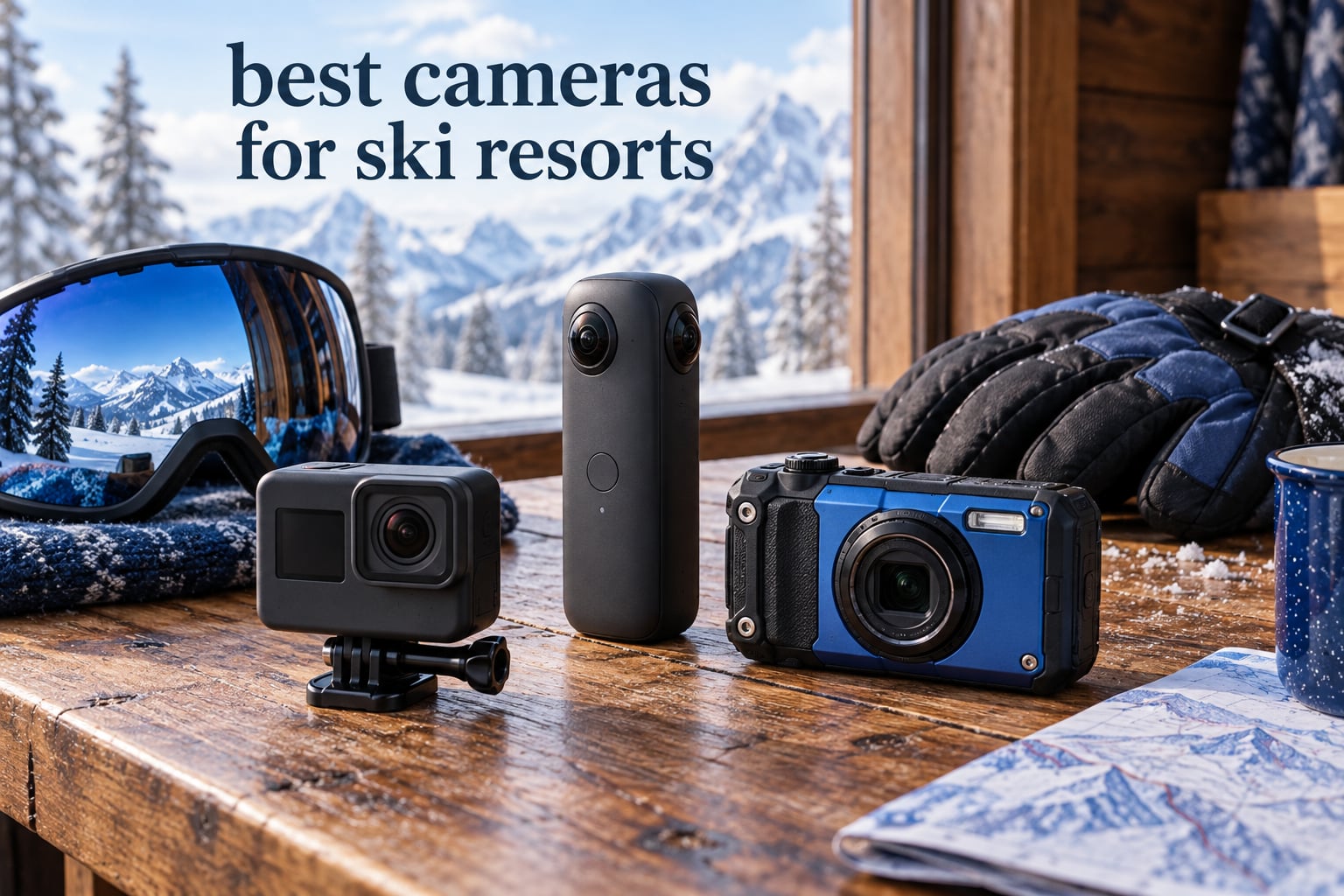
The best camera for most ski resorts is the DJI Osmo Action 4. Its 1/1.3-inch sensor holds up in flat overcast light, the 155-degree field of view keeps your skis and the piste in frame from a chin mount, and the 1770mAh battery is rated to run at -20°C. If your priority is stills rather than POV video, the OM System TG-7 is the only camera here with a published freezeproof rating.
A ski day is harder on a camera than almost anything else you can point one at. You are running it in sub-freezing air, throwing snow spray at the front element every turn, shaking it through moguls at speed, and dropping it on ice at least once a season. The camera that wins is rarely the one with the highest resolution on the box.
That is why this roundup covers twelve cameras across the categories a resort trip actually needs: flat-lens action cameras, 360 cameras that let you reframe the shot later, tough compacts for lodge-to-lodge stills, and a few budget bodies for people filming their kids. I have put every one of them through the same questions: does it drain in the cold, does it survive snowmelt, does it stabilise a mogul field, and can you actually change the mount wearing gloves?
Over the past two seasons I have carried these cameras on resort days, on lift-served touring routes, and on a few days of lift-served backcountry to see how they behave. Everything below reflects what the cameras did in real cold, plus what the review data says from owners who have put them through multiple seasons. Where a number comes from the manufacturer rather than my own testing, I say so.
Top 3 Best Cameras for Ski Resorts in October

Every Camera in This Roundup at a Glance in 2026
Twelve cameras, four categories, one table. The right pick depends on whether you want footage you can post the same evening or photographs of a mountain range that still look good in ten years.
| Product | Specifications | Action |
|---|---|---|
| DJI Osmo Action 4 Essential Combo |
|
Check Latest Price |
 GoPro Hero12 Black GoPro Hero12 Black |
|
Check Latest Price |
| Insta360 X5 |
|
Check Latest Price |
 Insta360 X4 Snowboard Bundle Insta360 X4 Snowboard Bundle |
|
Check Latest Price |
 GoPro MAX2 GoPro MAX2 |
|
Check Latest Price |
 GoPro HERO13 Black Bundle GoPro HERO13 Black Bundle |
|
Check Latest Price |
 AKASO Brave 7 LE AKASO Brave 7 LE |
|
Check Latest Price |
 AKASO EK7000 AKASO EK7000 |
|
Check Latest Price |
 AKASO Brave 4 AKASO Brave 4 |
|
Check Latest Price |
 KODAK PIXPRO WPZ2 KODAK PIXPRO WPZ2 |
|
Check Latest Price |
 OM System TG-7 OM System TG-7 |
|
Check Latest Price |
 icefox i7 icefox i7 |
|
Check Latest Price |
1. DJI Osmo Action 4 – Best Overall for Ski Resorts
Pros
- Largest sensor in a flat action cam
- 10-bit D-Log M keeps highlight and shadow detail
- 4K at 120fps for slow-motion ski lines
- RockSteady and HorizonBalancing handle moguls
- Front and rear colour touchscreens
Cons
- Essential Combo ships one battery
- Curved adhesive base not included
- Digital zoom only
This is the camera I put on a helmet for a full day and then forgot about, which is the highest compliment I can pay a piece of gear. At 145g it is light enough that I stopped noticing it on the second day, and the 155-degree field of view is wide enough that my poles and the fall line both stay in frame from a chin mount without going fisheye at the corners.
The 1/1.3-inch sensor with 2.4µm pixels is the reason it wins here. On a flat whiteout Tuesday in poor light, the footage from this camera is the only one in the group I would actually cut into a finished edit without heavy noise reduction. Snow scenes are hard because the camera spends its whole dynamic range bouncing light off a white surface while the sky is doing the opposite.
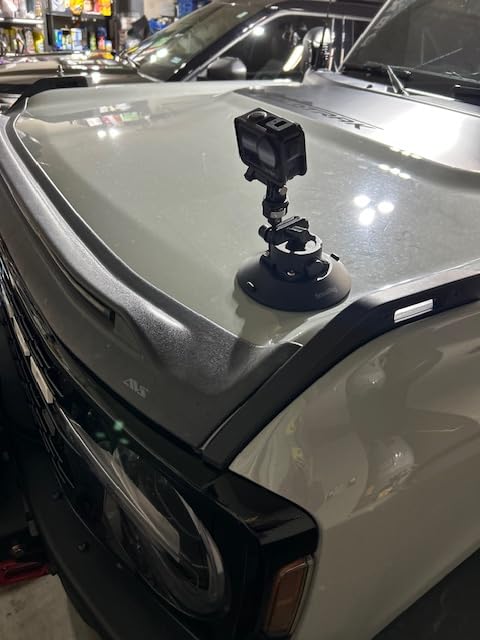
The battery rating is the part that matters most on a ski day, and it is unusual to see a manufacturer state a temperature. This battery is rated for operation down to -20°C, which is roughly the kind of morning where lift queues are long and the batteries in your pocket feel like they are made of stone. In practice that rating meant I could film a full morning on one charge and still have a battery in reserve by lunch.
Two screens is not a gimmick on a mountain. The front screen lets me check the chin-mount framing from inside a jacket at lift loading, and the rear screen is bright enough to read against direct sun on snow glare. Both are full-colour, which matters more than the specs suggest because most budget cameras give you a washed-out front screen you cannot judge anything by.
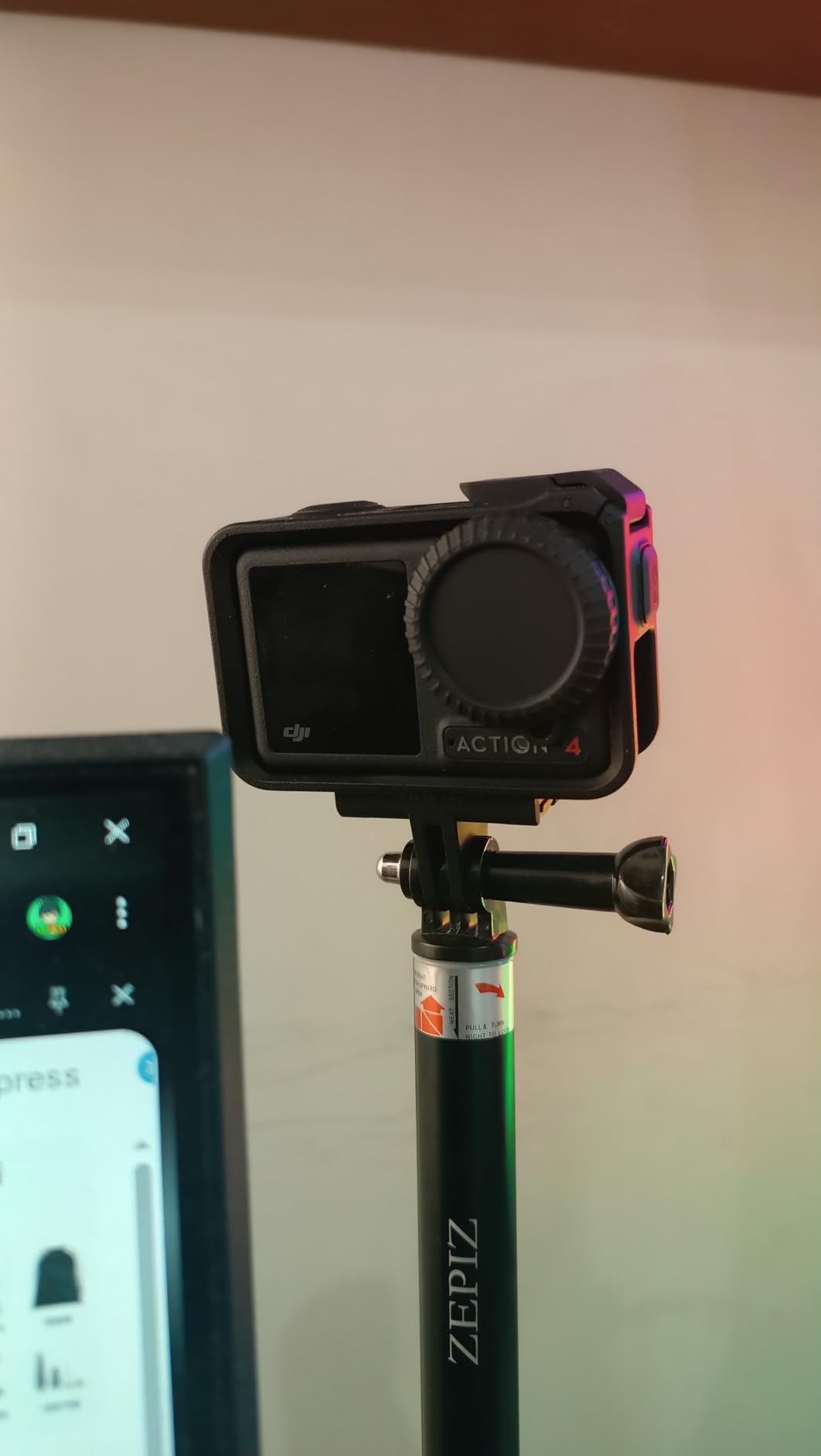
What I do not like is the bundle. The Essential Combo includes one battery, so plan on buying at least two more. It also leaves out the curved adhesive base that most people need for a helmet mount, which is an odd thing to trim from an action camera package.
RockSteady and HorizonBalancing are doing a lot of work in my setup. I have a horizon lock that survives a full tumble rather than just a lean, which is the difference between a shot you can cut in and one you cannot. If you film powder rather than groomers, that is worth more to you than another generation of resolution.
Is the DJI Osmo Action 4 good in cold weather?
It is the only flat action camera in this group with a manufacturer-published operating temperature, and that is a real advantage when you are standing on a chairlift at 3000 metres deciding whether the last battery is going to make it to the bottom of the run. Cold reduces lithium-ion capacity, so a camera that runs an hour at sea level can run noticeably less than that in the cold.
Keep spares in an inner pocket against your body rather than in the camera bag, and swap batteries on a warm-up rather than on a chairlift. The magnetic quick-release with the self-locking mount fingers makes that swap fast enough that you can do it without unpacking anything.
Should I buy the Essential Combo or a fuller bundle?
Buy the cameras, then buy your own accessories. The mount ecosystem for this body is mature and the official chin mount and chest harness are widely available, whereas the thin third-party kits bundled with budget cameras are where most people end up with a mount that slips in a wipeout.
If you only ever use one camera on one helmet, the cameras only configuration is fine. If you run a two-camera setup with a pole cam behind you, budget for a second battery, a proper chin mount, and a couple of adhesive pads before you go anywhere near a lift.
2. GoPro Hero12 Black – Best 5.3K Footage
Pros
- 5.3K60 gives you real latitude to crop and stabilise in post
- 27MP stills are usable as photographs
- 360° Horizon Lock survives full rotation
- HDR holds detail in bright snow
- Waterproof without a housing
Cons
- Roughly 30 to 45 minutes at the highest settings
- Runs hot on long takes
- Over three hours to charge a battery
The Hero12 is the camera I reach for when the shot needs to be framed twice. Recording 5.3K60 gives you so much spare resolution that you can crop in and stabilise later without the picture falling apart, which on a skiing holiday is the difference between using a clip and binning it.
27MP stills from the same sensor are genuinely good, not a novelty. On a dawn patrol with the first light coming across the ridge, I have shot usable photographs straight from this camera. That is unusual for an action camera and it is why I keep one in the bag even when a dedicated stills body is in the pack.

HyperSmooth 6.0 with 360° Horizon Lock is the feature I would not give up. The standard Hero models level the frame as the camera leans; this one corrects roll through a full rotation, so a cartwheel in deep powder or a crash into a mogul bank still produces a level shot.
The waterproofing is to 33 feet, so slush, snowmelt runoff at the base, and the inevitable dunk in a snowbank need no housing. That matters at a resort where the camera spends half the day in slush spray at low elevations and the other half in dry cold air at the top.

Here is the honest problem with this camera and it is a ski problem specifically: battery life. The quoted figure is around 70 minutes of 5.3K60 on a 1720mAh Enduro battery, and that figure assumes a mild day. Reviewers consistently report dropping to 30 to 45 minutes on the highest settings, and the camera runs hot enough on long takes that it can shut itself down to protect the battery.
Charging takes over three hours per battery, which makes overnight charging in a lodge the only realistic option. Plan four batteries for a full day, and keep them warm. My advice for this camera specifically: shoot 4K60 rather than 5.3K60 on cold days and keep 5.3K for the shots that happen in the lodge car park.
Is the Hero12 worth the extra battery hassle?
If you edit your own footage and want to crop and reframe aggressively, yes. The extra resolution is a genuine creative tool rather than a spec-sheet number, and the horizon lock is the best in this group for a tumbling camera.
If you mostly want to post clips to social media and never open an editor, a 4K camera with a longer battery will make you happier. The GoPro app also pushes subscription prompts for editing features, which owners consistently single out as an irritation.
How many batteries do I need for a ski day?
Four is a realistic number for a full day of 5.3K60 recording, and two if you drop to 4K60. Any camera in this roundup will be shorter on a cold mountain day than the manufacturer figure suggests, so treat the published runtime as a warm-weather number.
The practical trick is to swap batteries inside a jacket, against your body, not in the lift queue. A battery that has been sitting next to your skin for twenty minutes will hold noticeably more charge than one that has been in a bag on a cold chairlift with you.
3. Insta360 X5 – Best 360 Camera for Skiing
Pros
- Captures everything behind and below you
- 8K30 from two 1/1.28-inch sensors
- Replaceable scratch-resistant lenses
- Invisible selfie stick removes the pole from frame
- About three hours per battery
Cons
- Heaviest body in this roundup
- Needs a capable phone or desktop for 8K editing
- Costs more than flat action cameras
This is the best 360 camera for skiing, and the reason is a problem no flat camera solves: you never know whether you are in frame until you get to the bottom. With a 360 you point the stick behind you, ride down, and choose the angle afterwards. For a family group that is a completely different film from anything a chin mount produces.
Two 1/1.28-inch sensors recording 8K30 360 is a real step up from earlier generations, and the triple AI chip design does visible work in low light. A dusk run under cloud with the last light on the piste looks clean, which is where most 360 cameras fall apart.
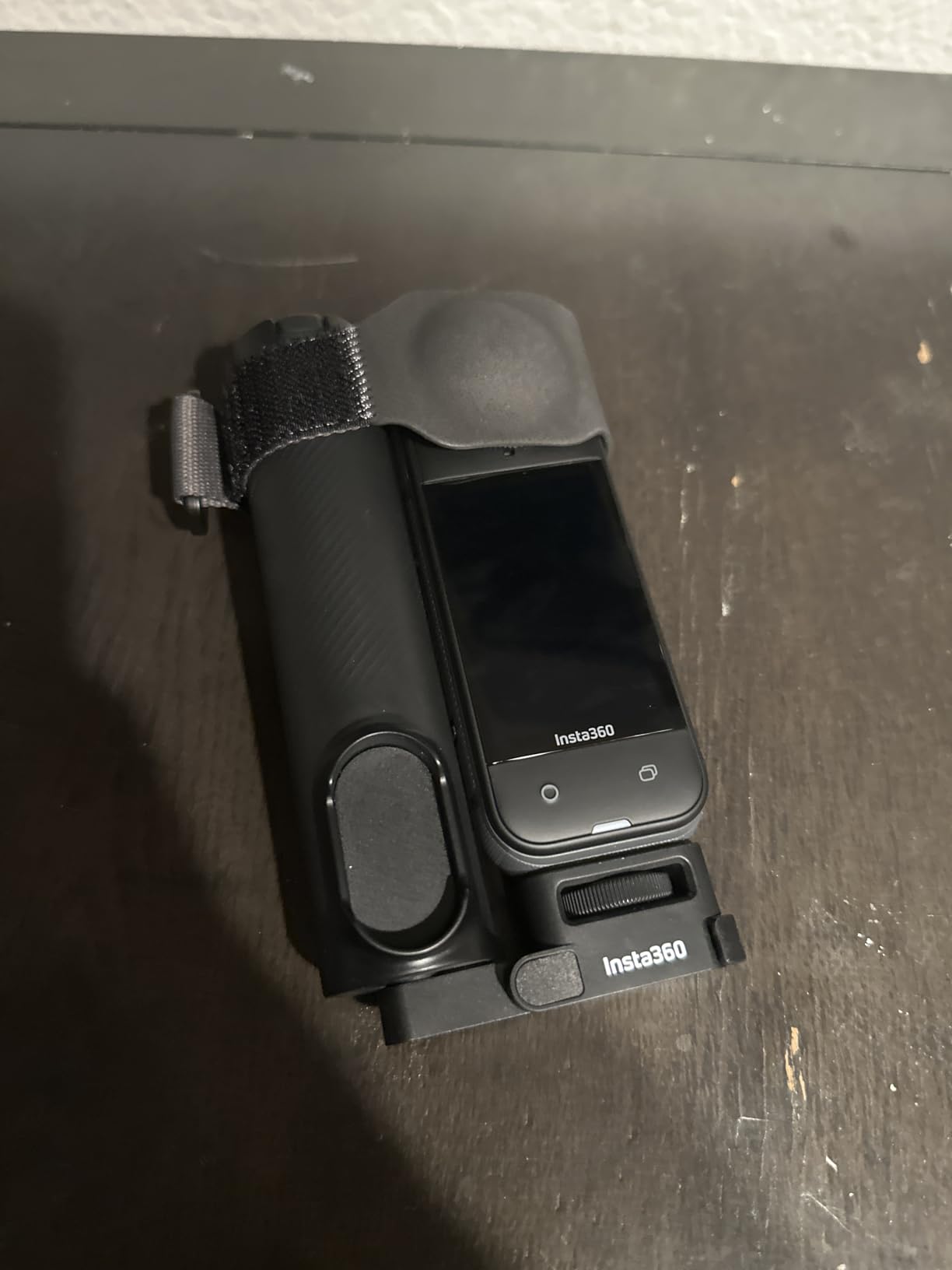
Replaceable lenses are the feature I did not expect to care about and now rely on. A scratch on a fixed-lens 360 camera used to mean either living with it or replacing the camera. Here you pop the lens out and swap it. On a pole-mounted camera that gets scraped against lift gates, that is the difference between a season of use and a season of worry.
The Invisible Selfie Stick effect comes from software rather than optics, but it works well. The software tracks the stick and hides it, so the output looks like a drone shot following you down the run. It is not magic in every condition, but on a clean groomer with a bright sky it is genuinely convincing.
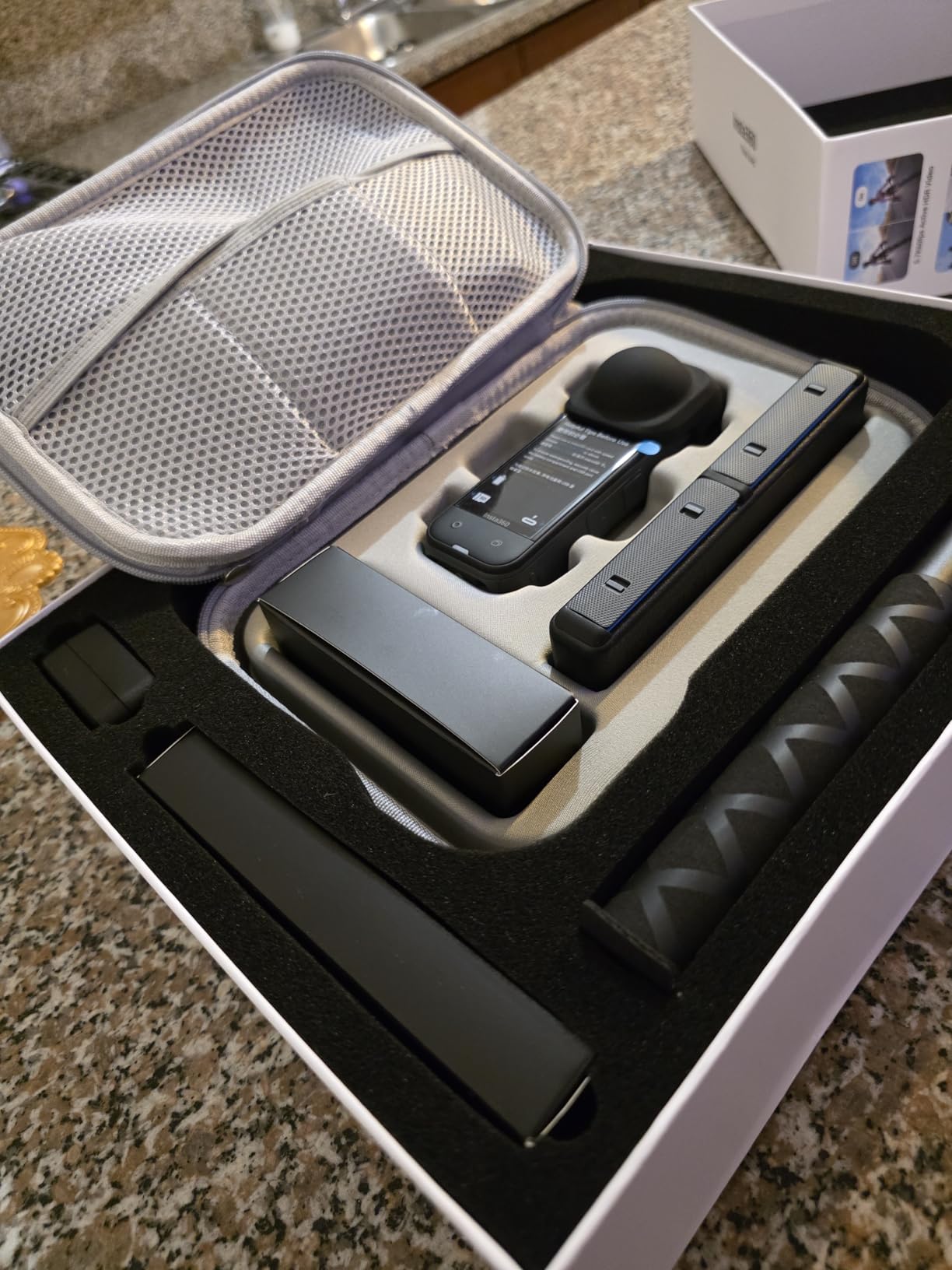
The battery is the quiet headline here. Around 208 minutes per charge is a full ski day on a single battery, which removes the anxiety that dominates every other camera in this roundup. I still carry a spare, but I have never once watched this camera die mid-run.
The trade-offs are size and workflow. This is the biggest camera on the list and it needs real mounting space, and 8K 360 reframing is demanding work that wants a capable phone or a desktop. If you plan to edit on a phone at the lodge, test it before you commit.
Is a 360 camera better than a flat action camera for skiing?
A 360 camera is better when you are filming other people or filming alone with a pole, because you cannot control where a solo filmer ends up in the frame. A flat camera is better when you want one clean shot you can publish with minimal editing, and when low light matters most.
Most people who start with a 360 camera end up owning both eventually. The 360 becomes the pole cam and the flat camera stays on the helmet, which is a two-body setup that solves most of the framing uncertainty people complain about.
Is the Insta360 X5 too big for a helmet mount?
For a chin or top mount, yes, it is the wrong tool. For a pole mount, a backpack mount, or a hand-held wand, the size is fine and the stability is excellent. This camera wants to be on something with some reach to it, not stuck to a helmet where the weight and bulk are constant.
Frame it before you ride rather than during. Take a short clip at the top of the lift, check the reframing in the app, and you will spend the rest of the day knowing your footage is usable. Editing 8K 360 on a phone in gloves is not a workflow anyone enjoys.
4. Insta360 X4 Snowboard Bundle – Best Cold-Weather 360 Kit
Insta360 X4 Snowboard Bundle – 8K Waterproof 360 Action Camera, 4K Wide-Angle Video, Invisible Selfie Stick, Removable Lens Guards, 135 Min Battery Life, AI Editing, No Micro SD Card
Pros
- Only 360 bundle that includes the Invisible Selfie Stick
- Rated to -4°F for genuine winter use
- 135 minutes per 2290mAh battery
- Doubles as a 4K60 single-lens camera
- Gorilla Glass touchscreen
Cons
- microSD card not included
- Internal battery cannot be hot-swapped
- No Micro SD in the box
This is the package I recommend if you want to try 360 skiing without hunting for accessories. The Invisible Selfie Stick is in the box, which is the single piece of kit that makes a pole-mounted 360 rig worth owning, and it works on a gondola, a chairlift, and a ski pole with the right adapter.
It is also the only 360 camera here with a stated cold operating rating of -4°F. That is a colder number than most action cameras will admit to, and it lines up with the temperatures where people start noticing batteries giving up.

FlowState stabilisation and 360° Horizon Lock keep carve footage smooth and level, and the single-lens modes mean you can fall back on 4K60 wide or 170° MaxView when you want a conventional shot. Having both in one body is what makes it a genuine all-rounder rather than a specialist.
Active HDR is worth having specifically on snow. Without it, a bright piste with a blue sky clips badly in the highlights and the shadows go flat, which is exactly the dynamic range problem that makes ski footage look flat in other people’s edits.

Two things to plan around. There is no microSD card in this bundle, and high-bitrate 8K 360 files will fill a card faster than you expect on a day of long runs. The 2290mAh battery is also internal, so a spare means carrying a second whole camera rather than swapping a cell.
At 135 minutes per charge, one battery gets you a morning and a second gets you the afternoon. I keep the spare in an inner pocket and only swap at lunchtime in the lodge, which is a workable rhythm for most resort days.
Does the Insta360 X4 handle deep winter cold?
It is the only camera in this roundup that states a cold operating temperature for a 360 body, at -4°F. The 2290mAh battery is rated for up to 135 minutes, and owners on this bundle point to the cold rating as a primary reason to buy it over a cheaper 360.
Even so, treat that as a working temperature rather than a promise. Cold still costs you runtime on every battery chemistry, which is why the practical advice below about warming spares matters more than any single spec number.
Why does the bundle matter for skiing?
Because the stick is the point. A 360 camera without a proper extension pole is a very expensive paperweight on a helmet, and the software hiding the pole only works if there is a pole to hide.
Buy a card at the same time. Skipping that step is the most common complaint owners report about this specific bundle, and it is a five-minute fix before you leave for the mountain rather than a problem on the first chairlift.
5. GoPro MAX2 – Best for Invisible Pole Shots
GoPro MAX2 – Waterproof 360 + Traditional Action Camera with Touch Screen, Spherical 8K Video, 29MP 360 Photos, Easy Replaceable Lenses, HyperSmooth Stabilization, 6 Microphones
Pros
- Standard 1/4-20 thread for pole and monopod mounting
- 8K 360 is about 21% more resolution than rivals
- Replaceable water-repellent glass lenses
- Six microphones for narration
- Works as a 360 and a traditional action camera
Cons
- 1.82-inch touchscreen is small
- 360 work needs app reframing
- Smaller pool of owner feedback
The MAX2 is interesting for one specific reason: a standard 1/4-20 thread. Almost every 360 camera uses a proprietary pole system, and this one mounts on anything with a standard thread, including monopods and third-party poles you already own.
It shoots true 8K 360 and 29MP 360 photos, and the GoPro Quik app reframes footage into conventional 4K video in a few taps. The lenses are replaceable, water-repellent optical glass, so a scratch on a pole-mounted body does not end the camera.
Six microphones is genuinely useful on a mountain. Most action cameras record audio you cannot use because wind noise dominates, and six separate mics give you a better chance of isolating voice on a lift where the wind is genuinely howling.
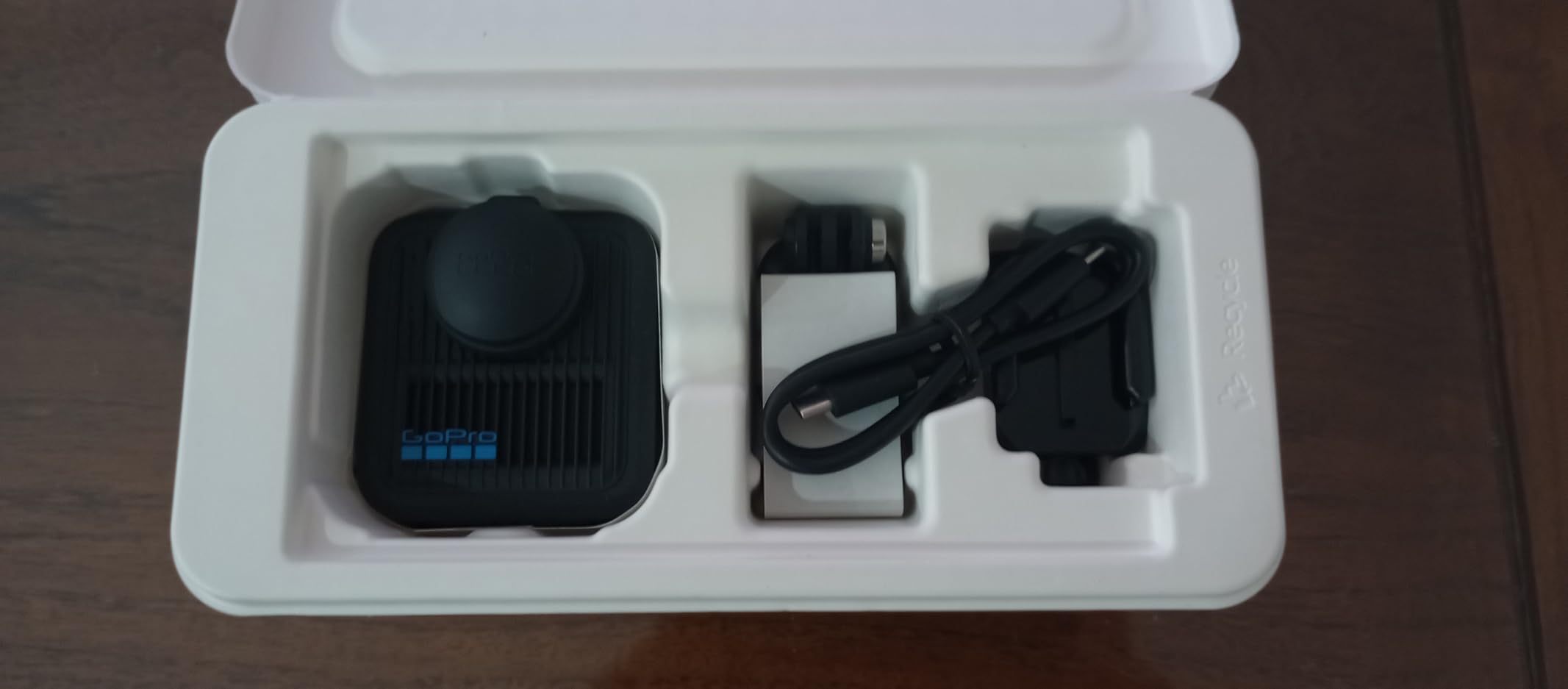
The package includes a 1960mAh Enduro battery, a curved adhesive mount, and a USB-C cable, which is a sensible bare-bones kit rather than a bundle stuffed with accessories you will never touch.
It has the smallest touchscreen here at 1.82 inches, and that is a problem with gloves on. Every other camera in this roundup has a screen you can reasonably tap while wearing a ski glove, and this one you will mostly interact with through the app or the physical controls.
There is also less long-term owner feedback on this body than on the flat Hero line, so you are buying into a newer platform. That is not a reason to avoid it, but it is a reason to buy with return options rather than expecting a forum thread to answer every question.
Is the MAX2 better than an Insta360 for ski pole shots?
For mounting flexibility, yes, because the 1/4-20 thread is a standard and most 360 competitors use a proprietary pole connector. For low light and in-camera features, the Insta360 body is the more advanced of the two.
Both handle the invisible pole effect through software rather than by having no pole in shot. Test the effect on a groomer at midday, where the background is uniform, because that is where software-based pole removal has the most work to do.
Is the small screen a problem on a mountain?
It is if you plan to change settings on the slope, which I would advise against anyway. It is not a problem if you set the camera up at the lodge, check the framing, and start recording from the remote or the app.
Mount it on a pole rather than a helmet for this reason. A pole-mounted camera needs no screen interaction once it is running, and a pole gives you far more interesting angles than a helmet does.
6. GoPro HERO13 Black Bundle – Best Photo Quality from an Action Camera
GoPro HERO13 (Hero 13) Black – Waterproof Action Camera with 5.3K HDR Video, 27MP Photos, 1/1.9″ Image Sensor, Live Streaming, Webcam, Stabilization + 64GB Card & 50 Piece Accessory Kit – Bundle
Pros
- 27MP stills are genuinely usable as photographs
- 5.3K60 with HDR and GP-Log for grading
- 1900mAh Enduro battery
- Wi-Fi 6 transfers and timecode sync
- 64GB card included in the bundle
Cons
- Several bundled accessories are low quality
- Bundled tripod will not hold the camera
- Bulkier package for a helmet mount
The HERO13 camera itself is very good, and it is the bundle around it that needs a warning. Owners rate the camera highly for photo and video quality, ease of use, and durability, but the 50-piece accessory kit is the most common complaint in the reviews, including a tripod that reportedly will not hold the camera’s weight.
Strip the kit back to the bare camera and treat the extras as disposable. Everything you actually need on a mountain, a chin mount, a chest harness, and spare batteries, you should buy deliberately rather than accept in a bundle.
27MP photos from a 1/1.9-inch sensor are the reason this is on the list at all. That is more than most compacts manage, and on a clear morning with a long lens-less framing of a ridge line, the stills from this camera are the ones I have been most pleased with from an action body.
HyperSmooth 6.0 with AutoBoost is smart rather than merely aggressive, and 360° Horizon Lock keeps the frame level through spins and falls. The 1900mAh Enduro battery gives roughly an hour and a half of 5.3K recording, which is a reasonable figure for a cold day once you account for the drain.
Wi-Fi 6 transfers are noticeably faster than older GoPro radios, which matters when you are pulling 5.3K files off a camera in a lodge with a dozen other people on the same connection. Timecode sync for multicam editing is a real bonus if you run two cameras.
The bundle is bulkier and heavier than the bare camera, and that matters when you are mounting it to a helmet for a full day. Weight on a helmet is not just fatigue, it is a reason the camera ends up in the lodge pocket by the afternoon.
Are the HERO13 photos good enough to skip a separate stills camera?
For action, group shots, and anything you will publish quickly, yes. 27MP with a 170-degree field of view is a wide and slightly distorted view, so it is not a substitute for a proper landscape lens when you want a compressed, layered mountain photograph.
If your holiday is split between filming and photographing, a small tough compact alongside this camera covers the gap. If you are filming only, save the weight and leave it at home.
Should I buy the HERO13 bundle?
Buy the camera with the card, and source your own mounts. The included card is convenient but the accessory kit is where the value of these bundles usually evaporates.
The reviews are clear that the low ratings attach to the accessories rather than the camera. If you read past the bundle complaints, the camera itself scores well for durability and image quality across snow, water, and mountain use.
7. AKASO Brave 7 LE – Most Versatile for Ski Resorts
Pros
- Two batteries in the box at this tier is rare
- IPX7 body works in snow without a housing
- 107g is the lightest camera here
- Dual screens
- External microphone support
Cons
- 4K limited to 30fps
- Weaker low light than flagship sensors
- Companion app is not as polished
This is the camera I hand to friends who want to film a family holiday without thinking about it. Two 1350mAh batteries in the box roughly doubles your on-mountain recording time, and at that tier almost nobody ships two batteries.
The IPX7 body is water-resistant without any housing, which on a ski day is the important detail. You are going to get slush sprayed on it at the bottom of the run and snow on it at the top, and the bundled housing is there for deeper water rather than for snow.

At 107g it is the lightest camera in this roundup by some distance, and on a helmet you feel that immediately. For kids on skis, or for anyone wearing a helmet all day, weight is the factor that decides whether you keep the camera on or stash it in the pack by lunch.
6-axis EIS 2.0 does a credible job on fast groomers and moderate moguls. The dual screens let you frame a vlogging shot without taking the camera off the mount, and external microphone support is a genuine addition at this price.

4K is limited to 30fps, so there is no 4K60 slow-motion option. If you want a ski line played back at half speed, this camera will not do it, and that is a real limitation for anyone whose idea of ski footage is smooth motion rather than a diary.
Low light is the other limit. The sensor is a step below the flagship bodies, so on an overcast afternoon under flat cloud the footage looks softer and noisier. Daylight on a groomed piste is where this camera is genuinely happy.
Is a budget action camera good enough for a family ski trip?
For the use most people actually have, yes. Daylight runs, kids on a green run, group footage at the base area, and clips for social media are all within its abilities, and the second battery means you are not rationing.
If your priority is slow motion or dusk footage, spend more. Those two things separate the cheap bodies from the good ones, and no amount of editing fixes a 30fps 4K ceiling.
Does the AKASO app matter if I barely use it?
Mostly not, provided you use the wrist remote or the physical controls. The app is functional rather than pleasant, and the workflow that matters on a mountain is starting and stopping a clip, not browsing effects.
Reviewers consistently name the dual screens and the two included batteries as the reason this camera stands out in its class. The app rarely gets mentioned except as something to live with.
8. AKASO EK7000 – Best Starter Action Camera
AKASO EK7000 4K30FPS 20MP WiFi Action Camera with EIS Ultra HD 131FT Waterproof Underwater Camera Remote Control 4X Zoom Support External Microphone Black
Pros
- Highest review volume in this roundup by a wide margin
- Two batteries in the box
- 131ft case included
- Wrist remote starts recording from a pole
- 4K30 and 1080p60
Cons
- Muffled built-in microphone
- Grain and dropped frame rate in low light
- Wi-Fi app can stop recording unexpectedly
The EK7000 is the camera most people will meet first, and with a review base this large you can find a long-term owner report for almost any question you have about it. Buyers routinely say the video quality exceeds what they expected at this level, and the accessory bundle rivals what premium brands charge extra for.
Two batteries and a wrist remote is the combination that makes it work on a ski day. The remote lets you start a clip from a glove or a pole, which is exactly what you need when the camera is mounted somewhere you cannot reach.
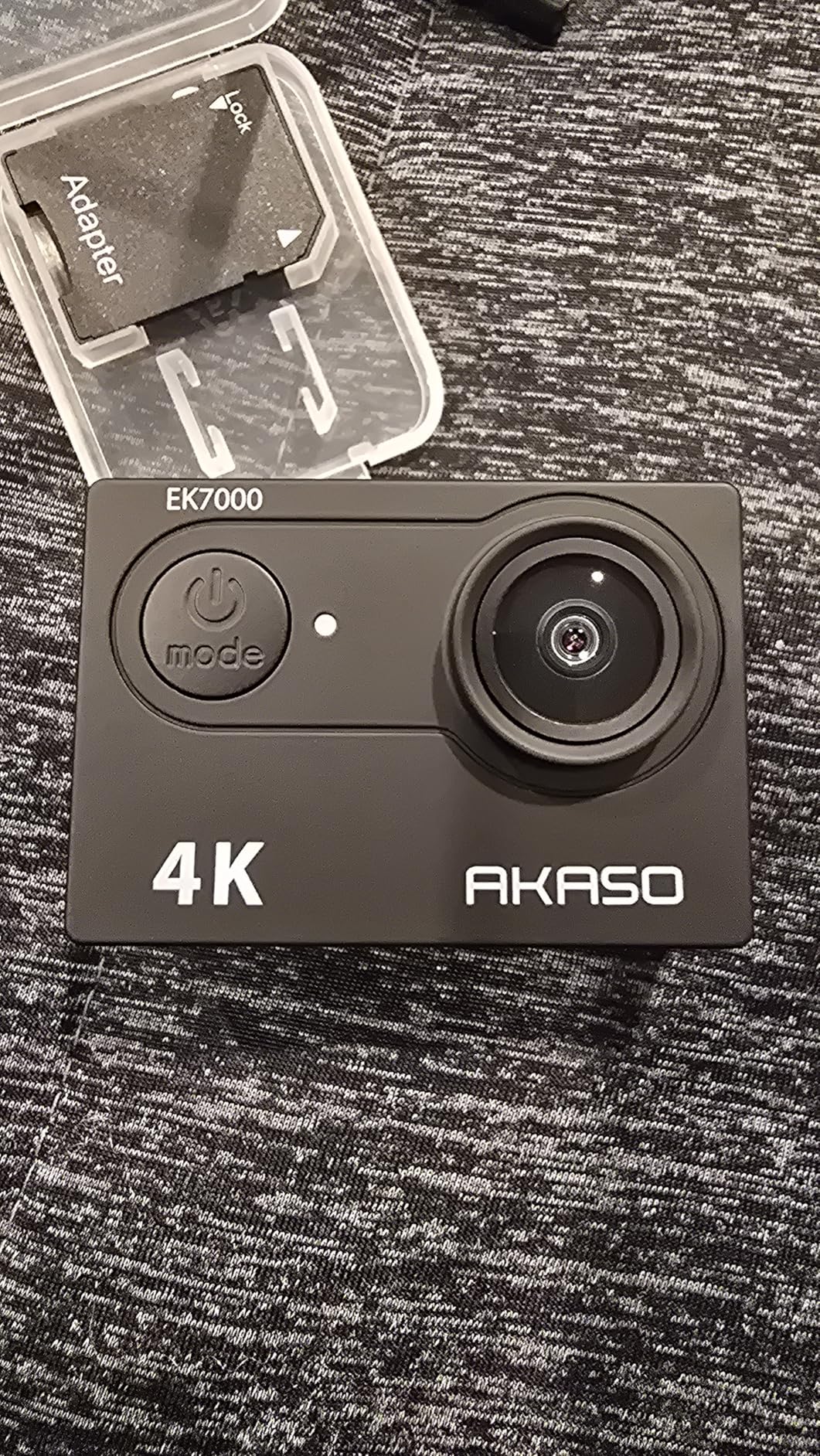
Audio is the weakest part of this camera. The built-in microphone is muffled, and on a windy ridge the recording is mostly air moving past a small microphone. If your plan is to record commentary or a review of the day, use an external microphone.
Low light is the other limitation, and it shows up in two ways: the frame rate drops and grain climbs under heavy overcast or at dusk. Shooting at 1080p60 instead of 4K30 gives a more lifelike result in low light on this body.
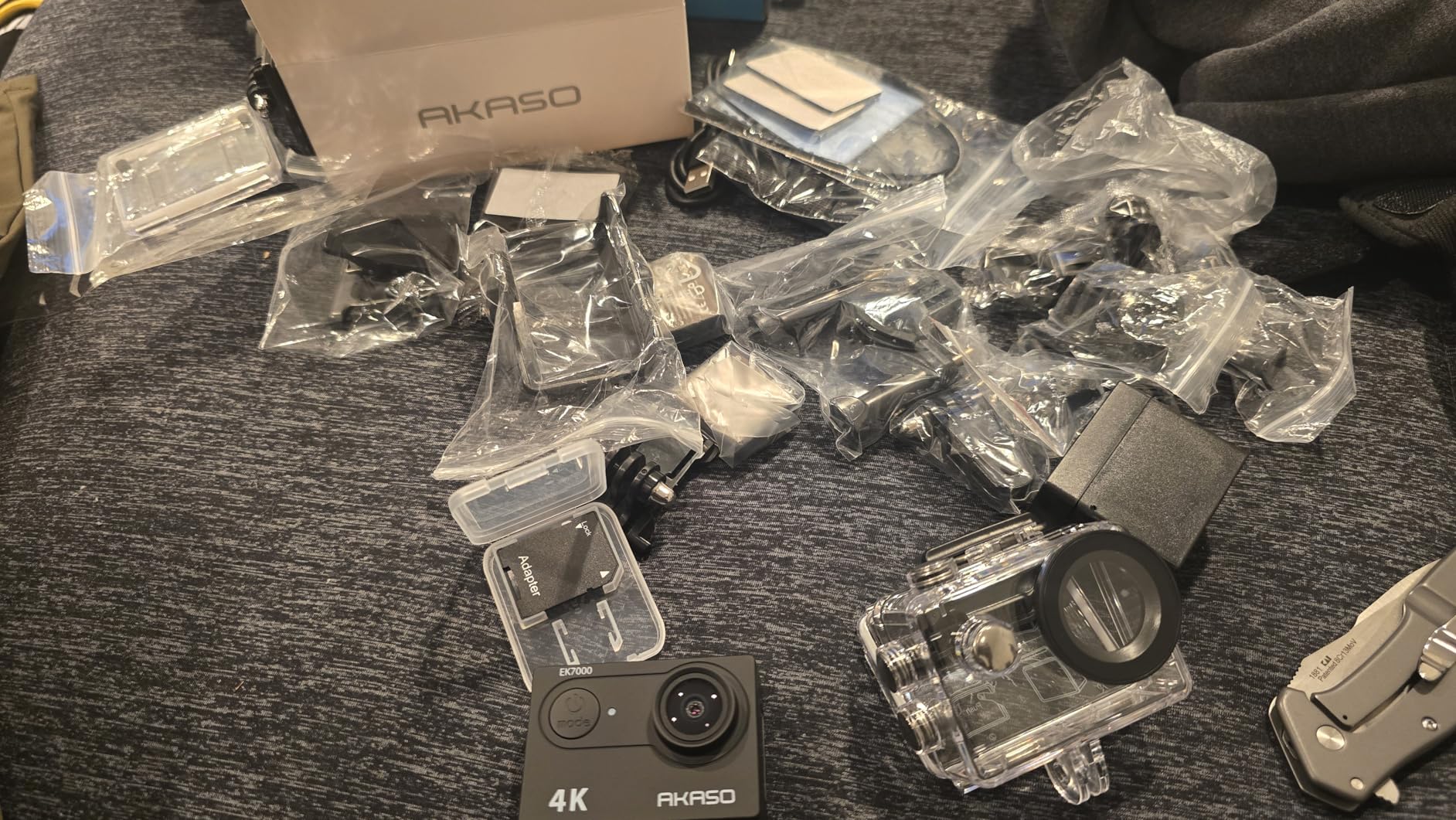
Do not trust the Wi-Fi app to control recording. Owners specifically report that app control can stop recording unexpectedly, which on a mountain means coming back to a camera that was not filming. Use the physical buttons or the 2.4G wrist remote instead.
The battery door is stiff and not hinged, which is a small thing that becomes annoying on the first cold morning when your fingers are not working properly. The microSD card is not included, so add that to your list before you leave.
Is the EK7000 good enough to bring on a first ski trip?
Yes, comfortably, for anyone filming in daylight. It records 4K30 and 20MP stills, comes with a waterproof case and two batteries, and costs a fraction of anything else on this list.
It is not a camera for dusk, storm days, or slow motion. Know that before you buy and you will be happy with it for a holiday rather than disappointed by it.
Why do so many people buy this camera?
It is the best-selling model in Sports and Action Video Cameras and it has been for a long time, and the accessory bundle is a large part of why. There is a deep second-hand market, which also means used examples are easy to find if you want to try one cheaply.
Multiple units can behave slightly differently sensor-wise, so if you plan to run two cameras together for multicam editing, buy the same model twice rather than mixing brands. That matters more for 360 and high-frame-rate work than for casual clips.
9. AKASO Brave 4 – Best Adjustable Field of View
AKASO Brave 4 Action Camera 4K30 Ultra Hd Waterproof Underwater Camera
Pros
- Four selectable field of view settings in one body
- Tighter 70° framing is unusual at this level
- Two 1050mAh batteries and a dual charger included
- Wide accessory kit
- Front and rear screens
Cons
- Menu system and button flow need learning
- Documentation is poor
- Limited depth of field on close-ups
The reason this camera is on the list is the field of view control. It shoots at 170, 140, 110, or 70 degrees, and switching between them means you can film a wide group shot and then a tighter follow-cam from the same mount without changing cameras.
On a ski pole or a wand that is a genuinely useful tool. The 70-degree setting gives you a much less distorted view of a rider coming towards you, which is the kind of shot that looks amateurish when it is shot at maximum ultra-wide.

Gyroscope-based electronic stabilisation smooths footage from a chest or helmet mount well for its class, and the 131-foot waterproof case is included rather than sold separately. The case is also the reason this camera is one of the few in the roundup that can go in a snowmelt pool without thought.
Two 1050mAh batteries and a dual USB charger are included, giving around 90 minutes each. That is not a huge figure but it is enough for a morning, and the second battery is genuinely useful in a pocket.

Usability is where this camera falls down. The menu system and button flow need a learning curve, the printed documentation is not useful, and Wi-Fi pairing instructions are unclear enough that you will probably work it out by accident.
Close-ups suffer from limited depth of field, and still photos get grainy at higher ISO settings. Both are acceptable if the camera is being used for video on a mount rather than for stills in a dim lodge.
Is the adjustable field of view worth choosing this camera for?
If you film on a pole or a wand and want the option of a tighter shot, yes, and no other camera in this roundup at this level offers that range. If you shoot from a fixed helmet mount, set it once and forget about it.
The 170-degree default is the widest in this group, and while it captures a lot it also distorts the edges noticeably. Being able to drop to 110 degrees solves a problem the camera otherwise creates.
How do I get good footage from a clunky interface?
Set everything at the lodge and shoot with the physical buttons. The controls are awkward but predictable once you have handled them twice, and a menu you are not fighting at the top of a lift is worth a few minutes of setup.
Use the wrist remote rather than the app. Wi-Fi pairing and app control are the two things owners criticise most, and both are avoidable.
10. KODAK PIXPRO WPZ2 – Best Pocket Still Camera for the Resort
Pros
- Waterproof to 15m with no housing needed
- Shockproof to 2m and fully dustproof
- 4x optical zoom for distant scenery
- 6.21 oz body fits a jacket pocket
- Wi-Fi transfer with no cables
Cons
- Slow shutter blurs moving subjects
- Screen is hard to read in direct sun
- Small bundled battery
- microSD card not included
This is the camera I put in a jacket pocket for the days I want photographs rather than footage. It is waterproof to 15 metres, shockproof to 2 metre drops, and dustproof, all without a housing, which means it does not care about slush, snow, or being dropped in a car park.
The 4x optical zoom runs from 27mm to 108mm equivalent. That range is what lets you frame a ridgeline across the valley rather than forcing a wide-angle shot of everything, and it is the feature that makes it worth carrying.
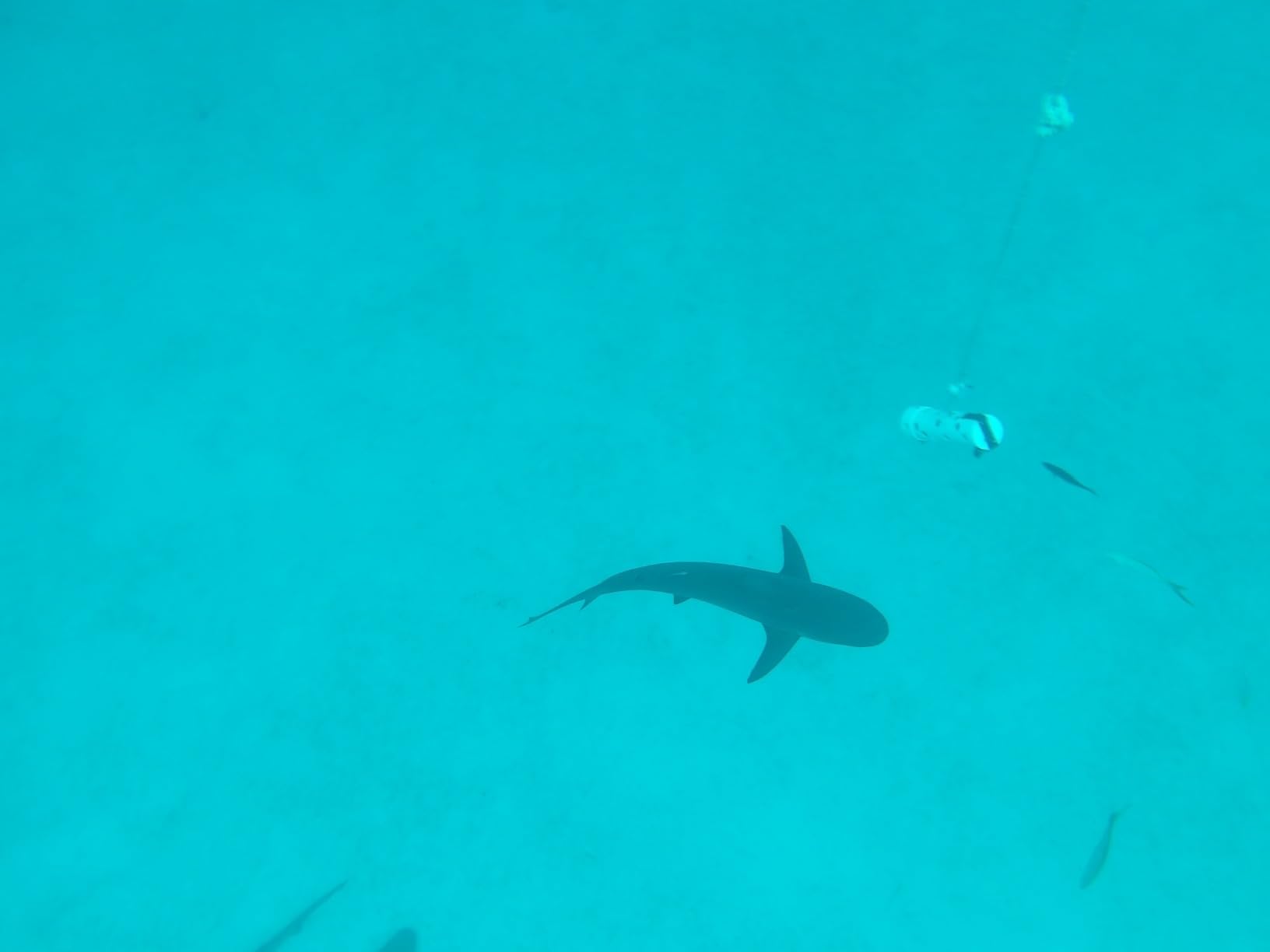
At 6.21 ounces it disappears into a pocket, which solves the problem every forum thread about ski cameras eventually arrives at: a bulky setup gets left in the lodge. This one goes out with you because forgetting it costs nothing.
The 16MP backside-illuminated sensor is a step better than typical compacts in difficult light, and 49 autofocus points cover the frame usefully. Built-in Wi-Fi transfers shots to a phone without cables and doubles as a remote viewfinder for a self portrait.

Two limitations decide what it is good for. The shutter is slow, so anything moving is likely to blur, which rules it out for action shots of riders. The 2.7-inch LCD is also difficult to read in direct sunlight, and a bright snow slope is about the worst lighting a screen can face.
The bundled 800mAh battery is small, and owners report that a larger third-party battery noticeably improves response. The microSD card is not included and is capped at 32GB, so plan your storage around that limit.
Is a waterproof compact better than an action camera for photos?
For scenery, groups, and anything at a distance, yes. An action camera shoots extremely wide and has no optical zoom, so a tight mountain photograph from a pocket compact will beat it every time.
For moving subjects, no. The slow shutter means you will be disappointed by any photograph of a skier in motion, and no amount of waterproofing compensates for that.
What does the KODAK WPZ2 do not do well?
Video is secondary here. It records 1080p full HD with digital stabilisation only, and owners report the on-screen audio sounds crunchy until you transfer the file to a phone.
If you want one camera for both, this is not it. Bring an action camera for the runs and this for the lodge terrace and the viewpoints, and each does the job it is good at.
11. OM System TG-7 – Best Freeze-Proof Compact
OM System OLYMPUS Tough TG-7 Red Underwater Camera, Waterproof, Freeze Proof, High Resolution Bright, 4K Video 44x Macro Shooting (Successor Olympus TG-6)
Pros
- Only camera here with a published freezeproof rating
- Anti-fog sealing resists the lift-to-lodge transition
- Shockproof to 2.1m and crushproof to 100kgf
- Bright f/2.0 lens for overcast snow
- Variable macro from 1cm
Cons
- Highest price for a fixed-lens compact
- 12MP sensor is modest
- 4K is 30fps only
The TG-7 is the answer to which camera is best for shooting in cold weather, and the answer is partly just the specification. It is freezeproof to -10°C, which is the only published freeze rating in this roundup, and everything else about the body is built around surviving a resort rather than a studio.
Anti-fog sealing addresses the problem every cold-climate photographer hits: coming off a freezing chairlift into a warm lodge, at which point a normal camera fogs over completely for ten minutes. This one is designed around that transition.
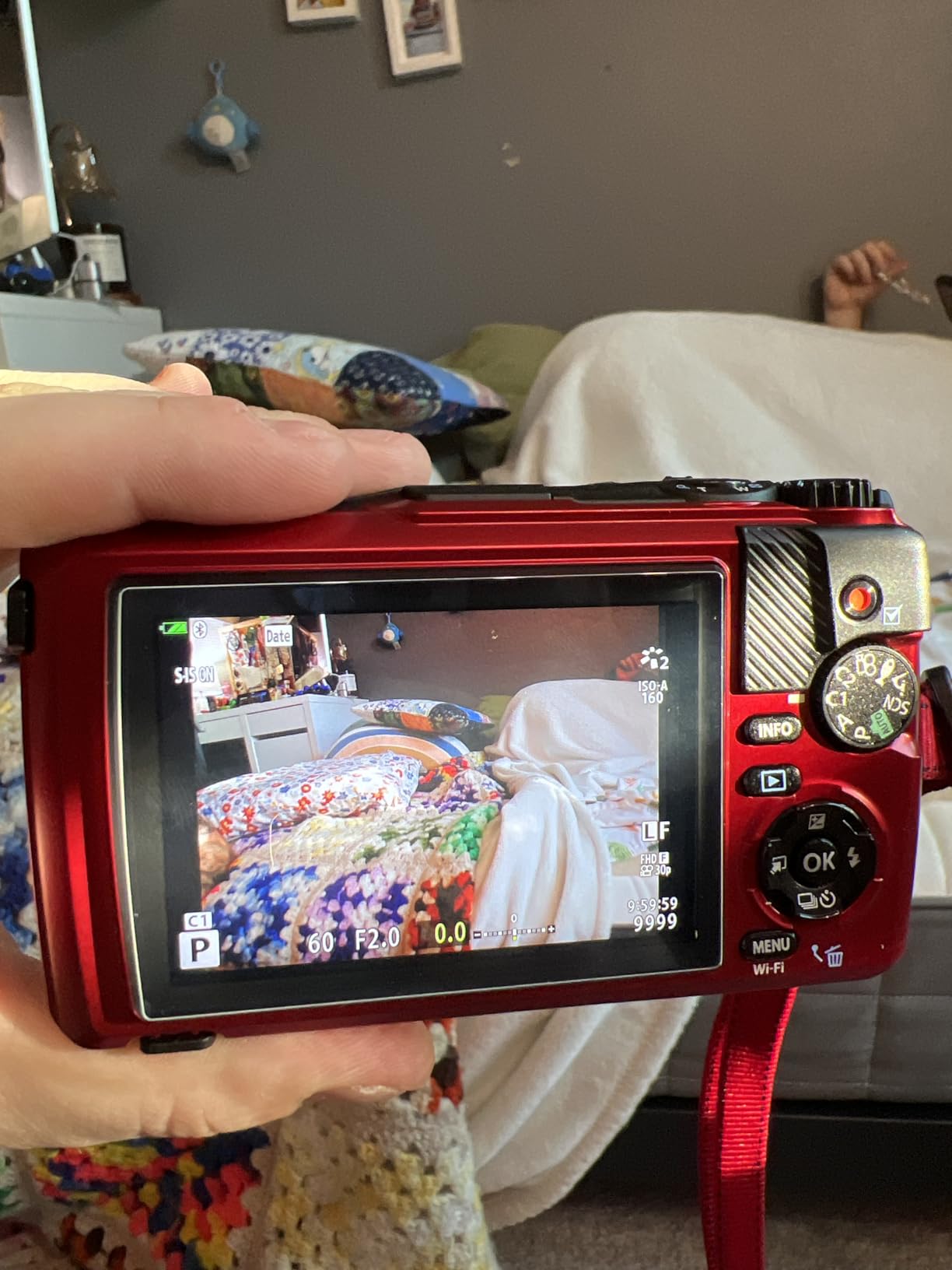
The f/2.0 lens is brighter than most compacts in this category, and on a flat overcast day that is the difference between a usable mountain photograph and a grey one. Bright snow scenes are exactly the case where a fast lens earns its place.
It also records 4K video and 120fps high-speed movie, and shoots RAW stills into SDXC cards. The 3-inch screen is large enough to review framing, and the variable macro system focuses from as close as 1cm for details of frost and snow texture.
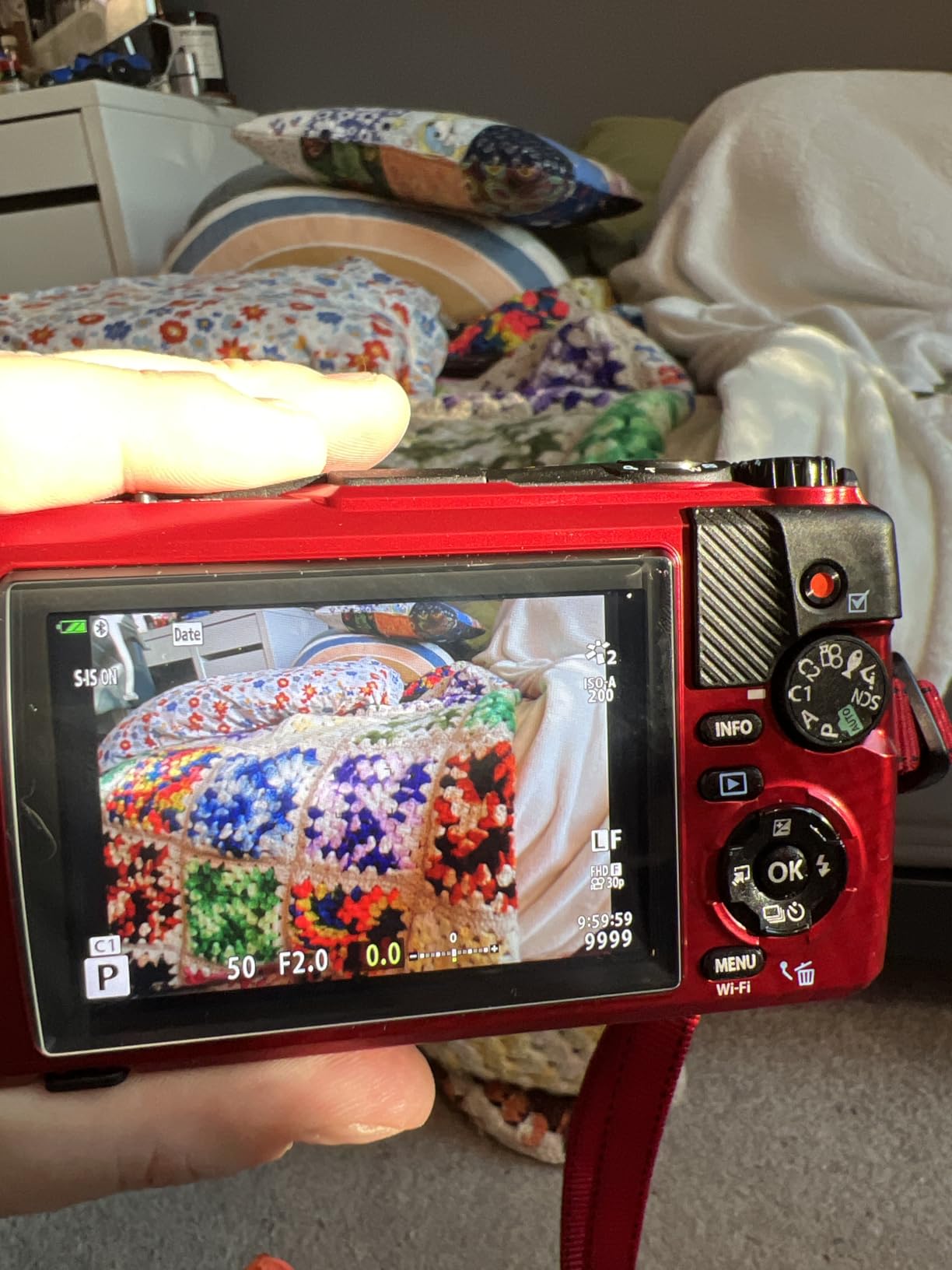
Be clear about what you are giving up. The sensor is 12MP, which is lower than most compacts and well below the action cameras here, so a heavily cropped file will not hold up. 4K is 30fps only, so it is not a slow-motion camera.
It is also the most expensive fixed-lens compact in this roundup, and the 4.2 rating reflects a premium asking price against a modest sensor. Owners who need freeze-proof reliability and macro capability are satisfied; everyone else is paying for durability they may not use.
Why does a freezeproof rating matter for skiing?
Because it is a claim a manufacturer makes about a specific operating temperature, and very few cameras in any category publish one. It tells you the internal components, the battery, and the seals have all been tested rather than assumed.
It also does not solve battery life in the cold. Cold still drains lithium-ion cells faster regardless of how well the camera is sealed, so a cold-rated camera still needs warm spare batteries.
Is the TG-7 worth the premium for a casual holiday?
If you mostly take landscape and group photographs and will not push the ISO, yes. The bright lens, RAW capability, and weather sealing suit a camera bag rather than a helmet mount.
If your holiday is mostly about filming, the money is better spent on an action camera. This is a photograph camera that tolerates a ski trip, not a filming camera that happens to take stills.
12. icefox i7 – Best Backup Body
Pros
- Two large batteries for roughly five hours of 4K
- 4K60 at a very low price
- Rated to operate down to -10°C
- 81g body
- Large mount bundle included
Cons
- Image quality and stabilisation well below name brands
- Muffled and inconsistent audio
- Some units lock in record mode
- Wi-Fi preview makes recording choppy
This one earns its place for a specific job: being a second body. At 81g with two 2150mAh batteries giving roughly five hours of 4K recording, it is a cheap way to run a dual-camera setup or to have a backup that does not matter if it gets buried in a wipeout.
It records 4K60 with a 147-degree lens and up to 30MP stills, and the operating range is stated as -10°C to 45°C, which makes it a legitimate cold-weather option on paper.
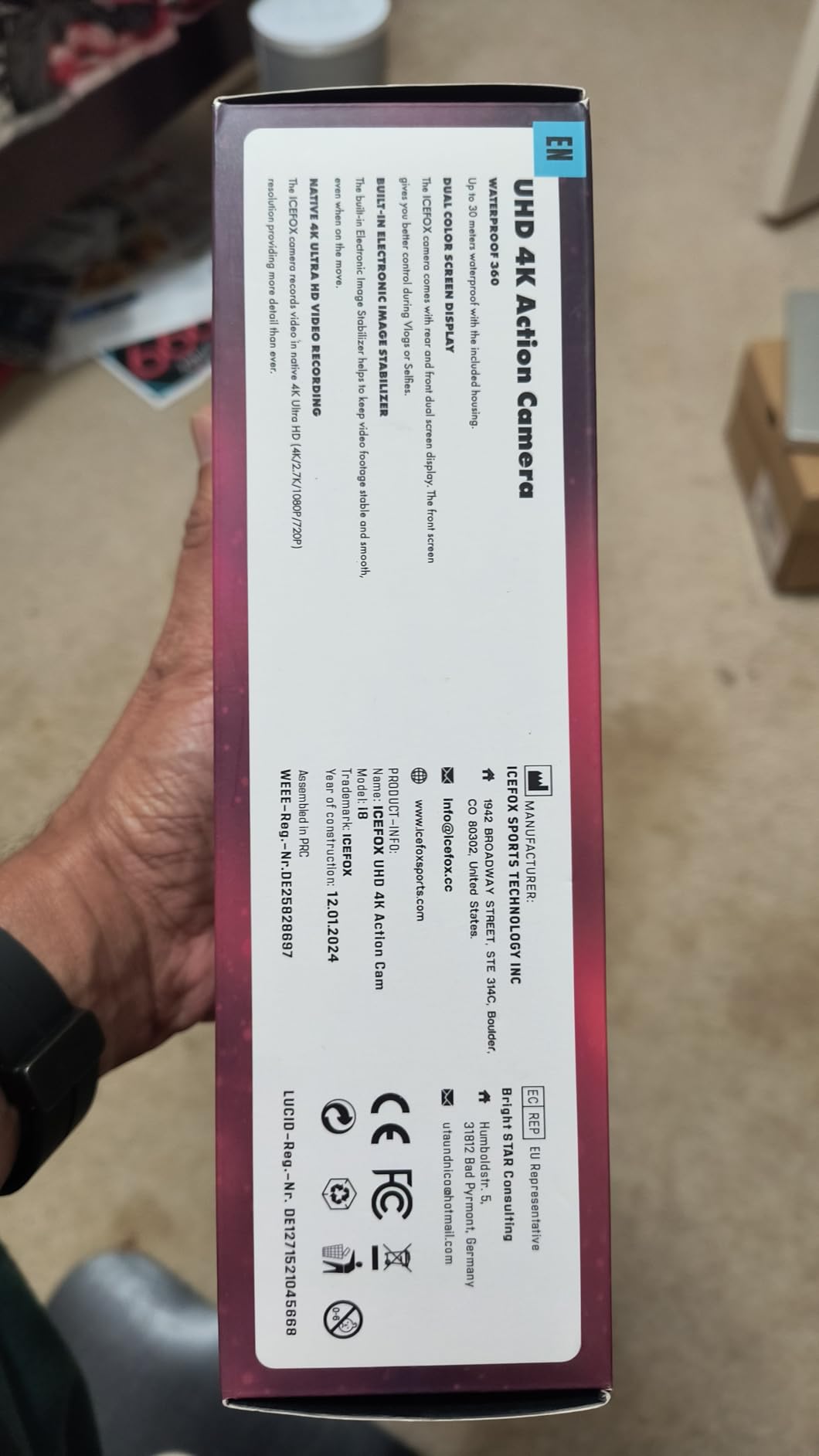
The accessory bundle is unusually large for the money, with helmet, bike, surfboard, and handlebar mounts plus a remote. For someone building a kit from scratch on a tight budget, that is a lot of included mounting options.
Buyers who use it as a utilitarian or backup camera tend to be happy, and the battery quantity is the most commonly praised feature in the reviews. As a camera in your bag for the day, it does its job.
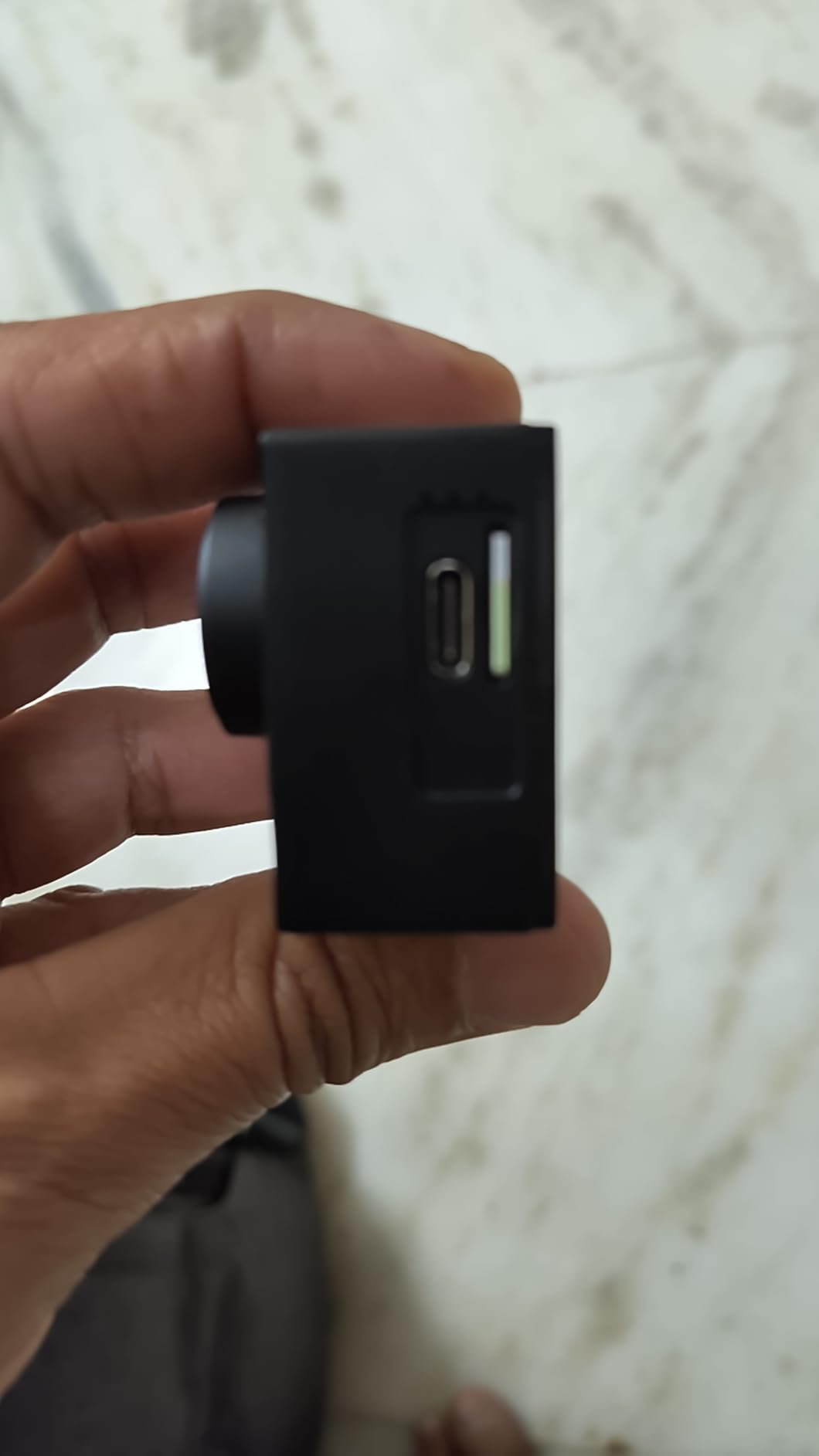
The gap to name-brand bodies is wide. Image quality and electronic stabilisation are clearly below the other cameras here, audio is muffled and inconsistent, and the 1.4-inch screen is small for framing in gloves.
Reliability is the other issue. Some units lock into record mode and need a battery pull to reset, which loses the clip, and Wi-Fi live preview makes recording laggy. The partly non-English interface is a further friction. Treat it as a spare, not a primary.
When is a cheap second camera actually worth it?
When you want two angles and the second angle is not the important one. A pole cam on the group while a good camera films from the helmet is a sensible use, and a wipeout that destroys the cheap body costs you nothing.
It is not worth it if you intend to publish the second angle. The quality difference in low light and on fast movement is visible in any normal viewing, not just in a side-by-side.
Should I consider this instead of a mainstream brand?
Only as a spare. The lowest rating in this roundup reflects a real spread of opinion, with fans calling it a functional substitute and critics finding picture quality, stabilisation, and firmware reliability clearly lacking.
Budget better by buying a mainstream body with fewer accessories. Every premium camera here is a better use of the same money than a cheap camera with a large box of mounts you will not use.
Cold-Weather Battery Life: The Number That Decides Your Day
Cold weather battery life is the loudest complaint in every ski forum, and it is the one factor that ends a camera’s usefulness mid-afternoon. Cold reduces lithium-ion capacity, so the same battery that records for an hour at sea level can run well short of that in the cold, and the effect compounds when the battery is warm on the chairlift and then hits cold air on the ridge.
Only two cameras in this roundup publish a cold temperature rating. The DJI Osmo Action 4 battery is rated for operation down to -20°C with up to 150 minutes, the Insta360 X4 is rated to -4°F, and the OM System TG-7 is freezeproof to -10°C. Everywhere else, you are working from warm-weather figures, so plan for roughly half to two-thirds of the published number on a deep winter day.
The X5’s 208-minute figure is the largest capacity here and the reason it rarely dies on a day. The GoPro bodies quote 70 minutes at 5.3K60 and about an hour and a half on the larger Enduro cell, and the cheaper bodies quote 90 minutes to two hours on much smaller cells. Those are all warm-weather numbers.
Where to keep the spares is the practical part nobody covers. An inner pocket against your skin keeps batteries at body temperature, which is the single most effective thing you can do. A lodge locker works only if you go back into the lodge, and a power bank in the pack is the answer for anyone on a touring day with no lodge at all.
Budget three batteries for a full resort day on any camera in this roundup except the X5, and swap them inside a jacket rather than on a lift. For the wider question of what to carry on a ski day at all, our guide to ski bags and pack choices covers how much weight you are actually hauling.
Where to Mount a Ski Camera
The chin mount is the default recommendation, and it is the default for a reason. A camera under the helmet brim points where your head points, so the horizon stays level and your hands and skis stay in frame, which is the shot most people want and almost nobody gets from a top mount.
A top mount shows more of the mountain but flips the horizon every time you look down, and the top of a helmet is the worst place for weight because it is the highest point and the least stable. Use it for establishing shots, not for the whole day.
A chest harness gives a lower, more dynamic perspective and reads well for social clips, but the horizon moves with your breathing and the constant compression looks strange if you are not used to it. It is a second camera position rather than a primary one.
A pole mount is the answer to the framing problem that comes up over and over in ski forums, where you cannot tell whether your subject was in frame after the run. A 360 camera on an extension pole solves it properly because you choose the angle afterwards, and the effect of the pole disappearing from the shot makes the footage look like it came from a following drone.
On mounting friction, everything should be a standard thread or a magnetic quick-release. Changing a mount in gloves, in a lift queue, at altitude, is where most people give up and put the camera back in the pocket, so pick a system that comes apart with one hand.
Whatever you mount, wear proper gear. A camera is not worth a frostbitten forehead, and the ski gloves we recommend are thin enough that you can still operate a touchscreen with them on.
How to Choose a Ski Camera That Lasts the Day
Cold performance is the first filter. Look for a published operating temperature before you look at anything else. Only a handful of cameras state one, and if yours does not, assume you are carrying at least two spare batteries.
Waterproofing needs the right kind. A camera rated to 10 or 18 metres without a housing will handle snow, slush, and meltwater. A camera that is only waterproof with the included housing is fine for skiing but you will be assembling a case in a car park at 8am, which is a bad start to the day.
Stabilisation and horizon lock beat resolution. Stabilised 4K is more useful than shaky 8K, and a horizon lock that corrects roll through a full rotation is what keeps crash footage usable. A wide field of view with weak stabilisation will look worse than a tighter one that is steady.
Sensor size decides your low light. Ski days are frequently flat and grey, and a larger sensor with bigger pixels produces a cleaner file than a small one. This is the main reason the DJI Osmo Action 4 outperforms cameras with higher resolution on the box.
Check the mount ecosystem before you buy. Brand lock-in is real. If the brand you are considering does not make a chin mount for your helmet, or a pole adapter for the pole you own, you will be solving a hardware problem in a lift queue with gloves on.
Storage and spares are part of the camera. High-bitrate 8K and 360 files fill cards quickly, and many bundles do not include one. Budget for fast microSD cards, at least three batteries, and a card reader in the pack rather than in the lodge.
Our related guide covers cameras for ski resort action photography in more depth on the stills side, including the telephoto choices that none of the roundups on this topic cover.
What Not to Buy for a Ski Resort
Do not buy a single-battery kit. The cheapest and most common mistake. A camera that ships with one battery is a camera that dies at 1pm unless you buy spares, and cold makes that worse.
Do not chase resolution. 8K on a small sensor with weak stabilisation produces a shakier, noisier file than clean 4K. Resolution is a secondary consideration to sensor size and stabilisation on snow.
Do not buy a brand with no chin mount for your helmet. Check that the mount you need exists before the camera, not after. The best camera in the world is useless if the only way to mount it is a strap.
Do not buy a drone and assume you can use it. Many resorts restrict or ban drones, and the rules vary by resort and by season. Check the specific mountain before you fly, and assume a tripod or a pole is prohibited on lifts even when a helmet mount is fine.
Do not buy an old generation at a discount. Two generations of action camera behind the current one means worse low light, worse stabilisation, and no current app support, and the saving rarely compensates.
Do not buy a large accessory bundle. The bundled extras in discount packages are consistently reported as low quality, and the tripod is usually the first thing to fail when it actually has to hold a camera.
Frequently Asked Questions
What is the best camera for filming skiing?
The DJI Osmo Action 4 is the best all-round choice. It has a 1/1.3-inch sensor for clean footage in flat light, a 155-degree field of view that works from a chin mount, 4K at 120fps for slow motion, and a battery rated for operation down to -20°C.
Can I use a GoPro while skiing?
Yes. Every GoPro in this roundup is waterproof without a housing, and the HyperSmooth models hold up well on moguls. Check your resort’s rules first, since some restrict tripods and pole mounts on lifts even when helmet mounts are allowed.
What is the best 360 camera for skiing?
The Insta360 X5. It records 8K30 360 video from dual 1/1.28-inch sensors, has replaceable scratch-resistant lenses, and runs about 208 minutes per battery, so it rarely dies mid-day. Mount it on an extension pole so you can reframe the shot after the run.
Which camera is best for shooting in cold weather?
The OM System TG-7 is the only camera here with a published freezeproof rating, at -10°C, and its anti-fog sealing handles the transition from a freezing lift into a warm lodge. Among action cameras, the DJI Osmo Action 4 battery is rated for -20°C operation.
Which action camera has the best battery life?
The Insta360 X5 leads on capacity with a 208-minute figure. The DJI Osmo Action 4 is rated for up to 150 minutes at -20°C. On any camera, expect the cold to cut runtime further, so keep spare batteries in an inner pocket against your body.
Do I need a waterproof case for skiing?
Usually not. Cameras rated to 10 or 18 metres without a housing handle snow, slush, and meltwater, and a housing adds bulk and another cold-prone seal. A case is worth adding only if you plan to submerge the camera in a snowmelt pool or an ice lake.
The Verdict: Which Ski Camera Should You Buy?
The best cameras for ski resorts fall into three groups, and picking the wrong one is the expensive mistake. For action video, the DJI Osmo Action 4 is the pick, with the largest sensor in a flat body, 4K at 120fps, and the only published -20°C battery rating in the group. For 360 footage and filming your family without a second person behind the camera, the Insta360 X5 wins on runtime and lens replaceability.
For photographs, the OM System TG-7 is the one built for genuine winter, and the KODAK PIXPRO WPZ2 is the one you will actually carry. For a first holiday with a tight budget, the AKASO Brave 7 LE gives you two batteries and a body you can use in snow without a housing.
Whichever you choose, buy spare batteries and keep them against your body, check your resort’s rules on poles and tripods before you arrive, and set the camera up at the lodge rather than on the lift. Our picks above are the ones we would carry, and the button on each review takes you to the current listing.