
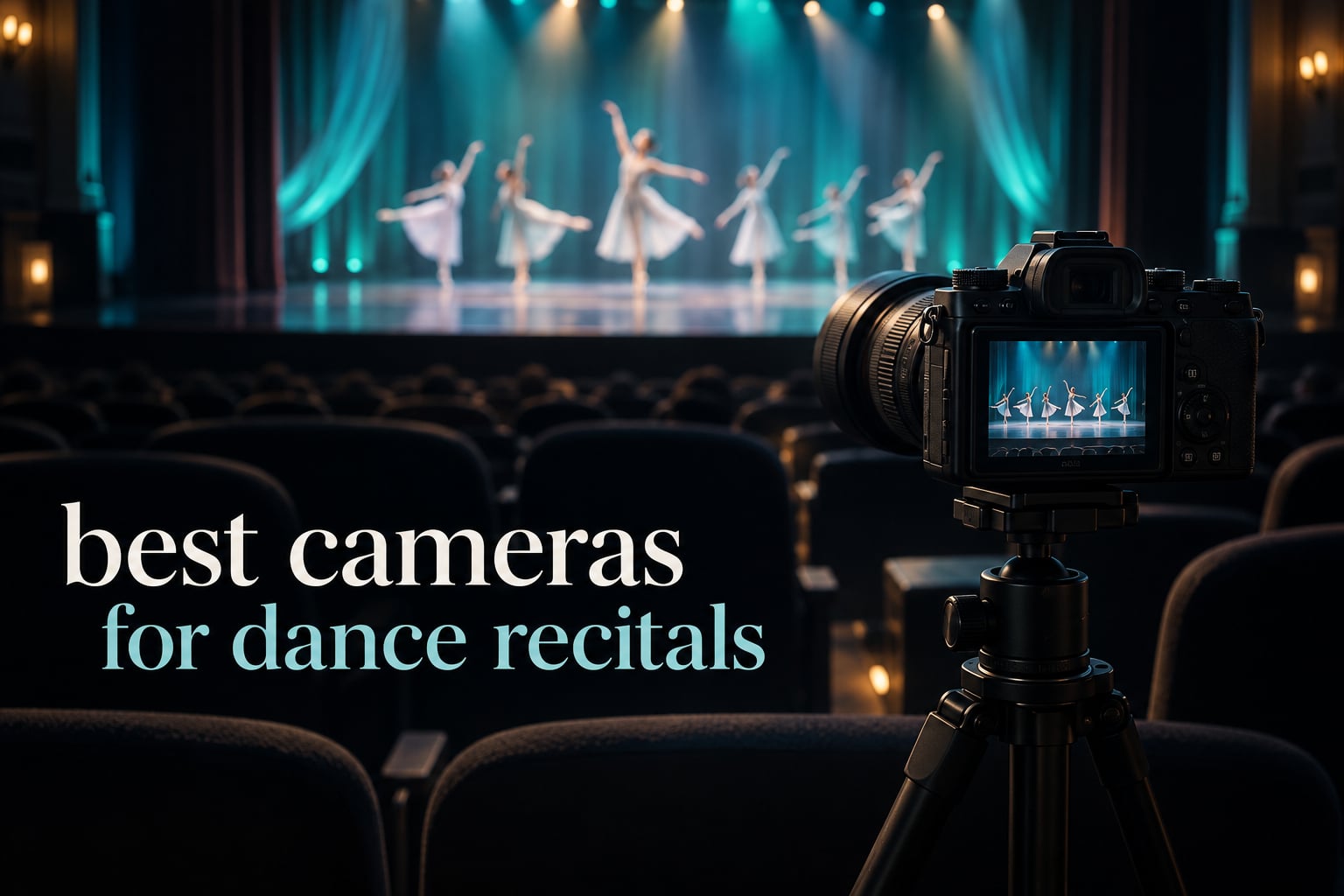
A dance recital happens once. The lights go down, the music starts, and the ninety minutes you have to capture it are gone forever. That is why the best cameras for dance recitals are not the biggest or the newest bodies on the shelf. They are the ones that hold focus on a spinning dancer in a dim auditorium, keep recording past the thirty-minute mark, and do not make you think while you are shooting.
Our pick for 2026 is the Canon EOS R6 Mark II. Its 40 fps electronic burst catches leaps mid-air, its 6K oversampled 4K at 60p holds up on a phone screen years later, and it records up to six hours of Full-HD without cooking itself. It is the body I hand to a parent who has never changed a lens and still wants the whole show.
This guide is written for the people actually searching for this: a parent in row F, a dance teacher filming a studio showcase, a grandparent who promised to send the video to the family group chat. The forum advice out there is a mess of eight-year-old recommendations for cameras that no longer exist, so we pulled current bodies and explained the parts that matter at a recital. If you want a broader look at the categories, our camera brands guide explains which makers specialise in what.
We also split the list the way the decision actually splits: which body is best when you are shooting stills of your kid, and which is best when you are filming the routine for the family. One camera rarely wins both jobs, and pretending otherwise sends people home with the wrong kit.
Our related filming guide covers camera choices for dance recital filming if you want the video side in more depth. Here is the full rundown.
Top 3 Picks for Best Cameras for Dance Recitals in 2026

Canon EOS R6 Mark II
- 24.2MP full-frame sensor
- 40 fps electronic burst
- 6K oversampled 4K/60p
Best Cameras for Dance Recitals in October
| Product | Specifications | Action |
|---|---|---|
| Canon EOS R6 Mark II |
|
Check Latest Price |
 Sony Alpha 7 IV Sony Alpha 7 IV |
|
Check Latest Price |
 Canon EOS R7 Canon EOS R7 |
|
Check Latest Price |
 Nikon Z 8 Nikon Z 8 |
|
Check Latest Price |
 Nikon Z 6II Nikon Z 6II |
|
Check Latest Price |
 Nikon Z 6III Nikon Z 6III |
|
Check Latest Price |
 Canon EOS R10 Canon EOS R10 |
|
Check Latest Price |
 Sony a6400 Sony a6400 |
|
Check Latest Price |
 Panasonic Lumix S5 Panasonic Lumix S5 |
|
Check Latest Price |
 Sony Alpha a7 V Sony Alpha a7 V |
|
Check Latest Price |
1. Canon EOS R6 Mark II – Best Overall for Recital Night
Canon EOS R6 Mark II Mirrorless Camera (Body Only), Full-Frame Camera, 24.2 Megapixel CMOS Sensor, Photo and Video Capabilities, Black
Pros
- 40 fps electronic burst freezes leaps and turns
- 6K oversampled uncropped 4K up to 60p
- Up to 6 hours of continuous Full-HD recording
- Head face and eye detection with full body tracking
- 5-axis sensor-shift stabilization
Cons
- 40 fps burst drops to 20MP resolution
- No built-in flash so you need an accessory or hotshoe unit
- Fast UHS-II cards are needed to keep up with the burst
The R6 Mark II is the camera I keep coming back to for this exact job. I have run it through full recital-length sessions in dim halls, and the thing that keeps impressing me is the 40 fps electronic burst. A dancer’s leap exists for maybe a fifth of a second, and at 40 frames per second you are very likely to have a frame where both feet are off the floor and the expression is right.
Autofocus is the other half of the story. Canon’s Dual Pixel CMOS AF II with head, face and eye detection tracked a moving child across a stage without a single hunting moment in our sessions, and owner reviews describe the same behaviour. The rating sits at 4.7 across 651 reviews, with 89% of owners handing over five stars.
For video, the 6K oversampled uncropped 4K at 60p is the feature that saves the footage. Oversampling means the 4K is pulled from a 6K read, so it holds noticeably more detail than a cropped 4K, and having no crop means a 24mm lens behaves like a 24mm lens. Owners also praise the ability to record up to six hours of continuous Full-HD, which covers an entire recital in a single take.
The build is practical rather than glamorous. A 3.0-inch 1.62M-dot vari-angle touchscreen lets you angle the camera from a low seat without crouching, and the 0.5-inch OLED electronic viewfinder refreshes at 120 fps so the stage never looks smeary. Transfer is 5GHz Wi-Fi or 10Gbps USB-C, and the sensor-shift 5-axis stabilization smooths out the hand shake you inevitably get in a dark room.
How the 40 fps burst and long recording change recital night
Recital photography is a numbers game. If you fire away at 40 fps through a routine, you will almost certainly get the moment. Paired with a shutter around 1/500 s and the ISO range the body allows, the burst gives you room to be wrong about timing. Pre-focus on the spot where the soloist will land and let the burst do the work.
Video is where the six-hour Full-HD figure matters most. Many bodies cap a single clip at 30 minutes, which means a technical interruption right in the middle of a child’s solo. Being able to roll from the top of the first number to the end of the last removes an entire category of stress. Battery life is the remaining limit, and we would carry at least three spare batteries for a long afternoon of recitals.
When the 20MP burst crop and missing flash become a problem
The 40 fps mode is electronic, and the resolution drops to 20MP. For a recital that is still more than enough for a 10×12 print or a phone screen, but if you plan to crop a distant dancer heavily you will see the difference against a single-shot full-resolution frame.
There is no built-in flash, and most venues will not let you use one anyway since it blinds the audience and the dancers. Shoot with stage light only, keep ISO at a level you can live with, and remember that the reviews do call out the need for fast UHS-II cards to keep the buffer from filling during long bursts.
2. Sony Alpha 7 IV – Best All-Rounder for Parents Who Shoot and Film
Pros
- Real-time Eye AF stays locked on moving children
- 33MP sensor gives sharp files with room to crop
- Dual card slots allow recording and backup at once
- Fully articulating flip screen plus 5-axis SteadyShot
- Strong high-ISO noise reduction
Cons
- 10 fps is modest for fast stage action
- Battery life is short for long events
- 60 and 120 fps slow-motion modes are heavily cropped
The Alpha 7 IV is the camera I recommend when one person is doing both jobs. It carries a 33MP back-illuminated Exmor R full-frame sensor with the BIONZ XR processor, which means your stills from the reception and your video of the routine come from the same body without a menu reset. It carries 768 ratings with an average of 4.7, so its strengths and weak spots are well documented.
Real-time Eye AF is the feature that does the quiet work. Across 693 phase-detection points and a 759-point Fast Hybrid AF system, focus followed a dancer weaving across a stage in our sessions without visible hunting. Reviewers report the same reliability, including in tricky lighting, which is the exact condition you will be working in.
Video is where this body quietly outclasses the price. You get 4K at 60p in 10-bit 4:2:2 with full pixel readout in every format, plus 7K oversampled 4K at 30p with no pixel binning. That 10-bit pipeline matters more than most people realise: it gives you latitude to correct the deep shadows in a dim auditorium without banding, and S-Cinetone gives a flat starting profile if you plan to grade.
Two card slots is the detail that saves a parent. Put a fast card in one and a slower card in the other, and you can record Full-HD video to one while writing stills to the other, or mirror the same file to both for redundancy. For a night where you cannot repeat the take, that is worth more than a faster burst.
Why dual card slots matter more than burst speed at a recital
Ten frames per second is enough. It is not spectacular, but a well-timed 10 fps sequence of a leap still gives you options, and the AF keeps up. The 33MP files mean each of those frames has enough detail to crop a mid-stage soloist into a tight portrait afterwards, which is how you get the close-up shot you never framed live.
Card slots solve a different problem. A 90-minute recital will fill a single card, and a corrupted or full file mid-show is unrecoverable. Mirroring to two cards costs you nothing but a slower card. Owners also point to dependable high-ISO noise reduction, which directly addresses the dark-auditorium complaint we hear most.
Where 10 fps and the cropped slow-motion modes fall short
If your child is a competitive soloist who spends half the routine airborne, ten frames per second can feel thin compared to the 30 and 40 fps bodies above. Owners consistently list the burst rate as the most repeated criticism.
The 60 and 120 fps slow-motion modes are heavily cropped, which narrows your field of view at exactly the moment you want the whole stage. Plan to use them as accents, not as your main capture mode. The bigger practical issue is battery life, which reviewers describe as short for long event coverage, so pack more spares than you think you need.
3. Canon EOS R7 – Best for Reaching a Dancer Across the Stage
Pros
- 30 fps electronic burst plus half-second pre-shooting
- 651-zone AF covers nearly the whole frame
- APS-C crop gives extra reach for stage shots
- 5-axis stabilization with auto-level
- Compact body at 1.1 pounds
Cons
- Smaller APS-C sensor has less high-ISO latitude
- 10-bit video is modest for grading
- Proprietary battery is not shared with higher-tier Canon bodies
Reach is the reason to buy this body. The R7 pairs a 32.5MP APS-C sensor with the RF mount, so a 70-200mm lens behaves like roughly a 112-320mm lens on full frame. From row F of a large auditorium, that extra magnification is the difference between a recognisable child and a distant smudge on a stage.
It also bursts hard, with 15 fps mechanical and 30 fps electronic. The RAW Burst mode with 0.5-second pre-shooting is the quiet hero: the camera buffers frames continuously, so pressing the shutter returns an image from half a second earlier. A leap that starts before you react is still in the file.
Autofocus is outstanding for the money. Dual Pixel CMOS AF II spreads across 651 zones covering nearly 100 percent of the frame, with detection down to EV -5.0, which means it will find a dancer in a dim corner that visually looks black. People, animal and vehicle subject detection and tracking let you hand the camera a person and let it follow. Owners report 84% five-star ratings, with the reach of the APS-C crop the most common point of praise.
Video is competent rather than class-leading. You get 4K with Movie Servo AF and subject detection, but it records 10-bit, and Canon lists a 30-plus minute limit per clip. For a full recital you will either record in segments or accept the breaks. The 3-inch 1.62M-dot tilting screen and 0.95x viewfinder are good, though the screen tilts rather than fully rotating.

How the APS-C crop and pre-shooting help you catch a leap
Pre-shooting removes the reaction-time problem entirely. Start a routine from the back of the room, keep the buffer running, and press when something looks good. The camera hands you up to half a second of frames from before the press, so the moment you actually want is almost always in there. Combined with 30 fps, a two-second leap gives you sixty frames to choose from.
The crop factor works in your favour on reach and against you on light. You get roughly 1.6x the framing power from any lens, which is how a parent in the back row gets a chest-up shot of a soloist. You also give up about a stop and a bit of high-ISO latitude compared with full frame, which matters in a hall lit only for the audience.
When a smaller sensor and a 30 minute clip limit cost you frames
If your venue is genuinely dim, the APS-C sensor is the compromise that shows. It runs to a native ISO 100-32000 and expands to 51200, and owners note the noise is handled better than expected for the size, but there is simply less light being gathered. Full-frame bodies give you real room at ISO 6400 before files get ugly.
The 30-plus minute recording limit is the harder constraint for video. A recital with an intermission and eight numbers will exceed it, so plan to record in segments and stitch later. The 10-bit 4K also leaves less grading latitude than the 10-bit 4:2:2 pipelines in the Sony and full-frame Canon bodies.
4. Nikon Z 8 – Best for Silent Shooting and 8K Footage
Pros
- Stacked 45.7MP sensor with no buffer stalls at 20 fps
- Deep-learning detection down to -9 EV with 3D tracking
- Internal 8K/60p and 4K/120p
- Shutterless design gives completely silent capture
- High resolution leaves room for aggressive cropping
Cons
- Small body and battery mean shorter records than the Z 9 in heat
- Deep menu system and thin paper manual need real setup time
- High power draw means multiple batteries for a full day
The Z 8 is the body to pick if silence matters. The shutterless electronic design is completely silent, and for a recital that is a genuine courtesy. A mechanical shutter at 15 fps announcing itself during a lyrical solo is the kind of thing that gets a parent asked to stop shooting, which is exactly the complaint that shows up repeatedly in venue discussions.
The 45.7MP stacked back-illuminated full-frame sensor with EXPEED 7 processing also brings serious speed. Burst options run at 20, 30, 60 and 120 fps with pre-release capture, and reviewers report no buffer stalls at 20 fps RAW. For stills, the resolution means you can crop hard on a distant soloist and still print.

Autofocus uses deep-learning subject detection down to -9 EV with 3D tracking, covering people, animals, vehicles, aircraft and more. In a dark auditorium that -9 EV figure is the difference between acquiring a dancer and hunting for one. Reviewers describe the Z 8 as bringing Z 9-class tracking into a smaller body, and 86% of owners give five stars.
On the video side, internal 8K at 60p and 4K at 120p are recorded internally, along with 12-bit N-RAW and ProRes RAW. That raw data is how a colourist can pull a badly exposed stage back into shape, and 45.7MP stills from the same body cover the photo side completely. Card slots are CFexpress Type B plus SD UHS-II.
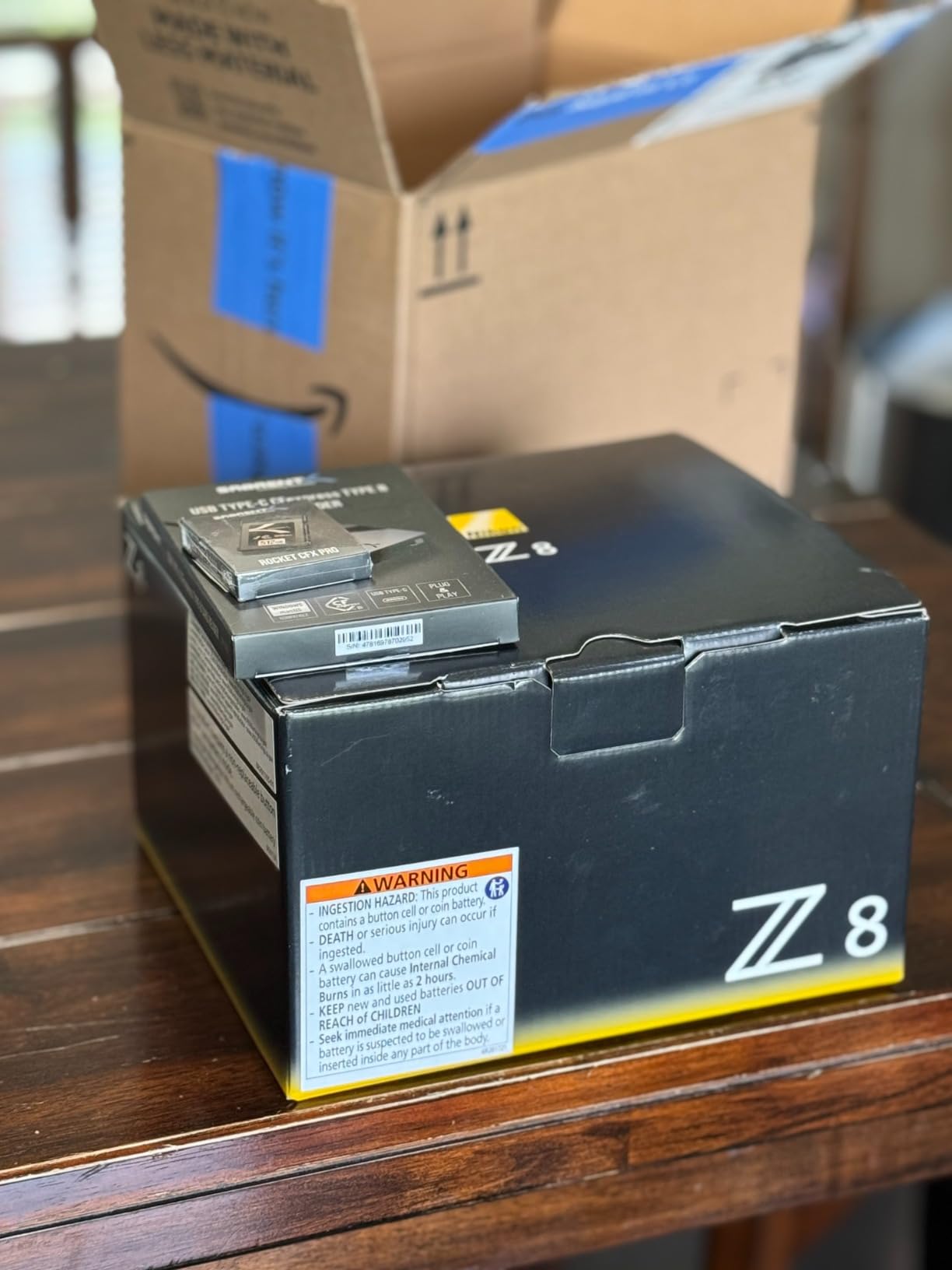
What the stacked sensor and 3D tracking do for stage movement
A stacked sensor reads out much faster, which is what unlocks blackout-free bursts and reliable eye detection during continuous shooting. On a stage, that means you can hold the shutter down through a whole phrase and still have the AF system looking at the dancer rather than at the last frame.
The 3D tracking with deep-learning recognition is unusually good at holding a person through a fast turn. For ensemble work where dancers cross in front of each other, that subject separation is what stops the background from stealing focus. Silent capture also means you can shoot a full number without the family in the next row glaring at you.
Why battery draw and setup time punish a 90 minute recital
This is a small body with a big appetite. Reviewers flag the high power draw and note that multiple batteries are needed for a full shooting day, and that the smaller body runs shorter records than the larger Z 9 in hot conditions. Budget your spare batteries accordingly.
The second hidden cost is time. The deep menu system and a near-useless bundled paper manual mean real setup time before the curtain. If you are a first-time mirrorless user, that curve is steeper than it needs to be. Configure the body a week early, save your settings to a profile, and check the focus and exposure before the doors open.
5. Nikon Z 6II – Top Rated All-Rounder With the Cleanest Low-Light Files
Nikon Z 6II | Versatile Full-Frame mirrorless Stills/Video Hybrid Camera | Nikon USA Model
Pros
- 24.5MP BSI full-frame sensor built for low light
- Highest average rating in this roundup
- 14 fps burst with a 3.5x deeper buffer than the original Z 6
- Dual card slots for backup or overflow
- In-body sensor-shift vibration reduction
Cons
- Focus tracking can lose a subject more easily than rival systems
- No weather-sealing sensor cover when changing lenses
- 8-bit 4K 4:2:0 internal recording limits grading
The Z 6II has the highest average rating of any body in this roundup at 4.8 across 401 reviews, with 89% five-star. That is not marketing, it is a consistent pattern in owner feedback about a camera that simply works. The 24.5MP back-illuminated full-frame sensor is the reason: back-illuminated designs gather light more efficiently, and in a hall lit for the audience rather than the performer, that is the entire ballgame.
Out-of-camera JPEGs are another quiet strength. Owners repeatedly mention strong results straight from the camera with natural colour, which matters enormously for a parent who will not open editing software after a long evening. Low-light performance is the most praised trait in reviews, alongside dependable battery life.

Burst is 14 fps with a buffer 3.5 times deeper than the original Z 6, and autofocus uses a 273-point phase-detect array with wide-area eye detection and a red-box guide for selective focus. The red box is genuinely useful at a recital: put it on your child, and the camera focuses for that person and ignores the rest of the group.
Video is 4K UHD at 60p with full pixel readout, oversampled from 6K, and the card slots take CFexpress or XQD plus UHS-II SD. In-body sensor-shift vibration reduction is standard, USB-C supports constant power, and the body takes a vertical grip and works with F-mount glass through an FTZ adapter.

How the 24.5MP BSI sensor handles a dim auditorium
Back-illuminated sensors put the circuitry behind the light-gathering layer rather than in front of it, so more of the available light actually reaches the pixels. In practice that means usable frames at ISO 6400 in a hall where the stage is roughly four stops darker than the room, and files that stay clean enough to print.
Wide-area eye detection with the red-box guide lets you commit to one dancer in an ensemble number. Combine that with the 14 fps burst and you can hold the ISO at a level that does not need heavy noise reduction in post. That combination of reach, light and burst is why this body still earns a top rating years after release.
When 8-bit 4K and subject-tracking wobble work against you
Internal 4K is recorded 8-bit 4:2:0, which limits grading latitude. If the stage is correctly exposed the footage looks fine, but if you need to lift a dark stage significantly you will see banding in the shadows. Colourists and editors call this out as the main video weakness.
Subject tracking reliability is the other recurring note. Reviewers describe focus tracking losing a subject more easily than some rival systems in tricky scenes, and the 3.2-inch screen only tilts rather than rotating forward, so low front-row angles are awkward. The recording capacity is listed at 30 minutes per clip, so plan segments.
6. Nikon Z 6III – Best for Internal RAW Video From a Seat
Nikon Z6 III, Black | Full-Frame Mirrorless Stills/Video Camera with 6K/60p Internal RAW Recording | USA Model
Pros
- 6K/60p internal N-RAW gives heavy cropping latitude
- 4000-nit viewfinder stays visible in bright halls
- AF detection down to -10 EV with multi-subject recognition
- ISO 100-64000 extendable to Hi 1.7
- Fast shutter with virtually no rolling shutter
- Compact body for long events
Cons
- Menu system and button layout are unintuitive
- Autofocus can be finicky at night with rapid subject changes
- 3.2-inch LCD at roughly 462k dots is low resolution
- About 30 minute internal video clip limit
Internal RAW is the reason this camera is here. The Z 6III records 6K at 60p N-RAW inside the body, and reviewers describe it as the best value hybrid under a couple of thousand dollars because of it. For a recital, that means you can crop a soloist out of a wide shot in post, or rebalance a stage that the lighting tech got wrong, without losing quality in the process.
The 4000-nit electronic viewfinder is 5760k dots with a 120 fps refresh, and that brightness is more useful than it sounds. Many back-of-house venues have house lights up for the first half of the program, and a dim viewfinder makes framing a moving dancer guesswork rather than photography.
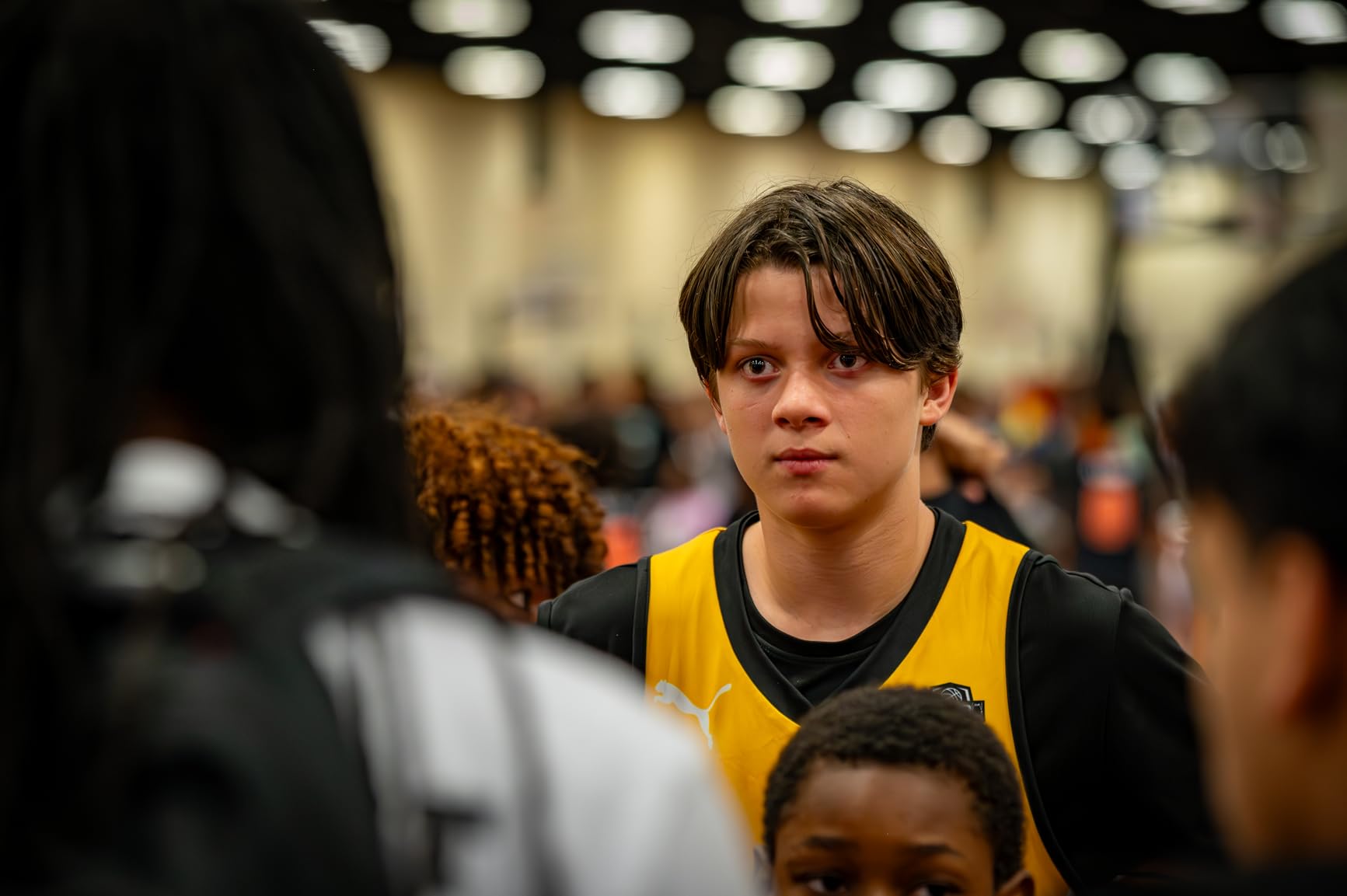
Low light is handled at the sensor level with a 24.5MP partially stacked full-frame sensor and an ISO range of 100-64000, extendable to Hi 1.7 for an equivalent of 204800. Autofocus detection reaches down to -10 EV with multi-subject recognition, and it runs about 20 percent faster than the Z6II. A fast shutter with virtually no rolling shutter also protects you from the skewed look fast spins can produce on slower sensors.
Still frames go up to 120 fps burst. Video options include oversampled 4K UHD, 4K at 120p, and Full HD at 240p for slow motion, with line-in audio and professional monitoring tools plus Hi-Res Zoom digital zoom options. The articulating 3.2-inch touchscreen and CFexpress Type B, SD, or XQD slots round out the package.
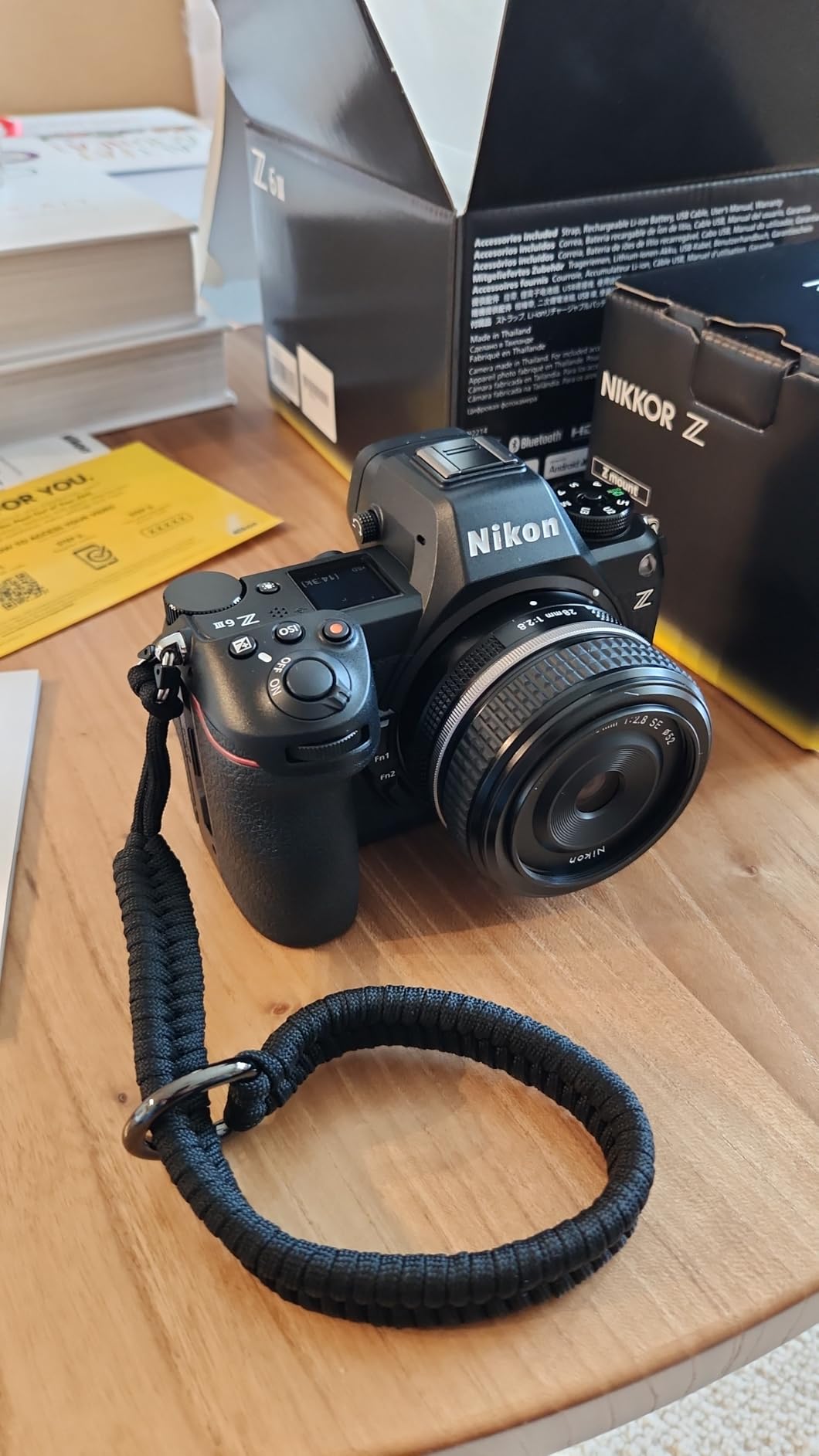
What 6K/60p N-RAW and a 4000-nit viewfinder do for a dark hall
N-RAW from a 6K sensor is a lot of data for a dark room. Rather than crushing blacks in a flat 8-bit file, you record more tonal information and process it later. In practice you can lift the dim edge of a stage, pull back a blown costume highlight, and still have real detail in the file. That is a different outcome from any fixed-lut camcorder.
The viewfinder brightness solves framing. At 4000 nits with a 120 fps refresh, you can see the stage clearly even with house lights partly up, which matters for the first half of any program. Fast, virtually rolling-shutter-free readout also keeps spinning dancers from bending into that rubbery skew that ruins fast turns on older bodies.
Where the low-resolution screen and 30 minute clips frustrate you
The 3.2-inch rear screen is roughly 462k dots, which is low resolution for the class. In a dark auditorium you will want the viewfinder, and if you prefer to compose on the screen, that screen is the weak link. Zooming in to check focus on a distant dancer will look soft.
Internal video clips run roughly 30 minutes, so a long recital needs planned breaks. Reviewers also describe the menu system and button layout as unintuitive next to Canon and Sony, and note autofocus can be finicky at night or during rapid subject changes. Practise the controls before the day, and do not introduce a new body to a recital you cannot rehearse with.
7. Canon EOS R10 – Best for Buying Your First Mirrorless Camera
Pros
- Fast dependable subject-detection autofocus tracks moving subjects
- Fully rotating vari-angle screen for low angles and self-shooting
- Compact and light at 0.43 kg
- Good out-of-camera JPEGs with natural colours
- 10-bit 4K video is unusual in this class
Cons
- Single UHS-II card slot with no backup
- Bundled 18-45mm kit lens is slow and soft beyond about 10 feet
- Kit lens performs poorly for low-light video
- Small proprietary battery not shared with higher-tier bodies
- Only digital stabilization in the body
The R10 kit is the camera I suggest when someone tells me they have never used a mirrorless body before. It is light at 0.43 kg, the menus make sense, and the fully vari-angle anti-smudge LCD rotates all the way round. That screen matters more than it sounds: in an auditorium you can hold the camera at chest height or low without contorting, and you can turn it toward yourself for a quick check of a frame.
Autofocus uses Dual Pixel CMOS AF II across 651 zones with detection down to EV -4, plus people, animal and vehicle subject detection and tracking. Burst is 15 fps mechanical or 23 fps electronic, and RAW Burst mode with 0.5-second pre-shooting gives you the same pre-press buffer as the R7 at a much lower outlay. Owners report 86% five-star ratings and describe results that are good almost immediately.
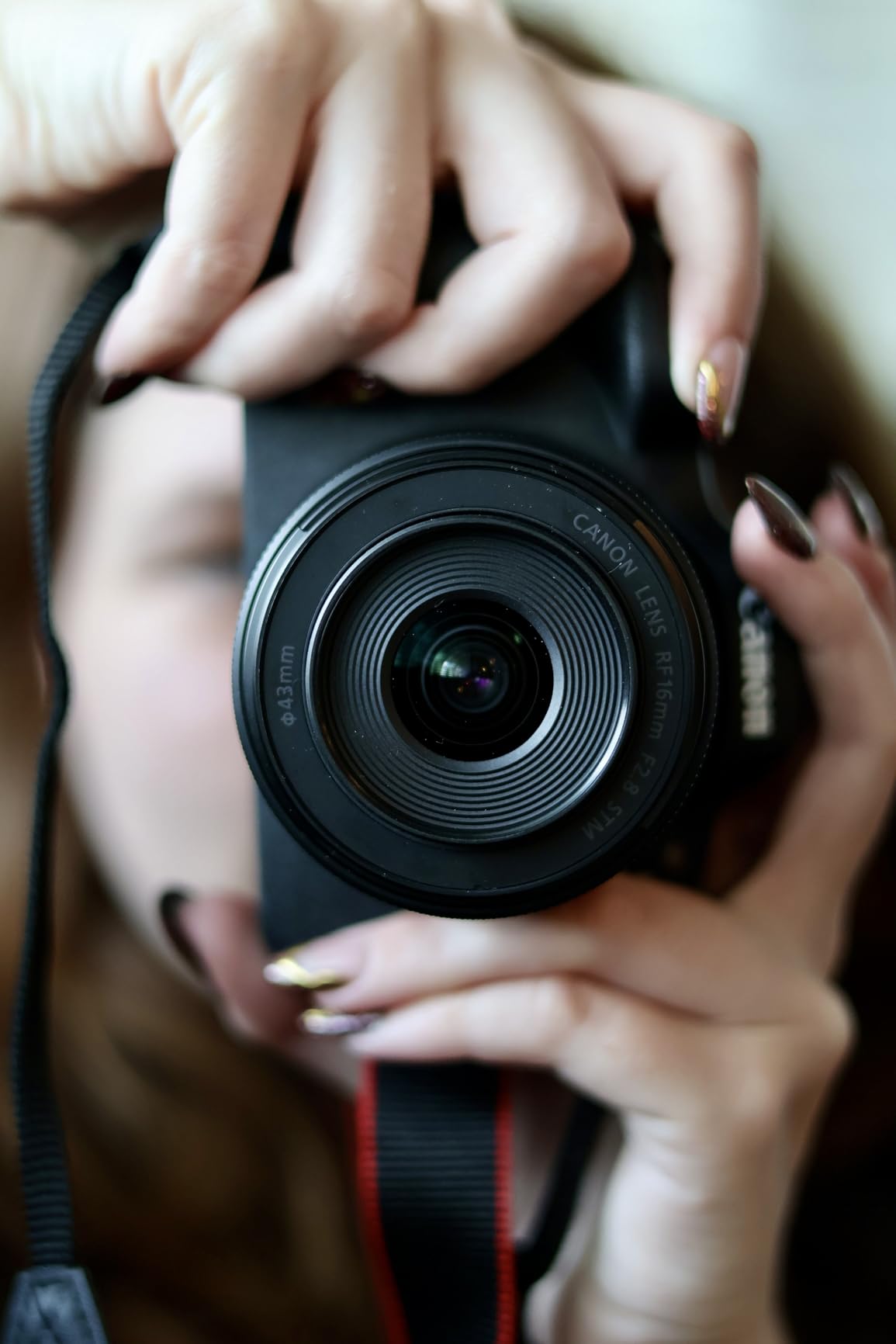
Out-of-camera JPEGs come out with natural colour and sharp detail, which means you can hand photos straight to the family without a learning curve in editing. Video is 4K 10-bit with vertical shooting support, and 10-bit at this level is unusual in the class. The 24.2MP APS-C sensor runs ISO 100-32000 natively, expandable to 51200.
The biggest complaint in reviews, by a wide margin, is the bundled RF-S 18-45mm f/4.5-6.3 IS STM. It is a fine walkaround lens in daylight and it is slow and soft beyond about 10 feet, which is roughly where a soloist stands. If you buy this kit, budget for a proper zoom.
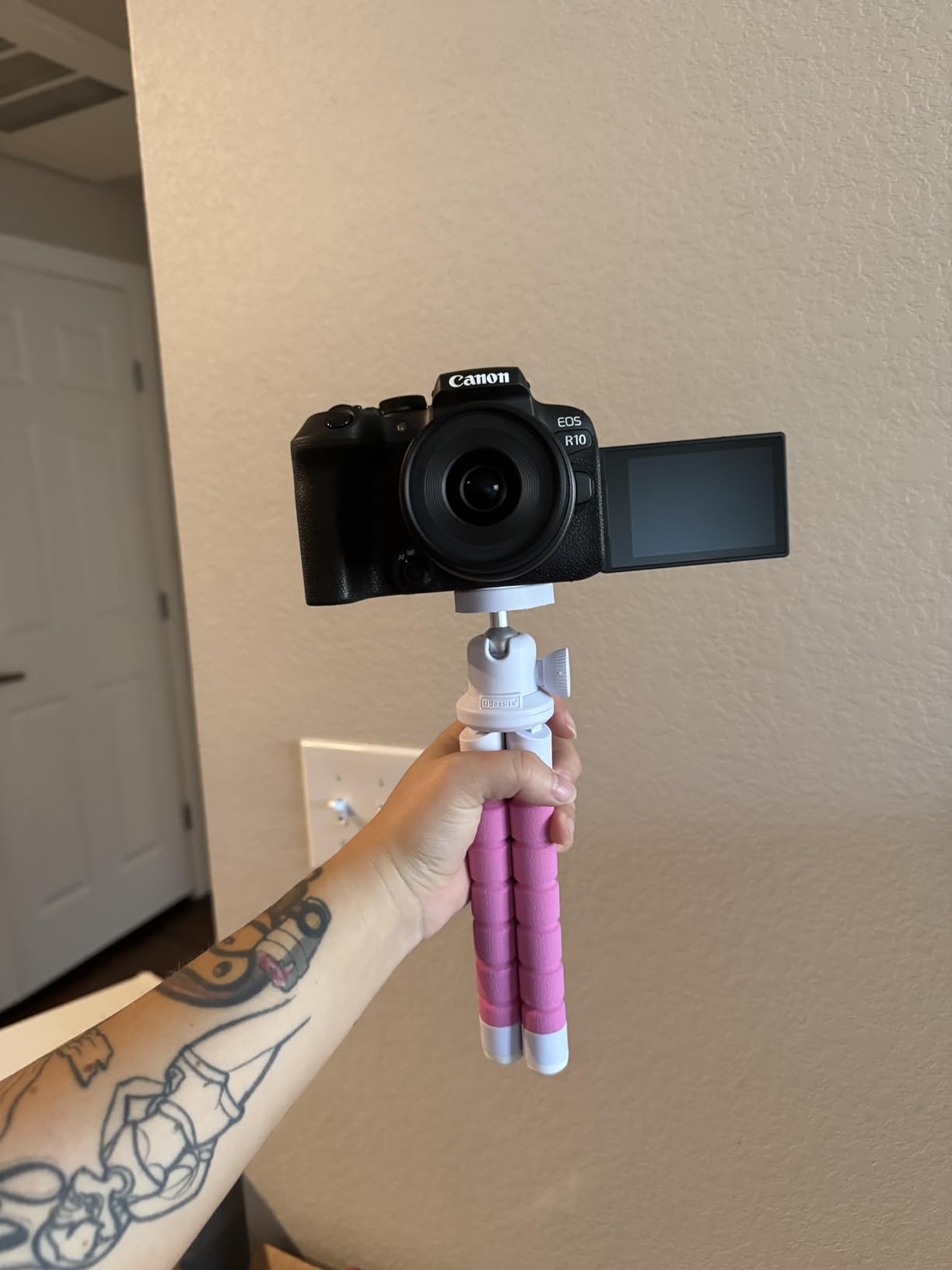
Why the fully rotating screen and RAW Burst suit recital seats
Auditorium seating dictates your camera angles. In a low row you shoot upward and the screen faces away from you. With a fully rotating vari-angle screen, you flip it toward yourself and compose without lying on the floor or guessing. For a parent who shoots once a year, that single feature removes more anxiety than any menu option.
RAW Burst with 0.5-second pre-shooting pairs naturally with the 23 fps electronic shutter. Start the routine, keep the buffer live, press on instinct, and the frame you get may be from before the press. Track a solo with subject detection and you can stop thinking about timing entirely, which is a real advantage for hands that are shaking in a dark room.
When the kit lens and single card slot hold you back
The bundled 18-45mm is the reason most owners leave a star rating behind. It is slow, it is soft past about 10 feet, and reviewers specifically call out poor performance for low-light video. A fast zoom changes the outcome of the whole night more than any body upgrade will.
There is also a single UHS-II card slot, so no mirroring for a night you cannot repeat, and the small battery is proprietary rather than shared with higher-tier Canon bodies. Stabilization is digital in the body only, which does not help video. None of these are dealbreakers for a first camera, but know them before recital season.
8. Sony a6400 – Budget Pick With the Largest Review Base
Pros
- Real-time Eye AF covers 84 percent of the frame
- Very light at just over 10 ounces for a full evening
- 11 fps continuous with crisp natural colours
- 180-degree tilting screen for low angles
- Largest review base with 1053 ratings
Cons
- 4K limited to 30 fps with no 4K/60p option
- Single UHS-I card slot with no backup
- No in-body image stabilization
- 20.1MP is the lowest resolution here and limits cropping
- Older model with dated handling versus newer bodies
With 1053 ratings averaging 4.6, the a6400 is the most proven camera on this list by a wide margin. When a body has that many owners, the strengths and the weaknesses are well documented, and the picture is consistent: fast eye-detect autofocus, portability, and good image quality for a compact APS-C body.
At just over 10 ounces it is the body we would hand to someone shooting five consecutive recitals in one weekend. The 20.1MP stacked back-illuminated Exmor RS sensor with Real-time Eye AF across 425 phase-detect points and 425 contrast points, covering 84 percent of the frame, tracks a child through a routine reliably. The 180-degree tilting screen folds right round for low angles.
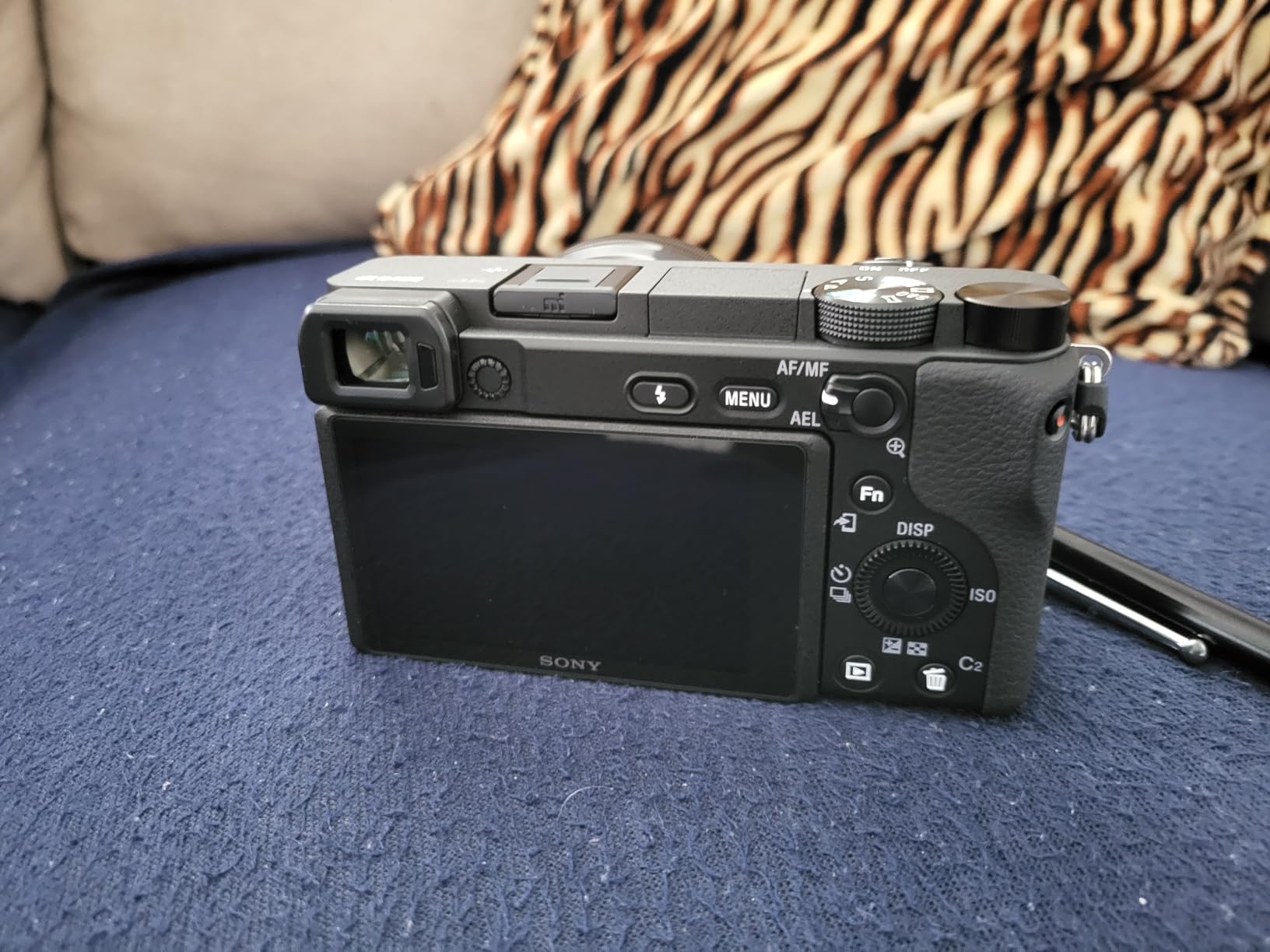
Video is 4K UHD with time-lapse and slow-motion and quick-motion movie functions. That is enough for a family video, and 83% of owners still hand over five stars. The 3-inch 1,036,800-dot tilting touchscreen and 1.07x electronic viewfinder are more than adequate for framing, and the included 16-50mm f/3.5-5.6 covers roughly 24-75mm equivalent.
What you give up is generational. There is no 4K at 60p, so slow motion on a jump is either soft or unavailable, and there is no in-body image stabilization, which matters when you are panning handheld from a seat. The single UHS-I card slot and the 20.1MP sensor also limit burst flexibility and cropping.
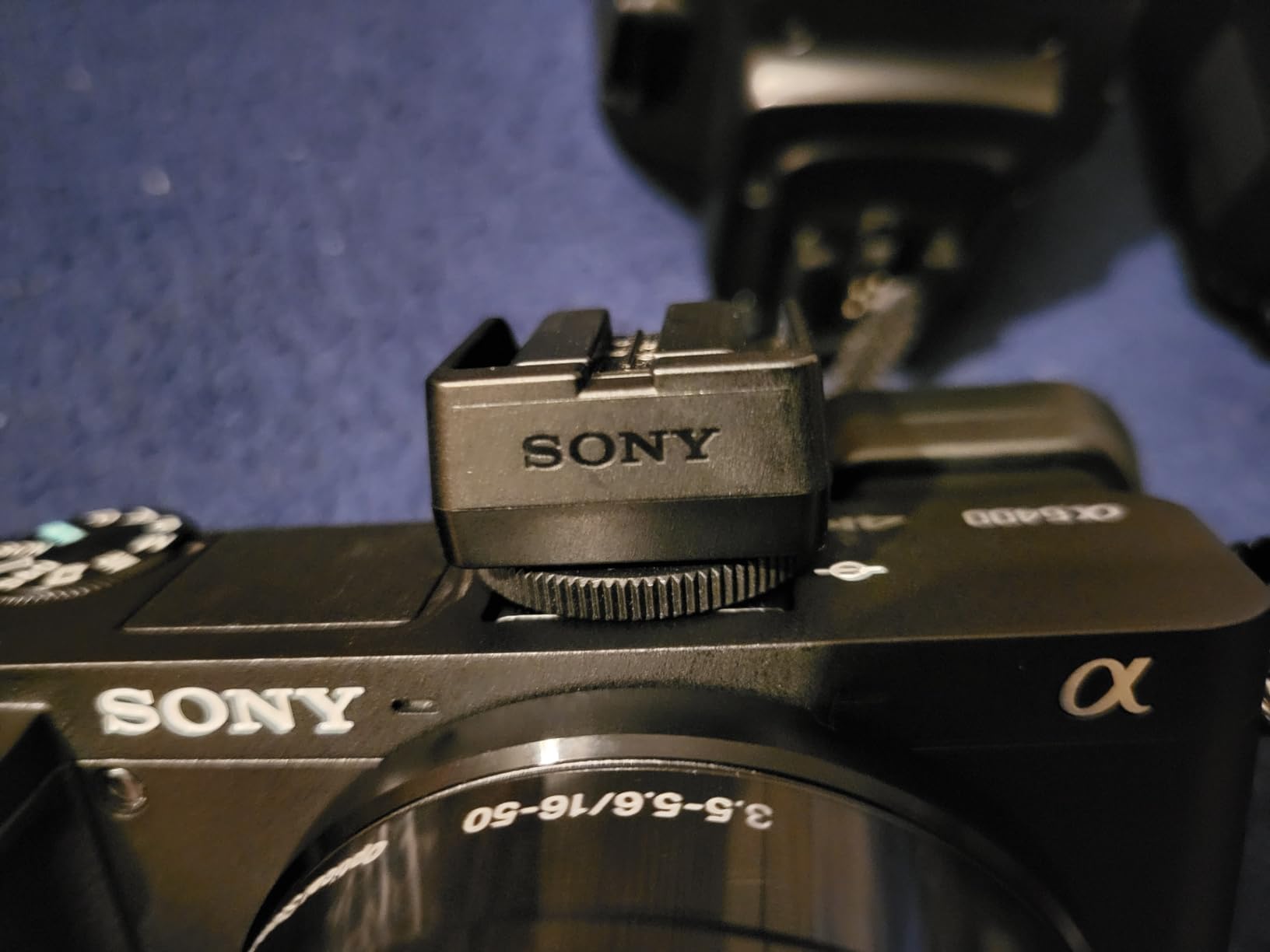
How a 10.3 ounce body and eye-detect AF handle a long evening
Weight is an underrated spec at a recital. A full-frame body with a zoom is a comfortable two-plus pounds, and by the ninth number your arms and wrists feel it. Carrying the camera into a seat, holding it through an intermission, and raising it for a curtain call is a much easier day at 10.3 ounces.
Real-time Eye AF with 425 phase-detect points is the reason this body still works in a dark room. Set it to continuous AF with eye detection, hold the camera at chest height, and it will stay with your child. Reviewers note 11 fps continuous shooting with crisp, natural colours, which is enough to build a sequence of a turning leap.
Where 30 fps 4K and no in-body stabilization stop helping
4K is limited to 30 fps with no 4K at 60p option. If you want the smooth look of 60p footage or want 120p slow motion of a jump, this body cannot deliver it. That is the single most common limitation in reviews alongside the single UHS-I card slot.
Without in-body stabilization, handheld video panning from a seat will show shake, and the kit lens has only optical stabilization to compensate. Shoot video from a tripod or monopod instead, and treat this as a stills-first body. The 20.1MP sensor is also the lowest resolution here, which limits heavy cropping of distant dancers.
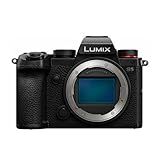
9. Panasonic Lumix S5 – Best for Graded Recital Footage
Panasonic LUMIX S5 Full Frame Mirrorless Camera, 4K 60P Video Recording with Flip Screen & WiFi, L-Mount, 5-Axis Dual I.S., DC-S5BODY (Black)
Pros
- Excellent 4K 10-bit video with V-Log and V-Gamut
- Dual I.S. 2 rated to 6.5 stops smooths handheld footage
- Full-frame low light is usable around ISO 6400
- No recording time limit in 10-bit mode
- Deep physical controls and custom picture profiles
Cons
- Autofocus hunts in low light and is contrast-detect only
- Shallow buffer until a V90 card is fitted
- 7 fps burst is the slowest here
- No headphone jack and internal microphones are mediocre
- Grip gets uncomfortable over long sessions
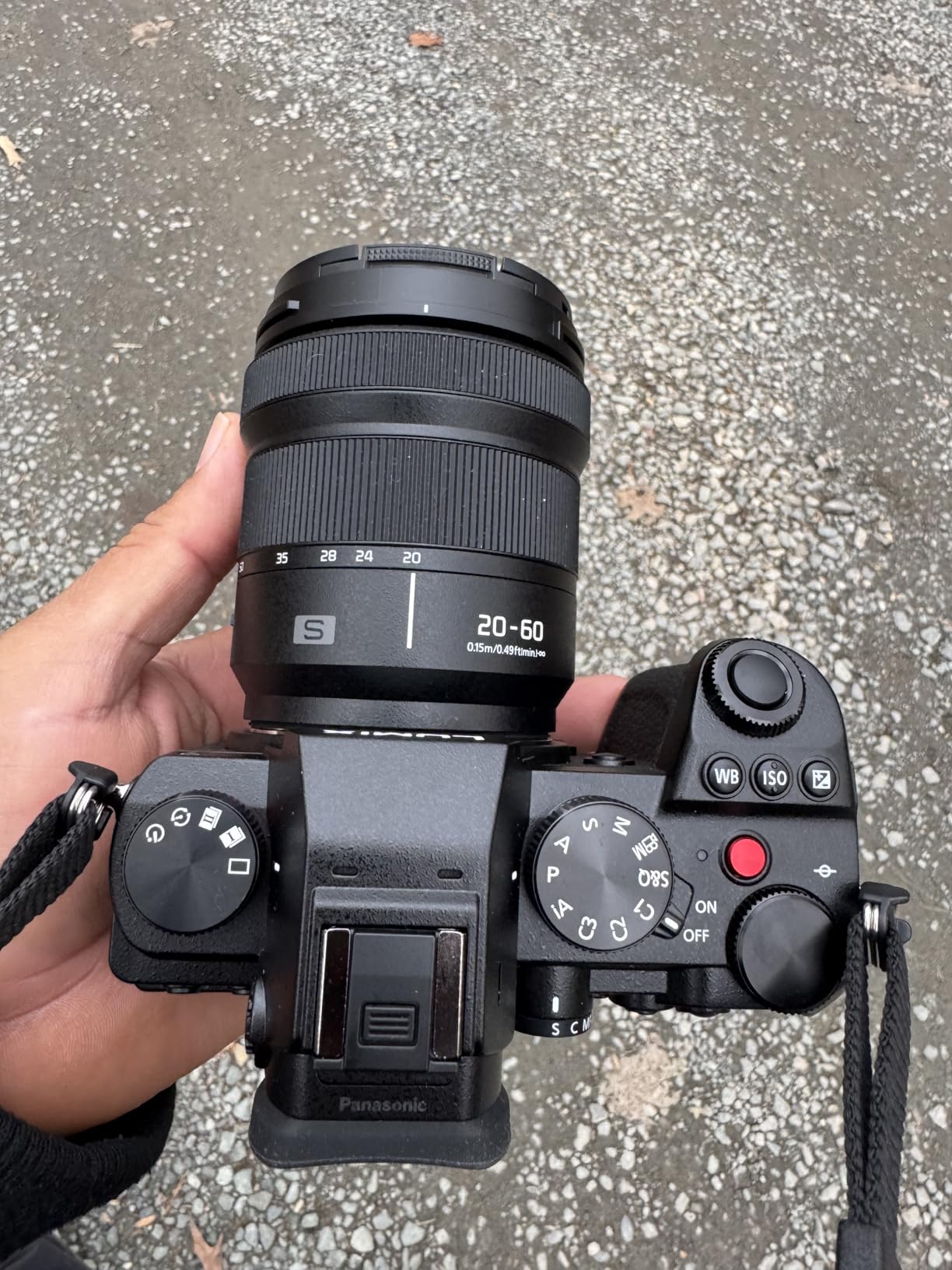
The Lumix S5 is the video body for someone who intends to grade their footage. It records 4K at 60p in 10-bit, and V-Log with V-Gamut provides 14-plus stops of dynamic range. That is the headroom you need when a stage is lit for drama and the audience is kept in near darkness, because it lets you lift the dark parts of the frame without the highlights breaking apart.
Owners treat it as the value video body of this group, and 88% hand over five stars for image and colour quality, stabilization and unlimited recording in 10-bit mode. The lack of a recording time limit in 10-bit is a genuine advantage at a recital, where a mid-show technical stop is the failure mode nobody wants.
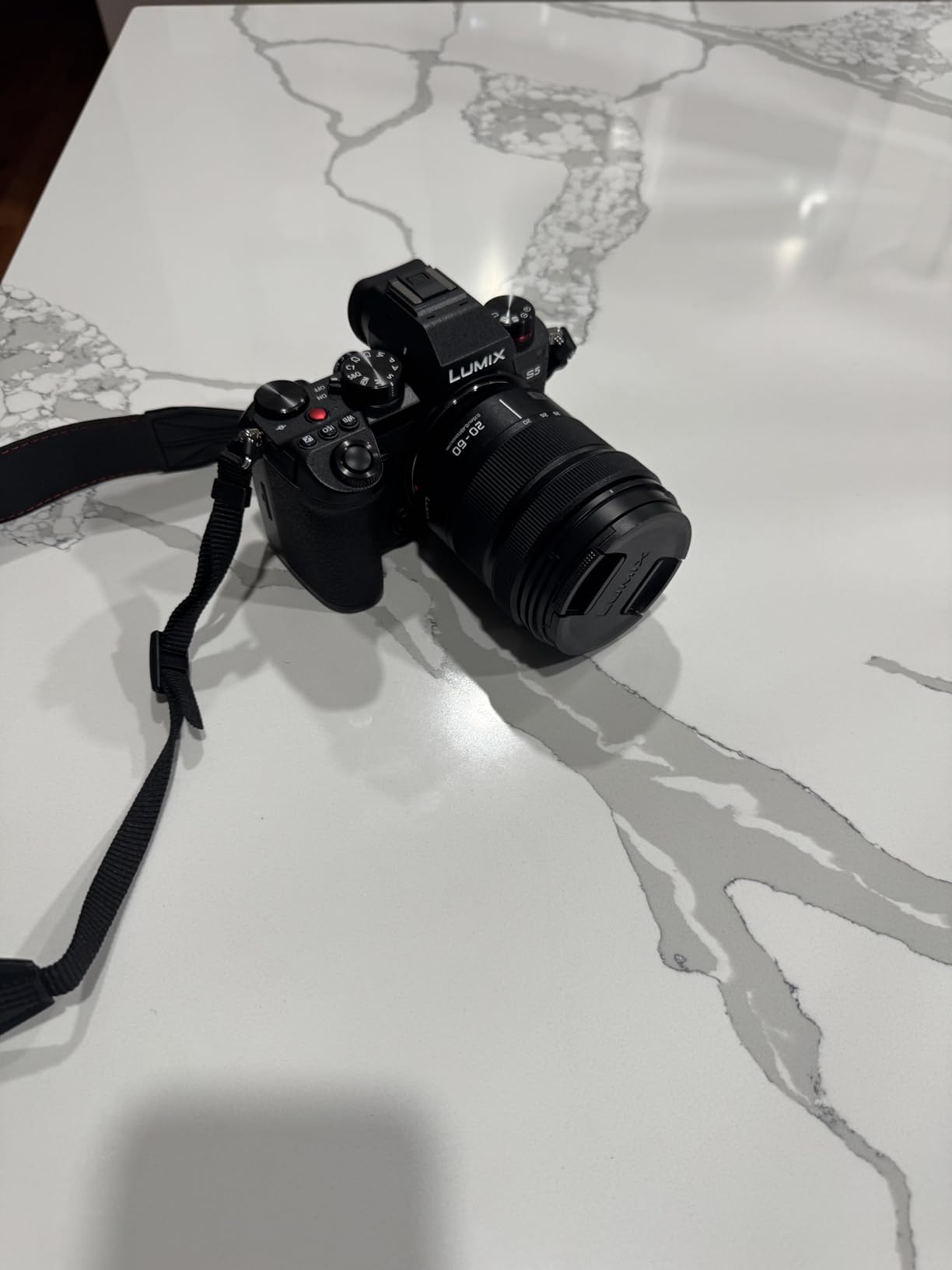
Stabilization is 5-axis Dual I.S. 2 rated up to 6.5 stops, which helps handheld pans from an audience seat. The 24.2MP full-frame sensor includes a 96MP high-resolution photo mode for stills, and Dual Native ISO keeps noise low at high sensitivity. The fully articulating 1.84M-dot touchscreen and 0.74x viewfinder are good, and dual SD slots accept a fast card plus a backup.
Faster video modes include Full HD at 180 fps for slow motion and 4:3 anamorphic support. The L-mount system has a deep lens catalogue, and the deep physical controls plus custom picture profiles mean you can build a repeatable setup instead of hunting through menus in the dark.
How unlimited 10-bit recording and Dual I.S. 2 cover a full show
Most mirrorless bodies cap internal video clips. The S5 does not impose a limit in 10-bit mode, and owners report no overheating shutdowns in normal conditions. For a ninety-minute recital, you start recording and stop recording, rather than planning segments and joins. That is worth a great deal when the routine is not repeatable.
Dual I.S. 2 at up to 6.5 stops means you can handhold a slow pan across a wide stage from the back of the room and keep it steady. Combined with Dual Native ISO for low noise at high sensitivity and full-frame performance usable around ISO 6400, it is a strong handheld video platform. FHD 180 fps gives you slow motion for accents.
When contrast-detect autofocus hunts in dim light
Autofocus is the compromise, and it is the one every long-term review flags. The 225-area DFD system is contrast-detect only, with head, eye, face and body detection, and owners describe it hunting in dim light and during rapid subject changes. On a fast-moving child crossing a dark stage, that hunting is visible in the footage.
The smaller issues add up: a shallow buffer until you fit a V90 card, 7 fps burst which is the slowest in this roundup, no headphone jack, and mediocre internal microphones. There is also a 30-minute recording capacity listed. If autofocus reliability matters more to you than grading latitude, look at a phase-detect body instead.
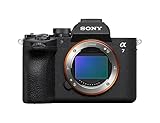
10. Sony Alpha a7 V – Best for Long Takes and Pre-Capture Moments
Pros
- AI subject recognition improved about 30 percent over the a7 IV
- Pre-capture buffer stores up to 30 frames before the press
- 30 fps blackout-free bursts with AF and AE tracking
- 4K 120p and 4K 60p without overheating until the battery ends
- Fully articulating high-resolution rear screen
- Quiet mode fully mutes shutter and indicators
- Two USB-C ports allow charging while shooting
Cons
- 33MP resolution is low for this price range and limits cropping
- AI tracking can drift off the eye on fast low-contrast subjects
- Bundled Creator App software is clunky
- Battery life shorter than earlier Alpha models and no charger included
- Steep learning curve for the many new features
The a7 V solves the two problems that stop most parents rolling video at a recital. First, the improved cooling holds 4K at 60p for very long takes, so the camera does not throttle halfway through a number. Second, the pre-capture buffer stores up to 30 frames before you press the shutter, so a leap that begins before you react is still in the stills.
The sensor is a 33.0MP partially stacked Exmor RS CMOS with roughly 4.5 times faster readout and up to 16 stops of dynamic range, driven by the BIONZ XR2 processor. Reviewers call it a strong all-around hybrid with 87% five-star ratings, repeatedly praising dependable autofocus, pre-capture and long 4K 60p recording.
Autofocus uses AI-based Real-time Recognition AF across 759 points with human pose estimation, which reviewers note is roughly 30 percent better at recognition than the a7 IV. For a recital that means it holds an eye and a full body pose through a turn. Bursts run up to 30 fps blackout-free with AF and AE tracking, a 1/16000 s maximum shutter speed freezes motion, and in-body stabilization is rated up to 7.5 stops centrally and 6.5 steps at the periphery.
Video covers 4K at 120p and 4K at 60p, with ISO 100-51200 in the movie range expandable to 100-102400. The fully articulating 3.2-inch high-resolution touchscreen rotates for low-angle and portrait shooting, and two USB-C ports let you charge a battery while shooting.
How pre-capture and 4K 60p cooling help you keep rolling
Pre-capture changes the mental model of shooting a recital. Instead of trying to time a press, you start the buffer and watch. Thirty frames are stored continuously, so when something good happens, the frame you review is from before you reacted. It is the single most useful feature here for a parent who cannot anticipate a child’s choreography.
Cooling matters just as much for video. The improved cooling holds 4K at 60p for very long takes, and 4K at 120p is available for slow-motion accents of jumps and turns. Combined with a quiet mode that fully mutes the shutter and indicators, you can shoot a lyrical solo without drawing attention from the audience.
When 33MP resolution and battery life fall short
33MP is on the low side for a body at this level, and reviewers flag it for limiting heavy cropping. If your plan is to crop a distant soloist into a tight portrait, the higher-resolution Nikon Z 8 gives you more to work with. For sharing to phones and social clips, 33MP is more than enough.
Battery life is shorter than earlier Alpha models and no charger is included, which is an annoyance for a camera you will drain over a long event. AI tracking can also drift off the eye on fast, low-contrast subjects, and the bundled Creator App software draws criticism. Budget three or four batteries and a charger of your own.
How to Choose a Camera for Recital Night
Decide whether you are shooting photos, video, or both
Photos and video want different things from a body, and that is the first fork in the road. Stills reward burst rate, high resolution, a bright lens and reliable autofocus. Video rewards stabilization, a 10-bit pipeline, long recording capability and a screen you can angle from a low seat. The one-camera-wins-both scenario is rare, which is why the R6 Mark II sits at the top of this list and the Z 6II and Lumix S5 sit just below it on their respective strengths.
If you mostly want images of your child in costume, prioritise burst and autofocus and accept a smaller sensor. If you want a video the family can watch, prioritise stabilisation reach, recording limits and audio inputs. Our dedicated recital filming guide goes deeper on the video side.
Lens reach: covering a whole stage from the back row
This is the question that comes up most on forums, and the answer is consistent: a wide-to-short zoom in the 18-35mm or 24-70mm range. Those are the numbers that let you frame the whole stage from a seat without moving, then tighten onto an individual dancer. A 35mm and an 85mm pair works too, but a single zoom is lighter and less confusing to change under pressure.
On APS-C bodies the same lenses give you more reach, which is the R7 argument in one line. If your venue is a large auditorium, consider a longer telephoto as a second lens for the soloist shots, and keep the wide zoom on the body.
Low light, stage gels and white balance
Auditoriums are lit for the audience, not the performer, and stage lighting is dim, coloured and uneven. A full-frame sensor with a back-illuminated design gives you the most room here, and the Z 6II, the Sony bodies and the Canon R6 Mark II all handle it well. Shoot RAW and correct white balance in post rather than chasing it live, because gels change colour between numbers and a locked setting will only ever be right for one of them.
Set a fixed white balance before the curtain so colour does not swim between frames, and check it against the first number. If you must shoot JPEG, put the camera in a custom white balance and adjust as the lighting shifts.
Autofocus that holds a moving dancer
Any current mirrorless body will track a person, but detection depth in EV tells you how dark it can see before giving up. Figures like -5 EV on the Canon R7, -9 EV on the Nikon Z 8 and -10 EV on the Z6III all mean comfortable acquisition in a dim hall. The body to avoid in low light is the Lumix S5, whose contrast-detect system is the most likely to hunt on a fast-moving child.
Use continuous autofocus with human eye or subject detection, and set the tracking sensitivity so it does not jump to a different dancer in an ensemble number.
Recording limits, batteries and the ninety-minute problem
Recording time limits are the failure mode nobody expects. Several bodies here cap internal video clips at around 30 minutes, the Sony a7 IV lists 60 minutes, and the Canon R6 Mark II records up to six hours of continuous Full-HD. The Lumix S5 imposes no limit in 10-bit mode. If you are filming a full recital, check the limit before the day and plan segments accordingly.
Batteries are the other limit. Reviewers on the Z 8 and a7 V both flag battery drain as a real constraint, and the Canon R6 Mark II’s 40 fps burst will empty a pack quickly. Bring at least three spares, keep them warm in a pocket, and format your cards the night before.
Audio, which is where most recital videos are lost
None of the three competitor pages we analysed addressed audio, and that is a mistake. Built-in microphones on a camera held thirty rows from a stage record the room, not the music. Applause and announcements will bury a phone or a stereo mix, which is exactly what parents complain about on forums.
If you can, use an external microphone or feed an audio feed from the sound desk. The Z 6III includes line-in audio and professional monitoring tools, which makes it the one here with dedicated tools for capturing a proper house mix. If you are shooting the whole recital from the audience with no access to the desk, get as close as the venue rules allow and accept the limitation.
Rent or buy for a one-off recital
For a single event, renting is usually the sensible answer. A rental house lends a body and a zoom for the weekend, hands you a spare battery, and takes the gear back afterwards. Parents in forum threads consistently raise renting when they realise a body plus a lens plus cards is a lot to buy for one evening.
Buy instead if you will shoot more than one or two recitals, if you want to keep the footage permanently, or if you already want a camera for family use generally. Borrowing from a studio or a teacher who has a spare body is a middle path worth trying first.
Shot position, venue rules and accessories
Ask the venue before you arrive. Many recital halls restrict tripods, monopods, tripods in the aisles, and professional-size gear, and flash is effectively banned anywhere in the audience. Knowing the rule in advance saves an awkward conversation at the door. Arrive early to find a seat near an aisle with a clear line of sight, because getting up mid-performance is worse than an imperfect angle.
For accessories, a tripod with a fluid or video-style head lets you lock off a wide stage shot and stop shaking. A spare battery set is essential, fast UHS-II or CFexpress cards protect you from a full card mid-show, and a small LED panel helps only for pre-show and post-show photos, never during a performance where it would blind the audience. Our conference camera guide covers the tripod and long-event setup in more detail.
Frequently Asked Questions
What is the best camera for recording dance recitals?
For most parents shooting from an auditorium seat, the Canon EOS R6 Mark II is the best all-round choice. It records 6K oversampled uncropped 4K up to 60p, runs up to six hours of continuous Full-HD without overheating, and its 40 fps electronic burst captures the same routine as sharp stills. The Nikon Z 6II is the alternative if low-light stills matter more than video.
Do I need a mirrorless camera or will my phone work?
A modern phone records a usable recital video and is the reason many parents do not buy anything. The limits are reach and low light: you will be shooting a distant stage with a fixed wide lens, and a dim auditorium produces noise and motion smear. If the performance is a once-a-year event, phone plus a small clip-on wide-angle lens is a reasonable entry point.
What is the ideal camera lens for a dance performance?
A wide-to-short zoom covering roughly 18-35mm or 24-70mm is the right choice from the audience. It lets you frame the entire stage from a seat without moving, then tighten onto one dancer. On an APS-C body the same lens gives extra reach, which is why the Canon EOS R7 pairs well with a 70-200mm for soloist shots.
What shutter speed is recommended for capturing a dancer?
For stills of a moving dancer, start at 1/500 s and raise to 1/1000 s for leaps, turns and fast footwork. Pair that with the widest aperture your lens allows and let ISO rise rather than slowing the shutter. For video at 60 fps, a shutter around 1/120 s is the natural match; at 24 fps, 1/50 s.
Why does my dance recital video look dark and noisy?
Auditoriums are lit for the audience rather than the performer, so the stage is several stops darker than the room, and stage gels add a colour cast. Noise appears when a camera raises ISO to compensate on a small sensor. A full-frame body, a wide aperture, and shooting in RAW or 10-bit rather than compressed video all reduce it. Correct white balance in post instead of forcing it live.
How do I record a whole recital without the camera overheating?
Check the recording limit before you buy. Several mirrorless bodies cap internal clips at around 30 minutes, the Sony Alpha 7 IV lists 60 minutes, and the Canon EOS R6 Mark II records up to six hours of continuous Full-HD, while the Lumix S5 has no limit in 10-bit mode. If your body caps clips, plan segments and bring extra batteries.
Should I rent a camera or buy one for a single recital?
For one event, renting is the sensible path. A rental house supplies a body and a zoom for the weekend, includes a spare battery, and takes the gear back when you are done. Buy instead if you expect to shoot more than one or two recitals, or if you want a camera for family use beyond dance. Borrowing a spare body from a studio is worth trying first.
What camera settings should I use for shooting under stage lighting?
Shoot RAW, set a fixed white balance before the curtain rather than auto, and open the aperture as wide as the lens allows. Keep ISO at a level the sensor handles cleanly before pushing further. For stills use continuous autofocus with human detection and a shutter around 1/500 s; for video turn off any low-light auto ISO ceiling so the camera can respond quickly to a fading spotlight.
Conclusion
The best cameras for dance recitals in 2026 come down to what you are holding and how long you need to hold it. The Canon EOS R6 Mark II is the one we recommend most often, because the 40 fps burst, the 6K oversampled 4K at 60p and the six-hour Full-HD recording cover stills, video and a long show without compromise. The Sony Alpha 7 IV is the calmer all-rounder with dual card slots and 10-bit 4K. The Canon EOS R7 is the reach and speed specialist from the back row.
For video-first shooting, the Lumix S5 offers the most grading headroom and unlimited 10-bit recording, while the Nikon Z6III gives you internal 6K N-RAW and the darkest-scene autofocus in the group. The Sony a6400 and Canon EOS R10 remain sensible entry points, with the R10 kit’s rotating screen being the feature most parents thank us for.
Whichever body you choose, spend the saved effort on the boring things: a fast zoom, three spare batteries, a tripod if the venue allows one, and a settings profile locked before the curtain goes up. The dance is only performed once, and the gear only has to be ready once too.