
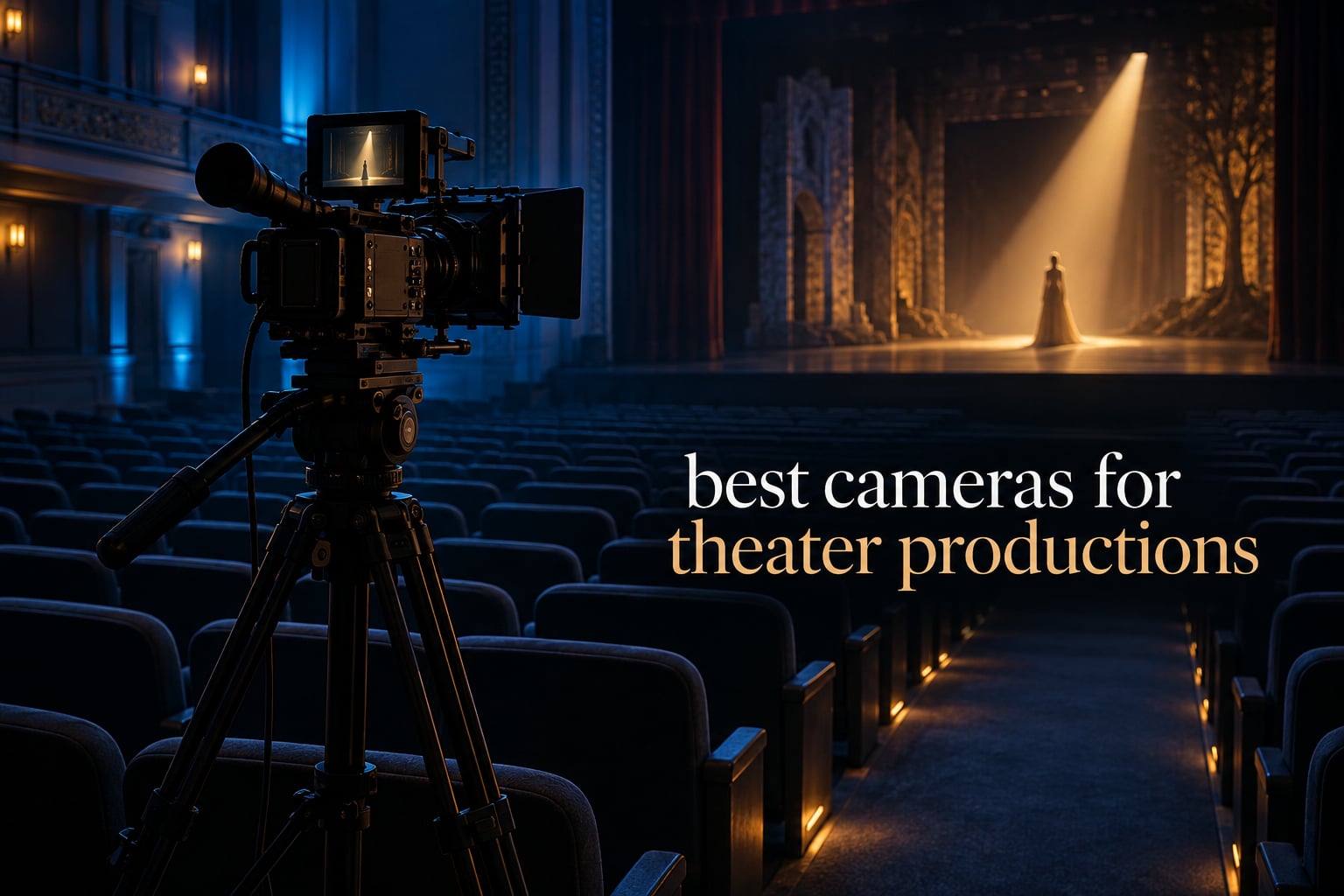
The best camera for theater productions is the Blackmagic Design Pocket Cinema Camera 4K for video work, because it records 13 stops of dynamic range from a 4/3-inch sensor, runs dual native ISO for stage darkness, and carries a large five-inch touchscreen you can actually read from the back of an auditorium. For stills work in the same house, the Canon EOS R6 Mark II is the pick I keep coming back to, with 5-axis stabilisation and dual UHS-II slots.
Stage lighting is not ordinary low light. A lighting designer builds a plot of levels, cues and blackouts around human eyes, not around a sensor, so the camera has to expose for a single lit actor and let the rest of the set fall away. Add a silent audience that will not tolerate a mechanical shutter, a followspot that blows out in two seconds, and a two-and-a-half-hour act with an intermission, and the buying decision looks nothing like a street photography roundup.
We compared ten bodies across the two jobs a theatre crew actually has: capturing video for an archive, a school showreel or a livestream, and photographing the performance for publicity and programmes. Our full comparison table sits further down, and if your production is a multi-camera livestream rather than a single camera, start with our multicam live stream production guide. If you are weighing a cinema body against a hybrid mirrorless, our theater and stage performance recording picks cover that split in more depth.
Top 3 Best Cameras for Theater Productions in October

Blackmagic Pocket Cinema Camera 4K
- 13 stops dynamic range
- Dual native ISO 400/3200
- ProRes and Blackmagic RAW
- DaVinci Resolve Studio included

Canon EOS R6 Mark II
- 24.2MP full-frame sensor
- 5-axis IBIS
- 40 fps electronic shutter
- Unlimited 4K recording

Sony Cinema Line FX30
- 14+ stops dynamic range
- S-Cinetone and S-Log3
- Dual base ISO
- Active cooling fan
Best Cameras for Theater Productions in 2026
| Product | Specifications | Action |
|---|---|---|
| Blackmagic Pocket Cinema Camera 4K |
|
Check Latest Price |
| Canon EOS R6 Mark II |
|
Check Latest Price |
| Sony Cinema Line FX30 |
|
Check Latest Price |
 Nikon Z 6II Nikon Z 6II |
|
Check Latest Price |
 Blackmagic Pocket Cinema Camera 6K Blackmagic Pocket Cinema Camera 6K |
|
Check Latest Price |
 Sony Alpha a7S III Sony Alpha a7S III |
|
Check Latest Price |
 Blackmagic Pocket Cinema Camera 6K Pro Blackmagic Pocket Cinema Camera 6K Pro |
|
Check Latest Price |
 Nikon Z 6 III Nikon Z 6 III |
|
Check Latest Price |
 Sony Alpha FX3 Sony Alpha FX3 |
|
Check Latest Price |
 Canon EOS R7 Canon EOS R7 |
|
Check Latest Price |
1. Blackmagic Design Pocket Cinema Camera 4K for the widest range of stage lighting
Pros
- 13 stops dynamic range holds a followspot and the shadows together
- Dual native ISO 400 and 3200 suits a stage wash
- ProRes and Blackmagic RAW internal
- DaVinci Resolve Studio activation included
- Five inch touchscreen is readable in a dark booth
Cons
- About 30 minutes per battery
- No continuous autofocus
- Fixed non-articulating screen
I have run this body in the FOH position on more than one straight play, and the reason it keeps earning its slot is the dual native ISO at 400 and 3200. When a cue takes the wash down two stops, you flip to 3200 rather than cranking a high-ISO dial, and the noise floor barely moves. That is a different experience from any of the mirrorless bodies here, which ask you to expand ISO and hope the files hold up.
The 13 stops of dynamic range is the number that matters more than the 4/3-inch sensor size. A lighting designer can put a followspot six stops above the surrounding set, and this camera has room to hold both the actor’s skin tone and a hint of the set behind them. Shoot S-Log or a matched profile and you are grading a recoverable file rather than rescuing a clipped one.
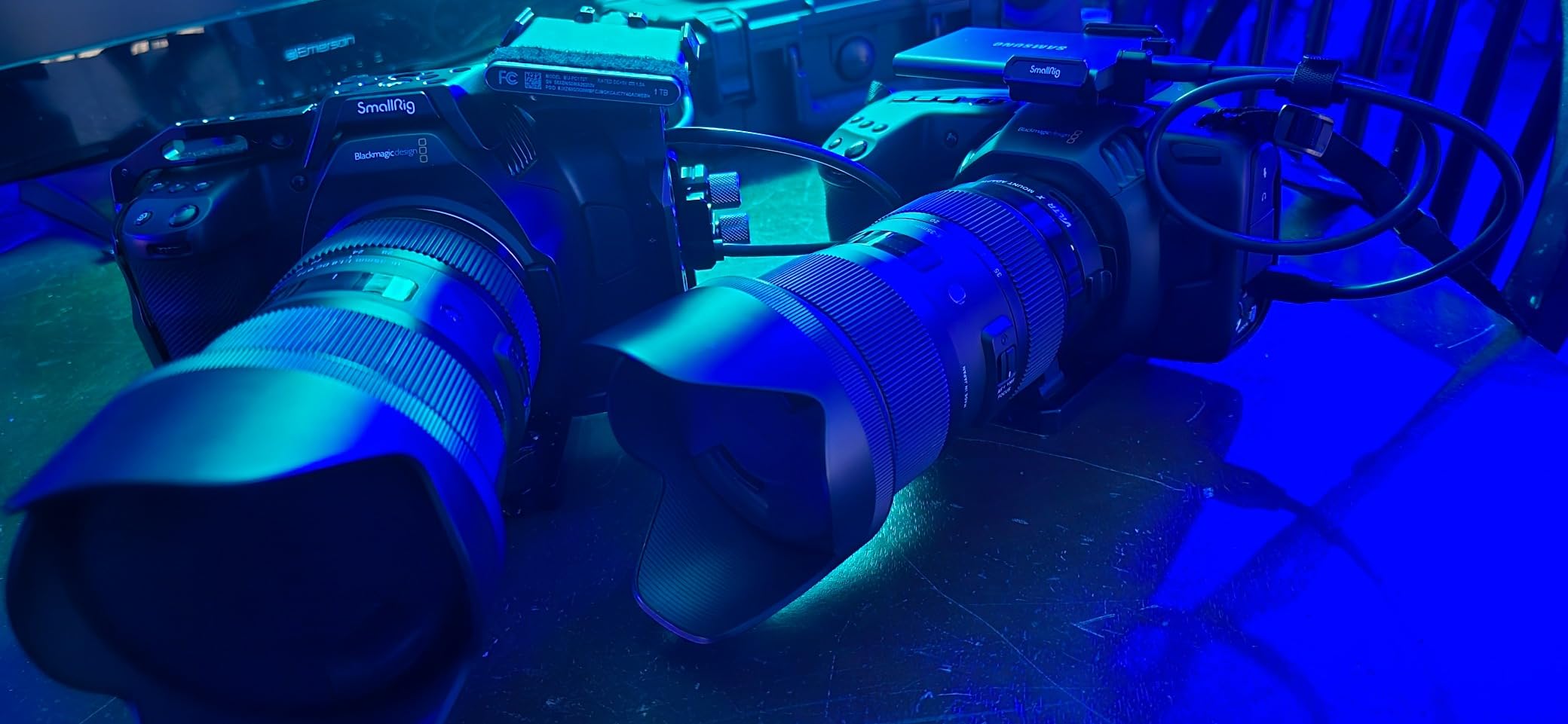
Recording formats are Apple ProRes and Blackmagic RAW, both internal, with storage on SD/UHS-II, CFast 2.0 or an external SSD over USB-C. In a theatre the external SSD route is the sensible one because a 2.5-hour act in ProRes will outrun a single card many times over, and the USB-C port also takes power while you record.
Audio is handled by a built-in stereo mic, a 3.5mm jack and a mini XLR with phantom power, which means a headset mic from the venue mixer drops straight in for a documentary-style shoot. The body weighs 695 g and measures 3.37 by 7.01 by 3.78 inches, so it sits on a small tripod head without a counterweight.
What it does well on a dark stage
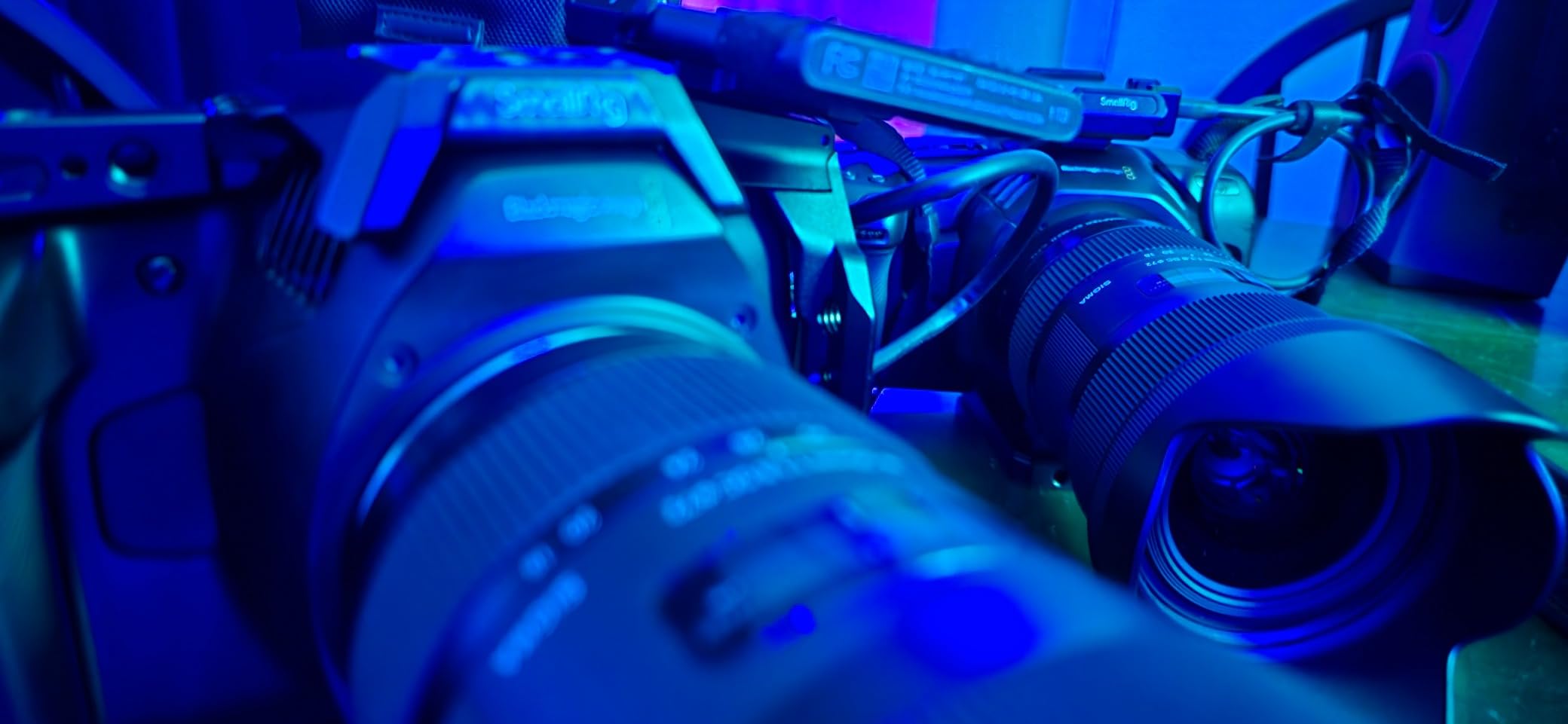
The 400 and 3200 native ISO pair is the closest thing in this list to a lighting-designer-aware camera. Most of a straight play is mixed around those two anchors, so you spend the show switching bases rather than hunting for a clean intermediate stop.
ProRes internal is the quiet detail. Codecs that compress heavily are a poor match for a sensor reading deep into the shadows, and the graded result from these files holds colour in the dim half of the frame where a heavily compressed file gives up.
Where it will frustrate you
Battery life is the honest weakness: roughly 30 minutes per LP-E6 battery, so a full act means four batteries, a plate, or external power through USB-C. That is manageable with planning and a real nuisance for a volunteer crew shooting handheld backstage.
There is no continuous autofocus, which means a moving actor crossing a dark stage is a manual-focus job. The screen is also fixed rather than articulating, so a low balcony position or a steep pit angle needs a monitor or an angle adapter before it gets comfortable.
2. Canon EOS R6 Mark II for a crew that shoots stills and video on one body
Pros
- Unlimited 4K recording with no overheating cut-off
- 5-axis IBIS rated up to 8 stops
- 40 fps electronic shutter and RAW pre-capture
- Dual UHS-II slots for redundancy
- Vari-angle touchscreen for low positions
Cons
- Rolling shutter in electronic shutter mode
- Only 24MP limits large prints
- Battery life modest for long video takes
If a production needs programme photographs and a video file from the same camera, the R6 Mark II is the body we end up recommending most often. Dual Pixel CMOS AF II with 651 zones across 100 percent of the frame finds a face on a dim stage and holds it, which is exactly the moment a stills shooter dreads in a black box theatre.
Stabilisation is the other half of the stills case. Sensor-shift IBIS rated up to eight stops lets you handhold a 1/15 second at a stage wash instead of dropping to 1/125 and losing the actor to motion blur. That is the difference between a grainy frame and a usable one, and it is why forum photographers shooting plays keep coming back to a Canon body with in-body stabilisation.

On the video side, 4K 60p is oversampled from 6K, and reviewers consistently report unlimited 4K recording with no thermal cut-off. For a 2.5-hour act with intermission that matters more than any headline resolution figure, because a body that stops recording in Act Two has no second chance.
ISO runs 100 to 102400 natively and expands to 204800, and Dual SD UHS-II slots let you mirror every frame to a second card. The 3.69M dot OLED viewfinder refreshing at 120 fps gives a blackout-free view when a followspot swings, and the vari-angle touchscreen helps with a low side-box position.
Why a hybrid body suits a community production
One body covering publicity stills, rehearsal documentation and a showreel cuts a crew’s gear list in half. A school or amateur company can put a second operator on a long lens instead of a second camera body, which is usually the better spend.
Forty frames per second on the electronic shutter with subject detection gives you a chance at the moment a cue lands, and the 12 fps mechanical mode is available when you want a cleaner rendering.
What to watch out for
The 24.2MP sensor is a deliberate resolution choice, so cropping tight for a programme spread costs more than it would on a 32MP body. Electronic shutter mode also brings rolling shutter, which distorts a moving actor’s limbs.
Battery life is the fair criticism on video duty. For a full-length show you want more than the supplied cell, and dual slots only protect your files, not your runtime.
3. Sony Cinema Line FX30 for video-first crews who want cinema colour science
Pros
- S-Cinetone gives a filmic look with almost no grading
- Dual base ISO for stage darkness
- Active cooling so a full act records without a break
- 495-point hybrid AF with Eye AF tracking
- Compact enough for a handheld or gimbal operator
Cons
- APS-C crop on longer focal lengths
- Battery life limited to roughly one to two hours
- Rolling shutter at 4K 120p
The FX30 is the body we suggest when the deliverable is video and the colour of a stage wash on skin tones is the thing that worries you. S-Cinetone is built for exactly this material: a lit face against a dark set, recorded with a filmic curve so you are not pushing a log file hard in the edit.
Dynamic range is 14+ stops, which is the joint highest here, and dual base ISO gives you two clean anchors to jump between as cues change the level. The 495-point hybrid AF with Eye AF tracking holds a performer walking through a sidelight, which is where lesser systems start hunting.
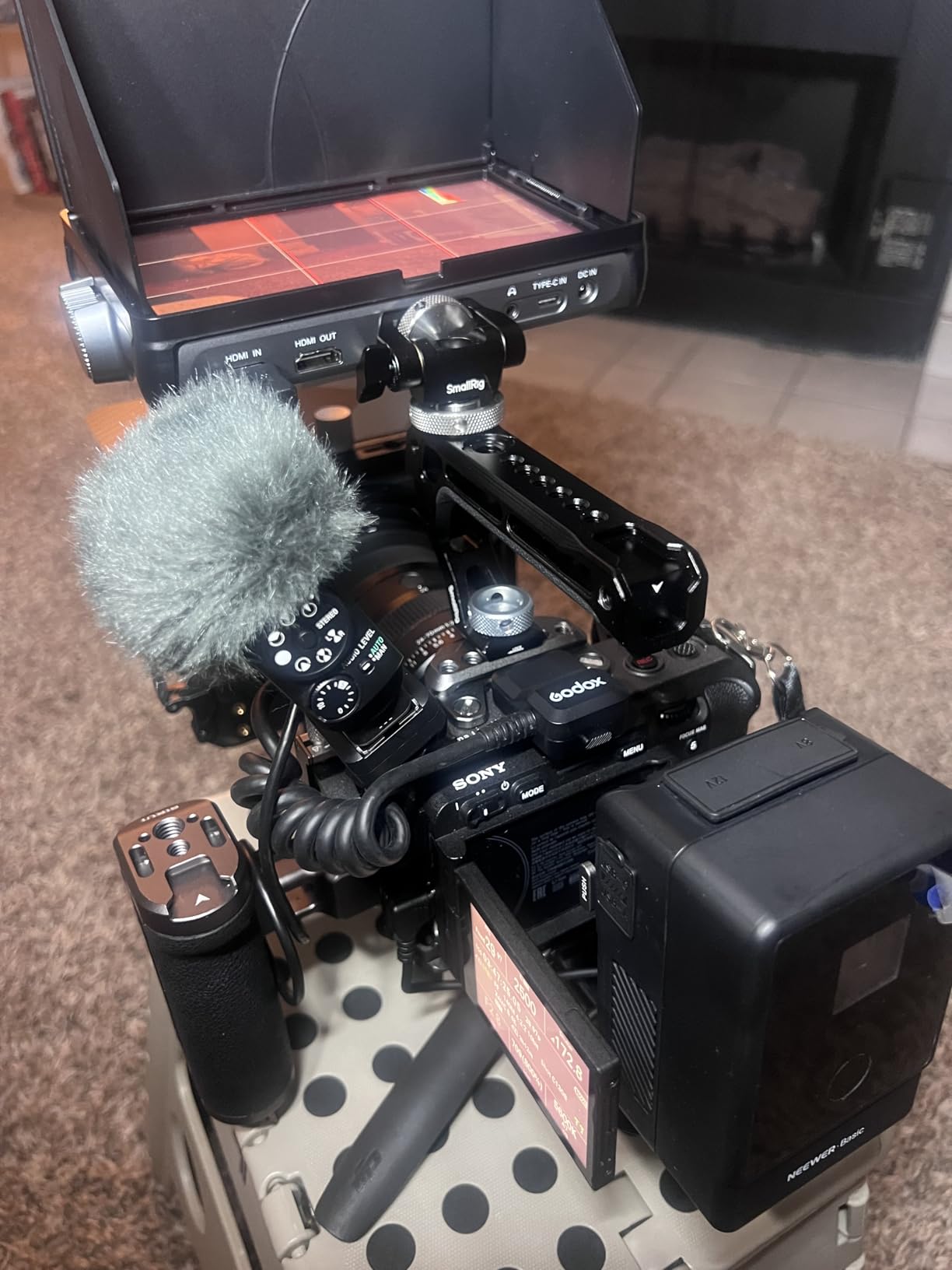
Active cooling is the under-rated feature for theatre. A ventilated body records a whole act without thermal throttling, and the two-and-a-half-hour-plus-intermission format is exactly the case manufacturers optimise fan designs for. Recording is 10-bit 4:2:2 internal in XAVC HS, S-I and S, with LUTs loadable to the LCD, HDMI output or embedded.
At 1.2 pounds body only it is the easiest cinema body here to hand off, and the Sony E mount gives access to fast primes at sensible weights. A full-size HDMI port and timecode in and out make it a straightforward fit in a multi-camera rig, which you can read more about in our video village setup guide.
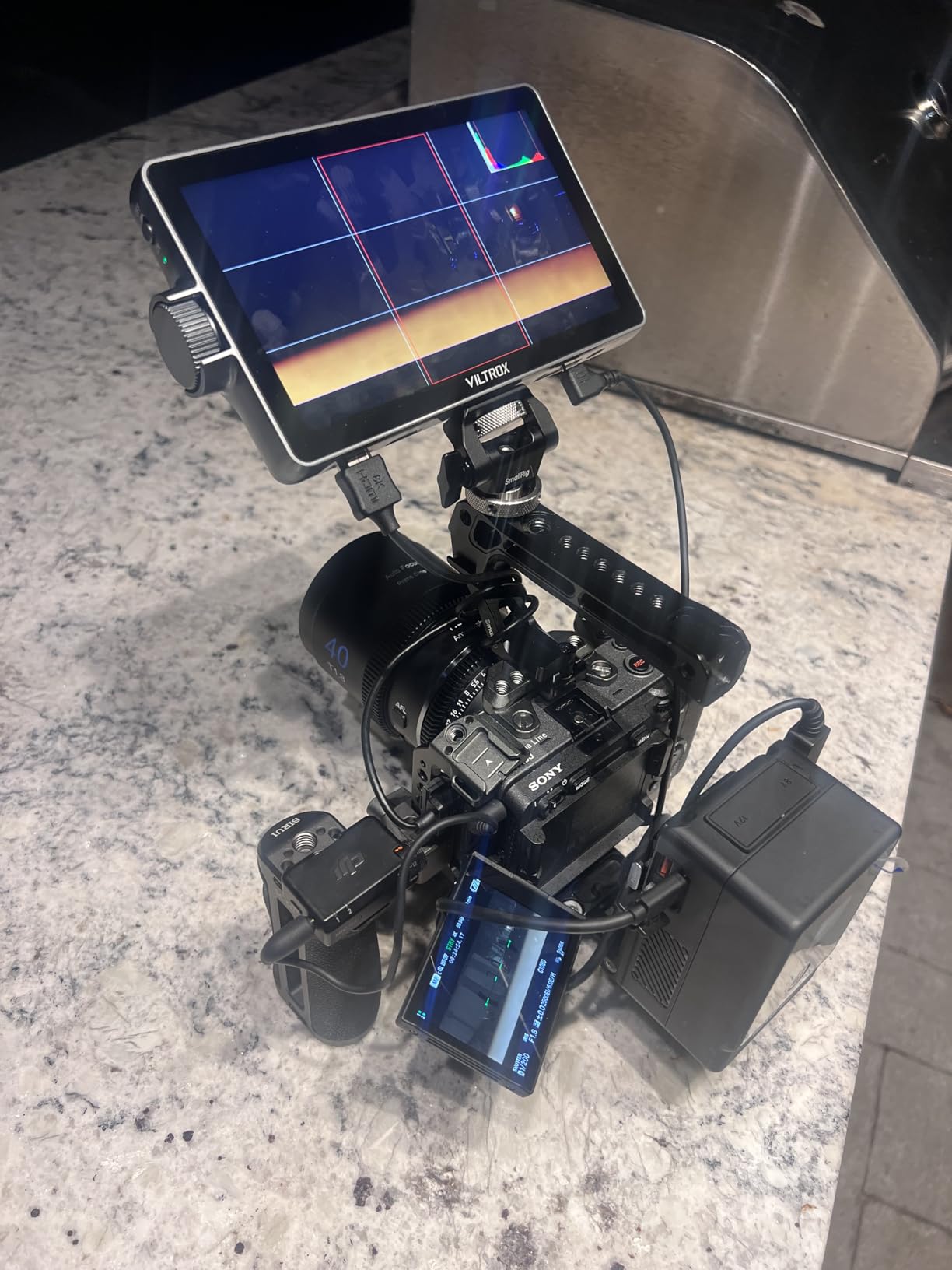
Where the FX30 earns its place
S-Cinetone and S-Log3 with HLG means a graded deliverable without a dedicated colourist. For a company turning a show around in a week, that removes a whole production stage rather than a single button press.
Dual CFexpress Type A and SD UHS-II slots give you redundant recording on a multi-camera night, and the compact body takes a gimbal or a shoulder rig without complaint.
What limits it on a stage
The Super 35 APS-C sensor crops, so a 70-200mm from the stalls frames tighter than you planned. On a stage where reach is the binding constraint, that is not a footnote.
Battery life is around one to two hours per NP-FZ100, there are no built-in ND filters, and 4K 120p shows rolling shutter when a performer moves quickly across frame.
4. Nikon Z 6II for stills photographers working from the stalls
Nikon Z 6II | Versatile Full-Frame mirrorless Stills/Video Hybrid Camera | Nikon USA Model
Pros
- 24.5MP BSI full-frame sensor for high-ISO stills
- 5-axis sensor-shift VR for handheld stage washes
- Dual card slots in CFexpress B and SD UHS-II
- USB-C power delivery for long acts
- Comfortable large grip for a full show
Cons
- Only 8-bit 4:2:0 internal 4K video
- 30-minute 4K recording limit
- Tilting screen rather than fully articulating
The Z 6II is the body we hand to photographers whose job is a programme shot list from row F. The 24.5MP backside-illuminated full-frame sensor gives large pixels to work with, and a BSI design is the sensible architecture when the light comes from stage lamps rather than a window.
Five-axis sensor-shift VR is the practical reason to like it in a dark auditorium. Handholding a stage wash at slower shutter speeds without the frame turning to mush means the difference between a print and a soft thumbnail, and 14 fps continuous with eye detection lets you catch a movement without losing AF.

ISO runs 100 to 51200 and expands to 204800, and the 3.69M dot OLED viewfinder at 0.8x gives a bright, large eyepoint for a long evening. The 273-point phase-detect AF with eye detection covers the frame, and the 3.2-inch tilting touchscreen is fine for waist-level work at the front of house.
Dual processors and card slots in CFexpress Type B and SD UHS-II mean a long shoot can mirror or overflow without stopping. USB-C power delivery is useful for a static multi-camera position, though we would still carry spare EN-EL15c batteries.

Why stills shooters rate it highly
The 4/3-inch and full-frame comparison is irrelevant here; what matters is pixel behaviour at ISO 6400, and the BSI sensor holds detail well in the shadow half of a stage frame. Shot RAW, those files have plenty of room to recover a lighting designer’s contrast.
The Z mount is the other quiet advantage. Fast primes at stage-appropriate weights are plentiful, and 360-plus F-mount lenses are available through the FTZ adapter for crews upgrading from Nikon DSLRs.
Where video falls short
Internal 4K is 8-bit 4:2:0, and 10-bit 4:2:2 needs an external recorder, which is friction you do not want mid-show. There is also a 30-minute 4K recording limit rather than unlimited capture.
AF tracking is less sticky than the Sony and Canon bodies here, and the tilting screen will not help you frame from an awkward balcony rail.
5. Blackmagic Design Pocket Cinema Camera 6K for lens freedom on a mixed crew
Pros
- 6K RAW and 4K ProRes recorded internally
- Canon EF mount unlocks affordable fast primes
- Dual native ISO suits a stage wash
- DaVinci Resolve Studio included
- Weighs 900 g
Cons
- Around 20 minutes per battery
- No continuous autofocus
- No in-body stabilisation
If your production is staffed by people who already own EF glass, the 6K is the pragmatic choice. The Super 35 sensor measures 23.1 by 12.99mm and resolves 6144 by 3456, and the EF mount means fast primes that are hard to find in other mounts simply exist for you.
That matters more on a stage than it does anywhere else. From the back of a large house you are working at long focal lengths, and a fast prime at a reachable weight is the difference between the shot existing and the shot not existing. The EF mount is the deepest pool of affordable 85mm and 50mm f/1.4-type glass of any mount we cover here.
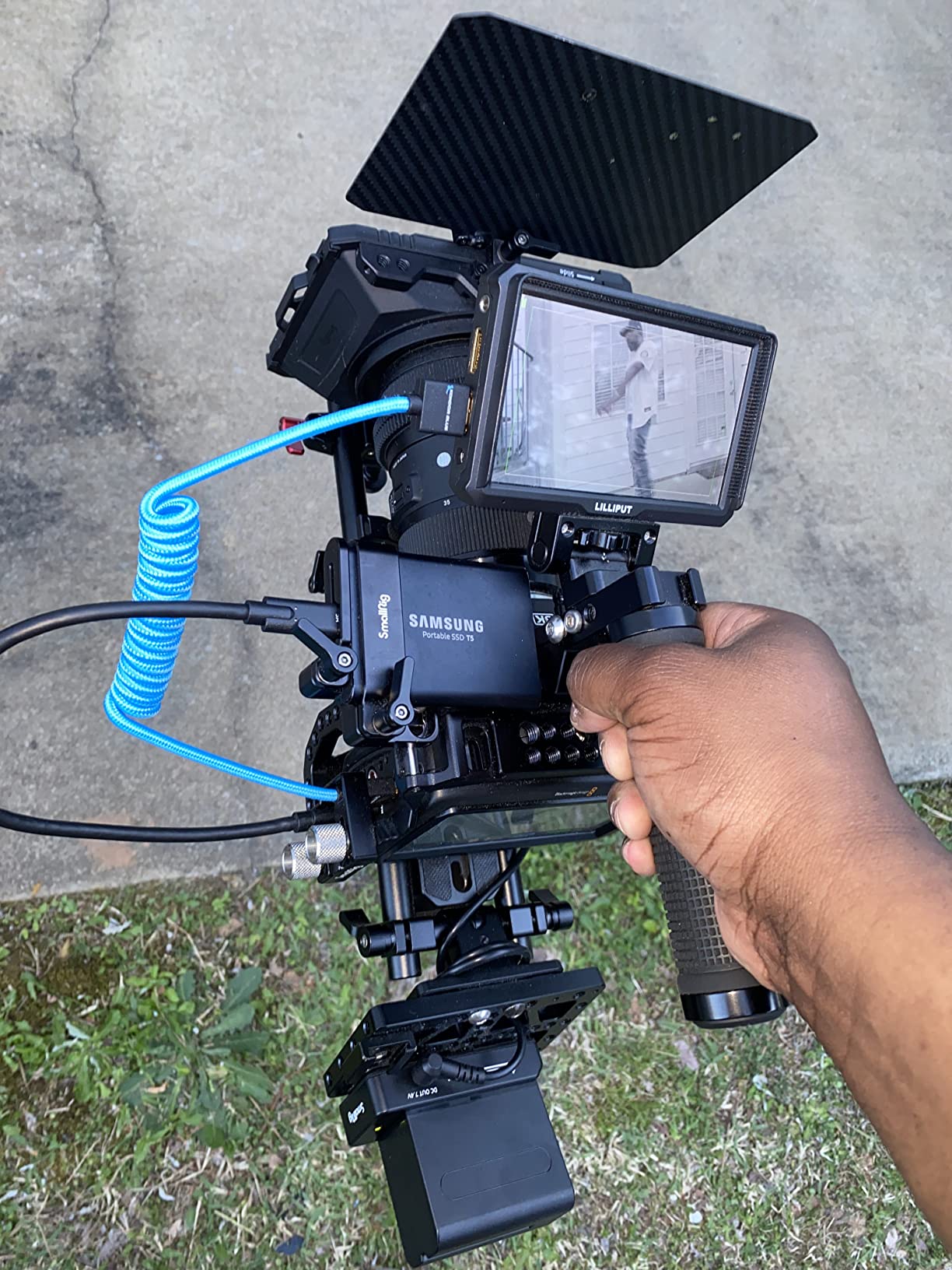
Dual native ISO 400 and 3200 matches the 4K body’s approach to stage darkness, and 13 stops of dynamic range gives the same headroom to protect a followspot. Recording is Blackmagic RAW up to 6K 50p, ProRes up to 4K 60p, plus 2.8K 120p and 1080p 120p for slow-motion inserts of a fight or a lift.
Storage runs to SD/UHS-II, CFast 2.0 or an external SSD over USB-C, and audio comes in on a mini XLR with phantom power plus a 3.5mm jack. At 900 g the body is still portable, and DaVinci Resolve Studio is included for the edit.
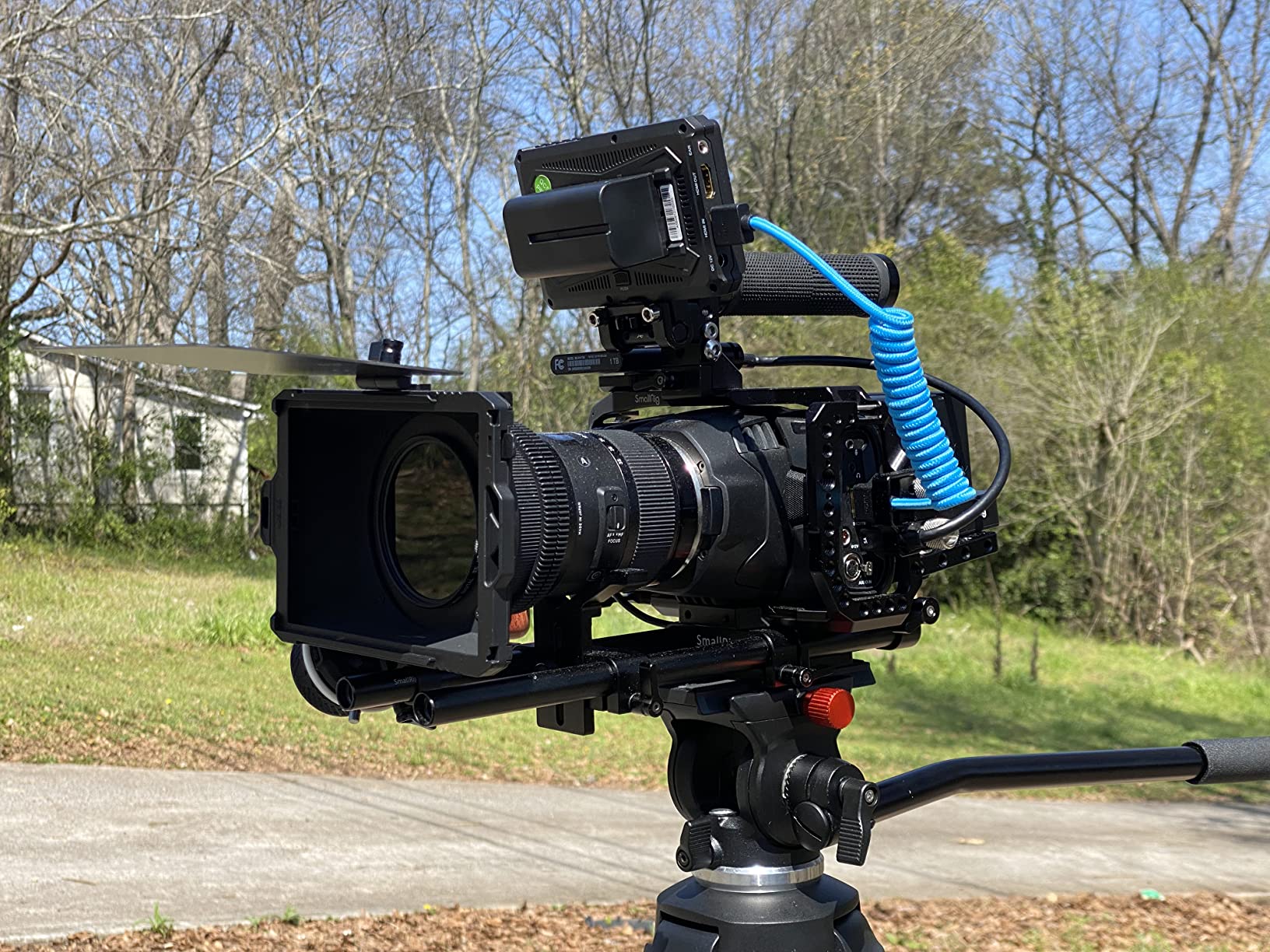
When the EF mount decides the camera
Reach and light are linked. A fast long prime from the stalls solves both at once, and this is the body where that lens is easiest to source, including options that predate the current mirrorless mounts.
The 6K resolution also gives you reframing headroom in post. From a balcony you can pull a tighter crop out of a 6K file and still deliver a clean 4K master, which is a genuine advantage in a one-camera archive show.
What you give up for it
Battery life is around 20 minutes per LP-E6, the worst in this group, so a full act needs external power and a plate. Focus is manual, with contrast autofocus described as unreliable on a moving subject.
There is no in-body stabilisation, the five-inch screen is fixed, and HDMI output is limited to 1080p. In a dark booth the fixed screen is a real ergonomic limit.
6. Sony Alpha a7S III for 4K 120p from a single position
Pros
- Widest ISO range in this group at 80 to 409600
- 4K 120p 10-bit 4:2:2 recorded with no crop
- 15+ stops of dynamic range
- Thermally managed with no overheating
- 9.44M dot OLED viewfinder
Cons
- Only 12.1MP for stills and large prints
- CFexpress Type A media is costly
- Menu system remains complex
The a7S III exists because of a low-light thesis: drop the pixel count, grow the pixel, and the ISO ceiling rises with it. ISO 80 to 409600 on a 12.1MP Exmor R backside-illuminated full-frame sensor is the widest range here, and 15+ stops of dynamic range is the joint highest figure in the group.
For a stage that means you can sit in a dark house and let the sensor work. A shadow that would need heavy noise reduction on a 24MP body stays legible here, and the stills you do take from the same position are usable for a programme even if they are not a cover shot.
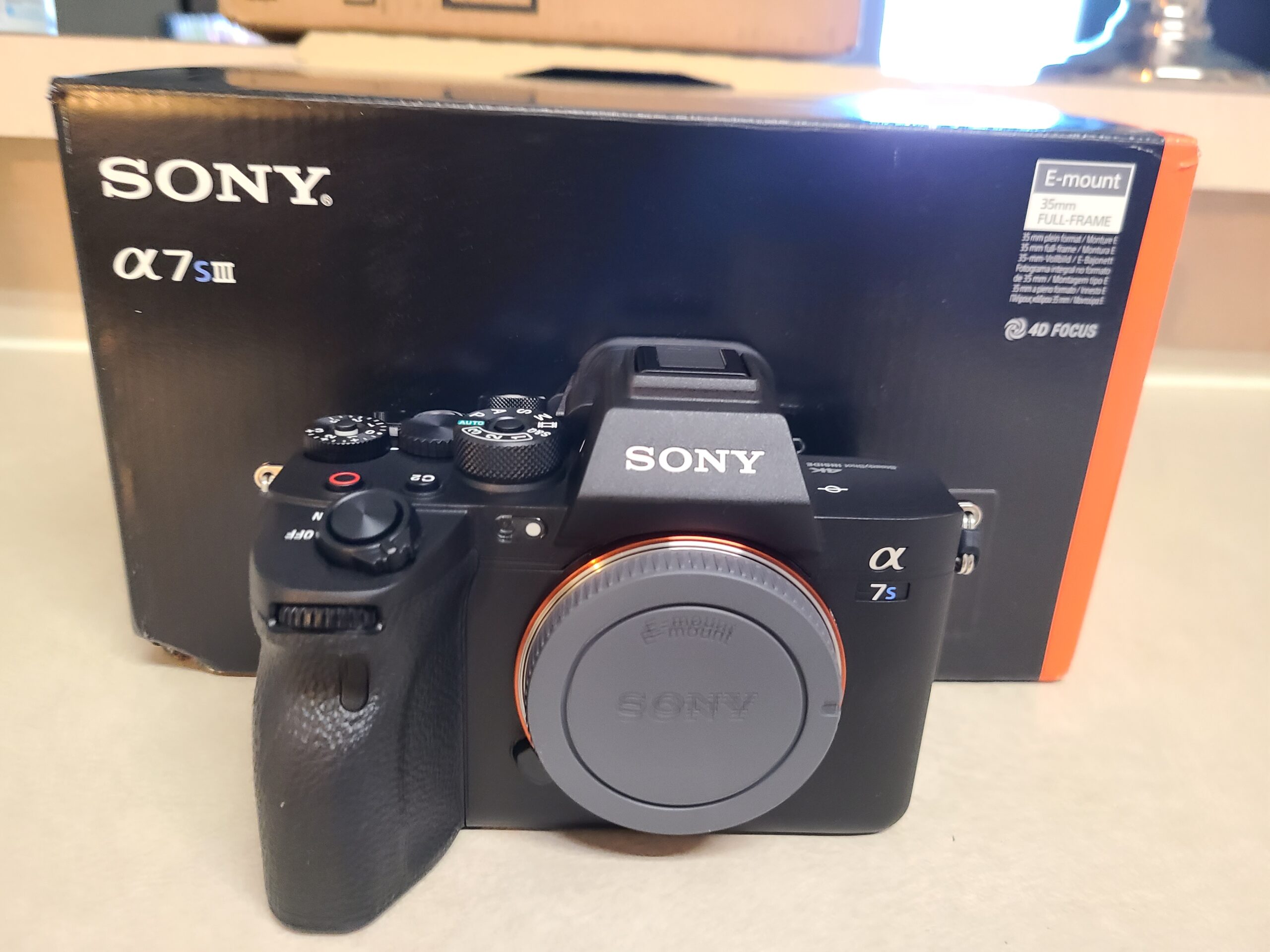
Video is the stronger half. It records 4K 120p in 10-bit 4:2:2 on a full pixel readout with no crop, which means slow-motion stage work keeps the framing you set. S-Cinetone, S-Log3 and HLG profiles give you filmic output, and 16-bit raw can be output over HDMI to an external recorder.
Autofocus is a 759-point hybrid system covering 92 percent of the frame with Eye AF for humans, animals and birds. Thermal management is handled, so recording is not time-limited, and at 612 g it is the lightest full-frame body here.
What the low pixel count buys you
Fewer, larger pixels mean less noise per pixel at a given ISO and a shallower noise floor when you push. On a stage wash that is the whole argument, and it is why this body keeps appearing as a low-light recommendation even among generalists.
Recording without a crop at 120p also means a 24-70mm behaves like a 24-70mm rather than a 36-105mm. On a long-lens-dependent shoot that is a meaningful saving.
Where it costs you
12.1MP is the compromise. Cropping tight for a programme cover is a large step down in detail, and enlarging for a print is limited by design rather than by technique.
CFexpress Type A cards are the most expensive media here, there is no internal RAW or ProRes, and the menu system still asks for a manual on show day.
7. Blackmagic Design Pocket Cinema Camera 6K Pro for solo operators on long nights
Pros
- Built-in 2
- 4 and 6 stop ND filters avoid carrying glass
- 1500 nit tilting HDR screen is visible in a dark booth
- NP-F570 batteries and charger included
- Same 13 stop dynamic range as the 6K
Cons
- Weighs 4.4 pounds which is heavy on a long night
- No in-body stabilisation
- No continuous autofocus
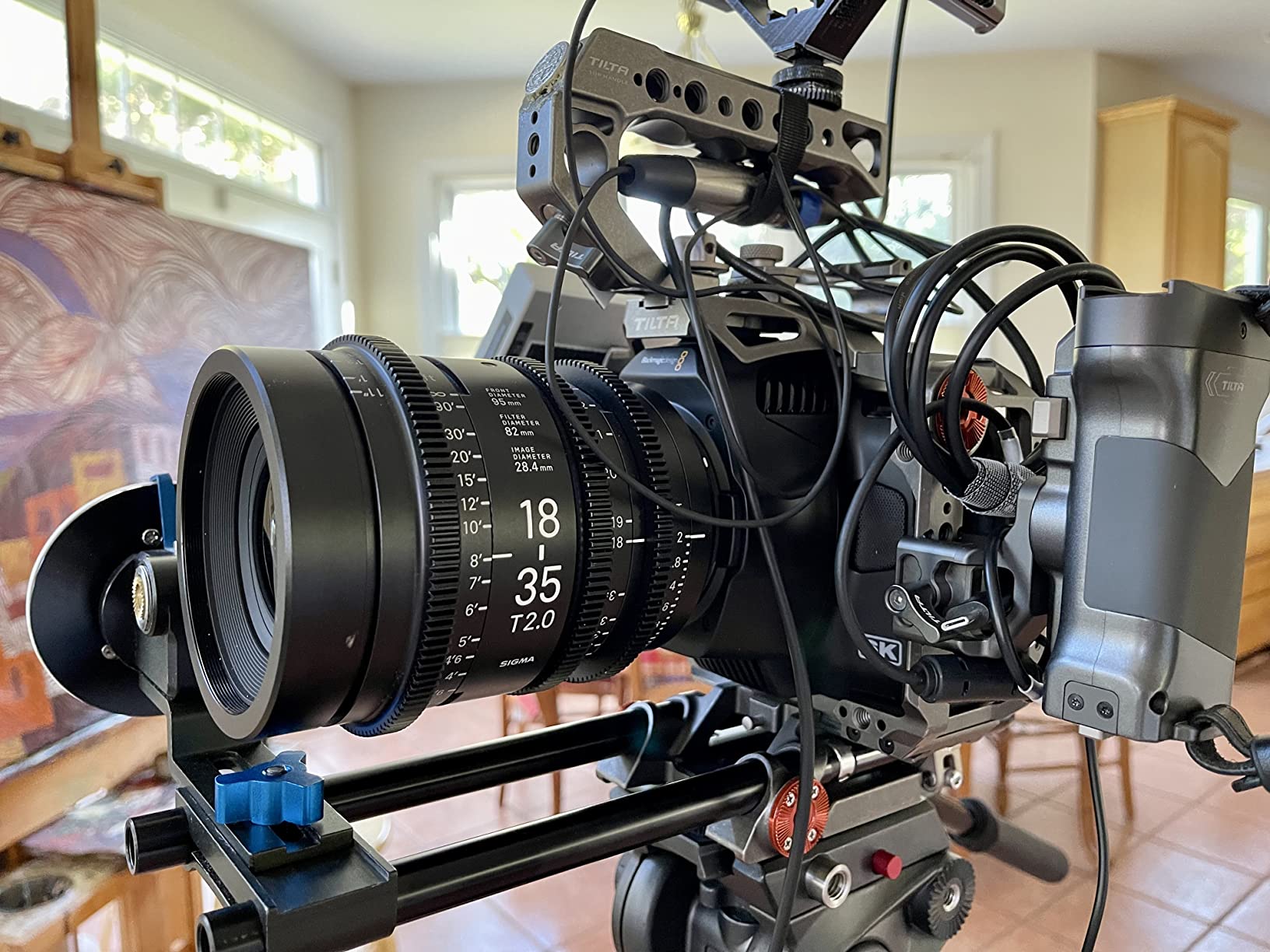
The Pro is the 6K with the two things a long night demands: internal ND filters and a genuinely bright screen. The 2, 4 and 6 stop neutral densities let you change exposure in front of a dim audience without a motorised filter unit, which is the classic run-and-gun problem solved in the body.
The 5-inch HDR tilting touchscreen runs at 1500 nits, and that is the number that matters in a black box theatre where the only light is a working cue. You can see focus and levels without a separate monitor eating battery and desk space.
Underneath it is the same Super 35 6K sensor with 13 stops of dynamic range and dual native ISO, recording Blackmagic RAW up to 6K and ProRes up to 4K. The active EF mount brings electronic aperture control, so aperture changes are silent rather than a rack of clicks.
The battery story is better here too. The NP-F570 system is inexpensive, and a battery and USB charger are included, which removes the single most common complaint about this range on a two-and-a-half-hour show.
Why the NDs matter more here than on set
On a set you plan around your stop. In a theatre you walk in and meet whatever the lighting designer built, with no rig time and no filter budget, and a fixed aperture plus external NDs is often the only way to hit a shutter speed the performers can actually move at.
Internal filters also mean fewer things to drop. A camera carried into a side box with a matte box and no spare glass is a much calmer proposition at half past seven.
What it costs you
It weighs 4.4 pounds, nearly double the 6K, and that is felt over a full-length show when you are on your feet. There is no in-body stabilisation and no continuous autofocus.
CFast media for 6K RAW remains expensive, and the screen tilts rather than fully articulating, so extreme low angles still need an accessory.
8. Nikon Z 6 III for internal raw video and pro monitoring tools
Nikon Z6 III, Black | Full-Frame Mirrorless Stills/Video Camera with 6K/60p Internal RAW Recording | USA Model
Pros
- 6K 60p N-RAW recorded internally
- Autofocus reaches -10EV for near darkness
- 5760k dot EVF at 4000 nits is exceptionally bright
- Partially stacked sensor gives a fast readout
- Waveform
- vectorscope
- zebra and false colour
Cons
- Only a single card slot
- Lower resolution EVF than some rivals
- Menu system is complex and unintuitive
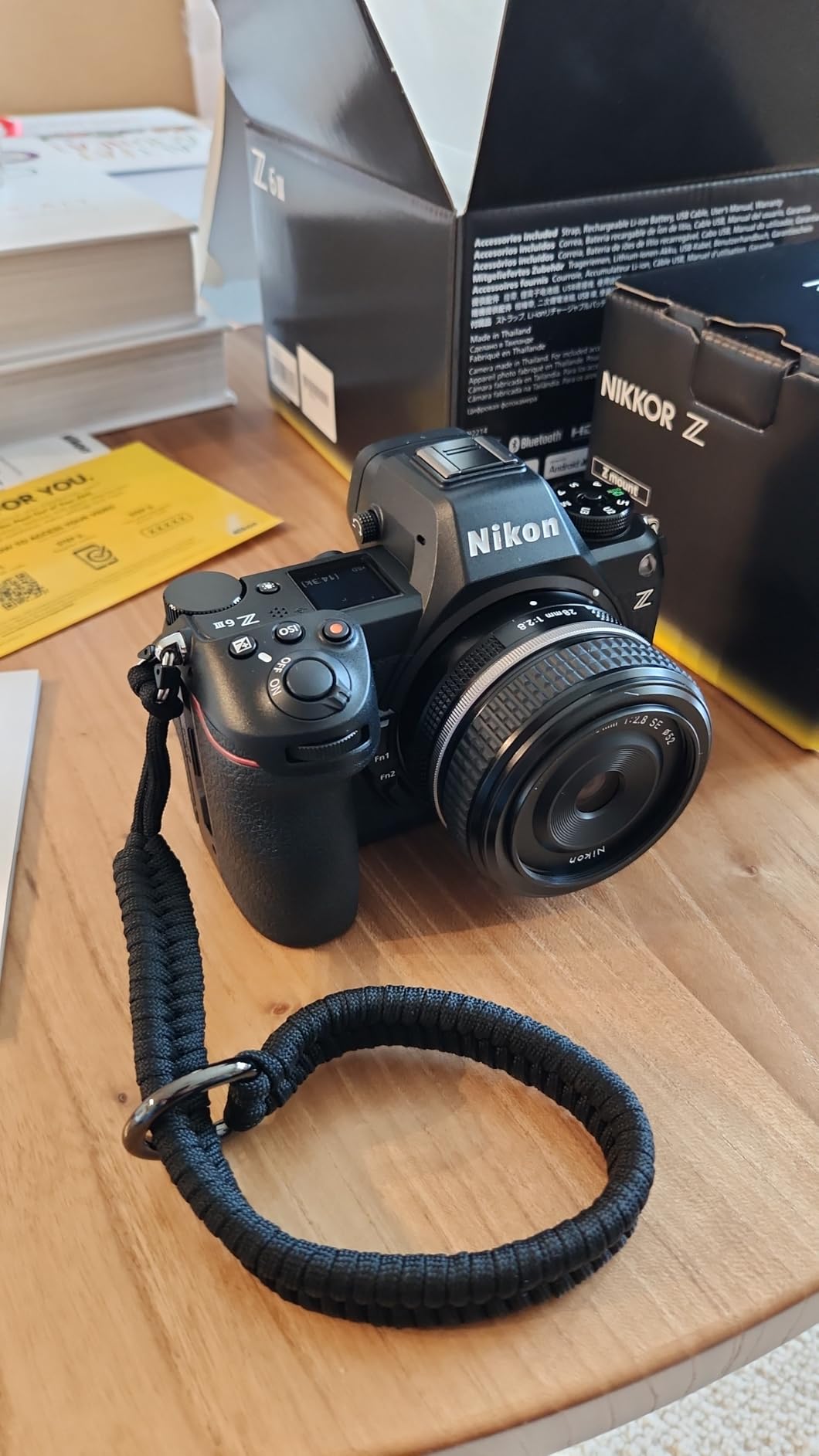
The Z 6 III is the video tool in this list. Recording 6K 60p N-RAW internally on a partially stacked full-frame sensor gives you grading latitude that internal compressed formats cannot match, and the partially stacked design is what makes the readout fast enough to do it.
Autofocus detection down to -10EV is the headline for a dark auditorium. That figure describes finding a subject in near-darkness, which is precisely the moment a lighting cue drops the stage two stops and a performer walks out of the wash.
The viewfinder is 5760k dots at up to 4000 nits with a 120 fps refresh, so a dim stage reads clearly and a fast-moving actor does not smear. Professional monitoring tools are built in, including waveform, vectorscope, zebra and false colour, which is what turns a camera into something a videographer trusts mid-show.
Stills are still good: 24.5MP with sensor-shift VR, 20 fps at full resolution, 120 fps at 11MP, and a shutter speed range to 1/16000 for a bright followspot. Recording runs about 60 minutes in 4K with unlimited capture at lower resolutions.
Why monitoring tools change a live show
On a dark stage you cannot judge exposure by eye, because your eyes adapt and the camera does not. False colour and a waveform tell you where the highlights sit in a way that histogram on a phone screen never will.
ISO 100 to 64000 with expansion to 204800 covers a wide range of stage levels, and line-in audio plus professional monitoring tools suit a documentary approach rather than a clean stage-mic capture.
What gets in the way
There is a single card slot for CFexpress B, SD or XQD, so you cannot mirror to a second card during a two-and-a-half-hour show. That is the one operational weakness we flag hardest.
The menu system is complex, the grip and dial placement draw complaints from owners, and rolling shutter is improved but still present. The viewfinder resolution is lower than some rivals at the same class.
9. Sony Alpha FX3 for a full cinema rig with proper audio
Pros
- Included XLR handle with two inputs and phantom power
- Active cooling supports long continuous recording
- 15+ stops of dynamic range and ISO 80 to 409600
- 4K 120p 10-bit 4:2:2 full pixel readout
- Timecode in and out for multi-camera work
Cons
- Only 10.2MP for stills
- CFexpress Type A media is costly
- No built-in ND filters or viewfinder
The FX3 is the FX30’s full-frame sibling and the most complete single-operator cinema body here. The included XLR handle with two inputs and phantom power is the standout: on a stage production that is the difference between a body on a tripod and a body feeding a venue mixer, without buying a separate accessory.
Dual native sensitivity with an ISO range of 80 to 409600 and 15+ stops of dynamic range gives the same stage-planning headroom as the a7S III, and the active cooling fan supports long continuous recording rather than a 30-minute ceiling.

Autofocus is a 627-point hybrid system with Eye AF, five-axis sensor-shift IBIS is present, and recording is 4K 120p 10-bit 4:2:2 on a full pixel readout in XAVC HS, S-I and S. S-Cinetone, S-Log3 and HLG profiles cover the colour workflows a stage wash needs.
The cage-free body with 1/4-20 mounting points accepts a top handle, a side plate or a bare tripod mount, and dual CFexpress Type A and SDXC slots allow redundant recording. Timecode in and out makes it straightforward to sync with other cameras in a multi-camera night.
Why the included handle changes the plan
Two XLR inputs with phantom power means a headset mic and a boom can run together, and a venue’s mixer output can feed timecode or a scratch track. Most competitors need a handle unit bought separately, which is one more box for a volunteer crew to lose.
At 1.5 kg with the handle, it is the heaviest configuration in this roundup, so plan your position rather than carrying it between the stalls and the pit.
What you trade away
Stills resolution is 10.2MP, the lowest figure here, so this is a video body that can take photographs rather than a photographer’s camera. There is no built-in ND filter and no built-in viewfinder.
CFexpress Type A media is expensive, battery life for video is limited, rolling shutter appears at 4K 120p, and there is no internal RAW beyond HDMI output.
10. Canon EOS R7 for stills-led school and community productions
Pros
- 32.5MP is the highest resolution here for programme stills
- Dual Pixel AF II across 651 zones
- RAW Burst pre-shooting captures the moment before the shutter
- 5-axis IBIS with auto-level
- Extra LP-E6NH battery included
Cons
- 4K 60p carries a 1.8x crop
- APS-C is noisier at high ISO than full frame
- No 4K 60p full-sensor readout
The R7 is the resolution pick. At 32.5MP APS-C you get the most detail in this roundup, and for a theatre photographer whose images go into a programme, a lobby display or a social feed, that headroom is worth more than a low-light advantage measured in fractions of a stop.
The RAW Burst mode captures up to 30 fps with roughly half a second of pre-shooting, so the frame before the moment is already recorded. On a stage with unpredictable movement, that single feature rescues more usable frames than any lens choice we have made.
Dual Pixel CMOS AF II with 651 zones across 100 percent of the frame detects people, animals and vehicles, with detection down to EV -5. Sensor-shift IBIS offers five axes with auto-level, which keeps a shot from a raked side box looking deliberate rather than tilted.
At 1.1 pounds it is the lightest body in the group, and a spare LP-E6NH battery is included, which is generous for a camera that will live on a balcony rail for a full evening.
Where resolution genuinely wins
A crowded ensemble scene on a deep stage is the case for a high pixel count. When a face is a small part of the frame, the extra megapixels are the only thing that makes the image work, and the RF mount’s stabilised lenses hand-hold well at long focal lengths.
Dual SD UHS-II slots give redundancy, and the tilting touchscreen suits a low or high position without the bulk of a fully articulating screen.
What the smaller sensor costs
APS-C is noisier at high ISO than a full-frame sensor, and a stage wash is exactly a high-ISO situation. You will need faster glass or more exposure time than you would on a full-frame body.
4K 60p has a 1.8x crop with no full-sensor readout, and rolling shutter shows in electronic shutter mode. It is a stills-first camera that can shoot video, not the reverse.
How to Choose a Camera for Theater Productions
1. Start with your shooting position
The stalls, the balcony and the pit impose completely different requirements. From the front of house you need a fast wide-to-normal zoom; from the back of a deep house you need reach and a long lens; in the orchestra pit you need something wide, close and stabilised. Decide the position first and the sensor, the lens and the mounting all follow from it.
2. Decide between stills and video
Photographers and videographers ask the same question and get different answers. Stills prioritise sensor resolution, in-body stabilisation, pre-capture and silent operation. Video prioritises dynamic range, codec and bit depth, cooling, recording limits, card redundancy and timecode. A crew doing both should weight stabilisation and autofocus heavily, which is why hybrid bodies like the R6 Mark II sit so well in the middle.
3. Treat a silent shutter as a requirement
Audible shutter noise in a live auditorium is one of the few genuine deal-breakers in this category, and it is the one criterion most product pages skip. A full-frame body with an electronic shutter and a silent shooting mode lets you work during a quiet scene change, which is when the best frames usually happen. Cinema bodies with fixed mechanical shutters do not offer that escape, and you are relying on a wall of bodies absorbing the sound.
4. Check the rolling shutter and flicker behaviour
LED stage wash and dimmable fixtures can band under a long exposure or a slow sensor readout, and the effect is most visible on faces. Faster readout from partially stacked sensors helps, and shooting near 1/50 to 1/60 second with anti-flicker enabled where the camera offers it reduces it. Test on the actual rig if you can, because fixtures vary house to house.
5. Plan the lens pairing before the body
Lens advice is trusted at least as much as body advice, and for a stage it is more decisive. A 24-70mm f/2.8 is the most commonly recommended all-rounder for front-of-house work. From the back of a deep house, a fast short telephoto is the practical answer, and on APS-C bodies a fast 50mm-equivalent prime gathers more light than a slow kit zoom. If a body cannot be fed by fast glass you can actually buy, it is the wrong body for that production.
Our cinema camera roundup goes deeper on codec and colour workflows, and the audio mixer guide for multicam productions is worth reading before you commit to a rig, because the camera is the easy half of a multi-camera night.
6. Check endurance for a full-length show
A straight play plus interval runs two and a half hours or more with no pause to swap anything. Count batteries per body, check whether the battery in your kit is the same cell the camera uses, and check the recording limit before tech rehearsal rather than during it. Bodies with active cooling and unlimited recording remove one whole category of risk.
7. Baseline settings for a stage wash
Start in manual exposure and treat the lighting plot as your reference rather than a meter. For video, 1/50 second at 50 fps in PAL territories or 1/60 at 60 fps, an aperture as wide as the lens allows, and ISO on whichever native anchor the current cue sits nearest. For stills, keep the shutter at least 1/125 for restrained movement and open the aperture instead, then let stabilisation cover the rest.
Set a fixed white balance rather than auto, and underexpose by two to three stops on RAW when the wash is high-contrast, because recovering a highlight is far easier than rebuilding a blown skin tone. Focus on the actor, not the set, and let everything else fall into blackness deliberately.
Where to Shoot From: Stalls, Balcony, Pit and Side Boxes
From the centre of the stalls you are close enough for a fast normal lens, and a wide-to-short-telephoto zoom covers most blocking. Light is best here because you are under the front-of-house rig, which is usually the most evenly lit part of the house.
The back of the stalls and the balcony are reach problems. You need a fast short telephoto, a solid support, and a body that will not run hot on a long act. Higher positions also see over the audience, which solves the sightline problem that ruins otherwise good footage.
The orchestra pit is a wide, close, stabilised problem on a very tight budget, and the side boxes are the hardest angle in the house: oblique, low, and frequently obstructed. Plan the pit with a wide lens and image stabilisation, and treat side boxes as a second camera position rather than a primary one. If you are running more than one of these at once, our multicam production picks cover angle coverage and colour matching between bodies.
Frequently Asked Questions
What is the best camera for filming stage shows?
The Blackmagic Pocket Cinema Camera 4K is our pick for filming stage shows. It records 13 stops of dynamic range, so a followspot and the surrounding set both survive the exposure, and its dual native ISO 400 and 3200 handles a stage wash without a noisy high-ISO push. ProRes and Blackmagic RAW go internal, and the five inch touchscreen is readable in a dark booth.
What is the best camera for theater photography?
For theater photography the Canon EOS R6 Mark II is the strongest all-round choice. Its 5-axis sensor-shift IBIS rated up to 8 stops lets you handhold slower shutter speeds at a dim stage wash, and Dual Pixel CMOS AF II with 651 zones finds and holds a performer across the frame. ISO 100 to 102400 covers most house lighting levels.
What are the best camera settings for taking theatre photos?
Shoot manual exposure, keep the shutter at 1/125 or faster for restrained movement, and open the aperture as far as your lens allows before raising ISO. Set a fixed white balance matched to the stage wash rather than auto, and underexpose by two to three stops on RAW so you can recover a followspot highlight later. Focus on the actor and let the set fall into darkness.
Can you use flash during a theater production?
Not during a performance for a live audience. A flash burst in a dark auditorium is visible to every person in the room and pulls attention from the stage, and most venues treat it as a breach of house rules. Bouncing flash off a ceiling is workable in a rehearsal or pre-show setting with no audience, where a lit room means less spill. Plan to shoot with the lighting you are given.
Do you need a silent shutter for stage performances?
Yes, and it is a genuine deal-breaker rather than a luxury. An audience will hear a mechanical shutter from many rows, and the quietest moments in a play are often the ones you most want to photograph. Bodies with an electronic shutter and a silent shooting mode let you capture a scene change without interrupting it, which is why we treat it as a hard filter when ranking.
What is the best camera for filming in the dark?
For darkness alone, the Sony Alpha a7S III has the widest range, with ISO 80 to 409600 on a 12.1MP backside-illuminated full-frame sensor and 15+ stops of dynamic range, plus 4K 120p 10-bit 4:2:2 recording with no crop. The Sony Alpha FX3 matches that performance in a cinema body with an included two-input XLR handle if audio is part of your brief.
Final Verdict for a Theater Production in 2026
For most productions, the Blackmagic Design Pocket Cinema Camera 4K is the camera we would put on the list first: 13 stops of dynamic range, dual native ISO suited to a lighting plot, and ProRes or Blackmagic RAW recorded internally. It suits the widest range of stage lighting in this roundup, and it handles a full-length show on external power.
If your crew also needs programme stills, put the Canon EOS R6 Mark II at the top instead, and if video is the only deliverable and you want cinema colour science with active cooling, the Sony FX30 is the body to shortlist. Whichever you choose among these cameras for theater productions, decide the shooting position first, confirm you can run silent, and test on the actual rig before tech rehearsal.