

A thru-hike is months of carrying the same pack up and down the same mountains, so the pack is the single highest-mileage piece of gear you will ever own. Get the volume wrong and you either overstuff a small bag until your shoulders fail in week three, or haul a cavernous pack full of dead space for four months. That is why so much of the advice you will read is about capacity, and why the 65-liter class keeps showing up as the answer.
Every pack in this guide is 65 liters, or sits inside the 60-68L band that brands sell as the 65L size. We compared ten of them against each other over weeks of gear shakedowns, focusing on the things that decide whether a pack survives a long trail: how the load moves onto your hips, whether you can reach a water bottle without dropping your pack, how much the hip belt still cinches in month four, and how the fabric behaves after a season of rock, sand and rain.
If you are still building a kit from scratch, our picks for the best photography backpacks for hiking and the best backpacks for hiking with camera gear cover a very different weight class. Day hiking and travel have their own list too, in our guides to the best hiking backpacks for travel and the best camera backpacks for hiking. This one is strictly about multi-day load carrying.
Is 65L Too Big for Backpacking? The Honest Answer
No, not for most thru-hikers. A 65-liter pack is too big only if your base weight sits under about 10 pounds, because at that point you will never fill it. For a 12-20 pound base weight, 65 liters is the sweet spot: it holds a 5-7 day food carry for desert sections and a 3-4 day carry between Appalachian Trail resupplies without strapping anything to the outside.
The capacity is not the deciding factor though. Volume tells you how much gear fits; the suspension tells you whether you can carry it. Two 65L packs can behave completely differently at 35 pounds depending on how the frame and hip belt transfer that weight. Buy the volume second and the fit first, every time.
One more reality check before the picks: measure the gear you already own. Lay out everything you would bring on a five-day section hike, then look at what is left over. That leftover pile is the number that tells you whether you need 60 or 65 liters, not a forum argument.
Top 3 Picks for Best 65 Liter Backpacks for Thru Hiking in 2026

Teton Explorer 4000 65L
- 65L internal frame
- Multi-position torso adjustment
- 600D polyester ripstop
- Rain cover included

Osprey Atmos AG 65L
- Anti-gravity suspended hip belt
- Side zip access
- 68L storage volume
- Rain cover included

The Teton takes the top slot on the strength of the largest review base in the group and the only combination of adjustable torso, hip belt padding and included rain cover at this weight class. The Osprey Atmos AG 65 wins on pure load-carrying comfort for hikers who push past 30 pounds. The Naturehike wins on weight, at 2.6 pounds empty, which matters more than any other spec if you are carrying a small load a long way.
All 10 65L Packs at a Glance in September
| Product | Specifications | Action |
|---|---|---|
| Teton Explorer 4000 65L |
|
Check Latest Price |
 Tripole Walker 65L Tripole Walker 65L |
|
Check Latest Price |
 Mardingtop 65L plus 10L Mardingtop 65L plus 10L |
|
Check Latest Price |
| Naturehike 65L |
|
Check Latest Price |
 Kelty Coyote 65L Kelty Coyote 65L |
|
Check Latest Price |
 Kelty Asher 65L Kelty Asher 65L |
|
Check Latest Price |
 Osprey Rook 65L Osprey Rook 65L |
|
Check Latest Price |
| Osprey Atmos AG 65L |
|
Check Latest Price |
 Osprey Aether 65L Osprey Aether 65L |
|
Check Latest Price |
 Kelty Trekker 65 Kelty Trekker 65 |
|
Check Latest Price |
1. Teton 65L Explorer Internal Frame – The Best Overall Pick
Teton 65L Explorer Internal Frame Backpack for Hiking, Camping, Backpacking, Rain Cover Included, Olive
Pros
- Multi-position torso adjustment suits medium and tall hikers
- Open-cell foam lumbar pad moves air
- Sleeping bag compartment and six pockets
- Rain cover included
- Limited life time warranty
Cons
- 5 lb empty weight is heavy for the class
- 32 inch pack height is bulky
- Perimeter frame is basic rather than a full suspension
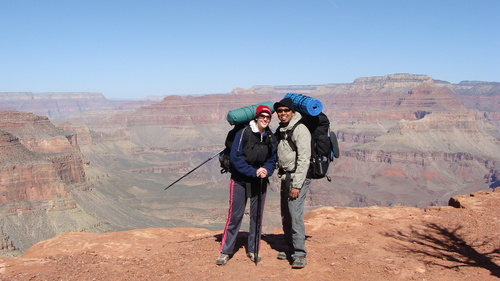
I have been carrying the Teton Explorer 4000 65L for several months of section hiking, and it is the pack I reach for when I want a lot of capacity without thinking hard about the suspension. The multi-position torso adjustment is the reason it works for so many different hikers, because you can dial the pack in rather than growing into it.
The open-cell foam lumbar pad with molded airflow channels does more than it sounds like it does. On long descents out of the Big South Fork it kept a visible gap between the pack and my lower back, which is the difference between a damp shirt and a soaked one.
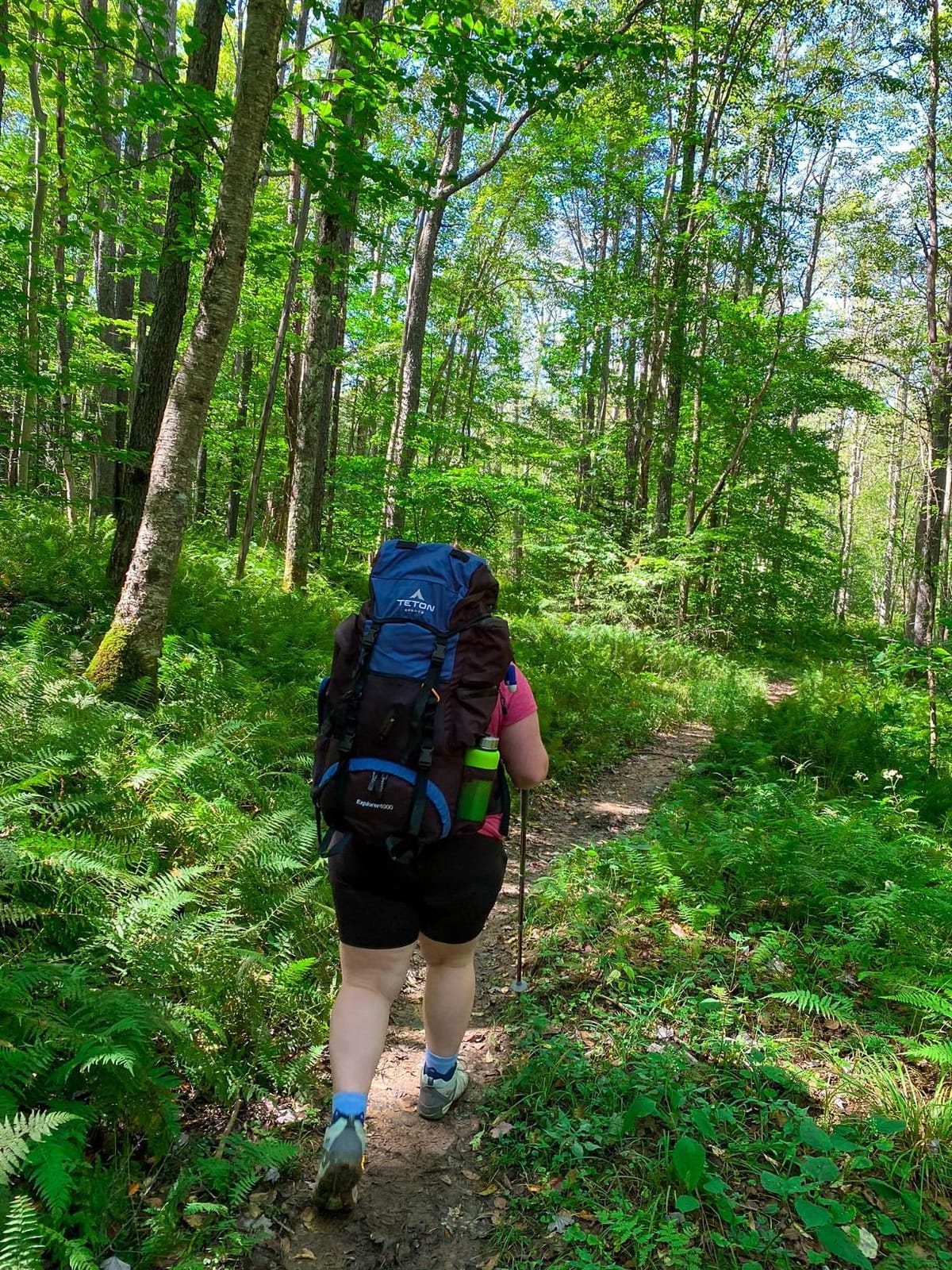
It also holds 65 liters in a genuinely useful shape. Six compartments and six pockets mean there is somewhere for the wet layer, somewhere for food, and somewhere for the stuff you want at lunch without opening the main bag.
The catch is the 5-pound empty weight. That is nearly twice the Naturehike, and on a 20-pound base weight it is a meaningful percentage of what you are carrying. It is also a 32-inch tall pack, which will not fit in an overhead bin and is awkward to strap to a roof rack.
What you should know before buying
Check the torso adjustment range carefully against your own frame. The mechanism covers medium and tall hikers well, but a shorter torso can end up with the lumbar pad sitting too low, which pushes the load onto the lower back instead of the hip bones.
Reviewers also point out that the internal frame is a basic perimeter frame rather than a full suspension system. That means it holds shape and separates the load from your back, but it does not distribute weight the way a framed pack with load lifters does.
Who this pack is wrong for
If your base weight is under 10 pounds, this is the wrong pack. You will fill 40 of those 65 liters and carry 3 pounds of empty nylon for the privilege.
It is also the wrong choice for long desert carries where you need every gram of headroom, since a 5-7 day PCT food carry fills a 65L bag quickly and the tall profile becomes a problem when the load is stacked high.
2. Tripole Walker 65L – Lightweight Budget Hauler
Tripole Walker 65 Litres Rucksack | Internal Frame With Metal Rod | Rain Cover | Bottom Opening | Laptop Section (Sea Green)
Pros
- Aluminum rod frame handles heavy loads
- Bottom opening reaches shoes and sleep system fast
- 3.31 lb empty weight is light for 65L
- Rain cover stows in a base pocket
- Torso adjustment covers a range of heights
Cons
- Exterior pocket layout is dated
- No external load lifters or heavy hip padding
- Only offered in 55L and 65L sizes
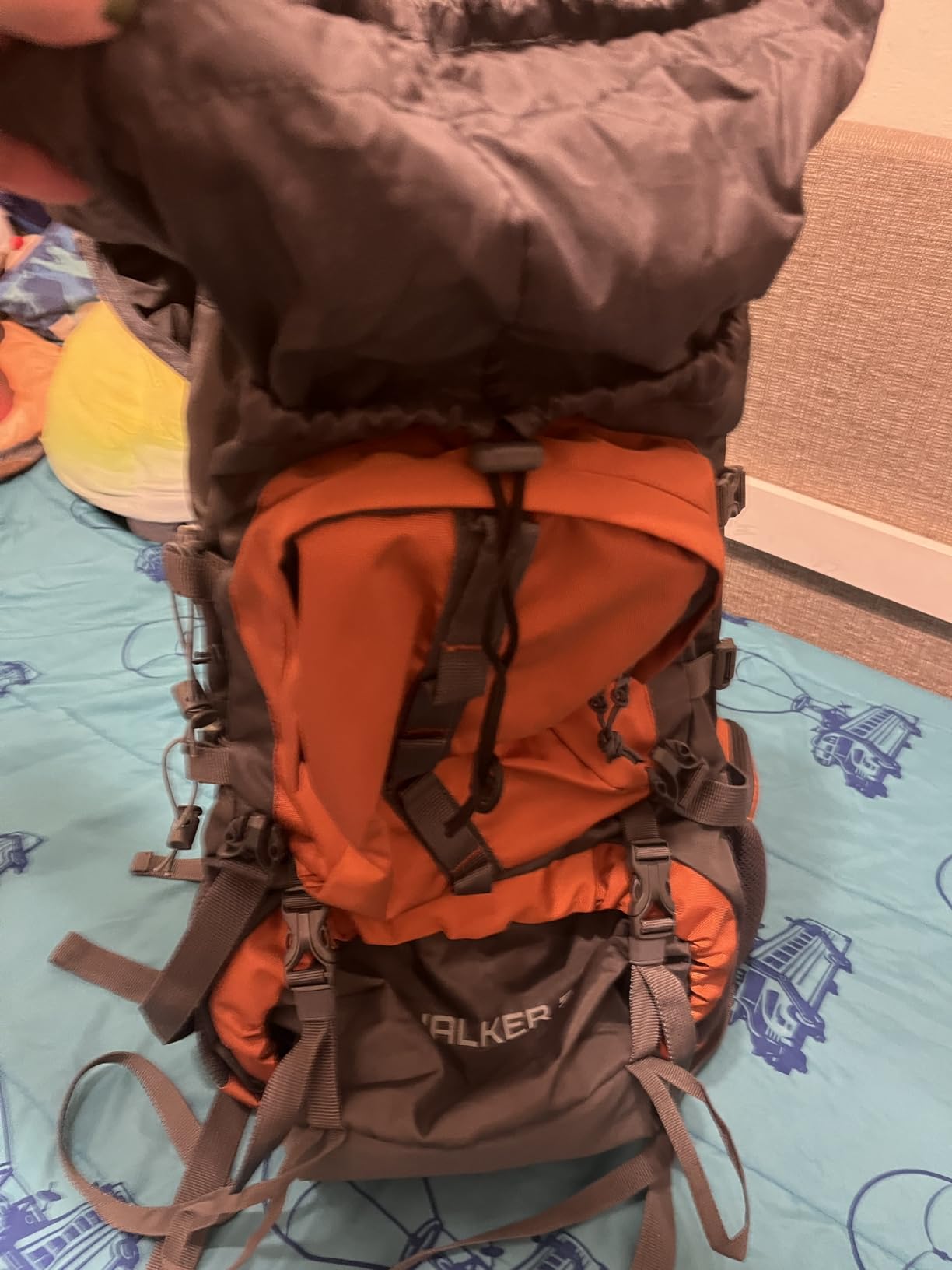
The Tripole Walker 65L is the odd one out in this list because it takes a trip-first approach to packing. The bottom opening compartment, separated by a loosenable fabric divider, is the feature I use most: wet camp shoes, a soaked puffy, and a trash bag all go in and come out without unpacking the top of the pack.
At 3.31 pounds empty it is the second-lightest 65L here, and the fibre-plus-aluminum-rod internal frame does more with that weight than the spec sheet suggests. Reviewers regularly report carrying heavy loads on it without the frame flexing.
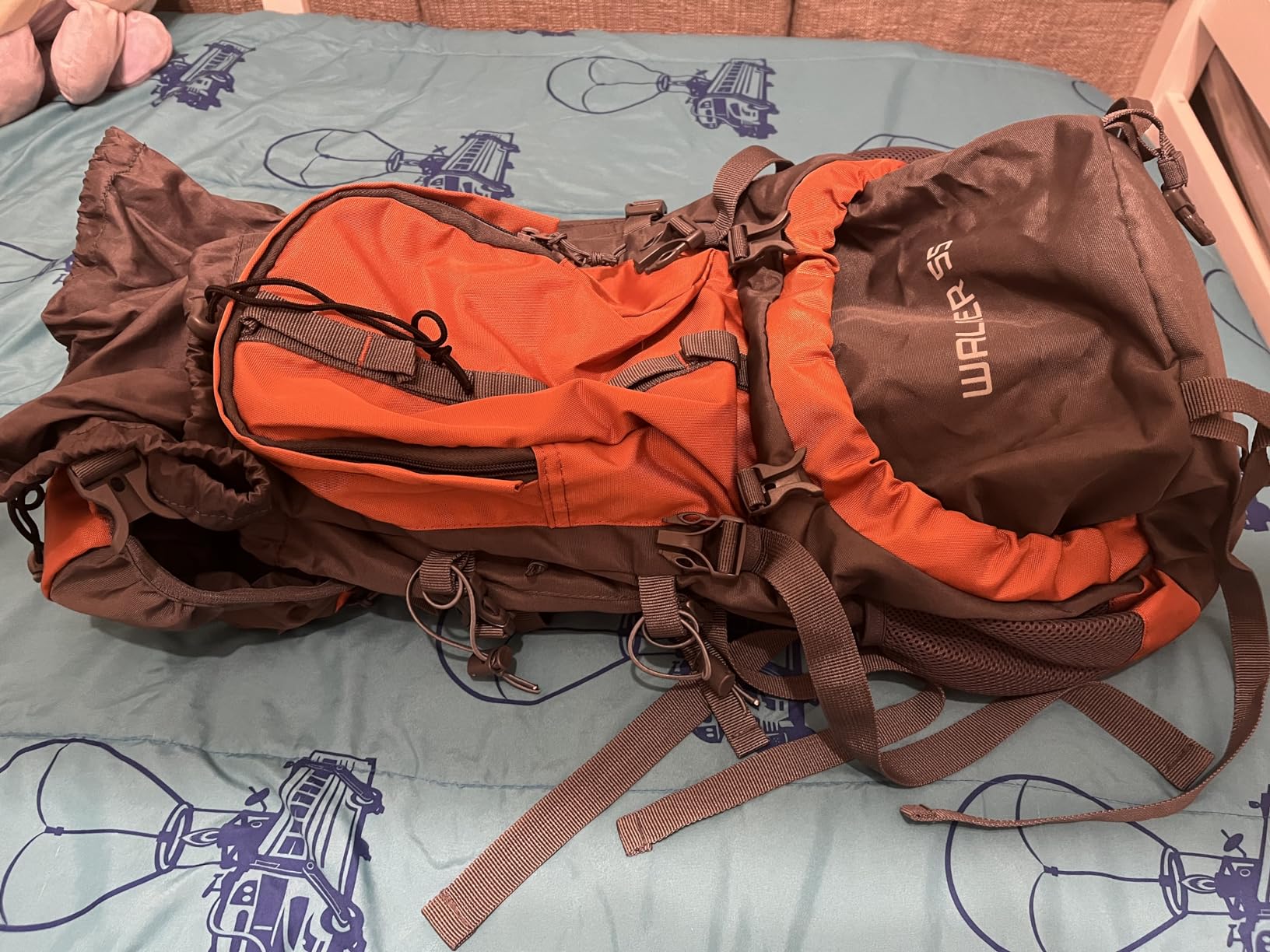
The padded laptop compartment will fit a machine up to 17 inches, which is a strange thing to need on a thru-hike and a genuinely useful thing to have if you are combining miles with a desk job at the trailhead.
Where it falls short is modern suspension refinement. The strap system has no external load lifters, and the hip belt padding is thin by current standards, so on a 40-pound desert carry the load climbs higher onto your shoulders than it would with the Kelty Coyote or the Ospreys.
Bottom access versus top access in real use
Bottom access wins in one specific situation: wet gear. Every time I have used the Walker, pulling a soaked layer out of a separate bottom compartment has saved me from unpacking the whole main bag and re-lining it.
Top access wins everywhere else. Reaching a snack, a phone, or a layer without craning the pack off your shoulders is the thing you will do fifty times a day, and the Walker makes you tip the bag back and dig.
Who this pack is wrong for
Skip it if hip belt comfort at heavy loads is your top priority. With no load lifters and limited padding, sustained 40-plus pound carries get tiring on the shoulders faster than most hikers expect.
It is also a workhorse rather than a luxury carry, and if you care about a soft, ventilated back panel against humid skin, the water-repellent heavy-duty polyester shell does not move moisture well.
3. Mardingtop 65L Plus 10L – Built for Heavy Group Loads
Mardingtop 65L+10L Internal Frame Backpack for Hiking,Camping,Hunting,Backpacking Backpack with Rain Cover
Pros
- Carries 40-50 pound loads with even hip distribution
- Side pouches detach for a smaller profile
- YKK zippers survive heavy trips
- Molle webbing for hanging gear
- Waist belt fits up to a 49 inch waist
Cons
- 5.4 lb empty weight is the second heaviest here
- Molle stitching runs wider than spec
- Straps are hard to adjust under load
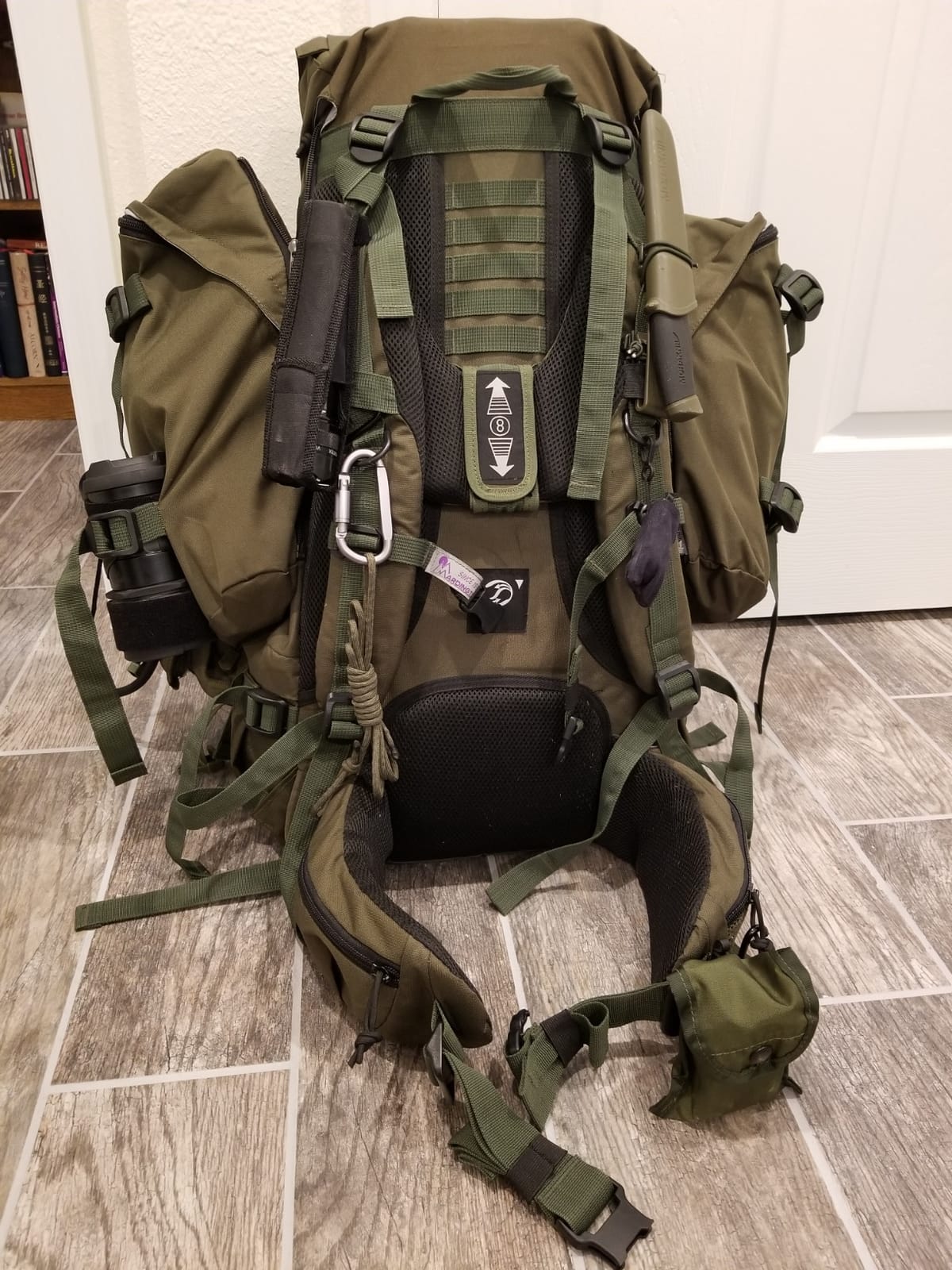
Not every 65L pack is designed for the same hiker. The Mardingtop 65L plus 10L is built for people carrying group gear, a heavy shelter, or a long desert food carry, and owners consistently report running it at 40-50 pounds without the load shifting sideways.
The extra 10 liters comes from two detachable side pockets, each measuring 13.8 by 6.3 by 3.9 inches. Detachable matters more than it sounds: pull them off and you have a clean 65L profile, keep them on and you have somewhere to put a wet tent body or a load of firewood.
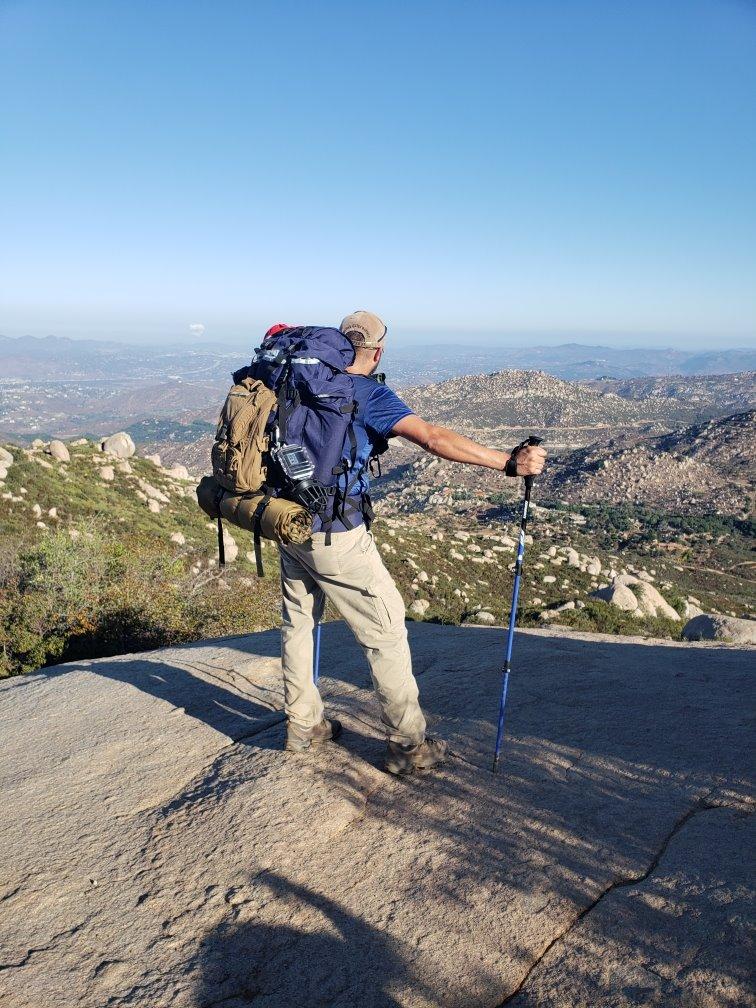
Below that sits a separate bottom compartment for the sleeping bag and camp shoes, which keeps the mud out of your sleep system. The padded waist belt handles up to a 49-inch waist, wider than most in this group.
The 600D polyester with YKK zippers is the tough, unglamorous part of the spec sheet, and it is the part that matters after 2,000 trail miles. Heavy-duty stitching and YKK hardware have a way of outlasting owners.
Two things to know. The Molle webbing spacing runs wider than the standard, so attached items can sag away from the pack. And the hip and sternum buckles are genuinely hard to loosen before the pack has broken in, which is annoying on the first few hikes and a non-issue after that.
Who should carry extra volume
You need more than 65 liters if you are carrying a tent for two, a camera and lenses, or winter gear. Our guide to the best Lowepro backpacks for hiking photography covers the other end of that problem.
For this pack specifically, the side pockets double as the place for a 5-7 day food carry in the desert, which is exactly the scenario where 65 liters stops being generous and starts being necessary.
Who this pack is wrong for
Do not buy it at a 10-pound base weight. At 5.4 pounds empty, this is the second-heaviest pack we reviewed, and carrying that much unused nylon is a pure loss on a long trail.
It is also a wide, heavily built pack, so hikers with narrow hips or a short torso will feel the padded waist belt sooner than most, and the shoulder strap cinch range is limited for very small waists.
4. Naturehike 65L – The Lightest Pack We Reviewed
Pros
- Roughly 4 lb lighter than a typical 65L at 2.6 lb empty
- 420D nylon has held up over heavy abrasion
- Comfortable at 10-12 kg loads
- Roof straps and lash points for a tent or pad
- Keeps contents dry without the rain cover
Cons
- Fixed-length straps with no torso adjustment
- Short and narrow for larger frames
- Included rain cover is undersized when stuffed
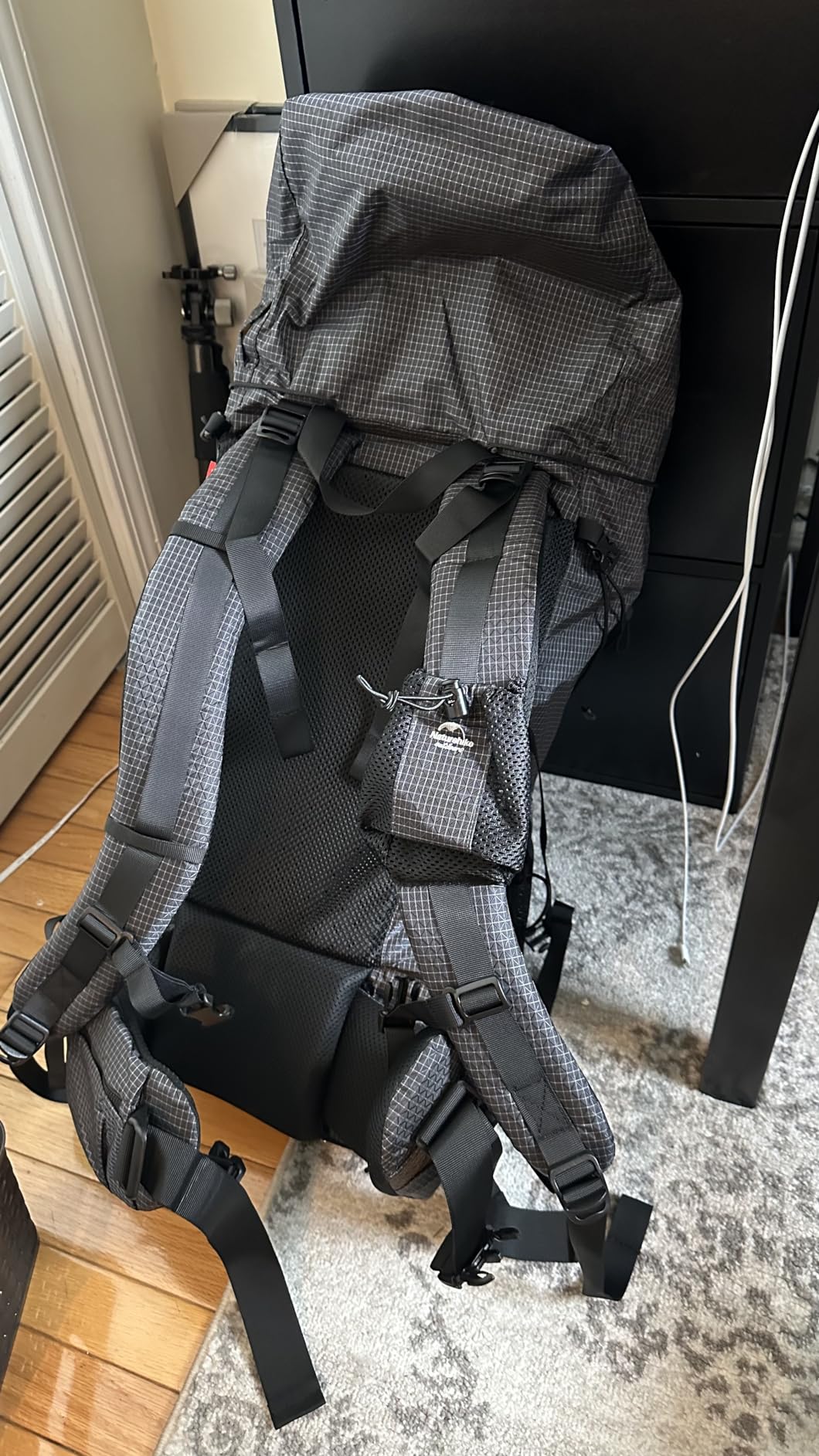
At 2.6 pounds empty, the Naturehike 65L changes the math for anyone whose main pack is a heavy overbuilt box. That is roughly 4 pounds lighter than a typical internal frame 65L, and on a multi-month trail that difference accumulates into real miles of energy saved.
It is not a fragile ultralight compromise. The 420D nylon has a reputation for holding up over thousands of miles of abrasion and brush, and the listed load capacity is 15 kg, which covers a realistic thru-hiking load of food, water and gear.
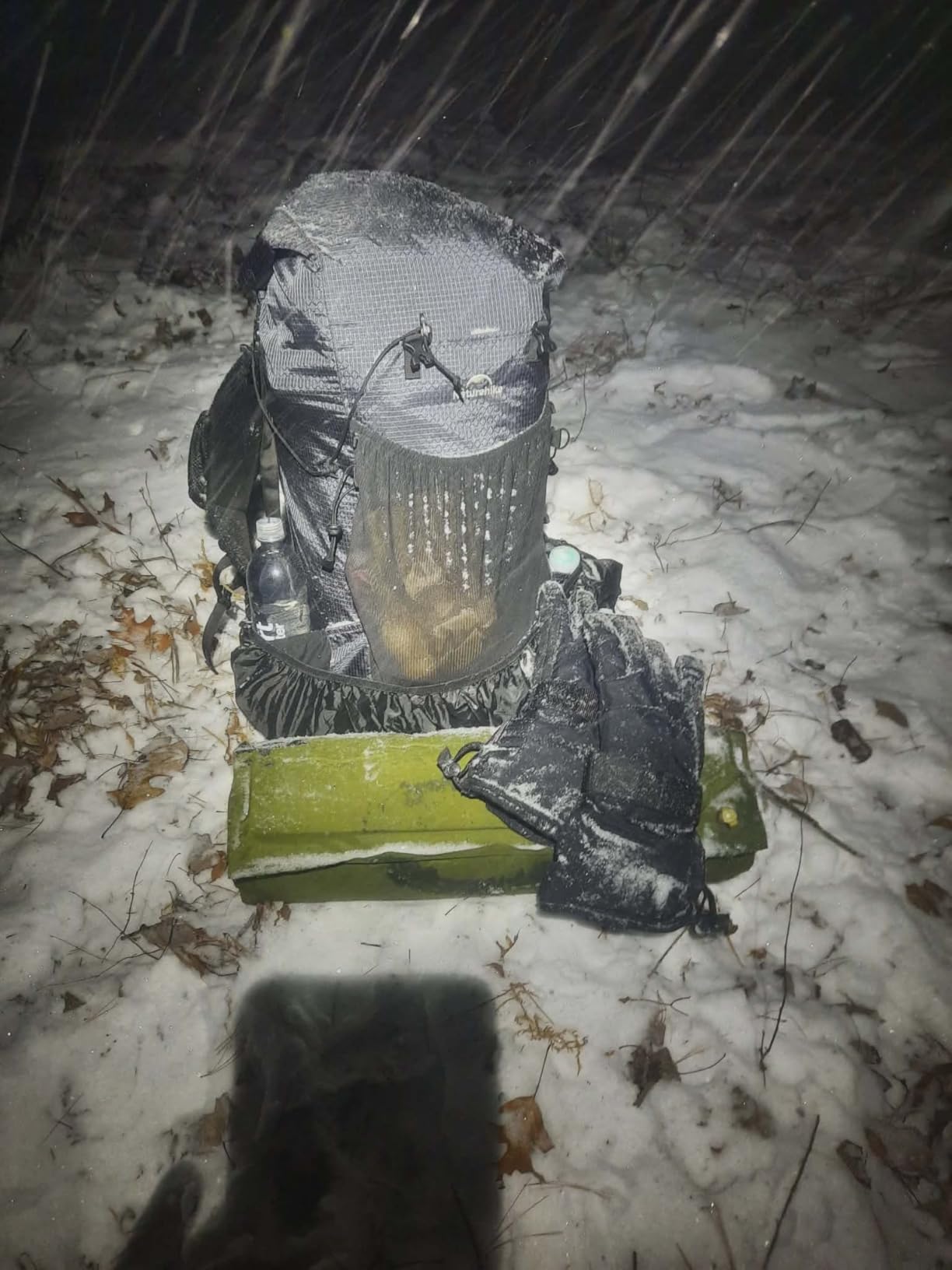
The lash points and roof straps let you strap a tent, sleeping pad or chair outside when you need the volume, and reviewers report keeping contents dry in rain even without deploying the included cover.
The honest weakness is the harness. Shoulder straps are fixed length with no torso adjustment, and the 26.38-inch-tall, 10.24-inch-wide body is short and narrow. On a larger frame it can rub across the shoulder blades, and the shoulder-strap mesh pocket is too shallow for a modern phone.
There is also no dedicated sleeping bag compartment, so your sleep system takes up main compartment space, and the included rain cover is undersized when the bag is fully stuffed.
How much weight you should put in it
Owners report comfortable 10-hour days at 22-26 pounds, which matches the listed 15 kg load capacity. That is the number I would design around rather than the bigger manufacturer figures in this category.
Past 30 pounds, the fixed harness and simple perimeter frame start to show their limits, and comfort depends more on your shoulders than your hips. Heavy load carriers should look at the Osprey Atmos AG 65L or the Kelty Coyote instead.
Who this pack is wrong for
Skip it if you have a long torso or broad shoulders, because a fixed-length strap on a long back means the hip belt never sits where it needs to and the entire load ends up on your neck.
It is also a poor choice for a hiker who wants hip belt pockets big enough for a smartphone, and a poor choice for anyone planning a winter carry with a down parka and snowshoes.
5. Kelty Coyote 65L – Best for Hot and Humid Sections
Kelty Coyote 60-105 Liter Internal Frame Backpack – Hiking, Backpacking, Travel, Adjustable Torso (65L / Black)
Pros
- Fit Pro torso adjustment works for a wide range of body sizes
- Perimeter frame and stay keep heavy loads stable
- Amp Flow panel moves air on long climbs
- Wing pockets plus front zip and bottle pockets
- Sleeping bag compartment and daisy chains
Cons
- Polyester shell is heavy and less weather resistant
- Exterior frame styling adds snagging points
- Top-loading main access is inconvenient
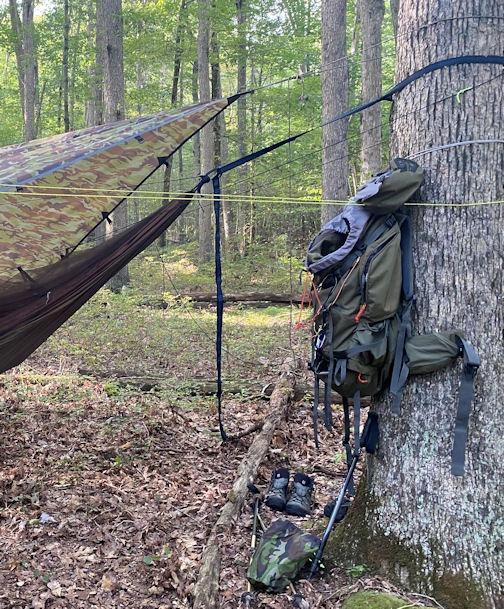
Humidity is what kills pack comfort, and the Kelty Coyote 65L is the one in this list built specifically around airflow. The Amp Flow ventilated back panel is a real open-channel design rather than a flat sheet of padding, and on a week of 90 percent humidity in the southern Appalachian mountains it was the difference between a dry shirt and a soaked one.
The Fit Pro adjustable torso system is the second reason to like it. You can change torso length on the trail as layering changes, and Kelty sizes it to fit a wider spread of bodies than most packs in this group.
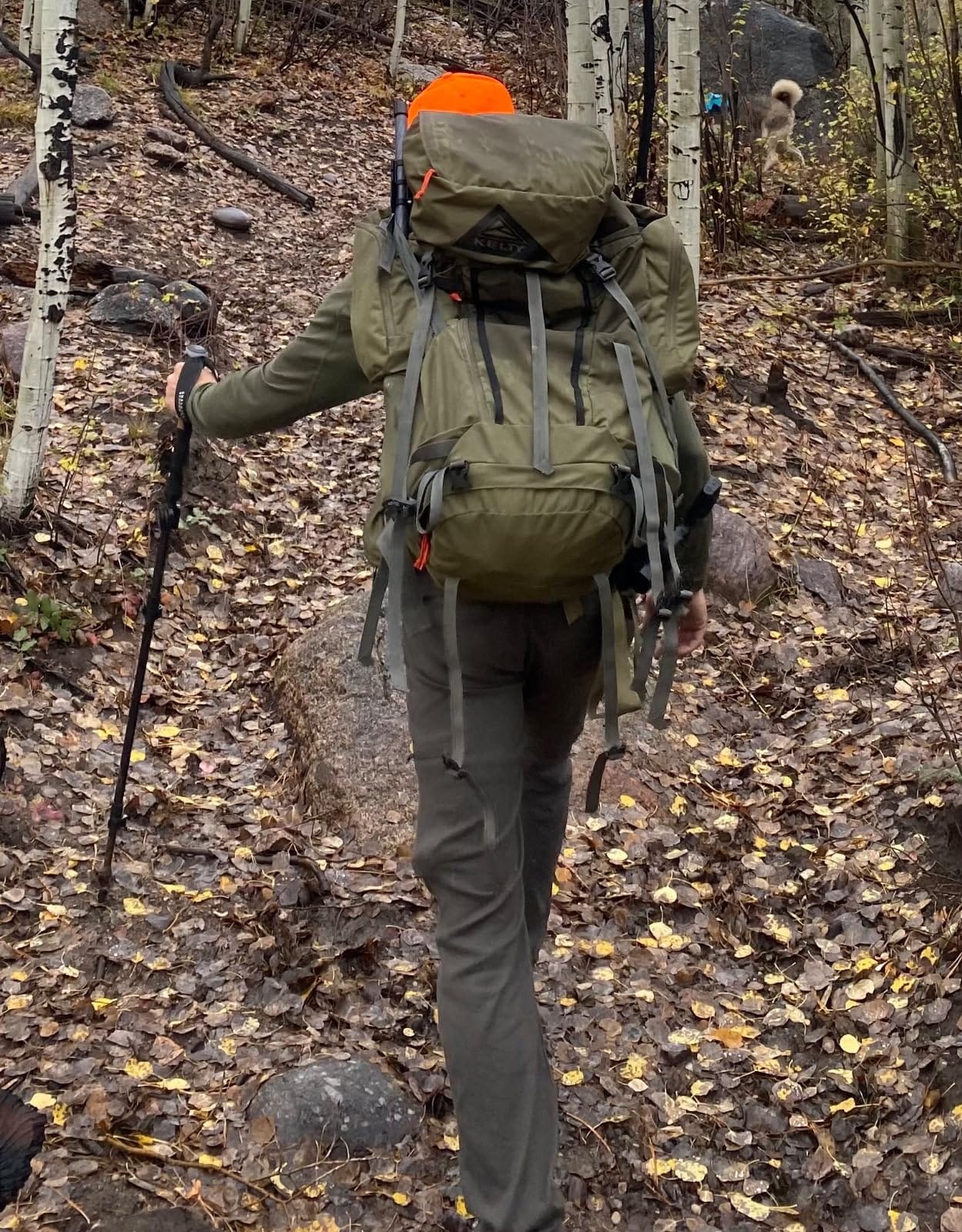
Structurally it is serious gear. The advanced perimeter frame with an aluminum stay keeps a heavy load from shifting, and the listed optimal carry range is 30-55 pounds, which covers the desert food carry scenario without drama.
Pocket layout is generous: Kelty Signature wing pockets, two front zippered pockets, water bottle pockets, daisy chains and a sleeping bag compartment across ten compartments and six pockets.
The compromises are real. The polyester shell is heavier and less weather resistant than nylon, the exterior frame styling adds bulk and snagging points on brush, and the J-zip top-loading access means getting to the bottom of the main compartment is a full unpack.
Why the back panel matters more than the fabric
On hot trails, the panel against your skin does more for comfort than any feature on the outside of the pack. A ventilated suspended panel lets air move in the gap between the load and your spine; a flat foam panel just traps whatever heat builds up.
That is the same reason the Osprey Atmos AG 65 gets recommended in humid sections, and why the Osprey Aether, with its die-cut AirScape panel, is a better humid-weather choice than its weight suggests.
Who this pack is wrong for
It is not the right pick if you need frequent access to items at the bottom of the main compartment, because top-loading means either digging or unpacking every time.
It is also a poor match for fastpackers. At 4 pounds 10 ounces, carrying this pack on a 12-pound base weight means more than a quarter of your total weight is the container.
6. Kelty Asher 65L – Waterproof Shell, Light Frame
Kelty Asher Backpack, Daypack to Multi-Day Backpacking Capacity, Hiking, Lightweight Travel Pack, Internal Frame (65L Winter Moss)
Pros
- Light 3 lb 5 oz weight for a 65L internal frame pack
- Waterproof shell fabric
- Fit Pro adjustable torso
- Perimeter frame with aluminum stay
- Load lifters and waistband stabilizer
Cons
- Only four pockets
- 14 inch profile feels cramped for bulky gear
- Entry-level suspension support compared with premium packs
The Kelty Asher 65L is the rarest thing in this category: a fully framed 65L pack under 3.5 pounds with a waterproof shell. Most framed packs this size come in heavy and water resistant; this one is listed as waterproof with C0 and PFC-free DWR polyester, and it is covered by a limited lifetime warranty.
For the Continental Divide Trail in a wet September, or any long stretch of coastal rain, that shell rating is the reason to buy it. The zipper storm flaps and easy-pull zippers matter more than they sound when you are putting the pack on in the dark.
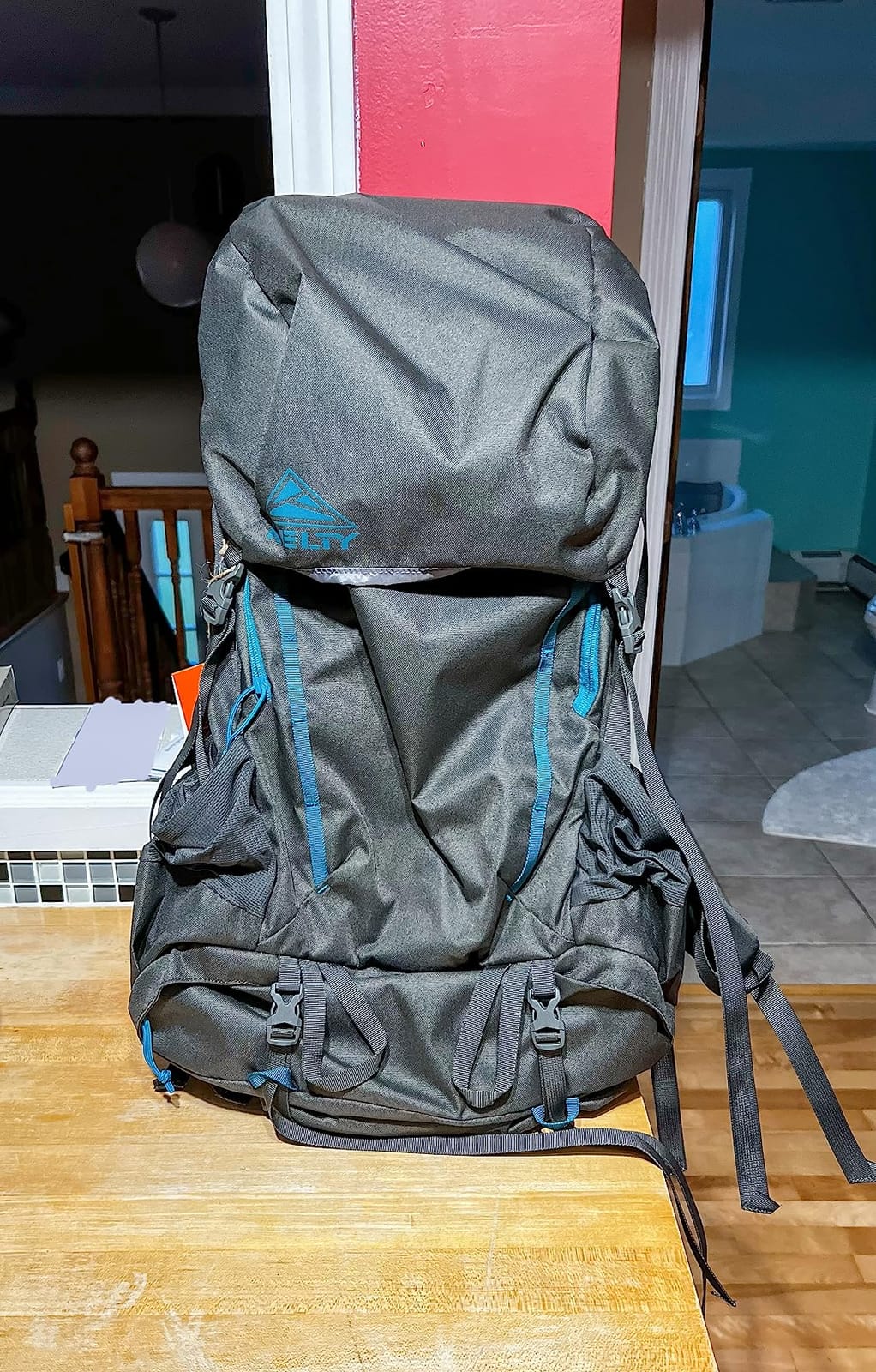
Underneath the shell it is a real pack. The advanced perimeter frame with an aluminum stay handles a 30-50 pound carry range, the Fit Pro torso adjusts between 15.5 and 21 inches, and the load lifters with waistband stabilizer pull the top of the load back toward your shoulders.
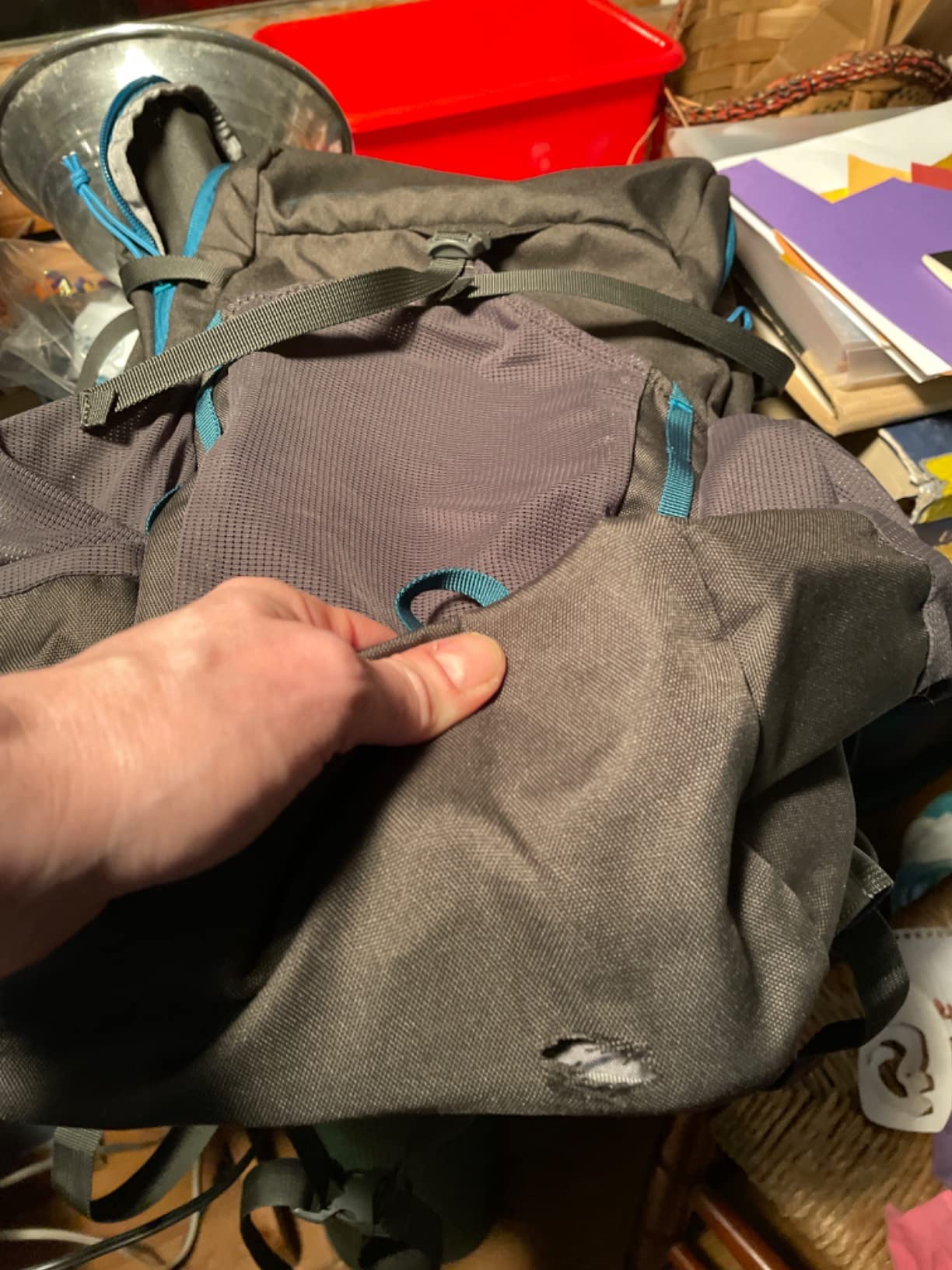
My reservation is pocket count. Four pockets is thin in a class where 6 to 10 is common: a front trail stash pocket, dual mesh side pockets, and a zippered lid pocket. There is no separate hip belt pocket, which on a long food-carry day is a real loss.
The narrow 14-inch-wide profile also feels cramped once you load a winter quilt or bulky shelter, and the entry-level suspension gives you less hip support under maximum load than the premium packs here.
Do you actually need a waterproof shell
On the PCT and AT in summer, no fabric will keep water out on its own for long, and most thru-hikers carry a pack liner regardless. Water resistance plus a liner beats a waterproof shell without one.
Waterproof shell fabric earns its place in persistent rain, in shoulder season on the CDT, or for anyone who does not want to deal with a wet sleeping bag after a hard rain band.
Who this pack is wrong for
It is the wrong choice for a hiker who lives out of hip belt pockets and needs quick access to a phone and snacks without stopping.
It is also a weaker choice than the Kelty Coyote for anyone carrying close to 50 pounds, because the suspension support here is entry-level while the Coyote frame is built for the top of the listed range.
7. Osprey Rook 65L – The Best First Thru-Hike Pack
Pros
- AirSpeed suspension spreads 30-35 pounds comfortably
- LightWire frame moves load onto the hips
- Tough fabric and sturdy zippers
- Integrated rain cover in its own pocket
- Removable sleeping bag divider
Cons
- No large outer mesh stash pocket
- No back panel access to the main compartment
- 3.7 lb is not an ultralight weight
- Thin waist strap padding
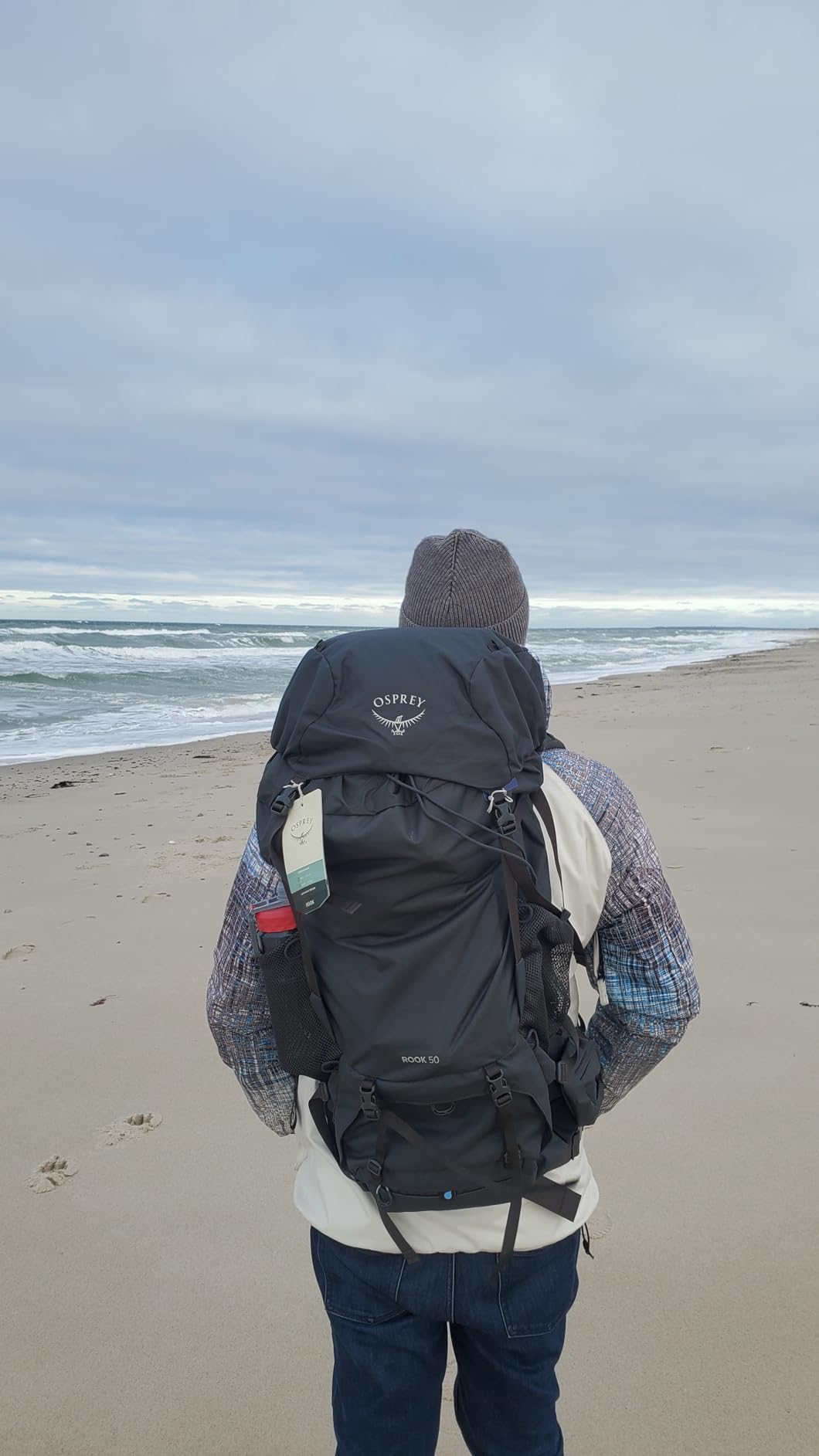
If you are buying your first long-distance pack, the Osprey Rook 65L is the one I would point you at. It skips the ultralight experiment and the expedition overkill, and delivers a suspension that comfortably handles 30-35 pounds, which is the realistic range for a first thru-hike.
The adjustable AirSpeed suspension with a tensioned back panel and LightWire frame is the proven part. Osprey has been refining that combination for decades, and reviewers describe it as saving the shoulders by moving load to the hip belt.
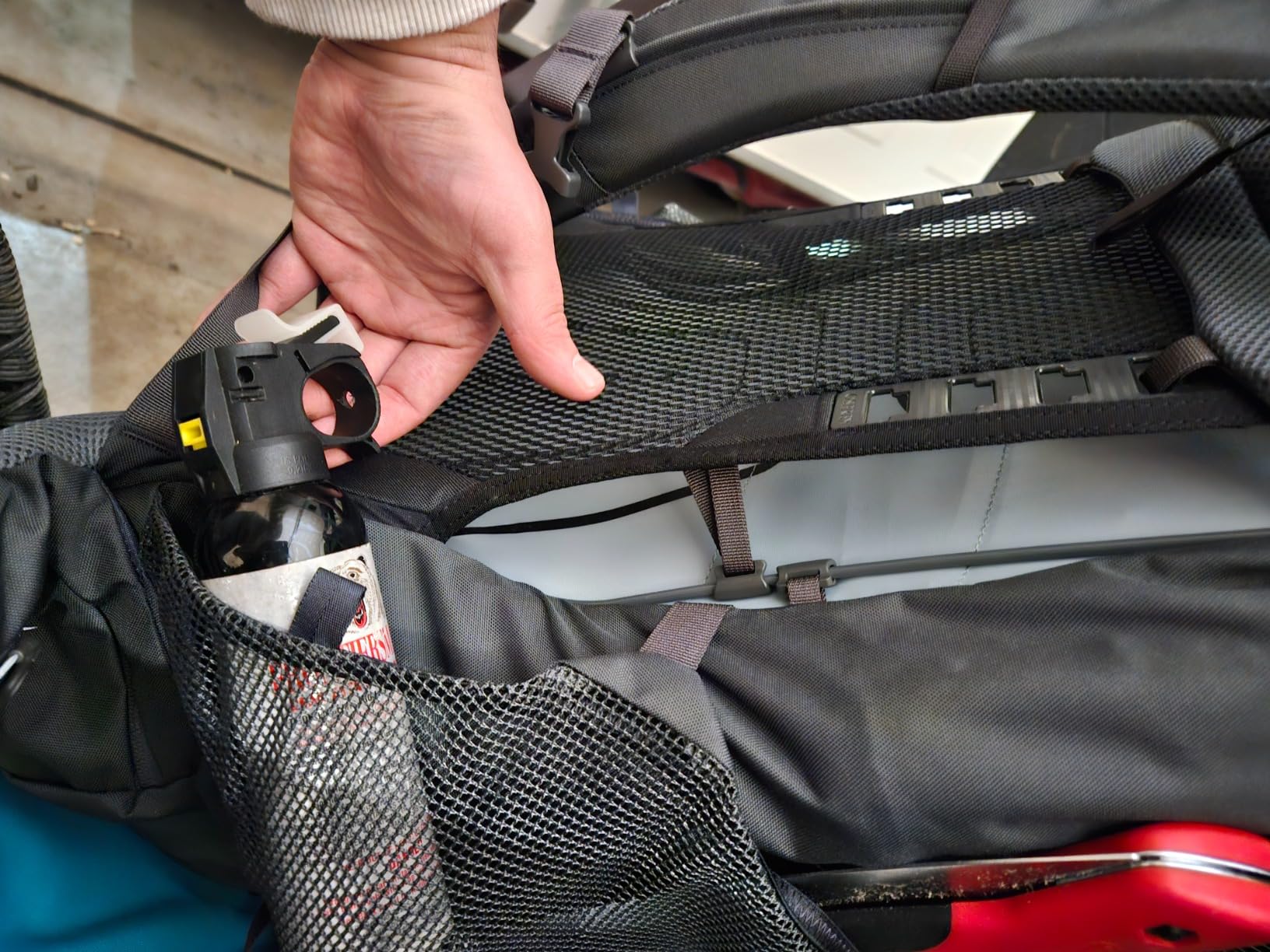
Two details I like more than expected. The integrated removable rain cover lives in its own pocket rather than a separate stuff sack you can lose, and the zippered sleeping bag compartment has a floating divider you can pull out to gain main compartment volume when you are not carrying a bag.
The gap in the layout is access. There is no back panel access to the main compartment and no large outer mesh stash pocket, so wet layers and muddy boots both need a home, and the two-compartment layout has to absorb it.
At 3.7 pounds it is a middle weight, and the waist strap padding is minimal enough that hikers with narrow hips report it digging in on long days. An extended fit variant is available if you are between sizes.
How this compares with the Atmos AG 65
Both are 65L Osprey packs with an adjustable suspension, and the difference is the back system. The Rook uses a tensioned AirSpeed panel that sits close to your body; the Atmos AG 65 uses a suspended anti-gravity panel and hip belt that wraps the hips and floats the load away from your back.
For most hikers the Rook is the sensible starting point. Move up to the Atmos AG 65 when you are routinely carrying above 35 pounds or when hot back panels are the thing that ruins your trips.
Who this pack is wrong for
It is the wrong choice for a fastpacker. At 3.7 pounds with a suspension built for 30-plus pounds, carrying a 10-pound base weight means the pack is a third of your total weight.
Skip it if you need to reach gear in the main compartment without removing the pack, and be cautious if you have narrow hips and long days, because the waist strap padding is thin.
8. Osprey Atmos AG 65L – The Comfort Pick for Heavy Carries
Pros
- Anti-gravity suspension wraps the hips and floats the load
- Customizable torso length and hip belt for larger frames
- Side zip panel reaches gear without unpacking
- Floating top lid with lash points
- Waterproof nylon construction for wet climates
Cons
- 4 lb empty weight and the highest price here
- 34.6 inch height is unwieldy for shuttles
- Feels top-heavy when packed below maximum volume
The Osprey Atmos AG 65 carries the highest average rating in this group, and the reason is the anti-gravity suspension. The suspended mesh back panel and hip belt wrap around the hip bones and hold the load away from your back entirely, so your shoulders stabilise rather than bear.
On a 40-plus pound desert food carry, that is the difference between a hike and a grind. No other pack in this list handles that weight with as little shoulder involvement.
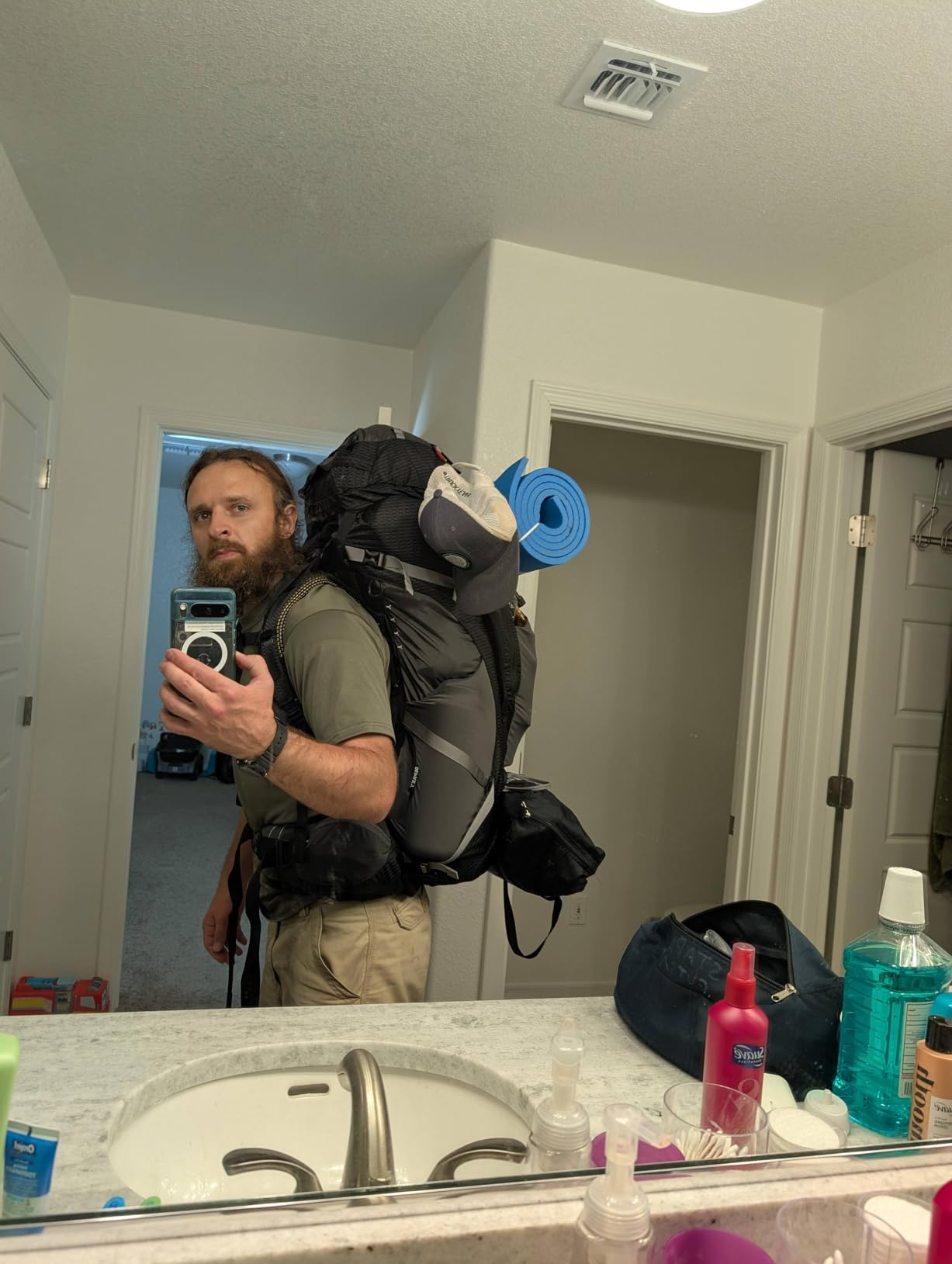
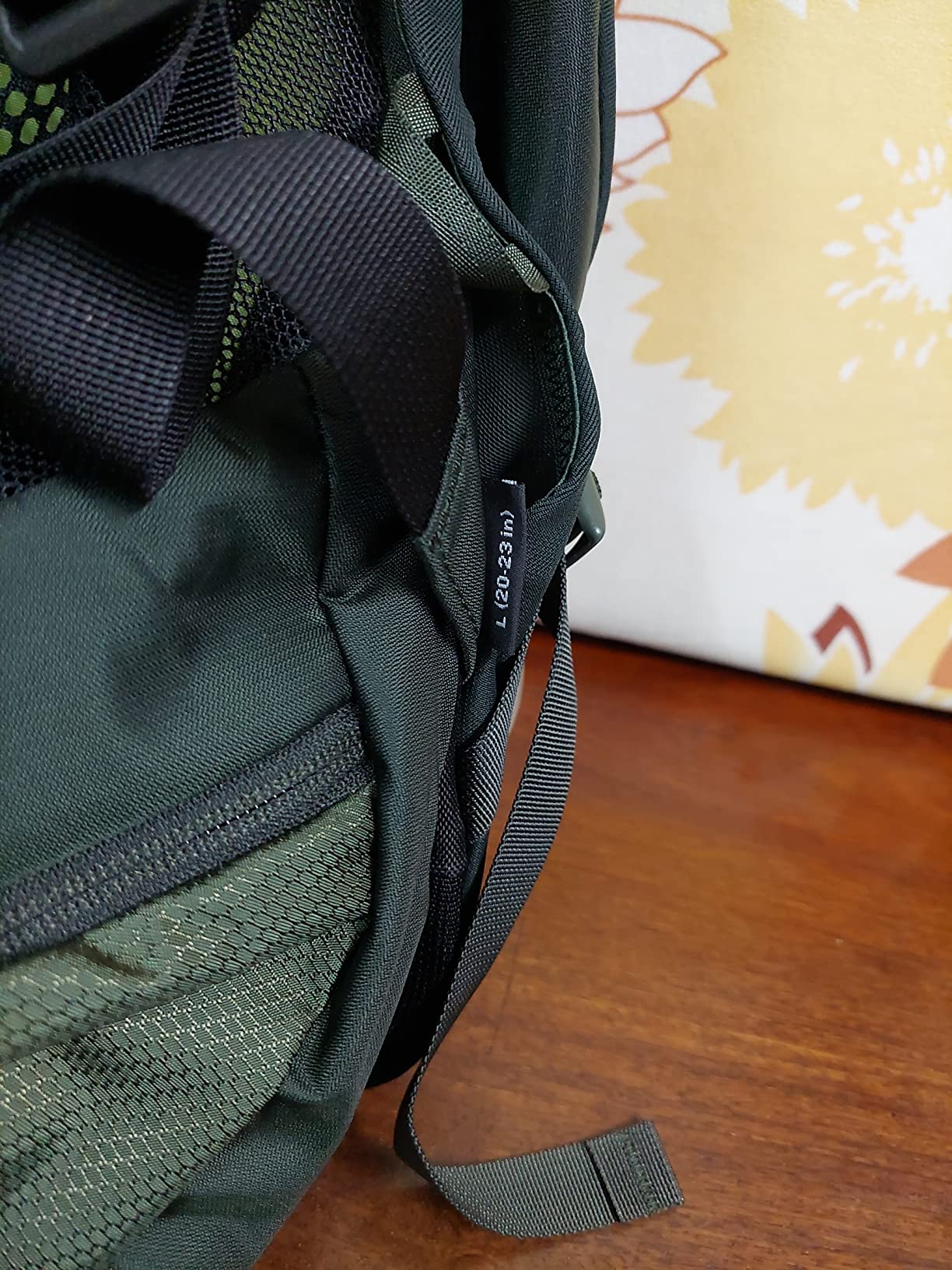
Fit is fully customisable. Torso length and hip belt both adjust, and Osprey offers small/medium and large/extra-large torso options, which matters if you are between sizes in another brand or sensitive to hip-belt fit.
Two features earn their place on a long trail. The curved zip access panel on one side of the back panel lets you get to gear without taking the pack off, and the floating top lid with lash points can be removed or repositioned depending on how much top-heavy gear you are carrying.
The listed storage volume is 68 liters against a 65L name, and the waterproof nylon plus PFAS-free DWR rain cover make it a good wet-weather choice. It fits laptops up to 17 inches if you need that.
Now the honest list. It is 4 pounds empty, it is the tallest pack here at 34.6 inches, and reviewers note it feels top-heavy when you are not carrying a full load, which is exactly what happens on a resupply day.
What full means on this pack
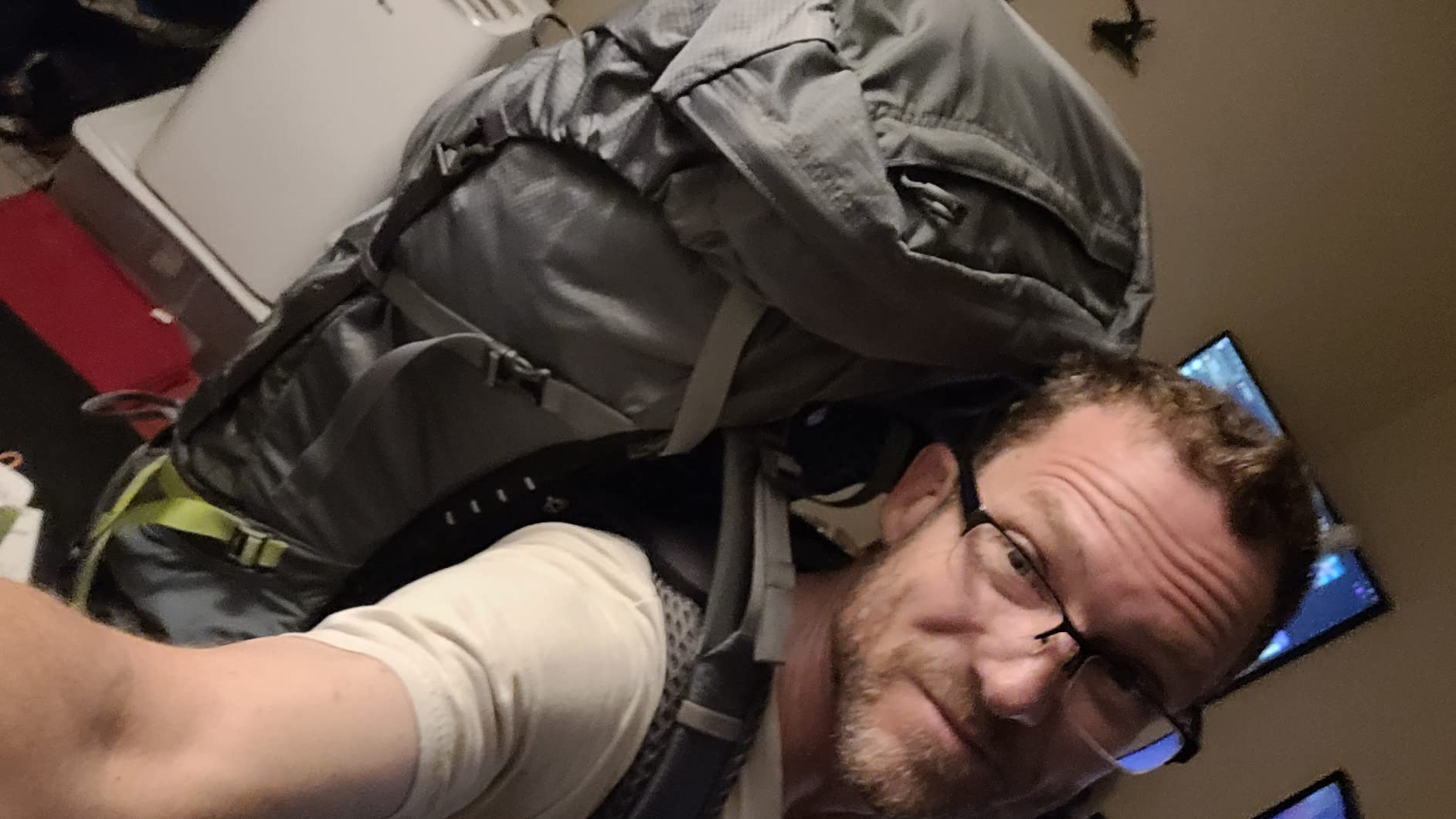
This is a pack that rewards being loaded. Underpacked, the tall body floats above you and the weight sits high. Loaded properly, the anti-gravity belt pulls it in and the load disappears onto your hips.
If you resupply every two days and carry a small load, the Osprey Rook 65L or the Naturehike is a more sensible tool. If you carry 40 pounds between resupplies, nothing else here matches it.
Who this pack is wrong for
It is the wrong pack for a hiker moving between motels, buses and flights, because 34.6 inches of height does not fit an overhead bin and a 4-pound pack is uncomfortable to carry around a town.
It is also overkill if your base weight is under 12 pounds. The suspension capability is wasted capacity, and you are paying weight for a feature set you will never load into.
9. Osprey Aether 65L – Premium Load Bearing Rig
Pros
- Fit-on-the-Fly hip belt and straps dial in precisely
- AirScape panel gives a close breathable carry
- Stabilises heavy technical loads without shifting
- Bluesign-approved 420HD nylon with PFC-free DWR
- All Mighty Guarantee lifetime warranty
Cons
- Heaviest pack in the group at nearly 5 pounds
- Water resistant rather than waterproof shell
- Only four pockets which is fewer than most rivals
- Highest cost at this capacity
The Aether 65 is the load-bearing answer, and it is the only pack here with a belt and shoulder strap system you adjust on the fly while loaded. That sounds minor until you are changing layers in a storm at 6,000 feet and need to move the belt two centimetres.
The injection-molded die-cut foam AirScape back panel gives a close-to-body carry that stays stable with a heavy technical load, which is where the Aether separates from the rest. It does not shift side to side when you scramble or when the trail drops off a ledge.
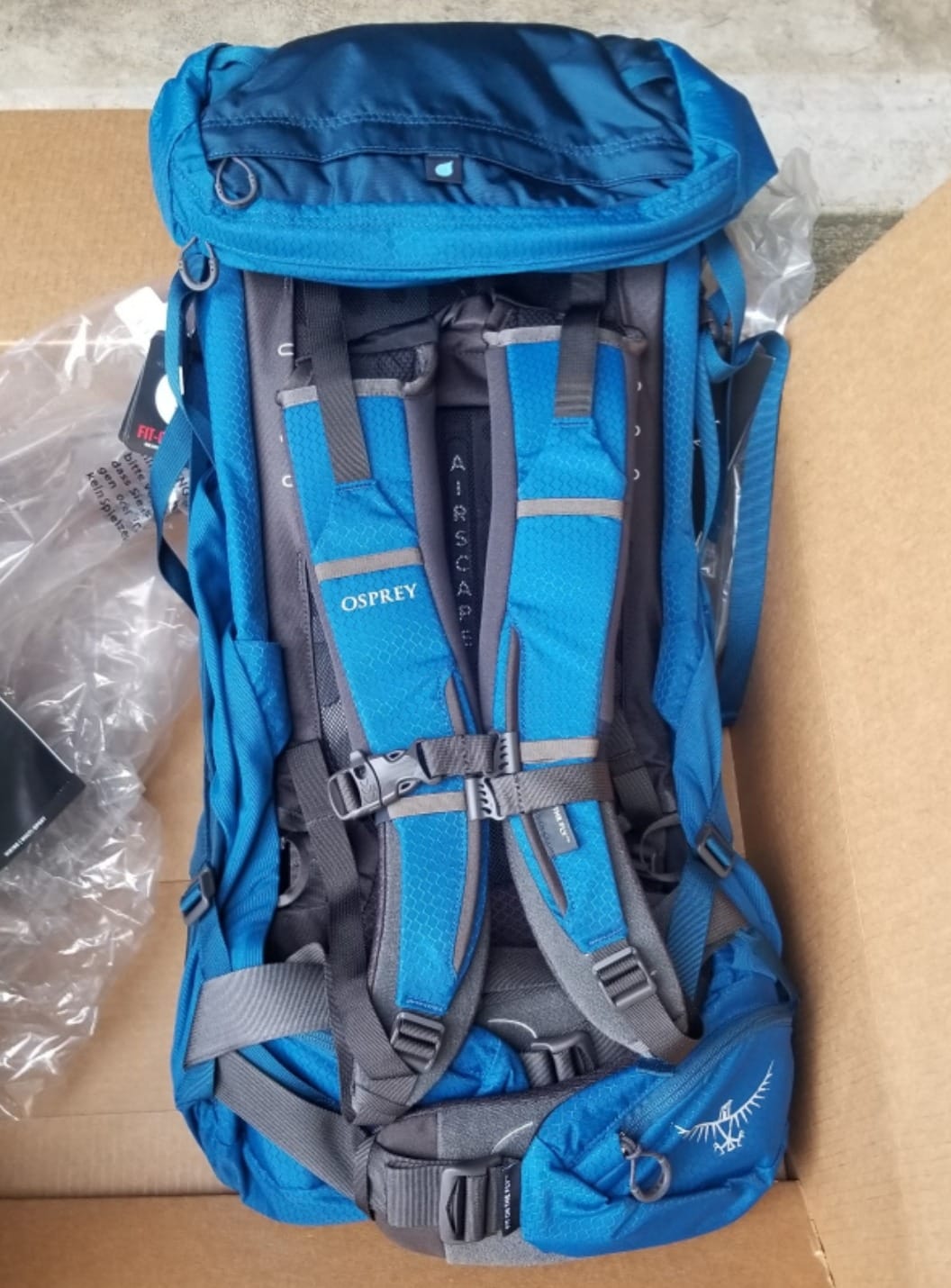
Material is the best in this group. The shell is bluesign-approved 420HD nylon with a PFC-free DWR, a zippered sleeping bag compartment has a removable divider, and a rain cover is included for when the water resistant shell is not enough.
Everything about this pack is built to last, and it is covered by the All Mighty Guarantee against functional defects for the life of the product, which is the strongest warranty position in this roundup.
The costs are real: 4.96 pounds empty makes it the heaviest pack we reviewed, four pockets is fewer than most 65L rivals, and the shell is water resistant rather than waterproof. On long wet stretches you would still use a pack liner.
Who needs a pack this serious
Long trails, cold weather, and heavy loads. If you are carrying a winter sleep system, a full cooking kit, and a 20-pound base weight on the CDT, this is the pack that will still feel controlled at 50 pounds.
It is also the right choice for hikers who know they will keep a pack for a decade. The warranty and the fully adjustable suspension make it a pack you buy once rather than replace mid-career.
Who this pack is wrong for
It is the wrong choice for anyone whose pack weight is not going above 30 pounds, because the adjustability you are paying for does nothing at low load and the weight is dead every single day.
Skip it for wet-season thru-hiking where you would need a liner anyway, and for hikers who want quick access to small items, since four pockets is a lean layout.
10. Kelty Trekker 65 – Repairable External Frame Classic
Pros
- Repairable external aluminum frame
- Convertible top lid works as a sling pack
- Seven pockets with an organized front pocket
- Dual-density foam waist belt spreads load
- Machine washable for a framed pack
Cons
- 22.5 inch width is wide for air and bus travel
- External frame adds weight and snag points
- Dated top-loading access
- No rain cover included
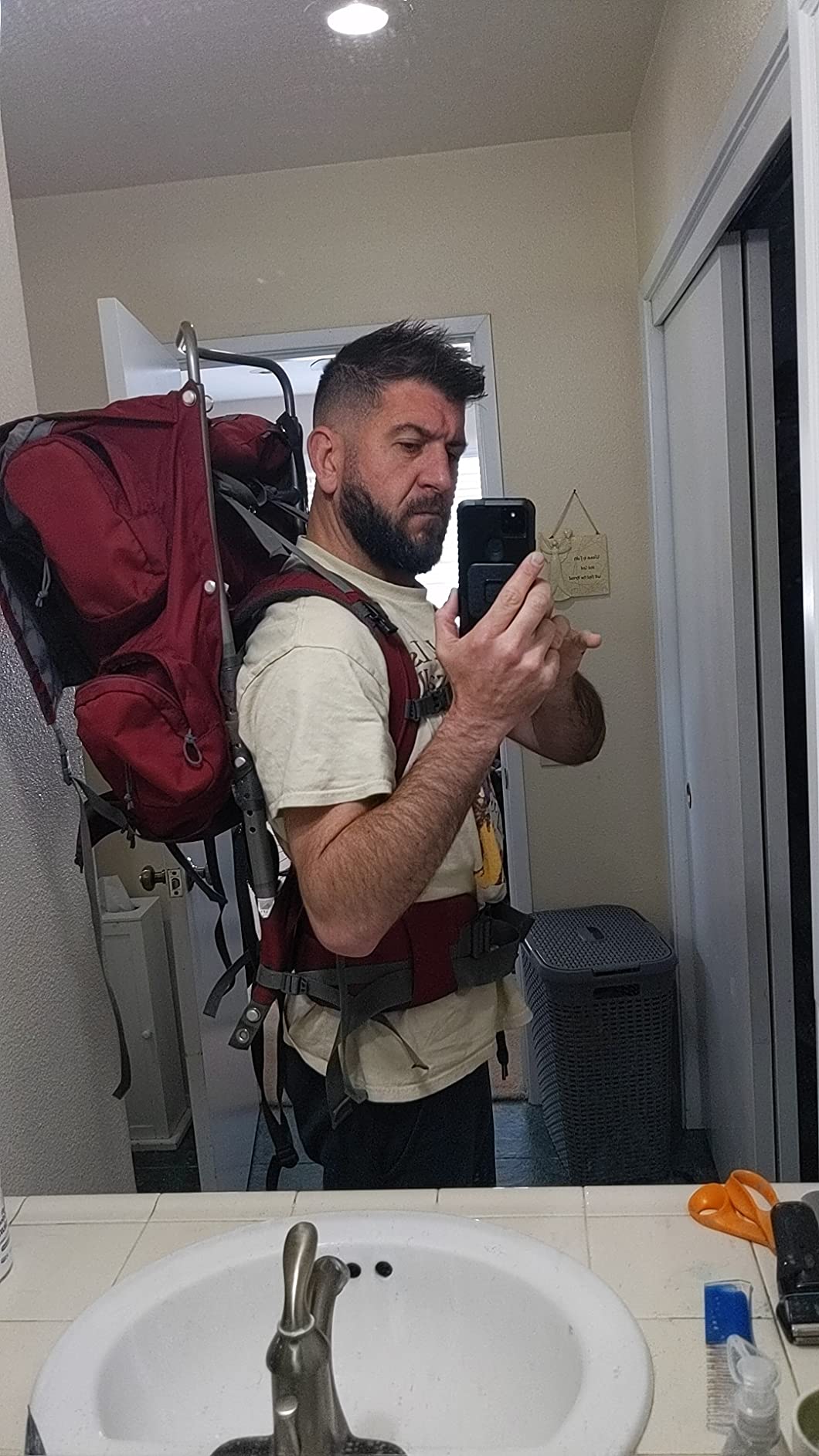
The Kelty Trekker 65 is the old-school choice and it ties for the highest average rating in this group. An external aluminum frame with an adjustable suspension carries a 20-55 pound load, and unlike anything else on this list you can repair or re-tape the frame in the field with basic gear.
On a six-month trail that repairability is worth more than most hikers expect. A broken stay on a laminated pack ends the trip; a bent or cracked external frame can be splinted and finished.
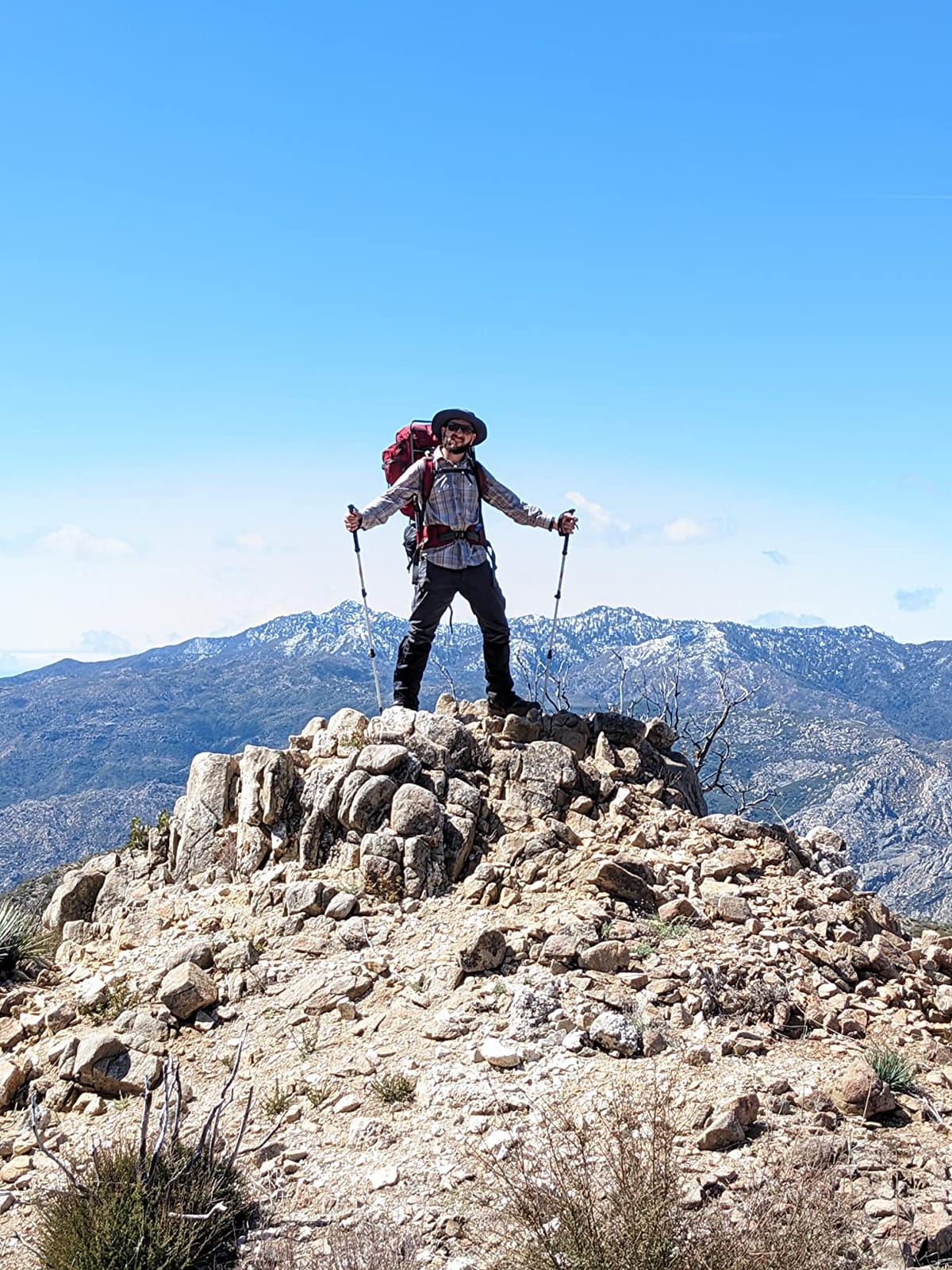
The top lid converts into a sling pack, which is a genuinely useful feature for side trips and resupply stops. Pocket count is the best in the group at seven, including zippered side pockets, an organized front pocket, and a stretch front pouch, plus a hydration bladder holder.
It is also machine washable, which almost no framed pack is, and that is a real advantage for a pack that gets rained on weekly for half a year.
The drawbacks are the classic trade. It is 5 pounds 5 ounces empty, 22.5 inches wide, and top-loading, which means small items are slow to reach. No rain cover is included, and the external frame adds snagging points on brush.
When an external frame still makes sense
Two situations favour it: carrying a genuinely heavy load above 45 pounds, and any trail where you expect to repair your own gear. A dual-density foam waist belt also spreads load differently from a padded panel, which some heavier hikers prefer.
It is also the only pack here you can put in a washing machine, which for a humid Appalachian Trail season is a real practical win.
Who this pack is wrong for
Skip it if you move between flights, buses and trains, because a 22.5-inch-wide external frame is the hardest pack here to fit into any of them.
It is also a poor fit for a fastpacker, and a poor fit for anyone who wants quick access to small gear while walking, because top-loading is slow when you are walking.
How to Size a 65L Pack: Torso Length and Hip Belt
Sizing decides whether a pack works, and the number that matters is torso length, not capacity. The C7 vertebra, the knobby joint where your spine meets your skull, down to the top of your hip bones is your torso length, and that measurement plus hip circumference tells you which pack size to buy.
Here is how to measure it in five steps.
Step one. Find a bony landmark at the base of your neck where you can feel the C7 vertebra at the top of your spine. It juts out more than the vertebrae below it.
Step two. Stand straight against a wall and measure from that point straight down to the top of your hip bones. Do not add anything to that number.
Step three. Measure your hip circumference at the widest point, roughly where the hip belt will sit. Write both numbers down, because brands disagree about what they call a medium.
Step four. Compare those numbers against the brand size chart, and treat them as a starting point. A medium in one brand regularly fits as a small in another, which is the single most common source of sizing frustration among thru-hikers.
Step five. Load the pack with your real kit, tighten the hip belt so it sits on your hip bones, and check three things: the load should rest mostly on your hips, your shoulders should only be stabilising, and you should be able to shrug your shoulders without the pack lifting.
Target 75 to 80 percent of the load on your hips. If your shoulders are taking a meaningful share, the fit is wrong and no amount of adjustment at the trailhead will fix it.
The hip belt deserves its own attention because it is the one part of a thru-hiking pack that has to work harder in month four than in week one. You will lose weight, and a belt that will not cinch down to a smaller waist now becomes 10 pounds of unusable capacity riding high on your back. Belts that adjust on the fly, like the Aether 65 and the Rook 65, are the safest choice for a long trail.
What Base Weight Justifies a 65L Pack
Base weight is everything you carry excluding food, water and fuel, and it is the cleanest number for deciding pack size. A 65-liter pack is justified across a wide range, but not all of it.
Under 10 pounds base weight. A 65L pack is too big. At this level your entire kit fits in 40 liters and you would be carrying empty volume for months. Buy a 40-50L frameless pack instead, and save the weight of the container.
10 to 15 pounds base weight. This is the range where 65L works well, provided your resupply interval is short. Three-day carries on the AT, or a section hiker resupplying every two days, fill a 65L bag without straining it.
15 to 20 pounds base weight. This is the core case for 65 liters. Add a 5-7 day desert food carry in the southern PCT or Arizona Trail sections and you land right at capacity, which is exactly where you want a pack to sit.
Over 20 pounds base weight. Volume is not your constraint, weight is. You need a substantial framed pack with load lifters and a padded hip belt, and you should be honest that 65 liters is now the minimum, not the target. The Osprey Aether 65 and the Kelty Coyote 65 are built for this range, with listed carry weights of 30-55 and 30-50 pounds.
Across backpacking forums the same rule shows up over and over: a base weight under 10 pounds unlocks frameless, and anything over 20 pounds demands a real framed pack. The 12-20 pound window in between is what the 65L class was built for.
Independent survey data from Halfway Anywhere on PCT and AT thru-hikers backs the same pattern from the other direction, showing cottage-built frameless packs dominating the packs that hikers actually use on long trails.
65L vs 60L vs 70L: Which Volume Do You Actually Need
Volume is a function of how many days you carry food. That is the entire calculation, and it is why 65 liters keeps being the answer for most thru-hikers.
60 liters fits a 3-day food carry. That is roughly the standard AT section between towns, and it is enough for a hiker with a 12-pound base weight on the eastern half of the trail.
65 liters fits a 4 to 5-day carry comfortably, and stretches to 6-7 days for a lighter, higher-calorie-per-pound food mix. It is the right answer for a 12-20 pound base weight and for desert sections where water resupply is not always possible.
70 liters is a step up for winter gear, a 20-plus pound base weight, a shared group kit, or a camera-heavy load where lenses and a body eat capacity fast. It is not too big for backpacking, but it is too big for hikers who do not fill it.
So is 70L too big for backpacking? Only for the same reason 65L is sometimes too big: nothing in your kit needs it. The failure mode is carrying 3 pounds of empty pack for 1,200 miles.
One caveat on pack labels. Volume is rarely measured the same way twice, because brands count the main compartment differently and some include the exterior pockets in the number. A pack listed at 65 liters may give you 58 liters of main compartment plus 7 liters of pockets, which is why the packing list matters more than the label.
Features That Matter on a Six-Month Trail
Over a full season, the features that fail are predictable and the features that earn their place are equally predictable. Here is what to check before committing to a 65L pack.
Hip belt pockets you can actually use. You should be able to reach them one-handed without breaking stride, and they should fit a modern phone. Stiff zippers that need two hands are the most common complaint we found, and a pocket that cannot hold a phone is decoration.
Water access without removing the pack. Bottle pockets that sit too high, sit too small, or get crossed by a compression strap force you to take the pack off every time you drink. The Osprey Rook 65 uses angled bottle pockets for exactly this reason.
A hip belt that cinches down. As discussed above, this is the feature that matters most in month four.
Load lifters on a heavy-load pack. If you plan to carry above 30 pounds, external load lifters pull the weight back toward your shoulders and stop the pack from pulling away. The Kelty Asher 65 and the Osprey Aether 65 both have them; the Tripole Walker does not.
Ventilation in the right climate. Humid Appalachian Trail summers demand a suspended or vented panel. Desert heat demands it more. The Kelty Coyote and the Osprey Atmos AG 65 are the two here built around airflow.
Fabric that matches your abuse. 210D and 420D nylon are the workhorses, holding up over thousands of miles of abrasion. Softer stretch mesh panels and stretch front pockets are the first thing to tear in brushy, rocky terrain, which is why the heavier woven fabrics are the better choice for a long trail.
A pack liner anyway. Water resistance is not waterproofness. Most thru-hikers carry a liner regardless of shell rating, and the included rain covers on several of these packs are useful for drizzle rather than downpours.
What breaks first over a full season is usually mundane: buckles seizing before break-in, hip belt zipper failure, stretch mesh pocket tears, and fixed-length harnesses that simply do not fit a changing body. The two Kelty internal frame packs with Fit Pro torso adjustment are the most resistant to the last of those, because you can change the fit on the trail rather than living with a decision you made at home.
Frequently Asked Questions
Is a 65L backpack too big for backpacking?
Only if your base weight is under about 10 pounds. For a 12-20 pound base weight, 65 liters is the sweet spot: it carries a 4-5 day food carry between Appalachian Trail resupplies and stretches to 5-7 days in the desert. A 65L pack is too small for a 20-plus pound base weight carrying winter gear, and far too large for a fastpacker.
What size backpack is best for thru-hiking?
For most thru-hikers, 60 to 65 liters is the best range. 60L fits a 3-day food carry, 65L fits 4-5 days and stretches to a 6-7 day desert carry. Go to 70L only if your base weight exceeds 20 pounds, you carry a shared group kit, or you need space for cold weather gear.
What is the best 65-liter hiking pack?
Among the ten 65L packs we compared, the Teton Explorer 4000 is the best all-round choice, with multi-position torso adjustment, six compartments and a limited life time warranty. The Osprey Atmos AG 65 wins for heavy loads above 35 pounds, and the Naturehike 65L wins at 2.6 pounds empty for hikers carrying a light base weight.
How is a hiking pack supposed to fit?
A properly fitted pack puts 75-80 percent of the load on your hip bones so your shoulders only stabilise. Measure your torso length from the C7 vertebra at the base of your neck down to the top of your hip bones, then check that the loaded hip belt sits on your hip bones and that you can shrug your shoulders without the pack lifting.
Is 70L too big for backpacking?
A 70L pack is too big only for hikers who will not fill it, which usually means a base weight under 12 pounds. It is the right size for a 20-plus pound base weight, winter gear, a shared group kit, or long resupply intervals in the desert. The cost of guessing high is carrying empty pack volume for months.
Conclusion: Our Top 65L Thru-Hiking Picks for 2026
After ten packs, three sets of sizing notes and a lot of gear swaps, the best 65 liter backpacks for thru hiking come down to a few clear answers. The Teton Explorer 4000 65L is the one we recommend first, because the adjustable torso and padded lumbar channel work for the widest range of hikers and the review base of 8,000-plus owners is the most honest evidence in the group. The Osprey Atmos AG 65 takes heavy loads above 35 pounds, and the Naturehike 65L wins outright if your base weight is low and every pound counts.
Whichever one you choose, buy it last. Get your gear list final, pack it into whatever bag you own, and buy the pack that fits that pile with room to expand. If you are still working out what to carry, our guide to the best camera backpacks for hiking covers another common load entirely.
Happy miles.