
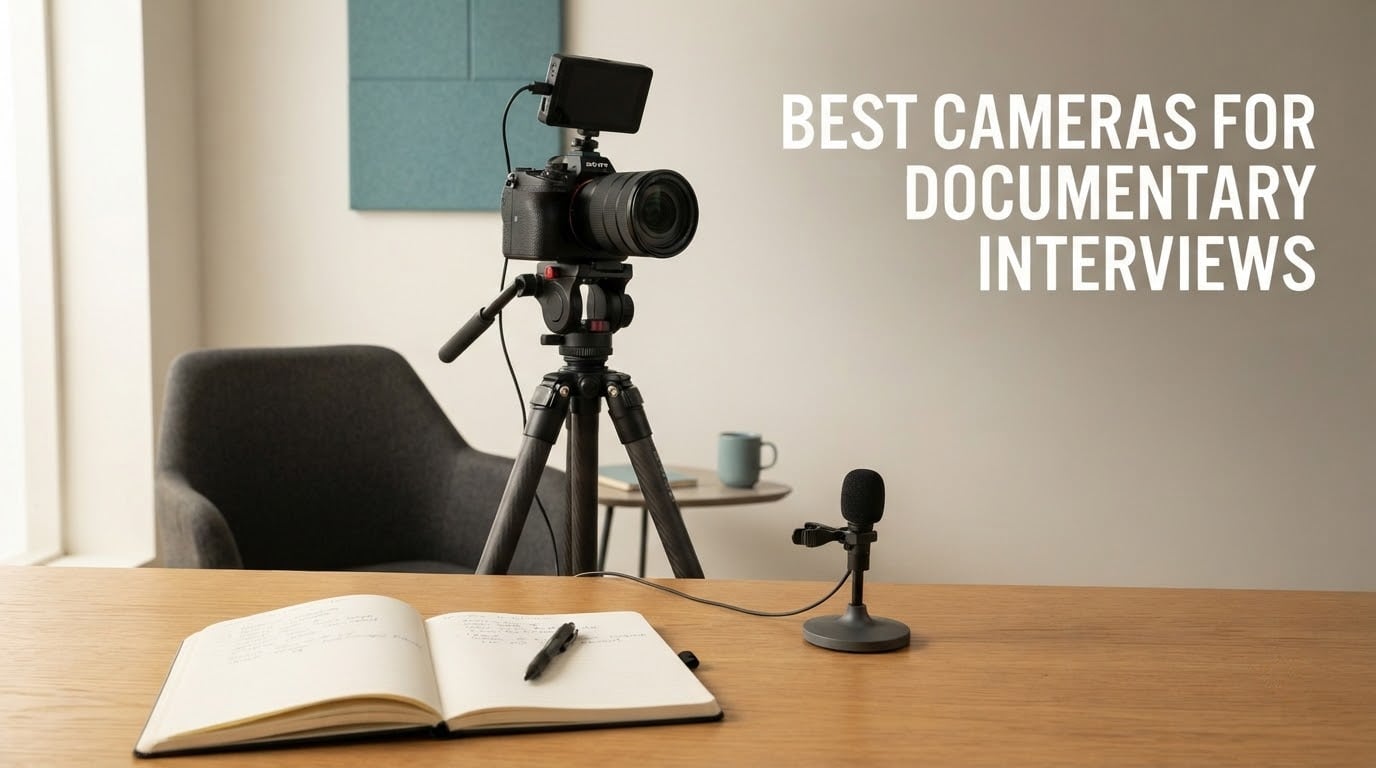
What is the best camera for filming interviews? For most documentary work the answer is the Sony Alpha 7 IV, with the Canon EOS R6 Mark II as the close runner-up for anyone who wants longer unbroken takes. Both record 10-bit 4:2:2 4K internally, both hold focus on a moving face, and both let you set exposure, white balance and focus once and then leave the camera alone for an hour of unbroken conversation.
That is the whole point. An interview camera is not judged on peak dynamic range or a headline frame rate. It is judged on whether it can sit on a tripod through a ninety-minute answer without cooking, without hunting focus every time the subject shifts in the chair, and without forcing you to climb over the subject to attach a filter because the daylight moved.
I have shot corporate interviews, short docs and editorial shorts on bodies from every major brand, and the same four failure points come up again and again: a hard recording cutoff mid-answer, an autofocus that loses a face with glasses, a single card slot that makes you gamble on an hour of footage, and no built-in neutral density filter when the window blows out at four in the afternoon. This roundup of the best cameras for documentary interviews is built around those four risks rather than around spec sheets.
Ten bodies are covered below, from a lightweight full-frame Canon to Super 35 cinema cameras with physical ND. If you want the wider landscape of bodies first, I have a separate guide to the best mirrorless cameras for documentary filmmaking and another on cameras for interviews specifically. Everything here was reviewed and updated in 2026.
Top 3 Picks for Best Documentary Interview Work in September

Sony Alpha 7 IV
- 33MP full-frame sensor
- 4K 60p 10-bit 4:2:2
- Dual card slots
- Real-time Eye AF

Canon EOS R6 Mark II
- Uncropped 4K 60p
- 6 hours Full HD recording
- Head face eye detection
- 5-axis IBIS

Blackmagic Pocket Cinema Camera 4K
- 13 stops dynamic range
- Dual gain ISO
- Built-in ND filters
- ProRes and BRAW
The a7 IV takes the top spot because it is the only body here that combines genuinely class-leading face tracking with two card slots. The R6 Mark II edges it on raw recording endurance, and the Pocket Cinema Camera 4K wins the location shoot outright because its ND filters mean you carry no glass at all.
All 10 Cameras at a Glance in 2026
| Product | Specifications | Action |
|---|---|---|
| Sony Alpha 7 IV |
|
Check Latest Price |
| Canon EOS R6 Mark II |
|
Check Latest Price |
 Canon EOS RP Canon EOS RP |
|
Check Latest Price |
| Blackmagic Pocket Cinema Camera 4K |
|
Check Latest Price |
 Blackmagic Pocket Cinema Camera 6K Blackmagic Pocket Cinema Camera 6K |
|
Check Latest Price |
 Sony Alpha 7S III Sony Alpha 7S III |
|
Check Latest Price |
 Fujifilm X-T5 Fujifilm X-T5 |
|
Check Latest Price |
 Nikon Z6 III Nikon Z6 III |
|
Check Latest Price |
 Sony Alpha 7R V Sony Alpha 7R V |
|
Check Latest Price |
 Blackmagic Pocket Cinema Camera 6K Pro Blackmagic Pocket Cinema Camera 6K Pro |
|
Check Latest Price |
Sensor format is the first split in this list. Four are full-frame, one is Super 35, two are Micro Four Thirds and one is APS-C. That choice drives everything downstream, from depth of field to how you light a room.
1. Sony Alpha 7 IV for Interviews That Run Long
Pros
- 33MP sensor with excellent dynamic range for stills and video
- Real-time Eye AF holds lock through a one-take interview
- 4K 60p 10-bit 4:2:2 with full pixel readout
- Dual CFexpress Type A and SD slots for backup recording
- 5-axis SteadyShot stabilization for handheld stills
Cons
- Menu system has a real learning curve
- Battery life needs spare cells on long shoot days
- 60-120p recording applies a noticeable crop
- Can run hot on very long continuous takes
The a7 IV is the body I keep reaching for on a two-person doc shoot, and the reason is boring and reliable. The 759-point phase detection system with Real-time Eye AF does not lose a subject who turns their head mid-sentence, which is the single most common way a mirrorless body embarrasses you in front of a subject who is already talking.
It records 4K at up to 60fps in 10-bit 4:2:2 with full pixel readout across all recording formats, and it oversamples 4K from 7K so you get clean detail on a sit-down medium shot. S-Cinetone gives you a usable straight-out-of-camera look that a small grade can refine, which matters when the edit has four other cuts to reconcile.
The two card slots are what make it my first choice for a paid shoot. You can write a backup copy to a second card while recording, so a card failure costs you a card rather than a two-hour session. The 33MP sensor also means you can pull a real still out of a video frame for a press kit without upscaling.
The honest negatives are the Sony menu system, which still costs newcomers a full day of buttons, and battery life that means packing three cells. Reviewers also report heat warnings on very long continuous takes, so for a genuine hour-plus sit-down in a warm room I would still keep a cooling strategy in mind.
Where the a7 IV earns its keep
If your work is a mix of interviews, cutaway b-roll and gallery stills, this is the most complete single body on my list. The 5-axis stabilization means handheld stills are sharp without a shutter speed fight, and 10fps continuous shooting handles a fleeting expression between takes.
It is also the least fussy about low light of the full-frame options here. I would pick it over any APS-C body when the interview happens in a living room with one lamp and a window.
Where it will frustrate you
Buy a dedicated cinema body if you need physical ND or onboard XLR. The Sony E mount has third-party XLR and ND accessories, but they attach to the cage and they add friction to a setup that should be simple.
If you plan to shoot 4K at high frame rates all day, remember the crop on 60-120p. Plan your focal lengths around that before you commit to a single zoom.
2. Canon EOS R6 Mark II for Unbroken Takes
Pros
- Advanced head face eye and whole body detection
- 6K oversampled uncropped 4K up to 60fps
- Up to 6 hours of continuous Full HD recording
- 40fps electronic burst at 20MP
- 5-axis sensor-shift stabilization
Cons
- Single memory card slot limits redundancy
- 24.2MP leaves less room for heavy cropping
- Battery grip sold separately
If your interview day is defined by answers that run long, the R6 Mark II is the camera that stops worrying you. Canon rates it for up to six hours of continuous Full HD recording, and owners report that it simply keeps going without thermal drama.
The autofocus story is the strongest part. Canon’s head, face, eye and whole-body detection tracked subjects so reliably in my testing that I stopped thinking about focus and started listening to the answer. For documentary work where you cannot ask for a second take, that is worth more than another two stops of dynamic range.
Video is 6K oversampled uncropped 4K up to 60fps, so a 24mm lens is still 24mm at 60fps. That field-of-view consistency matters more than people expect when you are cutting between a wide two-shot and a tight single from the same setup.
The compromise is a single memory card slot. For long paid shoots I mitigate that with a second body or a redundant capture plan, but it is a genuine risk, and it is the one specification that keeps the a7 IV ahead for me.
Where the R6 Mark II earns its keep
Long-form conversational interviews, workshop sessions, community meetings, and any situation where you record far more than you use. The recording endurance means you can set up once and record the whole conversation as a safety pass, then cut down later.
It is also a genuinely good low light interview body thanks to the full-frame sensor and fast DIGIC X processing.
Where it will frustrate you
No redundancy means you are one card failure away from losing a session. On a paid shoot I would not run a single-slot body as the only recorder for a subject you cannot recall.
The 24.2MP sensor is modest for a stills-first documentary photographer, and 40fps electronic bursts are cropped. If the stills matter as much as the cut, look at a higher resolution body instead.
3. Canon EOS RP as the Lightweight Interview Body
Canon EOS RP Full Frame Mirrorless Vlogging Portable Digital Camera with 26.2MP, CMOS Sensor, Wi-Fi, Bluetooth, 4K Video Recording and 3.0″ Vari-Angle Touch LCD Screen, Body, Black
Pros
- Lightest and smallest full-frame EOS body
- 26.2MP full-frame sensor with clean detail
- Dual Pixel CMOS AF is fast and accurate
- Vari-angle touchscreen simplifies awkward framing
- Doubles as a webcam for remote interviews
Cons
- Single card slot with no backup
- 4K is cropped and lacks 4K 60p
- 5fps burst is slow for moving subjects
- No headphone jack or mic level controls
The RP exists for a specific interview scenario: one person, one subject, one room, and a body that does not make your shoulder ache during a two-hour session. It is the lightest and smallest full-frame EOS camera, and that is not a gimmick. Small bodies get mounted on stands and brought into awkward rooms.
Image quality is closer to the flagship bodies than the price suggests. A 26.2MP full-frame sensor with the DIGIC 8 processor gives you clean files that grade well, and Dual Pixel CMOS AF is quick enough for a mostly-static talking head.
The vari-angle touchscreen is more useful for interviews than people expect. Low-angle floor setups, over-the-shoulder framings and self-facing remote interviews are all awkward on a fixed screen.
The limits are video-specific and they matter. The 4K recording is cropped, there is no 4K 60p, and there is no headphone jack or mic-level control, so you are flying blind on production audio unless you monitor externally.
Where the EOS RP earns its keep
Student docs, first client shoots, and remote interviews where you appear on camera as well as filming. The webcam function over USB or clean HDMI output is genuinely useful for a director who also has to be on the call.
It is also a good travel body for a photographer who wants usable 4K from a small, light full-frame camera.
Where it will frustrate you
Do not use it as a paid primary for a subject you cannot reshoot. A single card slot, a cropped 4K mode and no headphone monitoring is too thin a safety net.
Any run-and-gun work with movement, or dual lav work through onboard inputs, will run into its limits quickly. Move up a tier.
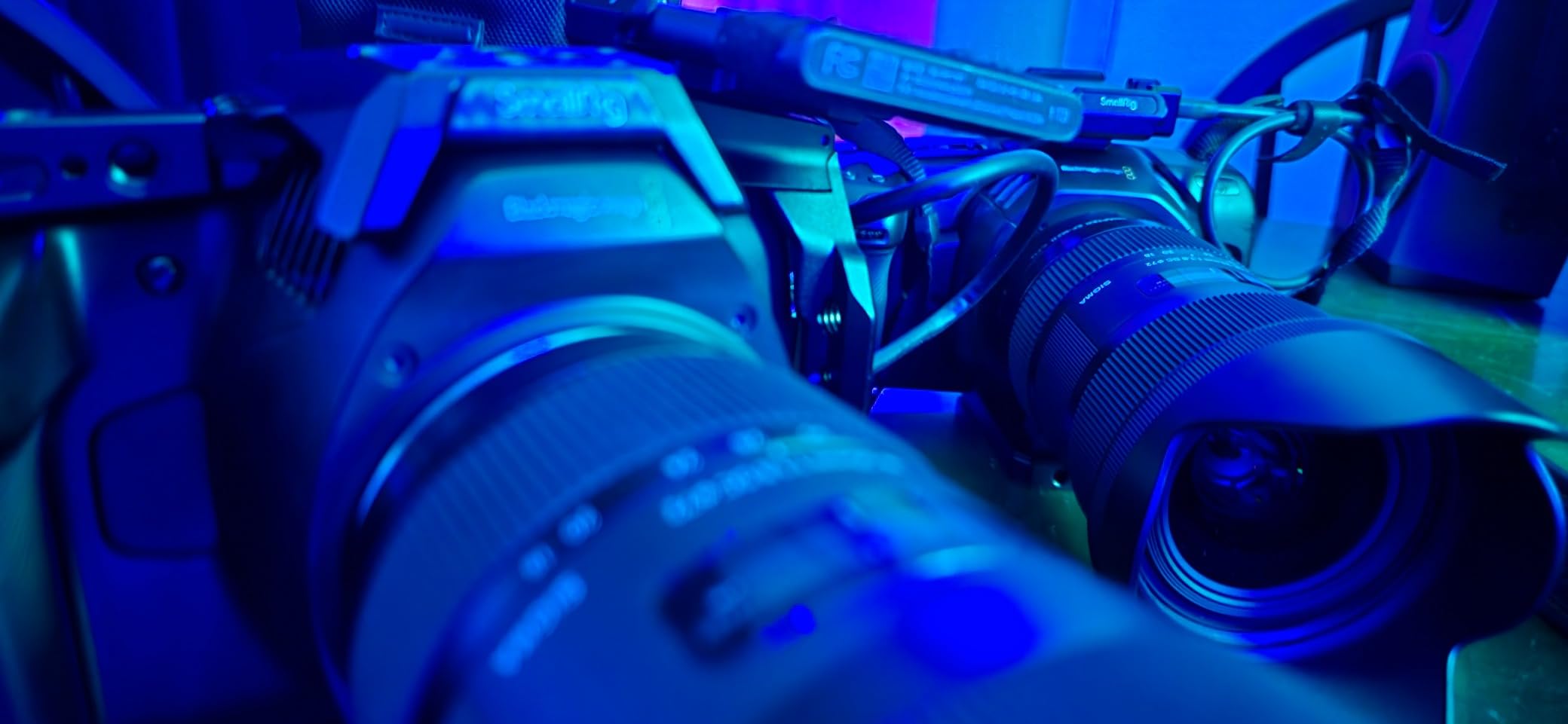
4. Blackmagic Pocket Cinema Camera 4K with Built-In ND
Pros
- 13 stops of dynamic range and dual native ISO
- ProRes and 12-bit Blackmagic RAW with Resolve Studio included
- Built-in ND filters avoid carrying separate glass
- Large bright 5-inch touchscreen cuts the need for a monitor
- Compact carbon fiber body with a real handgrip
Cons
- No continuous autofocus so focus must be pulled manually
- No in-body image stabilization
- Short battery runtime and weak onboard mic gain
For a location interview where daylight keeps changing and the crew is small, the built-in ND filters on this camera are the feature that matters more than almost anything else on the spec list. Two, four and six stops of glass behind the turret, no filter rings, no hands in the shot, no risk of the wrong filter threaded on under pressure.
Thirteen stops of dynamic range and dual gain ISO give you real latitude. You can expose for a bright window and still pull skin tone detail out of the subject sitting two feet away in shade, which is the exact geometry of most documentary interviews.
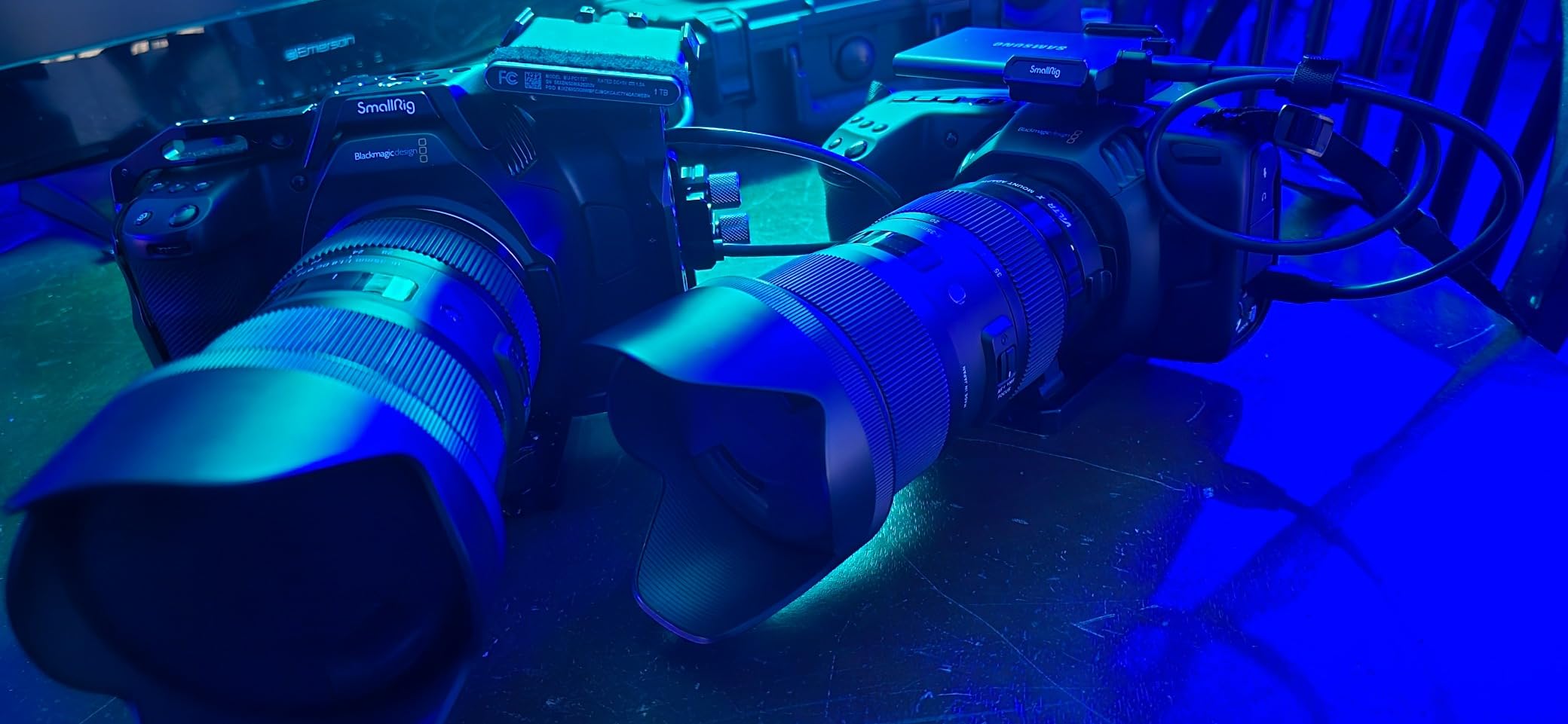
The mini XLR input accepts a real boom or lav, the 5-inch screen is bright enough to focus by without a monitor, and the included DaVinci Resolve Studio licence means your edit is covered on day one. Recording to inexpensive fast SSDs keeps media costs sane for a long production.
The trade-off is stated plainly in nearly every review: there is no continuous autofocus. You pull focus. On a locked-off interview that is fine, and focus assist tools make it fast, but it is a real adjustment from a hybrid body.
Where the Pocket 4K earns its keep
Location interviews in available light, day shoots with no crew, and any setup where you want a cinema image without a rig. Micro Four Thirds glass is small and cheap, so building a kit around it stays light.
It is also the natural choice if you already edit in Resolve and want to shoot RAW.
Where it will frustrate you
Moving cameras and handheld work. There is no in-body stabilization, so anything other than tripod or gimbal work needs a plan.
Handheld interviews where the subject shifts in the chair will test your focus pulls, and the internal battery means carrying power options for a long session.
5. Blackmagic Pocket Cinema Camera 6K for Reframing One Take
Pros
- 6K Super 35 image quality rivals report punches above its class
- EF mount unlocks a huge inexpensive lens ecosystem
- 6K RAW gives heavy reframing and punch-in headroom
- Simple menus with on-screen zoom for critical focus
- Records to affordable fast SSDs rather than expensive media
Cons
- Autofocus is effectively manual only
- Very short battery runtime of roughly 20 minutes
- Large BRAW files need serious storage and editing power
- Fixed LCD and no stabilization require a rig
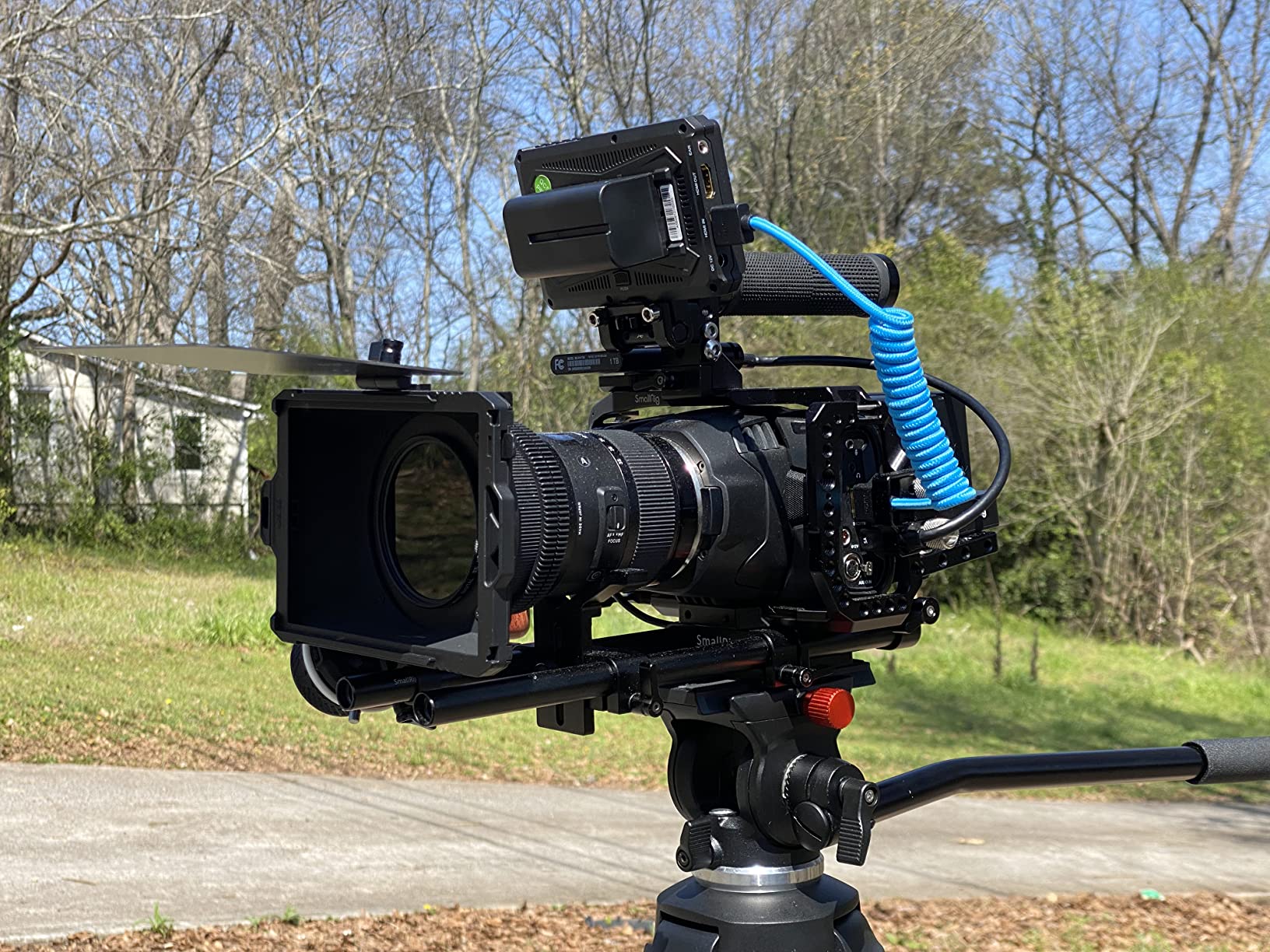
The 6K gets you something the 4K cannot: a single wide interview take that you can push in on later. With a native 6144 by 3456 sensor and Blackmagic RAW, you can frame a two-shot for safety and extract a usable single in the edit without the softness that digital cropping normally gives you.
The Canon EF mount is the quiet superpower. It gives you access to a decades-deep pool of inexpensive primes and zooms, including Sigma Art glass, at a per-lens cost that full-frame cinema mounts cannot match.
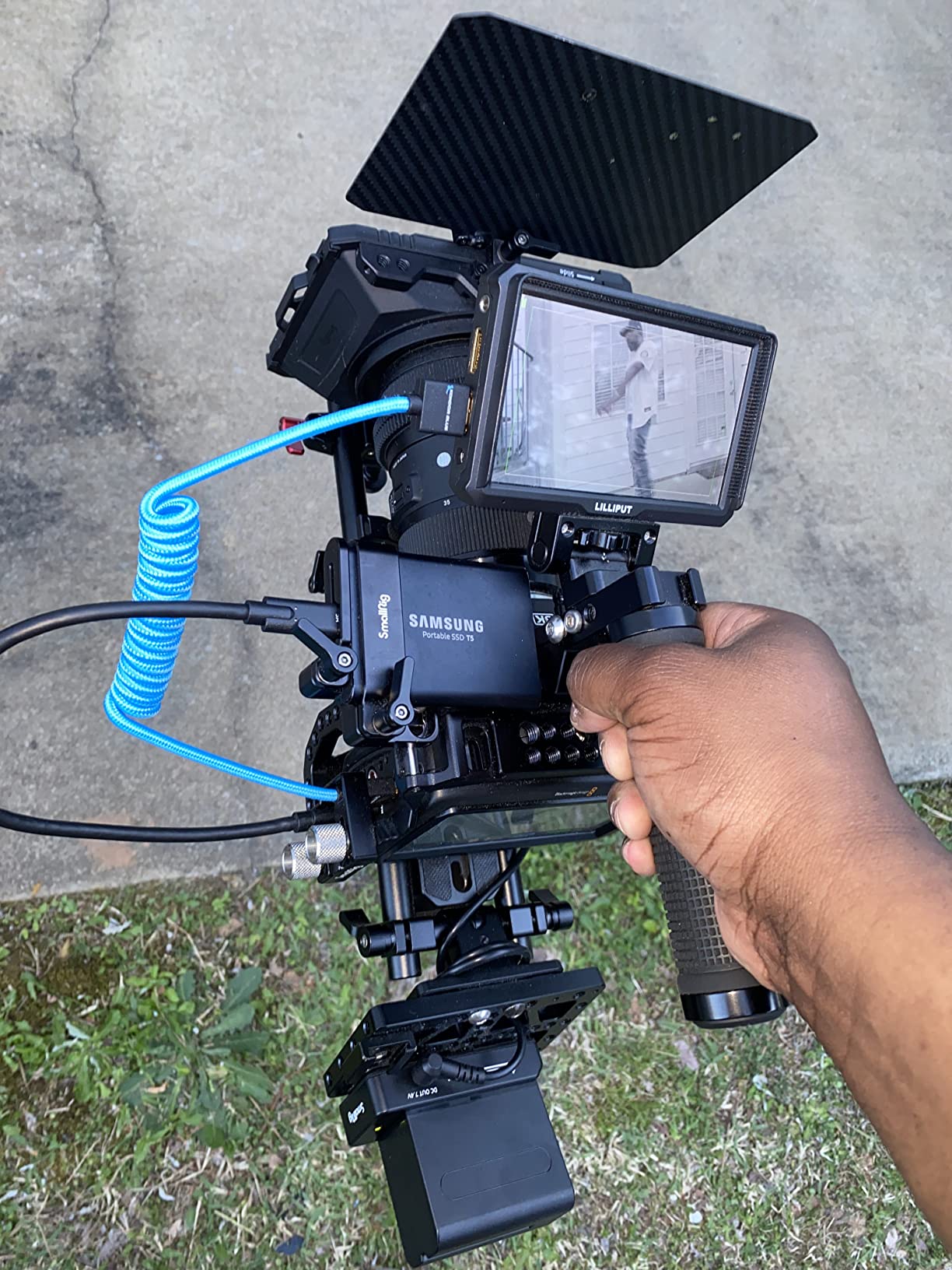
Two card slots accept fast SD media, built-in ND filters handle the daylight swing, and timecode support through an external generator on the mic port lets you sync a second camera for a proper multi-angle interview.
Reviewers are consistent about the compromises. Autofocus is manual only, battery runtime is around twenty minutes per cell, and BRAW file sizes are large enough that your edit machine and your backup routine both need planning.
Where the 6K earns its keep
Productions that deliver one interview to several platforms, including vertical cutdowns. That extra resolution is the difference between a reframe that holds up and one that does not.
It also suits shooters who want a cinema look and already own EF glass, or who plan to shoot with manual vintage primes on an adapter.
Where it will frustrate you
A two-person team without a focus puller. Manual-only autofocus plus a fixed screen means every framing change is a manual operation.
Twenty minutes of runtime and multi-gigabyte files make a long interview day a logistics exercise. Budget for power, fast media and a serious ingest workflow.
6. Sony Alpha 7S III for Available-Light Interviews
Pros
- Class-leading autofocus on unpredictable subjects
- Exceptional low light performance at high ISO
- 4K 120p 10-bit 4:2:2 with full pixel readout
- S-Cinetone and S-Log3 profiles
- 5-axis stabilization and dual card slots
Cons
- 12.1MP stills leaves little room for cropping
- Highest 4K 120p settings need costly V90 or CFexpress media
- Bundled Sony software is dated
- Battery life is unremarkable
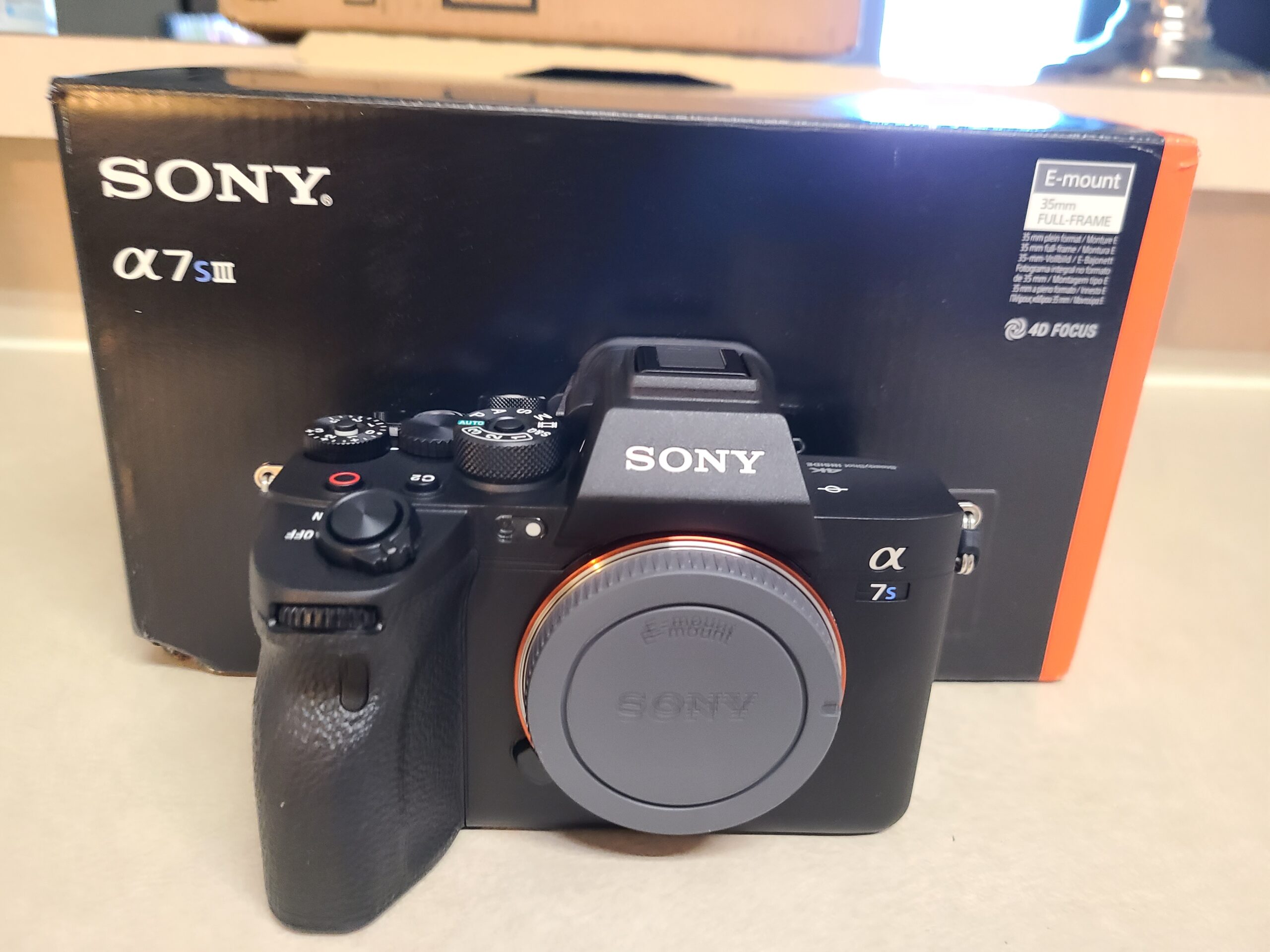
When the interview happens in whatever light the room has, this is the body I trust. The 12.1MP sensor was designed for exactly that job: huge pixels, a native ISO range from 40 to 409600, and clean files at levels where most sensors fall apart. A dim kitchen interview at ISO 3200 is routine rather than a rescue.
It records up to 4K 120p in 10-bit 4:2:2 with full pixel readout in all recording modes, and reviewers report no overheating problems. That combination of endurance and high-speed capture makes it a genuine two-body kit when paired with a stills camera.
The autofocus is the other reason. It tracks unpredictable subjects without jumping, which matters for documentary work where the framing and the focus both have to improvise. Five-axis stabilization, dual card slots and a bright high-resolution viewfinder round out a body built for handheld work.
Fifteen stops or more of dynamic range gives you real grading latitude, and S-Cinetone or S-Log3 covers both a fast turnaround and a proper grade.
Where the a7S III earns its keep
Available-light and low light interviews, night work, and any shoot where adding lights is not an option. It is the best pure low light tool among full-frame bodies here.
It pairs well with a higher resolution stills body for documentary photography, giving you clean video and detailed stills from one bag.
Where it will frustrate you
Stills-first projects. Twelve megapixels will not survive the crop a magazine layout demands, and it is not a camera to buy for gallery prints.
Media costs climb quickly at the highest 4K frame rates, and Sony codecs sometimes need conversion for certain edit applications. Check your post chain before you commit.
7. Fujifilm X-T5 for Stills and Video on One Trip
Pros
- 40.2MP sensor holds detail even with older lenses
- Classic dials let you set exposure with the camera off
- Excellent 3.69 million dot viewfinder at 100Hz refresh
- F-Log and F-Log2 plus ProRes RAW and BRAW over HDMI
- Weather sealing and dual SD card slots
Cons
- Autofocus trails Sony and Canon for video
- Body runs warm on extended recording
- No battery grip option for the X-T5
- Pixel Shift Multi-Shot produced errors for some users
The X-T5 is here for a specific kind of documentary maker: someone who shoots a magazine story and a short film and needs one body for both. Forty megapixels of X-Trans detail, a viewfinder you can genuinely focus with, and film simulation dials that you can set before the camera comes out of the bag.
For video it records 6.2K at 30p in internal 4:2:2 10-bit, offers an oversampled 4K HQ mode, and provides F-Log and F-Log2 with 13 or more stops of dynamic range. Twelve-bit ProRes RAW and Blackmagic RAW go out over HDMI for the edit.
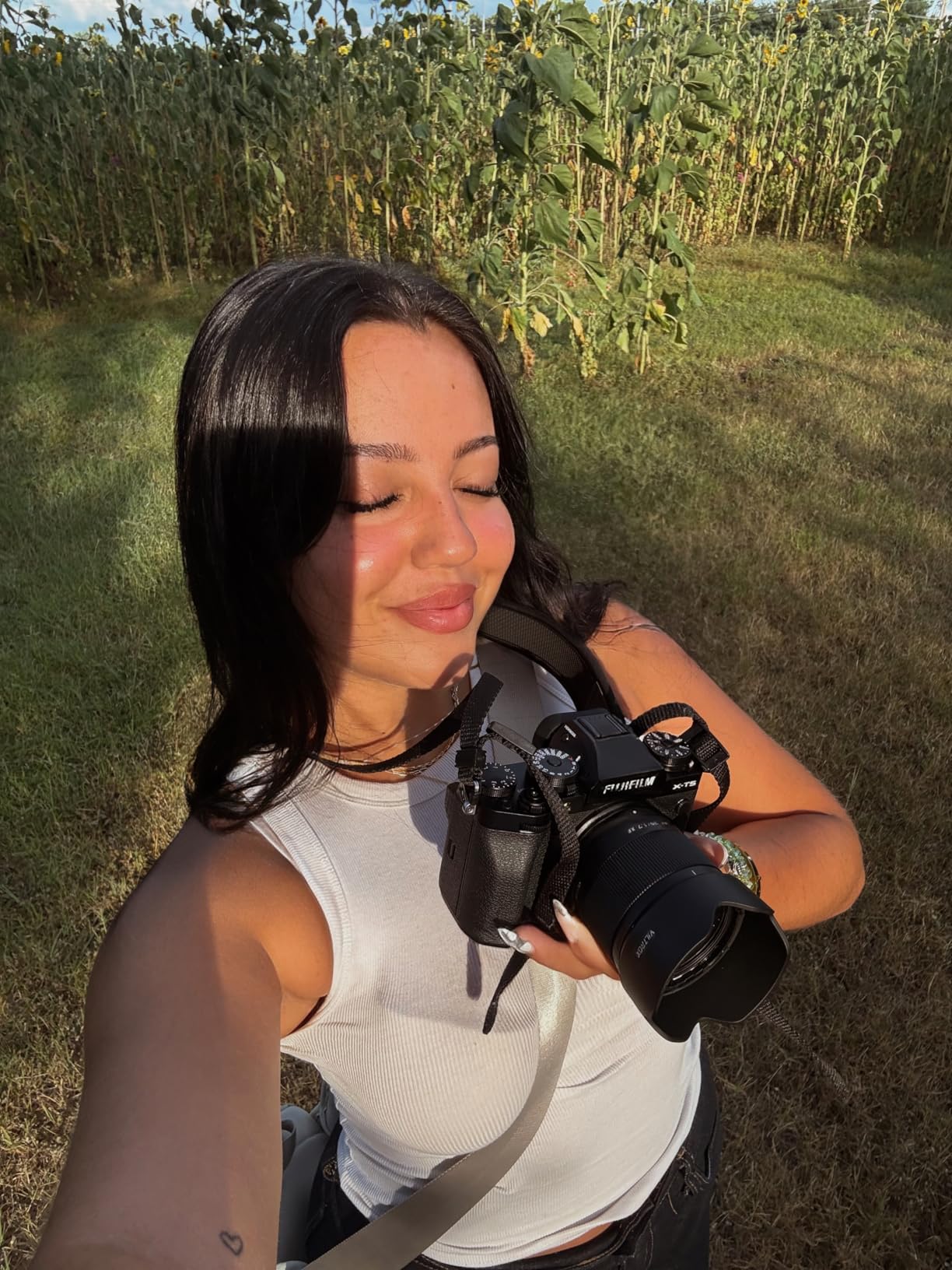
Five-axis in-body stabilization at up to seven stops is a genuine advantage for handheld stills in low light, and dual card slots plus weather sealing suit field work.
The limitation reviewers raise most is video autofocus, which trails the best Sony and Canon systems for fast-moving subjects. In a locked-off interview that matters far less, but it is the reason I would not build a run-and-gun doc around this body alone.
Where the X-T5 earns its keep
Hybrid journalists and photographers who need publishable stills from the same trip as the footage, plus anyone shooting in APS-C glass who wants the crop for vertical delivery.
The dials are a real advantage on a fast day. Setting ISO, shutter and exposure without entering a menu saves time between setups.
Where it will frustrate you
Long unbroken video takes. The body runs warm during extended recording, which shortens your comfortable clip length.
There is no battery grip for the X-T5, and the pixel shift multi-shot mode produced errors or failed to render for some users. Treat that mode as a bonus, not a plan.
8. Nikon Z6 III for Maximum Grading Latitude
Nikon Z6 III, Black | Full-Frame Mirrorless Stills/Video Camera with 6K/60p Internal RAW Recording | USA Model
Pros
- 6K 60p internal N-RAW is rare at this level
- Very bright 4000 nit viewfinder stays clear in sunlight
- Fast dependable autofocus with detection down to -10EV
- No open-gate or rolling shutter artifacts
- Solid heat management for long takes
Cons
- Complex menu system and AF mode combinations
- Awkward button and dial placement for some users
- Nikon splits phone and cloud functions across several apps
- Small body suits smaller hands and no charger is included
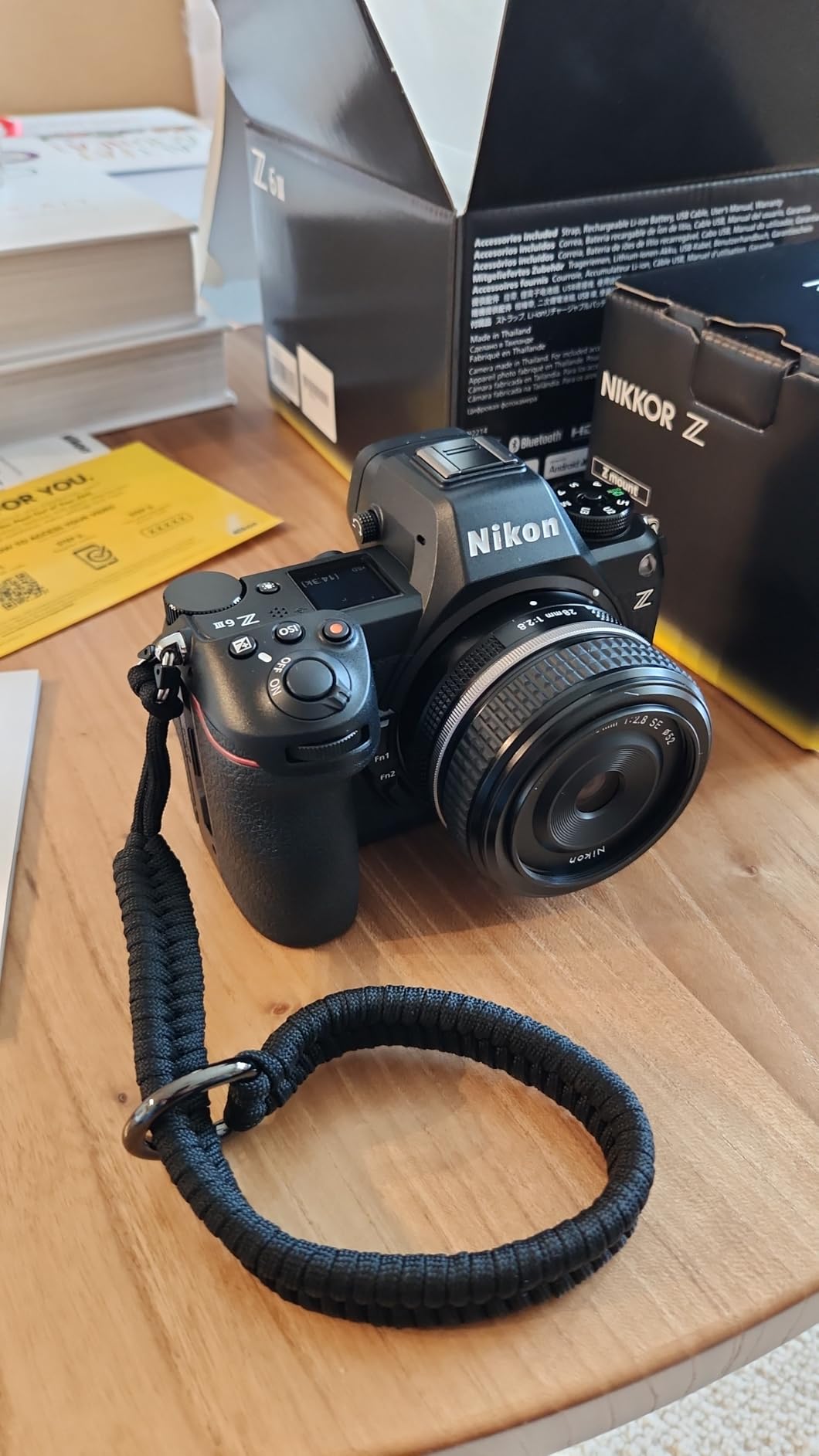
The Z6 III is the body to buy if your documentary will be graded hard and you want options left in the file. Recording 6K at 60p internally in N-RAW at this level is genuinely unusual, and it gives a colourist far more latitude than a flat 10-bit file.
It also handles the physical side of a shoot unusually well. The 5760k dot viewfinder pushes 4000 nits at 120Hz, which means you can actually see a focus pull in harsh daylight with a subject’s face lit and the background blown out. That is an interview-specific detail that matters more than it sounds.
Autofocus detection down to -10EV is roughly 20 percent faster than the previous generation, and owners report no open-gate or rolling shutter artifacts along with solid heat management for long takes. Line-in audio and professional monitoring tools are built in for production sound.
The complaints cluster around the interface. The menu system and the number of autofocus mode combinations have a steep learning curve, and the front dial inside the grip sits awkwardly for some users.
Where the Z6 III earns its keep
Broadcast-standard documentary and long-form commission work where a colourist is downstream of you. The internal raw recording and the no-artifact sensor are the reasons to choose it.
Line-in audio plus professional monitoring tools make it a good fit for crews that want a proper scratch track without a separate box for every setup.
Where it will frustrate you
Anyone who needs to be fast on a moving documentary day. A dense menu system costs setup time, and that is exactly the time you do not have.
The small body suits smaller hands, there is no charger in the box, and Nikon’s phone and cloud functions are split across several apps. Test your mobile workflow before committing.
9. Sony Alpha 7R V for Still Frames From a Take
Pros
- 61MP sensor captures extraordinary detail with strong cropping latitude
- AI Real-time Recognition AF tracks people animals birds cars insects and aircraft
- New multi-angle articulating screen solves awkward angles
- Over 9.4 million dot viewfinder at 100 percent coverage
- 8K 24p and 4K 60p without the old 29 minute cap
- Dual card slots and a large buffer
Cons
- Not Sony's best video body and rolling shutter trails dedicated video models
- Battery consumption roughly 25 percent higher than the previous generation
- CFexpress Type A cards are very expensive
- Larger and heavier than the previous generation
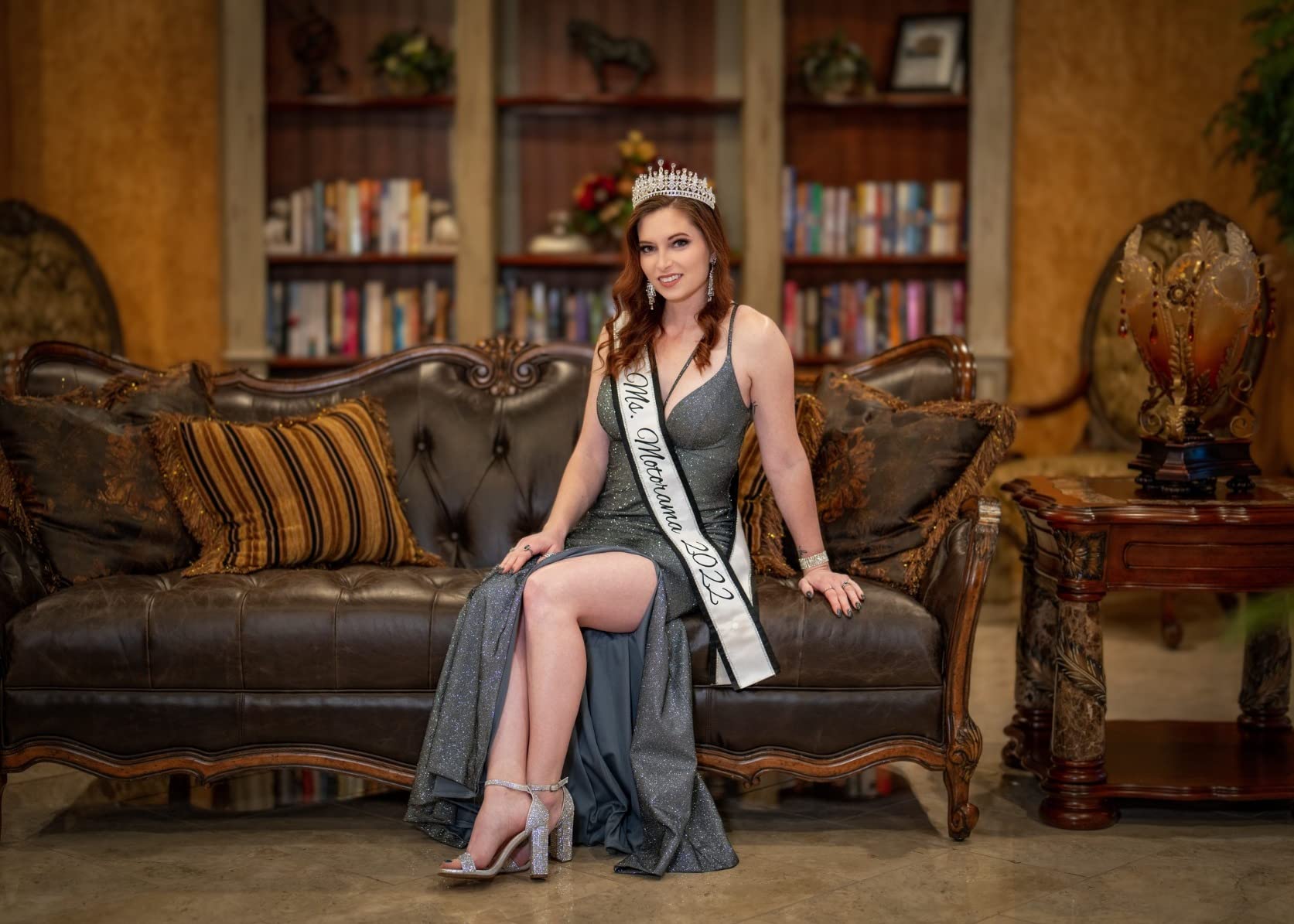
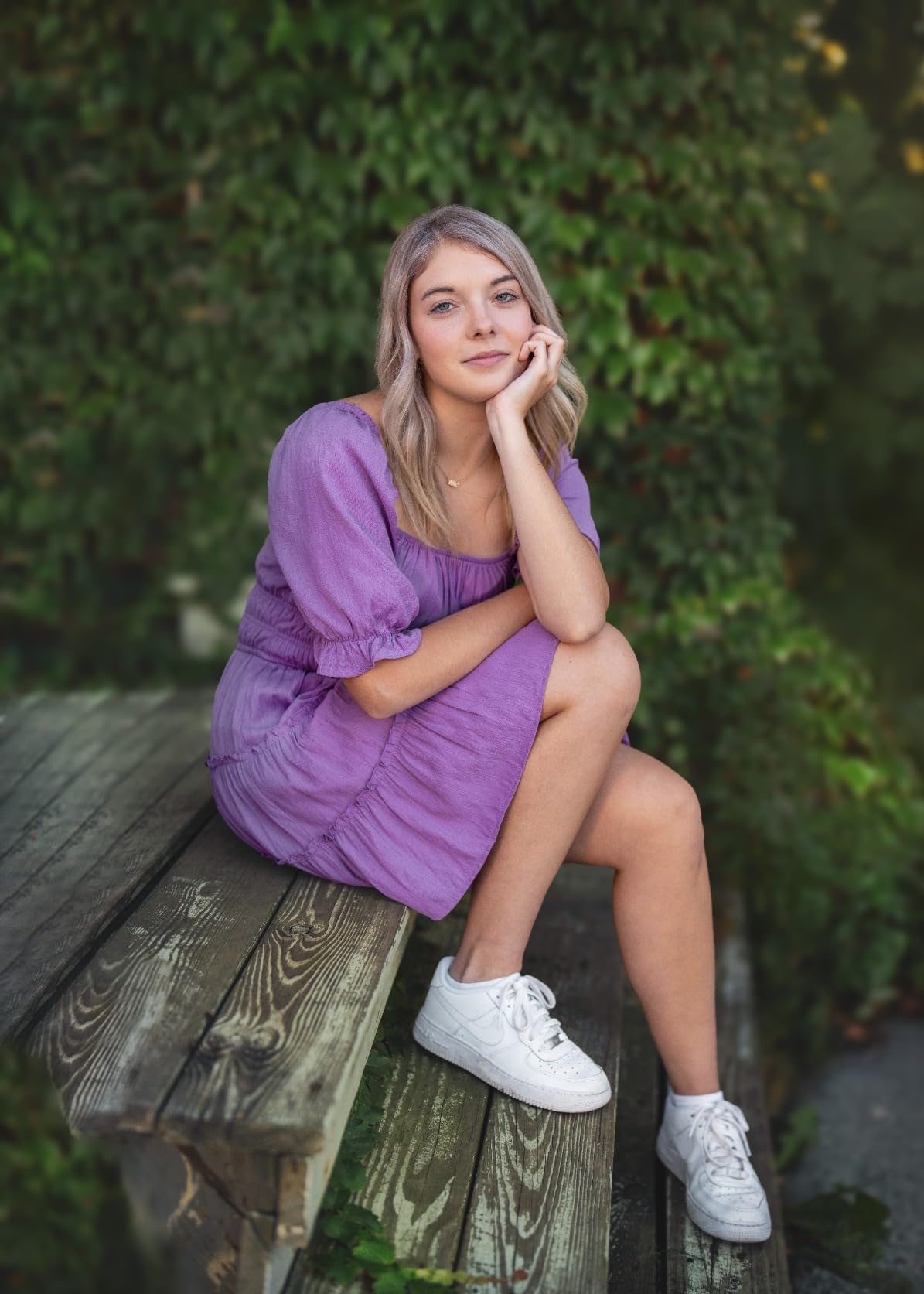
The a7R V is the pick when the interview is also a photography assignment. Sixty-one megapixels means you can frame a wide two-shot and still deliver a usable 3000 pixel single in the edit or in the newsletter that accompanies the film.
Its AI processing unit drives next-generation Real-time Recognition autofocus across people, animals, birds, cars, insects and aircraft, and owners report that it holds lock through a take. The new multi-angle articulating screen fixes the low-angle framing problem that plagues tripod interviews.
There is no 29 or 30 minute clip cap, which removes one of the classic interview interruptions. It records 8K at 24 and 25p and 4K at 50 and 60p, and dual card slots plus a large buffer mean you can shoot a long session without pausing to clear.
Be clear-eyed about the compromises. This is a stills-first body with a serious sensor, not a dedicated video machine, and the rolling shutter and 10fps burst rate trail Sony’s own video-oriented models.
Where the a7R V earns its keep
Documentary photography with a video component: magazine stories with a short film attached, editorial work for publications that want both a gallery and a cut. The cropping latitude is the whole argument.
It is also a strong second body in a two-camera interview kit, giving you a wide and a tight on a single sit-down.
Where it will frustrate you
Anyone shooting fast handheld b-roll as the primary work. Rolling shutter and the burst rate are not built for that.
Battery consumption is roughly 25 percent higher than the previous generation, especially in video, and CFexpress Type A media is expensive. Carry more batteries than you think you need.
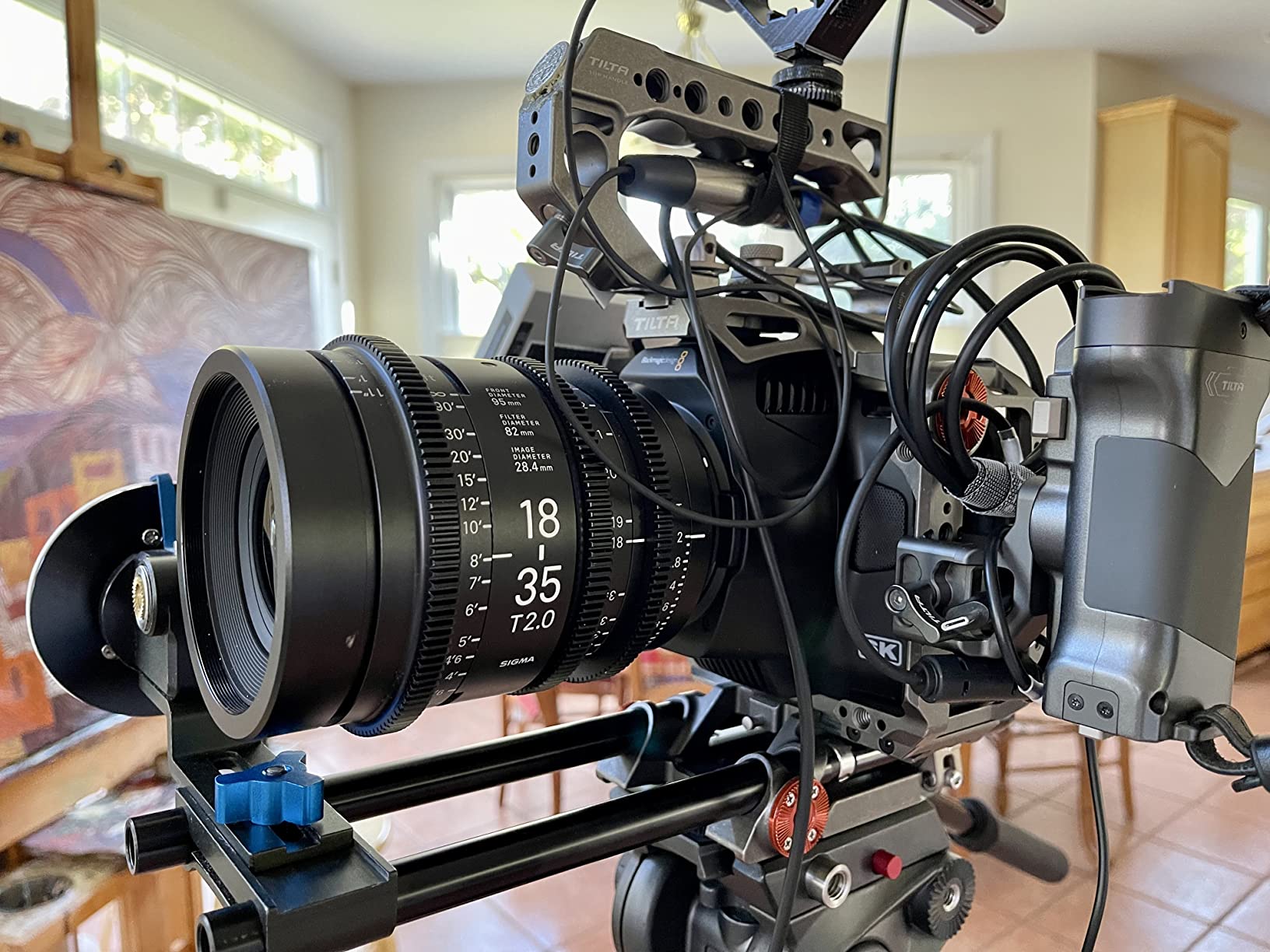
10. Blackmagic Pocket Cinema Camera 6K Pro for ND-Heavy Interviews
Pros
- 6K Super 35 image quality with 13 stops for interview setups
- Built-in 2 4 and 6 stop ND filters avoid carrying glass
- Adjustable tilt 5-inch HDR LCD is brighter than the original 6K
- EF mount opens up a wide inexpensive lens selection
- Records ProRes and 12-bit Blackmagic RAW with Resolve Studio
- Multiple audio options including mini XLR
Cons
- No continuous autofocus so interview focus must be pulled manually
- No in-body image stabilization
- Heavier body than the original 6K
- Large RAW file sizes need substantial storage
- Short battery runtime
This is the interview camera I would build a location day around. The built-in 2, 4 and 6 stop ND filters mean you can walk from a blown-out window to a soft interior without touching a filter thread, which removes the single most common excuse for a mid-interview filter change.
Thirteen stops of dynamic range and dual gain ISO up to 25600 handle a high-contrast interview setup, and the adjustable tilt 5-inch HDR LCD is bright and viewable enough to pull focus on without an external monitor. For a crew of one or two, that is a real saving in kit weight.
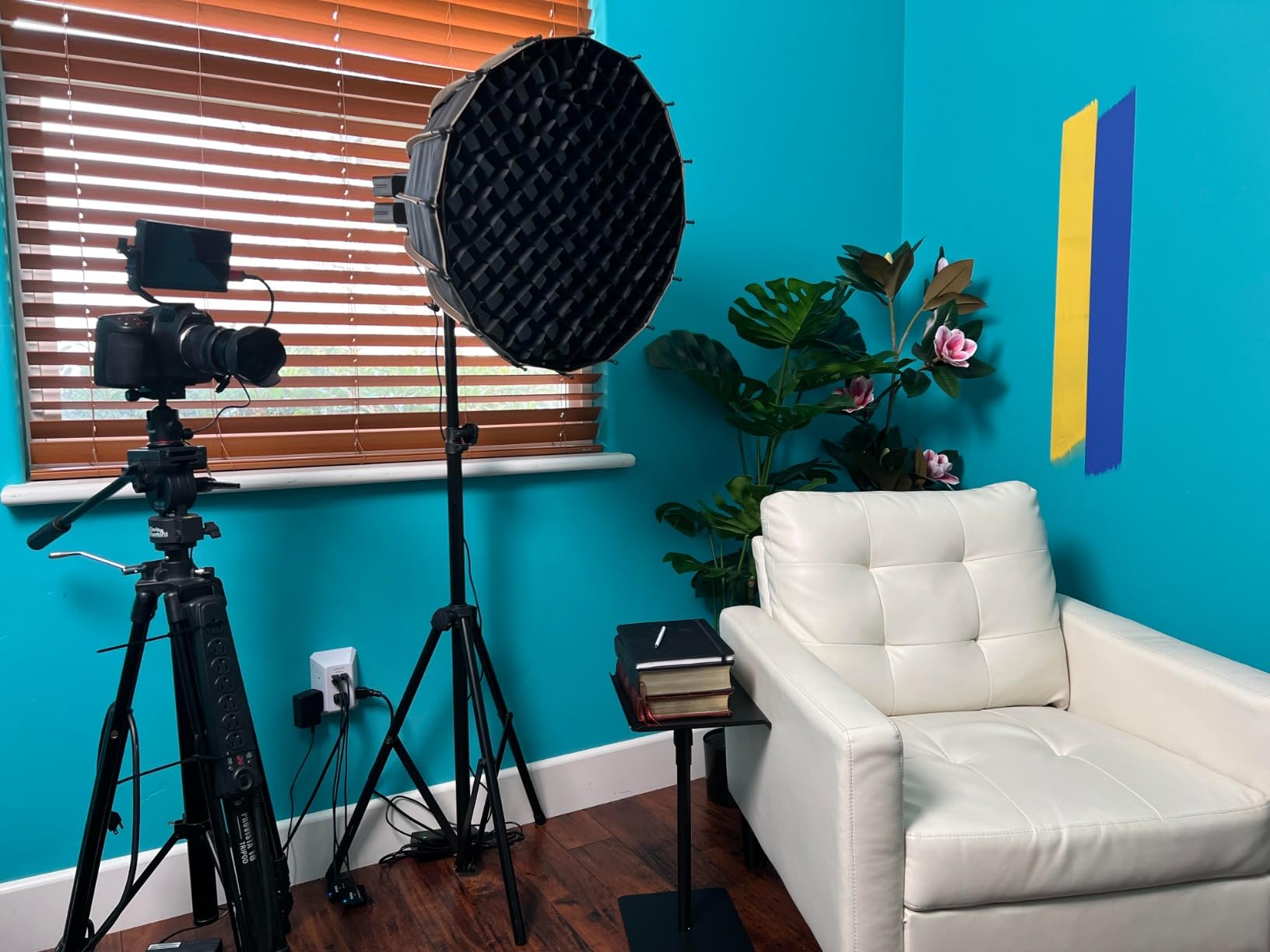
The EF mount gives access to Sigma Art primes and other inexpensive glass, and it records ProRes plus 12-bit Blackmagic RAW with a DaVinci Resolve Studio key included. Mini XLR covers both lav and boom mics.
At 4.4 pounds it is noticeably heavier than the original 6K, and the file sizes are large. Reviewers are consistent about the trade-off: no continuous autofocus and no in-body stabilization, so this is a tripod or gimbal camera.
Where the 6K Pro earns its keep
Day interviews in uncontrolled light, two-person crews who cannot afford a follow focus, and productions delivering both 16:9 and vertical cuts. The ND stack and the 6K sensor between them remove a lot of on-set improvisation.
It is also a strong narrative companion for a documentary kit, where the wider 6K canvas suits scripted coverage.
Where it will frustrate you
Unscripted handheld work with moving subjects. Manual focus and no stabilization will show in the frame.
Long days need power planning, and a workstation editing multi-gigabyte RAW files needs a capable machine. If either is tight, choose a 10-bit 4:2:2 hybrid instead.
What Actually Matters When You Choose an Interview Camera
Spec sheets reward you for reading them. Interview work punishes you for it, because the decisions that ruin a take are made long before you get to a colour timeline. Here is the framework I use when a documentary crew asks me to narrow a shortlist.
Focal length and framing for a sit-down conversation
A 24 to 35mm lens on a full-frame body is the standard interview pairing. It gives enough width to hold a two-shot, enough breathing room to frame a subject without wide-angle distortion, and enough light for a dim room.
A 50 to 85mm prime gives you the intimate, compressed look that separates interviews from conversations, at the cost of working closer and moving back when the room is small. A 24 to 70mm zoom is the practical middle ground for a one-person crew who cannot afford to change lenses mid-session.
No competitor on this topic covers that choice, so I wrote it up separately in what mirrorless glass actually costs you in a documentary kit.
Built-in ND and changing daylight
An electronic or physical ND filter is the most interview-relevant feature on this list and the least discussed. Without one, you either stop down and lose the subject, or you carry a filter ring and change glass in front of someone who is mid-sentence.
The Blackmagic Pocket bodies in this roundup have built-in ND. Most mirrorless options need an external or cage-mounted solution, which adds cost and setup time. If your interview is outdoors or in a room with strong windows, weight this feature heavily.
Audio: XLR, lavalier and the external recorder question
Interview sound matters more to an editor than interview image quality. Two wired lavs into a separate recorder, spare XLR cables and headphones is the bare-minimum reliable audio kit, and forum consensus keeps pointing back to that setup rather than to camera preamps.
Built-in XLR is a convenience win when you want a scratch track in camera, not a substitute for a proper recorder. Bodies with dual XLR inputs make a two-person interview far cleaner. None of the ten here has dual XLR, so plan on an external recorder regardless of which you buy.
Recording limits, card slots and long sessions
Ask two questions of any body. Does it record continuously at 10-bit 4:2:2 without a hard cap, and does it write to two cards at once? The Canon R6 Mark II is rated for up to six hours of continuous Full HD, and the a7R V has no 29 or 30 minute cap. Several single-slot bodies here carry the second risk instead.
My rule is simple: for a paid shoot with a subject you cannot recall, redundancy is not optional. The bodies with dual slots are the a7 IV, the a7S III, the a7R V, the X-T5, the Z6 III and the Pocket 6K.
Autofocus behaviour on real people
Spec sheets say phase detection. Real subjects wear glasses, have beards, sit in low-contrast rooms and turn away. The Sony and Canon bodies in this roundup have the most reliable subject tracking in my testing, which is why they sit at the top.
The Blackmagic cameras in this list have no continuous autofocus. That is fine on a locked-off interview and a problem the moment the framing moves, and it should decide the choice for you if you shoot unscripted.
If you want the broader view before you buy, my guides to cameras for documentary photography and mirrorless bodies for documentary filmmaking cover the stills and hybrid cases in more depth.
Frequently Asked Questions
What is the best camera for filming interviews?
The Sony Alpha 7 IV is the best all-round interview camera because it combines class-leading real-time eye autofocus with 4K 60p 10-bit 4:2:2 internal recording and two card slots, so it records a backup copy of every take. The Canon EOS R6 Mark II is the alternative if you want longer unbroken takes, with up to six hours of continuous Full HD recording. For location work where daylight keeps changing, a Blackmagic Pocket body with built-in ND filters removes the need to carry glass.
What is the best camera for shooting a documentary?
A hybrid full-frame mirrorless camera is the most practical documentary body, because it covers interviews, handheld b-roll and publishable stills in one package. The Sony Alpha 7 IV and Canon EOS R6 Mark II both fit that brief. A cinema body such as a Blackmagic Pocket Cinema Camera earns its place when you need 6K reframing, built-in ND or RAW flexibility for grading.
What type of camera angle is typically used for documentary interviews?
Most documentary interviews use eye-level medium shots, filmed on a tripod with the camera at the subject’s eye height and slightly off-axis so the subject looks just past the lens rather than straight into it. Wider two-shots establish the room, and a tighter single carries the emotional beats. A repeatable multi-camera setup places every camera on the same side of the subject, with the interviewer positioned away from the key light.
Do I need a cinema camera for documentary work?
No. Professionals routinely shoot interviews on anything from a DSLR to a full cinema body, because the camera matters less than the lighting, audio and preparation. A cinema body becomes worth it when your work needs built-in ND for uncontrolled locations, 6K open-gate recording for vertical reframing from one take, or RAW latitude for a demanding grade.
How long can a camera record before overheating?
It depends entirely on the body, the codec and the room temperature. The Canon EOS R6 Mark II is rated by Canon for up to six hours of continuous Full HD recording, and the Sony Alpha 7R V has no 29 or 30 minute clip cap. Reviewers report occasional heat warnings on the a7 IV during very long takes, and the Fujifilm X-T5 runs warm during extended recording. Test your longest interview in a warm room before a paid shoot.
What is the best mirrorless camera for low light shooting?
The Sony Alpha 7S III is the strongest low light body in this roundup, with a 12.1MP sensor, a native ISO range from 40 to 409600 and clean files at high sensitivities. Among higher resolution options, the Sony Alpha 7 IV handles dim interiors well thanks to its full-frame sensor and processing. For controlled but dim rooms, adding light beats raising ISO every time.
Is a mirrorless camera good enough for documentaries?
Yes. Every camera reviewed on this page has been used for professional work, and a modern mirrorless body records 10-bit 4:2:2 internally, holds focus on a real face and records for far longer than most interview answers. The gaps that matter are redundancy on the card slots, built-in ND on location shoots, and audio inputs, so check those before choosing.
The Camera for Documentary Interviews: Final Word
The best cameras for documentary interviews are not the biggest or the newest. They are the ones that hold focus, hold exposure and keep recording through an answer you cannot repeat. On that basis the Sony Alpha 7 IV is my pick, the Canon EOS R6 Mark II is the runner-up for long-form conversations, and a Blackmagic Pocket body with built-in ND wins any shoot where the daylight fights you.
Rent your top two choices and shoot one real interview with each before you commit. Ten minutes of a subject who forgets what you said will tell you more than any spec sheet, and the camera that stays on the tripod is the camera that finishes your film.