
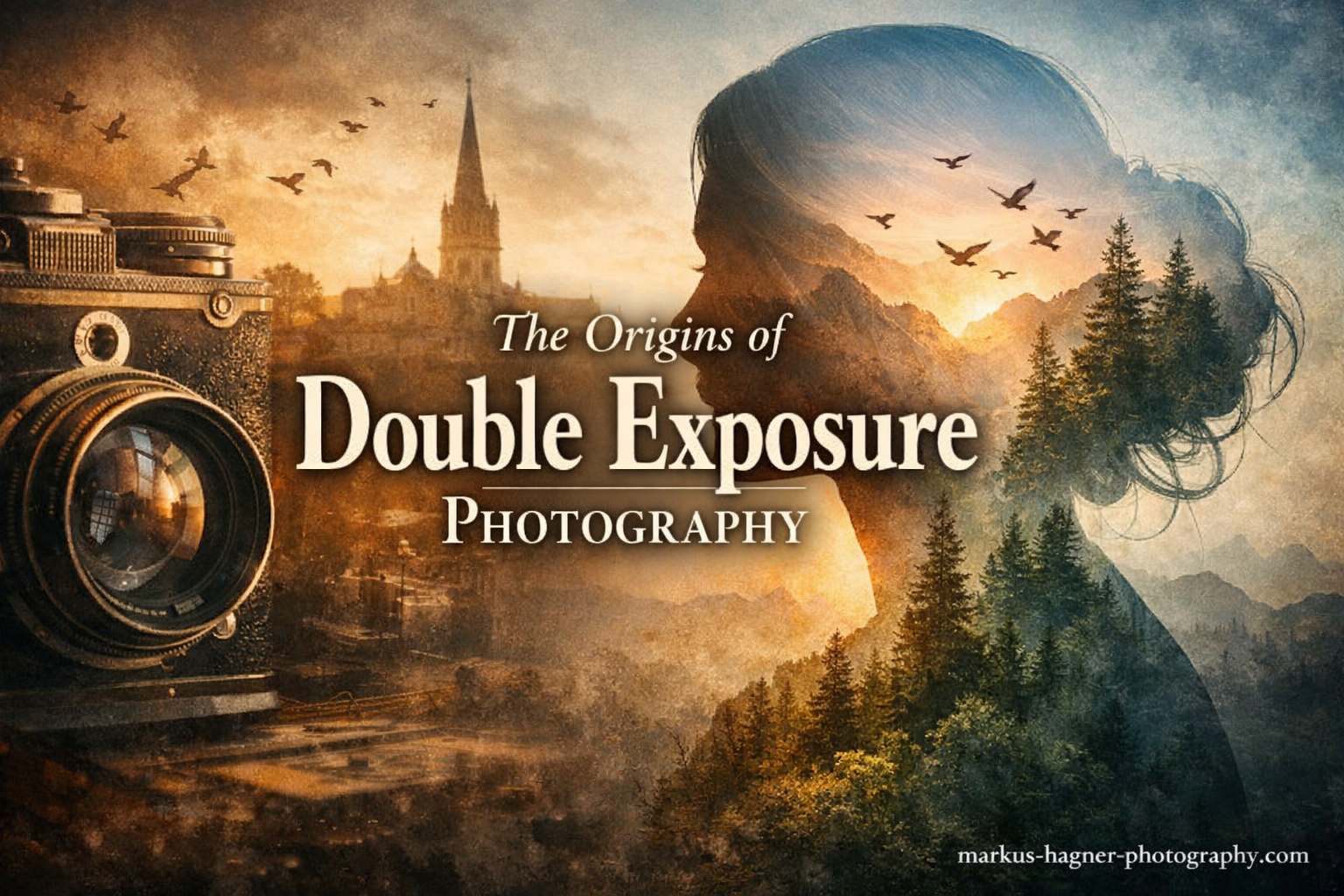
Double exposure photography stands as one of the most serendipitous discoveries in the history of visual media. What began as accidental flaws in early photographic plates evolved into a revolutionary artistic technique and laid the groundwork for modern cinematic special effects. The origins of double exposure photography and early special effects reveal a fascinating journey from Victorian ghost hunters to the magical films of George Melies, transforming how we capture and manipulate reality through the lens.
In this guide, I will walk you through the complete history of double exposure, from its accidental discovery in the mid-19th century to its influence on early cinema. You will learn how Victorian spirit photographers convinced grieving families they had captured ghosts on film, how scientists used the technique to study human motion, and how these early experiments paved the way for the visual effects we see in movies today.
What Is Double Exposure Photography?
Double exposure photography occurs when two separate images are recorded on the same frame of film or photographic plate. The result creates a layered, ethereal composition where elements from both scenes overlap and blend together. In film photography, this happens when the shutter opens twice without advancing the film between exposures.
Early photographers working with wet plate collodion and daguerreotype processes faced exposure times lasting several minutes. Any movement during this extended period could create ghostly, semi-transparent figures. These unintentional effects sparked curiosity among photographers who began experimenting with deliberate multiple exposures.
The Accidental Discovery of Double Exposure
The story of double exposure begins not with invention but with happy accidents. Early photographic processes in the 1830s and 1840s required exposure times ranging from several minutes to over an hour. The daguerreotype process, introduced by Louis Daguerre in 1839, used copper plates coated with light-sensitive silver iodide. These long exposures meant that anything moving through the frame would appear as a blur or vanish entirely.
When the wet plate collodion process emerged in 1851, exposure times shortened considerably but still required subjects to remain perfectly still for seconds or minutes. Photographers noticed something peculiar when plates were not properly cleaned or when they forgot to advance to fresh sections of plate: ghostly afterimages appeared alongside new subjects.
How Early Photographic Processes Created Accidental Double Exposures
The wet plate collodion process involved coating glass plates with a sticky mixture of gun cotton and chemicals, sensitizing them with silver nitrate, and exposing while still wet. If a photographer failed to properly clean a plate between uses or accidentally exposed the same area twice, remnants of previous images would blend with new exposures.
These technical limitations of early photography created what many considered flaws. Yet some photographers recognized artistic potential in these accidents. The superimposition of images produced dreamlike, surreal effects that transcended simple documentation.
By the 1860s, photographers had begun intentionally creating double exposures. The technique required careful planning: exposing the plate partially for the first image, then repositioning subjects or changing scenes before completing the second exposure. Success demanded precise understanding of how cumulative light affects the final image.
Two Divergent Paths: Documentation Meets Creativity
As double exposure techniques spread through photographic circles, practitioners took the medium in two distinct directions. Technical photographers focused on the scientific potential, using multiple exposures to document motion and study physical phenomena. Artists, meanwhile, embraced the technique for its ability to create impossible, dreamlike scenes that challenged viewers’ perceptions.
This split between documentation and creative experimentation defined much of photographic innovation throughout the 19th century. Both approaches would prove essential to the development of early special effects in cinema.
Victorian Spirit Photography and the Spiritualism Movement
No discussion of early double exposure would be complete without examining Victorian spirit photography. The mid-19th century witnessed an explosion of interest in spiritualism, particularly in America and Britain. The Fox sisters’ claims of communicating with the dead in 1848 sparked a movement that would captivate millions and create perfect conditions for photographic trickery.
Spirit photographers discovered they could produce images showing living subjects accompanied by ghostly, translucent figures. These apparitions appeared to float behind or beside sitters, often positioned as if watching over the living. For grieving families who had lost loved ones, these photographs offered apparent proof of an afterlife.
William Mumler and the Birth of Spirit Photography
Boston engraver William Mumler accidentally created the first recognized spirit photograph around 1861. While taking a self-portrait, a second figure appeared in the image alongside him. Mumler recognized the commercial potential and began producing spirit photographs professionally, charging premium prices for images that supposedly captured deceased relatives.
Mumler’s technique relied on double exposure using glass plate negatives. He would partially expose a plate with one subject, then add a second exposure featuring a different person positioned to appear ghostly and ethereal. The cumulative exposure created the characteristic transparent quality associated with spirit apparitions.
His most famous photograph featured Mary Todd Lincoln with the ghostly figure of her assassinated husband, Abraham Lincoln, standing behind her. Whether Mrs. Lincoln knew the image was manipulated remains debated among historians.
The Technical Secrets Behind Ghost Photographs
Spirit photographers employed several methods to create their ghostly effects. Some used pre-exposed plates containing faint images of figures. Others positioned accomplices in costumes at the edges of frames, moving them slightly during long exposures to create blur. The most sophisticated practitioners combined multiple negatives during darkroom printing.
The wet plate collodion process made these tricks relatively easy to execute. Glass plates could be prepared in advance with faint images, and the slow emulsion allowed for careful manipulation of exposure times. Critics eventually exposed many spirit photographers as frauds, but the emotional power of these images kept demand high throughout the Victorian era.
Chronophotography and the Science of Motion
While spirit photographers used double exposure for supernatural illusions, scientists recognized the technique’s potential for studying physical reality. Chronophotography emerged as a method for capturing sequential images of movement, revealing details invisible to the naked eye.
Eadweard Muybridge and the Horse in Motion
British photographer Eadweard Muybridge conducted groundbreaking motion studies beginning in the 1870s. His most famous work settled a debate about whether all four hooves of a running horse leave the ground simultaneously. Using multiple cameras triggered by tripwires, Muybridge captured sequential images that proved horses do indeed become airborne during their gallop.
Though Muybridge’s technique used separate cameras rather than true double exposure, his work demonstrated how photography could decompose motion into analyzable components. His zoopraxiscope, developed in 1879, projected these sequential images to create the illusion of movement, foreshadowing motion pictures.
Etienne-Jules Marey and the Photographic Gun
French scientist Etienne-Jules Marey took a different approach to motion studies. His photographic gun, built in 1882, could capture 12 consecutive images on a single circular plate. Marey used this device to study human and animal locomotion, creating stunning visual records of movement.
Marey’s chronophotographic technique created true multiple exposures on single plates, showing the progression of movement through overlapping images. His work influenced not only science but also art, as the Futurist movement later drew inspiration from his visual representation of motion.
Early Cinema Special Effects: George Melies and Beyond
The connection between double exposure photography and early cinema represents one of the most significant developments in visual effects history. When motion pictures emerged in the 1890s, photographers brought their understanding of multiple exposure techniques to this new medium.
George Melies: The Father of Special Effects
French filmmaker George Melies stands as the pivotal figure connecting photographic trickery to cinematic magic. A former stage magician, Melies recognized that the motion picture camera offered possibilities for creating illusions impossible in live theater. His discovery of substitution splicing and multiple exposure techniques revolutionized what could appear on screen.
Melies allegedly discovered the potential of film manipulation when his camera jammed during shooting. When he resumed filming, the sudden cut created a magical transformation on screen. This happy accident led him to experiment systematically with in-camera effects.
His 1902 masterpiece “A Trip to the Moon” showcased an array of special effects techniques including double exposure, superimposition, and stop-motion substitution. Ghostly figures materialized and vanished, rockets flew through space, and fantastical creatures performed impossible feats. Melies created these effects entirely in-camera, using multiple exposures on the same strip of film.
How Melies Created His Magical Effects
Melies employed several techniques that drew directly from double exposure photography. Superimposition allowed him to create ghostly doubles of actors, making them appear and disappear at will. By rewinding film in the camera and exposing the same section twice, he could place actors in multiple positions within a single shot.
His background as a magician informed his understanding of misdirection and reveal. Double exposure effects in his films often served narrative purposes, representing dreams, memories, or supernatural events. This integration of technique and story established principles still used in visual effects today.
From Photography to Cinema: The Technical Bridge
The transition from photographic double exposure to cinematic special effects required new equipment and techniques. Film cameras allowed for precise frame-by-frame control, enabling effects impossible with still photography. The Matting process, where black backgrounds prevented certain areas from being exposed, became essential for combining multiple images.
Early filmmakers also adapted darkroom techniques from still photography. Optical printers, developed in the 1910s, allowed filmmakers to rephotograph sections of film and combine multiple exposures with greater precision. These machines became the backbone of visual effects production for decades.
Famous Pioneers of Double Exposure
Beyond Melies, numerous photographers and filmmakers contributed to the development of double exposure as an artistic and technical tool. Their work spans from Victorian studios to Hollywood backlots.
Notable Early Practitioners
Spirit photographers like Frederic Hudson in London and Edouard Isidore Buguet in Paris built successful careers creating ghostly images. Though exposed as frauds, their technical skills demonstrated sophisticated understanding of multiple exposure techniques.
Artist photographers embraced double exposure for its surreal qualities. Man Ray, working in the early 20th century, used solarization and multiple printing to create dreamlike images that influenced the Surrealist movement. His techniques extended possibilities explored by Victorian photographers decades earlier.
Jerry Uelsmann became famous in the 1960s for his complex multiple-print photographs combining up to seven negatives in single images. Working entirely in the darkroom, he created impossible scenes that prefigured digital manipulation by decades.
From Wet Plates to Digital: The Technical Evolution
The journey from Victorian wet plates to modern digital cameras traces a continuous evolution of multiple exposure techniques. Each technological advance opened new creative possibilities.
Timeline of Key Developments
1839: Daguerreotype process introduced, long exposure times create accidental double exposures
1851: Wet plate collodion process enables easier manipulation of exposures
1861: William Mumler creates first recognized spirit photograph
1878: Muybridge’s motion studies demonstrate sequential photography
1882: Marey develops chronophotographic techniques
1896: Melies begins experimenting with in-camera special effects
1902: “A Trip to the Moon” showcases sophisticated multiple exposure effects
1910s: Optical printers enable more precise film compositing
1930s-1960s: Darkroom techniques for multiple printing reach artistic heights
1990s-present: Digital cameras and software make double exposure accessible to all photographers
Modern Applications and Legacy
Today, double exposure has found new life through digital technology. Modern cameras include multiple exposure modes that automatically blend images. Software like Photoshop offers blending modes that replicate and extend traditional darkroom techniques.
Contemporary photographers like Christoffer Relander and Sarah Eiseman create stunning double exposure portraits that would have amazed Victorian practitioners. The dreamlike, ethereal quality that made early spirit photographs so compelling continues to resonate with viewers.
The visual effects industry that George Melies helped create has grown into a global enterprise worth billions. Every film that features impossible imagery owes something to those early experiments with double exposure, whether in Victorian photography studios or on Melies’s Parisian film sets.
Frequently Asked Questions
What is the history of double exposure photography?
Double exposure photography was accidentally discovered in the mid-19th century when early photographers using wet plate collodion processes noticed ghostly afterimages appearing on improperly cleaned or re-exposed plates. These unintentional effects sparked creative experimentation, with photographers soon learning to deliberately create layered images. The technique developed along two paths: scientific documentation through chronophotography and artistic exploration that eventually influenced early cinema special effects.
Who invented double exposure in film?
No single person invented double exposure. The technique emerged accidentally from early photographic processes in the 1830s and 1840s. However, George Melies pioneered its use in cinema during the 1890s and early 1900s, developing in-camera multiple exposure techniques that allowed him to create ghostly apparitions and magical transformations in films like A Trip to the Moon. His work established fundamental principles still used in visual effects.
How did Victorian spirit photography work?
Victorian spirit photographers used double exposure techniques to create ghostly apparitions in portraits. They would pre-expose glass plates with faint images or position costumed accomplices at frame edges during long exposures, creating the translucent figures that appeared alongside living subjects. William Mumler, the most famous spirit photographer, charged premium prices for images supposedly capturing deceased relatives, exploiting the Victorian fascination with spiritualism.
Conclusion
The origins of double exposure photography and early special effects remind us that some of the most significant creative discoveries happen by accident. What began as technical flaws in primitive photographic processes evolved into powerful tools for artistic expression, scientific investigation, and cinematic magic.
From the Victorian spirit photographers who convinced grieving families they had captured ghosts to George Melies who transported audiences to the moon, pioneers of double exposure transformed how we see and represent reality. Their experiments with superimposition and multiple exposure laid groundwork for visual effects techniques still used today.
Understanding this history enriches our appreciation of both vintage photographs and modern films. The next time you watch a movie featuring impossible visual effects or see a contemporary double exposure photograph, remember the Victorian photographers who first discovered that exposing the same plate twice could create magic.