
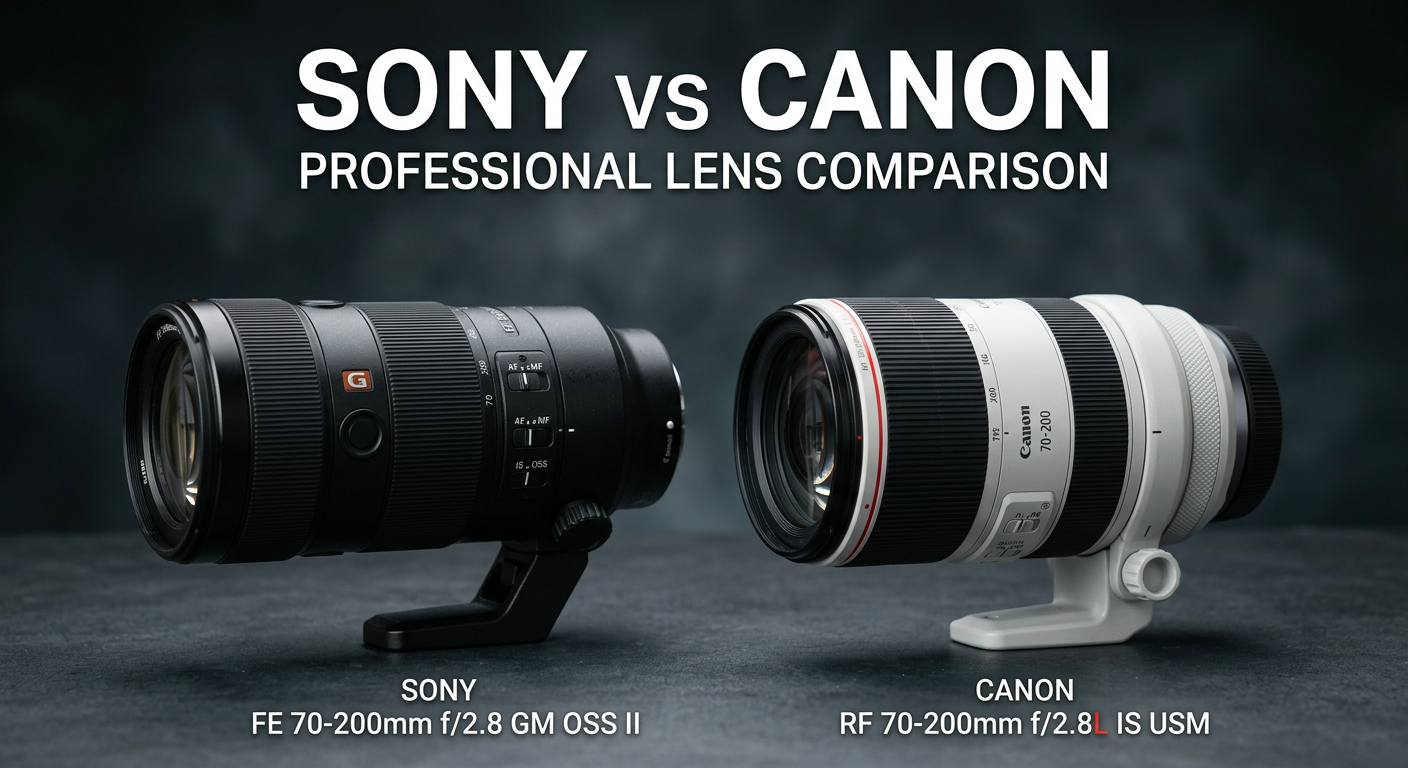
Choosing between the Sony FE 50-150mm f2 GM and Canon RF 70-200mm f2.8L IS USM is one of the toughest decisions a professional photographer can face in 2026. Both lenses represent the pinnacle of telephoto zoom engineering, but they take fundamentally different approaches to solving the same problem.
The Sony FE 50-150mm f2 GM vs Canon RF 70-200mm f2.8L IS USM comparison comes down to one key trade-off: aperture speed versus focal length reach. Sony offers a groundbreaking constant f/2 aperture that lets in twice as much light as f/2.8, while Canon delivers the classic 70-200mm range with built-in stabilization and a significantly lower price tag.
After extensive research into user experiences, technical specifications, and real-world performance, I can tell you that neither lens is objectively “better.” The right choice depends entirely on your shooting style, camera system, and budget. Sony wins for low light work and subject separation. Canon wins for versatility and value.
Quick Comparison
| Product | Specifications | Action |
|---|---|---|
 Sony FE 50-150mm F2 GM Sony FE 50-150mm F2 GM |
|
Check Latest Price |
 Canon RF 70-200mm F2.8 L IS USM Canon RF 70-200mm F2.8 L IS USM |
|
Check Latest Price |
Looking at the specs above, the differences become clear immediately. Sony brings a wider aperture and wider focal range to the table. Canon counters with longer reach, built-in stabilization, and a more compact collapsed design.
Sony FE 50-150mm f/2 GM
Pros
- World first constant F2 aperture zoom
- Exceptional sharpness wide open
- Beautiful bokeh for subject separation
- Fast and accurate autofocus
- Can replace 50mm
- 85mm
- 135mm primes
- Internal zoom keeps dust out
- Great for indoor sports and events
Cons
- Expensive at $3
- 998
- No built-in image stabilization
- Cannot use teleconverters
- Heavier than expected
- Bulky in camera bag
When I first picked up the Sony FE 50-150mm f/2 GM, the weight surprised me. At 2.95 pounds, this is a substantial piece of glass. But the moment I started shooting, I understood why photographers on forums call it “superb” with “no regrets.”
The constant f/2 aperture is the real game-changer here. This is the world’s first f/2 zoom lens that reaches 150mm. What does that mean in practice? You get twice the light gathering of an f/2.8 lens at any focal length. For wedding photographers shooting dimly lit ceremonies or sports photographers working in indoor arenas, that extra stop can mean the difference between getting the shot and missing it entirely.
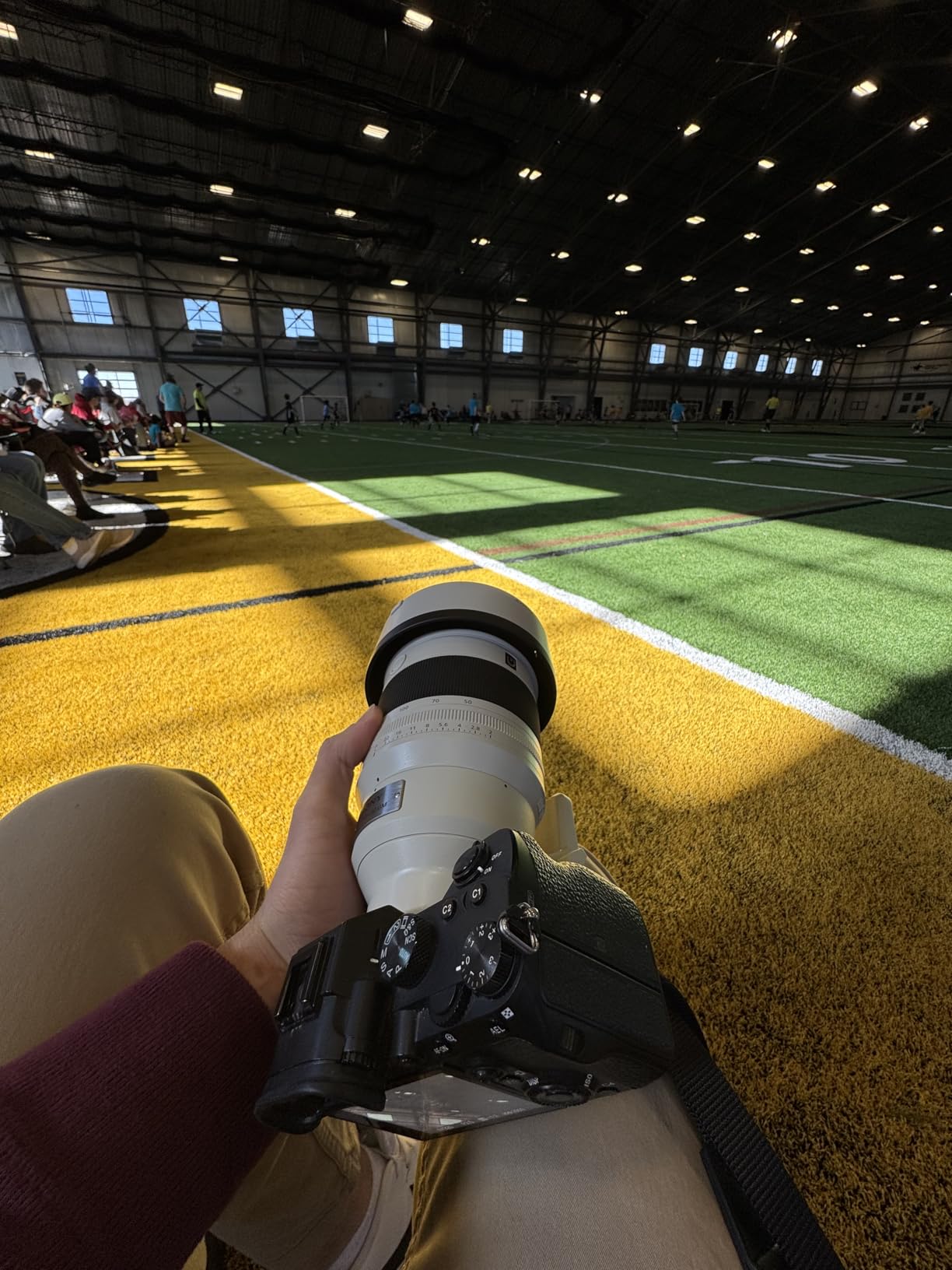
Real users consistently praise the image quality. One wedding photographer mentioned, “I use 50-150 for almost everything now, my 28-70 and 70-200 is on the shelf.” That speaks volumes about the versatility of this lens. The sharpness holds up even wide open at f/2, which is remarkable for a zoom.
The bokeh quality deserves special attention. Users describe it as “exquisite” and “beautiful,” noting that the 11-blade aperture creates smooth, creamy backgrounds that make subjects pop. If you shoot portraits or need subject separation, the f/2 advantage over f/2.8 becomes immediately apparent in your images.
Autofocus performance earns universal praise. The dual XD linear motors deliver fast, silent, and accurate focus for both stills and video. Sports photographers report keeping up with fast action without hunting. The internal zoom design means the lens maintains constant length during zooming, which helps with balance and keeps dust from being pumped into the mechanism.

The elephant in the room is image stabilization. The Sony 50-150mm lacks built-in optical stabilization, relying entirely on your camera body’s IBIS. If you shoot with a Sony Alpha 1, A7R V, or A9 III, you will have excellent in-body stabilization. But for video work or older bodies, this becomes a consideration. Users report that with good technique and modern IBIS, handheld shooting works fine at reasonable shutter speeds.
Another limitation: no teleconverter compatibility. You cannot extend beyond 150mm. If you need reach for wildlife or distant sports, this lens hits a hard wall. The 95mm filter thread also means expensive filters if you use them.
Who is this lens for? Professional Sony shooters who need maximum light gathering and background separation. Wedding photographers, portrait specialists, and indoor sports photographers will extract the most value from that f/2 aperture. If you currently own 50mm, 85mm, and 135mm primes, this lens could potentially replace all three.
Canon RF 70-200mm f/2.8L IS USM
Pros
- Exceptional sharpness across focal range
- Compact when collapsed
- 5-stop image stabilization
- Fast silent Dual Nano USM autofocus
- Beautiful bokeh and color science
- Versatile for multiple genres
- Lens hood with filter window
- Proven reliability with 528 reviews
Cons
- Extending zoom design
- Heavy for all-day use
- Control ring tight for video
- Expensive investment
- Less light than f/2 lenses
The Canon RF 70-200mm f/2.8L IS USM has earned its reputation as one of the finest lenses in the RF mount system. With 528 reviews and a 4.8-star rating, this lens has been battle-tested by professionals worldwide since its release in 2019.
What struck me most about user feedback is how many photographers call this their “go-to lens.” One user put it simply: “This is the lens that stays on my camera.” That kind of loyalty comes from consistent performance across diverse shooting situations.
The optical image stabilization delivers up to 5 stops of shake correction. This matters enormously for handheld work. Unlike the Sony, you get stabilization regardless of which Canon body you use. For video shooters or photographers working in low light without a tripod, this built-in IS can save shots that would otherwise be ruined by camera shake.

Sharpness is exceptional across the entire focal range. Users consistently report edge-to-edge sharpness even wide open at f/2.8. The optical formula includes fluorite and UD elements that control chromatic aberration and deliver the color accuracy Canon is known for. Professional portrait and wedding photographers praise the color rendering and skin tones.
The Dual Nano USM autofocus system provides both speed and silence. Fast enough for sports photography, quiet enough for video work. Users report instant lock-on with minimal hunting, even in challenging light. The autofocus motors also enable smooth focus pulls during video recording.
At 2.64 pounds, the Canon is actually lighter than the Sony. But the extending zoom design means the lens grows significantly when zoomed to 200mm. When collapsed at 70mm, it is remarkably compact for a professional telephoto zoom. This makes it easier to pack and carry, though the internal zoom design of the Sony offers better dust resistance during use.

The 70-200mm focal range has been the professional standard for decades for good reason. You get enough reach for sports and wildlife, enough wide angle for events and portraits, and everything in between. If you need to reach 200mm for your work, the Canon gives you that extra 50mm over the Sony.
Build quality lives up to Canon L-series standards. Weather sealing protects against dust and moisture. The lens mount is metal. The included lens hood features a handy filter adjustment window that lets you rotate circular polarizers without removing the hood. These are professional-grade features that working photographers appreciate.
Who is this lens for? Canon RF system users who want a versatile, proven professional telephoto zoom. Sports photographers needing 200mm reach. Video shooters requiring built-in stabilization. And anyone who wants exceptional optical quality at a price point that, while still premium, undercuts the Sony by a significant margin.
Sony FE 50-150mm f2 GM vs Canon RF 70-200mm f2.8L IS USM: Head-to-Head Comparison
Aperture and Light Gathering
This is where the Sony absolutely dominates. The f/2 aperture lets in exactly twice as much light as f/2.8. In practical terms, that means you can shoot at ISO 3200 instead of ISO 6400, or use a shutter speed twice as fast. For low light work, this is transformative.
The Canon’s f/2.8 aperture is still considered “fast” for a zoom lens and has been the professional standard for decades. But there is no getting around the physics: f/2 gathers more light than f/2.8.
Winner: Sony FE 50-150mm f/2 GM
Image Stabilization
The Canon RF 70-200mm includes built-in optical image stabilization rated for up to 5 stops of correction. This works with any Canon RF body and provides consistent stabilization for both stills and video. You can handhold at slower shutter speeds with confidence.
The Sony 50-150mm has no built-in stabilization whatsoever. It relies entirely on your camera body’s IBIS. Sony’s latest bodies have excellent in-body stabilization, but older models offer less effective stabilization. For video work especially, this is a significant consideration.
Winner: Canon RF 70-200mm f/2.8L IS USM
Size, Weight and Portability
The Sony weighs 2.95 pounds and measures 7.88 x 4.13 x 4.13 inches. The internal zoom design means it maintains constant length during use, but the overall size is substantial. It takes up significant space in a camera bag.
The Canon weighs 2.64 pounds, making it about 5 ounces lighter. When collapsed, it measures just 3.5 x 3.5 x 5.7 inches, significantly more compact than the Sony. However, when extended to 200mm, it grows longer than the Sony at its longest setting.
For travel and packing, the Canon wins. For balance during shooting, the Sony’s internal zoom and constant length provide better handling.
Winner: Tie (depends on your priority)
Build Quality and Weather Sealing
Both lenses feature professional-grade build quality with weather sealing against dust and moisture. Both have metal lens mounts. Both feel substantial and built to last.
The Sony’s internal zoom design offers an advantage for dust resistance since nothing extends or retracts to pump air and particles. The Canon’s extending design is more vulnerable during zooming but still well-sealed overall.
Winner: Slight edge to Sony for internal zoom design
Autofocus Performance
Both lenses deliver fast, accurate, and silent autofocus suitable for professional work. Sony uses dual XD linear motors. Canon uses Dual Nano USM. Both systems track moving subjects well and work for video.
User feedback suggests both systems are excellent with no clear winner. Neither lens has significant autofocus complaints from professional users.
Winner: Tie
Optical Quality and Sharpness
Both lenses deliver exceptional optical quality that lives up to their professional price tags. The Sony maintains excellent sharpness even wide open at f/2, which is remarkable. The Canon is known for edge-to-edge sharpness across the entire zoom range at f/2.8.
Real users praise both lenses for sharpness. The Sony has the unique ability to shoot wide open at f/2 and still deliver tack-sharp results. The Canon matches this at f/2.8 but cannot match the wider aperture.
Winner: Tie with slight edge to Sony for f/2 sharpness
Price and Value Analysis
The Sony FE 50-150mm f/2 GM sells for approximately $3,998. The Canon RF 70-200mm f/2.8L IS USM sells for approximately $2,799. That is a $1,199 difference, or about 43% more for the Sony.
What do you get for that extra money? The f/2 aperture, internal zoom design, and the ability to potentially replace multiple prime lenses. Is it worth it? For working professionals who need every advantage in low light, absolutely. For most photographers, the Canon offers better value.
Winner: Canon RF 70-200mm f/2.8L IS USM for value
Frequently Asked Questions
Is Sony 50-150 f2 a replacement for 70-200 f2.8?
The Sony 50-150mm f/2 can replace a 70-200mm f/2.8 for many photographers, but not all. It offers a wider aperture and wider focal range at the short end, but loses the 150-200mm reach. Wedding and portrait photographers often find the 50-150mm more useful, while sports and wildlife photographers typically need the 200mm reach.
Does Sony 50-150mm have built-in stabilization?
No, the Sony FE 50-150mm f/2 GM does not have built-in optical image stabilization. It relies entirely on your camera body’s in-body image stabilization (IBIS). Modern Sony bodies like the A1, A7R V, and A9 III have excellent IBIS that works well with this lens.
Which lens is better for low light photography?
The Sony FE 50-150mm f/2 GM is better for low light photography due to its f/2 aperture, which lets in twice as much light as the Canon’s f/2.8. This allows you to use lower ISO settings or faster shutter speeds in dim conditions. However, the Canon’s built-in stabilization can help in static low-light situations.
What is the weight difference between these lenses?
The Sony FE 50-150mm f/2 GM weighs 2.95 pounds (1340g), while the Canon RF 70-200mm f/2.8L IS USM weighs 2.64 pounds (1198g). The Canon is approximately 5 ounces (142g) lighter than the Sony.
Which lens has better bokeh?
The Sony FE 50-150mm f/2 GM generally produces better bokeh due to its wider f/2 aperture and 11-blade design. Users consistently praise its beautiful background blur and subject separation. The Canon also produces pleasing bokeh at f/2.8, but cannot match the background blur of the wider Sony aperture.
Can you use teleconverters with these lenses?
The Canon RF 70-200mm f/2.8L IS USM is compatible with Canon RF teleconverters (1.4x and 2x), extending your reach to 280mm or 400mm. The Sony FE 50-150mm f/2 GM is not compatible with any teleconverters, so 150mm is your maximum focal length.
Verdict: Which Lens Should You Buy in 2026?
After comparing the Sony FE 50-150mm f2 GM vs Canon RF 70-200mm f2.8L IS USM in detail, the right choice depends on your specific needs and camera system.
Buy the Sony FE 50-150mm f/2 GM if:
You shoot with a Sony body with excellent IBIS (A1, A7R V, A9 III). You need maximum light gathering for low light work. You prioritize subject separation and bokeh quality. You want to potentially replace 50mm, 85mm, and 135mm primes with one lens. Budget is not your primary concern.
Buy the Canon RF 70-200mm f/2.8L IS USM if:
You shoot with Canon RF mount cameras. You need the 200mm reach for sports or wildlife. You want built-in image stabilization for video work. You prefer a more compact lens when packed. You want proven professional performance at a lower price point.
For most photographers, the Canon RF 70-200mm f/2.8L IS USM represents the better overall value. It delivers exceptional optical quality, built-in stabilization, and the versatile 70-200mm focal range at a significantly lower price. But for Sony shooters who need that extra stop of light, the Sony FE 50-150mm f/2 GM offers something no other zoom lens can match.