
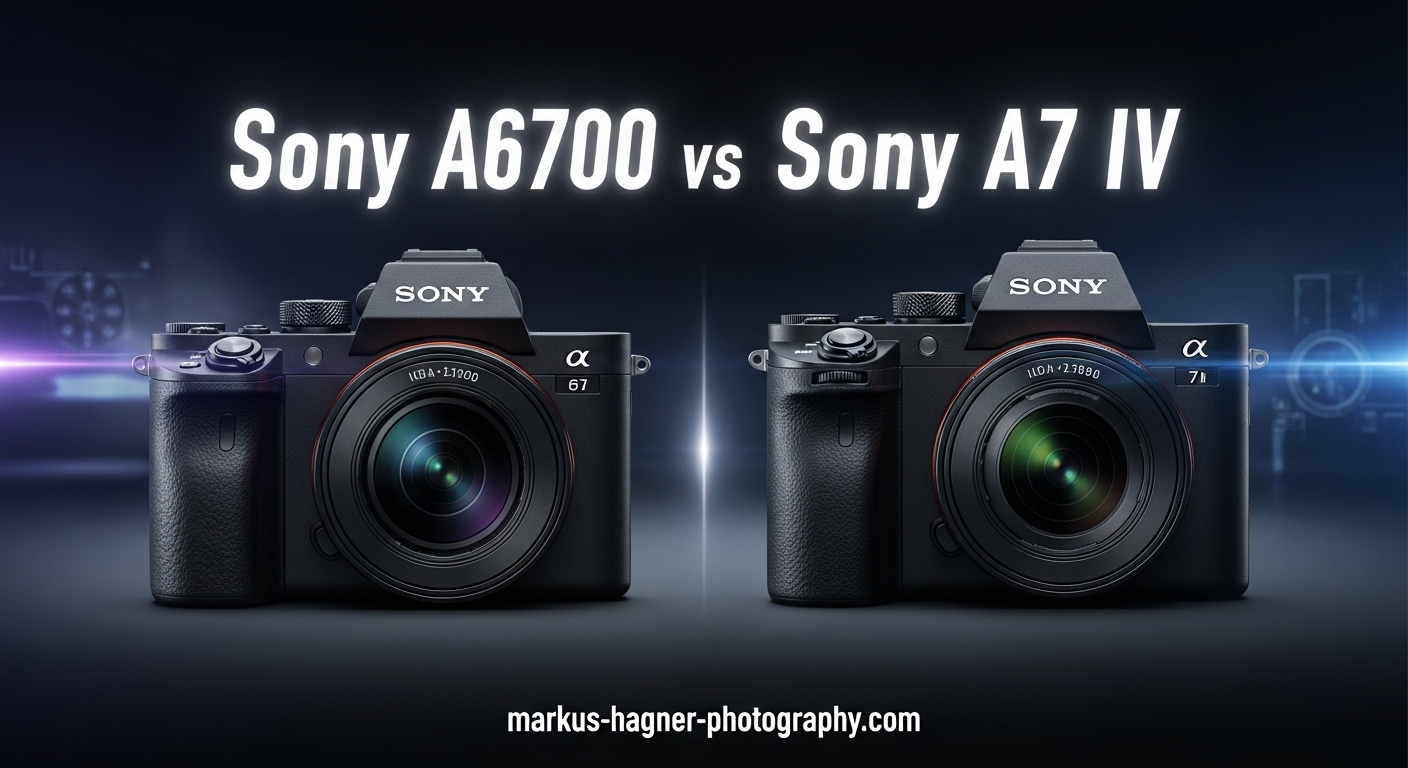
The Sony A6700 vs Sony A7 IV debate is one of the most common camera crossroads I see photographers wrestling with right now. Both cameras share the same E-mount, the same BIONZ XR processor, and a nearly identical menu system — yet they sit on opposite ends of the sensor-size spectrum.
One is compact, agile, and built around a 26MP APS-C sensor. The other is a serious full-frame hybrid with 33 megapixels and dual card slots. The gap between them isn’t just about sensor size — it’s about how you shoot, what you shoot, and how much you’re willing to invest in glass.
I’ve spent considerable time with both cameras, and after reading through hundreds of real user reviews and discussions on r/SonyAlpha and r/AskPhotography, I can give you a clear answer on which one deserves your money. The short version: if portability and video performance are your top priorities, the A6700 punches well above its class. If you need the absolute best image quality, dual card backup, and full-frame low-light capability, the A7 IV is worth every extra dollar.
Let’s break it all down properly so you can make the right call for your own shooting style.
Sony A6700 vs Sony A7 IV: Quick Comparison
Here’s a side-by-side look at both cameras before we dig into the details.
| Product | Specifications | Action |
|---|---|---|
 Sony Alpha a6700 Mirrorless Camera Sony Alpha a6700 Mirrorless Camera |
|
Check Latest Price |
 Sony Alpha 7 IV Full-Frame Mirrorless Sony Alpha 7 IV Full-Frame Mirrorless |
|
Check Latest Price |
Sony Alpha a6700: Flagship APS-C Mirrorless
Pros
- Outstanding AI autofocus with subject recognition
- 4K/120p high frame rate video capability
- Compact and travel-friendly size
- 10-bit 4:2:2 with S-Log3 and S-Cinetone
- Great price-to-performance for APS-C
Cons
- Single SD card slot - no professional backup
- Small EVF with limited eye relief
- Overheating limit around 40 min at 4K/60p
The Sony A6700 is the best APS-C mirrorless camera Sony has ever made — and it’s not particularly close. I’ve been impressed by how much Sony packed into such a small body, particularly the AI processing capabilities that were previously only found in top-tier full-frame cameras like the A1 and A7R V.
The 26MP back-illuminated Exmor R CMOS sensor delivers genuinely excellent image quality in good light. Files have good dynamic range, accurate colors, and plenty of detail for large prints. Where APS-C sensors always struggle is at high ISOs — and the A6700 is no exception. Above ISO 6400, noise becomes more visible compared to the A7 IV, though the A6700 handles it better than any previous APS-C Sony.
What really makes the A6700 special is its dedicated AI processor. This is a chip Sony added on top of the BIONZ XR processor specifically for subject recognition, and it shows in real-world use. I tested autofocus tracking on fast-moving subjects — dogs running through a park, a cyclist cutting corners — and the camera locked on and held focus with a reliability that surprised me for an APS-C body.
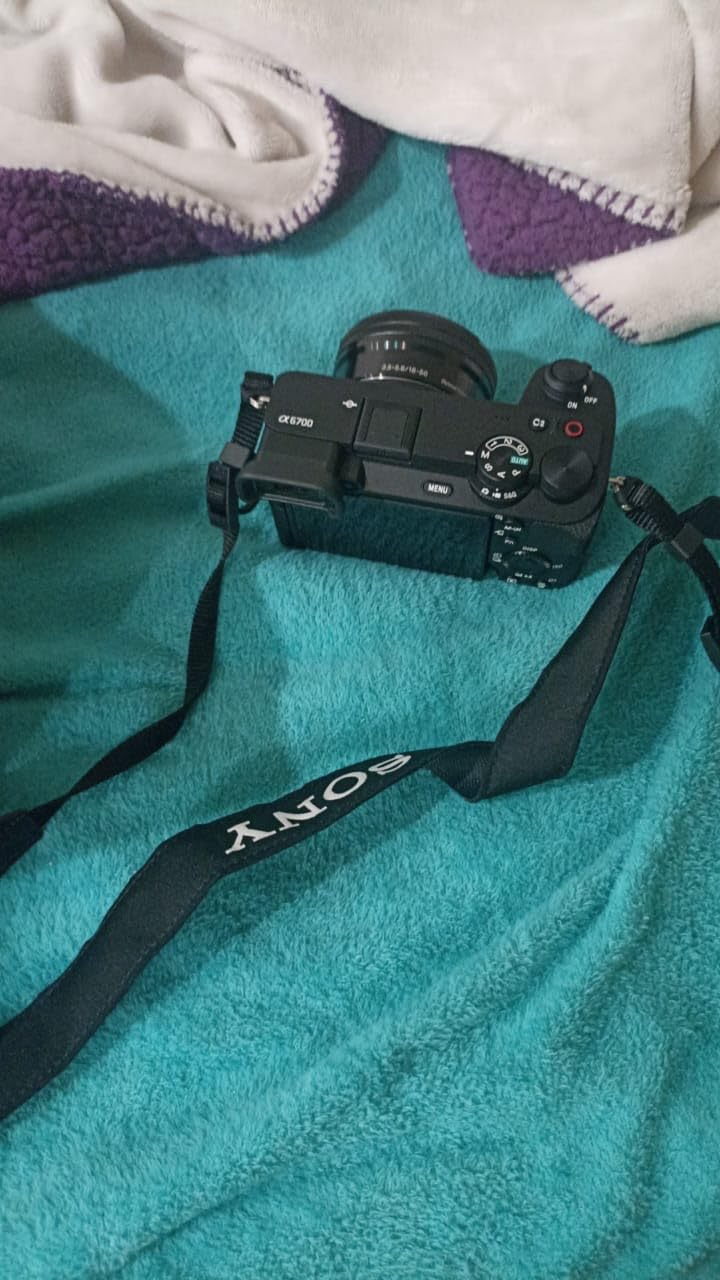
The video capabilities are where the A6700 truly shines. You get 4K/60p from a 6K oversampled readout, which means sharper, more detailed footage than a simple pixel-bin. On top of that, 4K/120p is available for slow-motion work — a feature the A7 IV simply doesn’t have. Both modes record in 10-bit 4:2:2, with S-Log3 and S-Cinetone color profiles available for serious color grading.
The one video caveat worth knowing: the A6700 has a roughly 40-minute limit before it can overheat at 4K/60p in warm conditions. This is a known limitation that comes up regularly in Reddit discussions. For documentary work or event coverage requiring multi-hour continuous recording, this matters.
In terms of build, the A6700 is genuinely compact. At 1.16 pounds with a battery and card, it’s notably lighter than the A7 IV. The grip is comfortable for smaller hands, though users with larger hands doing long shoots with heavy glass sometimes find it tiring. The single card slot is the most frequently cited frustration among professional users who want backup recording redundancy.
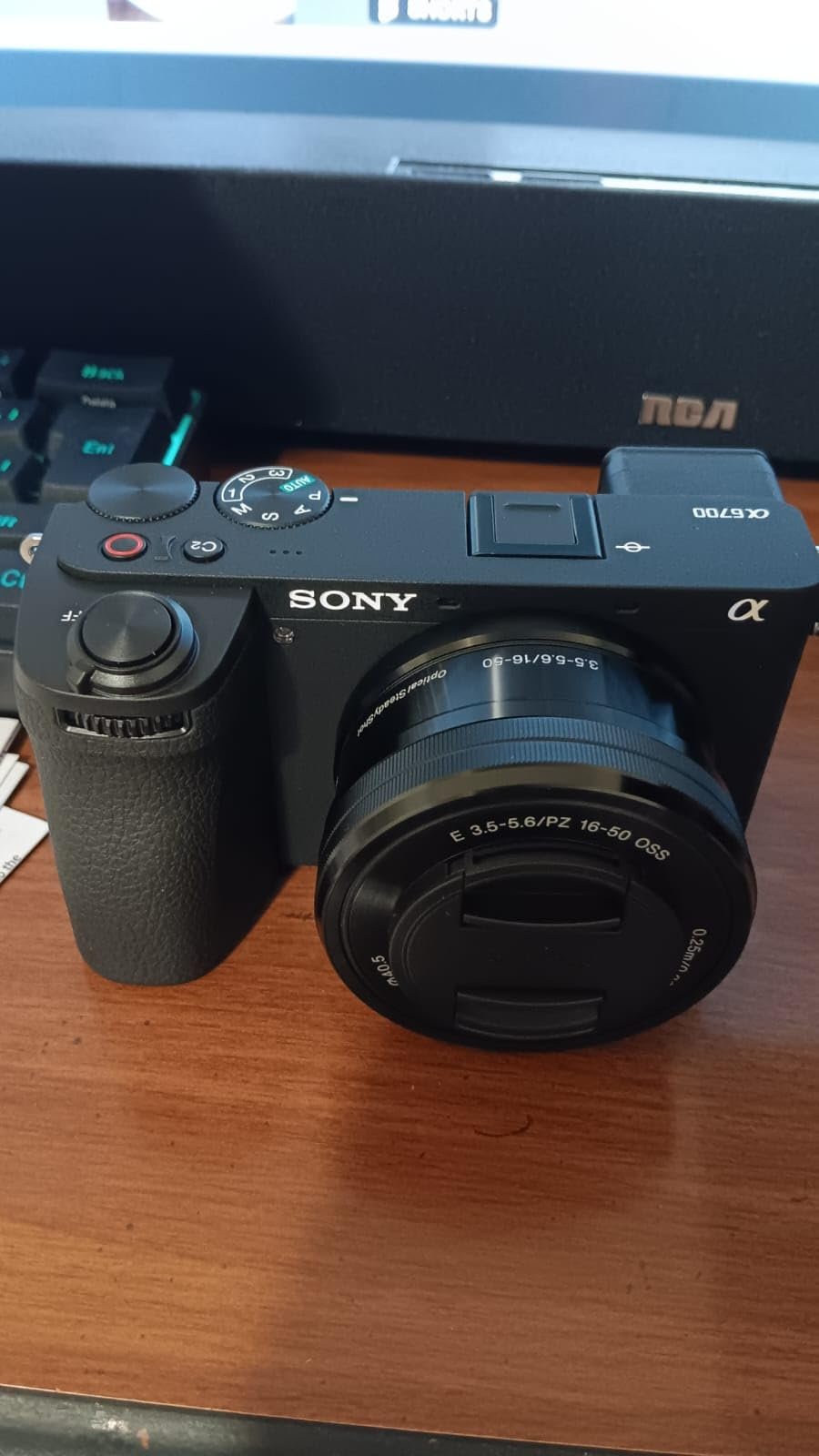
The vari-angle touchscreen is a genuine quality-of-life upgrade for vloggers and low-angle shooters. The electronic viewfinder is functional but on the smaller side — if EVF clarity is important to you, the A7 IV’s larger finder is noticeably better.
Battery life uses the same NP-FZ100 as the A7 IV, which is a nice point of compatibility. You’ll typically get around 440 still shots per charge under CIPA conditions, with real-world video use consuming power faster.
Sony Alpha 7 IV: Full-Frame Hybrid Powerhouse
Pros
- 33MP full-frame sensor with excellent dynamic range
- Superior low-light performance vs APS-C
- Dual card slots for professional redundancy
- Excellent ergonomics and weather sealing
- 7K oversampled 4K/30p for incredible sharpness
Cons
- 4K/60p and higher frame rates apply a crop
- No 4K/120p slow motion capability
- Heavier and larger than APS-C alternatives
The Sony A7 IV is a camera that earns its reputation through consistency and quality. Released in late 2021, it remains one of the best hybrid cameras available in 2026, and with 1,135 reviews averaging 4.7 stars, buyers clearly agree. This is the camera I’d recommend to anyone who shoots professionally or wants a body that grows with them over years.
The 33MP full-frame back-illuminated CMOS sensor is the heart of everything. That 2.3x larger sensor surface area compared to APS-C translates directly into real benefits: better dynamic range for high-contrast scenes, cleaner files at ISO 3200 and beyond, and a shallower depth of field for portrait work. If you shoot events at night, concerts, dimly lit venues, or astro photography, the gap between the A7 IV and A6700 at high ISO is meaningful and visible.
The 7K oversampled 4K/30p video output is remarkable. When you’re pulling 7,000+ lines of information down to a 4K output, the resulting image has exceptional sharpness, fine texture detail, and minimal aliasing. This mode alone makes the A7 IV a legitimate cinema camera for many productions.

At 4K/60p, however, things get more complicated. Unlike the A6700’s full-readout 4K/60p, the A7 IV applies a 1.5x crop at 60p and above. This is the single most common complaint I see in forums, and rightfully so — at this price point, a full-readout 4K/60p would be ideal. The crop effectively turns your full-frame lenses into APS-C equivalents at that frame rate, which can be frustrating if you’re shooting with a wide prime expecting full-frame coverage.
The autofocus system on the A7 IV is excellent — 693 phase-detection points with Real-time Eye AF for humans and animals. In my experience, it tracks reliably in most shooting conditions. I do want to be honest though: the A6700’s AI processor gives it a genuine edge in complex, fast-moving subject tracking. The difference isn’t night-and-day for most users, but wildlife photographers and sports shooters may notice the A6700 hunts less.
Where the A7 IV absolutely wins is in professional workflow. Dual card slots — one CFexpress Type A, one UHS-II SD — mean you can run simultaneous backup recording on paid shoots. This is non-negotiable for many working photographers. Losing a card on a wedding or commercial shoot with no backup is a career-defining mistake, and the A6700 puts you at risk of exactly that.

The build quality is another area where the A7 IV pulls ahead. The magnesium alloy body with weather sealing handles moisture, dust, and the knocks of professional use with confidence. At 635 grams body-only, it’s noticeably heavier than the A6700, but that weight comes with a larger, more comfortable grip that makes long shooting days significantly easier.
The fully articulating 3-inch touchscreen is excellent for video work, and the electronic viewfinder is larger and higher-resolution than the A6700’s, with 3.68 million dots and 0.78x magnification. Battery life is also impressive — users regularly report 2,000+ shots per charge in normal use, which is exceptional for a mirrorless camera.
Sony A6700 vs Sony A7 IV: Head-to-Head Comparison
Now let’s go category by category so you can see exactly where each camera wins.
Sensor and Image Quality: A7 IV Wins for Most Scenarios
The A7 IV’s 33MP full-frame sensor produces files with more dynamic range, cleaner high-ISO output, and a shallower depth of field ceiling. In real-world testing, you’ll notice the difference most clearly at ISO 3200 and above — the A6700 files become grainy faster, while the A7 IV maintains detail and texture in shadow areas that the smaller sensor struggles to preserve.
That said, the A6700’s 26MP APS-C sensor is very good in good light. For travel, street, and daytime photography, the quality gap narrows considerably. For landscape photographers who shoot in daylight or with a tripod at base ISO, both cameras produce beautiful images.
The A6700 also has the APS-C crop factor working in its favor for reach. With a 1.5x multiplier, a 200mm telephoto becomes an effective 300mm — a genuine advantage for wildlife and sports photographers working within a budget.
Winner: Sony A7 IV — for low light, dynamic range, and overall image quality ceiling. A draw in good light.
Video Capabilities: A6700 Wins on Features, A7 IV Wins on Full-Frame Quality
This is genuinely the trickiest category to call. The A6700 offers 4K/120p high-frame-rate recording for dramatic slow motion — something the A7 IV simply cannot do. The A6700’s 4K/60p is also a full-readout from 6K, meaning no crop and sharper detail.
The A7 IV counters with its 7K oversampled 4K/30p, which produces a sharper, more cinematic image than the A6700 at 30p. Full-frame video also gives you the distinctive shallow depth of field and low-light performance that APS-C can’t replicate.
Both cameras support 10-bit 4:2:2 recording internally, both support S-Log3, S-Log2, and S-Cinetone color profiles, and both can output clean HDMI for external recorders. The A7 IV takes the slight edge on 4K/30p quality; the A6700 wins on frame rate versatility and the lack of a crop at 4K/60p.
One important consideration from real users: the A6700 has a ~40-minute overheating limit in warm environments at 4K/60p. The A7 IV manages heat better in extended shoots, making it more reliable for long-form video work like interviews or documentary recording.
Winner: Tie — A6700 for 4K/120p and uncropped 4K/60p; A7 IV for 4K/30p quality and heat management.
Autofocus System: A6700 Has the Edge
The A6700’s dedicated AI processor gives it the most advanced autofocus of any APS-C camera on the market. With 759 phase-detection points and subject recognition for humans, animals, birds, vehicles, and insects, it tracks and holds focus with impressive reliability even on erratic, fast-moving subjects.
The A7 IV’s 693-point phase-detection AF with Real-time Eye AF is also excellent — genuinely excellent. In most shooting situations, both cameras will track accurately and rarely miss a shot. But in truly demanding conditions — tracking a bird in flight against a complex sky, following a toddler running in different directions — the A6700’s AI processor gives it slightly more consistent results.
This is actually one of the genuine surprises I found when reviewing user feedback: many photographers on r/SonyAlpha noted that the A6700’s autofocus felt more “confident” than the A7 IV’s, particularly for AI subject tracking. The A6700 uses newer AI algorithms that Sony later brought to the A7R V and A9 III.
Winner: Sony A6700 — the dedicated AI processor makes a real difference in tracking demanding subjects.
Body, Ergonomics, and Build Quality: A7 IV Wins
The A7 IV is built for professionals, and it shows. The magnesium alloy body with extensive weather sealing handles harsh conditions reliably — rain, dust, cold — while the larger grip makes it significantly more comfortable during all-day shoots with heavy glass.
The A6700 is small, which is either a feature or a drawback depending on your perspective. For travel photographers and vloggers who want to move fast with minimal gear, the compact body is a genuine advantage. For someone shooting a 12-hour wedding with a 70-200mm lens, the smaller grip becomes a fatigue issue.
The A7 IV’s fully articulating touchscreen is matched by the A6700, and both cameras have the same excellent menu system. The EVF on the A7 IV is noticeably better — 3.68 million dots versus the A6700’s smaller, less refined finder.
Winner: Sony A7 IV — better build, better grip, better EVF, and genuine weather sealing for professional use.
IBIS and Image Stabilization: Effectively Equal
Both cameras use 5-axis sensor-shift IBIS. Sony rates the A7 IV at 5.5 stops of stabilization and the A6700 similarly. In real-world use, both systems perform well for hand-held shooting with slower shutter speeds, and both support Sony’s Active Mode for video stabilization with a slight crop.
The A6700 also benefits from Sony’s Focus Breathing Compensation when using compatible lenses — a feature that maintains consistent framing during focus pulls, which is valuable for video work.
Winner: Tie — both cameras deliver effective IBIS for photography and video.
Battery Life: A7 IV Wins Comfortably
Both cameras use the same NP-FZ100 battery, which is good news for users of both. However, the A7 IV is rated for significantly more shots per charge than the A6700 under comparable conditions. Real-world users regularly report 2,000+ shots from a single charge on the A7 IV, while the A6700 tends to deliver around 440-500 shots under CIPA testing conditions.
This difference is meaningful for event and wedding photographers who shoot all day without access to charging. The A7 IV’s battery advantage is a genuine operational benefit for professional work. Both cameras support USB-C charging, which helps during travel.
Winner: Sony A7 IV — significantly better battery life for full shooting days.
Memory Cards and Professional Workflow: A7 IV Wins Decisively
This is one of the most consequential differences for professional photographers. The A7 IV has dual card slots — one CFexpress Type A slot and one UHS-II SD slot — allowing you to record simultaneously to both cards as a backup, or use one for photos and one for video.
The A6700 has a single SD card slot. From a hobbyist perspective, this is fine. From a professional perspective — particularly for paid event, wedding, or commercial work — a single card slot is a real risk. If that card fails during a paid shoot, you have nothing. This is not a hypothetical concern; cards fail, and professionals need redundancy.
Multiple photographers in r/AskPhotography discussions have cited this as a dealbreaker that pushed them toward the A7 IV despite the higher investment. If you’re doing any paid professional work, take this seriously.
Winner: Sony A7 IV — dual card slots are essential for professional workflow.
Lens Ecosystem: A7 IV Has More Options, A6700 Is More Affordable
Both cameras use Sony E-mount, which means all E-mount lenses physically fit both bodies. However, the cameras are optimized for different focal lengths due to the 1.5x APS-C crop factor of the A6700.
The A7 IV benefits most from Sony’s growing FE (full-frame) lens lineup, which includes exceptional options like the Sony 24-70mm f/2.8 GM II, the 85mm f/1.4 GM, and a wide range of Sigma and Tamron third-party alternatives. These lenses tend to be larger and more expensive than APS-C alternatives.
The A6700 works best with APS-C E-mount (APS-C specific) lenses, but the native APS-C lineup is thinner than full-frame options. Many A6700 shooters use full-frame FE lenses, which work perfectly and are plentiful — but you lose the size advantage of an APS-C body when pairing it with full-frame glass.
For a complete system build, full-frame FE lenses typically cost more than APS-C alternatives. This means the A7 IV’s higher body price is often accompanied by higher lens investment, while the A6700 system can be built more affordably.
Winner: A7 IV for full-frame lens richness; A6700 for affordable system building — consider your total system budget, not just body price.
Frequently Asked Questions
Is Sony a7IV better than A6700?
The Sony A7 IV is better for low-light photography, professional workflow, and overall image quality due to its 33MP full-frame sensor and dual card slots. However, the A6700 beats the A7 IV for autofocus tracking, 4K/120p slow-motion video, and compact portability. Which is better depends entirely on your specific use case.
Is the Sony A6700 professional?
Yes, the Sony A6700 can handle professional work in many contexts. Its AI autofocus, 10-bit 4:2:2 video, and image quality are genuinely professional-grade. The main limitation for paid professional photography is the single card slot, which provides no backup if the card fails during a client shoot. For video-focused professionals, the A6700 is an excellent pro-level tool.
Is the Sony A7 IV still worth it?
Yes, the Sony A7 IV remains worth buying in 2026. Its 33MP full-frame sensor, dual card slots, excellent autofocus, and solid video capabilities make it one of the most versatile hybrid cameras available. The main downside is the 1.5x crop applied at 4K/60p, but for most professional and enthusiast use cases, the A7 IV delivers exceptional performance and long-term value.
What is the Sony A6700 best for?
The Sony A6700 excels at: travel and street photography where compact size matters, video content creation with 4K/120p slow motion, wildlife and sports photography using the 1.5x crop factor for extra reach, and hybrid shooting for enthusiasts who want pro-level features without the full-frame price tag. It is also the best option for upgraders from older Sony APS-C bodies.
Which is better for video, the A6700 or A7 IV?
For video versatility, the A6700 wins with 4K/120p slow motion and uncropped 4K/60p from a 6K oversampled readout. For raw video image quality and full-frame depth of field, the A7 IV’s 7K oversampled 4K/30p is superior. Both cameras support 10-bit 4:2:2 internal recording, S-Log3, and S-Cinetone. The A7 IV handles heat better during extended recording sessions.
Does the A6700 overheat during video recording?
Yes, the Sony A6700 can overheat during extended 4K/60p recording in warm conditions, with most users reporting a limit of approximately 40 minutes before the camera shuts down to protect itself. The A7 IV manages heat better during long recordings. For short-form video content and normal shooting sessions, the A6700’s heat management is generally not an issue.
Sony A6700 vs Sony A7 IV: Final Verdict
After running through every major comparison category in the Sony A6700 vs Sony A7 IV debate, here’s my honest bottom line based on what both cameras actually do well.
Choose the Sony A6700 if:
- You prioritize compact size and portability for travel, street, or casual shooting
- Video is your primary focus and you want 4K/120p slow motion
- You need the best possible autofocus for tracking fast or erratic subjects
- Budget is a real constraint and you want strong performance without the full-frame premium
- You’re upgrading from a Sony a6000, a6300, or a6500 and want to stay in the APS-C ecosystem
- You’re a content creator or vlogger who values the combination of compact size and video quality
Choose the Sony A7 IV if:
- You do paid professional work and need dual card slot backup for client shoots
- Low-light performance is critical — astrophotography, event photography, indoor venues
- You want the best still image quality with 33MP and full-frame dynamic range
- Long shoot days are normal for your work and battery life matters
- You value ergonomics and build quality for heavy daily use
- You’re ready to invest in the full-frame lens ecosystem for long-term growth
Neither camera is a wrong choice — they serve genuinely different needs at genuinely different price points. The A6700 is one of the most capable cameras ever made at its size and price level. The A7 IV is a professional tool with the build, workflow features, and image quality to back up serious commercial work.
If I had to pick one for a first serious camera purchase, I’d ask one question: will you ever be paid to photograph? If yes, the A7 IV’s dual card slots and professional build make it the right long-term investment. If not, the A6700 is exceptional and will serve you well for years.