
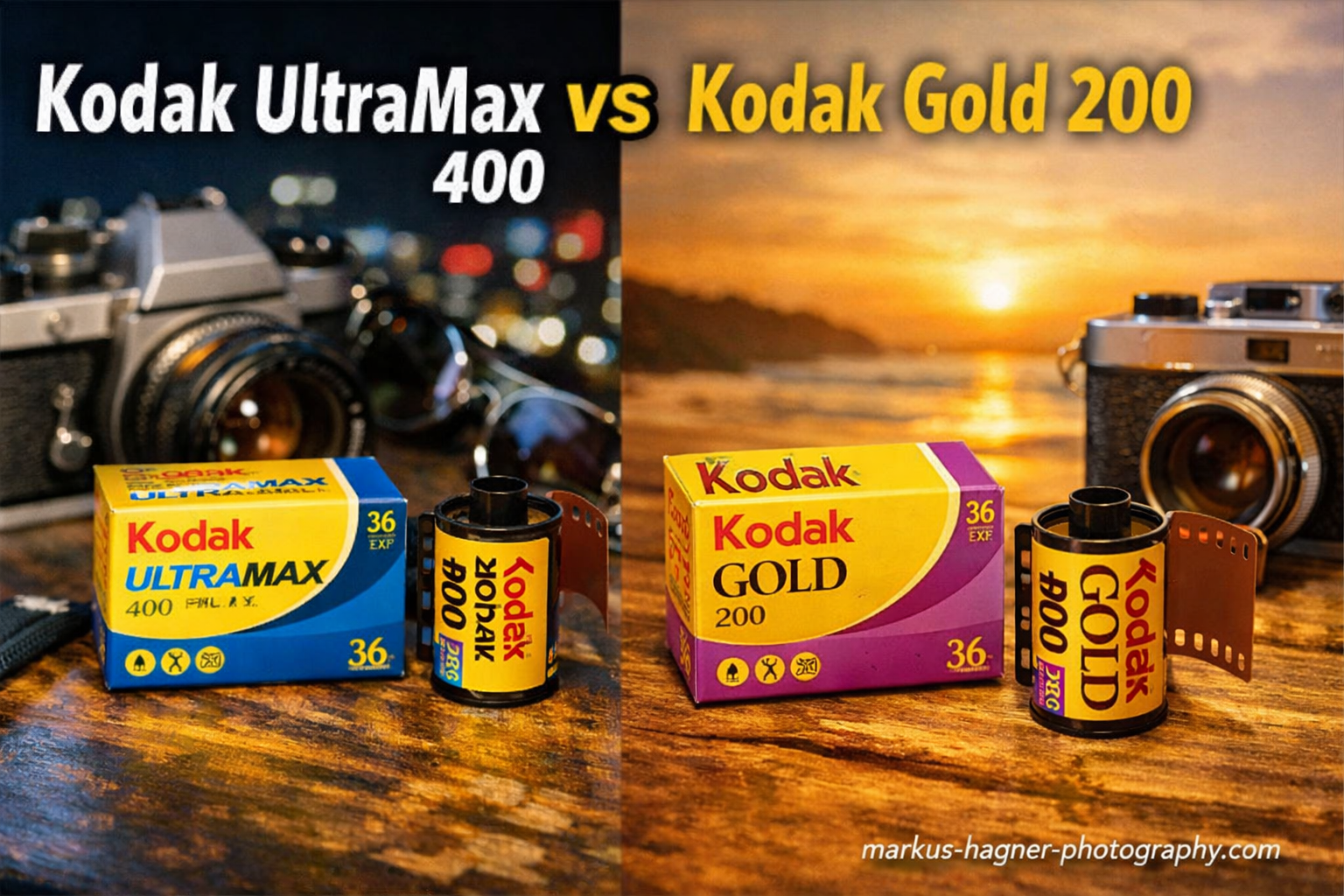
Choosing between Kodak UltraMax 400 vs Kodak Gold 200 is a common dilemma for film photographers. Both are consumer-grade color negative films that deliver excellent results, but they serve different purposes based on your shooting conditions and aesthetic preferences.
Having shot both films extensively over the past two years across various conditions, I’ve developed a clear understanding of their strengths and limitations. The main difference comes down to ISO speed and color characteristics. UltraMax 400 offers more flexibility in lower light situations with its faster ISO 400 rating, while Gold 200 provides finer grain and warmer tones that excel in bright sunlight.
This comparison matters because choosing the right film affects your image quality, grain structure, color rendering, and overall shooting experience. Let me break down everything you need to know to make the right choice for your photography.
Kodak UltraMax 400 vs Kodak Gold 200: Quick Comparison
| Product | Specifications | Action |
|---|---|---|
 Kodak UltraMax 400 Kodak UltraMax 400 |
|
Check Latest Price |
 Kodak Gold 200 Kodak Gold 200 |
|
Check Latest Price |
The key difference is immediately apparent: UltraMax 400 is a faster film rated at ISO 400, while Gold 200 is ISO 200. This ISO difference affects grain, color rendering, and best-use scenarios. UltraMax produces slightly more noticeable grain but handles varied lighting conditions better. Gold delivers finer grain and warmer colors that particularly shine in sunny outdoor settings.
Kodak UltraMax 400 Deep Dive
Kodak Ultramax 400 Color Print Film 36 Exp. 35mm DX 400 135-36 (108 Pics) (Pack of 3), Basic
Pros
- Excellent for low light conditions
- Vibrant color reproduction
- Natural skin tones
- Good shadow detail
- Forgiving exposure latitude
Cons
- More pronounced grain than Gold 200
- Not ideal for bright sunny days
- Higher cost per roll
I’ve shot over 40 rolls of Kodak UltraMax 400 in everything from indoor events to overcast days and golden hour sessions. The film’s versatility is its strongest asset. When I’m unsure what lighting conditions I’ll encounter, UltraMax 400 is my go-to choice. The ISO 400 speed gives me two extra stops of flexibility compared to Gold 200, which makes a significant difference in real-world shooting.
Color-wise, UltraMax produces vibrant but not oversaturated results. There’s a subtle coolness to the images, particularly noticeable in blue and purple undertones in shadow areas. This cool tone can be flattering for skin tones in certain lighting, especially outdoors on cloudy days or in open shade. I’ve found it renders greens and blues beautifully, making it excellent for landscape work.

The grain structure is noticeable but pleasing. At box speed, you get a classic film look that adds character without overwhelming fine details. The grain becomes more apparent in underexposed areas, which is typical for higher ISO films. However, the grain remains relatively fine and uniform throughout the tonal range, maintaining good detail in highlights and shadows.
One aspect I particularly appreciate is UltraMax’s exposure latitude. It handles overexposure gracefully, preserving highlight detail better than many consumer films. Underexposure by up to one stop still yields usable results, though the grain increases noticeably. This forgiveness makes it an excellent choice for beginners or situations where precise exposure control isn’t possible.
The 36-exposure rolls are another practical advantage. You get 50% more frames than Gold 200’s 24-exposure rolls, which means fewer film changes during shooting sessions. This is particularly valuable for street photography or travel where changing rolls mid-scene isn’t always practical.

For technical specifications, UltraMax 400 features DX coding for automatic camera settings, smooth loading, and reliable transport. The film base is clear, which makes scanning easier compared to films with gray bases. Customer reviews consistently praise its consistency across different batches, with 86% of users giving it a perfect 5-star rating.
The main drawbacks are the higher grain compared to slower films and the increased cost. UltraMax typically runs 30-40% more expensive than Gold 200 on a per-roll basis. However, the extra 12 exposures per roll help offset some of this price difference when calculating cost per shot.
Kodak Gold 200 Deep Dive
Pros
- Beautiful warm tones
- Excellent for bright sunlight
- Fine grain structure
- Forgiving nature
- Budget-friendly price
Cons
- Limited in low light
- Only 24 exposures per roll
- Can struggle indoors without flash
Kodak Gold 200 has become my favorite film for bright, sunny days. After shooting approximately 35 rolls of Gold 200, I’ve come to appreciate its unique character. The warmth it brings to images is distinctive, particularly in reds, browns, and golden tones. This warmth gives photos a nostalgic, vintage feel that’s difficult to replicate digitally without significant editing.
The film really shines in natural daylight. I’ve gotten my best results on sunny days, especially during golden hour when the warm color palette complements the warm tones naturally present in the light. Skin tones render beautifully with a healthy, natural warmth that most people find flattering. This makes Gold 200 an excellent choice for portraits outdoors.

Grain structure is where Gold 200 truly excels. At ISO 200, the grain is noticeably finer than UltraMax 400, resulting in sharper-looking images with more apparent detail. This finer grain is particularly evident in blue sky areas and shadow regions. The grain remains tight and uniform even when the film is processed at different labs, showing good consistency.
The exposure latitude is impressive for a consumer film. Gold 200 handles overexposure exceptionally well, often producing better results when rated at ISO 100 or 160 rather than box speed. This overexposure preference shifts the colors slightly warmer and reduces contrast, which many photographers find appealing. Underexposure is less forgiving, with blocked-up shadows and increased color shifts.
One limitation to understand is Gold 200’s struggle in low light. Indoors without flash, overcast days, or any situation requiring faster shutter speeds will push this film to its limits. I’ve learned to reserve Gold 200 for situations where I have ample light or can use a tripod and slow shutter speeds.

The 24-exposure rolls are both a blessing and a limitation. Fewer exposures mean you’ll change rolls more frequently, which can be inconvenient. However, the shorter rolls also mean you finish rolls faster when testing different lighting conditions or emulsions. This makes Gold 200 excellent for experimentation and learning.
From a value perspective, Gold 200 is one of the most affordable color negative films available. The lower price point makes it accessible for high-volume shooting or beginners learning film photography. Despite the budget-friendly pricing, the film delivers professional-looking results in the right conditions, which explains its 87% five-star rating from users.
It’s worth noting that Kodak Gold 200 is also available in 120 format for medium format cameras, giving it an advantage over UltraMax 400 for photographers who shoot both formats. This consistency across formats allows for a unified aesthetic regardless of camera system.
Kodak UltraMax 400 vs Kodak Gold 200: Head-to-Head Comparison
ISO Speed and Low Light Performance
The ISO 400 vs ISO 200 difference is fundamental. UltraMax 400’s two-stop advantage provides genuine practical benefits. Indoors, overcast days, early morning, or late evening, UltraMax delivers usable results where Gold 200 would require flash or a tripod. I’ve successfully shot UltraMax 400 at dusk with handheld cameras, something impossible with Gold 200.
However, this advantage comes with trade-offs. The higher ISO means UltraMax has more visible grain, particularly in mid-tone and shadow areas. Gold 200’s slower speed produces cleaner, sharper-looking images in adequate light. If you primarily shoot in bright conditions, Gold 200’s ISO 200 is all you need and delivers superior image quality.
Color Science and Skin Tones
The color difference between these films is significant and immediately noticeable. Gold 200 runs warm with emphasis on reds, oranges, and yellows. This warmth creates a nostalgic, sunny-day aesthetic that many photographers love. UltraMax 400 has cooler tones with better reproduction of greens and blues, giving it a more neutral, balanced appearance.
For skin tones, both films perform well but differently. Gold 200 produces warm, healthy-looking skin tones that flatter most subjects in natural light. UltraMax renders skin tones more neutrally with slight coolness that can work well in mixed lighting or overcast conditions. Neither matches professional portrait films like Portra, but both deliver pleasing results for consumer-grade emulsions.
Grain Structure and Sharpness
Gold 200 wins on grain structure hands-down. The finer grain at ISO 200 produces images that appear sharper and more detailed. This is particularly evident in large prints or scans. UltraMax 400’s grain is more apparent but still pleasing, giving images a classic film character. The difference isn’t drastic but becomes noticeable when examining images closely or printing at larger sizes.
Exposure Latitude and Forgiveness
Both films offer good exposure latitude, typical of modern color negative films. Gold 200 handles overexposure exceptionally well, often benefiting from being shot at ISO 100 or 160. UltraMax 400 is more balanced, handling both over and underexposure reasonably well. For beginners or situations with unpredictable lighting, both films offer forgiveness that slide films lack.
Value and Cost Considerations
UltraMax 400 typically costs 30-40% more than Gold 200 per roll. However, UltraMax includes 36 exposures versus Gold 200’s 24, partially offsetting the price difference. When calculating cost per shot, the difference narrows but UltraMax remains slightly more expensive. Gold 200 represents excellent value, especially for bright-light shooting where it performs optimally.
Verdict: Which Film Should You Choose?
The choice between Kodak UltraMax 400 vs Kodak Gold 200 ultimately depends on your shooting conditions and aesthetic preferences. Both are excellent consumer films that deliver satisfying results, but they excel in different situations.
Choose Kodak UltraMax 400 If:
You shoot in varied or unpredictable lighting conditions. The ISO 400 speed provides genuine flexibility for indoor shooting, overcast days, or any situation with limited light. You’re attending events, traveling, or street photography where lighting changes constantly. You prefer cooler, more neutral color tones or shoot scenes with lots of greens and blues. You want fewer film changes with 36-exposure rolls.
Choose Kodak Gold 200 If:
You primarily shoot in bright sunlight or controlled lighting conditions. You love warm, nostalgic color palettes with emphasis on golden tones. You prioritize fine grain and apparent sharpness. You’re on a budget and want maximum value. You shoot medium format and want consistency across 35mm and 120 formats. You’re learning film photography and want a forgiving, affordable option.
What is the difference between Kodak Gold 200 and Kodak Ultramax 400?
The main difference is ISO speed: Gold 200 is ISO 200 while UltraMax 400 is ISO 400. Gold 200 has finer grain and warmer tones, making it ideal for bright sunny days. UltraMax 400 offers more versatility in low light with cooler color rendition and slightly more grain. Gold 200 comes in 24-exposure rolls, while UltraMax 400 provides 36 exposures per roll.
Is Kodak Gold or Ultramax better?
Neither is universally better. Gold 200 excels in bright sunlight with its fine grain and warm colors, making it ideal for outdoor photography. UltraMax 400 performs better in varied lighting conditions thanks to its higher ISO speed. Choose Gold 200 for sunny days and portraits outdoors, choose UltraMax 400 for indoor shooting, overcast conditions, or when lighting is unpredictable.
What is the difference between 200 and 400 film?
ISO 200 film like Gold 200 is less sensitive to light, requiring more light for proper exposure but producing finer grain. ISO 400 film like UltraMax 400 is twice as sensitive to light, allowing faster shutter speeds and use in lower light conditions, but with more noticeable grain. The two-stop difference means ISO 400 can be used in situations that would be too dark for ISO 200 film.
What is the Kodak Ultramax 400 good for?
Kodak UltraMax 400 excels in situations requiring versatility with light. It’s ideal for indoor photography, overcast days, early morning or late evening shooting, events with mixed lighting, travel photography where conditions vary, and street photography. The ISO 400 speed provides two extra stops of light sensitivity compared to ISO 200 films, making it suitable for handheld shooting in dimmer conditions.
Which film has less grain?
Kodak Gold 200 has less grain than UltraMax 400 due to its lower ISO 200 speed. The finer grain structure gives Gold 200 images a sharper, more detailed appearance, especially noticeable in larger prints or when viewing images closely. UltraMax 400’s grain is more apparent but still pleasing, giving images a classic film character that many photographers find desirable.
Final Recommendation
For most photographers, I recommend stocking both films and using each for its strengths. Keep Gold 200 loaded for sunny days and outdoor portraits. Use UltraMax 400 when lighting is uncertain or you need extra speed. The Kodak UltraMax 400 vs Kodak Gold 200 choice isn’t about which is better overall, but which is better for your specific shooting situation.