
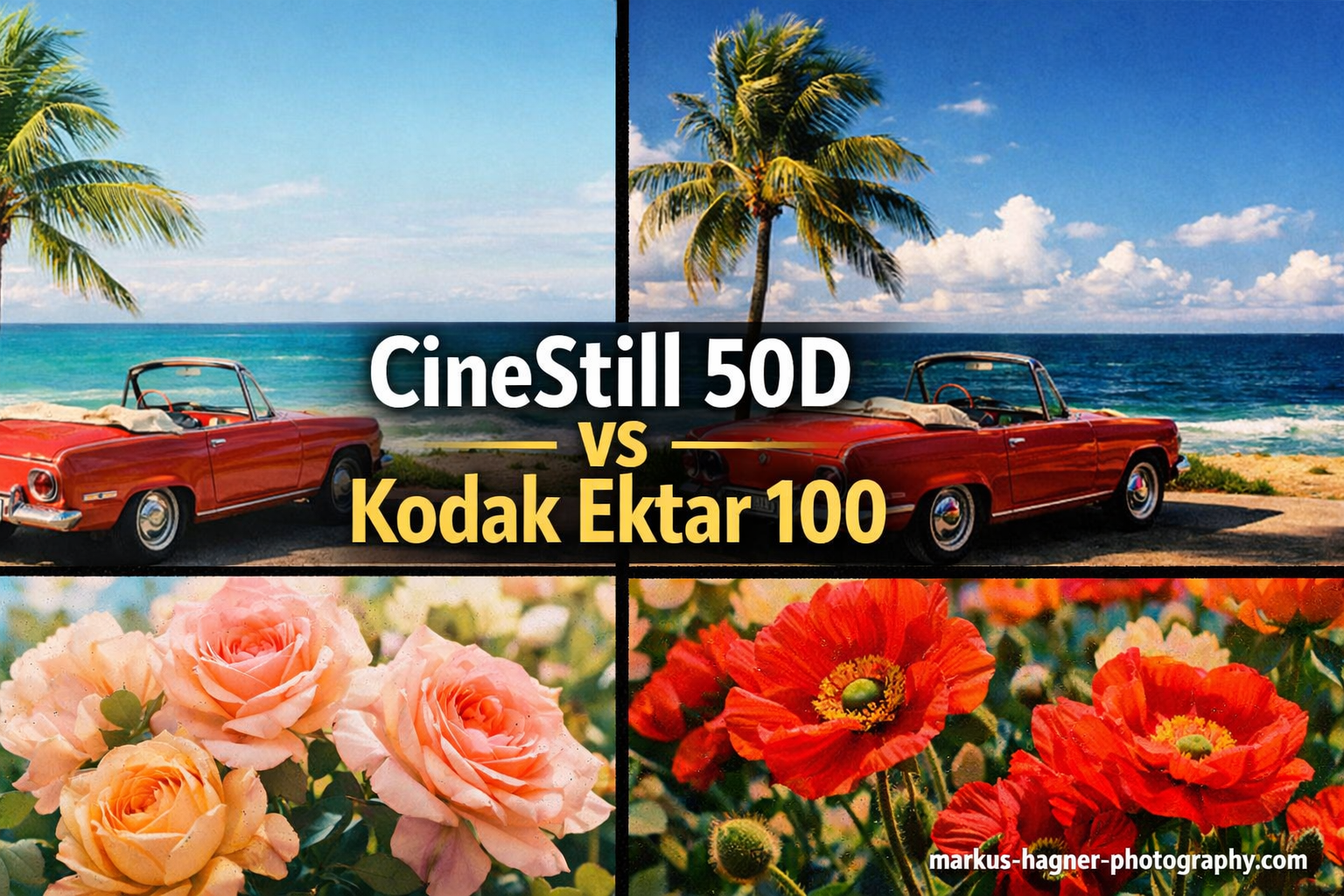
Choosing between CineStill 50D vs Kodak Ektar 100 comes down to understanding what each film brings to your photography. Both are low-ISO color negative films designed for bright conditions, but they produce distinctly different looks.
CineStill 50D originated as Kodak Vision3 motion picture stock, modified for still photography. Kodak Ektar 100 was built from the ground up as the world’s finest grain color negative film for photographers.
After shooting both films extensively, I’ve found that Ektar 100 wins for landscape and travel work where vivid colors and ultra-fine grain matter most. CineStill 50D takes the crown for portrait work and situations where you need more exposure latitude and a softer, more cinematic rendering.
CineStill 50D vs Kodak Ektar 100: Quick Comparison
| Product | Specifications | Action |
|---|---|---|
 CineStill 50D ISO 50 CineStill 50D ISO 50 |
|
Check Latest Price |
 Kodak Ektar 100 (2-Pack) Kodak Ektar 100 (2-Pack) |
|
Check Latest Price |
CineStill 50D Deep Dive
Pros
- Unique cinematic look
- High exposure latitude
- Works in C-41 labs
- Halation effect for creative looks
Cons
- Requires bright light
- Color cast possible
- Cross-processing artifacts
- Higher cost per roll
CineStill 50D starts life as Kodak Vision3 50D motion picture film. The company removes the remjet anti-halation backing and respools it into standard 35mm cartridges. This process makes the film compatible with standard C-41 processing at any lab.
The removal of the remjet layer creates CineStill’s signature halation effect. Bright highlights develop a soft, dreamy glow around them. Some photographers love this look for portraits and artistic work. Others find it distracting in technical or landscape shots.
I’ve shot CineStill 50D primarily for street portraits and travel work. The film handles overexposure beautifully thanks to its motion picture heritage. You can rate it at ISO 25 or even lower and still get usable results. This exposure latitude gives you breathing room in tricky lighting situations.

One thing to understand: CineStill 50D is technically cross-processed. Its native chemistry is ECN-2, not C-41. Processing in C-41 labs works fine, but some photographers report subtle color shifts compared to true ECN-2 development. If you want the purest results, find a lab that offers ECN-2 processing.
The ISO 50 rating means you need solid light or a tripod. Fast lenses help tremendously. I wouldn’t recommend this film for point-and-shoot cameras with slower maximum apertures.
Kodak Ektar 100 Deep Dive
Kodak Ektar 100 Professional ISO 100, 35mm, 36 Exposures, Color Negative Film (Pack of 2)
Pros
- World's finest grain color film
- Exceptional sharpness
- Vivid color saturation
- Great for enlargements
Cons
- Less exposure latitude
- Skin tones can be tricky
- Requires accurate metering
- Needs good light
Kodak designed Ektar 100 specifically for still photographers who want ultra-fine grain and saturated colors. It incorporates technology from Kodak’s motion picture division but was engineered from scratch for still photography applications.
The grain on Ektar 100 is genuinely remarkable. At ISO 100, you get detail and smoothness that rivals slower films. Scans come out clean, and enlargements hold up beautifully. If you print your work large, Ektar delivers.
Color saturation is where Ektar 100 really shines. Blues pop, reds are rich, and greens feel vibrant without looking artificial. This makes it my go-to choice for landscape photography, especially during golden hour when you want those warm tones to sing.
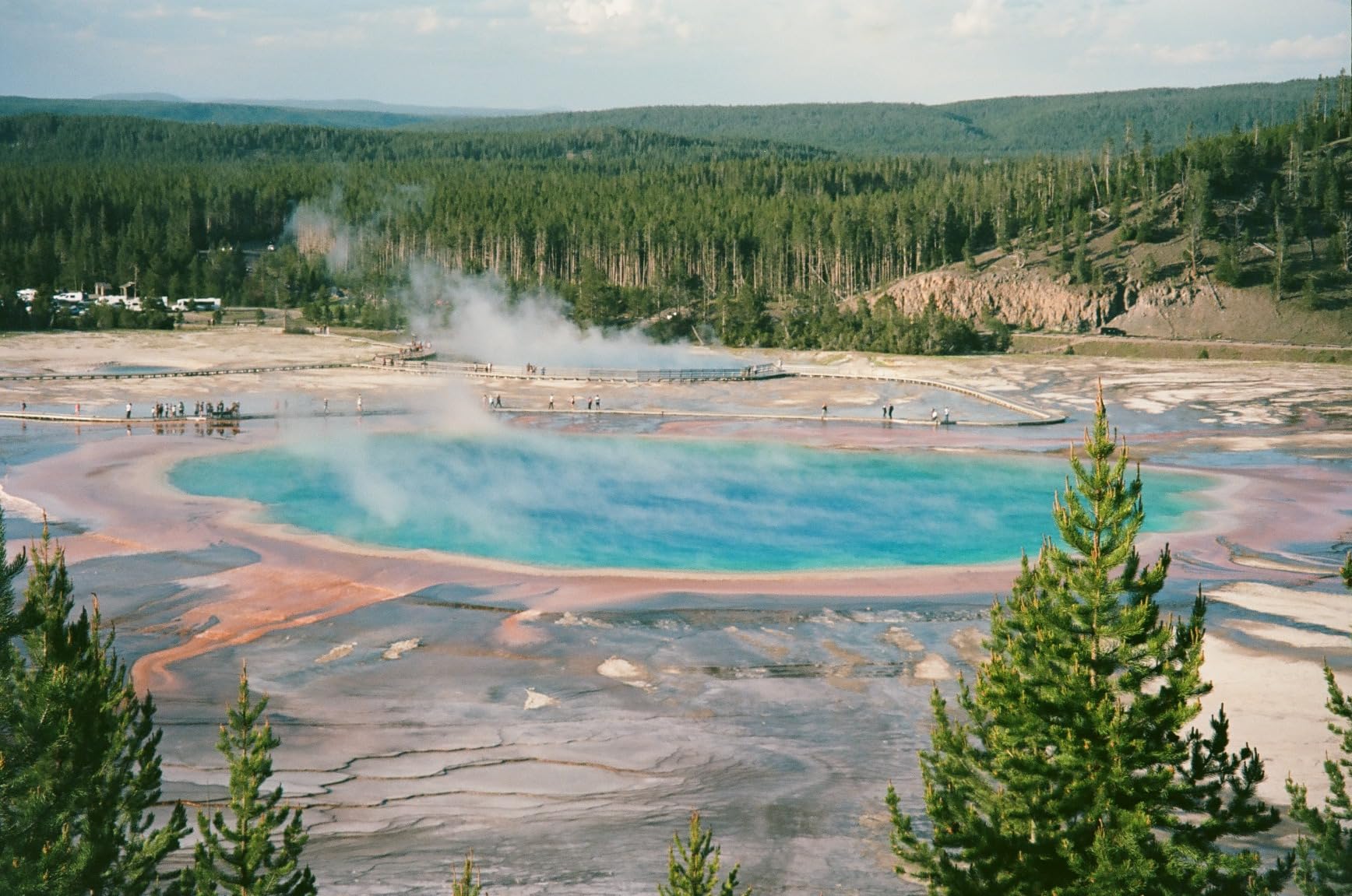
The trade-off comes in exposure latitude. Ektar 100 is less forgiving than CineStill 50D. Underexpose by a stop and you’ll see muddy shadows. Overexpose too much and highlights can block up. Accurate metering matters more here.
Skin tones can be challenging with Ektar. The high saturation sometimes gives faces a reddish or orange cast, especially in warm lighting. For portraits, I prefer CineStill 50D or Portra films. But for travel, architecture, and nature work, Ektar 100 is hard to beat.
CineStill 50D vs Kodak Ektar 100: Head-to-Head Comparison
Grain and Sharpness
Ektar 100 wins on technical grain performance. Kodak’s T-grain emulsion technology produces exceptionally fine grain that scans cleanly and enlarges beautifully. CineStill 50D is no slouch, but it shows slightly more grain structure, especially in flat areas of color like skies.
Both films resolve excellent detail. For critical work that requires maximum sharpness, Ektar 100 has a slight edge. The difference becomes more noticeable as you push enlargement sizes.
Color Characteristics
Ektar 100 delivers vivid, saturated colors with warm undertones. Reds and blues especially pop. The overall look is bold and eye-catching, perfect for travel and landscape photography where you want colors to stand out.
CineStill 50D produces more muted, cinematic colors. The palette feels softer and more natural, with less saturation overall. This makes it better suited for portraits and situations where you want a more subtle color rendering.
Both films can show color casts. Ektar tends toward red or purple in shadows. CineStill can display greenish or orange shifts, particularly when cross-processed in C-41 chemistry.
Exposure Latitude
CineStill 50D dominates here. Its motion picture heritage means it was designed to handle a wide range of lighting conditions. Overexpose by two stops and you’ll still get great results. This forgiveness makes it excellent for situations where metering is tricky.
Ektar 100 has narrower exposure latitude. It wants to be metered accurately. A stop of underexposure hurts more than with CineStill, and overexposure can blow highlights quickly. Think of Ektar as less forgiving but more precise.
Processing Requirements
Both films process in standard C-41 chemistry, available at virtually any photo lab. This convenience makes both accessible to photographers without darkroom access.
CineStill 50D offers an interesting option: you can process it in its native ECN-2 chemistry if you have access to a lab that offers this service. Some photographers prefer ECN-2 results, claiming better color accuracy and less cross-processing artifacts.
The halation effect in CineStill 50D comes from removing the remjet layer. This creates the characteristic glow around bright highlights. Whether you see this as a feature or a flaw depends on your creative preferences.
Best Use Cases
Choose CineStill 50D for portraits, street photography, and situations with challenging or mixed lighting. The exposure latitude forgives metering mistakes, and the cinematic color palette flatters skin tones.
Choose Ektar 100 for landscapes, travel, architecture, and any work where vivid colors and ultra-fine grain matter. It excels in consistent, bright lighting where you can meter carefully.
Both films work well in bright daylight conditions. Neither is suited for low-light work without a tripod and slow shutter speeds.
Frequently Asked Questions
What is CineStill 50D good for?
CineStill 50D excels at portrait photography, street photography, and any situation requiring exposure latitude. Its cinematic color palette flatters skin tones, and the halation effect creates a dreamy look around bright highlights. The film handles overexposure well, making it forgiving in challenging lighting conditions.
What is Kodak Ektar 100 best for?
Kodak Ektar 100 is best for landscape photography, travel shots, and any work requiring ultra-fine grain and vivid colors. Its exceptional sharpness and bold color saturation make it ideal for scenic work that will be enlarged. It performs best in bright, consistent lighting with accurate metering.
Is CineStill 50D C-41?
Yes, CineStill 50D processes in standard C-41 chemistry at any photo lab. However, its native chemistry is ECN-2 (motion picture standard). Processing in C-41 is technically cross-processing, though results are excellent. Some photographers prefer ECN-2 processing for the purest color rendering.
Is Ektar 100 discontinued?
No, Kodak Ektar 100 is still in production and widely available. It remains one of Kodak’s premium color negative films, available in both 35mm and 120 formats. The film continues to be popular among landscape and travel photographers for its fine grain and vivid colors.
Verdict: Which Film Should You Choose?
The CineStill 50D vs Kodak Ektar 100 comparison reveals two excellent films serving different needs.
Choose CineStill 50D if: You shoot portraits, need exposure latitude, want a cinematic look, or work in variable lighting conditions. The halation effect and softer color palette create a distinctive aesthetic that works beautifully for people photography.
Choose Kodak Ektar 100 if: You prioritize fine grain, shoot landscapes or travel, want vivid colors, and can meter accurately. The exceptional sharpness and bold color saturation make it ideal for scenic work and large prints.
For most photographers, having both films in the bag makes sense. Use Ektar 100 for landscapes and bright outdoor work. Switch to CineStill 50D when shooting people or when lighting gets tricky.Frequently Asked Questions