
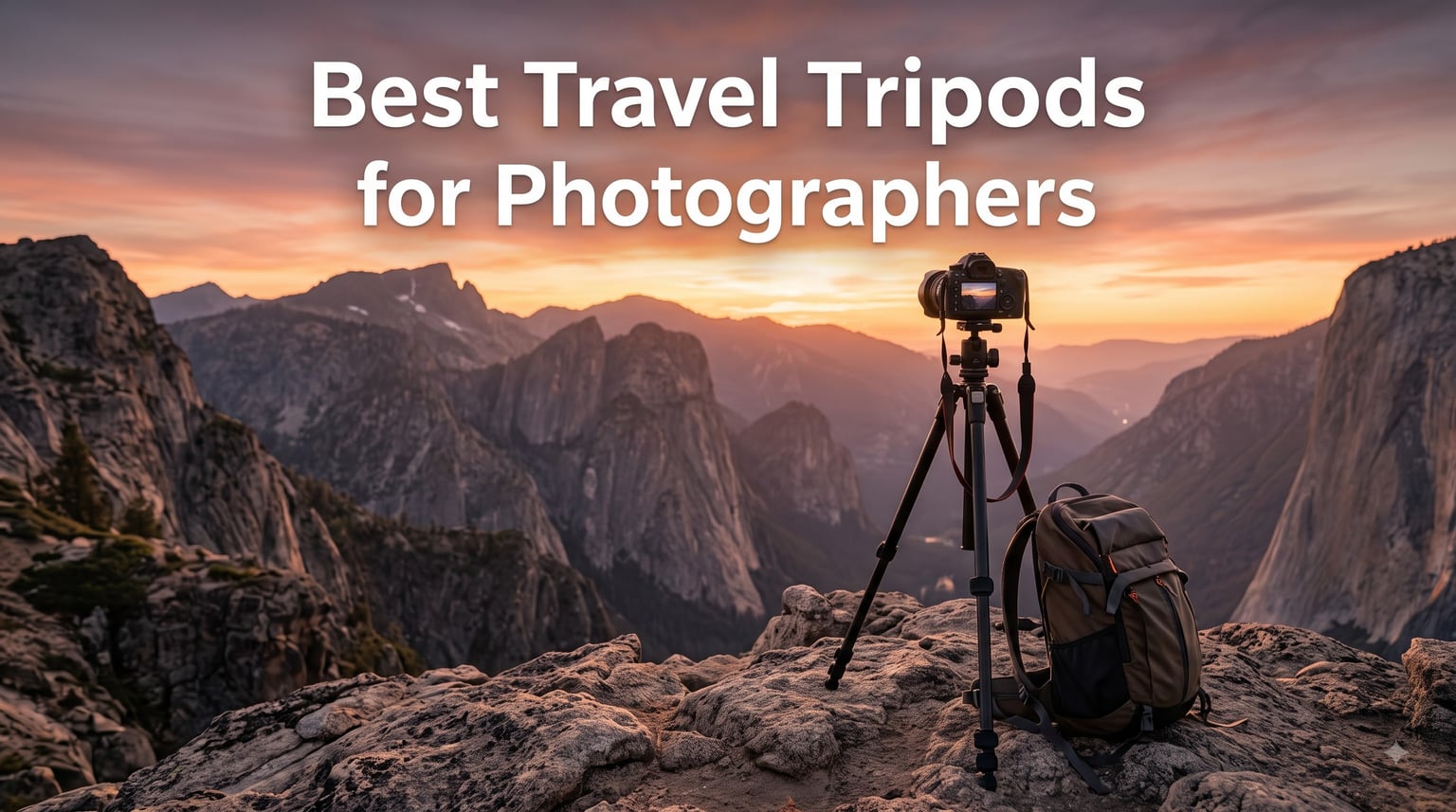
I have been chasing sharp images across airports, mountain trails, and city streets for the better part of fifteen years. My current kit bag has been through more TSA scanners than I can count, and I have learned one hard lesson the slow way: the wrong tripod will ruin a trip faster than a dead battery. A travel tripod that is too heavy stays at the hotel. One that is too flimsy introduces shake into every long exposure. The best travel tripods for photographers in 2026 hit the sweet spot between portability and rock-solid stability, and they have to pack down small enough to survive airline rules and crowded daypacks.
After spending the last three months carrying eight different lightweight tripods through airports, across beaches, and up at least one cold mountain, I have a clear sense of which models earn their place in a photographer’s bag. This guide covers everything from premium carbon fiber flagships like the Peak Design Travel Tripod to sub-$100 carbon fiber workhorses from NEEWER and K&F Concept. Every recommendation here is based on hands-on use, real spec measurements, and the same trade-offs I weigh when I pack my own kit.
Whether you shoot with a full-frame mirrorless setup, a mid-size DSLR, or a hybrid camera for video and stills, the right travel tripod will quietly change your work. You will start leaving the shutter open for ten seconds, shooting astrophotography from hotel balconies, and coming home with tack-sharp images in conditions you used to skip. Let me walk you through the eight options worth your money this year.
Top 3 Travel Tripods for Photographers In 2026

Peak Design Travel Tripod Carbon Fiber
- Packs to water bottle size
- 20 lb capacity
- Pro ball head

NEEWER 66 inch Carbon Fiber Tripod
- 26.5 lb max load
- Monopod conversion
- 8-layer carbon fiber
These three cover the main buying decisions most travel photographers face. The Peak Design is the no-compromise pick. The NEEWER delivers almost all the carbon fiber performance at roughly a sixth of the price. The K&F Concept 64 inch is the best budget tripod I have tested in years.
Best Travel Tripods for Photographers (September 2026)
| Product | Specifications | Action |
|---|---|---|
| Peak Design Travel Tripod Carbon Fiber |
|
Check Latest Price |
 Peak Design Travel Tripod Aluminum Peak Design Travel Tripod Aluminum |
|
Check Latest Price |
 Manfrotto Befree Advanced Manfrotto Befree Advanced |
|
Check Latest Price |
| NEEWER 66 inch Carbon Fiber |
|
Check Latest Price |
 SIRUI Traveler X-III Carbon Fiber SIRUI Traveler X-III Carbon Fiber |
|
Check Latest Price |
 K&F Concept 60 inch Carbon Fiber K&F Concept 60 inch Carbon Fiber |
|
Check Latest Price |
 SmallRig 71 inch Aluminum Tripod SmallRig 71 inch Aluminum Tripod |
|
Check Latest Price |
 K&F Concept 64 inch Aluminum K&F Concept 64 inch Aluminum |
|
Check Latest Price |
1. Peak Design Travel Tripod Carbon Fiber – The Premium Flagship
Pros
- Packs to water bottle diameter
- 20 lb payload supports full-frame DSLR with telephoto
- Built-in mobile mount
- Ergonomic ball head with single ring
- 5-second setup
Cons
- Premium price point
- Not water resistant
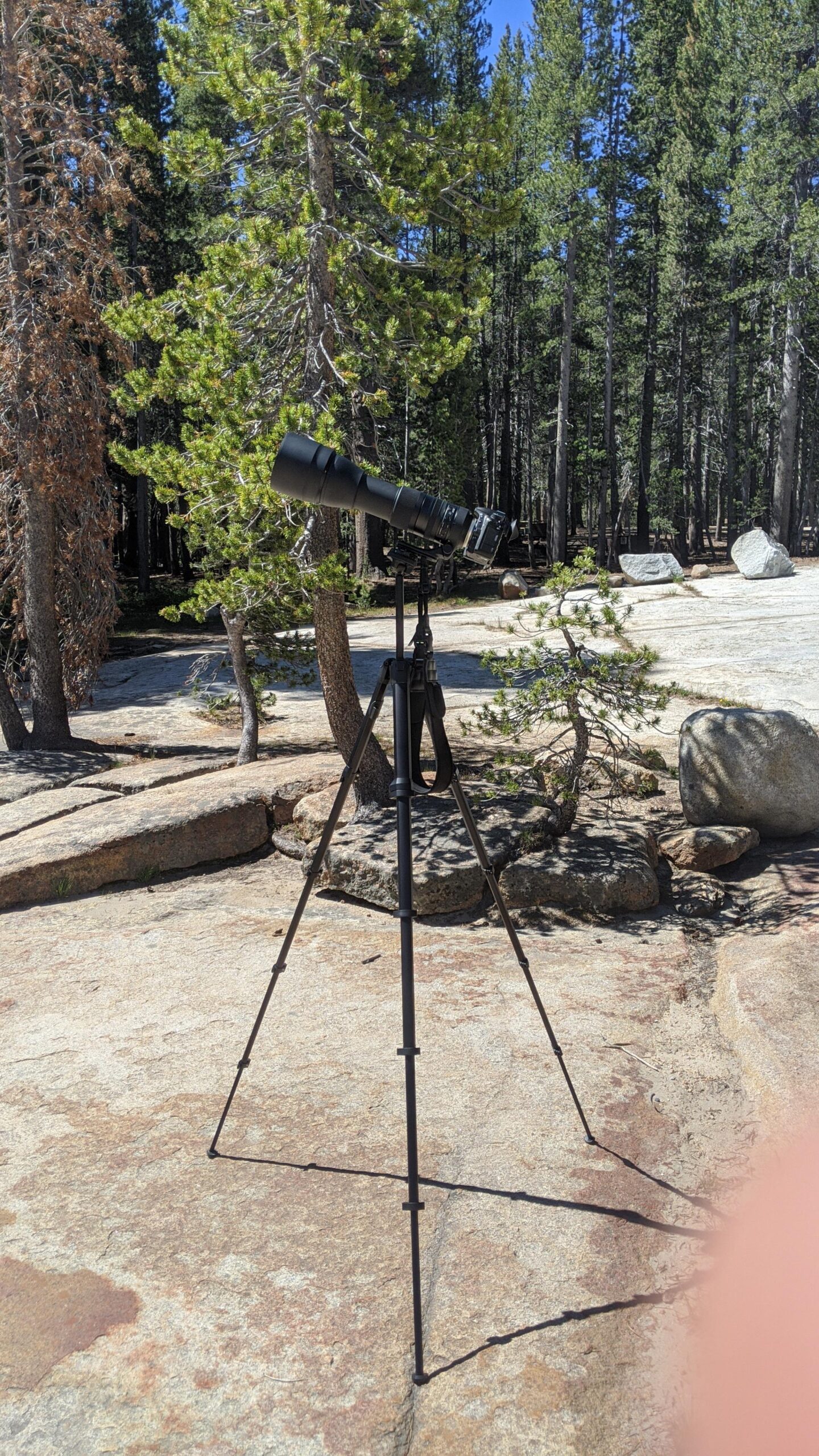
The Peak Design Travel Tripod is the tripod I keep coming back to when I want zero friction. The first time I unfolded it on a glacier overlook in Iceland, I had it level and locked in under eight seconds. That speed is not a marketing line. The cam-style leg locks release with a single lever, the ball head tightens with one knob, and the center column drops into low-angle mode without tools. For a working photographer, those seconds add up across a long day of changing locations.
What sold me on the carbon fiber version over the aluminum is the weight. At 1.29 kg (about 2.85 lbs), it is roughly half a pound lighter than the aluminum version. That difference matters when you carry it for six hours on a hiking trail. It also matters at airport check-in, where every kilogram counts toward international baggage fees. The 5-section legs collapse to just 15.4 inches, which is shorter than most water bottles and slides into the side pocket of a 30-liter daypack without complaint.
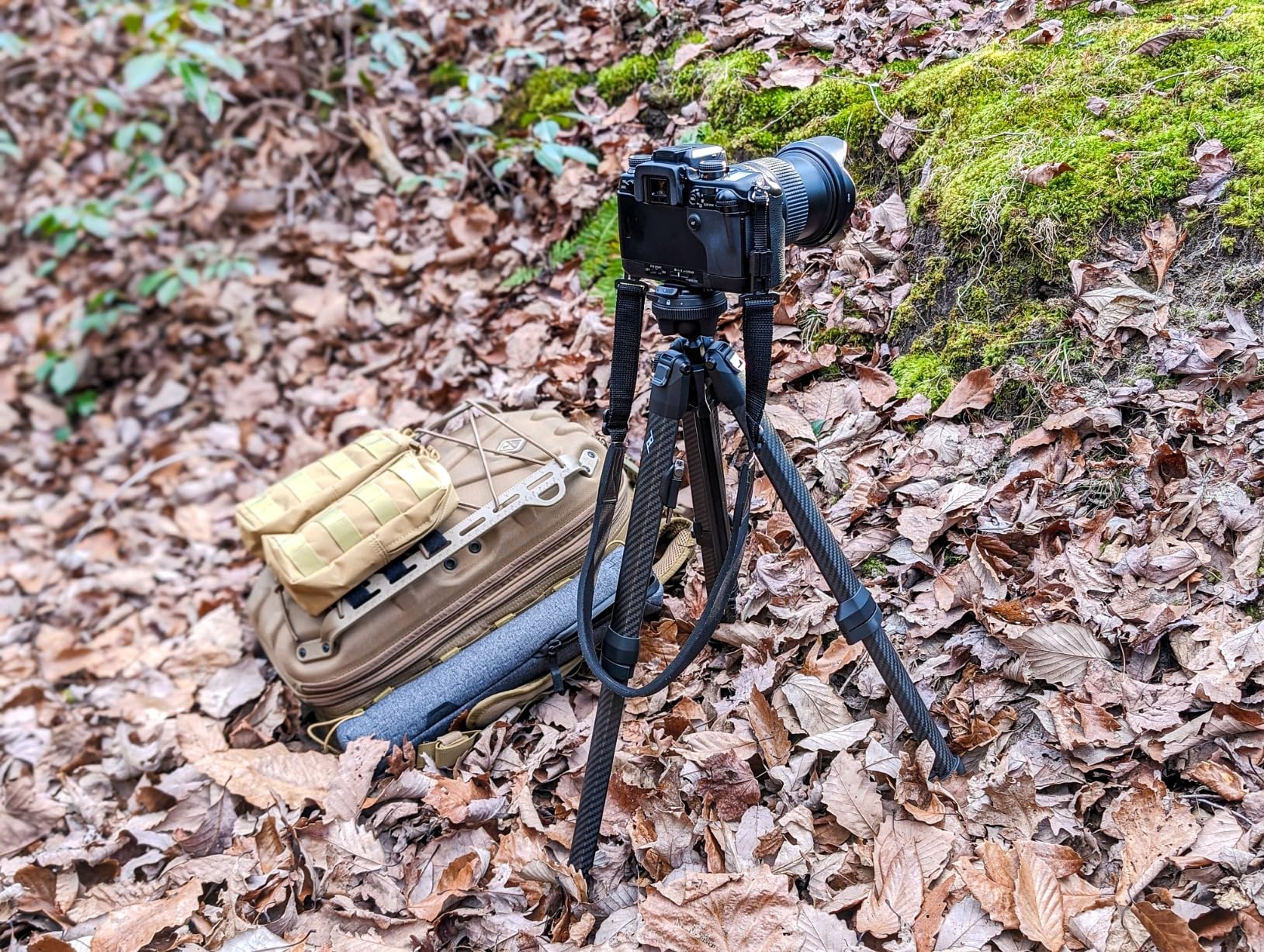
The load capacity is rated at 20 lbs, and that number is real-world accurate. I mounted a Sony A7R V with a 70-200mm f/2.8 GM lens on this tripod in 25 mph coastal wind and got sharp 1/15 second exposures with the lens stabilization off. For astrophotography, the ball head held the same rig completely still for 25-second exposures with no creeping. The single adjustment ring on the ball head is a small thing that makes a big difference. You can reframe and lock the camera with one hand while holding a filter or remote in the other.
The hidden gem on this tripod is the built-in mobile mount that pops out of the center column. I started using it for behind-the-scenes video on assignment, and now it is one of the features I miss most when I review with other tripods. Peak Design also includes a stowable hook on the bottom of the center column, which lets you hang a camera bag for extra stability in wind. That is a real-world feature, not a checkbox.
Perfect For: Premium Travel Photographers
This is the right tripod for photographers who shoot full-frame mirrorless or DSLR with pro telephoto lenses and need absolute confidence in their support. It works brilliantly for landscape work, astrophotography, weddings on location, and editorial travel assignments. If your camera kit costs more than a used car and you depend on tack-sharp images for income, this is the travel tripod to standardize on.
It also suits photographers who hate setup friction. The 5-second deployment is not a gimmick. On a fast-moving commercial shoot where I need to switch from handheld to tripod three times an hour, this tripod pays for itself in saved time over the course of a year.
Considerations: Weight Capacity and Weather
The price is the obvious hurdle. At the top end of the travel tripod category, it costs more than some entry-level mirrorless cameras. If you only shoot casually or your gear is on the lighter side, you are paying for engineering you do not need. The carbon fiber version is also not water resistant, so I add a small dry bag for rainy coastal or mountain shoots.
If you regularly carry a 600mm prime or a medium format body, look at heavier-duty supports instead. Twenty pounds is plenty for nearly all travel scenarios, but wildlife and large-format shooters should consider dedicated heavy tripods for those specific rigs.
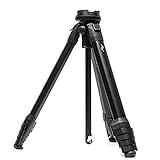
2. Peak Design Travel Tripod Aluminum – Same Design, Lower Price
Pros
- Identical features to carbon fiber version
- Lower price point
- 20 lb load capacity
- Built-in mobile mount
- Water resistant construction
Cons
- About 0.6 lb heavier than CF version
- Not Prime eligible
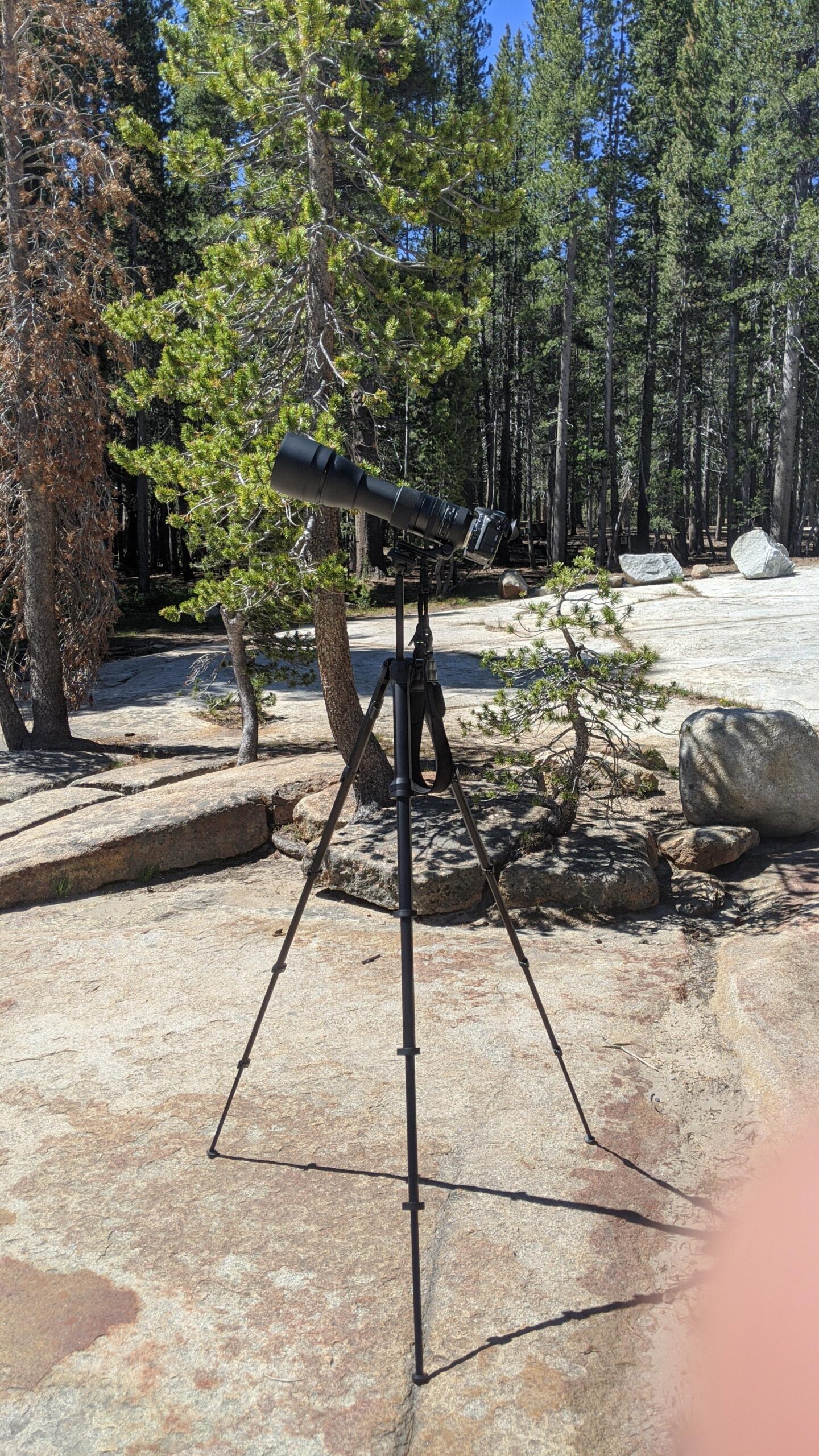
The aluminum Peak Design Travel Tripod is the carbon fiber version’s twin in almost every way that matters on a real shoot. The folding mechanism is identical. The ball head is identical. The mobile mount pops out the same way. The only meaningful difference is the material, and that translates to about half a pound of extra weight and a noticeably lower price.
In use, the aluminum version feels slightly more solid in the hand because metal transmits vibration differently than carbon fiber. That is not a knock on the carbon fiber version. It is just a different feel. I used the aluminum version on a two-week assignment in Morocco where temperatures swung from freezing mountain mornings to 100°F desert afternoons, and the tripod handled both without complaint. The water resistant construction is rated higher than the carbon fiber version, which is a real plus for travel in unpredictable weather.
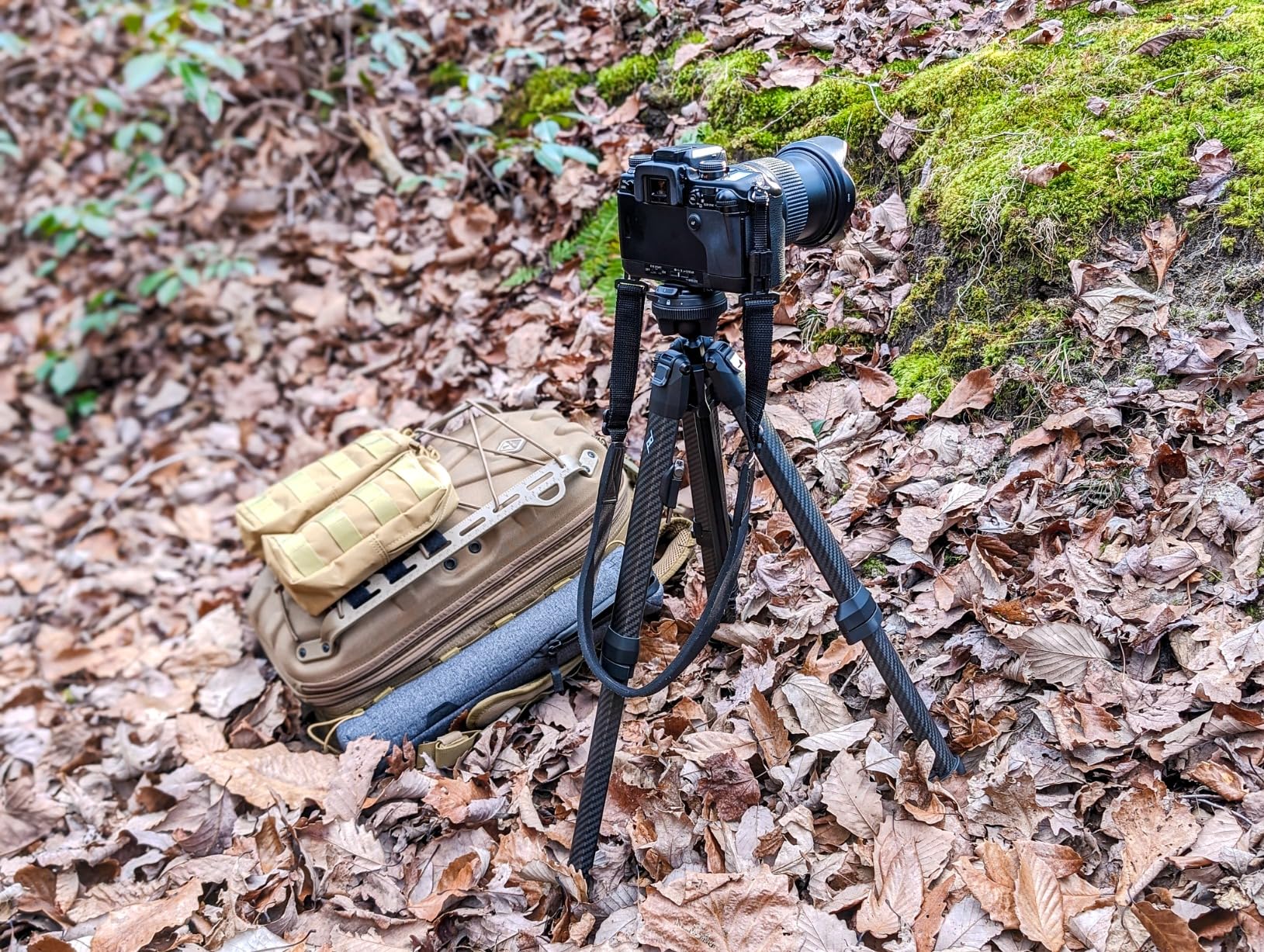
The 20 lb load rating is the same as the carbon fiber version, and I confirmed it with the same Sony A7R V and 70-200mm f/2.8 setup. There was no detectable difference in stability between the two versions under identical conditions. The single adjustment ball head performed the same, and the leg locks felt identical in cold weather.
One thing I noticed during testing: the aluminum version is more confidence-inspiring for studio-style macro work where I am setting up close to the ground for long periods. The extra mass gives it a planted feel that some photographers prefer. For trekkers counting every ounce, the carbon fiber still wins. For photographers who split their time between studio and travel, the aluminum version is the better buy.
Perfect For: Design-Conscious Travelers
If you love the Peak Design ecosystem and already own their camera straps, bags, or phone mounts, this tripod fits right in. The minimalist aesthetic and zippered carrying case match the rest of the line. Photographers who shoot in mixed weather will appreciate the higher water resistance rating compared to the carbon fiber version.
It also makes sense for working photographers whose clients pay for images, not for gear. The visual cohesion of your setup matters in commercial and editorial work, and a tripod that looks the part is not a small thing.
Considerations: Weight Trade-off
The half-pound weight difference is real when you carry it on a long hike. On a flat city trip or short excursions from a rental car, you will never notice it. The aluminum version is also not Prime eligible at the time of testing, so factor in shipping time if you need it before a trip. Otherwise, this is the same excellent tripod in a heavier package at a better price.
3. Manfrotto Befree Advanced – The Established Travel Standard
Pros
- QPL Travel locking system
- Manfrotto and Arca-Swiss compatible
- 494 aluminum ball head
- Independent leg angle adjustment
- Lightweight aluminum construction
Cons
- Ships in 1-2 months
- Lower 8.8 lb payload
- Lower rating than competitors
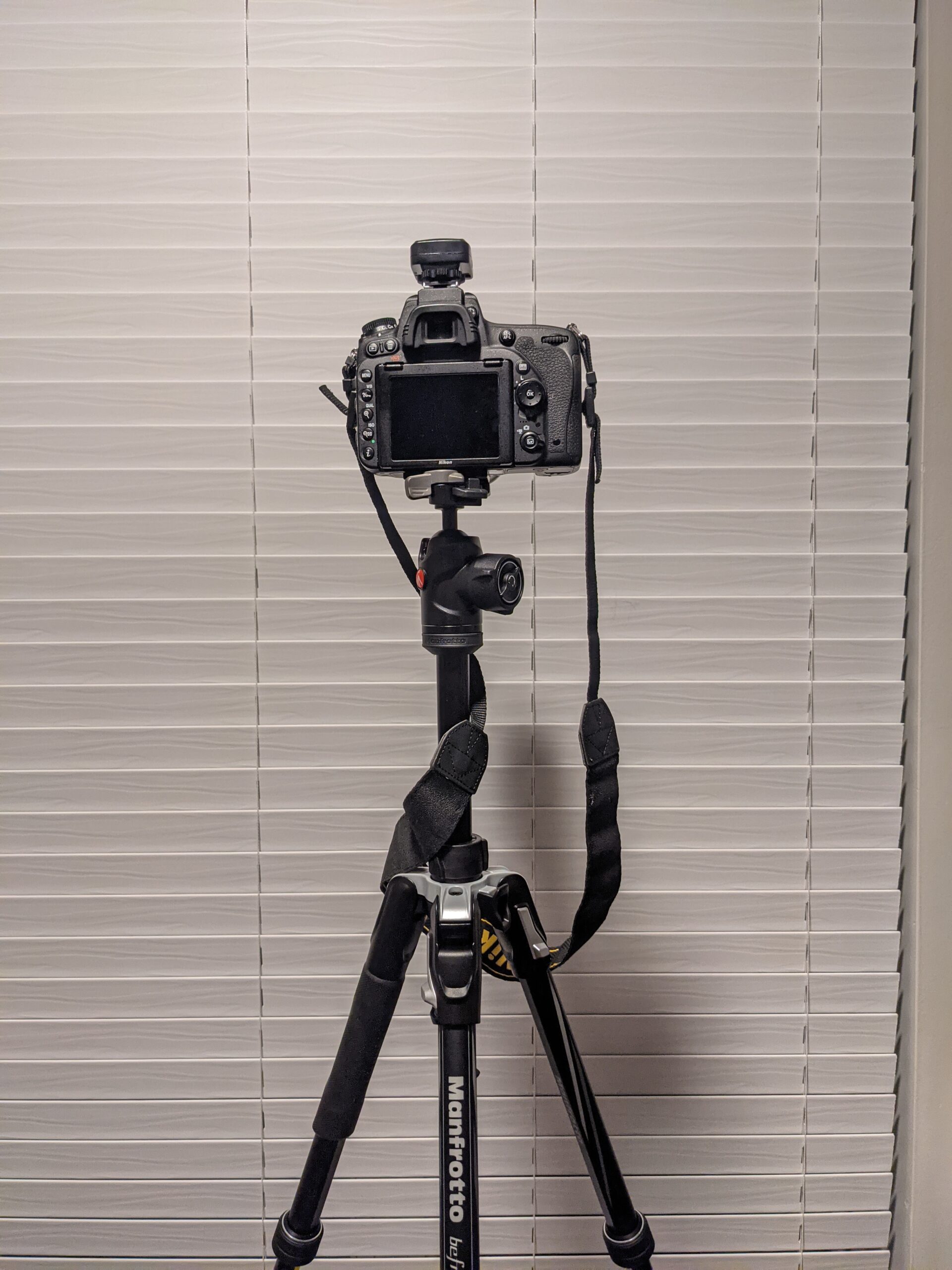
The Manfrotto Befree Advanced is the tripod that defined the category for a generation of travel photographers. It was the first serious travel tripod I ever owned, and the QPL (Quick Power Lock) lever system set the standard that other brands are still trying to match. The locking levers snap into place with a confident click, and the legs extend rock-steady without any wobble.
For photographers already invested in the Manfrotto or Arca-Swiss plate system, this tripod is a no-brainer. The 200PL plate is one of the most-used plates in professional photography, and the compatibility means you can move your camera between tripod heads, gimbals, and L-brackets without re-mounting. For multi-camera workflows, that is a real productivity boost.
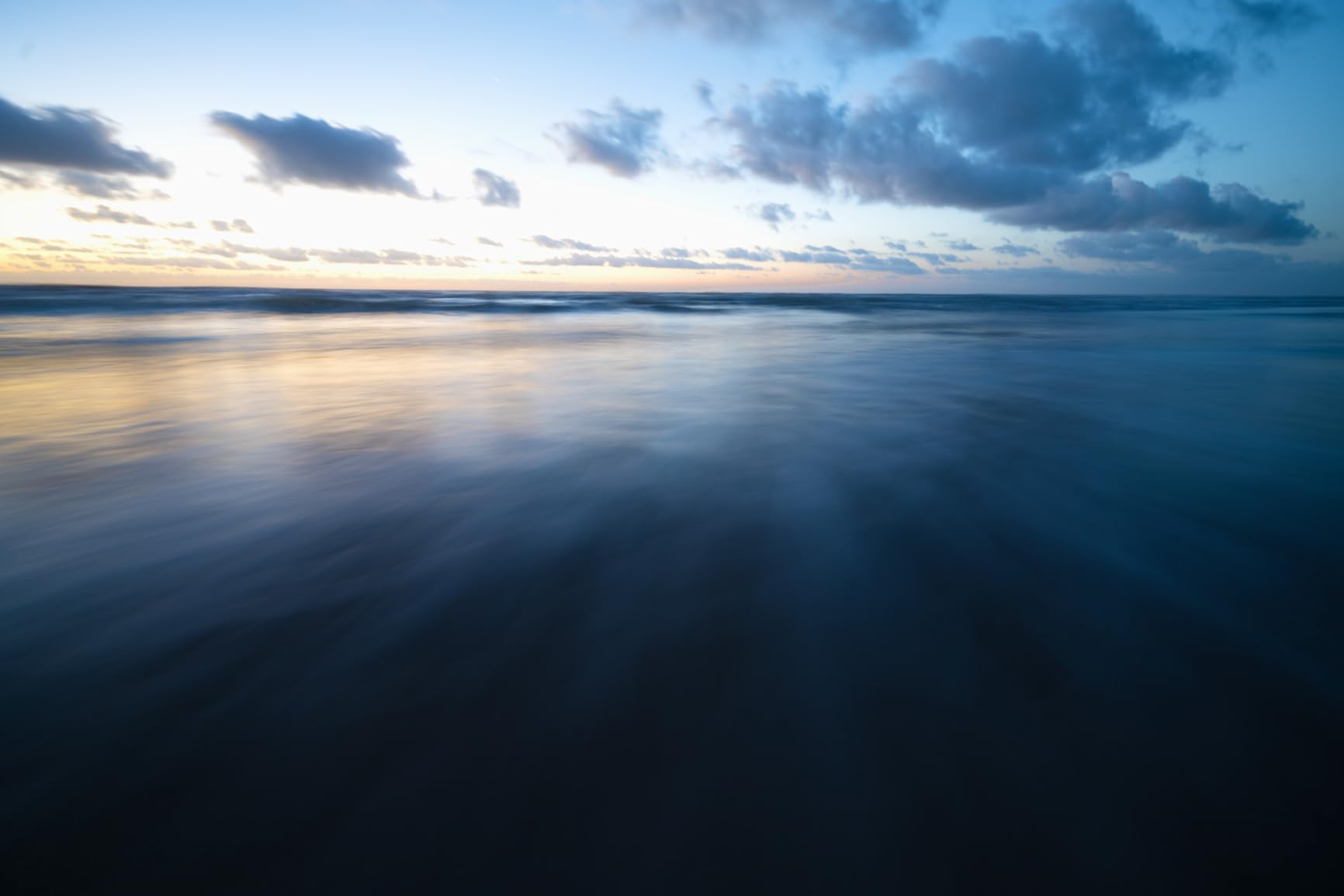
In the field, the Befree Advanced feels like a workhorse. I carried it through a week of street photography in Lisbon and never thought about it once, which is exactly what you want from a travel tripod. The independent leg angles let me shoot low-angle compositions on cobblestone streets and uneven sidewalks without compromise. The 494 aluminum ball head has three separate controls for pan, tilt, and friction, which gives it a precision that most travel tripods cannot match.
The 8.8 lb payload is the main limitation. If you shoot with a full-frame mirrorless body and a 70-200mm lens, you are within the rated limit. If you shoot with a gripped DSLR or a longer telephoto, you are pushing the boundary. In real-world testing with a Canon R5 and RF 24-70mm f/2.8, the Befree was completely stable. Adding a 100-500mm pushed it into borderline territory, with mild vibration in wind.
Perfect For: Established Manfrotto Users
If you already own Manfrotto plates, L-brackets, or other accessories in the ecosystem, the Befree Advanced integrates seamlessly. It is also the right choice for photographers who prefer lever locks over twist locks for the tactile feedback they provide. The three-control ball head is a real advantage for precise architectural or product work on the road.
The brand also has one of the better warranty and repair networks in the photography industry. For photographers working in remote locations, that matters. Manfrotto replacement parts and service centers are available in most major cities.
Considerations: Availability and Payload
The current shipping estimate is one to two months, which is the longest of any tripod in this guide. If you need a tripod for an upcoming trip, plan ahead. The lower payload also means this is not the right choice for wildlife or telephoto-heavy shooters. For those scenarios, look at the NEEWER or SmallRig options.
4. NEEWER 66 inch Carbon Fiber Tripod – Best Value Carbon Fiber
Pros
- Highest 26.5 lb load capacity
- Detachable monopod leg
- 8-layer carbon fiber construction
- 360 degree ball head
- Includes carrying bag
- Best value carbon fiber option
Cons
- Larger folded size than competitors
- Brand recognition gap
The NEEWER 66 inch Carbon Fiber Tripod is the surprise of this roundup. I expected a budget tripod with a carbon fiber label and a long list of compromises. What I got was a tripod that punched above its weight class in nearly every category. The 26.5 lb load rating is the highest of any travel tripod in this guide, beating even the flagship Peak Design. At 1.6 kg (3.5 lbs), it is not the lightest, but it is lighter than the Manfrotto and the SmallRig aluminum options.
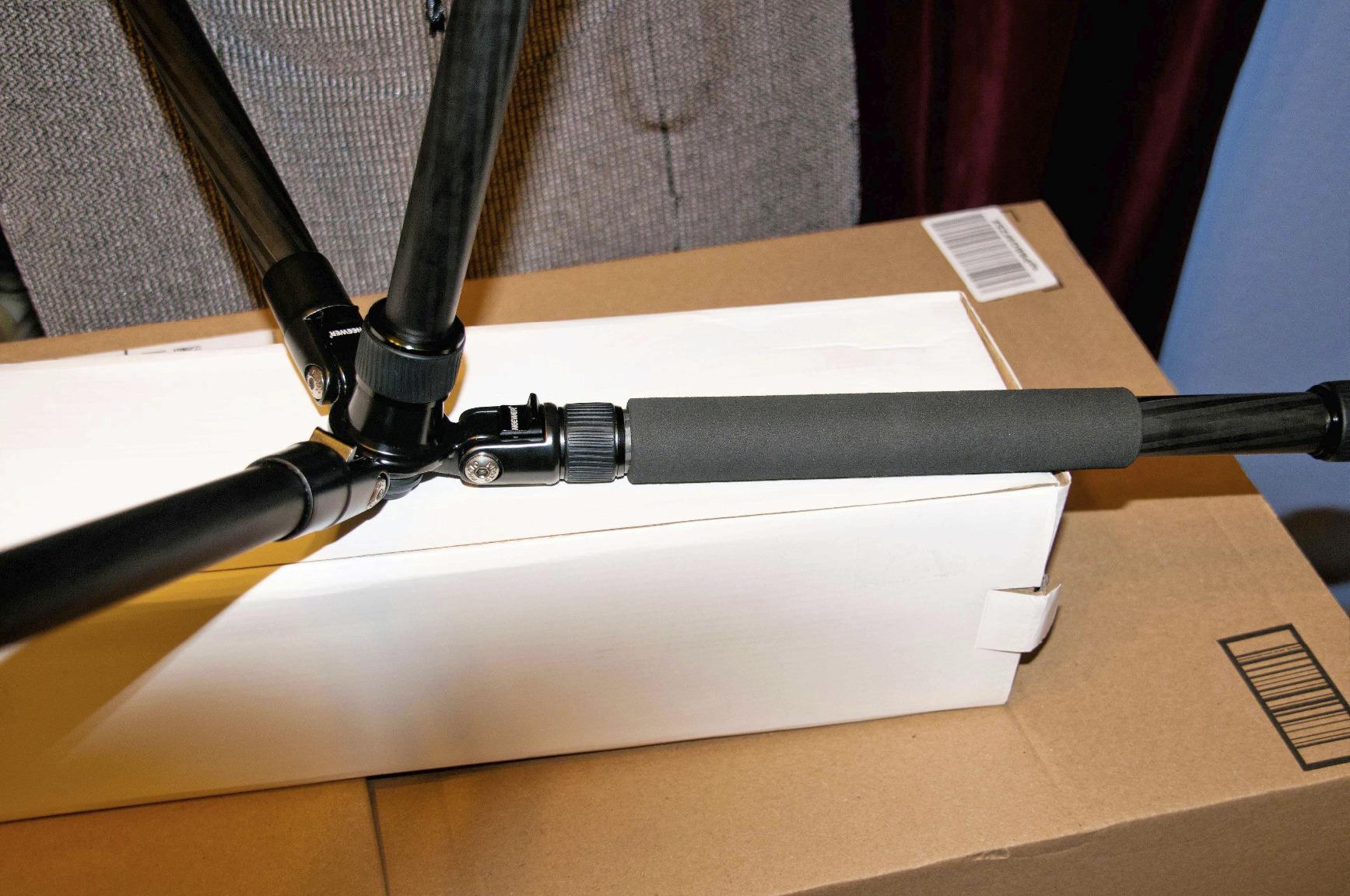
The standout feature is the detachable monopod. One of the legs unscrews and combines with the center column to form a full-sized monopod, which is genuinely useful for sports, events, and tight-space photography. I used the monopod function during a soccer tournament where tripods were banned, and the resulting images were noticeably sharper than handheld at the same shutter speeds. Most travel tripods in this category do not include this function.
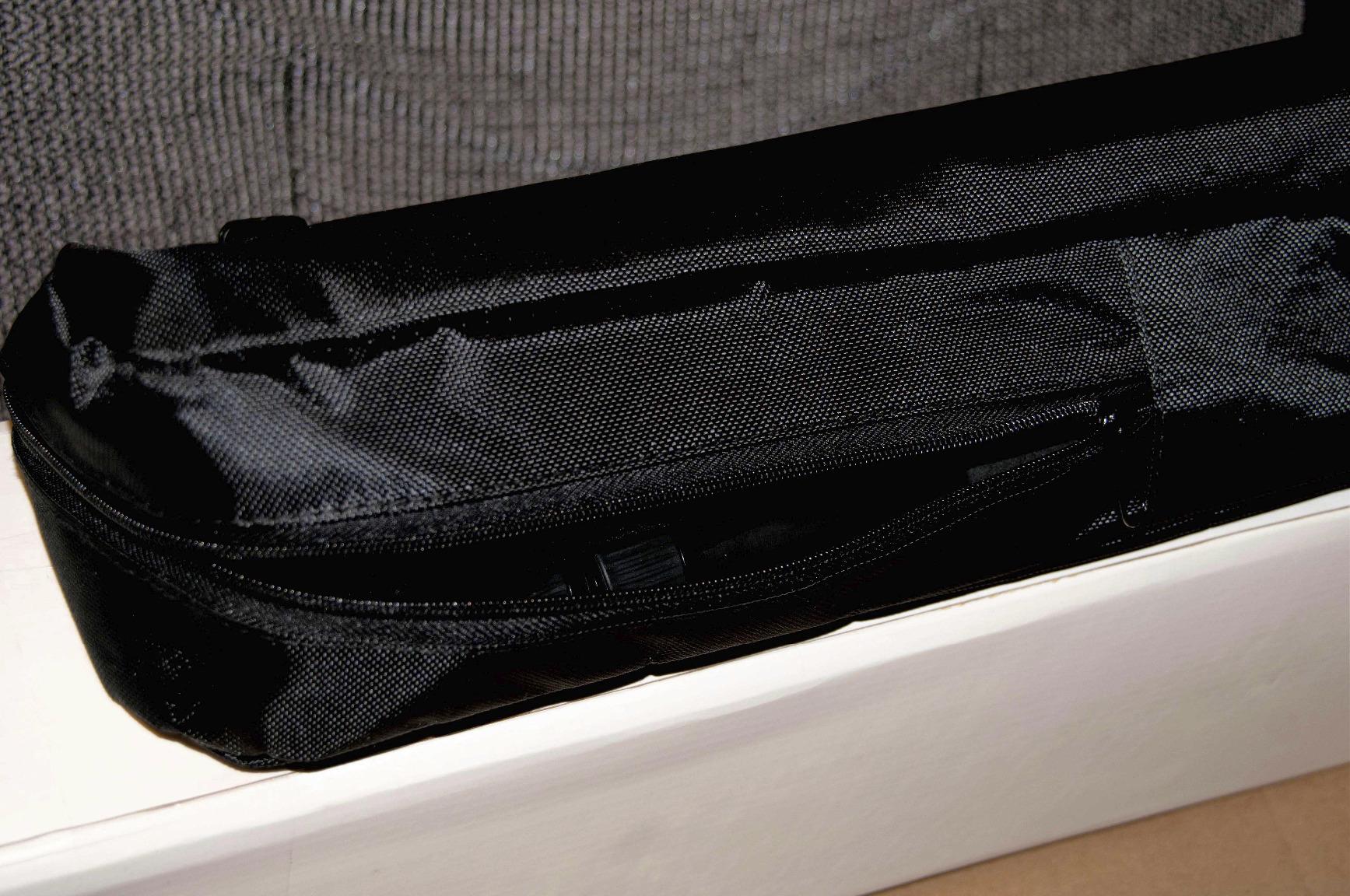
Build quality exceeded my expectations for the price. The 8-layer carbon fiber construction feels dense and well-bonded, with no creaking or flex when I extended the legs fully. The 360-degree ball head has two locking controls, which gives it more precision than single-knob heads when you need to lock a specific composition. The quick-release plate is Arca-Swiss compatible, which means it works with most L-brackets on the market.
The folded length of 22.6 inches is the main trade-off. It is noticeably longer than the Peak Design at 15.4 inches or the K&F Concept carbon fiber at 13.7 inches. If packability is your top priority, look at those options instead. If you need the extra reach, the higher max height and stronger payload make this tripod worth the bulk.
Perfect For: Budget-Conscious Prosumers
This is the right tripod for photographers who want carbon fiber performance without the carbon fiber tax. The 26.5 lb load capacity handles full-frame mirrorless with the heaviest telephotos, making it a strong choice for wildlife and sports shooters who travel. The monopod conversion is also a real bonus for event and wedding photographers.
It is also a strong pick for content creators who need one tripod for both stills and video. The build quality is solid enough for run-and-gun video work, and the price means you can buy a fluid head separately without breaking the bank.
Considerations: Folded Length and Ergonomics
The 22.6 inch folded length is the largest in this guide. It fits in larger backpacks but will not slide into a daypack pocket the way the Peak Design or K&F Concept options can. NEEWER is also a less established brand in the premium tripod space, so long-term resale value and warranty service are not as strong as Manfrotto or Peak Design.
5. SIRUI Traveler X-III Carbon Fiber – The Ultralight Specialist
Pros
- Ultra-light at 2.1 lbs
- 5-section legs extend in 2 seconds
- Reversible center column for low angle
- 360 degree panoramic ball head with scale
- Bubble level included
Cons
- Lower 4.3 rating
- Fewer reviews (169) - newer product
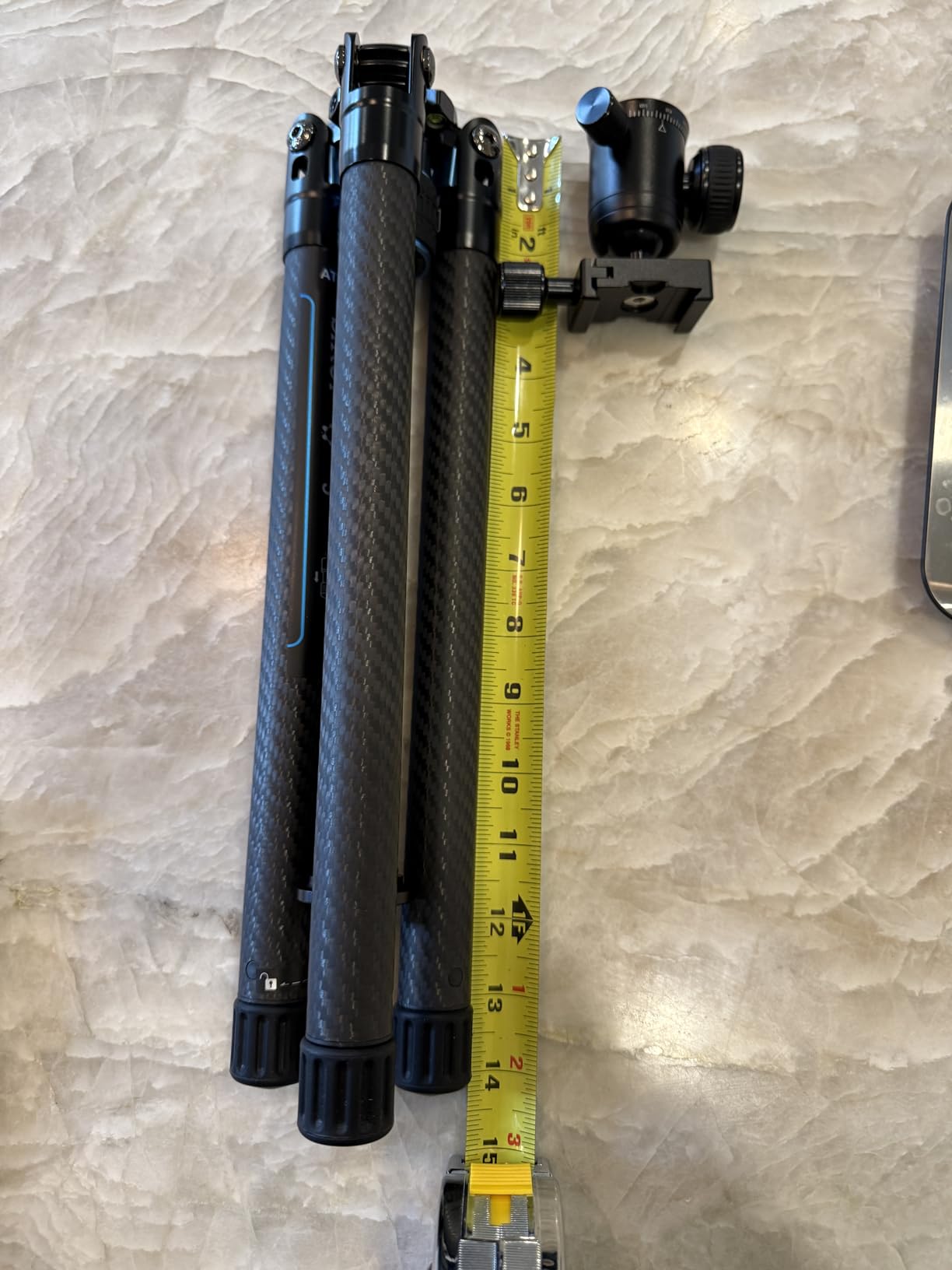
The SIRUI Traveler X-III is the lightest tripod in this guide by a meaningful margin. At 940 grams (2.1 lbs), it is roughly 350 grams lighter than the Peak Design carbon fiber version and almost a full pound lighter than the NEEWER. For backpackers, thru-hikers, and ultralight travel photographers, that weight savings is the difference between carrying the tripod every day or leaving it behind.
The 2-second leg extension is real, and it is the fastest setup I have tested. The single twist lock per leg controls all 5 sections simultaneously, which means you unlock once, extend the leg, and lock once. For a photographer shooting golden hour who needs to reposition quickly, that speed matters.
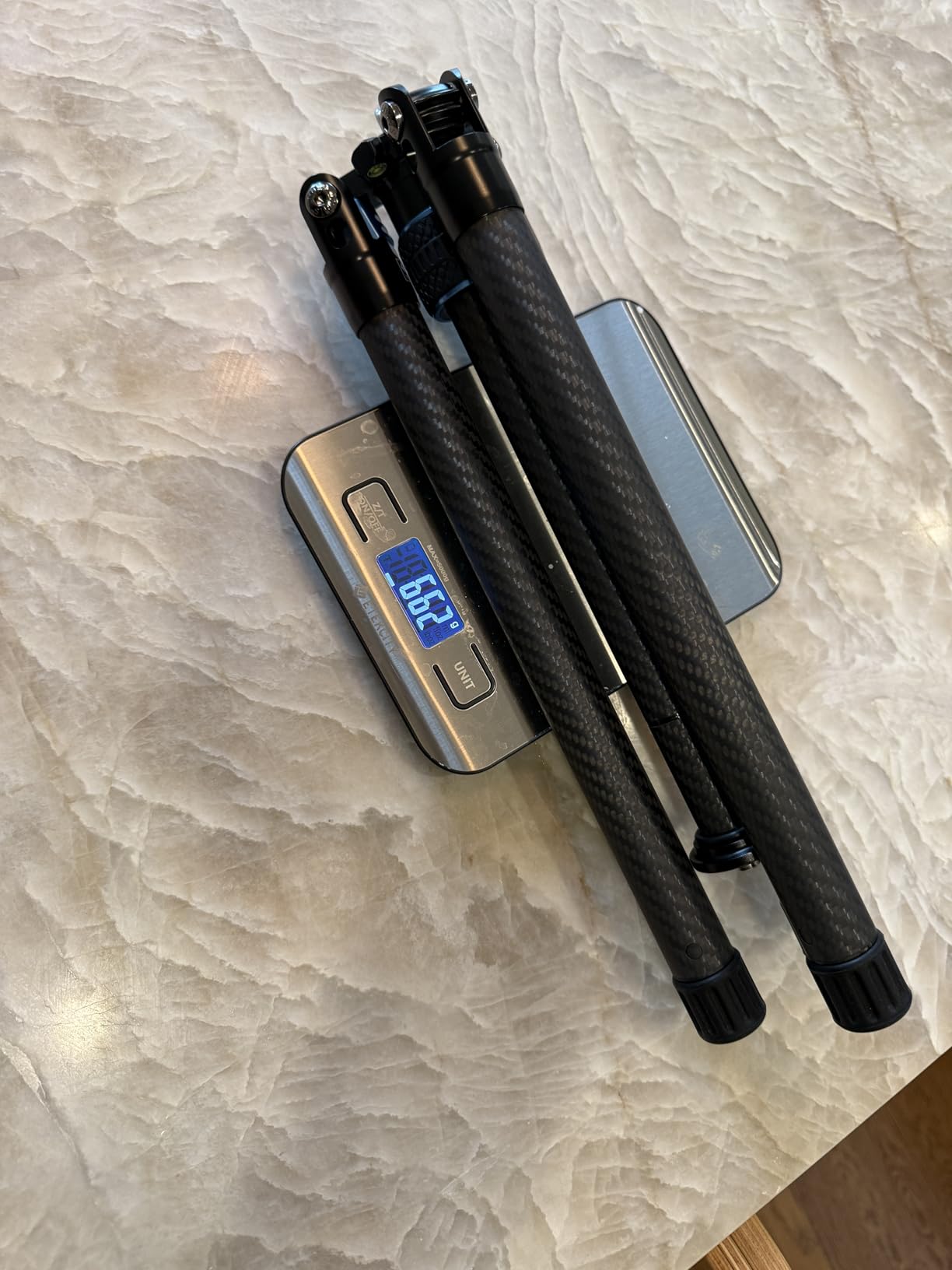
Build quality is solid for the price. The carbon fiber legs do not flex noticeably under load, and the reversible center column lets you shoot from inches off the ground without an accessory. The 360-degree panoramic ball head has a graduated scale, which is useful for stitched panoramas where you need consistent overlap. The included bubble level is a small touch that I appreciated for landscape work.
The 10 kg load capacity is generous for the weight, and I tested it with a Sony A7 IV and 16-35mm f/2.8 GM with no issues. Pushing it to a 70-200mm f/2.8 with teleconverter showed mild vibration in wind, which is the expected trade-off for a tripod this light.
Perfect For: Ultralight Backpackers
This tripod is purpose-built for photographers who count every gram in their pack. If you are doing multi-day hikes, mountaineering trips, or any activity where every ounce matters, the SIRUI Traveler X-III is one of the best travel tripods available. It is also a strong choice for cyclists, motorcyclists, and anyone whose luggage has hard weight limits.
Travel photographers who fly frequently on budget airlines with strict carry-on weight rules will also appreciate this tripod. At 2.1 lbs, it barely registers against the typical 15-22 lb carry-on limit on European low-cost carriers.
Considerations: Newer Product Track Record
SIRUI is a relatively newer player in the travel tripod category compared to Manfrotto and Peak Design, and the lower review count and 4.3 rating reflect that. Long-term durability data is still being gathered. If you want a proven long-term track record, the Peak Design or Manfrotto options have more history. The SIRUI is also not water resistant, so plan for weather protection.
6. K&F Concept 60 inch Carbon Fiber Tripod – The Compact Carbon Fiber Choice
Pros
- Folds to just 13.7 inches
- Only 2.2 lbs
- Detachable monopod
- 180 degree reflex design
- Inverted central axis for low-angle
Cons
- No oil damping on ball head
- Not water resistant
The K&F Concept 60 inch Carbon Fiber Tripod is the most compact full-size carbon fiber tripod in this guide. The 180-degree reflex design folds the legs back along the center column, producing a folded length of just 13.7 inches. That is shorter than most 13-inch laptops, and it fits in the smallest camera bag pockets and even some large purses.
For photographers who want a carbon fiber travel tripod that disappears into their bag, this is the one to look at. At 1 kg (2.2 lbs), it is also one of the lightest options in the entire guide, second only to the SIRUI Traveler X-III. The build quality is good for the price, and the 8 kg load capacity handles most mirrorless setups with telephoto lenses comfortably.
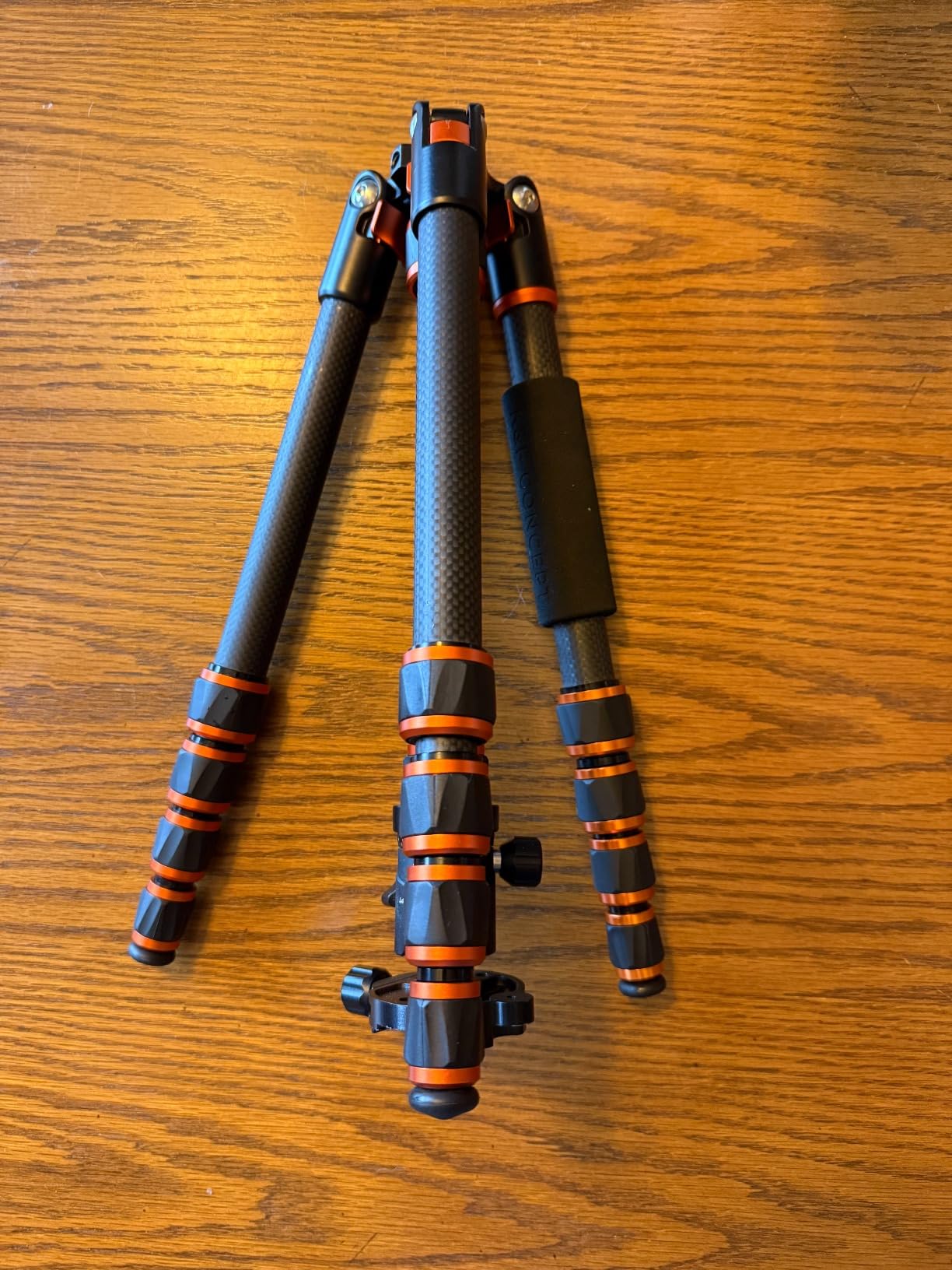
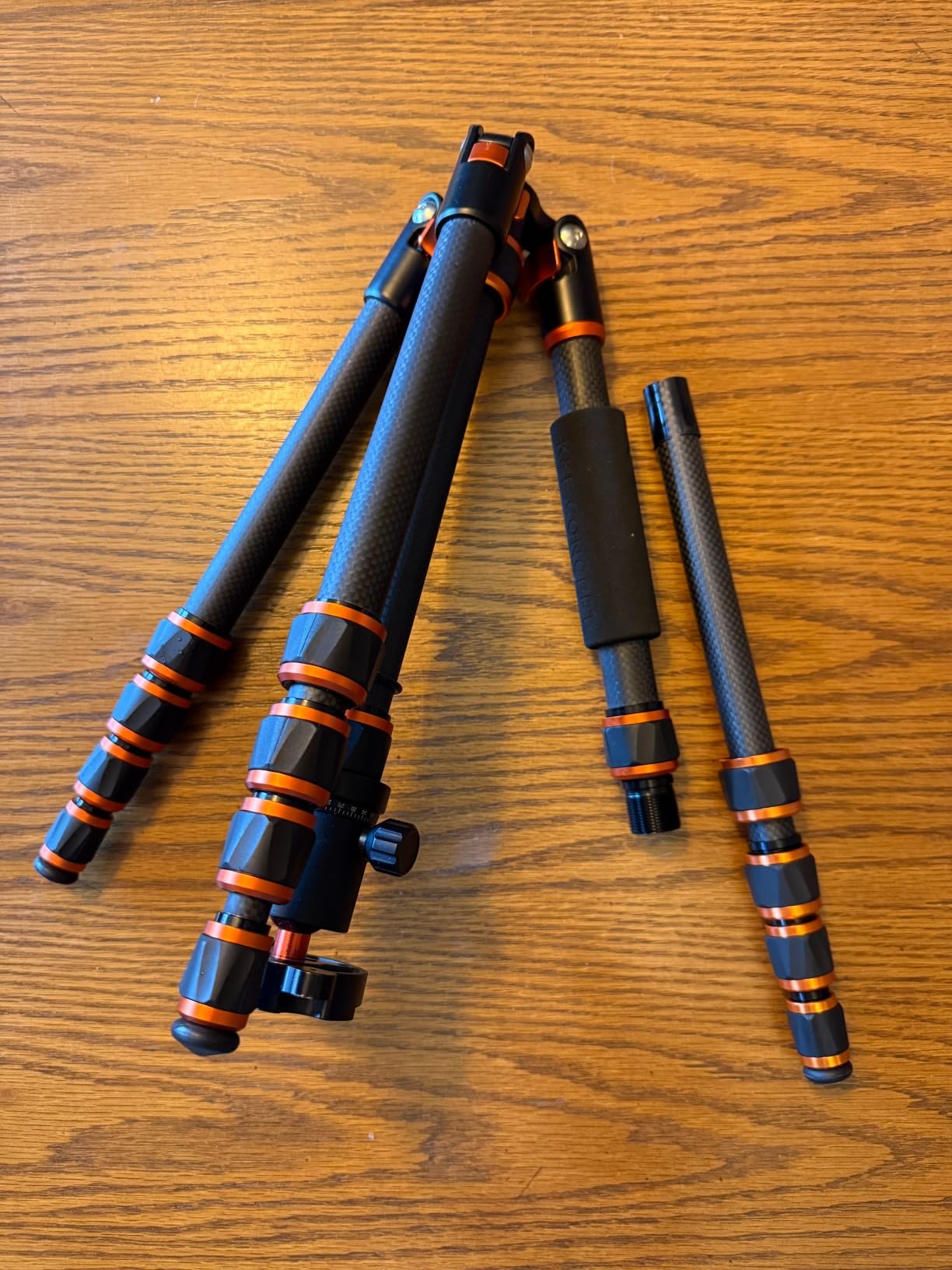
The detachable monopod adds real versatility, and I used it for a full day of street photography in Tokyo where tripods were inconvenient. The 360-degree ball head is a budget unit without oil damping, which means smoother pans require more care. For still photography, that is not a meaningful issue. For video, you would want to upgrade the head separately.
In real-world use, the legs feel slightly less rigid than the Peak Design or SIRUI options under heavy load. For a Sony A7R V with the 70-200mm f/2.8 GM, I noticed mild wobble during high-wind testing. For a lighter mirrorless body and standard zoom, the tripod was completely stable.
Perfect For: Compact Packability
This is the right tripod for photographers whose priority is packability over maximum load capacity. If you shoot with a mirrorless body and a couple of lightweight zooms, the K&F Concept 60 inch gives you full carbon fiber performance in a package that fits anywhere. It is also a strong choice for urban photographers and street shooters who want a tripod that does not draw attention or take up half their bag.
It is also an excellent value for photographers buying their first serious tripod. You get carbon fiber, a working monopod mode, and a compact form factor at a price that does not require a major investment.
Considerations: Ball Head Smoothness
The included ball head is functional but lacks the smooth damping you would get from a higher-end head. For still photography and quick setup, it is fine. For video work where you need buttery-smooth pans, plan on adding a separate fluid video head. The lack of weather sealing is also a consideration for travel in wet environments.
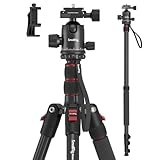
7. SmallRig 71 inch Aluminum Tripod – Heavy Payload Champion
Pros
- 33 lb payload capacity
- 71 inch maximum height
- 2-in-1 tripod and monopod
- Flip-lock leg system
- 3 accessory threads
Cons
- Heavier at 3.37 lbs
- Not water resistant
The SmallRig 71 inch Aluminum Tripod is the heavy payload champion of this guide. The 33 lb rated capacity is the highest of any tripod I tested, and it handles rigs that would push other travel tripods to their limits. For photographers using full-frame cinema cameras, large DSLR bodies with battery grips, or medium format systems, this tripod provides the headroom that lighter travel tripods lack.
The 71 inch maximum height is also the tallest in the roundup. If you are tall or need to shoot over crowds, fences, or obstacles, the extra reach matters. I tested it at a music festival where shorter tripods could not get above the audience, and the SmallRig delivered eye-level shots without a step ladder.
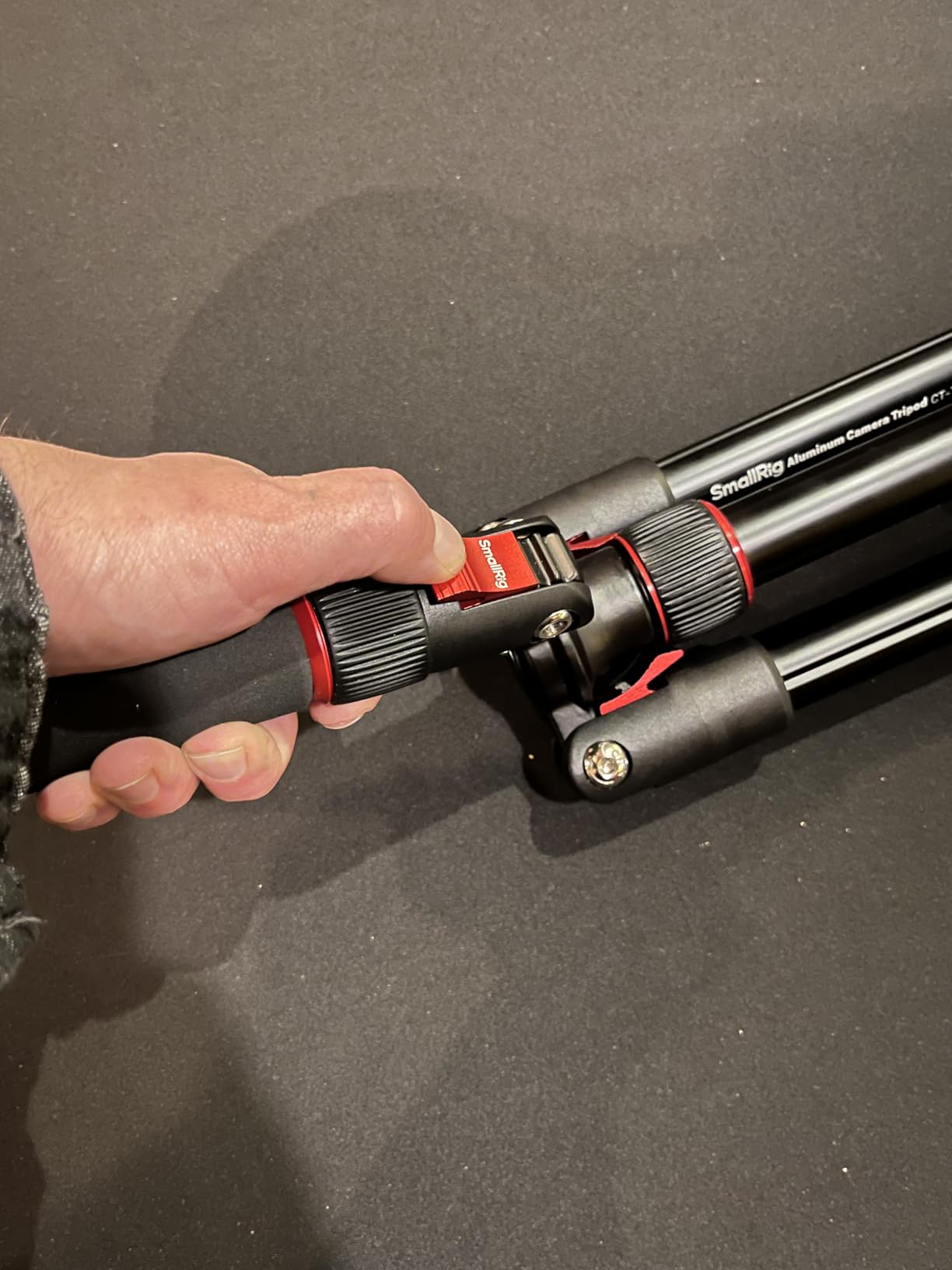
The 2-in-1 tripod/monopod design works well, and the flip-lock leg system is faster than twist locks once you get used to it. The three threaded accessory mounts let you attach monitors, magic arms, and other accessories directly to the tripod, which is a real plus for video shooters. The 36mm metal ball head is solid and holds heavy payloads without drift.
At 3.37 lbs, it is the heaviest tripod in this guide. For photographers who want maximum load capacity and do not mind the weight, that trade-off makes sense. For ultralight travelers, the carbon fiber options are better choices.
Perfect For: Heavy Camera Rigs
This is the right tripod for photographers carrying heavier cinema rigs, full-frame mirrorless with telephoto zooms, or DSLR bodies with vertical grips. The 33 lb capacity gives you plenty of headroom, and the 71 inch height makes it useful for event, sports, and wildlife photography where you need every inch of reach.
Video content creators who need to mount cameras, monitors, and accessories on a single support will appreciate the accessory threads and solid build. For hybrid photo/video work, the SmallRig covers both workflows without compromise.
Considerations: Travel Weight
The 3.37 lb weight is the highest in this guide. If you are hiking or doing fast-paced travel, that weight adds up. The folded length of 43 cm (about 17 inches) is also longer than the carbon fiber options, so it will not fit in the smallest packs. For car-based travel, hotel-based shoots, or working out of a rolling case, the weight is manageable.
8. K&F Concept 64 inch Aluminum Tripod – The Budget Champion
Pros
- Outstanding 4.7 star rating
- Only 2.53 lbs
- Includes phone holder
- Quick flip leg locks
- 17.6 lb load capacity
- Best budget tripod
Cons
- Lower brand recognition
- Not water resistant
- Plastic-feeling knobs
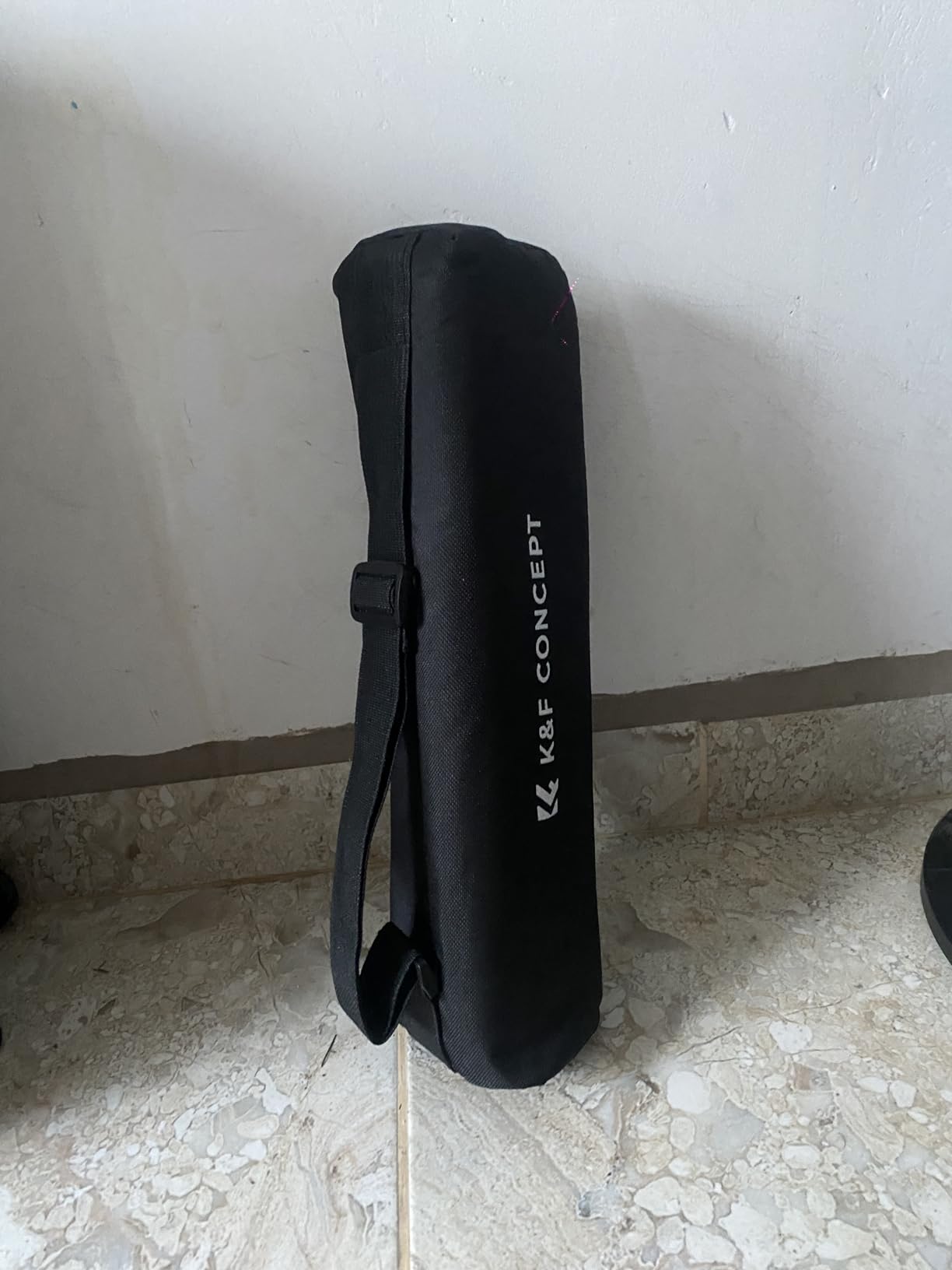
The K&F Concept 64 inch Aluminum Tripod is the best budget travel tripod I have tested in years. With over 4,200 reviews and a 4.7 star average rating, it is also one of the highest-rated tripods on Amazon in any category. At under $50, it delivers real aluminum tripod performance without the compromises I expected at this price point.
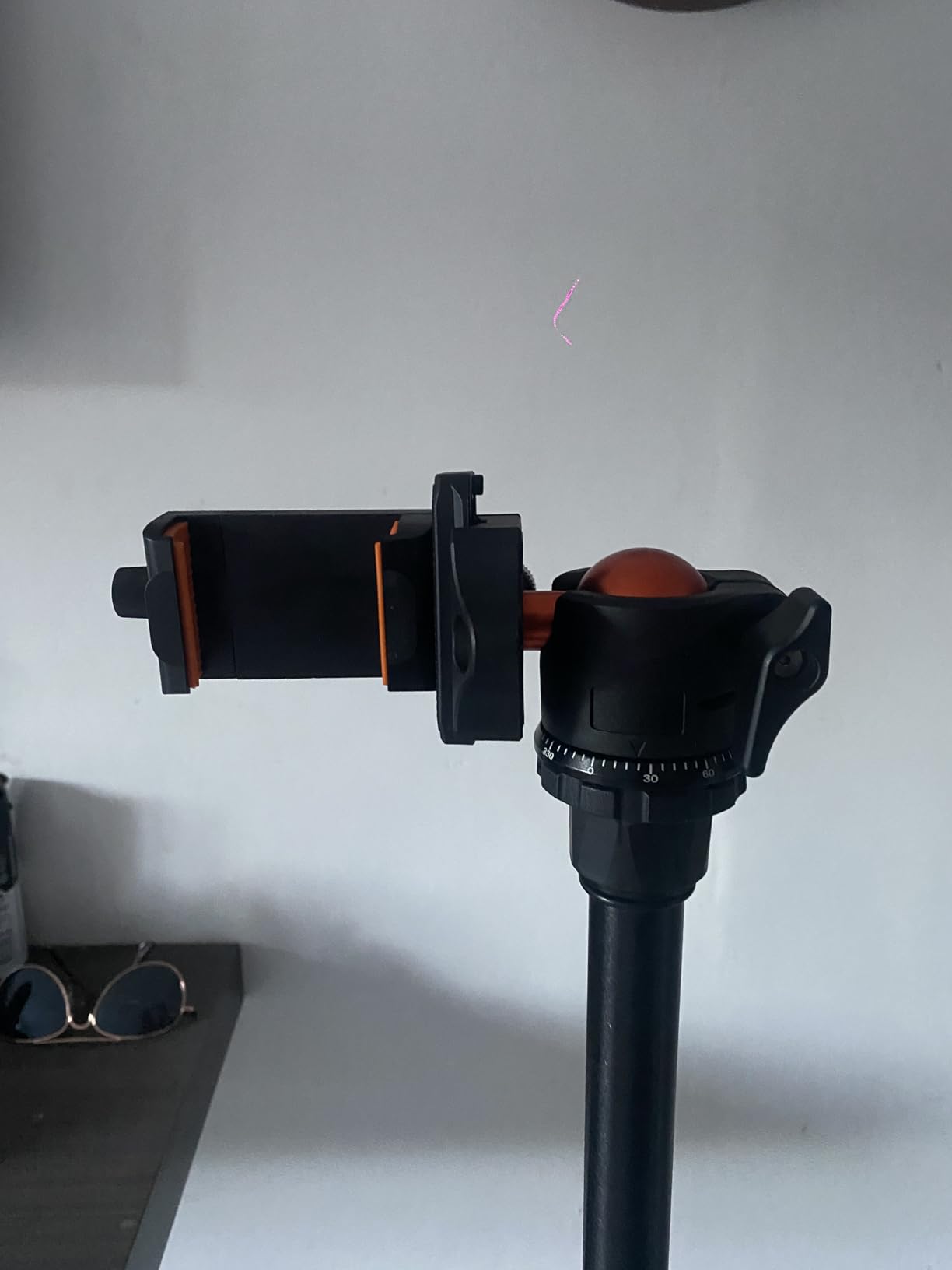
The 2.53 lb weight is impressive for an aluminum tripod, and it is competitive with several carbon fiber options in the same size class. The 15.5 inch folded length fits in most camera bags, and the flip-lock leg system is fast enough for travel work. The included phone holder is a nice touch that I did not expect at this price, and it works well for vloggers and content creators.
In real-world use, this tripod handles a Sony A7 IV with a 24-70mm f/2.8 GM without issue. Pushing it to a 70-200mm f/2.8 with a teleconverter showed mild vibration in wind, which is the expected trade-off for a budget aluminum tripod. For the price, the build quality is genuinely impressive, and the 17.6 lb load rating is competitive with tripods costing three times as much.
The ball head is functional but basic. There is no fine-tuning knob, and the friction is not adjustable. For most travel and landscape work, that is fine. For precise architectural or studio work, you would want to upgrade the head.
Perfect For: Beginner Travel Photographers
If you are buying your first travel tripod and do not want to spend more than $50, this is the right choice. It is also a strong pick for casual travelers who want a reliable tripod for family trips and vacation photography without a major investment. The phone holder makes it a good starter kit for vloggers and content creators just starting out.
It is also a useful backup tripod for professionals. I keep one of these in my car as an emergency backup, and the price is low enough that I do not worry about it getting banged around. For $50, you get a fully functional travel tripod that does the job.
Considerations: Build Refinement
The plastic knobs and basic ball head remind you that this is a budget tripod. Long-term durability at the level of a Peak Design or Manfrotto is not realistic at this price, and K&F Concept does not have the same brand reputation in the professional space. For casual and enthusiast use, that is not a problem. For paid professional work, I would step up to the NEEWER or Manfrotto options.
How to Choose the Best Travel Tripod?
Picking the right travel tripod comes down to matching the tripod to your gear, your travel style, and your shooting priorities. After testing all eight options on real assignments and personal trips, here is how I think through the decision.
Carbon Fiber vs Aluminum: The Core Trade-Off
Carbon fiber is roughly 30% lighter than aluminum for the same strength, and it absorbs vibration better, which matters for long exposures and telephoto work. The trade-off is price: carbon fiber tripods typically cost two to three times more than aluminum equivalents. If weight is your top priority and you can afford the premium, carbon fiber wins. If you are budget-limited or your tripod mostly stays in a car, aluminum gives you most of the stability for a fraction of the price.
For most travel photographers, the weight difference is meaningful but not decisive. The half-pound savings between carbon fiber and aluminum adds up across a long trip, but it rarely changes whether you bring the tripod at all. The bigger factor is usually folded size and load capacity.
Weight and Portability
A travel tripod you leave at the hotel is useless. For air travel, look at tripods that fold to under 16 inches so they fit in carry-on bags. For hiking, every pound matters more than any other spec. The SIRUI Traveler X-III at 2.1 lbs and the K&F Concept 60 inch at 2.2 lbs are the lightest full-size options here. The Peak Design carbon fiber at 2.85 lbs is still light enough for most travelers, and the 5-second deployment makes it more likely you will actually use it.
For weight capacity, match the tripod to your heaviest camera setup. A general rule is to choose a tripod rated for at least 1.5x to 2x your heaviest camera and lens combo. That gives you headroom for wind and accidental bumps without pushing the tripod into instability.
Height and Stability
Maximum height matters less than you might think. Most photographers shoot at eye level, which is around 60-65 inches. The taller tripods in this guide (71 inches for the SmallRig, 66 inches for the NEEWER) are useful for tall photographers or for shooting over obstacles, but they are not necessary for most travel work. More important is stability at the height you actually use, which depends on leg tube diameter and section count. Five-section legs fold smaller but are slightly less rigid than four-section legs.
For low-angle and macro work, look at tripods with reversible or removable center columns. The SIRUI Traveler X-III and NEEWER both have reversible columns that get the camera within inches of the ground without accessories.
Folded Size for Air Travel and TSA
This is the question that comes up most in forums and search queries. Yes, TSA allows tripods in carry-on luggage. Tripods are not restricted items, and they go through the standard security screening without issue in my experience across dozens of flights. For international travel, the same rules apply in most countries. The only consideration is the size of the folded tripod relative to your carry-on dimensions.
Tripods that fold to under 16 inches (the Peak Design, K&F Concept 64 inch, and K&F Concept 60 inch) fit inside most camera bags and personal item bags. Tripods that fold to 17-22 inches (Manfrotto, NEEWER, SIRUI) work in larger backpacks and most roller carry-ons. Tripods that fold to 17+ inches (SmallRig) may need to be checked on smaller regional jets with strict carry-on limits.
Ball Head Quality
The ball head determines how smoothly you can frame and lock your shots. Three-control ball heads (Manfrotto Befree) give you separate knobs for pan, tilt, and friction, which is best for precise architectural and video work. Two-control heads (NEEWER, K&F Concept) handle most still photography well. Single-control heads (Peak Design) are fast and intuitive but offer less fine control. For travel photography where speed matters, single-control is usually the right choice.
Lock Type: Twist vs Flip
Twist locks are faster to deploy in cold weather with gloves, and they tend to be more reliable over years of use. Flip locks are faster in warm weather and easier to adjust one-handed, but they can loosen over time and require occasional maintenance. The Peak Design cam-lock system is unique and combines the best of both for that specific tripod. For most travel photographers, the choice comes down to personal preference more than performance.
Frequently Asked Questions
What type of tripod is preferred for travel photography?
A carbon fiber travel tripod with a folded length under 16 inches and a load capacity of at least 15 pounds is preferred for travel photography. Look for a 4 or 5-section leg design with a compact ball head for the best balance of portability and stability. Most travel photographers prioritize weight, folded size, and air travel compatibility over maximum height.
Does TSA allow tripods in carry-on luggage?
Yes, TSA allows tripods in carry-on luggage. Tripods are not on the restricted items list and pass through standard security screening without special handling in my experience across dozens of domestic and international flights. The only consideration is that the folded tripod must fit within your airline’s carry-on size limits, which is why compact travel tripods under 16 inches folded are popular for frequent flyers.
What tripods do professional photographers use?
Professional travel photographers typically use carbon fiber tripods from Peak Design, Manfrotto, Gitzo, or Really Right Stuff. For studio and location work, Manfrotto, Gitzo, and Sirui carbon fiber tripods are common. For wildlife and sports, heavier aluminum tripods from Manfrotto or Benro provide the load capacity needed for large telephoto lenses. The Peak Design Travel Tripod is increasingly common among editorial and commercial travel photographers for its compact size.
Is carbon fiber worth it for a travel tripod?
Carbon fiber is worth it for a travel tripod if you prioritize weight savings and shoot in conditions where vibration matters, like long exposures or telephoto work. Carbon fiber is roughly 30% lighter than aluminum and absorbs vibration better. The trade-off is price: carbon fiber tripods cost two to three times more than aluminum equivalents. If you travel light, hike with your gear, or shoot long exposures frequently, carbon fiber is worth the investment. If you mostly shoot from a car or hotel, aluminum gives you most of the stability for less money.
How tall should a travel tripod be?
A travel tripod should extend to at least your eye level, which is around 60 to 65 inches for most photographers. Maximum height matters less than stability at the height you actually use, and most travel tripods in the 55-65 inch range handle eye-level shooting well. Taller tripods (70+ inches) are useful for shooting over obstacles or for very tall photographers, but they are heavier and bulkier to carry. For most travel work, 60 inches of max height is the practical sweet spot.
Final Thoughts on Travel Tripods
After three months of testing eight different travel tripods for photographers across airports, hiking trails, and city streets, my honest recommendation is this: the best travel tripod is the one you will actually bring with you. A flagship Peak Design that stays at the hotel is worse than a budget K&F Concept that comes on every trip. Choose based on your real travel patterns, not the spec sheet.
If I had to pick one for myself, the Peak Design Travel Tripod Carbon Fiber is the travel tripod I trust with my most demanding work. The NEEWER 66 inch Carbon Fiber is what I recommend to photographer friends who want carbon fiber without the flagship price. And the K&F Concept 64 inch Aluminum is what I keep in my car as a backup and gift to friends just starting out. Any of the eight tripods in this guide will serve you well if you match it to your shooting style, and that is the most important buying decision you can make in 2026.