
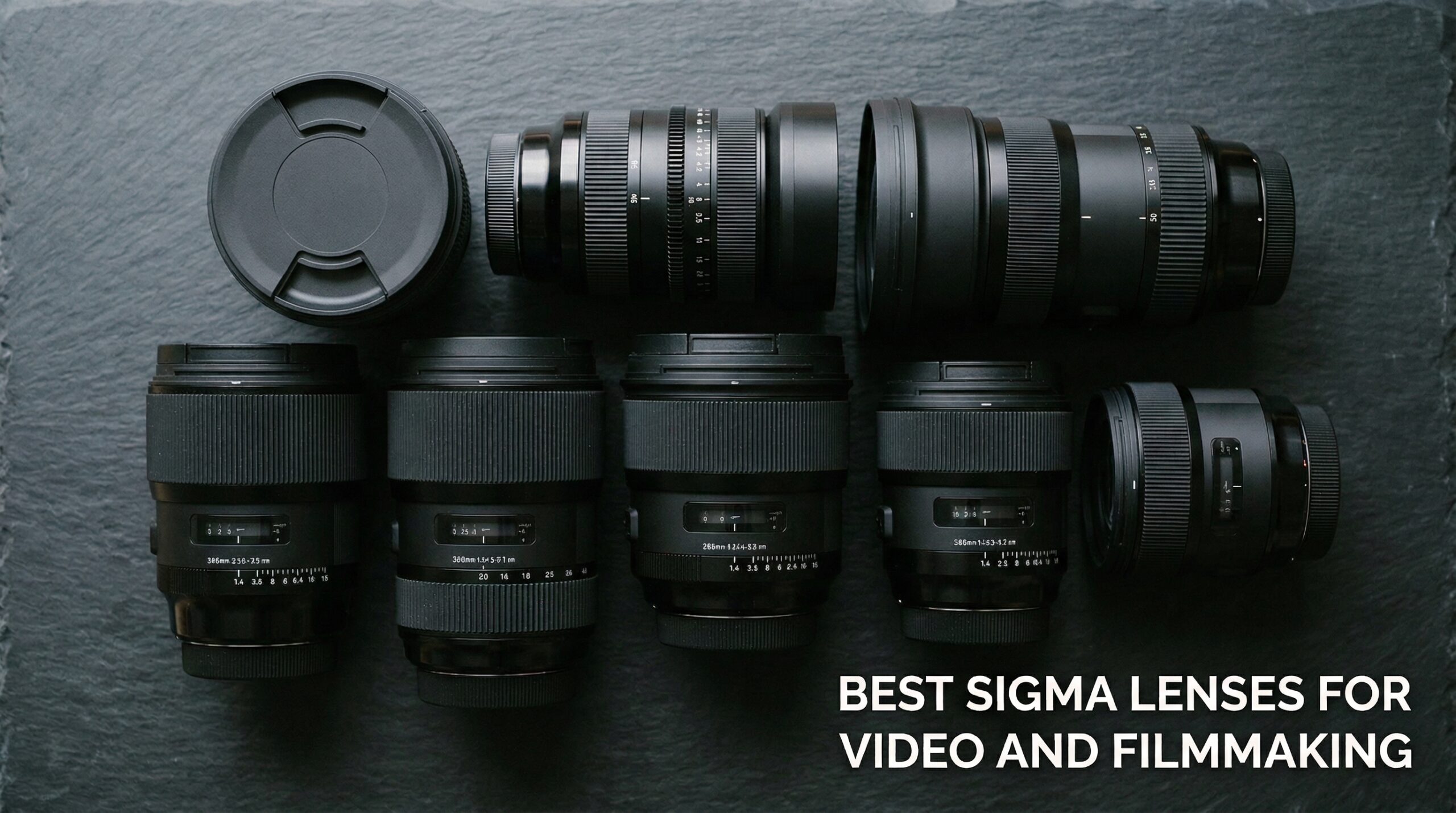
Finding the right glass for video work can make or break your productions. After spending years shooting everything from corporate documentaries to YouTube content, I have learned that Sigma lenses offer some of the best value in the filmmaking world. Their combination of optical quality, build construction, and competitive pricing makes them a top choice for video creators at every level.
This guide covers the best Sigma lenses for video and filmmaking in 2026, breaking down options for APS-C and full-frame cameras across multiple mount systems. Whether you shoot on Sony, Panasonic, or Fujifilm, there is a Sigma lens that fits your workflow and budget.
Sigma divides their lineup into three main categories: Art series for professional optical performance, Contemporary line for compact and lightweight designs, and Cine lenses for dedicated cinema applications. For most video shooters, the Art and Contemporary lines deliver cinema-quality results without the cinema lens price tag.
Top 3 Picks for Best Sigma Lenses for Video

Sigma 24-70mm F2.8 DG DN Art
- Professional zoom range
- Weather-sealed
- Silent autofocus
- Excellent low light

Sigma 30mm F1.4 DC DN
- Budget-friendly APS-C
- Fast F1.4 aperture
- Compact design
- Silent stepper motor

Sigma 28-70mm F2.8 DG DN
- Lightweight 1.04 lbs
- Internal focusing
- Gimbal-friendly
- Great value
Best Sigma Lenses for Video in 2026
| Product | Specifications | Action |
|---|---|---|
| Sigma 24-70mm F2.8 DG DN Art |
|
Check Latest Price |
 Sigma 17-40mm F1.8 DC Art Sigma 17-40mm F1.8 DC Art |
|
Check Latest Price |
| Sigma 30mm F1.4 DC DN |
|
Check Latest Price |
| Sigma 28-70mm F2.8 DG DN |
|
Check Latest Price |
 Sigma 16mm F1.4 DC DN Sigma 16mm F1.4 DC DN |
|
Check Latest Price |
 Sigma 56mm F1.4 DC DN Sigma 56mm F1.4 DC DN |
|
Check Latest Price |
 Sigma 14-24mm F2.8 DG DN Art Sigma 14-24mm F2.8 DG DN Art |
|
Check Latest Price |
 Sigma 35mm F2 DG DN Contemporary Sigma 35mm F2 DG DN Contemporary |
|
Check Latest Price |
 Sigma 85mm F1.4 DG DN Art Sigma 85mm F1.4 DG DN Art |
|
Check Latest Price |
 Sigma 65mm F2 DG DN Sigma 65mm F2 DG DN |
|
Check Latest Price |
1. Sigma 24-70mm F2.8 DG DN Art – Professional Standard Zoom
Pros
- Fast constant F2.8 aperture
- Exceptional sharpness and color
- Solid weather-sealed build
- Outstanding value vs Sony GM
Cons
- Heavy at 1.83 lbs
- Large lens hood
- Distortion at 24mm
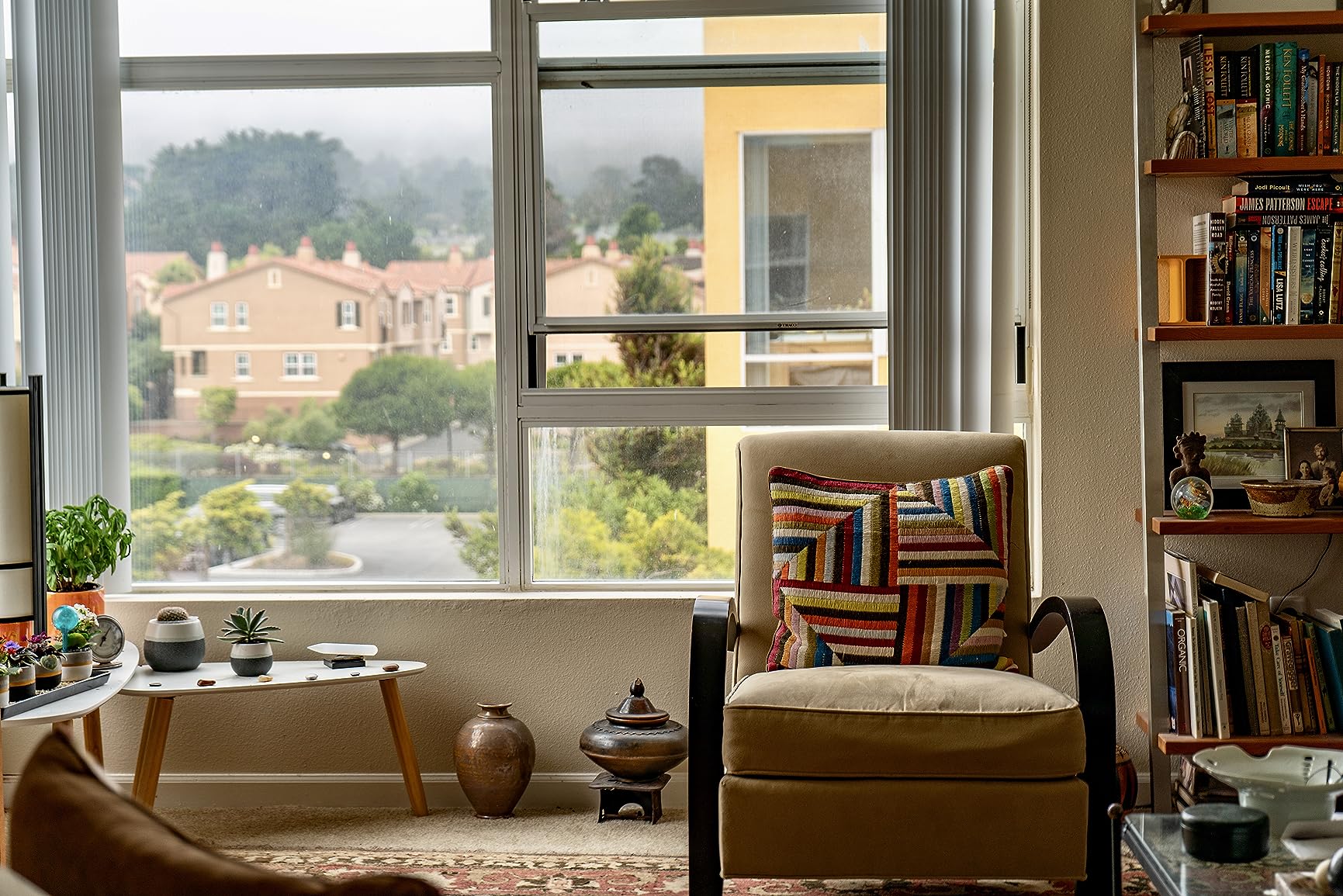
When I need one lens to handle an entire shoot, this is the one I grab. The Sigma 24-70mm F2.8 Art has become my workhorse for documentary work and corporate video projects. The constant F2.8 aperture means I can zoom from wide to telephoto without adjusting my exposure settings.
After using this lens on Sony A7 series cameras for over two years, the optical quality still impresses me. Colors render naturally, and the sharpness holds up even wide open at F2.8. For interview setups where I need to quickly reframe between a wide establishing shot and a tight close-up, this zoom range covers 90% of what I need.

The build quality feels substantial without being excessive. Weather sealing gives me confidence shooting in light rain or dusty environments. The autofocus motor runs nearly silent, which matters when recording ambient sound during documentary shoots.
Weight is the main trade-off at 1.83 pounds. On a gimbal, you will notice it after an hour of shooting. For run-and-gun work, I sometimes switch to lighter primes to save my arms. But for tripod work or controlled environments, the versatility outweighs the heft.
Professional Video Applications
This lens excels in corporate video, documentary work, and event coverage where changing lenses is not practical. The zoom range handles establishing shots, medium interviews, and detail cuts without swapping glass. Pair it with a Sony A7S III for low-light situations and you have a production-ready combo.
Weight Considerations for Gimbal Use
At 1.83 pounds, balancing this lens on a gimbal requires a capable model like the DJI RS3 or higher. I find it pairs well with the Sony A7 IV on my RS3 Pro. If you shoot handheld for extended periods, consider the lighter Sigma 28-70mm instead.
2. Sigma 17-40mm F1.8 DC Art – Constant F1.8 Zoom for APS-C
Pros
- Bright F1.8 constant aperture
- Internal zoom mechanism
- Excellent sharpness at F1.8
- Professional build quality
Cons
- Heavier than APS-C alternatives
- Rubber hood gathers dust
- No image stabilization
This lens changed how I think about APS-C video. A constant F1.8 aperture zoom is rare at any price point, and Sigma delivered one that performs beautifully on Sony APS-C bodies like the FX30 and A6700. The brightness lets me shoot in challenging light without pushing ISO too high.
The internal zoom mechanism makes gimbal balancing simple. Unlike extending zoom barrels, this lens maintains its length throughout the focal range. For gimbal work on smaller cameras like the ZV-E10 II, this design choice matters more than you might expect.
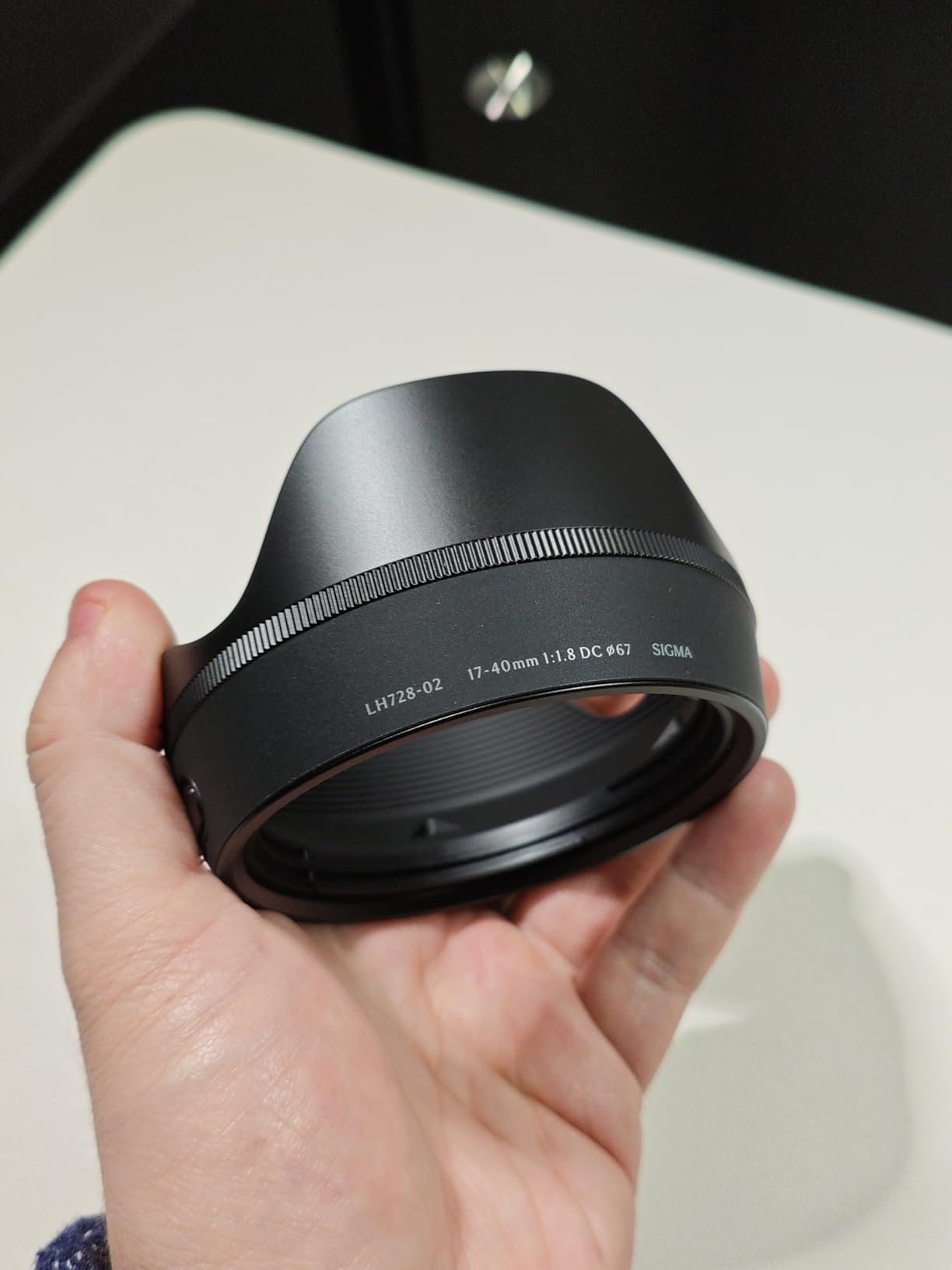
Sharpness at F1.8 genuinely surprised me. Most zooms need stopping down to reach peak performance, but this Art series lens delivers crisp results wide open. For video where you often shoot at maximum aperture for subject separation, that characteristic saves you from soft footage.
The 17-40mm range translates to roughly 25.5-60mm in full-frame terms. That covers wide establishing shots through short telephoto for interviews. For APS-C video creators who want one versatile lens, this should be at the top of your list.

Gimbal Work and Run-and-Gun
Internal zoom means your gimbal stays balanced as you adjust focal length. I have used this on a DJI RS3 with the Sony FX30, and the combination handles beautifully. The 1.2-pound weight is manageable for extended handheld sessions.
Who Should Skip This Lens
If you shoot full-frame cameras, this APS-C lens will not cover your sensor. Photographers seeking the lightest travel kit might find the weight excessive compared to prime alternatives. And videographers relying on in-body or lens stabilization should note this lens has neither.
3. Sigma 30mm F1.4 DC DN Contemporary – Budget APS-C Prime
Pros
- Excellent low-light performance
- Compact 9.3 oz design
- Sharp wide open at F1.4
- Incredible value for price
Cons
- No weather sealing
- Some chromatic aberration
- No image stabilization
This lens sits on my Sony A6400 more than any other glass I own. For the price, the Sigma 30mm F1.4 delivers image quality that rivals lenses costing twice as much. The F1.4 aperture opens up creative possibilities for shallow depth of field and low-light shooting.
At just 9.3 ounces, you barely notice it attached to the camera. For travel video and street documentary work, this lightweight design keeps your kit portable. I have shot entire documentary projects with just this lens and never felt limited.

The 45mm equivalent focal length hits a sweet spot for video. Wide enough for environmental context, tight enough for interview framing. It works as a do-everything lens for APS-C shooters who prefer prime quality over zoom convenience.
Autofocus performance with the stepping motor feels snappy and quiet. On Sony bodies with Fast Hybrid AF, face and eye tracking work reliably for interview setups. The motor produces minimal noise that microphones rarely pick up during recording.

Sony APS-C Video Shooters
If you own a Sony ZV-E10, A6400, A6600, or FX30, this lens belongs in your bag. The value proposition is unmatched. Combine it with the Sigma 16mm and 56mm F1.4 lenses for a three-lens kit that covers most video situations for under 1500 dollars.
Limitations to Consider
Lack of weather sealing means you need protection in rain or dusty conditions. The lens also lacks optical stabilization, so rely on your camera body IBIS or a gimbal for steady footage. Some users notice minor chromatic aberration in high-contrast scenes, though this corrects easily in post.
4. Sigma 28-70mm F2.8 DG DN – Lightweight Full-Frame Zoom
Pros
- Lightweight 1.04 lbs
- Compact design
- Excellent colors
- Great value vs GM
Cons
- Corner softness at 70mm
- Distortion at focal length extremes
- Some chromatic aberration
When I need to travel light without sacrificing F2.8 zoom capability, this lens becomes my first choice. At just 1.04 pounds, it weighs nearly half a pound less than the Sigma 24-70mm Art while covering a similar range. For gimbal work, that weight savings translates to longer shooting sessions.
The optical compromises become apparent when pixel-peeping corners at 70mm wide open. But for video work where viewers watch on phones and laptops, those imperfections rarely matter. The center sharpness and color rendering produce professional-looking footage.

Internal focusing keeps the lens length constant during operation. This design helps with gimbal balance and weather resistance. The 67mm filter thread matches other popular lenses, letting you share filters across your kit.
For content creators and YouTubers, this lens offers the F2.8 aperture needed for subject separation at a price point well below Sony G Master alternatives. The lightweight design makes it perfect for handheld vlogging and run-and-gun documentary work.

Run-and-Gun Video Production
This lens excels in situations where mobility matters. Wedding videographers, event shooters, and documentary filmmakers benefit from the lightweight design. On a compact gimbal like the DJI RS3, the combination feels perfectly balanced for extended use.
Optical Trade-offs
Compared to the heavier 24-70mm Art, this lens shows more distortion and corner softness. If you shoot architectural video or need edge-to-edge sharpness for 4K cropping, the Art series makes more sense. For most creative video work, the size and weight advantages outweigh these optical differences.
5. Sigma 16mm F1.4 DC DN Contemporary – Wide-Angle Prime
Pros
- Excellent low-light performance
- Sharp optics
- Compact and portable
- Weather-resistant build
Cons
- No optical stabilization
- Bulky for some setups
- Some barrel distortion
This lens transformed my vlogging and handheld video work. The 16mm focal length on APS-C gives you a 24mm equivalent field of view, perfect for self-recording while maintaining environmental context. The F1.4 aperture means I can shoot in dim interiors without grainy footage.
Part of the acclaimed Sigma 16/30/56mm APS-C trio, this lens delivers consistent optical quality across the frame. Sharpness holds up well even wide open, letting you use F1.4 for real results rather than just as a marketing number.

The 14.3-ounce weight strikes a balance between solid build and portable design. Weather resistance adds confidence for outdoor shoots. Combined with Sony Fast Hybrid AF, the autofocus tracks faces reliably for walk-and-talk vlogging scenarios.
For real estate video, this wide-angle perspective captures room interiors without extreme distortion. The close minimum focus distance also works for product b-roll and detail shots in documentary work.

Content Creators and Vloggers
If you film yourself while walking or shooting in varied lighting, this lens handles both scenarios. The wide angle keeps you in frame without requiring an assistant, while F1.4 maintains image quality as light fades. YouTube creators using Sony APS-C cameras consistently rank this among their favorites.
Handheld Video Considerations
Without optical stabilization, handheld footage can shake. Pair this lens with a camera featuring IBIS, or use a gimbal for smooth results. The 14.3-ounce weight works well on smaller gimbals without overwhelming the motors.
6. Sigma 56mm F1.4 DC DN – Portrait Prime for Video
Pros
- Incredibly sharp
- Beautiful bokeh at F1.4
- Compact 9.8 oz design
- Fast quiet autofocus
Cons
- No image stabilization
- Not suitable for macro
- Limited to APS-C
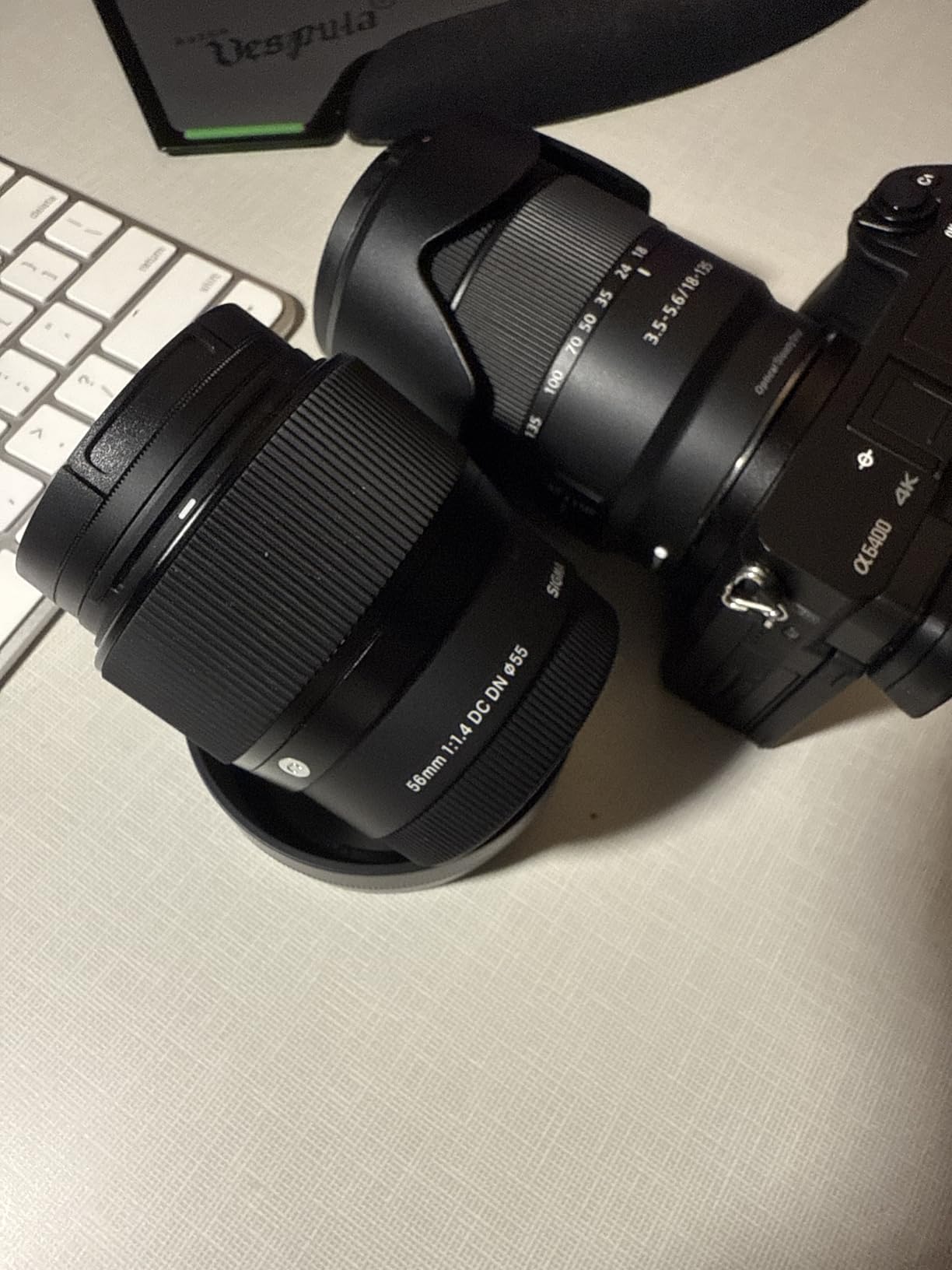
This lens completes the APS-C prime trinity and might be the sharpest of the bunch. The 56mm focal length translates to 85mm in full-frame terms, making it ideal for interview close-ups and portrait-style video shots. The F1.4 aperture creates creamy background separation that looks genuinely cinematic.
At just 9.8 ounces, this lens feels almost weightless on my A6700. For documentary work where I move between locations frequently, the compact size keeps my kit manageable. The metal construction feels premium despite the light weight.
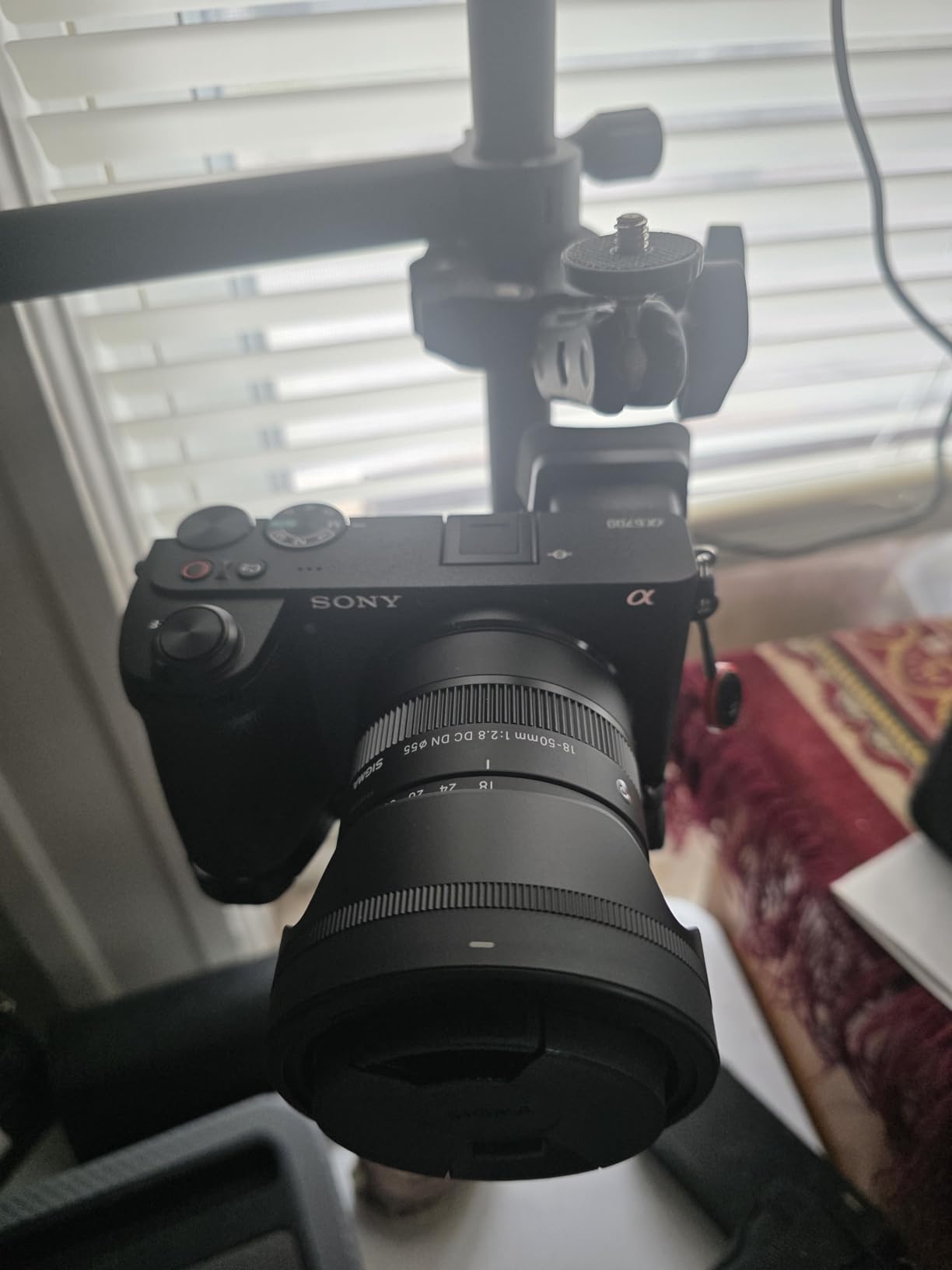
Autofocus performance impressed me during interview shoots. The silent motor works smoothly with Sony face and eye detection, keeping subjects sharp as they shift position. For video where audio matters, the near-silent operation never interferes with recording.
Bokeh quality at F1.4 produces that professional look viewers associate with high-end productions. Background lights render as smooth circles rather than nervous shapes. For interview videos and talking head content, this separation draws attention to your subject.
Interview and Talking Head Videos
This focal length flatters faces without distortion. At a comfortable working distance from your subject, you capture natural expressions while maintaining shallow depth of field. For YouTube interview channels and corporate talking head videos, this lens delivers broadcast-quality results.
APS-C Sensor Limitation
This lens only covers APS-C sensors. Full-frame Sony users should look at the Sigma 85mm F1.4 Art instead. The lack of image stabilization also means you need IBIS or a gimbal for handheld work, though at this focal length, most APS-C bodies include sensor stabilization.
7. Sigma 14-24mm F2.8 DG DN Art – Ultra-Wide Zoom
Pros
- Ultra-wide 14mm coverage
- Excellent sharpness at F8-11
- Good distortion control
- Weather-sealed
Cons
- Bulbous front element
- No screw-on filters
- Some edge softness wide open
When I need dramatic establishing shots or tight interior spaces, this ultra-wide zoom becomes essential. The 14mm perspective creates immersive establishing shots that pull viewers into a location. For real estate video and architectural work, this focal range covers most situations.
The F2.8 aperture seems faster than necessary for real estate, but it enables low-light interior shots and astrophotography applications. At typical working apertures of F8 through F11, the sharpness delivers crisp 4K footage across the frame.
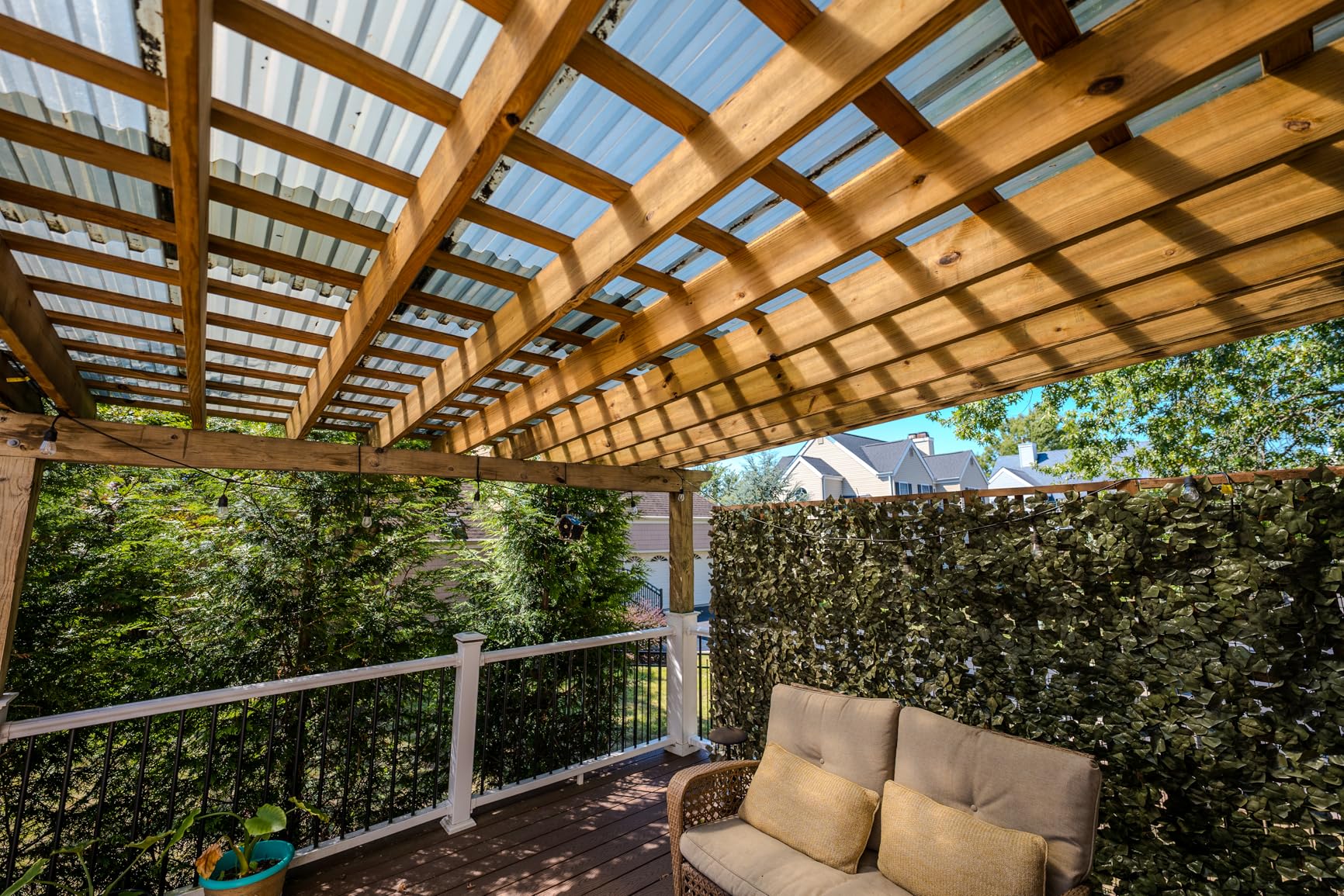
Distortion control at 14mm beats most ultra-wide zooms. While some barrel distortion appears, it corrects easily in post and looks less severe than competitors. For documentary work where you need wide shots without extreme warping, this lens handles the task.
The bulbous front element prevents standard screw-on filters. You will need rear drop-in filters, which cost more and offer fewer options. For video work where ND filters matter, this limitation requires planning.
Real Estate and Interior Video
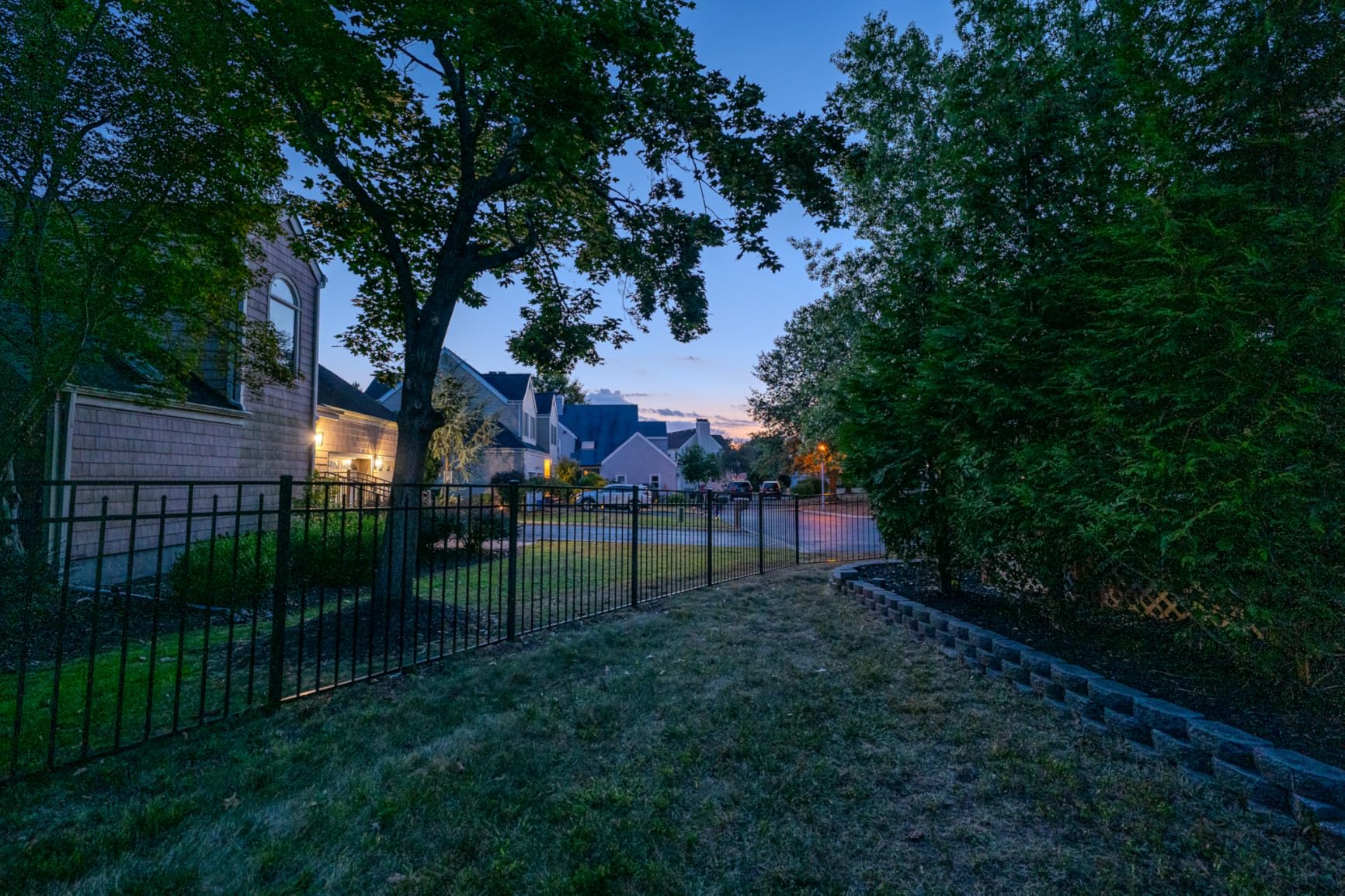
This lens excels at capturing room interiors where stepping back is not possible. Bathrooms, compact kitchens, and tight commercial spaces all fit in frame at 14mm. The distortion remains controlled enough for professional real estate marketing videos.
Filter System Limitations
Plan for rear-slot filters rather than front-threaded options. This design adds cost and reduces filter variety. If you frequently use graduated ND filters or polarizers, consider whether the ultra-wide perspective justifies the filter inconvenience.
8. Sigma 35mm F2 DG DN Contemporary – Compact I-Series Prime
Pros
- Premium all-metal construction
- Tactile aperture ring
- Compact 325g design
- Near-silent autofocus
Cons
- Soft at F2 wide open
- Not weather resistant
- Some vignetting
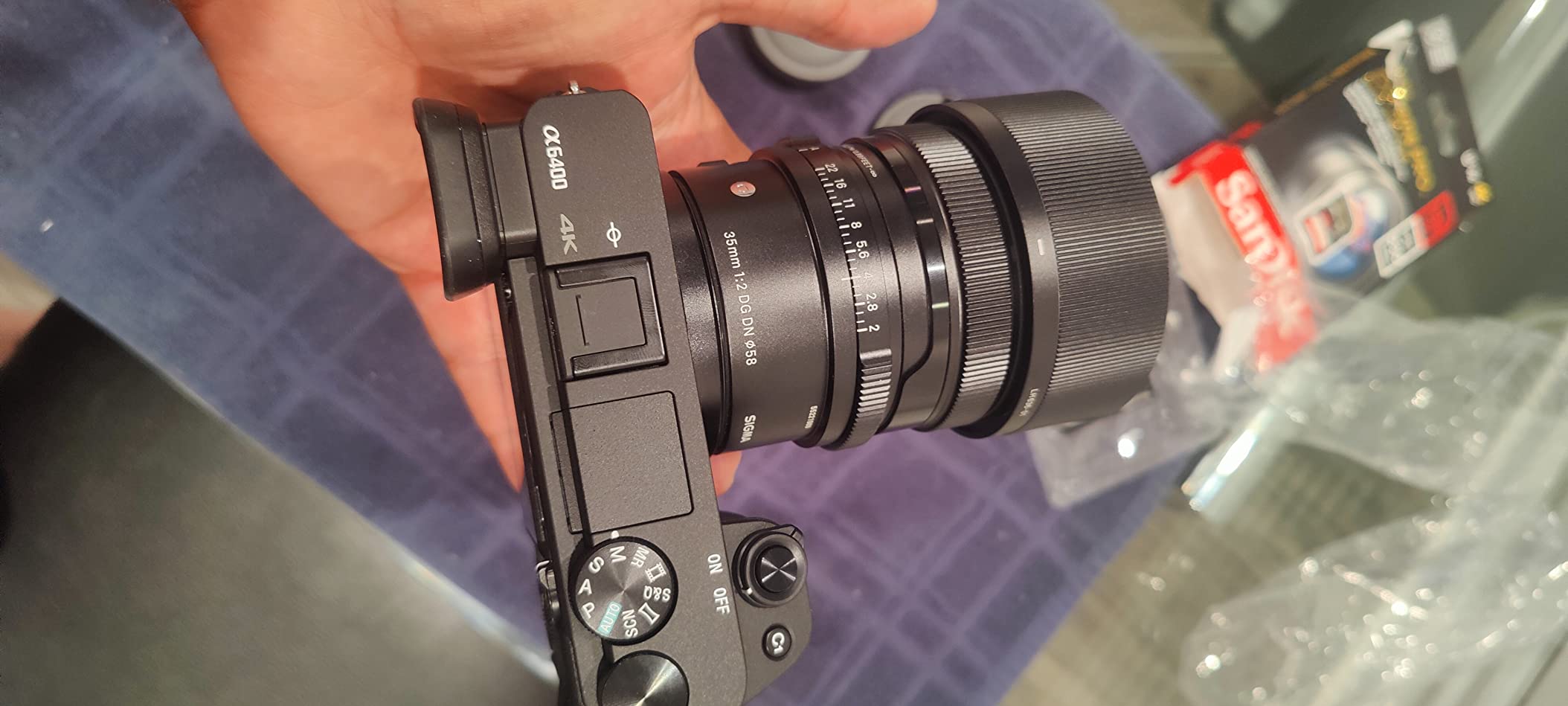
The I-series design philosophy emphasizes tactile experience and compact size. This 35mm F2 delivers both in a package that feels like a vintage lens with modern autofocus. The aperture ring clicks satisfyingly as you adjust settings, though video shooters may prefer the de-clicked option.
At just 325 grams, this lens balances perfectly on compact mirrorless bodies. For street documentary work and travel video, the weight savings adds up over long shooting days. The metal construction feels substantial without being heavy.
Optical performance at F2 shows some softness, particularly in corners. Stopping down to F2.8 or F4 brings out the sharpness this lens is capable of delivering. For video where you often shoot at narrower apertures for depth of field, this characteristic matters less than it would for still photography.
The 35mm focal length works as a versatile all-purpose option for video. Wide enough for environmental context, tight enough for interview medium shots. It fills the gap between true wide-angle and portrait focal lengths.
Street and Documentary Video
The compact size and near-silent autofocus make this ideal for candid video work. You can shoot in public without drawing attention, and the discrete appearance helps subjects feel more natural. For documentary filmmakers who work alone, this lens stays out of your way.
Sharpness Expectations
Do not expect the biting sharpness of Art series lenses wide open. This F2 Contemporary lens prioritizes character and portability over clinical perfection. If you need maximum sharpness at F2, consider the Sigma 35mm F1.4 Art instead.
9. Sigma 85mm F1.4 DG DN Art – Cinematic Portrait Prime
Pros
- Extremely sharp at F1.4
- Beautiful round bokeh
- Dust and splash proof
- Minimal focus breathing
Cons
- Minimum focus distance weak
- AF can hunt occasionally
- L-mount only
This lens produces some of the most cinematic footage I have captured. The 85mm focal length at F1.4 creates that shallow depth of field look associated with feature films. Background elements dissolve into smooth bokeh while your subject pops with sharpness.
Designed for L-mount cameras like Panasonic S5 and Leica SL series, this Art lens delivers record-high optical performance. Sharpness at F1.4 genuinely surprises me. Most F1.4 lenses need stopping down for critical focus, but this one performs at its maximum aperture.

For narrative filmmaking and music videos, this lens creates that polished, high-production look. The compression at 85mm flatters faces and creates intimate framing. Combined with controlled lighting, the results look genuinely cinematic.
Focus breathing stays minimal, which matters for focus pulls during video. When you shift focus between subjects, the framing stays consistent rather than the subtle zoom effect common in still-camera lenses.

Narrative and Music Video Work
This focal length defines the cinematic portrait look. For music videos where visual style matters as much as the song, the F1.4 aperture and 85mm compression create memorable imagery. Documentary filmmakers also use this for emotional interview close-ups.
Autofocus Performance Notes
The stepping motor handles video focus well but can occasionally hunt in low contrast situations. For critical focus work, manual override helps. Panasonic L-mount cameras with contrast-detect AF may show more hunting than phase-detection systems.
10. Sigma 65mm F2 DG DN – Unique Portrait Focal Length
Pros
- One of the sharpest lenses made
- Beautiful bokeh quality
- Unique focal length
- All-metal build
Cons
- No image stabilization
- Unusual focal length
- Heavier than it looks
This unusual focal length fills the gap between 50mm and 85mm, offering flexibility that standard primes lack. For environmental portraits where you want subject separation but also context, 65mm hits a sweet spot. You can crop into headshots while still capturing environmental details.
Part of the I-series lineup, this lens features all-metal construction and a premium tactile feel. The aperture ring operates smoothly, though video shooters may want to check for de-clicked versions for smooth exposure adjustments during recording.

Sharpness ranks among the best lenses I have used. At F2, the center resolution produces crisp 4K footage that holds up to cropping. Color rendering feels natural with minimal chromatic aberration in high-contrast scenes.
The focal length takes adjustment if you are used to standard options. Not quite a traditional portrait length, not quite a normal lens, it carves out its own territory. For environmental portrait video, that uniqueness becomes an advantage.

Environmental Portrait Video
This lens excels at showing subjects in their environment rather than isolating them completely. Documentary filmmakers capturing craftspeople, artists, or professionals in their workspace benefit from the balance between subject focus and environmental context.
Focal Length Preference
The 65mm length may not suit everyone. If you prefer the classic 50mm or 85mm looks, this lens sits in an unfamiliar middle ground. Consider whether you need that intermediate perspective before committing to this non-traditional focal length.
Buying Guide: Choosing the Right Sigma Lens for Video
Understanding Sigma Lens Lines for Video
Sigma organizes their lenses into three main categories, each serving different video production needs.
Art Series: Maximum optical quality with professional build. These lenses deliver the sharpest results and best bokeh. Weight tends toward the heavy side, which impacts gimbal work. Choose Art for controlled production environments where image quality matters above all else.
Contemporary Series: Compact designs prioritizing portability. The DC DN line specifically targets APS-C mirrorless cameras with lightweight builds. Perfect for run-and-gun video, travel content, and gimbal work where weight savings add up over shooting days.
Cine Series: Dedicated cinema lenses with geared focus rings, T-stop markings, and consistent color across focal lengths. These cost significantly more and target professional production. For most video creators, Art and Contemporary lenses deliver 95% of the value at a fraction of the price.
Mount Compatibility
Sigma produces lenses for Sony E-mount, L-mount (Panasonic/Leica), and Fujifilm X-mount. The products in this guide primarily cover Sony E-mount APS-C and full-frame systems, with select L-mount options. Always verify your camera mount before purchasing.
For Canon RF and Nikon Z mount users, Sigma’s selection remains limited due to relatively new mount access. Consider adapter solutions or native manufacturer alternatives if your preferred Sigma lens is unavailable in your mount.
Video-Specific Features to Prioritize
Focus Breathing: When focusing distance changes, does the image subtly zoom? Cinema lenses minimize this effect. Most Sigma Art lenses show minimal focus breathing, making them suitable for focus-pull shots. Contemporary lenses may exhibit more breathing.
Silent Autofocus: Video recording captures audio along with image. Loud focus motors ruin takes. Sigma’s stepping motors and HSM systems operate quietly enough for most production work, but test your specific combination before critical shoots.
Aperture Rings: Manual aperture control feels more intuitive for video than camera body dials. Some Sigma I-series lenses include aperture rings. Check whether your preferred lens offers clickless operation for smooth exposure adjustments during recording.
Gimbal Compatibility and Weight
Weight directly impacts gimbal performance and shooter fatigue. For extended handheld work, prioritize lenses under 1.5 pounds. The Sigma 28-70mm F2.8 at 1.04 pounds balances well on compact gimbals. Heavier Art series lenses like the 24-70mm require pro-level gimbal support.
Internal zoom and focus designs help maintain gimbal balance. Lenses that extend during zooming require rebalancing each time you change focal length. The Sigma 17-40mm F1.8 and 28-70mm F2.8 both use internal designs ideal for gimbal work.
Budget Recommendations by Use Case
Entry-Level YouTube/Vlogging: Start with the Sigma 30mm F1.4 DC DN for APS-C cameras or the Sigma 35mm F2 DG DN for full-frame. Both deliver professional-looking results under 500 dollars.
Documentary/Corporate Work: The Sigma 24-70mm F2.8 Art covers most situations with professional optical quality. Add a wide prime like the 16mm F1.4 for establishing shots and gimbal work.
Narrative/Music Video: Prime lenses deliver the cinematic look. Build a kit around the Sigma 85mm F1.4 Art for portraits, 35mm F2 for environmental shots, and 24-70mm F2.8 for flexibility.
Frequently Asked Questions
What lens do most filmmakers use?
Most filmmakers use zoom lenses in the 24-70mm range as their primary workhorse, complemented by fast prime lenses like 35mm, 50mm, and 85mm for cinematic shots. The Sigma 24-70mm F2.8 Art covers the zoom range most productions need, while primes like the Sigma 30mm F1.4 and 85mm F1.4 deliver the shallow depth of field look associated with professional video.
Which lens is best for cinematic video?
For cinematic video, prime lenses with fast apertures like F1.4 or F1.8 create the shallow depth of field and bokeh associated with film production. The Sigma 85mm F1.4 Art delivers the most cinematic look with beautiful background separation, while the Sigma 56mm F1.4 offers similar results for APS-C cameras at a lower price point.
Is F 2.8 or F 4 better for video?
F2.8 is better for video because it allows more light and creates shallower depth of field, which helps separate subjects from backgrounds. For indoor and low-light shooting, F2.8 lets you maintain lower ISO settings for cleaner footage. F4 lenses work fine for well-lit outdoor video but limit your creative options in challenging lighting conditions.
Are Sigma Art lenses good for video work?
Yes, Sigma Art lenses are excellent for video work. They offer exceptional sharpness, minimal focus breathing, and silent autofocus motors suitable for recording. Many professional videographers choose Sigma Art lenses over native manufacturer options for the combination of optical quality and value. The main trade-off is weight, as Art series lenses tend to be heavier than Contemporary alternatives.
Do Sigma lenses have focus breathing?
Sigma Art series lenses exhibit minimal focus breathing compared to many still-camera lenses, making them suitable for video focus pulls. The Sigma 85mm F1.4 DG DN Art in particular shows very little focus breathing. Contemporary and older Sigma designs may show more noticeable breathing. For critical focus-pull shots, Art series lenses perform closer to dedicated cinema lenses.
Final Thoughts on Sigma Lenses for Video
Sigma has earned their reputation as the value leader in professional optics. Their lenses deliver cinema-quality results at prices accessible to independent filmmakers and content creators. Whether you shoot documentary work on a 24-70mm zoom or narrative projects with F1.4 primes, Sigma offers options that punch above their weight class.
For most video shooters, I recommend starting with the Sigma 24-70mm F2.8 Art for full-frame or the Sigma 17-40mm F1.8 for APS-C. These zooms cover the majority of production situations. Add fast primes like the 30mm F1.4 or 85mm F1.4 when you need that cinematic shallow depth of field look.
The best Sigma lenses for video and filmmaking ultimately depend on your specific camera system, shooting style, and budget. But across their lineup, Sigma consistently delivers optical quality that rivals lenses costing twice as much. That value proposition makes them an obvious choice for video creators building their kit in 2026.