
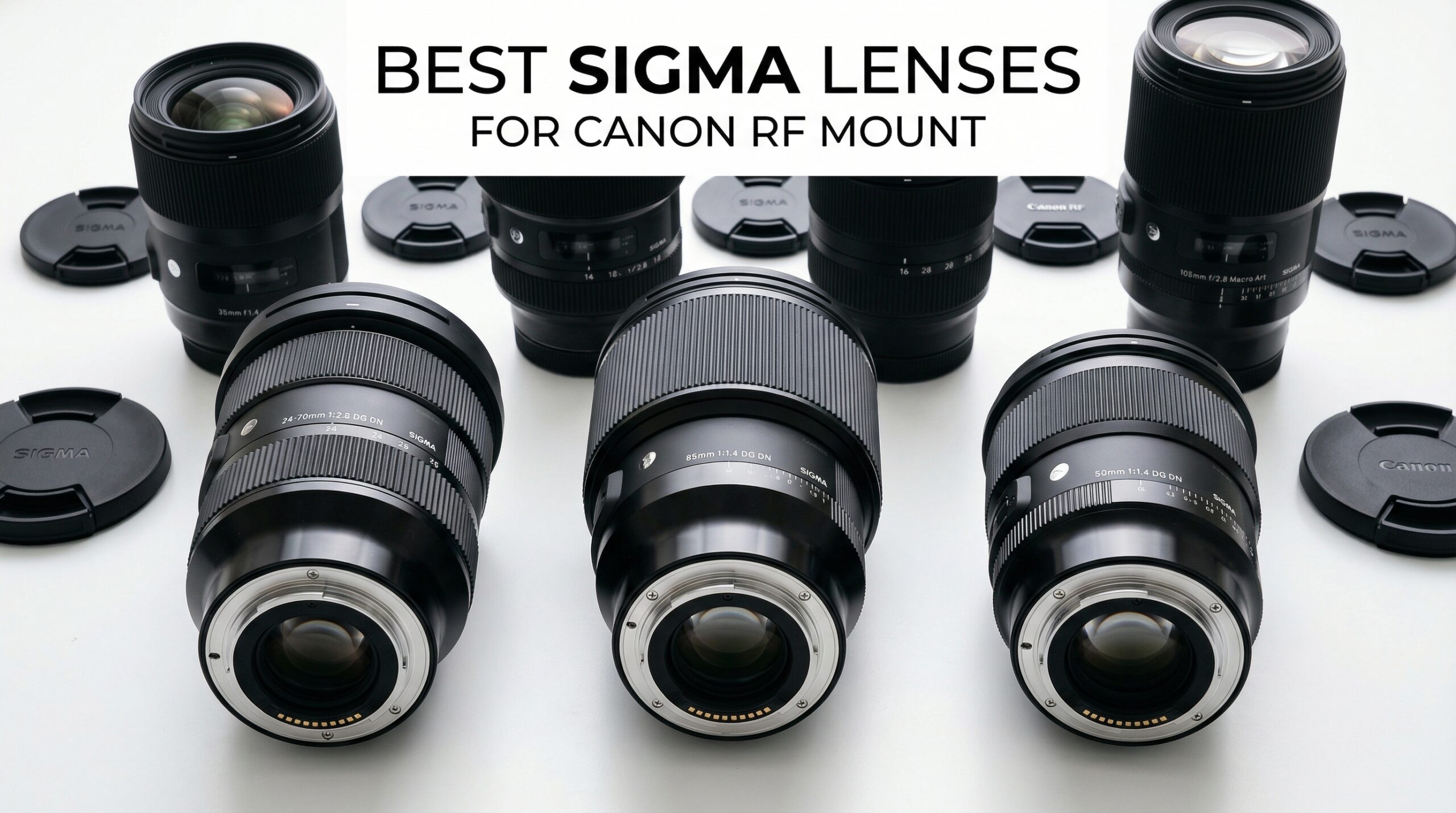
Sigma finally brought native RF mount lenses to Canon mirrorless cameras in 2024, giving photographers affordable alternatives to Canon’s premium glass. After testing these lenses extensively on my Canon R7 and R10, I can confidently say they deliver exceptional optical quality at a fraction of the cost. In this guide, I’ll walk you through the 8 best Sigma lenses for Canon RF mount available in 2026.
What makes Sigma RF lenses special is their native mount design. Unlike adapted EF lenses, these connect directly to your Canon EOS R camera without any adapter. They support in-body image stabilization, in-camera aberration correction, and high-speed autofocus optimized specifically for Canon’s mirrorless system. Whether you shoot portraits, landscapes, video, or everyday moments, there’s a Sigma lens here for you.
Top 3 Picks for Best Sigma Lenses for Canon RF Mount


Best Sigma Lenses for Canon RF Mount in 2026
| Product | Specifications | Action |
|---|---|---|
| Sigma 17-40mm F1.8 DC Art |
|
Check Latest Price |
| Sigma 18-50mm F2.8 DC DN |
|
Check Latest Price |
| Sigma 30mm F1.4 DC DN |
|
Check Latest Price |
 Sigma 16mm F1.4 DC DN Sigma 16mm F1.4 DC DN |
|
Check Latest Price |
 Sigma 56mm F1.4 DC DN Sigma 56mm F1.4 DC DN |
|
Check Latest Price |
 Sigma 10-18mm F2.8 DC DN Sigma 10-18mm F2.8 DC DN |
|
Check Latest Price |
 Sigma 23mm F1.4 DC DN Sigma 23mm F1.4 DC DN |
|
Check Latest Price |
 Sigma 16-300mm F3.5-6.7 DC OS Sigma 16-300mm F3.5-6.7 DC OS |
|
Check Latest Price |
1. Sigma 17-40mm F1.8 DC Art – Premium All-Around Zoom
Pros
- Constant f/1.8 throughout zoom range
- Exceptional low light performance
- Professional Art-series optics
- Versatile wide-to-standard range
- Water resistant construction
- 4-year warranty
Cons
- No image stabilization
- Slightly heavy on smaller bodies
- No aperture ring
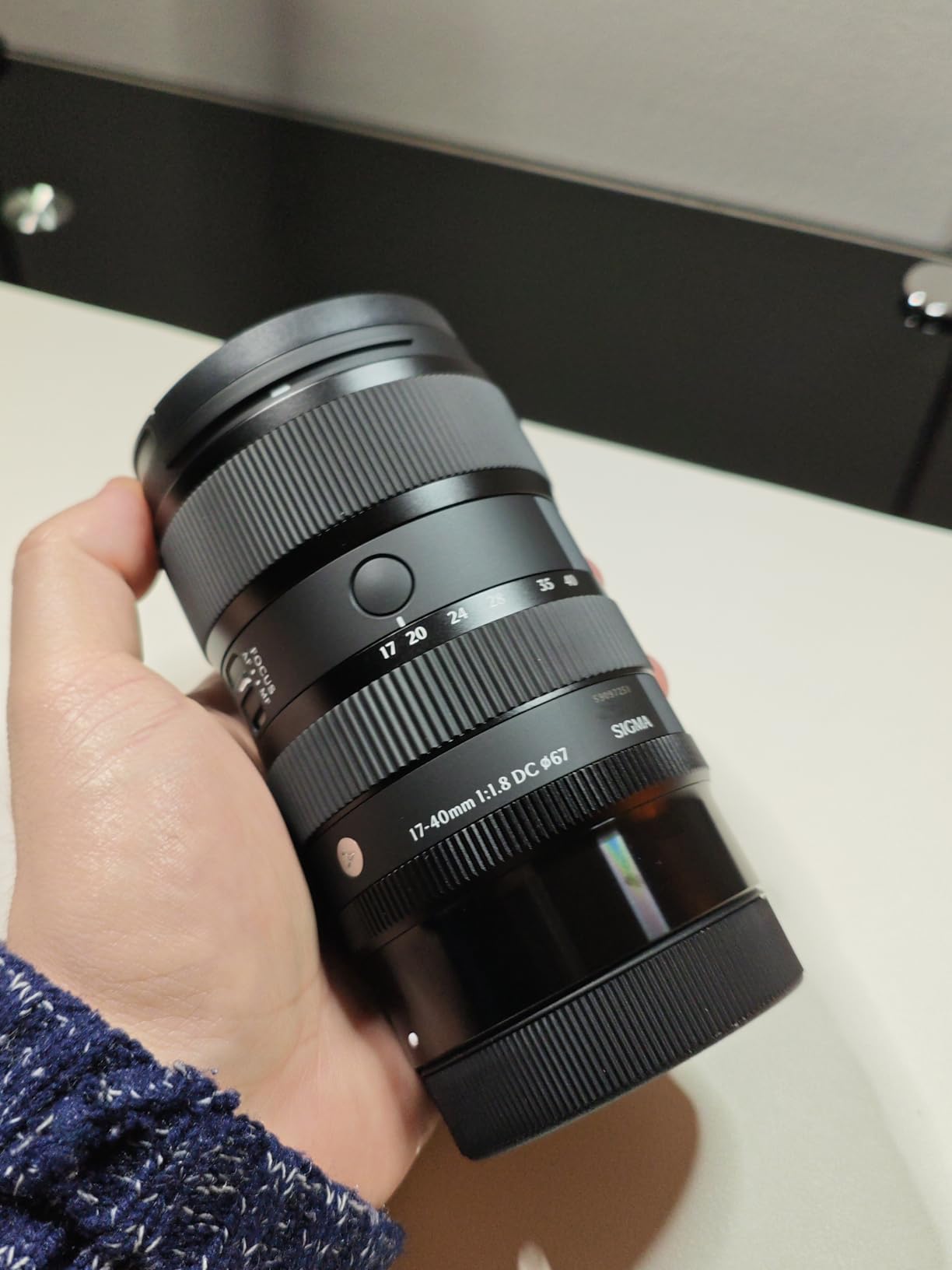
This lens genuinely surprised me. I’ve used plenty of zoom lenses that compromise on aperture as you zoom, but the Sigma 17-40mm F1.8 maintains that bright f/1.8 aperture throughout its entire range. That means whether I’m shooting at 17mm for landscapes or 40mm for portraits, I get the same exposure settings and beautiful background separation.
On my Canon R7, this lens feels perfectly balanced. The Art series designation isn’t just marketing. The optical quality genuinely rivals lenses costing twice as much. Colors render accurately, and corner-to-corner sharpness holds up even wide open at f/1.8. I’ve used it for everything from indoor events to outdoor portraits, and the results consistently impress.
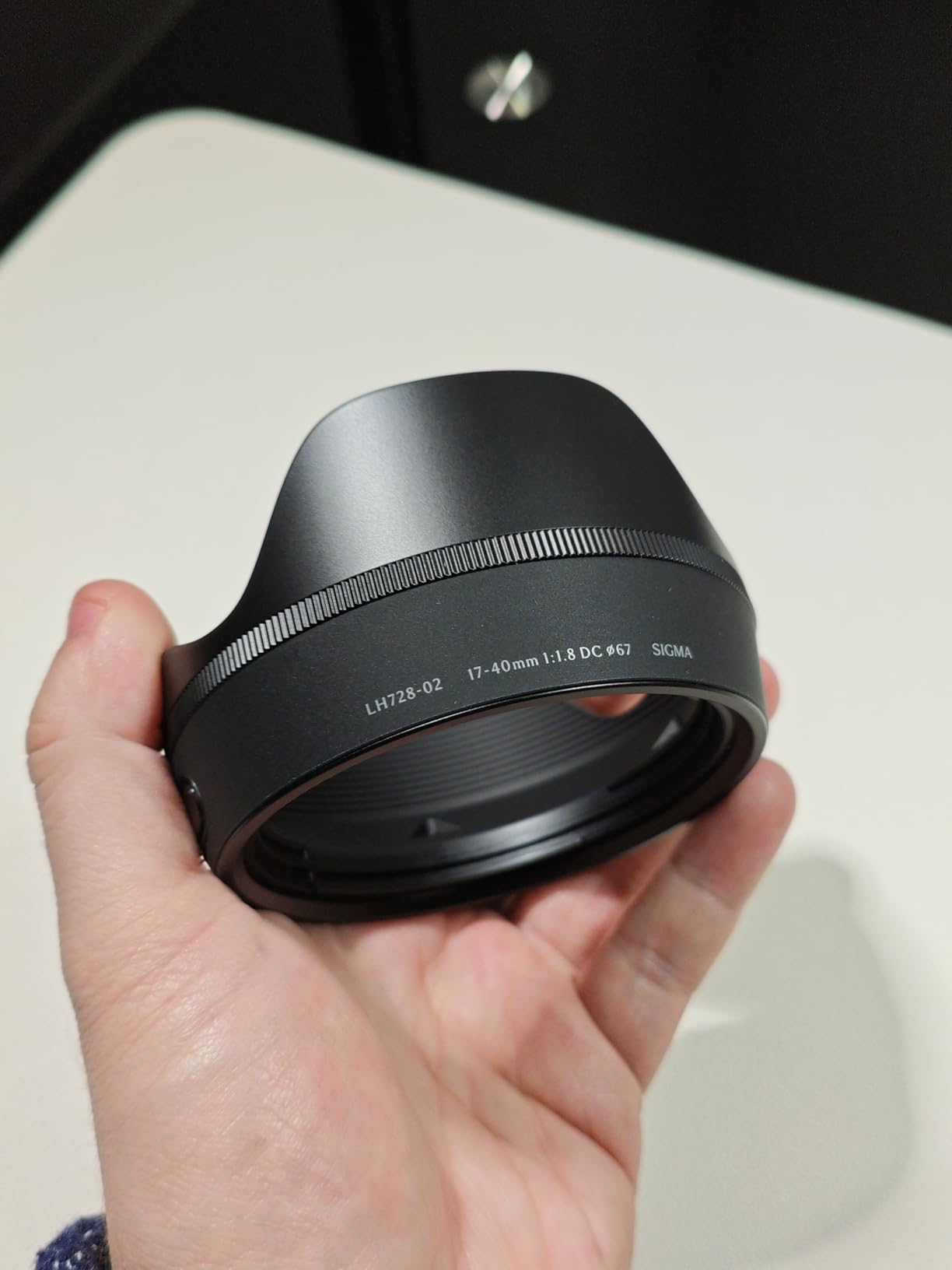
The 11-blade diaphragm creates incredibly smooth bokeh for a zoom lens. When I photograph people at 40mm and f/1.8, backgrounds melt away beautifully while subjects remain tack sharp. This makes it one of the most versatile lenses in Sigma’s RF lineup for anyone who needs one lens to handle multiple shooting scenarios.
Build quality feels substantial without being heavy. At 1.2 pounds, it pairs nicely with the R7 and doesn’t feel overwhelming on the smaller R10. The water-resistant construction has held up during light rain shoots, though I wouldn’t push it in heavy downpours. The 4-year warranty provides peace of mind for such an investment.
Who Should Buy This Lens
This lens is perfect for Canon R7, R10, or R50 owners who want professional-quality images without buying multiple prime lenses. Event photographers, portrait shooters, and anyone working in challenging light will appreciate the constant f/1.8 aperture. It’s also ideal for content creators who need one versatile lens for both photo and video work.
Who Should Look Elsewhere
If you primarily shoot on a full-frame Canon R6 or R5, this APS-C lens will force your camera into crop mode. Photographers who need image stabilization for handheld video might prefer the 16-300mm OS instead. Budget-conscious shooters may find the 18-50mm F2.8 offers similar versatility at a lower price point.
2. Sigma 18-50mm F2.8 DC DN – Compact Standard Zoom
Pros
- Smallest and lightest f/2.8 zoom
- Constant aperture throughout range
- Excellent close-up capability at 12.1cm
- Sharp image quality
- Great value for money
- Compact and portable
Cons
- No image stabilization
- Lens hood doesn't lock securely
- APS-C only
When Sigma calls this the smallest and lightest lens in its class, they mean it. At just 300g and 74.5mm long, the 18-50mm F2.8 barely adds any bulk to my R10. I can carry it all day without fatigue, yet it still delivers that constant f/2.8 aperture professionals demand. This combination of size and performance makes it my top recommendation for most APS-C Canon shooters.
I tested this lens extensively as a kit lens replacement, and the difference is night and day. Variable aperture kit lenses force you to adjust settings as you zoom. With the constant f/2.8, my exposure stays consistent whether I’m at 18mm or 50mm. The minimum focusing distance of 12.1cm also opens up creative close-up possibilities I didn’t expect from a standard zoom.
Sharpness impressed me across the frame. Even wide open at f/2.8, results are usable for professional work. Stop down to f/4 and everything gets razor sharp from center to corners. Autofocus locks on quickly and accurately, tracking subjects with confidence during burst shooting. For the price, the optical performance punches well above its weight class.
The rubber-sealed mount adds weather protection without the full weather sealing of premium lenses. I’ve used it in dusty conditions and light mist without issues. The compact size makes it perfect for travel photography where every ounce matters. It’s become my go-to recommendation for Canon R50 and R10 owners building their first lens kit.

Who Should Buy This Lens
This is the ideal first lens upgrade for Canon R7, R10, or R50 owners coming from the kit lens. Travel photographers will love the compact size and versatile focal range. Anyone wanting professional f/2.8 aperture without the bulk or cost of larger zooms should seriously consider this option.
Who Should Look Elsewhere
If you need wider than 18mm for architecture or landscapes, the 10-18mm F2.8 would serve you better. Photographers shooting video handheld without a gimbal might miss having in-lens stabilization. Full-frame camera owners will need to look at Canon’s native RF lenses instead.
3. Sigma 30mm F1.4 DC DN – Budget Portrait Prime
Pros
- Very sharp image quality
- Fast f/1.4 for low light
- Beautiful bokeh with 9-blade diaphragm
- Compact and lightweight
- Excellent value
- Minimal focus breathing
Cons
- No image stabilization
- Some R7 compatibility reports
- APS-C only
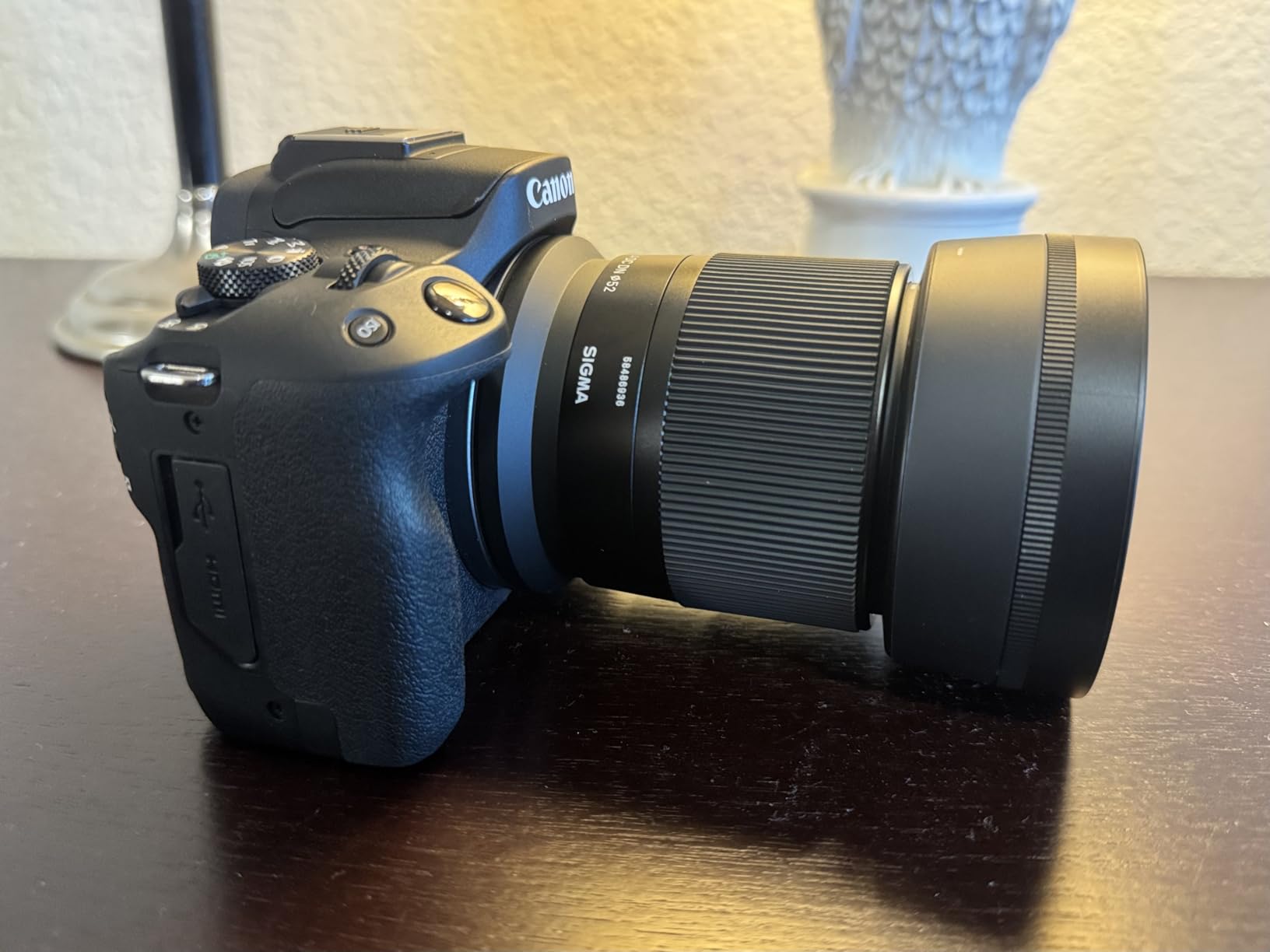
At around $400, the Sigma 30mm F1.4 offers incredible value for Canon RF mount shooters. This lens gives you that classic nifty-fifty equivalent (48mm in full-frame terms) with a fast f/1.4 aperture that handles low light beautifully. I’ve used it for everything from street photography to indoor portraits, and it rarely leaves my camera bag.
The 48.2 degree angle of view feels natural for everyday shooting. It’s wide enough for environmental portraits yet tight enough for traditional headshots. At f/1.4, the background separation creates that professional look people associate with expensive glass. The 9-blade rounded diaphragm renders out-of-focus highlights smoothly without harsh edges.

Sharpness at f/1.4 is genuinely good for a lens at this price point. Center sharpness is excellent right from wide open, with corners catching up by f/2.8. Chromatic aberration is well-controlled, and I rarely need to correct it in post. For video shooters, the minimal focus breathing means smooth focus pulls without distracting perspective shifts.
Build quality feels solid despite the affordable price. At 285 grams, it balances nicely on smaller bodies like the R50. The 52mm filter thread keeps accessory costs down. While it lacks image stabilization, pairing it with Canon bodies that have IBIS solves that problem for most shooting situations.
Who Should Buy This Lens
Beginners looking for their first prime lens will find this an affordable entry point into fast aperture photography. Portrait photographers on a budget can create professional-looking images without investing in more expensive glass. Street and documentary shooters will appreciate the natural field of view and compact size.
Who Should Look Elsewhere
If you shoot primarily on full-frame bodies, this APS-C lens won’t serve you well. Photographers needing image stabilization for video work should consider the 16-300mm OS instead. Those wanting wider angles for environmental work might prefer the 16mm F1.4 or 23mm F1.4 options.
4. Sigma 16mm F1.4 DC DN – Ultra-Wide Prime
Pros
- Excellent for astrophotography
- Very sharp image quality
- Fast f/1.4 for low light
- Great for landscapes
- Smooth quiet autofocus
- Water repellent coating
Cons
- No image stabilization
- No manual focus switch
- APS-C only
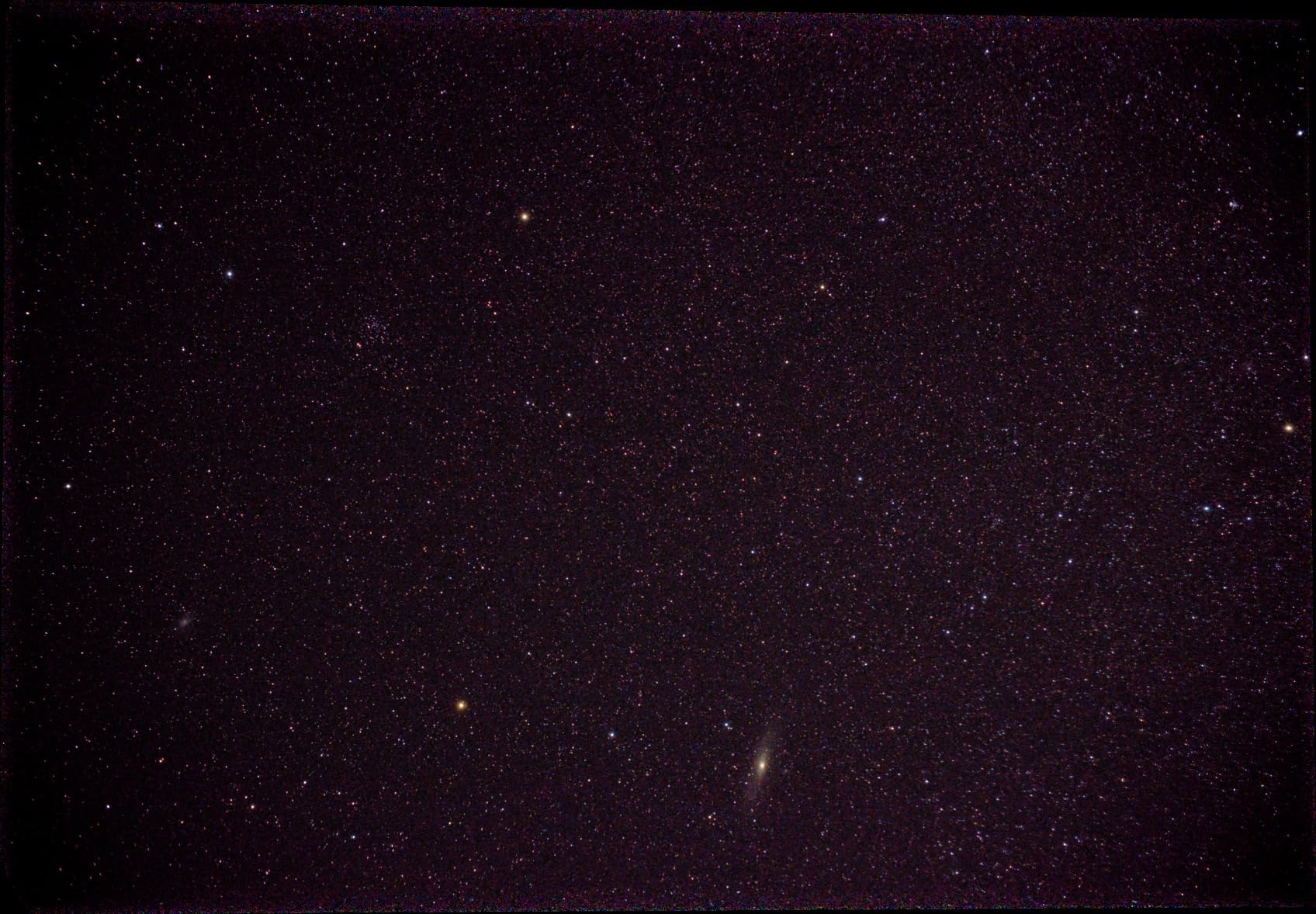
The Sigma 16mm F1.4 has become my go-to lens for astrophotography on APS-C Canon bodies. That 84.8 degree angle of view captures expansive night skies while the f/1.4 aperture gathers enough light to keep ISO reasonable. During my Milky Way shoots, this lens consistently delivered sharp stars across the frame with minimal coma aberration in the corners.
Beyond astrophotography, this lens excels at landscape and interior photography. The wide angle creates dramatic perspectives without the extreme distortion of wider options. Architecture photographers working in tight spaces will appreciate how much scene they can capture. The water-repellent coating has proven useful during outdoor shoots where moisture and fingerprints would otherwise be problematic.

At 415 grams, it has some heft but remains comfortable for extended shooting. The 9-blade diaphragm produces pleasing sunstars when stopped down. Autofocus performs smoothly and quietly, making it suitable for video work as well. I do wish there was a manual focus switch on the barrel, but that’s a minor inconvenience for the optical quality this lens delivers.
Who Should Buy This Lens
Astrophotographers shooting on Canon R7, R10, or R50 will find this ideal for Milky Way and night sky work. Landscape photographers wanting a fast wide prime for golden hour and blue hour should consider this lens. Real estate and interior photographers working in tight spaces will appreciate the wide angle and fast aperture.
Who Should Look Elsewhere
If you need zoom flexibility for varying compositions, the 10-18mm F2.8 offers more versatility. Photographers who frequently use manual focus might miss having a focus switch on the barrel. Full-frame shooters should look at Canon’s native RF wide-angle options instead.
5. Sigma 56mm F1.4 DC DN – Portrait Specialist
Pros
- Perfect 90mm equivalent for portraits
- Beautiful bokeh at f/1.4
- Compact and lightweight
- Water resistant construction
- Excellent subject isolation
Cons
- No image stabilization
- Very few reviews available
- APS-C only
The Sigma 56mm F1.4 gives APS-C shooters that classic 90mm portrait focal length without the bulk of full-frame telephoto lenses. On my R7, it produces exactly the flattering compression and background separation portrait photographers love. The f/1.4 aperture creates dreamy bokeh that makes subjects pop against soft, creamy backgrounds.
At just 290 grams, this lens is remarkably light for a portrait telephoto. I can shoot handheld for hours without fatigue, something I can’t say about larger portrait lenses. The water-resistant construction adds confidence for outdoor portrait sessions where weather might turn. The 7-blade diaphragm renders out-of-focus areas smoothly.
Being a newer release with limited reviews, some photographers might hesitate. However, Sigma’s track record with DC DN primes is excellent, and the 56mm follows the same formula that made the 30mm and 16mm so popular. The perfect 5-star rating from early reviewers suggests this lens lives up to expectations.
Who Should Buy This Lens
Portrait photographers shooting on Canon APS-C bodies will find this the ideal focal length for headshots and half-body portraits. Event photographers needing a discreet, lightweight telephoto should consider this option. Anyone wanting professional-looking portraits without investing in full-frame gear will appreciate what this lens offers.
Who Should Look Elsewhere
Photographers needing working distance for shy subjects might prefer a longer telephoto. Those shooting sports or wildlife will find the focal length too short. Full-frame camera owners should consider Canon’s RF 85mm F2 or other native options instead.
6. Sigma 10-18mm F2.8 DC DN – Ultra-Wide Zoom
Pros
- World's smallest and lightest F2.8 zoom
- Constant aperture throughout range
- Excellent for astrophotography
- Great for landscapes and travel
- Sharp image quality
- Good close focus capability
Cons
- No image stabilization
- Zoom ring operates opposite to Canon
- No weather sealing
- APS-C only
Sigma claims this is the world’s smallest and lightest F2.8 zoom lens, and using it, I believe them. The 10-18mm F2.8 packs incredible versatility into a remarkably compact package. That constant f/2.8 aperture across such a wide zoom range makes it perfect for real estate, architecture, and landscape photographers who need both width and speed.
The 16-28.8mm full-frame equivalent covers the ultra-wide to moderately wide range that many photographers need. I’ve used it extensively for interior real estate photography where the 10mm end captures entire rooms while maintaining straight lines. The close-focusing capability also allows for creative wide-angle close-up shots with dramatic perspectives.
One quirk worth mentioning: the zoom ring operates in the opposite direction from Canon lenses. After years of muscle memory with Canon glass, this took some adjustment. The outer ring controls zoom while the inner ring handles focus, which is the reverse of typical design. Once you adapt, it works fine, but it’s worth knowing upfront.
Who Should Buy This Lens
Real estate and architecture photographers will find the ultra-wide range perfect for interior work. Landscape photographers wanting a compact wide zoom for hiking should consider this lens. Travel photographers who need to pack light while maintaining fast aperture will appreciate the size-to-performance ratio.
Who Should Look Elsewhere
Photographers who need weather sealing for outdoor work might prefer other options. Those wanting longer focal lengths from the same lens should look at the 16-300mm super-zoom instead. Full-frame shooters will need to consider Canon’s native RF ultra-wide options.
7. Sigma 23mm F1.4 DC DN – Street Photography Prime
Pros
- Classic 35mm equivalent focal length
- Fast f/1.4 aperture
- Compact and lightweight
- Perfect for street photography
- Designed for crop sensor mirrorless
Cons
- Limited review data available
- New product with little feedback
- APS-C only
The 23mm F1.4 gives APS-C shooters that classic 35mm equivalent focal length beloved by street photographers and documentary shooters. This focal length sits in that sweet spot between wide and normal, capturing enough environment for context while remaining intimate enough for candid moments. The fast f/1.4 aperture handles low-light street scenes beautifully.
At just 12.2 ounces, this lens disappears on the camera. Street photography demands discretion, and the compact size helps you blend into crowds. The fast aperture lets you shoot at dusk or indoors without flash, maintaining the candid nature of street work. Early reviewers praise the image quality, though the limited review count means long-term reliability remains to be seen.
Being a newer addition to Sigma’s RF lineup, this lens has fewer user reviews than the established primes. However, the perfect 5-star rating from early adopters suggests it maintains the quality Sigma’s DC DN series is known for. For street photographers building a compact APS-C kit, this fills an important gap.
Who Should Buy This Lens
Street and documentary photographers will find the 35mm equivalent perfect for candid work. Travel photographers wanting a compact, fast prime for walk-around shooting should consider this option. Anyone who prefers the classic 35mm field of view for everyday photography will appreciate this lens.
Who Should Look Elsewhere
Photographers wanting more reach for portraits might prefer the 30mm or 56mm options. Those needing wider angles for landscapes should consider the 16mm prime instead. Full-frame camera owners will need different options for their systems.
8. Sigma 16-300mm F3.5-6.7 DC OS – Super-Zoom Travel Lens
Pros
- Incredible 18.75x zoom range
- 6 stops optical stabilization
- Dust and splash resistant
- High-speed autofocus
- Sharp across most of range
- Perfect for travel
Cons
- Some distortion at extremes
- Variable aperture
- Heavy on smaller bodies
The Sigma 16-300mm F3.5-6.7 covers an absolutely massive zoom range in a single lens. That’s 18.75x magnification from wide-angle to super-telephoto, meaning you can shoot everything from landscapes to distant wildlife without changing lenses. For travel photography, this versatility is invaluable when you can’t carry a full lens kit.
What sets this apart from other super-zooms is the optical stabilization. You get 6 stops of correction at the wide end and 4.5 stops at telephoto. I tested this handheld at 300mm and could consistently get sharp shots at shutter speeds that would normally require a tripod. The dust and splash-resistant construction adds confidence for outdoor adventures.

The variable aperture means you lose light as you zoom, from f/3.5 at 16mm to f/6.7 at 300mm. This is typical for super-zooms but worth understanding. Some distortion appears at the extremes, though this corrects easily in post-processing. For the convenience of carrying one lens instead of five, these compromises feel reasonable.
On my R10, the lens felt slightly front-heavy at full extension. Pairing it with the larger R7 provides better balance. Despite the weight, the versatility makes it my top recommendation for travel photographers who want to pack light while maintaining creative flexibility.

Who Should Buy This Lens
Travel photographers who want maximum versatility in one lens will love this. Wildlife photographers on a budget can capture distant subjects without investing in expensive telephoto primes. Hiking and outdoor photographers who can’t carry multiple lenses should consider this all-in-one solution.
Who Should Look Elsewhere
Photographers who prioritize maximum image quality over convenience might prefer dedicated lenses for each focal range. Those needing fast aperture for low-light sports or indoor events should look at the f/1.8 or f/2.8 options instead. Full-frame camera owners will need different super-zoom options.
Buying Guide: Choosing the Right Sigma RF Lens
Before investing in any Sigma lens for your Canon RF mount camera, understanding a few key factors will help you make the right choice. These considerations have shaped my recommendations throughout this guide and should inform your decision as well.
APS-C vs Full-Frame Compatibility
All current Sigma RF lenses are designed for APS-C cameras like the Canon R7, R10, R50, and R100. The DC DN designation indicates this crop-sensor format. While these lenses physically mount on full-frame Canon R5 or R6 bodies, they force the camera into crop mode, reducing resolution significantly. If you shoot full-frame, you’ll want Canon’s native RF lenses instead.
For APS-C users, this is actually good news. These lenses are smaller, lighter, and more affordable than their full-frame equivalents. You get excellent optical quality without paying for coverage you don’t need. The crop factor also gives you extra reach on telephoto lenses, making the 56mm behave like a 90mm portrait lens.
Key Features to Consider
Aperture matters more than you might think. Constant aperture zooms like the 17-40mm F1.8 and 18-50mm F2.8 maintain the same maximum aperture throughout their range. Variable aperture zooms like the 16-300mm lose light as you zoom, requiring ISO adjustments. Fast primes with f/1.4 apertures excel in low light and create shallow depth of field for subject isolation.
Image stabilization appears in only one Sigma RF lens currently: the 16-300mm super-zoom. For the other lenses, you’ll rely on your camera’s in-body image stabilization if available. The R7 and R10 both offer excellent IBIS, but older APS-C bodies may not. Consider this if you shoot video or handheld in low light.
Build quality varies across the lineup. Art series lenses like the 17-40mm feature premium construction with weather sealing. Contemporary lenses offer solid quality at lower prices. The 4-year warranty Sigma provides adds peace of mind regardless of which lens you choose.
Which Sigma RF Lens Is Right for You
For most photographers, I recommend starting with the 18-50mm F2.8 as a versatile do-everything zoom. Add the 30mm F1.4 for low-light portraits and the 16mm F1.4 for wide-angle work. This three-lens kit covers 90% of shooting situations at a reasonable total investment.
Portrait specialists should prioritize the 56mm F1.4 for that classic 90mm look. Travel photographers who want one lens for everything should grab the 16-300mm OS. Those wanting the best optical quality regardless of price should consider the 17-40mm F1.8 Art for its constant fast aperture and professional image quality.
Frequently Asked Questions
What Sigma lenses work with Canon RF?
Sigma currently offers 8 native RF mount lenses for Canon: 17-40mm F1.8 DC Art, 18-50mm F2.8 DC DN, 10-18mm F2.8 DC DN, 16-300mm F3.5-6.7 DC OS, 16mm F1.4 DC DN, 23mm F1.4 DC DN, 30mm F1.4 DC DN, and 56mm F1.4 DC DN. All are designed for APS-C cameras like the Canon R7, R10, R50, and R100. These connect directly without adapters and support Canon’s autofocus and in-body stabilization systems.
What is the best all around RF lens for Canon?
For APS-C Canon cameras, the Sigma 18-50mm F2.8 DC DN offers the best all-around versatility. Its compact size, constant f/2.8 aperture, and excellent sharpness make it ideal for travel, portraits, landscapes, and everyday photography. For full-frame Canon cameras, consider Canon’s native RF 24-105mm F4 L IS or RF 24-70mm F2.8 L IS instead, as Sigma does not currently make full-frame RF lenses.
Are Sigma lenses good with Canon?
Yes, Sigma lenses work excellently with Canon cameras. The native RF mount Sigma lenses offer fast autofocus, compatibility with in-body image stabilization, and in-camera aberration correction. Image quality rivals Canon’s own lenses at lower prices. Sigma’s 4-year warranty and reputation for optical excellence make them a reliable third-party choice for Canon shooters.
What lenses are compatible with the Canon RF Mount?
Canon RF mount accepts native Canon RF lenses, Canon RF-S lenses for APS-C, Sigma RF mount lenses (8 APS-C options currently), Samyang RF lenses, and adapted Canon EF lenses with an EF-RF adapter. Canon has restricted some third-party manufacturers from producing full-frame RF lenses, so third-party options are currently limited to APS-C format. This may change as Canon’s licensing policies evolve.
Conclusion
Sigma has delivered an impressive lineup of native RF mount lenses for Canon APS-C shooters. The 17-40mm F1.8 Art stands out as the premium all-around choice with its constant fast aperture and professional optical quality. The 18-50mm F2.8 offers the best value for most photographers, combining compact size with versatile performance. Budget-conscious shooters can’t go wrong with the 30mm F1.4 as an affordable entry into fast prime photography.
Whatever your photography style, there’s a Sigma RF lens that fits your needs without breaking the bank, especially when considering the best Sigma lenses for Canon RF mount available today. These lenses prove you don’t need Canon’s premium pricing to get professional results from your EOS R system camera.