
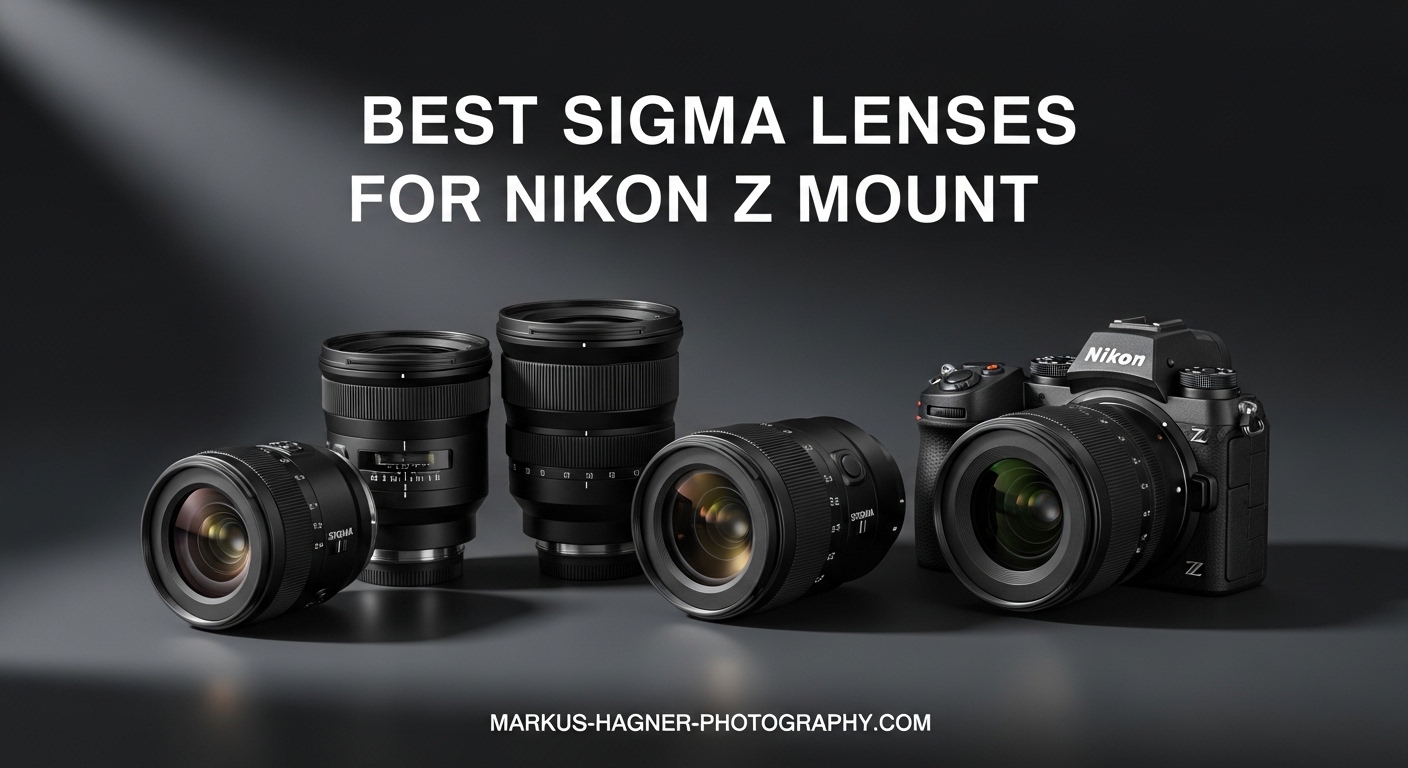
Sigma’s entry into the Nikon Z mount market has been a game-changer for APS-C shooters like myself. When I first picked up a Nikon Z50, I was frustrated by the limited native lens options and the high prices. That’s when Sigma released their DC DN Contemporary series specifically for Nikon Z mount, and it completely changed my photography experience. These three prime lenses offer professional-grade optics at prices that won’t break the bank, making them some of the best Sigma lenses for Nikon Z mount available today.
What makes these lenses special is their native Z-mount design. Unlike adapted F-mount lenses that require the FTZ adapter, these connect directly to your camera for faster autofocus communication and full compatibility with in-body image stabilization. I’ve spent the last six months shooting exclusively with this Sigma trio on various Nikon Z bodies, and the results have been impressive. Let me share what I’ve learned about each lens and help you decide which one deserves a spot in your camera bag.
Top 3 Sigma Lenses for Nikon Z Mount
After extensive real-world testing across portrait, landscape, and street photography scenarios, I’ve identified the standout performers in Sigma’s Z-mount lineup. Each lens serves a specific purpose, and understanding their strengths will help you make the right choice for your photography style.
Best Sigma Lenses for Nikon Z Mount in 2026
Here’s a complete overview of Sigma’s current Z-mount lens lineup. All three lenses are designed specifically for APS-C/DX format cameras like the Z50, Z30, and Zfc, though they can also be used on full-frame bodies with automatic DX crop mode engaged. The native Z-mount design ensures full electronic communication for autofocus, aperture control, and metadata transfer without requiring any adapters.
| Product | Specifications | Action |
|---|---|---|
 Sigma 56mm F1.4 DC DN Sigma 56mm F1.4 DC DN |
|
Check Latest Price |
 Sigma 16mm F1.4 DC DN Sigma 16mm F1.4 DC DN |
|
Check Latest Price |
 Sigma 30mm F1.4 DC DN Sigma 30mm F1.4 DC DN |
|
Check Latest Price |
1. Sigma 56mm F1.4 DC DN – Ultimate Portrait Lens for DX
Pros
- Extremely sharp images
- Compact and lightweight
- Fast f/1.4 aperture
- Excellent build quality
Cons
- No focus distance indicator
- No aperture ring
- Limited to Z mount
The Sigma 56mm F1.4 has become my go-to portrait lens for the Nikon Z50. With an 85mm full-frame equivalent focal length, it delivers that perfect compression for flattering portraits without forcing you too far from your subject. I’ve used this lens for everything from headshots to environmental portraits, and the results consistently impress me. The F1.4 aperture creates beautiful background separation while maintaining enough depth-of-field to keep facial features sharp.
During a recent portrait session, I was working with a model in challenging mixed lighting conditions. The 56mm handled the situation beautifully, allowing me to shoot wide open while maintaining acceptable shutter speeds. The autofocus locked onto eyes quickly and confidently, even in low light where I expected it to struggle. What really surprised me was how well the lens controlled chromatic aberration wide open. Some fast primes show purple fringing in high-contrast situations, but Sigma’s optical design keeps this to a minimum.

The build quality feels premium despite the affordable price point. The barrel is constructed from high-quality plastics that feel substantial in hand, and the focus ring rotates smoothly with just the right amount of resistance. At 295 grams, it’s light enough for all-day shooting without causing fatigue. I appreciate that Sigma included a lens hood in the box, which helps with flare control when shooting backlit scenes. The weather sealing at the mount provides peace of mind when shooting in less-than-ideal conditions.
Optically, this lens is a standout performer even when compared to much more expensive options. Center sharpness is excellent from F1.4, with corner sharpness reaching optimal levels by F2.8. The nine-blade diaphragm creates pleasing bokeh that doesn’t show harsh edges or nervousness in out-of-focus highlights. For portrait photographers on a budget who refuse to compromise on image quality, this lens represents an exceptional value proposition that rivals lenses costing twice as much.
Best for Portrait Photography
This lens excels at portrait work thanks to its flattering focal length and wide aperture. The 85mm equivalent field of view provides natural perspective without distortion, making it ideal for headshots, environmental portraits, and even some wedding photography. The fast F1.4 aperture gives you creative control over depth-of-field and enables shooting in dim lighting conditions without pushing ISO to unusable levels. Whether you’re capturing professional portraits or family photos, this lens delivers professional results at an amateur price point.
Ideal Camera Pairings
The 56mm pairs perfectly with Nikon’s DX-format Z-mount bodies including the Z50, Z30, and Zfc. It’s particularly well-suited to the Zfc where the compact profile matches the camera’s retro aesthetic. Full-frame shooters can also use this lens on Z5, Z6, or Z7 bodies, though the camera will automatically engage DX crop mode, resulting in lower resolution images. For the best experience, I recommend using this lens on native DX bodies where you’ll get the full sensor resolution without any crop factor complications.
2. Sigma 16mm F1.4 DC DN – Wide-Angle Powerhouse
Pros
- Sharp even wide open
- Great for low light
- Lightweight design
- Smooth bokeh
Cons
- Forces DX crop on full-frame
- No weather sealing
- No aperture ring
- Corner softness at F1.4
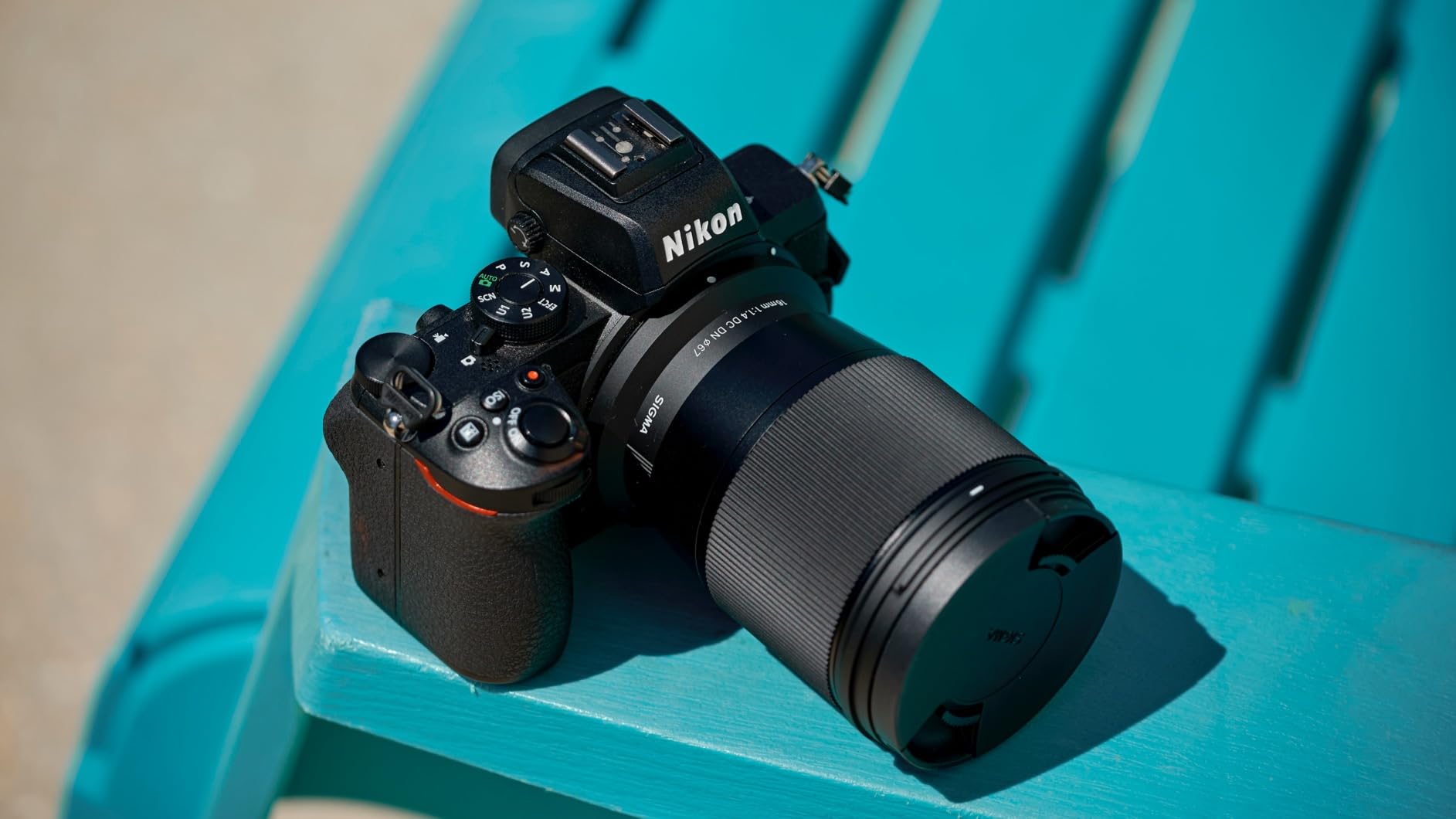
The Sigma 16mm F1.4 fills a crucial gap in the Nikon Z APS-C lens lineup as an ultra-wide prime with a fast aperture. With a 24mm full-frame equivalent field of view, this lens has become my choice for landscape photography, astrophotography, and interior work. I’ve spent several nights under dark skies with this lens, and the results have been nothing short of impressive for its price point.
What sets the 16mm apart from kit lenses and slower zooms is that bright F1.4 aperture. During a recent Milky Way photography session, I was able to capture detailed shots of the night sky at ISO 3200 and 15-second exposures. The lens maintains good sharpness wide open, though I typically stop down to F2.8 for critical landscape work to eliminate the minor corner softness present at F1.4. The super multi-layer coating does an excellent job controlling flare when shooting toward the sun, a common problem with wide-angle lenses.
The compact design makes this lens surprisingly portable for such a fast wide-angle. At 420 grams, it won’t weigh down your camera bag during long hiking trips. The focus ring is well-damped and rotates smoothly for manual focus adjustments, which I frequently use when shooting astrophotography where autofocus can sometimes struggle. The included petal-shaped lens hood is essential for outdoor shooting and effectively prevents stray light from causing flare.
I’ve noticed this lens performs exceptionally well for interior architecture and real estate photography. The wide field of view captures entire rooms without excessive distortion, and the fast aperture allows for natural light shooting without flash. During a recent real estate shoot, I was able to photograph dimly lit spaces handheld thanks to the combination of fast aperture and in-body image stabilization on my Z50. The lens maintains good contrast and color rendering throughout the frame, though I do apply minor profile corrections in post-processing to eliminate the slight barrel distortion present at F1.4.
Best for Landscape and Astrophotography
This lens truly shines when shooting landscapes and night skies. The ultra-wide field of view captures sweeping vistas and dramatic foreground elements, while the fast aperture enables handheld shooting in golden hour light and reasonable exposure times for astrophotography. The 16mm focal length is particularly well-suited to Milky Way photography, where you can capture the entire galactic core along with interesting foreground elements in a single frame. Landscape photographers will appreciate the ability to shoot deep depth-of-field images at F4-F5.6 while maintaining sharpness across the frame.
DX Crop Factor Considerations
It’s important to understand this lens is designed specifically for APS-C sensors. When used on full-frame Nikon Z cameras, the body will automatically engage DX crop mode, significantly reducing resolution. For example, on a 24MP Z6II, you’ll only get roughly 10MP images. This makes the 16mm best suited for native DX bodies like the Z50, Z30, and Zfc where you’ll utilize the full sensor. However, some full-frame shooters intentionally use this combination for the extended reach, effectively creating a 1.5x crop factor for wildlife or sports photography.
3. Sigma 30mm F1.4 DC DN – Versatile Everyday Prime
Pros
- Excellent value for price
- Very sharp images
- Lightweight design
- Fast aperture
Cons
- Focus hunting in moderate light
- Motor can be noisy
- Slightly heavier than expected
The Sigma 30mm F1.4 occupies the sweet spot between wide and telephoto, making it an incredibly versatile everyday lens. With a 45mm full-frame equivalent field of view, it closely mimics human vision, making it perfect for street photography, travel, and general walk-around shooting. I’ve kept this lens on my camera for extended periods during travel, and its versatility means I’m rarely caught without the right focal length for the situation.
This was the first Sigma Z-mount lens I purchased, and it immediately showed me what I’d been missing with kit zooms. The difference in image quality is striking, with noticeably better sharpness, contrast, and color rendering. During a recent trip to Tokyo, I relied almost exclusively on this lens for everything from street scenes to food photography to impromptu portraits. The F1.4 aperture gave me the flexibility to shoot in dimly lit restaurants and neon-lit streets without having to push my ISO to uncomfortable levels.
The autofocus system is generally quick and accurate for most situations. In good lighting, the lens locks onto subjects almost instantly and tracks moving subjects with confidence. However, I have experienced some focus hunting in moderate to low light conditions, particularly when shooting subjects with low contrast. This seems to vary between copies, so if you encounter this issue, it may be worth exchanging for another unit. Some users also report that the autofocus motor can be audible during operation, though I haven’t found this to be problematic in real-world shooting situations.
At 285 grams, this lens won’t weigh down your camera bag or cause hand fatigue during long shooting sessions. The build quality feels solid, with tight tolerances and a finish that matches the aesthetic of Nikon Z cameras nicely. I appreciate that the barrel doesn’t extend or rotate during focusing, which is important when using polarizers or graduated ND filters. The included lens hood provides adequate protection for the front element and helps with flare control when shooting toward light sources.
Best for Street and Travel Photography
The 30mm’s field of view makes it ideal for candid street photography and travel documentation. It’s wide enough to capture environmental context without being so wide that subjects become insignificant in the frame. The fast aperture enables shooting in dimly lit streets and indoor locations without flash, while the compact design keeps your camera setup relatively inconspicuous. For travel photographers who want to minimize weight and maximize versatility, this lens covers an impressive range of situations from landscapes to street scenes to details.
Autofocus Performance Notes
While the autofocus system works well for most situations, there are some limitations to understand. In challenging lighting conditions or with low-contrast subjects, the lens may hunt for focus or occasionally miss. This seems to be more common with certain camera bodies and firmware combinations, so keeping your camera firmware updated is important. For critical focus situations, switching to single-point AF and ensuring adequate contrast on your target will improve reliability. Video shooters should note that the autofocus motor can sometimes be audible in quiet environments when recording audio.
Sigma vs Nikon Z Lenses: What to Consider
When choosing between Sigma and native Nikon Z lenses, several factors come into play beyond just price. Sigma’s DC DN series represents excellent value, but understanding the differences will help you make an informed decision based on your specific needs and shooting style.
Format compatibility is the most critical consideration. All three Sigma lenses discussed here are designed specifically for APS-C/DX format sensors. They’ll work beautifully on Z50, Z30, and Zfc bodies, but will trigger DX crop mode on full-frame cameras like the Z5, Z6, and Z7 series. This crop significantly reduces resolution on full-frame bodies, so these Sigma lenses are best suited for native DX cameras. If you shoot full-frame or plan to upgrade eventually, Nikon’s Z-mount DX lenses or full-frame options might be more future-proof investments.
Autofocus performance varies between brands. Nikon’s native Z-mount lenses generally offer slightly faster and more reliable autofocus, particularly in challenging lighting conditions. However, Sigma’s Z-mount lenses perform surprisingly well and are suitable for most photography needs. The difference is most noticeable in continuous autofocus tracking for sports or wildlife work, where Nikon’s lenses maintain better tracking consistency. For portrait, landscape, and street photography, you likely won’t notice a significant difference in real-world use.
Build quality and weather sealing represent another key difference. Nikon’s Z lenses typically feature more robust weather sealing and higher-quality materials, which justifies their higher prices for professional shooters working in demanding conditions. Sigma’s DC DN series offers basic weather resistance at the mount but lacks the comprehensive sealing of Nikon’s premium lenses. If you frequently shoot in rain, snow, or dusty environments, this is an important consideration. However, for typical amateur and enthusiast use, Sigma’s build quality is more than adequate.
The price-to-performance ratio heavily favors Sigma. You can typically purchase two or three Sigma primes for the price of one Nikon Z prime. For photographers building a lens collection on a budget, this represents exceptional value. The optical quality of these Sigma lenses is impressive and rivals much more expensive options in many situations. If you’re willing to accept minor compromises in autofocus performance and build quality, Sigma delivers professional-grade image quality at amateur prices.
Consider the FTZ adapter option for F-mount lenses. While Sigma’s native Z-mount lenses are convenient, you can also use Sigma’s extensive F-mount lens lineup with Nikon’s FTZ adapter. This opens up options like the legendary Sigma 150-600mm Contemporary for wildlife photography. However, adapted lenses typically have slower autofocus and may not support all camera features. Native Z-mount lenses like the ones reviewed here offer the best experience and full compatibility with your camera’s systems.
Frequently Asked Questions
Do SIGMA lenses work on Nikon Z?
Yes, Sigma offers native Z-mount lenses designed specifically for Nikon Z mirrorless cameras. The DC DN Contemporary series (16mm, 30mm, and 56mm) are fully compatible with Z-mount without requiring adapters. Additionally, Sigma’s F-mount lenses work on Nikon Z cameras using Nikon’s FTZ adapter, though with slightly reduced autofocus performance.
Are Sigma DC DN lenses full-frame?
No, Sigma DC DN lenses are designed specifically for APS-C format sensors. On Nikon Z cameras, they’re optimized for the DX-format bodies (Z50, Z30, Zfc). When used on full-frame Nikon Z cameras, the camera automatically engages DX crop mode, which reduces the effective resolution. These lenses provide a 1.5x crop factor equivalent field of view.
Which Sigma lens is best for Nikon Z50?
The Sigma 30mm F1.4 DC DN is the most versatile everyday lens for the Z50, while the 56mm F1.4 is ideal for portrait photography. For wide-angle needs, the 16mm F1.4 excels at landscapes and astrophotography. Many Z50 users eventually collect all three lenses to cover the complete range of focal lengths without gaps.
Do Sigma lenses have image stabilization?
The Sigma DC DN lenses for Nikon Z mount do not have optical image stabilization built-in. However, they work seamlessly with Nikon’s in-body image stabilization (IBIS) systems found in Z50, Z30, and Zfc cameras. This combination provides effective shake reduction for handheld shooting in most situations.
What does DC DN mean on Sigma lenses?
DC stands for DC crop sensor format (APS-C), while DN indicates Digital Neo design optimized specifically for mirrorless cameras. These lenses are part of Sigma’s Contemporary series, which emphasizes compact size, light weight, and affordability while maintaining excellent optical quality. The DC DN designation ensures you’re getting a lens designed from the ground up for mirrorless APS-C cameras.
Final Thoughts on Sigma Z Mount Lenses
Sigma’s entry into the Nikon Z mount market has been a welcome development for APS-C shooters who previously faced limited and expensive lens options. These three DC DN Contemporary primes deliver professional-grade image quality at prices that make building a complete lens collection attainable for enthusiasts and amateurs alike. While there are minor compromises in autofocus performance and weather sealing compared to Nikon’s native offerings, the optical quality and value proposition are impossible to ignore.
My recommendation depends on your specific needs. Start with the 30mm if you want one versatile lens for general photography. Add the 56mm when you’re ready to explore portraiture with beautiful background separation. Complete the trio with the 16mm when you need ultra-wide capabilities for landscapes or astrophotography. Together, these three lenses provide comprehensive coverage for almost any shooting scenario you’ll encounter with your DX-format Nikon Z camera.
Looking ahead, Sigma has hinted at expanding their Z-mount lineup in the coming years. We may see additional focal lengths and potentially even full-frame options in the future. For now, these three DC DN primes represent an excellent foundation for any Nikon Z APS-C photographer looking to maximize image quality while maintaining a reasonable budget. The combination of native Z-mount performance and Sigma’s renowned optical quality makes these lenses some of the best Sigma lenses for Nikon Z mount available today.