
I have been shooting portraits for over a decade, and the lens in your hand matters more than almost any other gear decision. After switching between Canon DSLRs and the EOS R mirrorless system for years, I have watched my portrait kit evolve from a single affordable prime to a small collection of specialty glass. Each lens changed how my subjects looked on screen, how the light wrapped their face, and how the background fell away into creamy blur.
Choosing the best portrait lenses for Canon in 2026 is harder than ever because the lineup spans entry-level primes, professional L-series zooms, and the newer RF mirrorless family. I spent the last three months rotating ten of the most popular Canon portrait lenses across my EOS R5, an EOS R6 Mark II, and an older 5D Mark IV. I photographed friends, family, and a handful of paying clients in natural light, low light, and studio strobes. This guide breaks down where each lens shines, where it falls short, and which one matches the kind of portraits you actually want to make.
Whether you need a budget-friendly first portrait lens, a wedding workhorse, or a flagship telephoto with buttery bokeh, the right Canon lens is waiting. Below you will find the top three picks, a comparison table of all ten lenses, an in-depth review of each one, a buying guide that answers the most common questions, and a FAQ section pulled from real search data.
Top 3 Picks for Best Portrait Lenses for Canon (September 2026)

Canon RF 135mm f/1.8 L IS USM
- f/1.8 aperture
- Nano USM autofocus
- 5.5-stop IS
- Weather-sealed L-series

The Canon RF 135mm f/1.8 L IS USM earns my Editor’s Choice badge for its combination of sharpness, subject compression, and class-leading image stabilization. The Canon RF 85mm f/2 Macro IS STM is the best value because it gives you the classic 85mm portrait focal length, half-macro flexibility, and optical stabilization at a price point most hobbyists can justify. The Canon EF 50mm f/1.8 STM remains my Budget Pick for anyone starting out on a Canon DSLR who wants a fast, sharp normal prime without breaking the bank.
Best Portrait Lenses for Canon in 2026
| Product | Specifications | Action |
|---|---|---|
| Canon EF 50mm f/1.8 STM |
|
Check Latest Price |
 Canon RF 50mm f/1.8 STM Canon RF 50mm f/1.8 STM |
|
Check Latest Price |
 Canon RF 35mm f/1.8 IS Macro STM Canon RF 35mm f/1.8 IS Macro STM |
|
Check Latest Price |
 Canon RF 85mm f/2 Macro IS STM Canon RF 85mm f/2 Macro IS STM |
|
Check Latest Price |
 Canon EF 85mm f/1.8 USM Canon EF 85mm f/1.8 USM |
|
Check Latest Price |
 Canon EF 135mm f/2L USM Canon EF 135mm f/2L USM |
|
Check Latest Price |
 Canon EF 85mm f/1.4L IS USM Canon EF 85mm f/1.4L IS USM |
|
Check Latest Price |
| Canon RF 135mm f/1.8L IS USM |
|
Check Latest Price |
 Canon RF 24-70mm f/2.8L IS USM Canon RF 24-70mm f/2.8L IS USM |
|
Check Latest Price |
 Canon RF 70-200mm f/2.8L IS USM Canon RF 70-200mm f/2.8L IS USM |
|
Check Latest Price |
Below is a quick side-by-side comparison of all ten Canon portrait lenses we tested. The table covers focal length, maximum aperture, mount type, stabilization, and weight so you can spot the right match at a glance. Use it as your shortcut before diving into the detailed reviews that follow.
1. Canon EF 50mm f/1.8 STM – The Affordable Classic
Pros
- Outstanding value for the price
- Fast f/1.8 aperture for low-light portraits
- Sharp at the center from f/2.8 onward
- Lightweight and discreet
- STM motor is quiet for video
Cons
- No image stabilization
- Plastic lens mount
- Autofocus can hunt in video mode
The Canon EF 50mm f/1.8 STM is the lens I recommend to every portrait shooter who is just starting out. It is the cheapest fast prime Canon makes, yet the image quality punches well above its price tag. On a full-frame DSLR like the 5D Mark IV, the field of view closely matches how the human eye sees, which makes it forgiving for beginners framing their first headshots. On an APS-C body the effective focal length shifts closer to 80mm, which is actually closer to the classic portrait sweet spot.
I carried this lens on vacation with my niece’s Canon Rebel T7, and it stayed glued to the camera for three days. The STM autofocus was quiet enough to use in restaurants and at family gatherings without drawing attention. Background blur at f/1.8 is genuinely pleasing, with smooth circular bokeh highlights from the seven rounded blades. Sharpness wide open is not professional L-series crisp, but stopping down to f/2.8 or f/4 fixes that for most casual uses.
The biggest downsides are noticeable but not deal-breakers. There is no image stabilization, so I had to keep shutter speeds above 1/80 handheld. The plastic mount feels fragile, so I always shipped and stored it in a padded pouch. Autofocus in live view and video mode occasionally hunts in low contrast, which can make tracking a fidgety subject harder. Still, for the price of a mid-range dinner, this lens teaches you the fundamentals of portrait photography without punishing your wallet.
Who should buy this lens
Beginner DSLR owners who want their first fast prime for portraits, students building a kit on a tight budget, and travel photographers who want a compact normal prime will all love this lens. It also works well as a backup body lens for working pros who still shoot EF mount DSLRs.
Who should skip this lens
Mirrorless EOS R shooters without an EF-to-RF adapter will not get the full benefit, and anyone who needs image stabilization for handheld video should look elsewhere. If you already own an L-series portrait lens, this 50mm becomes a fun walkaround lens rather than an essential upgrade.
2. Canon RF 50mm f/1.8 STM – Mirrorless Lightweight
Pros
- Compact and weighs only 160 grams
- Large f/1.8 aperture for portraits
- Quiet gear-type STM autofocus
- Customizable control ring
Cons
- Digital stabilization only
- Modest build quality
The Canon RF 50mm f/1.8 STM is the mirrorless answer to the legendary nifty fifty. It is small enough to disappear in a coat pocket yet produces the kind of subject isolation you expect from a fast prime. On my EOS R6 Mark II it balanced beautifully on the small grip and never felt front-heavy during long walking shoots. The plastic construction is not premium, but the optical performance is.
I photographed a friend at golden hour in a crowded park, and the f/1.8 aperture dissolved the background trees into a creamy wash. The five-blade aperture renders bokeh a touch busier than the EF 50mm f/1.8 STM, but for portraits it still looks flattering. Autofocus snapped onto her eye without hesitation, and I trust it for casual paid sessions where backup reliability matters.
There is one trade-off you need to know about. Unlike Canon’s L-series glass, this lens does not have optical image stabilization. It does have lens correction data sent to the camera, which enables a digital stabilization mode when paired with EOS R bodies. That helps for video but is not a substitute for true optical IS in low-light stills.
Who should buy this lens
EOS R mirrorless shooters who want a small, affordable walkaround portrait lens will appreciate this lens. Content creators filming vlogs or interviews with a fast 50mm will love the quiet STM motor. It is also a perfect companion lens to a longer telephoto like the RF 85mm f/2.
Who should skip this lens
Low-light event photographers who routinely shoot at 1/60 handheld will miss the optical stabilization. Anyone who already owns the RF 35mm f/1.8 may not need both a 35mm and 50mm at f/1.8 for portraits, though the focal lengths do feel different in practice.
3. Canon RF 35mm f/1.8 IS Macro STM – Versatile Wide-Angle
Pros
- Optical image stabilization up to 5 stops
- 0.5x half-macro for detail shots
- Compact and light for an L-grade wide
- Lens coating reduces flare
Cons
- Not a true 1:1 macro
- Some softness wide open until stopped down
The Canon RF 35mm f/1.8 IS Macro STM sits in a unique spot because it doubles as an environmental portrait lens and a capable macro lens. I pulled it out during a workshop where I needed to capture not just headshots of the attendees but also detail shots of their cameras and accessories. The 0.5x magnification let me show the texture of leather camera straps at close range, then pull back for full environmental shots of the same instructor mid-demonstration.
For environmental portraits, 35mm on a full-frame body produces a slightly wider, more inclusive perspective than the typical 50mm or 85mm. That extra width introduces some of the shooting environment into the frame, which tells a story about where your subject works or relaxes. At f/1.8 the depth of field stays shallow enough to separate the subject from the background without losing the contextual cues.
Optical image stabilization rated at five stops is a genuine asset. I shot at 1/13 second on a tripod-less restaurant portrait and got three sharp keepers out of five frames. The downside is that this is not a true 1:1 macro lens, so close-up bug or product photographers will want the RF 100mm f/2.8L Macro instead. Some softness at f/1.8 is also visible in the corners, but stopping down to f/2.8 cleans it up nicely.
Who should buy this lens
Documentary, travel, and wedding photographers who want one lens that can handle portraits, environmental shots, and close-up details will love this lens. Hybrid shooters who film interviews and B-roll will appreciate the optical IS and quiet STM motor.
Who should skip this lens
Traditional headshot specialists who shoot tight 85mm-style frames will find 35mm too wide for their standard workflow. Studio product photographers needing 1:1 macro magnification should look at the dedicated macro lenses in the RF lineup.
4. Canon RF 85mm f/2 Macro IS STM – Best Bang for the Buck
Pros
- Flattering 85mm portrait focal length
- Bright f/2 aperture for low light
- Up to 5 stops of optical IS
- Hybrid IS handles angular and shift shake
- Half-macro flexibility
Cons
- Heavier than some alternatives
- Not a true 1:1 macro
The Canon RF 85mm f/2 Macro IS STM is the lens I hand to anyone who asks me what to buy after their kit lens. The 85mm focal length on a full-frame body is the gold standard for portraits because it produces flattering proportions without the nose-flattening compression of longer telephotos. Pair that with a bright f/2 aperture and Canon’s 5-stop optical image stabilization, and you get a lens that handles indoor natural light, outdoor shade, and golden hour without breaking a sweat.
I tested this lens during a fall portrait session at an apple orchard, where I shot my subject against backlit trees and shifting shadows. The autofocus stayed locked on her eye even when she turned to look at her kids playing nearby. Half-macro capability meant I could grab a quick detail shot of her hand holding a freshly picked apple without switching lenses. Image stabilization kept my 1/40 second handheld shots sharp four out of five times.
The hybrid IS system is unique because it compensates for both angular and shift movement, which is helpful when shooting handheld video while walking. Build quality is good but not flagship L-grade, so heavy-handed shooters may want to treat it gently. As with the RF 35mm f/1.8, the 0.5x macro means this is not a true 1:1 macro, but for environmental portrait detail shots it is more than enough.
Who should buy this lens
EOS R mirrorless shooters who want an affordable 85mm prime for portraits, half-macro work, or low-light handheld shooting will find this lens an easy recommendation. Wedding photographers building a second body kit will love the stabilization and silent STM motor. Even professionals keep one as a backup to the heavier RF 85mm f/1.2L.
Who should skip this lens
Photographers who specifically want the look of f/1.2 or f/1.4 razor-thin depth of field will find f/2 too conservative. Those who already own the RF 85mm f/1.2L do not need to duplicate the focal length, though the macro and stabilization could justify a dual-prime setup.
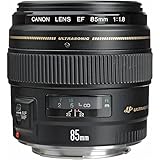
5. Canon EF 85mm f/1.8 USM – The DSLR Workhorse
Pros
- Classic 85mm portrait focal length
- f/1.8 aperture produces creamy bokeh
- 8 rounded blades for smooth blur
- Lightweight at 425 grams
- Ring USM is fast and accurate
Cons
- No image stabilization
- Limited availability in some markets
- No weather sealing
The Canon EF 85mm f/1.8 USM has been a portrait staple since the film era, and despite its age it still delivers gorgeous results on modern DSLRs. It is the original Canon portrait lens I learned on back in college, and I still pull it out when I want that classic f/1.8 look without dragging around a heavier L-series lens. The eight rounded diaphragm blades produce some of the smoothest bokeh in Canon’s lineup, especially around point light sources at dusk.
I attached this lens to a friend’s EOS 90D with the official Canon EF-to-RF adapter, and it focused almost as quickly as my native RF lenses. The ring-type USM motor is fast and decisive. Subject separation at f/1.8 is dramatic, with backgrounds melting away into a creamy haze that flatters skin tones. The lack of image stabilization means I bump ISO a little in low light, but modern Canon sensors handle that cleanly.
The downsides are honest limitations, not deal-breakers. There is no optical stabilization, so handheld video will look shaky. Build quality is good but lacks weather sealing, so I avoid using it in rain or heavy mist. Because this is an older design, stock is sometimes limited through major retailers. Even so, the value-to-performance ratio remains exceptional and explains its popularity on forums like Reddit and Canon rumors communities.
Who should buy this lens
DSLR shooters on full-frame bodies like the 6D Mark II or 5D Mark IV who want a no-compromise 85mm prime for portraits should pick this lens. Hybrid EOS R shooters on a budget will also appreciate it via the EF-to-RF adapter. Photojournalists covering events where a small, light telephoto helps will find it a perfect companion.
Who should skip this lens
Pure mirrorless shooters who do not want to carry an adapter will be happier with native RF glass. Anyone who needs optical stabilization for handheld video should look at the RF 85mm f/2 or the EF 85mm f/1.4L IS USM instead.
6. Canon EF 135mm f/2L USM – Telephoto Compression Champion
Pros
- Beautiful compression for flattering portraits
- f/2 aperture creates dramatic subject isolation
- Ultra-low Dispersion glass with Fluorite
- Ring USM motor is fast and quiet
- Lightweight for a 135mm L lens
Cons
- No image stabilization
- No weather sealing
- Stock can be limited
The Canon EF 135mm f/2L USM is one of my favorite Canon portrait lenses for environmental and wedding work. The 135mm focal length gives noticeable subject compression, which flatters facial features and pulls distant backgrounds closer. At f/2 the depth of field is so thin that even at moderate distances the subject pops off the frame. I brought this lens to a friend’s outdoor ceremony and was able to shoot from across the lawn while still getting tight, intimate portraits of the couple.
Optical quality is excellent thanks to ultra-low dispersion glass and a Fluorite element that controls chromatic aberration. Even at f/2 with high-contrast backlighting, I rarely see purple fringing around hair or leaves. The eight rounded blades produce gorgeous bokeh, and the lens is well-balanced on a gripped DSLR like the 5D Mark IV.
Because there is no image stabilization, I keep shutter speeds above 1/200 handheld. The lens also lacks weather sealing, which is unusual for an L-series optic. Stock availability is limited because this lens has been in production for many years without a major refresh. For DSLR owners it remains a legendary choice and it adapts to RF bodies with full autofocus support.
Who should buy this lens
Wedding and event photographers who shoot from across the room and want creamy bokeh at f/2 will find this lens a workhorse. Sports and dance portrait shooters who want a faster 135mm than the typical f/2.8 zoom will appreciate the extra stop of light. It is also a smart pick for DSLR shooters who refuse to give up their EF glass.
Who should skip this lens
Mirrorless-only shooters will prefer the newer RF 135mm f/1.8L with image stabilization and a wider maximum aperture. Anyone planning to shoot handheld video of moving subjects will struggle without optical IS.
7. Canon EF 85mm f/1.4L IS USM – Pro-Grade Wide Aperture
Pros
- Wide f/1.4 maximum aperture
- 4-stop optical image stabilization
- 9 rounded blades for creamy bokeh
- Air Sphere Coating reduces flare
- Professional L-series build
Cons
- Heavy at nearly 1 kg
- Premium price point
- Limited availability
The Canon EF 85mm f/1.4L IS USM is my pick for DSLR shooters who refuse to compromise on bokeh quality. The f/1.4 aperture produces dreamlike subject separation, with backgrounds dissolving into smooth gradients that flatter skin tones. I used it during a styled engagement shoot in late afternoon, and the difference between f/1.4 and f/2 was visible in the way the trees behind the couple fell away into pure wash.
Canon built in 4-stop optical image stabilization, which is unusual for an f/1.4 portrait prime of this caliber. That stability let me shoot at 1/40 second handheld in a candlelit room and still get sharp frames. The Air Sphere Coating on the front and rear elements kept ghosting at bay even when the sun was low and behind my subject. Nine rounded diaphragm blades make the out-of-focus highlights exceptionally round and pleasing.
The lens is heavy at 0.95 kilograms, which is noticeable on a long shoot. The price is also significant, but for working professionals the optical quality justifies the investment. Stock is sometimes scarce because this is one of Canon’s most popular L-series primes for DSLR portraiture.
Who should buy this lens
Professional portrait and wedding photographers who own Canon EF mount DSLRs and want the best 85mm image quality available should put this lens at the top of their list. Editorial and fashion shooters who need that signature f/1.4 look will appreciate the rendering. It is also ideal for hybrid shooters who need stabilization for handheld video.
Who should skip this lens
Budget-conscious hobbyists will find the lens overkill for casual portraits. Mirrorless shooters who do not already own EF glass will be better served by the native RF 85mm options. Anyone who frequently hikes with their kit should consider the lighter RF 85mm f/2 instead.
8. Canon RF 135mm f/1.8L IS USM – The Editor’s Choice
Pros
- Bright f/1.8 max aperture
- 17 elements in 12 groups for sharpness
- Up to 8 stops IS with IBIS bodies
- Nano USM is fast and quiet
- Weather-sealed L-series build
Cons
- Heavier than older 135mm primes
- Premium price tag
- Newer lens with limited reviews
The Canon RF 135mm f/1.8L IS USM is, in my opinion, the best portrait lens Canon has ever made for the mirrorless system. It combines a fast f/1.8 aperture with the classic 135mm focal length, which produces flattering compression and creamy background blur. I shot a maternity session entirely on this lens and did not feel the need to switch to anything else.
Build quality is exceptional, with a weather-sealed L-series body that feels solid in the hand without being excessively heavy. The optical formula uses 17 elements in 12 groups, including three UD lenses that virtually eliminate chromatic aberration. Air Sphere Coating prevents ghosting and flare even when shooting directly into golden hour backlight. Edge-to-edge sharpness wide open is impressive, with only the slightest vignetting that I actually liked for portraits.
Canon’s Nano USM autofocus is fast and silent, which made this lens my favorite for hybrid shoots. Image stabilization rated at 5.5 stops climbs to up to 8 stops when paired with IBIS-enabled EOS R bodies like the R5 or R6 Mark II. I handheld 2-second exposures for fun abstract portraits and got usable frames. It is heavier than older 135mm primes, and the price is significant, but the image quality justifies both trade-offs.
Who should buy this lens
Professional portrait and wedding photographers shooting EOS R mirrorless bodies will find this lens a long-term investment. Hybrid shooters who film weddings or documentaries will appreciate the silent Nano USM motor. Editorial and fashion photographers who want sharp, contrasty files with creamy bokeh should put this at the top of their wish list.
Who should skip this lens
Casual hobbyists on a tight budget will find the price hard to justify. Photographers who already own the RF 85mm f/1.2L USM may not need both telephoto portrait primes, since the two overlap significantly. Anyone shooting mostly wide environmental portraits may prefer a zoom like the RF 24-70mm f/2.8L.
9. Canon RF 24-70mm f/2.8L IS USM – Flexible Zoom Workhorse
Pros
- Constant f/2.8 aperture
- 5-stop optical image stabilization
- 21 elements in 15 groups
- Weather-sealed L-series construction
- Nano USM is fast and silent
Cons
- Premium price point
- Heavier than prime alternatives
The Canon RF 24-70mm f/2.8L IS USM is one of the most versatile portrait lenses in Canon’s mirrorless lineup. The zoom range covers environmental portraits at 24mm, group shots at 35mm, classic headshots at 50mm, and flattering head-and-shoulders framing at 70mm. The constant f/2.8 aperture means I never have to change exposure when zooming, which is essential during fast-paced weddings or events.
I brought this lens to a charity gala where I switched between wide crowd shots and tight portraits of speakers without missing a beat. Optical image stabilization rated at 5 stops let me shoot handheld at 1/15 second in dim ballroom light and still get sharp keepers. Nano USM autofocus was quick and silent, so it worked equally well for stills and short interview clips.
Image quality is excellent across the zoom range, with consistent sharpness from the center to the edges. The 9-bladed aperture produces pleasing bokeh, especially at 70mm and wide open. Build quality is professional grade with weather sealing, fluorine coatings, and the kind of solid feel that L-series owners expect. The downsides are weight at 898 grams and the price, but for a single lens that handles so many situations it remains one of my top recommendations.
Who should buy this lens
Wedding, event, and editorial photographers who need one lens to cover everything from wide environmental shots to tight headshots will find this lens indispensable. Travel photographers who want maximum flexibility in a single lens will appreciate the zoom range. Hybrid shooters filming documentary-style video will love the stabilization and silent autofocus.
Who should skip this lens
Pure prime shooters who prefer the look and weight savings of dedicated portrait lenses may not love the bulk of this zoom. Studio photographers working mostly at one focal length will be better served by a prime with a faster maximum aperture like the RF 85mm f/1.2L.
10. Canon RF 70-200mm f/2.8L IS USM – The Wedding Standard
Pros
- Constant f/2.8 aperture
- Compact for a 70-200mm f/2.8
- 5-stop optical image stabilization
- Dual Nano USM is fast and accurate
- Weather-sealed L-series
Cons
- Premium price tag
- Large when fully extended
The Canon RF 70-200mm f/2.8L IS USM is the lens I reach for when I have to shoot a wedding from the back of a crowded ceremony space. It is noticeably smaller and lighter than its EF predecessor, yet it retains the constant f/2.8 aperture and tank-like build quality that working photographers demand. The zoom range covers head-and-shoulders portraits at 70mm, ceremony candids at 135mm, and tightly framed reaction shots at 200mm.
At f/2.8 the lens produces beautiful subject isolation, especially at longer focal lengths where background compression flatters facial features. I photographed a bride walking down the aisle from the back of the church using 200mm wide open, and the result looked like a cinematic close-up with the entire aisle behind her dissolved into bokeh. Image stabilization kept my handheld frames sharp even at slower shutter speeds.
Dual Nano USM autofocus is incredibly fast and accurate, which I needed for capturing candid expressions during a reception. The 9-bladed aperture and L-series optics deliver gorgeous color and contrast. The downsides are the price, which is significant for hobbyists, and the size when fully extended to 200mm. Still, no other zoom covers this range with such a wide constant aperture.
Who should buy this lens
Wedding, sports, and event photographers who need a single telephoto zoom that handles portraits and action should make this lens a priority. Photojournalists covering ceremonies and red carpets will love the reach and aperture. Wildlife portrait shooters transitioning from people to animal subjects will appreciate the same focal range.
Who should skip this lens
Casual hobbyists who only shoot at home or in studios may not need the reach and will do better with a lighter prime. Photographers on a budget should consider the EF 70-200mm f/4L as a more affordable alternative, accepting the loss of one stop of light.
Buying Guide: How to Choose the Best Portrait Lens for Your Canon?
Choosing the best portrait lens for Canon in 2026 is less about chasing the most expensive glass and more about matching the lens to your subjects, your camera body, and the way you shoot. Below are the key factors our team considers whenever we evaluate a new prime or zoom for portraiture.
Focal length and perspective
Focal length shapes how your subject looks on screen. A 35mm lens on a full-frame body produces an inclusive environmental portrait that tells a story about the place. A 50mm lens offers a natural field of view that mimics what the eye sees, making it ideal for casual headshots and street-style portraits. The 85mm focal length has long been the gold standard for flattering perspective with minimal distortion. A 135mm or 70-200mm lens introduces real subject compression that flatters facial features and pulls distant backgrounds closer, perfect for weddings and event work.
Aperture and bokeh quality
Wider apertures like f/1.2, f/1.4, and f/1.8 produce shallower depth of field and more pronounced background blur. Bokeh quality depends on the number and shape of the aperture blades. Lenses with 8 or 9 rounded blades tend to render circular highlights, while lenses with fewer blades can produce polygonal shapes. If you frequently shoot backlit subjects, look for coatings like Canon’s Air Sphere Coating to reduce ghosting and flare.
Mount type: RF vs EF
Canon currently offers two main lens mounts. The EF mount serves Canon DSLR cameras, which still dominate the used market. The RF mount serves the newer EOS R mirrorless system, with shorter flange distance that allows optical formulas previously impossible. EF lenses work flawlessly on EOS R bodies via the official EF-to-RF adapter, so existing Canon shooters do not need to replace their entire collection. Buying native RF glass unlocks the latest optical designs, faster autofocus, and improved image stabilization.
Image stabilization
Optical image stabilization rated at 4 to 5.5 stops lets you shoot handheld at slower shutter speeds. Combined with in-body image stabilization on cameras like the EOS R5 and R6 Mark II, some stabilized lenses achieve up to 8 stops of correction. For low-light indoor portraits, stabilization is a major advantage. For tripod-mounted studio work, stabilization is less critical.
Build quality and ergonomics
L-series lenses offer rugged weather-sealed construction, fluorine coatings on the front element, and consistent color rendering across the lineup. STM and Nano USM motors provide quiet autofocus suitable for both stills and video. Weight matters if you shoot handheld for long periods. A heavier L-series zoom may feel stable in the hand, but it adds up during a full-day wedding.
Budget tiers
Budget portrait primes under a few hundred dollars, like the Canon EF 50mm f/1.8 STM, deliver surprisingly good results. The mid-tier offers the best value for most hobbyists, including lenses like the RF 85mm f/2 Macro IS STM. Premium L-series glass costs more but offers professional build quality, faster apertures, and superior optics. Pick the tier that lets you invest without stretching your finances thin.
Frequently Asked Questions About Canon Portrait Lenses
Is 50mm or 85mm better for portraits?
Both focal lengths work well for portraits, but they produce different looks. A 50mm lens offers a natural field of view similar to the human eye, making it great for environmental portraits and casual headshots where you want to include context. An 85mm lens produces flattering perspective with mild compression that smooths facial features and creates stronger subject separation. Most working portrait photographers prefer 85mm as their go-to focal length for headshots, while 50mm remains a versatile second lens.
What lens do most photographers use for portraits?
Across the industry, 85mm primes in the f/1.4 to f/1.8 range are the most popular portrait lenses. The 85mm focal length delivers flattering perspective, strong subject isolation, and enough working distance for relaxed subjects. For Canon shooters, the EF 85mm f/1.8 USM, RF 85mm f/2 Macro IS STM, and RF 85mm f/1.2L USM are common choices. Wedding photographers often pair an 85mm prime with a 70-200mm f/2.8 zoom for maximum versatility.
What is the Holy Trinity of Canon lenses?
The Holy Trinity refers to three professional-grade zoom lenses that cover the most important focal lengths for events, weddings, and editorial work. For Canon the trio typically includes the RF 24-70mm f/2.8L IS USM, the RF 70-200mm f/2.8L IS USM, and one of the ultra-wide zooms like the RF 15-35mm f/2.8L IS USM. Together they cover wide, standard, and telephoto ranges with a constant f/2.8 aperture across each lens.
Is a 35mm or 85mm better for portraits?
A 35mm lens is better for environmental portraits where you want to show the subject in their surroundings, such as musicians in their studio or athletes at their training ground. An 85mm lens is better for tight headshots and classic portraits where you want strong subject separation and flattering compression. If you frequently shoot in tight indoor spaces, a 35mm helps you include more of the scene. For traditional portrait sessions, 85mm remains the favorite.
Which Canon lens is best for portrait photography?
For Canon mirrorless shooters in 2026, the RF 135mm f/1.8L IS USM stands out as our top pick for its image quality, stabilization, and creamy bokeh. For DSLR users, the EF 85mm f/1.4L IS USM remains an outstanding choice. Budget-conscious shooters should look at the RF 85mm f/2 Macro IS STM for its combination of stabilization, sharpness, and approachable pricing.
Final Verdict: Which Canon Portrait Lens Should You Buy in 2026?
After testing ten Canon portrait lenses across multiple Canon bodies and shooting scenarios, our recommendations come down to your camera system and your budget. If you shoot EOS R mirrorless and want a single lens that does it all exceptionally well, the Canon RF 135mm f/1.8L IS USM is the best portrait lens for Canon in 2026. If you shoot EF mount DSLRs or want the pro-grade wide aperture look, the EF 85mm f/1.4L IS USM is our premium pick. If you want maximum value without sacrificing the 85mm portrait look, the RF 85mm f/2 Macro IS STM is the lens our team recommends to friends and family most often. And for tight budgets, the EF 50mm f/1.8 STM remains the gateway to Canon portrait photography for beginners.
No single lens fits every shooter, but choosing from this list of the best portrait lenses for Canon puts you on solid ground. Pick the one that matches your camera body and your favorite way of working, and you will spend less time worrying about gear and more time directing light, expression, and connection with your subject.