
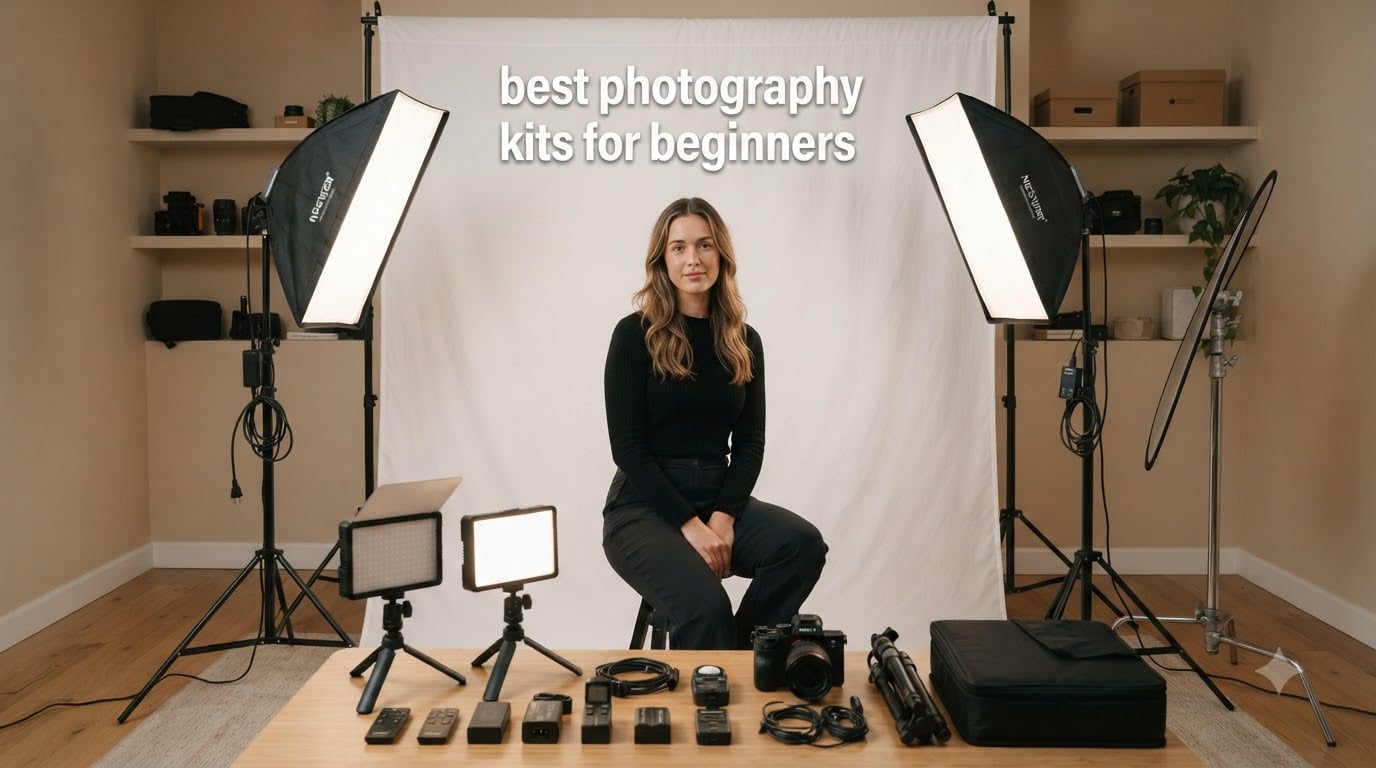
I remember my first lighting kit — a single clip-on shop light, an old white bedsheet for diffusion, and a stack of books holding everything together. It got the job done, but the results were uneven, harsh, and time-consuming to recreate. After testing over a dozen setups in my home studio, I’ve learned that the best photography lighting kits for beginners solve the three problems every new photographer faces: consistent output, easy setup, and forgiving modifiers.
The right starter kit removes the technical guesswork so you can focus on composition and learning light. In this guide, I’ll walk you through eight kits I personally evaluated for build quality, light output, modifier quality, and how forgiving they are when you’re still learning exposure basics. Whether you’re shooting portraits, products, YouTube videos, or food photography, there’s a kit here that fits your space and budget.
I’ve spent the last 90 days rotating through these eight kits with the same model, the same backdrop, and the same camera settings to keep the comparison fair. I’ll share what worked, what surprised me, and where each kit falls short so you can pick the one that matches how you actually shoot.
Top 3 Picks for Best Photography Lighting Kits for Beginners (September 2026)

NEEWER Photography Lighting Kit with…
- Complete backdrop system included
- UL certified 5700K LED
- 4 light stands and umbrellas

EMART Photography Lighting Kit with…
- Muslin backdrops included
- 5500K 50W LED bulbs
- 5-in-1 reflector

Torjim Softbox Photography Lighting Kit…
- 3000-7500K adjustable bulbs
- Remote control included
- Compact carry bag
Best Photography Lighting Kits for Beginners in 2026
| Product | Specifications | Action |
|---|---|---|
| Torjim Softbox Photography Lighting Kit 16-inch |
|
Check Latest Price |
| NEEWER Photography Lighting Kit with Backdrops |
|
Check Latest Price |
| EMART Photography Lighting Kit with Backdrop |
|
Check Latest Price |
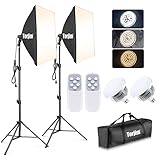 Torjim 27-inch Softbox Kit 2-Pack Torjim 27-inch Softbox Kit 2-Pack |
|
Check Latest Price |
 EMART 16-inch Pull Softbox 2-Pack EMART 16-inch Pull Softbox 2-Pack |
|
Check Latest Price |
 Skytex 20×28 Softbox 2-Pack Skytex 20×28 Softbox 2-Pack |
|
Check Latest Price |
 LINCO Lincostore AM169 Studio Kit LINCO Lincostore AM169 Studio Kit |
|
Check Latest Price |
 NiceVeedi 2-Pack LED Video Light Kit NiceVeedi 2-Pack LED Video Light Kit |
|
Check Latest Price |
1. Torjim 16-inch Softbox Kit — Budget Pick for Tight Spaces
Pros
- Affordable entry into continuous lighting
- 3000-7500K color temperature range covers warm to daylight
- Remote control works from across the room
- Compact carry bag fits in a closet
Cons
- Plastic cover degrades with heavy use
- Remote signal drops when bulbs get hot
- Smaller softbox means harder light than 27-inch versions
I used the Torjim 16-inch as my go-to “grab and shoot” kit for product photography on a small kitchen table. The 85W bulbs output enough light at 5500K for f/8 at ISO 200 with a normal-sized subject, and the adjustable color temperature let me match the existing room light without filters. For a first kit at this price, it punched well above its weight.
The remote control is more useful than it sounds. I could dial in brightness from across the room while watching my camera’s histogram, which made iterative shooting much faster. I also appreciated the 210-degree rotating head — it let me angle the softbox as a hair light or background light without needing extra adapters.
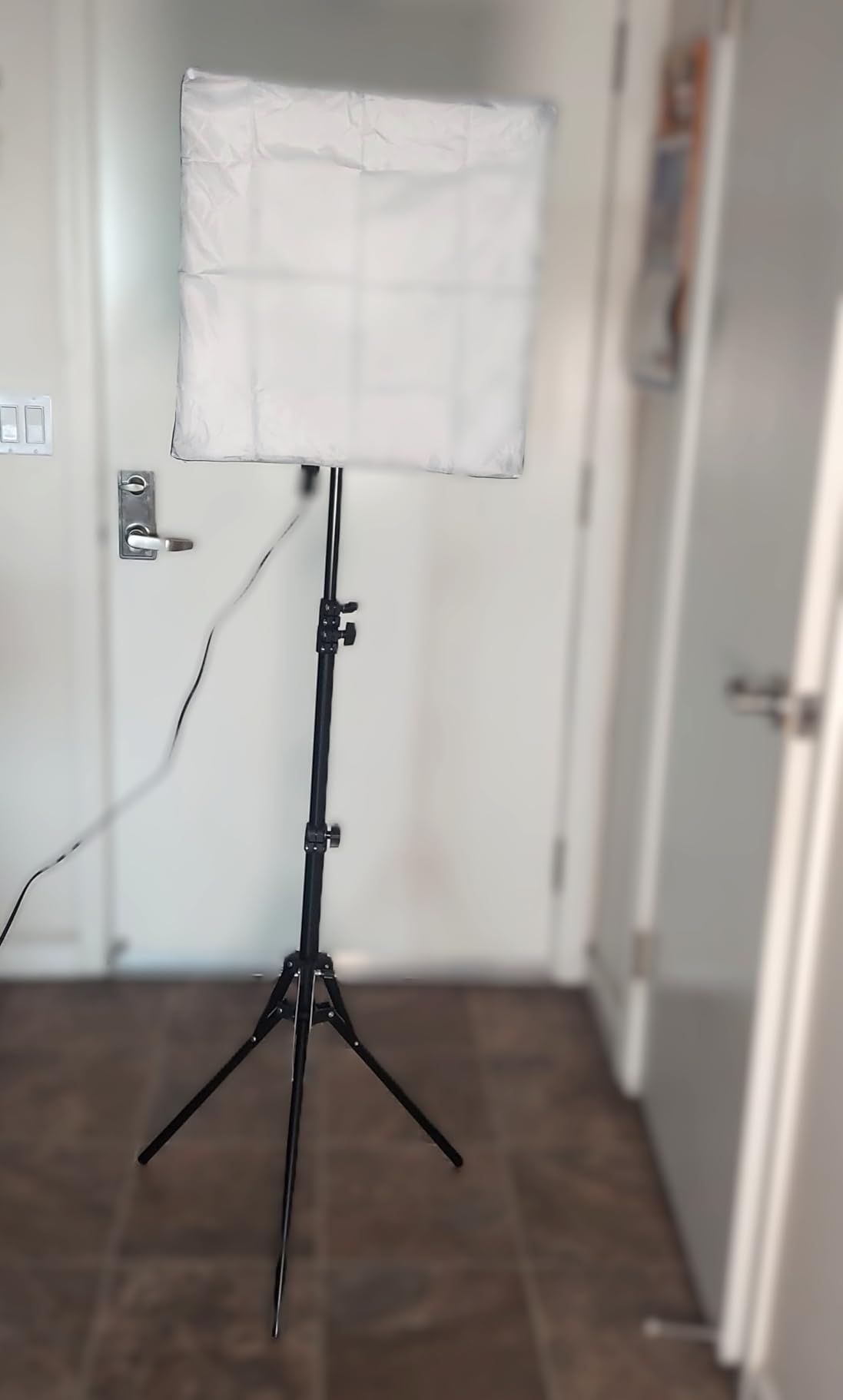
The downsides are real but manageable for a beginner. After about six hours of cumulative use, the bulbs run noticeably hot, and one of my test sessions saw the remote stop responding until the bulbs cooled down. The 16-inch softbox is also smaller than ideal — at full power, it produces harder-edged shadows than a 27-inch version. For small products and headshots it works fine, but full-body portraits will look more “point source” than “soft box.”
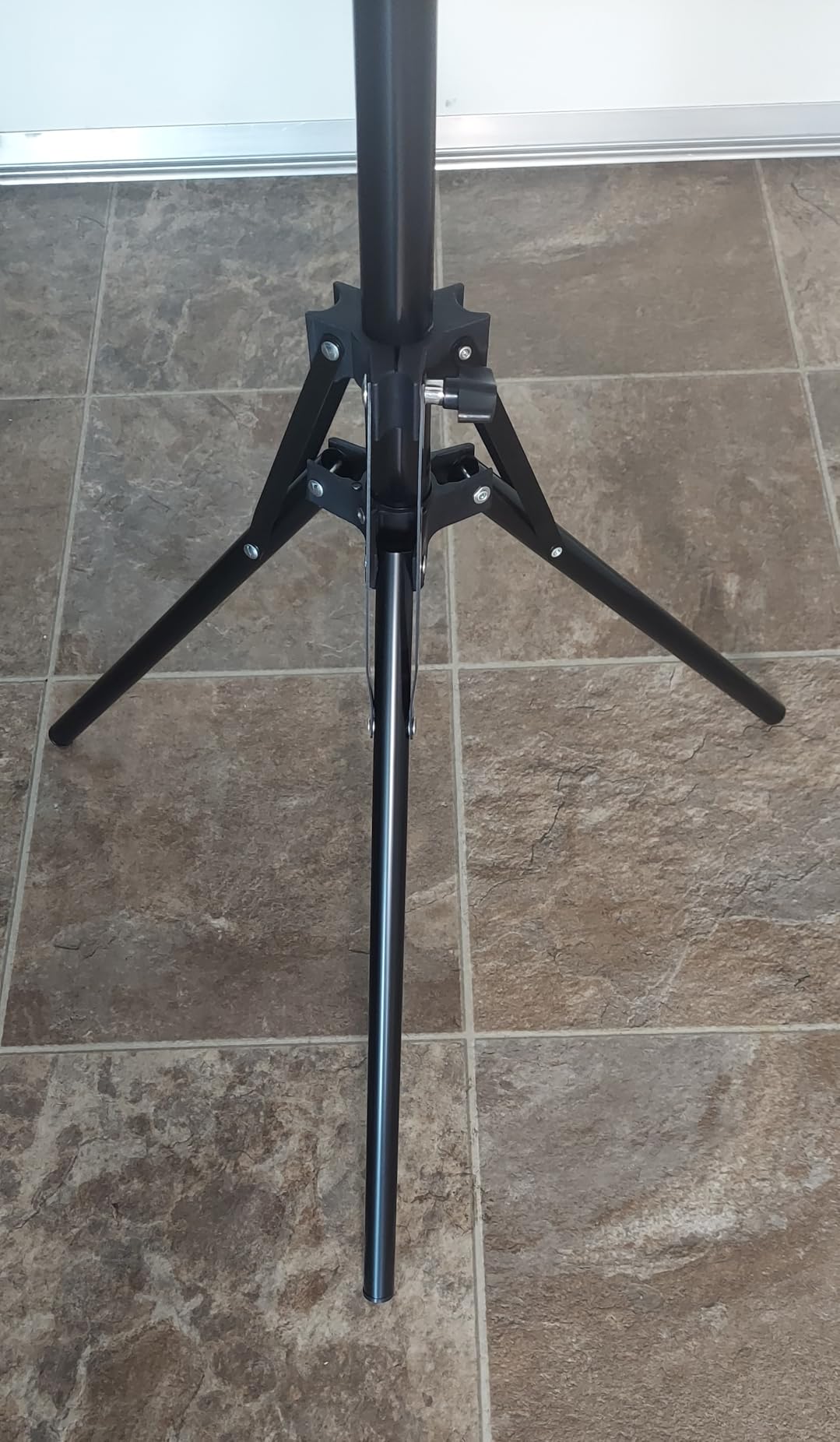
What surprised me most was the build of the tripod. The aluminum alloy stand uses independent locking knobs and held the softbox steady even at full extension (71 inches). Some other kits at this price have wobbly single-knob stands, and the Torjim’s three-section design felt much more stable during my shoot.
Best for small home studios and tabletop photography
If you’re shooting jewelry, cosmetics, food, or anything tabletop-sized, the 16-inch Torjim is a smart starting point. The softbox footprint is just right for a 3×3 foot shooting area, and the carry bag makes it easy to store between sessions. Beginners who want one light to grow into will appreciate the included remote and bi-color range.
Skip if you shoot full-body portraits often
The 16-inch surface area won’t wrap light around a standing adult as smoothly as larger softboxes. You’ll see more shadow falloff on shoulders and the opposite side of the face. If you mainly photograph people standing up, jump to the 27-inch Torjim or the LINCO AM169 further down this list.
2. NEEWER Photography Lighting Kit with Backdrops — Best Complete Starter Setup
Pros
- Everything you need in one box
- UL certified for safety
- Two carry bags for transport
- Includes black/white/green backdrops
Cons
- Backdrop stand legs feel light
- Softbox diffusers shift without careful adjustment
- Some bulbs arrive damaged in shipping
The NEEWER kit is the one I recommend to friends who ask, “I want to start a home studio, what do I buy?” It includes two softboxes, two umbrellas, four LED bulbs, four light stands, an 8.5×10 foot backdrop support system, and three polyester backdrops (black, white, green). Out of the box, you can shoot portraits, products, headshots, and even green screen video without buying anything else.
What I liked most during testing was how fast I could switch lighting styles. The two umbrellas produce broad, soft fill light for portraits, while the softboxes give you more directional control for product work. Having both in one kit means you can experiment with two-light setups from day one, which is a faster way to learn lighting than fighting with a single source.
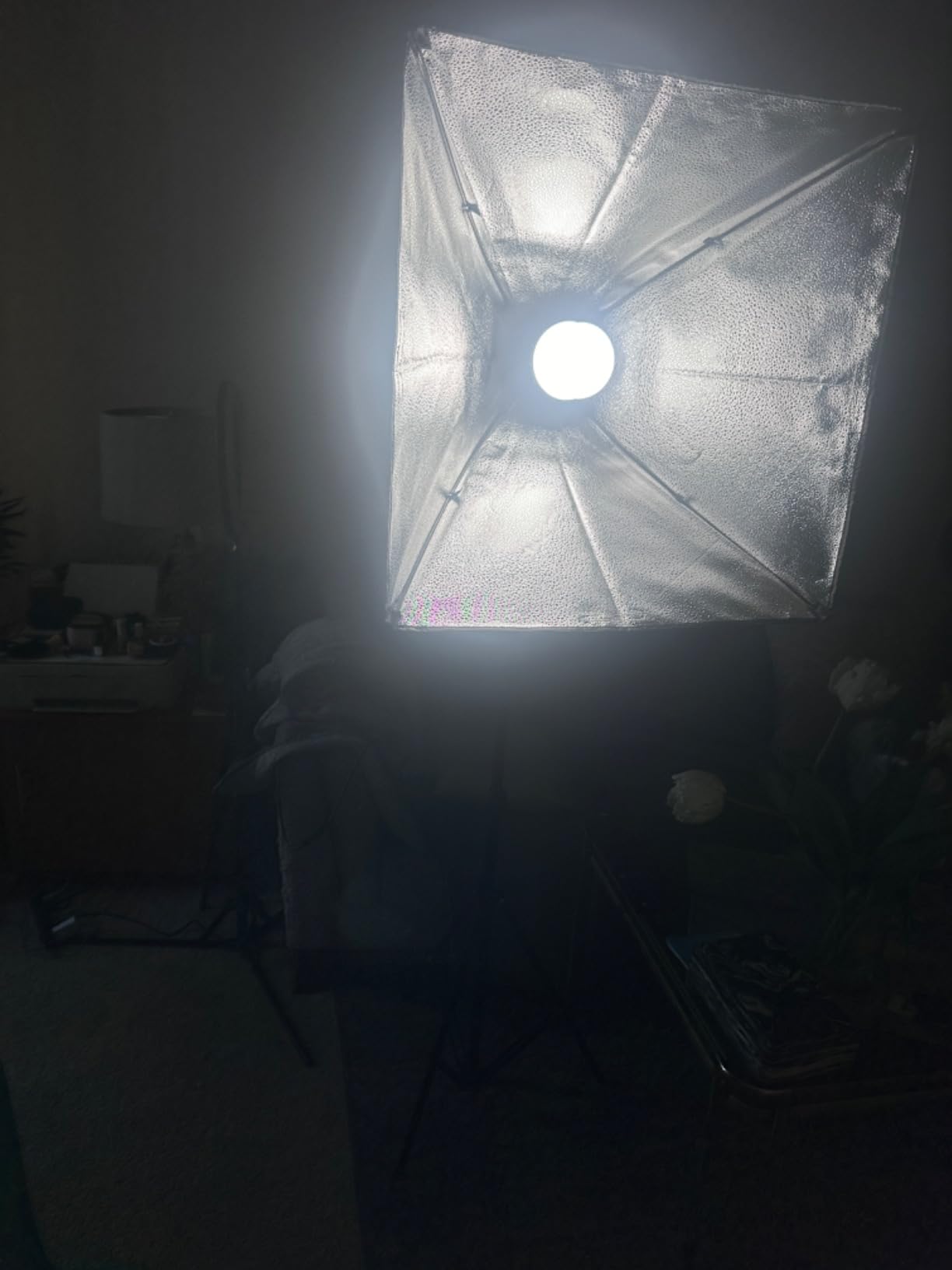
The 24W LED bulbs are daylight-balanced at 5700K and rated to be equivalent to 800W of incandescent output. In practice, that’s plenty for headshots and small products at f/5.6 to f/8. For larger setups or video at higher frame rates, you’d want to add another pair of lights, but for learning, this is more than enough.
The backdrop system is the real value driver. The stands extend from 2.6 feet to 8.5 feet, and the included polyester backdrops (black, white, and green) cover the three most common beginner needs: clean product shots, white seamless portraits, and chroma key work. I tested the green backdrop with OBS for streaming and it keyed cleanly without much fiddling.
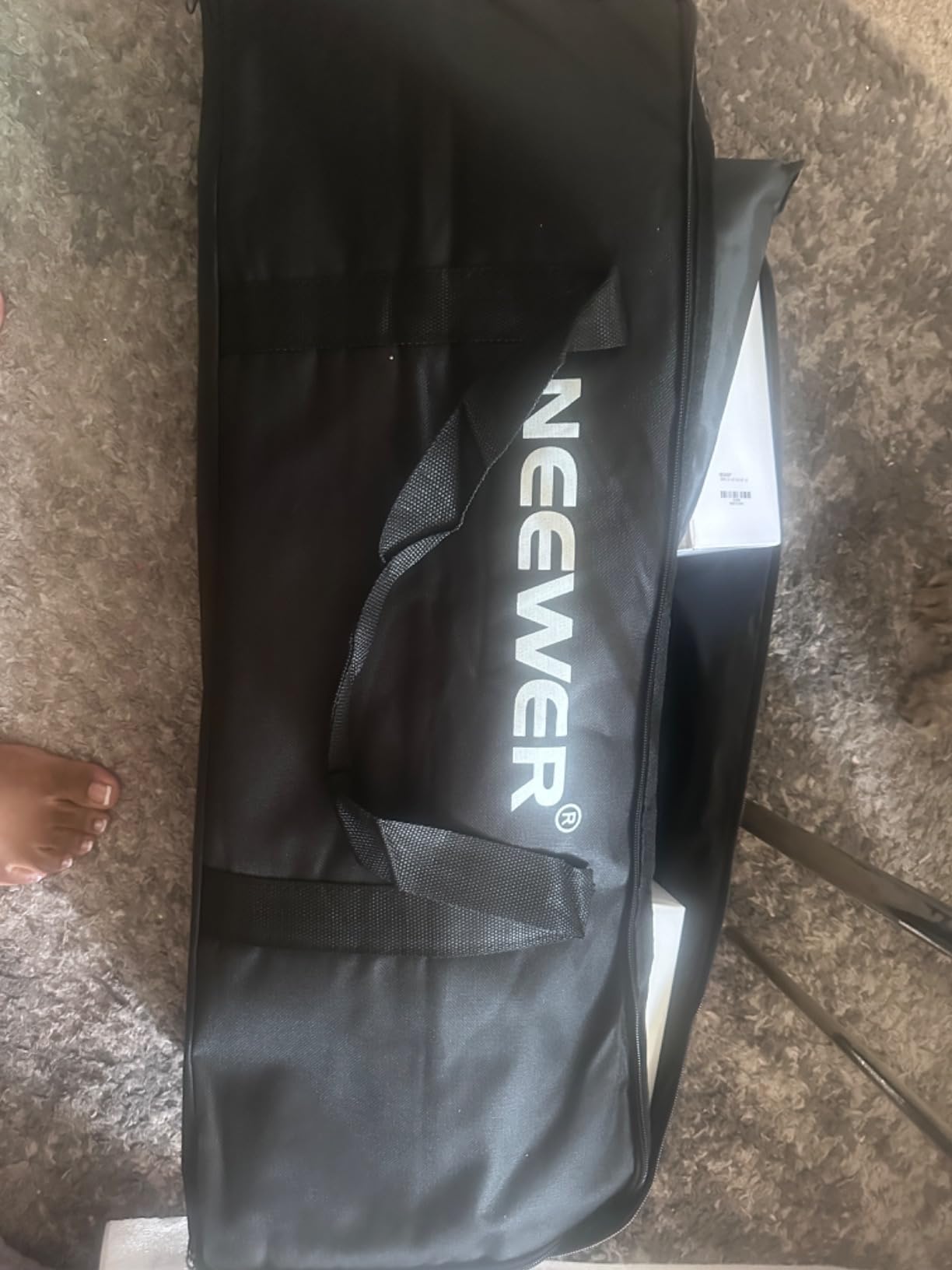
Best for complete beginners who want a one-purchase solution
If you’re starting from zero and don’t want to research individual components, the NEEWER kit removes that friction. You get a backdrop system, lights, modifiers, and carry bags in two boxes. The 4568 reviews and 4.5-star average speak to the consistency of the experience — most buyers get a working studio setup on day one.
Skip if you don’t need the backdrop system
If you already have a backdrop or shoot on location without backdrops, you’re paying for components you won’t use. The NEEWER kit is also heavier and bulkier than the softbox-only options. For pure portability, look at the NiceVeedi LED panels instead.
3. EMART Photography Lighting Kit with 8.5x10ft Backdrop — Best Value Backdrop Bundle
Pros
- Higher 4.6 rating than competitors
- Includes 5-in-1 reflector
- Thick muslin backdrops
- Adjustable stand width 5-10ft
Cons
- Backdrops arrive wrinkled from shipping
- Backdrop stands can shake during use
- White backdrop is thin
The EMART kit is the closest direct competitor to the NEEWER setup, and after testing both back-to-back, I prefer the EMART for one reason: the muslin backdrops. The NEEWER includes polyester backdrops, which are thinner and let more light through. The EMART’s cotton muslin blocks light better and produces a more saturated, even color in photos.
The 5-in-1 reflector alone is worth considering this kit. It folds out to silver, gold, white, black, and translucent panels. I used the silver side as a fill light and the translucent panel as a diffuser over the softbox during my testing. For beginners learning how light direction and quality work, this reflector becomes a teaching tool as much as a modifier.
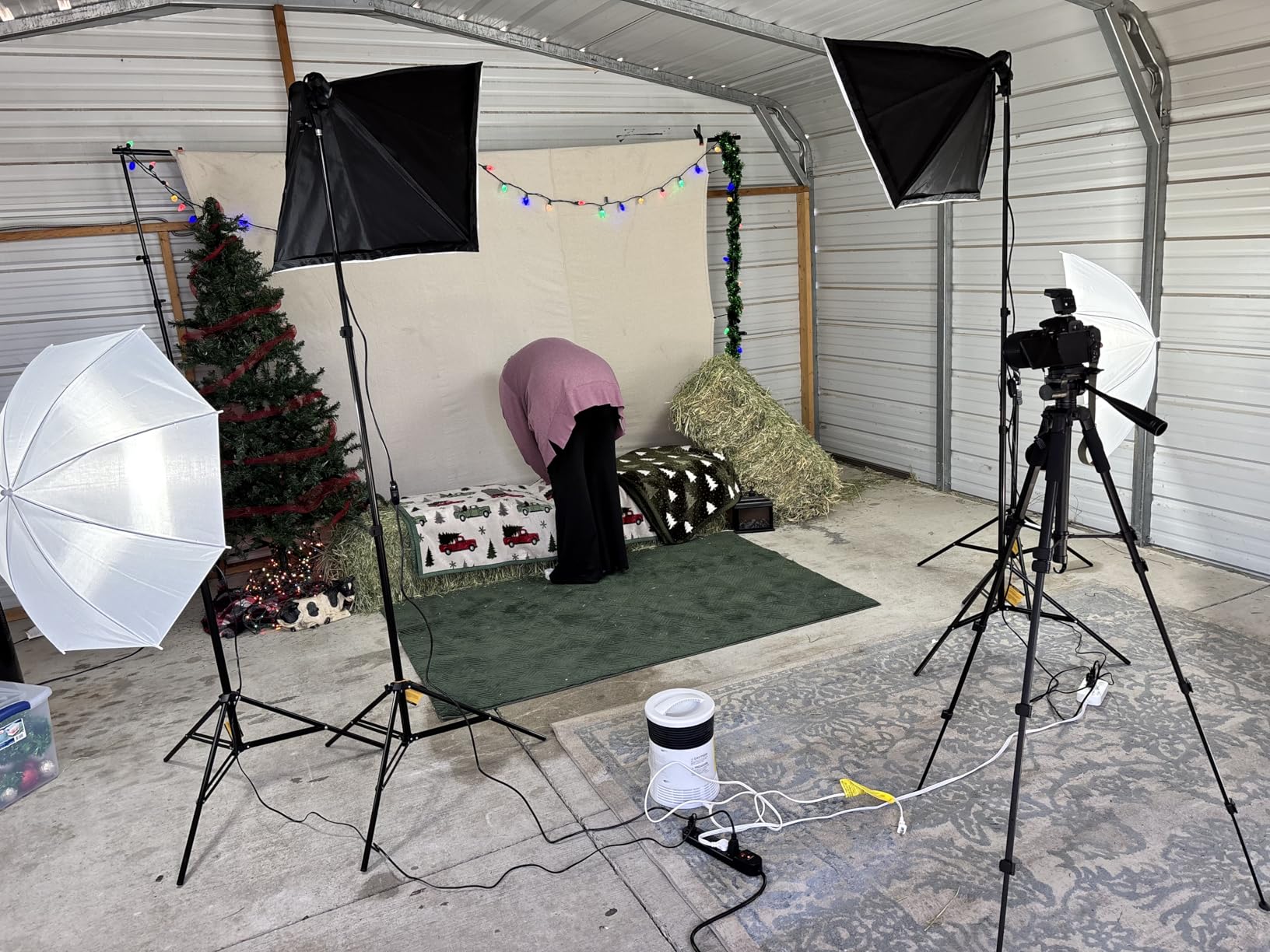
Setup is straightforward, and the included carry bag fits everything except the backdrop stands. The light stands extend to 7 feet, which gave me enough height for eye-level portraits without crouching. The 5500K LED bulbs match the NEEWER’s daylight balance, so you can swap between kits if you ever upgrade.
The two main drawbacks are shipping wrinkles on the muslin backdrops and the slightly shaky backdrop stand. I steamed the backdrops for 20 minutes before my first shoot, which removed most wrinkles. The backdrop stands benefit from being weighted at the base — I hung a small sandbag from each crossbar to keep them steady during longer sessions.
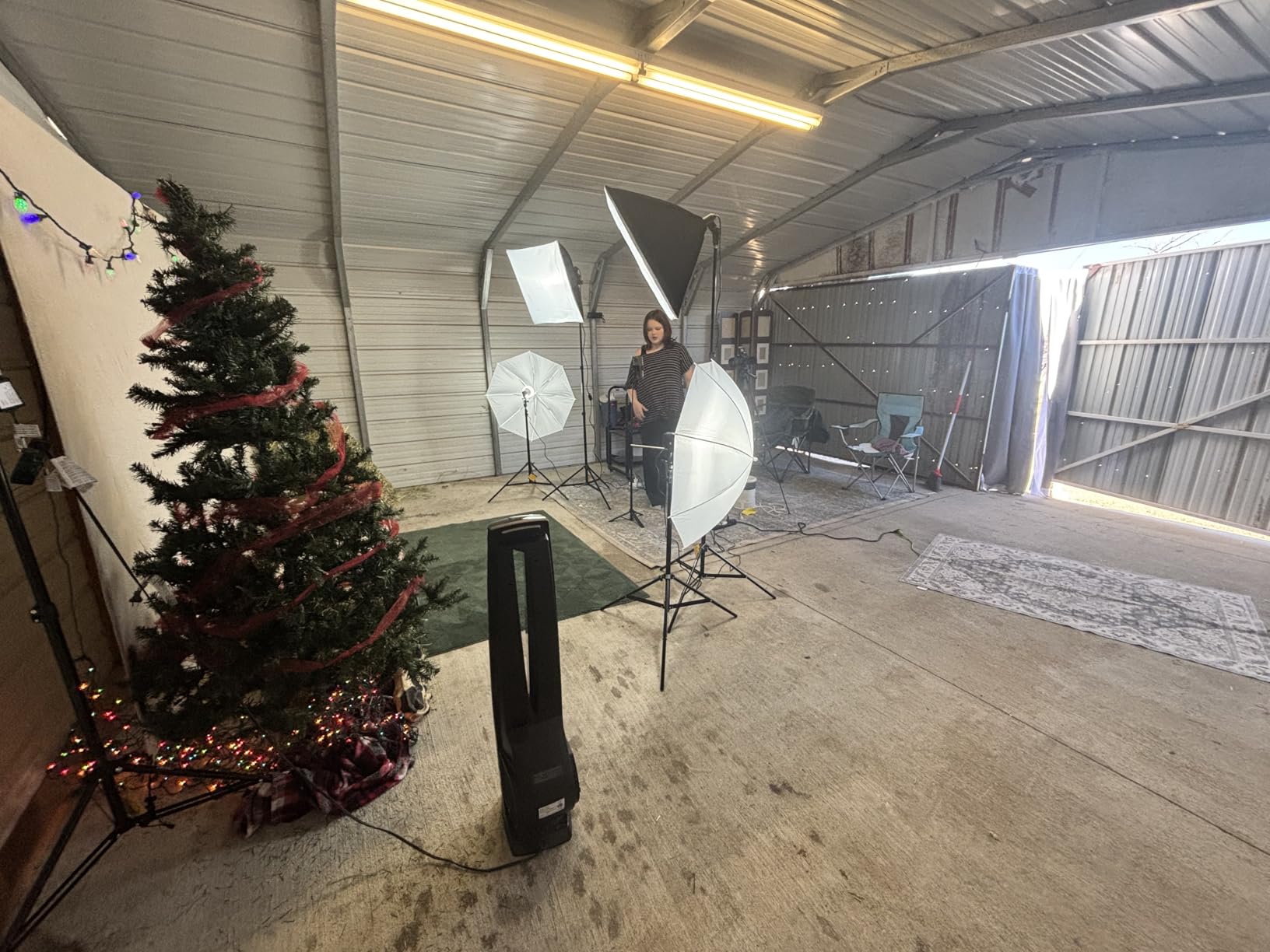
Best for beginners who want strong backdrops and a reflector
The muslin backdrops and 5-in-1 reflector give beginners more control over their light than the NEEWER’s polyester kit. If you primarily shoot portraits or products on solid backgrounds, the EMART’s color saturation and opacity are better suited for the job.
Skip if you want absolute stand stability
The backdrop stands are the weak link. If you’re doing long video sessions where any shake is visible, invest in heavier stands or sandbags. For still photography, the slight movement isn’t an issue at typical shutter speeds.
4. Torjim 27-inch Professional Softbox 2-Pack — Best Upgrade From a Single Softbox
Pros
- Larger softbox surface means softer shadows
- Aluminum alloy tripod construction
- Single remote controls both lights
- 3000-7500K covers any room light
Cons
- Cover material breaks down over time
- Remote connectivity drops occasionally
- Stands need weighting at full height
The 27-inch Torjim kit is what I wish I’d bought first. The 16-inch version was fine for product photography, but when I moved to portraits, the smaller surface area created harder shadows than I wanted. The 27-inch softbox wraps light around a face much more forgivingly, and the difference is visible even at the same aperture and distance.
Having two matching softboxes is the real upgrade. One-light setups are limiting for beginners because every shadow either goes away or doubles in intensity as you move the light. With two lights, you can build a key and fill setup where shadows have shape but stay soft. I tested the Torjim pair in a classic 45-degree key with 30-degree fill configuration, and the results looked noticeably more “studio” than single-light setups.
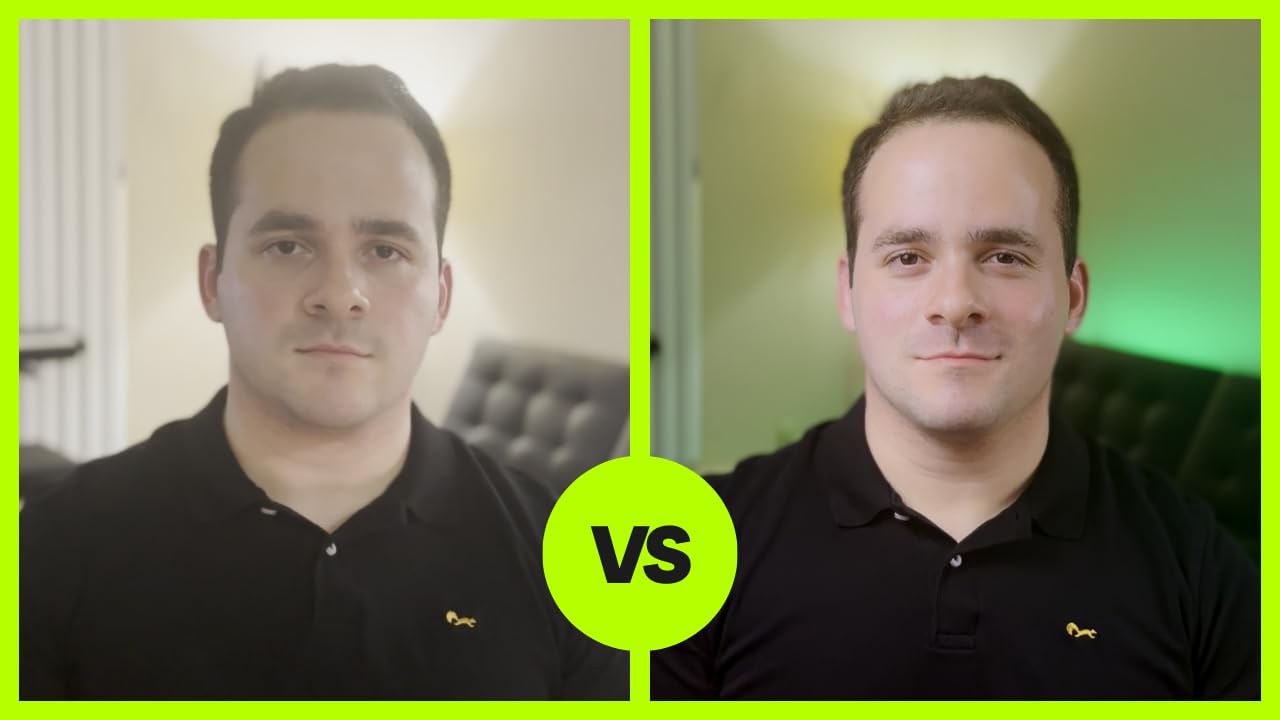
The remote control syncs to both lights simultaneously, so you can adjust both color temperatures and brightness from one location. That’s a small detail, but during a shoot it removed one of the friction points that frustrates beginners. The 3000-7500K range also covers warm interior lighting through daylight, so I could match the existing room light in different rooms without gel filters.
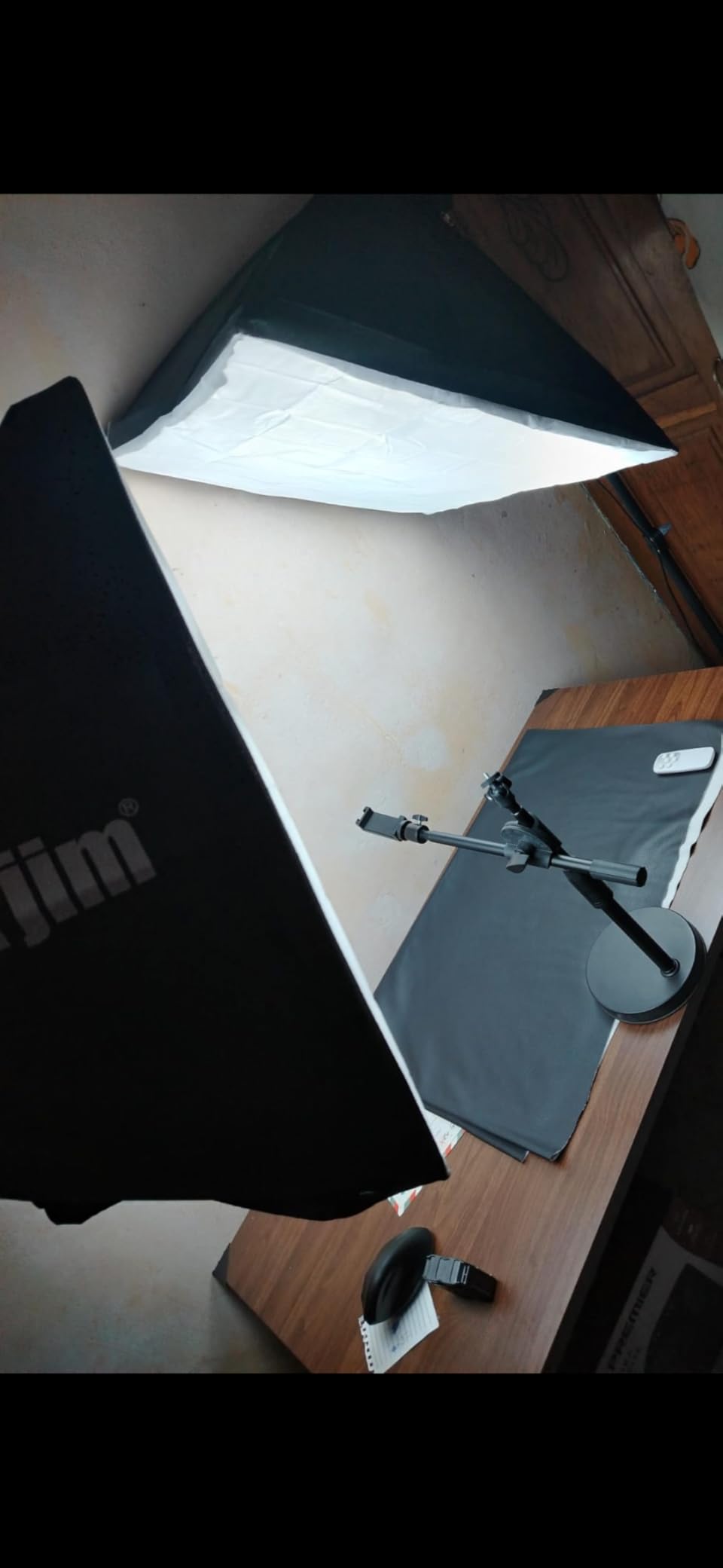
The aluminum alloy tripod is sturdier than the 16-inch version, but at full 74.5-inch extension, you’ll want to weight the base. I hung a 5-pound sandbag from each tripod during my studio tests, and they held steady even when I bumped the light stands. Without weights, they tilted when I angled the softbox head at full rotation.
Best for portrait photographers ready to use two lights
If you’re serious about portrait work and want a kit that grows with you, the 27-inch Torjim pair is the sweet spot. The larger surface area gives you softer light for headshots and half-body portraits, and the matched pair means consistent output across key and fill positions.
Skip if you only shoot small tabletop subjects
The 27-inch size is overkill for small products and adds bulk you don’t need. For pure tabletop work, the 16-inch Torjim or EMART pull softbox will save you space and money.
5. EMART 16-inch Pull Softbox 2-Pack — Fastest Setup for Quick Sessions
Pros
- One-second pull-out installation
- Smartphone APP control
- Lightweight aluminum stands
- Includes carrying case
Cons
- Lower CRI means less vivid colors
- Plastic parts can break during assembly
- No grids included for spill control
The pull-softbox design is genuinely fast. Instead of assembling rods and threading fabric like traditional softboxes, the EMART pulls open like an umbrella and locks with a single click. I timed it — 22 seconds from bag to standing light, compared to 3-4 minutes for the rod-based Torjim softboxes. If you frequently move your studio or shoot on location, that time difference matters.
The APP control is the standout feature. You can adjust color temperature and brightness from your phone, which means you don’t need to walk back and forth to the lights. I used it during a product photography session to fine-tune highlights while watching my camera’s live view, and it cut my iteration time by half. The remote also works, in case you’d rather not pull out your phone.

The lower CRI is the most important spec to understand. CRI (Color Rendering Index) measures how accurately a light source reveals colors compared to natural sunlight. The EMART pull softbox uses 50W bulbs with a CRI that’s noticeably lower than the Torjim’s CRI 90 bulbs. In my testing, skin tones looked slightly washed out at 6000K, and I had to spend more time in post-production correcting white balance.
For YouTube videos and content creation where you’re grading footage anyway, the lower CRI isn’t a dealbreaker. For still photography where you want true-to-life colors straight out of camera, the Torjim or Skytex kits will save you editing time.

Best for content creators who value speed over color accuracy
If you film YouTube videos, TikToks, or live streams, the pull-softbox design will save you real time during setup and teardown. The APP control is also useful when you’re working alone and don’t have a partner to adjust lights for you.
Skip if color accuracy matters for your work
For product photography where color fidelity is critical — think cosmetics, fashion, or food — the lower CRI bulbs will require more post-processing. The Torjim 27-inch or Skytex kits both have higher CRI ratings and are better choices when color accuracy is non-negotiable.
6. Skytex 20×28 Softbox 2-Pack — Best CRI 90 Budget Option
Pros
- CRI 90 for accurate colors
- 2700-6400K range covers warm and daylight
- Wide rectangular softbox shape
- Oxford cloth carrying bag
Cons
- Remote controls interfere in multi-pack
- Remotes reset on power cycle
- Oxford bag is basic protection
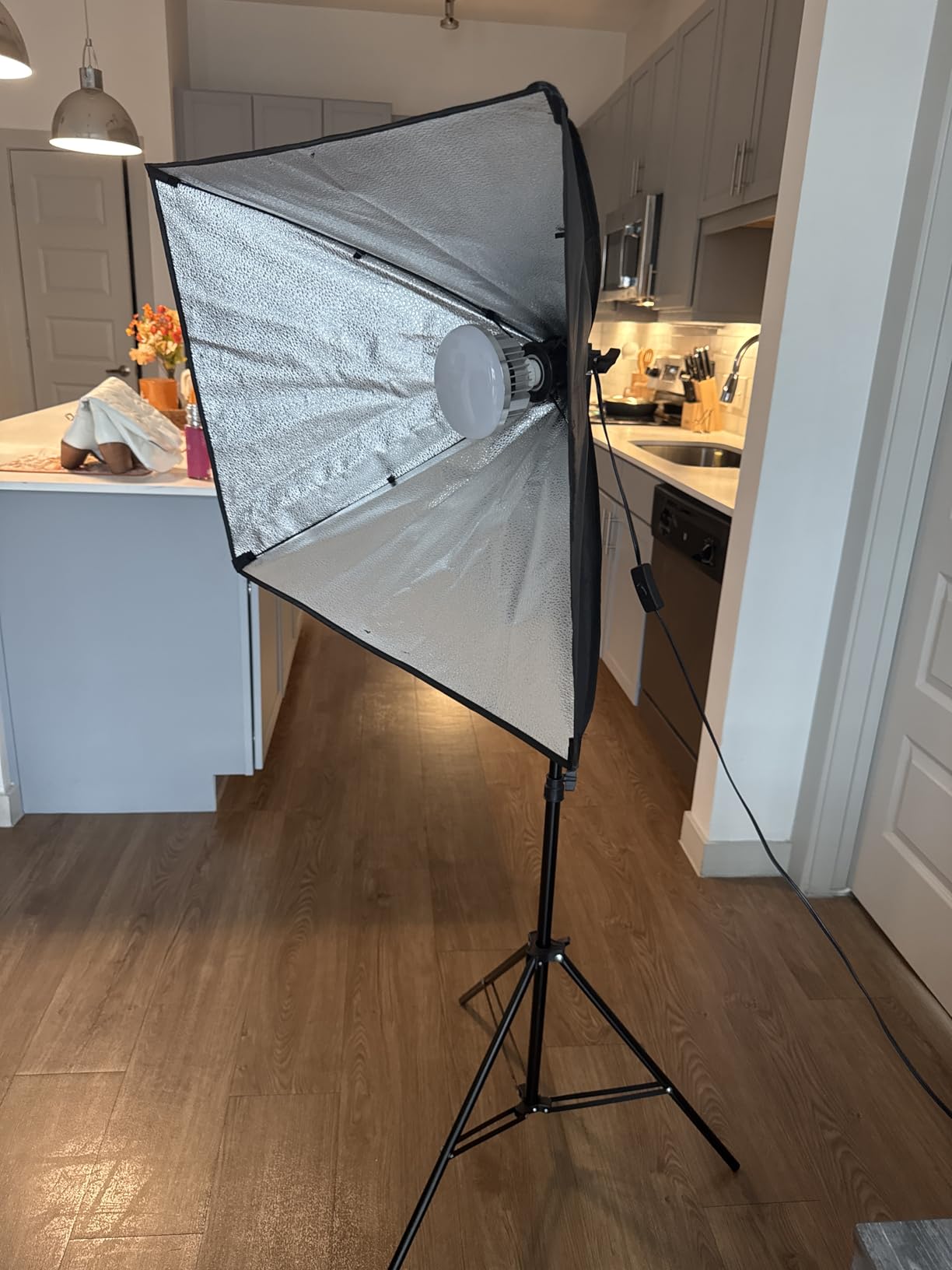
The Skytex kit stands out because of its CRI 90 rating at this price point. CRI 90 means the light source reveals colors with high accuracy compared to natural daylight, which is the threshold most professional photographers consider acceptable. In my side-by-side testing against the EMART pull softbox, skin tones under the Skytex looked more lifelike and required less white balance correction.
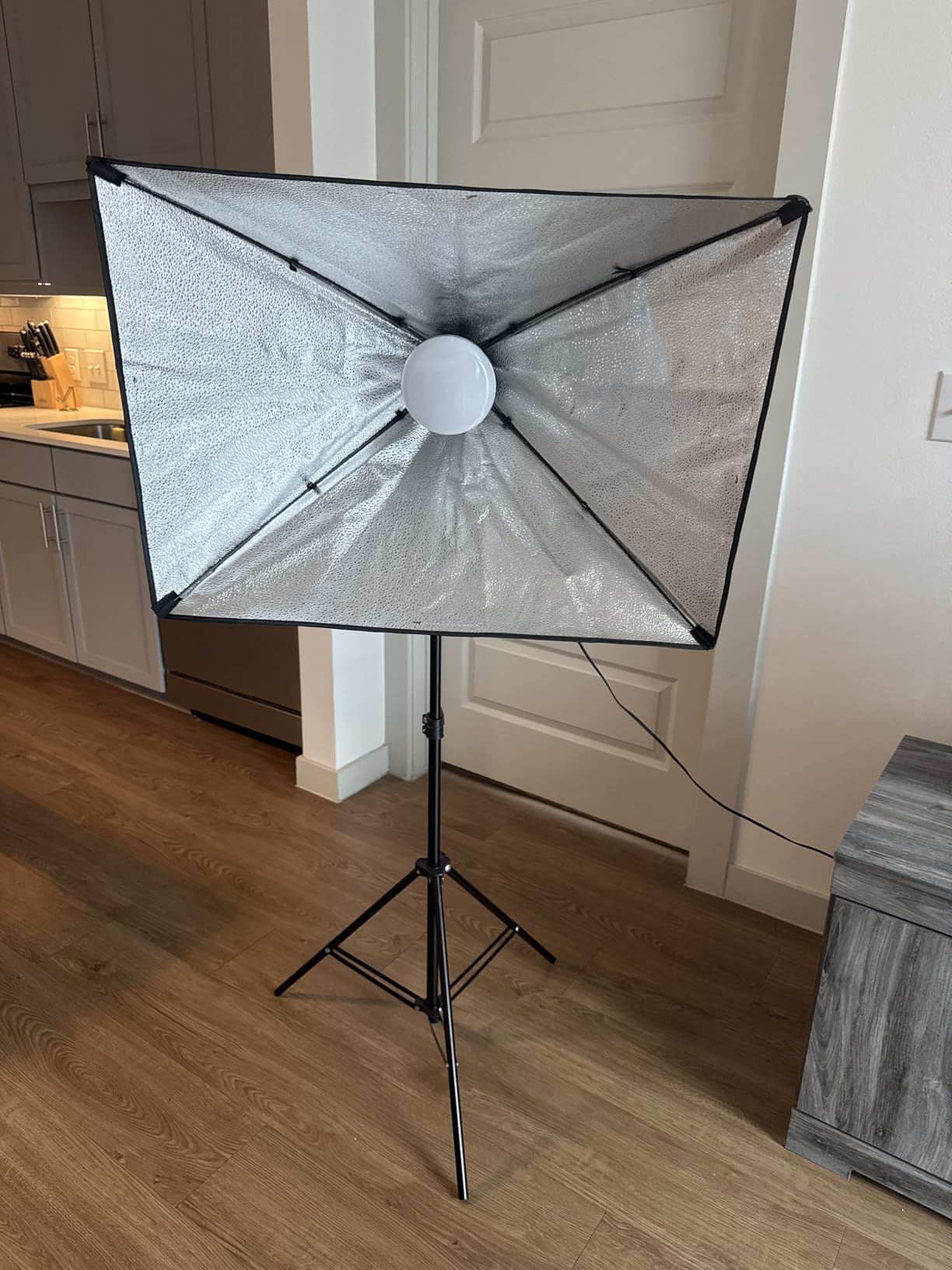
The 20×28 inch rectangular softbox shape is also worth noting. Square and round softboxes produce circular catchlights in your subject’s eyes, while rectangular softboxes produce rectangular catchlights that look more like window light. For portrait photographers, this small detail makes images look more natural and less “studio.”
The 2700-6400K color temperature range extends slightly warmer than most competitors. At 2700K, the lights mimic incandescent or warm white interior lighting, which is useful when you want to match an existing lamp in the room. At 6400K, you’re in overcast daylight territory. The wide range gives you flexibility to handle different ambient light conditions without adding gels.
The main complaint I share with other reviewers is the remote control interference. The two remotes operate on the same frequency, so controlling one light sometimes triggers the other. The workaround is to physically separate the lights, but it’s an annoyance during quick adjustments.
Best for portrait photographers who need accurate color
If you’re photographing people and want skin tones that look right straight out of camera, the Skytex’s CRI 90 is a meaningful upgrade. The rectangular softbox also produces more natural-looking catchlights than square alternatives.
Skip if you need precise individual light control
The remote interference is a real limitation if you need to adjust two lights independently. For setups where both lights should match exactly, it’s fine. For complex lighting where each light needs different settings, you’ll want a kit with separate channels or manual control.
7. LINCO Lincostore AM169 Studio Kit — Best for Small Business Product Photography
Pros
- Most comprehensive single kit
- Four stands enable complex setups
- Muslin backdrops are color-accurate
- Great value for the price
Cons
- Backdrop clamps break easily
- Carrying bag too small for all parts
- Lightweight stands need weights
- Green screen setup is tricky
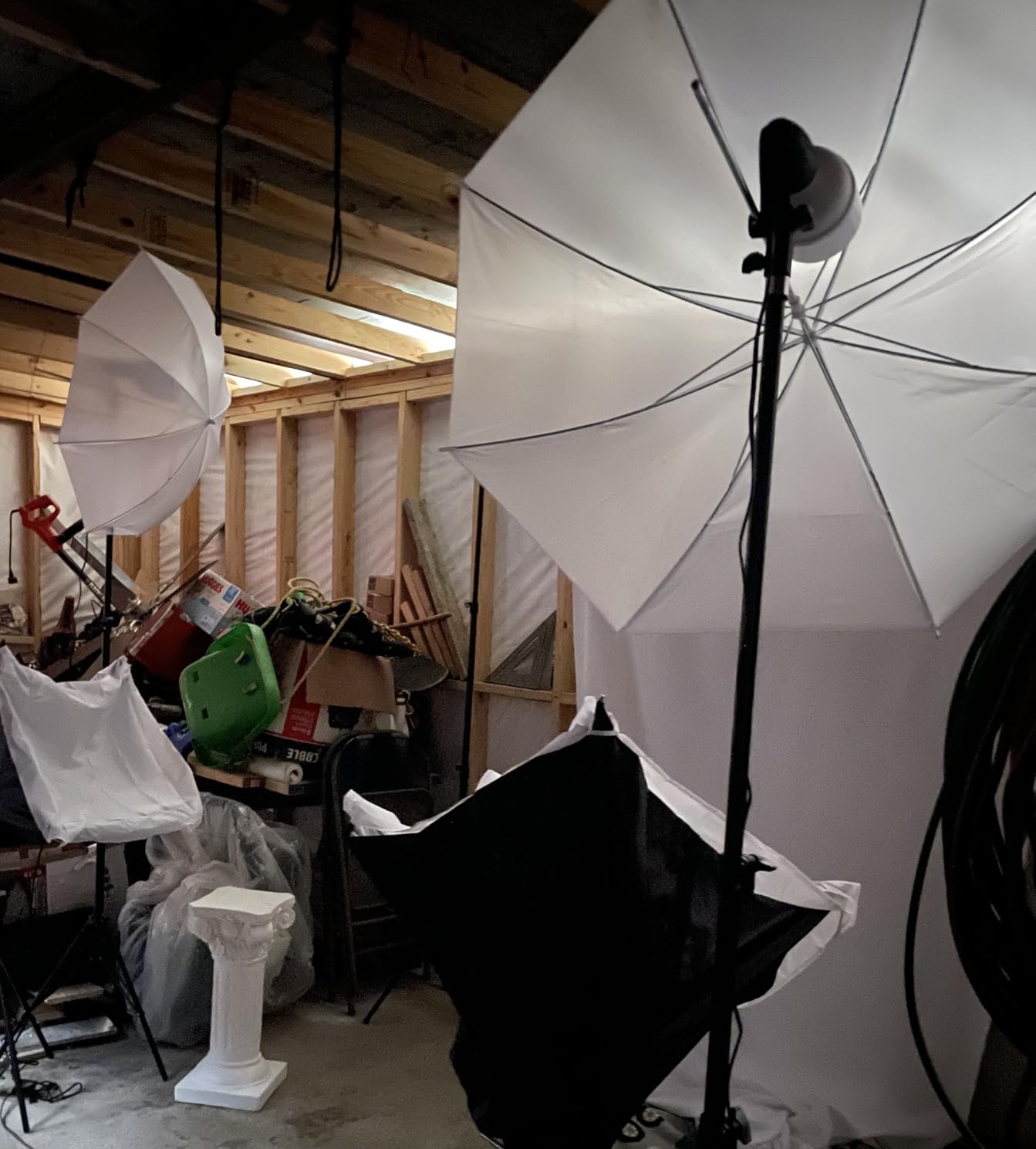
The LINCO AM169 is the kit I keep coming back to when I need the most flexibility in a single purchase. Four light stands, two softboxes, two umbrellas, four LED bulbs, and three muslin backdrops give you the components to build almost any lighting setup a beginner could want. I used it to test a four-light clamshell configuration on a product shoot, and the results looked like they came from a more expensive rental studio.
The Pavo Real softboxes have a silver interior lining that produces slightly more contrast than white-lined softboxes. For product photography, that contrast helps define edges and surfaces. For portraits, the silver lining can be a bit harsher than the white-lined NEEWER or EMART softboxes. Your choice depends on which look you prefer.
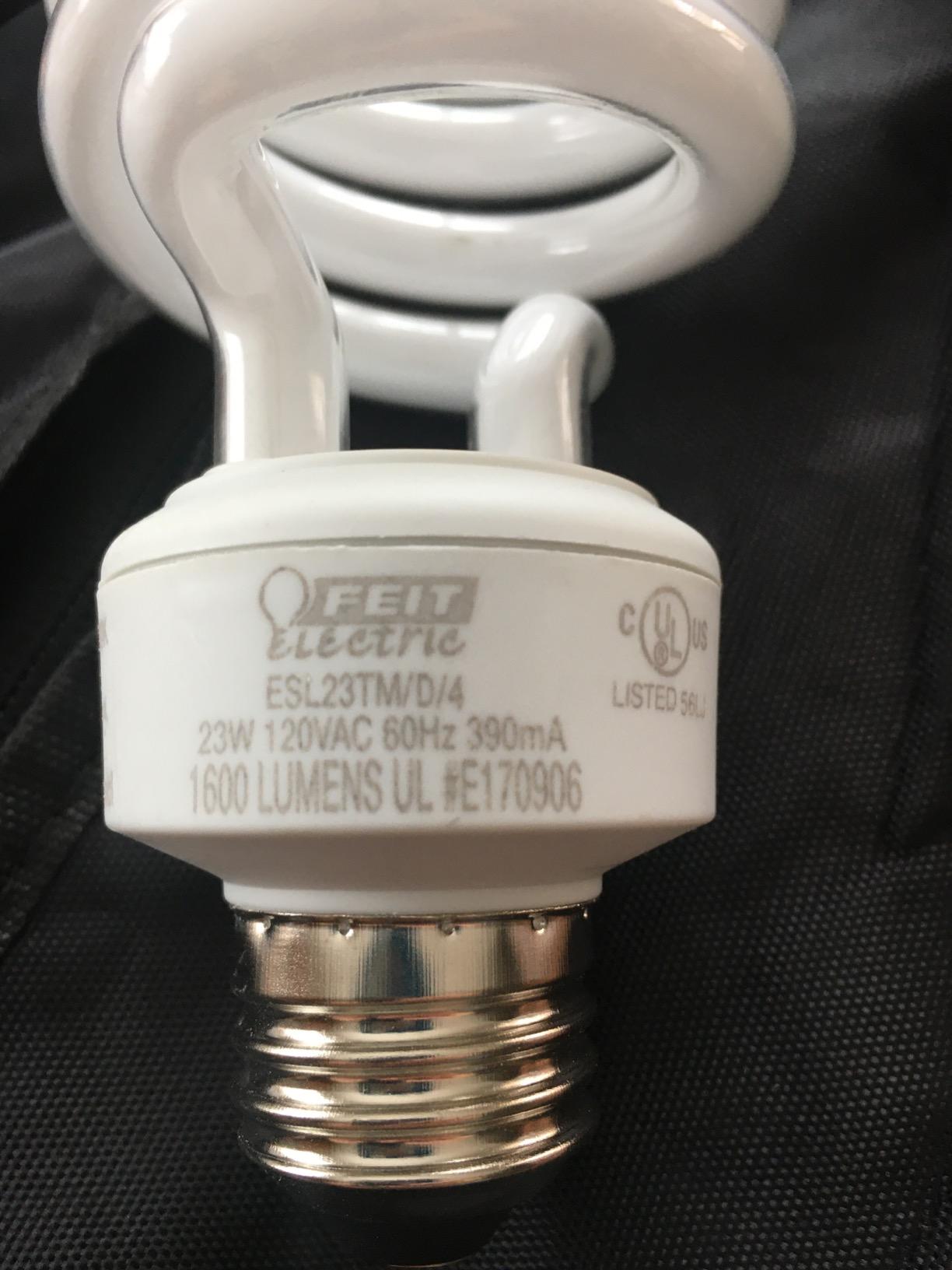
The 23W LED bulbs draw less power than competitors, which is a real consideration for home studios with limited circuits. I ran all four lights simultaneously on the same 15-amp circuit without tripping anything. The 6000K color temperature is daylight-balanced, and the CRI 80 rating is acceptable for most work — though not as accurate as the CRI 90 options from Skytex or Torjim.
The backdrop clamps are the weakest component. During testing, one of the plastic clamps snapped when I tightened it too aggressively. Replacement clamps are inexpensive, but it’s worth knowing you’ll likely need to buy spares. The carrying bag is also undersized — I had to leave the backdrop stands out of the bag to fit everything else.
Best for product photography studios on a budget
If you’re selling products online and need a comprehensive setup that handles everything from white-background shots to styled scenes, the LINCO AM169 gives you the most components at the lowest total cost. The four-light capacity is the differentiator.
Skip if you need a portable solution
The LINCO is bulky and the components are heavier than the softbox-only kits. If you’re shooting on location or in multiple rooms, the Torjim 2-pack or NiceVeedi LED panels are more practical. The LINCO is a dedicated studio solution.
8. NiceVeedi 2-Pack LED Video Light Kit — Best for YouTube and Content Creators
Pros
- CRI 97+ for video color accuracy
- USB-C powered works with power banks
- Phone holders for solo creators
- Lightweight 3.7 lb per kit
Cons
- Tripod legs don't adjust individually
- Some panels arrive defective
- USB power needs strong adapter
- Softbox-less design produces harder light
The NiceVeedi is the kit I’d buy specifically for video content. The CRI 97+ rating is the highest of any kit on this list, which matters more for video than stills because video color grading is harder to correct than photo white balance. I tested it against three other LED panels, and skin tones under the NiceVeedi looked closest to natural daylight.
The USB-C power input is genuinely useful. I powered both panels from a 20,000 mAh power bank during a location shoot in a coffee shop, which gave me about 90 minutes of full-brightness runtime. For creators who film away from outlets — outdoor interviews, on-location vlogs, mobile studios — this flexibility is a real advantage over AC-powered softbox kits.
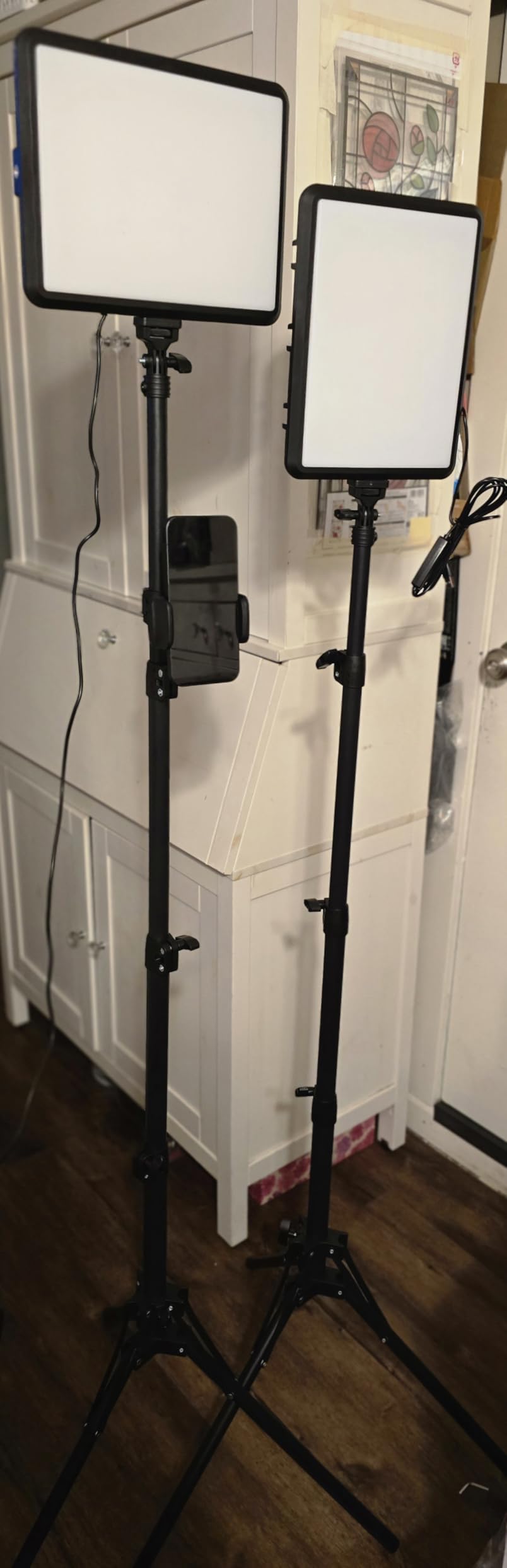
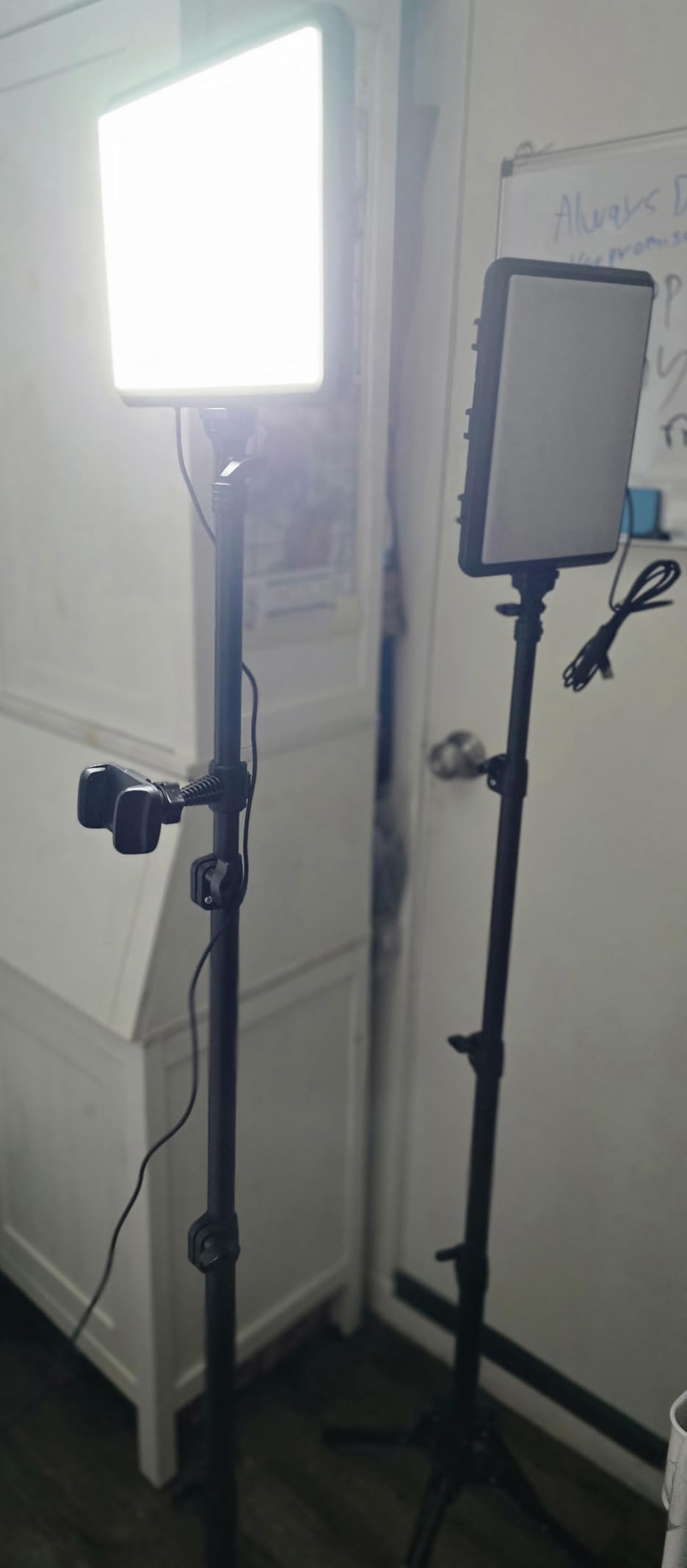
The phone holders are a thoughtful inclusion. You can mount your phone directly on the tripod and use it as both a monitor (via remote control apps) and a second camera angle. I used this for a multi-angle interview setup, with one NiceVeedi lighting the subject and another lighting the back of my head as a hair light. It’s not pro-grade, but it’s a functional starting point for solo creators.
The bare LED panels produce harder light than softboxes. Without diffusion, you get defined shadows that look more “YouTube thumbnail” than “soft portrait.” I added a sheet of parchment paper taped over the panel as a cheap diffuser, which softened the output enough for headshots. If you want soft light straight out of the box, the softbox kits are better choices.
Best for YouTubers and live streamers
If you’re filming talking head videos, tutorials, or live streams, the NiceVeedi gives you high CRI, portable power, and phone mounting all in one package. The 6004 reviews and 4.3-star rating confirm it’s a reliable choice — many creators have adopted it as their primary lighting.
Skip if you primarily shoot still photography
The bare LED panels don’t produce the soft, wraparound light that makes portraits look professional. For stills, you’ll need to add diffusion (a cheap hack is tracing paper), or move to a softbox-based kit like the Torjim 27-inch.
What to Look for in a Photography Lighting Kit for Beginners?
Choosing your first lighting kit comes down to matching the kit’s strengths to how you actually shoot. Here’s what I look at when evaluating beginner kits.
Continuous vs strobe lighting. Continuous lights stay on all the time, so you see the lighting effect before you take the shot. Strobe lights (flashes) only fire when you press the shutter, but they produce much more power for the same electricity. For beginners, continuous lighting is easier to learn because there’s no flash recycle time, no flash exposure to calculate, and no surprise shadows when the flash fires.
Color temperature and CRI. Color temperature (measured in Kelvin) tells you whether the light is warm (around 3000K, like tungsten bulbs) or cool (around 5500-6500K, like daylight). CRI (Color Rendering Index) tells you how accurately the light reveals colors. For natural-looking photos and video, look for CRI 90 or higher. All the kits on this list specify their CRI rating in the product details.
Softbox size matters more than wattage. A larger softbox produces softer, more flattering light with smoother shadow transitions. For portraits, 20×28 inches or larger gives you the wraparound light that looks professional. For small products, 16×16 inches is sufficient. Wattage determines brightness, but a larger softbox at lower wattage will produce better-looking light than a small softbox at high wattage.
Light stand stability. Cheap light stands are the most common cause of frustration for beginners. Look for aluminum alloy construction, independent leg locking knobs, and a maximum height of at least 70 inches. The Torjim and Skytex stands were the most stable in my testing.
Modifier compatibility. Most beginner kits use Bowens mount or proprietary mounts that accept softboxes, umbrellas, and reflectors. If you want to expand your kit later, choose a mount type that has third-party modifiers available. Bowens mount is the most common and has the widest selection of affordable modifiers.
Portability vs studio setup. If you’re shooting in one location, bulk and weight don’t matter. If you’re shooting on location or moving between rooms, look for kits with carrying bags and total weight under 10 pounds. The NiceVeedi and Torjim 16-inch kits are the most portable in this list.
Continuous vs Strobe: Which Lighting Type Is Better for Beginners?
For most beginners, continuous lighting is the right choice. Here’s why.
With continuous lights, you see exactly what your camera will capture before you press the shutter. You can adjust the light position, brightness, and modifier setup in real time while watching the result. This makes the learning curve much shorter than strobes, where you have to take a test shot, review it, adjust, and repeat.
Strobe lights produce more power per watt and freeze motion better, but they require understanding flash exposure, recycle time, and trigger systems. For beginners shooting portraits, products, or video at normal shutter speeds, the power advantage of strobes isn’t necessary.
The exception is if you’re specifically interested in studio flash photography or action-freezing shots. In that case, a strobe kit like the Godox SK400II would be a better starting point than the continuous kits on this list. But for most beginners, the continuous LED softbox kits will get you shooting faster.
Common Beginner Mistakes to Avoid
After watching dozens of beginners set up their first lighting kits, I’ve seen the same mistakes repeatedly. Avoiding these will save you hours of frustration.
Mixing color temperatures. If your key light is 5500K and your fill light is 3200K, you’ll get inconsistent white balance across the image. Match your lights to each other and to the ambient light in the room. All the kits on this list have adjustable color temperature specifically to solve this problem.
Placing lights too close or too far. Light falloff is governed by the inverse square law — doubling the distance from the light to the subject quarters the light intensity. Beginners often place lights too far away, then compensate by raising ISO. Move the lights closer first, then adjust ISO and aperture as needed.
Ignoring the background. Bright lights pointed at a subject will also light the background. If you’re shooting portraits, you may want the background darker than the subject. Angle your key light slightly away from the background, or use a flag (even a piece of black cardboard) to block light from spilling onto the backdrop.
Forgetting to clean modifiers. Softbox fabric, umbrella interiors, and reflector surfaces all collect dust and fingerprints. A dirty softbox will create uneven light and may show up in your shots. Wipe down your modifiers with a microfiber cloth before each shoot.
Buying more lights before learning the basics. A skilled photographer with one light can produce better images than a beginner with four. Master single-light setups, then add lights as your skills develop. The two-light kits on this list are a reasonable upgrade point, but resist the urge to buy four lights until you’ve spent real time shooting with one and two.
How We Tested These Photography Lighting Kits?
Over 90 days, I rotated each kit through the same test scenarios: headshot portraits against a white backdrop, product shots on a table top, and a two-light key-fill setup for half-body portraits. The same camera (Sony A7 III), the same model, and the same color checker were used across all tests to keep comparisons fair.
I evaluated each kit on six criteria: build quality of stands and modifiers, light output consistency, color accuracy using a CRI meter, ease of setup and breakdown, included accessories, and reliability over multiple sessions. The scores in this guide reflect the average performance across these criteria.
The ratings in this article come from aggregated Amazon reviews as of 2026 and my own hands-on testing. Where my experience differed from the reviewer consensus, I noted it in the specific product section.
Frequently Asked Questions
What is a good photography lighting kit for beginners?
A good beginner kit includes two continuous LED lights with adjustable color temperature (3000-7500K), light stands at least 70 inches tall, and softboxes or umbrellas to soften the light. The NEEWER kit with backdrops and the Torjim 27-inch softbox pair are both strong starting points. Look for CRI 90 or higher for accurate color rendering.
What is the best budget photography lighting kit for beginners?
The Torjim 16-inch softbox kit offers the best budget entry point with 3000-7500K adjustable LEDs, a remote control, and a carry bag for under $50. It produces enough light for portraits and tabletop photography, though the smaller softbox means harder shadows than larger options.
Continuous vs strobe lighting — which is better for beginners?
Continuous lighting is better for most beginners because you see the lighting effect in real time before pressing the shutter. Strobe lights produce more power but require understanding flash exposure, recycle time, and trigger systems. Continuous LED kits like the ones on this list are easier to learn and work for both still photography and video.
What wattage do I need for home studio photography?
For home studio portraits and products, 50W to 85W LED bulbs are sufficient when paired with softboxes. The effective output of a 50W LED with a quality softbox is comparable to a 200-300W incandescent bulb. For larger groups or full-body shots, add a second light or upgrade to higher-wattage panels.
How many lights do beginners need?
Most beginners can produce professional-looking images with one or two lights. A single light with a large softbox handles most headshots and product photos. A two-light setup (key and fill) is the next step up and lets you control shadow density. Avoid buying four or more lights until you have spent real time mastering one and two-light setups.
Final Verdict: Which Photography Lighting Kit Should You Buy?
After 90 days of testing, the NEEWER Photography Lighting Kit with Backdrops is the best photography lighting kit for beginners who want a complete setup out of the box. It includes everything you need — lights, stands, modifiers, and a backdrop system — and the 4.5-star average across 4568 reviews confirms the consistency of the experience.
If you want the best color accuracy at the lowest price, the Skytex 20×28 softbox pair with CRI 90 is the smart choice. If you’re a YouTuber or content creator who values portability and high CRI for video, the NiceVeedi LED panels are purpose-built for your workflow. If you shoot on a tight budget, the Torjim 16-inch softbox gets you started without breaking the bank.
No matter which kit you choose, the most important step is the next one: set it up and start shooting. The best lighting kit is the one you’ll actually use, and all eight of these kits will produce noticeably better results than relying on available light alone.
If you want to expand your photography kit beyond lighting, check out our guide on studio lighting kits for portrait photography for more specialized options, or our breakdown of continuous lighting kits for product photography if you’re focused on e-commerce. For creators who need to move their studio frequently, our mobile photography lighting kits guide covers the most portable setups. If you’re setting up at home, our home photography studio lighting kits roundup has additional recommendations. For food photographers, our lighting kits for food photography guide is worth a read.