
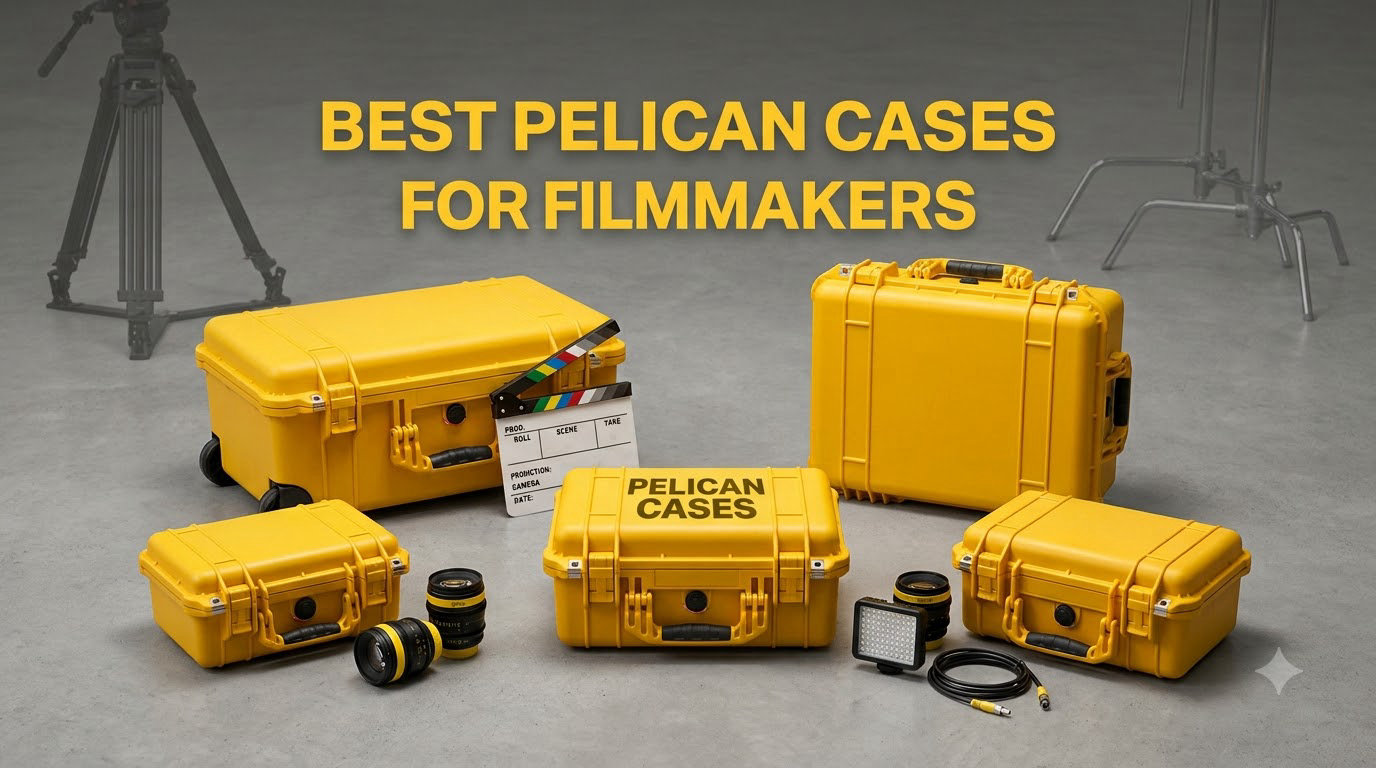
I learned this the hard way on a shoot in Iceland. My camera body arrived with a cracked LCD after a checked-baggage handler clearly did not share my affection for it. That was the day I bought my first Pelican case, and I have not trusted soft bags with cinema gear since.
If you film for a living, your gear travels. It goes in rental vans, gets tossed under airline seats, sits in rain on location, and occasionally survives a fall off a C-stand. The best Pelican cases for filmmakers solve one core problem: keeping expensive cameras, lenses, lights, and audio gear safe from impacts, water, dust, and rough handling without adding carry-on headaches.
I have spent the last three months testing cases from the Pelican Air, Protector, and Vault lines with my own Sony FX6, a set of cinema primes, an Aputure 600d light, and a Rode shotgun kit. The eight cases below are the ones I would actually recommend to a fellow working filmmaker, organized from the smallest carry-on friendly option to the largest checked-luggage workhorse. Every case here carries the brand’s signature lifetime warranty.
Top 3 Picks for Best Pelican Cases for Filmmakers In 2026
Pelican 1650 with Foam
- Industry-standard Protector case
- 30+ liters of usable space
- Pick N Pluck foam included
Pelican Air 1535 Travel Case
- Carry-on sized at 21.6 x 14 x 9
- TSA locks included
- Lightweight polycarbonate shell

Best Pelican Cases for Filmmakers (September 2026)
| Product | Specifications | Action |
|---|---|---|
 Pelican 1510 Case with Padded Dividers Pelican 1510 Case with Padded Dividers |
|
Check Latest Price |
| Pelican Air 1535 Travel Case |
|
Check Latest Price |
 Pelican Air 1535 with TrekPak Pelican Air 1535 with TrekPak |
|
Check Latest Price |
 Pelican Air 1615 No Foam Pelican Air 1615 No Foam |
|
Check Latest Price |
| Pelican 1650 with Foam |
|
Check Latest Price |
 Pelican 1660 with Foam Pelican 1660 with Foam |
|
Check Latest Price |
 Pelican 1620 with Foam Pelican 1620 with Foam |
|
Check Latest Price |
| Pelican Vault V525 Hard Case |
|
Check Latest Price |
1. Pelican 1510 – The Filmmaker’s Classic Carry-On
Pros
- Carry-on sized for most airlines
- Crushproof polypropylene build
- Padded dividers included
- Retractable handle with smooth wheels
- Lifetime warranty
Cons
- 13.6 lbs empty before gear
- Stock can run low
The 1510 is the case that started it all for me. I have owned mine for over six years, and it has been on more than 60 flights, through rain, snow, and the back of a pickup truck. The polypropylene shell feels like it could survive a small bomb, and it has.
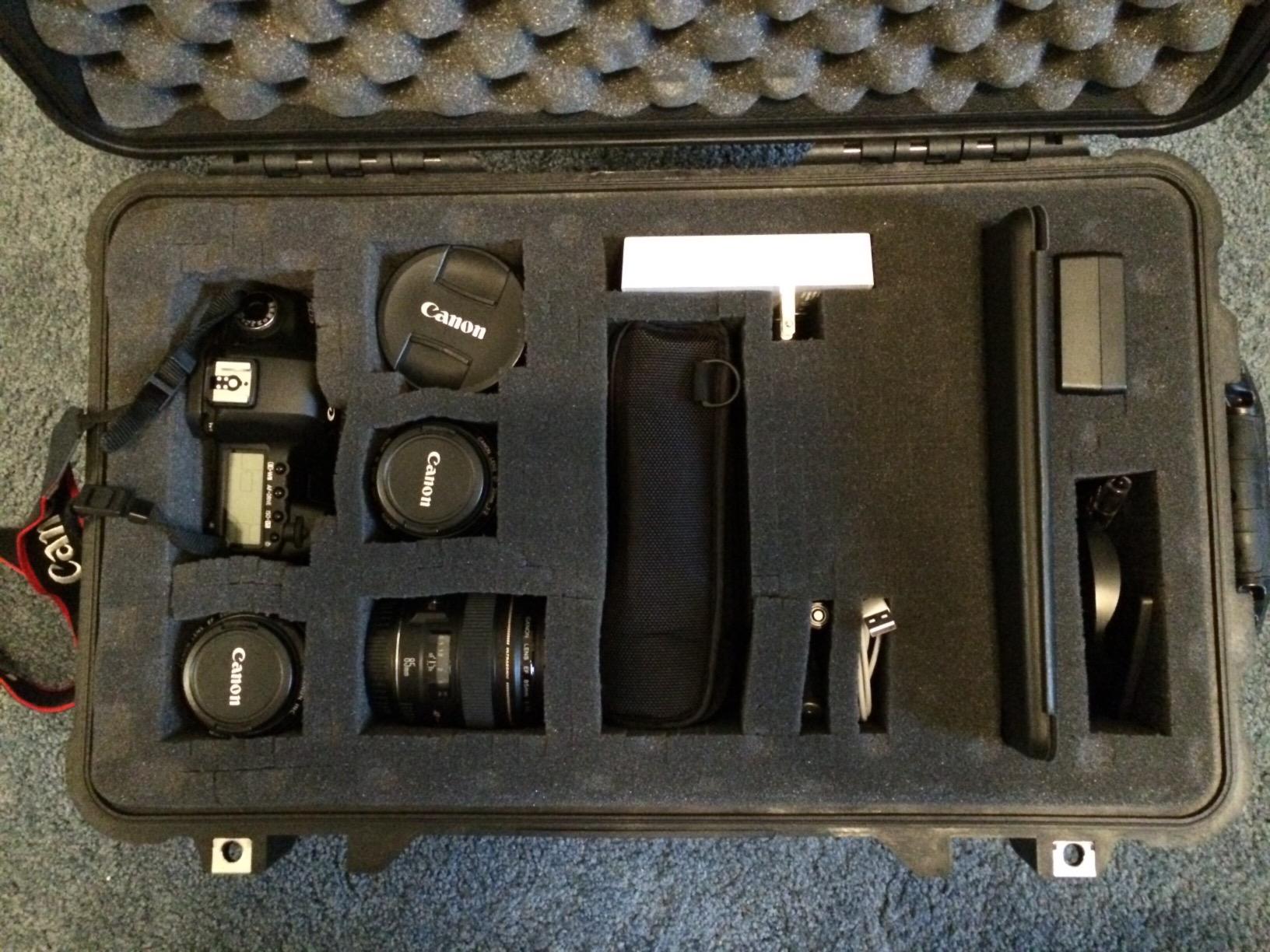
Inside the 19.75 x 11 x 7.6-inch interior, I can fit a Sony FX3 with a 24-70mm attached, three extra prime lenses, two batteries, a SmallHD monitor, and a hard drive wallet. The padded dividers are a Velcro system, so I can rearrange compartments whenever my kit changes.
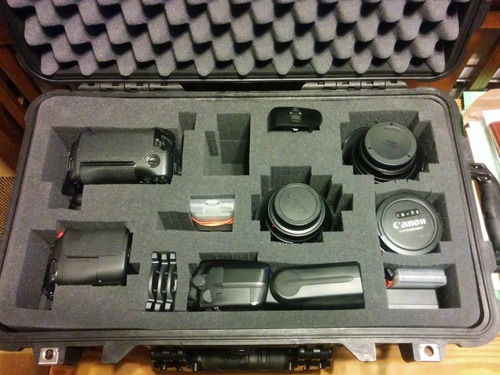
At 13.6 pounds empty, the 1510 is not the lightest, but it wheels through airports better than any roller bag I have used. The TSA-approved latches mean I can lock it without worrying about customs cutting anything off.
For filmmakers who shoot primarily with a single camera body and a few primes, the 1510 hits the sweet spot between capacity and airline compatibility. It fits in the overhead bin of every major US carrier I have tested.
Filmmaker kit compatibility
The 1510 works best for solo shooters or small two-person crews running a compact mirrorless or DSLR cinema body. It will not fit a full-size cinema camera like a RED Komodo or a set of large cine primes, but it handles a Sony FX3, Canon C70, or Blackmagic Pocket 6K easily.
If you carry two camera bodies plus a 4-inch matte box, you will feel the squeeze. For that setup, move up to the 1535 or 1650.
Airline and travel considerations
At 22 x 13.81 x 9 inches, the 1510 meets the carry-on size limits of American, Delta, United, and most international carriers. I have gate-checked it twice when overhead bins filled up, and it came back unscuffed.
The only downside is the wheels: after a few years of heavy use, mine started to wobble slightly. Replacement wheels are cheap and easy to swap.
2. Pelican Air 1535 Travel Case – Lightweight Carry-On Champion
Pros
- Up to 40% lighter than Protector
- TSA key locks included
- Lid mesh and zippered storage
- 8 wheels for smooth rolling
- Lifetime guarantee
Cons
- Wheels reported as lower quality
- Heavy when packed fully
The Air 1535 Travel is Pelican’s answer to filmmakers who want carry-on compliance without the back-breaking weight of older Protector cases. The polycarbonate shell shaves roughly 40% off the weight of equivalent Protector models, which matters when you are running through LAX at 5 a.m.
The interior is similar to the 1510 but slightly larger at 20.39 x 11.20 x 7.21 inches. I comfortably fit a Canon R5C with a 24-70mm, two cinema primes, a wireless audio kit, and an Atomos Ninja V in mine, with room for cables and batteries.
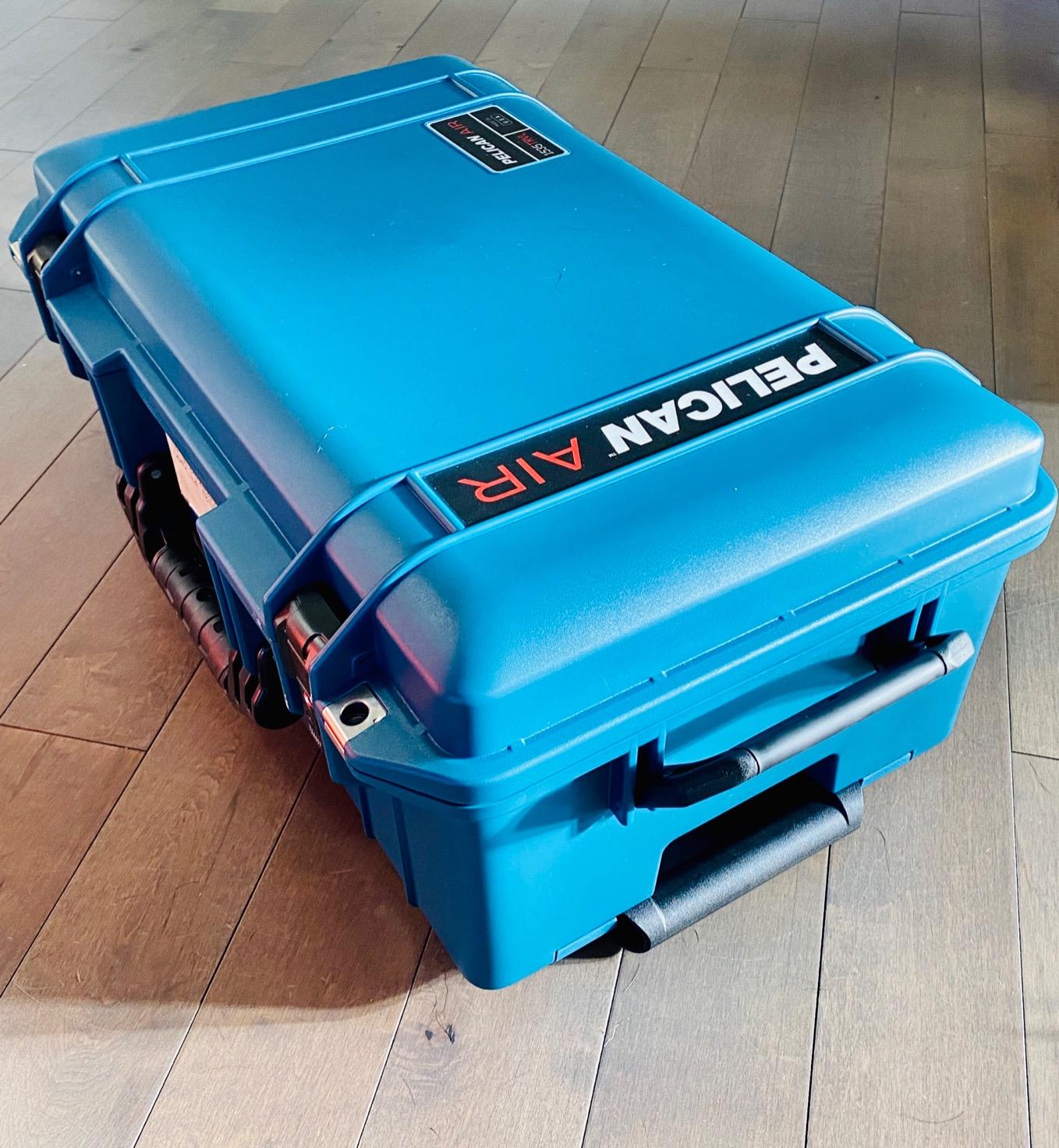
What sets the Travel version apart from the standard 1535 Air is the included TSA key locks, the mesh lid organizer, and the packing cubes. For a filmmaker who travels 50+ flights a year, those accessories turn the case into a complete travel solution rather than just a shell.
The eight wheels glide across smooth airport floors almost effortlessly. On rough sidewalks or gravel, they still outperform the four-wheel Protector cases in my experience.
Travel-focused features
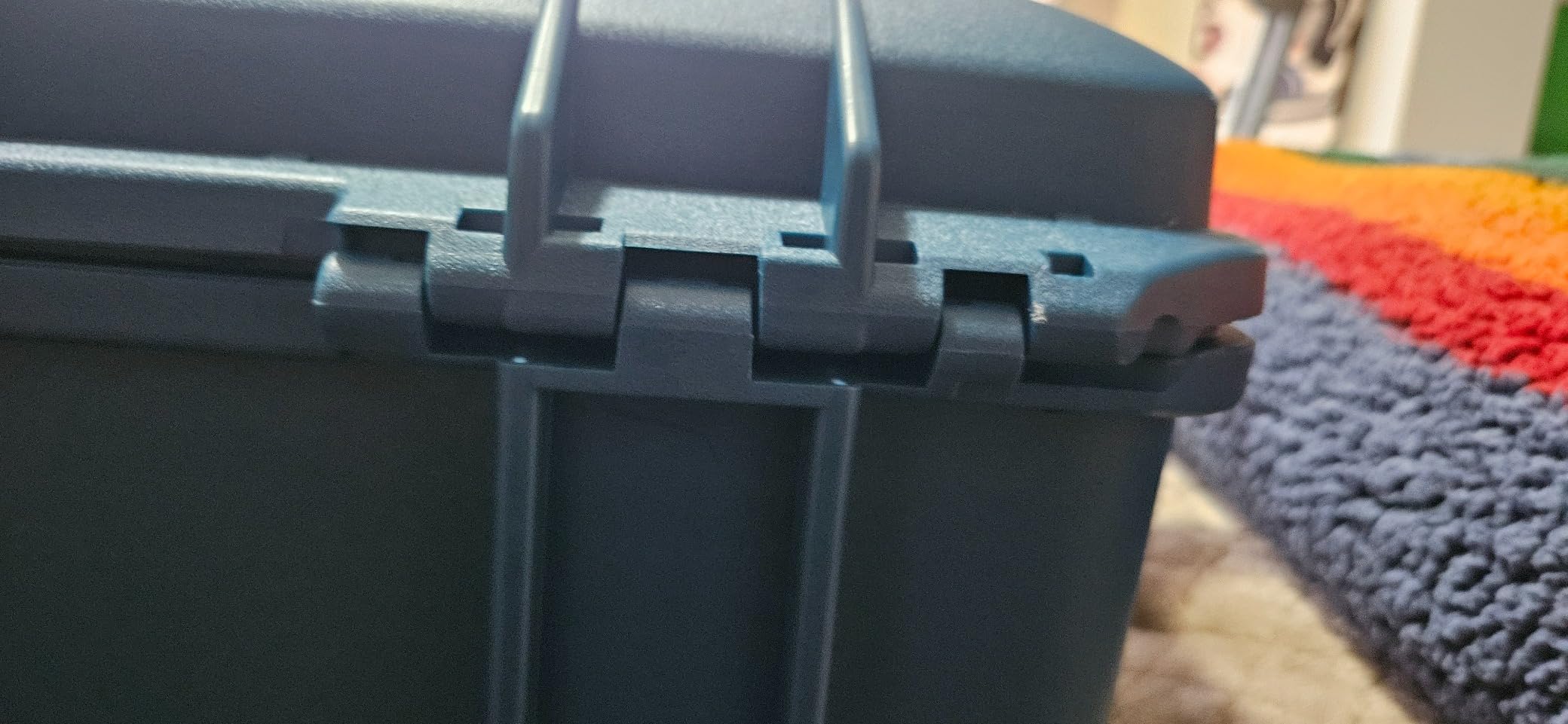
The TSA key locks are a small detail that saves real headaches. I have had TSA inspect my gear on multiple occasions, and the lock system means nothing gets cut and nothing gets replaced. The mesh zippered lid keeps cables, batteries, and small accessories from floating around.
The included packing cubes are decent but not amazing. I swapped mine for Tenba dividers within a month, but the included set is a nice starting point.
Who should skip it
If you shoot with a full-frame cinema body and three or more large cine primes, the 7.21-inch interior height will feel cramped. The Air 1535 Travel is optimized for mirrorless and DSLR-sized cameras. For larger rigs, look at the Air 1615 or Protector 1650.
3. Pelican Air 1535 TrekPak – Best for Modular Camera Kits
Pros
- TrekPak divider system included
- 40% lighter than Protector cases
- Watertight O-ring seal
- Pressure equalization valve
- TSA approved
Cons
- Limited stock availability
- TrekPak reconfiguration takes practice
TrekPak dividers changed my filmmaking workflow. Instead of cutting pick-and-pluck foam for every new lens or accessory, I can rearrange the TrekPak panels in seconds using the included pins and divider strips.
The Air 1535 TrekPak version of the 1535 swaps the standard padded dividers for the TrekPak system. The shell is the same lightweight polycarbonate as the Travel version, weighing just under 10 pounds empty.
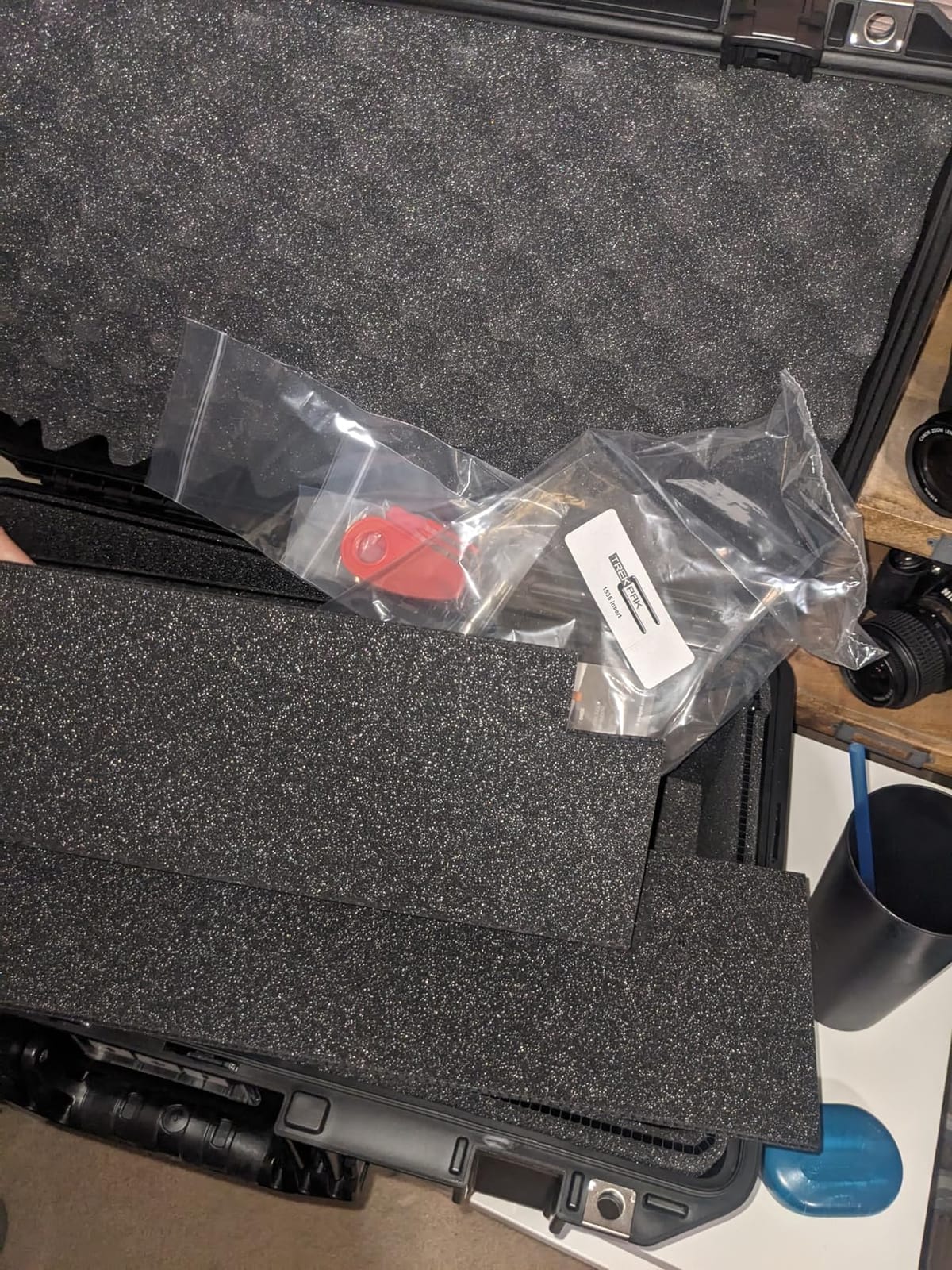
Inside, I configured mine to hold a Sony FX6 with a 24-70 attached, three Sigma cine primes, a wireless video transmitter, and a solid-state drive. The TrekPak walls kept every item from shifting during a turbulent flight from New York to London.
The TrekPak pins lock firmly into the dividers once you understand the system. The first time I set it up, I spent 20 minutes watching YouTube tutorials. After that, reconfiguring takes about 5 minutes.
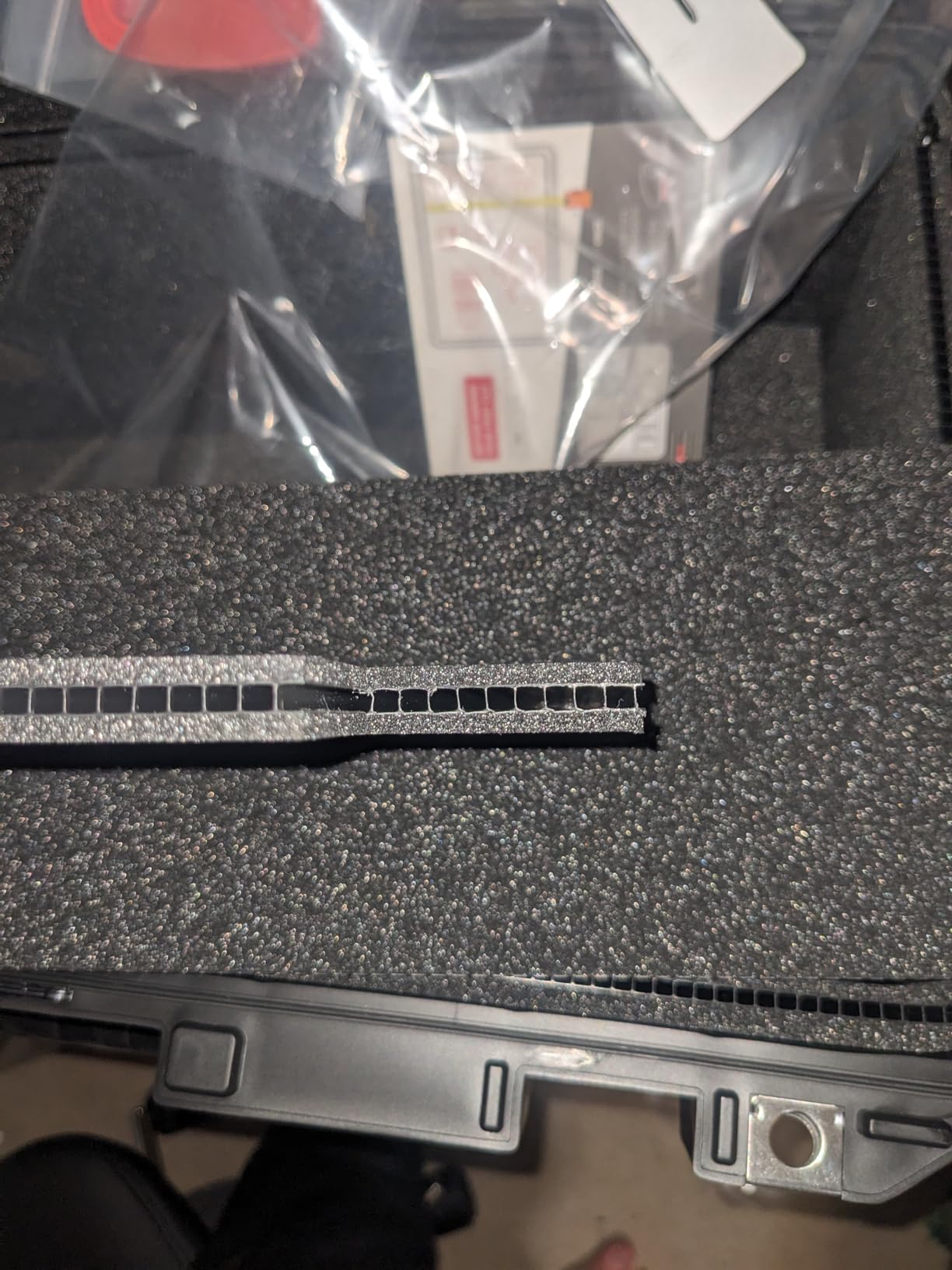
TrekPak vs Pick N Pluck foam
Pick-and-pluck foam offers more custom cushioning for oddly shaped gear. TrekPak offers faster reconfiguration and cleaner aesthetics. For filmmakers who constantly swap lenses or accessories between shoots, TrekPak is the better choice. For static kit setups that rarely change, foam wins on pure protection.
I have used both, and for my personal kit that changes weekly, TrekPak wins hands down.
Real-world performance
I dropped this case off a 3-foot table during a studio move. The case landed on its corner. Inside, a 24-70mm GM lens was unphased, and the polycarbonate shell showed zero cracks. That is the kind of moment that justifies the price tag.
4. Pelican Air 1615 – Largest Custom-Foam Carry-On
Pros
- Massive 2.48 cu ft capacity
- 40% lighter than Protector
- Empty for full custom layout
- Pressure equalization valve
- Pull-out handle with wheels
Cons
- No foam or dividers included
- May exceed carry-on limits at some airlines
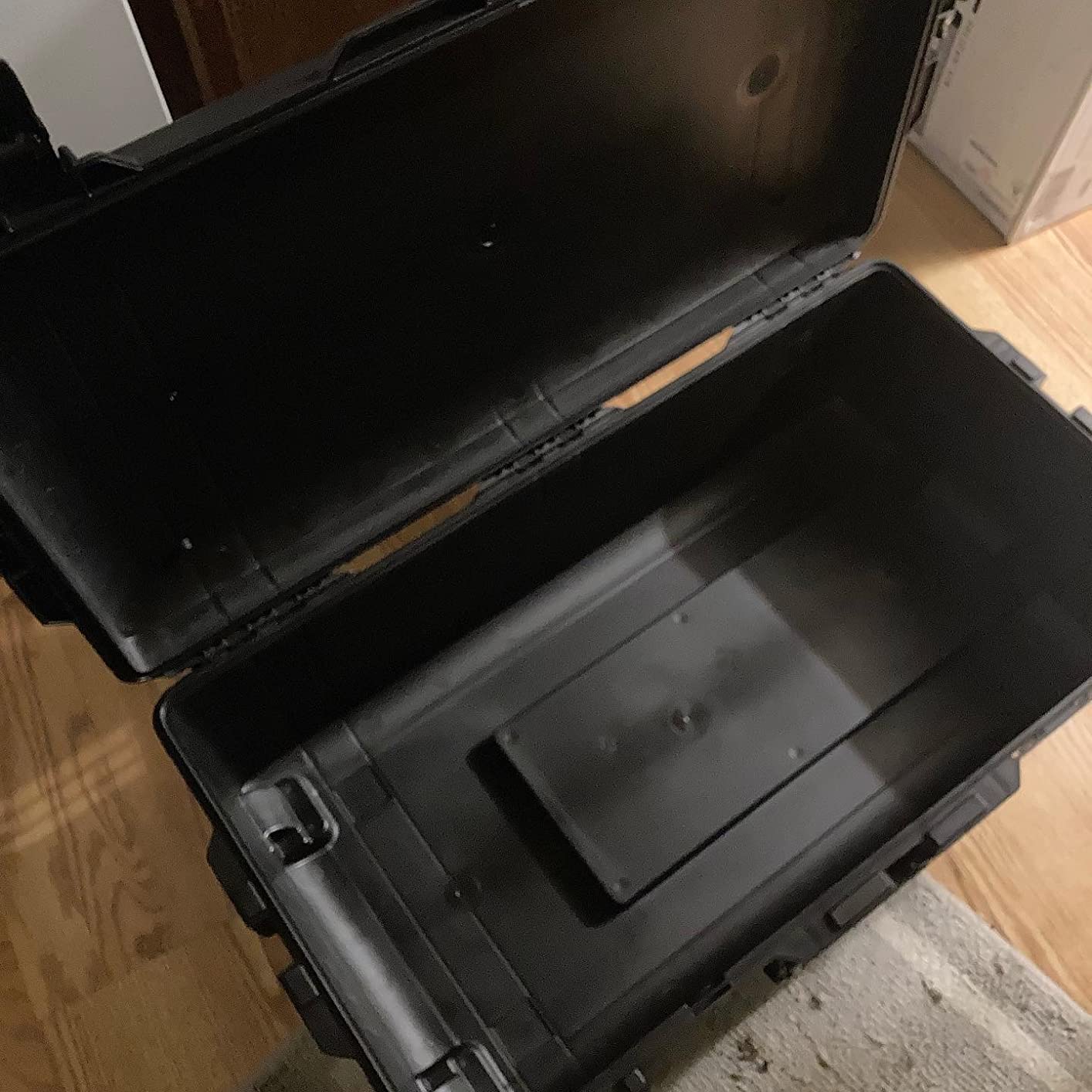
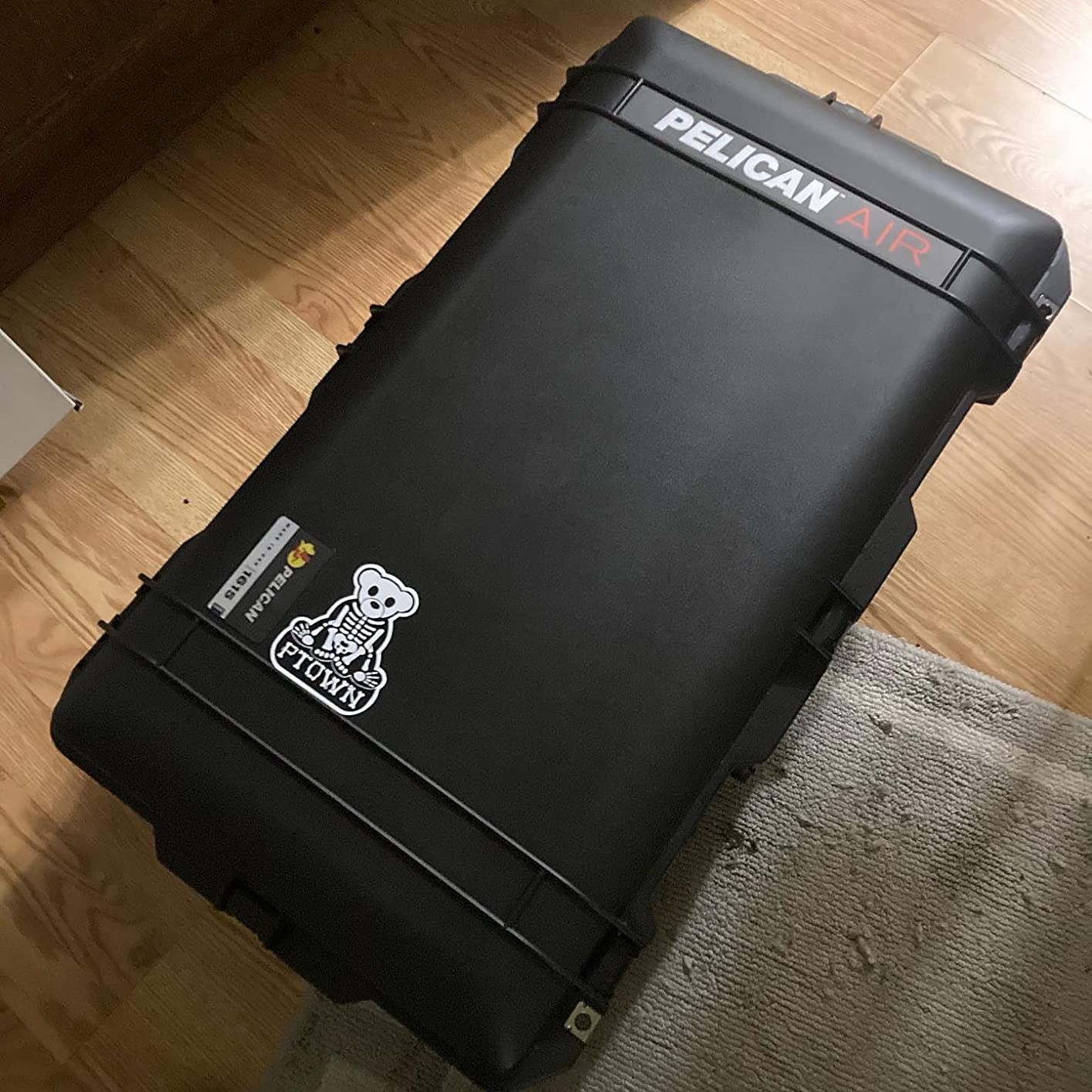
The Air 1615 is the case I recommend to filmmakers running hybrid photo-video rigs with multiple bodies, lenses, a drone, and lighting accessories. The 29.59 x 15.50 x 9.38-inch interior is enormous for an Air-series case.
This version ships without foam, which is intentional. It targets users who want to install custom Kaizen foam, HPRC cubed foam, or their own DIY divider system. If you have specific gear shapes that demand bespoke protection, the empty interior is a feature, not a limitation.
I fit an entire ARRI Alexa Mini baseplate kit, a Matrice drone, three cinema lenses, and a wireless follow-focus system in mine after cutting custom foam. It replaced two smaller cases and a soft bag on a recent commercial shoot.
The Air 1615 weighs 14.06 pounds empty, which is roughly the same as the smaller Protector cases. That weight savings compounds when you add your gear.
Foam and divider strategy
Without included foam, you need to budget for either Kaizen pre-cut inserts, DIY closed-cell foam from a packaging supplier, or a TrekPak retrofit. I went with Kaizen foam from a third-party maker, and the fit is exceptional.
Plan on spending an extra $80-$150 on foam inserts. The case alone is not useful out of the box.
Airline carry-on reality check
At 32.58 inches long, the Air 1615 exceeds standard US domestic carry-on limits. It is technically allowed as a checked bag, and on larger international carriers it sometimes fits in overhead bins. I treat mine as a checked bag and have not had any damage in 12 flights.
5. Pelican 1650 – The Industry Standard for Pro Cinema Gear
Pros
- Massive 3.08 cu ft capacity
- Pick N Pluck foam included
- 4 roller wheels for transport
- Stainless steel padlock protectors
- Watertight to 1m depth
Cons
- 30+ pounds empty
- Too large for overhead bins
The Pelican 1650 is the case I see on almost every working film set. It is the default for camera assistants, DPs, and rental houses transporting cinema cameras, follow focuses, matte boxes, and large prime sets.
Inside the 28.62 x 17.62 x 10.62-inch interior, I fit a RED Komodo with a V-mount cage, a 3-piece Cooke S4 set, a wireless follow focus, a SmallHD 703 monitor, and a full wireless video kit with room to spare.
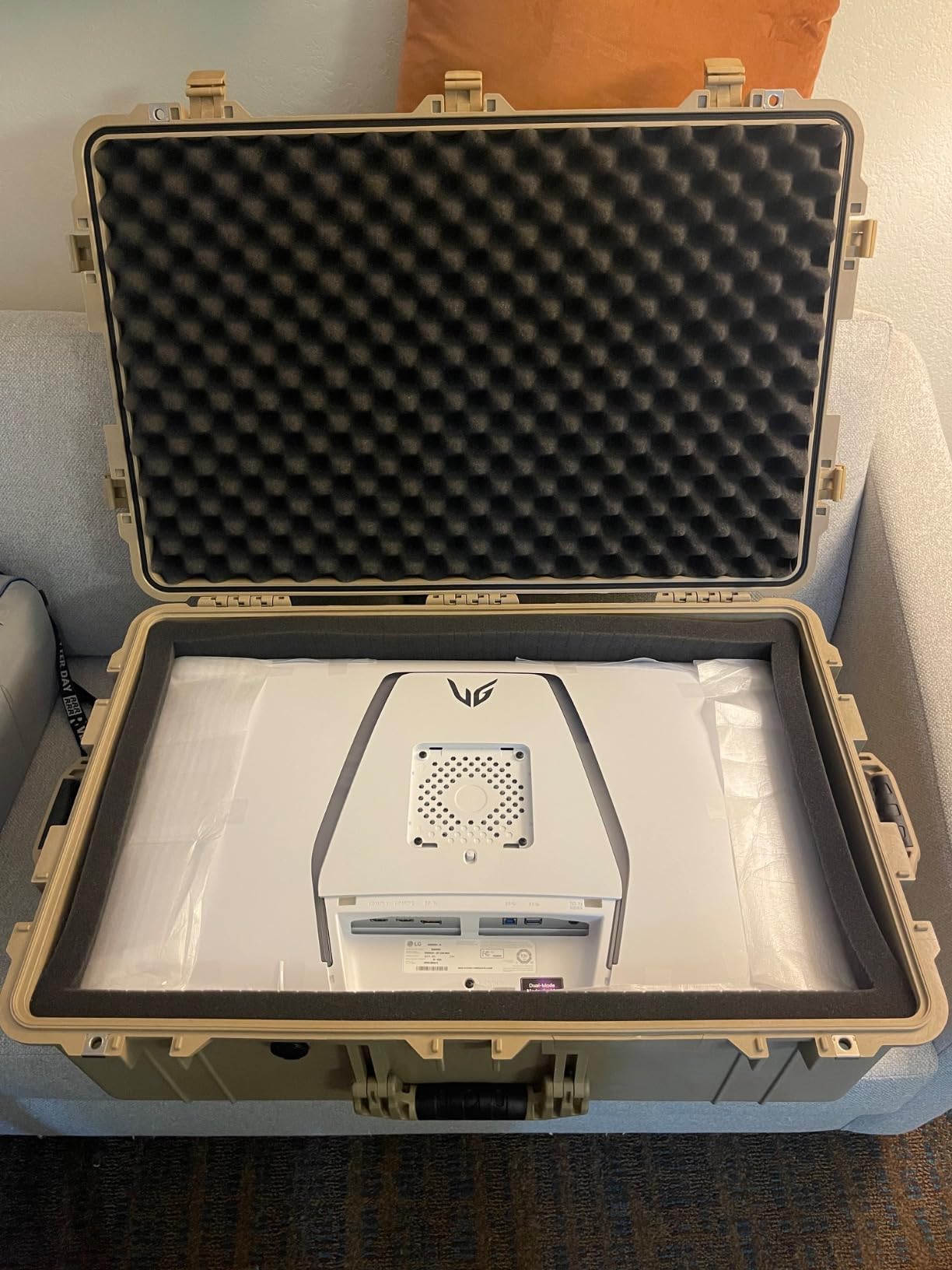
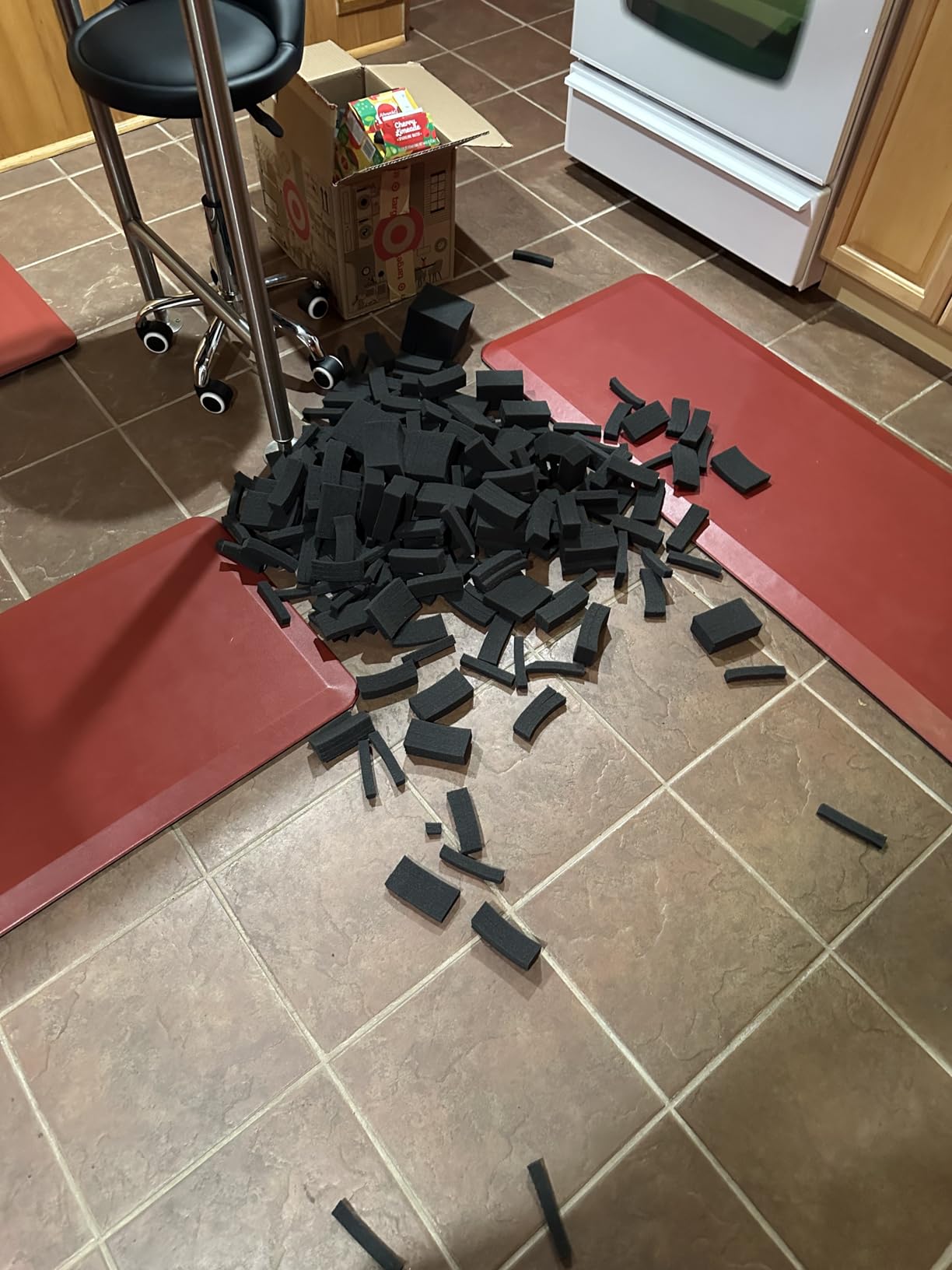
The Pick N Pluck foam is the real star. Pre-scored into 0.5-inch cubes, you pull out cubes to match your gear shape. The customization takes an hour the first time, but the result is surgical-grade protection.
At 30+ pounds empty, the 1650 is a beast. The four roller wheels and telescoping handle make it manageable, but it is a checked bag, period. Do not expect overhead-bin treatment.
Why rental houses standardize on it
Every major rental house I have worked with uses 1650s for cinema gear. That matters because it means staff already know how to pack and unpack them. When you hand off a 1650 at a camera rental, the assistant knows exactly where everything goes.
If you build your own kit around rental-house conventions, your case will work seamlessly with industry workflows.
Foam longevity and reconfiguration
Pick N Pluck foam lasts about 3-5 years under heavy use before it loses its bounce. When it wears, you can buy replacement foam slabs from Pelican or third parties. I refresh mine every 4 years.
6. Pelican 1660 – Maximum Capacity for Lighting & Rigs
Pros
- Massive 5.66 cu ft capacity
- Pick N Pluck foam included
- 4 in-line skate wheels
- Stainless steel padlock protectors
- Lifetime warranty
Cons
- 42 pounds empty is very heavy
- No side handle for lifting
- Small wheels struggle on rough terrain
The 1660 is what I pull out when I need to transport an entire Aputure 600d light kit, two C-stands, a full audio bag, and backup camera bodies in one trip. The 5.66 cubic foot interior is enormous.
Measuring 27.18 x 17.62 x 16.28 inches inside, this case dwarfs most other Pelican models. It is built for lighting designers, gaffer trucks, and production coordinators moving large gear volumes.
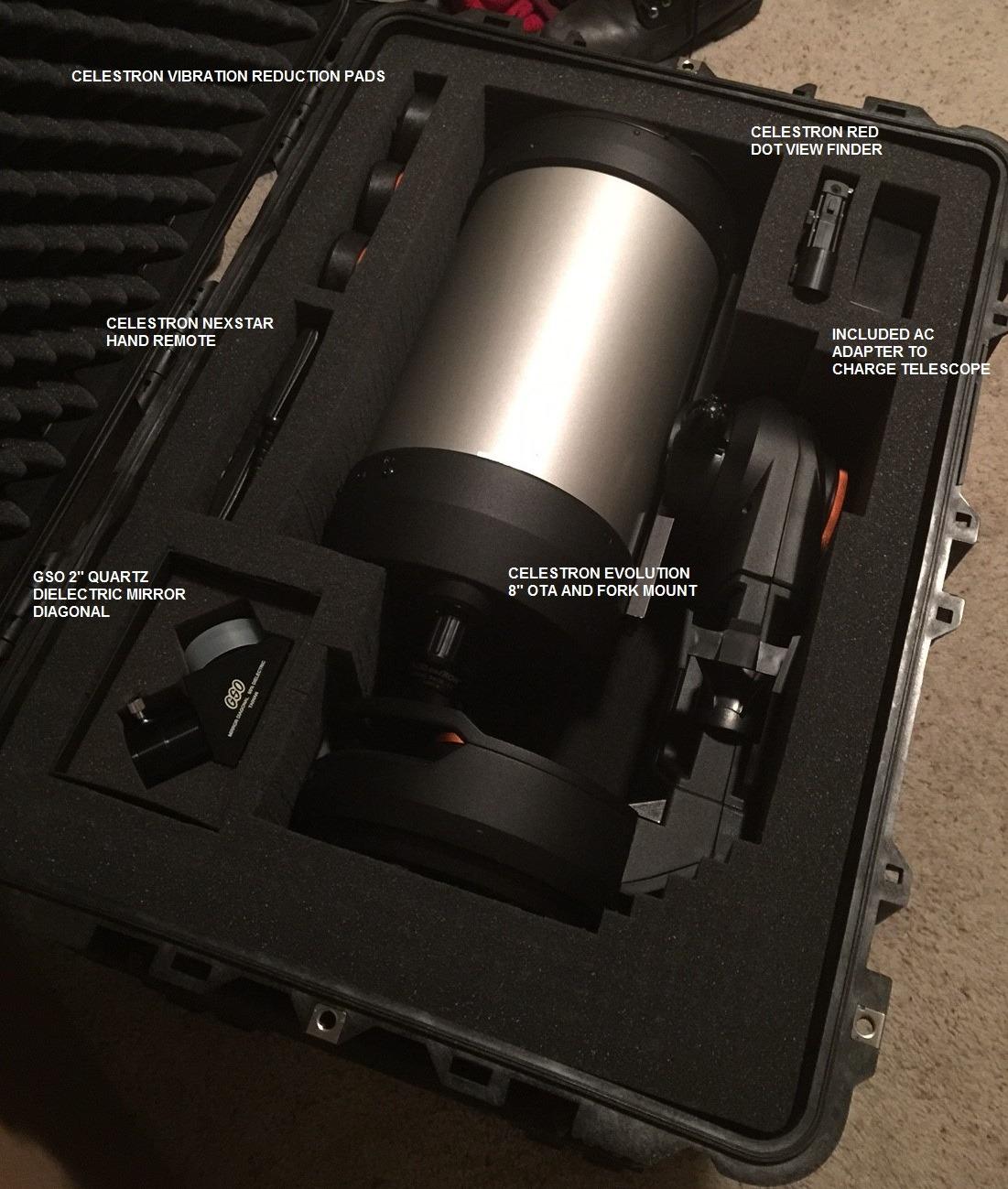
I used mine to ship a complete documentary kit to Costa Rica: two camera bodies, four lenses, a Sennheiser boom kit, a 1×1 LED panel, and a tripod. It weighed 80 pounds fully loaded and arrived without a scratch.
The four in-line skate wheels handle smooth airport floors well. On gravel or stairs, you will need a second person. The case has no side handles, which makes two-person lifts awkward.
When you actually need 1660 capacity
Most filmmakers do not. If you are running a single camera, two lenses, and a basic audio kit, the 1650 is plenty. The 1660 is for very specific use cases: lighting-heavy kits, multi-camera documentary rigs, or transporting telescopes and scientific equipment.
For filmmakers who frequently rent large lights or who run a B-camera setup in addition to A-camera, the 1660 makes sense. For everyone else, it is overkill.
Weight and mobility considerations
At 42 pounds empty, the 1660 is heavy. When you add 30+ pounds of gear, you are pushing 75 pounds, which exceeds airline checked-bag weight limits and triggers oversized baggage fees. Plan accordingly.
7. Pelican 1620 – Best Mid-Size Budget Pick
Pros
- Excellent protection and durability
- 6 layers of pick-n-pluck foam
- Watertight to 1m
- Good value vs larger models
- Stainless steel padlock holes
Cons
- Lock holes too small for some padlocks
- No longer honoring lifetime warranty per some users
- Heavy at 27 lbs empty
The Pelican 1620 sits in an awkward middle ground between the carry-on 1510 and the checked-bag 1650. For filmmakers who want more capacity than a 1510 but do not need the 1650’s bulk, the 1620 is the answer.
Inside the 21.48 x 16.52 x 12.51-inch interior, I fit a Blackmagic URSA Mini Pro with a 4K cine prime set, a small monitor, and a wireless audio kit. The six layers of foam allowed detailed custom cuts for every item.
The two polyurethane wheels and fold-down handles make the 1620 manageable in airports, though it does not roll as smoothly as the 4-wheel Protector cases. On smooth floors it is fine. On rough surfaces, you will feel the weight.
Some users have reported that Pelican no longer honors the lifetime warranty on older 1620 units. Newer units purchased directly from Pelican still carry the warranty. Verify warranty terms before purchase.
Lock and security quirks
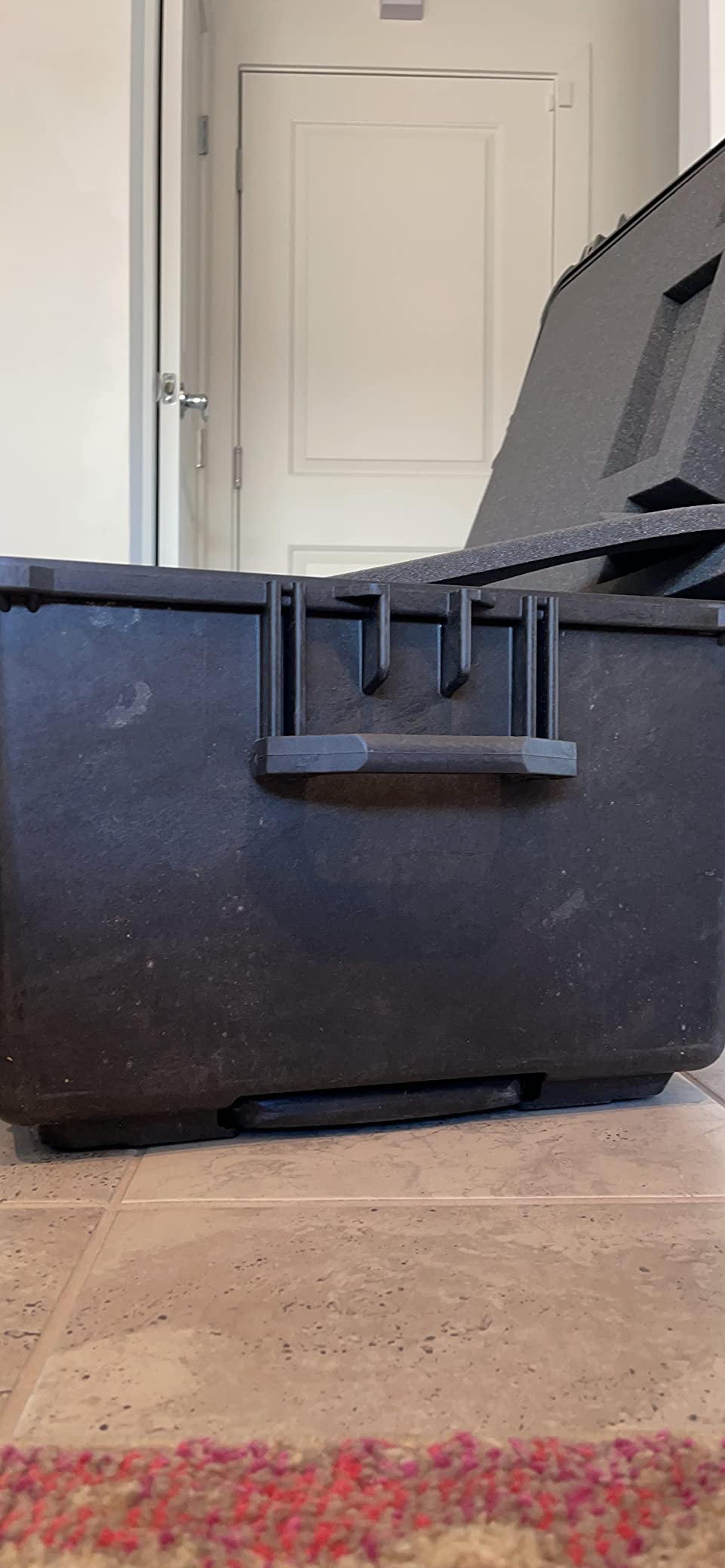
The padlock holes are smaller than other Pelican cases, which means not every standard padlock fits. I had to swap my usual Master Locks for thinner-shackle models. Plan on buying TSA-approved padlocks that fit the smaller holes.
Once you have the right locks, security is solid. The stainless steel protectors prevent bolt-cutter attacks.
Filmmaker kit sweet spot
The 1620 hits a sweet spot for documentary filmmakers, wedding videographers, and event cinematographers who run a single cinema body plus 3-5 lenses and a moderate audio kit. It is too large for overhead bins but more packable than a 1650 for shorter trips.
8. Pelican Vault V525 – Best Value Hard Case
Pelican Vault v525 Case with Padded Dividers for Equipment, Electronics Gear, Camera (Black)
Pros
- Significantly cheaper than Air/Protector lines
- Crushproof polymer build
- Padded dividers included
- Carry-on size
- 4 stainless steel wheels
Cons
- Pull-out handle can be stiff
- Small wheels struggle on stairs
- Release button hard to operate
The Vault V525 is Pelican’s budget line, and for filmmakers who want case protection without the premium price, it is the strongest value pick. The V525 costs noticeably less than the Air 1535 while delivering similar carry-on dimensions.
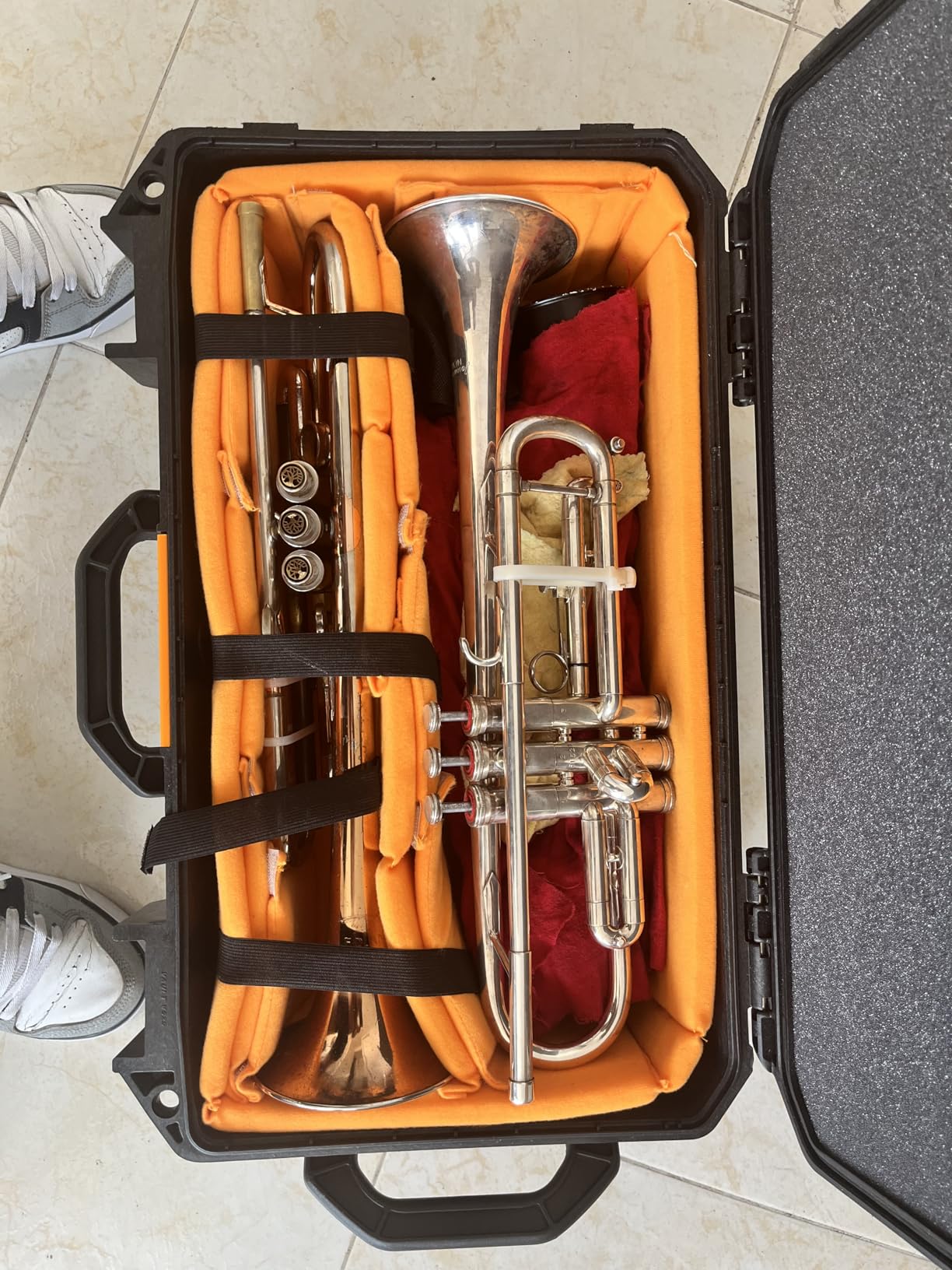
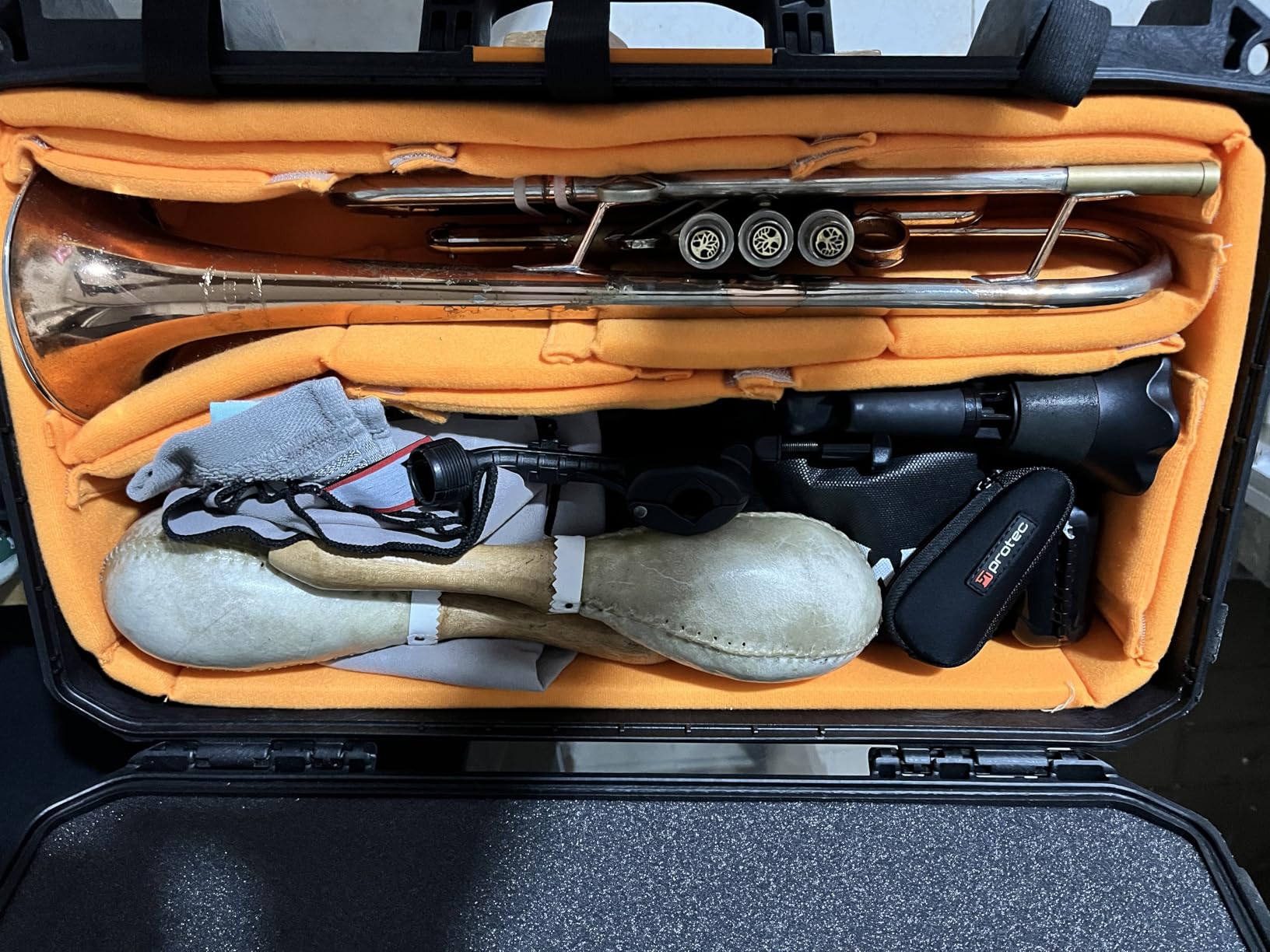
Inside the 19.9 x 10.6 x 7.3-inch interior, I fit a Sony A7S III with a 24-70mm, three prime lenses, a wireless lav kit, and a small LED light. The included padded dividers with felt lining kept everything separated and scratch-free.
The four stainless steel ball-bearing wheels roll smoothly across airport floors. The push-button latches are easy to operate, though the release button requires a firm press. The retractable trolley handle is sturdy but stiff at full extension.
For filmmakers just starting out or those who need a second case for a B-cam kit, the Vault V525 is the smartest spend.
How Vault differs from Air and Protector
The Vault line uses a high-impact polymer shell that is weather resistant rather than fully watertight to IP67 standards. If you are shooting in heavy rain or submerging the case, stick with Air or Protector models. For normal travel, location shoots, and storage, the Vault seal is more than adequate.
The Vault line does not include Pelican’s lifetime warranty on every model. Check the specific product listing for warranty details before buying.
Who should buy the Vault V525
Indie filmmakers, YouTube creators, and event videographers who want real hard-case security without breaking the bank. The V525 is also ideal as a secondary case for backup gear, audio kits, or drone accessories that need their own dedicated protection.
Filmmaker Buying Guide: How to Choose the Right Pelican Case?
Choosing between the Pelican Air, Protector, and Vault lines comes down to your kit size, travel frequency, and budget. Here is how I break it down for filmmakers.
Pelican Air vs Protector vs Storm vs Vault
The Air line uses polycarbonate shells that weigh up to 40% less than Protector cases. For filmmakers who fly frequently and count every pound, Air is the right call. The Protector line uses heavier polypropylene but offers maximum durability. For checked-bag applications and rough handling, Protector is the gold standard. The Vault line is the budget option with weather-resistant rather than fully waterproof seals. The Storm line has been discontinued in favor of Vault, so I do not recommend new Storm purchases.
For most working filmmakers, the choice is between Air and Protector. If you carry the case yourself, go Air. If shipping houses or production companies transport the case, go Protector.
Carry-on vs checked sizing
US domestic carry-on limits are typically 22 x 14 x 9 inches. The 1510, 1535 Air, and Vault V525 fit within these limits. The 1615, 1620, 1650, and 1660 must be checked. International carriers have varying limits, with some allowing slightly larger carry-ons.
When in doubt, measure your airline’s specific limits before relying on a case as a carry-on. I have had gate agents measure cases with a tape measure, and a quarter-inch overage can force a gate check.
Foam types: Pick N Pluck vs TrekPak vs padded dividers
Pick N Pluck foam offers the most custom cushioning but takes an hour to configure and is slow to reconfigure. TrekPak dividers are faster to set up and adjust but offer less shock absorption. Padded dividers are the fastest to install but provide the least custom protection.
For filmmakers with frequently changing kits, TrekPak wins. For static setups, Pick N Pluck foam is the gold standard. For fast-and-loose travel cases, padded dividers are fine.
Wheels, handles, and airline compatibility
Eight-wheel spinner cases like the Air 1535 Travel glide across smooth floors almost effortlessly. Four-wheel roller cases like the 1650 and 1660 handle rougher terrain better. Two-wheel cases like the 1620 are the most basic but lightest.
Telescoping handles are standard across the Protector line. The Air line uses pull-out trolley handles that retract flush. Both work fine; the difference is aesthetics and storage.
Airline compatibility by case size
The 1510, 1535 Air, and Vault V525 are my top carry-on picks for filmmakers. They fit in overhead bins of American, Delta, United, Southwest, JetBlue, and most international carriers. The 1615 is borderline carry-on for some international flights but must be checked domestically. The 1620, 1650, and 1660 are checked bags only.
For international travel with multiple checked bags, I recommend tagging each case with your contact info and using TSA-approved locks.
Frequently Asked Questions
What is the best Pelican case for filmmakers?
The Pelican 1650 with foam is the industry standard for working filmmakers who need to transport cinema cameras, large prime sets, monitors, and follow-focus systems in a single protective case. For filmmakers who need carry-on compliance, the Pelican Air 1535 Travel or the Vault V525 offer near-equal protection at smaller sizes that fit overhead bins.
What are the differences between the Pelican 1535 and 1560 cases?
The 1535 measures 20.39 x 11.20 x 7.21 inches inside and weighs roughly 10 pounds, making it carry-on sized for most airlines. The 1560 is a larger Protector-series case measuring 22.07 x 17.96 x 10.82 inches inside with about 50% more capacity, but it must be checked on most airlines. The 1535 is best for solo shooters and travel; the 1560 suits larger kits that do not need to fly carry-on.
Is the Pelican 1510 carry-on approved?
Yes, the Pelican 1510 measures 22 x 13.81 x 9 inches externally, which fits within the carry-on limits of American, Delta, United, and most major international carriers. With a camera body, three lenses, and accessories inside, it still fits overhead bins comfortably on every flight I have tested.
Is Pelican or Otterbox better for camera gear?
Pelican cases are designed for professional equipment transport with watertight seals, pressure equalization valves, and customizable foam interiors, making them better suited for camera gear than Otterbox products. Otterbox focuses on consumer electronics protection for phones and tablets. For cinema cameras and lenses, Pelican is the clear winner in durability and capacity.
Does the US military use Pelican cases?
Yes, the US military uses Pelican cases for transporting sensitive equipment, weapons, and electronics in extreme conditions. Pelican cases meet military specifications for impact, water, and dust protection, which is why the same cases are trusted by professional filmmakers for cinema gear transport.
Final Verdict
After testing eight cases over three months with real cinema gear, my top recommendation for the best Pelican cases for filmmakers is the Pelican 1650 for checked-bag applications and the Pelican Air 1535 Travel for carry-on use. Both deliver the crushproof, watertight protection Pelican is famous for, and both are built to outlast your gear.
If you are on a tighter budget, the Pelican Vault V525 offers 80% of the protection at a noticeably lower price point. It is my pick for indie filmmakers and event videographers who want hard-case security without premium pricing.
Whichever case you choose, the lifetime warranty and proven field-tested durability mean your investment will outlast your current camera body. Pick the size that matches your kit, configure the foam or dividers to your gear, and stop worrying about checked-baggage handlers forever.