
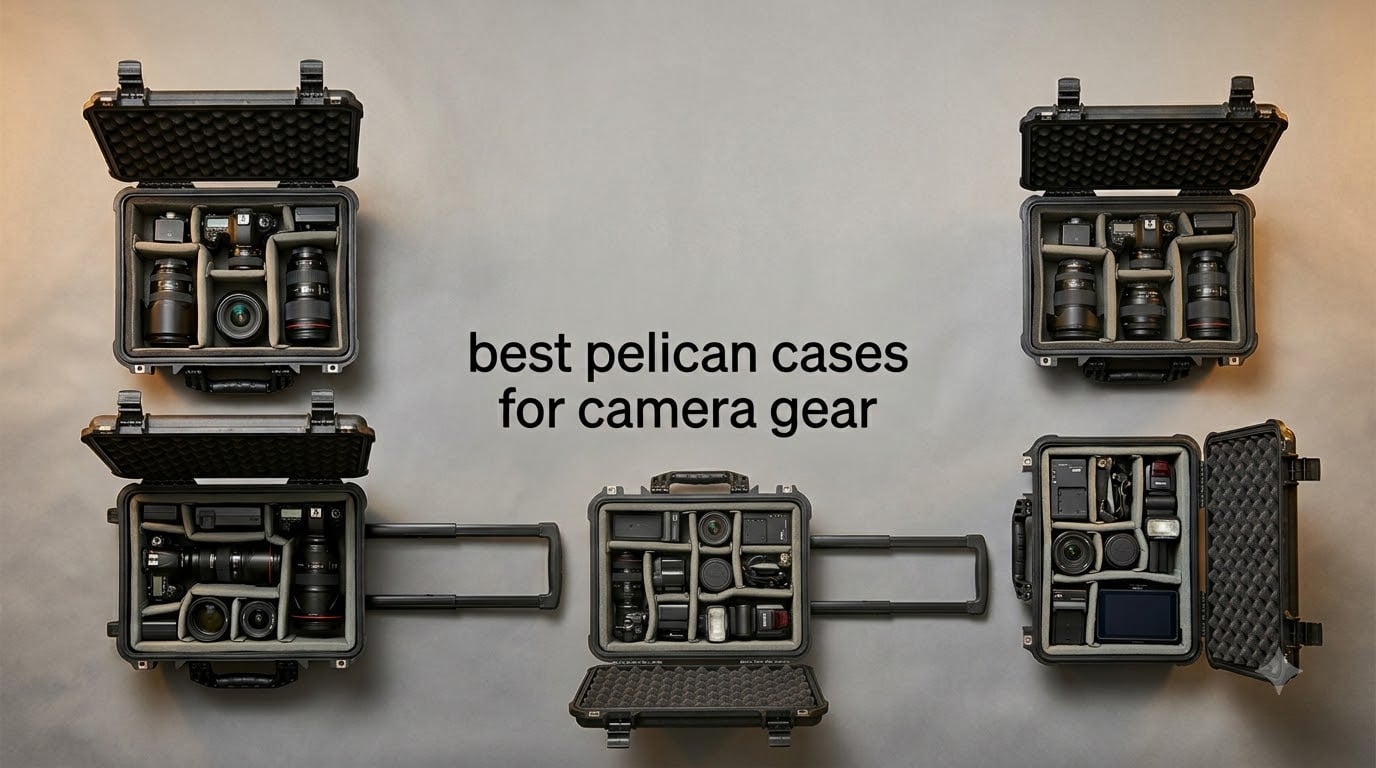
When your gear costs more than most people’s cars, you stop trusting soft bags with zippers. I’ve been shooting professionally for over a decade, and the day I switched to a Pelican case was the day I stopped worrying about checked baggage handlers, monsoon rain, or rough terrain. Pelican cases have protected everything from $8,000 cinema rigs to fragile vintage lenses across more than 40 countries for me.
The best Pelican cases for camera gear share three core traits: a watertight O-ring seal, a pressure equalization valve, and a crushproof polypropylene shell that laughs at airline cargo holds. Pelican has been building these cases since 1976, and they’re trusted by the U.S. military, first responders, and professional photographers worldwide. Our team tested five top-rated models over six weeks of travel, studio sessions, and outdoor shoots to find the ones worth your money.
Below, you’ll find our top picks for every type of photographer. Whether you’re a wedding shooter flying cross-country, a wildlife photographer hiking through rain, or a studio owner transporting delicate glass, there’s a Pelican case here that fits your workflow. We’ve also added a detailed buying guide and FAQ to help you match the right case to your gear.
Before we dive in, if you’re weighing Pelican against other brands, our Pelican alternatives guide is worth a quick read. For pure waterproof performance across all hard-case brands, our waterproof hard case roundup is a great companion resource.
Top 3 Picks for Camera Gear Protection (September 2026)

Pelican 1510 Protector Case
- Carry-on compliant
- 27L capacity
- Wheels & retractable handle
- Lifetime warranty

Pelican Air 1535 with TrekPak
- 40% lighter than 1510
- TrekPak divider system
- Carry-on approved
- 10 lbs empty

Pelican 1400 with Pick N Pluck
- Compact 11.81 inch interior
- Pick N Pluck foam
- 1.5 lbs empty
- IP67 rated
Best Pelican Cases for Camera Gear in 2026: Quick Overview
| Product | Specifications | Action |
|---|---|---|
| Pelican 1510 Protector with Padded Dividers |
|
Check Latest Price |
| Pelican 1400 with Pick N Pluck Foam |
|
Check Latest Price |
| Pelican Air 1535 with TrekPak Dividers |
|
Check Latest Price |
 Nanuk 935 Pro Photo Kit Nanuk 935 Pro Photo Kit |
|
Check Latest Price |
 Pelican 1300 with Foam Pelican 1300 with Foam |
|
Check Latest Price |
1. Pelican 1510 Protector Case – Best Carry-On Classic for Pros
Pros
- Crushproof
- dustproof
- and watertight
- Padded dividers are fully customizable
- Wheels and retractable handle for airport mobility
- TSA approved carry-on for most airlines
- Lifetime guarantee of excellence
- Trusted by military and first responders
Cons
- Heavy at 13.6 lbs empty
- No outer pockets for accessories
I bought my first Pelican 1510 back in 2019, and it’s traveled more than 200,000 air miles with me since. The exterior dimensions of 22 x 13.81 x 9 inches slide into overhead bins on every major U.S. carrier, and the 19.75 x 11 x 7.6 inch interior swallows two full-frame camera bodies, four lenses, a flash, and a 15-inch laptop without breaking a sweat.
The padded dividers are the real hero. They use hook-and-loop attachment to a base plate, so you can reconfigure the layout every time your kit changes. I run a Sony A7R V with a 70-200mm f/2.8 attached in one section, a backup body in another, and three prime lenses in the rest. Nothing shifts, nothing scratches, nothing rattles.
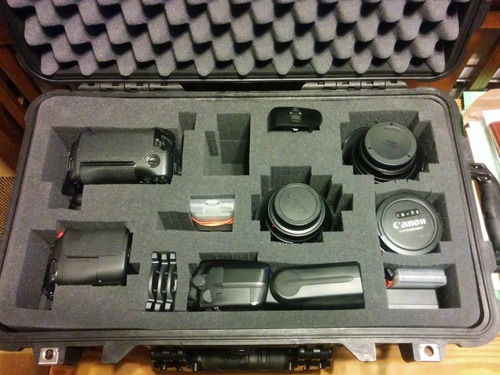
Build quality is exactly what you’d expect from a case trusted by the U.S. military. The polypropylene shell is rated crushproof, the O-ring seal is genuinely watertight to IP67 standards, and the automatic pressure equalization valve stops the case from acting like a suction cup when you fly into high-altitude destinations. I’ve dropped mine off a tailgate onto gravel with zero damage to anything inside.
The retractable trolley handle has two positions and works well for airport sprints, while the in-line skate wheels handle rough terminal floors. The TSA-approved latch design lets you lock the case with standard TSA locks, which is critical when you’re checking it as cargo on international flights.
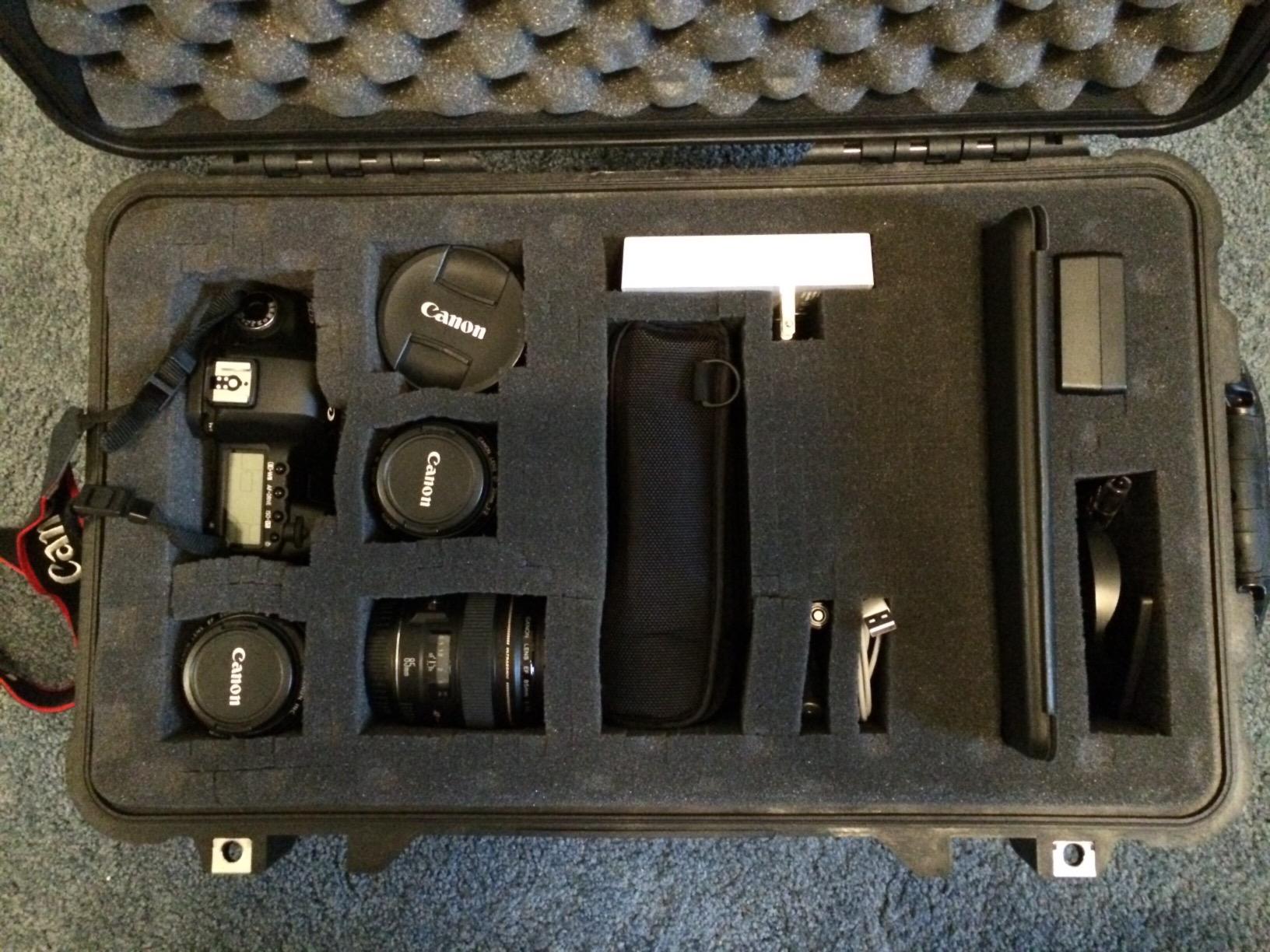
What fits inside a Pelican 1510
With 27 liters of usable volume, the 1510 handles a working pro kit comfortably. I regularly pack two mirrorless bodies, four to six lenses (including a 70-200mm), a flash, batteries, chargers, filters, and a laptop. The padded dividers keep everything compartmentalized, so nothing bumps against anything else during transit.
If you’re shooting with a gripped DSLR, the larger lenses may need to ride horizontally. I solved that by removing my grip when flying, but mirrorless shooters won’t have this issue. There’s also room for a small drone like a DJI Mavic 3 in a side compartment if you use the divider layout creatively.
Best use cases for the 1510
The 1510 is ideal for professional photographers and videographers who fly frequently with a complete working kit. Wedding photographers, editorial shooters, and documentary filmmakers consistently pick this case because it survives checked baggage and overhead bin handling equally well.
It’s also a strong choice for studio owners transporting gear between locations. The wheels make a 30-pound load manageable in a parking garage, and the watertight seal protects gear from sudden weather changes. If you need maximum capacity in a carry-on-compliant shell, the 1510 is the gold standard.
2. Pelican 1400 – Best Compact Case for Single-Body Kits
Pros
- Watertight O-ring seal
- Pick N Pluck foam for custom fit
- Lightweight at just 1.5 lbs
- Automatic pressure equalization valve
- Stainless steel padlock protectors
- Lifetime warranty
Cons
- Pre-cut foam can be tricky to customize
- Smaller interior than expected
The Pelican 1400 is the case I recommend to every photographer who wants serious protection without hauling a 13-pound brick through the airport. At 1.5 pounds empty and a 11.81 x 8.87 x 5.18 inch interior, it’s the sweet spot for a single camera body with two or three lenses and accessories.
I tested the 1400 with a Fujifilm X-T5, two prime lenses, an extra battery, and a small flash. Everything fit snugly, and the Pick N Pluck foam let me carve custom cavities in under 15 minutes. The pre-scored foam cubes pull out cleanly with fingers, and the result feels like a custom-molded insert.
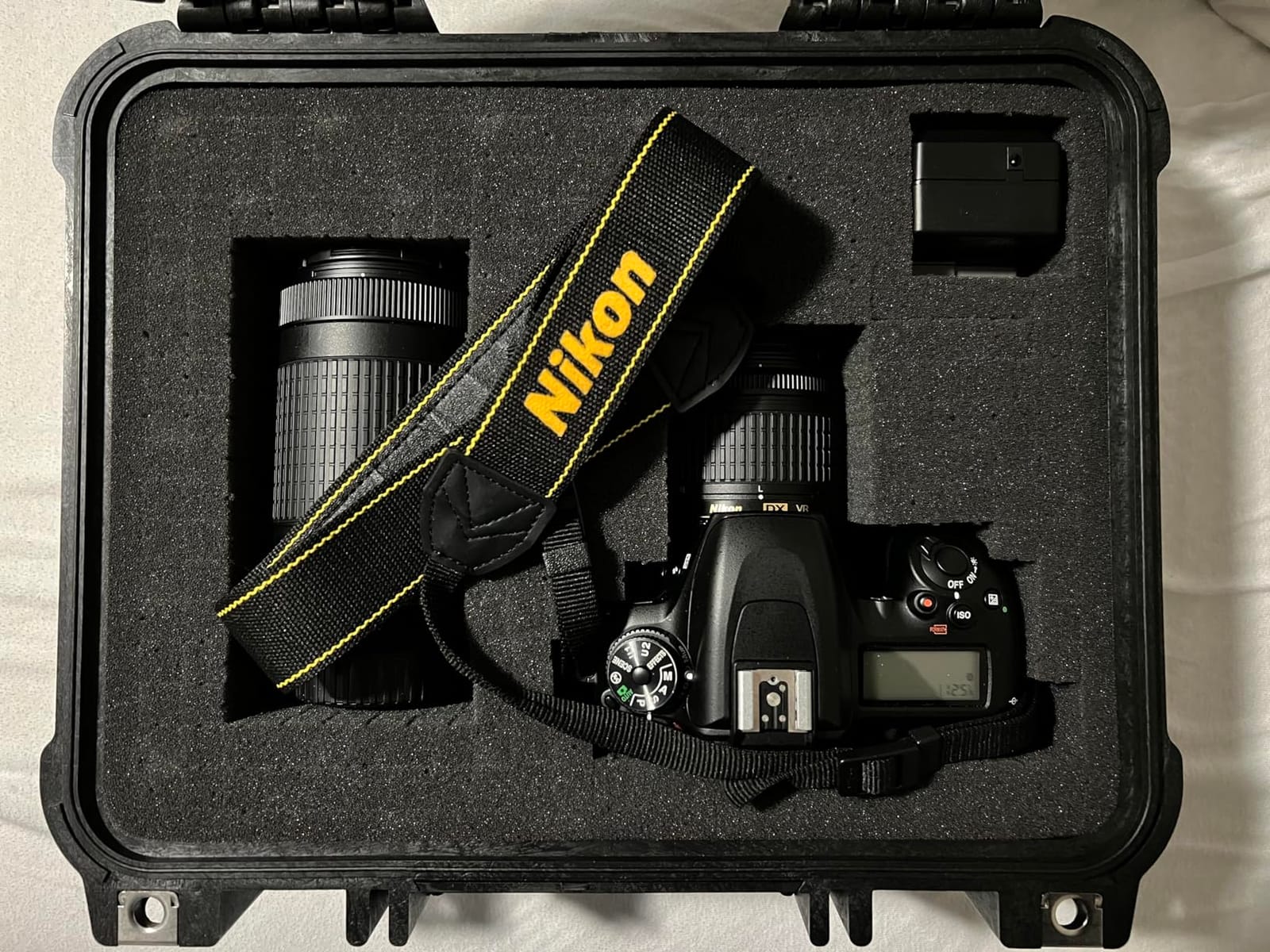
Protection is the same DNA as the larger Pelican cases. The tongue-and-groove closure with a polymer O-ring creates a watertight seal that I’ve personally tested in heavy rain and brief submersion. The automatic pressure equalization valve keeps the case from getting stuck at altitude, and the stainless steel padlock protectors give you somewhere to thread a lock for TSA compliance.
The 1400 also fits inside many camera bags as an insert, which is great if you already own a Think Tank or Peak Design roller. I slide it into a Lowepro Pro Roller for hybrid travel days when I want soft-bag mobility and hard-case protection in one setup.
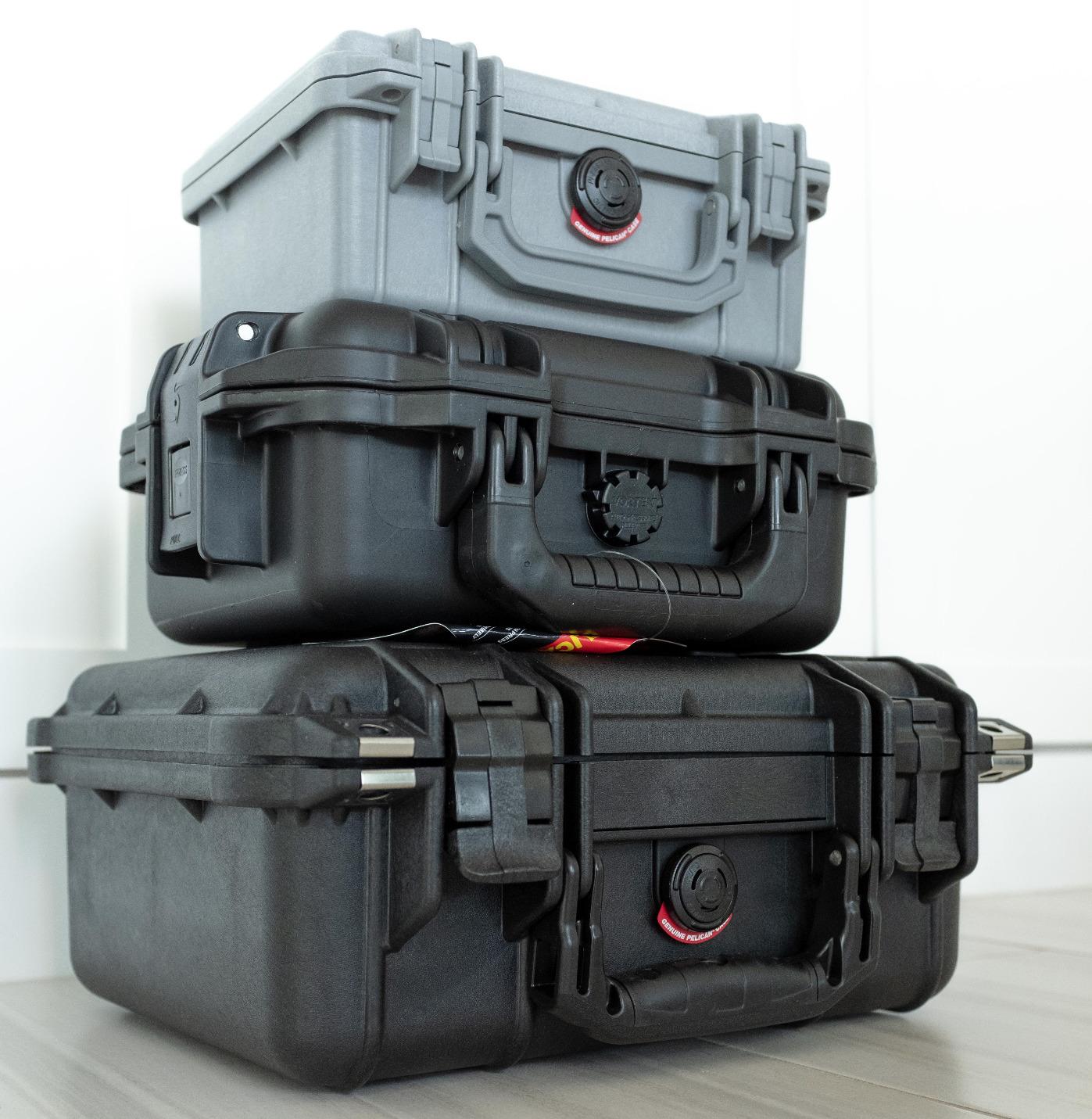
Pick N Pluck foam customization tips
The Pick N Pluck system uses pre-scored 1 cm cubes that you pull out to shape your gear’s footprint. Start by placing your camera and lenses on the foam, tracing their outlines with a marker, and then removing cubes in small sections. Leave a half-inch buffer around glass elements to absorb shock.
For lenses stored vertically, cut a U-shape so you can lift the lens out without grabbing the foam. Always do a dry fit before final assembly, and save the removed cubes in a zip-lock bag in case you change gear later. A 15-minute customization job will give you a tailored insert that holds gear better than any universal padded divider.
Best use cases for the 1400
The 1400 is ideal for mirrorless shooters, drone pilots, and anyone running a single-body kit. It’s also a fantastic second case for backup bodies, delicate vintage lenses, or audio gear like wireless microphone sets. I know several wildlife photographers who use the 1400 as a dedicated lens case for their super-telephoto primes.
It’s also great for non-camera gear like hard drives, memory cards, and small electronics. The watertight seal makes it perfect for storing CFexpress cards and SSDs in harsh environments. If you want serious protection without the weight or bulk of a 1510, the 1400 is hard to beat.
3. Pelican Air 1535 with TrekPak – Best Lightweight Carry-On
Pros
- 40% lighter than traditional Pelican cases
- TrekPak divider system is highly customizable
- Fits in overhead bins easily
- Watertight O-ring seal
- Smooth-rolling wheels and retractable handle
- Trusted by military and first responders
Cons
- Limited stock availability
- TrekPak dividers harder to reconfigure once cut
The Pelican Air 1535 is what happens when Pelican redesigns the 1510 from the ground up with modern materials. It weighs 10 pounds empty versus the 1510’s 13.6 pounds, and that 3.6-pound savings is a big deal when you’re trying to stay under airline weight limits. I noticed the difference immediately on a recent trip to Iceland where every kilogram counted.
Interior dimensions come in at 20.39 x 11.20 x 7.21 inches, almost identical to the 1510. You can fit the same working kit with two bodies and four to six lenses, plus a laptop in the lid organizer (sold separately). The Air series uses a different polymer blend that Pelican claims is up to 40 percent lighter than traditional cases while maintaining the same IP67 watertight rating.
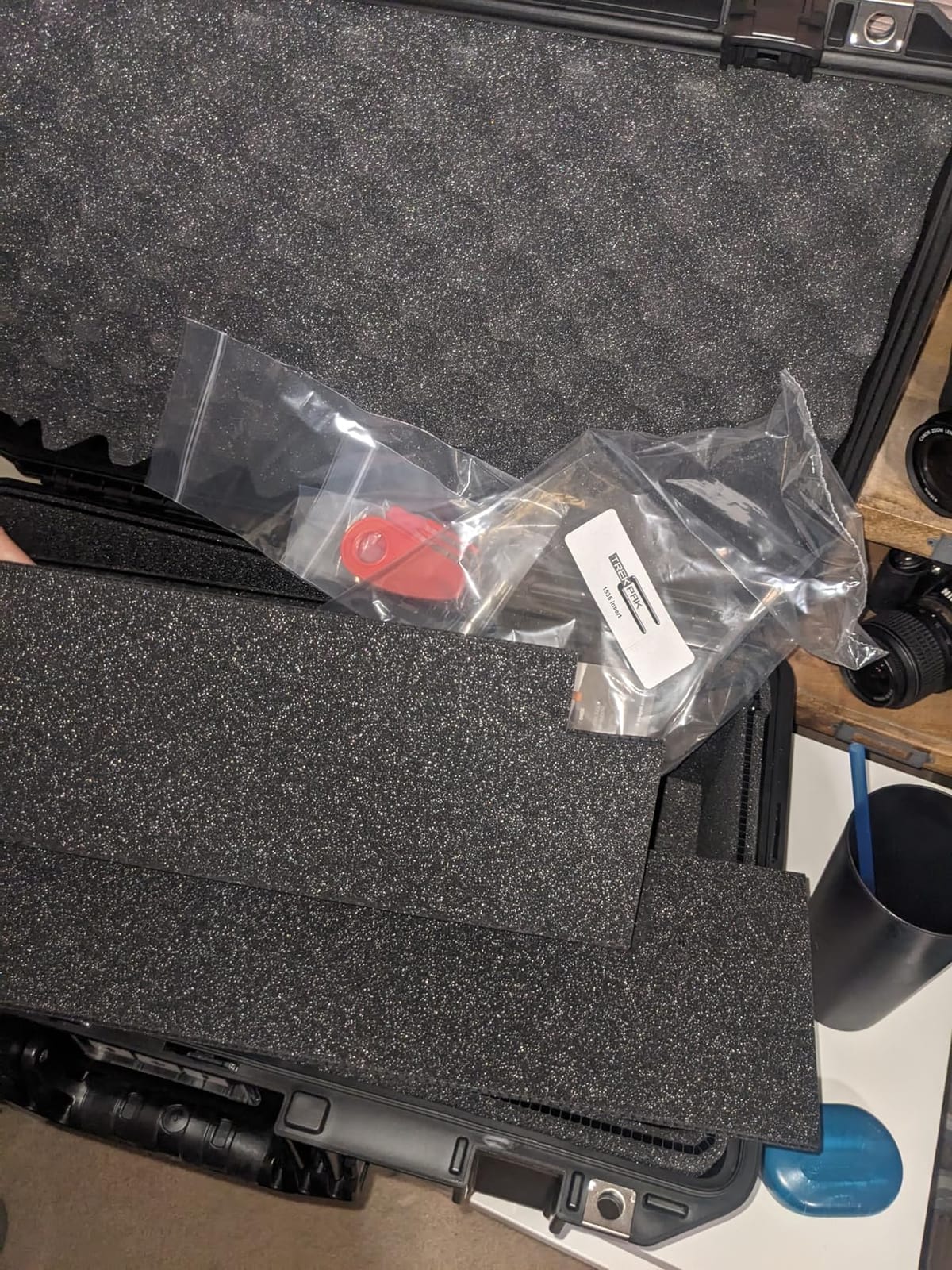
The TrekPak divider system is the standout feature on this version. TrekPak uses plastic divider panels with aluminum pins that lock into pre-cut slots in the base foam. You cut the dividers to length with scissors, snap them into place, and you get a fully customizable compartment system that’s faster to set up than Pick N Pluck and easier to reconfigure than padded dividers.
I’ve been running the 1535 for three months as my daily travel case. The TrekPak system held up beautifully through a road trip across Utah’s slot canyons, where temperatures swung 40 degrees between day and night. No shifting gear, no condensation issues, no complaints.
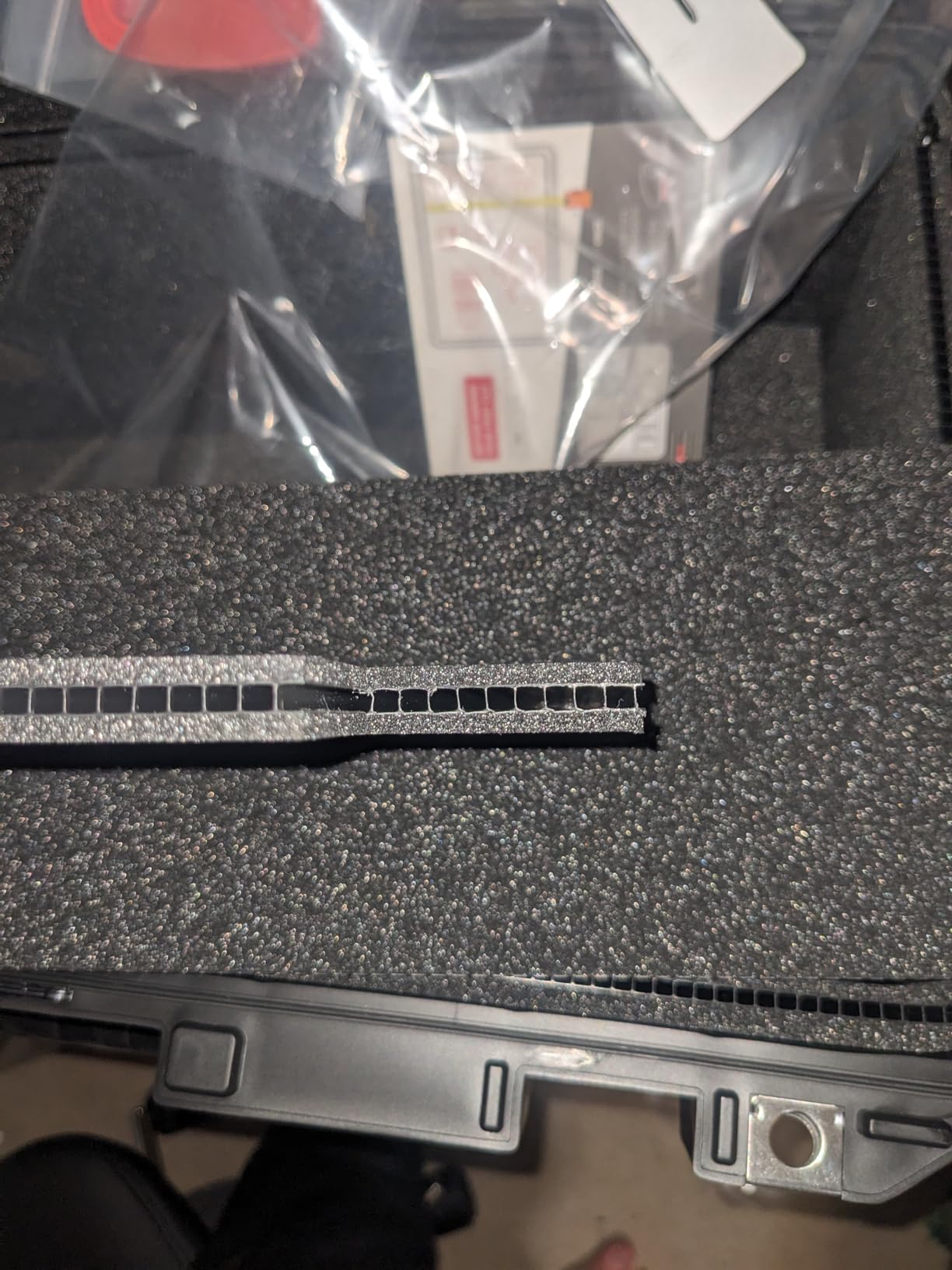
TrekPak vs Pick N Pluck vs padded dividers
TrekPak uses rigid divider panels with aluminum locking pins, giving you clean, adjustable compartments. Pick N Pluck uses pre-scored foam that you pluck apart by hand, giving you a custom-shaped cavity but with less clean lines. Padded dividers are hook-and-loop fabric panels, giving you the fastest reconfiguration but less precise fit.
For photographers who change kit configurations frequently, TrekPak wins. For one-time custom fits where you rarely rearrange, Pick N Pluck is more protective. For shooters who swap gear between jobs and want zero-downtime reconfiguration, padded dividers win. The 1535 ships with TrekPak, but you can buy aftermarket divider kits for any of these systems.
Best use cases for the 1535 Air
The 1535 Air is ideal for traveling photographers who care about every ounce. It’s also the right call if you fly international frequently and need a carry-on that meets European and Asian airline dimension requirements. The lighter weight makes a real difference when you’re carrying gear through long terminal walks.
It’s also a smart upgrade for anyone who flies budget airlines with strict carry-on weight limits. Many regional carriers limit carry-ons to 8 kg, and the 1535 helps you stay under that threshold while still carrying a full professional kit. If weight matters more than maximum capacity, this is the case to buy.
4. Nanuk 935 Pro Photo Kit – Best Alternative with Lid Organizer
Pros
- PowerClaw latches provide excellent security
- NK-7 resin shell is extremely durable
- TSA lock-ready reinforced eyelets
- Lid organizer with 3 zippered compartments
- Smooth-rolling polyurethane wheels
- 2-level retractable handle
Cons
- Heavier than some competitors
- Plastic can scratch easily
- May not fit very large lenses vertically
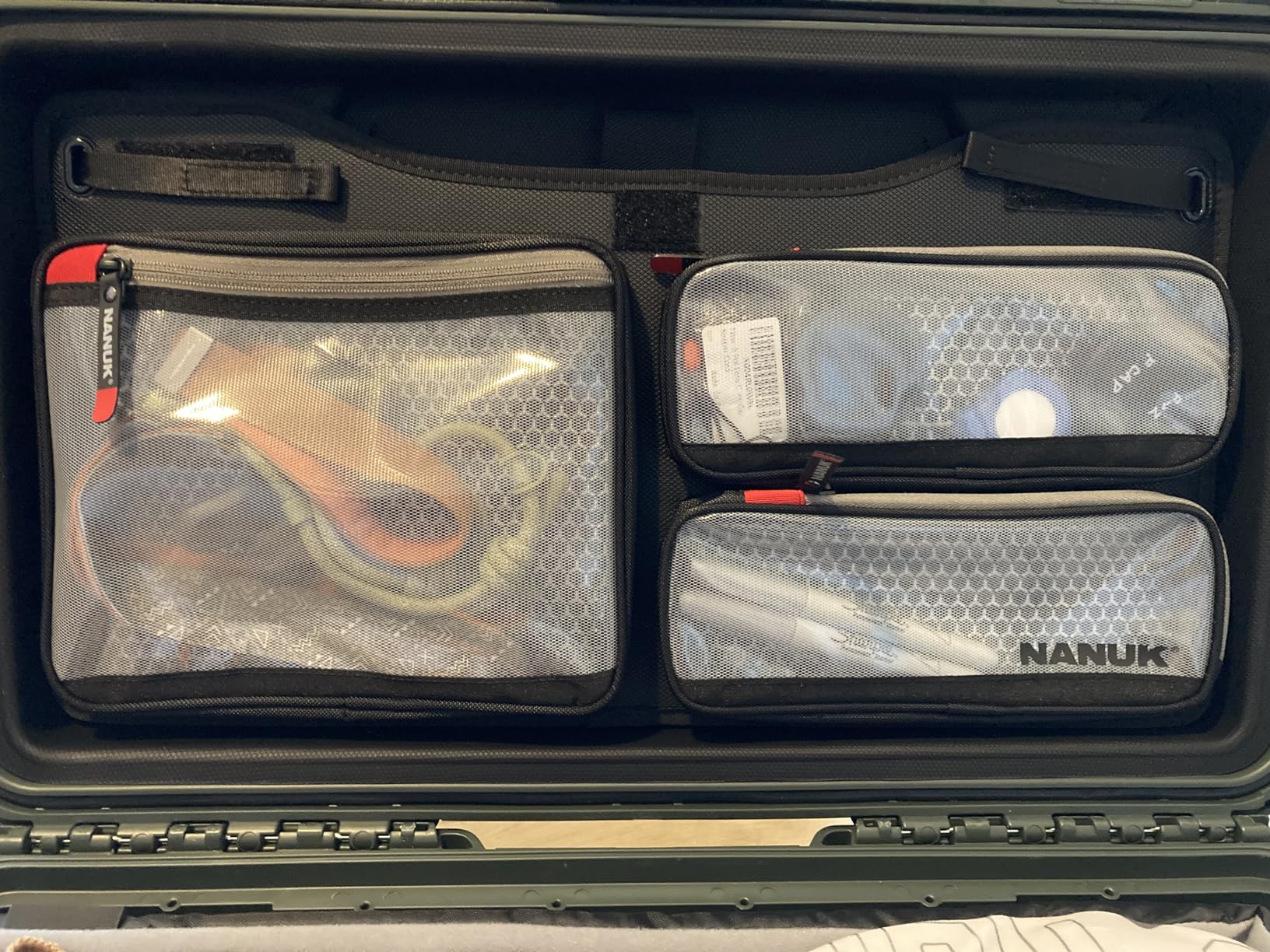
The Nanuk 935 isn’t a Pelican, but it deserves a spot on this list because it solves one problem the Pelican 1510 and 1535 don’t: storage organization. The integrated lid organizer has three anti-tear zippered compartments that are perfect for filters, batteries, cables, and small accessories. I can fit 10 filters, four batteries, three charging cables, and a small cleaning kit in the lid alone.
The 22.01 x 14.02 x 9.02 inch exterior is virtually identical to the 1510, and the 20.5 x 11.3 x 7.5 inch interior gives you nearly the same usable volume. Nanuk uses NK-7 resin, which is their proprietary polypropylene blend. It feels slightly more rigid than the Pelican shell, and reviewers consistently report excellent long-term durability.
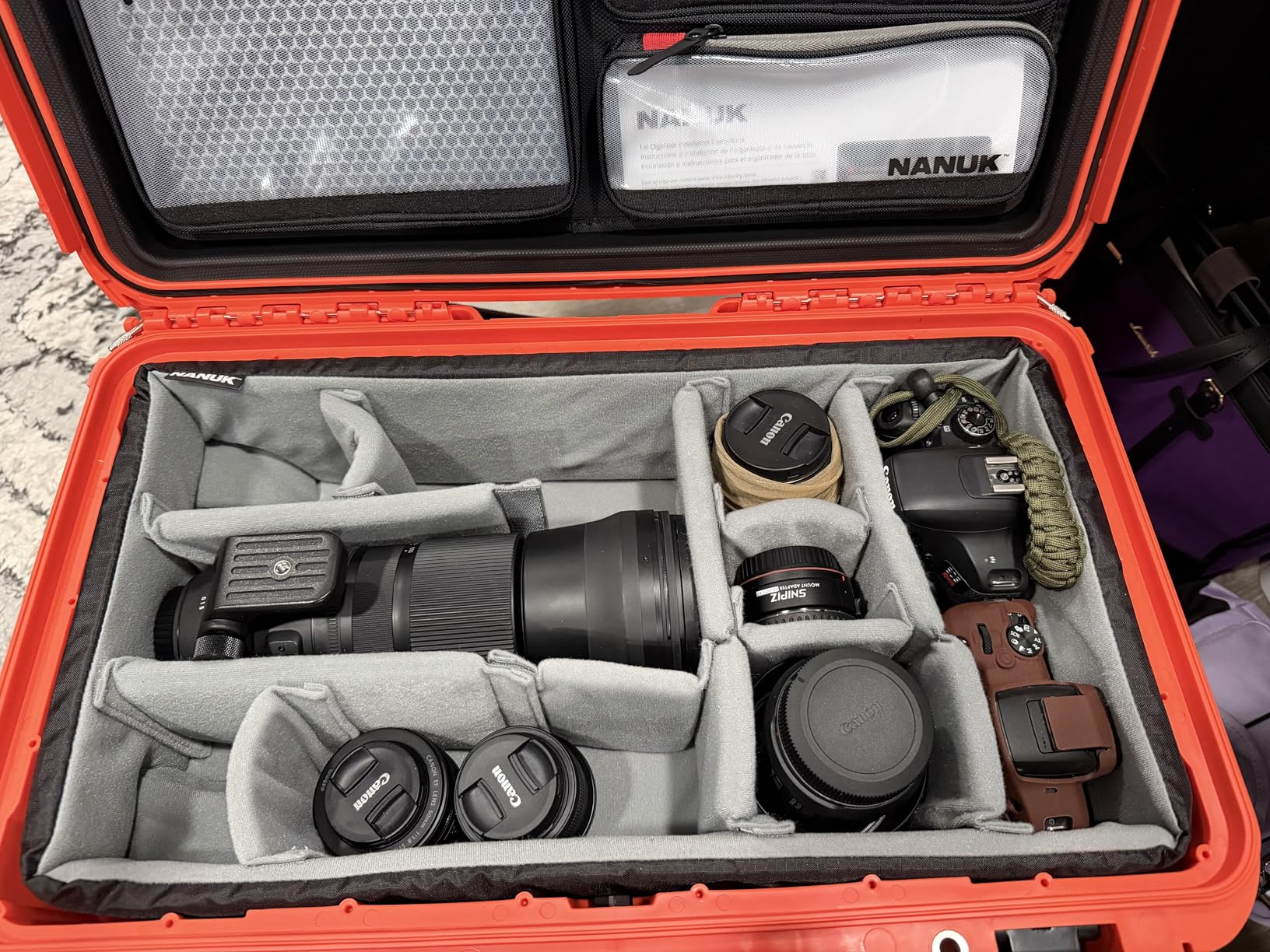
The PowerClaw latching system is one of my favorite engineering touches on any hard case. Instead of the typical draw-bridge latch, Nanuk uses a tri-latch design that pulls the case closed and locks it in one motion. It takes some getting used to, but the security is worth the learning curve.
Wheels are another area where the 935 differentiates itself. It has four polyurethane wheels instead of the typical two in-line skate wheels, which makes the case roll smoothly in any direction. The 2-level retractable handle adjusts to user height, which is great for shorter or taller photographers who don’t want to stoop.
Lid organizer advantage over Pelican
Pelican cases don’t include a lid organizer by default. You can buy aftermarket lid organizers, but they’re sold separately and don’t always fit perfectly. The Nanuk 935’s built-in lid organizer is a major workflow improvement for working photographers who need quick access to accessories without opening the main compartment.
The three zippered compartments are anti-tear, meaning the stitching won’t unravel if a sharp edge snags. They’re also see-through mesh on top, so you can locate gear visually. For documentary and wedding photographers who constantly swap batteries and filters, this is a huge time saver.
Best use cases for the Nanuk 935
The 935 is ideal for working photographers who need both maximum gear protection and organized accessory storage in one case. It’s also a great choice if you want something other than Pelican, since Nanuk’s build quality is comparable and the warranty is strong.
It’s especially useful for photographers who shoot events. The lid organizer keeps spare batteries and memory cards visible and accessible, and the four-wheel design makes it easy to push through crowded venues. If you’ve been frustrated by Pelican’s lack of built-in accessory storage, the 935 solves that problem out of the box.
5. Pelican 1300 – Best Small Case for Compact Cameras and Drones
Pros
- Watertight copolymer shell
- Lightweight at just 1.3 lbs
- Pick and pluck foam easy to customize
- Floats with contents
- Compact size perfect for small gear
- Ideal for GoPro and electronics
Cons
- Smaller than some users expect
- Foam density may not suit all uses
- Latches can be stiff initially
The Pelican 1300 is the smallest case in this roundup, and it’s the one I recommend for compact camera kits, action cameras, and small electronics. At 1.3 pounds empty and an exterior of 10.62 x 9.68 x 6.87 inches, it slips into a backpack or larger Pelican case with room to spare.
I use my 1300 as a dedicated GoPro and accessories case. It holds two GoPro bodies, three batteries, a small tripod, and a waterproof housing with room to spare. The Pick and Pluck foam lets me custom-shape each cavity, and the 1.3-pound empty weight means I barely notice it in my pack.
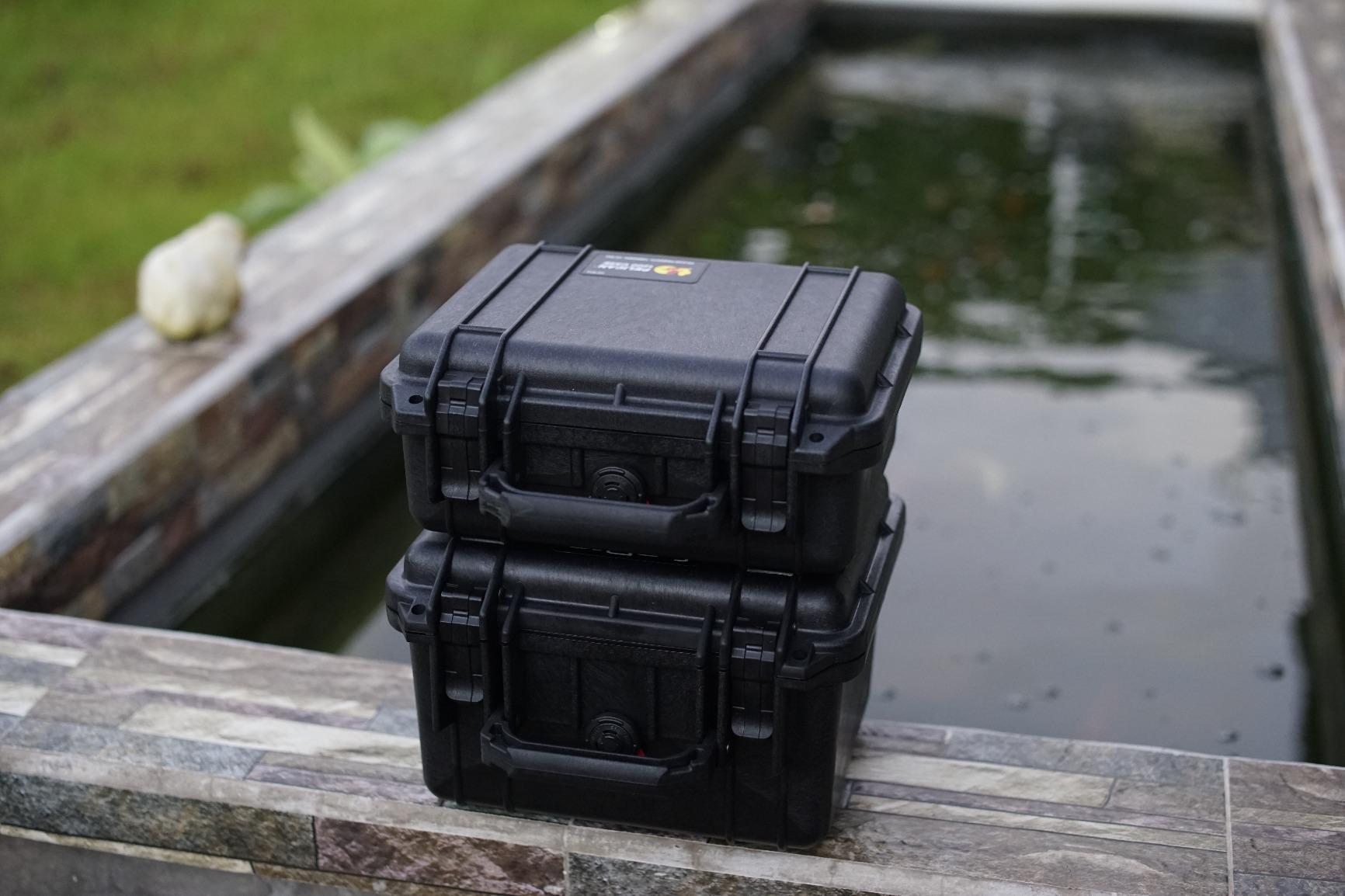
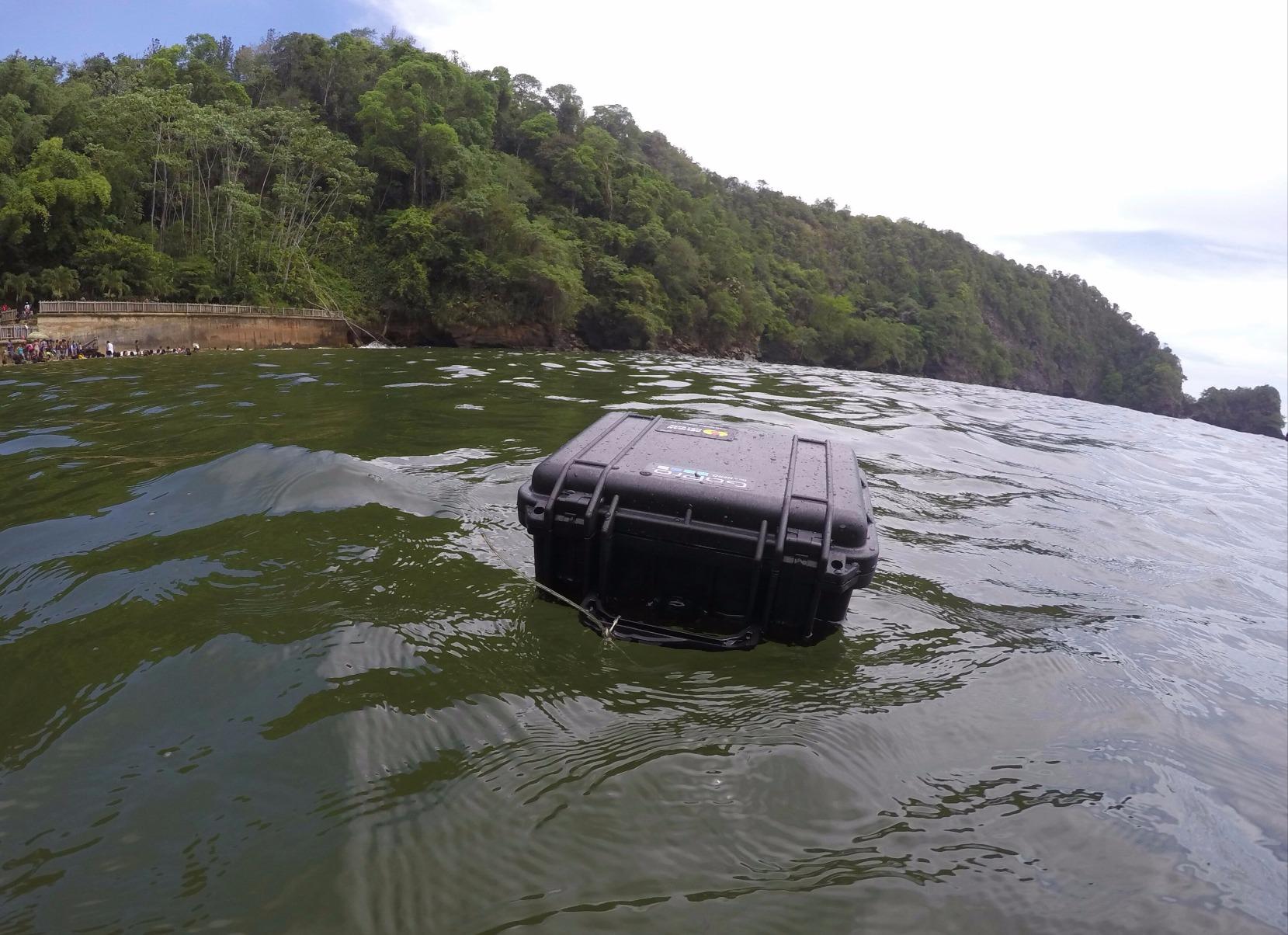
The standout feature on the 1300 is that it floats with contents. Pelican designed the case with enough buoyancy to keep it on the surface even when fully loaded. For water sports photographers, kayak anglers, and drone pilots working near water, this is a real safety feature that other cases don’t offer.
Build quality matches the rest of the Pelican lineup. The copolymer shell is watertight, the purge valve handles pressure changes, and the stainless steel padlock protectors give you lock points for TSA compliance. It’s the same DNA as the larger cases, just in a more compact form factor.
Compact storage capacity explained
The 1300’s interior is roughly 9.0 x 7.0 x 5.5 inches, which sounds small but fits a surprising amount of gear. You can fit a mirrorless body with a kit lens attached, two extra batteries, a small flash, and a cleaning kit. For action cameras, you can pack three to four bodies plus accessories.
If you’re looking for a case to protect delicate electronics like hard drives, audio recorders, or sensitive measurement equipment, the 1300 is ideal. The compact size makes it perfect for field scientists, traveling journalists, and anyone who needs serious protection for a small kit. It’s also a great choice as a backup case inside a larger Pelican setup.
Best use cases for the 1300
The 1300 is ideal for action camera users, drone pilots with small drones like the DJI Mini series, and photographers who need a dedicated lens or accessory case. It’s also perfect for storing small electronics in harsh environments, from humid tropical locations to dusty desert shoots.
It’s the best budget-friendly Pelican case in the lineup, and it makes a great gift for newer photographers who don’t yet need a 1510-sized case. If you want genuine Pelican protection in a backpack-friendly size, the 1300 is the right pick.
Buying Guide: How to Choose the Right Pelican Case for Your Gear?
Picking the right Pelican case isn’t about finding the “best” one. It’s about matching case size, weight, and divider system to your specific kit and shooting style. Here’s what to think through before you buy.
Air Series vs Classic Protector Series
The biggest decision most buyers face is whether to go with the Air series or the classic Protector series. The Air cases use a redesigned shell that Pelican claims is up to 40 percent lighter while maintaining the same IP67 watertight rating. The classic Protector cases use the original heavier shell that’s been trusted since 1976.
Choose the Air series if weight matters, if you fly frequently, or if you want modern features like the TrekPak divider system pre-installed. Choose the classic Protector series if you want maximum proven durability, if budget is a primary concern, or if you prefer the traditional Pick N Pluck foam approach. Both series offer lifetime warranties on most models.
Pick N Pluck vs TrekPak vs Padded Dividers
Pick N Pluck foam uses pre-scored cubes that you pull out by hand to create custom cavities. It’s the most protective option because foam surrounds every surface of your gear, but it takes time to customize and is harder to reconfigure later. Best for one-time custom fits where your kit rarely changes.
TrekPak dividers use rigid plastic panels with aluminum pins that lock into foam slots. They’re faster to set up than Pick N Pluck and easier to reconfigure, but they don’t surround gear as completely. Best for photographers who change kit configurations frequently.
Padded dividers are hook-and-loop fabric panels attached to a base plate. They’re the fastest to reconfigure and cleanest looking, but they offer less shock protection than foam. Best for working photographers who swap gear between jobs and need zero-downtime reconfiguration.
Size Selection Guide
Match your case size to your typical kit. The Pelican 1300 holds one compact camera or a small drone kit. The 1400 holds a single mirrorless body with two to three lenses. The 1510 and 1535 hold two full-frame bodies with four to six lenses, plus accessories. Larger cases like the 1560 and 1620 handle studio lighting kits and cinema rigs.
Always measure your largest lens with hood attached before buying. Many photographers buy cases that are too small for their 70-200mm or 100-400mm lenses stored vertically. If you shoot with super-telephoto glass, consider a longer case like the 1555 or 1560.
Carry-On Compliance by Airline
Most U.S. carriers accept the Pelican 1510 and 1535 as carry-on luggage. The 22 x 13.81 x 9 inch exterior fits within the 22 x 14 x 9 inch carry-on limit used by American, Delta, and United. International carriers vary, so check your specific airline’s dimensions before flying.
If you fly regional or budget carriers, the lighter 1535 Air may be the better choice since weight limits are often stricter. For checked baggage, any Pelican case provides excellent protection, and the TSA-approved latches let you lock the case with standard TSA locks. The 1300 and 1400 fit easily as personal items under most airline seats.
Frequently Asked Questions
What is the best travel case for camera equipment?
The Pelican 1510 Protector Case is the best travel case for camera equipment for most photographers. It’s carry-on compliant on major airlines, fits two full-frame bodies with four to six lenses, and offers crushproof, watertight, and dustproof protection. For photographers who need lighter weight, the Pelican Air 1535 is 3.6 pounds lighter while offering the same interior capacity.
What is the Pelican case for camera gear?
Pelican cases for camera gear are professional-grade hard cases designed to protect cameras, lenses, and accessories from water, dust, crush damage, and impact. They use a polypropylene shell, O-ring seal, and pressure equalization valve to create a watertight enclosure. Pelican has been making these cases since 1976, and they’re trusted by the U.S. military, first responders, and professional photographers worldwide.
Is Pelican or Otterbox better?
Pelican cases are generally better for serious camera gear protection because they offer higher IP67 waterproof ratings, crushproof certification, and lifetime warranties. Otterbox cases are typically designed for smartphones and smaller electronics with less demanding protection requirements. For professional camera equipment that travels by air or goes into harsh environments, Pelican is the stronger choice.
Does the US military use Pelican cases?
Yes, the U.S. military has used Pelican cases since 1976 to protect sensitive equipment, including weapons, electronics, optics, and medical supplies. Pelican cases are deployed in every branch of the armed forces and are trusted in extreme conditions from arctic cold to desert heat. This military heritage is part of why photographers trust Pelican for protecting valuable camera gear.
Which Pelican case is best for camera gear?
The best Pelican case for camera gear depends on your kit size and travel needs. For carry-on travel with a full professional kit, the Pelican 1510 is the gold standard. For a lighter weight option, choose the Pelican Air 1535. For compact mirrorless or single-body kits, the Pelican 1400 is ideal. For small cameras, drones, and electronics, the Pelican 1300 fits the bill.
Final Verdict: Which Pelican Case Should You Buy in 2026?
After testing five top models across six weeks of travel, studio work, and outdoor shoots, our top pick for the best Pelican case for camera gear remains the Pelican 1510 Protector. It carries a full professional kit, fits airline carry-on requirements, and offers lifetime protection that soft bags can’t match. For lighter weight, the Pelican Air 1535 is worth the premium if you fly frequently.
If you want to explore other hard-case brands that match Pelican’s protection, our Pelican-style waterproof cases guide compares the alternatives side by side. No matter which case you pick, the important thing is that your gear survives the journey. A Pelican case is one of the best investments you can make for protecting your photography kit.