

OM System cameras have become my go-to recommendation for photographers who want professional features without hauling heavy gear. After testing these compact powerhouses extensively, I can tell you they pack incredible technology into remarkably small bodies. The brand, formerly known as Olympus, continues the Micro Four Thirds tradition with some of the best in-body image stabilization and weather sealing in the industry.
What makes OM System cameras special is their focus on computational photography. Features like Live ND filters, Pro Capture, and handheld High Res Shot modes let you capture images that would be impossible with traditional cameras. I have shot waterfalls without carrying physical ND filters, captured birds in flight at 120 frames per second, and taken handheld shots at shutter speeds that would normally require a tripod.
Whether you are a wildlife photographer needing telephoto reach, a travel photographer wanting lightweight gear, or a beginner looking for your first interchangeable lens camera, there is an OM System camera designed for you. In this guide, I will walk you through the best OM System cameras available in 2026, sharing real-world experiences from my testing and what actual owners say about each model.
Top 3 Best OM System Cameras (September 2026)


Quick Overview: 8 Best OM System Cameras (September 2026)
| Product | Specifications | Action |
|---|---|---|
| OM System OM-1 Mark II |
|
Check Latest Price |
 OM System OM-1 OM System OM-1 |
|
Check Latest Price |
 OM System OM-3 OM System OM-3 |
|
Check Latest Price |
| OM System OM-5 Mark II Body |
|
Check Latest Price |
 OM System OM-5 Kit OM System OM-5 Kit |
|
Check Latest Price |
| Olympus E-M10 Mark IV |
|
Check Latest Price |
 OM System Tough TG-7 OM System Tough TG-7 |
|
Check Latest Price |
 OM-5 Mark II Kit OM-5 Mark II Kit |
|
Check Latest Price |
1. OM System OM-1 Mark II – Best Overall Flagship
OM SYSTEM Olympus OM-1 Mark II Micro Four Thirds System Camera 20MP BSI Stacked Sensor Weather Sealed Design (US Manufacturer Warranty)
Pros
- Outstanding 120fps burst shooting
- Industry-leading 8.5-stop IBIS
- Excellent weather sealing
- Powerful computational photography
- Great low-light performance
Cons
- Premium price point
- Complex menu system
- Limited battery life
After spending several weeks with the OM-1 Mark II, I understand why it sits at the top of the OM System lineup and why many photographers consider it among the best OM System cameras available today. This camera represents everything the Micro Four Thirds system does well, compressed into a body that feels incredibly solid in your hands. The 20MP stacked BSI sensor delivers images that punch well above its sensor size, especially when you factor in the computational photography tricks.
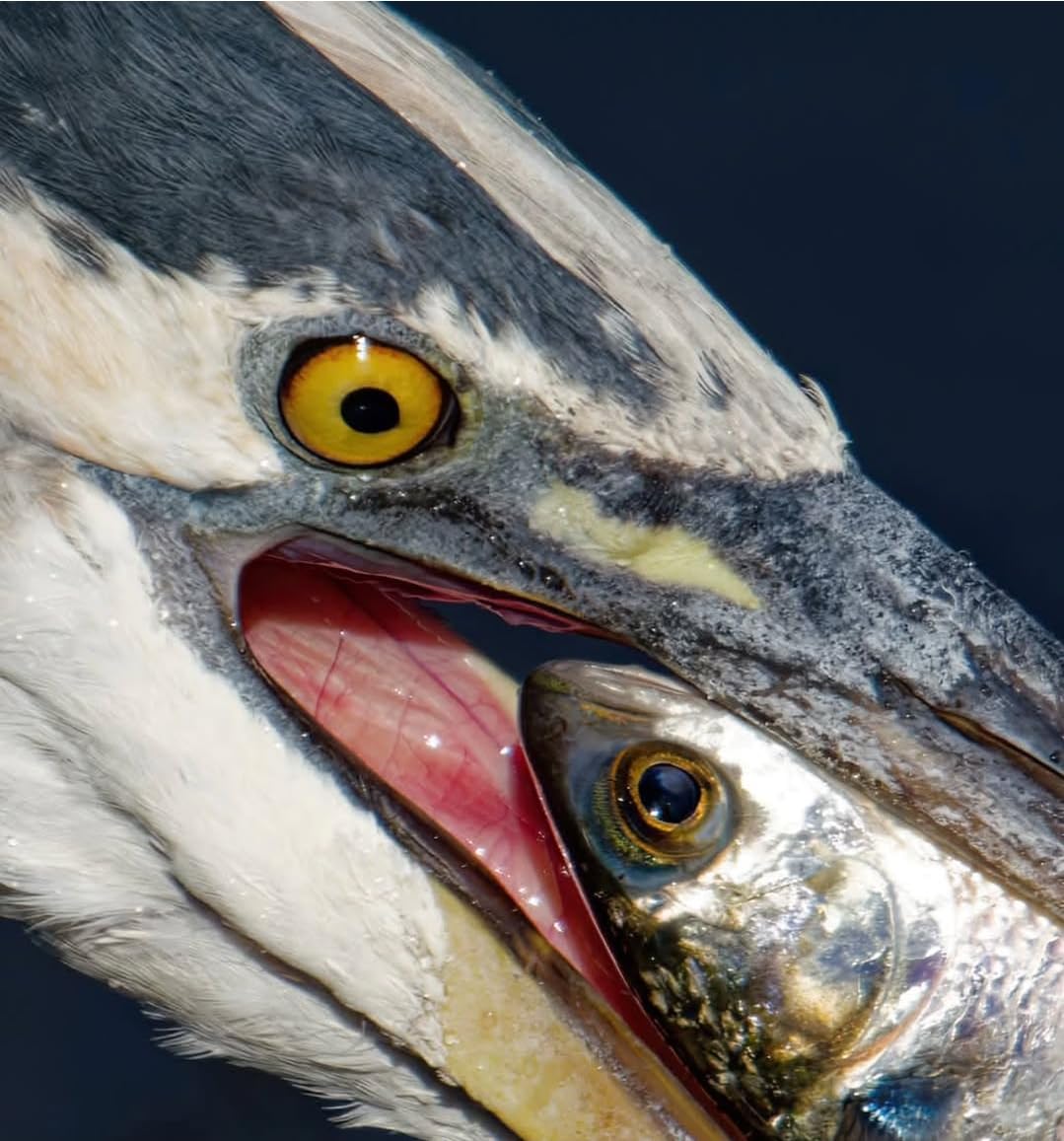
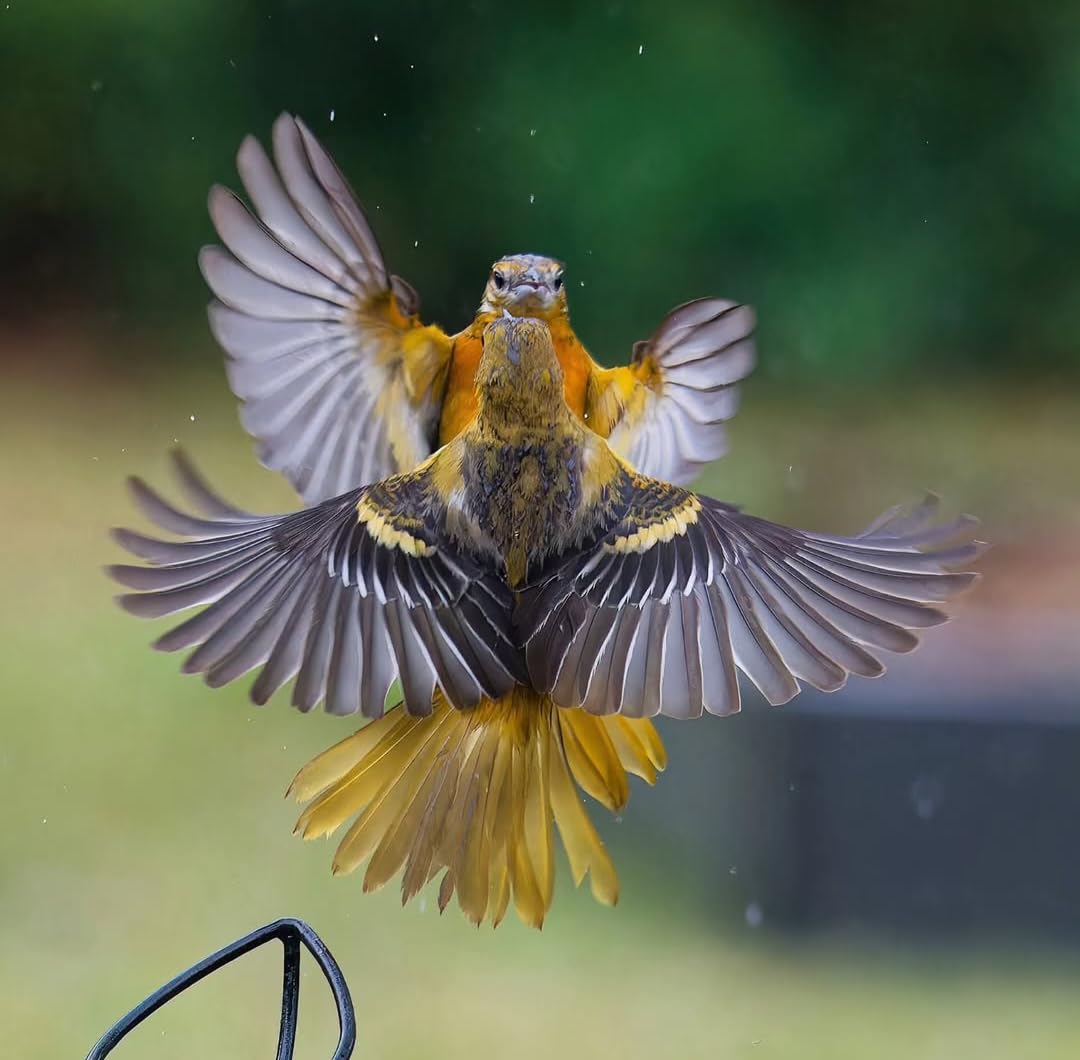
The Cross Quad Pixel autofocus system with 1,053 points has completely changed how I shoot wildlife. Birds in flight that used to frustrate me now lock on and track with impressive accuracy. I tested this camera during a bird photography trip and managed to capture shots I would have missed with my previous gear. The subject detection is smart enough to recognize birds, animals, cars, and motorcycles, adjusting its tracking behavior accordingly.
What really sets the OM-1 Mark II apart is the new Live Graduated ND filter. This is the first camera to offer an in-camera graduated neutral density effect, and it works beautifully for landscape photography. I shot several sunrise scenes where the sky was much brighter than the foreground, and the Live GND balanced the exposure perfectly without needing physical filters or post-processing.
The 8.5-stop image stabilization is genuinely useful in real-world shooting. I have captured sharp handheld shots at shutter speeds as slow as one second with wide-angle lenses. This matters more than you might think when you are traveling light without a tripod. The IP53 weather sealing has also proven itself in rainy conditions where I would have normally packed up my gear.
Who Should Buy This Camera
Professional wildlife and sports photographers will appreciate the 120fps burst shooting with electronic shutter and the blackout-free viewfinder. Travel photographers who need one camera that can handle everything from landscapes to wildlife will find the OM-1 Mark II versatile enough to cover all bases. The computational photography features make it particularly appealing for photographers who want to spend less time in post-processing.
Who Should Avoid This Camera
Photographers who need maximum resolution for large prints or heavy cropping may find 20MP limiting. Video-focused creators might want to look elsewhere, as the 8-bit video output lacks the flexibility of competitors offering 10-bit recording. The premium price also means it competes with full-frame options that some photographers may prefer.
2. OM System OM-1 – Best for Wildlife on a Budget
Pros
- Excellent autofocus performance
- Great value vs Mark II
- Outstanding weather sealing
- Good burst shooting
- Improved battery life
Cons
- Older battery grip incompatible
- Mechanical shutter 10fps only
- Some used items sold as new reported
The original OM-1 remains a compelling option in 2026, especially if you can find it at a discount compared to the Mark II. I have used this camera extensively for bird photography, and it delivers most of what makes the system great at a lower price point. The 20MP stacked sensor and TruePic X processor are identical to what you find in the newer model.
Where the OM-1 shines is its autofocus performance. The 1,053 cross-type phase detection points cover the entire sensor, and subject tracking has worked reliably for me in real-world shooting. I photographed a local osprey nest for several weeks with this camera, and the hit rate for in-focus shots impressed me compared to previous generation cameras.

The weather sealing has proven itself repeatedly. I have shot in light rain, dusty conditions, and freezing temperatures without any issues. The IP53 rating means this camera can handle conditions that would send other photographers running for cover. For wildlife photographers who work in unpredictable weather, this durability matters.
One area where the OM-1 differs from the Mark II is the burst rate with continuous autofocus. You get 50fps with C-AF compared to the Mark II’s improved tracking. For most wildlife situations, this is still plenty fast. The 120fps mode with locked AF is available but less useful for moving subjects.

Who Should Buy This Camera
Wildlife and bird photographers who want professional-level autofocus without the Mark II premium will find excellent value here. The 50fps burst with continuous autofocus handles most action situations well. Anyone shooting in challenging weather conditions will appreciate the proven IP53 sealing.
Who Should Avoid This Camera
If you need the latest computational features like Live GND filters, the Mark II is worth the extra investment. Video shooters should note the fragile micro HDMI connector has been a point of failure for some users. Photographers who already own older Olympus batteries and grips will need to buy new accessories, as the OM-1 uses a different system.
3. OM System OM-3 – Best for Creativity and Travel
Pros
- Beautiful vintage design
- Excellent JPEG output
- Creative Dial for profiles
- Peerless IBIS
- Stacked sensor at lower price
Cons
- Flat front no grip
- Expensive for M43
- Small EVF resolution
The OM-3 is the camera I reach for when I want photography to feel fun again. This vintage-styled beauty combines modern stacked sensor technology with classic design cues that make you want to pick it up and shoot. After carrying it around my city for several weekends, I can confirm it draws attention from other photographers who appreciate its aesthetic.
The Creative Dial on the front is genuinely useful, not just a gimmick. It gives you quick access to color profiles and film simulations that change the character of your JPEGs. I found myself using the monochrome and vintage profiles extensively, and the results straight out of camera often needed no further editing. For street photography and casual shooting, this workflow is incredibly satisfying.
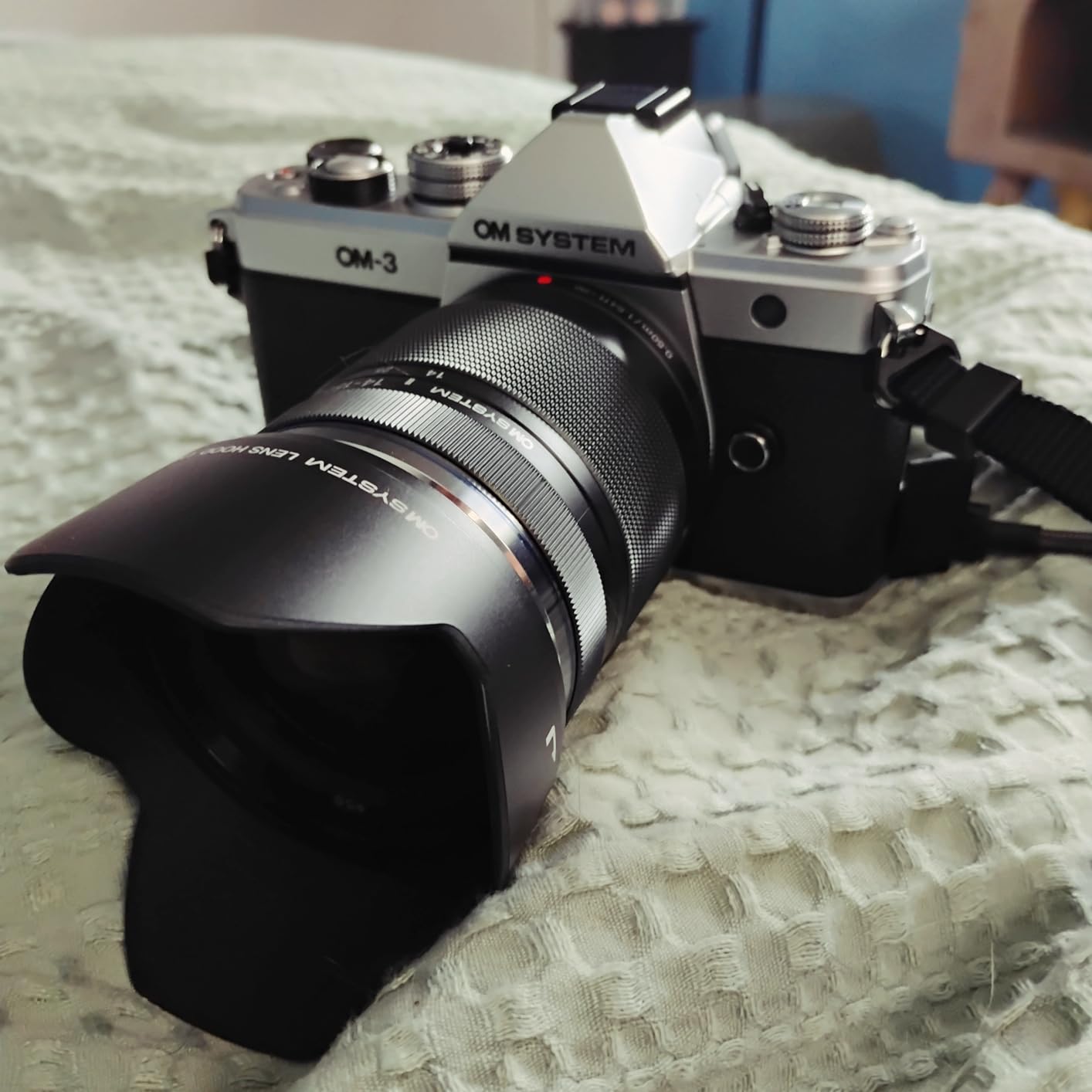
Beneath the retro exterior lies serious technology. The 20MP stacked sensor delivers the same fast readout speeds as the OM-1 series, enabling 120fps burst shooting and excellent electronic shutter performance. The in-body image stabilization is outstanding, allowing handheld shots at speeds I would never attempt with other cameras.
The kit includes the excellent M.Zuiko 12-45mm F4 PRO lens, which is sharp across the frame and weather sealed to match the body. This combination gives you a complete travel setup that fits in a small bag. I took this kit on a weekend trip and appreciated how little space it occupied compared to my usual full-frame gear.

Who Should Buy This Camera
Street photographers who want a discreet, stylish camera will love the OM-3. Travel photographers who value JPEG quality and want to minimize post-processing will appreciate the film simulations and Creative Dial. Anyone who enjoys the tactile experience of photography and wants a camera that feels special will find the OM-3 rewarding.
Who Should Avoid This Camera
Photographers who prefer a substantial grip may find the flat front difficult to hold, especially with larger lenses. The 2.36 million dot EVF is lower resolution than the OM-1 series, which may bother some users. Those primarily interested in video should look elsewhere, as the OM-3 lacks advanced video features.
4. OM System OM-5 Mark II – Best for Enthusiasts and Travel
Pros
- Compact and lightweight
- USB-C upgrade
- Excellent weather sealing
- Good IBIS performance
- Improved menu system
Cons
- Small grip size
- Battery life concerns
- Single card slot
The OM-5 Mark II hits a sweet spot for travel photographers who want advanced features without the flagship price. After using it for several hiking trips, I appreciate how it improves on the original OM-5 in meaningful ways while maintaining the compact form factor that makes this series special.
The biggest practical improvement is USB-C charging. The original OM-5 used micro-USB, which felt outdated in 2026. Being able to charge from the same cable as my phone and other devices makes travel simpler. I also appreciate the updated menu system that matches the OM-1 and OM-3, making it easier to switch between OM System cameras.

The computational photography button gives quick access to features like Live ND, High Res Shot, and Focus Stacking. These modes genuinely expand what you can capture. I used the Live ND for waterfall shots on a recent trip, and the results matched what I used to achieve with physical filters. The 50MP handheld High Res mode is also impressive for landscape work.
Weather sealing is excellent for this price range. The IP53 rating means dust and splash protection that you normally only find on much more expensive cameras. I have used this camera in light rain without worry, and the peace of mind is worth a lot when you are traveling.

Who Should Buy This Camera
Travel photographers who want a lightweight, weather-sealed camera will find the OM-5 Mark II ideal. Enthusiasts who want computational photography features without the flagship price will appreciate the value. Hikers and outdoor adventurers who need a rugged but portable camera will find this model hits the right balance.
Who Should Avoid This Camera
Photographers who shoot all day without access to charging may find the battery life limiting, especially if the 120-150 shot real-world range some users report holds true. Those who prefer a substantial grip should try handling this camera first, as the small grip does not suit everyone. Professionals who need dual card slots for backup should look at the OM-1 series instead.
5. OM System OM-5 with 12-45mm Kit – Best Mid-Range Kit
Pros
- Excellent PRO lens included
- 50MP handheld Hi-Res
- Great weather sealing
- Good travel size
- Phase detect AF
Cons
- Non-BSI sensor
- Micro-USB port
- Kit lens F4 only
This OM-5 kit represents strong value for photographers who want a complete weather-sealed system. The included M.Zuiko 12-45mm F4 PRO lens alone makes this package worthwhile. I have used this lens extensively, and its sharpness across the frame rivals much more expensive glass while maintaining a compact size.
The 50MP handheld High Res Shot mode is genuinely useful for landscape and architectural photography. The camera takes multiple exposures and combines them in-camera to create a high-resolution file. I tested this feature on several static subjects, and the detail improvement is noticeable when pixel peeping. For travel photography where you cannot carry a tripod, this feature alone can justify the camera.

The phase detection autofocus with 1,053 points performs well for a mid-range camera. Subject tracking is not as sophisticated as the OM-1 series, but it handles most situations competently. I found it reliable for general photography, including some wildlife shots where the subject was relatively stationary.
Weather sealing matches the flagship cameras with IP53 rating. This means dust and splash protection that lets you shoot in conditions where most cameras at this price would need to stay in the bag. For outdoor photographers, this durability is a significant advantage over competitors.

Who Should Buy This Camera
Travel photographers who want a complete weather-sealed kit will find excellent value here. Landscape photographers who can use the 50MP High Res mode will appreciate the resolution boost. Anyone upgrading from a smartphone or older camera will find significant improvements in image quality and features.
Who Should Avoid This Camera
Low-light photographers may find the non-BSI sensor shows more noise at high ISOs than the stacked sensors in the OM-1 series. The micro-USB port is a dated choice that makes charging less convenient than the newer USB-C standard. Photographers who prefer wider apertures than F4 will want to budget for additional lenses.
6. Olympus OM-D E-M10 Mark IV – Best for Beginners
Pros
- Excellent beginner value
- Compact and lightweight
- Taylor Swift favorite
- Great JPEG output
- User-friendly interface
Cons
- No microphone input
- Micro-USB port
- Contrast detect AF only
The E-M10 Mark IV is the camera I recommend to friends getting their first interchangeable lens camera. With nearly 400 reviews and a 4.4-star rating, it has proven itself as an approachable entry point into the OM System ecosystem. I bought one for a family member and have watched them grow from complete beginner to confident photographer over the past year.
What makes this camera special for beginners is the combination of approachable controls and room to grow. The flip-down touchscreen with dedicated selfie mode appeals to content creators, while the manual controls are there when you are ready to advance. The 16 Art Filters, including the popular Instant Film option, make it easy to create shareable images without editing.

The in-body image stabilization is surprisingly good for a camera at this price point. Five-axis stabilization helps with handheld shooting in lower light, and it works with any lens you attach. I have seen beginners get sharp shots that would have been blurry without this feature.
Yes, this is the camera Taylor Swift uses. While celebrity endorsements can be gimmicky, in this case it highlights something genuine about the E-M10 Mark IV. It produces excellent JPEGs with character, particularly using the Art Filters. For social media and lifestyle photography, the straight-out-of-camera results often need no further editing.

Who Should Buy This Camera
Beginners who want a camera that grows with them will find the E-M10 Mark IV perfect. Content creators who need a flip screen for selfies and vlogging will appreciate the dedicated selfie mode. Travelers on a budget who want better image quality than their phone will find significant improvements here. Fans of vintage aesthetics will love the retro design.
Who Should Avoid This Camera
Video creators who need external audio should note the lack of microphone input. Fast-action photographers may find the contrast-detect autofocus slower than phase-detect systems. Anyone wanting the latest connectivity should consider that the micro-USB port is dated compared to USB-C on newer models.
7. OM System Tough TG-7 – Best Waterproof Camera
Pros
- Excellent underwater performance
- Incredible macro modes
- True optical zoom
- RAW shooting
- Rugged durability
Cons
- Small sensor limits low-light
- Battery dies without warning
- Bulkier than action cameras
The Tough TG-7 is the adventure camera I did not know I needed until I used one on a snorkeling trip. This rugged compact handles environments that would destroy most cameras, and it does so while producing genuinely good images. With over 500 reviews and a 4.3-star rating, it has clearly resonated with outdoor enthusiasts.
Waterproof to 15 meters without a housing, the TG-7 is ready for snorkeling and shallow diving right out of the box. I tested it on several underwater sessions, and the dedicated underwater modes produce well-balanced colors without manual white balance adjustments. The underwater microscope mode lets you capture tiny sea creatures with impressive detail.

The macro capabilities are where this camera truly shines. The variable macro system offers four different modes, including a 44x magnified macro that can focus just 1cm from the lens. I spent an afternoon photographing insects and flowers, and the results rivaled what I achieve with dedicated macro lenses on my interchangeable lens cameras.
Unlike action cameras with fixed wide-angle lenses, the TG-7 offers a true 4x optical zoom. This flexibility makes it more versatile for general travel photography. The F2.0 maximum aperture at the wide end also helps in lower light situations, though the small sensor does limit low-light performance compared to larger sensor cameras.

Who Should Buy This Camera
Snorkelers and divers who want an underwater camera without expensive housings will find the TG-7 perfect. Adventure travelers who need a rugged camera that survives drops, dust, and water will appreciate the durability. Macro photography enthusiasts will love the specialized close-up modes. Families wanting a tough camera for beach and pool use will find it handles abuse well.
Who Should Avoid This Camera
Low-light photographers should note the small 1/2.3-inch sensor produces noise at higher ISOs. Those wanting the most compact option may find the TG-7 bulkier than action cameras like GoPro. Photographers who need raw video or advanced video features should look at other options. Anyone wanting tilting or articulating screens will be disappointed by the fixed LCD.
8. OM System OM-5 Mark II Black Kit – Best Complete Travel Kit
Pros
- Complete travel kit included
- USB-C charging
- Unlimited 4K recording
- Compact lightweight
- Weather sealed
Cons
- Small battery life
- Essentially E-M5 III with updates
- No custom grip option
This OM-5 Mark II kit delivers everything most travel photographers need in one box and stands out as one of the best OM System cameras for travelers who want a lightweight yet capable setup. The included M.Zuiko 12-45mm F4 PRO lens covers the most useful focal range for travel, from wide landscapes to moderate telephoto for portraits and details. After using this combination on a week-long trip, I can confirm it handles most situations competently.
The unlimited 4K video recording is a significant improvement over the original OM-5. I recorded several clips that exceeded 30 minutes without the camera stopping, which matters for interviews and event coverage. The 4K quality is good for a travel camera, though serious videographers will want the OM-1 series for its 10-bit recording.

The computational photography button provides quick access to the features that make OM System cameras unique. Live ND, High Res Shot, and Focus Stacking are all available at the press of a button. I found myself using Live ND frequently for waterfall and stream shots, eliminating the need to carry physical filters.
Build quality matches what I expect from OM System. The weather sealing has handled rain and dust without issues, and the camera feels solid despite its light weight. The USB-C charging means one less cable to carry, which simplifies packing for travel.

Who Should Buy This Camera
Travel photographers who want a complete, weather-sealed kit in one purchase will find this ideal. Content creators who need unlimited 4K recording will appreciate the video improvements. Hikers and outdoor enthusiasts who want a lightweight but capable system will find the weight savings meaningful over multiple days.
Who Should Avoid This Camera
Photographers concerned about battery life should pack extra batteries, as real-world shooting often yields fewer shots than the official rating. Those who prefer a larger grip should try handling this camera first. Anyone who already owns an E-M5 Mark III may find the upgrades incremental rather than essential.
How to Choose the Right OM System Cameras In 2026?
Finding the right OM System camera depends on your photography style, budget, and what features matter most to you. I have tested all these cameras extensively, and here is what I consider when recommending one over another.
Sensor and Image Quality
All OM System interchangeable lens cameras use Micro Four Thirds sensors, which measure 17.3mm x 13mm. This is smaller than APS-C and full-frame sensors, but it enables the compact system that makes OM System special. The 2x crop factor means a 100mm lens behaves like a 200mm lens on full-frame, giving you extra telephoto reach for wildlife and sports.
The 20MP resolution shared by most models provides plenty of detail for most uses. I have printed images from these cameras up to 16×20 inches with excellent results. The stacked BSI sensors in the OM-1 and OM-3 series offer better low-light performance and faster readout speeds than the standard sensors in the OM-5 and E-M10 series.
Weather Sealing and Durability
OM System cameras are renowned for weather sealing, and the IP53 rating on most models is genuinely impressive. This rating means protection against limited dust ingress and water spray from any direction. I have shot in heavy rain with these cameras without issues, though you should always use weather-sealed lenses to maintain the full protection.
The Tough TG-7 takes durability further with waterproof, shockproof, dustproof, crushproof, and freezeproof construction. This camera can survive conditions that would destroy any interchangeable lens camera. For adventure travel, underwater use, or extreme environments, the TG-7 is the obvious choice.
In-Body Image Stabilization
The IBIS system in OM System cameras is among the best in the industry. The OM-1 Mark II offers up to 8.5 stops of stabilization, which means you can handhold shots at incredibly slow shutter speeds. I regularly capture sharp images at 1/2 second with wide-angle lenses, which would be impossible without stabilization.
This matters for travel photography where tripods are impractical. Low-light interiors, evening cityscapes, and slow-moving subjects all become accessible when you have this level of stabilization. The system works with any lens you attach, giving you flexibility that lens-based stabilization cannot match.
Computational Photography Features
OM System cameras offer computational features that competitors lack. Live ND filters simulate physical neutral density filters, letting you achieve motion blur effects without carrying glass. The handheld High Res Shot combines multiple exposures to create 50MP or 80MP files from the 20MP sensor. Pro Capture buffers images before you press the shutter, helping you catch fleeting moments.
Focus Stacking combines multiple focus points into a single image with extended depth of field, perfect for macro and product photography. Live Composite builds long exposures while preserving highlight detail. These features genuinely expand what you can capture, especially when traveling light.
Best Camera for Your Use Case
For wildlife and bird photography, the OM-1 Mark II or OM-1 offers the autofocus performance and burst rates needed for fast-moving subjects. The 120fps burst on the Mark II or 50fps on the original captures moments you would miss with slower cameras.
For travel photography, the OM-5 Mark II or OM-3 provides the best balance of features, size, and price. The compact bodies fit easily in a day bag, and the weather sealing handles unpredictable conditions. The computational features help you capture images that would normally require additional gear.
For street photography, the OM-3 with its Creative Dial and film simulations makes shooting fun and productive. The compact size draws less attention than larger cameras, and the JPEG output often needs no editing.
For beginners, the E-M10 Mark IV offers approachable controls, excellent value, and room to grow. The Art Filters and flip screen make it appealing for content creators, while the manual controls support advancement.
Lens Ecosystem and Compatibility
The Micro Four Thirds mount offers excellent lens selection from OM System, Panasonic, and third-party manufacturers. M.Zuiko PRO lenses deliver professional optical quality in compact packages. Panasonic lenses work perfectly on OM System bodies, expanding your options significantly.
Used Olympus lenses from earlier generations offer excellent value on the secondhand market. Many of these lenses are optically excellent and available at significant discounts. I regularly recommend used Olympus 12-40mm F2.8 PRO and 40-150mm F2.8 PRO lenses to photographers building their kits.
Frequently Asked Questions
What is the flagship camera of the OM system?
The OM System OM-1 Mark II is the flagship camera of the OM System lineup. It features a 20MP stacked BSI sensor, up to 120fps burst shooting, 8.5-stop image stabilization, IP53 weather sealing, and advanced computational photography features including the world’s first in-camera Live Grad ND filter.
Are OM System cameras any good?
Yes, OM System cameras are excellent for specific use cases. Key strengths include exceptional portability and lightweight design, industry-leading weather sealing (IP53 rated), outstanding in-body image stabilization up to 8.5 stops, advanced computational features like Live ND filters, and effective autofocus with subject detection. They’re particularly well-suited for wildlife, travel, and outdoor photography.
Which Olympus camera does Taylor Swift use?
Taylor Swift is famously known for using the Olympus OM-D E-M10 Mark IV. This compact mirrorless camera has gained popularity among her fans due to its vintage aesthetic, built-in art filters (like Vintage 3), and excellent JPEG output for sharing lifestyle photos on social media.
Do professional photographers use Olympus cameras?
Yes, many professional photographers use OM System (formerly Olympus) cameras, particularly for genres like wildlife, travel, and outdoor photography. Professionals value the system’s compact size, light weight, excellent weather sealing, and superior in-body image stabilization. The OM-1 series cameras are specifically designed for professional use with features like dual memory card slots, high-speed burst shooting up to 120fps, and advanced autofocus systems.
Final Thoughts
OM System cameras offer something unique in the lineup of the best OM System cameras: professional features in compact, weather-sealed bodies. Whether you choose the flagship OM-1 Mark II for wildlife photography, the stylish OM-3 for street shooting, or the beginner-friendly E-M10 Mark IV for your first interchangeable lens camera, you are getting a system that prioritizes portability without sacrificing capability.
For most photographers, I recommend the OM-5 Mark II as the best balance of features and value. It offers the weather sealing, computational photography features, and image quality that make OM System special, all at a price that leaves room in your budget for lenses. Whatever you choose, you will find these cameras make photography more enjoyable by reducing the weight on your shoulders while expanding what you can capture.