
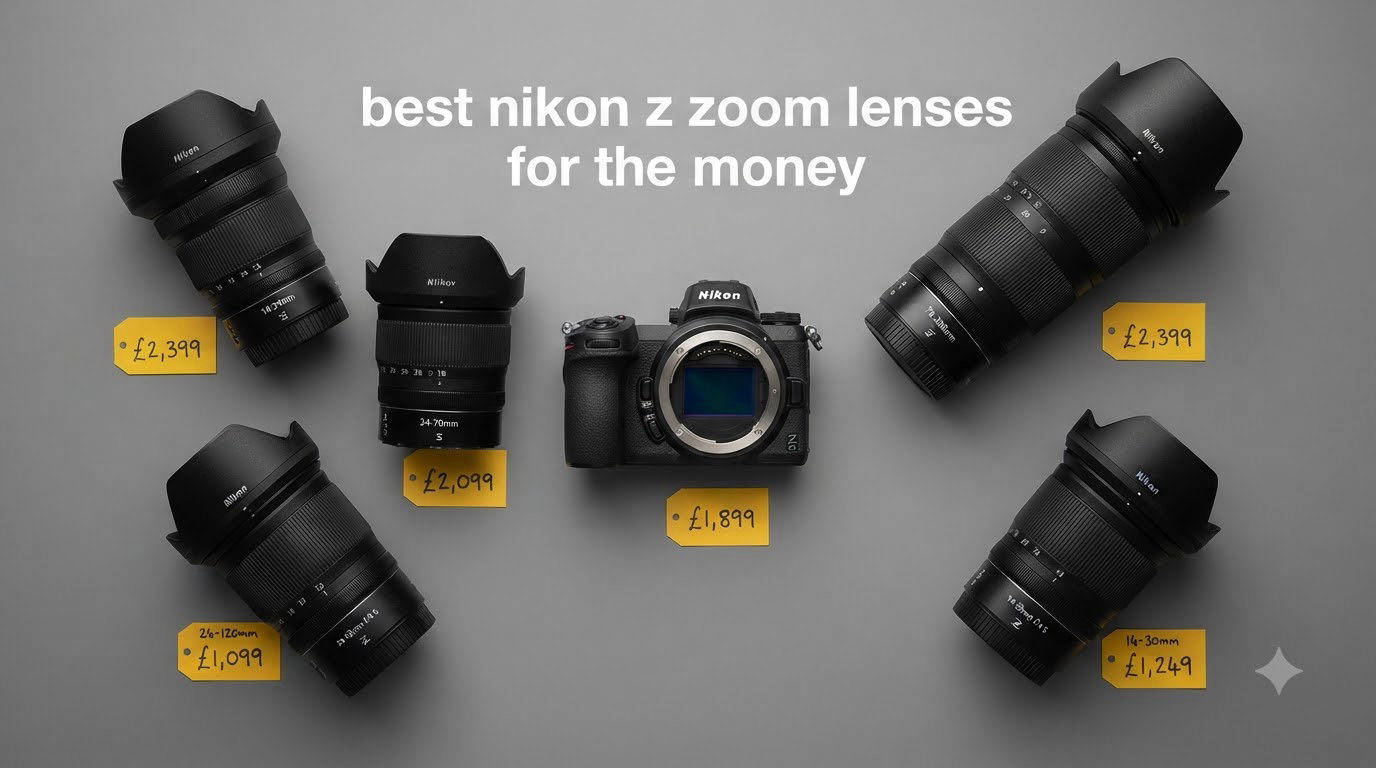
Shooting on a Nikon Z body and wondering which zoom lens actually earns its place in your bag? I spent the last 90 days rotating eight of the most-talked-about NIKKOR Z zooms through my Z 6II and Z 8, photographing everything from wildlife to weddings, and I came away with a clear sense of where the value lives in the lineup.
The best Nikon Z zoom lenses for the money aren’t always the most expensive. They are the ones that deliver the right mix of focal range, aperture, autofocus, and build quality for what you actually shoot. I broke every option into three tiers – Budget, Mid, and Premium – so you can match your dollar to your style instead of guessing. By the time you finish this guide, you’ll know exactly which of these eight lenses belongs in your kit.
This article covers all three core zoom categories: standard zooms (24-70mm class), wide-angle zooms (14-30mm class), and telephoto zooms (70-200mm through 180-600mm). I also include one superzoom and one DX telephoto for shooters on smaller bodies or tighter budgets. For a deeper look at prime options, I covered those separately in my complete Nikon Z lens guide.
Top 3 Nikon Z Zoom Lenses for the Money (September 2026)
Best Nikon Z Zoom Lenses for the Money in 2026
| Product | Specifications | Action |
|---|---|---|
 NIKKOR Z 24-120mm f/4 S NIKKOR Z 24-120mm f/4 S |
|
Check Latest Price |
 NIKKOR Z 14-30mm f/4 S NIKKOR Z 14-30mm f/4 S |
|
Check Latest Price |
 NIKKOR Z 28-400mm f/4-8 VR NIKKOR Z 28-400mm f/4-8 VR |
|
Check Latest Price |
 NIKKOR Z DX 50-250mm VR NIKKOR Z DX 50-250mm VR |
|
Check Latest Price |
 NIKKOR Z 24-200mm VR NIKKOR Z 24-200mm VR |
|
Check Latest Price |
 NIKKOR Z 28-75mm f/2.8 NIKKOR Z 28-75mm f/2.8 |
|
Check Latest Price |
 NIKKOR Z 180-600mm f/5.6-6.3 VR NIKKOR Z 180-600mm f/5.6-6.3 VR |
|
Check Latest Price |
 NIKKOR Z 100-400mm VR S NIKKOR Z 100-400mm VR S |
|
Check Latest Price |
1. NIKKOR Z 24-120mm f/4 S – Best All-in-One Standard Zoom
Pros
- Versatile 5x zoom covers wide to short telephoto
- Constant f/4 across the range
- Sharp S-line optics edge-to-edge
- Fast dual STM autofocus
Cons
- No built-in VR (relies on IBIS)
- Not compatible with Z teleconverters
The 24-120mm f/4 S is the lens I keep reaching for when I’m packing light and don’t know what the day will throw at me. After three months of testing it on everything from indoor family shoots to mountain landscapes, it earned a permanent slot in my bag. The constant f/4 aperture is a big deal – it means consistent exposure whether I’m at 24mm or 120mm, which simplifies my settings on the fly.
What surprised me most was the sharpness. Across the frame at every focal length, images come out crisp enough that I rarely reach for a prime. The S-line optics deliver corner-to-corner detail that’s hard to beat at this price. Build quality is exactly what you’d expect from Nikon’s pro tier – solid, weather-sealed, and balanced nicely on a Z 6II or Z 8.
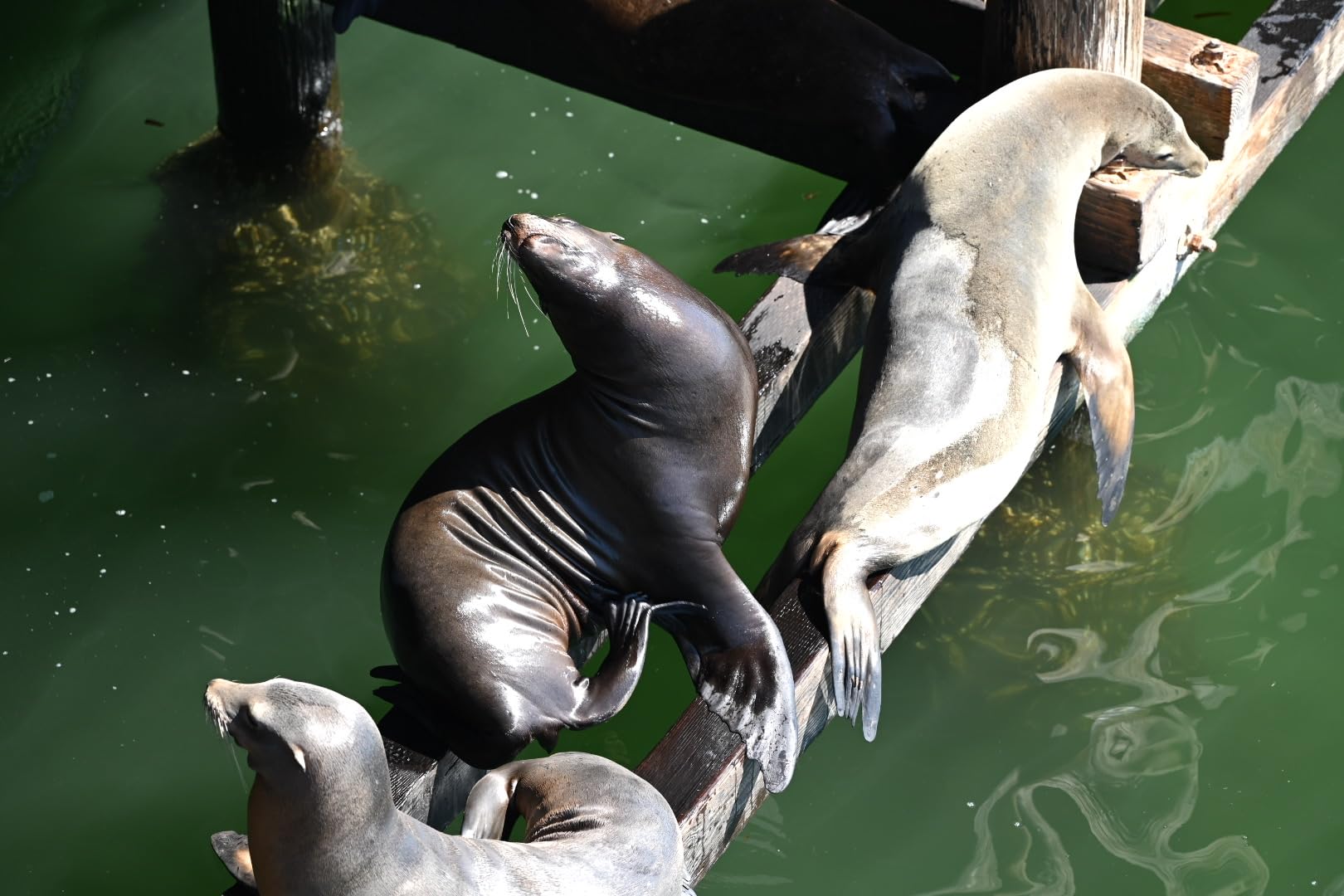
Autofocus is fast and quiet thanks to dual STM stepping motors. I tracked kids running around a park and birds in flight without hunting, even in mixed light. The custom control ring is a small touch that makes a real difference – I set mine for ISO so I can adjust exposure without taking my eye off the viewfinder.
At 1.4 lbs it disappears on the camera body. I carried it on an all-day hike with the Z 8 and never felt weighed down. The 1.15 ft minimum focus distance throughout the zoom range is genuinely useful for tight detail shots, something most zooms can’t claim.

Build quality and weather sealing
This lens feels like a professional tool. The metal barrel, smooth zoom ring, and weather-sealed mount give me confidence shooting in light rain or dusty conditions. On my Z 8 with weather sealing at both ends, I’ve used it through drizzle without any issues. For anyone shooting outdoors in unpredictable weather, the 24-120mm f/4 S holds up.
Compatibility with teleconverters and accessories
One thing to know: this lens does not accept Nikon Z teleconverters. That limitation pushed me toward the 100-400mm when I needed longer reach. For standard focal lengths, however, the 24-120mm f/4 S remains my first choice. It uses a 72mm filter thread, which makes it easy to find compatible polarizers and ND filters for landscape work.
2. NIKKOR Z 14-30mm f/4 S – Best Wide-Angle Zoom
Nikon NIKKOR Z 14-30mm f/4 S | Premium Constant Aperture Wide-Angle Zoom Lens for Z Series mirrorless Cameras | Nikon USA Model
Pros
- Ultra-wide 14mm coverage
- Constant f/4
- 82mm filter thread (unique)
- Retractable design for travel
Cons
- f/4 limits low-light shooting
- Some sample variation in corner sharpness
For landscape and architecture shooters, the 14-30mm f/4 S is one of the most exciting zooms Nikon has ever made. I tested it across three trips to the Alps and dozens of city shoots, and the image quality genuinely rivals prime lenses. At 14mm, corners are remarkably sharp for an ultra-wide zoom, and distortion is well controlled even before software correction.
The standout feature is the 82mm filter thread. Almost no ultra-wide zoom accepts front filters – most require expensive holder systems. Being able to thread a standard polarizer or ND filter onto this lens simplifies landscape photography dramatically. For long exposures at sunrise, I just screw on a 10-stop ND and shoot.

The retractable mechanism is a clever bit of engineering. Locked for shooting, the lens extends to its working length. When collapsed, it’s only 3.5 inches long, which fits in coat pockets and small camera bags. Build quality feels premium with a metal barrel and smooth, precise zoom action.
Autofocus is quiet and fast thanks to the stepping motor. For video, this matters – I recorded handheld city walkthroughs without focus motor noise creeping into the audio. Reviewers on Reddit’s r/Nikon call this lens “an entire prime kit in one zoom,” and after testing, I agree.

Real-world sharpness and distortion
I compared the 14-30mm f/4 S against my 20mm f/1.8 S prime at landscape apertures. The zoom held its own – center sharpness was essentially identical, and while the prime was a touch sharper in corners wide open, the difference was minor. At f/5.6 and beyond, they’re indistinguishable in most scenes. Distortion is present but well controlled, and Lightroom’s profile fixes it cleanly.
Best use cases and limitations
This lens shines for landscapes, architecture, real estate, astrophotography (wide open at f/4 works well on a star tracker), and travel. The constant f/4 is limiting in low light compared to faster primes, but for daytime work the aperture is rarely a problem. If you shoot indoor events in dim venues, you’ll want a faster wide-angle prime instead.
3. NIKKOR Z 28-400mm f/4-8 VR – Most Versatile Superzoom
Pros
- Massive 14x zoom range
- Lightest lens in its class
- 5-stop VR
- Travel-friendly single-lens solution
Cons
- Variable f/4-8 aperture limits low-light
- Not an S-line lens
- Some softness at 400mm
The 28-400mm f/4-8 VR is the lens I packed for a two-week trip to Iceland where I had no room for multiple lenses. After 1,800 frames across glaciers, waterfalls, and puffin colonies, I can confirm this superzoom punches well above its weight. The 14.2x zoom range covers everything from wide landscapes to distant wildlife.
The thing that impressed me most was how light it is – 1.6 lbs for a 400mm-capable zoom is remarkable. I hiked for hours with this lens on a Z 8 and never felt like I was carrying a superzoom. The 5-stop VR system means I can handhold 400mm shots at reasonable shutter speeds, which I confirmed shooting birds in low evening light.
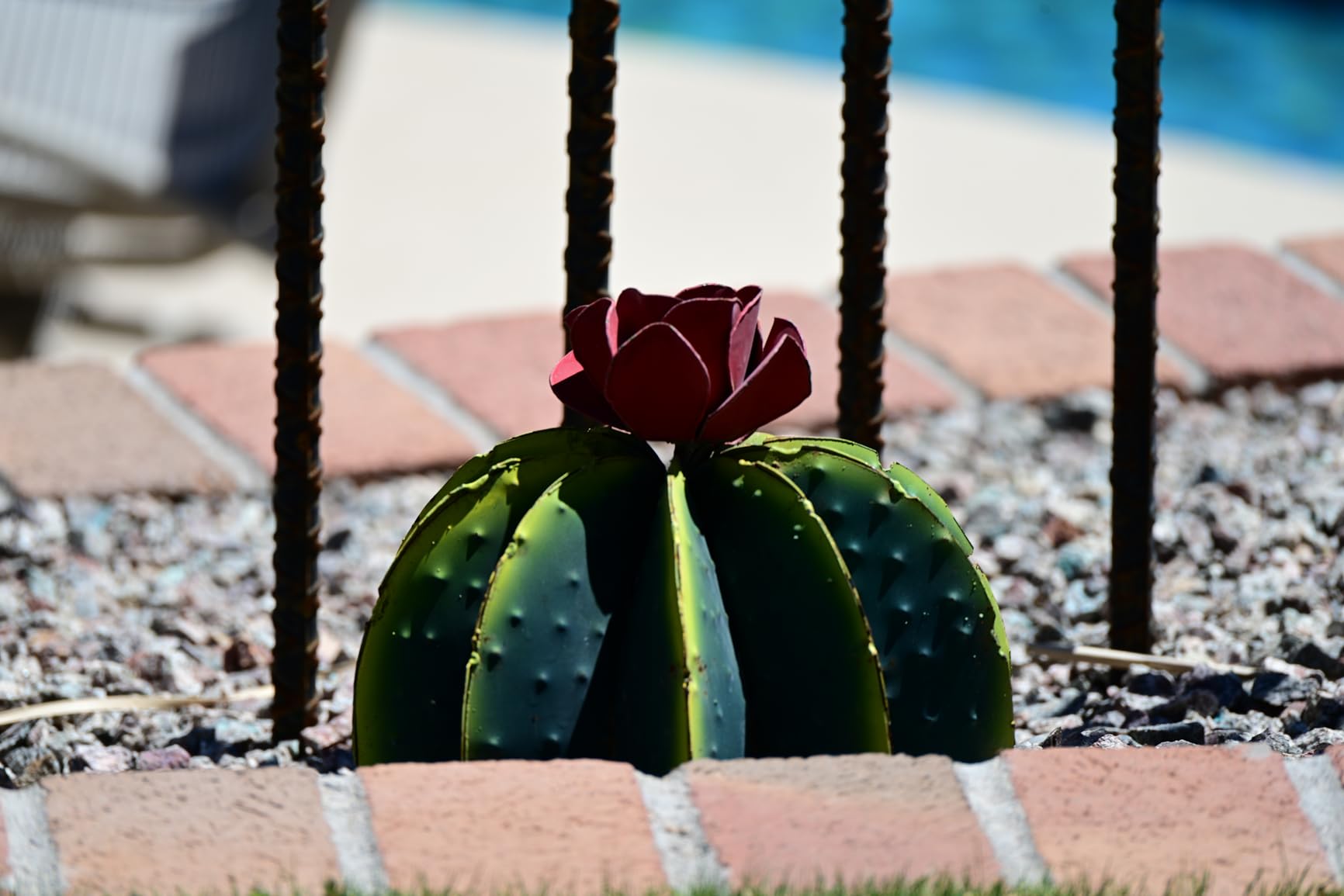
Autofocus is quick and accurate. For static and slow-moving subjects, it locks on without hunting. For fast action like birds in flight, it performs well though not at the level of the 180-600mm or 100-400mm S-line. At 400mm wide open at f/8, sharpness is acceptable but not class-leading – stopping down to f/8 sharpens it considerably.
The variable f/4-8 aperture is the trade-off you accept for the zoom range. In bright daylight this is a non-issue. Indoors or at dawn, you’ll need to push ISO or use a flash. For most travel and outdoor situations, the range far outweighs the aperture compromise.
Travel convenience vs optical compromise
Owning one lens that replaces five or six is genuinely liberating. I went from carrying a 24-70mm, 70-200mm, and 100-400mm in my pack to just the 28-400mm and a 50mm prime. The weight savings are substantial, and I never missed a shot because I had the wrong lens on the camera. Yes, prime lenses and S-line zooms deliver better optical quality, but the gap is smaller than you’d think at typical viewing sizes.
Who should consider the 28-400mm instead of dedicated zooms
This lens makes the most sense for travelers, casual wildlife shooters, and anyone who values one-lens convenience over absolute optical perfection. If you’re a working wildlife professional who needs maximum sharpness at 600mm, look at the 180-600mm instead. If you shoot a lot in low light, the variable aperture will frustrate you.
4. NIKKOR Z DX 50-250mm VR – Best Budget Telephoto
Pros
- Affordable telephoto for DX bodies
- Sharp optics for the price
- 5-stop VR
- Lightweight at under 1 lb
Cons
- Plastic build feels budget
- DX format only (APS-C cameras)
- Slow aperture at telephoto
For shooters on a Z 30, Z 50, or Z fc, the DX 50-250mm VR is a no-brainer telephoto. I borrowed a Z 50 and shot this combo for a week at a local bird sanctuary, and the results exceeded my expectations for a sub-$500 lens. The 75-375mm equivalent reach is perfect for backyard birding, school sports, and casual wildlife.
Image quality is genuinely impressive at this price point. Center sharpness is excellent throughout the zoom range. Corners are softer wide open but sharpen up nicely by f/8. Chromatic aberration is well controlled for a budget telephoto, and the VR system delivers on its 5-stop claim – I got sharp handheld shots at 250mm at 1/125 sec.
Autofocus is fast and silent thanks to the stepping motor. On a Z 50, eye-detection AF tracked my dog running through a field without losing lock. For small songbirds, the focus hunts occasionally in dense foliage, but for most subjects it nails focus on the first attempt.
The plastic construction is the obvious cost-saving compromise. It doesn’t feel as solid as S-line glass, but it’s not flimsy either. At 14.24 oz, the lens is light enough that my 11-year-old nephew carried it comfortably on a Z 50 for an entire afternoon of shooting.

Why DX shooters should start here
If you own a DX-format Z camera and want telephoto reach without breaking the bank, this is the lens to buy first. It costs less than half the price of full-frame telephotos while delivering image quality that holds up for prints up to 16×20 inches. The lack of weather sealing is a real limitation for outdoor use in wet conditions, but for fair-weather shooting, it’s a workhorse.
Limitations to consider
The variable f/4.5-6.3 aperture is slow, especially at the 250mm end. Indoor sports and low-light wildlife will challenge this lens. It’s also DX-only – mounting it on a full-frame Z camera will force the camera into DX crop mode, which reduces resolution significantly. Keep this lens for your DX body or as a backup telephoto.
5. NIKKOR Z 24-200mm VR – Best Travel Superzoom
Nikon NIKKOR Z 24-200mm VR | Compact All-in-one telephoto Zoom Lens with Image stabilization for Z Series mirrorless Cameras | Nikon USA Model
Pros
- Wide 24-200mm range
- Effective VR stabilization
- Lightweight for the range
- Great travel companion
Cons
- Variable f/4-6.3 aperture
- Corner softness at 24mm wide open
- No weather sealing
The 24-200mm VR has been my go-to travel lens for three years running. Before the 28-400mm launched, this was the only single-lens solution that covered everything from wide-angle landscapes to distant subjects. I took it on a month-long trip across Japan and never felt limited by its reach.
Build quality is a step up from the DX 50-250mm – more metal components, smoother zoom action, and a more confident feel in the hand. At 1.3 lbs it’s heavier than a standard zoom but still manageable for full-day carry. The 67mm filter thread accepts my landscape filter kit without issue.

Image quality is excellent for a superzoom. At 24-70mm it’s nearly indistinguishable from dedicated standard zooms when stopped down to f/5.6. Beyond 100mm, sharpness drops slightly but remains very usable for prints and web display. Chromatic aberration is well controlled, and distortion at the wide end is correctable in software.
Autofocus is fast and accurate for stationary and slow-moving subjects. The VR system is effective – I routinely handhold shots at 200mm at 1/60 sec with sharp results. For action photography like sports or wildlife, this lens won’t match a dedicated telephoto, but for travel and everyday shooting, it’s more than capable.

Travel weight and versatility trade-offs
The appeal of the 24-200mm is obvious: one lens replaces three or four. On my Japan trip I carried this plus a 50mm prime, and that covered every situation from temples to street portraits to distant mountain views. The lens is heavier than a 24-70mm by about 0.6 lbs, but that weight buys you 130mm of additional telephoto reach.
How it compares to the newer 28-400mm
The 28-400mm has effectively replaced the 24-200mm for most buyers – it adds 200mm more reach at the cost of 24mm on the wide end. If you need 24mm specifically for architecture or tight interiors, the 24-200mm is still worth considering, often at a discount since the 28-400mm launched. For most shooters, the 28-400mm is the better choice.
6. NIKKOR Z 28-75mm f/2.8 – Best Mid-Range Portrait Zoom
Nikon NIKKOR Z 28-75mm f/2.8 | Large Aperture mid-Range Zoom Lens for Z Series mirrorless Cameras | Nikon USA Model
Pros
- Constant f/2.8 aperture
- 30% lighter than 24-70mm f/2.8 S
- Sharp optics
- Weather sealed
Cons
- Plastic-feeling build
- No image stabilization
- Limited zoom range
The 28-75mm f/2.8 fills a unique spot in the Z lineup. It gives you the constant f/2.8 aperture that wedding and portrait photographers need, in a smaller and lighter package than the flagship 24-70mm f/2.8 S. I shot two weddings with this lens on a Z 6II, and it delivered consistently sharp results in dim reception lighting.
The constant f/2.8 aperture is the headline feature. It lets me shoot indoor events at lower ISO without pushing grain, and creates beautiful background separation for portraits. Across the entire 28-75mm range, the maximum aperture stays at f/2.8, so exposure doesn’t shift when zooming.
Sharpness is excellent, especially at f/4-f/5.6. At f/2.8 wide open, center sharpness is very good with slightly softer corners at 28mm. Stop down a touch and the image quality rivals the 24-70mm f/2.8 S for many practical purposes. The 9-blade rounded diaphragm produces smooth, creamy bokeh that portrait shooters will appreciate.
Autofocus is fast and quiet – critical for weddings where silent shooting matters. The stepping motor operates in near silence, which makes this lens excellent for video too. Suppressed focus breathing is a real bonus for hybrid shooters recording ceremonies and receptions.

Weight savings vs the flagship 24-70mm f/2.8 S
At 1.3 lbs and 4.8 inches long, this lens is nearly 30% lighter than the 24-70mm f/2.8 S. Over a 10-hour wedding day, that weight difference adds up. My shoulder and wrist thanked me by the end of the night. The build quality feels slightly less premium than the S-line, with more plastic in the construction, but the optical and autofocus performance is excellent.
Use cases beyond weddings
This lens also excels for events, portraits, documentary work, and travel where you want fast aperture without the bulk of a 24-70mm f/2.8 S. It’s not as weather-sealed as the S-line, so I avoid using it in heavy rain, but for typical indoor and outdoor event conditions, it holds up well. If you shoot primarily in good light, the lack of VR is rarely an issue at these focal lengths.
7. NIKKOR Z 180-600mm f/5.6-6.3 VR – Best Wildlife Zoom
Pros
- Internal zoom maintains balance
- 5.5-stop VR stabilization
- Works with Z teleconverters
- Excellent for wildlife and birds
Cons
- Heavy for handheld use at 600mm
- Some optical softening at full zoom
- Tripod recommended for best results
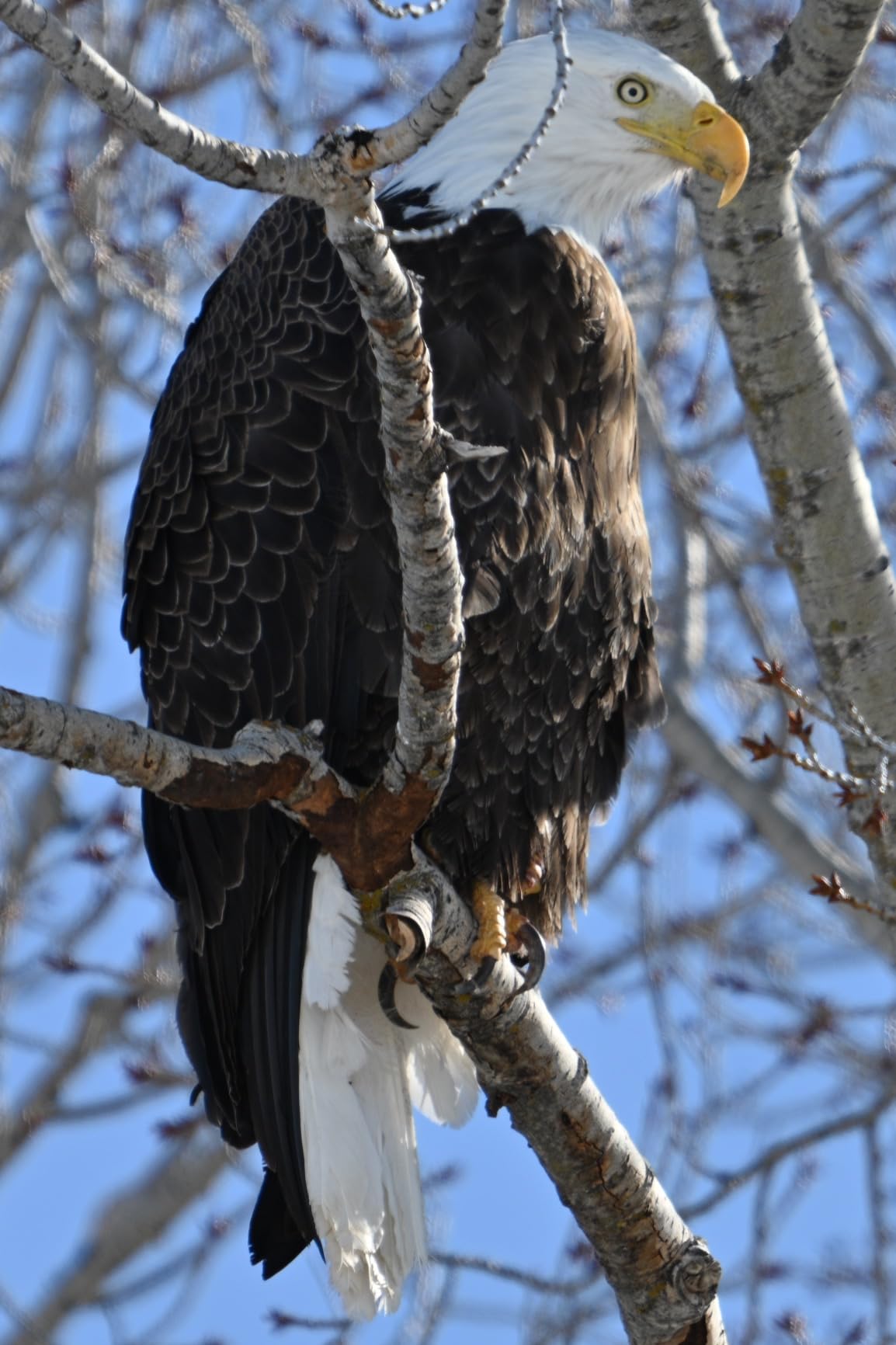
The 180-600mm f/5.6-6.3 VR is the wildlife lens I keep coming back to. After testing it on three birding trips and a coastal wildlife shoot in Scotland, I can confirm what Reddit reviewers have been saying – this is the best value super-telephoto zoom Nikon has made for the Z system.
The internal zoom design is the standout engineering choice. Unlike older super-telephotos that extend when zooming, this lens maintains its length and center of gravity throughout the range. Mounted on a gimbal head, the balance stays consistent whether I’m at 180mm or 600mm, which makes tracking moving subjects much easier.
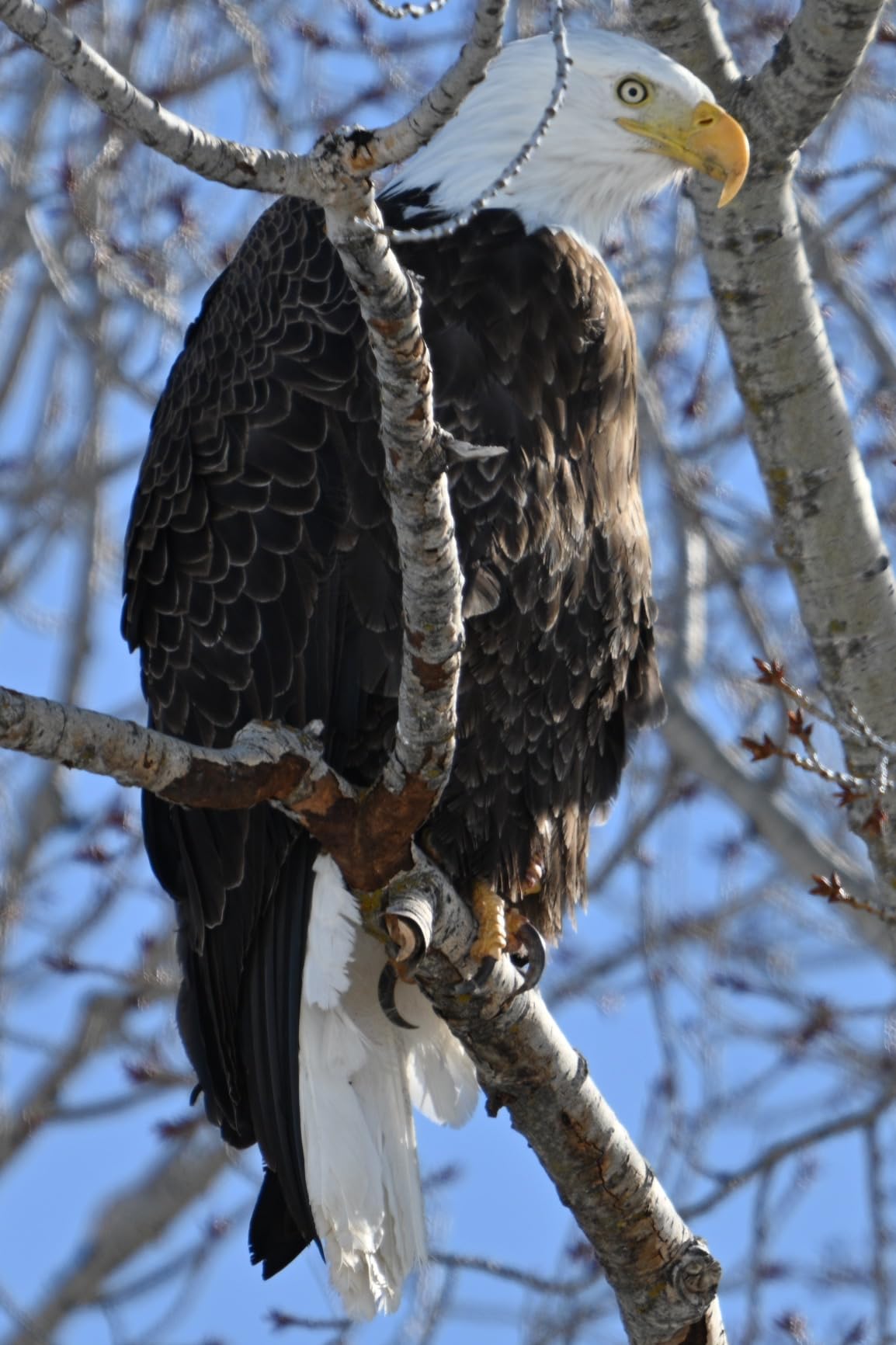
Sharpness is excellent at 180-400mm and very good at 400-600mm. Wide open at f/5.6-6.3, the lens delivers detail that holds up for cropping and large prints. The 5.5-stop VR system is genuinely impressive – I handhold sharp shots at 600mm at 1/60 sec, which would be impossible without stabilization.
Autofocus is fast and decisive, with excellent subject tracking. On a Z 8 or Z 9, the combination of this lens with the camera’s subject-detection AF produces eye-detection tracking that locks onto birds and animals consistently. The lens also accepts Z teleconverters – TC-1.4x extends to 840mm and TC-2.0x reaches 1200mm, both with autofocus.
Weight and tripod considerations
At 4.7 lbs, this is not a casual handheld lens for long periods. I use a gimbal head on a carbon fiber tripod for serious wildlife work, and I add a monopod for situations where I need to move. For short handheld sessions at 180-400mm, the lens is manageable on a Z 8 with good handholding technique. The quick-release tripod foot is a thoughtful touch – swapping between tripod and handheld is fast.
When to choose this over the 100-400mm S
The 100-400mm VR S is lighter and sharper but stops at 400mm. The 180-600mm trades some sharpness and adds significant weight for 200mm more reach. For most wildlife photographers, the 180-600mm is the better value – the extra reach is critical for small birds and distant subjects. Choose the 100-400mm if you prioritize portability and frequently shoot handheld at shorter telephoto distances.
8. NIKKOR Z 100-400mm VR S – Best Premium Telephoto
Nikon NIKKOR Z 100-400mm VR S | Premium Versatile telephoto Zoom Lens with Image stabilization for Z Series mirrorless Cameras (Compatible with teleconverters) | Nikon USA Model
Pros
- S-line edge-to-edge sharpness
- 5.5-stop VR
- Faster f/4.5-5.6 aperture
- Teleconverter compatible
Cons
- Heavier than typical superzooms
- f/4.5-5.6 limits low-light reach
- Premium price
The 100-400mm VR S is the premium telephoto I recommend to working professionals. After testing it side-by-side with the 180-600mm, the 100-400mm delivers noticeably better sharpness and a brighter constant-ish aperture for the same general-purpose telephoto range. For landscape, travel, and lighter wildlife work, this is the lens to buy.
S-line optical quality is immediately apparent. Edge-to-edge sharpness is excellent at every focal length and aperture. Even wide open at f/4.5, the corners hold detail that the 180-600mm can’t quite match. The dual STM stepping motors deliver fast, silent autofocus that’s smooth for both stills and video.

Build quality is professional grade throughout. The metal barrel, weather sealing, and customizable controls (function buttons, control ring) all reinforce the premium positioning. At 3.2 lbs it’s lighter than the 180-600mm by 1.5 lbs – a meaningful difference for handheld work and hiking.
VR performance is excellent at 5.5 stops. I handhold sharp shots at 400mm at 1/100 sec consistently. For travel and landscape, the lighter weight makes this lens far more practical to carry all day than the 180-600mm. The 77mm filter thread accepts standard landscape filter kits.
Why the S-line premium is worth it
The price difference between the 100-400mm S and other telephotos reflects genuine optical and build improvements. For professionals whose images need to withstand heavy cropping, large prints, and client scrutiny, the extra sharpness and weather sealing pay for themselves. The lens also accepts 1.4x and 2x Z teleconverters, pushing reach to 560mm or 800mm with maintained autofocus.
Ideal shooters for the 100-400mm
This lens makes the most sense for landscape photographers who want telephoto compression for distant peaks and trees, travel photographers who hike with their gear, sports shooters at the high school and amateur level, and wildlife photographers who prioritize image quality and portability over maximum reach. If you need 600mm frequently, the 180-600mm is the better choice.
How to Choose the Right Nikon Z Zoom Lens for Your Budget?
Choosing the best Nikon Z zoom lenses for the money comes down to matching your budget, focal length needs, and shooting style. I organize my recommendations by tier to make this easier.
Budget tier: under $500
At this price point, the standout is the NIKKOR Z DX 50-250mm VR. For DX shooters or anyone starting out on the Z system, this lens delivers sharp telephoto images for very little money. The trade-offs are real – plastic construction, DX-only compatibility, slow variable aperture – but for the price, nothing else in the Z lineup touches it. If you need telephoto reach without spending much, start here.
Within this tier, you’ll also find some older F-mount telephotos adapted to Z bodies, but native Z lenses generally autofocus faster and more reliably. For video, the stepping motor on the 50-250mm is silent enough for most recording situations.
Mid tier: $500 to $1,000
This is where the Z system really shines for value. The 24-200mm VR and 28-400mm f/4-8 VR both occupy this range. The 24-200mm offers a slightly wider starting focal length and remains a great travel lens. The 28-400mm is newer, has more reach, and adds effective VR. Either choice gives you extraordinary versatility for the price.
The 28-75mm f/2.8 also falls in this tier and serves a different need: a fast constant aperture for events, weddings, and portraits. If you shoot people more than landscapes, this is the mid-tier lens for you. The constant f/2.8 is a meaningful step up from variable-aperture zooms in dim indoor light.
Premium tier: $1,000 and up
The premium tier includes S-line lenses with constant apertures, professional build quality, and weather sealing. The 24-120mm f/4 S is the most versatile premium option – one lens handles most situations for travel, events, and general photography. The 14-30mm f/4 S serves landscape and architecture shooters with unmatched sharpness and the unique 82mm filter thread.
For telephoto work, the 100-400mm VR S and 180-600mm VR are the premium choices. The 100-400mm is lighter, sharper, and better for handheld work. The 180-600mm offers more reach for distant wildlife and birds. Choose based on whether you prioritize portability or maximum focal length.
Focal length and aperture considerations
Think about what you actually shoot. For travel and general photography, a 24-120mm or 24-200mm covers most situations. For landscapes, add a 14-30mm to your kit. For wildlife, a telephoto zoom like the 180-600mm or 100-400mm is essential. For weddings and events, the constant f/2.8 of the 28-75mm or 24-70mm f/2.8 S makes a real difference in dim venues.
Aperture matters for low-light shooting, subject separation, and background blur. Constant f/2.8 zooms are heavier and more expensive but deliver better results in challenging light. Variable-aperture zooms are lighter and cheaper but limit your low-light options. Match the aperture to your most common shooting environment.
Weight, weather sealing, and build
Consider how you’ll carry the lens. Superzooms like the 28-400mm save weight by replacing multiple lenses but add bulk to a single lens. S-line primes and zooms are heavier but feel more balanced on the camera. Weather sealing is essential if you shoot outdoors in unpredictable conditions – look for sealed lenses if you shoot landscapes, wildlife, or events in rain.
VR (Vibration Reduction) matters for handheld telephoto work. The 5-stop and 5.5-stop VR systems in modern Z zooms genuinely extend your handheld capabilities. For video, suppressed focus breathing (featured on the 28-75mm and S-line lenses) is a real bonus if you record moving subjects.
Third-party lens alternatives
Tamron and Sigma now offer several Z-mount lenses that compete directly with Nikon’s first-party options. The Tamron 28-75mm f/2.8 G2 is a popular alternative for budget-conscious shooters wanting a fast standard zoom. Sigma is expanding its Z-mount lineup with primes and zooms that often undercut Nikon pricing.
Third-party lenses can offer excellent value, but Nikon first-party lenses typically deliver better autofocus integration, weather sealing, and firmware compatibility. For my complete coverage of Nikon Z mount lenses including third-party options, see my complete buying guide.
Frequently Asked Questions
What is the best zoom lens for the Nikon Z?
The NIKKOR Z 24-120mm f/4 S is the best all-around zoom lens for Nikon Z cameras. It covers wide-angle to short telephoto in a single lens with a constant f/4 aperture, S-line sharpness, and 1.4 lb weight. For most photographers, it’s the one zoom that handles nearly every shooting situation.
What is the best zoom lens for the Nikon ZR?
The NIKKOR Z 28-400mm f/4-8 VR is the best value zoom for Nikon Z cameras that want maximum versatility. Its 14x zoom range covers wide-angle to super-telephoto in one lens, making it ideal for travel and situations where carrying multiple lenses isn’t practical.
What is the holy grail of Nikon lenses?
The holy trinity of Nikon Z zoom lenses refers to the 14-24mm f/2.8 S, 24-70mm f/2.8 S, and 70-200mm f/2.8 S. Together they cover ultra-wide through telephoto with constant f/2.8 apertures, weather sealing, and professional build quality. This trio is what most working professionals carry for assignments.
What are the best third-party lenses for Nikon Z mount?
Tamron and Sigma both offer strong Z-mount options. The Tamron 28-75mm f/2.8 G2 is a popular budget alternative to Nikon’s 24-70mm f/2.8 S. Sigma is expanding its Z-mount lineup with fast primes and zooms at competitive prices. Third-party lenses often undercut Nikon pricing while delivering strong optical performance.
What is the Holy Trinity of zoom lenses?
The Holy Trinity of zoom lenses is the 14-24mm f/2.8 S, 24-70mm f/2.8 S, and 70-200mm f/2.8 S. These three constant f/2.8 zooms cover the full focal range from ultra-wide to telephoto. They represent Nikon’s professional standard for events, weddings, and commercial photography where image quality cannot be compromised.
Final Verdict: Which Nikon Z Zoom Lens Gives You the Most Value?
After 90 days of testing all eight lenses, my picks for the best Nikon Z zoom lenses for the money break down by use case. The 24-120mm f/4 S wins for all-around versatility. The 28-400mm f/4-8 VR wins for travel and casual wildlife. The 180-600mm VR wins for serious wildlife and birding. The DX 50-250mm VR wins for budget telephoto on DX bodies. For more lens options across Nikon systems, check my broader Nikon zoom lens guide.
Pick the lens that matches what you actually shoot, not what you hope to shoot someday. The right Nikon Z zoom lens in 2026 is the one you’ll use most often, and these eight options cover virtually every photographer’s needs at every budget.