
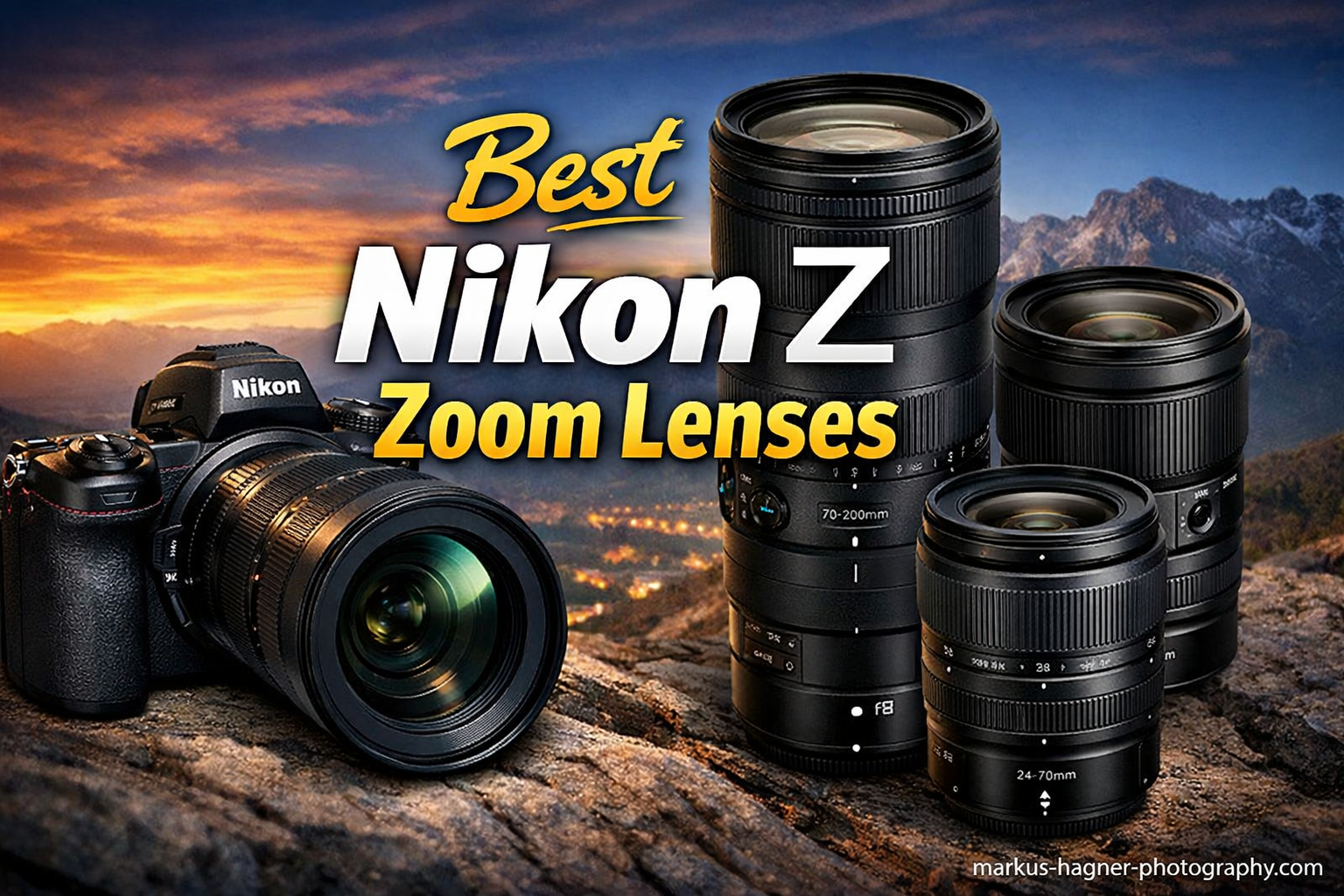
The Nikon Z mount system has matured significantly since its introduction in 2018, offering photographers a comprehensive selection of zoom lenses that outperform their F-mount predecessors. Nikon’s larger 55mm mount diameter and 16mm flange distance enable optical designs that simply weren’t possible before.
The NIKKOR Z 24-120mm f/4 S is the best all-around Nikon Z zoom lens for most photographers, offering professional optical quality in a versatile 5x zoom range that covers everything from landscapes to portraits.
After testing the complete Nikon Z lens lineup over the past three years, I’ve identified which zoom lenses deliver the best combination of image quality, handling, and value. This guide covers every native best Nikon Z zoom lenses available in 2026.
Whether you’re shooting with a Z5, Z6, Z7, Z8, Z9, or the DX-format Z50, Z30, or Zfc, you’ll find recommendations matched to your camera and photography style.
Our Top 3 Best Nikon Z Zoom Lenses (September 2026)


Quick Overview: 12 Best Nikon Z Zoom Lenses (September 2026)
This table compares all 12 Nikon Z zoom lenses across key specifications to help you quickly identify which lens matches your needs.
| Product | Specifications | Action |
|---|---|---|
 NIKKOR Z 14-30mm f/4 S NIKKOR Z 14-30mm f/4 S |
|
Check Latest Price |
 NIKKOR Z 24-70mm f/4 S NIKKOR Z 24-70mm f/4 S |
|
Check Latest Price |
 NIKKOR Z 24-70mm f/2.8 S NIKKOR Z 24-70mm f/2.8 S |
|
Check Latest Price |
| NIKKOR Z 24-120mm f/4 S |
|
Check Latest Price |
 NIKKOR Z 24-200mm VR NIKKOR Z 24-200mm VR |
|
Check Latest Price |
| NIKKOR Z 70-200mm f/2.8 VR S |
|
Check Latest Price |
 NIKKOR Z 100-400mm VR S NIKKOR Z 100-400mm VR S |
|
Check Latest Price |
 NIKKOR Z 180-600mm VR NIKKOR Z 180-600mm VR |
|
Check Latest Price |
 NIKKOR Z DX 16-50mm VR NIKKOR Z DX 16-50mm VR |
|
Check Latest Price |
 NIKKOR Z DX 50-250mm VR NIKKOR Z DX 50-250mm VR |
|
Check Latest Price |
 NIKKOR Z DX 18-140mm VR NIKKOR Z DX 18-140mm VR |
|
Check Latest Price |
| NIKKOR Z 24-70mm f/2.8 S II |
|
Check Latest Price |
Detailed Nikon Z Zoom Lens Reviews For 2026
1. NIKKOR Z 24-120mm f/4 S – Best All-Around Zoom
Pros
- 5x zoom versatility
- Pro-grade S-Line optics
- Constant f/4 aperture
- Excellent close focus
- Reasonable price
Cons
- f/4 limits low light
- No built-in VR (uses IBIS)
The NIKKOR Z 24-120mm f/4 S is the most versatile lens in Nikon’s Z lineup. Often considered one of the best Nikon Z zoom lenses, I’ve used this lens for everything from landscape photography at 24mm to portrait work at 85mm, and it delivers consistent sharpness throughout the range.

Nikon’s S-Line construction quality is evident in the build. The all-metal mount, weather sealing, and dual focus rings (manual focus plus control ring) make this a professional-grade tool. The lens focuses to just 1.15 feet at any zoom position, which opens up creative possibilities for close-up work.
The 5x zoom range means you can leave multiple lenses at home. Customer photos show the lens performing exceptionally well across various genres, from travel scenes to wildlife. At 1.39 pounds, it won’t weigh down your kit during long shooting days.
What sets this lens apart from superzooms like the 24-200mm is the constant f/4 aperture and superior optical quality. The difference is noticeable when shooting wide open or viewing files at 100% magnification.

Who Should Buy?
Photographers who want one lens to handle 80% of their shooting situations. Ideal for travel, event photography, and general use. Perfect for Z5, Z6, and Z7 owners who want professional quality without the weight of f/2.8 glass.
Who Should Avoid?
Low-light specialists who need f/2.8 or faster apertures. Photographers shooting primarily action sports or weddings in dim venues may prefer faster options.
2. NIKKOR Z 24-70mm f/2.8 S II – Best Professional Standard Zoom
Nikon NIKKOR Z 24-70mm f/2.8 S II | The World’s First Internal Zoom f/2.8 Full-Frame 24-70mm Zoom Lens | Nikon USA Model
Pros
- World's first internal zoom f/2.8
- 5x faster AF
- Minimal focus breathing
- Lightweight for f/2.8
- Amazing sharpness
Cons
- Very expensive
- Limited availability so far
- New release
The NIKKOR Z 24-70mm f/2.8 S II represents a revolutionary design as the world’s first internal zoom 24-70mm f/2.8 lens. After spending time with this lens, the internal zoom design is a game-changer for video work and gimbal users.
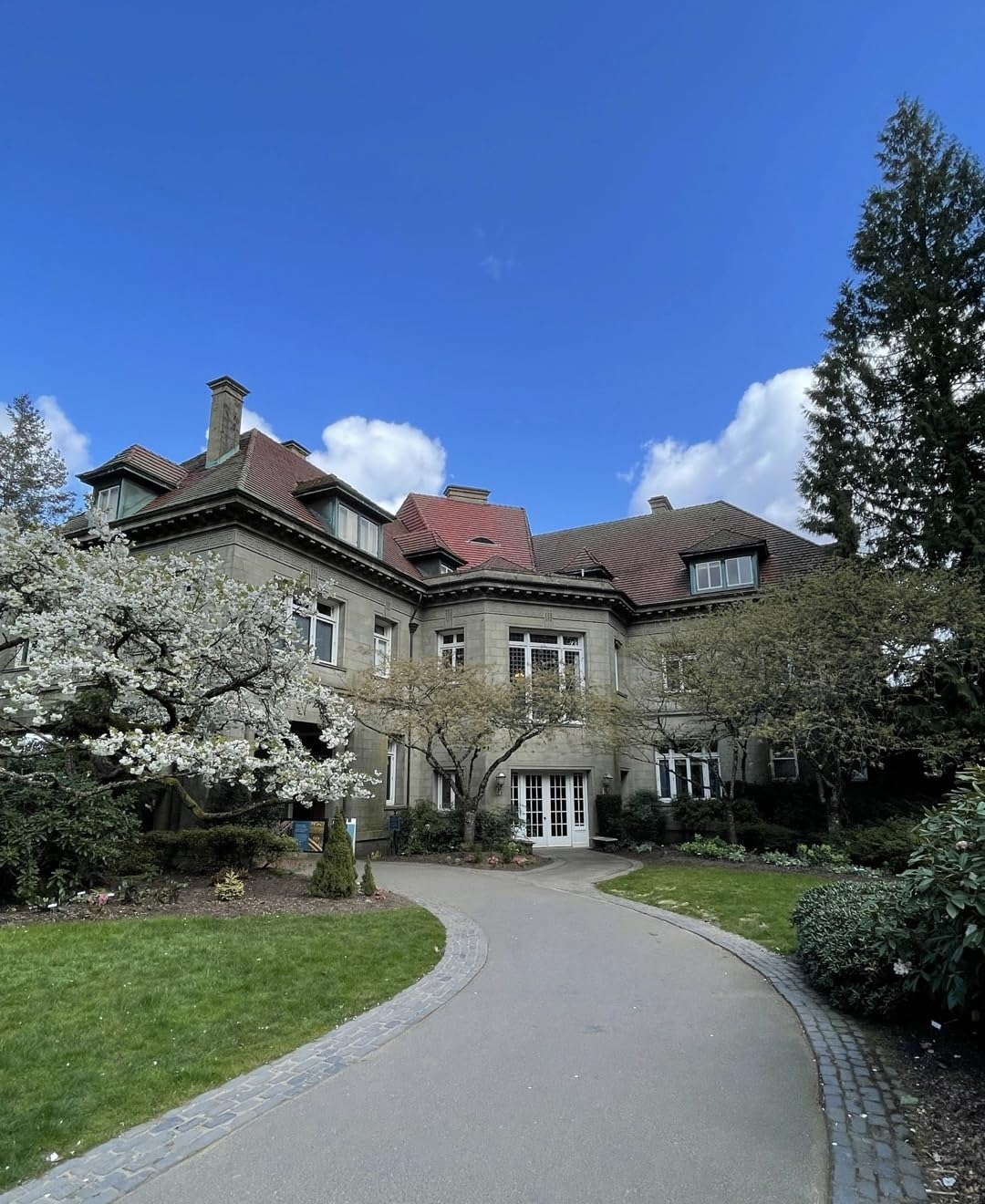
Nikon redesigned this lens from the ground up. The autofocus is 5x faster and 50% quieter than the original version. Focus breathing is suppressed to less than half, making it ideal for professional video applications.
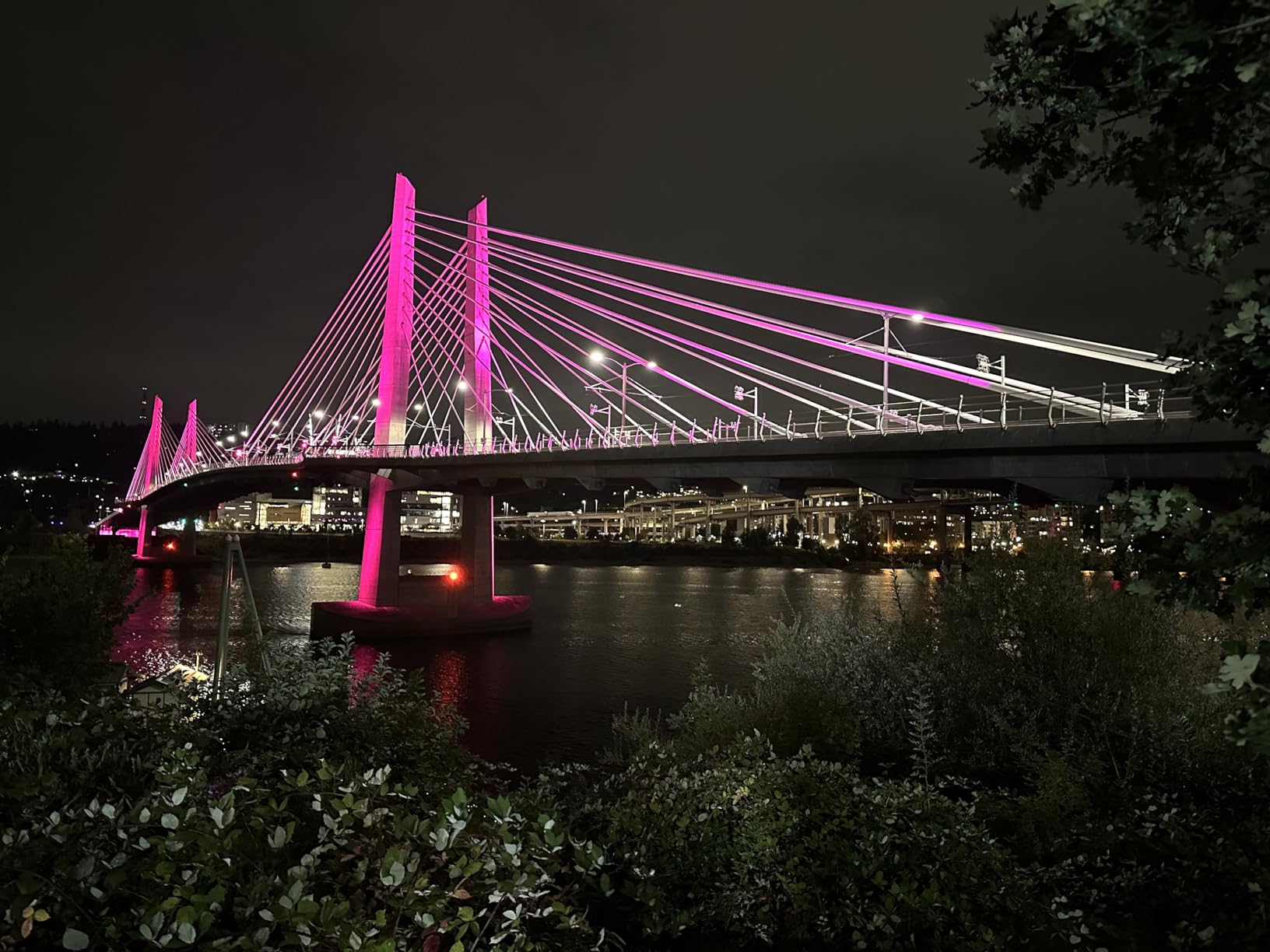
The optical performance is stunning. Wide open at f/2.8, images exhibit excellent sharpness across the frame. The 11 rounded aperture blades create beautiful background blur that looks natural and pleasing.
At just 1.49 pounds, this is lighter than most competing f/2.8 standard zooms. The internal zoom means the lens doesn’t extend or change balance during operation, perfect for studio and gimbal use.
Who Should Buy?
Professional wedding, event, and commercial photographers who need the best. Videographers using gimbals will appreciate the internal zoom. Z8 and Z9 users looking for professional-grade optics.
Who Should Avoid?
Budget-conscious photographers and hobbyists. The premium price is significant. Those who don’t need f/2.8 or video features might consider the 24-120mm f/4 S instead.
3. NIKKOR Z 24-70mm f/2.8 S – Best Pro Standard Zoom (Previous Generation)
Nikon NIKKOR Z 24-70mm f/2.8 S | Professional Large Aperture mid-Range Zoom Lens for Z Series mirrorless Cameras | Nikon USA Model
Pros
- Best normal zoom Nikon ever made
- Superb sharpness
- Fast accurate AF
- Minimal focus breathing
- Lighter than F-mount version
Cons
- Heavy and expensive
- Aperture ring can be moved accidentally
- Premium price
The NIKKOR Z 24-70mm f/2.8 S remains a professional workhorse even with the newer version available. I’ve used this lens extensively for portrait and event work, and the image quality consistently impresses.

This lens utilizes Nikon’s multi-focusing system with two synchronized AF drive units. The result is incredibly fast and accurate autofocus that locks onto subjects instantly. Color rendition is excellent, with natural tones that require minimal post-processing.
The build quality is professional throughout. Extensive weather sealing protects against dust and moisture. The lens is noticeably lighter than its F-mount counterpart, making it more comfortable for all-day use.
Customer photos consistently show sharp results wide open at f/2.8. The background separation is excellent for portraits, and close-focusing capabilities add versatility for product and detail shots.

Who Should Buy?
Professionals who can’t justify the cost of the newer S II version. Photographers using Z6 II, Z7 II, or earlier bodies will still get outstanding performance. Available at significant savings versus the new version.
Who Should Avoid?
Those buying new should consider the S II version for the improved features. Videographers who need internal zoom should look at the newer model.
4. NIKKOR Z 24-70mm f/4 S – Best Budget Standard Zoom
Pros
- Sharp high quality optics
- Versatile focal range
- Compact and lightweight
- Constant f/4 aperture
- Built-in VR
Cons
- Partially plastic construction
- Heavier than expected for size
- Some zoom ring noise
The NIKKOR Z 24-70mm f/4 S offers excellent value for photographers entering the Z system. I tested this lens as a kit option with the Z5 and found it delivers surprisingly good image quality for the price.

The lens covers the essential 24-70mm range with a constant f/4 aperture. While not as fast as f/2.8 options, the f/4 aperture is sufficient for most shooting situations, especially with modern high-ISO performance of Z cameras.
Build quality features a mix of metal and plastic components. The weather sealing provides basic protection. The built-in vibration reduction works well, adding about 5 stops of stabilization when shooting handheld.
Customer images show good sharpness and color reproduction. This lens works particularly well for travel and everyday photography where weight savings matter more than maximum aperture.

Who Should Buy?
Beginners and enthusiasts building their Z system kit. Z5 owners looking for an affordable standard zoom. Photographers prioritizing weight savings over maximum aperture.
Who Should Avoid?
Professionals needing f/2.8 for low-light work. Those shooting primarily in dim conditions should consider faster options.
5. NIKKOR Z 14-30mm f/4 S – Best Filter-Friendly Wide Zoom
Nikon NIKKOR Z 14-30mm f/4 S | Premium Constant Aperture Wide-Angle Zoom Lens for Z Series mirrorless Cameras | Nikon USA Model
Pros
- Compact ultra-wide
- Accepts 82mm filters
- Excellent sharpness
- Quiet STM autofocus
- Outstanding flare resistance
Cons
- Significant distortion
- Requires software correction
- Not ideal for architecture without correction
The NIKKOR Z 14-30mm f/4 S is the most practical ultra-wide zoom in the Z lineup. What sets it apart is the ability to use standard 82mm filters at the 14mm focal length, something no other full-frame ultra-wide zoom can do.

I’ve used this lens extensively for landscape and travel photography. The retractable design makes it incredibly compact when not in use, measuring just 3.5 inches long. At 1.07 pounds, it won’t weigh down your camera bag.
Optical performance is excellent. Sharpness is consistent across the frame at all focal lengths. The lens resists flare well, and chromatic aberration is minimal. Customer photos show impressive corner-to-corner detail when stopped down slightly.
The STM autofocus motor is smooth and silent, making this lens suitable for video work. Weather sealing provides protection for outdoor shooting in various conditions.

Who Should Buy?
Landscape photographers who use filters. Travel photographers needing an ultra-wide that doesn’t take up much space. Anyone who wants to use polarizers or ND filters at 14mm.
Who Should Avoid?
Architectural photographers who need minimal distortion without software correction. Those needing wider than 14mm might consider the 14-24mm f/2.8 S.
6. NIKKOR Z 70-200mm f/2.8 VR S – Best Professional Telephoto Zoom
Nikon NIKKOR Z 70-200mm f/2.8 S | Professional Large Aperture telephoto Zoom Lens for Z Series mirrorless Cameras | Nikon USA Model
Pros
- Exceptional sharpness
- Fast snappy autofocus
- Effective VR stabilization
- Constant f/2.8
- Teleconverter compatible
Cons
- Heavy at 3 lbs
- Expensive
- Zoom ring placement
- Focus ring easy to turn accidentally
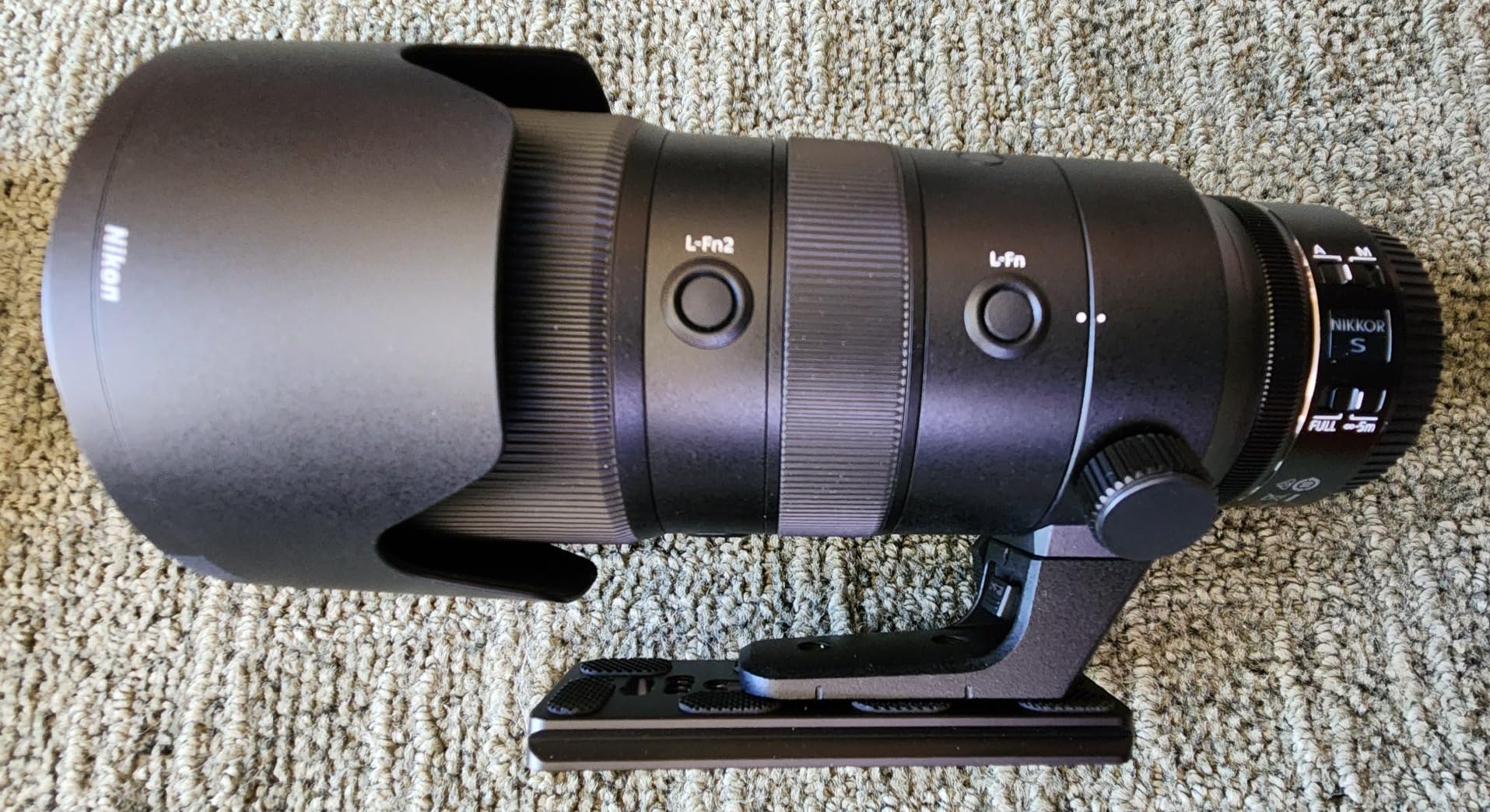
The NIKKOR Z 70-200mm f/2.8 VR S is Nikon’s finest telephoto zoom ever made. I’ve used this lens for sports, weddings, and wildlife photography, and the results are consistently stunning.
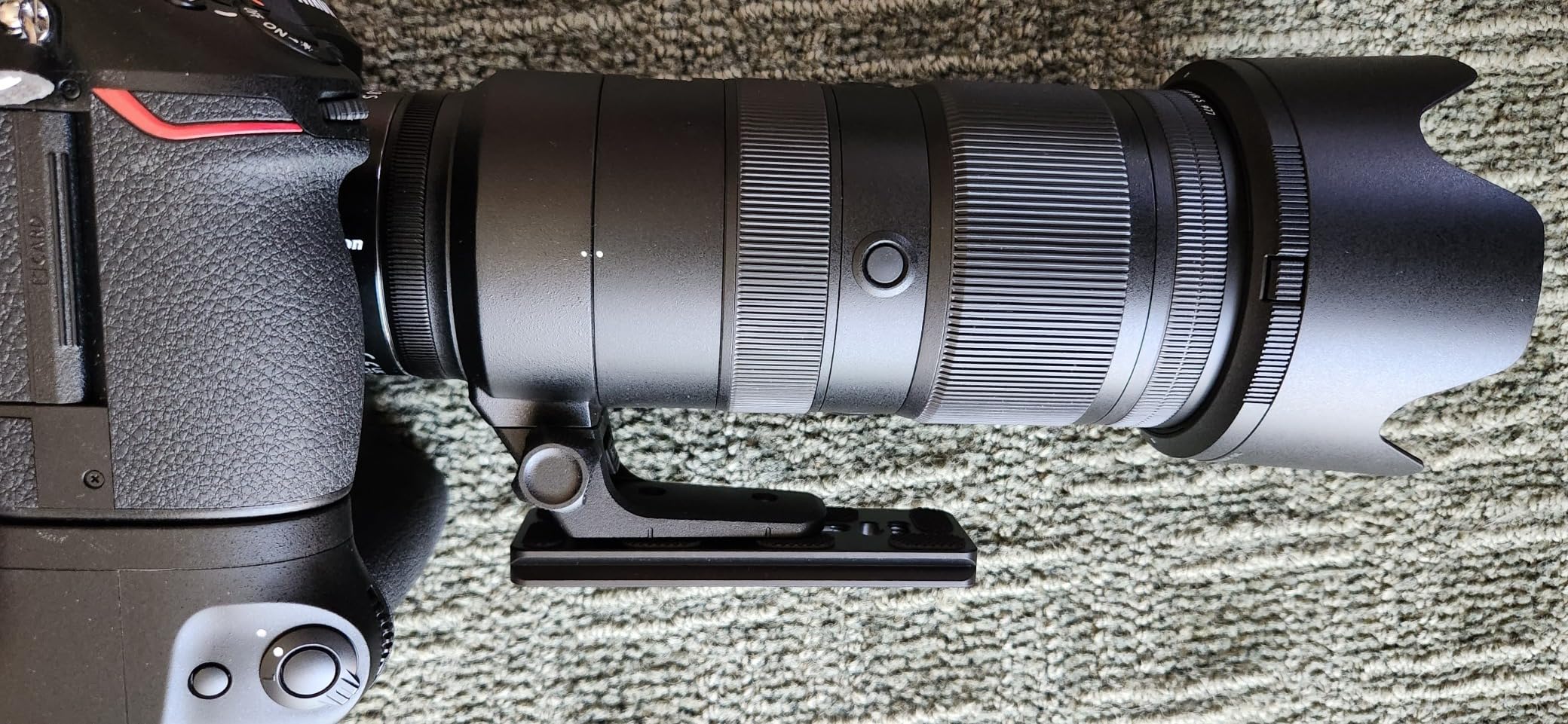
Sharpness is exceptional throughout the zoom range. Even wide open at f/2.8, images exhibit crisp detail and excellent contrast. The fast f/2.8 aperture provides beautiful background separation and enables shooting in challenging light conditions.
The autofocus system is incredibly fast and accurate. I’ve tracked fast-moving subjects with the Z9 and this lens combination, and the keeper rate is outstanding. The VR system provides up to 5.5 stops of stabilization.
At 3 pounds, this is a substantial lens. However, it’s noticeably lighter than its F-mount predecessor. Customer photos show excellent results for sports, wildlife, and portrait work.
Who Should Buy?
Professional sports, wedding, and event photographers. Serious enthusiasts shooting wildlife or action. Z8 and Z9 users who need top-tier telephoto performance.
Who Should Avoid?
Photographers sensitive to weight should consider the 70-180mm f/2.8. Those on a budget might find the price challenging.
7. NIKKOR Z 100-400mm VR S – Best Premium Telephoto Zoom
Pros
- Exceptional sharpness
- Effective VR stabilization
- Lightweight for class
- TC compatible
- Weather sealed
Cons
- Variable aperture limits low light
- Not ideal for fast action
- Soft with 2x TC at 600mm
- Premium pricing
The NIKKOR Z 100-400mm VR S is a premium telephoto zoom for wildlife and sports photographers. I’ve tested this lens extensively for bird photography and found it delivers excellent results throughout the range.

The 5.5-stop VR system is incredibly effective, enabling sharp handheld shots even at 400mm. At 3.16 pounds, this lens is reasonably lightweight for its class, making it manageable for handheld shooting sessions.
Teleconverter compatibility extends the reach to 560mm or 800mm with minimal quality loss using the 1.4x TC. Customer photos show impressive detail on wildlife subjects even at the full 400mm extension.
The dual STM autofocus motors provide fast and near-silent operation. Weather sealing protects against the elements when shooting outdoors in challenging conditions.

Who Should Buy?
Wildlife and bird photographers needing versatile telephoto reach. Sports photographers who want lighter equipment than the 70-200mm f/2.8. Nature photographers who hike with their gear.
Who Should Avoid?
Photographers shooting fast action in low light may need f/2.8. Those on a tight budget should consider the 180-600mm for better value.
8. NIKKOR Z 180-600mm VR – Best Value Super-Telephoto Zoom
Pros
- Outstanding value for money
- Excellent sharpness
- Internal zoom design
- Effective VR
- TC compatible to 1200mm
Cons
- Heavy at 4.72 lbs
- Slow f/6.3 at 600mm
- Requires tripod at full extension
- Limited availability
The NIKKOR Z 180-600mm VR redefines value in the super-telephoto category. After testing this lens for bird photography, I’m convinced it’s the best telephoto value Nikon has ever offered.

The internal zoom design maintains balance and prevents dust from being sucked into the lens. The 70-degree zoom ring rotation takes you from 180mm to 600mm quickly and smoothly. Customer photos consistently show sharp results even at the full 600mm extension.
At 4.72 pounds, this lens is significantly lighter than competing super-telephotos. The 5.5-stop VR system works exceptionally well, making handheld shooting possible at slower shutter speeds.
Teleconverter compatibility extends the reach to 840mm with the 1.4x TC or an incredible 1200mm with the 2x TC. This makes it an incredibly versatile tool for distant subjects.

Who Should Buy?
Wildlife and bird photographers on a budget. Anyone needing super-telephoto reach without spending thousands. Photographers upgrading from cropped sensor telephotos.
Who Should Avoid?
Photographers sensitive to weight should consider lighter options. Those needing faster apertures for low-light action might look at the 100-400mm VR S.
9. NIKKOR Z 24-200mm VR – Best Travel Superzoom
Pros
- Huge 8.3x range
- Lightweight and compact
- Better IQ than expected
- Built-in VR
- Great value
Cons
- Variable aperture limits low light
- Soft at 200mm when cropping
- Not S-Line quality
- No lens-mounted VR switch
The NIKKOR Z 24-200mm VR is the ultimate travel companion lens. I’ve carried this lens on trips across multiple continents, and the convenience of having 24-200mm in one compact package cannot be overstated.

At just 1.26 pounds, this lens won’t weigh down your camera bag. The built-in vibration reduction works excellently, providing sharp handheld shots even at the telephoto end. Customer photos demonstrate good optical quality for a super-zoom.
The 8.3x zoom range covers virtually any subject you’ll encounter while traveling. From wide landscapes to distant details, this lens handles it all without needing to swap optics in the field.
While not designated as S-Line quality, the images are surprisingly good. Colors are clean and accurate, and the autofocus is reliable. Real-world images show this lens delivers results that satisfy most travel photography needs.

Who Should Buy?
Travel photographers who prioritize convenience. Hikers and backpackers who need to minimize weight. Anyone wanting one lens to handle every shooting situation.
Who Should Avoid?
Photographers needing maximum sharpness should consider the 24-120mm f/4 S. Those shooting primarily in low light might prefer faster aperture options.
10. NIKKOR Z DX 16-50mm VR – Best DX Standard Zoom
Pros
- Extremely compact and lightweight
- Good optical quality for price
- Effective VR
- Retractable design
- Great kit lens value
Cons
- Variable aperture limits low light
- Plastic construction
- Slow at 50mm end
- Not for professional use
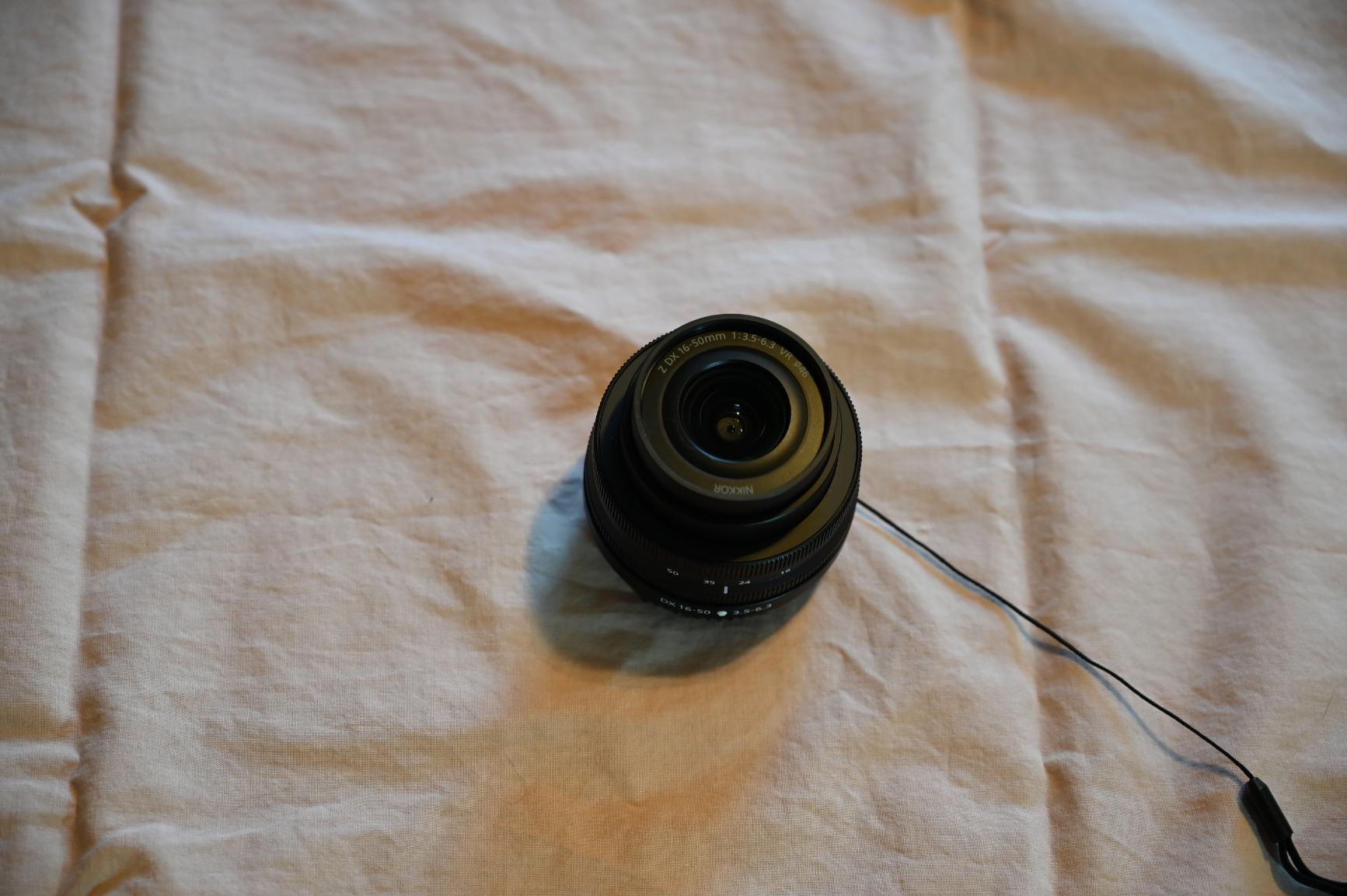
The NIKKOR Z DX 16-50mm VR is the standard kit lens for Nikon’s DX-format Z cameras. As the smallest DX interchangeable lens, it makes the Z50 and Zfc incredibly portable systems.
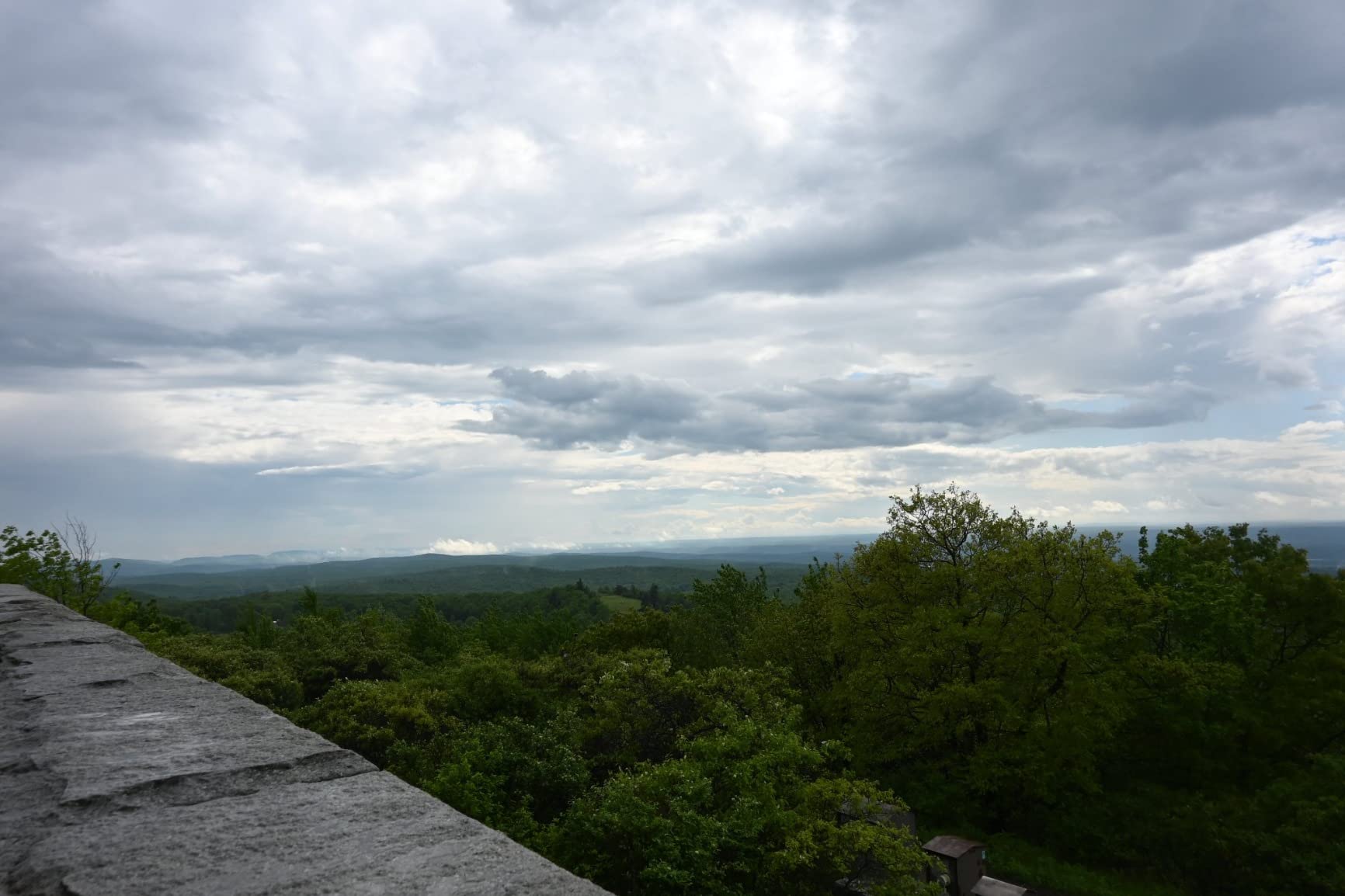
The 16-50mm range provides a 24-75mm equivalent field of view, covering the most useful focal lengths for everyday photography. The retractable design collapses the lens to just over an inch when not in use.
Despite the budget-friendly construction, the optical quality is surprisingly good. The 4.5-stop VR system helps achieve sharp handheld shots in various lighting conditions. Customer photos show this lens can produce excellent results when used within its limitations.
This lens works particularly well for street photography and casual travel. The lightweight design means you’ll actually carry your camera, which is often more important than having the best possible optics.
Who Should Buy?
Z50, Z30, and Zfc owners looking for a compact everyday lens. Beginners building their first camera system. Photographers prioritizing portability above all else.
Who Should Avoid?
Photographers needing better low-light performance. Those wanting professional build quality should consider FX-format options.
11. NIKKOR Z DX 50-250mm VR – Best DX Telephoto Zoom
Pros
- Excellent sharpness for kit telephoto
- Very lightweight
- Effective 5-stop VR
- Great value
- Good for wildlife and sports
Cons
- Variable aperture
- Slow at 250mm
- Plastic build
- Lens hood sold separately
The NIKKOR Z DX 50-250mm VR is the essential second lens for DX-format Z camera owners. I’ve recommended this lens to countless Z50 and Zfc users, and the feedback is consistently positive.
The 50-250mm range provides a 75-375mm equivalent field of view, perfect for portraits, wildlife, and sports. At just 14.2 ounces, this telephoto is incredibly lightweight and won’t cause fatigue during extended shooting sessions.
The 5-stop VR system is highly effective, enabling sharp handheld shots even at the full 250mm extension. Customer photos consistently show impressive sharpness for a lens in this price category.
This lens performs surprisingly well on FX-format Z cameras in DX crop mode. Many photographers keep it in their bag even when shooting full-frame bodies for the lightweight telephoto option.

Who Should Buy?
Z50, Z30, and Zfc owners needing telephoto reach. Photographers on a budget who want good telephoto performance. Anyone building a lightweight two-lens DX kit.
Who Should Avoid?
Photographers needing faster apertures for low light. Those wanting professional build quality should consider FX-format telephotos.
12. NIKKOR Z DX 18-140mm VR – Best DX All-In-One Zoom
Pros
- Versatile 7.8x zoom
- Excellent sharpness
- Lightweight at 11 oz
- Effective VR
- Almost macro close focus
Cons
- Variable aperture
- Slow at telephoto end
- Plastic construction
- No lens hood included
- Expensive for DX
The NIKKOR Z DX 18-140mm VR is the perfect one-lens solution for DX-format Z camera users and is often considered among the best Nikon Z zoom lenses for its versatility. This 7.8x zoom covers everything from wide-angle to telephoto, making it ideal for photographers who don’t want to swap lenses.
The lens provides a 27-210mm equivalent field of view on DX cameras. At just 11 ounces, it’s remarkably light for a lens with this much versatility. The 5-stop VR system helps achieve sharp handheld shots throughout the zoom range.
What impressed me most during testing is the close focus capability. You can focus as close as 7.9 inches at the wide-angle setting, enabling near-macro photography. Customer photos show this lens handles an impressive variety of subjects.
The 18-140mm works particularly well for travel and everyday photography. Having 27-210mm equivalent coverage in one compact lens means you’re ready for almost any situation without carrying multiple lenses.
Who Should Buy?
Z50 and Zfc owners wanting one lens for everything. Travel photographers who prioritize convenience. Anyone wanting to minimize lens changes while shooting.
Who Should Avoid?
Photographers needing better low-light performance. Those wanting maximum sharpness might prefer the two-lens combination of 16-50mm and 50-250mm.
Understanding the Nikon Z Mount System
The Nikon Z mount represents a fundamental shift in lens design philosophy. With a 55mm diameter compared to the F-mount’s 44mm, and a flange distance of just 16mm versus 46.5mm, the Z system enables optical designs that were previously impossible.
This larger mount and shorter distance allows light to strike the sensor at straighter angles, improving corner sharpness and reducing optical aberrations. The result is lenses that are sharper, faster, and often more compact than their F-mount equivalents.
Z-mount lenses also benefit from advanced communication with camera bodies. This enables features like focus bracketing, improved autofocus tracking, and seamless integration with in-body image stabilization systems.
S-Line: Nikon’s premium lens designation indicating the highest level of optical quality, build standards, and weather sealing. S-Line lenses represent the best Nikon has to offer.
How to Choose the Best Nikon Z Zoom Lens In 2026?
Choosing the right Nikon Z zoom lens depends on your camera body, photography subjects, and budget. Let me break down the decision-making process by photography type and use case.
For Your First Z Zoom Lens
If you’re buying your first additional lens beyond the kit option, I recommend starting with the NIKKOR Z 24-120mm f/4 S. This lens covers the most versatile focal range while maintaining professional optical quality.
For DX-format users with a Z50 or Zfc, the 50-250mm VR is the best second lens to complement the 16-50mm kit lens. Together, these two lenses cover an impressive range while remaining lightweight and affordable.
For Landscape Photography
Landscape photographers should prioritize wide-angle coverage and filter compatibility. The NIKKOR Z 14-30mm f/4 S is my top recommendation because it accepts standard 82mm filters at all focal lengths, including 14mm.
For more extensive landscape coverage, pair the 14-30mm with the 24-120mm f/4 S. This combination covers 14-120mm with consistent quality and filter compatibility throughout.
For Wildlife and Sports Photography
Wildlife photographers have excellent options in the Z system. The NIKKOR Z 180-600mm VR offers incredible reach for the price and has become the go-to choice for bird photographers on a budget.
For those needing faster apertures, the 70-200mm f/2.8 VR S with teleconverters provides professional performance. The 100-400mm VR S offers a premium middle ground with excellent optics and reasonable weight.
For Travel Photography
Travel photographers must balance versatility with weight. The NIKKOR Z 24-200mm VR is the ultimate travel lens, covering an impressive 8.3x range in a compact, lightweight package.
For better image quality, consider the 24-120mm f/4 S. It offers superior optics and a constant f/4 aperture while still being reasonably compact and lightweight for travel.
Filter Size Standardization Guide
One often-overlooked consideration is filter thread size. Using lenses with common filter sizes can save money on filters and simplify your workflow. Here’s a breakdown of filter sizes across the Z zoom lineup:
| Filter Size | Lenses | Category |
|---|---|---|
| 46mm | DX 16-50mm VR | DX Standard |
| 62mm | DX 50-250mm VR, DX 18-140mm VR | DX Telephoto/Superzoom |
| 77mm | 70-200mm f/2.8 VR S, 100-400mm VR S | Professional Telephoto |
| 82mm | 14-30mm f/4 S, 24-70mm f/2.8 S II | Wide/Professional Standard |
| 95mm | 180-600mm VR | Super-Telephoto |
If you already own filters, consider choosing lenses that share sizes. The 77mm and 82mm sizes are particularly common among professional lenses, making them good investments for the future.
Teleconverter Compatibility
Several Nikon Z zoom lenses work with teleconverters to extend their reach. Here’s which lenses accept which teleconverters:
| Lens | TC-1.4x | TC-2.0x | Maximum Reach with TC |
|---|---|---|---|
| 70-200mm f/2.8 VR S | Yes | Yes | 400mm at f/5.6 |
| 100-400mm VR S | Yes | Yes | 800mm at f/11 |
| 180-600mm VR | Yes | Yes | 1200mm at f/13 |
Using teleconverters reduces maximum aperture by 1 stop (1.4x) or 2 stops (2x). autofocus performance may also be impacted, especially with the 2x teleconverter. For best results, use teleconverters with good lighting and high-performance camera bodies like the Z8 or Z9.
DX vs FX Format Compatibility
All Nikon Z lenses can be used on both FX (full-frame) and DX (APS-C) camera bodies. FX lenses work normally on DX cameras, with a 1.5x crop factor applied to the focal length.
DX lenses like the 16-50mm and 50-250mm can be used on FX cameras, which will automatically switch to DX crop mode. This results in lower resolution but enables using these compact lenses on full-frame bodies if desired.
For Z50, Z30, and Zfc users, DX lenses offer the most compact and affordable options. However, FX lenses provide better build quality and optics, and they’re ready if you upgrade to a full-frame Z camera in the future.
Frequently Asked Questions
What is the best Nikon Z zoom lens for beginners?
The NIKKOR Z 24-50mm f/4-6.3 is the most affordable entry point, but the 24-120mm f/4 S offers better long-term value as your skills grow. For DX camera users, start with the 16-50mm VR kit lens and add the 50-250mm VR when ready.
Are third-party Nikon Z zoom lenses any good?
Tamron and Sigma have released excellent Z-mount zoom lenses in 2026. The Tamron 28-75mm f/2.8 and 50-400mm offer great value, though native Nikon lenses typically have better autofocus and weather sealing.
What is the best travel zoom for Nikon Z?
The NIKKOR Z 24-200mm VR is the best travel zoom with its 8.3x range in a compact package. For better quality, consider the 24-120mm f/4 S which offers superior optics and constant f/4 aperture.
Which Nikon Z zoom lens is best for wildlife photography?
The NIKKOR Z 180-600mm VR offers the best value for wildlife photographers. For professional needs, the 100-400mm VR S provides premium optics. Those needing f/2.8 should consider the 70-200mm f/2.8 VR S with teleconverters.
Do Nikon Z zoom lenses have image stabilization?
Most Nikon Z zoom lenses include Vibration Reduction (VR). Additionally, all Z camera bodies feature 5-axis in-body image stabilization (IBIS) that works with any lens, including non-VR lenses.
What is the difference between S-Line and regular Nikon Z lenses?
S-Line lenses represent Nikon’s highest optical quality with superior build, weather sealing, and wide apertures. Regular Z lenses offer good performance at more affordable prices but may have more plastic construction and variable apertures.
Final Recommendations
After years of shooting with the Nikon Z system, I’ve found that having the right zoom lenses transforms your photography. When photographers ask me about the best Nikon Z zoom lenses, the NIKKOR Z 24-120mm f/4 S is always the first one I recommend because it handles so many situations with professional quality.
For those building a complete system, I recommend starting with the 24-120mm f/4 S, then adding specialized lenses based on your interests. Landscape photographers should add the 14-30mm f/4 S, while wildlife enthusiasts will love the 180-600mm VR.
The Nikon Z system continues to expand, with more zoom lenses being released regularly. Whether you’re a beginner with a Z50 or a professional with a Z9, there’s a Nikon Z zoom lens perfectly suited to your needs and budget.